


Blue Blazes
Subscribed: 0Played: 1
Subscribe

© Trailhead Technology Partners
Description
Just like obstacles blocking a hiking trail, barriers in the path to a successful software project can be frustrating. When you encounter one, it helps to take a trail marked with blue blazes to go around the problem, get back on course, and keep moving forward.
36 Episodes
Reverse
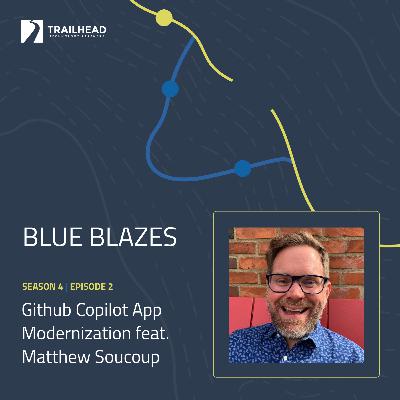
In this episode, host Jonathan "J." Tower sits down with Matthew Soucoup, Principal Cloud Advocate and .NET Cloud Advocacy Lead, to explore how GitHub Copilot's new App Modernization agent is transforming the way teams upgrade and migrate .NET applications to modern platforms.Matt breaks down the three core capabilities of this AI-powered modernization tool: assessment and scope planning, step-by-step modernization planning, and detailed task execution with persistent memory. Together, they discuss how the agent handles upgrade scenarios, from moving projects forward through .NET versions to migrating legacy .NET Framework applications to the cloud. If you're working with legacy .NET applications or thinking about modernization, this episode offers practical insights into how AI agents are making these notoriously difficult projects more manageable.Guest Bio:Matthew Soucoup is a Principal Cloud Advocate and .NET Cloud Advocacy Lead at Microsoft and works to spread the ❤️ of .NET and Azure ☁️. Matt enjoys helping everybody along on their cloud journey, brand new and experienced devs alike. And when he's not thinking about "the cloud" he's trying to hike above the clouds in the mountains of the Pacific Northwest. Follow Matt on Twitter at @codemillmatt, GitHub at codemillmatt, and his personal blog at codemillmatt.com.Additional Resources:- GitHub Copilot App Modernization for .NET: https://github.com/copilot- Jeff Fritz's Web Forms to Blazor migration project (mentioned as a complementary tool for ASP.NET Web Forms modernization)
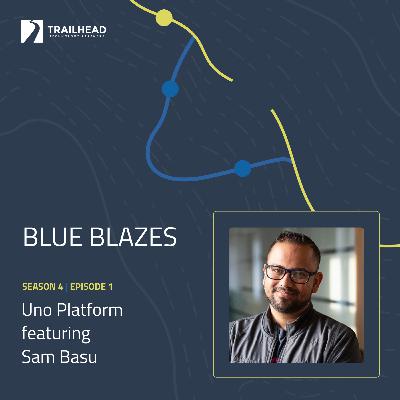
In this episode, host Jonathan “J.” Tower sits down with Sam Basu, technologist, author, Microsoft MVP, and Lead Developer Advocate at Uno Platform, to unpack the realities of modern cross-platform app development with .NET.Sam shares how Uno Platform enables developers to build native applications for iOS, Android, WebAssembly, Windows, macOS, and Linux, all from a single codebase, and how it compares with other cross-platform frameworks like .NET MAUI, React Native, and Flutter. He also explains the value of Uno’s multiple rendering paths, including native UI and Skia-based rendering, and what those mean for performance and design consistency across devices.If you’re a .NET developer, this episode offers you a grounded, forward-looking take on how we build cross-platform apps in 2026 and beyond.Guest Bio:Sam Basu is a technologist, author, speaker, Microsoft MVP, and Lead Developer Advocate for Uno Platform. With a deep background in .NET development, Sam now focuses on helping teams ship modern, performant, and beautiful apps across platforms using open-source and AI-powered tools. When he’s not speaking at conferences or writing about technology, you’ll find him traveling, cooking, or enjoying fast cars and cricket.You can connect with Sam online through his work with Uno Platform and across developer communities worldwide.
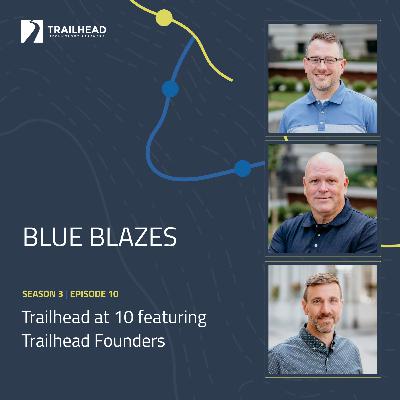
In this special 10th-anniversary episode, guest host Mark Adams turns the microphone toward the founders of Trailhead Technology Partners — Jonathan “J.” Tower, John Waters, and Josh Eastburn — for a candid conversation about a decade of building great software and a great company.The four partners look back at how Trailhead began — with a shared vision for a consultancy built on purpose, craftsmanship, and long-term client partnerships — and how that vision has evolved through global growth and technological change. They discuss what’s changed and what hasn’t over that time, and how the Trailhead Process and Trailhead Framework help deliver consistent client results regardless. They also cover how trust, collaboration, and curiosity have been the company’s real differentiators.The episode closes with a look ahead at AI, quantum computing, and the ever-human side of technology, as the founders toast to the next 10 years of innovation, partnership, and growth.Guest Bio: Jonathan “J.” Tower, John Waters, and Josh Eastburn are the founding partners of Trailhead Technology Partners, a global software consultancy specializing in .NET and modern cloud solutions. Together, they’ve spent decades designing, building, and leading software projects across industries from healthcare to public transit, and have grown Trailhead into a distributed team spanning multiple continents.Mark Adams, Partner at Trailhead and host for this episode, leads many of the firm’s strategic client engagements and product initiatives.
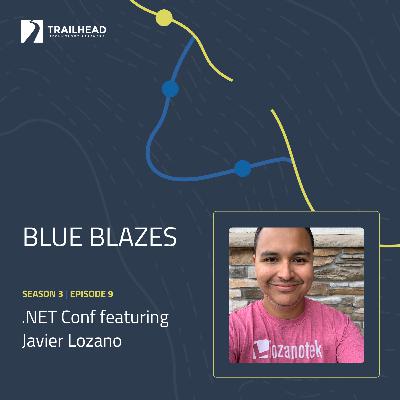
In this episode, host J. Tower sits down with Javier Lozano, co-founder of .NET Conf and CEO of Lozanotek, a .NET-focused software consultancy based in Des Moines, Iowa. Javier is a longtime Microsoft MVP, recognized for nearly 20 years for his contributions to ASP.NET, Azure, and the global developer community.In this episode, Javier shares the origin story of .NET Conf, which began as a small virtual event called MVC Conf 15 years ago, well before online conferences were common. He walks through how it evolved into today’s massive, three-day global launch event for the newest version of .NET, with contributions from Microsoft’s product teams and experts from around the world.If you’ve ever tuned in to .NET Conf, or wondered what it takes to bring the .NET community together on a global scale, this episode is a must-listen.Guest Bio: Javier Lozano is the CEO and Founder of Lozanotek, a .NET-focused software development boutique based in Des Moines, Iowa. He’s a Microsoft MVP, community leader, and co-founder of .NET Conf, the world’s largest virtual event celebrating the .NET ecosystem. With nearly two decades of experience building enterprise systems, mentoring teams, and contributing to the developer community, Javier is passionate about helping others grow, learn, and connect through technology.
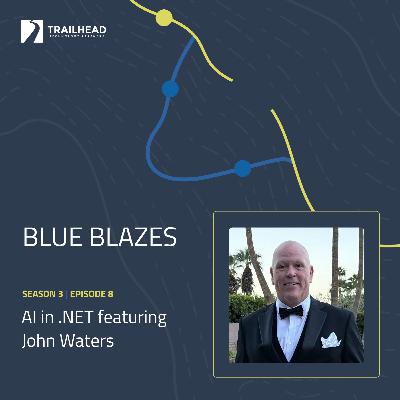
In this episode, host J. Tower sits down with John Waters, his fellow Partner at Trailhead Technology Partners, to explore how AI is reshaping life as a .NET developer. They talk about the fast-evolving development ecosystem, including GitHub Copilot’s new agent mode, Microsoft.Extensions.AI and its sister packages for vector data, and the growing role of Semantic Kernel. John also breaks down the promise of the Model Context Protocol (MCP), explains the tradeoffs of local vs. cloud-based models, and shares practical stories of “pragmatic AI” in action—like fuzzy semantic search and warranty claim automation. The conversation wraps with a look at how AI is surfacing in .NET Aspire, where Copilot helps diagnose complex distributed systems in real time.Guest Bio:John Waters is a seasoned technology leader, accomplished architect, and founding partner at Trailhead Technology Partners. With decades of experience in software architecture and a career spanning the U.S. and Sweden, John has delivered innovative solutions for many different industries, including public transit, finance, and healthcare.John was previously recognized as a Microsoft MVP three times, speaks at conferences worldwide, and is fluent in English and Swedish, and proficient in French. He is also a licensed pilot, bringing the same precision and focus to the skies as he does to software development.
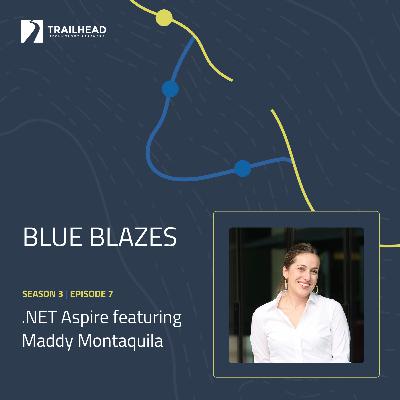
In this episode, host Jonathan “J.” Tower talks with Maddy Montaquila from Microsoft’s .NET team about .NET Aspire—a tool aimed at simplifying modern cloud app development. They discuss how Aspire helps orchestrate services across languages and platforms, improves the local development experience, and introduces powerful diagnostics through OpenTelemetry and AI-powered log analysis. Maddy also shares the story behind Aspire’s creation, clears up common misconceptions, and gives a sneak peek at what’s coming in version 9.4.Guest Bio:Maddy Montaquila is a Senior Product Manager at Microsoft on the .NET team. Maddy has been shaping the .NET developer experience since 2018, with work spanning Xamarin, .NET MAUI, and now .NET Aspire. Her journey began as a Microsoft intern with the Xamarin team, where she discovered her passion for creating tools that help developers build modern, scalable applications. Outside of work, you’ll find Maddy singing with her band, big rav.
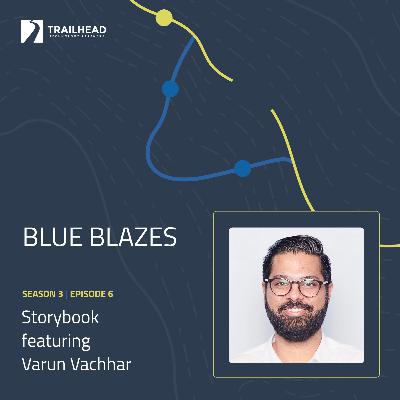
In this episode, host Jonathan “J.” Tower chats with Varun Vachhar from Chromatic about using Storybook to build, test, and document UI components in isolation. The conversation explores best practices for component-driven development, how visual and accessibility testing integrate into the workflow, and what’s new in Storybook 9.Guest Bio:Varun Vachhar is a DX engineer and generative artist focused on design systems, front-end tooling, and creative coding. He’s a core maintainer of Storybook and part of the DX team at Chromatic, where he builds tools to improve developer workflows. Outside of work, Varun uses tools like Canvas, SVG, and WebG to create generative art blending geometry, color, and motion. Originally from New Delhi, he now lives in Toronto.
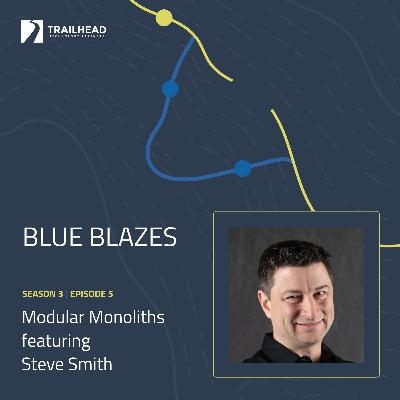
In this episode, host Jonathan “J.” Tower chats with Steve Smith about the modular monolith, an architecture that delivers microservices‑style modularity within a single in‑process deployment. The conversation covers designing modules, leveraging in‑memory messaging for event‑driven workflows, and choosing between vertical‑slice and clean architecture patterns.Guest Bio:Steve Smith, or "ardalis" as he is known online, is an entrepreneur and software developer with a passion for building quality software as effectively as possible. He's a Microsoft MVP, a frequent speaker at developer conferences, an author, and a trainer who has published courses on Pluralsight and Dometrain covering DDD, SOLID, design patterns, and software architecture. Steve works with clients through his company, NimblePros. They help teams that want to avoid the trap of technical debt to deliver better software faster.
In this episode, host Jonathan "J." Tower and his guest, Mary Grygleski, delve into the intricacies of event streaming within distributed systems. They explore the definition of event streaming, its comparison with traditional messaging techniques, and the unique features of platforms like Apache Pulsar and Kafka. The discussion highlights the synergy between AI and event streaming, the challenges of debugging distributed systems, and practical advice for newcomers looking to get started in this field.Guest Bio:Mary Grygleski is the Director of Emerging Technologies at Callibrity. With over 20 years of engineering experience, Mary has become a leader in developer and customer advocacy. She has worked for major companies like IBM, US Cellular, Bank of America, and Chicago Mercantile Exchange. She is Java Champion, serves as President of the Chicago Java Users Group, and is Co-Lead for AICamp’s Chicago Chapter.
In this episode, host Jonathan "J." Tower sits down with Guy Royse to explore the power of Redis, an in-memory data store designed around classic data structures. They discuss how Redis enhances application performance and simplifies architectural complexity.The conversation extends to more advanced Redis topics, including its support for data structures like lists and sets, as well as use cases such as session storage, PubSub messaging, and event streams. They also examine Redis' evolving role as a lightweight document and vector database. Finally, they delve into persistence options, clustering and replication strategies, and best practices for managing connection limits and memory usage.Guest Bio:Guy Royse is a Developer Advocate at Redis. With decades of experience in software development and a passion for teaching, Guy is a familiar face in developer communities worldwide. He runs a JavaScript meetup in Ohio, has served on conference selection committees, and has even taught programming in a central Ohio prison.
In this episode, host Jonathan "J." Tower speaks with Sarah Dutkiewicz about Event Storming and how it helps teams unravel complex systems. They discuss the origins of Event Storming in Domain-Driven Design (DDD) and its effectiveness in bridging communication gaps between technical and non-technical stakeholders. Sarah explains the different types of Event Storming—big picture, process modeling, system design, and refactoring—and shares best practices for facilitating a session. They also compare Event Storming with UML and ERP modeling, highlighting its flexibility and focus on collaboration.Guest Bio:Sarah Dutkiewicz, known as "Sadukie," is a software developer, mentor, and technical community leader. She has extensive experience in software architecture, data solutions, and developer education. Passionate about knowledge sharing, Sarah speaks at conferences, organizes community events, and helps teams navigate complex technical challenges. She is also an advocate for improving documentation and communication in software projects.References:EventStorming by Alberto BrandoliniThe EventStorming Handbook by Paul RaynerEventStorming.com50,000 Stickies Later – Alberto Brandolini (Explore DDD 2017)100,000 Stickies Later – Alberto Brandolini (Øredev 2019)
In this episode, host Jonathan "J." Tower speaks with Carey Payette about Terraform and Infrastructure as Code (IAC). They discuss the benefits of using Terraform for managing cloud infrastructure, including its declarative approach, multi-cloud capabilities, and integration with CI/CD pipelines. Carey emphasizes the importance of managing environment drift, utilizing modules for reusability, and best practices for secrets management. The discussion also touches on comparisons with Ansible, ARM templates, and Bicep, providing insights into when to use each.
Guest Bio:
Carey Payette is a Senior Software Engineer with Trillium Innovations (a Solliance partner), an ASPInsider, a member of the Progress Ninja program, a Microsoft Certified Trainer, and a Microsoft Azure MVP. Her primary focus is Cloud integration and deployment for the web, mobile, big data, AI, machine learning, and IoT spaces. Always eager to learn, you will find her tinkering regularly with various sensors, microcontrollers, programming languages, and frameworks. Carey is also a wife and Mom to three fabulous boys.
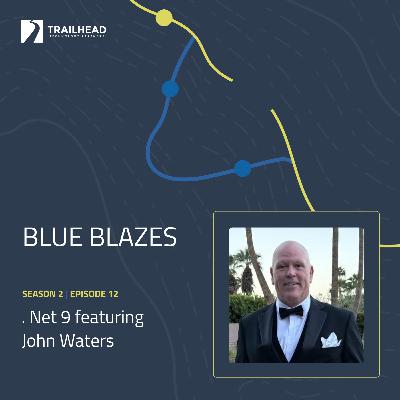
In this episode, host Jonathan "J." Tower speaks with fellow Trailhead partner John Waters about the latest features in .NET 9. They dive into the platform’s new capabilities, exploring how updates like performance enhancements, expanded platform support, and cutting-edge tooling empower developers to build scalable, high-performance, modern applications. John shares his insights on which features stand out the most and how they can be leveraged effectively in real-world scenarios. Tune in to discover how .NET 9 can elevate your software development projects.
Guest Bio:
John Waters is a seasoned technology leader, accomplished architect, and founding partner at Trailhead Technology Partners. With decades of experience in software architecture and a career spanning the U.S. and Sweden, John has delivered innovative solutions for many different industries including public transit, finance, and healthcare.
John was previously recognized as a Microsoft MVP three times, speaks at conferences worldwide, and is fluent in English, Swedish, and proficient in French. He is also a licensed pilot, bringing the same precision and focus to the skies as he does to software development.
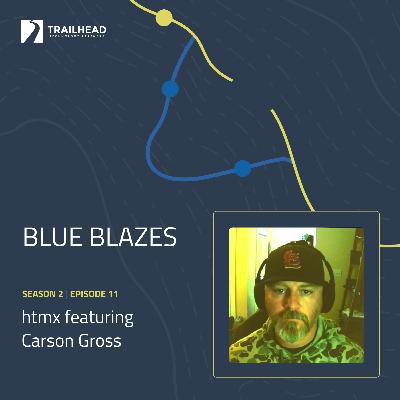
In this podcast episode, host Jonathan “J.” Tower speaks with Carson Gross, creator of htmx, about simplifying web development with hypermedia-based design. Carson shares the story behind htmx, a JavaScript library that enhances HTML for interactivity without the need for complex JavaScript frameworks. Tune in to learn how htmx can help you simplify your web development through its easy-to-use extensions to HTML that power AJAX-driven interactions.
Guest Bio:
Carson Gross is a software developer, educator, and author with a passion for web development and hypermedia. He is the Principal at Big Sky Software and teaches Computer Science at Montana State University. Carson is co-author of the book Hypermedia Systems, which explores building distributed applications with hypermedia, using tools like htmx.
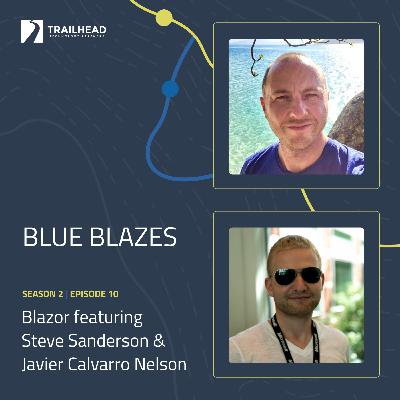
In this episode, host Jonathan “J.” Tower speaks with Steve Sanderson and Javier Calvarro Nelson about Blazor, a web UI framework for .NET. They explore the various capabilities of Blazor, including its support for WebAssembly, server-side rendering, and mobile applications via .NET MAUI. Steve and Javier discuss the different modes Blazor can operate in, such as server, WebAssembly, and auto mode, and how these modes enhance flexibility and performance. They also delve into the challenges and solutions related to SEO, security, and state management in Blazor applications. Tune in to learn how Blazor can help you build versatile and efficient web applications using .NET.
Guest Bios:
Steve Sanderson is a developer/architect on the .NET team at Microsoft. He’s worked on web applications and frameworks for most of his career, creating one of the original popular SPA frameworks (knockout.js) and later Blazor, the leading .NET web UI framework.
Javier Calvarro Nelson is a Principal Software Engineer at Microsoft with over a decade of experience working on ASP.NET and Blazor. He has been a key developer on the Blazor project since its inception, making significant contributions across all its variants: Server, WebAssembly, and Hybrid. Additionally, he has enhanced the ASP.NET ecosystem with features such as Razor Class Libraries, Static Assets support, and Static Server-Side Rendering for Blazor applications. Javier is passionate about creating innovative solutions that empower developers to achieve their goals.
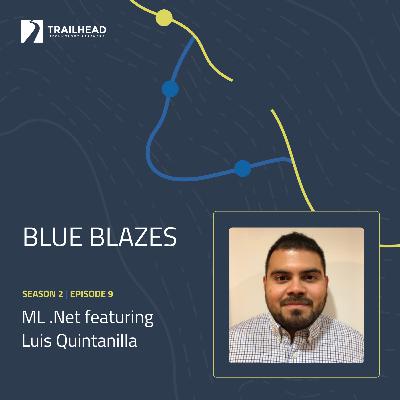
In this episode, host Jonathan “J.” Tower speaks with Luis Quintanilla about ML.NET, an open-source, cross-platform machine learning framework within the .NET ecosystem. They delve into the capabilities of ML.NET, including building data transformation pipelines and training custom models. Luis explains how ML.NET simplifies the machine learning process for .NET developers, making it accessible without needing extensive data science expertise. Tune in to learn how ML.NET can help you incorporate machine learning into your .NET applications efficiently and effectively.
Guest Bio:
Luis Quintanilla is a Program Manager at Microsoft, based in New York, with a deep focus on machine learning and software development. He currently works on ML.NET, helping .NET developers train, test, and use machine learning models in their applications. Outside of work, he enjoys experimenting with different technologies and sharing his insights with the broader tech community.
In this episode, host Jonathan "J." Tower speaks with Neal about architectural fitness functions and how they can serve as unit tests for your software architecture. They explore how incorporating fitness functions into your development process ensures that your system's architectural characteristics remain consistent and reliable over time. They also look at why automating these checks allows you to catch deviations early and maintain a high standard of quality in your projects.
Guest Bio:Neal Ford is a Director and Software Architect at Thoughtwork and an internationally recognized expert in software development, focusing on agile engineering techniques and software architecture. Neal has authored nine books including Fundamentals of Software Architecture and Building Evolutionary Architectures. You can find him sharing his expertise at software events around the world as well as on his website, nealford.com.

In this episode of Blue Blazes, host Jonathan "J." Tower speaks with Jimmy Bogard about vertical slice architecture (VSA) and how using it in your software projects can help make them more predictably successful. We delve into how VSA organizes your code by feature, allowing you to more easily and reliably make the most common type of changes to your application.
Guest Bio:
Jimmy Bogard is best known for his contributions to open-source software, particularly as the creator of AutoMapper and MediatR. Jimmy is an independent consultant and partner at Solliance, where he helps enterprises build robust and scalable software solutions. He is a 15-time recipient of the Microsoft MVP award. You can find him at many events around the world sharing his expertise.
In this episode of Blue Blazes, host Jonathan "J." Tower speaks with Mark Richards about how architecture decision records can improve your software development process. You might know Mark from his books.
This episode includes lots of ground, including:
The best place to store your ADRs where they are accessible and versionable.
How you can use ADRs to document key decisions and their rationale.
Tips for preventing recurring debates about past architectural decisions.
The best way to improve collaboration and understanding between developers and stakeholders.
Guest Bio:
Mark is the author of Fundamentals of Software Architecture, Software Architecture: The Hard Parts, and Head First Software Architecture, which he co-authored with Neal Ford. Mark is the founder of DeveloperToArchitect.com, a free website devoted to helping developers on their journey to becoming a software architect. He has spoken at hundreds of conferences and user groups around the world and is an experienced software architect involved in the architecture, design, and implementation of microservices architectures and other distributed systems in a variety of technologies.
In this episode of Blue Blazes, host Jonathan "J." Tower speaks with Mike Hartington from Ionic about the ins and outs of hybrid mobile app development. Mike, an expert in mobile development, gives listeners a great overview of why you would want to explore building your applications as hybrid apps instead of native apps.
A few of the topics covered include:
How using a familiar set of web technologies to build your mobile apps drives efficiencies
On-the-fly updates to apps
Use cases like games where hybrid web apps aren't a good option
About Today's Blue Blazes Guest
Mike Hartington is a developer, Angular GDE, and Director of Developer Advocacy at Ionic who’s been working in the mobile landscape for most of his professional career.
When he’s not working on Ionic itself, Mike works with community members and helps them succeed at mobile. In his spare time, he’s an aspiring woodworker, occasional musician, and craft beer lover.

Comments

Download from Google Play

Download from App Store
 United States