


 Claim Ownership
DataFramed
Subscribed: 5,536Played: 109,064
Subscribe

© 2022 DataFramed
Description
Welcome to DataFramed, a weekly podcast exploring how artificial intelligence and data are changing the world around us. On this show, we invite data & AI leaders at the forefront of the data revolution to share their insights and experiences into how they lead the charge in this era of AI. Whether you're a beginner looking to gain insights into a career in data & AI, a practitioner needing to stay up-to-date on the latest tools and trends, or a leader looking to transform how your organization uses data & AI, there's something here for everyone.
Join co-hosts Adel Nehme and Richie Cotton as they delve into the stories and ideas that are shaping the future of data. Subscribe to the show and tune in to the latest episode on the feed below.
Join co-hosts Adel Nehme and Richie Cotton as they delve into the stories and ideas that are shaping the future of data. Subscribe to the show and tune in to the latest episode on the feed below.
377 Episodes
Reverse
Decision intelligence is showing up across data and AI teams as companies move beyond dashboards to decisions made with context. Graphs, entity resolution, and better data products are becoming core tools as messy, siloed data meets stricter risk and compliance needs. In day-to-day work, this means linking “James,” “Jim,” and “Jamie” across systems, enriching records with third‑party sources, and pushing models where the data already lives in your lakehouse. How do you trust your customer counts? Which links in a graph matter, and which are noise? Can graph-based context reduce LLM hallucinations enough for regulated decisions with humans still in-loop.Jamie Hutton is the Co-founder and Chief Technology Officer of Quantexa, where he leads the company’s global research and development organization in advancing its market-leading Decision Intelligence Platform. With over two decades of experience pioneering data-driven technologies, Jamie has been at the forefront of innovations that connect and unify data at scale to solve complex real-world challenges. He is the creator of dynamic Entity Resolution, a pioneering capability that has redefined how the world’s leading organizations transform raw data into trusted, decision-ready intelligence. This innovation enables enterprises to prepare their data for AI, uncover new revenue streams, and expose hidden connections in even the most sophisticated criminal networks. By providing the foundation for accurate, explainable, and actionable insights, Jamie’s work has empowered governments, financial institutions, and global enterprises to make faster, smarter, and more confident decisions.Prior to co-founding Quantexa, Jamie held senior technology and analytics leadership roles at SAS and Detica, where he delivered mission-critical solutions for organizations operating in some of the most complex and high-stakes environments in the world. Jamie holds a First-Class master’s degree in computer engineering and is recognized as a leading authority in contextual analytics, data integration, and applied AI for mission-critical decision-making.In the episode, Richie and Jamie explore decision intelligence beyond BI, entity resolution across siloed data, building context graphs for fraud, AML, credit risk, and growth, how graph analytics separates meaningful links from noise, graph-RAG for LLMs to cut hallucinations, human-in-the-loop workflows, and ways to start today, and much more.Links Mentioned in the Show:QuantexaDun & Bradstreet Data EnrichmentConnect with JamieAI-Native Course: Intro to AI for WorkRelated Episode: How Optimization Powers Decision Intelligence with Duke Perrucci & Ed Klotz, CEO and Senior Mathematical Optimization Specialist at Gurobi OptimizationExplore AI-Native Learning on DataCampNew to DataCamp?Learn on the go using the DataCamp mobile appEmpower your business with world-class data and AI skills with DataCamp for business
Data and AI platforms are racing toward agentic and even autonomous analytics. But the bottleneck is rarely the model—it’s data readiness: governed metrics, clear metadata, and a semantic layer machines can read. For data engineers and analysts, this shifts work from hand-built SQL and dashboard tweaks to designing meaning and trust. If an agent can draft column descriptions, propose a model for a new business question, and build the first dashboard layout, where do you add the most value? What do you measure to prove ROI in 30 days? How do you prevent “shiny demos” from driving strategy too early.Ketan Karkhanis is the CEO of ThoughtSpot. Prior to joining the company in September 2024, Ketan was the Executive Vice President and General Manager of Sales Cloud at Salesforce. He returned to Salesforce in March 2022 after his time as the COO of Turvo, an emerging supply-chain collaboration platform. Before that, Ketan spent nearly a decade at Salesforce, where he led product areas in Sales, Service Cloud, Lightning Platform, and finally Analytics, wherein as the Senior Vice President & GM of Einstein Analytics, he pioneered incredible innovation, customer success, and business acceleration from launch to over $300M and a 30,000 strong user community. Prior to Salesforce, Ketan was at Cisco Systems where he led various technology initiatives and initiatives spanning Customer Advocacy, Cisco Certifications & eLearning.In the episode, Richie and Ketan explore AI agents for analytics, why “self‑service BI” often fails, using agents to answer questions, build dashboards, and automate data modeling, how analyst and engineer roles shift toward governance and agent design, how transparency, culture, and ROI drive safe adoption, and much more.Links Mentioned in the Show:ThoughtspotThoughspot’s Spotter AgentsConnect with KetanAI-Native Course: Intro to AI for WorkRelated Episode: AI Agents at Work: What Actually Breaks (and How to Fix It) with Danielle Crop, EVP Digital Strategy & Alliances at WNSExplore AI-Native Learning on DataCampNew to DataCamp?Learn on the go using the DataCamp mobile appEmpower your business with world-class data and AI skills with DataCamp for business
AI agents are spreading across the data and AI industry, promising to automate everything from research to outreach. At the same time, teams are learning that these tools can hallucinate, leak data, or act in surprising ways. In day-to-day work, the challenge is deciding which tasks to hand off, what data to share, and how to keep the output trustworthy. Do your agents actually add value, or just add noise? Are they running in a secured, ring-fenced environment? How do you balance playful experimentation with critical checking when an agent confidently gets a key fact wrong?Danielle leads go-to-market strategy at WNS, Capgemini's AI transformation services arm. Previously, Danielle was Chief Data Officer at American Express and Albertsons. She also write The Remix substack on technology trends, and is an Editorial Board Member for CDO Magazine.In the episode, Richie and Danielle explore AI agents at work, experimentation with guardrails, data privacy, access, tone controls, OpenClaw automation wins and failures, token costs, tying AI plans to P&L strategy, shifts in careers and hiring, how data teams handle unstructured data governance, and much more.Links Mentioned in the Show:WNSConnect with DanielleAI-Native Course: Intro to AI for WorkCatch Danielle speaking at RADAR—April 1Related Episode: AI Agents Are the New Shadow IT (And Your Governance Isn’t Ready) with Stijn Christiaens, CEO at CollibraExplore AI-Native Learning on DataCampNew to DataCamp?Learn on the go using the DataCamp mobile appEmpower your business with world-class data and AI skills with DataCamp for business
World models are emerging as the next step after large language models, pushing AI from book knowledge toward systems that can simulate the physical and social world. Instead of just generating text or short videos, the goal is steerable simulation with long-horizon consistency and planning. For practitioners, this raises practical choices: what data and representations do you need, and when do you mix symbolic reasoning with generative models? How do you test whether a model can follow actions over minutes, not seconds? And where do you start—robotics, driving safety, or synthetic data generation?Professor Eric Xing is President of Mohamed bin Zayed University of Artificial Intelligence (MBZUAI) and a world-leading computer scientist whose work spans statistical machine learning, distributed systems, computational biology, and healthcare AI. A fellow of AAAI, IEEE, and the American Statistical Association, he has authored over 400 research papers cited more than 44,000 times.Before MBZUAI, Eric was a Professor of Computer Science at Carnegie Mellon University, where he also founded the Center for Machine Learning and Health. He is the founder and chief scientist of Petuum Inc., recognized as a World Economic Forum Technology Pioneer, and has held visiting roles at Stanford and Facebook. He holds PhDs in both Molecular Biology and Computer Science.In the episode, Richie and Eric explore world models as simulators for action, the jump from book intelligence to physical and social skills, why long-horizon planning is still hard, architectures, robots, data generation, open K2 Think LLMs, virtual-cell biology, and much more.Links Mentioned in the Show:MBZUAIPan World ModelConnect with EricAI-Native Course: Intro to AI for WorkRelated Episode: Developing Better Predictive Models with Graph Transformers with Jure Leskovec, Pioneer of Graph Transformers, Professor at StanfordExplore AI-Native Learning on DataCampNew to DataCamp?Learn on the go using the DataCamp mobile appEmpower your business with world-class data and AI skills with DataCamp for business
Across the AI industry, high-stakes tools are being deployed in places where errors can harm people: sepsis alerts in hospitals, identity checks, welfare fraud detection, immigration enforcement, and recommendation systems that shape life outcomes. The pattern is familiar: scale and speed go up, while human review becomes rushed, shallow, or punished for disagreeing. In daily work, that can look like a nurse forced to act on false alarms, or a team using an LLM summary in ways the designers never planned. When should you slow down deployment? How do you detect new “wild” use cases early? And what does responsible tracking and oversight look like under real pressure?Atay Kozlovski is a Postdoctoral Researcher at the University of Zurich’s Center for Ethics. He holds a PhD in Philosophy from the University of Zurich, an MA in PPE from the University of Bern, and a BA from Tel Aviv University. His current research focuses on normative ethics, hard choices, and the ethics of AI.In the episode, Richie and Atay explore why AI failures keep happening, from automation bias to opaque targeting and hiring models. They unpack “meaningful human control,” accountability, and design in healthcare, government, and warfare. You’ll also hear about deepfakes, consent, digital twins, and AI-driven civic engagement, and much more.Links Mentioned in the Show:“Lavender” IDF recommendation systemAmnesty International reports on AI/automation in welfare systems“Meaningful Human Control” (MHC) frameworkConnect with AtayAI-Native Course: Intro to AI for WorkRelated Episode: Harnessing AI to Help Humanity with Sandy Pentland, HAI Fellow at StanfordExplore AI-Native Learning on DataCampNew to DataCamp?Learn on the go using the DataCamp mobile appEmpower your business with world-class data and AI skills with DataCamp for business
Data governance has been around long enough to develop playbooks, but AI governance is evolving in real time. Industry trends like LLMs, agents, and emerging “swarms” are changing what oversight even means, from data lineage to agent-to-agent provenance.For working teams, the questions are immediate: who leads—legal, security, IT, data, or a new AI role? How do you set standards so engineers aren’t using a different tool for every task? What maturity framework should you measure against, and how often should you reassess as technology shifts? How do you help teams move fast without breaking trust?Stijn is a data governance veteran and one of the leading thinkers in the space. He runs data strategy, data infrastructure, and product evangelism at the data and AI governance company Collibra. Since founding Collibra 18 years ago, Stijn has held several executive positions, including COO and CTO.In the episode, Richie and Stijn explore AI governance failures and wins, risks from agents that can act on systems, creating visibility with an agent registry, how AI governance differs from data governance, ownership across legal, security, IT, and data teams, EU AI Act risk tiers, and much more.Links Mentioned in the Show:CollibraConnect with StijnAI-Native Course: Intro to AI for WorkRelated Episode: The New Paradigm for Enterprise AI Governance with Blake Brannon, Chief Innovation Officer at OneTrustExplore AI-Native Learning on DataCampNew to DataCamp?Learn on the go using the DataCamp mobile appEmpower your business with world-class data and AI skills with DataCamp for business
Automation is moving from APIs to full “computer use,” where agents click through screens like a human. That power is transforming evidence collection, access reviews, and repetitive security tasks, but it also raises new risk. In everyday workflows, the safest gains often start with read-only actions, sandboxes, and clear opt-in for anything that writes changes. Do your tools know when an access request is an anomaly? Can you keep humans in the loop with fast review-and-approve steps? And if an agent can browse your systems, how do you stop data from walking out the door before customers or attackers notice?Jeremy Epling is Chief Product Officer at Vanta, where he leads product strategy and execution for the company’s trust management platform. He focuses on helping organizations automate security and compliance, enabling them to build and scale with confidence.Previously, he was VP of Product at GitHub, overseeing Actions, Codespaces, npm, and Packages—core components of the modern developer workflow used by millions worldwide. Before GitHub, Jeremy spent more than 16 years at Microsoft, leading product teams across Azure DevOps Pipelines and Repos, OneDrive, Outlook, Windows, and Internet Explorer. His work has centered on developer platforms, cloud infrastructure, and productivity tools at global scale.In the episode, Richie and Jeremy Epling explore AI-driven security risks, vendor data use and trade-secret leakage, governance and access controls, compliance beyond audits, how agents automate security questionnaires and vendor reviews, how to ship faster safely, human-in-the-loop design, and “computer use” automation, and much more.Links Mentioned in the Show:VantaVanta State of Trust ReportConnect with JeremyAI-Native Course: Intro to AI for WorkRelated Episode: Governing Pandora's Box: Managing AI Risks with Andrea Bonime-Blanc, CEO at GEC Risk AdvisoryExplore AI-Native Learning on DataCampNew to DataCamp?Learn on the go using the DataCamp mobile appEmpower your business with world-class data and AI skills with DataCamp for business
Physical AI is showing up across the industry as sensors, connected devices, and foundation models move from the cloud into the real world. After years of IoT wiring everything to the internet, the big shift is turning raw measurements and video into meaning, not just dashboards. For day-to-day teams, that changes how you monitor equipment, detect failures, and decide what to do next. When thousands of sensor streams hit storage, who turns them into insights and recommendations fast enough to matter? Can one model generalize across different sensors and conditions? And what must run on the asset versus the cloud?Dr. Ivan Poupyrev is CEO and Founder of Archetype AI, where he is building a multimodal AI foundation model that combines real-time sensor data and natural language to help people and organizations better understand and act on the physical world. The company is developing a developer platform to unlock new applications of Physical AI across industries.Previously, he was Director of Engineering at Google’s Advanced Technology and Projects (ATAP) division, where he founded and led large cross-functional teams to create Soli, a radar-based sensing platform, and Jacquard, a connected apparel platform powered by smart textiles and embedded ML. These technologies shipped in more than 15 products across 33 countries, including collaborations with Levi’s, YSL, Adidas, and Samsonite, and were integrated into flagship devices such as Pixel 4 and Nest products. His work has been widely published, recognized with major international awards, and featured in global media.In the episode, Richie and Ivan explore physical AI beyond robotics, turning IoT sensor streams into insights, recommendations, and automation, why physical foundation models differ from LLMs, sensor-fusion wins like wind-turbine failure alerts, edge deployment and privacy, how to pick a first project in practice, and much more.Links Mentioned in the Show:Archetype AIAttention Is All You Need (Original Transformer Architecture Paper)A Mathematical Theory of Communication (Shannon, 1948)Connect with IvanAI-Native Course: Intro to AI for WorkRelated Episode: Enterprise AI Agents with Jun Qian, VP of Generative AI Services at OracleExplore AI-Native Learning on DataCampNew to DataCamp?Learn on the go using the DataCamp mobile appEmpower your business with world-class data and AI skills with DataCamp for business
Quantum computing is advancing fast, but it comes with a core industry challenge: noise. The big promise—better simulations, faster optimization, and maybe new kinds of AI—depends on quantum error correction and scaling from physical qubits to reliable logical qubits. For working professionals, that translates into system design questions, not just theory. How do you budget for the overhead of error correction? What does a hybrid quantum‑classical workflow look like when classical processors must process error data in real time? If a quantum approach shows “advantage” today, how do you know a better classical heuristic won’t catch up next month? Where should you focus first: hardware readiness or use cases?Dr. Yonatan Cohen is a physicist, entrepreneur, and co-founder of Quantum Machines, where he serves as Chief Technology Officer. He earned his Ph.D. at the Weizmann Institute of Science in Israel, focusing on quantum electronics, superconducting–semiconducting devices, and microfabrication. He is also a co-founder and former managing director of the Weizmann Institute’s entrepreneurship program and has published extensively in peer-reviewed journals, with recognized contributions to quantum computing. As CTO, Dr. Cohen has played a key role in developing the Quantum Orchestration Platform, a first-of-its-kind control and operating system for quantum computers that accelerates the path to practical, useful quantum systems.In the episode, Richie and Yonatan explore near-term quantum simulation, encryption risks, the open question of quantum AI, noisy qubits and error correction, physical vs logical scaling, the need for algorithms and use cases, how to try quantum coding via Amazon Braket, and much more.Links Mentioned in the Show:Quantum MachinesAmazon BraketIBM QiskitNVIDIA Cuda QuantumGoogle CirqConnect with YonatanAI-Native Course: Intro to AI for WorkRelated Episode: Developing Better Predictive Models with Graph Transformers with Jure Leskovec, Pioneer of Graph Transformers, Professor at StanfordExplore AI-Native Learning on DataCampNew to DataCamp?Learn on the go using the DataCamp mobile appEmpower your business with world-class data and AI skills with DataCamp for business
AI moves fast, and the news cycle can feel like a fire hose. New tools like agents and digital twins promise to help, but they also add more choices and noise. In day-to-day work, the challenge is less about knowing every breakthrough and more about deciding what matters, then making time to act. How do you cut meetings down, say no without friction, and still ship real work? How do you open your mind to new ideas while avoiding hype? And when you do spot a signal, how do you turn it into action across teams, stakeholders, and shifting priorities.As the Head of Global Innovation at ServiceNow, Brian Solis drives vision and strategy for future-focused innovation. He has three decades of experience as a technology leader, and Forbes called him "one of the more creative and brilliant business minds of our time". Previously, Brian was VP of Global Innovation at Salesforce. He has written nine books, including the best selling "Mindshift". Brian is an author of the ServiceNow Enterprise AI Maturity Index 2025 Report.In the episode, Richie and Brian explore the challenges of staying updated with AI advancements, the importance of mindset shifts for innovation, the role of storytelling in driving change, and practical strategies for managing information overload, fostering organizational transformation, and much more.Links Mentioned in the Show:Brian’s Book: MindshiftServiceNowConnect with BrianAI-Native Course: Intro to AI for WorkRelated Episode: The New Paradigm for Enterprise AI Governance with Blake Brannon, Chief Innovation Officer at OneTrustExplore AI-Native Learning on DataCampNew to DataCamp?Learn on the go using the DataCamp mobile appEmpower your business with world-class data and AI skills with DataCamp for business
AI leaders talk about innovation, but the wider reality is messy: fast change, uneven guardrails, and threats that span cyber, reputation, and customer harm. Industry-wide, organizations are shifting from one-off compliance to lifecycle governance—from inception to decommissioning—supported by boards, CEOs, and frontline teams. For professionals, that shows up as coordination work: shared metrics, incentives for responsible delivery, embedded ethics partners, and rapid-response groups when a new risk appears. How do you decide who is accountable for model behavior? What signals should trigger escalation? And what sources can you trust to stay informed without getting overwhelmed?Andrea Bonime-Blanc, JD/PhD, is founder and CEO of GEC Risk Advisory, a board member, strategic advisor, and award-winning author. She specializes in the governance of change, advising companies, NGOs, and governments on global strategic risk, leadership trust, geopolitics, sustainability, cyber resilience, and exponential technologies. A former C-suite executive at four global companies, including Bertelsmann and PSEG, she has held roles spanning legal, risk, ethics, sustainability, and cybersecurity, and currently serves on multiple boards and advisory boards.Andrea is a Senior Fellow at The Conference Board, NYU’s Center for Global Affairs, and an AI Ethics Strategy Fellow at the American College for Financial Services. She is a sought-after keynote speaker and media commentator, appearing in outlets such as Bloomberg, the Financial Times, and The New York Times. She is the author of several books, including Gloom to Boom and most recently, Governing Pandora: Leading in the Age of Generative AI and Exponential Technology.In the episode, Richie and Andrea explore the rapid advancements in AI, the balance between innovation and risk, the importance of adaptive governance, the role of leadership in tech governance, and the integration of ethics in AI development, and much more.Links Mentioned in the Show:Andrea’s Book—Governing Pandora: Leading in the Age of Generative AI and Exponential TechnologyMIT AI Risk RepositoryConnect with AndreaAI-Native Course: Intro to AI for WorkRelated Episode: Rebuilding Trust in the Digital Age with Jimmy Wales, Founder at WikipediaExplore AI-Native Learning on DataCampNew to DataCamp?Learn on the go using the DataCamp mobile appEmpower your business with world-class data and AI skills with DataCamp for business
 1
1Data and AI teams are drowning in tools, but the big trend is consolidation and speed. AI-driven building is making dashboards, internal apps, and even data workflows feel more like products than reports. Custom interfaces, interactive presentations, and ad hoc apps are becoming easier to create than traditional BI artifacts.For working professionals, this raises practical questions: should you build a bespoke reporting site instead of another spreadsheet? Can you connect secure data views and prevent leaks by design? What does quality control look like when an agent writes the code—separate chats, clear plans, and tests? And what’s the real cost of going from idea to deployed app: a few dollars, or hundreds?Matt Palmer works at the intersection of developer experience, product marketing, and AI education. Leading Developer Relations at Replit, he helped grow Replit's revenue from $5M to $100M+. He creates content on vibe-coding, data transformation, AI, and more—blending technical depth with accessibility to empower developers and make complex tools approachable.In the episode, Richie and Matt explore the power of vibe coding, how non-developers are building impactful tools, the potential of AI in app development, the role of Replit in simplifying coding, and the future of personalized applications in data teams, and much more.Links Mentioned in the Show:ReplitCourse: Vibe Coding with ReplitYour Guide to ReplitConnect with MattAI-Native Course: Intro to AI for WorkRelated Episode: Building & Managing Human+Agent Hybrid Teams with Karen Ng, Head of Product at HubSpotExplore AI-Native Learning on DataCampNew to DataCamp?Learn on the go using the DataCamp mobile appEmpower your business with world-class data and AI skills with DataCamp for business
AI tools are becoming part of daily work for more professionals than ever before, yet adoption rates vary significantly across functions and company sizes. What separates organizations that successfully integrate AI from those that struggle? How do psychological factors like identity and autonomy shape how workers respond to AI implementation? And what role does corporate culture play in determining whether AI becomes a source of innovation or a point of resistance?Stefano Puntoni is the Sebastian S. Kresge Professor of Marketing at The Wharton School. Prior to joining Penn, Stefano was a professor of marketing and head of department at the Rotterdam School of Management, Erasmus University, in the Netherlands. He holds a PhD in marketing from London Business School and a degree in Statistics and Economics from the University of Padova, in his native Italy. His research has appeared in several leading journals, including Journal of Consumer Research, Journal of Marketing Research, Journal of Marketing, Nature Human Behavior, and Management Science. He also writes regularly for managerial outlets such as Harvard Business Review and MIT Sloan Management Review. Most of his ongoing research investigates how new technology is changing consumption and society, including how humans are adopting and evolving with AI.He is a former MSI Young Scholar and MSI Scholar, and the winner of several grants and awards. He is currently an Associate Editor at the Journal of Consumer Research and at the Journal of Marketing. Stefano teaches in the areas of marketing strategy, new technologies, brand management, and decision making.In the episode, Richie and Stefano explore the challenges of AI adoption in businesses, the psychological impacts on workers, the balance between human expertise and AI, the potential mental health effects of AI chatbots, and much more.Links Mentioned in the Show:Wharton SchoolConnect with StefanoMIT Report—The GenAI Divide: State of AI in Business 2025Wharton Report—Gen AI Fast-Tracks Into the EnterpriseAI-Native Course: Intro to AI for WorkRelated Episode: How to Build AI Your Users Can Trust with David Colwell, VP of AI & ML at TricentisExplore AI-Native Learning on DataCampNew to DataCamp?Learn on the go using the DataCamp mobile appEmpower your business with world-class data and AI skills with DataCamp for business
2026 is shaping up to be a pivotal year for data, AI, and how we work. From step-change improvements in foundation models to AI-native workflows reshaping careers, commerce, and education, the pace of change shows no signs of slowing. After revisiting and scoring their previous predictions, Richie, Jo, and Martijn turn their focus to what’s coming next in 2026.Building on last year’s discussion, we explore how AI will transform hiring and career progression, why personal AI tutors could become the default learning experience, how AI agents may begin executing real economic activity, and whether we’re on the brink of another “GPT-3 moment” driven by new hardware and scaling.Links Mentioned in the Show:Blog: The Junior Hiring CrisisBlog: The agentic commerce opportunity: How AI agents are ushering in a new era for consumers and merchantsAlex Banks on the ChatGPT era endingSpec & Evals Driven Agent Development (SEDAD) TemplateAI-Native Course: Intro to AI for WorkRelated Episode: Reviewing Our Data Trends & Predictions of 2025 with DataCamp's CEO & COO, Jonathan Cornelissen & Martijn TheuwissenExplore AI-Native Learning on DataCampNew to DataCamp?Learn on the go using the DataCamp mobile appEmpower your business with world-class data and AI skills with DataCamp for business
2025 was another huge year for data and AI. Generative AI continued to reshape how we work and interact with technology, with organizations moving beyond experimentation and pushing AI firmly into production. We saw major progress in foundation models, the rise of long-running AI agents, production-ready generative video, and wider adoption of synthetic data. At the same time, AI literacy, adoption, and ROI became central concerns for boards and executives, not just technical teams.This time last year, DataCamp Co-Founders Jonathan and Martijn made a series of predictions about data and AI for 2025. Today, they join Richie to reflect on how those predictions played out—and to share their vision for where data and AI are headed next.In the episode, Richie, Jonathan, and Martijn review the real-world adoption of generative AI, the shift from hype to production, the growing importance of AI literacy and usage at the executive level, the rise of longer-running AI agents, the near-mainstreaming of generative video, Europe’s position in the global AI race, why educators may be among the biggest AI adopters, and why AI hype continues to thrive—plus what they got right, what they got wrong, and what comes next.Links Mentioned in the Show:The DataCamp Data & AI Literacy Report 2025AI-Native Course: Intro to AI for WorkRelated Episode: Data Trends & Predictions 2025 with DataCamp's CEO & COO, Jonathan Cornelissen & Martijn TheuwissenExplore AI-Native Learning on DataCampNew to DataCamp?Learn on the go using the DataCamp mobile appEmpower your business with world-class data and AI skills with DataCamp for business
Self-service analytics has been a goal for data teams for years, but recent advances in AI are accelerating progress in unexpected ways. The combination of natural language interfaces and spreadsheet-like tools is lowering barriers to data access across organizations. But how do you balance the freedom of self-service with the need for governance and accuracy? What skills do analysts need to work effectively with AI systems that don't always produce the same results twice? And when AI-generated answers might be slightly off, how do you know when to trust them?Mike Palmer is Chief Executive Officer of Sigma , where he leads the company’s strategy and growth as a cloud-native analytics and business intelligence platform. Since joining Sigma in 2020, he has focused on expanding access to cloud data by enabling business users to analyze data warehouses through familiar, spreadsheet-based workflows. Prior to Sigma, Mike served as Chief Product Officer at Druva, where he was part of the executive team scaling the company’s cloud data management platform and supporting rapid revenue growth. Before that, he was EVP and Chief Product Officer at Veritas Technologies, leading the transformation and modernization of a large enterprise data protection portfolio following its separation from Symantec. Earlier in his career, he held senior general management and executive roles at Seagate Technology and Verizon Enterprise Solutions, overseeing large-scale cloud, security, and enterprise infrastructure businesses. Mike is based in San Francisco and has spent his career building and operating enterprise data and analytics platforms at scale.In the episode, Richie and Mike explore the journey towards self-service analytics, the role of AI in democratizing data access, the challenges of stochastic processes, the evolution of analytics applications, how businesses can leverage AI for personalized insights, the future of enterprise software, and much more.Links Mentioned in the Show:SigmaConnect with MikeCourse: Introduction to SigmaAI-Native Course: Intro to AI for WorkRelated Episode: Self-Service Generative AI Product Development at Credit Karma with Madelaine Daianu, Head of Data & AI at Credit KarmaExplore AI-Native Learning on DataCampNew to DataCamp?Learn on the go using the DataCamp mobile appEmpower your business with world-class data and AI skills with DataCamp for business

AI governance is becoming critical as organizations deploy more intelligent systems across their operations. With predictions of over a billion AI agents entering the workforce in the coming years, traditional governance approaches simply cannot keep pace. How do you ensure your AI systems are using data responsibly without slowing down innovation? What happens when an AI agent makes decisions that were never explicitly programmed? And how do you build governance processes that scale alongside rapidly expanding AI adoption while maintaining trust with customers and regulators?Blake Brannon is Chief Innovation Officer at OneTrust, where he leads product vision and strategic direction for the company’s AI-ready governance platform. He has been with OneTrust since 2017, previously serving as Chief Technology Officer, and has played a key role in scaling the platform to support privacy, data governance, risk, and responsible AI initiatives for large enterprises. Blake is based in Atlanta and holds an academic background from the Georgia Institute of Technology, with early research experience in network systems and wireless communications.In the episode, Richie and Blake explore AI governance disasters, the importance of consent and data use, the rise of AI agents, the challenges of scaling governance processes, the need for continuous observability, the role of governance committees, strategies for effective AI governance in organizations, and much more.Links Mentioned in the Show:OneTrustConnect with BlakeAI-Native Course: Intro to AI for WorkRelated Episode: From City Sewers to Sovereign AI with Russ Wilcox, CEO at ArtifexAIExplore AI-Native Learning on DataCampNew to DataCamp?Learn on the go using the DataCamp mobile app Empower your business with world-class data and AI skills with DataCamp for business
2025 was the year AI stopped being a curiosity and started reshaping real work. From data analysts speeding up entire workflows in minutes, to managers learning how to lead hybrid teams of humans and agents, the pace of change has been relentless. Across DataFramed this year, one theme kept surfacing: AI isn’t replacing data professionals—it’s raising the bar on what good looks like. Skills are shifting, careers are becoming more fluid, and organizations are being forced to rethink how they build teams, make decisions, and govern technology that now reasons, plans, and acts on our behalf. This Best of 2025 episode pulls together the most important ideas, voices, and debates from a year that fundamentally changed how data and AI show up in practice.In this special year-end roundup, Richie revisits the standout moments from DataFramed in 2025, spanning careers, business intelligence, data literacy, AI agents, industry use cases, and responsible AI foundations. You’ll hear why the data analyst role is evolving rather than disappearing, how hybrid human–AI teams are becoming the norm, and why communication remains the most underrated skill in data careers, the state of BI and data storytelling, the shift from training to behavior change in data and AI literacy, the rapid rise of agentic systems powered by reasoning at inference time. We also dive into real-world applications across healthcare, finance, and enterprise operations, alongside hard truths about data quality, governance, and model lineage. Finally, we spotlight advances in data science, NLP, and synthetic data—rounding out a year defined by faster cycles, higher expectations, and a renewed focus on getting the fundamentals right as AI scales.Episodes Featured in this Recap:#326 Is the Data Analyst Role Dying Out? with Mo Chen, Data & Analytics Manager at NatWest Group#319 Building & Managing Human+Agent Hybrid Teams with Karen Ng, Head of Product at HubSpot#295 How To Get Hired As A Data Or AI Engineer with Deepak Goyal, CEO & Founder at Azurelib Academy#294 Six Skills Data Professionals Need To Succeed with Abhijit Bhaduri, Brand Evangelist & Former General Manager of Global L&D at Microsoft#333 Creating an AI-First Data Team with Bilal Zia, Head of Data Science & Analytics at DuoLingo#310 The State of BI in 2025 with Howard Dresner, Godfather of BI#306 The Next Generation of Business Intelligence with Colin Zima, CEO at Omni#298 Data Storytelling Skills to Increase Your Impact with Kat Greenbrook, Author of The Data Storyteller's Handbook#323 The Evolution of Data Literacy & AI Literacy with Jordan Morrow, Godfather of Data Literacy#305 RAG 2.0 and The New Era of RAG Agents with Douwe Kiela, CEO at Contextual AI, Adjunct Professor at Stanford University, Inventor of RAG#316 Enterprise AI Agents with Jun Qian, VP of Generative AI Services at Oracle#328 The Challenges of Enterprise Agentic AI with Manasi Vartak, Chief AI Architect at Cloudera#308 A Framework for GenAI App and Agent Development with Jerry Liu, CEO at LlamaIndex#312 Can we Create an AI Doctor? with Aldo Faisal, Professor in AI & Neuroscience at Imperial College#288 How Generative AI is Transforming Finance with Andrew Reiskind, CDO at Mastercard#311 The Human Element of AI-Driven Transformation with Steve Lucas, CEO at Boomi#303 Increasing Your Organization's AI Maturity with Iwo Szapar & Eryn Peters, Founders at AI Maturity Index#286 Data Science Trends from 2 Kaggle Grandmasters with Jean-Francois Puget, Distinguished Engineer at NVIDIA & Chris Deotte, Senior Data Scientist at NVIDIA#275 Did Gen AI Kill NLP? with Meri Nova, Technical Founder at Break into Data#307 Human Guardrails in Generative AI with Wendy Gonzalez & Duncan Curtis, CEO & SVP of Gen AI at SamaNew to DataCamp?Learn on the go using the DataCamp mobile appEmpower your business with world-class data and AI skills with DataCamp for business

The concept of sovereign AI is becoming increasingly critical in our interconnected world. Nations and organizations are grappling with who controls the data, infrastructure, and technology that power artificial intelligence systems. But what does this mean for your work in data science and AI implementation? How do you navigate the complex landscape of data ownership when building AI solutions? As geopolitical tensions influence technology development, understanding the nuances of AI sovereignty isn't just for governments—it's essential for anyone working with data and AI systems to ensure resilience and compliance in an uncertain future.Russ Wilcox is the CEO of ArtifexAI, advising organizations on technology strategy, AI governance, and policy analysis. With 16 years in machine learning and AI, he focuses on translating complex policy and emerging tech trends into actionable strategy. His work spans government, infrastructure, and enterprise, with a focus on connecting technical capabilities to real-world implementation. A two-time World Economic Forum speaker and TEDx presenter, Wilcox has advised government agencies and Fortune 500 companies on AI strategy, urban intelligence, and technology policy. He also serves on AI ethics boards, lectures at UCLA and Boston University, and develops NLP systems for public- and private-sector use. Russ provides strategic consulting and speaking on AI governance, technology competition, and sustainable infrastructure.In the episode, Richie and Russ explore the US-China AI race, the philosophical differences in AI approaches, the concept of sovereign AI, the role of data sovereignty, and the potential for AI to transform infrastructure and governance, and much more.Links Mentioned in the Show:ArtifexAIRuss’ WebsiteConnect with RussAI-Native Course: Intro to AI for WorkRelated Episode: Harnessing AI to Help Humanity with Sandy Pentland, HAI Fellow at StanfordRewatch RADAR AI New to DataCamp?Learn on the go using the DataCamp mobile appEmpower your business with world-class data and AI skills with DataCamp for business
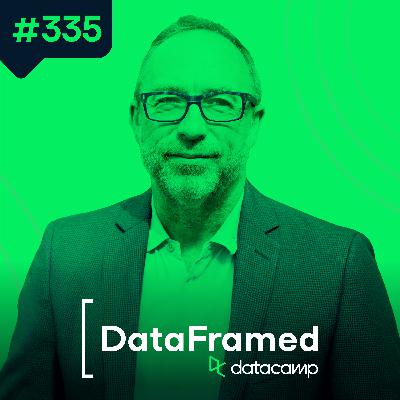
The internet has transformed how we access information, but it's also created unprecedented challenges around trust and reliability. How do we build digital spaces where collaboration thrives and quality information prevails? What separates toxic online environments from productive ones? The principles of neutrality, transparency, and assuming good faith have proven essential in creating sustainable knowledge communities. But these same principles extend far beyond the digital realm—they're fundamental to effective leadership, successful business relationships, and even political discourse. When trust breaks down, everything becomes more difficult. So what practical steps can we take to foster trust in our organizations and communities?Jimmy Wales is an American-British internet entrepreneur best known as the founder of Wikipedia and co-founder of Fandom. Trained in finance at Auburn University and the University of Alabama, he began his career in quantitative finance before moving into early web ventures, including Bomis and the free encyclopedia project Nupedia. In 2001, he launched Wikipedia, which quickly became one of the most visited websites in the world. To support its growth, he established the Wikimedia Foundation in 2003, where he continues to serve on the Board of Trustees and act as a public spokesperson. He later co-founded Fandom in 2004, expanding the wiki model to entertainment, gaming, and niche communities. Wales has also pursued experiments in collaborative journalism, including WikiTribune and its successor WT Social. His work in open knowledge has earned recognition from organizations such as the World Economic Forum, Time magazine, UNESCO, and the Electronic Frontier Foundation. He has held fellowships and board roles at institutions including Harvard’s Berkman Center and Creative Commons.In the episode, Richie and Jimmy explore the early challenges of Wikipedia, the importance of trust and neutrality, the role of AI in content creation, and much more.Links Mentioned in the Show:WikipediaJimmy’s New Book: The Seven Rules of TrustTrust CaféConnect with JimmyBlog: The Trust Triangle of LeadershipAI-Native Course: Intro to AI for WorkRelated Episode: How to Build AI Your Users Can Trust with David Colwell, VP of AI & ML at TricentisExplore AI-Native Learning on DataCampNew to DataCamp?Learn on the go using the DataCamp mobile appEmpower your business with world-class data and AI skills with DataCamp for business


Download from Google Play

Download from App Store
 United States
🔴💚Really Amazing ️You Can Try This💚WATCH💚ᗪOᗯᑎᒪOᗩᗪ👉https://co.fastmovies.org
can you list the tools for monitoring and so on ?
interesting interview
excuse me im just taking note here: some process with the truck guy tips how to do data science in big org with google guy from superdatascience eda explaratory analysys from tukey
Hi there, is it possible to get links to the data philanthropy organisations? I'm super curious. Thank you!
The short section about the connection between data scientists and project managers resonated with me
400 million people do not have diabetic retinopathy, incorrect statistic.
Amazing episode! How many listeners worked with Stan in R? What are their impressions over other bayesian software?
The contents are very good. Thank you for your good job
Ol
Hi Hugo thanks for this podcast. Would be great to have the relevant urls, as the shownotes and others, in the podcast description.