


 Claim Ownership
theFormed.life
Subscribed: 11Played: 570
Subscribe

©2023 Christ Community Church - KC
Description
Conversations to inspire habits of whole-life discipleship that equip you to more thoughtfully and consistently be formed by God’s word and God’s ways with God’s people. The Formed Life is a resource brought to you by Christ Community Church in Kansas City.
This podcast also contains audio readings of our written blogs that can be found on our website at cckc.church/blog.
This podcast also contains audio readings of our written blogs that can be found on our website at cckc.church/blog.
270 Episodes
Reverse
In this episode, Jesse and Leah Roberts, the creative duo behind Poor Bishop Hooper, share with Pastor Paul Brandes their journey as artists, songwriters, and founders of a nonprofit ministry dedicated to Scripture-based music. They candidly discuss their calling, how their ministry evolved step-by-step, and give insights into their projects like Golgotha and Every Psalm.3 Main Takeaways:Faithfulness in Small Steps Leads to Impactful Ministry:Jesse and Leah emphasize that their journey as musicians and ministry leaders was not the result of a grand, predetermined plan, but rather a series of faithful steps. By being obedient to God’s leading one step at a time, their work grew organically—from local church worship to founding a nonprofit, creating widely-used resources like Golgotha, and serving diverse communities, including prisons.Truth and Beauty Powerfully Transcend Contexts:The experience of bringing the Golgotha project into prisons was transformative, both for the artists and the inmates. Leah shared how presenting something rooted in both truth and beauty had a profound gospel impact in places marked by pain and deprivation, proving that spiritual art remains powerful regardless of environment—whether in a cathedral or a maximum security prison.Christ Meets Us in Our Suffering and Darkness:Drawing from their time immersed in the story of Christ’s suffering (through Golgotha) and their own personal hardships, Jesse and Leah encourage listeners that Jesus deeply understands our darkest, “Holy Saturday” seasons. The incarnation and crucifixion mean that Christ has entered into human suffering, providing comfort and solidarity for anyone experiencing pain, uncertainty, or waiting.Resources:Poor Bishop Hooper (Band/Ministry): https://www.poorbishophooper.com Golgotha Project: https://www.poorbishophooper.com/golgotha Every Psalm Project: https://www.poorbishophooper.com/everypsalm Author William Quayle: https://en.wikipedia.org/wiki/William_Alfred_QuayleTimestamps:00:18 – Bill Gorman introduces the theme of following God in seasons of darkness and grief, previewing the depth of the episode.02:49 – Paul Brandes asks Leah and Jesse to share how their calling as artists and creators developed, setting the stage for their story.03:32 – Leah describes seeking God’s guidance after college, revealing her sense of vocation and trust in God’s provision.06:13 – The origin story of Golgotha: how a pastor’s request and a 3-day retreat turned into writing all 14 songs for a Stations of the Cross musical experience.08:18 – Jesse describes how Golgotha began spreading to different churches and communities, moving beyond its initial setting.11:04 – Leah shares the pivotal moment when they decided to formalize their ministry as a nonprofit, focusing on underserved and unreached communities.14:01 – Discussion about the heavy, contemplative nature of Golgotha and its focus on the “minor key” of Jesus’s suffering during Holy Week.18:00 – The first time Golgotha was brought into a maximum-security prison, describing a powerful and unexpected response from inmates.22:06 – Leah recounts how inmates donated to their ministry, powerfully illustrating the unity and generosity within the body of Christ.27:26 – The hosts discuss being with God in “Holy Saturday” moments—suffering, waiting, and not yet seeing resurrection—and Leah shares a personal journey through family suffering and the presence of Christ in it.
Hosts Bill Gorman and Paul Brandes are joined by special guest Jeremy Mann, founder and head of The Field School, a diverse classical Christian school on the west side of Chicago. Together, they dive into what it means to cultivate wisdom and virtue in the next generation—not just through academics, but by shaping the whole person.Jeremy Mann shares his journey from public school teacher to leader of a unique educational community that reserves half its seats for low-income families, embracing a mission shaped by faith and holistic classical learning. Drawing inspiration from Scripture—especially the Shema from Deuteronomy 6—the conversation explores how families, educators, and communities can weave meaningful spiritual practices into daily routines, both at school and at home.Whether you’re a parent, grandparent, teacher, or simply passionate about passing on virtue to the future, this inspiring episode offers practical ideas, ancient wisdom, and encouragement for anyone seeking to nurture children in today’s world. Get ready for a dialogue about education, faith, and intentional living—right here on theFormed.life.3 Main Takeaways:Classical Education Is About Forming Wisdom and Virtue, Not Just Knowledge.Jeremy Mann explains that the mission of the Field School is to cultivate wisdom and virtue in every child. This goes beyond just academic achievement or standardized test scores. Classical education is about developing the whole person, focusing on character, critical thinking, mastery of the fundamentals, and an enduring love of learning and curiosity.Educational Models Are Important, But Parents Remain the Primary Disciplers.The conversation made it clear that, regardless of whether kids are in public, private, classical, or homeschool settings, parents have a unique and irreplaceable role in shaping their children’s hearts and minds. Spiritual formation and character development happen best at home in daily rhythms, not just through institutional programs; when families are intentional about weaving biblical truth and spiritual practices into everyday life.The Biblical Vision of Education Is Holistic and Community-Oriented.Grounded in Deuteronomy 6, the discussion revolves around the idea of loving God with all our heart, soul, and strength—and passing that faith on to the next generation. Jeremy Mann shares practical examples from both the Field School and his own family: daily Scripture reading, memorization, prayer, music, and habits that create a shared, spiritual culture. The episode encourages listeners to build similar rhythms, with kids or in their own lives, and to see education as a community endeavor, not just the work of schools.Resources:Narrative of the Life of Frederick Douglass: https://a.co/d/07KUyIQLA Philosophy of Education by Charlotte Mason: https://www.livingbookpress.com/product/a-philosophy-of-education/?srsltid=AfmBOoqx0zOQAB0bsGErnc8GhtQkqOeUuCKj0ZcNKXQLfQCbqxoHhmGtNew City Catechism – Timothy Keller: https://a.co/d/09C5NmGvApostles’ Creed – Historic Christian CreedAthanasian Creed – Historic Christian CreedA Student’s Prayer by St. Thomas Aquinas: https://mycatholicprayers.com/prayers/a-students-prayer-by-st-thomas-aquinas/Timestamps:00:00 Classical Education for All04:14 "High Expectations, High Support"07:59 "Classical Education: Old School Revival"13:29 "Parent-Led Education and Choices"15:59 Cultivating Wisdom Through Scripture20:19 Holistic Faith in School Life23:02 "Faith Lived Through Rhythms"27:54 Faith through Community and Music30:41 Family Bonding Over Simple Meals33:08 Cabin Dreams & Entrepreneurial Passion35:03 "Field School Insights Shared"
Hosts Bill Gorman and Paul Brandes are joined by author, coach, and consultant J.R. Briggs for a thought-provoking conversation on the art of crafting questions. Drawing from his new book and years of research, Briggs helps us explore the life-giving power of questions—not just as a way to learn, but as a path to deeper connection with God, greater self-understanding, and more authentic relationships with others.Briggs shares personal stories of his father modeling curiosity and the impact it had on his own spiritual journey, and considers the hundreds of questions Jesus asked as relayed in the gospels. The author invites us to see questioning as central to faith, including a fascinating Jewish tradition in which questions about Scripture take precedence over finding answers. Whether you're a church leader, a parent, or simply someone seeking to better love your neighbor, this episode will encourage you to embrace curiosity and thoughtful inquiry as a vital spiritual practice.Stay tuned for practical tips on building your own “back pocket” questions, and insights into the possibility that better questions can foster genuine hospitality and relational connection in today’s world.3 Main Takeaways:The Transformative Power of QuestionsAsking good questions—of God, ourselves, and others—has a profound impact on the quality of our lives. Briggs suggests that questions are not just tools for gathering information, but actually transformative, helping us to reflect, connect, and grow. He traces the influence of his father’s question-asking, and points to Jesus as a continual question-asker.Questions Foster Relationships and HospitalityEspecially when asked with the right motive and at the right time, questions can be an act of hospitality and love.They create space for relational intimacy, make people feel seen and valued, and can be healing in a world marked by loneliness and division. Briggs underscores that questions are often a greater gift than answers, and essential for loving our neighbors well.We Learn Best in Community and Through Wrestling with ScriptureThe Jewish practice of “havruta” (studying Scripture through questions in a communal setting) is introduced, showing how generating questions together deepens engagement and learning. Wrestling with passages through curiosity rather than rushing to answers can unlock new perspectives and foster spiritual growth.Resources:The Art of Better Questions - J.R. Briggs: https://a.co/d/0bcUwPQQTogether - Vivek Murthy: https://a.co/d/0dhyHKheEmotionally Healthy Spirituality - Peter Scazzero: https://a.co/d/02A89zeEHavruta (Jewish Practice of Communal Question Asking)The Sabbath - Abraham Joshua Heschel: https://a.co/d/0iAPfIXyGod in Search of Man: A Philosophy of Judaism - Abraham Joshua Heschel: https://a.co/d/07VTnR3JTimestamps:00:00 "The Power of Better Questions"03:23 "The Gift of Asking Questions"07:47 "God: The Ultimate Question Asker"11:02 "Havruta: Learning Through Questions"13:47 "Fascinating Questions on Isaac"18:16 "Who Do You Say I Am?"20:36 "Equipping for Monday Mission"23:01 "The Power of Good Questions"27:10 Spiritual and Emotional Maturity Journey32:28 "Questions That Spark Deep Insight33:35 "Deep Questions for Connection"36:57 "Window Washing"
On this episode of theFormed.life, hosts Paul Brandes and Bill Gorman sit down with renowned architect David Greusel, founder of Convergence Design, for a conversation that redefines what it means to be creative, no matter your profession. With over 40 years of experience, from humble beginnings detailing grease factories to designing iconic baseball stadiums like PNC Park in Pittsburgh, David Greusel shares how every act of work—whether sketching with ink or crafting a spreadsheet—mirrors the creative nature of our Creator.Together, they explore how spiritual formation, the biblical mandate to make something more of God’s good world, and the joy of meaningful work can shine through in grand architectural projects and the everyday tasks we tend to overlook. Whether you're crunching numbers, parenting, or shaping city skylines, this episode offers fresh insight into how we can all embrace our role as creators, designed to bring beauty, order, and flourishing to the spaces and places we touch. Get ready to see your own work in a whole new light!3 Main Takeaways:1. Everyone Is Creative and Called to CreateDavid Greusel firmly rejects the idea that only certain people are creative. He points out that creativity is inherent to everyone, whether it's expressed by designing a building, crafting a memo, or putting together a spreadsheet. As humans made in the image of the Creator, we all participate in creativity, regardless of our vocation.2. Our Work is a Spiritual Discipline and Fulfillment of the Cultural MandateThe episode explores how any work or vocation is both a means of spiritual formation and a way to participate in God's ongoing creation. David Greusel discusses how the iterations, frustrations, and disciplines of his profession shape his character, just as spiritual disciplines do. The conversation connects this directly back to the “cultural mandate” from Genesis, highlighting our shared calling to take the world’s raw materials and shape them into something meaningful.3. Design and Place Matter: Loving Our Neighbor Through Our WorkThrough stories from his career (notably designing PNC Park in Pittsburgh), David Greusel illustrates how thoughtful design can help people love their cities and neighbors better. Paying attention to the particularities of place and the needs of others can become a way to serve family and community and reflect God's love in the world.Resources:- The Art of The Spreadsheet: https://comment.org/the-art-of-the-spreadsheet/- Sidewalks in the Kingdom - Eric Jacobsen: https://a.co/d/7YboNIp- From the Garden to the City: The Redeeming and Corrupting Power of - Technology - John Dyer: https://a.co/d/49FkNU7- Grand River Center (Convention Center, Dubuque, Iowa) - David Greusel (Architectural Project): https://www.grandrivercenter.com/- PNC Park (Stadium, Pittsburgh, Pennsylvania) - David Greusel (Architectural Project): https://www.mlb.com/pirates/ballpark- Daikin Park [Formerly MinuteMaid Park, (Stadium, Houston, Texas)] - David Greusel (Architectural Project): https://www.mlb.com/astros/ballparkTimestamps:00:00 Faith and Architecture Journey05:40 "Architecture and Spiritual Disciplines"07:07 "Frustrations Shape Architectural Growth"10:13 "Design: Transforming Earth's Resources"14:35 "Bezalel and Oholiab's Calling"19:06 PNC Park: Privacy Meets Beauty23:14 "Buildings That Reflect Their Place"24:41 "Designing Dubuque's Grand River Center"28:06 "Creativity in Everyday Tasks"31:20 Marriage, Comedy, and Career Dreams~~~~~~~~~~~~~~~~~~~~~~WEB: https://cckc.church/CONNECT: https://ccefc.ccbchurch.com/goto/forms/1304/responses/newIG: https://www.instagram.com/christcommunitykc/FACEBOOK: https://www.facebook.com/christcommunitykc
In this conversation, hosts Paul Brandes and Bill Gorman are joined by wife, parent, and photographer Allie Coyle to dive into one of the foundational concepts from the Bible: the cultural mandate. Together, they explore what it means to be invited by God into his creation, tasked with being fruitful, multiplying, and cultivating the world around us.Allie shares thoughtful insights on how the cultural mandate extends beyond just having children, touching on work, creativity, and spiritual growth—reminding us that every person, regardless of their season of life, is called to participate as an image bearer of God. The discussion weaves through the joys and challenges of parenting, the beauty of daily faithfulness, and even how a creative vocation, like photography, fits into God’s original calling for humanity.This episode also gets real about facing the hardships brought by the brokenness of the world, offering practical wisdom on finding rest, modeling faith for the next generation, and living intentionally whether you’re at home, at work, or in community. There are personal stories, laughter, and encouragement for embracing the ordinary and extraordinary ways to live out the cultural mandate right where you are.3 Main Takeaways:The Cultural Mandate Is For EveryoneGenesis 1’s "be fruitful and multiply, fill the earth and subdue it" (often called the cultural or creation mandate) is not limited to biological parenthood. It applies broadly to all people, whether single or married, parents or not. Fruitfulness includes both family life and the creative, meaningful work we do in the world as God’s image bearers.Intentional Living and Work as CultivationAllie gives practical examples of intentionally living out the cultural mandate in everyday life, both as a parent and a professional photographer. The heart of the cultural mandate is to faithfully steward and creatively contribute in whatever context God has placed us.Rest and Dependence in a Broken WorldThe conversation acknowledges the realities of Genesis 3—that work and life are often hard and marked by struggle, the importance of honest dependence on God in all areas, and the need for practices of rest to help handle the challenges of life while remaining faithful to the cultural mandate.Resources:The New City Catechism - Tim Keller: https://newcitycatechism.com/The Happiness Project - Gretchen Rubin: https://a.co/d/6pk023cThe Intentional Father - Jon Tyson: https://a.co/d/6pk023cGod's Design for Sex Series - Stan and Brenna Jones: https://a.co/d/htzj2YIHow and When to Tell Your Kids About Sex: A Lifelong Approach to Shaping Your Child's Sexual Character (Parent's Guide): https://a.co/d/1J9rIxKGood Pictures, Bad Pictures: Jr. Christian Edition: https://a.co/d/8GIdD1VPOD 043 | Parenting Insights: Embracing Faith and Family Life with Dan and Mindy Ott: https://youtu.be/2CbfSlx2Qug?si=MK_e48lZofnWngU1Timestamps:00:00 "Understanding the Cultural Mandate"03:29 "Be Fruitful: Make Disciples"06:57 "Faithful Steps for God's Glory"12:29 "Intentional Parenting Through Faith"14:42 "Intentional Milestones for Growth"16:55 "God's Design and Personal Connection"22:01 "Capturing God’s Beauty Within"23:51 "Photographs as Timeless Treasures"29:22 "Let God Lead My Work"31:52 "Parenting, Faith, and Letting Go"35:18 "Prayer as Rebellion Against Darkness"36:59 Dream of Travel Writing
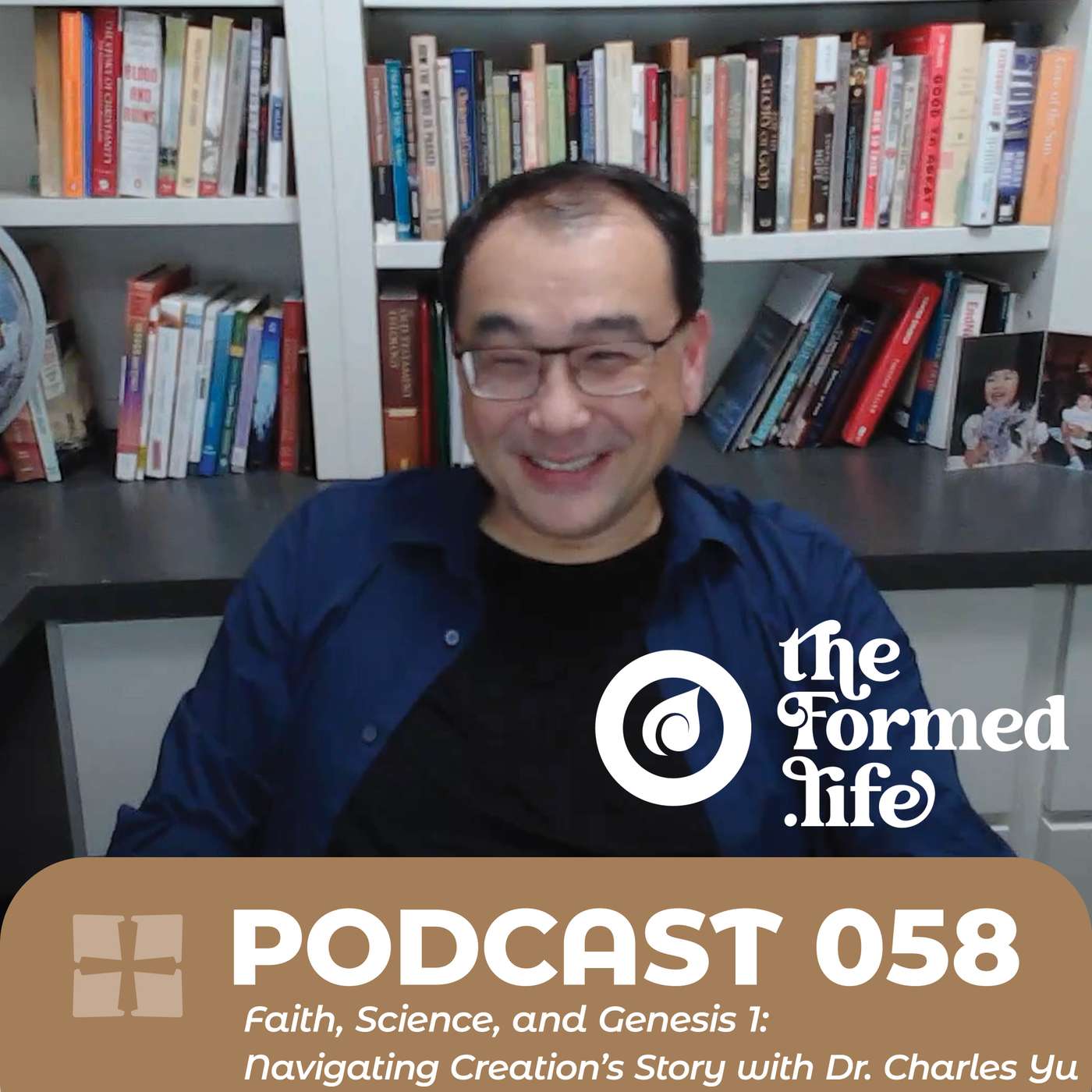
Hosts Bill Gorman and Paul Brandes talk with Dr. Charles Yu, a biblical scholar and pastor, about the rich complexities of Genesis 1. They explore how ancient Israelites would have understood the creation account, emphasizing that the text was written for us, but not to us. Dr. Charles Yu unpacks the historical, cultural, and theological context behind Genesis 1, offering fresh perspectives on perennial questions like the age of the earth, scientific evolution, and the meaning of the "days" of creation.If you’ve ever wrestled with how to reconcile the Bible's creation story with modern science—or debated young earth versus old earth interpretations—this episode is for you. Dr. Charles Yu discusses how Genesis 1 focuses less on scientific details and more on profound truths: God’s sovereignty, intentional design, and humanity’s identity and purpose. The conversation also addresses how to navigate differing views within the church with humility and grace.3 Main TakeawaysGenesis 1 is About Identity, Not ScienceDr. Charles Yu emphasizes that Genesis 1 was written to help the original audience—the ancient Israelites—understand who their God is and who they are, especially in contrast to the surrounding cultures. Rather than a scientific account of how the world was created, Genesis 1 is more a theological declaration that Israel’s God is the true creator, utterly distinct and superior to other gods. The text’s structure and language were aimed at identity formation, not addressing modern scientific questions.Modern Science and Genesis 1 Aren’t in ConflictThe episode highlights that apparent conflicts between science (e.g., evolution, the age of the earth) and Genesis 1 largely arise because modern readers bring their own questions to the text—questions the original audience wasn’t asking. Dr. Charles Yu encourages readers to focus on the timeless truths Genesis 1 is teaching: God is the creator, creation is intentional and ordered, and humanity is the culmination of God’s creative purpose. Genesis 1 doesn’t address modern scientific theories, so it need not be threatened by them.Charity and Humility in Debating InterpretationThroughout the episode, the hosts and Dr. Charles Yu stress the importance of holding charitable, humble conversations with fellow Christians who may interpret Genesis 1 differently. Multiple faithful readings are possible (e.g., young earth, old earth, framework hypotheses), as long as they recognize God as creator. The episode encourages listeners not to create unnecessary divisions and to support those struggling with faith and science, especially students navigating these questions.Resources:Old Testament Theology for Christians: From Ancient Context to Enduring Belief: https://a.co/d/4z9otRQEvangelical Convictions (EFCA Statement of Faith): https://www.efca.org/sofTimestamps:00:00 "Genesis, Science, and Theology"05:40 "Modern Questions, Ancient Context"08:17 "Genesis and Modern Science Conflict"12:09 Ancient Cosmology and the Firmament14:43 "Timeless Truths from Genesis 1"16:27 "Structured Creation and Divine Planning"22:07 "Week's Origins and Interpretations"24:40 "Interpreting 'Days' in Genesis"29:15 "Primary History's Purpose Explained"33:17 "Young Earth vs. Genesis Interpretation"35:28 "Genesis, Numerology, and Meaning"37:59 "Biblical Numbers: Precision vs. Accuracy"41:04 "Faith, Science, Genesis Explained"45:31 "theFormed.life Podcast Recap"
Poem:Lord,Dine with us,Sit with us,You are welcome here.Stay with us, Speak with us,You are welcome here.Laugh with us,Cry with us,You are welcome here.Pray with us,Think with us,You are welcome here.Be still with us, Your will with us,You are welcome here. ~ Esther Huhn, You Are Welcome Here
Poem: O come, O come, and be our God-with-usO long-sought With-ness for a world without, O secret seed, O hidden spring of light. Come to us Wisdom, come unspoken Name, Come Root, and Key, and King, and holy Flame.O quickened little wick so tightly curled,Be folded with us into time and place,Unfold for us the mystery of graceAnd make a womb of all this wounded world. O heart of heaven beating in the earth, O tiny hope within our hopelessnessCome to be born, to bear us to our birth,To touch a dying world with new-made handsAnd make these rags of time our swaddling bands. ~ Malcolm Guite
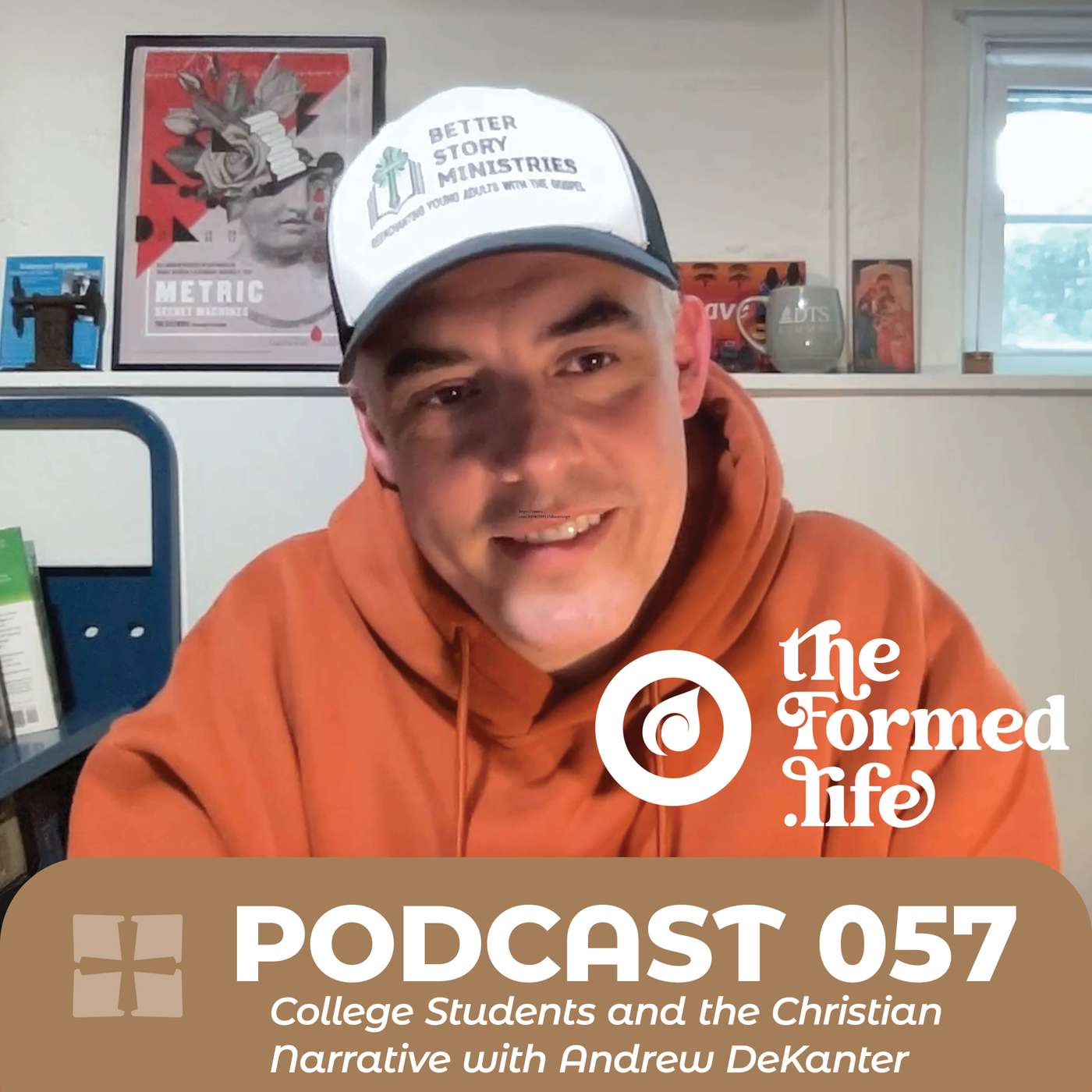
Hosts Bill Gorman and Jacob Nannie sat down with Andrew DeKanter, founder of Better Story Ministries and a passionate advocate for connecting young adults to the deeper, richer story of the gospel. The conversation explores what it means to "re-enchant" college students and young adults who are navigating complex cultural narratives–from the pursuit of achievement and romance to the overarching influence of secularism.Andrew DeKanter shares his hands-on work with students at the University of Louisville, his thoughts on revival on campus, and how he helps young people live out the biblical narrative of creation, fall, redemption, and restoration. This episode offers practical wisdom for parents, mentors, and anyone eager to make biblical truth compelling in a world full of competing stories.3 Main TakeawaysEngaging Young Adults with the "Better Story" of the GospelAndrew DeKanter emphasizes that young adults are often living within “lesser stories” offered by our culture (achievement, romance, and consumerism) that don’t fully satisfy. His ministry, Better Story Ministries, seeks to “re-enchant” students by showing how the grand narrative of Scripture (creation, fall, redemption, restoration) offers deeper meaning, purpose, and fulfillment than these cultural scripts.The Power of Relationship and Story in MinistryRelational connection is foundational. Andrew and our hosts stress the importance of being a safe, trustworthy friend who listens well and moves toward others’ pain. It’s through real, ongoing relationships—not just handing out commands or quick answers—that the gospel truly connects to students’ questions about identity, purpose, and suffering. Storytelling—both from Scripture and personal testimony—becomes a bridge between biblical truth and lived experience.Apologetics: From Argument to InvitationThe discussion considers apologetics today as less about simply proving Christianity is true, and more about showing that it is both good and beautiful. Rather than “winning arguments,” it’s about connecting shared longings (love, justice, meaning) back to the biblical narrative, and inviting people into a story that makes the most sense of their desires and pain. This holistic, story-driven approach re-frames apologetics as an act of hope and hospitality.Resources:Telling a Better Story - Josh Chatraw: https://a.co/d/d4rUOBFCultural Apologetics - Paul Gould: https://a.co/d/3wSShEPTimestamps:00:00 "Connecting Gospel to Student Stories"03:39 Campus Revival and Spiritual Awakening09:57 Living with Purpose and Freedom11:57 "Adventure, Suffering, and Hope"14:36 Forming Lives Through Biblical Story20:43 "Work and Purpose Through Faith"21:50 Practical Bible Commands in Story25:43 "Love in Christian Story"30:55 Becoming a Safe Person31:58 "Listening, Learning, and Exposing Scripts"36:34 "Reenchanting Lives with the Gospel"39:07 "The Author Steps Into Story"41:43 College Ministry and Creative Communication
Poem:Lord Jesus,I have nothing to give today,Except you.I have nothing to receive today, Except you.A perfect day. ~ Esther Huhn
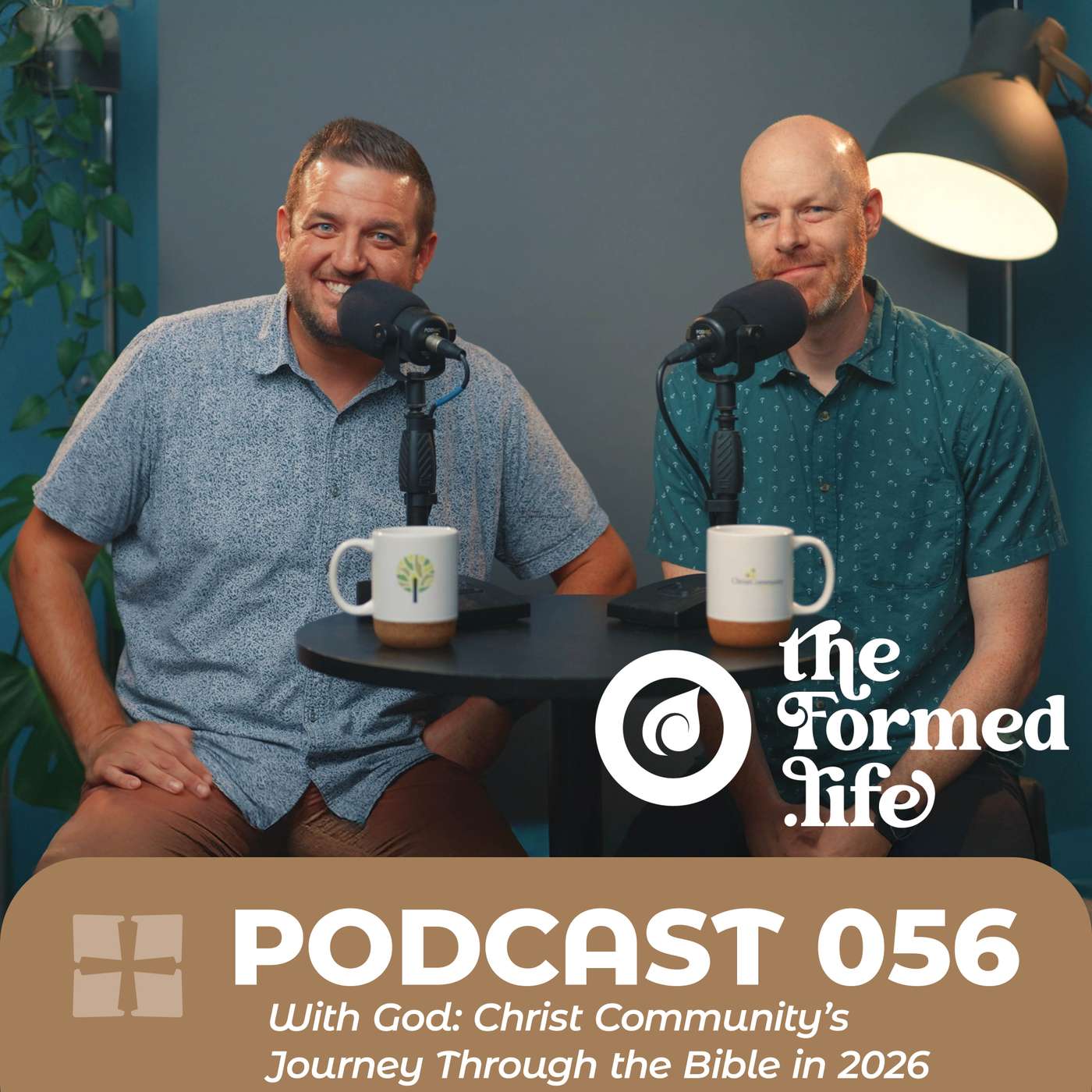
On today’s episode, Bill and Paul share some exciting news about an incredible journey Christ Community Church is embarking on in 2026 called “With God.” This isn’t just another sermon series. It's a year-long, church-wide experience that invites everyone, from kids to adults, to engage with the entire story of Scripture from Genesis to Revelation.They discuss how this initiative will weave together weekly sermons, daily reading plans, special events, and new resources, all designed to help individuals and families immerse themselves more deeply in God's word—not just on Sundays, but all throughout the week. Listen in as they reflect on the history and heart behind this vision, share personal hopes for its impact, and offer a glimpse of what’s to come for Christ Community in this pivotal season of spiritual formation.3 Main TakeawaysYear of the Bible in 2026: Christ Community Church is launching a year-long, church-wide focus called "With God" in 2026. It is a journey from Genesis to Revelation. It’s designed to help everyone engage deeply with the whole story of the Bible—not just on Sundays, but in daily life.Integrated Spiritual Formation: This initiative is much more than a sermon series. It involves multiple layers of engagement, including tailored Bible reading plans, the Formed.life spiritual formation resources, events (like the Story of Scripture seminar with Dr. Yarborough), and children’s and student ministry integration. The desire is for intergenerational participation and transformation.Hope for Deep Transformation: Bill and Paul express their excitement and hope that the church community will fall more in love with God's word and be transformed by being "with God" through Scripture. Their vision is for this year to foster unity, spiritual growth, and a deeper commitment to living out biblical truths both individually and as a community, especially in a season of transition for the church.Resources:Story of Scripture Event: https://www.thestoryofscripture.org/event/kansas-city-mo-january-2026theFormed.life: https://theformed.life/With God: cckc.church/withgod/Timestamps:00:00 "Engaging God's Timeless Word"04:28 "Scripture Engagement and Growth"06:29 "With God, Together Transformed"
Poem:O King of our desire whom we despise,King of the nations never on the throne,Unfound foundation, cast-off cornerstone,Rejected joiner, making many one,You have no form or beauty for our eyes,A King who comes to give away his crown,A King within our rags of flesh and bone.We pierce the flesh that pierces our disguise,For we ourselves are found in you alone.Come to us now and find in us your throne,O King within the child within the clay,O hidden King who shapes us in the playOf all creation. Shape us for the dayYour coming Kingdom comes into its own. ~ Malcolm Guite

Comments

Download from Google Play

Download from App Store
 United States