DiscoverJoe Lonsdale: American Optimist
Joe Lonsdale: American Optimist
Claim Ownership

Joe Lonsdale: American Optimist

Author: Joe Lonsdale

Subscribed: 314Played: 7,822
Share

Description

American Optimist, hosted by Joe Lonsdale: entrepreneur, investor, and founder of four multi-billion dollar companies and other mission-driven organizations. American Optimist is an alternative to the fear, cynicism, and zero-sum thinking in mainstream media. Learn from the innovators and leaders who are solving our nation’s most pressing challenges, and doing it in a way that will lift everyone up. Hope should dominate our discourse, and American Optimist will show you why.

blog.joelonsdale.com
147 Episodes
Reverse
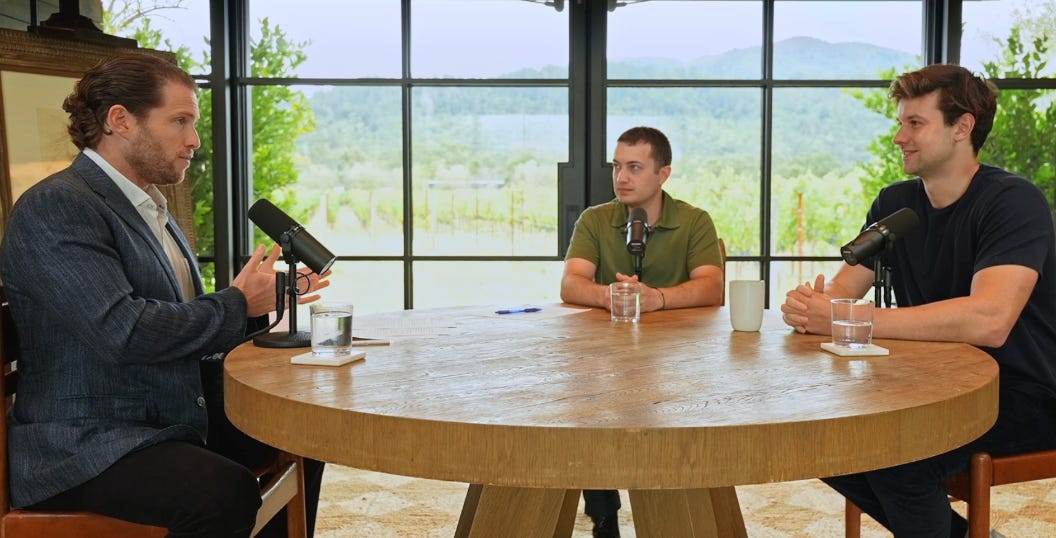
Jake Paul is a social media influencer-turned-entrepreneur and boxer. He’s not only one of the most popular figures on the planet among Gen Z, but also an outspoken patriot, capitalist, and builder. Together, he and Geoff Woo founded Anti Fund and have backed OpenAI, Anduril, Ramp, among others. Why did Jake decide to speak out on politics? How do we win over the next generation? And how is AI changing the culture, from new social media platforms to prediction markets and the revival of in-person events?We recorded this conversation the day after Jake appeared with President Trump at a Kentucky rally. He explains why he’s speaking out on politics, even if it costs him financially, and why authenticity is key to cultural influence. Next, we explore the origins of Anti Fund, and how Jake and Geoff had the conviction to back Anduril before defense tech was in vogue. They also invested in OpenAI and were instrumental in rolling out Sora; learn about the strategy behind the launch and the challenges around AI slop and identity authentication. Additionally, Jake is the co-founder of Betr, and we discuss its recent partnership with Polymarket, what’s next for prediction markets, and how to build guardrails for customers. Finally, we explore Jake’s success in pioneering the creator economy and building consumer brands. In the 1960s and 70s, most kids aspired to become astronauts. Today, they want to be content creators, in part because of Jake’s influence. We conclude with Jake’s advice for young people in the AI era, and how we can persuade the next generation to love their country and embrace a builder mindset.00:00 Episode intro02:20 On stage with President Trump06:00 Attention is the most valuable currency08:00 The origins of Anti Fund and backing OpenAI, Anduril, Ramp, and others09:10 Betr + Polymarket and the future of prediction markets 14:58 Launching Sora with OpenAI 16:14 Are you worried about AI slop? 19:10 How AI is changing culture; revival of in-person events 21:20 Who should become a creator?24:30 Fighters as cultural icons 31:30 How to win the culture This is a public episode. If you would like to discuss this with other subscribers or get access to bonus episodes, visit blog.joelonsdale.com
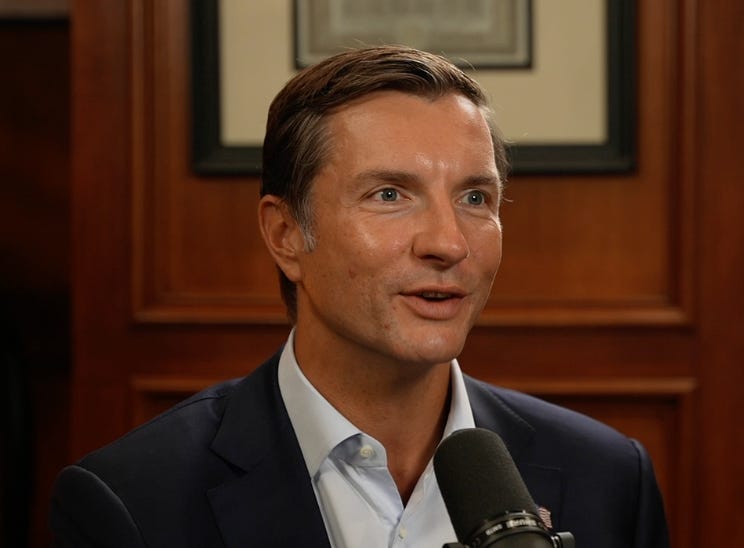
Small Business Administrator Kelly Loeffler is playing a pivotal role in our nation on two fronts: supporting the next generation of small business owners, while exposing and combating billions of dollars in fraud. How is AI impacting small businesses? Could this be a golden age for Main Street America? What's the staggering scale of fraud she's uncovering? And how is she working with Palantir and other top talent to ensure it never happens again?We discuss these timely topics and more with Administrator Loeffler. Growing up on a farm in rural Illinois, Kelly raised cattle and was exposed to the challenges of small business early on. She became the first in her family to graduate college and built a distinguished career in financial services at Intercontinental Exchange. In 2018, she became the founding CEO and first employee of the fintech startup, Bakkt, which brought institutional infrastructure to crypto. Kelly was appointed to serve in the U.S. Senate in 2020 and later confirmed as Administrator of the Small Business Administration in February 2025.We begin our conversation with Kelly's entrepreneurial journey, before diving into her mission at the SBA. Her leadership comes at a pivotal juncture: a $10 trillion generational wealth transfer amid a technological revolution. As Baby Boomers retire and new AI tools emerge, Kelly believes young talent should think twice about traditional pathways and consider small business ownership instead. She lays out the administration's agenda, including expanding SBA loans for reindustrialization and bolstering the manufacturing jobs of the future. Next, we dive into her other core responsibility: exposing fraud. Learn how the SBA uncovered over $400 million of COVID-era fraud in Minnesota, $9 billion in California, and they're just getting started. She's also investigating 8(a) minority contracting — a program for disadvantaged communities hijacked by the Biden administration for race-based contracting and grift. The SBA is bringing in top talent and technology, including Palantir, to expose the fraud, revamp the programs, and protect taxpayers.00:00 Episode intro01:40 Farming to finance04:46 Building Bakkt & institutional infrastructure for crypto09:00 AI & the future of small business13:58 How to supercharge manufacturing in America16:15 Exposing billions in fraud18:50 The scandal of minority contracting20:25 Using Palantir to investigate fraud27:15 The NGO grift scheme29:50 Optimism for the future This is a public episode. If you would like to discuss this with other subscribers or get access to bonus episodes, visit blog.joelonsdale.com
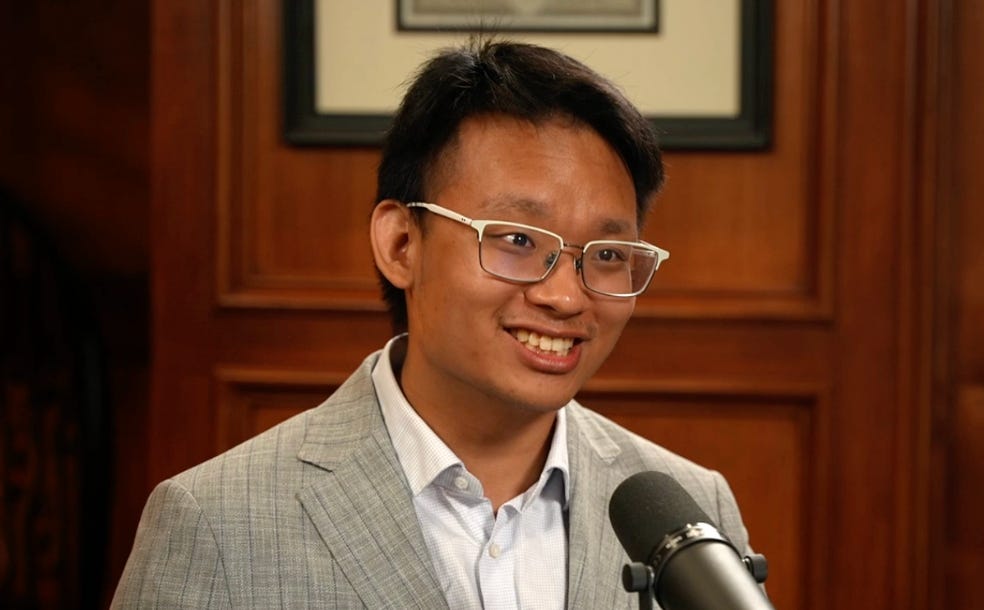
As a teenager, Jared Isaacman built a billion-dollar payments company. He then pursued aviation, acquiring the world's largest private air force and creating “Top Gun as a service,” before commanding the first all-civilian spaceflight. Now, he's taking on his greatest challenge: returning NASA to greatness. Can we beat China back to the Moon? Will we reach Mars within a decade? And how close are we to making nuclear propulsion, space colonies, and other sci-fi futures a reality? We discuss all this and more with NASA Administrator Jared Isaacman. We begin with his upbringing and the origins of Shift4 Payments, which now processes more than $200 billion annually. A prolific pilot, he went on to build Draken International and acquire over 100 fighter jets for adversary training — at one point, he owned the 12th largest air force in the world! Next, we dive into his experience as a commercial astronaut and why he sought the helm of NASA. Jared outlines his bold vision to reform NASA, starting with his announcement to increase the Artemis launch cadence and ensure a return to the Moon by 2028. We discuss the challenges of building a permanent Moon presence, and why nuclear power and propulsion in space is a NASA-unique mission that will attract top talent and help the agency achieve greatness again. Finally, we explore the growing space economy and exciting sci-fi realities we will experience in the years ahead. NASA is a storied American institution; we are fortunate to have a talented leader like Jared who wants to see it not only thrive again, but reach even greater heights. 00:00 Episode intro01:30 Top Gun as a service 07:40 Founding a billion-dollar payments company09:30 Pioneering private spaceflight 12:00 What happened to NASA? 14:40 Getting back to the Moon by 202820:47 Jared announces new plans for Artemis25:15 Future of the space economy 27:50 Nuclear power in space 29:00 Sci-fi futures becoming reality This is a public episode. If you would like to discuss this with other subscribers or get access to bonus episodes, visit blog.joelonsdale.com
JD Ross is one of my favorite entrepreneurs. I hired him out of college at Addepar where he quickly became Head of Product. He went on to co-found Opendoor with Keith Rabois and is now building WithCoverage — one of the fastest growing AI-first service companies. JD believes we're entering an "invention era" again. What are the new possibilities with AI? What does it mean for legacy software companies? And why is he especially excited for young talent entering the workforce today?We discuss all this and more, starting with JD's entrepreneurial journey, from founding a moving company in college (that still generates +$10M a year in sales!) to joining Addepar and later founding Opendoor. We discuss some of the breakthroughs and challenges at Opendoor, and why its meme stock moment is infusing new energy and ideas into the company. Next, we dive into WithCoverage and his mission to upend the insurance brokerage industry by combining new AI tools with human expertise — think Ramp for risk management. Initially backed by 8VC, WithCoverage already serves more than 700 enterprise customers and recently closed a $42 million round led by Sequoia and Khosla Ventures. Talented builders like JD are scaling and iterating on new products faster than anything we've seen before — learn what this means for the startup ecosystem, as well as existing SaaS companies looking over their shoulders. Finally, JD explains how AI is leveling the playing field and why he believes this is the best opportunity for new entrepreneurs in recent decades.00:00 Episode intro01:28 JD's entrepreneurial journey05:18 Wins and challenges at Opendoor / meme stock moment09:55 WithCoverage and upending insurance brokerage with AI 13:11 Mimetic frameworks for entrepreneurs 15:45 How AI is changing the way companies are built20:21 The impact of AI on existing SaaS 26:50 How to stop AI spam and imposters 31:27 How should young people prepare for the AI era? 34:20 The new invention era / why AI levels the playing field This is a public episode. If you would like to discuss this with other subscribers or get access to bonus episodes, visit blog.joelonsdale.com
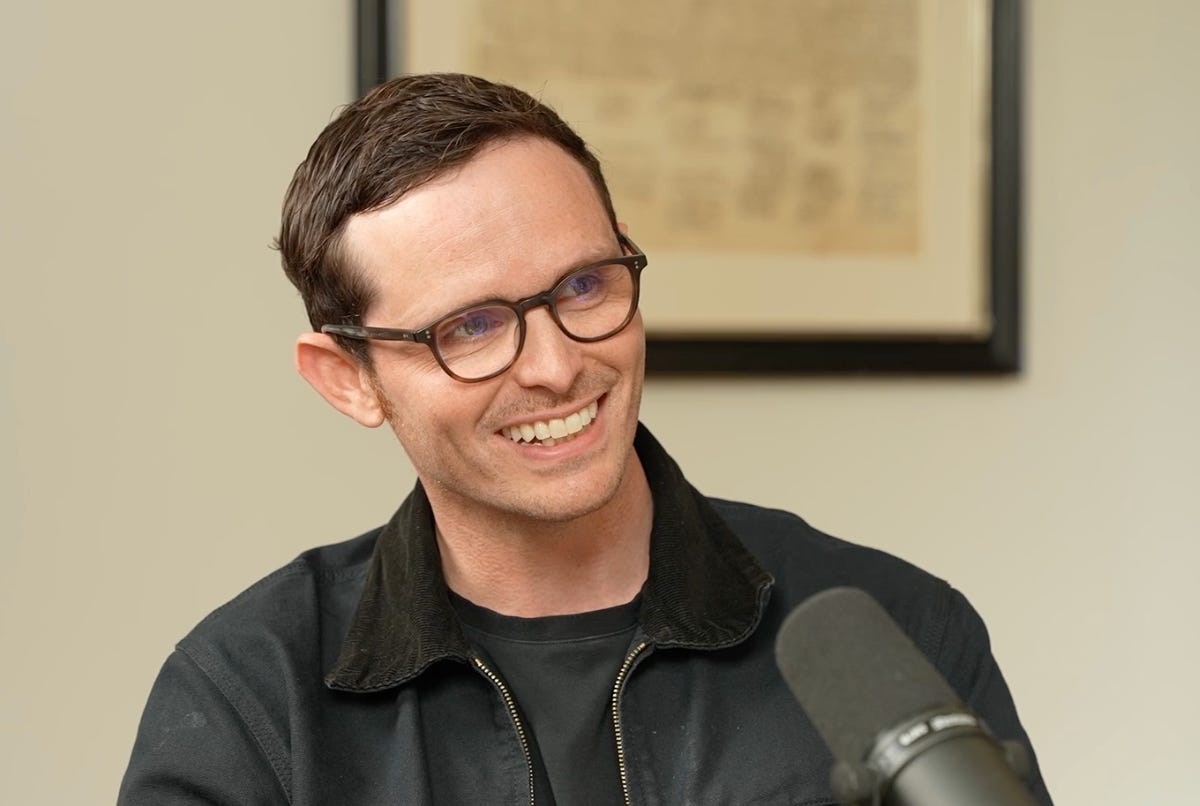
Advances in AI are occurring at a pace we haven’t seen before in Silicon Valley. How do we know what’s real versus hype? What does it mean for large software incumbents? And how are the top investors and builders thinking about the new possibilities? This week, we talk with two of my partners at 8VC, Alex Kolicich and Jack Moshkovich, who are on the ground working with the leading AI talent to get their perspective on what’s really happening.Alex Kolicich is a Partner at 8VC, where he specializes in IT and Bio-IT investments. Prior, he was a Partner at Formation 8 and worked alongside Peter Thiel at Mithril Capital Management. Alex was also an engineer and early-product advisor at Clarium, Palantir, and Google. Jack Moshkovich began his career at 8VC and helps lead our investment practice alongside Alex out of San Francisco, where he focuses on enterprise software.We begin with Silicon Valley’s most recent technological wave: smart enterprise. In 2013, we published our smart enterprise thesis, predicting the B2B software explosion that drove tremendous value creation over the past decade. Now, we’re entering the next landmark shift: the AI wave. Learn why AI is fundamentally disruptive (you can find our thesis here), and the enormous leap from data retrieval to automated decision making and from linear to non-linear problem solving. Next, we dive into the six layers of the AI investment stack, and why we are focused on level five: the application layer. We dissect the tremendous opportunities for AI-native upstarts, as well as the challenges — and upside — for smart enterprise pioneers that can reorient around AI. Finally, we discuss some of the key questions in the years ahead: When and where will we see massive productivity gains in the economy? Will LLMs become commodities, or is each frontier model sufficiently differentiated? And are we entering a bubble, or is the AI wave just getting started?00:00 Episode intro01:40 Smart enterprise thesis04:00 Did enterprise software dramatically boost productivity?08:30 Understanding the AI wave11:45 Are LLMs becoming commodities? 17:10 OpenAI vs Anthropic vs Meta vs Grok20:30 Frontier models vs enterprise incumbents 25:20 What did Palantir get right?32:30 AI case studies/new possibilities 43:00 The most surprising aspect of the AI wave 46:10 Are we entering a bubble? Or just getting started? 52:40 Biggest concern with AI 58:00 Biggest reason for optimism This is a public episode. If you would like to discuss this with other subscribers or get access to bonus episodes, visit blog.joelonsdale.com
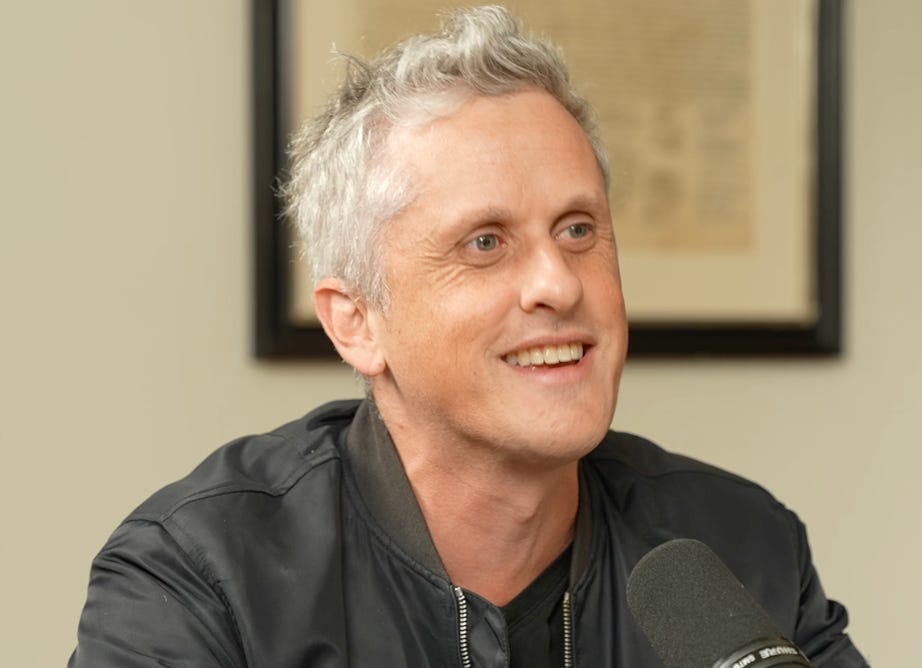
When Kevin Mandia’s phone rings, it’s often a Fortune 500 CEO or government leader with a billion-dollar problem. How did he become the go-to expert in cybersecurity? What new threats from AI led him back into the arena? And what is he building to protect the good guys?Kevin began his career in the U.S. Air Force, defending the U.S. military from some of the earliest cyber attacks. He went on to found and lead Mandiant, scaling it into an industry leader which Google acquired in 2022 for over $5 billion. In 2013, he famously exposed China’s massive state-sponsored cyber espionage inside America. Kevin has also served on the National Security Telecommunications Advisory Committee (NSTAC) and the CISA Cybersecurity Advisory Committee. He recently launched Armadin to address new AI possibilities in the cyber domain.To begin, Kevin takes us behind the scenes of the early cyber skirmishes in the 1990s, and what it was like confronting some of the first cyber incursions from Russia and China, as well as the rise of criminal cyber enterprises. In the early 2000s, Kevin noticed glaring gaps in conventional antivirus approaches and launched Mandiant. Learn how he quickly became the first person that CEOs and governments would call if they’d been hacked. After scaling Mandiant and exiting to Google, Kevin is now back in the arena building cutting-edge solutions to new AI cyber threats. He explains the dramatic increase in the productivity and sophistication of AI agents, and why it’s upending how we build cyber defenses. Find out what he’s most worried about in 2026, and what steps governments and CEOs need to take to secure their networks and infrastructure.0:00 Episode intro01:30 Kevin's journey into cyber; early attacks from Russia & China 05:00 The evolution of cyber espionage and crime08:00 Founding Mandiant; why Fortune 500 CEOs call Kevin 13:30 What's it like getting hacked by Russia? 21:30 AI hackers are here; Kevin's warning 27:00 Protecting critical infrastructure; harnessing AI for cyber defense 31:30 Engineers vs AI agents 36:40 Optimism for the future This is a public episode. If you would like to discuss this with other subscribers or get access to bonus episodes, visit blog.joelonsdale.com
America’s capital markets are the envy of the world, but in recent years, misguided policies have driven innovation offshore and stifled the number of companies going public. SEC Chairman Paul Atkins is reversing course. What’s his plan to make IPOs great again? What will it take for America to become the crypto capital of the world? And does he think we should expand access to private markets for retail investors?This week, we’re honored to feature a conversation with Paul Atkins, Chairman of the Securities and Exchange Commission. He also served as a commissioner at the SEC from 2002 to 2008, and worked on the staff of two SEC chairmen from 1990 to 1994. Prior to returning to the SEC in 2025, Chairman Atkins was the founder and chief executive of Patomak Global Partners, a financial services firm he founded in 2009.We begin with Chairman Atkins’ visit to Texas, the significance of Texas’ new business courts, and the importance of innovation in our financial markets. Whereas his predecessor, Gary Gensler, took an adversarial, regulation-by-enforcement approach, he’s embracing new technologies and regulatory clarity. In this vein, the Chairman lays out his strategy for making IPOs great again. Learn why the number of public companies has dropped by nearly half since 2007, and how Chairman Atkins is reforming the rules around litigation and corporate governance to deter activists from harassing America’s builders. We also discuss President Trump’s vision for making America the crypto capital of the world, and what it looks like to provide clear guidelines that promote innovation and protect investors. Finally, we explore the steps he’s taking to enable retail investors to access private markets and other alternative assets.0:00 Episode intro1:35 Texas' new business courts / evolution of U.S. markets7:20 The SEC's new approach to crypto 16:00 Making IPOs and public companies great again25:00 Weaponization of shareholder proposals and ESG32:10 National security concerns / China's bad actions36:30 New rules for retail investors & private companies 44:35 Optimism for America's future This is a public episode. If you would like to discuss this with other subscribers or get access to bonus episodes, visit blog.joelonsdale.com
First, he digitized the entire federal retirement process, cutting it from six months to a few days. Now, he’s overhauling the U.S. government’s online presence, one website at a time. And Joe Gebbia has been in Washington, D.C. less than a year! Learn why he stepped up to serve, and the impact our best minds can have on D.C., in a conversation with our nation’s first Chief Design Officer.As co-founder of Airbnb, Joe turned a living-room experiment into a multi-billion dollar global brand. Then, he launched Samara, helping homeowners reimagine their yards with state-of-the-art Accessory Dwelling Units. He also sits on the boards of Airbnb, Airbnb.org, and Tesla. Last February, he joined Elon Musk and the DOGE team in D.C. to overhaul retirement for federal workers, before setting his sights on modernizing the nation’s 27,000 .gov websites.We begin with Joe’s journey to D.C., and how a former Democrat came to support President Trump and take on problems that have plagued government for decades. His first challenge: federal retirement and “the mine” — a storage facility inside a Pennsylvania mountain that houses all federal employees’ retirement paperwork. Learn how Joe worked alongside career civil servants to transform a broken, six-month slog into a digital-only process that takes mere days. Now, he’s set his sights even higher: overhauling the government’s digital portals and delivering an Airbnb-like experience, starting with the Trump Gold Card, TrumpRX.gov, and, more recently, RealFood.gov and TrumpAccounts.gov. We go inside the Oval Office and Joe reveals his conversations with Pres. Trump on the importance of aesthetics, functionality, and design. Drawing inspiration from President Nixon’s beautification initiative, he worked with Pres. Trump to launch the government’s first digital makeover. It’s inspiring to see Joe’s leadership, and if you, or someone you know, wants to join his elite team of designers and engineers, there are a few spots remaining.00:00 Episode intro01:15 Lifelong Democrat to Trump White House07:50 Text from Elon / Joining DOGE10:20 “The Mine” & fixing federal retirement 13:50 “What if we did it in a week?” 21:45 What happened to DOGE?23:30 Becoming America’s Chief Design Officer26:45 Inside the Oval Office with Pres. Trump31:00 Fixing 27,000 .gov websites 34:00 Making America beautiful & functional again This is a public episode. If you would like to discuss this with other subscribers or get access to bonus episodes, visit blog.joelonsdale.com
Emil Michael directs the U.S. military’s research and development of advanced technologies. Previously, he led global business growth for Uber — one of the fastest moving organizations in Silicon Valley history. Can he bring that startup speed to the Department of War? What are the six critical areas of innovation he’s prioritizing? And how is he investing in these key technologies to bolster the defense industrial base?We’re honored to go inside the Pentagon for a special episode with Emil Michael, Chief Technology Officer and Under Secretary of War for Research & Engineering. He oversees the Defense Advanced Research Projects Agency (DARPA), the Office of Strategic Capital, and other critical organizations. Prior, he helped scale multiple businesses, including D-Wave Systems, Tellme Networks, and Uber Technologies. Earlier in his career, he also served as a White House Fellow and later on the Defense Business Board.We begin with Emil’s decision to join the Trump administration, and why he believes this is a generational opportunity to transform the culture and pace of innovation inside the Pentagon. Learn how he rolled out GenAI.mil (Google’s Gemini) to the entire force — roughly three million people — in a matter of months. Next, we dive into his decision to pare down the all-important Critical Technologies List, which drives the Pentagon’s R&D spending, from 14 areas to six. Then, we discuss the Department’s shift to a “commercial first” approach and what that means for the defense industrial base. Finally, we cover his priorities for the Office of Strategic Capital, plus how he’s thinking about talent and encouraging our best and brightest to step up and serve the country.[NOTE: This episode was recorded prior to the United States capture and extradition of Nicolas Maduro]00:00 Episode intro01:40 Time to disrupt the Pentagon04:20 What did you learn from your first threat briefing? 06:30 Can you bring Uber speed to Dept of War? 08:45 Redefining the Critical Technologies List 13:30 Hypersonics and Golden Dome18:00 Commercial first approach and changing the culture 23:00 How to recruit the best talent into government 28:45 Optimism for the future This is a public episode. If you would like to discuss this with other subscribers or get access to bonus episodes, visit blog.joelonsdale.com
Chris Sununu is an MIT-educated engineer who won four terms as governor of New Hampshire. Now, he's leading the charge for a balanced budget amendment to the U.S. Constitution. What are his key lessons in political leadership? Why is he telling Harvard students to be wary of AI? And are real fiscal constraints on Washington, D.C. close to becoming reality? The former governor of New Hampshire, Chris Sununu is now the President and CEO of Airlines for America and National Chair and Board Member of Balanced Budget Now, which has secured 27 of 34 states required to call a convention for a constitutional amendment. They're on the cusp of landing several more states and closing in on a convention of states, which he hopes will pressure Congress to step in and pass an amendment through the traditional process. This is a generational opportunity to upend how D.C. operates; my friends and I are supporting their work and hope you will too. We begin with Gov. Sununu's path to politics, and how he succeeded in lowering taxes, expanding school choice, and combating an opioid epidemic with a sharply divided state legislature. Next, we talk about the right political strategies for cutting wasteful spending, lessons from DOGE, and what he would do differently to make DOGE an enduring movement. Then, we dive into his efforts to get a balanced budget amendment across the finish line. Learn why nearly all states (even California, albeit it plays games with pension math) have a balanced budget requirement and what it will take to get D.C. on board. Finally, we discuss the AI revolution and why he's bullish on plumbers and welders over students pursuing "elite" white-collar professions. As Gov. Sununu suggests, more tradespeople and fewer lawyers might not be a bad thing for our society. 00:00 Episode intro01:34 MIT engineer turned governor 06:35 Fighting special interests 12:50 Lessons from DOGE 16:37 Forcing a Balanced Budget Amendment26:00 AI and welders vs lawyers 29:00 Making a Balanced Budget Amendment a reality This is a public episode. If you would like to discuss this with other subscribers or get access to bonus episodes, visit blog.joelonsdale.com
This week, OPM Director Scott Kupor launched the U.S. Tech Force to recruit an elite cohort of engineering talent into the federal government. What will it take to make public service cool again? What can he do to ensure the government hires, fires, and promotes based on performance? And what is he doing on merit and aptitude tests that could be one of the most important reforms of Trump’s entire presidency?We’re joined by Scott for a timely conversation about Tech Force, his role as Director of the Office of Personnel Management, and key civil service reforms. Previously, Scott built one of the leading venture capital firms as Managing Partner of Andreessen Horowitz. He also penned “Secrets of Sand Hill Road,” a definitive guide for raising capital and navigating the startup world.We begin our conversation with the importance of Tech Force — a two-year program designed to surge top programmers and designers into Washington, D.C. and create an enduring talent pipeline between the public and private sectors. Next, we explore Scott’s career in Silicon Valley, how he helped build a16z from the ground up, and the lessons he’s bringing to the White House. Then, we dive into his ambitious OPM agenda, starting with addressing rampant performance inflation, improving incentives for top performers, and removing artificial barriers, like years of service or college degrees, so we can get the best talent into the right jobs. Finally, we revisit the Pendleton Act of 1883 and how to bring merit back into civil service. Learn how Scott overturned a consent decree that will allow him to bring aptitude tests back into federal hiring — this could be one of the most consequential achievements of the Trump entire presidency! This is a public episode. If you would like to discuss this with other subscribers or get access to bonus episodes, visit blog.joelonsdale.com
For decades, Philip Howard has been sounding the alarm: our government is broken, and tinkering around the edges won’t work. We need a new operating system. How did it break? What do both parties get wrong? And what will it take to revive the American spirit?Philip is the Founder of the Common Good, best-selling author, and one of the leaders in government and legal reform. His book “The Death of Common Sense” became a powerful force for bipartisan reforms in the 1990s between President Bill Clinton and Congressional Republicans. I’ve followed his work for many years, and his newest book, “Saving Can-Do,” offers important frameworks for injecting accountability and human judgement back into governance.We begin with the genesis of the red tape state, and why Philip believes the collective guilt of the 1960s led to well-intentioned but ill-designed policies that broke the government. He explains how law began to supplant human judgment, politicians stopped making hard decisions, and governance was outsourced to an instruction manual run by the professional class. Case in point: there are now 150 million words of binding federal rules, most added post-1970. The U.S Constitution, by contrast, is 7,500 words. Next, we dive into his new book, beginning with what makes the American “can-do” attitude unique. Then, he offers solutions for reinstating human authority into our institutions. And finally, a new framework for enabling America to build again. Philip makes the compelling case that what our republic needs most of all is a return to accountability over compliance, amateurs over professionals, and liberty over safetyism. This is a public episode. If you would like to discuss this with other subscribers or get access to bonus episodes, visit blog.joelonsdale.com
Michael Kratsios is the man of the hour, charged by President Trump to usher in the golden age of AI and American innovation. How is the White House approaching this revolution in technology? What does AI mean for the American worker? How do we stay ahead of China — and also persuade other nations to adopt U.S. tech over Chinese?We hosted this conversation at the 2025 Cicero Institute Courage Awards, where we recognize bold policymakers on both sides of the aisle for standing up to special interests and fighting for liberty. Amid the regulatory battle over AI, we were honored to feature Michael, who currently serves as Director of the White House Office of Science and Technology Policy and a Senior Advisor to President Trump. In the first Trump term, he was the nation’s Chief Technology Officer and later acting Under Secretary of War for Research and Engineering. He started his career working for Peter Thiel, first at Clarium Capital and later Thiel Capital.We began our conversation with Michael’s journey to the White House, and his role leading the White House’s science and technology policy agenda. He outlined three key areas to winning the AI race: the right regulatory frameworks, the necessary infrastructure, and international engagement. How do we not only stay ahead of China but also persuade other nations to adopt our AI stack? Michael lays out the strategy. He also makes the case for a federal AI standard and explains why a patchwork of laws stifles innovation, hamstringing the upstarts and entrenching the incumbents. Finally, he lays out what AI will mean for the American worker, and as the man in charge of overseeing AI, quantum, space, and more, he reveals what keeps him up at night. We have a generational opportunity with AI to bring down the cost of living and lift up millions of lives; we’re grateful to have leaders like Michael at the helm. This is a public episode. If you would like to discuss this with other subscribers or get access to bonus episodes, visit blog.joelonsdale.com
Do great men alter the course of history, or is everything more bottom-up than we realize? Or both? We credit Thomas Edison for the light bulb, but what about the 20 competitors that were right on his heels? What can the evolution of language, biology, and complex systems teach us about entrepreneurship, investing, and the conditions for human progress?Matt Ridley’s writings have influenced how builders, investors, and policymakers understand the world, myself included. A former member of the House of Lords, The Viscount Ridley is a prolific columnist and author whose works range from The Rational Optimist and The Evolution of Everything to The Red Queen: Sex and the Evolution of Human Nature. An intellectual army of one, Matt has taught millions that the free exchange of ideas produces the next great innovation, not top-down policies, no matter how well-intentioned. He’s also been a rare voice of courage in the United Kingdom, fighting against free speech crackdowns, insane energy policies, and corrosive regulations.We begin with Matt’s dire warning about the UK and its rapid descent into economic stagnation and cultural turmoil. Is this great civilization doomed? Learn where Matt sees glimmers of hope, and get a preview of his next book on the future of the West. Then, we dive into lessons from Matt’s great works, from the impact of mating choices in birds and other fascinating scientific research to the evolution of ideas and conditions for innovation. If Steve Jobs didn’t exist, would there have been a pioneer of the personal computer? Matt says yes, and you’ll hear his compelling case. His frameworks have helped shape how some of us think about technological revolutions and strategy. We also cover the AI race with China, including Matt’s perspective on industrial policy and why he believes China is not as strong as many think. Finally, we spar over religion -- Matt’s a longtime atheist -- and whether America can survive as a post-religious society.00:00 Episode intro01:45 Is the UK doomed?11:40 Matt’s next book and why he’s touring the US 16:29 The extraordinary implications of Charles Darwin’s strangest idea22:00 Industrial policy & tech race with China27:45 Evolution of everything vs Great Man Theory35:20 Can a post-religious America survive? 39:20 Reasons for optimism This is a public episode. If you would like to discuss this with other subscribers or get access to bonus episodes, visit blog.joelonsdale.com
In 2023, Memphis earned the distinction of the nation’s most violent and dangerous city. Senator Bill Hagerty had seen enough. Together with President Trump, he helped orchestrate the most important public safety initiative you probably haven’t heard of — until now. Thousands of criminals arrested, dozens of children rescued, and they even figured out how to work around a Soros-backed District Attorney. This is just one of many fronts Sen. Hagerty is leading on since joining the U.S. Senate. A businessman by background, Sen. Hagerty began his career at Boston Consulting Group, growing the business in key markets like Japan, before launching his own private equity firm. In 2011, he stepped up to serve, bringing billions of dollars of investment into Tennessee as the state’s Commissioner of Economic and Community Development. In 2017, he was appointed U.S. Ambassador to Japan and played a critical role in bolstering our alliance and countering China, before being elected to the U.S. Senate in 2020. We begin with the Senator’s diagnosis of the government shutdown and whether Republicans should end the filibuster and break the gridlock. Then, we dive into the Memphis Task Force and the Senator’s groundbreaking work to partner with the White House and a Democratic mayor to save a great American city. More than a dozen federal agencies have quietly surged into Memphis; they’ve arrested thousands of criminals, and better yet, are doing it in a way that prevents the Soros-backed DA from releasing them back on the streets. Next, we discuss the Senator’s business career and path to ambassador. One of his great successes: accelerating the delivery of U.S. weapons to Japan — a process that used to take five to seven years! Finally, we cover his leadership on stablecoin legislation — the GENIUS Act — and how he’s approaching regulatory frameworks for crypto, AI, and other emerging technologies. Sen. Hagerty has quickly become a key leader in the U.S. Senate, and you’ll see why. 00:00 Episode intro 01:20 Government shutdown; end the filibuster? 09:05 Memphis Safe Task Force 14:47 xAI in Memphis & new opportunities 20:10 Boston Consulting Group to Ambassador to Japan 25:45 Accelerating Foreign Military Sales to allies 28:46 USAID & how to reform foreign aid 31:14 GENIUS Act; leading on stablecoin legislation and crypto 33:37 How to approach AI regulation 38:55 Optimism for the future This is a public episode. If you would like to discuss this with other subscribers or get access to bonus episodes, visit blog.joelonsdale.com
Joe Liemandt is a legend in the technology world. Starting in the 1990s, he built a multi-billion dollar software empire, before quietly stepping out of the public spotlight for 20 years. Now, he’s back to reveal his next breakthrough: new schools that can 10X learning in two hours a day with AI and the right incentives. What were the discoveries that led him here? Why is he confident he can save American education? And how is he planning to get this to a billion kids worldwide? Join us for a special episode with one of the great entrepreneurs of the digital era. In 1989, Joe Liemandt dropped out of Stanford to found Trilogy, which he describes as “the first AI product to sell a billion dollars.” He also pioneered Trilogy University — the grueling boot camp that Google and Facebook later copied — and famously outcompeted Microsoft for talent, drawing thousands of top engineers to Austin. On top of that, he added a software acquisition firm, ESW Capital, and scaled it to massive success. Today, he’s the principal of Alpha School, a revolutionary new education model that already has its students performing in the top one percent nationwide. We begin with the origins of Trilogy, from building “configurators” and the earliest AI systems to creating its iconic, ultra-competitive culture. Then, we break down the acquisition strategy that turned ESW Capital into a massive success, before turning to Joe’s new mission: saving American education. Before joining Alpha, he went deep into the science of learning, notably backing Harvard economist Roland Fryer’s inner city research. Fryer experimented with paying teachers, parents, and students for good results — the findings shocked the education world and became foundational for much of Joe’s work. Learn how the right incentives combined with the best in AI have Alpha’s third and fourth-graders outperforming the average high-school graduate. Plus, we explore Joe’s ambitious vision for the future and how school choice can help get this model into classrooms nationwide. The U.S. has spent trillions on K-12 with little or nothing to show; meanwhile, China and other advanced economies have raced far ahead in education performance. If Joe succeeds, he will fundamentally transform education, and the future of our republic, and that’s something to get excited about.00:00 Episode intro 01:53 Stanford dropout/origins of Trilogy 06:05 Trilogy University 09:08 Roland Fryer & paying kids for good grades 12:07 Why Joe is betting $1B on education 16:55 Kids must love school more than vacation 24:45 “The most controversial thing I’ll say today” 31:56 Why Alpha pays kids for top scores 36:52 Will this work for low-income kids? 42:57 Battle over AI & school choice 46:58 How should we teach history? 51:20 Joe’s grand vision for the future This is a public episode. If you would like to discuss this with other subscribers or get access to bonus episodes, visit blog.joelonsdale.com
Universities called for “free speech” after Charlie Kirk’s murder — UATX President Carlos Carvalho says they’re missing the point entirely. Is more speech really the answer? Should universities stay neutral and out of politics? Or do they have a higher duty, especially now?We discuss these questions and more with the new President of the University of Austin: Carlos Carvalho. Born and raised in Brazil, he watched his father — a Navy officer — help fight back against a communist takeover attempt in the 1960s. Carlos came to America and earned his Ph.D. in statistics from Duke University. He taught at the University of Chicago before spending 15 years as a professor at the McCombs School of Business at the University of Texas, where he also founded the Salem Center for Policy to promote open debate and inquiry on campus. Carlos is an academic, a builder, and believes deeply in the promise of America; he’s uniquely talented and suited to lead the most ambitious new university project in more than a century.We begin our conversation with the aftermath of Charlie Kirk’s murder, and the debate over the role of universities. Learn why Carlos believes “free speech is not enough” and why academia has a duty to stand on, and defend, America’s founding principles, while drawing an important distinction between politics and partisanship. Next, we discuss his upbringing and lessons from fighting the communists in Brazil, including his father’s sage advice: “Learn math, learn languages, and always watch out for the communists!” Finally, we hone in on what sets UATX apart and what it looks like to train a new elite equipped with the best of the old world and the new, plus the courage and entrepreneurial energy needed to save our civilization.00:00 Episode intro01:50 “Free speech isn’t enough” 06:42 Is “Institutional neutrality” the right approach?13:50 Fighting the communists in Brazil 21:06 How the far-left captured business schools 26:45 What sets UATX apart? 32:33 Old world meets new; bringing entrepreneurship to higher ed40:05 Why is UATX tuition free? 44:00 Navy SEAL formula for higher ed This is a public episode. If you would like to discuss this with other subscribers or get access to bonus episodes, visit blog.joelonsdale.com
America’s cities are dangerous and broken, and for too long, governors stood by as city officials failed their citizens. But Oklahoma Governor Kevin Stitt has stepped up to prove that we don’t have to tolerate incompetence or lawlessness. What bold actions did he take? Why were the results shocking? And how can his leadership be a model for other governors? We’re joined this week by businessman-turned-governor Kevin Stitt. In 2000, he launched Gateway Mortgage with just $1,000 and a computer; when he departed, it was one of the largest privately held mortgage companies in the country. He ran for governor having never sought public office before, and since taking the helm, he’s run the state like a business: slashing regulations and restoring fiscal responsibility. During his tenure, Oklahoma has become one of the fastest growing states in the country. We begin our conversation with Operation Safe — the governor’s bold initiative to clean up homeless encampments and criminal activity in Tulsa after city officials let the problems fester for years. Learn about the extensive theft, drugs, and crime they exposed, while cleaning up nearly 2 million pounds of trash! More importantly, the governor restored safety and order for families and businesses, while helping the homeless seek real treatment and get off the streets. Gov. Stitt explains how President Trump’s executive order on crime and disorder paved the way for more state leaders to take action, and now that he’s proven what’s possible, city officials in Tulsa and elsewhere are on notice that their failures will no longer be tolerated. Next, we discuss innovative solutions that can empower citizens to hold their local officials accountable. Imagine an app that gives individuals or businesses a tax rebate if they report illegal activity and the city fails to address it — that’s what the Cicero Institute is working toward, and Gov. Stitt loves the idea! We also discuss how states can use their power to hold NGOs accountable and ensure taxpayer dollars are solving homelessness, not perpetuating it. Finally, we discuss Iryna Zarutska’s murder and the strong, but necessary, steps we need to take to deal with violent, repeat offenders. Gov. Stitt’s leadership gives us real hope that other state leaders, especially in red states, will step up, enforce the law, and prioritize the safety of the American people. 00:00 Episode intro 01:44 Operation Safe - stepping up to save Tulsa 05:48 Needles, theft & 2 million pounds of trash 10:15 Corrupt NGOs & weak politicians 13:40 Citizen apps to hold govt accountable 17:55 Soros influence in our cities 21:20 Iryna Zarutska & violent repeat offenders This is a public episode. If you would like to discuss this with other subscribers or get access to bonus episodes, visit blog.joelonsdale.com
Zachary Levi is best known for starring in the popular TV series Chuck and hit movies like Shazam!, while millions of children, my daughters included, know him as Flynn Rider in Disney’s Tangled. But recently, he did something even more noteworthy in his industry: he endorsed Robert Kennedy Jr. and later President Trump, while openly sharing his Christian faith. Why did he put his career at risk? What’s the story behind his $100 million studio project in Texas? And will AI open new doors for actors and writers, or will it supplant human ingenuity and, ultimately, millions of jobs? Join us for a fascinating look behind the Hollywood curtain with a counter-cultural leader, and a spirited debate over technology’s impact on the human condition. We begin the conversation with Zachary’s courage to speak out ahead of the 2024 elections, and the role of leaders to put principles ahead of self-preservation. Next, we reflect on the legacy of Charlie Kirk, and his ability to engage his opponents with both truth and compassion. In contrast, not a single actor had the temerity to invoke Charlie at the recent Emmy Awards, and Zachary takes us behind the curtain to explain how a quintessential American institution like Hollywood capitulated to woke ideologues. And he’s not just speaking out, he’s also building an alternative: learn about Wyldwood — a $100 million studio project outside Austin aimed at reviving great art and providing a new kind of community for artists. Finally, Zachary discusses AI’s impact on Hollywood, and why he worries it will eventually consume the creative arts. He and I see the AI landscape very differently — his take is more pessimistic, mine more optimistic — but we have a fun debate, and ultimately agree that it’s our job as leaders to build toward solutions that lift up humans and preserve the values that make our civilization great. 00:00 Episode intro 01:40 Speaking out in Hollywood 07:10 Debating politics with truth & compassion 15:23 Charlie Kirk & Hollywood’s demise 20:10 Building a new type of Hollywood 25:51 Technology vs humanity - are we better off now than 1950s?33:25 The merits of capitalism: Jeff Bezos vs Elon Musk 41:41 Debating AI & technological progress 50:05 Will AI create or replace millions of jobs?56:45 The role of leaders / optimism for the future This is a public episode. If you would like to discuss this with other subscribers or get access to bonus episodes, visit blog.joelonsdale.com
Max Meyer is the Editor and Publisher of Arena — an American technology magazine that is pro-America and pro-technology! How did legacy media become cynically motivated and ideologically captured? Will "AI slop" only make things worse? And, most importantly, what is the antidote?We discuss these issues and more with the entrepreneur and writer behind one of America's most exciting new media outlets. Before launching Arena, Max studied geophysics at Stanford University and served as editor of the Stanford Review, where he drew national attention for his investigative reporting, including exposing former San Francisco District Attorney Chesa Boudin's ties to Venezuelan dictator Hugo Chavez.We start with the fall of once-great magazines, like Scientific American, and why Max is going all-in on high-quality, shoe-leather journalism that stands the test of time. Next, we discuss the evolution of journalism from a working-class to elite profession, the implications therein, and why the attack pieces and hit jobs are starting to backfire. We dive into some of Arena's recent work, from the first-ever profile of Anduril CEO Brian Schimpf to covering breakout industries and entrepreneurs routinely overlooked by mainstream newsrooms. Then, we talk about Max's time as editor of the Stanford Review, and carrying on the tradition started by Peter Thiel and other editors, myself included, of challenging campus groupthink and defending Western values. Finally, we address the coming avalanche of "AI slop" and why Max is betting that trustworthy, premium-packaged content will stand apart from the noise. Learn why top builders and leaders are reading Arena -- and subscribe here to get the magazines. You can use code “JOE30” at checkout to get a 30% discount off your first year subscription!NOTE: This episode was recorded before the murder of my friend Charlie Kirk.00:00 Episode intro 01:38 What is Arena? 06:00 Why is journalism broken? 09:50 How Wired, TechCrunch, etc. went off the rails 15:07 Why Max is betting on premium, high-end media 19:00 Exposing Marxists as Editor of the Stanford Review 21:20 Should we be worried about AI slop? 25:58 What's next for Arena? This is a public episode. If you would like to discuss this with other subscribers or get access to bonus episodes, visit blog.joelonsdale.com
loading
Comments (1)

Paja Storec

💚WATCH>>ᗪOᗯᑎᒪOᗩᗪ>>👉https://co.fastmovies.org

Jan 16th
Reply