


 Claim Ownership
The Mental Offload Podcast
Subscribed: 5Played: 44
Subscribe

© 2022
Description
The Mental Offload podcast is the podcast for women who want to excel as leaders without sacrificing a fulfilling life. Whether you're struggling with imposter syndrome and perfectionism at work, mom guilt, or the overwhlem of the mental load of parenthood, the Mental Offload podcast offers both evidence-based strategies and real-world strategies for high-achieving women. Combining business leadership, feminism, and coaching tools, we'll have important conversations about passions, priorities, perseverance and power. Hosted by Shawna Samuel, Yale MBA and Certified Feminist Coach.
129 Episodes
Reverse

As kids finish off the school year, I'm looking back in awe how much they've grown and accomplished this year. And then, the proud reverie is interrupted. It's like a split screen where I see my own stalled progress. And feel a giant ugh in the pit of my stomach. I see the goals I meant to prioritize this year — consistent exercise, healthier meals, getting to bed by 10pm. On some of them, I'm doing great. On others…it's not pretty. When life is going at full speed — school breaks, work travel, a sudden realization that no one is available for pickup on Thursday — it's easy to feel like you're falling short. But as you try to offer yourself grace, you hear a voice of doubt: "Am I letting myself off the hook here?" In this week's episode of the podcast, I sit down with midlife health coach Elizabeth Sherman to talk about this exact dilemma: how high-achieving women judge themselves when real life gets in the way of their goals. We get into the cultural conditioning that rewards a "no excuses" mindset—and how that plays out when you're just trying to get through the week without collapsing by Thursday night. We unpack why it's so hard to discern when you're giving yourself a pass...and when you actually need to pause. If you've ever struggled to tell the difference between reasons and excuses, this is one you'll want to hear. What You'll Learn: A smarter way to think about "no excuses" culture—and how it may be hurting your energy and your goals A practical lens to tell the difference between a reason and an excuse (no shame, just clarity) What resistance can teach you when your motivation dips How to set high standards without running yourself into the ground This one is honest, compassionate, and a little bit of a reframe. For more information, visit The Mental Offload.

If you recently had your 2025 annual review, you're probably in one of three places: You're relieved. You're frustrated. Or you're thinking, "what do I have to do to get the recognition I deserve?!" Maybe you worked your butt off…only to be met with a "meets expectations" rating. Maybe you were told you're "an asset to the team" and "a real team player" — but the raise made you feel like a bit player. Or you walked out with good news, but it came at the cost of deep anxiety and overwork. What I've seen over and over as a coach is that annual reviews don't reward effort. They reward memorable impact. And in most corporate environments, the bar gets raised every year. Reliability becomes baseline. Over-functioning becomes the expectation. Good performance is simply table stakes. If you want a strong year end review this year, you cannot simply work hard and hope for the best. (Well, you can do that. But it won't guarantee you the strongest results.) In this week's podcast episode, I'm breaking down how savvy women reverse engineer a fantastic annual review. Starting in Q1, as goal setting is underway. This is not about working longer, harder hours. It's not about turning yourself into a self-promoter. It's about making a few key decisions now that will shape your year. So that you're not left scrambling and sweating at year-end as you try to cobble together a self-assessment that lands you the ratings and recognition you deserve. Your 2026 review is already being written. The question is whether you're shaping it. What You'll Learn: Why "work hard and you'll be rewarded" is a fairy tale What's missing if you're an under-rated hard worker Strategic steps to take as you commit to 2026 goals If you're in goal-setting mode right now, this is the episode to listen to if you don't want to be overworked and overlooked in 2026. For more information, visit The Mental Offload.

I'll be honest, I've never found much success with New Year's Resolutions. And I know I'm not alone - most resolutions get abandoned by this point in January. So, what can you do if you love a good goal, but the idea of resolutions feels…tired. There are seasons when ambitious, detailed goal planning feels energizing. And there are seasons when it feels completely disconnected from reality. When your energy is limited—by health, parenting demands, work pressure, or just life—you don't need a longer list. You need clarity. You need direction. And you need simplicity. That's where a Word of the Year comes in. In this episode, I share how one word can shape your approach to work, leadership, and family life – even if you've got real constraints, real unknowns, and limited time. This episode isn't about "manifesting your goals" or creating the perfect plan. It's about defining a simple north star that keeps you aligned with your values. Especially when you're tempted to push past your limits. If you're balancing a big job and small kids, you don't need more pressure or a more detailed plan in order to reach your goals. You need something simpler. And the surprising part? A simple word can help you on track to achieve big goals. What You'll Learn: Why traditional goal-setting often fails in full, complex seasons of life How to choose a Word of the Year that aligns with your values 4 reflective questions that help your word emerge naturally Using your word as a practical decision-making compass throughout the year For more information, visit The Mental Offload.

Look just about anywhere these days, and it's hard to escape the tradwife-lite look. You know, the perfectly curated content that seems designed to sell us on the lie that women should be managing the home and child-rearing without any help. Or that, if we do get some kind of support – paid or unpaid – we're lucky. It's a narrative that's, frankly, disturbing. And yet, it can make even most badass women believe that we're somehow shameful to need help at home. Or that we should be grateful to get any. No and no. There's that old adage that "behind every successful man, stands a great woman." But behind every successful woman stands…what exactly? In most cases, there's a team. And while more women are open about this than they were in the past, women are still absorbing messages that the "ideal" is one that leaves them doing it all. Time to turn down that noise. What You'll Learn: the trouble with the nuclear family ideal Math vs. drama around the mental load Transferring team-building skills at work to team-building at home For more information, visit The Mental Offload.

Cinderella syndrome is the ultimate corporate fairy tale. The belief that if you do your work perfectly, take on more responsibilities without complaint... ...one day, Prince Charming (aka a powerful leader in your company) will discover your talent and rescue you. With the glass slipper of a promotion in hand. Women have been fed a version of this corporate fairy tale since childhood. If you want to get ahead, you're told you should: ✳️ deliver exactly what's asked of you ✳️ keep your head down (and smile) ✳️ be lucky enough that someone notices and chooses you This mindset has created an epidemic of strong, capable, ambitious female leaders… ...who are chronically overworked, burned out, and strung along with perpetually out-of-reach promises of promotion. This week, I sit down with Dr. Shaheena Janjuha-Jivraj, associate professor in entrepreneurial leadership and diversity at HEC Paris in Doha to discuss these dynamics and more. One of the first to write about Cinderella Syndrome, she shares her expertise in gender dynamics, leadership, and how to escape the fate of a modern Cinderella at work. What You'll Learn: How the Cinderella story keeps us waiting on "Prince Charming" in the workplace The double bind for female leaders, and how we're encouraged to play "nice" How leaders can break out of Cinderella syndrome and claim their power I can't wait for you to hear this powerful episode. For more information, visit The Mental Offload.
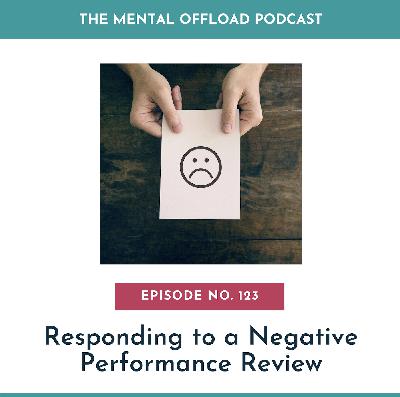
If you've ever walked into a performance review expecting a gold star, and walked out feeling rattled, or even a little angry, you're not alone. In fact, you'd be in good company. Many highly competent women have had a review in their career that left them questioning their abilities, their reputation, or their future at the company. Sometimes, it's a specific piece of feedback that stings. But often, it's something that cuts deeper. A sense that you're unrecognized, unseen, or unjustly targeted. And, it can leave you panicking as you wonder: how can I defend myself, without making it worse? You want to stand up for yourself, but not seem defensive. You want to correct the record, without escalating the conflict. You want to protect your career, but it's hard to trust your boss. That tension is exactly why I recorded this week's episode. I walk you through the immediate steps to take when you're hit with a negative review. And, more importantly, how to respond in a way that keeps your reputation intact and your leadership presence strong. This is the guide I wish every woman had before walking into a review that goes sideways. Because the most common advice on performance reviews is extremist: Either you're encouraged to swallow your concerns and smile meekly as you promise to do better next time… …Or people will tell you must draft a point-by-point rebuttal, so that "their side" doesn't stain your permanent record. Neither approach works, when your goal is to protect your career and reputation. In this episode of The Mental Offload Podcast, I walk you through a more strategic response to a bad annual review. One that lets you advocate for yourself, without getting labelled combative or insubordinate. One that helps you call out bias, without looking like "the enemy". One that helps you rebuild your footing quickly, even if the review wasn't fair. In this episode, you'll learn how to move through the initial panic of a bad review, and how to respond in a way that positions you as an even stronger leader. What You'll Learn: • The first thing you must do after hearing a negative review, especially if it caught you off guard • Why you need to pay attention to facts and perceptions • Impactful scripts for correcting the record, without sounding argumentative • What to do when the critique feels biased, vague, or rooted in the motherhood penalty If you've ever been knocked off balance by a performance review, this episode will help you get back up stronger. For more information, visit The Mental Offload.

Tell me if you've seen this play out before: You get handed a seemingly impossible goal, and you want to prove you're up to the task. But as soon as you start making the tough calls…you realize you're on your own. No support. No boss backing you up. No signal from anyone above that your decisions are good. It's a situation that can leave you feeling exposed. And alone. Soon, you're choosing your words more carefully. You're managing reactions instead of driving outcomes. And you're questioning whether you misread the room, misread the politics, or overstepped your own authority. Sometimes, the problem isn't confidence, competence, or clarity. It's air cover. Air cover is the support you get from the people above you in your chain of command. The public and private reinforcement that allows you to lead, take risks, and make decisions. Without bracing for fallout you'll have to handle alone. When you have air cover, you move differently. When you don't, you know it (often, too late in the game). In this week's episode of the podcast, I break down what air cover actually is, how to recognize whether you have it, and why it's so critical to your ability to lead. If you've ever wondered, "Is it too risky for me to make this decision?", this episode will give you the language and the lens to answer that. What You'll Learn: What air cover looks like in the real world (and what its absence looks like, too) How to diagnose whether you've got air cover or not The strategic moves to make when you don't have the air cover you need Practical steps to provide air cover for your team I hope this episode gives you clarity about how to get the air cover you need. And how to stop carrying more risk than you should. For more information, visit The Mental Offload.
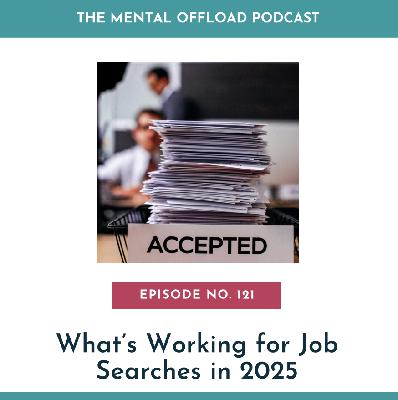
It used to be the case that, if you were unhappy in your job, friends would tell you, "maybe it's time to look for a new job." But these days, people will tell you "hang onto whatever you've got." Because a lot of people are getting burned in the current job market. The job market in 2025 looks dramatically different from what it did 2 years (or even 12 months) ago. So, if you're feeling stuck in your job – or going through a layoff – it might feel like you should be grateful for any job you can get. Even if you love your job, you might be anxious about looming layoffs, hiring freezes, or rumors of a punishing return-to-office mandate. This week on the podcast, I'm taking some of the uncertainty out of the current job market. I break down why so many talented women are spinning their wheels in this market. And I share the exact moves my clients are using to land better, more flexible roles right now. This episode is for you if you're ready to stop waiting for the market to "get better," and start landing your next, best role. What You'll Learn: 5 key trends shaping the 2025 job market The traditional job search strategy that is bombing in the age of AI The networking mistake that you think is getting you referrals, but is leading nowhere A key technique for finding the companies that line up with your values and work-life balance needs …and a whole lot more You'll walk away with clarity, focus, and a fresh sense of what's actually possible for you—no matter what the headlines say. For more information, visit The Mental Offload.

If you manage enough people in your career, I guarantee that at some point, you'll have an underperformer on your team. Sometimes underperformance is glaring. But most of the time, it's smaller stuff: a missed deadline here and there, work full of typos, or a subtle bad attitude. Working with someone like this can be positively maddening. You start out patient. You give feedback. You remind, nudge, maybe even redo the work yourself, just to protect your own reputation. But when you don't see improvement, you're the one staying late to fix other people's mistakes, carrying twice the load, and wondering how you ended up here. This is one of the most frustrating realities of leadership — especially if you strive for excellence in your work. Managing an underperformer can quietly eat away at your time and your energy for everything else — including your family. So you slowly drown in work…and resentment. And yet, many leaders feel like there's no way out. You don't want to be "the heavy." You don't want to seem mean or micromanaging. The underperformance doesn't rise to the level of a fireable offense. And because your own leaders only see the great end product, they may not take the problem seriously. The reality is, almost no one gets taught how to manage an underperformer when they take on a leadership role. And yet, this is one of the most important skills to develop as a leader. So, in this week's episode of The Mental Offload Podcast, we're diving into exactly how to handle underperformance in a way that's direct, compassionate, and effective — without guilt or sacrificing yourself in the process. What You'll Learn: The two leadership traps women often fall into when faced with an underperformer (and how to avoid them) The best framework for diagnosing the root cause of underperformance, so you can address it A simple step-by-step process for addressing performance issues with clarity and confidence How kind leaders handle difficult conversations (with some scripts you can steal) If you've been quietly fixing someone else's mistakes or carrying more than your share, this episode will show you how to lead underperformers effectively, without sacrificing your time and energy in the process. For more information, visit The Mental Offload.

You can run a high-stakes meeting without breaking a sweat. You manage a team like a boss. At work, you seem to know how to keep cool, even when fires are burning around you. But when you walk through your own front door? Why does it feel like chaos is reigning? Small requests turn into battles. Small kids expertly push your buttons. Half the time you're not sure who's going to meltdown first: them or you. You might veer between being "too harsh" and throwing up your hands in defeat—and neither approach feels right. Worse, you wonder what's wrong that you can command a room of challenging adults…but can't seem to get a 4 year old to pick their legos off the floor. On this week's episode of The Mental Offload Podcast, I sat down with parenting expert Lisa Smith, creator of The Peaceful Parent. Lisa has lived this exact struggle—leading thousands in her corporate career while feeling out of control with her own child. That frustration sent her on an 18-year journey into parenting science, brain development, and how to bring true leadership into the home. Her insights will change how you think about parenting. She'll leave you fundamentally rethinking what it means to be a successful parent in this era. So you can shift from checking off a list of "perfect parent" to-dos, to reclaiming your authority and connection with your kids. Join us as we explore the intersection of parenting and work – and how to bring your leadership to both domains. What You'll Learn: Why your kids aren't actually defiant (and how to get them responding, without losing it on them) 3 parenting styles, and the one that truly makes you a leader at home A simple shift that instantly makes kids more cooperative (without power struggles) How to show up as a calm, regulated leader at home - even after the toughest workdays For more information, visit The Mental Offload.

Any way you slice it, Back-to-School is a sprint. The extra load?! It's real. And working mothers typically feel it extra hard. And yet, there can be an unhelpful temptation the moment that back-to-school week is over…to immediately jump back into "real life", without a moment to recover. This will leave you spent. And contributes to burnout. You might think "recovery" means preparing well for back-to-school. Reducing the load of back-to-school week itself. Promising yourself a vacation next spring as a reward. And while none of these things are bad, they're not exactly what's required to recover. You might think that taking any time at all to recover is precious time you don't have. But failing to plan a proper recovery can leave you operating in "survival mode" for months. Who has time for that?! Let's cut that whole process down to a week or two, shall we? Whether your kids went back to school last week or last month, you'll learn what you can do now to get your mojo back. What You'll Learn: Why recovery time is vital to preventing burnout What Paralympic runners can teach us about the recovery period The best short- and medium-term tactics for getting back in gear after the back-to-school "sprint" For more information, visit The Mental Offload.
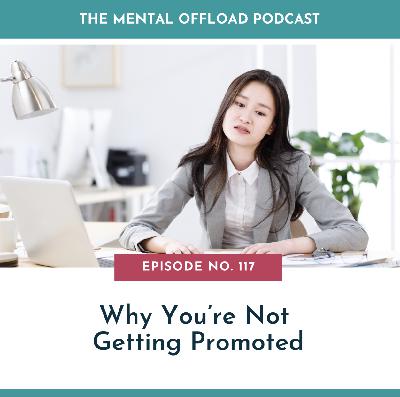
You've been angling for a promotion. And it should be yours. You've got strong results. Good performance reviews. You get along with your colleagues. And yet…that promotion still hasn't come. What's going on here? Is it bias? A boss who's not advocating for you? Some hidden secret handshake you haven't mastered? Let me be clear: You're probably not imagining it. Vague, coded feedback like "be more strategic" or "your communication could be sharper" is all too common. And yes — bias exists. So do clueless (or overwhelmed) managers who don't champion you. But, here's the other part of the equation: there is a playbook for getting promoted. What's often missing — and what this week's episode breaks down — is the strategy behind what actually gets women promoted into leadership. After coaching nearly 100 women into Director, VP, and SVP roles, I've identified 3 things you must have to get from ready on paper to "yes, promote her already!" In this episode, I'll walk you through the real stories of three incredible women who thought they were doing all the right things — and still hitting a ceiling. And how understanding the promotion playbook took them from vague feedback and stalled momentum… to clarity, recognition, and the next level. If you've been stuck in the waiting game — or feel like you're constantly proving yourself with no clear payoff — this episode is your roadmap forward. What You'll Learn: Why just "doing great work" often isn't enough — and can actually trap you where you are Move over, mentors…women need sponsors The 3 forms of capital your promotion is riding on Leaving behind the "good student" mentality, so you can get ahead For more information, visit The Mental Offload.
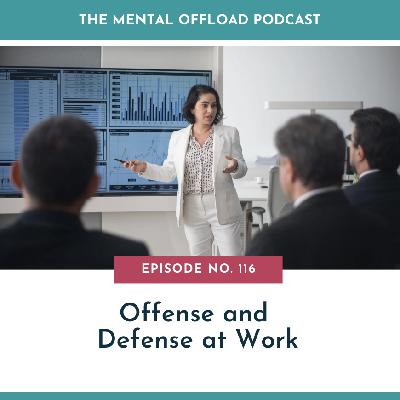
You're presenting your big recommendation. You've prepped. You've practiced. You've got the room's attention. And then… Someone pushes back. Challenges your approach. Questions your recommendation. Suddenly, you find yourself on the back foot. Nervous. Stammering. Feeling defensive. But unable to defend yourself well. I see this same pattern with so many brilliant women. They're strong on offense: those moments when they're in control of the narrative. They've mastered the prep, the pitch, the polish. But when the unexpected happens? When someone else takes the (conversational) ball? Their confidence collapses. They're trying to sell their ideas while feeling like a huge imposter. Have you been there? If so, I'm 90% sure it's not because you lacked preparation. Or weren't good enough at your job. It's because you hadn't honed your "defensive game". Defense is not about the perfect comeback. It's about keeping your footing when someone else intercepts the ball. It's about facing a challenge with confidence. And it's about knowing that just because someone else has the ball, it doesn't mean you've lost the game. This week on The Mental Offload podcast, I'm breaking down what "playing defense" looks like in leadership. And why it might be the missing skill that unleashes your confidence. Because even the greatest players don't always control the ball. But they do know how to get it back in their court. By the end of this episode, you'll see pushback in a whole new way. Not as a threat, but as part of the leadership game. What You'll Learn: The difference between offense and defense at work (and why both are critical for your confidence) How over-focusing on "preparation and delivery" leaves you surprisingly unprepared A simple mindset shift that helps you stay grounded when challenged Practical ways to develop your defensive game For more information, visit The Mental Offload.
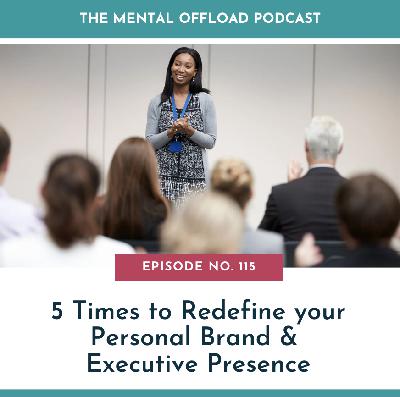
Even the most capable leaders fall into this trap: You evolve professionally—get promoted, shift roles, step into a new organization—but keep showing up the same way you always have. You end up trusted for execution. Valued for your solid judgment. Respected for your work ethic. But still, something's off. You're not quite getting the traction you expected. You're recommendations are getting overlooked. You're still getting treated as a "junior", even when your title is "senior". It's so frustrating—because you think you're doing all the right things, but they're getting the wrong reaction. That's exactly the problem. Your executive presence and personal brand can't stay frozen in time. As your career evolves, so must the way you show up. In this week's episode of The Mental Offload Podcast, we'll dive deeper into five key moments when it's critical to reassess your leadership brand and executive presence — and how high-performing women often miss these cues. Have you ever heard yourself saying things like: "I don't need to 'manage my brand'—my work speaks for itself" "Why am I getting so much pushback, when I know I'm the expert?" "I just returned from mat leave and everyone seems to be treating me differently" These are clues that it might be time to evolve. We're talking about the difference between being seen as competent and being seen as a leader. And why smart, experienced women sometimes cling to a personal brand that's too junior. What You'll Learn: Why your personal brand isn't about image—it's about how others describe you when you're not in the room The 5 professional moments where a "set it and forget it" brand will quietly hold you back How to shift your executive presence without losing your authenticity Specific language and behavior cues that support your brand at the next level This isn't only about performance. It's about power — and how you can use yours with confidence and impact. For more information, visit The Mental Offload.

There's no sugar-coating it. Most jobs are relentless. Even greedy. You're not imagining it. It's very real. (In fact, Claudia Goldin won the 2023 Nobel Prize in Economics for her work highlighting the impact of demanding jobs on the careers and earnings of women.) One potential solution: going part-time. For many women, this is the holy grail of work arrangements. A little less pressure at work, a little more space to breathe at home. It sounds so reasonable. And when you're running on fumes, it's hard not to dream about a schedule that doesn't have you overstretched to the point of burnout. But the reality of part-time isn't always what it's painted to be. Going part-time doesn't always lead to less stress — and in some cases, it can make work-life balance even harder. This week on the podcast, I'm pulling back the curtain on what really happens when high-achieving women shift to part-time work. Not to scare you, but to prepare you — so you can make your next move with clear-eyed confidence, not wishful thinking. Over the years, I've coached dozens of brilliant women through this very decision. Some chose to go part-time with no regrets. Others looked at the reality and decided it wasn't going to be the quick fix they were hoping for. What made both these groups happy about their choices? Not luck. Strategic decisions. If you've been contemplating (or fantasizing) about going part-time, you'll want to tune in for this. What You'll Learn: Why part-time roles often don't reduce your workload — and 2 other common pitfalls A decision-making framework to help you assess if part-time is really the right path for you What to say (and ask) at work and at home so your "part-time" life doesn't become "double time" under a different name A smart way to go "pretend part-time", without a single tough negotiation on hours For more information, visit The Mental Offload.

If you're a working mother with a demanding job, you've probably asked yourself: Is this sustainable? Am I doing enough? How do successful moms make this all work? One journalist has some answers to share. This week, I'm joined by Joann Lublin, Pulitzer Prize-winning journalist, Wall Street Journal contributor, and author of Power Moms: How Executive Mothers Navigate Work and Life. Joann has been studying working mothers for decades. She's seen firsthand how the expectations, demands, and even the guilt have evolved across generations. She's lived it, too. In fact, back in 1980, she wrote an op-ed for the Wall Street Journal about her experiences as a working mother. Her piece ruffled quite a few feathers – some hate mail even suggested she should never have had kids – and the blowback almost led her to quit her prestigious job. The times have changed, but even today, the core struggle remains: How do we build meaningful careers and be present for the people who matter most? What's striking about Joann's work is that she didn't just speak to one kind of mom. She interviewed high-achieving women across a range of industries, backgrounds, and family setups—along with their adult daughters—to understand what actually helps working mothers work best. And she's clear: The idea of "balance" is due for an upgrade. In this conversation, Joann shares hard-won insights and surprising findings from women who've made it to the top—and stayed grounded. If you've ever wondered whether it's possible to build a life that honors your ambitions for your career and your family, listen in. What You'll Learn: Why "balance" is the wrong goal (and what to aim for instead) 4 proven ways to ditch the mom guilt How today's ambitious mothers differ from their trailblazing predecessors This episode is packed with practical takeaways, while staying candid about the systems we're working within. For more information, visit The Mental Offload.
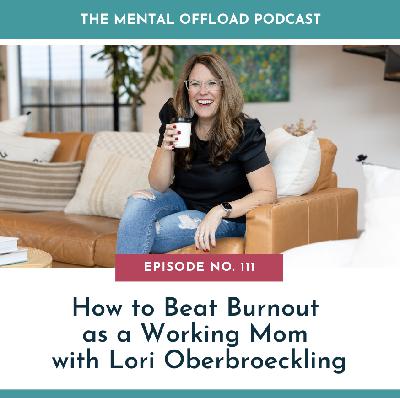
From the outside, it probably looks like you're doing it all—and doing it well. You've checked all the boxes: crushing it at work, holding things down at home, maybe even taking on a volunteer project or two. But on the inside? You might be asking yourself: How much longer can I keep going like this? In this week's episode of The Mental Offload, I sit down with Lori Oberbroeckling—senior corporate leader, mom of four, author of Secrets of Supermom, and someone who's lived through the very burnout she now helps other women recover from. We're talking about that dangerous space high-achieving women fall into when busy becomes a badge of honor, and even the things we once loved start to feel like obligations. You catch yourself saying, "It's just this week, next week will be better"...for months on end. Meanwhile, your energy is slowly draining away. What You'll Learn: The often-overlooked early warning signs of burnout for working mothers Why being overloaded doesn't mean you're a failure How to set boundaries without blowing up your life What parts of the 'supermom' label to embrace Burnout isn't inevitable. Listen in for Lori's inspiring take on the small changes that can steer you out of burnout. For more information, visit The Mental Offload.

Go getters always manage to get it done. But for some of you, it's often "just in the nick of time". Are you jumping from one last-minute push to the next late-night sprint? Have you convinced yourself that this is simply the cost of being successful, high-achieving, and in demand? I know, I know. You want to focus on the result: you're meeting deadlines. Getting s*** done. I used to tell myself I "worked best under deadline". But, then I realized my processes were keeping the stakes high and the stress higher. "Cutting it close" isn't a productivity strategy. It's a disordered way of working. And over time, it chips away at your capacity, your confidence, and possibly even your credibility — even if you're still technically delivering. In this episode, I pull back the curtain on a mindset that many high-performing working mothers assume is unavoidable: Working with zero margin. It looks like constant pressure. And maybe taking pride in being able to handle "whatever comes your way" — while always operating at the brink of burnout. Here's the hard truth: Constant urgency may make you feel productive, but it's actually a slow drain on your leadership and your talent. We're not talking about dropping the ball. We're talking about getting it down the field more effectively. What You'll Learn: Why "just-in-time" delivery erodes trust — even when the work is technically on time The hidden tax of trying to "do it all" without the right support Why your adrenaline-based productivity is blocking your creativity and long-term strategy How to start creating margin and lead time — and why it's the key to peace, polish, and presence For more information, visit The Mental Offload.

If you've ever found yourself trying to stay calm in a heated meeting—or keeping your cool with a tantruming child—you know: try harder is not the answer. In this week's episode of The Mental Offload, I continue my powerful conversation with nervous system expert Jane Pilger. We dive deep into how you can regulate your nervous system—and help others regulate, too—even in the midst of difficult conversations. We explore the real reason emotional spirals happen, even when we think we're "fine." More importantly, you'll learn how to work with your body's built-in systems to stay grounded, even when the world around you is anything but. This is about leadership from the inside out—whether you're managing a colleague gone rogue, an adult toddler, or an actual toddler. What You'll Learn: The critical difference between feeling safe and actually being safe (and why it matters for every conversation you have) Why "tough love" doesn't work (and what does) How to use co-regulation intentionally—at work, with your kids, and with your partner What to do when the person you're talking to isn't capable of rational discussion in the moment If you want to lead with more presence, power, and peace…this episode is a must-listen. For more information, visit The Mental Offload.

As working mothers and high achievers, we are trained to keep pushing through—no matter the cost. On top of that, you've probably been told at some point that the best way to be taken seriously as a woman in leadership is not to show any emotion. That can lead you to keep pushing down your emotions. But those pesky emotions often refuse to be silenced. That's why I recently sat down with nervous system expert Jane Pilger to demystify a topic you've heard about but may not fully get: nervous system regulation. No doubt, you've heard about the benefits of nervous system regulation for your children. But, did you know that it's a skill that the most trusted leaders employ pretty much daily? We break down why one key to effective leadership—at work and at home—starts with staying in control of your own internal state. When you understand how your nervous system works, you stop fighting yourself and start moving forward with more ease and confidence. This isn't about "fixing" or eliminating your emotions. It's about working with your body and mind, not against it. What You'll Learn: What is your nervous system "home base", and how do you know if you're in it? Why willpower and pushing through don't help Practical tools you can use in stressful moments Why expanding your "emotional capacity" is a core leadership skill This conversation is packed with simple, practical strategies you can use immediately. Tune in now and learn how to lead from a place of calm strength—no ice baths or meditation cushion needed. For more information, visit The Mental Offload.

Comments

Download from Google Play

Download from App Store
 United States