


 Claim Ownership
The Fuel Run Recover Podcast
Subscribed: 36Played: 1,662
Subscribe

© Stephanie Hnatiuk
Description
New episodes weekly! Fuel Run Recover is a podcast for everyday runners who want to learn how to fuel better, run smarter, and recover faster. We'll be doing deep dives on the nutrition and training strategies you need to improve your running performance, body composition, and develop a healthier relationship with food and exercise. Learn more about your host Stephanie Hnatiuk by visiting www.stephaniehnatiuk.com, or on Instagram @steph.the.runners.dietitian
162 Episodes
Reverse
We hear it all the time in the nutrition world: there are no quick fixes.And while that’s mostly true… sometimes there actually are a few simple changes that can improve your energy and performance almost immediately.In this episode of The Fuel Run Recover Podcast, I’m sharing three simple fueling swaps runners can make today that can make a noticeable difference in how your runs feel — sometimes within the very same workout.These aren’t complicated strategies or strict meal plans. They’re small adjustments to your pre-run, during-run, and post-run fueling that help your body actually get the energy it needs to perform.Because feeling stronger on your runs isn’t about complicated strategies or hacks, it’s about fueling smarter.Why coffee alone isn’t enough fuel before a run (and what to add instead)The common mistake runners make with sugar-free sports drinksWhy carbohydrates matter during longer workoutsHow skipping carbs after a run can hurt your next workoutA simple tweak to your post-run protein shake that improves recoveryHow small fueling changes can quickly improve energy, endurance, and consistencyIf your runs have been feeling sluggish lately, or like you just can’t hit that next gear, one of these simple fueling adjustments might be exactly what you need.Looking for the resources mentioned in today's episode?Get your free fueling audit here!And if you’re ready for more support, I’ve got options—whether it’s my brand-new ebook Fuel Smarter, Run Stronger, my group program The Fuel Train Recover Club, or apply for limited spots in my personalized 1:1 coaching programs.
What would make someone run 34 marathons in 34 days?Or 58 marathons in 49 days?In this episode of The Fuel Run Recover Podcast, I sit down with Curtis Hargrove, endurance athlete, charity runner, and the man known for running marathons in high heels.Curtis shares how he evolved from an everyday runner into a purpose-driven athlete, raising money and awareness for causes close to his heart, including:• 34 marathons in 34 days for the Terry Fox Foundation• Running across Canada for the Stollery Children’s Hospital• Walking from Cold Lake to Edmonton in high heels to support women and children impacted by domestic violence• 58 marathons in 49 days across the U.S.We talk about what it’s really like to run in heels, how he manages recovery and injury prevention, the ups and downs mentally of taking on these massive challenges, and what’s next in 2026.This episode is about grit, purpose, and using your miles for something bigger than yourself.Find Curtis and follow his journey over on instagram @chargrove15. Looking for the resources mentioned in today's episode?Get your free fueling audit here!And if you’re ready for more support, I’ve got options—whether it’s my brand-new ebook Fuel Smarter, Run Stronger, my group program The Fuel Train Recover Club, or apply for limited spots in my personalized 1:1 coaching programs.
How often should you weigh yourself?If you’ve ever been told that daily weigh-ins are the key to staying “on track,” this episode might challenge that advice.Today we’re talking about the scale- when it’s useful, when it’s misleading, and how often you should actually be stepping on it (especially if you’re trying to lose weight or avoid weight gain).The reality is your body weight fluctuates. A lot. And most of those changes have absolutely nothing to do with fat gain or fat loss.In this episode, I break down:• Why daily weigh-ins often don’t work the way they’re marketed• How focusing on short-term fluctuations can fuel the binge/restrict cycle• Why real fat loss is slow (and gets slower over time)• The many reasons your weight can swing day-to-day (hydration, inflammation, glycogen, muscle repair)• Why the scale doesn’t reflect body composition changes, especially if you’re actively working on building muscle• When body composition analysis (BIA, DEXA) or measurements may be more useful• When weighing yourself is actually helpful, like assessing hydration before and after long runs• The most important question to ask yourself: “What am I doing with this information?”We also talk about the common trap of weighing yourself after a weekend away, a vacation, or a few dinners out, and why using the scale to judge “how bad it was” often leads to extreme, unhelpful decisions.The bottom line?It’s time to rethink your relationship with the scale and start measuring progress in ways that actually support your goals.Looking for the resources mentioned in today's episode?Get your free fueling audit here!And if you’re ready for more support, I’ve got options—whether it’s my brand-new ebook Fuel Smarter, Run Stronger, my group program The Fuel Train Recover Club, or apply for limited spots in my personalized 1:1 coaching programs.
Garmin just launched a nutrition tracking feature inside the Garmin Connect app… so obviously, I had to test it.In this episode of The Fuel Run Recover Podcast, I’m breaking down my real-life experience using Garmin’s new food tracking tool — what works, what doesn’t, and who it might actually be helpful for.If you’re already using Garmin+ and wondering whether this could replace your current tracking app (or if you’re curious whether it’s worth paying for), this episode is for you.Looking for the resources mentioned in today's episode?Get your free fueling audit here!And if you’re ready for more support, I’ve got options—whether it’s my brand-new ebook Fuel Smarter, Run Stronger, my group program The Fuel Train Recover Club, or apply for limited spots in my personalized 1:1 coaching programs.
Fibre might not be the “sexy” side of sports nutrition, but it’s one of the most overlooked foundations of runner health and performance. In this episode, we dig into the viral concept of fibremaxxing and whether it actually makes sense for runners.You’ll learn what fibremaxxing really means, why most adults fall far short of fibre recommendations, and why decades of research support fibre’s role in gut health, chronic disease prevention, blood sugar control, and appetite regulation.We also talk through:Where the fibremaxxing trend came from and what it gets rightThe best food sources of fibre and why variety matters more than any single “superfood”The difference between soluble and insoluble fibre and why runners need bothPotential downsides of going too hard, too fast with fibreTiming fibre intake around training to avoid GI issuesHow very high fibre intakes can impact energy availability and performanceFibre supplements vs whole food sources (and when supplements can make sense)Finally, we answer the big question: Should runners fibremaxx?The short answer is yes, most runners would benefit from more fibre — but with smart timing, gradual increases, and an eye on total fueling needs.Bottom line: Fibre is good, most runners need more, and like all good things, more isn’t always better if it interferes with fueling or performance.Looking for the resources mentioned in today's episode?Get your free fueling audit here!And if you’re ready for more support, I’ve got options—whether it’s my brand-new ebook Fuel Smarter, Run Stronger, my group program The Fuel Train Recover Club, or apply for limited spots in my personalized 1:1 coaching programs.
In this episode, I’m joined by Melanie Cote, the creator behind The Curvy Runner, and Fuel Train Recover Club member, to share her honest and inspiring journey into running. From starting with one-minute intervals to crossing the finish line of her first half marathon at RunDisney.Melanie opens up about what motivated her to start running, why she chose to share her journey online, and how embracing a body-positive, joy-first approach completely changed her relationship with movement. We dive into her first half marathon training cycle, the mistakes she made, what surprised her most, and the moments she’s most proud of along the way.We also get into the fueling side of things, like how Melanie realized she needed extra support, what nutrition advice she had to unlearn, and the changes she made to her fueling that paid off on race day. From carb loading and race-morning breakfast to pacing, mid-race fueling, and recovery, Melanie shares the real, behind-the-scenes details runners are always curious about.This conversation is a powerful reminder that running doesn’t have to be about punishment, shrinking your body, or chasing perfection. It can be about confidence, consistency, and showing up exactly as you are.Looking for the resources mentioned in today's episode?Get your free fueling audit here!And if you’re ready for more support, I’ve got options—whether it’s my brand-new ebook Fuel Smarter, Run Stronger, my group program The Fuel Train Recover Club, or apply for limited spots in my personalized 1:1 coaching programs.
Hydration advice for runners has long been based on averages, assumptions, and trial-and-error. But what if you could actually see your sweat and electrolyte losses in real time?In this episode, I’m so excited to be joined by Meridith Cass, Founder and CEO of Nix Biosensors.Meridith Cass is the Founder and CEO of Nix Biosensors, a pioneering health tech company that developed the world’s first consumer-ready biosensor for real-time hydration monitoring. Under her leadership, Nix has been recognized by TIME's Best Inventions, Runner’s World Gear of the Year, and the CES Innovation Awards, and is transforming how athletes, military personnel, and everyday consumers manage hydration and performance. Prior to founding Nix, Meridith held leadership roles in healthcare and venture-backed startups, and earned her MBA from Harvard Business School. She is a passionate advocate for personalized health, data-driven recovery, and the future of wearable biosensing. In this episode, we cover:The origin of Nix Biosensors and how a marathon experience led Meridith Cass to rethink hydration and electrolyte guidanceHow the Nix Biosensor works, what it measures, and why real-time sweat data is a game-changer for athletesWho sweat testing is most useful for, what athletes can realistically learn from their data, and common mistakes in interpretationHow to turn sweat and sodium data into a practical hydration plan for training and racingThe future of hydration science and how wearable biosensing could change the way everyday runners fuel and perform.Looking for the resources mentioned in today's episode?Get your free fueling audit here!Curious what your sweat data looks like?Get 15% off the Nix Biosensors using my exclusive promo code SHNATIUK15.Learn more and grab yours at nixbiosensors.comIf you’re tired of guessing your hydration and electrolyte needs, this is one of the most powerful tools you can add to your training toolbox.
Welcome to Season 4 of the Fuel Run Recover Podcast!Whether you’ve been here since Season 1 or you’re brand new, I’m so glad you’re listening.To kick off this season, we’re starting with a controversial question I see all over social media:Should women stop running?Short answer: No.Longer answer: let’s talk about why people say this, where the hormone fear-mongering comes from, and what actually matters for women’s health.In this episode, we cover:The long history of women being discouraged or banned from runningWhy outdated beliefs about women’s bodies still show up todayClaims about cortisol, hormones, and running, and what the science really saysWhy underfueling and poor recovery are the real issues, not running itselfWe break down how problems like missed periods, fatigue, weight changes, and burnout are most often linked to low energy availability, not running as a sport. Running isn’t “bad” for women, it just needs to be supported with adequate fuel, rest, and recovery.If you love running, keep going.If you don’t love running, it’s okay to choose something else.And if you’re unsure whether your training and nutrition are truly supporting your health and performance, I’d love to help.Looking for the resources mentioned in today's episode?Get your free fueling audit here!And if you’re ready for more support, I’ve got options—whether it’s my brand-new ebook Fuel Smarter, Run Stronger, my group program The Fuel Train Recover Club, or apply for limited spots in my personalized 1:1 coaching programs.
Today we're talking about fueling for short workouts and races, yes even if you don't technically 'need to'. There’s a trend I keep seeing online—runners bragging about how little they fuel or hydrate during long runs or races, flexing about fasted workouts, and downplaying the need for carbs or hydration. Even some running books and coaches still promote training in a glycogen-depleted state. So in this episode, we’re unpacking it all. You’ll learn why some runners are drawn to the "no fuel, no hydration" mentality, and why others prioritize performance, enjoyment, and longevity in the sport. Spoiler alert: it’s not about who’s right or wrong—it’s about different perspectives, beliefs, and goals.As a running coach and dietitian, I’m here to break down why fueling—even for workouts or races you technically could complete without it—can be a total game-changer for performance, recovery, and enjoyment.In this episode, I cover:-Why some runners love “the grind” and prefer to train or race with as little support as possible-A contrasting mindset: optimizing performance and enjoying the experience-The science behind why carbs improve performance in endurance sports-Why hitting the wall, walking the last few miles, or constantly bonking could be a fueling issue-How under-fueling can negatively impact muscle mass and body composition-The importance of gut training during your workouts—not just on race day-The truth about fasted training and glycogen depletion-Why even short races like 10Ks and half marathons can benefit from fuel and hydration strategies-Practical reasons to fuel during training (gear, logistics, GI practice, etc.)Whether you’re newer to running or a seasoned pro, this episode will help you reflect on your approach to fueling and why the “just because I can doesn’t mean I should” mindset might be worth exploring.Looking for the resources mentioned in today's episode?Get your free fueling audit here!And if you’re ready for more support, I’ve got options—whether it’s my brand-new ebook Fuel Smarter, Run Stronger, my group program The Fuel Train Recover Club, or apply for personalized 1:1 coaching this season.
Setting goals is one of the most powerful ways to stay motivated and make progress as a runner. But how do you set goals that actually stick? In this episode, we’re diving into how to set SMART goals, the different types of running goals, and the strategies that will help you stay on track. Whether you’re aiming for a new PR, increasing your endurance, or simply building a more consistent running habit, this episode will give you the tools to turn your running dreams into reality.What You’ll Learn in This Episode:✔ The different types of running goals (outcome, performance, process) and how they work together✔ How to use the SMART goal-setting framework to set goals that are achievable and meaningful✔ The power of your WHY and how it keeps you motivated when things get tough✔ The importance of breaking your goal into action steps and tracking progress✔ Why accountability, flexibility, and self-compassion are key to long-term successLooking for the resources mentioned in today's episode?Get your free fueling audit here!And if you’re ready for more support, I’ve got options—whether it’s my brand-new ebook Fuel Smarter, Run Stronger, my group program The Fuel Train Recover Club, or apply for personalized 1:1 coaching this season.
If you’ve been wondering why your running progress has stalled—or why you’re doing everything right but still not seeing results—this episode is for you.Today, I’m sharing 5 hard truths runners need to hear. These might sting a little, but I promise they come from a place of support (and science). Sometimes the biggest thing standing in the way of progress isn’t motivation or discipline—it’s habits that need a serious reset.In this episode, I break down the most common mistakes I see as a sports dietitian and coach, including:Why your mileage might be too low for your goalsWhy running slower could actually make you fasterHow timing your nutrition can make or break your performanceThe truth about strength training intensityWhy recovery isn’t optional—it's non-negotiableWhether you're training for your next race or just trying to stay consistent, these truths will challenge the way you think about your training, fueling, and recovery. Let’s cut through the noise and get real about what it actually takes to become a stronger, faster runner.Looking for the resources mentioned in today's episode?Get your free fueling audit here!And if you’re ready for more support, I’ve got options—whether it’s my brand-new ebook Fuel Smarter, Run Stronger, my group program The Fuel Train Recover Club, or apply for personalized 1:1 coaching this season.
In this final episode of Season 3, I’m sharing my full year-in-review: the highs, lows, lessons, and everything in between across my running, family life, and business.This year was a big one. I found my groove again postpartum, trained for and completed my first marathon since having twins, and nearly hit an all-time high for annual mileage. I also navigated lingering pelvic floor issues, the realities of marathon training while camping with toddlers, and the constant juggle of recovery, parenting, and work. There were so many moments that reminded me why I love running, and a few that reminded me just how hard it can be.On the personal side, watching my boys grow from babies to busy toddlers has been the most joyful part of my year, alongside some tough moments.Inside the business, Season 3 brought incredible conversations on the podcast, huge wins for my 1:1 clients and Fuel Train Recover Club members, and the launch of new resources like the Runners Fueling Audit and my Fuel Smarter, Run Stronger ebook. I also learned a lot about my own capacity as a mom and coach, and made strategic upgrades to the Club to create a more sustainable, high-quality coaching experience.I’m also sharing what I’m most excited about for 2026 — from chasing a faster half marathon PB, to exploring new marketing channels, to some very special guests already lined up for Season 4. And don’t worry: while I’m on break, I’ll be re-releasing some of the top episodes from this season so you have plenty to listen to.Thank you for being here through another amazing season. I can’t wait to bring you even more amazing conversations and deep dives in season 4!Looking for the resources mentioned in today's episode?Get your free fueling audit here!And if you’re ready for more support, I’ve got options—whether it’s my brand-new ebook Fuel Smarter, Run Stronger, my group program The Fuel Train Recover Club, or apply for limited spots in my personalized 1:1 coaching programs.

How fast can you really get as a runner? Today we’re digging into your true performance potential — what’s genetic, what’s trainable, and what free race-day strategies most runners never take advantage of.We’ll talk about:Why two runners with the same plan can progress at totally different ratesThe role genetics play (and why they don’t determine whether you can be a strong runner)How personalized, consistent training creates year-over-year gainsWhat the research says about long-term improvements for recreational runnersThe key strategies you might be leaving on the table that can be costing you your PRs.Hydration mistakes that can make or break your raceHow these strategies combined can translate into real minutes off your next marathonIf you’ve ever wondered what you’re actually capable of, this episode will show you just how much potential you might be leaving on the table.Looking for the resources mentioned in today's episode?Get your free fueling audit here!And if you’re ready for more support, I’ve got options—whether it’s my brand-new ebook Fuel Smarter, Run Stronger, my group program The Fuel Train Recover Club, or apply for personalized 1:1 coaching this season.
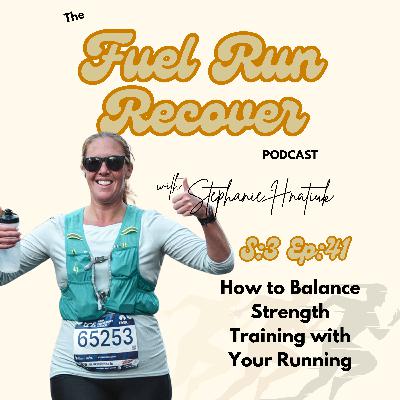
Strength training is one of the biggest pain points runners struggle with — when to do it, how to do it, and how to fit it in without feeling overwhelmed. And with endless YouTube videos, reels, and online advice… it’s no wonder most runners don’t know where to start.In this episode, I break down the exact steps to finally make strength training work with your running. You’ll learn:Why you need to make time, not find time, for strengthThe key goals your strength plan should supportHow to choose exercises, sets, reps, and progressions (without overthinking it)Why so many runners stall out — and the simple fixes that actually workHow to avoid trying to chase every goal at onceWhat periodization really looks like for runners who want long-term progressIf you’ve ever wondered how to schedule strength, build muscle, run faster, and prevent injuries without burning out, this episode is for you.Looking for the resources mentioned in today's episode?Get your free fueling audit here!And if you’re ready for more support, I’ve got options—whether it’s my brand-new ebook Fuel Smarter, Run Stronger, my group program The Fuel Train Recover Club, or personalized 1:1 coaching this winter.
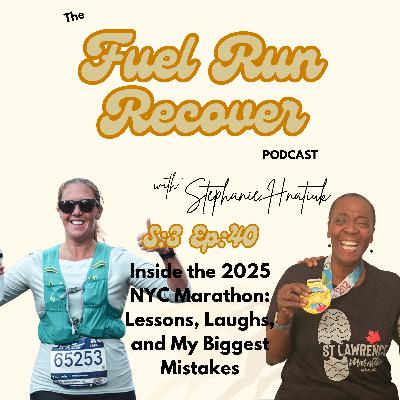
In this very special episode of The Fuel Run Recover podcast, join me and my past client (and now host for the day!) Dawn Williams, who flips the mic and interviews me about my experience running the 2025 TCS New York City Marathon.We chat about what it was like to train for nearly a year while juggling twin toddlers and a business, the emotional rollercoaster of race day, and all the little moments that made NYC so unforgettable — from the electric energy of the 1 million + spectators to a very costly post race mistake that I'd never make again. You’ll hear about my fueling strategy, how I managed recovery, what I’d do differently next time, and why this race truly lived up to the hype.🎧 Tune in for a behind-the-scenes look at the world’s biggest marathon — mom edition!Looking for the resources mentioned in today's episode?Get your free fueling audit here!And if you’re ready for more support, I’ve got options—whether it’s my brand-new ebook Fuel Smarter, Run Stronger, my group program The Fuel Train Recover Club, or personalized 1:1 coaching this fall.
You crossed the finish line of your goal race!... Now what? In this episode, I’m walking you through what to do in the days and weeks after your big race. From celebrating your accomplishment (even if things didn’t go to plan) to refueling, reflecting, and deciding what’s next, I’ll help you recover mentally and physically so you can come back stronger for your next goal.We’ll cover:✅ Why celebrating matters — even after a “bad” race✅ The 48-hour rule for processing post-race emotions✅ How to do a meaningful race debrief (and what questions to ask)✅ Why you shouldn’t rush to sign up for your next marathon✅ How to think long-term about your running goalsWhether you crushed your PR or hit a wall, this episode will help you reset, learn, and plan your comeback the smart way.Looking for the resources mentioned in today's episode?Get your free fueling audit here!And if you’re ready for more support, I’ve got options—whether it’s my brand-new ebook Fuel Smarter, Run Stronger, my group program The Fuel Train Recover Club, or personalized 1:1 coaching to get you race ready for your upcoming event!
I recently saw a Facebook post about a marathon handing out coke at one of their aid stations. In the comments section, some runners swear by it, others say it’s a GI disaster waiting to happen. So… what’s the truth?In this episode, we break down the science of fueling your runs with a sugar-sweetened beverage like Coke — how it compares to sports drinks like Gatorade, what happens in your gut when you drink it mid-run, and when it might actually work as a budget-friendly option.You’ll learn:How Coke stacks up nutritionally against GatoradeWhy its might not actually be the best kept secret in marathon nutritionHow to safely experiment with it (if you want to try!)Tips for balancing your fluids and electrolytes during long runsLooking for the resources mentioned in today's episode?Get your free fueling audit here!And if you’re ready for more support, I’ve got options—whether it’s my brand-new ebook Fuel Smarter, Run Stronger, my group program The Fuel Train Recover Club, or personalized 1:1 coaching this fall.
During a recent 3-hour treadmill run, I noticed something wild — my treadmill said I burned 2400 calories, while my watch only said 1300. That got me thinking about how inaccurate the calorie tracking information can be, and how many runners wind up making nutrition decisions based on misleading data.In this episode, we’re breaking down:Why calorie burn estimates from your watch or treadmill aren’t reliableThe problem with “eating back” your exercise caloriesHow this mindset keeps runners stuck, tired, and frustratedWhat to focus on instead to fuel smarter and see real resultsIf you’ve ever wondered how much you should eat after your long run — this one’s for you.Looking for the resources mentioned in today's episode?Get your free fueling audit here!And if you’re ready for more support, I’ve got options—whether it’s my brand-new ebook Fuel Smarter, Run Stronger, my group program The Fuel Train Recover Club, or personalized 1:1 coaching this fall.
During a recent 3-hour treadmill run, I noticed something wild — my treadmill said I burned 2400 calories, while my watch only said 1300. That got me thinking about how inaccurate the calorie tracking information can be, and how many runners wind up making nutrition decisions based on misleading data.In this episode, we’re breaking down:Why calorie burn estimates from your watch or treadmill aren’t reliableThe problem with “eating back” your exercise caloriesHow this mindset keeps runners stuck, tired, and frustratedWhat to focus on instead to fuel smarter and see real resultsIf you’ve ever wondered how much you should eat after your long run — this one’s for you.Looking for the resources mentioned in today's episode?Get your free fueling audit here!And if you’re ready for more support, I’ve got options—whether it’s my brand-new ebook Fuel Smarter, Run Stronger, my group program The Fuel Train Recover Club, or personalized 1:1 coaching this fall.
So… how should you decide what your next race day goal should be? Whether you’re running your first half marathon or trying to shave minutes off your PR, choosing the right goal can make or break your race experience.In this episode, I’m walking you through exactly how to set a race goal that makes sense for you—based on your training, experience, and mindset.Here’s what you’ll learn:How to set realistic goals when you’re racing a new distance for the first time.How to use past race data or time trials to predict your next finish timeHow to structure your training based on goal pace—and what it means if you can’t hit those numbers yetWhen (and how) to take a calculated risk and just go for it on race dayI’ll also share how I chose my own goal for a recent 10-mile race—and what it taught me about pacing, expectations, and confidence.How do you set your race day goals? Come share your story with me on Instagram @steph.the.runners.dietitian!And if you’re ready for more support with reaching your race day goals, I’ve got options—whether it’s my brand-new ebook Fuel Smarter, Run Stronger, my group program The Fuel Train Recover Club, or apply for personalized 1:1 coaching this fall.

Comments

Download from Google Play

Download from App Store
 United States