


 Claim Ownership
Power For Positive Living
Subscribed: 31Played: 291
Subscribe

© Dr. James Hughey
Description
Personal thoughts for positive living shared by a retired counseling psychologist as we all travel on our mutual journey through life.
164 Episodes
Reverse
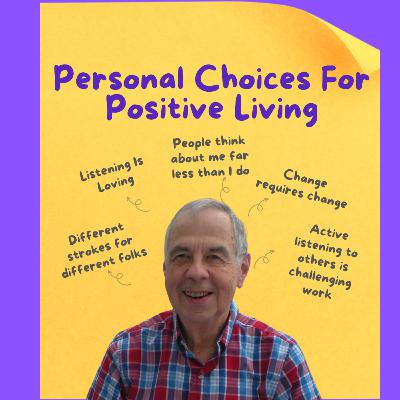
35+ years of developing this positive living website by sharing myself with others has given me many specific personal guidelines that I have found to be most helpful with my life choices.
My personal choice guidelines for relationships with self and others allows me to better understand the individual positive-living journey that I have chosen over the years.
Wellness psychology encourages the processes of introspection and experimentation for each individual to develop, understand, implement and share personal guidelines that support positive living.
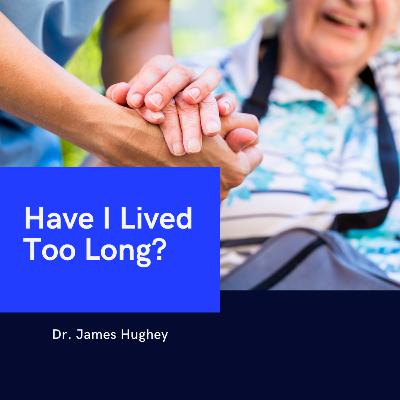
The United State Surgeon General has issued a health warning about an "epidemic" of loneliness among seniors who have lived many years.
We each face the reality that our family and friendship circle membership tends to diminish as you and I age. We all face personal individual decisions on how we wish to manage this isolation situation for today and tomorrow for as long as you and I continue to live this gift of life.
Being able to emotionally connect with other humans where we can openly and honestly share our hopes, fears, and concerns is one way to manage loneliness and find individual positive answers to this important question.
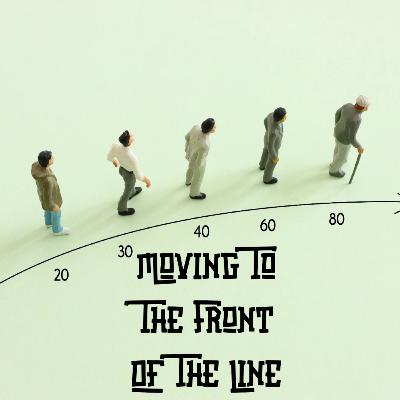
Aging allows us to strengthen the value of our time currency. We learn that the gift of time is probably the most precious gift we have to give/receive with others each day that you and I live.Reaching the 'front of the line' also gives us the opportunity to realize the reality that we are going to die. The varied physical, emotional and spiritual aspects of the death process while we live one day at a time are no longer an abstract to handle sometime in the future.
With this awareness of reality, what specific choices do you and I want to make for spending whatever time currency is left in our account? What is really important to us at this stage of living? Can we finally let go of the 'small stuff'?
Wellness psychology teaches that we humans want to be heard and accurately understood by others. Whether we wish to be known for the "real" us or some modified version is always an individual's personal choice. Just because you and I want to know someone does not guarantee that this individual wants to be known by others or by me specifically.
They may also want to be known generally but not in specific life areas. After listening to many life stories over the years, one can learn there are many foundations on which a person may decide to view personal information as worthy to be a "secret". Listening to personal secrets can be a responsibility for us to communicate effectively: Do I want to accept this responsibility of learning and maintaining your secrets?
I recall a song from my youth that encouraged me to maximize giving to persons who I loved while we were both still alive and able to give/receive personal gifts.
The song's theme was: "Give me my flowers while I am living so I can enjoy them while I can. Please do not wait until I am in my casket to slip some lilies into my hands."
We have the choice to give loved ones gifts that they value more than flowers at their future funeral. Can we make the transition to give the gift of our "flowers" while a loved one is alive to enjoy them? Have we given the gift of our presence by visiting for lunch or sharing a trip? Have we made a gift of our time with a phone call?
The time to choose the spending of our time currency for 'flower gifts' by how and what we give to loved ones is today! Yesterday is gone. Tomorrow may or may not arrive for any one of us.
Life for many seems to be seeking a healthy balance in handling the various stresses and pains of living life. What worked yesterday for us may/may not work today or tomorrow.
Pain is pain. How we experience it and the individualistic ways we manage it in our lives are some of our most important life choices.
It may be easier for our family/friends to offer support for a disease or visual physical condition like a broken limb than for a more invisible situation like depression/anxiety/loneliness.Learning how to be supportive of invisible pain situations can be one of the best ways to love our family/friends.
One of the strongest traits that we humans have when born is having the 'will to live' and survive in our world. This drive to survive gives us motivation to confront and overcome obstacles that arise during our lifetime. While almost totally dependent on support from others at birth, each of us during adulthood develops our own personal ways of implementing this trait. While having this will to live and survive seems to be present in all of us, there is often an erroneous assumption that the strength of this trait is present equally in all people. Observation indicates that this is not true. We may also erroneously assume that whatever strength is present at one point in our life will remain the same level throughout our Life Journey. Change is a constant of life and the individual choices we make at any one point have a significant impact on the strength and direction of our will to live life.
One characteristic that we often share with others on our life path is seeking answers to the question: Who am I?
During our childhood we become aware that we are individuals who have similarities and differences with the other people in our world. In seeking to better understand ourselves, we may ask questions like: Who am I? Why am I here? What is the purpose of my life? Is there anything 'special' about me? What do others really think about me? How can I make my life into a positive and healthy journey?
Like life itself, how one chooses to respond to existential questions like these tends to be individualistic and allows us to create our personal life path.
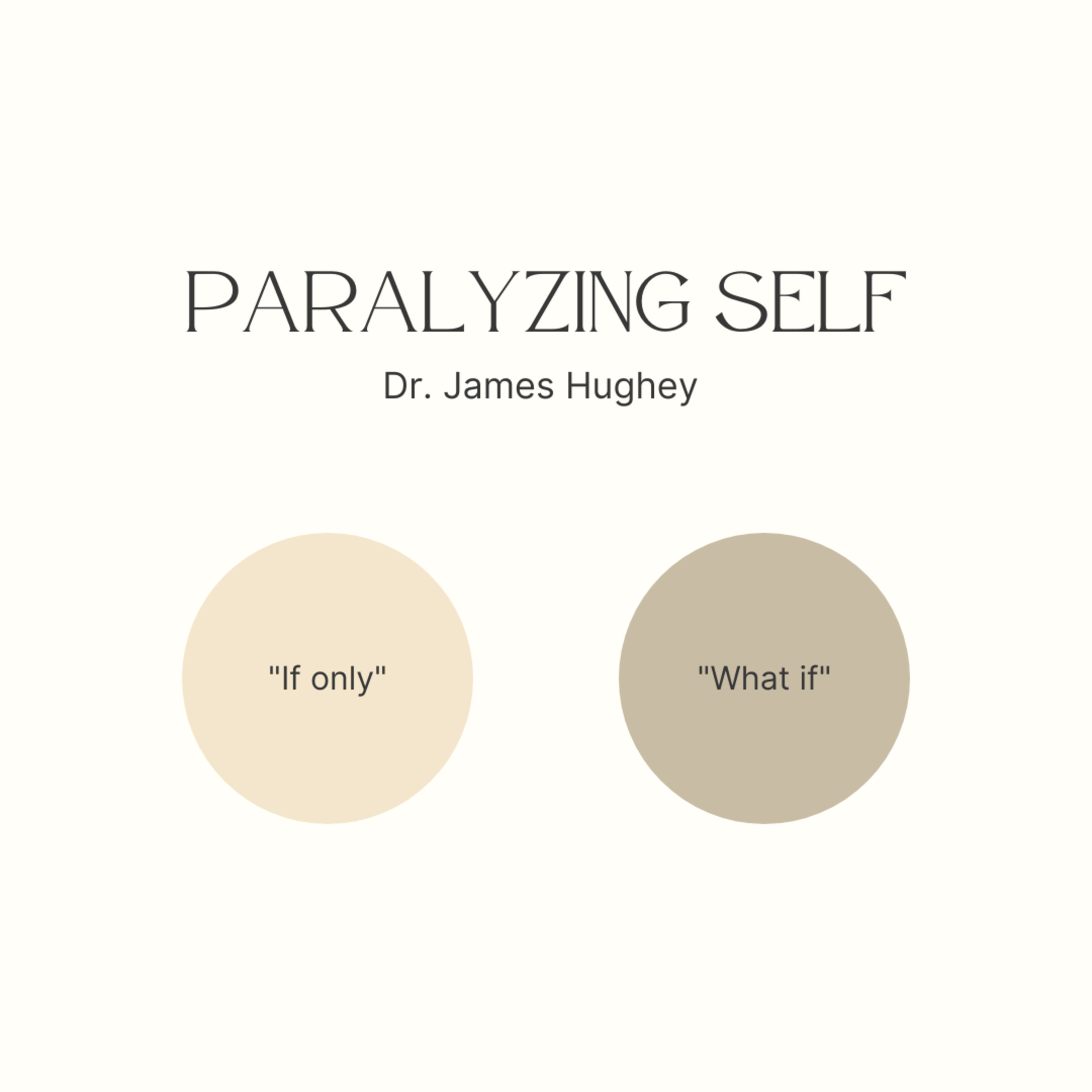
We are constantly facing change in our lives while attempting to make positive and healthy decisions. You and I tend to rely on life experiences in this process with habituation being chosen for managing most of our repetitive decisions.
Reaching various life path junctions we may need to evaluate and decide on a new direction or re-decide to continue along the same path that has worked to some degree for us so far.
These junctions can occur when we realize that our current thoughts, feelings and behaviors are not providing satisfactory outcomes for living life.
Hopefully, we can avoid using mind games like "If only" or "What if" to paralyze us from evaluating and making healthy positive life choices that require some degree of change.
Whether it is a spouse, family member, friend, coworker, or neighbor, many of us know someone who is most eager with their behavior to impose his/her version of what is true and correct for living life.. One of their viewpoints often is that one size fits all and the world would be a better place if everyone thought and behaved in the same way.
Compromise and structuring win-win outcomes for our relationships may often be seen as a weakness and to be avoided. These individuals tend to use certain words to impose their viewpoint like: should, reality, normal, healthy, natural, etc.
Since we live in a world governed by our social interactions with others, it can be most positive for us to understand and develop strategies for dealing with any truth bullies we may have in our world.
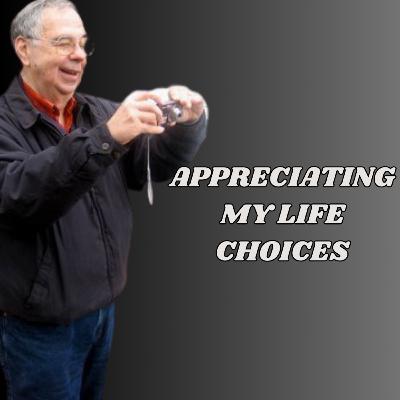
Life tends to take on reflective aspects as the years pass. During the latter chapters of our Life Journey, pondering what aspects of my life I'm most proud of can be valuable for introspective learning and sharing with others.
Like writing a personal eulogy, this introspective process can provide challenges to consider the specific choices for the life we have chosen to lead. This is especially the case if we have been blessed to live for many decades.
For example, do I choose to focus on the entire 30,000+ days that I have lived? Do you and I choose to focus on the areas of pride that come during our childhood and youth years or give more attention to the adult years? Do we choose to focus on specific life areas like relationships? Do we focus on the inner and less visible ways we have evolved as independent and unique persons? Do we choose to express our pride about the challenging goals and aspects of life that are more concrete and observable to others?
Each of us will choose a different path to ponder this area of feeling proud for living life's gifts. How we may wish to convey it to others who are important to us will also be individualistic.
Two words from the field of psychology frequently make it into our daily dialogues. We use the words 'introvert' and 'extrovert' as labels to quickly convey our perceptions of how we see ourselves. Like many labels we use in our language, these two words tend to be verbal shorthand in communicating quickly and efficiently a part of who we are.
Counselors are often interested in hearing from clients the processes they used in determining the descriptive labels one has chosen. This process of selecting self-descriptive words for ourselves can be very informative to better understand that person.
A counselor can be asked: "Am I an introvert or extrovert?" The most accurate response is that we usually are both and neither. This type of response is one reason why persons who prefer to frame the world in binary options of 'either-or' can become so frustrated interacting with psychologists.

With so many options available on how we see the world,, many of us tend to gravitate toward 'shortcuts in how we decide what is real or unreal, true or not true, good or bad, right or wrong, etc. Habituation and binary viewpoints from childhood allow us to more quickly make our personal choices without investing time and energy into individual evaluations. During the movies of my youth, it did not take long to learn that in western movies the 'good guys' were the ones who wore white hats. The ''bad guys' were the ones wearing black hats. This became visual shorthand for us to know which person was good so we could support and cheer their actions. This visual shorthand also allowed us to label the others as bad guys where we were encouraged by our peer group to offer an occasional 'boo'.
As adults, it can take lots of time and energy to unlearn the habituations we bring from childhood.
We begin life as children being dependent on others to survive. With adulthood we achieve and maintain the status of being independent. Our society tends to expect us to continue thinking and behaving as independent and productive adults for as long as possible.
The longer one lives, the more likely we may realize that with aging we may be returning in some ways to the dependency needs of childhood when the presence and assistance of others were essential for our survival.
The individual and personal choices each of us makes on this path will do a great deal to determine our physical and emotional health during the changes taking place with aging and our growing return to dependency on others.

Life for most of us is a series of choices. How do we choose to view what is happening now and select our attitudes/behaviors in preparing for the unknown future?
Being a victim of some situation is probably a part of each life path. We choose whether our skills of managing victimhood rise to the level of becoming a professional.
A portion of our future is often unknown. Our personal power lies in the attitudes, values, beliefs and behaviors we choose to prepare ourselves for whatever lies ahead.

The frequent appearance of fatigue can be an alert that some system within us needs attention for some degree of healing.
Many of us recognize the appearance of physical fatigue and know of attitude and behavioral options to make changes. The appearance of other system symptoms like psychological fatigue frequently leaves many without available pre-planned options. Learning and preventively implementing information from a number of sources such as wellness psychology can be most helpful for maintaining one's emotional health.

Each generation receives input from previous generations on the important behaviors, values and beliefs that make our relationships and life journey have meaning.
One recommendation from Ann Landers in a previous decade focuses on the important words to be used in relating to others.
Wellness psychology also offers relationship guidelines to be considered and evaluated for use in one's life journey.

Active and passive acts of suicide continue to be a behavioral option for many who struggle with the hurts and pains of their life issues. Active suicide can offer the appeal of being a quick and spontaneous decision to end the inner pain of life circumstances. For others, reaching this same decision can take more passive and indirect forms evolving over many days, weeks or months. The processes of considering and eventually reaching an active or passive suicide decision by others can often be invisible even to the most observant and caring family/friends.

One of the key foundations of healthy relationships is when the participants can really listen, hear and understand what is being said by each whether there is agreement or a degree of difference.
Being quiet while another speaks physically and emotionally can be a start. Active listening takes effort and offers understanding of self and others with whom we have built relationships.

Our interactions with others in our society take many forms. When society embraces polarization of absolutes like "either/or" or "winner/loser" as a valued behavior, we are likely to find ourselves with many invitations to participate in various types of life drama frequently known as culture wars.
Since the various culture war dynamics can be important to many family/friends with whom we relate, it can be significant for our emotional health to actively choose how and to what degree we personally wish to respond when you and I are invited to play in this type of life drama.

Comments

Download from Google Play

Download from App Store
 United States