


 Claim Ownership
The Positive Education Podcast With Ash Manuel
Subscribed: 5Played: 59
Subscribe

© 2021 Ash Manuel
Description
In this podcast you’ll hear stories, information and actionable ideas from positive education and wellbeing experts, school wellbeing coordinators, teachers and sports coaches. The purpose of the podcast is that you takeaway ideas that you can execute in your classroom, across your school, at your sports club and in your organisation, plus tips and tricks that you can apply in your own life.
67 Episodes
Reverse
In this episode with Laura Brodie, we dive into her lived experience of albinism and low vision and how that journey shaped her work supporting teachers and parents to create calmer, more inclusive classrooms. As an educator and mindfulness practitioner, Laura shares practical tools to move from overwhelm to clarity, confidence, and belonging.
Mindfulness doesn’t remove challenge, it changes how we respond to it, creating space between reaction and choice.
Belonging is not accidental; it is built through small, consistent acts of inclusion and invitation.
Exclusion can leave deeper scars than we realise, often shaping confidence long into adulthood.
Practical adjustments in classrooms are not “extras”, they are the difference between coping and thriving.
When kindness is made visible and intentional, it becomes contagious.
Lived experience, when embraced, can become a powerful compass for leadership and advocacy.
![Episode #65 | Gavin McCormack - A Story That Will Move You [Warning there's a fair chance you'll be teary]](https://episodes.castos.com/617b3a6ac1c8d5-07132117/images/2344988/c1a-x4345-dm11wdpmc82n-efnkvh.png "Episode #65 | Gavin McCormack - A Story That Will Move You [Warning there's a fair chance you'll be teary]")
In this episode with Gavin McCormack, we dive into one of the most moving stories you'll hear. It's a story about danger, hope, heartbreak and humanity and what happens when you decide you can’t unsee something and choose to act.
From a treacherous journey into remote Nepal to rebuilding a forgotten school for orphaned children, Gavin shares the moments that broke him open and reminded him what truly matters.
This story is incredible. It had me with a tear in my eye on more than one occasion.
In this episode with Rod Soper, we dive into his powerful journey from school leadership to pioneering early years wellbeing through thinkers.inq and the Playing With Gratitude Project. Rod shares why play and gratitude are foundational to mental health, how these practices are transforming children, educators and families, and why wellbeing must be nurtured long before the teenage years.
1. Wellbeing starts earlier than we realise
Children’s confidence and mental health foundations are already forming before school, not in the teenage years.
2. Real change scales through values-aligned partnerships
Rod’s collaboration with Fiona O'Donnell shows how shared values, not programs, drive impact, allowing gratitude and wellbeing practices to spread authentically across early learning centres and into families’ lives.
3. Play is essential to mental health
Play isn’t optional; without it, wellbeing suffers for children and adults.
4. Gratitude works even in hard seasons
Gratitude doesn’t erase struggle; it gently shifts perspective when life feels overwhelming.
5. Gratitude changes families, not just kids
Simple gratitude practices at school sparked deeper connection and calm at home.
6. Teachers must feel it before they teach it
Wellbeing sticks when educators experience it personally, not just deliver it as content.
7. Gratitude shapes babies before words exist
Even infants showed calmer behaviour and stronger attachment through gratitude-rich environments.
More About Rod Soper
Rod has spent more than three decades asking a deceptively simple question: What helps children flourish? His work suggests that gratitude, connection and the feeling of being valued sit at the heart of emotional wellbeing and learning. Rod is a writer, a coach and the co-founder of Thinkers.inq and Personhood360, and author of The Great Gratitude Surprise. He brings a hopeful, practical and research-informed approach that helps teachers and families alike build kindness, wellbeing and belonging into everyday.
In this episode with Justin Robinson, we dive into how schools can shift from scattered wellbeing programs to strategic, sustainable systems that genuinely support students, staff, and families. Justin shares powerful stories, practical insights, and fresh ways to use data, leadership, and specialist roles to make wellbeing meaningful, measurable, and lasting.
Key Takeaways
1. “Find Your Bird”
Finding purpose isn’t about having everything figured out, it’s about actively exploring. Whether you’ve found your passion or are still searching, both paths are valuable.
2. Wellbeing Needs Systems, Not Random Programs
Schools don’t need more wellbeing activities; they need a cohesive, strategic approach that aligns leadership, staff, students, and families around a shared wellbeing vision.
3. Not Every Teacher Should Teach Wellbeing
Wellbeing is most effective when teachers model it, not when they’re forced to deliver formal lessons. Specialist wellbeing teachers and clear structures make a big difference.
4. Use Data That Actually Matters
The most useful wellbeing data tracks how leaders, teachers, students, and parents are feeling and functioning, helping identify gaps, strengths, and communication breakdowns.
5. Strategy Requires Saying “No”
Real change comes from focus. Schools must prune initiatives that aren’t aligned with wellbeing priorities so they can sustain what truly moves the needle.
6. Parents Are the Hidden Wellbeing Multiplier
Parents can reinforce or dilute school wellbeing efforts. When families are included and informed, wellbeing gains strengthen across home and school.
In this episode with Paul Campbell, we dive into how play can transform school culture, enhance connectedness, and support both student and staff wellbeing. Drawing from his work in schools, professional sport, and co-founding The School of Play, Paul shares practical insights and real-world impact.
Key Takeaways
- Play is used as a tool to "trick people into wellbeing," making social-emotional learning more engaging and less confronting, especially for teens and adults.
- Building connectedness is essential before learning or behaviour change can take place—this applies equally to classrooms, staff rooms, and sporting clubs.
- Adults often engage even more deeply than students in play-based PD, helping them relieve stress, reconnect with peers, and model play for others.
- The book 365 Days of Play was created to bring wellbeing through play into homes, with short daily stories and activities families or classrooms can do together.
- Independent research with La Trobe University showed measurable impact: a 90% increase in energy, 34% boost in wellbeing, and stronger student confidence and connectedness.
- One of Paul’s go-to activities, “Gratitude Pictionary,” invites staff to draw moments of joy from their week, creating laughter, reflection, and a powerful shift in staffroom culture.
More About Paul Campbell
Paul brings over two decades of comprehensive experience in the educational sector, seamlessly transitioning from a dedicated classroom teacher to an accomplished Assistant Principal. His expertise lies in fostering well-being and positive education initiatives, significantly enhancing the learning environment in schools. Beyond the classroom, Paul has made notable contributions to the sports world, focusing on player welfare and well-being. His impactful work includes collaborations with professional athletes and prestigious sporting clubs, highlighted by his recent tenure at the Collingwood Football Club. Paul is a published author, helping to bring the benefits of daily play into family homes through his book 365 Days of Play.
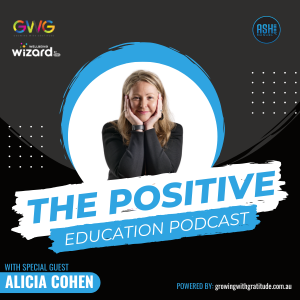
In this episode with Alicia Cohen, we dive into the challenges and rewards of navigating mainstream schooling with a special needs child. Alicia shares her personal journey, insights from her new book, and practical advice for both parents and teachers.
Top Takeaways:
Be a Visible and Proactive Parent
Alicia encourages parents to take an active role in their child’s schooling, not as a “difficult parent,” but as an engaged one. Show up, communicate regularly with staff, and become a known, positive presence in the school community.
Build a Strong Support Team
Successful mainstreaming relies on a team approach. Alicia recommends gathering a team that includes speech therapists, occupational therapists, teachers, school leaders, and even peers, all working together, with consistent communication and shared goals.
Advocate with Confidence (and Kindness)
While collaboration is key, there are times when parents need to advocate firmly, especially around funding, adjustments, and access to resources. Alicia shares how she’s learned to speak openly about her child’s needs while still approaching the school as a partner.
Friendships Take Time and They're Worth It
Alicia highlights the importance of helping children with special needs form real, lasting friendships. She shares how these relationships have grown over time for her son, Remy, and how small acts (like showing up with snacks!) can help build connections.
Mainstreaming Isn't Always Easy, but It Can Be Life-Changing
While Alicia acknowledges mainstream schooling isn’t the right fit for every child, she powerfully shares how it has transformed her son's life and their family’s. It’s about choosing what’s best for your child at this point in time and being open to future changes.
Teachers Can Make a Huge Difference With Support
Alicia offers insight into what helps teachers support students with special needs: honest communication, creative differentiation, and genuine partnership with families. She also advocates for better transitions, shared learning from previous teachers, and student-centred planning.
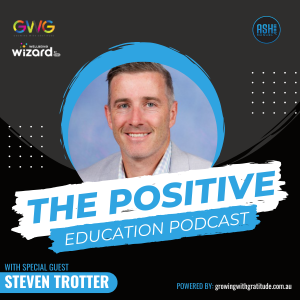
In this episode with Steven Trotter, we dive into how school leaders can move from overwhelm to clarity, create momentum for change, and lead with both purpose and wellbeing in mind:
The SKIM Model, a simple, powerful leadership model that helps shift teams from resistance to momentum
Why self-awareness is the foundation of effective leadership and personal wellbeing
How to lead through pressure without turning it into stress or burnout
The idea of “agency”. Personal strategies to reset, refocus, and stay grounded
Why adult learning should energise, not exhaust and how to design PD that actually works
How to make leadership more intentional (and less reactive) to improve both impact and culture
More About Steven
Steven Trotter is an award-winning educational system and executive leader and author of ‘The Art of Skimming Stones: Leading Sustained Improvement in Schools’ With over a decade of experience as a school principal and system leader across diverse educational settings from large suburban schools to small rural communities and residential programs.
Apart from leading his own successful and high performing schools, Steven is renowned for supporting leaders to move from overwhelm and reactivity to strategic clarity and confident decision-making. His work focuses on helping leaders navigate complexity, reduce cognitive load, and drive sustainable improvement.
With a Master’s in Education and a background in designing impactful adult learning architecture, Steven co-designed a leadership framework that accelerates growth through coherence, accountability, and purposeful reflection. He regularly presents at national conferences, contributes to leadership publications, has been honoured as ACEL New Voice in Educational Leadership scholarship (2024), and an Awardee in the National Education Awards in the category of Principal of the Year – Primary, Government.
Steven’s unique approach blends research, storytelling, and practical tools. Whether through his writing, coaching, or speaking, he empowers leaders to find a better way of leading, one that lifts others while staying grounded in meaning and self-awareness.
Linkedin: Steven TrotterWebsite: Steven Trotter
World’s Biggest Gratitude Lesson EventTake the Your Schools Wellbeing ScorecardJoin the Wellbeing Wizard Waitlist
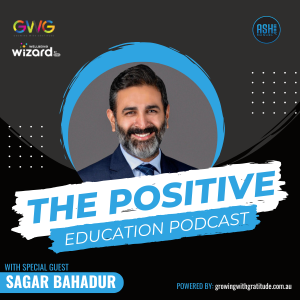
In this episode with Sagar Bahadur, we dive into the future of international education, student mobility, and how institutions can better support learners across cultures, especially in India and South Asia.
Here are seven key takeaways from the conversation:
Only 2% of India’s 40 million higher education students currently study abroad, yet 58% aspire to access international education. This gap presents a major opportunity to rethink how global learning can be delivered within India.
Internationalisation is evolving beyond travel. Students are increasingly engaging with global education through short-term programs, hybrid learning, foreign faculty, international certifications, and local branch campuses.
India’s education landscape is vast and competitive, with limited university spots creating pressure for students to achieve high academic results, especially for elite institutions like the Indian Institutes of Technology.
The Indian government is focused on expanding access by promoting vocational education, skill development, and international collaborations, including mutual recognition of qualifications with countries like Australia.
Student wellbeing is a growing focus. Institutions are now offering more robust pre-departure and post-arrival support to help students navigate academic pressure, cultural change, and independent living.
Cultural transitions can be overwhelming for first-time international students. Sagar highlights the importance of preparing students not only academically, but emotionally for challenges like managing finances, homesickness, and balancing part-time work with studies.
Universities are being pushed to innovate. Acumen, Sagar’s organisation, is helping institutions explore new regions, delivery models, and partnerships from setting up campuses to building school pipelines and transnational programs.
More About SagarSagar Bahadur is a recognised leader in global education strategy, with a 15-year track record of shaping and scaling international higher education initiatives. As the Executive Director for India, South Asia, and South East Asia at Acumen, he leads the region’s growth and expansion strategy for Sannam S4/Acumen, a premier global partner for strategic and sustainable international education. His work focuses on building bridges between institutions, governments, and students across borders, with a strong emphasis on long-term partnerships and high-impact outcomes.Acumen is widely regarded as a sector-leading firm, supporting over 100 global institutions across key education markets.Sagar’s visionary leadership led to the successful launch of Gradstar Global Education in 2022, securing over 40 global university collaborations and delivering rapid growth. His prior experience includes an 8-year tenure with Amity Education Group, where he played a key role in establishing multiple international campuses. At The University of Queensland, he redefined their India strategy, setting a benchmark for higher education market engagement across Asia. He also worked closely with MDIS Singapore, supporting their market development and institutional outreach across the region.Educated in Singapore, and further trained at UCLA and ISB India, Sagar brings a global outlook combined with deep regional insight.In the context of Japan, he has played a leading role in efforts to elevate Japan’s visibility and competitiveness as a global study destination, especially across South Asia. His work focuses on building institutional capacity, enabling two-way...
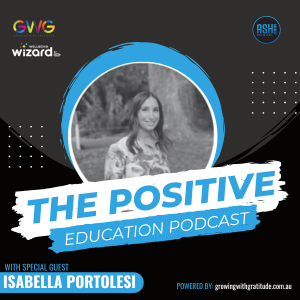
In this episode with Isabella Portolesi, we dive into what it truly means to action Positive Education in the classroom, through both daily routines and intentional teaching. Isabella shares her journey from psychology to education, offering practical insights that every educator can relate to and apply.
6 Key Takeaways
Isabella transitioned from a clinical psychology focus to teaching because she was drawn to the proactive, preventative side of supporting young people. Positive Psychology allowed her to focus on building strengths, belonging, and meaning, rather than only addressing what’s broken.
A strong culture of belonging is at the heart of Isabella’s teaching. She uses inclusive classroom rituals, encourages student-led sharing, and ensures every student feels recognised for their individuality. These daily practices create a safe space where connection and learning can thrive.
Isabella emphasises the importance of both embedding wellbeing language across everyday interactions and explicitly teaching skills like gratitude, resilience, and character strengths. The two approaches work best when used together and revisited regularly.
By creating low-stakes challenges without instructions, such as origami or puzzles, Isabella helps students become aware of their inner dialogue. These reflective activities build confidence and demonstrate how mindset impacts learning and achievement.
Isabella reassures educators that Positive Education often isn’t something “extra.” Many of its principles are already happening in schools, through relationships, support and daily care. The key is to notice, refine, and build upon what’s already working.
Living the values of Positive Psychology is just as important as teaching them. Isabella believes modelling wellbeing through how we treat students, colleagues, and ourselves is what makes the biggest impact. Her approach is rooted in authenticity, purpose, and consistency.
More About Isabella
Isabella holds a Master of Applied Positive Psychology, complemented by qualifications in Psychological Science and Education. In collaboration with PeopleQ, her Master’s research explored the intersection of organisational psychology and wellbeing science, with a focus on how trust and team dynamics contribute to thriving workplace cultures.
Driven by a genuine belief that everyone deserves a meaningful and purpose-filled life, Isabella brings warmth, curiosity, and evidence-based practice to her work. She is particularly passionate about helping individuals uncover their strengths and reach their full potential, whether in the classroom, in professional settings, or through collaborative research.
As an educator, Isabella values the opportunity to create safe and supportive environments where individuals are encouraged to grow, connect, and flourish.
Since 2020, Isabella has been an active member of the PESA SA Chapter, committed to championing system-wide wellbeing initiatives and expanding access to wellbeing science across all schools.
Linkedin Isabella Portolesi
World’s Biggest Gratitude Lesson EventTake the Your Schools Wellbeing ScorecardJoin the Wellbeing Wizard Waitlist
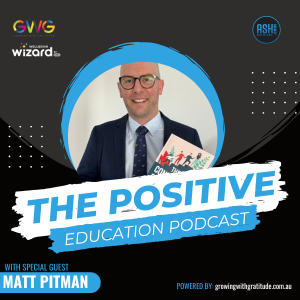
In this episode with Matt Pitman, we dive into the transformative power of connection in schools, what it really means, how it can be intentionally built, and why it’s essential for students, staff, and families. Matt shares practical strategies and leadership insights drawn from his experience as a head of school and author of The Connection Curriculum.
6 Key Takeaways
Connection isn’t a buzzword, it’s a framework.Matt outlines connection as a journey of relationships, belonging, and meaning, and shows how schools can intentionally support all three.
Human-first leadership matters more than ever.In a world focused on tech and outcomes, Matt reminds us that the person in the middle. The student, staff, or parent, must remain the focus.
Face-to-face interaction is underrated.Emails and calls have their place, but real connection comes from shared space, especially when working with families.
Leaders build connection by asking, not telling.Rather than providing quick answers, great leaders coach staff through reflection, helping them grow their own confidence and solutions.
Culture is created through the small things.From knowing a student’s weekend plans to welcoming parents at events, genuine connection grows through consistent, human moments.
You can sense connection when it’s there.While it’s not always easy to measure, signs of connection show up everywhere, in staff morale, student engagement, alumni returning, and parent relationships.
More About Matt Pitman
Matt Pitman is the Head of Senior School at Catholic Regional College Caroline Springs, a Catholic secondary school in the western suburbs of Melbourne, Victoria, and the author of The Connection Curriculum published by Amba Press. An experienced educational leader and a doctoral candidate researching connections across school communities, Matt’s experience is varied, from the leadership of curriculum teams and programs to student wellbeing, student improvement and community engagement portfolios. He has led Positive Education and student support programs and has a passion for working with students, parents, and staff to develop new understandings of the needs of young people in the 21st century.
Website:: mattpitman.com.auLinkedin Matt PitmanBook:The Connection Curriculum
Take the Your Schools Wellbeing ScorecardJoin the Wellbeing Wizard Waitlist
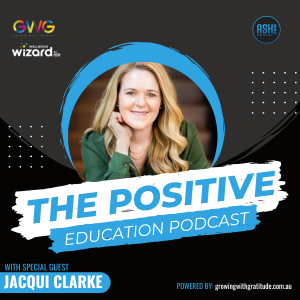
In this episode with Jacqui Clarke, we dive into how money impacts teacher wellbeing, the importance of building healthy financial habits, and how we can teach students the value of financial literacy, no matter their age.Key Takeaways:
Why financial wellbeing is directly tied to overall wellbeing, and how it often goes overlooked in schools
The importance of knowing your “open the front door” cost to feel more in control of your money
Simple, realistic habits teachers can use to build financial confidence and reduce money stress
How educators can introduce financial literacy in the classroom through practical, age-appropriate activities
Key financial concepts like compound interest and dollar-cost averaging, and how they can set students up for success
How to normalise money conversations with kids to build healthy lifelong attitudes toward money
More About Jacqui Clarke
Jacqui Clarke FCA, FTI, GAICD, JP, International award-winning author of Stop Worrying About Money (Wiley), is a trusted advisor, board member, executor and veteran business executive. As a personal wealth and money management expert and over three decades of experience, 25 years at Deloitte and PWC helping high-net-worth families, individuals and business owners to build, manage and preserve their wealth. Her message is simple: with careful planning and effort, you can manage your money, so it doesn’t manage you.
Website:: jacquiclarke.me/Linkedin Jacqui ClarkeBook:Stop Worrying about Money
Take the Your Schools Wellbeing ScorecardJoin the Wellbeing Wizard Waitlist
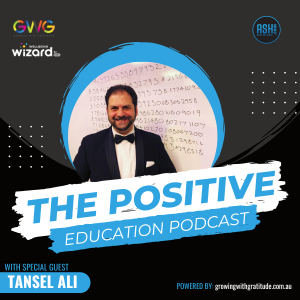
In this episode with Tansel Ali, we dive into how teachers can sharpen their memory, boost mental clarity, and use practical memory techniques to connect more deeply with students and teach more effectively. Tansel shares actionable tools that can be applied immediately in the classroom, for both educators and students.
Key Takeaways:
Memory is a skill, not a gift.Anyone can improve their memory using proven techniques like visualization, association, and storytelling.
Remembering student names builds stronger connections.Tansel shares simple strategies to help teachers recall names quickly and with confidence.
Mind mapping reduces overwhelm and boosts comprehension.Organising information visually helps students and teachers retain and understand complex material more easily.
Speed reading improves learning by turning words into images.The goal isn’t speed for speed’s sake—it’s better comprehension through visual encoding.
Teachers don’t need to master every subject.Being just one step ahead of students is enough to teach effectively and reduce overwhelm.
Managing overwhelm is key to memory and focus.Practical tools like the “one-minute rule” help overcome procrastination and build momentum.
More About Tansel Ali
Tansel Ali is recognised as one of the world’s leading memory experts — helping individuals enhance their mental performance and sharpen their minds to succeed. He is a 4-time Australian Memory Sports Champion and the international bestselling author of The Yellow Elephant and How To Learn Almost Anything in 48 Hours.
Tansel is best known for his incredible feat of memorising two entire Yellow Pages phone books in just 24 days.
With over 20 years of experience training individuals and organisations, Tansel is a trusted advisor for those seeking a cognitive edge. His memory systems and practical strategies are used around the world and have been featured in bestselling books including Deep Work by Cal Newport, Tony Buzan’s Official Biography, and Like, Comment, Share, Buy by Jonathan Creek — as well as across television, documentaries, podcasts, and global media.
As a keynote speaker, Tansel delivers powerful and engaging talks worldwide, teaching people how to think faster, remember more, and learn better. He has led transformational initiatives such as the Australian Memory Championships, School Mind
Games, The FutureMinds Project, and TEDxDocklands, and has proudly served as a Celebrity Ambassador for Crohn’s & Colitis Australia and the AFL — inspiring people to live happier, healthier lives.
Tansel holds dual Master’s degrees in Information Systems Management (MISM) and Business Administration (MBA). He combines deep expertise in memory science and performance coaching to help people from all walks of life master memory, accelerate learning, and perform at their peak.
Website:: https://tanselali.com/Linkedin Tansel AliTansel Ali Tedx Talk:Click to Watch
Take the Your Schools Wellbeing ScorecardJoin the Wellbeing Wizard Waitlist
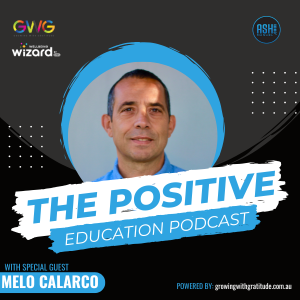
In this episode with Melo Calarco, we dive into the practical tools and powerful mindset shifts teachers can use to protect their wellbeing, prevent burnout, and perform at their best. Drawing on decades of experience, including cycling 30,000km across five continents, Melo shares transformational strategies tailored for educators working in high-pressure environments.
6 Key Takeaways
Self-awareness is the #1 skill to prevent burnoutMelo explains why you “can’t change what you don’t notice”—and how educators must tune into early signs of stress and exhaustion before they spiral into burnout.
Burnout is more than tiredness, it’s complete depletionHe outlines the three core indicators of burnout: persistent exhaustion, emotional detachment, and a loss of professional efficacy—plus how to tell if you’re “just stressed” or truly burnt out.
Micro-breaks are a game-changer for teacher wellbeingTeachers often wait until holidays to rest. Melo recommends 90-second breath breaks throughout the day to recharge, reset the nervous system, and protect long-term energy.
Role modelling wellbeing isn’t optional, it’s essentialFrom meditation to mindful breaks, Melo emphasises that educators who model wellbeing practices help students develop their own emotional regulation skills.
A strong school culture can prevent staff burnoutToxic environments can amplify stress. Melo encourages open conversations, shared resources, and checking in on colleagues regularly to build a healthier team dynamic.
Train your mind like your body—with challenge and consistencyDrawing on personal routines and endurance feats, Melo urges teachers to seek discomfort intentionally and build mental resilience through daily habits—even just one push-up or a 5-minute breath session.
More About Melo Calarco
As a TEDx Speaker and multi award-winning author, Melo loves sharing his passion with the world speaking about wellbeing, high-performance, resilience, mindfulness, mental health and so much more.
His workshops and keynotes have been described as ‘truly transformational’ drawing from his unique life lessons while cycling over 30,000km across five continents, where Melo learned to manage stress, build mental endurance, and overcome many challenges, including near-death experiences.
He now shares this profound experience with global companies and high performers to help them operate at their best, without the risk of burning out.
Beating Burnout Finding Balance Book
Website and Free Sample Chapter: https://www.melocalarco.com/the-bookLinkedin Melo CalarcoMelo Calarco Tedx Talk:Click to Watch
Take the Your Schools Wellbeing ScorecardJoin the Wellbeing Wizard Waitlist
In this episode with Dr. Huu Kim Le, we dive into the hidden dangers of gaming addiction, how screens are rewiring young brains, and what parents and teachers can do to set healthy, realistic boundaries.
Here are 6 key takeaways you won’t want to miss:
Gaming addiction is real and it’s growing fastDr. Le shares how screen addiction is tearing families apart, with some children refusing school, becoming aggressive, and even experiencing suicidal thoughts due to compulsive gaming.
Screens are reshaping young brains during key development yearsExcessive screen time between ages 12–15 can impact the frontal lobe, reducing attention, self-control, and emotional regulation, similar to the effects of a mild brain injury.
Modern games are built to be addictiveDr. Le breaks down how game mechanics like loot boxes, daily rewards, and the “hook–habit–hobby” cycle are designed to keep kids playing and spending for as long as possible.
Boundaries beat battles when it comes to screen timeHe recommends tools like the TP-Link Deco M4 mesh router to automate screen limits and reduce arguments, alongside clear family agreements built on mutual understanding.
Schools must step up with stronger screen policiesWithout clear rules, students are gaming in class on school devices. Dr. Le explains how this deepens educational inequality and calls for a shift in school tech strategy.
A meaningful real-world goal is the best protectionYoung people need purpose outside of screens. Dr. Le says when kids have real-life goals they care about, they’re less likely to retreat into gaming for reward and identity.
More About Dr Huu Kim Le
Dr Huu Kim Le is an Australian child and adolescent psychiatrist specialising in internet gaming disorder and ADHD. Based in Adelaide, he founded CGI Clinic, Australia’s first telepsychiatry service dedicated to gaming-related mental health. Dr Le is a board member of the Australian Gaming and Screens Alliance and is a prominent advocate for responsible gaming. He has consulted internationally and frequently speaks at conferences on the psychological impacts of digital technology on young people.
Lets Go Whaling: Must watchTEDX Talk: Dr Huu Kim LeLinkedin: Dr Huu Kim Le
Take the Your Schools Wellbeing ScorecardJoin the Wellbeing Wizard Waitlist
In this episode with Ali Casiano, we dive into how educators can build emotionally intelligent, connected, and future-ready classrooms—using practical tools from both schools and the tech world.
Here are 6 powerful takeaways you won’t want to miss:
EQ isn’t a one-time lesson—it’s a life skillAli explains why emotional intelligence should be part of everyday classroom routines like journaling, breathing exercises, group sharing, and “good things” check-ins.
Model it before you teach itOne of the most impactful things a teacher can do is show students how they manage their own emotions and challenges. That modelling builds deep trust and connection.
Connection leads to performanceStudents thrive when they feel seen and heard. Simple moments of reflection and conversation can boost empathy, engagement, and classroom culture.
Big tech EQ strategies work in schools tooAli shares how strategies from her work at Amazon—like daily reflection prompts and chatbot check-ins—can be adapted for schools using tools as simple as whiteboards or Google Forms.
AI can help—but the teacher is still the heartAI should support self-awareness and reflection, not replace human connection. It’s a powerful assistant, not a replacement for real conversations.
Kids need space to practise real-life skillsConflict resolution, empathy, and emotional awareness don’t happen by accident. Alinnette explains how role-play and storytelling can help kids develop these essential life skills early.
More About Ali
Ali is an educator, EQ Champion, Bestselling author, Organisational Leadership Strategist, and UX researcher at AWS with 15+ years of experience blending emotional intelligence, agile leadership, and system thinking. Founder of Growing Your EQ, helping brands and teams scale with purpose and people-first innovation. Bilingual, doctoral candidate, and advocate for inclusive, high-impact leadership.
Email: acasiano@growingyoureq.comWebsite: https://www.beyondiqnewsletter.comLinkedin: Alinnette Casiano
Take the Your Schools Wellbeing ScorecardJoin the Wellbeing Wizard Waitlist
In this episode with Dr Mark Williams, we dive into the science of how we learn best, highlighting the power of human connection, why face-to-face conversations matter more than ever, and how small shifts in classroom practice can dramatically boost engagement and retention. Dr Mark also shares practical, brain-based strategies to strengthen student focus, reduce negative self-talk, and navigate technology wisely in education.
Here are the key takeaways from your podcast episode with Dr Mark:How We Learn – Learning is fundamentally social — connection must come before curriculum.
Students learn best from people they trust and feel connected to. Without that connection, their brains don’t sync with the teacher, limiting learning.
Our brains haven’t changed much in 10,000 years; we’re wired for face-to-face, relationship-driven learning.
Two-trial learning (e.g., how toddlers learn language) is only possible through deep connection and trust.
Connection Strategies – Touch, with consent, activates c-fibers in the skin, which release oxytocin — promoting trust, openness, and learning.
Encourage high-fives, handshakes, fist bumps, or shoulder taps as appropriate ways to build connection.
Eye contact and smiling also foster connection — even brief positive interactions can lift mood and build trust.
Start lessons with 5 minutes of casual conversation (e.g., news, interests) to build rapport — leads to better engagement and faster curriculum coverage.
Classroom Practice Shift – Don’t ask students to raise hands for answers. Instead: Ask the question. Pause briefly. Then give the answer.
This engages every student’s brain (they think before hearing the answer) and avoids disengagement or embarrassment.
Students learn best when they get things wrong — it triggers deeper encoding in the brain.
Technology & Learning – Laptops and screens reduce learning by ~30% compared to face-to-face teaching.
Devices elevate stress (cortisol) and reduce dopamine — negatively affecting memory and attention.
Voice recognition is the future, not typing — verbal communication, vocabulary, and articulation will become increasingly vital.
Schools should only use technology when it truly adds value (e.g., music composition, specific research tasks), not as default.
Rewiring the Brain – The brain is not wired for negativity, but it learns what we repeatedly feed it.
Negative self-talk strengthens negative neural pathways. The solution is to:
Pause when you notice it.
Write 3 positive things (preferably by hand).
This reframes thought patterns and builds positive wiring over time.
Brain Health & Longevity – The Harvard study on longevity found the most effective way to improve brain health and reduce risk of Alzheimer’s is:
Face-to-face, honest conversations with someone you trust 3–4 times a week.
These interactions reduce stress, boost mood, enhance learning, and extend life by 10–15 years.
More About Dr Mark
Dr Mark is an internationally renowned neuroscientist who has presented to audiences all over the world. He is an entertaining and informative speaker, who backs up his contemporary thinking with down-to-earth pragmatism based on a ‘colourful’ background which very nearly took him to jail or an earl...
In this episode with Damien Porter, we dive into the power of inclusive education and the lived experience of raising a family where disability is part of daily life. Damien shares heartfelt stories and practical insights on how schools—and society—can better support, empower, and include people with disabilities.
Here are the key takeaways from your podcast episode with Damien:
Inclusive Education Builds BelongingMainstream schooling helps students with disabilities develop social skills, confidence, and equality by learning alongside their peers.
Support Staff Make a Big DifferenceStudent Support Officers (SSOs) are crucial in mainstream settings to assist with non-academic needs, enabling students to participate independently.
Lived Experience Should Shape SystemsInvolving people with disabilities in school planning, accessibility design, and policy-making leads to more practical and inclusive outcomes.
Empathy Grows Through CuriosityDamien encourages open dialogue—letting children ask honest questions about disability helps normalise difference and build empathy early.
Self-Worth is Key to Post-School SuccessYoung people with disabilities need to believe in their value and potential to thrive in employment—not be limited by outdated assumptions.
Never Assume—Always AskMany assumptions are made about people with disabilities; real understanding only comes from asking, listening, and learning from lived experience.
More About Damien
Damien is a passionate disability advocate with 47 years of lived experience. A proud father of three and devoted husband, Damien’s commitment to access and inclusion is deeply personal — his wife and two of his children also live with disability. He champions the rights of people with disabilities to live full, meaningful lives, and is a strong voice for inclusive education, advocating for students with disabilities to be supported in mainstream schools whenever possible. Damien brings compassion, lived wisdom, and practical insights to every conversation.
Email: DAMIEN_JP@hotmail.com Linkedin: Damien Porter
Take the Your Schools Wellbeing ScorecardJoin the Wellbeing Wizard Waitlist
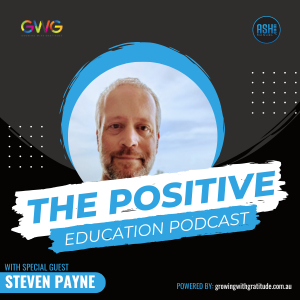
In this episode with Steven Payne, we explore how game-based learning and design thinking can transform student engagement, build critical skills like empathy and resilience, and make wellbeing education more impactful. Steven shares powerful examples of using Minecraft and other creative tools to help students take ownership of their learning and solve real-world problems.
Here are the key takeaways from your podcast episode with Steven:
Game-Based Learning Builds Real SkillsMinecraft and similar games foster critical 21st-century skills like resilience, collaboration, creativity, and problem-solving. Unlike traditional lessons, students persist through challenges because they’re immersed and motivated.
Design Thinking Empowers Student VoiceDesign thinking allows students to define real-world problems, ideate solutions, and test their ideas—giving them ownership of the entire process. This approach promotes empathy, iterative learning, and purposeful creation.
Minecraft as an Inclusive Learning ToolMinecraft Education is widely accessible in Australian schools and suits all year levels—from Year 1 to Year 12. It lowers the barrier to entry and can highlight strengths in students who may not normally excel in traditional settings.
Wellbeing Themes Come to LifeProjects like the Growing With Gratitude theme park in Minecraft showed how empathy and gratitude can be embedded into engaging digital environments, helping students internalise wellbeing lessons in a meaningful way.
Teachers Don’t Need to Be Minecraft ExpertsTeachers can focus on setting meaningful learning goals, while students lead the way with technical know-how. With structured lesson libraries and curated worlds, it’s easy to start small and integrate Minecraft meaningfully into the curriculum.
More About StevenSteven Payne is a former teacher and now runs Standout Education, where he helps schools and businesses enhance their use of technology, He organises the Design Thinking Challenge for schools in Western Australia, supporting students to solve real-world problems using the design thinking process. He is always searching for new ways to solve problems and support inclusion in schools using Minecraft.
Minecraft
https://education.minecraft.net/ – download Minecraft and get started
https://education.minecraft.net/resources/explore-lessons – explore Minecraft lessons
https://www.youtube.com/playlist?list=PLg9lToc61fto8-YSLHKFwFGZwnuriS0ev – Minecraft Across the Australian curriculum (YouTube playlist for teachers)
Design Thinking Challenge
designthinkingchallenge.com– info and rego for Design Thinking Challenge
Design thinking across the curriculum– interactive Design Thinking resource from NSW
Steven Payne
Home – Standout Education
https://www.linkedin.com/in/steven-payne-wa
Take the Your Schools Wellbeing Scorecard
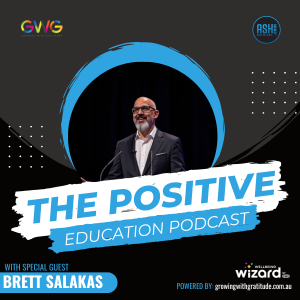
In this powerful episode with Brett Salakas, we explore his remarkable journey from personal hardship to becoming one of the world’s most influential educators. Brett shares how authentic connection, purposeful technology, and embracing challenge can unlock true potential — for both students and teachers — while offering deep insights into wellbeing, leadership, and the future of education.
Key takeaways:
From Rock Bottom to Global Impact: Brett shares how losing everything — including his home, identity, and confidence — led him to rediscover his love for teaching. Living in a men’s shelter while acting as a school principal, he began tweeting from rock bottom, which became the foundation of the #aussieED movement.
The Power of Connection: #aussieED grew from one man tweeting alone to a 20,000-strong weekly education network. Brett shows how authentic connection and shared purpose can transform isolation into global influence.
Wellbeing Through Challenge: Using the metaphor of a rugby front rower and a butterfly emerging from its cocoon, Brett powerfully explains how challenge and discomfort are essential to developing true resilience — in both life and learning.
Tech as an Enabler of Potential: Brett shares the story of a student with autism who, thanks to voice-to-text tools, moved from struggling to write a sentence to earning a PhD in physics. It’s a clear example of how thoughtful use of tech can unlock potential and wellbeing.
World Exclusive Book Reveal: Brett announced his upcoming book, F-AI-ble — a collection of Aesop-style fables that explore complex AI-in-education issues in bite-sized, reflective stories designed for teachers and school leaders.
Wellbeing Meets Technology: From sentiment analysis to proactive interventions, Brett shares examples of how tech can support student mental health — but emphasises the importance of balance, context, and ethical use.
Global Lessons, Shared Struggles: Despite cultural and system differences, Brett highlights the universality of teaching challenges — and the importance of supporting each other as “brothers and sisters in the same trench.”
Call to Action: Brett invites educators doing innovative things to reach out — especially if they’re looking to amplify their impact through partnerships like HP’s Reinvent the Classroom initiative.
More About Brett
Brett Salakas, the HP Education Ambassador, is an international keynote speaker, the best-selling author of ‘A MAMMOTH Lesson’, the founder of #aussieED (formerly the largest online network of teachers in Australia) and the co-founder of the ED Poets Society. He was identified by Linkedin as a TOP VOICE (top 1% worldwide) in K-12 Education. Brett was awarded with the NSWICTE and ISTE ‘Making ‘IT’ Happen award in 2024, was recently identified by the District Administration Leadership Institute as one of the top 100 most influential leaders in education globally (the only Australian named on the list) and was named the Most Influential Educator in Australia for 2024 by The Educator magazine.
Website: reinvent.hp.com/RTC-ANZLInkedin: Brett SalakasBrett’s Book: A MAMMOTH Lesson: Teaching in the Digital Age
Take the Your Schools Wellbeing Scorecard
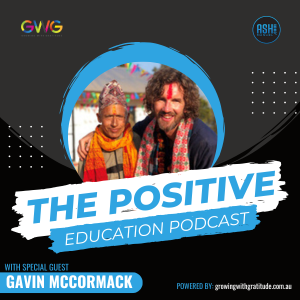
In this episode with Gavin McCormack, we explore his journey from struggling student to global education leader, and how one teacher’s belief changed everything. Gavin shares insights on connection-based teaching, the power of modelling behaviour, and how his platform UpSchool is helping students create real-world impact through purposeful, project-based learning.
Key takeaways:
From Struggling Student to Global Change-maker – Gavin’s personal story shows the life-changing power of belief and support.
Teaching the Brain, Not Just the Student – How neuroscience reveals that connection must come before curriculum.
UpSchool in Action – Students planting forests, building bird sanctuaries, and solving real-world problems through learning.
Raising Resilient Children – A sneak peek into Gavin’s new book and the 7 key steps to help kids thrive.
Why What You Model Matters – Practical insights into how teachers and parents shape student behaviour by simply being human.
Plus much more…
More About GavinGavin McCormack is a co-founder of Upschool.co, a platform that empowers students to learn entrepreneurship skills that have real impact. With more than 20 years of experience as a Montessori-trained educator, he has taught in multiple countries and developed a passion for innovative educational practices. Gavin is the Montessori Australia Ambassador, a TEDx speaker, and the best-selling author of children’s books and a guide for parents on Montessori education. He has built schools, libraries, and teacher training centres in Nepal and has been recognised as one of the top ten most influential global educators from 2019 to 2024 and recently won the Outstanding Global Contribution to Education Award for 2024 at the GESS Awards in Dubai.
Website: upschool.coLInkedin: Gavin McCormackGavin’s Book: Raising Resilient Children: Pre Order Here
Take the Your Schools Wellbeing ScorecardJoin the Wellbeing Wizard Waitlist

Comments

Download from Google Play

Download from App Store
 United States