


 Claim Ownership
30 Albums For 30 Years (1964-1994)
Subscribed: 2Played: 18
Subscribe

© Jay Sweet
Description
A look at the 30 most impactful albums for the years 1964-1994. These years coincide with the Beatles led British Invasion to the death of Nirvana front man Kurt Cobain. The show is hosted by Jay Sweet, a musician, noted historian and Professor of Music at Monmouth University.
93 Episodes
Reverse
Jim Josselyn, born in Oceanport, New Jersey is a highly accomplished jazz guitarist, composer and educator. Starting his musical journey at eleven, he has played with jazz greats and studied under legends like Pat Martino and Kenny Barron. Holding a master's degree in music performance. Jim's recent albums include Early and Shape Shifter. His original music has been featured on over forty TV shows and commercials. Jim performs regularly at renowned venues in New York and New Jersey, and he offers booking, master classes, and private lessons.
Most recent albums: Early Summer Evening and Shape Shifter
https://jimjosselynmusic.com/
musicanddrama.org
Charlie Apicella was voted onto the 84th and 86th DownBeat Readers Poll for Guitar. He studied composition and improvisation with musical titans Yusef Lateef and Pat Martino and was trained as a historian by Archie Shepp and Dr. Billy Taylor. As a young guitarist he met his idol BB King, who offered him advice and shared some stories.
He has performed concerts and recorded with jazz legends Dave Holland, Sonny Fortune, John Blake, Jr., and Avery Sharpe as well as contemporary masters Joe Magnarelli, Vic Juris, Dave Stryker, Don Braden, and Jon Herington of Steely Dan.
In 2022 he formed The Griots Speak with bassist William Parker, saxophonist Daniel Carter, and percussionist Juma Sultan who is known for his work with Jimi Hendrix.
* * *
Charlie Apicella is the founder and program director of Blues Alive: the living tradition of the blues
He is an Eastman Guitars Featured Artist a
Guild Guitars Sponsored Artist and a
ZT Amplifiers Official Artist
For more on Charlie Apicella go to https://www.ironcity.nyc/

Stanley Clarke is a bass wizard who transformed the electric bass from its accompanying role and showed the world the possibilities of the electric bass as a solo instrument. Additionally, he is a virtuosic double bass player and an accomplished film composer. Clarke is a 5-time Grammy winner, with 15 nominations, 3 for his solo efforts, 1 with the Stanley Clarke Band, and 1 with the groundbreaking, Return to Forever, of which he was a founding member. In addition to all of his credits and activities, it turns out that Stanley Clarke is a really friendly guy with a great sense of humor, and as a lifelong fan of his music, it was a great honor to interview the legend.
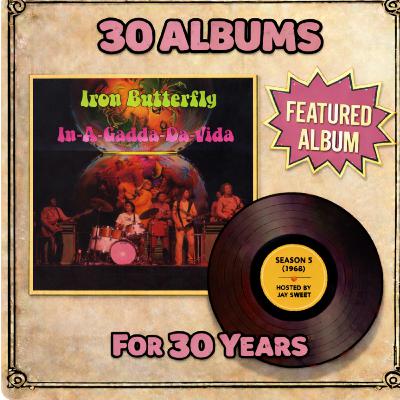
Iron Butterfly- In-A-Gadda-Da-Vida (Atco) Released Date-June 14, 1968Released on June 14, 1968, In-A-Gadda-Da-Vida marked Iron Butterfly’s breakthrough and remains one of the defining albums of late-1960s psychedelic rock. Recorded at Gold Star Studios in Hollywood and Ultrasonic Studios in New York, the record captured a band rapidly evolving from their debut Heavy into a heavier, more expansive sound. Anchored by Doug Ingle’s thick, distorted organ tone and a rhythm section that emphasized repetition and groove, the album bridged psychedelic rock and early heavy metal.Its centerpiece, the 17-minute title track, became a landmark in rock history, showcasing extended improvisation, a prominent drum solo, and a hypnotic riff that influenced countless bands to follow. Commercially, the album was a massive success, peaking at #4 on the Billboard 200 and selling over four million copies. More than just a hit record, it helped legitimize long-form rock compositions and became a staple of FM radio, signaling a shift toward heavier, more experimental music. (S5-EP12)
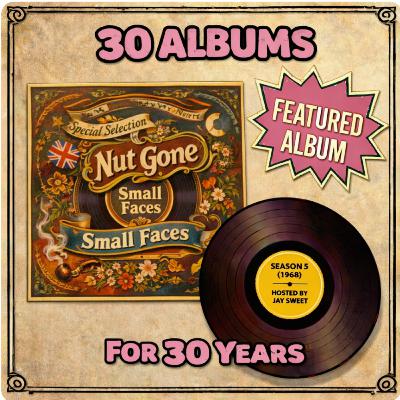
Small Faces-Ogdens’ Nut Gone Flake (Immediate Records) Release Date- May 24, 1968 Ogdens’ Nut Gone Flake (1968) stands as the creative peak of the Small Faces and one of the most distinctive albums of the psychedelic era. Recorded in London at Olympic and Trident Studios and produced by Steve Marriott and Ronnie Lane, the album blends R&B roots, British music-hall humor, hard rock energy, and imaginative studio experimentation. The first side features a set of diverse songs—from the soulful power of “Afterglow (Of Your Love)” to the playful Cockney pop of the hit single “Lazy Sunday,” which reached No. 2 in the UK. The second side presents the whimsical “Happiness Stan” suite, a surreal narrative narrated by Stanley Unwin that follows a character searching for the missing half of the moon. With its innovative circular sleeve inspired by tobacco tins and its adventurous concept structure, the album reached No. 1 in the UK and remained there for six weeks. Though the original lineup soon dissolved, Ogdens’ Nut Gone Flake remains Small Faces’ most imaginative and enduring achievement. (S5-EP11)
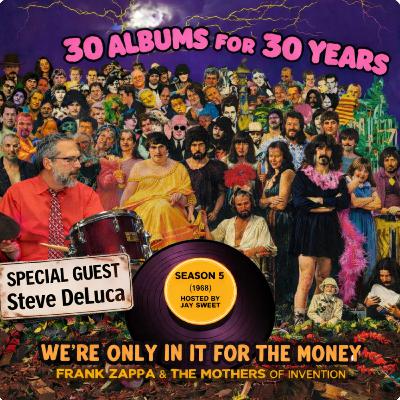
We're Only in It for the Money- Frank Zappa and The Mothers of Invention (with guest Steve DeLuca) Release Date- March 4, 1969 We're Only in It for the Money by Frank Zappa and The Mothers of Invention stands as one of the most daring and influential records of the late 1960s. Arriving at the height of the psychedelic era, the album sharply critiqued both the commercial music industry and the idealism of the hippie counterculture. Through satire, rapid-fire editing, and studio experimentation, Zappa created a collage-like listening experience that blended rock, doo-wop, avant-garde composition, and musique concrète. The record’s famous parody of Sgt. Pepper's Lonely Hearts Club Band signaled its irreverent tone, but beneath the humor was pointed social commentary about conformity, politics, and youth culture. Though controversial at the time, the album became a landmark in experimental rock and helped expand the possibilities of what a rock record could be. Its influence can be heard in progressive rock, alternative music, and later avant-pop artists who embraced genre-blending and conceptual ambition. (S5-Ep10)
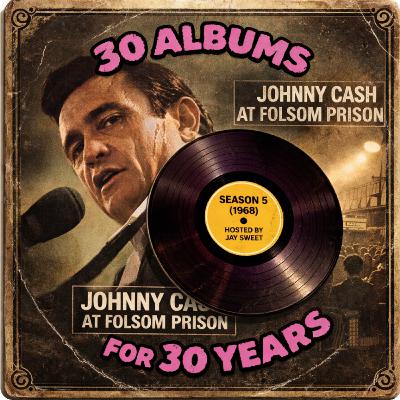
Johnny Cash- At Folsom Prison (Columbia)Release Date: May 6, 1968Recorded live inside California’s Folsom State Prison, At Folsom Prison marked a dramatic resurgence in the career of Johnny Cash. Performing before an audience of inmates, Cash delivered a raw, electric set filled with dark ballads, prison songs, humor, and empathy. The album opens with his iconic introduction—“Hello, I’m Johnny Cash”—launching into a thunderous version of “Folsom Prison Blues.” Throughout the performance, Cash balances rebellion and compassion, addressing themes of guilt, regret, labor, faith, and redemption. The recording captures an unfiltered atmosphere rarely heard on live albums at the time. The project revitalized Cash’s career, reached #1 on the country charts, and redefined the live album format. Decades later, it remains one of the most culturally significant recordings in American music history. (S5-Ep9)
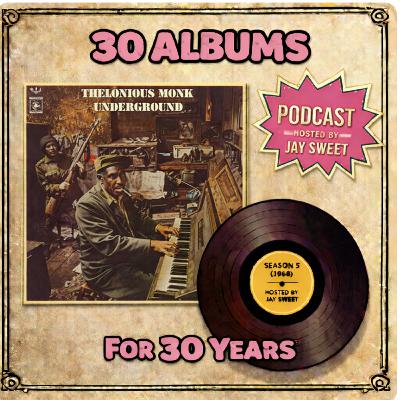
Thelonious Monk- Underground (Columbia) Released May 1968 Produced by Teo Macero, Underground captures Monk with his longtime quartet: Charlie Rouse (tenor saxophone), Larry Gales (bass), and Ben Riley (drums), plus a vocal cameo from Jon Hendricks on “In Walked Bud.” The record balances new compositions like “Green Chimneys” and “Boo Boo’s Birthday” with revisited Monk staples, all delivered with the group’s seasoned interplay and elastic swing.Though jazz was competing with rock’s cultural dominance, Monk remained uncompromising—angular melodies, dissonant harmonies, abrupt silences, and percussive attack intact. The Grammy-winning cover, depicting Monk as a member of the French Resistance, symbolized both defiance and individuality. Artistically rather than commercially driven, Underground closes a defining chapter in Monk’s Columbia era and reaffirms his singular place in modern jazz. (S5-Ep8)
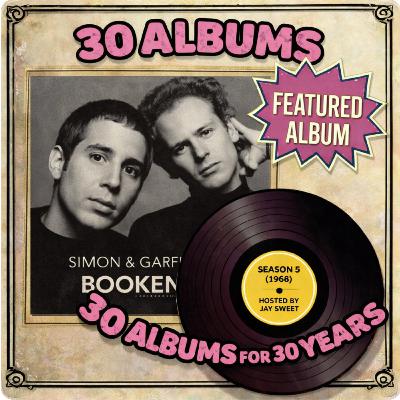
Simon and Garfunkel - Bookends (Columbia) Released on April 3, 1968,Bookends stands as one of the most concise yet thematically ambitious albums of the 1960s. The album blends folk, pop, and studio experimentation into a unified meditation on aging, memory, and identity. Conceived partly as a song cycle, Side One traces the arc of life—from youthful searching in “America” to mortality in “Old Friends”—framed by the delicate “Bookends Theme.” Inspired by the album-as-art statement approach of Sgt. Pepper's Lonely Hearts Club Band, the record features layered production shaped by engineer Roy Halee. Side Two balances introspection with radio-ready immediacy, including the cultural landmark “Mrs. Robinson,” written for the film The Graduate. Though running under 30 minutes, the album feels expansive in scope, thanks to its orchestration, field recordings, and emotional pacing. Bookends became the duo’s first No. 1 album and helped secure their full artistic control for the even more ambitious Bridge Over Troubled Water. More than a collection of hits, it remains a poignant reflection on time’s passage and the fragile beauty of human connection.(S5-Ep7)
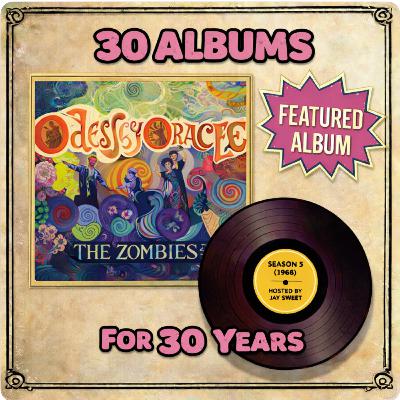
The Zombies Odyessey and Oracle (CBS/ Date Records) Released April 19, 1968 (UK, CBS Records); July 15, 1968 (US, Date Records, a CBS subsidiary).Odessey and Oracle is one of those rare albums that feels delicate and meticulously crafted, yet emotionally direct. Recorded in 1967 as The Zombies were quietly falling apart, it captures a band at peak creative focus. Rod Argent and Chris White’s songwriting leans into baroque pop textures, jazz-tinged harmonies, and gentle psychedelia, while Colin Blunstone’s breathy, vulnerable voice gives the songs an almost dreamlike intimacy. Mellotron, harpsichord, and layered vocals create a chamber-pop atmosphere that feels closer to Pet Sounds than British Invasion rock. Lyrically, the album balances nostalgia (“Beechwood Park”), romantic optimism (“This Will Be Our Year”), and eerie storytelling (“Butcher’s Tale”), all wrapped in elegant arrangements. Its closer, “Time of the Season,” adds a sly, groove-driven edge that became their belated hit. Though overlooked at release, the album’s lush melodies and emotional subtlety have helped it age beautifully, earning its place as one of the most beloved and quietly influential records of the psychedelic era. (The Zombies Odyessey and Oracle (CBS/ Date Records) Released April 19, 1968 (UK, CBS Records); July 15, 1968 (US, Date Records, a CBS subsidiary).Odessey and Oracle is one of those rare albums that feels delicate and meticulously crafted, yet emotionally direct. Recorded in 1967 as The Zombies were quietly falling apart, it captures a band at peak creative focus. Rod Argent and Chris White’s songwriting leans into baroque pop textures, jazz-tinged harmonies, and gentle psychedelia, while Colin Blunstone’s breathy, vulnerable voice gives the songs an almost dreamlike intimacy. Mellotron, harpsichord, and layered vocals create a chamber-pop atmosphere that feels closer to Pet Sounds than British Invasion rock. Lyrically, the album balances nostalgia (“Beechwood Park”), romantic optimism (“This Will Be Our Year”), and eerie storytelling (“Butcher’s Tale”), all wrapped in elegant arrangements. Its closer, “Time of the Season,” adds a sly, groove-driven edge that became their belated hit. Though overlooked at release, the album’s lush melodies and emotional subtlety have helped it age beautifully, earning its place as one of the most beloved and quietly influential records of the psychedelic era. (S6 -Ep 6)
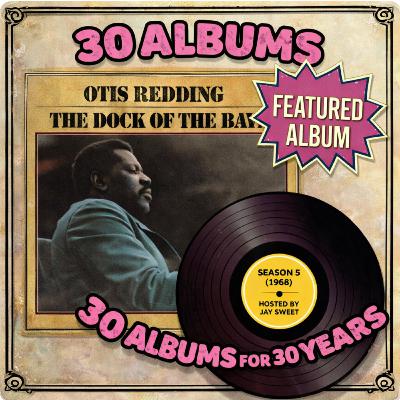
Otis Redding- The Dock of The Bay (Volt/Atco Records) Release Date (Released February 23, 1968)The Dock of the Bay (1968) is a powerful and poignant posthumous release that captures Otis Redding at both his artistic peak and the edge of a new musical direction. Blending classic Memphis soul with a softer, more reflective sound, the album reveals a deeper introspective side, especially on the landmark title track. “(Sittin’ On) The Dock of the Bay” became the first posthumous No. 1 single in U.S. history, reshaping soul music by proving it could be gentle, spacious, and emotionally inward. The record balances tender ballads, gritty grooves, playful duets, and blues standards, showcasing Redding’s remarkable range. Backed by the Stax house band, the album preserves the rich Southern soul sound while hinting at creative paths he never got to explore. Its success cemented his legacy as a global icon and made the album one of the most important and influential posthumous releases in popular music history. (S5-EP 5)
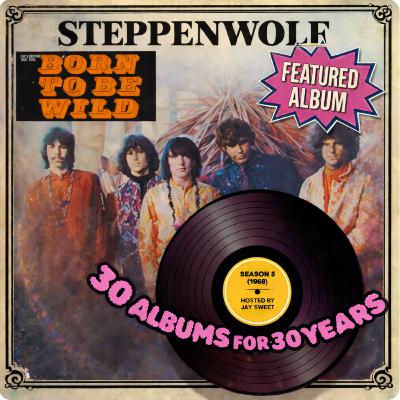
Steppenwolf- Self-Titled Album (Dunhill Recordings) Release Date: January 22, 1968 Steppenwolf’s 1968 self-titled debut is a cornerstone of hard rock’s early evolution, blending blues roots with the heavier, riff-driven attack that would help shape proto–heavy metal. Powered by John Kay’s gritty, commanding vocals and Goldy McJohn’s roaring Hammond organ, the album balances raw aggression with social awareness. Signature tracks include the thunderous “Born to Be Wild,” forever linked to biker culture and countercultural freedom, and the dark, cautionary “The Pusher.” Blues covers like “Hootchie Kootchie Man” sit comfortably beside originals that range from boogie workouts to psychedelic-tinged jams. Though occasionally rough around the edges, the record’s energy, attitude, and iconic songs made it a massive success and established Steppenwolf as one of the defining hard rock bands of the late ’60s. (S5-Ep4)
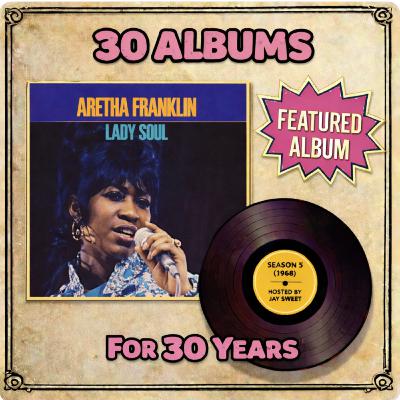
Aretha Franklin - Lady Soul (Atlantic Records)Release Date: Jan 15-1968Aretha Franklin’s Lady Soul (1968) cemented her status as the Queen of Soul, blending gospel, blues, R&B, and Southern funk into a timeless masterpiece. Recorded with the Muscle Shoals Rhythm Section, Memphis Horns, and backing vocals from The Sweet Inspirations and family, the album features classics like “Chain of Fools,” “(You Make Me Feel Like) A Natural Woman,” and “Ain’t No Way,” showcasing Aretha’s unmatched vocal power, emotional nuance, and interpretive genius. Its tight arrangements, soulful grooves, and concise sequencing created an unbroken emotional arc, dominating R&B charts and crossing over to pop. Beyond commercial success, Lady Soul became a cultural touchstone, symbolizing female empowerment, Black artistry, and social consciousness, setting the blueprint for modern soul and securing Aretha’s lasting influence on American music. (S5-Ep3)
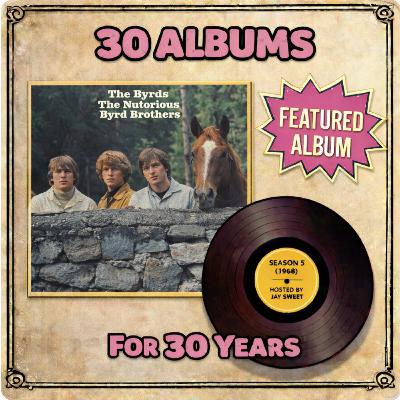
The Byrds-The Notorious Byrd Brothers (Columbia Records) Release Date: January 15, 1968 (U.S.)Released in January 1968, The Notorious Byrd Brothers captures the Byrds at a moment of collapse and creative peak. Recorded amid firings, walkouts, and heavy reliance on session musicians, the album paradoxically emerges as one of their most unified statements. It fuses folk-rock roots with psychedelia, country textures, baroque pop, and early electronic experimentation, including one of rock’s first Moog synthesizer appearances. Despite its brief runtime, the record feels dense and adventurous, featuring complex time signatures, inventive studio effects, and luminous harmonies. Songs like “Draft Morning,” “Wasn’t Born to Follow,” and “Space Odyssey” balance introspection, social unease, and cosmic curiosity. Initially modest in commercial impact, the album’s reputation has grown steadily, now widely regarded as a defining work that documents a band transforming instability into lasting artistic innovation. (S5-Ep2)
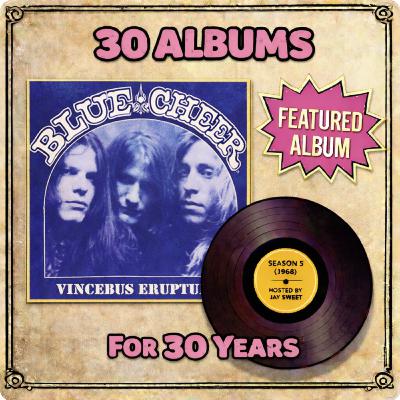
Blue Cheer -Vicebus Eruptum (Phillips Records) Released: January 16, 1968, Recorded: Late 1967.Vincebus Eruptum is Blue Cheer’s ferocious debut and one of rock’s earliest heavy-metal landmarks. Formed in San Francisco by Dickie Peterson, Leigh Stephens, and Paul Whaley, the trio rejected psychedelic delicacy for raw volume, distortion, and blues-based power. Recorded mostly live, the album captured their brutal sound in real time, anchored by the hit “Summertime Blues,” which improbably stormed the charts. Originals like “Doctor Please” and “Second Time Around” pushed rock toward a darker, heavier future with fuzz-soaked riffs and pounding drums. Critics were split, but audiences embraced its unfiltered energy, sending it to No. 11 on the Billboard 200. Though later lineup changes softened the band’s edge, Vincebus Eruptum remains a foundational blueprint for metal, punk, grunge, and stoner rock. (S5, Ep1)
(S$-30) Bob Dylan – John Wesley Harding (Columbia Records) Released: December 27, 1967 Recording Dates: October 17, November 6, and November 29, 1967John Wesley Harding marks Bob Dylan’s striking return in 1967 after his motorcycle accident, showcasing a stark shift from his electric, surreal phase to a stripped-down, country-folk sound. Recorded quickly in Nashville with minimal instrumentation, the album’s sparse arrangements heighten its moral allegories, biblical imagery, and Old West themes. Songs like “All Along the Watchtower” and “I Dreamed I Saw St. Augustine” resonate with haunting simplicity, while “Dear Landlord” and “I’ll Be Your Baby Tonight” hint at Dylan’s coming embrace of country. The record’s understated style stood in deliberate contrast to the psychedelic excesses of its time, influencing The Band, The Byrds, and future Americana artists. Dylan’s newfound restraint, poetic songwriting, and subtle musicianship resulted in one of his most cohesive works, earning critical acclaim and commercial success. John Wesley Harding remains a timeless, genre-defining album that helped shape roots rock and alt-country.Signature Tracks: John Wesley Harding, I Went Out One Morning, All Along The Watchtower Full Album: YouTube Spotify Playlist: YouTube Spotify
(S4-Ep 29) The Who - The Who Sells Out (Decca in US, Track In U.K.) Released December 15, 1967- Recorded May -November 1967 Released in late 1967, The Who Sell Out is a bold, quirky concept album designed to mimic a pirate radio broadcast, complete with spoof commercials and jingles. It captures The Who at a transitional moment—embracing psychedelia, satire, and studio experimentation, while hinting at their future in grander rock narratives. Tracks like “I Can See for Miles” deliver explosive rock energy, while introspective gems like “Sunrise” and “I Can’t Reach You” showcase Pete Townshend’s growing sophistication as a songwriter. The album doesn’t entirely cohere as a concept and can feel uneven, but it’s a daring, inventive work with a uniquely British sense of humor. While inspired by Sgt. Pepper’s, The Who’s take on the format is more subversive, poking fun at commercialization while ironically being caught in its web. Though not a massive commercial hit in the U.S., it’s now regarded as one of their most creative and influential releases.Signature Tracks: "I Can See For Miles," "Our Love Was" "I Can't Reach You"Full Album YouTube Spotify Playlist: YouTube Spotify
(S4- Ep 28) The Rolling Stones- Their Satanic Majesties Request (Decca)Released December 8, 1967, Recorded between February 9-October 23, 1967 Their Satanic Majesties Request (1967) is The Rolling Stones’ most adventurous and experimental album, showcasing their willingness to explore new musical landscapes. Embracing the psychedelic spirit of the late 1960s, the band incorporated unconventional instrumentation—such as the Mellotron, dulcimer, and tabla—creating a richly textured sonic experience. Songs like “She’s a Rainbow” and “2000 Light Years from Home” highlight the group’s flair for melody and atmosphere, while Bill Wyman’s “In Another Land” adds a unique and playful touch. The 3D lenticular cover art, designed by Michael Cooper, captures the album’s vibrant, otherworldly tone. With contributions from notable collaborators like John Paul Jones and even uncredited vocals by Lennon and McCartney, the record stands as a collaborative and stylistic milestone. Their Satanic Majesties Request captures a moment of bold creativity in the Stones’ career, offering a colorful, immersive journey that continues to intrigue and inspire listeners decades later.Signature Tracks: "She's A Rainbow," "In Another Land," "2000 Light Years From Home" Full Albums: YouTube Spotify Playlist: YouTube, Spotify
(S4 Ep 27) The Jimi Hendrix Experience Axis: Bold as LoveReleased December 1967 and recorded mostly May -June 1967 (Reprise in the USA and Polydor in the UK) Axis: Bold As Love is the Jimi Hendrix Experience’s pivotal second album. Produced by Chas Chandler and engineered by Eddie Kramer, it arrived just seven months after Are You Experienced, showcasing Hendrix’s rapid artistic growth. The album bridges raw psychedelia and the jazz-inflected soul of Electric Ladyland, with standout tracks like “Little Wing,” “Spanish Castle Magic,” and the epic closer “Bold as Love.” Studio innovations—including stereo panning, backward guitar, and flanging—are evident on tracks like “EXP.” Though less commercially successful than its predecessor, Axis is now hailed as a masterpiece. Hendrix's lyrical introspection, technical guitar wizardry, and the trio’s cohesive interplay marked a new direction for rock. The album’s blend of soul, blues, and psychedelia cements Hendrix as one of the most innovative artists of the 1960s, rivaled only by The Beatles.Signature Tracks: "Little Wing," "Castles Made of Sand," "Bold As Love" Full Album You Tube Spotify Playlist YouTube Spotify
(S4 Ep 26) The Beatles -Magical Mystery TourReleased in the US on November 27, 1967, In the UK in December 1967, Recorded April 25 - November 1969 (Parlophone/Capitol) Magical Mystery Tour, released in 1967, is one of The Beatles’ most experimental and imaginative records. Originally a UK double EP tied to their film of the same name, the U.S. version expanded it into a full album by adding iconic singles like “Strawberry Fields Forever” and “Penny Lane.” The record blends psychedelic rock, orchestral pop, and surrealism, continuing the innovative spirit of Sgt. Pepper. Highlights include Lennon’s dreamlike “I Am the Walrus,” McCartney’s nostalgic “The Fool on the Hill,” and Harrison’s hypnotic “Blue Jay Way.” Though initially met with mixed reactions, especially due to the film’s confusing TV debut, the album has since gained recognition for its influence, particularly on the evolution of music videos. It also marked the debut of Apple Corps branding. With vivid songwriting, genre fusion, and rich instrumentation, Magical Mystery Tour captures The Beatles at their creative peak, offering a colorful and surreal snapshot of late-’60s pop experimentation.Signature Songs: "Hello, Goodbye", "Strawberry Fields Forever", "All You Need Is Love" Full Album: YouTube Spotify Playlist” YouTube Spotify

Comments

Download from Google Play

Download from App Store
 United States