DiscoverStories, Poems & Music - The Creative Process: Novelists, Poets, Non-fiction Writers, Musicians, Screenwriters, Playwrights & Journalists on Writing
Stories, Poems & Music - The Creative Process: Novelists, Poets, Non-fiction Writers, Musicians, Screenwriters, Playwrights & Journalists on Writing

Stories, Poems & Music - The Creative Process: Novelists, Poets, Non-fiction Writers, Musicians, Screenwriters, Playwrights & Journalists on Writing

Author: Mia Funk

Subscribed: 13Played: 78
Share

Description

Stories, Poems & Music from the popular The Creative Process podcast. Listen to our interviews on The Creative Process - Arts, Culture & Society on Apple: tinyurl.com/thecreativepod, Spotify: tinyurl.com/thecreativespotify, or wherever you get your podcasts!


Writers include Neil Gaiman, U.S. Poet Laureate Ada Limón, Roxane Gay, Jericho Brown, Marge Piercy, Alice Notley, Alice Fulton, Siri Hustvedt, George Pelecanos, Anthony Joseph, E.J. Koh, Hala Alyan, among others. Music by Laurie Anderson, Philip Glass, Robert Plant, Dickie Landry, among others.


The podcast is hosted by founder and creative educator Mia Funk with the participation of students, universities, and collaborators from around the world. These conversations are also part of our traveling exhibition.
www.creativeprocess.info

89 Episodes
Reverse
In this special edition, we hear from our guests from across the arts and sciences. From composers and poets to forest ecologists and climate envoys, they tell the story of our planet. Moving beyond the data of destruction, we explore the intelligence of nature, the ethics of what we eat, and the empathy required to save our future.MAX RICHTER, Composer, Sleep, The Blue NotebooksCARL SAFINA, Author, Becoming WildADA LIMÓN, 24th US Poet LaureateCYNTHIA DANIELS, Grammy Award-winning Sound Eng.SUZANNE SIMARD, Finding the Mother TreeJOELLE GERGIS, Lead Author, IPCC 6th Assessment RptNOAH WILSON-RICH, CEO, Best Bees CompanyINGRID NEWKIRK, PETA FounderBERTRAND PICCARD, Solar Impulse FoundationDAVID FARRIER, Author, FootprintsKATHLEEN ROGERS, Pres, Earth Day NetworkODED GALOR, Unified Growth TheoryPETER SINGER, PhilosopherGEOFF MULGAN, Another World Is PossibleCLAIRE POTTER, Welcome to the Circular EconomyCHRIS FUNK, Dir. Climate Hazards Car.JENNIFER MORGAN, Special Envoy, International Climate ActionTo hear more from each guest, listen to their full interviews.Episode Website
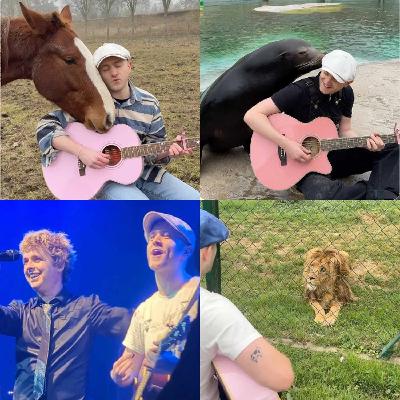
On Music, Trust and Connection with the Animal World“Mostly I’ll play in a minor key, something sad, which I think can work for an animal because they can sense the sadness, and they try to reassure me and comfort me. I chose love songs because I'm convinced they are very intuitive and they can sense what I am trying to say to them, and profess my love in a way. I think there's always a way to connect, and if you're being cautious and don't threaten the animals, something beautiful can happen.”Musician Plumes takes his guitar to the world's most unlikely concert halls—farms, sanctuaries, and wild habitats. A passionate advocate for veganism and animal welfare, we discuss what animals hear, how trust forms, and what music can reveal when it enters a world not made for humans alone.Episode Websitewww.creativeprocess.info/podInstagram:@creativeprocesspodcast
How is music a pathway to understanding animals?Musician Plumes‍ takes his guitar to the world's most unlikely concert halls—farms, sanctuaries, and wild habitats. A passionate advocate for veganism and animal welfare, we discuss what animals hear, how trust forms, and what music can reveal when it enters a world not made for humans alone.“Mostly I’ll play in a minor key, something sad, which I think can work for an animal because they can sense the sadness, and they try to reassure me and comfort me. I chose love songs because I'm convinced they are very intuitive and they can sense what I am trying to say to them, and profess my love in a way. I think there's always a way to connect, and if you're being cautious and don't threaten the animals, something beautiful can happen.”Episode Websitewww.creativeprocess.info/podInstagram:@creativeprocesspodcast
How do writers develop their voice, showing us what is important in life?ADA LIMÓN (24th U.S. Poet Laureate, Startlement, The Carrying) explains that her poetry begins with a bodily sensation or curiosity, not an idea. She values the space and breath poetry offers for unknowing and mystery, finding solace in the making and the mess, not in answers. She discusses being free on the page to be her whole, authentic, complicated self.JAY PARINI (Author, Filmmaker, Borges and Me) calls poetry the prince of literary arts—language refined to its apex of memorability. He recounts how his road trip with Borges around Scotland restored him from depression and anxiety following the Vietnam War death of his friend.JERICHO BROWN (Pulitzer Prize-winning Poet, The Tradition, How We Do It: Black Writers on Craft, Practice, and Skill) discusses the rhythm of black vernacular and capturing "symphonic complexity of black life". He shares how he’s found a way not to think about personal risk as he’s writing.ADAM MOSS (Fmr. Editor, New York Magazine; Author, The Work of Art) relates David Simon’s concept of the bounce, in which creativity gains momentum as it is passed between people.VIET THANH NGUYEN (Pulitzer Prize-winning Author, The Sympathizer; To Save and to Destroy) discusses his path to expansive solidarity and capacious grief and how it works against the state's power to divide and conquer. He emphasizes that literature is crucial because authoritarian regimes abuse language; a commitment to the beauty of language is a commitment to truth, and fear is often an indicator of a truth that needs to be spoken.To hear more from each guest, listen to their full interviews.Episode Websitewww.creativeprocess.info/podInstagram:@creativeprocesspodcast
How can we use negative spaces in fiction to engage with readers’ imaginations? How are memory and trauma passed onto us through language? How do we become more than the stories we tell ourselves?KATIE KITAMURA (Author, Audition, Intimacies) emphasizes that a book is created in collaboration with the reader, using negative spaces in the narrative structure to allow for reader interpretation, paralleling the space between audience and actor in performance.PAUL LYNCH (Booker Prize-winning Novelist, Prophet Song) discusses the richness and slipperiness of the English language in Ireland, shaped by the overlay of English onto Irish grammatical constructions, resulting in unique phrasing and a capacity to create new constructions.DANIEL PEARLE (Screenwriter, Playwright, The Beast in Me) shares that audiences are fascinated by the unfettered, uncensored ID in characters, reflecting the universal fantasy of acting without consequences. He advises writers to put people who deeply irritate them into a play, as those characters often become the audience's favorites.HALA ALYAN (Novelist, Poet, I’ll Tell You When I’m Home: A Memoir) describes her work as an excavation of the darkest hours and intergenerational trauma carried by her lineage, which has endured repeated exile. She links exile from the body to the larger patterns of not having a place in the world.T.C. BOYLE(Novelist, Short Story Writer, Environmentalist) shares that the creative process involves a magic in reaching for the unconscious and the surprise of the creative process. He emphasizes that art and nature are our salvations, over money. He advocates for solitude in nature—alone on a beach or in the woods—to connect with the natural world.ADAM ALTER (Author of Anatomy of a Breakthrough) discusses the axioms of creativity, noting that being around more people, even those who are "deeply incompetent," is generally beneficial for creativity by providing diversity of opinion and information, preceding the necessary time for solitary focus.SHEHAN KARUNATILAKA (Booker Prize-winning Author of The Seven Moons of Maali Almeida) explains his decision to write in the second person as a way of exploring the spiritual dimension of the internal voice. He posits that the "you" could be a spirit whispering thoughts, leading people (and nations) astray.DANIEL HANDLER A.K.A LEMONY SNICKET (Author, A Series of Unfortunate Events) argues that his books for children and adults are not fundamentally different and says everyone's childhood is full of powerful emotions derived from ordinary injustices, noting that we cry hardest over hurt feelings, not global catastrophes.ADA LIMÓN (24th U.S. Poet Laureate, Startlement, The Carrying) talks about her responsibility as a writer to honor her ancestors, specifically her grandfather, who had to sublimate his creative spirit for safety and belonging, leading her to prioritize grace and freedom in her own writing.To hear more from each guest, listen to their full interviews.Episode Websitewww.creativeprocess.info/podInstagram:@creativeprocesspodcast
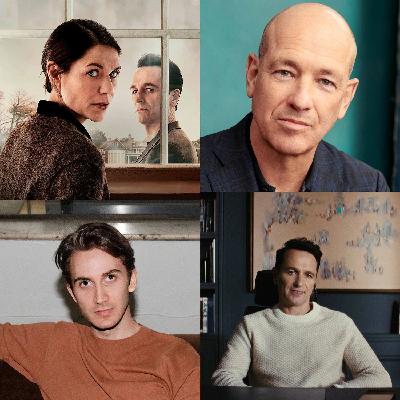
“How do you render something interior filmically? How do you communicate the details of the lost child, of the amount of time of the stuck creative process, and even the exterior, or the externalization of the house as a kind of hellish thing that's barely staying together—literally flooding with waste—and that you can't afford? So those are the details that we had to carefully figure out how to weave. But, you know, when you look at the first 10 minutes, it could be a horror movie. From that moment, a lot can happen. But what's important about it is that it sets the table for what does happen.” -Howard GordonToday, we explore the dark psychology of obsession, guilt, and the thin line between predator and victim. Our guests are two of television's most accomplished architects of high-stakes drama and moral ambiguity: Howard Gordon, the showrunner and executive producer whose work defined a generation of thrillers with 24 and the multi-award-winning Homeland; and Daniel Pearle, an executive producer and writer who brings a distinct, penetrating depth from his background as a celebrated playwright and his work on series like Accused and American Crime Story.Episode Websitewww.creativeprocess.info/podInstagram:@creativeprocesspodcast
“Poetry is like one of the great loves of my life, and I think it's probably the longest relationship I'll ever have. I read a lot of poetry. I also wrote these short stories even when I was pretty young, like in second grade, and the stories kept getting shorter and shorter. My family used to go to Damascus in Syria and Lebanon every summer for three months until 2011, when the Civil War broke out in Syria. In 2015, we made our first return after that gap, and my father and I went to Lebanon for two weeks. It's the first time I felt that I belong. To the extent that was true or not, I'm obviously irrevocably American. I speak broken Arabic. I don't think I could ever live in Lebanon or Syria. But for what it was worth at 15 years old, it was a life-changing trip. I wrote my first official poem on the plane back to San Diego from that trip, and I feel that was a formative moment for me. I felt that I had a story to tell and wanted to put it to paper in the form of poetry.”In this episode of the Speaking Out of Place podcast, Professor David Palumbo-Liutalks with poet Maya Salameh about her poetry collection, How to Make an Algorithm in the Microwave, which won the prestigious Etel Adnan Poetry Prize in 2022. The judges remarked, “Maya Salameh’s poetry stood out for its inventiveness in cracking the code of life ‘between system and culture'…The turns and swerves the poems make are astonishing; the expectations they upend are remarkable… It’s a testament to the aesthetic boundaries and intellectual revolt poets of Arab heritage are pushing, breaking, and reinventing.” We talk about what led her to both technology and poetry, language and story-telling, and the challenges and joys of representing life in the diaspora. In a time of war and genocide, Salameh’s poetry shows how patterns of life and reproduction and desire persist. In her readings and discussions of three poems, we find a new lexicon and a new grammar.Maya Salameh is the author of MERMAID THEORY (Haymarket Books, 2026), HOW TO MAKE AN ALGORITHM IN THE MICROWAVE (University of Arkansas Press, 2022), winner of the Etel Adnan Poetry Prize, and the chapbook rooh (Paper Nautilus Press, 2020). She has received fellowships from the National Endowment for the Arts, Sewanee Writers’ Conference, Bread Loaf Environmental Writers’ Conference, and the President’s Committee for the Arts and Humanities, and served as a National Student Poet, America’s highest honor for youth poets. Her work has appeared in The Offing, Poetry, Gulf Coast, The Rumpus, AGNI, Mizna, and the LA Times, among others. @mayaslmhhttps://speakingoutofplace.comBluesky @palumboliu.bsky.socialInstagram @speaking_out_of_place
“I feel that when you don't tell your story, it's as if you have a limited existence. We can always have some kind of choice, but I'm saying that the story we choose may be the most crucial choice that we make, because this story will affect all the other choices.”Etgar Keret is one of the most inventive and celebrated short story writers of his generation, a voice that captures the absurdities and profound loneliness of modern life with a deceptive, almost casual wit. His work, translated into dozens of languages, uses fantastical premises—from alien visitations to parallel universes—to illuminate the most human of truths. His new collection, Autocorrect, explores a world grappling with technology, loss, and the aftershocks of a global pandemic and, more recently, war. His awards include the Cannes Film Festival’s Caméra d’Or (2007), the Charles Bronfman Prize (2016), and the pres­tigious Sapir Prize (2018). Over a hundred short films and several feature films have been based on his stories. Keret teaches creative writing at Ben-Gurion University of the Negev. He now has a weekly newsletter on Substack called Alphabet Soup. He's also the new MFA Director of the Jewish Theological Seminary, where he's pioneering a new approach to storytelling. Joining me today from Tel Aviv is the great Israeli writer and filmmaker Etgar Keret.“When I write my stories, I don't want to solve things in life. I just want to persuade myself that there is a way out. Maybe I am in a cell, maybe I'm trapped. Maybe I won't make it, but if I can imagine a plan for escape, then I'll be less trapped because at least in my mind, there is a way. I think that my parents are survivors. They always talked about this idea of humanity. My parents always said to me, when you look at people, don't look at their political views; that's not important. Look at the way that they look at you. If they see you, if they listen to you, if they can understand your intention, even if it's a failing one, they're your people. And if they can't, it doesn't matter.I think that when I came with my mother and father, they thought there are people, there are human beings, and there are people who want to be human beings but are still struggling. And you go with humanity; you go with the person who can go against his ideology if his heart tells him something.”Episode Websitewww.creativeprocess.info/podInstagram:@creativeprocesspodcast
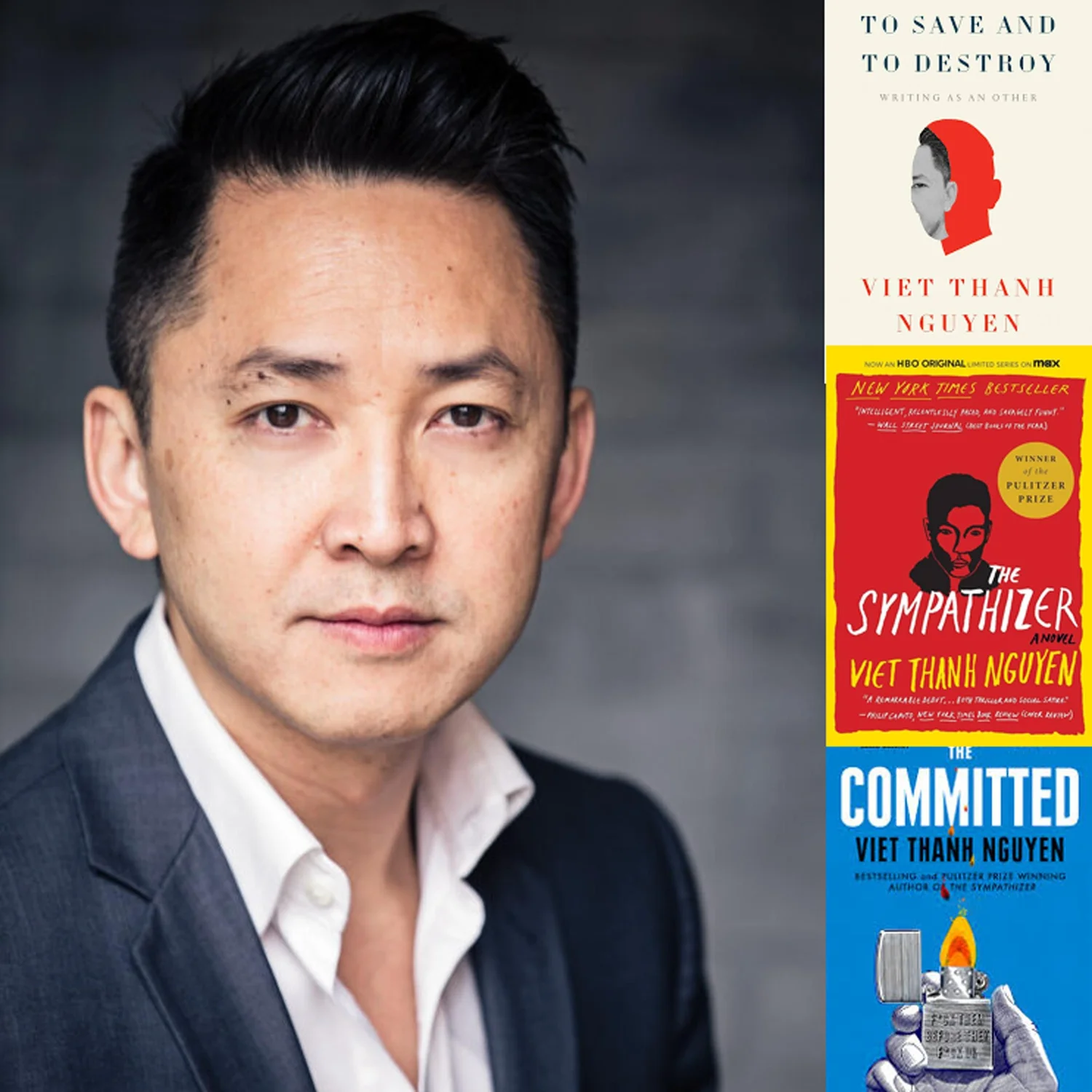
“As a writer, I do believe that art and literature in and of themselves are important. I'm going to keep on writing novels, and one of the most important reasons why is because, as you mentioned, language is crucial. Part of the way that states and authoritarian regimes exercise their power is not just through physical violence and intimidation, but through a maltreatment of language itself. Trump is a perfect example of this. Everything that comes out of his mouth in terms of language is horrifying for anybody with any sensitivity to language. The excesses of his language in terms of insults and hyperbolic praise for his fans are perfect examples of how language is used by an authoritarian and by the state to obfuscate reality and intimidate people. That language is ugly from my perspective, and there is something about being committed to literature and to art that awakens us to the importance of beauty.I think about what John Keats, the poet, said: beauty is truth, truth beauty. You can't separate these kinds of things. If you're committed to the beauty of language, you're also committed to the idea that language has a relationship to truth. You can see that authoritarians don't have a relationship to truth. They have a relationship to the abuse of truth and to lying, not only in content but in the form of their language as well. There is a crucial role for writers here in our relationship to language because language is one of the most crucial ways that authoritarianism extends its power. What I've discovered as a writer is that fear is a good indicator that there is a truth. To speak the truth in a society is oftentimes an act that requires some courage.”Viet Thanh Nguyen has spent much of his life exploring the stories we tell—and the stories we erase—about war, migration, and memory. His 2015 debut novel The Sympathizer, about a communist double agent in the aftermath of the Vietnam War, won the Pulitzer Prize and a long list of other major literary awards. In 2024, The Sympathizer was adapted into a critically acclaimed HBO series directed by Park Chan-wook.He followed it with The Committed, and his latest work, To Save and to Destroy: Writing as an Other, a meditation on writing, power, and the politics of representation.Nguyen is also the author of Nothing Ever Dies, a finalist for the National Book Award in nonfiction, and the short story collection The Refugees. He’s edited collections like The Displaced: Refugee Writers on Refugee Lives, and most recently the Library of America volume for Maxine Hong Kingston, who was once his teacher.He was born in Vietnam, came to the U.S. as a refugee, and is now a professor at the University of Southern California. He’s received Guggenheim and MacArthur fellowships, honorary doctorates, and has been named a Chevalier by the French Ministry of Culture. Today, we’ll talk about his books, America’s forever wars, and how the act of writing—across fiction, memoir, and scholarship—can become both a form of resistance and a way of making sense of being, as he puts it in his memoir “A Man of Two Faces.”Episode Websitewww.creativeprocess.info/podInstagram:@creativeprocesspodcast
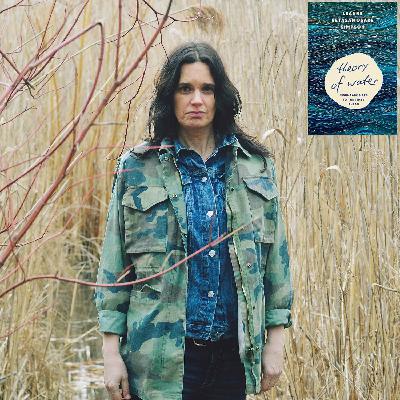
“So I think that part of colonialism for Indigenous peoples has been this idea that Indigenous peoples aren't thinking peoples and that we don't have thought on a kind of systemic level. One of the things that I was interested in doing is intervening in that because I think Indigenous people have a lot of beautiful, very intellectual, theoretical contributions to make to the world. A lot of our theory is encoded in story, but a lot of our theory is also encoded in land-based practice. You can't learn about it from reading books or from going to lectures. You have to really be out on the land with elders for long periods of time.”In this episode on Speaking Out of Place podcast Professor David Palumbo-Liu talks with Leanne Betasamosake Simpson about her new book,Theory of Water.  Theory of Water is a rich, complex, and deeply personal reflection on world-making and life-giving processes best captured in the fluidity of water as it circulates through all our bodies and the planet.  It is a largely collective project that enlists our listening and love, and helps us face the violence of all forms of dominance, enclosure, and containment. We are especially gifted to have the chance to listen to one of the songs from Leanne’s album, Theory of Ice, and have her comment on it and the relation of her music to her writing. This is a particularly special episode of Speaking Out of Place.Leanne Betasamosake Simpson is a Michi Saagiig Nishnaabeg scholar, writer, and musician.  She is the author of eight previous books, including the novel Noopiming: A Cure for White Ladies, which was short listed for the Dublin Literary prize and the Governor General’s award for fiction. Leanne’s album, Theory of Ice, released by You’ve Changed Records in 2021 and short-listed for the Polaris Prize and she was the 2021 winner of the Prism Prize’s Willie Dunn Award. Her latest project Theory of Water was published by Knopf Canada/Haymarket books in the spring of 2025.  Leanne is a member of Alderville First Nation.https://speakingoutofplace.comBluesky @palumboliu.bsky.socialInstagram @speaking_out_of_place
“What I've discovered as a writer is that fear is a good indicator that there is a truth. To speak the truth in a society is oftentimes an act that requires some courage. Those processes of being an other for me in the United States were obviously very fundamental to shaping who I am as a person and as a writer. It was very difficult to undergo, but to become a writer who could talk about those issues was also a lot of fun. Writing The Sympathizer was a lot of fun, and I hope that the novel was enjoyable and humorous to read as well, despite its very serious politics. When I wrote The Committed, I also had a lot of fun as an outsider to France. In writing the novel itself, The Committed, there was a lot of humor, satire, and these kinds of tools to confront the tragedy of othering. This is very important to me as literary and political devices. I think I could do that in both The Sympathizer and The Committed because I had a lot of distance from the time periods that those novels described. My challenge right now is to try to find my sense of humor in describing what the United States is undergoing and doing to other countries, its own immigrants, and its own people of color, and minorities in the present. That's proving to be a little more challenging at this moment.The whole power of the state is geared towards dividing and conquering, whether it's domestically within a state or whether it's exercising power overseas, including things like colonization, which is all about dividing and conquering. In the face of that, to engage in expansive solidarity and capacious grief is to work against the mechanisms of colonialism, militarism, and the state. It's enormously difficult, which is why it has to be rebuilt from every generation, as every generation is subject to the power of the state and its ideologies and mythologies. I think the lessons that I've extracted from this book, To Save and to Destroy, where I talk about expansive solidarity and capacious grief, are lessons that have been learned by other people before me, but lessons that I had to learn for myself and to put into my own words how I came to those lessons.”Viet Thanh Nguyen has spent much of his life exploring the stories we tell—and the stories we erase—about war, migration, and memory. His 2015 debut novel The Sympathizer, about a communist double agent in the aftermath of the Vietnam War, won the Pulitzer Prize and a long list of other major literary awards. In 2024, The Sympathizer was adapted into a critically acclaimed HBO series directed by Park Chan-wook. He followed it with The Committed, and his latest work, To Save and to Destroy: Writing as an Other, a meditation on writing, power, and the politics of representation.Nguyen is also the author of Nothing Ever Dies, a finalist for the National Book Award in nonfiction, and the short story collection The Refugees. He’s edited collections like The Displaced: Refugee Writers on Refugee Lives, and most recently the Library of America volume for Maxine Hong Kingston, who was once his teacher.He was born in Vietnam, came to the U.S. as a refugee, and is now a professor at the University of Southern California. He’s received Guggenheim and MacArthur fellowships, honorary doctorates, and has been named a Chevalier by the French Ministry of Culture. Today, we’ll talk about his books, America’s forever wars, and how the act of writing—across fiction, memoir, and scholarship—can become both a form of resistance and a way of making sense of being, as he puts it in his memoir “A Man of Two Faces.”Episode Websitewww.creativeprocess.info/podInstagram:@creativeprocesspodcast
“Poetry is the prince of the literary arts to me. It's at the very top because it's language refined to its apex of memorability. I am interested in poetry as memorability and poetry as something you live by. These are the words you live by. These words stay in your brain and guide your life. That's what I am interested in. My memoir slash autofiction is called Borges and Me, and as you know, it's a story of my time in 1970 when my best friend Billy was drafted for the Vietnam War, and so was I. He went to Vietnam, and I went to Scotland to hide out and do my graduate work. I spent nearly seven years in Scotland, but I certainly spent the next five years definitely in Scotland. I was there before as an undergraduate for a bit, too. During that time, Billy was killed in Vietnam, and I was a nervous wreck. My memoir talks about my depression, my anxieties, and then, through my friend Alastair Reid, I met Borges, the great Argentine writer. We went on a little road trip through the Highlands, and this conversation with Borges really restored me back to myself and what was important in life. I felt that I owed a huge amount to that contact with Borges… I was lucky that suddenly, out of nowhere, came a wonderful director-producer named Mark Turtletaub. He had read my book and loved it, and he approached me. We had a conversation, and he said, ‘Look, I want to make this movie.’ So off we went.”It’s a real pleasure today to welcome a writer whose voice has been a guiding force in American letters for decades. Jay Pariniis the author of acclaimed biographies of literary giants like John Steinbeck, Robert Frost, William Faulkner, and Gore Vidal—as well as an illuminating portrait of Jesus in The Human Face of God. He’s also a celebrated poet, novelist, essayist, and teacher whose work reflects a lifelong devotion to the arts, the humanities, and the power of language to tell the truth, gently. From his poetry to his prose, Jay's writing brings rare insight and deep compassion to the page. He doesn’t just study his subjects—he inhabits them, helps us hear their voices, and see the world through their eyes. And of course, he’s one of the few people who can say they've gotten into the heads of both Jesus and Gore Vidal...and lived to tell the tale.Episode Websitewww.creativeprocess.info/podInstagram:@creativeprocesspodcast
What happens when the state, with the pretext of protecting public safety, can detain indefinitely certain individuals whose dreams seem to indicate they may be capable of committing a crime?  Set in a precarious world where sleep-enhancing devices and algorithms provide the tools and formulae for making one’s unconscious a witness to one’s possible waking life, this novel touches on a myriad of political, philosophical, and moral concerns as they particularly connect to issues of gender, race, ethnicity, privacy, and the security state.In this episode of Speaking Out of Place podcast Professor David Palumbo-Liu talks with award-winning novelist Laila Lalami about her new novel, The Dream Hotel. Laila Lalami is the author of five books, including The Moor’s Account, which won the American Book Award, the Arab-American Book Award, and the Hurston / Wright Legacy Award. It was on the longlist for the Booker Prize and was a finalist for the Pulitzer Prize in Fiction. Her novel The Other Americanswas a national bestseller, won the Joyce Carol Oates Prize, and was a finalist for the National Book Award in Fiction. Her books have been translated into twenty languages. Her essays have appeared in the Los Angeles Times, the Washington Post, The Nation, Harper’s, the Guardian, and the New York Times. She has been awarded fellowships from the British Council, the Fulbright Program, the Guggenheim Foundation, and the Radcliffe Institute at Harvard University. She lives in Los Angeles.www.palumbo-liu.comhttps://speakingoutofplace.comBluesky @palumboliu.bsky.socialInstagram @speaking_out_of_placeEpisode WebsitePhoto credit: Beowulf Sheehan
“I'm hopeful for revolution. I'm optimistic. I want radical change. I think there's such a disinterest in education in America that it is sickening. I think we are repeating history. We are going through a cycle of fascism and greed, and I think we're going to see a lot of states collapse. As a result of that, I think people are going to be forced back to their primal needs and concerns, but I think they're going to be forced to think about what makes us human. How do we become more human? Because we've lost that. We've given it up to technology. How can we figure out what makes us a really powerful species again?”Irvin Weathersby Jr. is a Brooklyn-based writer and professor from New Orleans. He is the author of In Open Contempt: Confronting White Supremacy in Art and Public Space. His writing has been featured in LitHub, Guernica, Esquire, The Atlantic, EBONY, and elsewhere. He has earned an MFA from The New School, an MA from Morgan State University, and a BA from Morehouse College. He has received fellowships and awards from the Voices of Our Nations Arts Foundation, the Research Foundation of CUNY, the Bread Loaf Writers' Conference, the American Council of Learned Societies, and the Mellon Foundation.Episode Websitewww.creativeprocess.info/podInstagram:@creativeprocesspodcast
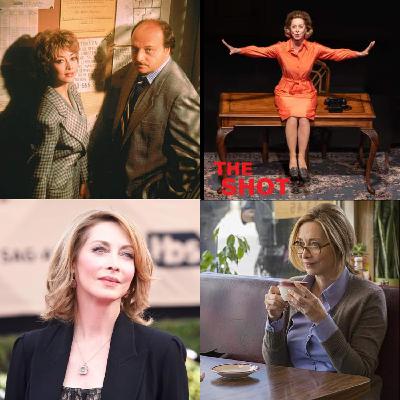
“I would encourage you, as I do if you're an actor, to know your own equipment, know your own psychology, and use the great teachers that are synthesized in my favorite teacher's book, Moss, who I studied with later. There is a book called Intent to Live that distills down Uta Hagen, Stella Adler, Bobby Lewis, and Stanislavski. The great teachers at the Group Theatre believed that the method needed to be altered to be constructive rather than destructive to artists.David Milch's mind is so singular because he uses language in a way that defines character. That's what all good writers do: use language to get to the heart of something. He would use malapropisms to make up words, and Milch loved playing with that. As someone who played the love interest of such a unique character as Andy Sipowicz, I found it fascinating.Through Sylvia and David Milch's understanding, his wife humanized him. Sipowicz was portrayed as an addict, a very flawed human who had many addictions. David Milch is now suffering from Alzheimer's, so we won't get his words again. However, the words that he has to offer are timeless because he studied Robert Penn Warren and had many mentors throughout his vast literary education. That is key. I love speaking Noël Coward’s words. As a bon vivant, he wrote musically, to charm us and amuse us. So going and reading Noël Coward is important for actors to learn those cadences and the musicality of a certain era. Of course, Shakespeare comes to mind. I also think of the female playwrights who delight me now, whether it's Caryl Churchill. She has that singular mind and plays with gender so well, challenging gender norms. Seeing ‘Cloud Nine’ when I was in college blew my mind open because men were playing women and women were playing men. Of course, Shakespeare was doing it too, but her work felt more intimate; it was in a small theater. That’s another thing I encourage actors and audiences to do: go see things in small theaters. See it up close because that will excite you and help you learn the craft.”Sharon Lawrence is an acclaimed actress best known for her Emmy-nominated, SAG Award-winning role as ADA Sylvia Costas on NYPD Blue. She has delivered memorable performances in Desperate Housewives, Monk, Law & Order: SVU, Criminal Minds, Shameless, and Queen Sugar. On stage, she’s earned praise for roles in The Shot (a one-woman play about the owner/publisher of the Washington Post, Katharine Graham), Orson’s Shadow, and A Song at Twilight. Shestarred in Broadway revivals of Cabaret, Chicago, and Fiddler on the Roof. Her recent work includes the neo-Western series Joe Pickett, opposite Michael Dorman, and the films Solace with Anthony Hopkins and The Bridge Partner. Lawrence is also a dedicated advocate, serving on the boards of the SAG-AFTRA Foundation, WeForShe, and Heal the Bay, and is a former Chair of the Women In Film Foundation.Episode Websitewww.creativeprocess.info/podInstagram@sharonelawrence@creativeprocesspodcast
“I think that it all goes back to childhood. I’ve always really been writing about family. I suppose we always are. I do think that it is the original wound, and it's where we are kind of wired and built from those early years. So I think every other relationship just replicates that. It's very natural for me to go there, I suppose because the feelings are most intense there. We just keep recycling these relationships and dynamics over and over again—until maybe someday we can catch ourselves and try to break the bad patterns. It feels the most visceral and real to me, always. You're always looking for that in writing. You want everything to be at this peak intensity, or at least I do. That seems the most natural place to start.I've thought about that a lot while writing the book. We really are in the age of the grifter, as they keep saying. In some ways, it's the most deeply American type, the hustler of American aspiration. And money, I think that was hovering in my head when I wrote the book. How women persuade and convince one another of things feels particularly complex to me. I think there are so many layers to female relationships. That was really interesting to me to pursue because, in some ways, it's much more veiled and complex. So I tend to write about groups of women a lot, regardless of the field, but particularly the way they communicate or don't communicate, or communicate without words to one another, is an ongoing fascination of mine.”Megan Abbott is the Edgar award-winning author of twelve crime novels, including Beware the Woman, You Will Know Me, Give Me Your Hand, and the New York Times bestseller The Turnout, the winner of the Los Angeles Times Book Prize. She received her Ph.D. in English and American literature from New York University, and her writing has appeared in the New York Times, the Guardian, the Paris Review and the Wall Street Journal. Dare Me, the series she adapted from her own novel, now streaming on Netflix. Her latest novel, El Dorado Drive, is available June 24, 2025.Episode Websitewww.creativeprocess.info/podInstagram:@creativeprocesspodcast
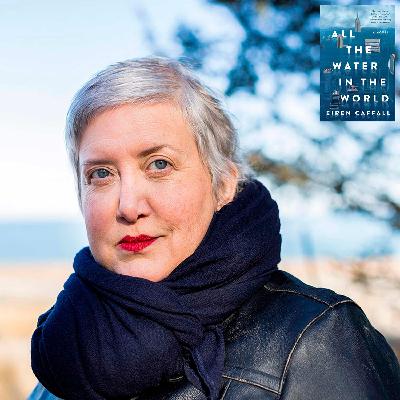
“We are in a complex and delicately balanced relationship of connection to everything else on the planet. We begin to recognize, write into, and speak into the complex interdependence and interconnection of every gesture that we make on the planet. Most storytelling that I really respond to, whether it's from my own culture or from previous civilizations, acknowledges that we are in this complex relationship where every gesture we make is connected to the lives of every other creature on the planet. The more narratives we allow to be complex in that way and interconnected, the more we begin to change our brain chemistry around how we protect ourselves and everything that is in relation to us. The more that you have that evolving relationship with it, that's dynamic and alive to the moment you're in, and that's not afraid of the feelings of fear, hopelessness, grief, or pain that attend paying close attention to the world as it is evolving around you, the better we are able to be flexible in the relationship we need to form with fixing what we can and holding onto what we have.”Eiren Caffall is a writer and musician. Her work on loss, oceans, and extinction has appeared in Orion, Guernica, The LA Review of Books, Al Jazeera, and the anthology Elementals. She has received a 2023 Whiting Creative Nonfiction Grant, a Social Justice News Nexus fellowship, and a 3Arts Make a Wave grant. Her work includes her memoir The Mourner’s Bestiary, the short film Becoming Ocean that she made with Scott Foley, and her novel All the Water in the World.Episode Websitewww.creativeprocess.info/podInstagram:@creativeprocesspodcast
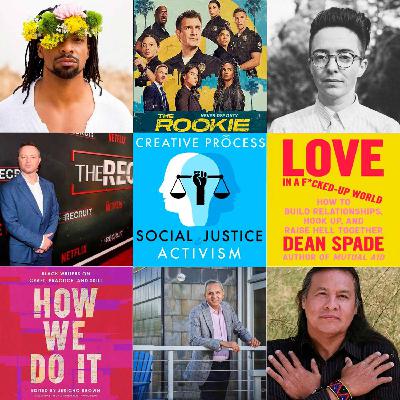
How do our personal relationships affect political movements and activism? What can we learn from Native American tradition to restore ecological balance? How can transforming capitalism help address global inequality and the environmental crisis?DEAN SPADE (Author of Love in a F*cked-Up World: How to Build Relationships, Hook Up, and Raise Hell Together) shares his reflections on the importance of understanding common relational patterns within activist movements. He emphasizes the need for solidarity and collective action in response to global crises like the conflict in Gaza and ecological disasters. Spade argues for resilience and mutual support within activist communities as essential for sustained efforts toward systemic change.TIOKASIN GHOSTHORSE (Founder · Host · Exec. Director of First Voices Radio · Founder of Akantu Intelligence · Master Musician of the Ancient Lakota Flute) discusses the often-overlooked Native history and the Western historical domination that has shaped contemporary educational perspectives. He highlights the need for reconnection to Native perspectives and calls for an acknowledgment of the spiritual and cultural richness lost through historical and ongoing colonial practices.ALEXI HAWLEY (Showrunner · Writer · Creator of The Rookie · The Recruit) explores the complexities and challenges of depicting policing on television. Reflecting on the creation of his show "The Rookie" in the aftermath of Philando Castile's murder, Hawley discusses the show's evolution in addressing injustice in the justice system and the effort to portray an aspirational version of policing that acknowledges real-world issues.JERICHO BROWN (Pulitzer Prize-winning Poet · Director of Creative Writing Program · Emory University · Editor of How We Do It: Black Writers on Craft, Practice, and Skill) delves into the complexities of being a Black writer, emphasizing the importance of embracing one's identity rather than trying to transcend it. He discusses how blackness enriches his craft and argues that the power of writing comes from its capacity to create new ways of seeing and understanding the world.PAUL SHRIVASTAVA (Co-President of THE CLUB OF ROME) analyzes the need for collaborative efforts across various sectors—businesses, governments, and individuals—to address global inequalities and environmental challenges. He underscores the imperative to reshape capitalist principles to reduce extreme inequalities and to foster a sustainable and equitable global system.To hear more from each guest, listen to their full interviews.Episode Websitewww.creativeprocess.info/podInstagram: @creativeprocesspodcast
"The country spoke Irish largely before it spoke English. Grammatically, the structure of Irish is different from English. As Ireland adopted the English language, this sort of hybridization started to occur, where the English language was placed on top of Irish grammatical constructions. You get this slipperiness, this ability to move sentences, to place words in interesting places, and to use constructions that you just wouldn't find in England, for example. The thing about being an Irish writer is there isn't a reverence. There’s a sort of implicit freedom to use the language however we like. So long as you have mastery and command of the language, you can push it to the edges."Paul Lynch is the author of five novels. His most recent novel, Prophet Song, won the 2023 Booker Prize and the Dayton Literary Peace Peace Prize for Fiction, and other prizes. Prophet Song presents a dystopian vision of Ireland and a mother’s determination to protect her family as her country slides towards totalitarianism. The Booker Prize Jury said, “It’s a remarkable accomplishment for a novelist to capture the social and political anxieties of our moment so compellingly.“ In 2024, Lynch was elected to Aosdána, the Irish academy for the arts, honoring distinguished artists. He was the chief film critic of Ireland’s Sunday Tribune newspaper. His novels have been translated into 35 languages.Episode Websitewww.creativeprocess.info/podInstagram:@creativeprocesspodcastPaul Lynch is the author of five novels. His most recent novel, Prophet Song, won the 2023 Booker Prize and the Dayton Literary Peace Peace Prize for Fiction, and other prizes. Prophet Song presents a dystopian vision of Ireland and a mother’s determination to protect her family as her country slides towards totalitarianism. The Booker Prize Jury said, “It’s a remarkable accomplishment for a novelist to capture the social and political anxieties of our moment so compellingly.“ In 2024, Lynch was elected to Aosdána, the Irish academy for the arts, honoring distinguished artists. He was the chief film critic of Ireland’s Sunday Tribune newspaper. His novels have been translated into 35 languages.Episode Websitewww.creativeprocess.info/podInstagram:@creativeprocesspodcast
 “We narrate the story of our lives to ourselves. We narrate it in linear fashion. And I know many writers have played with time in all sorts of amazing ways, but we're storytellers. This is what we do. And if you give the brain a story, a prepackaged story, you're giving a cheesecake. That's what it wants. That's why it loves stories. That's why our society is just built on stories. Politics is nothing but stories. Everything you do in the evenings – we sit down, we're watching Netflix – just stories. We consume them all the time. We are just machines for belief.”Paul Lynch is the author of five novels. His most recent novel, Prophet Song, won the 2023 Booker Prize and the Dayton Literary Peace Peace Prize for Fiction, and other prizes. Prophet Song presents a dystopian vision of Ireland and a mother’s determination to protect her family as her country slides towards totalitarianism. The Booker Prize Jury said, “It’s a remarkable accomplishment for a novelist to capture the social and political anxieties of our moment so compellingly.“ In 2024, Lynch was elected to Aosdána, the Irish academy for the arts, honoring distinguished artists. He was the chief film critic of Ireland’s Sunday Tribune newspaper. His novels have been translated into 35 languages.Episode Websitewww.creativeprocess.info/podInstagram:@creativeprocesspodcast
loading
Comments 
loading