DiscoverPipe Dream | A B2B Marketing Podcast
Pipe Dream | A B2B Marketing Podcast
Claim Ownership

Pipe Dream | A B2B Marketing Podcast

Author: B2B Better

Subscribed: 19Played: 223
Share

Description

Pipe Dream profiles the B2B companies that have cracked the code on audience-driven marketing, building podcasts, newsletters, and content channels that don't just generate awareness, but actually drive qualified pipeline.


Host Jason Bradwell, founder of B2B Better, sits down with the marketers and founders who've shifted away from traditional demand gen tactics to build their own audiences. Each episode breaks down the numbers, the conversion systems, and the tactical decisions that turn listeners into buyers.


This isn't a show about marketing theory or best practices. It's about what's actually working right now: how much it costs, what converts, and why owned audience beats rented attention every single time.


If you're tired of vanity metrics and want to understand how to build a content engine that drives real revenue, this is your show.


New episodes... all the time.


Learn more at http://www.b2b-better.com
141 Episodes
Reverse
We help B2B brands launch shows that turn their point of view into pipeline. If you're launching a podcast (or have one already) and are not sure how it can hit your bottom line, book a meeting with Jason: https://meetings-eu1.hubspot.com/jason-bradwell/youtube-meeting-link Most B2B podcasts look polished, sound great, and go absolutely nowhere. The uncomfortable truth? It's not a production problem. It's a strategy problem. In this solo episode of Pipe Dream, Jason Bradwell breaks down one of the most misunderstood distinctions in B2B content marketing: the difference between a podcast production agency and a podcast marketing agency. Drawing on his experience leading marketing teams with multi-million-dollar budgets at enterprise B2B organisations, Jason explains why production quality alone will never move the needle on pipeline. A podcast production agency delivers great audio and visuals, then hands the content back to the client. A podcast marketing agency works across the entire process, from editorial and promotional strategy through to distribution, sales enablement, and ongoing optimisation. The difference is between content that looks good on a slide deck and content that actually closes deals. Jason shares three questions that any podcast marketing agency worth working with will ask from day one, covering how success is defined within the wider go-to-market strategy, how the buyer journey informs content decisions, and why a distinct point of view is the foundation of any show that stands out in a sea of commodity B2B content. Key Takeaways ◼️ How to identify whether you are speaking to a podcast production agency or a podcast marketing agency before you sign a contract ◼️ Why defining success at the outset, whether that is pipeline, brand awareness, or sales enablement, shapes every creative and strategic decision that follows ◼️ How to use the buyer journey to develop podcast content that moves prospects from unaware to converted, rather than creating content in a vacuum ◼️ Why a strong point of view is the single biggest differentiator for B2B thought leadership content, and how a marketing agency helps you develop one ◼️ How to prevent your podcast from becoming a siloed marketing vanity project by aligning sales and marketing from the very beginning ◼️ Why production quality matters but will never compensate for a weak narrative or an unclear commercial objective Chapter Markers 00:00 Intro 00:30 Why Jason Uses the Word "Marketing" Deliberately 02:00 What Separates a Production Agency from a Marketing Agency 03:00 The Full-Service Approach Explained 04:00 Question 1: What Does Success Look Like? 05:30 Question 2: What Does the Buyer Journey Look Like? 07:00 Question 3: What Makes You Different from Your Competitors? 08:00 Wrap-Up and How to Get in Touch What's Next If this episode made you rethink how your podcast fits into your wider marketing strategy, the next step is a conversation. Reach out to Jason on LinkedIn or book a meeting directly using the link at the top of these notes. Useful Links Connect with Jason Bradwell on LinkedIn: https://www.linkedin.com/in/jasonbradwell/Listen to Pipe Dream on Podbean: https://www.podbean.com/podcast-detail/bac4p-2a0121/Pipe-Dream-PodcastLearn more about B2B Better: https://www.b2b-better.com
We help B2B brands launch shows that turn their point of view into pipeline. If you're launching a podcast (or have one already) and are not sure how it can hit your bottom line, book a meeting with Jason: https://meetings-eu1.hubspot.com/jason-bradwell/youtube-meeting-link Your download count is flattering you. And if you're pitching your podcast to a board on the back of it, you're building on sand. In this solo episode, Jason Bradwell calls out the most common measurement mistake in B2B podcasting and reveals the one metric that actually tells you whether your show is working. If you're running a podcast to drive pipeline rather than ego, this episode is essential listening. For most B2B businesses, downloads are a red herring. If your total addressable market is a few hundred or a few thousand companies, benchmarking your show against Joe Rogan or Diary of a CEO is not just meaningless -- it's actively misleading. The metric you should be tracking instead is Consumption Rate (on podcast platforms) or Watch Time (on YouTube). These tell you something far more important: how resonant your content actually is with the people who matter. Jason breaks down exactly where to find these figures in Apple, Spotify, and YouTube analytics, and makes the case that 100 listeners consuming 80% of your episode is worth considerably more than 10,000 who drop off after 60 seconds. For anyone building a business case internally to launch or continue a B2B show, this is the argument you need. Key Takeaways ◼️ Why downloads are a misleading success metric for the vast majority of B2B podcasts ◼️ How to use Consumption Rate to measure whether your show is actually resonating with buyers ◼️ Why 100 highly engaged listeners outperforms 10,000 passive ones in a B2B context ◼️ How to find Watch Time and Consumption Rate inside Apple, Spotify, and YouTube analytics ◼️ Why resonance over reach is the right frame when your total addressable market is finite ◼️ How to build a credible, data-backed business case for your podcast using a single metric Chapter Markers 00:00 Intro 00:30 Why downloads are the default metric for podcasts 01:30 The problem with downloads as a B2B success metric 02:20 Introducing Consumption Rate and Watch Time 03:00 Resonance vs. reach: which actually matters for B2B? 03:30 Where to find Consumption Rate in Apple, Spotify, and YouTube 04:00 The one metric to bring to your board What's Next If this episode made you question how you're currently measuring your show, it's time to dig into your analytics and find your Consumption Rate today. Share this episode with any founder or marketer who's still leading with download numbers in their next board update. Useful Links Connect with Jason Bradwell on LinkedIn: https://www.linkedin.com/in/jasonbradwell/Listen to Pipe Dream on Podbean: https://www.podbean.com/podcast-detai...Learn more about B2B Better: https://www.b2b-better.com
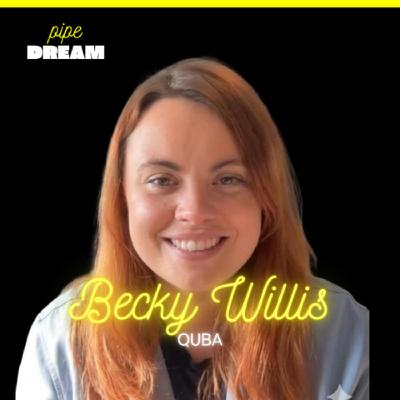
We help B2B brands launch shows that turn their point of view into pipeline. If you're launching a podcast (or have one already) and are not sure how it can hit your bottom line, book a meeting with Jason: https://meetings-eu1.hubspot.com/jason-bradwell/youtube-meeting-link Most B2B podcasts sound exactly the same. Becky Willis is doing something about it. Becky Willis, Group Chief Commercial Officer of the Kiewit Matthews Group and co-host of the relaunched Agency Hackers podcast, joins Jason to pull back the curtain on a show built differently from the ground up. Forget evergreen guest interviews and generic marketing frameworks. Agency Hackers is a gossip column for agency land, produced in a full broadcast studio, with live phone-ins from the community and a co-hosting dynamic built on genuine chemistry and deliberate spontaneity. In this episode, Becky shares the origin story of the relaunch alongside Agency Hackers founder Ian, explains why they chose high-end studio production over a DIY recording setup, and reveals the "freedom within a framework" philosophy that keeps the show lively and authentic. She also digs into how they source stories, why LinkedIn and private WhatsApp communities are their most fertile hunting grounds, and what nearly killed a previous attempt at producing the show before it ever saw the light of day. Whether you are building an owned media strategy for a B2B brand or simply trying to create content that actually gets listened to, this conversation is packed with honest, practical insight. Key Takeaways ◼️ How to stand out by building a show around your genuine personality and knowledge rather than copying the dominant interview format ◼️ Why "freedom within a framework" is the sweet spot between over-scripted episodes and unstructured waffle ◼️ How to involve your audience through community phone-ins that build loyalty beyond passive listenership ◼️ Why production environment matters more than most hosts realise, and how the right studio setup fuels on-camera energy ◼️ How to source timely content by treating LinkedIn and private community channels as your editorial newsroom ◼️ Why outsourcing end-to-end production is the difference between a show that gets published and one that never sees the light of day Chapter Markers 00:00 Intro 01:45 What Agency Hackers Is and Who It's For 04:10 Why They Chose a Gossip Column Format Over Another Marketing Podcast 06:30 The Studio Decision and Why Production Environment Matters 08:00 How They Find and Source Stories Each Week 11:20 The Live Phone-In Segment and Why It Builds Listener Loyalty 14:00 Early Reception and Signals From Episode One 16:45 The Three Big Lessons From the Relaunch So Far 20:10 Where to Find Becky and the Agency Hackers Podcast Relevant Links and Resources Listen to Agency Hackers Podcast on Apple Podcasts: https://podcasts.apple.com/us/podcast/the-agency-hackers-podcast/id1755540477Listen to Agency Hackers Podcast on Spotify: https://open.spotify.com/show/2Y2IHPCBJGmlGNNmQD4l8dConnect with Becky Willis on LinkedIn: https://www.linkedin.com/in/becky-willis-07999519/Learn more about Agency Hackers Community: agencyhackers.comFollow Ian Harris (Agency Hackers founder) on LinkedIn: https://www.linkedin.com/in/ianharrisuk/ What's Next Go and subscribe to the Agency Hackers podcast on Spotify or your preferred platform, then come back here and tell us what format you think is missing from the B2B podcast landscape. Useful Links Connect with Jason Bradwell on LinkedIn: https://www.linkedin.com/in/jasonbradwell/ Listen to Pipe Dream on Podbean: https://www.podbean.com/podcast-detail/bac4p-2a0121/Pipe-Dream-Podcast Learn more about B2B Better: https://www.b2b-better.com
We help B2B brands launch shows that turn their point of view into pipeline. If you're launching a podcast (or have one already) and are not sure how it can hit your bottom line, book a meeting with Jason: https://meetings-eu1.hubspot.com/jason-bradwell/youtube-meeting-link They hit the top 10 in their category. They landed Fortune 500 CEOs. They racked up downloads month after month. And they closed precisely zero deals. In this solo episode, Jason Bradwell unpacks one of the most common and costly mistakes in B2B podcasting: building a show for your ego instead of your pipeline. If your guest list reads like a networking wish list, this episode is for you. Most B2B podcasters start in the same place: chasing the biggest, most recognisable names in their industry. The logic feels sound. Credibility by association. Impressive LinkedIn posts. A logo wall of guests. But those guests are rarely in your ICP; their audiences are not your audience, and the conversations you have with them rarely address the specific, real-world problems your prospects are wrestling with right now. Jason walks through the practical alternative: the editorial-led approach. Instead of starting with the guest, you start with the question. What keeps your prospects up at night? What objections come up on every sales call? What decisions are they struggling to make? Those questions become your episode topics, and the guests you find to answer them do not need to be famous. They need to be credible, relevant, and close enough to the work that your prospects genuinely recognise themselves. He also outlines a five-step framework for building an editorial roadmap rooted in sales intelligence and explains the only metrics that actually matter when measuring a podcast's commercial impact. Key Takeaways ◼️ How to audit your sales calls to build a content-driven editorial roadmap ◼️ Why booking recognisable guests optimises for vanity metrics rather than pipeline ◼️ How to structure an episode around a prospect's problem instead of a guest's agenda ◼️ Why the best podcast guests are often practitioners and customers rather than celebrities ◼️ How to give your sales team content they can actually use to move deals forward ◼️ Why download counts are the wrong success metric and what to track instead Chapter Markers 00:00 Intro 00:45 The top 10 podcast that closed zero deals 01:30 Why chasing big-name guests hurts your pipeline 02:45 Start with the question, not the guest 03:30 Ego approach vs. editorial approach: a direct comparison 05:00 When big-name guests do make sense 05:30 Five steps to build an editorial-led podcast strategy 06:45 The only metrics worth measuring What's Next If this episode made you rethink your guest strategy, the next step is simple: pull up your last five sales calls and write down the questions that came up most. That is your editorial roadmap. Share this episode with anyone on your team who is involved in your podcast or content strategy. Useful Links Connect with Jason Bradwell on LinkedIn: https://www.linkedin.com/in/jasonbradwell/Listen to Pipe Dream on Podbean: https://www.podbean.com/podcast-detail/bac4p-2a0121/Pipe-Dream-PodcastLearn more about B2B Better: https://www.b2b-better.com
We help B2B brands launch shows that turn their point of view into pipeline. If you're launching a podcast (or have one already) and are not sure how it can hit your bottom line, book a meeting with Jason: https://meetings-eu1.hubspot.com/jason-bradwell/youtube-meeting-link Most B2B marketing teams are building on sand, and the funnel is the reason why. In this episode, we pull apart one of marketing's most sacred frameworks and ask whether it's quietly costing you your best work. Jason is joined by Yiannaki Loizou, Communications Marketing Director at Miratech, for a masterclass in brand-led B2B marketing strategy. Yiannaki brings decades of experience scaling international tech businesses and leading significant rebrands, and he makes a compelling case for why brand is not a luxury in B2B; it is the foundation everything else is built upon. Together, Jason and Yiannaki explore why the marketing funnel was originally a reporting tool for group behaviour, not a prescription for how individual buyers make decisions. They discuss how the pursuit of measurable, repeatable results has slowly eroded the creativity, experimentation, and distinctiveness that make marketing truly effective. From gaming attribution models to underfunding brand, the conversation covers the real costs of funnel worship in the modern B2B environment. The episode also tackles the emotional reality of B2B buying, the concept of H2H (human to human) marketing, and what it actually looks like to advocate for brand investment inside organisations that are laser-focused on pipeline. Key Takeaways ◼️ Why the funnel misleads leadership -- it was designed to report on group behaviour, not predict how individual buyers make decisions, and over-relying on it encourages oversimplification ◼️ How to make the business case for brand -- ask executives what truly drives their own purchasing decisions, and watch the conversation shift from slide decks to honest human reality ◼️ Why B2B buying is never purely rational -- committing millions in tech spend over multiple years is an emotional decision, and brands that build trust and credibility long before the buying window opens will win ◼️ How to position marketing as more than a lead-gen machine -- own the narrative internally, educate stakeholders on what marketing can add beyond pipeline attribution, and resist becoming a pure execution department ◼️ Why starting with brand always pays off -- running demand campaigns without a solid brand foundation means fighting with a permanent handicap; the earlier you invest in brand clarity, the better every campaign performs ◼️ How to drive change without a full reset -- find allies outside of marketing who believe in the brand vision, start with a pilot, and build confidence through small, well-evidenced wins before asking for a wholesale shift in strategy Relevant Links and Resources Connect with Yiannaki Loizou on LinkedIn: https://www.linkedin.com/in/yiannaki-loizouTrainual: https://www.trainual.comVolvo "Epic Split" campaign featuring Jean-Claude Van Damme: search "Volvo Trucks Epic Split" on YouTube What's Next If this episode resonated with you, share it with a B2B marketing leader in your network who is fighting to make the case for brand investment. And if you are ready to turn your own podcast into a genuine pipeline asset, the link below is a great place to start. Useful Links Connect with Jason Bradwell on LinkedIn: https://www.linkedin.com/in/jasonbradwell/Listen to Pipe Dream on Podbean: https://www.podbean.com/podcast-detail/bac4p-2a0121/Pipe-Dream-PodcastLearn more about B2B Better: https://www.b2b-better.com
We help B2B brands launch shows that turn their point of view into pipeline. If you're launching a podcast (or have one already) and are not sure how it can hit your bottom line, book a meeting with Jason: https://meetings-eu1.hubspot.com/jason-bradwell/youtube-meeting-link One article claimed the corporate podcast bubble is about to burst. Jason isn't letting that go without a fight. A piece published on Inc.com arguing that corporate podcasting is inefficient, hard to justify, and on borrowed time landed in Jason's feed, and rather than scroll past it, he decided to take it apart, argument by argument. In this solo episode, Jason gives credit where it's due, challenges where the thinking falls short, and makes the case for why B2B podcasting represents a bigger commercial opportunity than ever. The article in question, written by digital communications leader Paul Rei, raises four core arguments: audio is slower than text (the so-called "60% efficiency gap"), comprehension suffers in audio format, listeners lose the ability to search and skim, and ROI is nearly impossible to measure. Jason takes each one seriously and then explains precisely why the framing misses the point entirely. The real issue, as Jason sees it, is that the article evaluates podcasting as a content format competing directly with text. But that is not the right question. The person listening to your podcast is on a commute or at the gym, they are not about to open a white paper. A piece of content consumed at 150 words per minute beats one that never gets read at all. Jason also pushes back on the comprehension argument, noting the study cited compares students processing dense academic material in audio against text, a category error when applied to well-produced B2B thought leadership content. And on the loss of agency point, he highlights that tools like Descript have effectively solved the transcript problem already. Key Takeaways ◼️ Why the "efficiency gap" argument misunderstands how people actually consume podcasts, and why a 150 wpm listen beats a white paper that never gets opened ◼️ How to evaluate B2B podcasting as a full-funnel platform rather than a content format competing with text ◼️ Why the comprehension study cited against audio is a category error when applied to conversational, editorial thought leadership content ◼️ How to use transcripts and companion content to solve the "loss of agency" problem with tools like Descript ◼️ How B2B organisations have attributed over £250,000 in closed-won revenue to a single podcast, tracked directly in HubSpot ◼️ Why the corporate podcast bubble will only burst for brands with no strategy and what separates them from those generating real commercial returns Chapter Markers 00:00 Intro 01:05 The "60% Efficiency Gap" and What It Actually Means 02:00 The Comprehension Study: Why the Research Doesn't Apply 02:45 Loss of Agency: Has the Argument Kept Pace With the Industry? 03:20 The Vanity Project Problem 04:30 Why the Article Is Asking the Wrong Question 05:20 How B2B Brands Are Attributing Real Pipeline to Podcasting 06:15 Is the Corporate Podcast Bubble About to Burst? Relevant Links and Resources Original article by Paul Rei on Inc.com: "The Corporate Podcast Bubble Is About to Burst"Descript (transcript and editing tool mentioned): https://www.descript.comLenny's Podcast: https://www.lennysnewsletter.com/podcast20VC Podcast: https://www.thetwentyminutevc.comConnect with Jason Bradwell on LinkedIn: https://www.linkedin.com/in/jasonbradwell/ What's Next Got a take on whether the corporate podcast bubble is real? Jason wants to hear it. Drop him a message on LinkedIn or leave a comment below. Useful Links Connect with Jason Bradwell on LinkedIn: https://www.linkedin.com/in/jasonbradwell/ Listen to Pipe Dream on Podbean: https://www.podbean.com/podcast-detail/bac4p-2a0121/Pipe-Dream-Podcast Learn more about B2B Better: https://www.b2b-better.com

We help B2B brands launch shows that turn their point of view into pipeline. If you're launching a podcast (or have one already) and are not sure how it can hit your bottom line, book a meeting with Jason: https://meetings-eu1.hubspot.com/jason-bradwell/youtube-meeting-link A client with a legal ban on case studies spent 45 minutes on a podcast telling the exact story you needed, and then shared it on their LinkedIn. The packaging was the only thing that changed. In this solo episode, Jason Bradwell breaks down one of the most practical and underused strategies in B2B owned media: using your podcast to unlock social proof from clients who will never, under any circumstances, agree to a case study. If your sales team is fumbling through anonymous wins while your competitors flaunt a case study library, this episode is the playbook you have been missing. Jason draws on real examples, including a multi-year engagement with the NFL, to explain the psychology behind why podcast invitations succeed where case study requests fail. It comes down to three forces: personal brand versus corporate policy, a collaborative ask versus an extractive one, and the ripple effect that makes every future request easier once the first "yes" has been secured. He then walks through a precise five-step framework any revenue team can implement immediately, from identifying your no-case-study clients to using the resulting episode as a trust wedge throughout the sales cycle. This is a short episode, but the insight is one that changes how you think about your podcast's role in the revenue process entirely. Key Takeaways ◼️ How to reframe a case study request as a podcast invitation to bypass legal, procurement, and policy objections entirely  ◼️ Why personal brand motivation is one of the most powerful unlocks in B2B social proof strategy  ◼️ How to write interview questions that surface the client story you need without ever asking directly  ◼️ Why the first podcast "yes" makes every subsequent ask, including quotes, proposals, and sales clips, significantly easier  ◼️ How to identify which clients in your CRM are the highest-priority targets for this approach  ◼️ Why owned media is not just a content play but a trust infrastructure for your entire revenue team Chapter Markers 00:00 Intro 00:45 The client who banned case studies then spent 45 minutes on the podcast 02:00 Why your sales team is stuck without proof 02:45 Why it's a packaging problem, not an information problem 03:00 Personal brand beats corporate policy 03:30 How flipping the ask changes everything 04:00 Letting the story come out naturally through smart questions 04:20 The ripple effect: how the NFL said yes 05:00 The five-step framework to unlock no-case-study clients 06:30 Closing thoughts and who to share this with Relevant Links and Resources Connect with Jason Bradwell on LinkedIn: https://www.linkedin.com/in/jasonbradwell/  B2B Better: https://www.b2b-better.com  Book a strategy call with Jason: https://meetings-eu1.hubspot.com/jason-bradwell/youtube-meeting-link What's Next If someone on your revenue team has been hitting the "we don't do case studies" wall, forward them this episode. It might be the most useful 7 minutes they spend this week. Useful Links Connect with Jason Bradwell on LinkedIn: https://www.linkedin.com/in/jasonbradwell/  Listen to Pipe Dream on Podbean: https://www.podbean.com/podcast-detail/bac4p-2a0121/Pipe-Dream-Podcast Learn more about B2B Better: https://www.b2b-better.com
We help B2B brands launch shows that turn their point of view into pipeline. If you're launching a podcast (or have one already) and are not sure how it can hit your bottom line, book a meeting with Jason: https://meetings-eu1.hubspot.com/jason-bradwell/youtube-meeting-link Most B2B marketers are drowning in content and starving for pipeline. Joel Harrison has spent 23 years building media empires in B2B – and he's finally putting his cards on the table. In this episode of Pipe Dream, Jason Bradwell sits down with Joel Harrison, founder of the B2B Marketing publication and host of the Trust and Influence in B2B podcast. Joel brings a rare perspective to owned media: he has built a media company from scratch, exited the operational role he created, and then rebuilt his personal brand through podcasting and thought leadership content. The result is a frank, practical conversation about what it actually takes for B2B organisations to communicate with authority in an AI-saturated world. Joel shares why he launched his podcast after abandoning plans for a book, how he has evolved from audio-only to a full content flywheel spanning YouTube, LinkedIn newsletter, and LinkedIn Live, and why trust – not technology – is the defining challenge for B2B marketers right now. He also makes a compelling case for humanisation as the antidote to AI-generated commodity content, arguing that brands which put real people and genuine points of view at the centre of their marketing will win long-term. The conversation turns candid when Joel addresses why marketing still struggles to earn a seat at the board table, and what it will take to change that dynamic. Key Takeaways ◼️ How to build a content flywheel from a single podcast – why launching with audio alone limits your reach and how adding video, newsletter, and live formats accelerates audience growth. ◼️ Why trust is the defining issue in B2B marketing right now – and how AI-generated content is making the problem worse, not better. ◼️ How to use AI as an enabler of thought leadership, not a replacement for it – the distinction between repurposing genuine perspectives and using AI as a crutch for a missing point of view. ◼️ Why B2B marketing still struggles to earn board-level credibility – and what marketers must do to speak the commercial language that CEOs and CFOs actually respond to. ◼️ How to hook your audience in the first 30 seconds – the simple structural shift Joel made after a year of podcasting that reduced early listener drop-off. ◼️ Why incremental improvements beat big production budgets – and why your point of view matters far more than your studio setup. Chapter Markers 00:00 Intro 02:15 Joel's journey: from founding B2B Marketing magazine to podcasting 07:40 Building a content flywheel across audio, video, and LinkedIn 13:05 The biggest lessons from year one of running a podcast 18:30 What "thinking like a media company" actually means in B2B 23:10 Why marketing still fails to prove its value to the board 28:45 How AI enables thought leadership without replacing it Relevant Links and Resources Joel Harrison on LinkedIn: https://www.linkedin.com/in/joel-harrison/Trust and Influence in B2B Podcast: [search on Spotify / Apple Podcasts]B2B Marketing (publication Joel founded): https://www.b2bmarketing.netTools mentioned by Joel: Riverside, Claude, ChatGPT, Fireflies What's Next If this episode got you thinking about how your organisation can build content that actually earns trust and drives pipeline, don't sit on it – take the first step and book a conversation with the B2B Better team today. Useful Links Connect with Jason Bradwell on LinkedIn: https://www.linkedin.com/in/jasonbradwell/Listen to Pipe Dream on Podbean: https://www.podbean.com/podcast-detail/bac4p-2a0121/Pipe-Dream-PodcastLearn more about B2B Better: https://www.b2b-better.com
We help B2B brands launch shows that turn their point of view into a pipeline. If you're launching a podcast (or have one already) and are not sure how it can hit your bottom line, book a meeting with Jason: https://meetings-eu1.hubspot.com/jason-bradwell/youtube-meeting-link Most people want a community. Mark Masters actually built one, and it took 13 years, one Thursday newsletter, and the quiet conviction that belonging matters more than scale. Mark Masters, founder of You Are the Media (YATM), joins Jason Bradwell on Pipe Dream to tell the full story of how a scrappy newsletter started in October 2013 grew into one of the most distinctive professional learning communities in the UK. Based on the south coast of England, YATM is a community built around a simple but powerful idea: all of us are better than one of us. Mark shares how YATM evolved from a zero-budget newsletter into a multi-layered owned media ecosystem spanning regular Lunch Club events across the country, an online membership space, and the flagship Creator Day conference in Poole. He is candid about the mistakes made along the way, the temptation to chase scale, and why the format of his events involves breaking world records with Post-it notes and chocolate oranges. This episode is essential listening for any B2B marketer or founder thinking about building a content-led community. Mark's journey is a masterclass in patience, consistency, and leading with genuine values rather than vanity metrics. Key Takeaways ◼️ How to build a community without a budget -- start with a consistent piece of content, as Mark did with a free weekly newsletter, and let trust compound over time before layering in events or membership. ◼️ Why jumping straight to a Slack group will destroy your community -- an empty playground repels new members; build audience first, then create spaces for them to gather. ◼️ How to define your community's values in a way that creates real association -- lead with emotive, human ideas like self-sufficiency, creativity or belonging rather than industry jargon or tactics. ◼️ Why scale is the wrong north star for community-led growth -- Mark deliberately caps Creator Day at 300 attendees so he can deliver a meaningful experience rather than a diluted one. ◼️ How to separate your personal brand from your community brand -- trust and format are the keys; document what works, then find community members who embody your values to carry it forward. ◼️ Why consistency over 13 years beats any campaign -- not one newsletter repurposed or copy-pasted since 2013; showing up reliably is the single biggest differentiator in owned media. Chapter Markers 00:00 Intro 02:00 What Is You Are the Media and Who Is It For? 04:00 How a 2013 Newsletter Became the Foundation for Everything 07:00 The Chain Effect: How Community Grows Slowly But Compounds 09:30 The Core Promise of YATM: Confidence and Friendship 12:30 The Owned Media Flywheel: Content, Community and Events 14:00 What to Do (and Avoid) When Building a B2B Community 19:00 Scaling YATM: Lunch Clubs, Creator Day and What Comes Next Relevant Links and Resources You Are the Media website: https://youarethemedia.co.uk Creator Day 2026 (Poole, May): https://youarethemedia.co.uk Mark Masters on LinkedIn: https://www.linkedin.com/in/markmasters/ YATM Newsletter: Sign up at youarethemedia.co.uk What's Next If this episode has you thinking differently about how you build audience and community around your brand, take the first step today. Subscribe to Mark's Thursday newsletter at youarethemedia.co.uk and see 13 years of consistency in action. Useful Links Connect with Jason Bradwell on LinkedIn: https://www.linkedin.com/in/jasonbradwell/ Listen to Pipe Dream on Podbean: https://www.podbean.com/podcast-detai... Learn more about B2B Better: https://www.b2b-better.com
This episode is brought to you by B2B Better. Richard cut CAC by 27% by ditching billboards and investing in owned content — podcasts, videos, and customer interviews that actually moved the needle. That's exactly the kind of content engine we help B2B service businesses build. If you want a podcast that drives pipeline, not just downloads, visit b2bbetter.com. If you think B2B buying is purely rational, this episode is your wake-up call. In this episode of Pipe Dream, host Jason Bradwell sits down with Richard Dedor, Financial Services Marketing Executive, to unpack what a decade of B2C financial services marketing can teach B2B marketers about differentiation, storytelling, and cutting through a commoditised market. Richard's core point is clear: stop overthinking your product and start understanding the emotion behind the buying decision. Every purchase — whether it's a checking account or a six-figure SaaS contract — starts with a pain point. The businesses that win are the ones that lean into that pain and make the buyer the hero. The cheeseburger analogy says it all. McDonald's, In-N-Out, Wendy's — they're all selling the same thing but winning different customers by knowing exactly who they're for. B2B is no different. You don't need a revolutionary product. You need a sharper story built around the right ingredients for the right target market. The conversation gets tactical on CAC reduction. Richard's team cut acquisition costs by 27% by reallocating budget away from vanity spend — billboards chief among them — and investing in owned content instead. Podcasts, videos, webinar series, and customer interviews that spoke directly to real pain points. A billboard reaches everyone and no one. A customer interview that mirrors exactly what a prospect is feeling reaches the right person at the right moment. For B2B marketers dealing with long sales cycles and buying committees, hold the macro message steady and pivot the micro-messaging for each stakeholder in the room. And when compliance is standing between you and a good idea, make them your second-best friend — walk them through the concept one friction point at a time and help them get themselves to yes. People buy with emotion. Even in B2B. Especially in B2B. That's what you should be tapping into. Chapter Markers 00:00 - Introduction: Richard Dedor and a decade in B2C financial services 02:00 - The cheeseburger analogy: differentiation in commoditised markets 04:00 - Growing brand awareness by 50% and bridging it to conversion 06:00 - In-market moments and rare switching windows in financial services 08:00 - What B2B marketers should steal from the consumer playbook 09:00 - Micro-messaging pivots within a stable macro message 10:00 - Cutting CAC by 27%: stop spending on billboards 11:00 - Investing in owned content: podcasts, videos, and customer interviews 13:00 - Testing, killing, and doubling down on what works 14:00 - Working in regulated environments: making compliance your ally 16:00 - How to present ideas to legal and compliance teams 18:00 - Walking compliance through friction points one step at a time 20:00 - The one thing B2B companies get wrong about differentiation 22:00 - People buy with emotion — even in B2B Useful Links Connect with Jason Bradwell on LinkedIn Connect with Richard Dedor on LinkedIn Visit Richard Dedor's website Read Richard's writing on HubSpot and Medium Explore B2B Better and the Pipe Dream Podcast
This episode is brought to you by B2B Better. Ross helps businesses prove that their marketing is driving revenue — and that's exactly the problem we help B2B service businesses solve with video-first podcasts. We build content systems that don't just generate attention, they generate pipeline your sales team can actually point to. Visit b2bbetter.com to see how we do it differently. Your thought leadership campaign is running. People are watching, listening, and engaging — but when your CFO asks if it's actually driving revenue, you've got nothing to say. In this episode of Pipe Dream, host Jason Bradwell sits down with Ross Breckenridge, Managing Director of Breckenridge and HubSpot Platinum Partner, to tackle the attribution problem that almost every B2B marketing team has but nobody wants to admit. Ross's core point is clear: this isn't a marketing problem. It's a business problem. Until your marketing, sales, and customer success teams are operating from a single unified strategy and a single tech stack, you'll never get the visibility you need. The conversation starts where Ross always starts with clients: customer journey mapping. Before you touch an attribution model, you need to understand where each content asset sits in the buying process — lead gen, nurture, sales enablement, or renewals. Most companies skip this step and end up measuring the wrong things entirely. From there, Ross unpacks the dark funnel and explains why the HubSpot Campaigns tool is the home of the marketer's attribution reporting. Bundle your content assets into one campaign, track who was created as a new contact and who was simply influenced along the way, and map that all the way through to closed-won revenue — including renewals that happen two years after someone first engaged. But none of it works if sales is living in a different system. The connection between content and revenue only becomes visible when marketing, sales, and customer success are using the same tools and held to the same SLAs. One client found that leaving a lead for more than 48 hours dropped their conversation rate from 70% to 20%. That kind of clarity only exists when everyone is looking at the same data. If you're tired of defending your content budget with correlation and vibes, this episode gives you the framework to fix it for good. Chapter Markers 00:00 - Introduction: Ross Breckenridge and Breckenridge Agency 02:00 - HubSpot onboarding, integrations, and the RevOps focus 04:00 - Is attribution a tools problem, a strategy problem, or the wrong metrics? 05:00 - Customer journey mapping as the foundation of all attribution 06:00 - Picking one attribution model and staying consistent 08:00 - The dark funnel: what it is and how HubSpot brings it to light 10:00 - Content-sourced vs content-influenced pipeline: the key difference 11:00 - The HubSpot Campaigns tool as the marketer's attribution home 13:00 - Connecting content consumption to leads, deals, and closed revenue 15:00 - Why attribution is a business problem, not a marketing problem 16:00 - Building the business case to get sales and CS on the same page 17:00 - SLAs, shared accountability, and the 48-hour lead follow-up rule 19:00 - Working in silos vs being more than the sum of your parts 21:00 - AI, buyer research, and why being genuinely helpful never changes 23:00 - Where to find Ross and learn more about Breckenridge Useful Links Connect with Jason Bradwell on LinkedIn Connect with Ross Breckenridge on LinkedIn Visit Breckenridge — HubSpot Platinum Partner and RevOps specialists Email Ross directly at ross@breckenridgeagency.com Explore the HubSpot Campaigns tool for attribution reporting Explore B2B Better website and the Pipe Dream podcast
We help B2B brands launch shows that turn their point of view into pipeline. If you're launching a podcast (or have one already) and are not sure how it can hit your bottom line, book a meeting with Jason: https://meetings-eu1.hubspot.com/jason-bradwell/youtube-meeting-link -- Adam Holmgren turned three years of consistent LinkedIn posting into a $700K ARR SaaS business—without cold outbound, without a sales team, and with 80% of growth coming from organic content amplified by thought leader ads. In this episode of Pipe Dream, Adam Holmgren, co-founder and CEO of Fibbler, breaks down exactly how he built an attribution platform for SMBs by first building an audience of 25,000 marketers. Before launching Fibbler in May 2024, Adam spent years developing his point of view on demand generation, paid advertising, and attribution whilst at GetAccept—publishing consistently, giving value, and never asking for anything in return. When he finally launched his product, his audience was ready. Within two months, he had 50 paying customers purely from his network. But Adam didn't stop there. He shares the pivot that changed everything: shifting from organic-only to investing 50% of revenue into thought leader ads, specifically targeting the US market where LinkedIn ad spend is highest. The result? 400-500 signups per month, with 80% directly attributed to organic content plus paid amplification. Adam also reveals his weekend content system, his four content pillars (paid ads, brand building, founder-led growth, and personal), and why he believes distribution and brand are now the only real moats in a world where AI makes product features commoditised. Key Takeaways How to validate demand before launching: Build an audience first by giving value for years without asking for anything—then when you finally ask, conversion rates skyrocket. Why thought leader ads outperform traditional LinkedIn ads: Organic posts that already resonate are "battle-tested"—amplifying them with paid reach to new audiences dramatically improves ROI compared to brand account ads with CTAs. How to structure a sustainable content system: Plan content on weekends around 3-4 clear content pillars, schedule posts for the week, then stay active in comments during weekdays instead of writing on the fly. Why founder-led brands win in crowded markets: With 250,000-300,000 martech solutions available, distribution and brand are the only defensible moats—features alone won't differentiate you. How to convince sceptical executives to invest in brand: Start small, prove early signals (engagement from ICP, content mentioned in sales calls), then scale once you demonstrate pipeline impact over 3-6 months. The perfect LinkedIn post formula: Strong hook that creates curiosity or promises value + tactical insight or lesson learnt + no product pitch (let people discover you organically). Relevant Links and Resources Connect with Adam Holmgren on LinkedIn: https://www.linkedin.com/in/adam-holmgren/Learn more about Fibbler: https://fibbler.co What's Next If you're building a B2B brand and struggling to justify investment in owned media, start by building one person's audience consistently for 90 days—then amplify what works. The compounding effect is real. Useful Links Connect with Jason Bradwell on LinkedIn: https://www.linkedin.com/in/jasonbradwell/Listen to Pipe Dream on Podbean: https://www.podbean.com/podcast-detail/pipe-dreamLearn more about B2B Better: https://www.b2b-better.com
This episode is brought to you by B2B Better. We turned down SaaS clients and e-commerce brands to become the only video-first podcast agency for service-based B2B businesses. Specificity is the strategy.  If you've ever said "we can do that" to every client who walks in, this episode is your wake-up call. Host Jason Bradwell breaks down why niching down is the fastest path to becoming the obvious choice, and why being a bit of everything for everyone means you're actually nothing for nobody. Jason's core point is clear: when he set out to build B2B Better, he committed to being specific on two levels - who they serve and what they do. Not just B2B, because B2B is a hemisphere. They went one layer deeper: service-based businesses. Consulting firms, agencies, system integrators, compliance specialists. Companies that sell expertise, not products. People, not software. Trust and relationships, not features and pricing. That's what lends itself to their service: video-first podcasts that turn your point of view into pipeline. Nothing else. The same principle applies to podcasts. When a client says they want to launch a show, Jason's first question is: what's your superpower? Here's the formula. "This is a podcast about X, and unlike other podcasts about X, only we do Y." Most B2B podcasts fail this test. They say "we're a podcast about technology" or "leadership" or "AI." So are thousands of others. There's no "and." There's no reason to choose you. Add the "and" and everything changes. One show in the B2B Better portfolio is Data and Biotech: "a podcast about data science, and unlike other data science podcasts, only we explore it through the lens of biotech manufacturing." Suddenly if you're a data scientist in biotech, there's only one show for you. That specificity drives 75% to 80% episode completion rates, nearly double the industry average because every listener is exactly the right person. The fear of niching down is real. Every founder worries about leaving money on the table. But saying yes to everyone dilutes your positioning, creates operational inefficiency, and kills pricing power. What actually happens when you niche properly: the funnel gets narrower at first, but the people who raise their hand are perfect fits. They convert faster, pay more, stay longer, and refer others in the same niche. Year one it feels limiting. Year three it feels like leverage. Year five it feels like a moat. The framework to choose your niche: look at your best clients, not biggest. Validate the economics. Test your thesis before announcing publicly. Then commit hard and communicate clearly—change the website, the LinkedIn, the pitch deck. Say who you serve and who you don't. Resonance over reach. Always. Chapter Markers 00:00 - The "we can do anything" agency problem 01:00 - Why B2B isn't a niche, it's a hemisphere 02:00 - Choosing service-based businesses as the core niche 03:00 - Selling expertise, not products: why podcasts fit perfectly 04:00 - Video-first podcasts and the full service offering 05:00 - The superpower formula for podcast positioning 06:00 - Data and Biotech: the power of the "and" 07:00 - 75 to 80% completion rates and what resonance looks like 08:00 - Deeply engaged beats loosely interested every time 09:00 - Addressing the fear of leaving money on the table 10:00 - How niching compounds: pricing, referrals, close rates 11:00 - Four-step framework to choose your niche 12:00 - Specialists compound, generalists reset to zero 13:00 - Resonance is a revenue metric, reach is vanity 14:00 - Direct, systematic, results-driven: the B2B Better approach 15:00 - Write your "and" statement this week Useful Links Connect with Jason Bradwell on LinkedIn Listen to Pipe Dream on Podbean Explore B2B Better website and the Pipe Dream podcast 
This episode is brought to you by B2B Better. Most owned media audits produce 50-page reports with vague recommendations and zero next steps. We give you four questions, 90 minutes, and a clear decision: kill, fix, or scale.  If your podcast has downloads but no pipeline, this episode shows you how to audit your entire owned media strategy in 90 minutes and walk away knowing what's broken and how to fix it. Host Jason Bradwell breaks down the Four R Framework — Reach, Resonance, Revenue, and Repeatability — plus a decision tree to kill, fix, or scale. Jason's core point is clear: most owned media audits are useless. They take weeks and produce reports filled with vanity metrics. Today you get four questions that reveal everything in 90 minutes. Reach is the least important. It can be bought. If you turn off ads tomorrow, what happens? That tells you whether you have real distribution or rented attention. Resonance is where it gets interesting. Jason would rather have 100 views at 85% consumption than 10,000 views at 20%. The 100 who watch the whole thing are deeply engaged. The 10,000 who clicked away were never going to buy. For video, 50% consumption is good, 70% is excellent. For podcasts, 50% is good, 75% is excellent. Revenue asks: is your strategy generating commercial results? The benchmark: 30 to 50% of closed deals should have at least one content touch. Content-influenced deals should close 20 to 30% faster. If attribution is weak, you have an activation problem, not a content problem. Repeatability determines if your strategy works long term. You should produce content four to six weeks in advance without overtime. If you're in hero mode with one person holding everything together, you need systems, not heroics. The decision tree is simple. High reach but low resonance? Fix the content. Low reach but high resonance? Scale distribution. Low everything? Kill it. High everything but low repeatability? Fix operations first. Chapter Markers 00:00 - Why most owned media audits are useless 01:00 - The Four R Framework and why reach matters least 02:00 - Resonance and consumption rate benchmarks 03:00 - 100 views at 85% beats 10,000 at 20% 04:00 - Revenue attribution and pipeline influence 05:00 - Direct vs influenced vs self-reported attribution 06:00 - Repeatability and sustainability benchmarks 07:00 - Hero mode vs documented processes 08:00 - The decision tree: kill, fix, or scale 09:00 - High reach but low resonance means fix content 10:00 - What to do on Monday morning based on your audit 11:00 - Fix activation by emailing sales directly 12:00 - Four questions, 90 minutes, one action 13:00 - Get the full audit template with benchmarks Useful Links Connect with Jason Bradwell on LinkedIn Listen to Pipe Dream on Podbean Explore ABM reporting in HubSpot for tracking accounts touched Explore B2B Better website and the Pipe Dream podcast 
George Terry built a LinkedIn ads agency by doing what he preaches: posting consistently, building a personal brand, and measuring ROI by channel. We help B2B companies build the same kind of owned media system.  If you run a service business and want to know what a LinkedIn-first pipeline actually looks like in practice, this episode is it. Host Jason Bradwell sits down with George Terry, Co-Founder of Winbox, a LinkedIn ads agency working with 50+ B2B brands, to unpack how they've built a system where personal brands drive more pipeline than any other channel. George's core point is clear: nobody goes on LinkedIn to hang out with brands. Everyone's there to hang out with people. Brands are boring. Personal profiles are the best distribution channel on LinkedIn right now, and the challenge is finding people in your company who are willing to get out there and back the business. Winbox segments pipeline into referrals, inbound, and events. Referrals close fastest but can't be your only channel. Events generate volume at the top of funnel but deals are smaller. Inbound from marketing, meaning people who sought them out because they trust the brand, generates the largest deal sizes by far. Why? Because buyers coming to you with trust come with bigger budgets. The move upmarket changed everything. When Winbox decided to stop working with small budgets and target companies spending £10k a month or more on LinkedIn ads, their market shrank dramatically. That forced a shift to an account-based approach: a defined list of 2,500 companies across UK and Europe, and everything; ads, content, targeting, focused exclusively on that list. The metric they obsess over is market saturation: reaching 50 to 80% of that list four to eight times a month. Hit that and you're influencing decision-making when buyers enter a cycle. Miss it and your marketing may as well not exist. The content system behind this is simpler than it sounds. George spends two hours a week on content creation, records voice notes on walks to capture ideas, and polishes them up on Monday mornings. Five days a week posting, a monthly video podcast, 40 LinkedIn posts, eight video shorts, four newsletters, a webinar, and a quarterly event. The machine behind it does the heavy lifting but the principle is the same for anyone starting out: done is better than perfect. Post the rubbish. Get the reps in. The five-year journey started with two likes. Chapter Markers 00:00 - Introduction: George Terry and Winbox  01:00 - From content business to LinkedIn ads agency 02:00 - How Winbox acquires clients today  03:00 - From personal networks to personal brands  05:00 - Pipeline breakdown: referrals, inbound, events  06:00 - Why inbound generates the largest deal sizes  08:00 - Multi-channel attribution and why black and white thinking fails  10:00 - Three or four channels done well beats eight done badly  11:00 - Starting over: invest earlier and move upmarket sooner  13:00 - Shifting to account-based marketing with a defined company list  14:00 - Market saturation: 50 to 80% reach, four to eight times monthly  15:00 - Cyclical buying patterns and summer brand-building  17:00 - Personal brands vs brand accounts on LinkedIn  18:00 - Why people buy agencies because of people, not logos  19:00 - Content mix: formats, frequency, and community engagement  20:00 - The weekly content system: two hours, voice notes, Monday polish  21:00 - Done is better than perfect: posting, reps, and consistency  26:00 - ICP clarity as the non-negotiable from day one Useful Links Connect with Jason Bradwell on LinkedIn Connect with George Terry on LinkedIn Visit Winbox Check out LinkedIn Ads Insider on YouTube, Apple Podcast, and iHeart Explore B2B Better website and the Pipe Dream podcast
This episode is brought to you by B2B Better. Stop sending "just checking in" emails. We build owned media systems that give your sales team actual reasons to reach out, turning podcasts into sales enablement assets that move deals forward. If your sales reps send "just checking in" emails to prospects who've gone quiet, this episode explains why those fail and what to do instead. Host Jason Bradwell breaks down how to create milestone moments, legitimate, value-led reasons to reach out through long sales cycles without sounding desperate. Jason's core point is clear: most B2B sales cycles are brutally long, but sales teams don't know how to stay present without being annoying. The traditional approach fails. Discovery call, proposal sent, then "just checking in" emails with no response. Twelve months later, the prospect went with a competitor because "you didn't understand our business." After month two, you had nothing valuable to say. 95% of B2B Better's clients have sales cycles over six months. And 95% of your customers are out of market at any given time. Your job is to stay present so when they flip to being in market, they think of you first. Most owned media falls apart here. Marketing creates beautiful content. Sales sees it but has no idea how to use it in actual sales motion. Marketing measures downloads. Sales measures meetings. Different languages, different outcomes. Milestone moments fix this. Month one: send proposal plus a podcast clip addressing their exact challenge. Month three: benchmark report. Month four: webinar invite. Month five: customer story. Month six: check in with context. Months seven to twelve: new episodes create new reasons to reach out. Month eighteen: deal closes because you felt like a partner. B2B Better's sales enablement kits deliver three clips with email copy, key graphics, follow-up sequences, and tags showing which funnel stage each piece serves. One innovation: sales stitch videos where reps record 30-second reactions to clips. Personal brands beat company brands these generate thousands of views when originals get hundreds. This works with three things: marketing-sales alignment through quarterly planning, infrastructure for sales to contribute to production, and attribution through CRM tracking plus conversations about where content surfaces in deals. Chapter Markers 00:00 - The "just checking in" problem that kills deals 01:00 - Context on long sales cycles and 95% out-of-market buyers 02:00 - Why owned media strategies fall apart at sales activation 03:00 - Traditional approach: proposal to dead deal in 12 months 04:00 - Milestone moments approach: 18-month cycle done right 06:00 - What qualifies as a milestone moment 07:00 - Timing and sequencing content to the buyer journey 08:00 - Sales enablement kit components 09:00 - Tags and metadata for searchable, attributable content 10:00 - Sales stitch videos: personalising content at scale 11:00 - Why personal brands beat company brands in B2B 12:00 - Three requirements: alignment between teams 13:00 - Infrastructure for sales to contribute to production 14:00 - Attribution: quantitative and qualitative tracking 15:00 - The challenge: audit your last five gone-quiet emails Useful Links Connect with Jason Bradwell on LinkedIn Read the Ehrenberg-Bass 95-5 rule research Explore HubSpot CRM for tracking content touches Check out Salesforce CRM Explore B2B Better website and the Pipe Dream podcast 
Most B2B companies struggle to turn marketing into measurable pipeline. At B2B Better, we build owned media systems that sales teams actually use to close deals, shortening cycles, improving reply rates, and directly influencing revenue. If you're tired of content that looks good on paper but doesn't move the business forward, visit the links in the show notes to learn how we do it differently. If your best clients won't sign case studies because legal says no, this episode shows you exactly how to flip that dynamic. Host Jason Bradwell shares how he cracked this problem working in broadcast media tech, where sports properties refused to give free logo rights to vendors they were already paying. Jason's core point: legal teams don't fear telling the story, they fear losing control over how it's told. Traditional case studies feel like monumental approval chains with multiple drafts and stakeholder reviews. It's easier to just say no. Jason worked for a tech company serving major sports media properties. The opportunity seemed obvious: tell stories about household name clients. But sports rights holders get paid millions for sponsorship rights. Why would they give a tech vendor free permission to use their name for marketing? Most teams try tactics that don't work: anonymous case studies nobody believes, paying for logo rights, using old logos without permission, or giving up entirely and competing on price. Here's what changed. When Jason's team sat down with legal teams, they learned it wasn't fear of the story—it was fear of losing control and bandwidth nightmares. So they launched a podcast with a different value exchange. Instead of "come talk about how great we are," the pitch was "come talk about your work and how you see the industry evolving." Questions submitted in advance. Full approval. Nothing goes live without sign-off. A VP of digital from a major sports league who'd said no to every promotional request for years agreed almost immediately. When Jason asked why, the answer was clear: "For years you've been asking me to do things for you. But this time you asked me to do something for me." The unlock is simple. Traditional case studies ask for public endorsement with high risk and zero personal upside. Editorial podcasts offer a platform to showcase expertise, professionally produced content they can use, and full control. The acceptance rate jumps from 5% for case studies to 70% for editorial podcasts. Sales can share clips without requiring testimonials, and the credibility is more authentic because it doesn't feel like marketing. Chapter Markers 00:00 - The legal blocker problem across every sector 01:00 - Working with sports media properties that wouldn't give logo rights 02:00 - Why GDPR and compliance make traditional case studies nearly impossible 03:00 - Four failed attempts most teams try 04:00 - What legal and compliance teams actually fear 05:00 - How podcasts flip the value exchange 06:00 - The breakthrough moment with the VP of digital 07:00 - Why "look how great they are" beats "look how great we are" 08:00 - Traditional case study vs editorial podcast value exchange 09:00 - The counterintuitive power of implied association 10:00 - The seven-step execution process 11:00 - Using content strategically in sales without testimonials 12:00 - Acceptance rates and ROI timeline 13:00 - Why this works even for clients who'd sign case studies 14:00 - The challenge: Email your top 10 blocked clients Useful Links Connect with Jason Bradwell on LinkedIn Check out The Tim Ferriss Show and The Twenty Minute VC Explore B2B Better website and the Pipe Dream podcast 
If your podcast has 10,000 downloads and only two sales meetings, Jason's take is blunt: you're doing everything wrong. In this solo episode of Pipe Dream, host Jason Bradwell breaks down why most B2B podcasts become expensive therapy sessions for executives who like hearing themselves talk, and more importantly, how to fix it. Jason's core point is clear: downloads don't pay salaries, pipeline does. Most B2B podcasts fail commercially for four reasons. They borrow strategy from B2C entertainment instead of building revenue assets. They optimise for vanity metrics because that's what vendors sell. They exist in a silo with no connection to sales motion or funnel stages. And the generic interview format doesn't map to the buyer journey. The problem isn't production quality or download numbers. The problem is that marketing makes the show, sales doesn't know it exists, and when sales don't use it, it's just an expensive content theatre. One 45-minute conversation with a random influencer doesn't help a prospect at the consideration stage trying to figure out if you can actually deliver results, or help a champion sell your solution internally to their CFO. Instead of downloads, impressions, and social shares, here's what actually matters. Leading indicators like enterprise guests booked from your ABM lists, meetings created attributed to podcast touch, and accounts touched. Commercial outcomes like deal stage acceleration, rep usage in sequences and discovery calls, and pipeline influenced. That's the difference between vanity metrics and revenue metrics. One makes marketing feel busy, the other moves the business forward. Jason shares a real example. A B2B tech company ran a podcast for 18 months with 40 episodes, a few thousand downloads, and zero pipeline influence. They interviewed random influencers because "that's what podcasts do." Their sales team had never heard of the show. B2B Better killed the influencer strategy and started interviewing their own clients, CTOs and engineering leaders who'd worked with them but would never sign traditional case studies due to compliance constraints. They packaged content as battle cards and sales enablement artifacts, not social clips. Within 90 days, sales used clips in 60% of discovery calls, influenced £3 million in pipeline, and improved outbound reply rates by 34% when reps included a 92-second client clip in sequences. Same production effort, completely different outcome. The only difference was strategy. Here's the process. Audit your funnel gaps to find where deals actually stall. Map content to that stage. Design multi-segment episodes that serve different funnel stages, not one 45-minute interview that does nothing particularly well. Package for sales with battle cards, objection handlers, and committee packs. Measure commercial impact through meetings created, accounts touched, pipeline influenced, and deal velocity, not downloads. If you can't answer "which specific deals will this help us close," you're not ready for a podcast. You don't have a content problem, you have a strategy problem. Stop trying to be Joe Rogan. You're building a revenue asset, not an entertainment show. Chapter Markers 00:00 - Why downloads don't pay salaries, pipeline does 01:00 - The word podcast has become a red herring 02:00 - Four reasons B2B podcasts fail commercially 03:00 - No connection to sales motion equals content theatre 04:00 - Revenue metrics that actually matter 05:00 - Real example: Zero to £3 million pipeline influenced 06:00 - The process: Audit, map, design, package, measure 07:00 - Multi-segment episodes serving different funnel stages 08:00 - Most teams shouldn't have a podcast yet 09:00 - The activation test: Ask sales if they've used it Useful Links Connect with Jason Bradwell on LinkedIn Listen to Pipe Dream Podcast on Podbean HubSpot ABM reporting guide for tracking accounts touched Explore B2B Better website and the Pipe Dream podcast 
If you're tired of chasing "flash in the pan" tactics that promise overnight results, this episode is your reality check. In this episode of Pipe Dream, host Jason Bradwell sits down with Dev Basu, CEO of Powered by Search, to unpack how to build an inbound-only growth motion that actually compounds over time instead of burning out your team and budget. Dev's core point is clear: stop creating remixable AI content and start building lived-experience content that creates goodwill as a moat. The marketers winning today aren't the ones doing more, they're the ones doing the simple things better and measuring what actually matters. For 16 years, Dev has helped VPs of marketing and CMOs at B2B SaaS companies build predictable pipeline without cold outreach. His approach targets two groups: the 5% in-market demand actively looking for solutions, and the 45% of right-fit customers who don't wake up thinking they need your software but would benefit from it. Dev walks through Powered by Search's playbook, which drives more than half their inbound leads through LinkedIn alone. His SAGE framework (Simple, Actionable, Goal-oriented, Easy to consume) focuses on publishing content about how they've done something, not generic how-to advice. This lived-experience approach can't be copied through ChatGPT or Claude, building genuine goodwill that compounds over time. The conversation breaks down the "do more, do better, do new" framework. Most companies don't need revolutionary tactics, they need to optimise existing channels ruthlessly. AI plays a role, but it's about speed, not strategy. Dev uses AI to accelerate production once they know what good looks like, not to figure out what to say. Then Dev drops the tactical goldmine: the 3x10 rule. Get 10% more right-fit traffic, reduce acquisition cost by 10%, and increase average contract value by 10%. When you stack these three improvements, they compound to roughly 30% more pipeline. He guarantees this in 90 days and explains exactly how, from internal linking to push pages onto page one of Google, to cutting wasted ad spend, to targeting slightly larger companies with higher willingness to pay. If you want a blueprint for building predictable B2B SaaS demand generation without the hype, this conversation delivers. Chapter Markers 00:00 - Introduction: Dev Basu and the inbound-only motion  01:00 - The 5% in-market demand vs 45% right-fit customers  02:00 - Eating your own dog food: How Powered by Search acquires clients  03:00 - The problem with flash in the pan tactics and LinkedIn slop  04:00 - SAGE content framework: Building goodwill as a moat  05:00 - Triangulating attribution to prove LinkedIn drives half the pipeline  06:00 - Lived-experience content you can't remix with AI  08:00 - The playbook: Five pillars of demand generation  13:00 - Do more, do better, do new: The framework for prioritisation  16:00 - Using AI for speed, not strategy  20:00 - Buyer psychology and why nobody wants to "get a demo"  22:00 - The 3x10 rule: 30% more pipeline in 90 days  23:00 - Getting 10% more traffic with simple internal linking  24:00 - Cutting wasted ad spend to reduce CAC by 10%  25:00 - Moving upmarket slightly to increase ACV by 10%  26:00 - The Grand Slam offer and guarantee  27:00 - Where to learn more about Powered by Search Useful Links Connect with Jason Bradwell on LinkedIn Connect with Dev Basu on LinkedIn Learn more about Dev Basu Explore Powered by Search and the Grand Slam Offer Check out Clay for enrichment Explore B2B Better website and the Pipe Dream podcast
Level up your B2B marketing and build a brand that actually stands out: subscribe to the Pipe Dream podcast from B2B Better for narrative-driven B2B marketing strategy, media-led content ideas, and practical GTM frameworks from host Jason Bradwell. If "thinking like a media company" feels like empty advice, this episode shows you exactly what it means in practice. In this episode of Pipe Dream, host Jason Bradwell sits down with David Rowlands, Head of Product at B2B Marketing and Propolis, to unpack how a traditional magazine and events business transformed into a community-led subscription media model during the pandemic. David's core point is clear: in a world flooded with AI-generated content and collapsing trust, B2B marketers need to move beyond helpful content and start creating valuable, memorable work. The kind buyers remember weeks later because it's built on proprietary data, real CMO conversations, and peer learning you can't get anywhere else. When COVID-19 hit, B2B Marketing's events business went on indefinite hold overnight. At the same time, digital publishing barriers disappeared and trust collapsed. Anyone could write a blog or publish a report, creating massive noise. B2B marketers needed a place to get clear answers and learn from peers without sorting through the chaos. That's how Propolis was born. B2B Marketing formalised their Leaders Program into a subscription model around expert advisory, private community, and proprietary benchmarking. Instead of competing on helpful content anyone could replicate, they built something AI fundamentally can't: genuine community combined with anonymized member data that powers insights like the Propolis Community Index. David explains why this matters beyond B2B Marketing. The brands winning attention aren't publishing more content, they're creating distinctive IP that connects community, insights, training, and events into one ecosystem. And heading into 2026, measurement and attribution remain the core challenge, not because the tools don't exist, but because proving marketing's commercial impact still feels like an uphill battle. The conversation also covers what AI means for B2B marketing teams right now. While 91% of marketers are experimenting with AI, the real challenge isn't adoption, it's knowing where AI helps versus where it creates problems. The marketers struggling most are stuck in lead generation mode, unable to have strategic conversations about marketing's actual impact on revenue. If you want a blueprint for building a media-first B2B strategy without the "more content" trap, this is it. Chapter Markers 00:00 - Introduction: David Rowlands and the transformation of B2B Marketing  02:00 - From editorial assistant to Head of Product during COVID  03:00 - The pivot moment: Events disappear and trust collapses  05:00 - How Propolis was born from the Leaders Program  07:00 - What "thinking like a media company" actually means  11:00 - Building the Propolis Community Index with anonymized member data  16:00 - Helpful versus valuable content: Creating memorable work  21:00 - Why proprietary data and community can't be replicated by AI  26:00 - The AI content flood and how to differentiate 30:00 - Measurement and attribution challenges heading into 2026  33:00 - Skills marketers need: Communication and financial acumen  36:00 - Why junior marketers need these skills more than anyone  38:00 - Where to learn more about Propolis and B2B Marketing Useful Links Connect with Jason Bradwell on LinkedIn Connect with David Rowlands on LinkedIn Explore Propolis and the Propolis Community Index Visit B2B Marketing Listen to The B2B Marketing Podcast Explore B2B Better website and the Pipe Dream podcast
loading
Comments (1)

Emilia Gray

According to statistics, every year approximately 23% of mailboxes become invalid. This does not necessarily apply to every address base, but some users are lost every year, and nothing can be done about it. Checking the correct operation of the mailbox and subsequent verification will save time and resources of the mailing service. Plus you can easily do it with tools like this one https://mailtester.ninja

Jun 6th
Reply