


 Claim Ownership
 The Jordan P. Anderson Show
The Jordan P. Anderson ShowSubscribed: 18Played: 105
Subscribe

© Jordan P. Anderson
Description
I’m here to help you create more, earn more, and find more happiness in your life.
We have a bold mission here to live a rich life doing what we love.
We want to be content with ourselves, and the content we create.
www.jordanpanderson.com
We have a bold mission here to live a rich life doing what we love.
We want to be content with ourselves, and the content we create.
www.jordanpanderson.com
210 Episodes
Reverse

Let me guess – you're running a startup, stretched thin, and your product videos aren't converting like they should. Don't worry, I've got your back. After creating over 200 product videos (including one that generated seven figures in a single month), I'm breaking down exactly what works and what doesn't.Why Most Product Videos Fail (And How to Fix It)Look, I'll be direct: most startup founders are doing it all wrong. They're starting with "Hey, what's up guys!" (nobody cares), waiting two minutes to reveal what they're actually selling (you've already lost 80% of your audience), and drowning their message in corporate buzzwords (stop it).The truth? You've got about 30 seconds to hook your viewer. That's it. If you're lucky, 50% of people will make it past that mark. So you need to come out swinging with a bold, specific claim that speaks directly to their pain points and hints at your solution.The Million-Dollar Framework That Actually WorksHere's the deal: great product videos follow a specific structure. Not because we're trying to be formulaic, but because this shit actually works:* Hook them with a specific problem they're facing* Agitate that problem (yeah, twist the knife a bit)* Present your solution as the inevitable answer* Back it up with proof (real numbers, not fluff)* Make the offer irresistibleBut here's what most people miss: you need to build tension before you present your solution. Take them down into the valley of pain before you show them the mountaintop. If you rush straight to your product demo, you've lost them.The Demo Sweet Spot (Stop Boring People to Death)Let's talk about demos because this is where most founders completely blow it. They think they need to show every single feature because "people need to understand the full value." They don't.Here's what actually works:* Keep demos under 90 seconds* Focus on 3-4 key features (put your best one first)* Show the end result, not the process* Use specific numbers and metrics* Tie every feature back to a core problemRemember this: a feature without a core problem is a useless feature. If you can't connect it directly to the pain points you discussed earlier, cut it.Production Quality: The Truth About What MattersI used to tell people equipment doesn't matter. I was wrong. If you're running serious ads or putting this on your homepage, invest in quality gear. But here's the hierarchy of what actually matters:* Audio is non-negotiable (spend at least $50 on a mic)* Lighting needs to be professional (basic setup is fine, but no window light)* Camera quality matters (rent if you have to)* Background should be simple but professional (no virtual backgrounds, please)And for God's sake, use a teleprompter. You need every word to be intentional, and winging it isn't going to cut it.The Launch Sequence That Drives SalesHere's something most people miss: your video launch should not be a surprise. You're not Apple – you can't just drop something and expect the world to care. Build tension and anticipation:* Tease the release 2 weeks out* Share snippets and behind-the-scenes content* Have your support team ready* Optimize your landing page* Monitor feedback and be ready to adjustReal Talk: Final Tips That Move the NeedleLet's wrap this up with some quick advice that actually matters:* Test your first 30 seconds with cold traffic* Don't ask non-customers for feedback (sorry, but your girlfriend's opinion doesn't matter unless she's your target market)* High-ticket sales need longer storytelling, low-ticket needs faster pacing* Give viewers a new reason to keep watching every 90 seconds* Your demo should kill objections before they even formRemember: if they don't watch the video, they don't understand the product. If they don't understand the product, they won't buy. Everything else is just noise. This is a public episode. If you would like to discuss this with other subscribers or get access to bonus episodes, visit www.jordanpanderson.com
After analyzing over 200 product videos and consistently hitting 4-6% conversion rates, here's the brutal truth: You're probably killing sales in the first 8 seconds of your video.You have 8 seconds to reel them inYour potential customers have already decided whether they'll buy your product within the first 8 seconds. Not after your feature list. Not after your UI demo. The first 8 seconds.And here's what most companies get wrong: They start with their company story, their technical features, or worse – a lengthy explanation of how their product works.Too many features = too many lost salesEvery feature you show actually decreases the likelihood of a sale. Why? Because each new feature creates doubt:* "Will I actually use this?"* "Do I need this?"* "Is this worth the money?"Instead of showcasing every feature, focus on your top 3-4 "wow" moments. The ones that make customers say, "I need this now."The Transformation FrameworkElite product videos follow a simple but powerful structure:* The Mess – Show their current pain vividly* The Disruption – Make the status quo feel impossible* The New Reality – Show who they become, not what they getSimple UI vs. Actual “True-to-Life” UI?Here's a counterintuitive truth: Simplified UIs convert better than realistic ones. While designers might cringe, clean, simplified interfaces drive more sales than pixel-perfect reproductions.Why? Because cognitive load kills conversions. When screens are flying by, simplicity maintains focus on value, not mechanics.You are not making a help tutorial videoStop teaching. Start selling.Instead of: "Click here to analyze your data"Show: "Get instant insights that drive revenue"What actually works* Start with emotion – Hook them in 8 seconds* Show the mess – Make their current situation painful* Lead with impact – Best features first* Simplify everything – UI, explanations, features* End with transformation – Who they become, not what they getTap into your customer’s brainPeople buy on emotion and justify with logic. Your video needs to:* Trigger emotion (usually pain or desire)* Show transformation* Provide logical justification* Remove purchase friction This is a public episode. If you would like to discuss this with other subscribers or get access to bonus episodes, visit www.jordanpanderson.com
Hey my friend,It's Jordan here.Here's an expensive lesson I learned after working with 50+ video editors:That amazing portfolio? It means nothing. Most founders discover their editor is terrible after wasting weeks and thousands of dollars.Watch this underground playbook for hiring killer video editors (without getting burned) →* For founders who've been burned by "portfolio-perfect" editors who couldn't deliver* If you're about to hire your first video editor (and want to avoid the $10K mistake most founders make)Cheers,Jordan P. AndersonP.S. There's a secret hiring method top 1% founders use to find amazing editors for cheap. I break it down step-by-step in the video. This is a public episode. If you would like to discuss this with other subscribers or get access to bonus episodes, visit www.jordanpanderson.com
The message is simple.Use YouTube to get leads.The doors are open.⭐Apply here: LINK-Jordan P. Anderson This is a public episode. If you would like to discuss this with other subscribers or get access to bonus episodes, visit www.jordanpanderson.com
Hey friends,Your beautiful SAAS website is bleeding visitors.The traffic comes in… but the signups? Nothing.And the worst part?It’s probably just ONE section of your site killing all your conversions.Your hero section.The same hero section templates everyone else is using. The same “modern design” that looks great but converts like trash.Here’s the painful truth: 80% of your potential customers are bouncing in the first 8 seconds.That’s money walking out the door. Every. Single. Day.But there’s a solution, and it’s simpler than you’d think:👉 Watch this video: LINKYou’ll discover the exact hero section framework that’s helped SAAS companies 2x their conversion rates overnight.Watch it here:Remember: Pretty designs don’t pay the bills. Conversions do.Watch on YouTubeTalk to you soon,Jordan P. Anderson This is a public episode. If you would like to discuss this with other subscribers or get access to bonus episodes, visit www.jordanpanderson.com
Hey my friend,It's Jordan P. Anderson.Watch on YouTube👉 LINKThe Most Expensive Button On Your Website...Let’s talk about that little back arrow at the top left of your checkout page.It’s not your pricing page that’s costing you money. It’s not your contact sales button. It’s that innocent-looking back button.Why Cart Abandonment Isn’t What You ThinkWhen someone starts your signup flow, they’ve already made several positive decisions:They found your solution. They read your features. They checked your pricing. They clicked “sign up.” They started entering information.That’s a series of “yes” decisions before they hit that back button.The Four Types of Cart AbandonmentHere’s what’s actually happening when people leave your checkout:Type 1: The InterruptionThey got pulled into a meeting. Their kid needed attention. Their phone rang. They fully intended to come back, but they forgot.Type 2: The HesitationThey hit a form field they weren’t prepared for. Maybe you asked for company size. Maybe you asked for budget information they need to check.Type 3: The Internal ApprovalThey need to run this by their team or their boss. They’re actually your champion, but they need help selling it internally.Type 4: The Comparison ShopperThey’re seriously considering you, but they want to check one or two other options first.Why Most Recovery Attempts FailMost founders handle cart abandonment wrong.They either:1. Give up completely2. Start discounting immediatelyBoth approaches miss the point entirely.A Different Approach to RecoveryThese people have already convinced themselves they need your solution. Your job isn’t to resell them. It’s to help them finish what they started.I’ve put together a complete video breaking down the exact system that brings these customers back:Watch on YouTube👉 LINKWhat You’ll LearnIn this video, I break down:* The exact timing window for recovery* Why the first 60 minutes matter most* How to handle each type of abandonment* The email sequence that brings them back* How to track what’s workingThe Core PrincipleHere’s what makes this whole system work:People who abandon cart haven’t changed their mind. They just got interrupted.Understanding this changes everything about how you handle recovery.Watch the video.Implement the system.And start helping your customers finish what they started.Talk to you soon,Jordan P. Anderson This is a public episode. If you would like to discuss this with other subscribers or get access to bonus episodes, visit www.jordanpanderson.com
Hey friends - it’s Jordan P. Anderson,There is ONE part of the customer equation that you haven’t figured out.Your customers love you.They love your site.You have traffic.But no buyers…?Two words: Your checkoutYour checkout page is killing your sales:What You'll Learn:* The only 4 form fields proven to convert cold traffic* Every payment method your first customers’ demand* Specific trust triggers that open wallets* Post-purchase steps that eliminate buyer fear* Psychology that turns visitors into customers🔧 STRIP IT DOWNMost startup checkout pages ask for 15+ fields of information. You need four: email, email confirmation, name, and phone.That’s it.Every extra field costs you money. Every dropdown menu kills conversions. Every optional section makes people bounce.I learned this the hard way after hundreds of failed checkouts.💳 STACK YOUR PAYMENTSYour early customers each have their preferred way to pay. Some need PayPal. Others demand buy-now-pay-later options.Missing even one payment method means losing potential customers.Enable every payment options (Stripe, PayPal, Apple Pay, etc.)🛡️ BUILD INSTANT TRUSTCold traffic needs immediate trust signals. Put your "Secured by Stripe" badge above the fold. Make your guarantee specific and prominent.Show them exactly when support responds. Hell- put your phone number on the site - like me.⚡ KILL THE FRICTIONYour checkout page should be a dead-end.Your customers should have only two options: pay or leave.Remove your header. Delete your footer. Strip every link that leads away from checkout.When someone's ready to buy, give them one path forward.🎯 SHOW THE FUTUREYour potential customers fear what happens after purchase. Show them the exact steps:* Complete purchase* Instant dashboard access* Welcome email with login* Optional onboarding callPut these into action…Copy what works. Don’t “innovate”.Get your first sales.Reply and tell me which element you're implementing first. I read every email.Cheers,Jordan P. AndersonP.S. Watch the full video to see the psychological triggers that make people trust new startups enough to buy.Watch the full video:PS - Pricing Your SaaS 101RSVP: https://lu.ma/zvxr0g6u This is a public episode. If you would like to discuss this with other subscribers or get access to bonus episodes, visit www.jordanpanderson.com
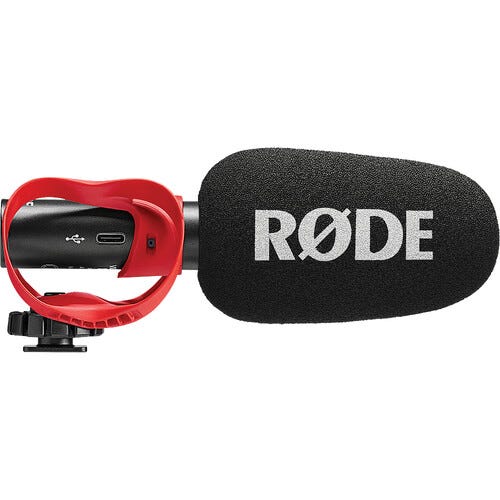
Hey my friend,It's Jordan P. Anderson.The Ultimate Microphone Guide for Busy Startup FoundersStop losing viewers with bad audio - here’s exactly what you needYou’re launching a startup, and the last thing you want to think about is audio equipment.Remember this...Viewers will forgive bad video quality, but they’ll bounce immediately if your audio sounds like you’re talking through a tin can.I’ve seen countless founders pour their hearts into amazing content, only to have viewers drop off in the first 30 seconds because of poor audio quality.After testing hundreds of microphones over the last decade, I’m going to save you dozens of hours of research and thousands of dollars in mistakes.Here’s exactly what you need to sound like a pro, broken down by budget and use case:🎯 The Simple Setup (Under $300)Perfect for: Founders just starting their content journey who want professional sound without the complexityOption 1: RODE VideoMic GO II ($149)https://www.bhphotovideo.com/c/product/1805031-REG/rode_vmgoiih_videomic_go_iih_camera_mount.htmlThis microphone is a game-changer for busy founders.I’ve recommended it to dozens of startup teams, and it’s consistently impressed me with its versatility and ease of use. The beauty of the VideoMic GO II lies in its simplicity - you literally plug it in and start recording. There’s no complicated software to learn, no confusing settings to adjust.Why this works: - Plug straight into your computer via USB - Zero technical knowledge required - Exceptional sound quality for the price - Works great with both computers and cameras - Perfect for YouTube videos and quick content creationThe sound quality is remarkable for its price point. You’ll immediately notice how it captures your voice with clarity while naturally reducing background noise - something that’s crucial when you’re recording in a less-than-ideal office environment.Option 2: RODE PodMic USB ($199)https://www.bhphotovideo.com/c/product/1762233-REG/rode_podmic_usb.htmlWhile the VideoMic GO II is perfect for all-around use, the PodMic USB is what I recommend when founders tell me they’re serious about launching a podcast or creating regular video content. This microphone delivers the kind of rich, professional sound that makes listeners feel like they’re sitting across the table from you - crucial for building that personal connection with your audience.Why this works: - Broadcast-quality sound that makes you sound like a pro - Built like a tank - will last for years - Dual USB/XLR connections (future-proof if you want to upgrade later) - Perfect for podcasting and voiceoversWhat sets the PodMic apart is its durability and future-proofing. As your content creation evolves, this microphone grows with you. The dual USB/XLR connection means you can start with a simple USB setup and later upgrade to a professional audio interface without buying a new microphone.Essential Accessory Discussion: Your microphone positioning can make or break your sound quality, which is why a proper mounting solution isn’t optional - it’s essential. You’ve got two excellent choices here:* FIFINE Microphone Boom Arm* Elgato Wave Desk Stand* Rode Ds2 Desktop Arm🚀 The Advanced Setup (Under $1,000)Perfect for: Founders serious about content creation who want radio-broadcaster qualityWhen you’re ready to take your content to the next level, this setup will make you sound like you’ve got a professional studio. The investment here isn’t just in equipment - it’s in your brand’s perception and authority in the market.Shure SM7B Broadcaster Package Kit ($629) - The "Joe Rogan" Michttps://www.bhphotovideo.com/c/product/1182891-REG/shure_shure_sm_7b_brodcaster_package.htmlThere’s a reason why this microphone has been the go-to choice for professional broadcasters for decades.When you hear someone using an SM7B, you might not be able to put your finger on why they sound so good - you just know they do. That’s because this microphone has been engineered to make the human voice sound its absolute best.What’s included:* Shure SM7B Microphone* CloudLifter CL-1 Preamp* XLR cables* Auray BAI-2X Two-Section Broadcast ArmWhy this is worth it: The SM7B has become the industry standard for a reason. Its sound signature is incredibly flattering to the human voice, making you sound authoritative and professional without any additional processing. The included CloudLifter solves the SM7B’s only weakness - its need for lots of gain - by cleanly boosting your signal without adding noise.Think of this setup as your audio endgame. While it requires a bit more setup than our simple options, the sound quality is in a completely different league. Your audience will hear the difference, even if they can’t explain why you sound so good.🎙️ My Personal Setup (Around $700)What I use daily for all my content creation:After years of testing different configurations, this is the setup I’ve settled on for my own content creation. It’s not just about having great gear - it’s about having reliable tools that consistently deliver professional results without getting in the way of your creative process.* MOTU M2 USB-C Audio Interface: This interface is the heart of my setup, providing crystal-clear conversion and enough clean gain for any microphone.* Shure SM7B Mic: The flagship microphone that handles everything from podcasting to voiceovers with unmatched quality.* sE Electronics DM1 Dynamite Preamp: A fantastic alternative to the CloudLifter, providing clean gain boost in a compact package.* FIFINE Microphone Boom Arm: Keeps my mic perfectly positioned while allowing me to push it aside when not in use.* Acoustimac sound panels: These panels transform any room into a proper recording space, eliminating echoes and room reflections that can make even great microphones sound amateur.📱 On-the-Go Setup (Under $400)Perfect for: Filming product demos, customer interviews, or content on the moveCreating content shouldn’t be limited to your desk. Whether you’re doing customer interviews, filming product demos, or creating content at events, you need a reliable mobile solution. This is where the DJI Mic 2 system shines.DJI Mic 2 2-Person Systemhttps://www.bhphotovideo.com/c/product/1800665-REG/dji_cp_rn_00000325_01_dji_mic_2_2.htmlThis system has revolutionized how I create content on the move. It’s not just another wireless mic - it’s a complete mobile recording solution that works with everything from your phone to your camera.Why it’s essential: - Wireless freedom with pro-level sound - Works with phones and cameras - Perfect for two-person interviews - 5+ hours of battery life - Built-in recording as backupWhat makes this system special is its reliability and versatility.The built-in recording feature means you always have a backup of your audio, even if something goes wrong with your camera or phone. The sound quality rivals much more expensive wireless systems, and the battery life means you can record all day without worry.🎧 Quick Note on HeadphonesThe headphone discussion might seem boring, but it’s crucial to your audio quality.While wireless headphones are great for listening to music, they’re terrible for monitoring your audio while recording. You need wired headphones that cover your entire ear to hear the full spectrum of sound. This isn’t about being an audio snob - it’s about being able to catch problems before they ruin your recording.Any decent over-ear headphones from Sony, Audio-Technica, or Sennheiser in the $50-100 range will work great.Look for something comfortable that you can wear for long recording sessions without fatigue.🔊 Room Treatment (The Secret Weapon)Here’s something most people overlook: your room’s acoustics have as much impact on your sound quality as your microphone choice. I’ve heard $1,000 microphones sound worse than a $100 mic simply because of poor room acoustics.First, add rugs, carpeting, big comfy couches, soft furniture, drapes to your room. Style it.A hard-tile, wooden, stone room will sound echoey if not properly treated.Acoustimac DMD Series Panels (Starting at $299 for basic setup) These panels are the secret sauce to professional sound. Unlike those cheap foam panels you see on Amazon (which honestly do very little), Acoustimac panels actually solve acoustic problems. They’re dense enough to absorb problematic frequencies and well-built enough to last for years.Think of room treatment as an investment in your content’s quality ceiling. You can always upgrade your microphone later, but bad room acoustics will always hold you back.🎬 Audio Editing SoftwareEven the best recording setup sometimes needs a little help in post-production. Here’s what I use to ensure every piece of content sounds its best:* Descript ($15/month) This is my go-to editing platform. Its Studio Sound feature is nothing short of magical for fixing bad audio, and the interface is intuitive enough that you won’t need to spend hours learning how to use it. Perfect for busy founders who need professional results without the learning curve.* Adobe Podcast (Free beta) Adobe’s new podcast platform is a game-changer for quick edits. The noise removal is particularly impressive, and being free during the beta period makes it a no-brainer to try out.* CapCut (Free) Don’t let its simplicity fool you - CapCut is a powerful tool for basic audio editing, particularly if you’re creating content for social media. Its automated features can save you hours of editing time.Bottom LineIf you’re just starting out, grab the RODE VideoMic GO II with a desk stand. You’ll sound 90% as good as my $1,500 setup for less than $250. As your content grows, you can upgrade to the Shure SM7B setup.Remember: Good audio is an investment in your audience’s attention.They’ll stick around longer, trust you more, and be more likely to engage with your content when you sound professional. In my experience, upgrading your audio quality can literally double your content’s engagement rates.The best part?
Hey there - it’s Jordan,Today I want to talk about something that's costing you money: your fear of sending renewal reminder emails.Many SaaS founders tell me they're afraid to remind customers about upcoming renewals. The logic goes: "If I remind them, they might realize they're not using the product and cancel."This fear is destroying your professionalism and hurting your business. Here's why:Professional companies send renewal reminders. Period. Your customers expect them. By avoiding these emails, you're not preventing cancellations – you're damaging trust and missing opportunities to demonstrate value.Here's your new renewal email sequence:30 Days Before: The Value Email Send an impact report showcasing specific metrics. How many times did they use your product? What results did they achieve? Don't mention renewal yet – focus purely on value demonstration.14 Days Before: The Heads Up Professional, straightforward reminder about the upcoming renewal. Include the exact date and amount. Sandwich this information between value statements about their recent wins and usage.7 Days Before: The Check-In Verify payment details are current. Position this as preventing service interruption. Include a quick summary of recent achievements and make support readily available.24 Hours Before: The Final NoticeShort, crystal-clear email stating the exact amount and timing. Make it easy to reach support if needed. This prevents "I didn't know I was being charged" complaints.Day Of: The ConfirmationThank them for continuing with you. Share upcoming features or improvements they'll get access to. Make them feel good about their decision to stay.Quick Tips:* Track open rates for each email (aim for 60%+)* Monitor response types to improve messaging* Use automation but allow for personalization* Include specific metrics and achievements* Make support easily accessibleRemember: Every renewal reminder is an opportunity to showcase value and strengthen customer relationships. Stop hiding from these interactions. Start using them to build a more professional, profitable business.📺 Watch it here - YouTubeCheers,Jordan P. AndersonP.S. What's your biggest fear about sending renewal reminders? Reply and let me know – I read every response. This is a public episode. If you would like to discuss this with other subscribers or get access to bonus episodes, visit www.jordanpanderson.com

Hey there,I've been sitting here for a while…Trying to figure out how to write this... and I figured I'd just be completely honest with you. (That's always worked best for me anyway.)I don't know if you've noticed, but things have shifted a bit around here.When we first connected, I was deep in the video editing world with The Million Dollar Edit, and I'm incredibly grateful that you came along on that journey with me.Seriously – having you open and read my emails has meant more than you know.But like all natural and organic things - we evolve and grow and change.These days, I'm pouring my energy into helping early-stage startups launch their products.It's become my new passion, and it's probably pretty obvious from my recent emails that this is where my heart is now.I've been thinking about you a lot lately, and I want to make sure I'm respecting your time and inbox.If you signed up expecting video editing content and you're not interested in the startup world, I totally get it.Really, I do.You can hit that unsubscribe button without worrying about hurting my feelings – I actually admire people who carefully curate their inbox!And if you're curious about this new direction and want to stick around?That would make my day.Either way, I just wanted to be upfront with you because you deserve that kind of transparency.Thanks for letting me share this little note with you.Whatever you decide, I'm grateful our paths crossed.Cheers,Jordan P. AndersonP.S. If you're wondering why I'm sending this... I was going through my subscriber list last night and realized I owed you this conversation. This is a public episode. If you would like to discuss this with other subscribers or get access to bonus episodes, visit www.jordanpanderson.com
Hey my friend,It's Jordan P. Anderson.Stop Hiding Behind Your Code - It's Time to LaunchYour code works perfectly. Your API responses are lightning fast. Your database queries are optimized. Your UI components are beautiful.And exactly zero people care...Why technical founders stay stuck in development mode foreverYou're doing what every technical founder does:* Adding one more feature* Refactoring that messy component* Optimizing that database query* Telling yourself "just one more sprint"Meanwhile, your competition – with their buggy MVP and messy codebase – is getting actual customers.The real reason you're afraid to launch isn't what you thinkYou're not afraid of marketing. You're not afraid of being on camera. You're not afraid of your accent. You're not afraid of looking unprofessional.You're afraid of being judged for something that isn't perfect.I've worked with thousands of technical founders. They all say the same thing: "I'll start marketing when..." "I'll make videos after..." "I'll launch properly once..."But here's the truth: That perfect moment never comes.What actually matters when launching (it's not what developers think)Your audience doesn't care about:* Your tech stack* Your code quality* Your API response times* Your deployment pipelineThey care about three things:* Do you understand their problem?* Are you authentic about solving it?* Will you show up consistently to help them?Everything else is just noise.The simple four-video framework that removes all the mysteryI just dropped a complete breakdown of the exact system that's helped hundreds of technical founders finally launch their products.You'll learn:* Why your founder story matters (and how to tell it without feeling like a fraud)* The exact structure for your first launch videos* How to record content without fancy equipment* Why perfectionism is killing your growthAnd most importantly – how to do all of this without feeling like you're "doing marketing."Here's what you don't need to launch* A professional camera* Perfect lighting* Motion graphics* AI narration* Corporate polish* Brand guidelines* A marketing team* A huge audienceYou need your laptop's webcam and your authentic voice. That's it.The truth about launching that nobody talks aboutYour competition isn't more successful because they're better marketers.They're more successful because they're willing to be imperfect in public.They're willing to show their work before it's ready. They're willing to tell their story before it's polished. They're willing to help people before everything is perfect.Your biggest advantage right now is being humanStop trying to look big. Stop trying to look professional. Stop trying to look perfect.Start being real. Start being helpful. Start being visible.Watch the full lesson here:Your homework (and yes, I want you to actually do this)Create these four videos this week:Video #1 - The Problem (2-3 minutes)Record yourself telling the story of the exact moment you discovered something was broken in your industry. Just you, talking to your webcam, sharing what you saw and how it impacted you personally. No scripts. No edits. Raw authenticity.Video #2 - The Stakes (2-3 minutes)Dig deeper into the problem. Share three specific ways it hurts people:* The obvious surface pain everyone sees* The hidden costs nobody talks about* The emotional toll it takes on peopleVideo #3 - Your Solution (3-4 minutes)Pick your top four features (just four!) and show exactly how each one solves the problems you just described. Screen record your product. Talk over it like you're showing a friend.Video #4 - Launch Trailer (60 seconds)Use your phone to record your screen while playing the best clips from your other three videos. Add some music in CapCut. End with your launch date.Don't overthink this. Don't edit obsessively. Don't wait until it's perfect.Your only goal is to show people you understand their problem and care about solving it.Record video #1 today.Right now.Post it somewhere.Because here's what's scarier than being imperfect on camera: Building something nobody ever uses.Reply to this email...tell me your biggest launch fear. I read and respond to every single one.Keep building (but start launching),Jordan P. AndersonP.S. There are 10 emails that you should be sending every single month if you want to grow your startup…here they are: LINK This is a public episode. If you would like to discuss this with other subscribers or get access to bonus episodes, visit www.jordanpanderson.com
Hey my friend,It's Jordan P. Anderson.Stop Talking About Your Startup (If You Want People to Actually Buy)You've been posting about your startup everywhere.LinkedIn updates about your tech stack. Twitter threads about your innovative features. Build-in-public posts about your seamless integration capabilities.And yet... nobody's buying.Your potential customers don't care about your startup (they only care about themselves)Every morning, your perfect customer wakes up thinking about their own problems:* Million different tabs open* Slack notifications exploding* Another meeting where they'll have to explain the delays* That sinking feeling that they're dropping important ballsThey're not thinking about your “AI-powered” dashboard.Five proven ways to talk about your startup that make people pull out their credit cardsI just dropped a new video breaking down the exact methods that transformed my clients' marketing from ignored to irresistible.1) The "Day in the Life" flip shows prospects you understand their daily nightmareInstead of: "Our AI-powered dashboard streamlines workflow efficiency..."You'll say: "It's 9 AM. You've got three different spreadsheets open, trying to figure out if your team is on track..."This isn't just better copywriting. It's the difference between being ignored and having prospects say "This is exactly what I've been looking for."2) The "Perfect World" contrast makes them desperate for your solutionForget "Imagine being more productive!"Try: "Imagine walking into your next team meeting with a single dashboard that shows exactly who's doing what. No more awkward silences when your boss asks for updates. No more late-night Slack messages trying to track down missing deliverables."3) The "Secret Confession" technique creates instant trustYour prospects are thinking things they won't say out loud:* "I'm charging clients for 10 hours of work that should take 2..."* "I have no idea what I'm doing and I'm afraid everyone will find out..."* "Nobody actually enjoys writing performance reviews..."When you acknowledge these hidden thoughts, you create instant connection.4) The "Money Math" story justifies any price pointInstead of vague ROI promises, show them:* How many browser tabs they have open right now* The 10 minutes lost switching between each one* The 5 hours wasted per week* The $12,000 per year in salary cost just from tab-switchingSuddenly, your $200/month solution looks like a bargain.5) The "Insider Secret" approach makes them feel like they're finally in the know"The dirty secret of the CRM industry is that they want you to need a full-time admin. They want their software to be so complicated that you have to hire someone just to manage it. Because once you've hired that person, you're locked in."Now you're not just selling software. You're exposing truth.Your homework: Transform your marketing in the next 10 minutes* Open your homepage* Count how many sentences start with "We" or "Our"* Rewrite each one starting with "You" instead* Watch how your message transforms from bragging to conversationThe brutal truth about startup growthYour features don't matter as much as you think.Your tech stack doesn't matter as much as you think.Your "innovative solution" doesn't matter as much as you think.The only thing that matters is whether you can show prospects that you understand their problems better than they do.Watch the full video:Cheers,Jordan P. AndersonP.S. There are 10 emails that you should be sending every single month if you want to grow your startup…here they are: LINK This is a public episode. If you would like to discuss this with other subscribers or get access to bonus episodes, visit www.jordanpanderson.com
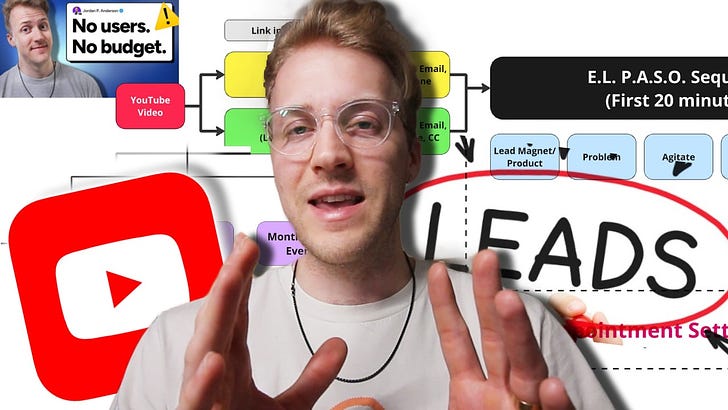
I Spent 6 Months Building This YouTube Funnel (Here's Every Detail...)Hey there,Jordan Anderson here. Just recorded a detailed breakdown of the funnel we use at Nice Slice Studio. Took me 6 months to build, test, and perfect. Today, I'm sharing every single detail…The basic funnel structureHere's the thing about funnels - they're never really "done." But after 6 months of tweaking, we've found something that works consistently. The basic flow is YouTube → Email → Calls → Services.Simple on paper. Powerful in practice.The only two links that matter…Here's something that shocked me during testing:Only the top two links in your YouTube description matter. Everything else? Might as well be invisible.Here's why: Less than 20% of viewers ever click "show more." Those fancy link trees at the bottom? Waste of time.Free vs. paid product links…In those two precious link spots, we put:1. A free product (all our training)2. A paid product (under $99)Why this combo? The free product captures emails. But the paid product? That's my secret weapon for finding serious buyers.The "Email Capture" strategy that actually works…Most people make a rookie mistake: They ask for too little up front.For our free product, we require email, phone, and account creation. Sounds like a lot, right?But here's why it works: We're giving access to ALL our training. The trade makes sense.The "5-in-20" email sequenceThis is where it gets interesting.We send 5 emails in the first 20 minutes after someone opts in.Not a typo. Twenty minutes.Each email has a specific job:1. Deliver what they asked for (super short)2. Present the real problem3. Agitate that problem4. Show the solution5. Make an offerThe 25-Day email sequenceAfter those first 5 emails, people either buy our paid product or enter a 25-day sequence.These 25 emails all point to one thing: our $99 product. Why? Because if they haven't bought after seeing it from 25 different angles, they probably won't.99% of this will fail & that’s okay…Here's a hard truth: 99% of people who enter your funnel aren't qualified to work with you.For us, we're looking for startups that need launch help. That's a tiny slice of our total audience.Dump them into your newsletter bin…If they don't buy after 25 days, they go into our newsletter list.We email every weekday. Sometimes twice. Soon, maybe even weekends.Why? Staying top of mind matters more than being polite.Every startup should be driving calls, live training, and cash events…Every week, we push three things:1. Strategy call bookings2. Live training events3. Monthly “cash” eventsThese aren't random. They're strategic touchpoints that build trust.Monthly “cash” events are…Here's something smart: Create monthly "cash injection" events.Could be a special service package, a limited-time offer, or a quick-win product.Why? Because consistent cash flow beats waiting for big projects.The 1st date…Never pitch high-ticket services in cold emails.Instead, focus on getting calls booked. That's where the real magic happens.The Numbers That MatterReady for the crazy part?This whole system only needs:* 2 leads per day* 10-15 people per week* Consistent contentThat's it.Our phase two looks like this…Next step? We're adding an appointment setter to:* Call new leads within 24 hours* Qualify prospects properly* Book strategy sessionsBut only after the automated parts are running smooth.Want to See It All in Action?I recorded a detailed walkthrough of this entire system.Watch it here:Drop me a comment and let me know what you think.- JordanP.S. Which part of this funnel surprised you most? Hit reply and let me know. This is a public episode. If you would like to discuss this with other subscribers or get access to bonus episodes, visit www.jordanpanderson.com
So, your product launch just crashed and burned. Or is crashing and burning at the moment.Trust me, I've been there, and it sucks. But here's the thing - it's not the end of the world. In fact, it might just be the start of something amazing.I'm Jordan, and I've been a part of 200+ product launches. And in that mix - not every one was a standout winner. But you know what? Each one taught me something valuable.So today, I'm going to share with you the five things I do every time a launch goes south. These tactics have saved my ass more times than I can count.It's Not PersonalBut first things first, let's get real. Let's get a little personal. You can't take this launch personally.A failed launch does NOT mean you're a failure. It just means something didn't work. Maybe your timing was off, or your message didn't hit right. Or maybe it was the wrong offer to the wrong person. Whatever it is, we're going to fix it.My First Major FlopNow, let me tell you about my first major flop.I spent six months developing this personal branding course. I had it jam-packed with "value" and hours of lessons. I shot the videos in 4K. I snuck into a professional studio to film it all. I was so confident, I even hired a web designer to make the course site look professional.Launch day came, and... nothing. I mean, my wife didn't even download it.So if I were to turn back time and try to save that launch from falling flat and getting zero customers - here's what I would do, now that I'm a little bit older and a touch bit wiser.Five Ways to Save Your Failed Launch1. Talk to Everyone Who Will ListenNot just potential customers, but anyone who'd give me five minutes. Friends, family, that guy at the coffee shop. Ask them what they think about the problem you're trying to solve. Turns out, I was solving a problem nobody really had.Here's what you do: Get on every platform you can. Email, social media, hell, even go old school and text an old friend. Ask people what they think. Find the communities where your audience lives. Don't just stick to where you want to go.Ask genuine questions that get to the heart of the problem. It's not questions of "would you buy my product?" It's questions like "What is your biggest frustration currently with BLANK?"And actually fucking listen. Don't defend your product. Don't lead the witness.Let me give you an example. I spent a whole day sending video DMs on Twitter to Founders. I was asking them about their thoughts on Product Hunt. Is it worth it? I learned more in those 22 conversations than I did in 6 months of "building in private". People opened up about their real struggles with Product Hunt, and none of them matched what my agency was doing. It was a wake-up call, but a necessary one.2. Rewrite EverythingAll my product descriptions, my emails, my social posts, website sales copy. Everything. I realized I was talking about features when I should've been talking about benefits.In many parts of my sales copy, I was too quick to jump into the sales pitch rather than setting up the problem.Your job: Take a hard look at how you're describing your product. Are you telling people what it does, or are you showing them how it'll make their lives better? Are you poking at their problems? Big difference.I'll never forget sitting down to rewrite my course's sales page. At this point, I've probably re-written that page about 11 times.So when you're in launch mode - get feedback, watch your users on your site, and then rewrite the copy where people are falling off. If people aren't even making it past the hero section at the top, then focus your efforts there.3. Find Your Real AudienceTurns out, the people I thought would love my product didn't give a shit. But you know who did? A completely different group I hadn't even considered.For my online course - Million Dollar Edit. I was going to train up-and-coming video editors, and teach them how to edit faster and become more efficient freelancers so that I can get more clients.And the more I ran the Million Dollar Edit, the more I saw that a new type of student was walking in the door. It was small business owners who wanted to train their junior video editor on how to edit faster and better.And after talking with these new customers, I made the pivot. And my online course went from $1000 a month to $10,000 a month.What you need to do: Look at who's actually showing interest in your product. They might not be who you expected. And your first guess is usually wrong.Be ready to pivot your entire approach to reach these people.By changing who you originally served – you are not a sellout. You are not a failure.A lot of founders will die on this hill because they want to help one specific type of person. Even if that person isn't buying.And if you are one of those founders – I have a question for you. What's it like being broke?4. Ask for Brutal HonestyI reached out to the few people who did try my product and asked them to be ruthlessly honest. It was hard to hear, but man, was it valuable.When these customers are at the checkout, make sure you're collecting both their email and phone number.And then, once these people do become paying customers, I want you to text them on day one. I want you to text them on day seven. And I want you to text them on day 10.When a customer first walks in the door and they've paid you, that is open and free permission for you to text them and ask them who they are, what is going on in their life that brought them there, and what problems are they currently facing?Because everything that they say in those text messages, you are going to take that and rework it into your sales copy, into your social media posts, and into your email marketing.Why do we need to reinvent sales copy when we can just speak like our customers by using their exact words?Now in those text conversations, you are going to get some brutal feedback about your app.In this case, unlike what I said at the beginning of this video, I do want you to take their feedback personally. Because this is the only way for it to stab you in the chest and get you off your ass and start improving your product.Their feedback should keep you up at night.5. Keep GoingThis is the hardest part. When everything's going wrong, it's tempting to quit. But here's the truth - every successful entrepreneur has been where you are right now.What you gotta do: Remember why you started this in the first place. That passion, that belief - hold onto it. Use it to fuel you through the tough times.Keep hacking at it to find your ideal customer.I'll be honest, there were days I wanted to quit. Days when I felt like a total failure. I had built up this launch. I made all the graphics and videos. Everything was scheduled to post. And when all the dust settled. Not a damn thing happened.But then I'd remember why I started - to help my clients. Be beholden to your clients.Now, let me be clear - this last note isn't a quick fix. It took me months to turn things around. But you know what? That "failed" course launch ended up being the best thing that ever happened to me. It forced me to really understand my market, to make a product people actually wanted.The Truth About EntrepreneurshipHere's the thing about entrepreneurship - it's not about never failing. It's about how you handle failure when it happens. And trust me, it will happen. To everyone.The ones who make it are the ones who get back up, learn from it, and make the right changes.And you have to do all three. You have to get back up. Actually learn from it. And make the right changes.I remember the day things started to turn around. I got a sale from a user - a small gym owner who wanted to start making more videos. They left a video review. Bookmarked that. And it reminded me why all the struggle was worth it.Closing ThoughtsSo, if you're sitting there right now, looking at your failed launch and feeling like crap, I get it. Hell, some days I'm still there. But I need you to do something for me. Take a deep breath, remember why you started all this in the first place, and then get to work.Talk to people - and I mean really talk to them. Not just about your product, but about their lives, their struggles. That's where you'll find the real gold.And if you're thinking about making a launch video - watch this right here. This is a full course. I show you how to make your next 90-second keynote video from scripting, recording and editing. This is a public episode. If you would like to discuss this with other subscribers or get access to bonus episodes, visit www.jordanpanderson.com

Hey startup founders,If you're a startup founder with less than 11 employees, and you're stuck on the content hamster wheel, putting off your big launch because you don't know where to start... I've got good news. You don't need fancy marketing, or a huge team to land your first 100 customers. You just need a proven recipe and the guts to execute it.That's exactly what I'm sharing in my live training this Thursday at 8:30 PM EST:"The ONLY Launch Calendar You Need in 2024 if You're a Startup Founder"REGISTER HEREHere's a sneak peek of what you'll learn:* The simple 10-day launch framework that's generated $50M+ in revenue* How to create massive buzz and anticipation before you even launch * The must-have emails that get people scrambling to buy* Insider secrets to keeping the sales momentum going post-launch* And so much more...This isn't your Dad’s fluff-filled webinar. We’ve used these strategies on over 200+ product launches - bringing in $50M in revenue for our startup clients.Strategies that have helped me generate over $150,000 in my own businesses.And the best part? It's 100% free. 👉 Click here to reserve your spot now: REGISTER HERELook, I know you're wearing a lot of hats right now. You don't have time for generic advice or complicated marketing schemes.You need something that works. Something simple, proven, and easy to implement.That's what this training is all about.So if you're ready to do the real work it takes to launch your product and land your first 100 customers...I'll see you on Thursday at 8:30 PM EST.REGISTER HERECheers,Jordan P. AndersonCo-Founder, Nice Slice Studio P.S. These are the same insider strategies we use with our top-paying clients. And you're getting them for free. Don't miss out - register now before it's too late. This is a public episode. If you would like to discuss this with other subscribers or get access to bonus episodes, visit www.jordanpanderson.com
October 1, 2024Watch the video.Join us this Thursday LIVE @ 8:30PM ESTGo here: https://lu.ma/jordanpandersonSee you tomorrow.Jordan A. This is a public episode. If you would like to discuss this with other subscribers or get access to bonus episodes, visit www.jordanpanderson.com
September 30, 2024I want to talk to you about a concept that might be holding you back from getting your first 100 customers.The #1 reason why startup founders fail to launch, fail to get new customers - is that they are too fancy…Their fanciness and polish when it comes to every part of their marketing is what is holding a lot of startup founders back. It's what held me back for quite a few years before I got my first 100 customers, before I got my first 1,000 customers.I read this a long time ago in one of Dan Kennedy's books. He talks about Suits vs. Work Boots."Suits" are those who prioritize appearance and polish over substance and action, while "Work Boots" are those who roll up their sleeves, get their hands dirty, and focus on getting things done.💪 Principle #1: Focus on Immediate, Tangible ProblemsI believe in solving real problems. Today's problems. If it doesn't matter to the customer right now, it doesn't matter at all.Be your customer's paramedic - not their physical therapist. What's the pain point? What's broken? Let's fix that.I trust problems I can see. If I can't touch it, I'm not worrying about it. Fix what's in front of you, then move on to the next.🗣️ Principle #2: Speak Your Customer's Language, Avoid Jargon at All CostsI have zero interest in impressing anyone. Especially with fancy language or insider terms. If my customer can't understand me, then how are they going to buy from me?Jargon is a way of hiding. It's a smokescreen.I don't need to sound smart—I need to be understood.If you can't explain what you're doing in plain words, you're either overcomplicating it or don't actually understand it. People like simplicity because it's honest. It cuts through the noise.My customers are people, not industry experts. I talk like a person. Like them.🔧 Principle #3: Embrace the "In the Trenches" MentalityI'm in the trenches. I'm not above the work, and I don't pretend I am. If you're running a startup, you're in the dirt with me.You have to get your hands dirty. You have to know your product inside and out. You have to know your customers inside and out.And trying to be above it all - that's a suit's mentality.🚀 Principle #4: Launch Fast, Use Hype to Your AdvantageI don't wait for perfect. Launching something new has been the easiest way I've found to build an audience.Every time I go to launch a new product, a new video, a new anything - I have an excuse to shamelessly put myself in front of my clients.Momentum is everything. It feels like something is moving. Something is changing. It's the difference between watching a river and watching a swamp.Every launch teaches you something. I learn faster by doing than by perfecting. Suits want everything polished first. Work boots know rough around the edges is where the action happens.🛠️ Principle #5: Master Tools Before OutsourcingI don't outsource what I don't understand. If I don't know how the tools work, I can't manage the people using them.I like to be in the trenches as much as possible but when I do outsource - I first have to know the process. Know the tools. Because this is the easiest way that I've scammed myself.Knowing how to edit videos or how to edit a website - I can then speak to the freelancer with some level of confidence instead of being a helpless person floating on a raft.I know when you're BS-ing. I know when you're overinflating the process.🌟 Principle #6: Take a Stand—Show the Mud and ScratchesI don't hide behind fancy designs. If there's mud on my boots, I let you see it. Suits hide. They gloss over flaws, inflate the truth, and sell you the shine, not the substance.I want to tell the truth about my product. And every time that I've done this, I've gained a higher level of respect from my clients.Is this delayed? Is this new thing coming soon? Is this thing broken and I knew about it?Yes. And I'm upfront about it. I'm working on it and I'm going to tell you personally when it's up and running.Your customers know when you're patting their pretty little head. They can smell it.So ditch the suit and tie.Roll up your sleeves.Get messy.That's how you'll connect with your customers and win their business.These principles helped me land my first 100 customers, and I know they can do the same for you.Cheers,Jordan P. AndersonP.S. Live Event this Thursday at 8:30 PM ESTHow to Launch in 10 Days (or Less)Register Now: https://lu.ma/5tng17fc This is a public episode. If you would like to discuss this with other subscribers or get access to bonus episodes, visit www.jordanpanderson.com
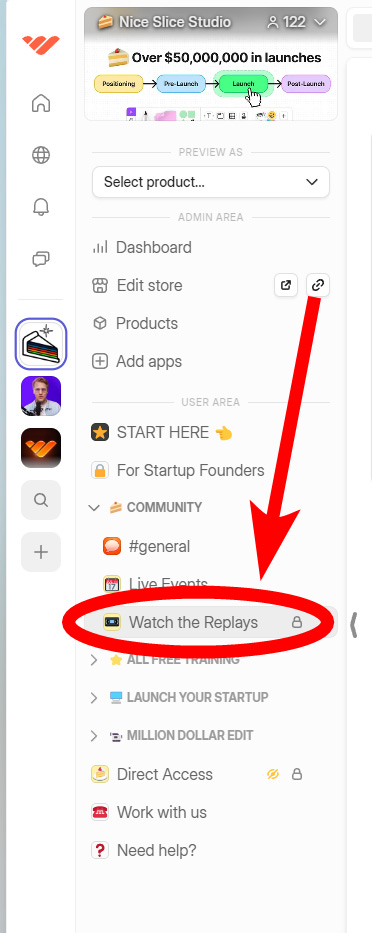
Hey friends,I just wrapped up our Nice Slice Studio live training.And yes, for the first 7-minutes I was muted.But I did that on purpose…Just to show you guys the power of audio vs. video.Yeah…Exactly…Here’s the replay: LINKOr click the button down below…Great show!See you all next week.Next week’s event: The 10-Day LaunchRegister here: https://lu.ma/5tng17fcCheers,Jordan P. Anderson This is a public episode. If you would like to discuss this with other subscribers or get access to bonus episodes, visit www.jordanpanderson.com
September 26, 2024How to Setup Your Home Studio ↓Register to watch the training: LINKLive tonight at 8:30PM ESTOr go to https://lu.ma/n8puuz8sSee you tonight!- Jordan A. This is a public episode. If you would like to discuss this with other subscribers or get access to bonus episodes, visit www.jordanpanderson.com
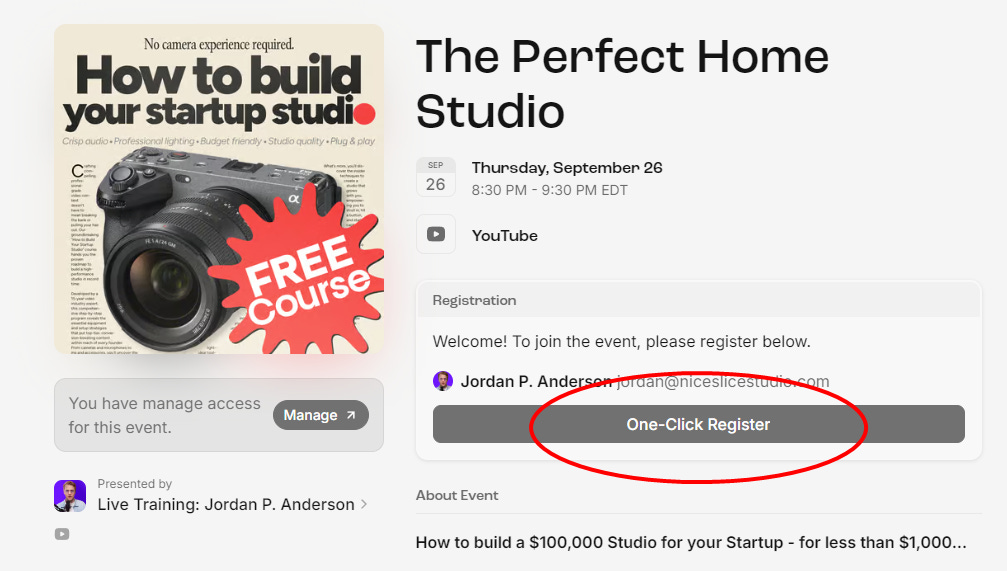
September 24, 2024Hey friends,It’s Jordan.Let’s get into it:How to Make a Killer Product Demo Video (That Actually Closes Customers)Okay, guys, let's talk about something that's been on my mind for a while.There's this video I've had in my swipe up for quite some time. It's a 37-minute boring video, but hear me out - it closes thousands of customers. It even closed me as a customer four years ago.The Video That Changed My Mind About Product DemosI'm talking about the product tour for Hey.com, starring Jason Fried, the CEO of 37signals. Now, I know what you're thinking. "Jordan, a 37-minute video about email? Seriously?" But trust me, this is one of the most powerful marketing videos I've ever watched.And I think you, as a startup founder, could really benefit from using the techniques in this video.But first!Register for FREE: https://lu.ma/n8puuz8s This Thursday @ 8:30PM ESTWhy This Video is Pure GoldLet's break it down:1. It's founder-ledJason Fried, the founder himself, is showing you around. That's add credibility. That builds trust with the viewers. 2. Problems, problems, problemsThroughout the video, Jason's constantly harping on all the pains that come with email. You're sitting there nodding your head, thinking, "Yes! This is exactly what I deal with!"3. Show, don't tellWe talk about this all the time in filmmaking. Don't just tell me how cool your app is - show me!4. It's us vs. themHey.com vs. the status quo. It's not just another email app; it's a revolution against Gmail and Outlook.5. It's digestibleYeah, it's 37 minutes long, but you don't need a Ph.D. to understand it. No fancy language, no buzzwords. Just straight talk. 6. Fake “Real-world” scenariosJason's not just throwing features at you. He's showing you how Hey.com fits into your life.And even if you don’t have customers, you can still create these scenarios.7. The 'why' comes firstIn the first 60 seconds, Jason lays out why they made this thing. It sets the stage for everything that follows.8. It's opinionatedJason's not afraid to take a stance. He's telling you, "This is how email should work, period."9. Handles objections like a proAs you're watching, you start thinking, "Yeah, but what about...?" And boom! Jason's already addressing it.10. It's empoweringThis isn't just about making email easier. It's about giving you control over your digital life.How to Make Your Own Killer Demo VideoAlright, so you're fired up and ready to make your own video. Here's how to do it:1. Outline your 3-5 best featuresPick your top 3-5 features. Don't try to cram everything in.2. Set the stageFind a quiet spot with decent lighting. You don't need a fancy studio setup.3. Nail that introThis is where you hook 'em. Practice this part until you can do it in your sleep.4. Walk 'em throughSpend about 30 minutes showing off your app. Start with your best feature and work your way down.5. Wrap it up with a bowRecap the good stuff and tell people exactly how to get their hands on your app.6. Edit smartKeep it simple. No need for crazy effects. Just make sure that intro is rock solid.Remember, this isn't a tutorial video. You're not teaching people how to use every little setting. You're showing them why your app is going to change their life.The Bottom LineLook, if you can take something as boring as email and make it sexy, imagine what you could do with your app. So here's your homework: Go watch that Hey.com video. But don't just watch it as a potential customer. Watch it like a marketer. Analyze it. And then take what you've learned and use it for your startup.Cheers,Jordan P. AndersPS - Build Your Perfect Home Studio: https://lu.ma/n8puuz8s This Thursday @ 8:30PM EST This is a public episode. If you would like to discuss this with other subscribers or get access to bonus episodes, visit www.jordanpanderson.com

Comments

Download from Google Play

Download from App Store
 United States