


Elon Musk Podcast
Subscribed: 2,701Played: 93,936
Subscribe


© Stage Zero
Description
The Elon Musk Podcast takes an in-depth look into the world of the visionary entrepreneur. From SpaceX's mission to colonize Mars, to the revolutionary underground transportation network of the Boring Company, to the cutting-edge technology of Neuralink, and the game-changing innovations of Tesla, we cover it all. Stay up to date with the latest news, events and highlights from the companies led by Elon Musk.
1332 Episodes
Reverse
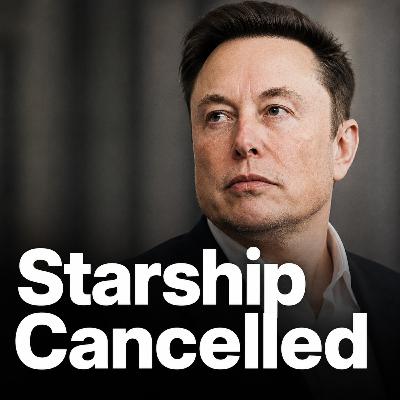
SpaceX got within 40 seconds of launching the first flight of a taller, more powerful version of its Starship rocket Thursday, but a pesky problem with the launch tower kept the vehicle bound to Earth for at least one more day.Clouds and rain showers cleared the area around SpaceX’s launch site in South Texas, leaving mostly sunny skies over the Starship launch pad Thursday afternoon. SpaceX pushed back the launch time by one hour, but the countdown appeared to proceed smoothly once propellants began loading into the rocket.
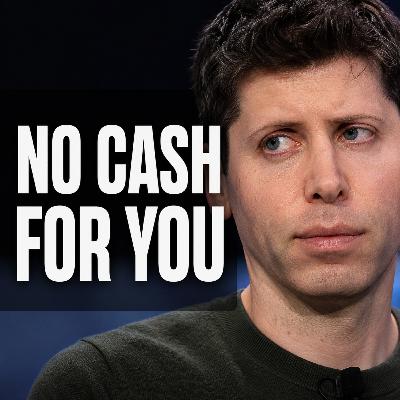
During a Y Combinator event on Tuesday night, Sam Altman had what YC partner Tyler Bosmeny called a “mic drop moment.” Altman offered $2 million worth of OpenAI tokens to every startup in the current class in exchange for equity in the startup.In other words, he promised that OpenAI would invest in the whole class, not with cash but with an allotment of AI tokens that startups can use to build their products.
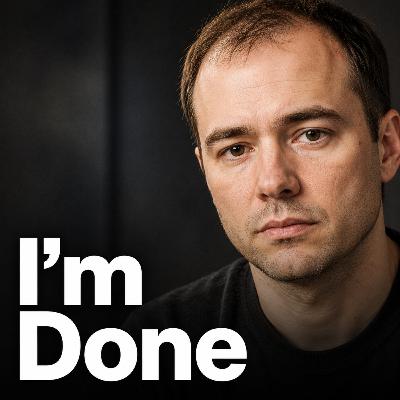
An OpenAI co-founder has joined the competition. Andrej Karpathy, who helped start the high-profile artificial intelligence outfit in 2015, has now joined Anthropic, he announced Tuesday. Karpathy was instrumental in the development of Tesla's Autopilot system, working for the automaker for about five years in between two separate stints at OpenAI. In his new role at rival Anthropic, Karpathy will "get back to R&D," he wrote in a social media post, adding, "I think the next few years at the frontier of LLMs will be especially formative."

The resistance and psychological shifts occurring among workers and Gen Z as artificial intelligence reshapes the modern landscape. Research indicates that many employees are sabotaging AI rollouts not due to a dislike of technology, but as a rational response to poor corporate strategy and the erosion of professional trust. This phenomenon, termed "algorithmic anxiety," reflects a deep-seated fear that automation is stripping away human dignity, professional identity, and job security. In response to this digital overstimulation, younger generations are spearheading an analog renaissance by embracing tactile hobbies and vintage technologies to reclaim ownership of their personal lives. Ultimately, the texts argue that for AI integration to succeed, organizations must move beyond technical efficiency to prioritize human-centric values and transparent leadership.

Elon Musk recently lost his lawsuit against OpenAI and its leadership after a California jury determined his claims were filed too late. The legal battle centered on allegations that Sam Altman and Greg Brockman abandoned the company’s original non-profit mission to pursue commercial interests with Microsoft. However, the nine-member jury reached a unanimous verdict in under two hours, finding that Musk exceeded the three-year statute of limitations for his grievances. This decision effectively dismissed accusations of a "breach of charitable trust" without the court needing to rule on the actual merits of the case. While Musk's legal team has signaled an intent to appeal, experts suggest the factual nature of the jury's timing finding makes a reversal unlikely. Consequently, the ruling protects OpenAI’s current for-profit structure and its multibillion-dollar partnership with Microsoft from immediate legal dissolution.

In a historic shift for the American telecommunications industry, rivals AT&T, T-Mobile, and Verizon have reached a preliminary agreement to form a joint venture aimed at eliminating wireless dead zones. This unprecedented alliance plans to pool spectrum resources to develop direct-to-device (D2D) satellite connectivity, allowing standard smartphones to link directly to orbital networks. Industry experts view this move as a defensive reaction to the rapid market dominance of SpaceX’s Starlink, which already provides robust satellite-to-phone services. While the partnership aims to provide ubiquitous coverage in rural and remote areas, it currently lacks a definitive legal structure or deployment timeline. Consequently, some analysts suggest the announcement was timed strategically to complicate Starlink’s impending IPO and signal a competitive front against Elon Musk’s growing aerospace influence.

The legal landscape surrounding social media addiction lawsuits, primarily focusing on claims that major tech companies designed platforms to intentionally hook minor users. Legal experts and law firms highlight a significant shift in the courts, where judges are increasingly rejecting the Section 230 defense by ruling that addictive design features are products rather than protected speech. Recent landmark verdicts in California and New Mexico have already held companies like Meta and Google liable for contributing to youth mental health crises, including anxiety and self-harm. Beyond individual personal injury claims, hundreds of school districts and state attorneys general are pursuing litigation to recover costs associated with student behavioral issues. This evolving litigation threatens the traditional business models of social media giants by demanding structural changes to algorithms and engagement tools. Ultimately, these legal challenges aim to establish a duty of care for digital products that interact with vulnerable young populations.
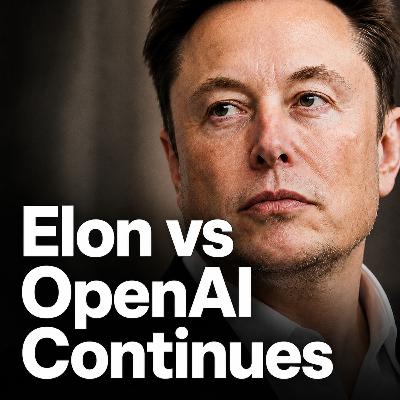
The ongoing legal conflict between Elon Musk and OpenAI has transitioned from a standard contract disagreement into a high-stakes investigation regarding the integrity of CEO Sam Altman. Musk’s legal representatives claim that Altman abandoned the company’s original humanitarian nonprofit mission in favor of a lucrative partnership with Microsoft. While Altman defends the shift as a practical necessity for securing the massive capital required for development, internal documents have surfaced that suggest early commercial ambitions. The defense counters that Musk is motivated by competitive bitterness rather than genuine ethical concerns. Consequently, the court's decision may fundamentally alter corporate governance standards and how the public evaluates the accountability of artificial intelligence leaders.
The high-profile preparations for a SpaceX initial public offering anticipated in June 2026. The company is reportedly targeting a record-breaking $1.75 trillion to $2 trillion valuation, driven by the success of Starlink and the recent integration of the artificial intelligence venture xAI. A significant feature of the offering is an unusually large 30% share allocation for retail investors, a move designed to leverage Elon Musk’s dedicated supporter base. However, the proposed dual-class share structure has sparked intense criticism from major pension fund trustees, who warn that it grants Musk overwhelming voting control while insulating him from accountability. These institutional investors are urging the company to adopt stronger corporate governance standards, such as independent board oversight and more equitable voting rights, before the listing. Ultimately, the documents frame the IPO as a historic market event that balances extraordinary technical ambition against complex legal and fiduciary concerns.
A comprehensive look at the vulnerabilities and defenses associated with digital identity, specifically regarding data breaches in the hospitality industry. High-profile security lapses, such as the Tabiq system exposure, illustrate how human error and cloud misconfigurations can leak millions of sensitive documents like passports and licenses. Experts explain that stolen credentials are sold for high prices on the dark web, enabling criminals to commit identity theft or bypass international borders. To mitigate these risks, the documents advocate for robust cybersecurity measures, including multi-factor authentication, zero-trust architectures, and enhanced monitoring tools to reduce false alerts. Furthermore, the texts highlight the legal and financial consequences of failing to protect consumer data, noting that international regulations like GDPR can impose massive penalties on non-compliant organizations. Individual protection strategies are also emphasized, suggesting that users freeze credit reports and replace compromised documents to prevent long-term fraudulent activity.

The integration and impact of advanced artificial intelligence, specifically focusing on Anthropic’s Claude 4.7 and its deployment through Microsoft Foundry. Claude Opus 4.7 is highlighted as a premier model for agentic coding, enterprise workflows, and complex reasoning, featuring a 1-million token context window and high-resolution vision. Technical documentation details how developers can utilize Microsoft Foundry to deploy these models using managed compute or serverless APIs while adhering to Responsible AI standards. Beyond technical specs, news reports discuss the broader industry shift toward "vibe coding," where natural language replaces traditional syntax to accelerate software creation. Market analysis also covers the competitive landscape, including Cerebras Systems' massive wafer-scale hardware and its multi-billion dollar partnership with OpenAI. Together, the texts provide a comprehensive look at the AI lifecycle, from specialized hardware and model infrastructure to the evolving practices of digital development.

The launch of Claude for Small Business, a specialized suite of AI tools from Anthropic designed to automate routine operations for mid-market and local firms. This initiative moves beyond basic chat functions by integrating agentic workflows directly into popular software like QuickBooks, PayPal, and HubSpot to manage tasks such as payroll, invoicing, and marketing. To support this rollout, Anthropic is hosting a ten-city promotional tour and offering free training to help entrepreneurs bridge the AI adoption gap. Furthermore, the reports explain a new tiered subscription model, including high-capacity Max plans and a restructured billing system for developers and power users. Together, these updates signal a strategic shift toward embedding AI as a functional "virtual employee" within the daily software stack of the broader economy.
In May 2026, GameStop CEO Ryan Cohen launched a surprising unsolicited $55.5 billion bid to acquire the e-commerce giant eBay. The proposal suggested a combination of cash and stock to merge GameStop’s physical stores with eBay’s digital marketplace, aiming to turn retail locations into logistics and authentication hubs. However, eBay’s board of directors swiftly rejected the offer, labeling it as "neither credible nor attractive" due to significant concerns regarding financing and operational risks. Market analysts and investors remain highly skeptical of the deal's feasibility given that GameStop’s valuation is roughly a quarter of the proposed purchase price. Despite this dismissal, Cohen has signaled a potential hostile takeover by appealing directly to shareholders and criticizing eBay’s current leadership. Meanwhile, the online investor community remains divided, with some analyzing the potential for massive value creation while others view the attempt as a confusing publicity stunt.
The high-stakes Musk v. Altman legal battle, a trial in Oakland centered on the future of OpenAI. Elon Musk alleges that the company committed a "bait and switch" by abandoning its original nonprofit mission to pursue massive commercial gains through a partnership with Microsoft. In contrast, CEO Sam Altman and the defense argue that Musk’s mercurial behavior and attempt to seize total control forced the organization to find new ways to fund the astronomical costs of AGI development. The trial has revealed private communications, internal power struggles, and questions regarding Altman’s credibility and honesty. Beyond personal grievances, the litigation highlights the tension between AI safety and corporate profit, potentially setting a major precedent for governance in the tech industry. While Musk seeks a return to nonprofit roots and the removal of leadership, experts suggest the case will likely result in financial settlements or forced transparency rather than a total structural reversal.
The development of low-Earth orbit (LEO) satellite constellations, such as Starlink and OneWeb, as resilient alternatives or complements to the traditional Global Positioning System (GPS). SpaceX has formally proposed to the FCC that its existing satellite infrastructure can provide Positioning, Navigation, and Timing (PNT) services to enhance national security and combat GPS jamming or spoofing. Technical research further analyzes the spatial sensitivity of these signals, revealing that factors like receiver latitude and orbital trajectory accuracy significantly impact navigation precision. While these Signals of Opportunity (SoOP) offer stronger signals and reduced latency compared to legacy systems, experts raise concerns regarding the costs of user equipment and the potential risks of privatizing vital defense resources. Ultimately, the documents present a vision for a layered navigation approach that integrates multiple satellite networks to ensure reliable global positioning.
Microsoft CEO Satya Nadella took the witness stand Monday in the trial about control of the artificial intelligence startup OpenAI.

The 2026 expansion and regulatory milestones of Elon Musk's ventures, specifically The Boring Company and its Vegas Loop project. Local officials recently granted permits and land easements to extend the underground Tesla transportation network toward downtown Las Vegas and the UNLV campus. While advocates highlight the system's innovation and its potential to link major hubs like the airport and convention center, the project faces ongoing scrutiny regarding worker safety and environmental violations. Simultaneously, Clark County is establishing a new safety ordinance to standardize tunnel construction and emergency protocols for the growing network. Beyond infrastructure, the texts touch on broader Musk initiatives, including a high-stakes legal battle with OpenAI and SpaceX's busy 2026 launch schedule for Starlink and Starship. Together, the reports illustrate a significant push toward integrated, high-tech transit and aerospace development despite legal and safety challenges.

In 2026, Elon Musk took OpenAI to federal court. The case, Musk v. OpenAI, hinges on a single question: did the company betray the nonprofit mission it was founded on?Musk's claim is breach of charitable trust. He argues that OpenAI's restructuring into a for-profit, paired with its exclusive multi-billion dollar partnership with Microsoft, abandoned the public-benefit purpose donors believed they were funding.The evidence drawing the most attention comes from Greg Brockman's private diaries. Filings indicate the entries suggest leadership was already mapping out the commercial pivot while publicly assuring donors of altruistic goals. Public mission, private plan. That gap is now in front of a federal judge.OpenAI's defense pushes back on motive. Their framing: Musk is a spurned co-founder who tried and failed to take unilateral control of the company, and the lawsuit is what came after losing that fight, not a good-faith concern about governance.Financial conflicts of interest are also on the record. Brockman reportedly holds a $30 billion stake in the restructured entity, and the trial examines what hybrid corporate governance actually means when the same leadership oversees the nonprofit and benefits from the for-profit arm.For context, the case is a serious test of how charitable trust law applies to AI labs that started as nonprofits and scaled into some of the most valuable companies in the world. Whichever way it goes, the ruling will shape what other labs can and cannot do when stated mission collides with commercial incentive.In this episode I walk through the timeline, the key filings, the Brockman diary excerpts that have been made public, the financial structure being litigated, and what each potential ruling would mean for OpenAI, Microsoft, and the broader frontier AI industry.Topics: Musk v. OpenAI 2026 trial, OpenAI nonprofit to for-profit conversion, Greg Brockman diaries, OpenAI Microsoft partnership, breach of charitable trust lawsuit, AI governance, OpenAI restructuring, frontier AI legal precedent, hybrid corporate governance.
Blue Origin and SpaceX are reaching critical milestones and facing regulatory hurdles as they compete in the heavy-lift launch market. Blue Origin’s massive New Glenn rocket has been grounded by the FAA following a failed satellite launch and structural damage to a Florida test facility. Amidst this investigation, the company is reportedly updating its employee compensation plans to better retain talent against its rivals. Meanwhile, SpaceX is moving toward a historic IPO that could value the company at approximately $2 trillion, driven by the success of its Starlink internet constellation and its recent acquisition of xAI. Both companies remain central to NASA’s Artemis program, which aims to establish a sustainable human presence on the Moon and eventually send crews to Mars. Together, these reports highlight the immense financial stakes and technical risks currently shaping the future of private and civil space exploration.

The rapid evolution and practical deployment of advanced AI agents within complex technical and business environments. One key focus is the transformation of IT support services, where automated systems utilize tools like Claude and n8n to reduce ticket volumes and accelerate resolution times through intelligent triaging. Additionally, the texts highlight Anthropic's multi-agent research architecture, which improves performance by delegating tasks to specialized subagents operating in parallel. Significant infrastructure developments are also noted, such as Anthropic's partnership with SpaceX to massively expand the compute capacity required for these resource-intensive workloads. Finally, the collection offers a comparative analysis of frontier models like GPT 5.5 and Claude Opus 4.7, evaluating their specific strengths in coding, long-horizon reasoning, and autonomous tool use. Together, these documents illustrate a shift toward proactive, data-driven AI ecosystems that manage increasingly sophisticated, multi-step operations.


Download from Google Play

Download from App Store
 United States
hello
😢
dangerous game you're playing elon ....
Bernie sad ass
Just an anti Musk screech
Hello friends, is there a way to have the transcript of the podcasts?
Huwag palampasin ang alok ng scorpion - https://scorpion-ph.com! Magparehistro na at tanggapin ang $100 bonus para sa iyong unang taya.
Ang $100 bonus ng drip - https://drip-ph.com ay para sa iyo! Maging bagong miyembro at i-enjoy ang libreng pondo para sa mas masayang paglalaro.
Ang swerte ay nasa iyong kamay! Magparehistro sa eclipse - https://eclipse-ph.com ngayon at tanggapin ang eksklusibong $100 bonus para sa mga bagong miyembro.
Ikaw ba’y naghahanap ng masuwerteng simula? Narito na ang jet - https://jet-ph.com na may $100 bonus para sa lahat ng bagong miyembro! Magparehistro na at tamasahin ang dagdag na pondo.
Panalo mula sa simula! Sumali sa daddy - https://daddy-ph.com bilang bagong miyembro at makatanggap ng $100 bonus na magagamit sa paborito mong laro.
Huwag nang maghintay pa! Ang $100 welcome bonus ng fresh - https://fresh-ph.com ay para lamang sa mga bagong miyembro. Mag-register na at simulan ang kasiyahan online.
Magsimula ng masaya at panalong adventure sa supernova - https://supernova-ph.com! Mag-register ngayon at makakuha ng eksklusibong $100 bonus na magbibigay sa’yo ng edge sa bawat laro.
Bagong miyembro? Narito na ang iyong pagkakataon na maglaro gamit ang dagdag na $100 bonus. Magparehistro lamang sa jazz - https://jazz-ph.com at tangkilikin ang walang kapantay na gaming experience.
Ang $100 bonus ay sa’yo na! Magparehistro ngayon sa lucky cola - https://lucky-cola-ph.com at simulan ang panalong kwento.
Ang 747 live - https://747-live-ph.com ay para sa lahat ng gustong manalo! Mag-register at i-enjoy ang $100 bonus na magdadagdag sa iyong laro.
Huwag nang maghintay pa! Magparehistro na sa ph dream - https://ph-dream-ph.com at tanggapin ang iyong $100 welcome bonus.
Ang $100 bonus ay para sa iyo! Mag-register na sa bingo plus - https://bingo-plus-ph.com at gawing mas masaya ang bawat laro.
Ang tagumpay ay nasa escala gaming - https://escala-gaming-ph.com! Mag-register na at tanggapin ang $100 bonus bilang bagong miyembro.
Huwag palampasin ang $100 welcome bonus ng aurora game - https://aurora-game-ph.com! Magparehistro na at simulan ang panalong kwento.