


 Claim Ownership
Transcending Sport with Rob Crews
Subscribed: 3Played: 138
Subscribe

© Complete Game LLC | Rob Crews
Description
Rob Crews hosts a unique audio experience w/ the world's most intriguing sports personalities.
100 Episodes
Reverse
Episode 94: Real Talk with Iver McDonaldIver McDonald—former Oklahoma Sooner, founder of McDonald Fastpitch Camps, and co-founder of Transfer U—joins Rob Crews for a conversation that covers everything from playing for Patty Gasso to the current state of college softball.Iver shares what it was like growing up in South Houston's softball scene, learning more in one year at Oklahoma than in 13 years of travel ball, and why the transfer portal is creating as many problems as it solves.They go deep on:→ The gap between high school standouts and college-ready players→ Why players need to know what kind of coach they can play for→ How teams are bringing in portal players who were the problem at their last school→ World Series predictions for 2026 (Tennessee, Texas Tech, Oklahoma, and more)→ Why travel ball culture has become college softball's culture→ The IQ vs. athleticism debate—and why Rob will always choose IQ→ How regional styles of play expose gaps in player development→ Florida State's zero-transfer culture and what it says about recruiting→ Representation, trailblazing, and Iver's message to Black and Brown athletesThis is a real conversation between two people who have been in the trenches of player development for decades. No hot takes—just honest observations about what's working, what's broken, and what needs to change.Connect with Iver:McDonald Fastpitch Camps: mcdonaldfastpitchcamps.comTransfer U (with Christina Wiley)Show Notes: complete.game/podcast/94
Episode 93: Stop Coaching Swings, Start Coaching HittersEye Dominance, Confidence Building & In-Game AdjustmentsIn this episode, Rob Crews shares an exclusive coaching session with a group of high school coaches from New York City, breaking down his philosophy on vision training, the invisible mechanics, and why swings are not hitting.Rob talks about:How to identify eye dominance with a simple test—and why it mattersThe Big 3: zoning down, front foot timing, and contact spaceWhy he doesn't believe in open stancesThe three timings every hitter needs to syncHead stability as a "camera on a tripod"—and how to train itWhy anticipation beats reaction in less than four-tenths of a secondTeaching in the positive: why "don't chase" is the wrong cueBuilding confidence at 8, 9, 10, 11, 12—before it's too lateHow your coaching cues become their self-talkNon-verbal communication and developing a language with your hittersFeel the game: situational hitting without overthinkingThe Swing Dynamics bat system and pregame warmup philosophyThis is real coaching talk—unfiltered, practical, and rooted in 25+ years of player development.Shownotes: https://www.complete.game/podcast-shownotes
Episode 92: Why I Don't Believe in Tee WorkPregame Philosophy, Heavy Balls & Teaching in the PositiveIn this episode, Rob Crews shares an exclusive coaching session with a group of high school coaches from New York City, breaking down his philosophy on pregame warmups, tee work, and the psychology of in-game communication.Rob talks about:Why he doesn't believe tee work makes hitters better—and when it still has valueThe Big 3: chasing high, front foot timing, and contact depthWhy heavy balls are the only thing he'd use if he could only pick one pregame toolHow to develop non-verbal communication with your hittersTeaching in the positive—why "don't chase high" is the wrong cueUnderstanding that every kid speaks a different languageLineup psychology: why some kids hit .900 in the 6-hole and .150 in the 3-holeHow to handle riseball pitchers by adjusting box positionThis is real coaching talk—unfiltered, practical, and rooted in 25+ years of player development.Shownotes: https://www.complete.game/podcast-shownotes

Rob Crews talks about:Why most slappers aren't actually fast—they just play against slow defendersThe coaches who sacrifice a kid's development to win local gamesRegional differences in softball and why Northeast kids get exposed when they travelWhy your 14U playing 18U isn't a flex—it's sadThe honest conversation he had with an 11-year-old her first time in the cageWhy families who can't handle the truth at 11 won't handle it at 16 eitherPlayers who come back years later just to take one more lessonHow the game becomes a support system that's bigger than softballShownotes: https://www.complete.game/podcast-shownotes
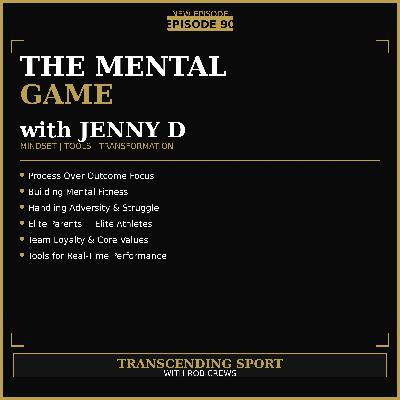
Jenny D returns to Transcending Sport for a powerful conversation about what it really takes to develop the mental side of athletic performance.In this episode, Rob and Jenny dive deep into the psychology of peak performance, using compelling clips from coaching legend Gino Auriemma and the vulnerable testimony of basketball star Hailey Van Lith to explore why the mental game is often 80% of the battle.Topics covered:Why elite coaches train athletes beyond their comfort zone (the Gino Auriemma philosophy)Hailey Van Lith's powerful story of struggle, self-reflection, and asking "Who are you?"The difference between being "teamy" vs. self-absorbed in team sportsWhy elite athletes have elite parents—and what that really meansThe danger of caring too much about what others think (FOPO)Jenny's 8-session mindset program and the tools athletes need to execute under pressureProcess over outcome: Why focusing on results is killing your performanceThe importance of pre-game mental routines (and why most athletes skip them)How coaches can build authentic connections that make athletes run through wallsCore values and self-discovery exercises every athlete needsJenny D shares insights from her Certified Sports Psychology practice and introduces her new online course, "The Game Changer Playbook," created with her childhood best friend Gina from Beyond the Scoreboards.If you're a coach, parent, or athlete looking to strengthen the mental side of performance, this conversation will give you practical tools and a fresh perspective on what separates good from great.Connect with Jenny D:Website: jennydmindset.comInstagram: @jennydmindsetEmail: jenny@jennydmindset.comNew Online Course: gamechangerplaybook.com
Episode 93: Stop Coaching Swings, Start Coaching Hitters: Eye Dominance, Confidence Building & In-Game AdjustmentsIn this episode, Rob Crews shares an exclusive coaching session with a group of high school coaches from New York City, breaking down his philosophy on vision training, the invisible mechanics, and why swings are not hitting.Rob talks about:How to identify eye dominance with a simple test—and why it mattersThe Big 3: zoning down, front foot timing, and contact spaceWhy he doesn't believe in open stancesThe three timings every hitter needs to syncHead stability as a "camera on a tripod"—and how to train itWhy anticipation beats reaction in less than four-tenths of a secondTeaching in the positive: why "don't chase" is the wrong cueBuilding confidence at 8, 9, 10, 11, 12—before it's too lateHow your coaching cues become their self-talkNon-verbal communication and developing a language with your hittersFeel the game: situational hitting without overthinkingThe Swing Dynamics bat system and pregame warmup philosophyThis is real coaching talk—unfiltered, practical, and rooted in 25+ years of player development.Shownotes: https://www.complete.game/podcast-shownotes
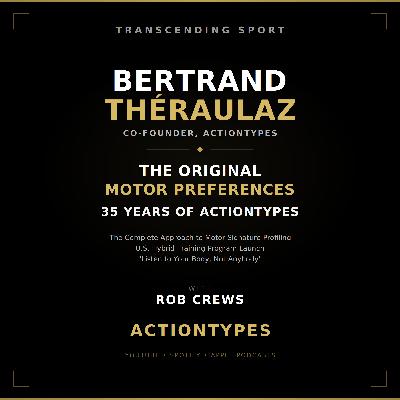
Episode SummaryIn this landmark episode of Transcending Sport, Rob Crews sits down with Bertrand Théraulaz, co-founder of ActionTypes and one of the originators of motor signature profiling.For over 35 years, Bertrand and his partner Ralph Hippolyte have developed a comprehensive approach to understanding human movement — connecting brain, body, and behavior in ways that transform how we coach athletes.This conversation traces the complete evolution of ActionTypes: from Bertrand's early days coaching volleyball in Switzerland, through his breakthrough discovery in 1998, to the launch of the first-ever U.S. Hybrid Training Program bringing this methodology to American coaches.This isn't a simplified binary system — this is the complete methodology, directly from one of its creators.Key Takeaways🎯 You Have FOUR Motor Skills, Not OneEveryone has four motor skills available — not just one fixed profile. Your "comfort zone" is used about 70% of the time, but your second motor skill is your recovery zone. Training only one leads to overuse and injury.🎯 Two Profiles That InteractYou have a motor profile (voluntary motor system for technique execution) AND a motivational profile (autonomous nervous system for preparation and recovery). Understanding both prevents coaching errors.🎯 "Listen to Your Body, Not Anybody"The body always has a solution. Your brain is a coordination device designed for movement. Trust your natural patterns instead of forcing external "one size fits all" solutions.🎯 Coach the Intention, Not the ActionThe HOW belongs to the athlete. Coaches should focus on intention and context — not prescriptive technique. "Recognize WHO they are first, not WHAT they do."🎯 Vision Strategies MatterSome athletes use central vision first → then peripheral. Others start peripheral → then central. You cannot teach one person the opposite strategy — it must match their profile.🎯 The Danger of OversimplificationReducing motor preferences to simple binary categories is dangerous. Without understanding both profiles and all four motor skills, coaches risk causing injuries and harming athletes.What's Covered in This EpisodeThe origin story of ActionTypes (dating back to 1989-1998)Bertrand's breakthrough discovery in Canberra, Australia (1998)Why "one size fits all" coaching fails athletesThe four motor skills and how they coordinate togetherMotor profiles vs. motivational profiles — and why both matterVision strategies: central-to-peripheral vs. peripheral-to-centralApplications beyond sports: therapy, autism spectrum, educationThe U.S. Hybrid Training Program launching in 2026Ethical responsibilities when profiling athletesThe 800-page ActionTypes reference bookAbout the GuestBertrand Théraulaz is the co-founder of ActionTypes, alongside Ralph Hippolyte. A former elite volleyball coach, Swiss national team coach, and director of coaching education for Swiss Olympic for 17 years, Bertrand has spent 35+ years developing the science of motor signatures. His work spans 30+ sports disciplines and has influenced elite athletes, Olympic teams (including the French handball team — Tokyo Olympics gold medalists), therapists, and educators worldwide.Links & ResourcesActionTypes OfficialWebsite: actiontypes.comWebsite (US): actiontypes.orgMotor Signatures Research: motorsignatures.comInstagram: @actiontypes_offEmail: contact@actiontypes.comU.S. Hybrid Training ProgramRegistration: actiontypesonline.com/application-formFree 3-hour introductory sessionOnline hybrid sessions + self-paced courseIn-person intensive weekend in Philadelphia (June 2026)800-page reference book includedCertification as "Detect Type" practitioner
"I'm not seeing the ball well."Every coach has heard it. But what if the problem isn't your eyes—it's the disconnect between what you see and what you do?In this episode of Transcending Sport, I break down why players think they can't see the ball when they actually can, how this same visual disconnect affects baserunners reading pickoff moves, and why infield masks tell us everything about visual processing at different competition levels.I also introduce the 3 critical timings every hitter needs to understand:Hitter's body to pitcher's bodyEyes to point of collisionBody-bat to ballThis is perception-action training at its core.🔥 TIMESTAMPS:0:00 - Introduction0:45 - "I'm not seeing the ball" - The lie hitters tell themselves2:30 - Baserunner reads and pickoff misreads4:15 - Why lower-level infielders wear masks5:30 - The 3 timings of hitting7:00 - Putting it all together
Rick Pauly returns for a no-holds-barred breakdown of the 2025 NFCA Convention in Las Vegas, Nevada—the largest in convention history.As both attendees and presenters, Rob and Rick share their unfiltered observations about what they saw, what surprised them, and what concerns them about the current state of softball coaching and player development.Topics covered:The record-setting attendance and what it reveals about travel ball coachingNew technology and products showcased by exhibitorsThe tension between education and product endorsement in presentationsWhether technology is becoming prohibitively expensive for smaller schools and programsShould travel ball coaches have a voice in college recruiting calendar decisions?Rob introduces his new concept: "egosystem" and its implications for competitive sportsDoes softball genuinely want to embrace data-driven coaching, or is it performative?Their favorite speakers and sessions from the conventionIf you're a coach, administrator, or parent trying to navigate the evolving landscape of softball, this conversation will challenge your assumptions and give you plenty to think about.
Rick Pauly returns to Transcending Sport for another fan-favorite conversation where we contrast our perspectives on softball—me as a hitting coach, Rick as a pitching coach.In this episode, we tackle the current state of travel ball softball and ask the hard questions: Is velocity everything, or are we missing something more important? How has the transfer portal reshaped recruiting and the travel ball landscape? Why do the rich keep getting richer in travel ball, college softball, and pro sports?We also share what you can expect from us at the upcoming NFCA Softball Convention this December in Las Vegas.Whether you're a player, parent, or coach navigating today's softball landscape, this conversation will give you plenty to think about.
Go beyond surface-level coaching in this powerful excerpt from Rob Crews' Monthly Master Class series, part of his exclusive Coaches Certification program.Episode Description:In this transformative episode, Rob Crews pulls back the curtain on one of the most critical aspects of master coaching - understanding and reshaping the belief systems that hold athletes back. Drawing from his Coaches Certification curriculum, Rob demonstrates why great coaches must become students of the mind, learning to identify and dismantle the limiting beliefs and outdated teachings that create invisible barriers to performance.Key Takeaways:Why traditional coaching often fails to address the root cause of performance plateausThe hidden power of belief systems in athletic achievementPractical techniques for uncovering what students truly believe about their capabilitiesHow to replace doubt and confusion with clarity and convictionReal-world strategies for helping athletes unlearn counterproductive lessons from their pastWhether you're a coach looking to deepen your impact, an athlete seeking breakthrough performance, or someone interested in the psychology of excellence, this episode delivers actionable insights that transcend sport and apply to any arena of life.Perfect for: Coaches, trainers, athletes, parents of young athletes, and anyone committed to unlocking human potential through the power of mindset transformation.This episode features exclusive content from the Rob Crews Coaches Certification program. Learn more about becoming a certified coach at https://www.complete.game/certified-coaches
Podcast Episode: Unlocking Human Potential Through Improv with Lainie HodgesGuest: Lainie Hodges, Owner and Founder of Improv AlchemyIn this engaging episode, we dive deep into the transformative world of improvisation with human development specialist Lainie Hodges. As the founder of Improv Alchemy, Lainie has discovered how the spontaneous, collaborative nature of improv can unlock extraordinary growth in individuals and teams across diverse settings.From athletic programs to corporate boardrooms, Lainie shares how improv games and exercises create powerful learning environments where people don't just participate—they thrive. We explore her unique approach to harnessing everyone's individual talents and abilities, transforming them into enhanced innovation, agility, and responsiveness.
In this episode, Rob Crews shares knowledge on how recognition affects movement, timing and chase rates.
Rob Crews breaks down mind-body connection with a young hitter from Kentucky in her first 1:1 virtual session. Rob used this session as the introduction to her transformation in how she sees herself as a hitter.
Be a fly on the wall during this phone call with Rob and Dave as they discuss how to overcome some of the challenges for in-game success for hitters.
Join Rob Crews for an in-depth conversation with Neil McConnell, CEO and founder of MaxBP, as we explore the evolution of portable hitting technology and the science behind reaction training.In this episode, we dive into:The journey of developing MaxBP from concept to game-changing training toolWhy traditional batting practice might be holding hitters backThe neuroscience behind visual processing and reaction trainingHow smaller balls create better big-league hittersThe future of portable training technology in baseball and softballNeil shares the story behind MaxBP's innovative approach to hitting development, including the research and iterations that led to a machine that's revolutionizing how coaches and players approach vision training. We discuss why portability matters, how to close the "visual gap" in hitters, and why the best players aren't always who you think they are.Whether you're a coach, player, or parent, this conversation will change how you think about hitting development.
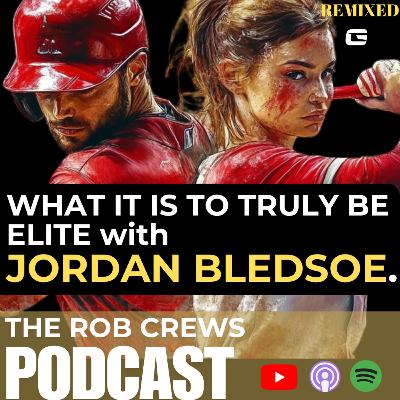
In this remixed episode, Rob Crews & Jordan Bledsoe drop jewels on modern mindsets and their approach to coaching in today's sports performance culture. Check out Jordan Bledsoe:Jordan BledsoeVelocity Sports Performance - Westchester & Dutchess5 training facilities:HAWTHORNE | ARMONK | YORKTOWN | MAMARONECK | FISHKILL@velocity_NewYork@coachjordan_velocity@thebetterathletes_podcastvelocitywestchester.com Jordon is also dropping a podcast on Spotify click here to check it out.
Rob Crews shares his thoughts on pre-game routines, high chase-rates, travel vs. college pitching, how technology can inform custom hitting approaches, & more.
Rob Crews shares insight into Vision, Perception, tracking, recognition and decision-making -the things that make high-level hitters hittters. Check out this episode to learn how the predictive brain creates reality.
Whether you coach a team or you are a hitting instructor, hitters are different and have different needs. Rob Crews shares the best parts of a conversation about the evolution of hitting approaches and how to manage team hitting culture at the college level.

Comments

Download from Google Play

Download from App Store
 United States