


 Claim Ownership
Maiden Mother Matriarch with Louise Perry
Subscribed: 553Played: 39,282
Subscribe

© Louise Perry
Description
A podcast about sexual politics
www.louiseperry.co.uk
www.louiseperry.co.uk
Hosted on Acast. See acast.com/privacy for more information.
238 Episodes
Reverse
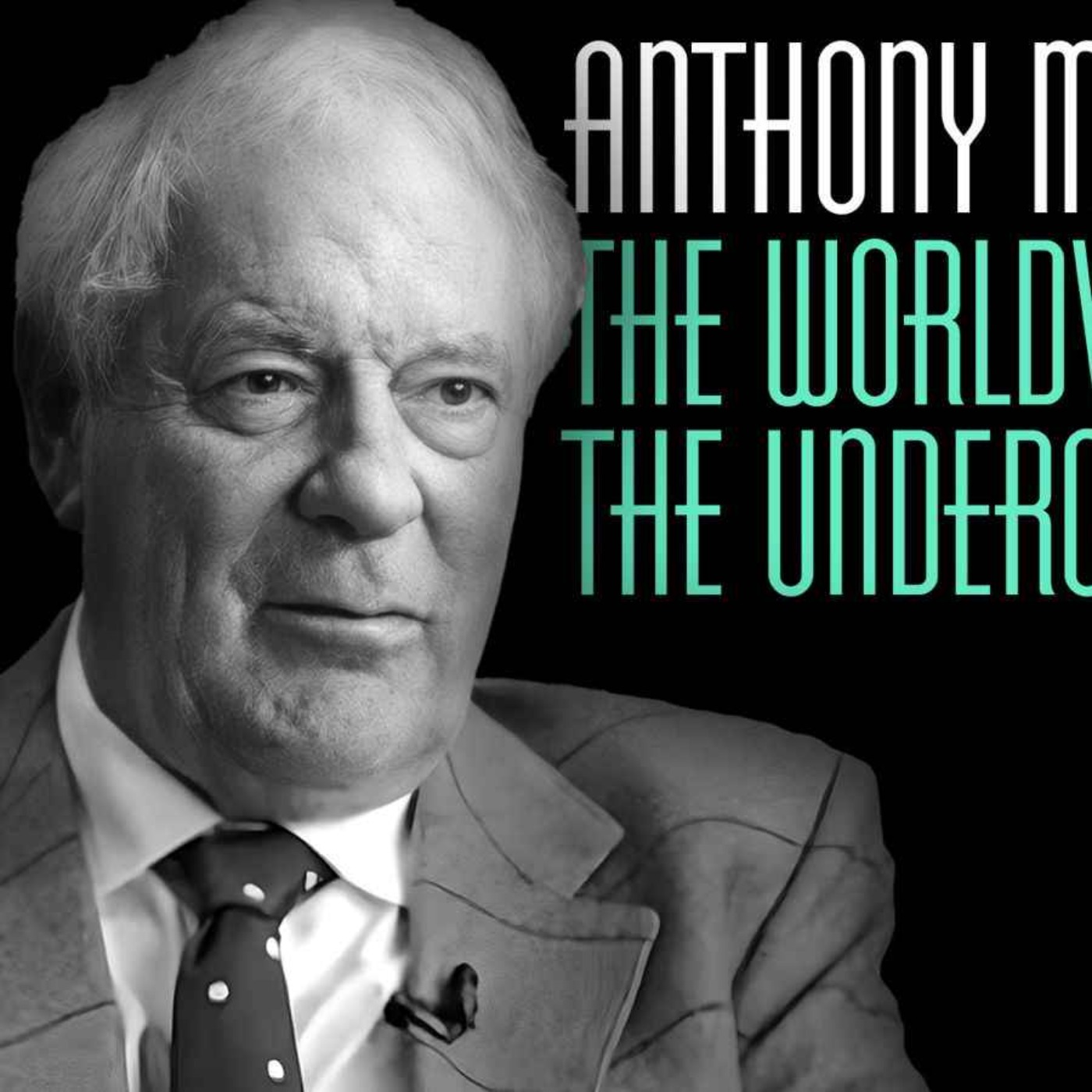
Anthony Daniels, also known by the pen name Theodore Dalrymple, has spent a career doing something very unusual for someone of his class: talking at great length to thousands and thousands of people at the very bottom of the socioeconomic heap. Daniels is a doctor, as well as the author of dozens of books. This year marks the 25th anniversary of the publication of perhaps his most famous, 'Life at the Bottom: The Worldview That Makes the Underclass', a collection of essays about Daniels' time working as a doctor at both an inner-city hospital and a prison. One of his tasks in this role was to interview something in the region of 10,000 people who had attempted suicide. They would tell him about their lives, and about the lives of the people closest to them. "From this source alone," Daniels writers, "I have learned about the lives of some fifty thousand people: lives dominated, almost without exception, by violence, crime, and degradation." Today we talk about what he surmised from these conversations – about the true nature of poverty, of domestic abuse, and the social fallout from the sexual revolution. We also talk about what the British elites fail to understand about the so-called underclass. Hosted on Acast. See acast.com/privacy for more information.

In this bonus episode, I spoke with Ed West about the Gorton and Denton by-election, the Islamo-gauchist coalition, and Rupert Lowe's new Restore Party. Discussed in this episode: Serial series on the Trojan Horse affairHannah Spencer on NewsnightTony Blair documentary seriesPimlico Journal article on Restore Hosted on Acast. See acast.com/privacy for more information.

In this bonus episode, Rob Henderson and I discussed the legacy of Aaron Sorkin, and the end of the political era that his work represented.Discussed in the episode:Sorkin interviewed on the BBC.Rob’s NYT piece on The West Wing. Hosted on Acast. See acast.com/privacy for more information.

Give the gift of everyday luxury and make every moment comfortable. Head to cozyearth.com and use my code COZYMMM for 20% off sitewide. And if you get a Post-Purchase Survey, be sure to mention you heard about Cozy Earth at the Maiden Mother Matriarch podcast.We are all descended from thousands of generations of parents who successfully raised their children to adulthood. But, unlike those parents, we all have access to plentiful food, indoor plumbing, effective medicine, and all of the other technologies that make modern life so comfortable. You might expect, therefore, that the modern experience of parenthood would feel easy. Why doesn't it? My guest today first started thinking about the unnaturalness of modern parenting when she became the mother of two little kids, born close together in age. She was spending much of her time alone with them and feeling acutely stressed. It set her thinking about the evolutionary mismatch between this very isolated existence, and the way in which our ancient ancestors raised their children. Elena Bridgers is a science writer and author of the substack 'Motherhood Until Yesterday.' Today we spoke about the many ways in which modern parenting is historically strange – from co-sleeping to alloparenting to birth spacing. What can hunter gatherers teach us about how to make parenting easier? Hosted on Acast. See acast.com/privacy for more information.
In this bonus episode, Nina Power and I reviewed Emerald Fennell's new film "Wuthering Heights." Hosted on Acast. See acast.com/privacy for more information.

MMM is sponsored by 321 - a new online introduction to Christianity, presented by former MMM guest Glen Scrivener. Check it out for free at 321course.com/MMM. Just enter your email, choose a password and you’re in — there’s no spam and no fees. Give the gift of everyday luxury and make every moment comfortable. Head to cozyearth.com and use my code COZYMMM for 20% off sitewide. And if you get a Post-Purchase Survey, be sure to mention you heard about Cozy Earth at the Maiden Mother Matriarch podcast.Testing a foetus or an embryo for some medical conditions is now a routine part of the modern pregnancy experience. Prenatal Down’s Syndrome tests, for instance, are now so widespread that in some Scandinavian countries almost 100 per cent of women choose to abort a foetus diagnosed with the condition, or – if using IVF – not implant the affected embryo. The result is a visible change to these populations: there are simply no more people with Down’s to be seen on the streets of Iceland and Denmark.New technology is now available – at a high price – for those who want to go further. So-called polygenic embryo screening can give a very full picture of the adult that the embryo could become, including his or her vulnerability to an enormous number of diseases – heart disease, diabetes, cancer – and also the physical and psychological traits that he or she would likely possess: height, hair colour, athletic ability, conscientiousness, altruism, intelligence. Is this a good thing? Should we welcome a world in which parents are routinely selecting their embryos in this way? I'm joined today by two guests who take a very different view. Emma Waters is a policy analyst at the Center for Technology and the Human Person at the Heritage Foundation. Her work focuses on family, biotechnology, and reproductive medicine.Jonathan Anomaly is a philosopher, author of the book 'Creating Future People: The Science and Ethics of Genetic Enhancement', and is also the director of scientific research and communication for Herasight, a genetics startup that offers polygenic embryo screening. Hosted on Acast. See acast.com/privacy for more information.
In this bonus episode, I spoke with Mary Harrington about the latest tranche of Epstein files, and what the scandal reveals about politics, power, and men. Hosted on Acast. See acast.com/privacy for more information.
Give the gift of everyday luxury and make every moment comfortable. Head to cozyearth.com and use my code COZYMMM for 20% off sitewide. And if you get a Post-Purchase Survey, be sure to mention you heard about Cozy Earth at the Maiden Mother Matriarch podcast.On the cover of their new book, authors Dean Spears and Michael Geruso have a graph of the global population over time. The population is small and roughly stable for pretty much all of human history. It rises after the advent of agriculture, some ten thousand years ago, but that bump looks rather minor now. It's only after the industrial revolution that we see this enormous spike, taking us from a world containing 1 billion people in 1800 to over 8 billion today. So far, so familiar. But what Spears and Geruso are interested in is what happens next. Their book is titled 'After the Spike' because they foresee an imminent addition to the familiar population graph: a descent just as steep as the ascent. An exponential decline that might even take us back to a global population smaller than that of 1800. I speak to Dean Spears today about what demographic research indicates is imminently in store for us as a species, and what might be on the horizon 'after the spike.' Hosted on Acast. See acast.com/privacy for more information.

In this bonus episode, I spoke with Rod Dreher about what he describes as the 'Weimarisation of the West' – an increasingly atomised and economically precarious society that valorises transgression for its own sake. We also discussed whether World War II still has a central place in the cultural imagination, why the Online Right puts so much emphasis on humour, and the ongoing civil unrest in Minnesota. Article in 'The Point' on heteropessimism'The Harry Potter generation needs to grow up'Tucker Carlson interviews Nick FuentesFuentes on Red ScareRod's Substack post on nurses' comments on ICE agents'The Radical Right Is Coming for Your Sons'Ezra Klein on Trump Hosted on Acast. See acast.com/privacy for more information.
Give the gift of everyday luxury and make every moment comfortable. Head to cozyearth.com and use my code COZYMMM for 20% off sitewide. And if you get a Post-Purchase Survey, be sure to mention you heard about Cozy Earth at the Maiden Mother Matriarch podcast.Teenage anxiety isn’t a new thing. Our mothers and grandmothers also worried about beauty, and friendships, and boys.What is new, however, is the role of technology in teenage anxiety. We see an inflection point in the early 2010s: a sudden drop in mental wellbeing among teenagers, particularly girls. The beginning of that drop coincided with the arrival of image-based social media like Instagram.My guest today argues that this was not a coincidence. Freya India is the author of the Substack GIRLS, where she writes about the challenges girls and young women face in the modern world. She’s also a staff writer for Jonathan Haidt’s newsletter, After Babel.Her new book is about the ways in which communication technology has given us a world in which teenage girls end up commodifying themselves – selling their lives on social media, advertising themselves on dating apps, and packaging themselves into personal brands. All at the cost of their own sanity. Hosted on Acast. See acast.com/privacy for more information.
In this bonus episode, I spoke with Stone Age Herbalist about an essay he recently published on Victorian attitudes towards death. We discussed the cultural impact of Jack the Ripper, the terror of body snatching, the practice of postmortem photography, and the Spiritualist movement's preoccupation with electricity. Discussed in the episode:'How The Victorians Eroticised Death, From Ophelia To Salome'More on the anatomical venus More on body snatching and Georgia Medical College Hosted on Acast. See acast.com/privacy for more information.

Give the gift of everyday luxury and make every moment comfortable. Head to cozyearth.com and use my code COZYMMM for 20% off sitewide. And if you get a Post-Purchase Survey, be sure to mention you heard about Cozy Earth at the Maiden Mother Matriarch podcast.The word 'meritocracy' was originally intended as a pejorative. It was coined in a 1958 novel written by the British social scientist Michael Young. In the dystopia that Young imagined, the old order has been overthrown and replaced with a tyrannical system obsessed with merit. Today's guest not only joins Young in his critique of meritocracy, he also takes a further bold step in endorsing some extremely old fashioned ideas about wealth, family, and legacy. In an age when celebrities routinely boast about their plans to disinherit their children and leave them to fend for themselves financially, Johann Kurtz makes a counter-cultural argument for nepotism. Do not give your money to charity, he says. Do not encourage your children to launch themselves into the meritocratic rat race. Learn, instead, from the ancient practices of aristocrats who had very different ideas about how to cultivate virtue in their descendants. Kurtz is the author of the 'Becoming Noble' Substack. His new book is titled 'Leaving a Legacy: Inheritance, Charity, & Thousand-Year Families.'Discussed in the show: 'Leaving a Legacy'Stress induced by downward social mobility'Good Money' podcast seriesSurvey on attitudes towards grandchildren'Toxic Charity''Revolt of the Elites'MMM is sponsored by 321 - a new online introduction to Christianity, presented by former MMM guest Glen Scrivener. Check it out for free at 321course.com/MMM. Just enter your email, choose a password and you’re in — there’s no spam and no fees. Hosted on Acast. See acast.com/privacy for more information.
In this bonus episode, Ed West and I spoke about the mode of British governance that is simultaneously sinister and farcical, from the recent 'Prevent video game' to the police horses sent to re-education because they wouldn't walk over rainbow pedestrian crossings.Discussed in this episode: Conservatives are more accurate in describing the beliefs of liberals"Met police hired black child rapist to boost diversity""Met urges Epping migrant sex offender to hand himself in""The Birmingham Maccabi scandal proves multiculturalism has failed"Garrett Jones book on migration and culture"UAE cuts funds for students keen to study in UK ‘over fears campuses radicalised by Islamist groups'" Hosted on Acast. See acast.com/privacy for more information.
Give the gift of everyday luxury and make every moment comfortable. Head to cozyearth.com and use my code COZYMMM for 20% off sitewide. And if you get a Post-Purchase Survey, be sure to mention you heard about Cozy Earth at the Maiden Mother Matriarch podcast.My guest today is George Owers, historian and author of a new book, 'The Rage of Party: How Whig Versus Tory Made Modern Britain.' Owers traces our contemporary culture war back to the end of the seventeenth century, when the conflict between Whigs and Tories was the central drama of English politics. One side was isolationist, opposed to immigration, and preferred a small state. The other was open to the rest of the world, and had ambitious plans for tax rises and state expansion. The two sides differed on the role of religion in public life, and on which ideas and symbols ought to be considered sacred. Does any of this sound familiar? Owers argues that we are still seeing this drama play out, not just in England but across the Anglosphere. Our political conflicts are still theological conflicts, and they are surpassingly important. Hosted on Acast. See acast.com/privacy for more information.

In this bonus episode, RobHenderson and I discussed the shooting of Renee Good and the role of women in political activism. Discussed in the episode:My WSJ column on Mamdani and communism. Paper on infant psychology and egalitarianism. Amy Chua book on violence against market-dominant minorities. Emmeline Pankhurst photo Hosted on Acast. See acast.com/privacy for more information.
Give the gift of everyday luxury and make every moment comfortable. Head to cozyearth.com and use my code COZYMMM for 20% off sitewide. And if you get a Post-Purchase Survey, be sure to mention you heard about Cozy Earth at the Maiden Mother Matriarch podcast. "So powerful, in fact, is simple string in taming the world to human will and ingenuity that I suspect it to be the unseen weapon that allowed the human race to conquer the earth." That's a quote from 'Women's Work: The First 20,000 Years', Elizabeth Wayland Barber's landmark contribution to archeology, recently re-published in the form of a 30th anniversary edition. Wayland-Barber argues that the creation of string, and later of weaving, was one of the most crucial innovations in human history. And it was the work of women. Up until really very recently in human history, the creation of textiles was an extraordinarily time consuming and important aspect of women's daily lives. If we had not undergone the 'string revolution', we would not have been able to keep ourselves warm in cold weather, to use textiles for hunting, and to develop various complex tools essential for human survival. It's no wonder that spinning and weaving have such a central role in mythology. Today we examine the ancient connection between spinning thread and creating life. For ad-free and bonus episodes of the Maiden Mother Matriarch podcast go to louiseperry.substack.com. Hosted on Acast. See acast.com/privacy for more information.
In this bonus episode, Meghan Murphy and I discussed the online community of young men making every effort to improve their appearances.Discussed in the episode:Clavicular in conversation with Michael KnowlesOlly Murs photosDocumentary on sperm donor, ‘The Man with 1000 Kids’ Hosted on Acast. See acast.com/privacy for more information.
The Medieval period is sometimes described as the ‘Age of Faith.’ This was a world in which the church dominated every area of life and it was almost impossible to think outside of Christianity.It was succeeded, of course, by the ‘Age of Reason’, a period in which Enlightenment thinkers placed an extremely high premium on rational inquiry.Which era are we living in now? Robert P. George suggests that we have entered an ‘Age of Feelings’, in which people derive their beliefs from emotion, which is now understood as the central source of truth.He makes this case in his new book, ‘Seeking Truth and Speaking Truth: Law and Morality in Our Cultural Moment.’ Robert P. George is a highly esteemed legal scholar and political philosopher, once described in The New York Times as America’s “most influential conservative Christian thinker.” Today we discuss faith, reason, abortion, same sex marriage, repaganisation, and more.MMM is sponsored by Cozy Earth. Get a 40% discount at cozyearth.com/maiden or use the code COZYMMM, and in the post-purchase survey let them know you came from the podcast! Hosted on Acast. See acast.com/privacy for more information.
In this bonus episode, I spoke with Nina Power about the scandal regarding Egyptian dissident Alaa Abd El Fattah and the degraded legitimacy of the British state. Mentioned in the episode:Telegraph reporting on Abd El Fattah Lucy Connolly interviewMan jailed over anti-immigrant posts viewed only 33 timesSteve Laws speaks to Andrew GoldEmployers to be made liable for staff being offended by third parties, such as customers or members of the publicElectoral Commission condemns postponement of council electionsLabour councillor acquitted of encouraging violent unrest Hosted on Acast. See acast.com/privacy for more information.

Give the gift of everyday luxury and make every moment comfortable. Head to cozyearth.com and use my code COZYMMM for 20% off sitewide. And if you get a Post-Purchase Survey, be sure to mention you heard about Cozy Earth at the Maiden Mother Matriarch podcast.Charles Murray is a political scientist best known for his work on intelligence, socioeconomics, and the American welfare state. In books including 'Losing Ground' (1984), 'The Bell Curve' (1994), and 'Coming Apart' (2012), Murray has offered an interpretation of the world that foregrounds the role of genetic luck in social outcomes. A lot of people dislike this interpretation, to put it mildly. But I'm convinced by the evidence that genetic luck is important, and that we can't ignore this factor when trying to make sense of the world. One profound problem that we face in the twenty-first century derives from the fact that unusually intelligent people – i.e. people who have lucked out in terms of both their genetics and their environments – are often very bad at understanding how others experience the world. Murray describes a process we've undergone since the end of the Second World War whereby a new cognitive elite has become increasingly isolated – socially and geographically – from the rest of society. This distance encourages feelings of contempt towards people further down the class system, who in turn feel anger at the ways in which they are misgoverned by an elite that feels no sense of noblesse oblige. The result has been bitter political polarisation – one of the many subjects that we discuss in today's episode. Find ad-free and bonus episodes of the Maiden Mother Matriarch podcast at louiseperry.substack.com. Discussed in this episode: 'Taking Religion Seriously' by Charles MurrayHelen Andrews on the 'Great Feminisation''The Son Also Rises' by Gregory Clark Hosted on Acast. See acast.com/privacy for more information.


Download from Google Play

Download from App Store
 United States
For the case of Pakistani rape gangs there's another, perhaps more important layer you have to pay attention to. They might not have started it ot may not be the only group who do it, but having these rape gangs has proven to be a very effective way to move forward the Islamic agenda. The way the Muslim invasion works, and has worked throughout the history, is that when they get enough of a foot holding in the host country they start to break its back by various means of terror. It is their way.
what are these so called "Gay Rights " Since men are only "gay" to the extent that they self identify as gay, why is there any need for special rights just for those who claim to be gay?
And to note that many churches offer happy, clappy entertainment as opposed to worship. What is worship? Scripture teaches us that it is sacrifice. As in the sacrafice of the Mass.
As a leader in Catholic RCIA (Rite of Christian Initiation), these past five/six years has seen an abundance of under 30's seeking and wanting other than the modern culture. Catholicism offers them more of the supernatural through the real presence of Jesus in the Eucharist that Protestantism done away with. Candidates state they want themselves and their young children to be anchored in spiritual and present truth that much of our culture offers little. Especially in the young men that present.
It takes several ingredients to bake a cake. Those ingredients are found in different proportions around the world. If we move some cakes from one place to another the net total number of cakes in the world remains the same. If we instead move the ingredients the number of total cakes that can be baked will change. Crimes require perpetrators and victims. If we pair them up then we will increase crime.
that guy is awful to listen to.. it's like he was on the verge of crying g every second
Was genuinely interested in this one ..but gave up listening after 5mins when the guest referred to atheism as a "religion" -such eyerolling stupidity ..
these two bougy women talking about how much they love bougy shit like Lululemon and oat lattes is the most annoying thing I've ever heard, turned it right the fuck off
how about the addiction of porn?