


 Claim Ownership
#OurAnxietyStories
Subscribed: 33Played: 239
Subscribe

© All rights resserved
Description
Want to learn more about anxiety and hear people share their experiences? Welcome to #OurAnxietyStories, a mental health podcast funded by the Provincial Health Services Authority in partnership with HeretoHelp. Hosted by John Bateman, #OurAnxietyStories highlights the stories and experiences of people from different backgrounds, including psychologists, political figures, celebrities, and regular folks.
#OurAnxietyStories is brought to you by Anxiety Canada™, a leader in developing free evidence-based resources, including the free anxiety-management app, MindShift CBT. To learn more about Anxiety Canada, visit www.AnxietyCanada.com.
#OurAnxietyStories is brought to you by Anxiety Canada™, a leader in developing free evidence-based resources, including the free anxiety-management app, MindShift CBT. To learn more about Anxiety Canada, visit www.AnxietyCanada.com.
73 Episodes
Reverse
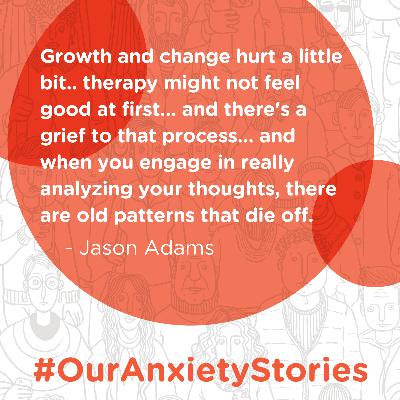
Jason Adams, a dad of twins/husband, author of the book, OCDad: Learning to Be a Parent With a Mental Health Disorder, a musician, and a guy with OCD, in that order, candidly shares his journey with OCD in this #OurAnxietyStories, the OCD Series.
What started as typical new-parent anxieties after the birth of his twin sons in 2019, quickly evolved into severe OCD symptoms, including intrusive thoughts about his children's safety. This strain affected his relationships and daily life, prompting him to seek therapy and a formal diagnosis.
Through treatment, Jason learned to manage his OCD, though balancing his needs with family responsibilities was tough. He points out the importance of understanding how OCD impacts loved ones and not just the individual. Jason highlights the transformative journey of understanding and acceptance, acknowledging the temporary discomfort of change and the long-term benefits of these therapeutic approaches. His openness about integrating clinical strategies with compassionate family dialogue emphasizes the collaborative effort necessary to manage OCD’s effects within family life.
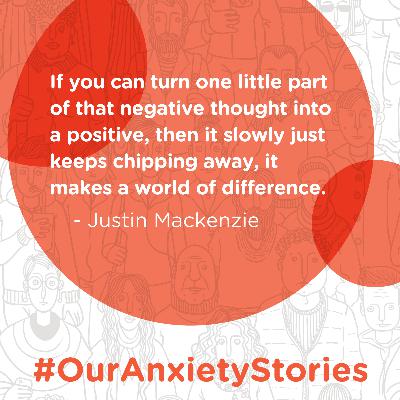
In a candid conversation, Justin Mackenzie shares his journey with obsessive-compulsive disorder (OCD), detailing the challenges and triumphs he faced from his early teens through high school and beyond. Diagnosed around seventh or eighth grade, Justin reflects on how debilitating OCD impacted his daily life, academics, and relationships, often manifesting as intrusive thoughts that consumed his mind. He emphasizes the common misconception surrounding OCD, distinguishing his experiences from the more benign behaviors often associated with the disorder.
Justin highlights the importance of understanding that OCD is not who he is but rather a condition he navigates. Ultimately, his story serves as a beacon of hope, reminding listeners that recovery is possible and that support is essential in overcoming the hurdles of mental illness.
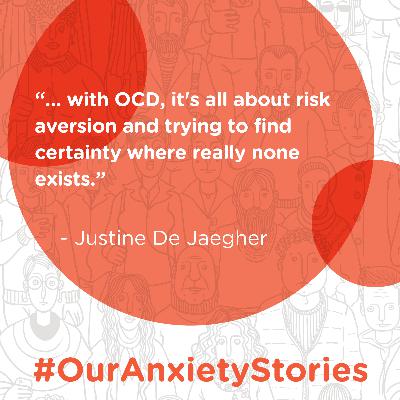
In Part 2 of this OCD Podcast, Justine De Jaegher details a personal journey with OCD, highlighting her experience with various OCD subtypes such as harm, religious scrupulosity, gender or sexual orientation OCD, and perinatal OCD. Justine discusses the transformative impact of exposure and response prevention (ERP) and highlights the importance of tailoring treatment to be inclusive and respectful. The conversation emphasizes the diversity of OCD presentations, challenges with accessing appropriate treatment, the stigma surrounding taboo subtypes and the need for systemic reform to improve accessibility and equity in mental health services. Justine encourages advocacy to advance mental health awareness and policy changes.
In Part 1 of this OCD podcast, we dive into the personal journey of Justine De Jaegher who has faced the challenges of obsessive-compulsive disorder (OCD) from a young age. Justine shares her experiences from when OCD first manifested with overwhelming intrusive thoughts about harm coming to the people around her, how these thoughts escalated into compulsive checking behaviours, and how the stigma and misunderstanding surrounding OCD complicated her path to diagnosis and treatment. Throughout this candid conversation, Justine talks about the evolution of her OCD into themes like religious scrupulosity and perinatal OCD, the impact it had on her life, finding the right treatments, and the importance of advocacy and awareness in improving access to effective OCD treatment. This discussion not only sheds light on the realities of living with OCD but also offers hope and insight for those navigating similar struggles.
In this episode of #OurAnxietyStories, the OCD Series, Dr. Robert Selles, a registered psychologist joins Mark Antczak, Anxiety Canada’s clinical counsellor to explore how families and caregivers can support children dealing with Obsessive-Compulsive Disorder (OCD). They talk about recognizing common OCD symptoms in children, understanding when these behaviours become problematic, and the influence of growing up and transition periods on OCD. Dr. Selles offers thoughtful insights on validating and supporting a struggling child while finding self-compassion as a caregiver. Join us for insightful advice on managing these challenges and ensuring that children and caregivers receive the support they need, distinguishing it from anxiety, managing distressing behaviours, and providing reassurance and self-care strategies.
Discover how cognitive therapy is used to treat OCD, its key components, and how it differs from ERP. Learn about thought-action fusion, cognitive distortions, and real-life examples in this insightful podcast episode with Dr. Maureen Whittal, an acknowledged expert in Cognitive Behavioural Therapy (CBT) and internationally known for her work in obsessive-compulsive disorder (OCD).
In this episode of #OurAnxietyStories, the OCD Series, Mark Antczak, from Anxiety Canada interviews Dr. Peggy Richter, a leading expert in obsessive compulsive disorder (OCD). Dr. Richter, known for her groundbreaking research on the genetic and biological underpinnings of OCD, discusses how to effectively advocate for yourself, access support, and explore various treatment options including medications and therapies. Discover insights from the head of Canada’s premier residential OCD treatment program and a professor at the University of Toronto about effective strategies and resources for managing OCD and supporting loved ones.
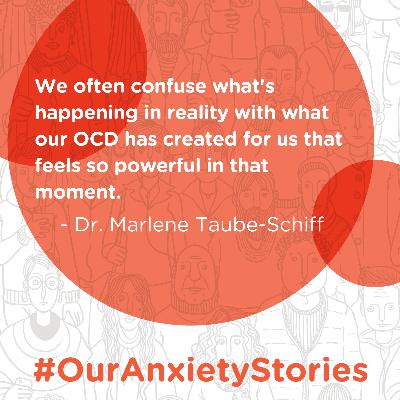
In this episode of the #OurAnxietyStories podcast, the OCD series, Mark Antczak, Anxiety Canada’s clinical counsellor, is joined by Dr. Marlene Taube-Schiff. Dr. Taube-Schiff is a registered psychologist with expertise in OCD and anxiety disorders. She founded and is the director of Forward Thinking Psychological Services and co-founded the Sunnybrook Intensive Services Program for OCD. Together, they explore the symptoms and criteria for OCD, the interplay between anxiety and OCD, making meaning of our thoughts, and various strategies for managing intrusive thoughts and behaviours.

To see the live recording of this episode, check out our YouTube channel.Stress is a common anxiety trigger, but because a little stress is normal, it can be hard to identify when stress has become a problem.
In this episode of #OurAnxietyStories, Mary-Ann Booth shares the pressure and physical impact of stress and anxiety after being elected Mayor of West Vancouver in BC, Canada.
Mary-Ann’s demanding, fast-paced election campaign increased her adrenaline so much that she felt increasingly “hyped up,” even having tingling in her legs. Because she was used to high-pressure situations after working in courtrooms as a lawyer for years, she did not feel concerned by the physical sensations. She won the election and was elated—and didn’t think she was experiencing an abnormal amount of stress.
However, shortly after being elected, she recalls experiencing a “physical crash” from anxiety. She felt fear and a loss of confidence, telling her loved ones she didn’t think she could go through with being mayor. As a natural problem solver, she worked to improve her mental health like she would any other challenge. Exercise, yoga, and mindfulness helped Mary-Ann overcome anxiety—something she is happy to have experienced because it increased empathy for people with mental health challenges. Mary-Ann's episode highlights how powerful it is for leaders to share about mental health. She notes trying to embrace life's ups and downs and that discomfort is not a bad thing, so though she still fears not being busy, she knows she's on her way to living a less stressful life.
Stress is the response of your body and mind to demands placed on you. When you feel threatened, your brain releases chemicals called hormones that send alarm signals throughout your body. These hormones prepare your body to act against any perceived threats.
Work can be an ever-present source of stress—especially in situations with high expectations, like in Mary-Ann’s case. Major life changes can also cause stress, even when the new life events are positive. To learn more about stress and what you can do about it, check out this HeretoHelp BC resource from CMHA. Find more anxiety resources on Anxiety Canada’s Get Help page.
About the Guest
Mary-Ann Booth was elected the mayor of West Vancouver in 2018 after two terms on City Council from 2011 to 2018. People who know Mary-Ann describe her as an inclusive, collaborative, thoughtful leader who works to improve her community. She served as a school trustee with the West Vancouver Board of Education from 2005 to 2011. Before public service, she practiced law for 12 years, including positions as a provincial crown prosecutor and in-house corporate counsel.
***
#OurAnxietyStories is brought to you by Anxiety Canada™, a leader in developing free evidence-based resources, including the free anxiety-management app, MindShift CBT. To learn more about Anxiety Canada, visit www.AnxietyCanada.com.
Anxiety Canada is proud to be affiliated with HeretoHelp, a project of the BC Partners for Mental Health and Substance Use Information. The BC Partners are funded by the Provincial Health Services Authority.

To see the live recording of this episode, check out our YouTube channel.
Because anxiety presents differently for everybody, it can sometimes be easy to miss.
Ayla Tesler-Mabé grew up with parents working as psychology professionals, so she was well-versed in anxiety from a young age. However, neither Ayla nor her family realized she had been grappling with anxiety and perfectionism. Ayla had fainted as a child, but it took fainting on a flight as a young adult—and waking up to "a good hundred people staring"— to investigate further.
A note: For anyone who fears fainting from anxiety, know that it is not typical. A sudden and significant drop in blood pressure causes fainting. When you’re anxious, your blood pressure rises. So, it’s extremely unlikely that you will faint, even when you have a panic attack.
However, for Ayla, fainting was the catalyst to seek answers. She realized that beneath her outwardly calm demeanour, her nervous system felt “heightened.” She was living with a crippling fear of failure that she admits drove her success at times but was not the most pleasant motivator.
Medication and therapy helped Ayla come to terms with and manage her anxiety. She explains that medication helped her “deal with some of the physical symptoms” that often prevented her from cementing healthy habits in place. Ayla’s episode touches on how important it is to use coping tools like therapy even when things are going well. “You have to outsmart yourself sometimes,” Ayla says, “especially when you know you have negative habits you’ve built.”
If you are interested in learning more about helpful therapies for anxiety and other mental health challenges, you can learn more about cognitive behavioural therapy (CBT) on our website. For free anxiety management tools based on CBT, check out our free app, MindShift CBT. Another resource for young people and families working to support youth with their mental health is FamilySmart’s helpful ‘In the Know’ video series. Learn more at www.familysmart.ca.
About the Guest
Ayla Tesler-Mabé is a singer, songwriter, and multi-instrumentalist living in Vancouver, BC. Showcasing her musical talents online has earned her millions of views on her YouTube and TikTok accounts. She is an accomplished guitarist who has performed (and collaborated with) artists like Willow Smith. From 2017-2019, she was a member of the band Calpurnia with Finn Wolfhard, performing on Jimmy Kimmel Live and starring in a Weezer music video with the group. You can listen to Ayla’s latest solo single, Give Me a Sign, on your favourite music streaming service. In addition to her latest solo release, she has new music in the works with her band Ludic, whose sound blends vintage and modern soul, funk, jazz, and pop.
***
#OurAnxietyStories is brought to you by Anxiety Canada™, a leader in developing free evidence-based resources, including the free anxiety-management app, MindShift CBT. To learn more about Anxiety Canada, visit www.AnxietyCanada.com. Anxiety Canada is proud to be affiliated with HeretoH...

Did you know that panic attacks can cause physical symptoms like chest pain, shortness of breath, and heart palpitations—and even be mistaken for a medical emergency?
In this episode of #OurAnxietyStories, Tom Power shares his journey with anxiety—something he didn’t realize he struggled with until his adult years. Tom recalls a terrifying incident in his mid-twenties at a social gathering where he thought he had a heart attack. “All I could think about was, what is happening to me?” Tom shares, “Why am I feeling this way? Am I having a heart attack? Am I having a stroke? What is going on?"
Tom sought medical attention only to learn it was a panic attack. He was also diagnosed with panic disorder. In this episode, Tom reflects on several instances of anxiety in his life, including at the dentist and the grocery store, and while interviewing Academy Award-winning director Guillermo del Toro.
With therapy, lifestyle changes, and self-reflection, Tom has done the work to put his panic "in remission." He now recognizes that experiencing the unlikely catastrophe of losing his father to an illness after only 4-5 months, along with several other personal and professional life changes, fueled negative thinking patterns.
Through exposure therapy, Tom learned that panic attacks only last so long and that he can get through them—an invaluable lesson that has helped him until this day. Anxiety is still present in Tom's life, but he shares that cognitive behavioural therapy (CBT), limiting substances like cannabis and alcohol, and daily meditation has helped him manage it.
If you or someone you know is experiencing a panic attack, it’s important to remember that you are not in danger. If experiencing chest pain during a panic attack, know that it is simply a result of muscle tension (part of our body’s natural “fight-flight-freeze” response). To learn more about panic, check out HeretoHelp BC’s resource on Panic Disorder.
***
#OurAnxietyStories is brought to you by Anxiety Canada™, a leader in developing free evidence-based resources, including the free anxiety-management app, MindShift CBT. To learn more about Anxiety Canada, visit www.AnxietyCanada.com.
Anxiety Canada is proud to be affiliated with HeretoHelp, a project of the BC Partners for Mental Health and Substance Use Information. The BC Partners are funded by the Provincial Health Services Authority.
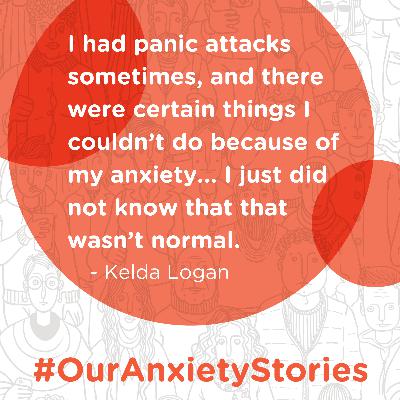
Fear of the unknown, dwelling on the future, and thinking in “what-if” scenarios can be major anxiety triggers, especially for those facing big life changes.
In this episode of #OurAnxietyStories, Kelda Logan reflects on how anxiety has manifested throughout her life, including during childhood, becoming a parent, and her battle with breast cancer. Like many, Kelda didn’t know she had anxiety in her earlier years. She thought her experience with perfectionism, panic attacks, avoidance, and her fear of spiders, flying, and highways were normal. It wasn’t until Kelda became a mom and failed a postpartum depression screening test, despite not being “sad,” that she realized something else might be going on. Kelda emphasizes that for her, meditation and mindfulness are of great help, highlighting that she shared these tools with her students and other faculty members during her years as an educator. Looking at the silver lining, Kelda is proud to share that although she’s faced many trials and tribulations throughout her life, she’s now “more aware and more resilient.”
Anxiety Canada Scientific Advisory Committee member, Dr. Melanie Badali, shares the importance of learning to identify anxiety: “being aware of anxiety can help us understand and manage it. Naming anxiety can help us tame anxiety.” Though anxiety is normal, it’s important to watch out for warning signs that anxiety may be becoming a problem.
During Kelda’s journey, anxiety seemed to lurk in the background in her early years, but it wasn’t until she became a mother that she recognized the warning signs. Dr. Badali says this is normal, sharing that “anxiety can become amplified during periods of increased responsibility such as having a new baby.” According to Dr. Badali, “an important step in managing anxiety involves facing feared situations, places, or objects. It is normal to want to avoid the things you fear; however, avoidance prevents you from learning that the things you fear are not as dangerous as you think.” Dr. Badali adds that “workarounds” and avoidance quiet anxiety in the moment but fuel it in the long run. “Kelda is inspiring in that she faced her fears. She didn’t let anxiety continue to make her life smaller and smaller. She got back on the highway and is even able to fly.”
If you or someone you know is a new mom struggling with postpartum anxiety, you may find HeretoHelp BC’s article “New Moms Feeling Anxious” helpful. The article provides valuable information on managing and coping with postpartum anxiety, including tips on seeking support, finding time for self-care, and managing stress. Remember to take things one day at a time, and don’t hesitate to reach out to your healthcare provider if needed.
About the Guest
Kelda Logan is a dedicated educator, loving mother, and cancer survivor. Despite facing a difficult breast cancer diagnosis, Kelda remained strong and determined to overcome the disease. Her anxiety issues predate the cancer diagnosis, but the experience of facing her mortality has brought a new level of anxiety that she has had to learn to manage. Despite these challenges, Kelda has remained positive and determined to live each day to the fullest, focusing on her family and work as an educator, as well as her own personal growth and well-being.
***
#OurAnxietyStories is brought to you by Anxiety Canada™, a leader in developing free evidence-based resources, including the free anxiety-managemen...
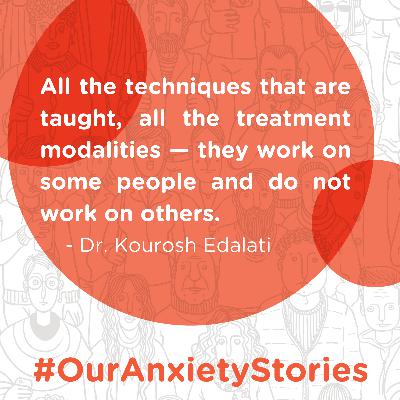
When it comes to treating anxiety and other mental health disorders, there isn’t a ‘one-size fits all’ treatment approach.
In this episode of #OurAnxietyStories, Dr. Kourosh Edalati shares his experience as medical director and CEO at Elumind Centre for Brain Excellence, a private outpatient healthcare centre specializing in optimizing brain functions through various neurotherapeutic modalities. Dr. Edalati highlights the importance of building rapport with patients and creating individualized treatment plans, stressing that different people may respond to different treatments. Dr. Edalati also explains why an integrated approach to mental and brain health, such as the ‘roads, cars, and driver’ model used at Elumind, can be beneficial when treating patients with mental health challenges including anxiety.
If you’d like to learn more about your own mental well-being, consider taking one of HeretoHelp BC’s screening self-tests. Although self-tests are not a substitute for a medical diagnosis, they are a good way to start a conversation with your doctor or someone who supports you. You can even print out your results and bring them to your appointment, which can be helpful if you are nervous about talking with your doctor or have difficulty describing what you’re feeling.
About the Guest
University of British Columbia Psychiatry graduate, Dr. Kourosh Edalati, is the founder of Elumind, a private outpatient healthcare centre specializing in optimizing brain functions through various neurotherapeutic modalities. His clinical experience includes working in private practice and at BC Children’s Hospital’s Child and Family Clinic, specializing in PTSD in children and adolescents. Dr. Edalati is also a clinical instructor for the department of psychiatry at the University of British Columbia.
***
#OurAnxietyStories is brought to you by Anxiety Canada™, a leader in developing free evidence-based resources, including the free anxiety-management app, MindShift CBT. To learn more about Anxiety Canada, visit www.AnxietyCanada.com.Anxiety Canada is proud to be affiliated with HeretoHelp, a project of the BC Partners for Mental Health and Substance Use Information. The BC Partners are funded by the Provincial Health Services Authority.
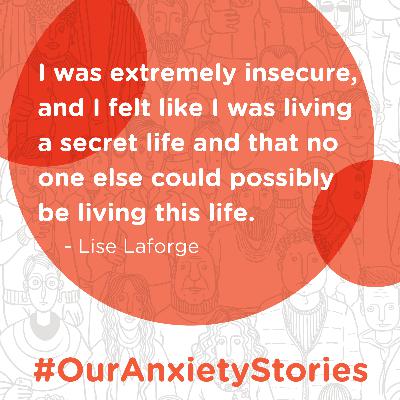
Did you know that anxiety and other mental health conditions, like schizophrenia and depression, can drastically impact the trajectory of a person’s life?
In this episode of #OurAnxietystories, Lise Laforge reflects on her childhood and how it’s connected to her anxiety journey. At age 8, Lise was told she was adopted, which eventually led her to search for her birth mother. At 21, Lise received a call from Children’s Aid to say that they’d found her mother, but the news of her identity sparked an anxiety attack: Lise learned that her biological mother was a homeless woman she’d encountered before. She also learned that her mother had schizophrenia that went untreated for decades and had been a victim of domestic violence. Through learning about her mother, Lise gained a new understanding of homeless communities and some of the root causes of homelessness. Additionally, through therapy and speaking openly about the past, she’s learned to accept her situation and that she is “meant to be on this earth.”
Anxiety Canada Scientific Advisory Committee member, Dr. Kyle Burns, says that this episode stresses the importance of relationships and how these can shape our anxiety. “We often describe anxiety in terms of the ‘fight-or-flight’ reflex and it certainly can be an alarm system for physical threats. But interpersonal anxiety can be just as powerful. As humans, one of our most basic needs is to belong and to connect and we often miss or give greater importance to physical needs. This is an important issue in adoption where the emotional sense of belonging and safety are just as important as food and shelter.” Dr. Burns adds that acceptance is powerful: “John and Lise noted that anxiety is not really ‘cured’ and at the same time, they have both figured out a way to live. Acceptance can be hard to define, but I think it might be helpful for listeners to know a couple of things that acceptance is not. Acceptance is not approval, it is not saying that something is good (or bad, for that matter), and it is also not giving up. Acceptance is a sort of acknowledgement, and at the same time moving forward... How a person comes to a place of acceptance is likely going to be unique and individual, yet it’s stories like Lise’s that can give us some [guidance] on how we can get there.”
If you have a loved one or family member who lives with a mental illness, communicating with them may be difficult. This is because mental illnesses can affect a person’s ability to concentrate or think clearly. BC Schizophrenia Society’s ‘Tips for Communicating with a Loved One who has a Mental Illness,’ is a PDF resource for youth that introduces basic tools for effective communication. This can help families and friends, and people living with mental illness, better communicate with one another.
About the Guest:
After learning she was adopted as a child, Lise Laforge spent years looking for her birth mother, only to deal with a long struggle to accept the shocking truth that her mother was an unhoused person she’d been passing on the street for years. Now, Lise is an advocate for the homeless and the mental health challenges they often disproportionately endure.
***
#OurAnxietyStories is brought to you by Anxiety Canada™, a leader in developing free evidence-based resources, including the free anxiety-management app, MindShift CBT. To learn more about Anxiety Canada, visit www.AnxietyCanada.com.
Anxiety Canada is proud to be a...
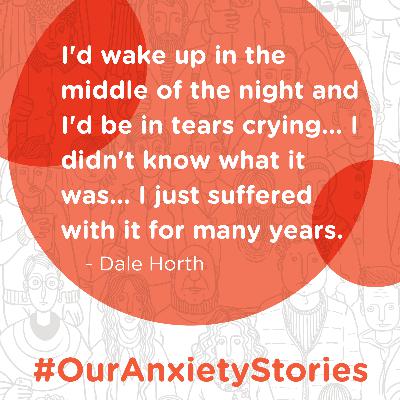
Did you know men are nearly twice as unlikely to be diagnosed with an anxiety disorder compared to women?
In this episode of #OurAnxietyStories, Dale Horth highlights the barriers preventing men from seeking diagnosis and treatment. Looking back on his experience working in the logging industry, Dale shares how the hyper-masculine culture of certain blue-collar jobs can make it difficult for men to seek help. “Only the weak need help,” or so he was taught. Throughout his journey, Dale experienced substance use challenges, depression, post-traumatic stress disorder (PTSD), anxiety, and panic attacks. During the peak of his challenges, Dale visited the hospital 58 times in a single year. After overcoming his mental health and substance use challenges, as well as unthinkable physical injuries, Dale is now pursuing a career change and being retrained in Occupational Health Safety Administration to better support men’s mental health in the workplace.
Looking for resources to support yourself or a loved one experiencing challenges with substance use? The Canadian Institute for Substance Use Research (CISUR) has created several informative workbooks to help those who use substances. Workbooks include ‘Supporting people who use substances,’ a basic introduction to substance use along with tips to engage in dialogue with a friend or family member around substance use, as well as ‘Substance Use and Young People,’ a guide for friends, family and a youth’s caring community on how to initiate and continue dialogue around substance use.
About the Guest:
Dale Horth worked for many years in the logging industry in British Columbia, Canada. According to Dale, his battle with PTSD, anxiety, and depression has taken him to hell and back. After several suicide attempts and a successful recovery program, Dale is now being retrained in Occupational Health Safety Administration. Authoring “Why Men Suffer in Silence: A Story of Hope and Recovery,” Dale is now an advocate for men’s mental health, challenging blue-collar, testosterone-driven industries, and encouraging men to speak out and get help.
***
#OurAnxietyStories is brought to you by Anxiety Canada™, a leader in developing free evidence-based resources, including the free anxiety-management app, MindShift CBT. To learn more about Anxiety Canada, visit www.AnxietyCanada.com.
Anxiety Canada is proud to be affiliated with HeretoHelp, a project of the BC Partners for Mental Health and Substance Use Information. The BC Partners are funded by the Provincial Health Services Authority.
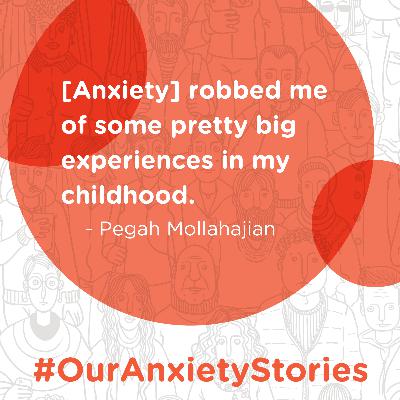
Dealing with anxiety or finding strategies for anxiety is tough at any age, but how can you manage anxiety as an adult when you didn’t have access to the right resources as a child?
In this episode of #OurAnxietyStories, Anxiety Canada Youth Network alum Pegah Mollahajian shares her story, and registered psychologist Dr. Marlene Taube-Schiff offers her clinical expertise and insights into group therapy, exposure therapy, cognitive behavioural therapy (CBT), and more.
At 25, Pegah reflects on being an anxious child. As a young Iranian Canadian, she felt her family did not know how to track down the right anxiety resources “at the right time.” Dr. Taube-Schiff confirms that anxiety disorders often appear at a young age and go underdiagnosed, adding that early intervention is important but we can still treat adult anxiety. When Pegah looks back, she feels her anxiety prevented her from many new childhood experiences and wonders what could have been if she’d had the right treatment. Dr. Taube-Schiff stresses that when anxiety hits during formative, developmental years, it can seemingly interrupt our lives and personal growth, but we can see getting better as a real opportunity to move forward. Though Pegah had no formal anxiety treatment or strategies as a child, she found ways to cope as an adult. When Pegah’s anxiety re-emerged in university, she began to push herself out of her comfort zone—something Dr. Taube-Schiff notes could be considered “informally” engaging in exposure therapy.
Eventually, Pegah found Anxiety Canada’s MindShift CBT Groups, an 8-session online group therapy program for small groups of adults (aged 19+) with mild to moderate anxiety. Since participating in MindShift CBT Groups, Pegah has learned to analyze, challenge, and balance her anxious thoughts. Dr. Taube-Schiff and host John Bateman also touch on the benefits of group therapy: it not only offers the same content and skills as individualized therapy, but participants can find comfort in connecting with others, realizing their similar worries and symptoms, and knowing they’re not alone.
This episode touches on how important it is to connect families with the resources they need. FamilySmart’s ‘In the Know’ videos and events provide expert speakers on topics important to young people, families, and those working to support the mental health of children and youth. For more information, visit www.familysmart.ca.
About the Guest:
Pegah Mollahajian is young adult who recently completed her master’s degree in public health at the University of Toronto. As an Iranian Canadian child, she experienced anxiety but didn’t have the resources to understand what it was or how to cope with it. After receiving help from Anxiety Canada’s MindShift Program, she applied her new understanding of anxiety and desire to advocate for mental health by joining the Anxiety Canada Youth Network for the 2021-22 season.
Dr. Marlene Taube-Schiff, a registered psychologist for over 15 years, offers her expertise and shares insights with Pegah and John. Dr. Taube-Schiff’s clinical work is focused on the delivery of scientifically supported treatments for obsessive compulsive and related disorders, anxiety disorders, depression-related issues, and a wide range of emotional and behavioural problems.
***
#OurAnxietyStories is brought to you by Anxiety Canada™, a leader in developing free evidence-based resources, including the free anxiety-management app, MindShift CBT. To learn more about Anxiety Canada, visit www.AnxietyCanada.com.<...
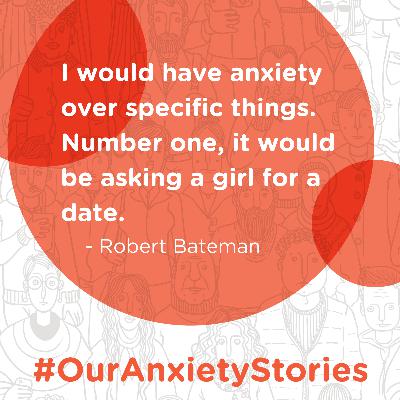
Did you know that everyone experiences anxiety in some way or another?
In this episode of #OurAnxietyStories, renowned artist Robert Bateman is interviewed by his son, #OurAnxietyStories host John Bateman. Despite having lived a fairly stressful lifestyle, as far as John recalls, his dad never experienced anxiety—or so it appeared. Robert shares that although he does not have an anxiety disorder, he has in fact experienced anxiety. Robert shares that learning how to cope and manage worries early on in life allowed him to reduce anxiety in his day-to-day. This episode of #OurAnxietyStories was originally filmed for Action Anxiety Day 2022, and a video is available here.
Is anxiety getting in the way of your life? Consider MindShift® CBT, our free anxiety-relief app, available on IOS and Android devices. Using scientifically proven strategies based on cognitive behavioural therapy (CBT), MindShift CBT can help people with mild to moderate anxiety learn to relax and be mindful, develop more effective ways of thinking, and use active steps to take charge of your anxiety. A new feature, the Community forum, now enables you to find and offer peer-to-peer support.
About the Guest:
Robert Bateman is a renowned Canadian naturalist and painter. Robert’s realistic and evocative painting style reflects his deep understanding and appreciation for nature, featuring wildlife in its natural habitat and encouraging the viewer to closely observe the natural world. Besides being one of Canada’s foremost artists, he is also a naturalist recognized by the Audubon Society as one of the 20th century’s “heroes of conservation.” Robert has received numerous honours and awards, including the Order of Canada and fourteen honorary doctorates. He has been the subject of several films and books, including The Art of Robert Bateman (1981), The World of Robert Bateman (1985), An Artist in Nature (1990), Natural Worlds (1996), Thinking Like a Mountain (2000), Birds (2002), New Works (2010), Life Sketches (2015) and Bateman’s Canada (2017), as well as several children’s books.
***
#OurAnxietyStories is brought to you by Anxiety Canada™, a leader in developing free evidence-based resources, including the free anxiety-management app, MindShift CBT. To learn more about Anxiety Canada, visit www.AnxietyCanada.com.
Anxiety Canada is proud to be affiliated with HeretoHelp, a project of the BC Partners for Mental Health and Substance Use Information. The BC Partners are funded by the Provincial Health Services Authority.
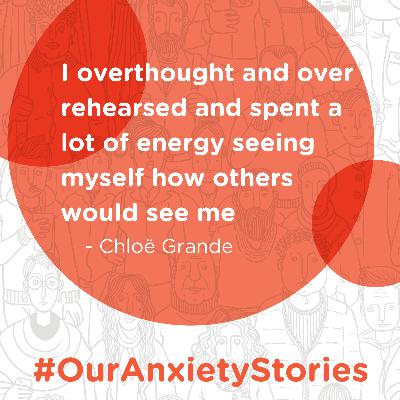
Did you know that eating disorders and anxiety disorders can overlap?
In this episode of #OurAnxietyStories, Chloë Grande reflects on the intersection of anxiety and anorexia. Diagnosed with anorexia at 15, Chloë shares that a recent eating disorder relapse during the COVID-19 pandemic led her to recognize the role social anxiety plays in her mental health journey. Having studied communications, Chloë created a mental health blog in hopes of helping others with similar challenges feel understood and less alone.
If you or someone you know is concerned about eating habits or body image, check out Jessie’s Legacy’s free and anonymous body image and eating attitudes online self-tests. These self-tests can help test-takers reflect on how their habits and beliefs may impact their quality of life and whether they could benefit from additional support or resources. Please note: self-tests are not a diagnostic tool and will not provide or confirm a diagnosis. To learn more about how anxiety and disordered eating may overlap, visit HeretoHelp.BC.Ca.
About the Guest:
Chloë Grande is a communications specialist turned eating disorder recovery writer, speaker and activist. In ED recovery for 10+ years, she is open about her experiences with mental illness and educating others on the stereotypes and stigmas that exist. She’s a fan of yoga and reading, and draws inspiration from individuals who embrace their vulnerabilities. Her advocacy work has been featured in the media on CBC, CP24, Global News and more. You can learn more about Chloë by visiting her website, www.chloegrande.com, or following her on Instagram and Twitter: @Chloshegrows.
***
#OurAnxietyStories is brought to you by Anxiety Canada™, a leader in developing free evidence-based resources, including the free anxiety-management app, MindShift CBT. To learn more about Anxiety Canada, visit www.AnxietyCanada.com.
Anxiety Canada is proud to be affiliated with HeretoHelp, a project of the BC Partners for Mental Health and Substance Use Information. The BC Partners are funded by the Provincial Health Services Authority.
Work anxiety can impact anyone, but can you imagine having an anxiety attack right before you need to go live on air?
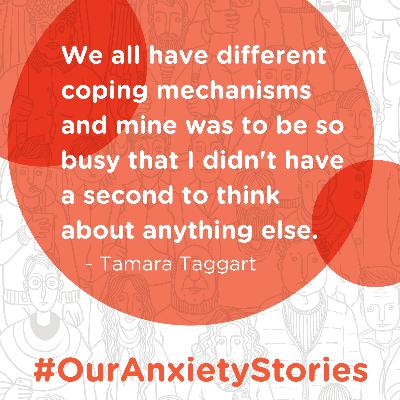
In this episode of #OurAnxietyStories, Tamara Taggart shares her story. As a successful broadcaster and speaker, she thrived in her professional life, with many around her noting that she was the busiest and most successful people they knew. But behind the scenes, she felt “odd,” and later realized that she’d been dealing with undiagnosed anxiety and depression for years. She coped by staying busy through work and volunteering so that she never had to “think about anything else.” From childhood chaos, to having a child diagnosed with Down Syndrome, to her own cancer diagnosis, Tamara was in survival mode for as long as she can remember. Tamara and host John Bateman discuss her journey to understand and work through her anxiety—a journey she is still on today.
This episode explores how a support system can help you cope with anxiety and mood disorders. If you or someone you know is struggling with a mood disorder, consider the Mood Disorders Association of BC's peer-led support groups. MDABC support groups are a safe place to share your story and find support. For more info, visit www.mdabc.net/resources/mdabc-support-groups.
Additionally, if this episode resonates with you, check out ‘Visions: BC’s Mental Health and Substance Use Journal,’ an award-winning magazine that brings together many views on mental health and substance use. Visions features different aspects of wellness, personal experiences, and interesting discussions. The journal is written by and for people who have experienced mental health or substance use problems or used mental health or addictions services, along with service providers, family and friends, community advocates, and leaders/decision-makers.
About the Guest:
Tamara Taggart was a major broadcaster on national television for over 30 years. Now, she’s a writer, moderator, keynote speaker, and advocate for mental health and down syndrome. Tamara’s activism and advocacy, plus her natural curiosity and talent for interviewing, led her to her own podcast. She hosts ‘Telus Talks with Tamara Taggart,’ where she interviews different experts, thinkers, and leaders, and advocates for healthcare for people with disabilities and marginalized communities.
***
#OurAnxietyStories is brought to you by Anxiety Canada™, a leader in developing free evidence-based resources, including the free anxiety-management app, MindShift CBT. To learn more about Anxiety Canada, visit www.AnxietyCanada.com.
Anxiety Canada is proud to be affiliated with HeretoHelp, a project of the BC Partners for Mental Health and Substance Use Information. The BC Partners are funded by the Provincial Health Services Authority.
We at Anxiety Canada are always looking for ways to improve the listener experience. Although this contest is closed, you can still complete the listener feedback survey at https://www.surveymonkey.com/r/OAS22-23.
Thanks for tuning in, and lookout for new episodes later this year!
***
#OurAnxietyStories is brought to you by Anxiety Canada™, a leader in developing free evidence-based resources, including the free anxiety-management app, MindShift CBT. To learn more about Anxiety Canada, visit www.AnxietyCanada.com.
Anxiety Canada is proud to be affiliated with HeretoHelp, a project of the BC Partners for Mental Health and Substance Use Information. The BC Partners are funded by the Provincial Health Services Authority.

Comments

Download from Google Play

Download from App Store
 United States