Discover
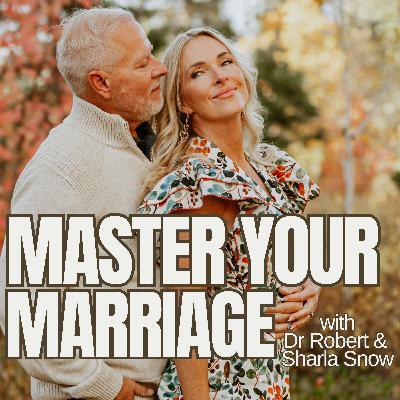
Master Your Marriage
Author: Sharla and Robert Snow
Subscribed: 101Played: 2,529Subscribe
Share
© Copyright 2026 Sharla and Robert Snow
Description
The average couple waits 6 years to get help in their marriage. That's 6 years of pain, hurt, frustration and lost opportunity.
This podcast is designed to help you NOT become a part of that statistic.
Hosted by Dr. Robert and Sharla Snow — themselves married for 31 years — The Master Your Marriage show is here with straight-talking guidance on how to fill your marriage with fun, friendship and love, without it ever feeling like "hard work."
No matter how long you've been struggling with your marriage, or how long it's been since you've felt that "spark," we promise you, there is hope!
Your MASTERFUL marriage starts here.
This podcast is designed to help you NOT become a part of that statistic.
Hosted by Dr. Robert and Sharla Snow — themselves married for 31 years — The Master Your Marriage show is here with straight-talking guidance on how to fill your marriage with fun, friendship and love, without it ever feeling like "hard work."
No matter how long you've been struggling with your marriage, or how long it's been since you've felt that "spark," we promise you, there is hope!
Your MASTERFUL marriage starts here.
151 Episodes
Reverse
In this episode, Sharla and Robert sit down with Casey and Megan Caston of Marriage 365. They reveal powerful tools and habits that any couple can implement today to build a healthier, more connected relationship—whether you're in crisis or just looking to grow together.Key Topics:The importance of focusing on self-improvement first in marriageHow habits like specific love language actions foster connectionThe four-step apology framework to rebuild trustThe role of intention and setting relationship goalsMaking systems and structures work for your marriageThe impact of consistent communication and small daily actionsBreaking generational cycles of divorce and conflictHow to create and maintain a safety “bubble” in your relationshipResources:Marriage 365 WebsiteThe Marriage Habit (Book) (search for title)Get in TouchWebsite: MasterYourMarriage.usInstagram: https://www.instagram.com/masteryourmarriageFacebook: https://www.facebook.com/MasterYourMarriage/
With everything heavy in the world right now, I’ve been feeling that “stuck” feeling myself — so I recorded this last-minute episode for you.We’re talking about the viral “bed rotting” trend and what’s really happening in your body when you can’t get out of bed. You’ll learn:• The three nervous system states (ventral vagal, sympathetic, dorsal vagal)• How they line up with the Window of Tolerance you’ve heard me talk about before• What widens or narrows your window• How to tell if you’re in genuine rest, passive consumption, or full shutdown• The 6 smallest, most effective tools to gently come back onlineWhether you’re in couples coaching with me or a longtime listener, these tools will help you and the person you love move through shutdown with compassion instead of criticism. Your nervous system is just trying to keep you safe — and now you’ll know exactly how to work with it.Key TakeawaysInside the Window = ventral vagal (calm, clear, restorative rest)Above the Window = sympathetic hyperarousal (wired & anxious)Below the Window = dorsal vagal shutdown (numb, heavy, frozen)Bed rotting is usually passive consumption or sliding into shutdown — not true restYour window size changes based on sleep, boundaries, connection, stress & recoveryThe fastest way out of shutdown: micro-movement → 5-4-3-2-1 grounding → voice → get vertical → name what you’re avoiding → reality-check your bandwidthHarshness never works as well as loving firmness (with yourself or your partner)Resources:The 5-4-3-2-1 Grounding Technique (do this while still in bed!)Name out loud or silently:5 things you can see4 things you can touch/feel3 things you can hear2 things you can smell1 thing you can tasteTakes 60–90 seconds and sends immediate safety signals to your nervous system.Next StepsIf this helped you feel less alone in the “stuck” feeling, share it with your partner or someone you love. Subscribe, leave a quick rating or review (it really helps the show), and remember — putting each other first and doing the small things often is what creates a big impact in your marriage.Get in TouchWebsite: MasterYourMarriage.usInstagram: https://www.instagram.com/masteryourmarriageFacebook: https://www.facebook.com/MasterYourMarriage/
Get the FREE handout for this episode HEREImagine noticing your partner's distress instantly—and knowing exactly how to soothe it. In this episode, Sharla and Robert dive into partner soothing.Learn how to uncover 2-3 enduring vulnerabilities, avoid triggers, and use simple antidotes to uplift each other. Learn why 24/7 availability isn't codependency (it's a system of mutuality and interdependence), plus get exercises to identify vulnerabilities and a fun "how well do you know your spouse" game. Turn your “couple bubble” into a haven of healing and joy.Your Homework – Do This WeekIdentify vulnerabilities: Brain dump incidents, feelings, patterns—boil to 2-3.Spot partner's: Review past reactions, discuss to confirm.Create antidote lists: Soothers for each vulnerability.Play the game: Test ideas without telling—observe reactions.Discuss: Share lists, spark expertise-building talk.ResourcesWired for Love by Stan Tatkin – Core for vulnerabilities/soothing.The Seven Principles for Making Marriage Work by John Gottman – Enduring vulnerabilities + processing tools.Get in TouchWebsite: MasterYourMarriage.usInstagram: https://www.instagram.com/masteryourmarriageFacebook: https://www.facebook.com/MasterYourMarriage/
GET FREE HANDOUT to accompany this episode HERE:Resentment from unequal decisions? One person dominating finances, parenting, or chores? In this episode, Sharla and Robert explain how to create a "system of governance" in your marriage—drawing from John Gottman's "accepting influence" and Stan Tatkin's shared leadership—to end power struggles, restore parity, and protect your “couple bubble.”Hear real couple stories, our own early parenting struggles, a list of 10 key principles to start your governance system, and a deep dive on "guardrails"—in-moment reminders that interrupt harmful patterns before they escalate.This is how you lead each other without chaos or hurt.Key TakeawaysGovernance isn’t control—it’s a shared constitution for decisions, influence, and implementing principles.Accepting influence (Gottman) means blending strengths—couples who do this are far more likely to thrive.Build principles like "We shield each other from harm" that you both defend selfishly.Guardrails: In-moment reminders (e.g., "Remember our agreement?") interrupt harmful autopilot behaviors before fights escalate.No system = power struggles and resentment; good governance + guardrails = allies and a strong bubble.ResourcesThe Seven Principles for Making Marriage Work by John Gottman – Gold standard for influence and conflict.Wired for Love by Stan Tatkin – Deep dive on shared leadership.In Each Other’s Care by Stan Tatkin – Modern habits for governance.Up Next WeekKeeping each other safe through partner soothingIf this helped you spot a power imbalance, follow, comment, and share! Put each other first this week. ❤️Get in TouchWebsite: MasterYourMarriage.usInstagram: https://www.instagram.com/masteryourmarriageFacebook: https://www.facebook.com/MasterYourMarriage/
She says, “I don’t feel safe.”He hears the words… but doesn’t know what they actually mean in her nervous system.In this episode we finally explain what that sentence really means, why it shows up even in good relationships, and exactly how to build the “couple bubble” — the invisible forcefield that makes her (and him) feel safe again, even when life gets hard.We also talk about why principles beat rules every time, and we give you powerful journaling prompts so you can start creating your own guarantees of safety this week.This is the episode that turns understanding into something you can both feel in your body.Key Takeaways“I don’t feel safe” is rarely about the relationship being unsafe — it’s about the nervous system no longer feeling regulated by your partner.The couple bubble is the practical way you turn safety from a concept into a felt experience.Principles (chosen because they’re good and right for you personally) outlast rules (followed only out of fear or consequences).Both partners must be able to defend a principle selfishly for themselves first — otherwise it’s just a stick, not a carrot.The bubble is a pact: we agree to do things for each other that no one else would be willing to do.Your Homework – Do This WeekPart 1 – Journal privately (10–15 minutes each)What guarantees would you like to receive from your partner inside the bubble? (Be specific. What would make you feel truly safe, even on your worst day?)What guarantees would you like to give your partner? (What are you willing to promise, for your own reasons, because it aligns with the person you want to be?)What principles do you already live by in your personal life (outside the relationship) that you would love to bring into your couple bubble?Looking back, where has your bubble felt leaky in the past? What principle could have protected it?Part 2 – Talk together (no phones, no distractions)Share what you wrote. Listen with curiosity. No defending or fixing. Ask each other:“Why would this principle be good and right for you personally — even if I weren’t in the picture?”That conversation itself starts building the bubble.ResourcesWired for Love by Stan Tatkin – the book that introduced the couple bubble conceptIn Each Other’s Care by Stan Tatkin – his newest, most practical guide to turning these ideas into daily habitsFull list of Stan Tatkin’s Ten Commandments HERENext WeekHow to predict and plan for the mistakes we all make — and set up guardrails that protect the bubble when life gets messy.Rate and ReviewIf this episode finally helped you understand what “I don’t feel safe” really means, please follow, leave us a 5-star rating and a quick review — it helps other couples find the show.Connect With Us
Episode TitleThe Attachment Style Quiz Your Therapist Would Give You (Part 2 of the Secure-Relationship Series)Episode DescriptionMost of what we do in relationships is on autopilot—shaped by how we were cared for (or not) as kids. In this episode, Sharla and Robert unpack the three main attachment styles (Secure, Anxious, and Avoidant), share eye-opening childhood reflection questions, real-life couple stories, and checklists to help you identify yourself. You’ll finally understand why you chase, why they pull away, and how to stop using labels as weapons—so you can actually build the safety and closeness you both crave.Key TakeawaysYour attachment style isn’t a flaw—it’s an adaptation from childhood.Never weaponize labels (“You’re so avoidant!”). Use them for compassion only.Secure relationships require: safety first, equal power, and the relationship that come first.The path to more security = Acceptance of who you both are + owning your impact.You can’t force change in your partner. You create it through consistent safety.Quick Attachment Style Checklists (from the episode)Secure I enjoy closeness but am also comfortable alone. Disagreements don’t shake me. I trust easily.Avoidant I recharge best alone. Closeness can feel smothering. I downplay emotions.Anxious I worry my partner will leave. I need frequent reassurance. Small things feel like big threats.Resources for Deeper LearningMust-Read BooksAttached: The New Science of Adult Attachment and How It Can Help You Find—and Keep—Love by Amir Levine & Rachel Heller → The book that brought attachment theory into everyday relationships.Wired for Love by Stan Tatkin → Deep dive into how your partner’s brain works and how to create real security together.The Power of Attachment by Diane Poole Heller → Excellent for understanding how early wounds show up now and how to heal them.Hold Me Tight by Sue Johnson → Seven conversations that can transform your relationship (Emotionally Focused Therapy classic).Next WeekWe start building that “invisible forcefield” around your relationship—specific tools to create safety and security even when your attachment styles clash.Call to Action!If this episode gave you an “aha!” moment, please leave us a 5-star rating and quick review—it really helps other couples find the show. Share this episode with your partner or a friend who’s stuck in the chase-pullaway cycle. And subscribe so you don’t miss Part 3!Thanks for listening — and remember: put each other first this week. The small things, done often, really do change everything. ❤️
In the premiere of our new series on Secure Functioning Relationships, we dive into why these partnerships are essential in today's chaotic world. Drawing from attachment theory and the work of Stan Tatkin, we explore how secure bonds act as our ultimate source of safety, happiness, and health—serving as a natural antidote to stress, anxiety, and uncertainty. Through personal stories from the COVID pandemic and everyday adventures, discover how threats can either unite or divide couples, and learn the foundational signs of a secure-functioning relationship: being true allies, equal shareholders, and prioritizing your union above all. Whether you're navigating fears, tribalism, or post-pandemic PTSD, this episode lays the groundwork for building a resilient "home base" with your partner. Join us weekly for practical steps to create lasting security in your marriage.Key Topics Covered:The global need for secure relationships amid existential and everyday threatsBenefits of secure functioning: Better mental health, longevity, and stress reductionContrasts with insecure attachments and their health impactsReal-life examples of handling crises as a teamCore principles: Safety at all times, shared power, and putting the relationship firstSubscribe to Master Your Marriage for the full series—next up, actionable strategies to get there. Perfect for couples seeking deeper connection and resilience.Connect with us:https://masteryourmarriage.us/or through social media @masteryourmarriage
In this episode, Robert and Sharla dive into National Quitter’s Day—the second Friday in January when most New Year's resolutions start to fizzle out. Inspired by data from the fitness app Strava, they explore why goals fail, with a special focus on relationship goals like regular date nights or weekly check-ins. The problem isn't you; it's the plan! They break down three major culprits: goals not aligning with your unconscious values, focusing on outcomes instead of building systems through daily rituals, and failing to prepare for inevitable obstacles.Key highlights include:A personal story from Sharla about how a health scare shifted her values and made motivation effortless.Real-life examples of couples infusing laughter into check-ins to make goals stick.The power of "rituals of connection" for compounding small actions into big relationship wins.An introduction to the WOOP technique (Wish, Outcome, Obstacle, Plan) for turning wishes into actionable strategies.Whether you're feeling the Quitter’s Day slump or just want to level up your partnership, this episode offers practical tweaks to realign, rebuild, and resilience-proof your goals. Remember: It's the small things done often that make the greatest impact.Grab our Values Guidebook from the store to uncover your core values and supercharge your motivation. Drop your thoughts in the comments or DM us—what relationship goal are you tweaking today?Follow us for more on building stronger connections. Thanks for listening!
In this episode of "Master Your Marriage," hosts Robert and Sharla Snow challenge the trending notion that January is solely for hibernation and survival mode. While acknowledging the appeal of rest and cozy winter vibes, they argue that growth in your relationship isn't confined to a calendar date—it's a daily choice.Robert and Sharla introduce a fresh framework for setting intentions in your marriage: subtraction, growth, and protection. They adapt three powerful questions to help couples build stronger partnerships:What Has to Die in Your Marriage? Explore limiting beliefs, behaviors, and patterns that are holding you back, like avoiding tough conversations, constant phone distractions, holding grudges, micromanaging, or assuming your partner's needs without asking. The hosts share personal examples and encourage listeners to identify and release these weights.What Has to Grow in Your Marriage? Identify neglected areas (like intimacy or shared adventures) and double down on what's working well (such as weekly check-ins). Robert and Sharla discuss nurturing ambition and direct communication for deeper connection.What Has to Be Protected in Your Marriage? Guard the rhythms, habits, and elements that already strengthen your bond, like trust, quality time, and healthy boundaries.Whether it's January or July, this episode offers actionable insights for intentional relationship growth. Grab your journal, reflect with your partner, and prioritize 1-2 items per question. Share your takeaways with us on social media or in an email!Key Topics Discussed:Trending winter "hibernation" mindset vs. embracing growth anytimeThe pitfalls of endless addition in goal-settingPersonal reflections on limiting beliefs and habitsPractical examples of toxic behaviors to eliminateStrategies for amplifying strengths and protecting what's goodJournaling exercise for couplesConnect with Us:Follow @MasterYourMarriage on Instagram, and FacebookEmail your stories: masteryourmarriage@gmail.com Subscribe and leave a review to support the show!This episode is perfect for couples ready to subtract the negative, grow together, and protect their love in 2026 and beyond.
Episode Description: Kick off 2026 by decluttering your mind and marriage! In this episode, we explore how cluttered beliefs create misery in relationships and share 14 destructive marriage myths backed by research from experts like John Gottman, Murray Bowen, David Schnarch, and Carol Dweck. Learn healthier alternatives to foster deeper connection, reduce resentment, and build a fulfilling partnership. Perfect for couples seeking healthy relationship tips, toxic belief deconstruction, and marriage advice grounded in science.Keywords: toxic marriage beliefs, declutter your marriage, healthy relationship tips 2026, Gottman marriage research, Bowen family systems theory, Schnarch intimacy advice, Harvard happiness study relationships.The 14 Destructive Beliefs & Healthier Alternatives"My spouse should make me happy / complete me." Faulty due to external locus of control leading to lower satisfaction (Australian Study). Alternative: "My spouse is a companion in my happiness—I am responsible for my own emotional well-being.""If they really loved me, they'd know what I need without me saying it." Mind-reading expectations cause conflict (Mind-Reading Study; ResearchGate PDF). Alternative: "Love includes clear, kind communication about my needs and feelings.""A happy marriage means we never fight or have conflict." Gottman's research shows 69% of issues are perpetual (Gottman Institute). Alternative: "Conflict is an opportunity to understand each other better and grow closer through repair.""My partner should change to fix our problems." Satisfaction driven by perceptions, not partner change (PNAS Study). Alternative: "I can only change myself. Leading by example often invites positive shifts in my partner.""Disparate sexual desires mean we're incompatible." Normal in all relationships per Schnarch's "sexual crucible" (Crucible Institute; Psychology Today). Alternative: "Differences in desire are normal and offer growth opportunities.""Keeping score of who does more is fair and necessary." Breeds resentment; generosity boosts satisfaction (Equity Theory Review). Alternative: "We're on the same team. Generosity brings us closer.""My spouse is responsible for my emotional reactions." Bowen theory: Differentiation reduces reactivity (Bowen Center). Alternative: "I am responsible for managing my own emotions.""True love means total agreement on everything." Happy couples disagree on 69% of issues (Gottman Perpetual Problems). Alternative: "We can disagree respectfully; differences enrich us.""If I try harder, they'll finally appreciate me/change." Over-functioning leads to burnout (Bowen Over/Under-Functioning). Alternative: "Healthy relationships thrive on mutual effort and reciprocity.""A little jealousy and control shows how much I care." Links to lower satisfaction (Jealousy Review). Alternative: "Trust and freedom build deep love.""Criticism and contempt are just honest feedback." Top divorce predictors (Gottman Four Horsemen). Alternative: "Kind, specific feedback is honest and effective.""Marriage should stay the same as when we fell in love." Fixed mindset predicts dissatisfaction (Growth Mindset Overview). Alternative: "Marriage is ongoing growth through updated love maps.""If it's hard, it means we're not right for each other." All couples face perpetual issues (Gottman Study). Alternative: "Challenges are normal; we strengthen by working through them.""Marriage is supposed to be incredibly hard work all the time." Relationships predict happiness per Harvard Study (Harvard Gazette; Harvard Health). Alternative: "Meaningful effort is rewarding and creates joy."Resources & Further ReadingThe Gottman Institute - Research on healthy marriages.The Bowen Center - Family systems theory.Crucible Institute - David Schnarch's work on intimacy.Carol Dweck's Growth Mindset.Harvard Study of Adult Development - Longest happiness study.Join the ConversationDownload our FREE Communication Guide to improve your marriage today: Get it here.Visit our website for more resources: MasterYourMarriage.us.Follow us on social: Facebook @MasterYourMarriage | Instagram @MasterYourMarriage.If you enjoyed this episode on toxic marriage...
Ready to reboot your relationship? Grab our brand new workbook, "The Relationship Reboot Workbook," for practical tools to assess, reset, and strengthen your connection. Get it hereIn this episode, we dive into a wild Uber ride conversation that sparked a profound insight: We often don't want others' opinions—we just want our own echoed back. This leads us to explore why tolerating discomfort is the real "muscle" every couple needs to build for lasting intimacy. Forget fancy skills; it's about sitting with unease, ditching losing strategies like needing to be right, and moving through the three stages of relationships—from infatuation to power struggles to true interdependence. We share real examples, self-reflection questions, and tips on accepting influence for deeper connection.Key Takeaways- The Uber Wisdom: We crave validation over true understanding, especially in relationships.- The #1 "Skill": It's not communication—it's strengthening your ability to handle discomfort without defensiveness or shutdown.- Relationship Stages (per Terry Real): Stage 1: Love without Knowledge (infatuation bliss). Stage 2: Knowledge without Love (power struggles and losing strategies). Stage 3: Love with Knowledge (interdependence and real intimacy).- Losing Strategies to Avoid: Needing to be right, control, retaliation, withdrawal.- The Opposite: Accepting Influence: Hold opposing ideas (à la F. Scott Fitzgerald), treat info as data, and stay flexible.- Self-Reflection Questions: Use these to spot your patterns and grow.Resources Mentioned:"The Relationship Reboot Workbook," for practical tools to assess, reset, and strengthen your connection. Get it here "Us: Getting Past You and Me to Build a More Loving Relationship" by Terry Real: A must-read for navigating power struggles and building interdependence. Available on Amazon. Connect with UsVisit our website: (https://masteryourmarriage.us/)Follow us on Instagram: (https://www.instagram.com/masteryourmarriage)Join us on Facebook: (https://www.facebook.com/MasterYourMarriage/)If this episode resonated, please leave a 5-star review, share it with a friend, and remember:It's the small things, done often, that create the biggest impact.
Special Announcement: 50% Off! Use code word "ALIGN" at checkout HERE.This virtual event is packed with interactive exercises, a new and updated workbook, live coach, and a Q&A session, to get all your questions answered and to help you align your core values and strengthen your marriage in 2026. Whether you're a newlywed or a long-time couple, you'll gain actionable tools for better communication, trust, and intimacy. Plus, podcast listeners get an exclusive 50% off with code "ALIGN" – but hurry, spots are limited and the summit is this weekend!https://stan.store/masteryourmarriage/p/annual-marriage-values-summit-virtualEpisode Summary:In this episode of Master Your Marriage, we explore the profound impact of gratitude on relationships, emphasizing its ability to enhance emotional connections and overall well-being. We discuss the psychological, physical, and relational benefits of practicing gratitude, and provide actionable steps for couples to incorporate gratitude into their daily lives. We also share our 30-day gratitude challenge designed to foster appreciation and strengthen bonds between partners.Takeaways:Gratitude rewires your brain and regulates your nervous system.Practicing gratitude can deepen your connection with your partner.Gratitude is often overlooked in relationships due to everyday distractions.Expressing gratitude can help shift focus from self to others.Gratitude has psychological benefits, including reduced depression and anxiety.It improves physical health by enhancing sleep and reducing stress.Gratitude fosters forgiveness and kindness in relationships.Consistent gratitude can protect marriages from stress and conflict.Effective gratitude expression involves recognizing your partner's qualities.A 30-day gratitude challenge can significantly enhance relationship closeness.Connect with Us:Email: masteryourmarriage@gmail.com – Reach out for coaching, share wins, or pitch episode ideas.Instagram: @masteryourmarriage – Daily tips, behind-the-scenes reels, and a healthy dose of Snow-family humor.Reviews Matter! If this episode sparked an aha moment, drop a 5-star review on Apple Podcasts or Spotify and send it to a friend who could use a vision upgrade.
Special Announcement: 50% Off! Use code word "ALIGN" at checkout HERE.This virtual event is packed with interactive exercises, a new and updated workbook, live coach, and a Q&A session, to get all your questions answered and to help you align your core values and strengthen your marriage in 2026. Whether you're a newlywed or a long-time couple, you'll gain actionable tools for better communication, trust, and intimacy. Plus, podcast listeners get an exclusive 50% off with code "ALIGN" – but hurry, spots are limited and the summit is this weekend!https://stan.store/masteryourmarriage/p/annual-marriage-values-summit-virtual
Episode Description:Join us for the Annual Marriage Values Summit (virtual event): https://stan.store/masteryourmarriage/p/annual-marriage-values-summit-virtual. Podcast listeners get 50% off with code "ALIGN"!In this raw and real episode, Sharla and Robert dive into three transformative conversations every couple should have before the year ends. Drawing from their own marriage, they share honest, unscripted answers to key questions that spark reflection, inventory-taking, and forward-planning. Whether you're thriving or facing challenges, these talks offer practical tools to redesign your relationship reality. No scripts, no rehearsals—just authentic insights to inspire your own discussions. These three conversations are part of the deeper process we explore at the Annual Marriage Values Summit. To get all the sub-questions and more, sign up for the event!Key Highlights:Conversation 1: What Went Well Last Year? Sharla and Robert reflect on positives like shared accomplishments, moments of joy, and personal growth that strengthened their bond. They celebrate small wins, such as new habits and supportive moments during tough times, emphasizing how gratitude fuels momentum.Conversation 2: Where Are We, Exactly? Taking an honest inventory, the duo explores their current state across emotional connection, respect, intimacy, finances, health, and time management. They discuss gratitude expression, fun levels, stress handling, communication, and boundaries, revealing how outside pressures impact their dynamic.Conversation 3: What Do We Want Instead? Looking ahead, they dream about their ideal marriage and reverse-engineer changes. Topics include daily rhythms, new habits for connection, stress management strategies, goals for health and family, and calendar tweaks to prioritize "us" time. They share actionable shifts for a more intentional future.Resources Mentioned:Related blog post: "Designing Your Relationship Reality" on masteryourmarriage.us/blogAnnual Marriage Values Summit (virtual event): https://stan.store/masteryourmarriage/p/annual-marriage-values-summit-virtual. Podcast listeners get 50% off with code "ALIGN"!What's one question from this episode you'll ask your partner? Share in the comments or DM us! Subscribe for more real-talk episodes on building stronger relationships. Follow us on Facebook and Instagram @masteryourmarriage Connect with Us:Email: masteryourmarriage@gmail.com – Reach out for coaching, share wins, or pitch episode ideas.Instagram: @masteryourmarriage – Daily tips, behind-the-scenes reels, and a healthy dose of Snow-family humor.Reviews Matter! If this episode sparked an aha moment, drop a 5-star review on Apple Podcasts or Spotify and send it to a friend who could use a vision upgrade.
Get instant access to our “Master Your Marriage Communication Guide” filled with proven strategies to strengthen your relationship and build the marriage you've always wanted. Click here: https://masteryourmarriage.us/free-guideEpisode Summary:"Be the designer of your relationship."In this episode of Master Your Marriage, the hosts discuss the significance of creating intentional rituals to strengthen relationships and prevent emotional drift. They share personal stories and insights on how rituals can enhance connection, intimacy, and communication between partners. The conversation emphasizes the importance of being proactive in nurturing love and connection through meaningful practices.Takeaways:Rituals of connection are essential to prevent emotional drift.Love must be prioritized and nurtured to stay alive.Couples often drift apart due to a lack of intentional connection.Rituals can be simple yet meaningful practices in daily life.Creating rituals helps couples design their relationship intentionally.Emotional drift can be addressed through consistent connection rituals.Differences in relationships should be embraced, not seen as problems.Small, consistent gestures can have a significant impact on relationships.Couples should communicate openly about their needs and desires.Designing rituals together can enhance intimacy and connection.Connect with Us:Email: masteryourmarriage@gmail.com – Reach out for coaching, share wins, or pitch episode ideas.Instagram: @masteryourmarriage – Daily tips, behind-the-scenes reels, and a healthy dose of Snow-family humor.Reviews Matter! If this episode sparked an aha moment, drop a 5-star review on Apple Podcasts or Spotify and send it to a friend who could use a vision upgrade.
Get instant access to our “Master Your Marriage Communication Guide” filled with proven strategies to strengthen your relationship and build the marriage you've always wanted. Click here: https://masteryourmarriage.us/free-guideEpisode Summary:In this episode, Tara and E.J. Kerwin, licensed therapists and founders of the Relationship Renovation Counseling Center, share their experiences and insights on navigating the complexities of blended families. They discuss the challenges they faced, including postpartum issues, communication breakdowns, and the importance of accountability and vulnerability in relationships. The conversation emphasizes the need for self-reflection, establishing clear roles, and the significance of planning for transitions in blended family dynamics. Through their personal journey, they highlight the potential for growth and healing within blended families, offering valuable advice for couples facing similar struggles.TakeawaysBlended families face unique challenges that require open communication.Postpartum issues can significantly impact relationships and family dynamics.Establishing code words can help manage emotional dysregulation.Accountability is crucial for maintaining healthy relationships.Vulnerability fosters intimacy and connection between partners.Over-functioning can hinder growth in relationships and parenting.Predicting and planning for transitions can ease family dynamics.Self-reflection is essential for personal growth and relationship health.Defining roles within a blended family is important for harmony.Couples can overcome challenges and create a loving environment despite difficulties.Connect with Us:Email: masteryourmarriage@gmail.com – Reach out for coaching, share wins, or pitch episode ideas.Instagram: @masteryourmarriage – Daily tips, behind-the-scenes reels, and a healthy dose of Snow-family humor.Reviews Matter! If this episode sparked an aha moment, drop a 5-star review on Apple Podcasts or Spotify and send it to a friend who could use a vision upgrade.
Get instant access to our “Master Your Marriage Communication Guide” filled with proven strategies to strengthen your relationship and build the marriage you've always wanted. Click here: https://masteryourmarriage.us/free-guideEpisode Summary:In this episode of Master Your Marriage, we explore the neuroscience behind lasting love, what's the secret behind enduring passion, and why this is not just a matter of luck but can be cultivated through specific habits. "Lasting love is biological, not mythical."We dive into the importance of physical connection, positive illusions, verbalizing appreciation, and planning unique experiences together, all backed by research from Dr. Helen Fisher. The conversation shifts from what couples should avoid to actionable strategies that can enhance their relationships and foster a deeper emotional bond.Takeaways:Enduring passion can be cultivated through science-backed habits.Focusing solely on conflict resolution won't create lasting love.Physical intimacy is essential for maintaining a strong bond.Positive illusions help couples overlook minor flaws in each other.Verbalizing appreciation boosts both partners' happiness.Planning unique experiences together enhances relationship satisfaction.Dopamine plays a key role in maintaining romantic feelings.Long-term lovers prioritize physical connection and emotional bonding.Scheduling intimacy can enhance anticipation and desire.The stories we tell ourselves about our partners shape our relationships.Connect with Us:Email: masteryourmarriage@gmail.com – Reach out for coaching, share wins, or pitch episode ideas.Instagram: @masteryourmarriage – Daily tips, behind-the-scenes reels, and a healthy dose of Snow-family humor.Reviews Matter! If this episode sparked an aha moment, drop a 5-star review on Apple Podcasts or Spotify and send it to a friend who could use a vision upgrade.
Get instant access to our “Master Your Marriage Communication Guide” filled with proven strategies to strengthen your relationship and build the marriage you've always wanted. Click here: https://masteryourmarriage.us/free-guideEpisode Summary:"Defense is the first act of war." We are re-releasing our most popular episode this year, and for a good reason! Defensiveness is something we all struggle with! In this episode of Master Your Marriage, we delve into the concept of defensiveness in relationships, exploring its corrosive effects on intimacy and personal growth. We discuss the Four Horsemen of relationship dynamics identified by Dr. John Gottman, emphasizing the importance of self-awareness and accountability in overcoming defensiveness. The conversation highlights how defensiveness can lead to self-deception and hinder true connection with partners. Learn practical strategies for recognizing and addressing defensiveness, and how to advocate for personal responsibility as a pathway to growth and improved relationships.TakeawaysDefensiveness is a common but corrosive behavior in relationships.Marriage serves as a platform for personal growth and self-awareness.The Four Horsemen of the Apocalypse include defensiveness, which predicts relationship instability.Intimacy requires vulnerability and the willingness to confront uncomfortable truths.Self-deception often stems from the ego's need to protect its narrative.Taking responsibility is crucial for overcoming defensiveness.Effective communication involves asking for understanding rather than becoming defensive.Changing oneself can positively impact the dynamics of a relationship.Defensiveness can destroy intimacy and connection with partners.Recognizing and addressing defensiveness is essential for relationship health.Connect with Us:Email: masteryourmarriage@gmail.com – Reach out for coaching, share wins, or pitch episode ideas.Instagram: @masteryourmarriage – Daily tips, behind-the-scenes reels, and a healthy dose of Snow-family humor.Reviews Matter! If this episode sparked an aha moment, drop a 5-star review on Apple Podcasts or Spotify and send it to a friend who could use a vision upgrade.
Companion Guide Alert!Our latest download: "The Relationship Repair Quick Guide" is the perfect companion to this episode.Grab it now for just $4 at: https://stan.store/masteryourmarriage/p/the-relationship-repair-quick-guideEpisode Summary:In this episode of 'Master Your Marriage,' we explore the science of repair in relationships. We discuss how repair is essential for mending ruptures and maintaining a strong connection. Our conversation delves into research by experts like Dr. John Gottman and Dr. Ed Tronick, highlighting the importance of repair in building resilience and trust. You'll learn practical strategies for effective repair, making your relationships more resilient and harmonious.TakeawaysRepair is essential for mending ruptures in relationships.Effective repair builds resilience and trust.Dr. John Gottman's research highlights repair as a key predictor of relationship success.Dr. Ed Tronick's work shows the cycle of harmony, disharmony, and repair.Repair can be any action or statement that prevents negativity from escalating.Successful repair prevents negativity from spiraling out of control.Repair keeps us from getting flooded and stressed.Repair is a necessary ingredient in every successful relationship.Repair strategies can be customized to each unique relationship.The cycle of harmony, disharmony, and repair is normal and necessary.Connect with Us:Email: masteryourmarriage@gmail.com – Reach out for coaching, share wins, or pitch episode ideas.Instagram: @masteryourmarriage – Daily tips, behind-the-scenes reels, and a healthy dose of Snow-family humor.Reviews Matter! If this episode sparked an aha moment, drop a 5-star review on Apple Podcasts or Spotify and send it to a friend who could use a vision upgrade.
Episode SummaryIn this episode of Master Your Marriage, we explore the concept of stress-reducing conversations, a practice that helps us manage external stress and strengthen our relationships. We discuss the importance of being allies, the benefits of stress-reducing conversations, and how to implement them effectively.TakeawaysManage external stress to strengthen relationships.Becoming allies buffers relationships from stress.Stress-reducing conversations elevate connection and intimacy.Armor metaphor: shedding stress to connect better.Successful couples maintain a positive interaction ratio.Stress-reducing conversations lower cortisol levels.Physical affection releases the bonding hormone oxytocin.Intentional communication isn't fake; it's essential.Daily 20-30 minute check-ins improve relationships.Presence and empathy are key in listening.Connect with Us:Email: masteryourmarriage@gmail.com – Reach out for coaching, share wins, or pitch episode ideas.Instagram: @masteryourmarriage – Daily tips, behind-the-scenes reels, and a healthy dose of Snow-family humor.Reviews Matter! If this episode sparked an aha moment, drop a 5-star review on Apple Podcasts or Spotify and send it to a friend who could use a vision upgrade.