


 Claim Ownership
MercyCast
Subscribed: 2Played: 64
Subscribe

© All rights reserved.
Description
Have you ever hit a wall and asked yourself, "What do I do now? How will I ever get past this?" If you are human and have a pulse, you probably have. The MercyCast is a podcast dedicated to learning the subtle art of compassion through the adversity of everyday life. Join Raleigh Sadler, the host, as he has honest and thought-provoking conversations with friends he has met along the way. Each Wednesday, listen to the encouraging true stories of people, like you and me, who are learning compassion through hard times. For more information and show notes, go to mercycast.com.
162 Episodes
Reverse
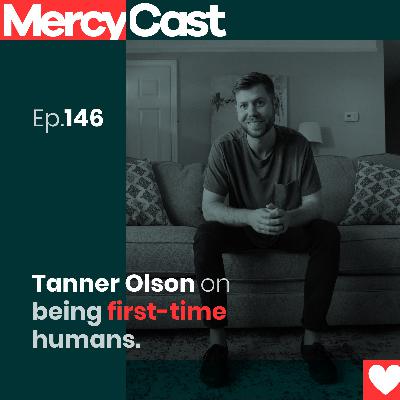
This week on the MercyCast podcast, I sat down with my friend Tanner Olson, author of the new book, Getting Through What You’re Going Through, to talk about something we don’t slow down enough to admit:
It’s just hard to be a human being.
Not the polished, Instagram version.
Not the “better than I deserve” church answer.
The real version.
The version where you’re grieving.
The version where life didn’t turn out the way you thought it would.
The version where the only prayer you have left is, “Help.”
Recently, I officiated the funeral of someone who was like a second father to me. In that moment, I realized something important about grief and healing: so many of us try to get past our pain instead of going through it. We want closure. We want resolution. We want to look in the rearview mirror and say, “I’m glad that’s over.”
But true healing doesn’t work that way.
When it comes to processing grief, emotional pain, and spiritual struggle, the only way out… is through.
In This Episode, We Discuss:
How to process grief in a healthy way
The difference between “processing” and actually healing
What Christian hope really means in the middle of suffering
Why vulnerability strengthens relationships and mental health
How to navigate disappointment when life doesn’t go as planned
How each of us is a “first-time human being.”
The power of asking, “How are you doing… really?”
Simple, honest prayer during hard seasons
We talk about the temptation to rush through pain — to fix ourselves, silence the negative voice, or solve the entire problem at once. But real spiritual growth and emotional healing often begin with something much smaller:
The next faithful step.
Not the marathon.
Not the five-year plan.
Just the next step toward hope.
We also explore the messiness of life — the “messy middle” where growth, resilience, and faith are formed. If you’re walking through uncertainty, grief, anxiety, or burnout, this conversation offers encouragement rooted in Christian faith, prayer, and honest vulnerability.
Prayer, we discovered, doesn’t have to be polished or poetic, but as one word whispered in a cathedral or your car: “Help.”
And if you’re struggling with feeling like a burden, hear this:
You are not a burden.
But you do have burdens.
And you don’t have to carry them alone.
If You’re Navigating a Hard Season…
If you’re searching for:
How to heal emotionally
How to deal with grief
How to find hope in hard times
How to pray when you don’t have words
How to slow down and be present
How to build an authentic Christian community
This episode is for you.
Don’t wait until you’re “through it” to talk about what you’re going through.
Don’t minimize your pain with “it could be worse.”
Don’t rush past the season you’re in.
Sit with it.
Invite someone into it.
Pray through it.
Walk — don’t sprint — through it.
If this week feels heavy… if you’re tired… if you’re quietly trying to hold it all together — you are not alone.
Listen in.
Slow down.
Take one step toward healing.
And if this conversation encourages you, share it with someone who might need hope today — and ask them the question that matters most:
“How are you doing… really?”
Find Tanner’s new book, Getting Through What You’re Going Through. Follow Tanner on threads.
You can follow MercyCast on Instagram, Twitter, and Facebook.
You can follow Raleigh on Twitter and Instagram. Thanks for listening. We want to hear from you!
Email us at info@mercycast.com.
Support this podcast at — https://redcircle.com/the-mercycast/exclusive-content
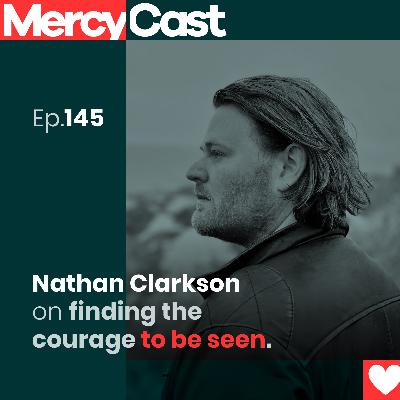
What happens if the shoe doesn’t drop? What happens if you find the thing that you were looking for?
In this episode of MercyCast, I sit down with Nathan Clarkson—actor, filmmaker, and author of the new book I Am the Worst: How Freedom Is Found in Admitting Our Faults—for one of the most honest conversations we’ve ever had about identity, acceptance, and healing.
We talk about why Jesus tells us to pay attention to the log in our own eye before we reach for the speck in someone else’s—and why doing that isn’t about shame, but about freedom. Nathan shares how learning to face his own failures, cracks, and darkness didn’t destroy him. Instead, it became “not a wall that broke me, but a bridge to healing that recreated me.”
We explore how busyness often disguises itself as virtue, especially in fast-paced places like New York, and how noise can become a way of avoiding stillness—because stillness forces us to look inward. As Nathan puts it, “Stillness is hard because it forces us to listen to the parts of ourselves we’d rather drown out.”
This episode goes deep into how many of us build our identity on what we do—our productivity, success, relationships, or reputation—and how fragile that foundation really is. Nathan shares vulnerably about seasons where his ability to “do” was taken away, forcing him to confront a terrifying but liberating truth that you are not loved because of what you accomplish, but because you are made in the image of God.
We also talk about the power of community, why healing never happens alone, and how asking for help is not weakness—it’s faith. Sometimes, the holiest prayer we can pray is just one word: help.
At the core of this conversation is a truth we all need to hear again and again:
You are more broken than you want to admit—and more loved than you ever dared to believe.
What We Talk About in This Episode
Why acceptance is the first step toward real change
How facing our own faults leads to freedom, not shame
The danger of confusing busyness with worth
Why identity rooted in accomplishment always leads to exhaustion
The role of stillness in spiritual and emotional healing
How vulnerability becomes a bridge to grace
Why community is essential for redemption
How asking for help opens the door to transformation
What it truly means to be loved unconditionally
Key Takeaways
Healing begins when we stop hiding
Stillness reveals what busyness conceals
Our identity cannot survive on performance alone
Weakness, when admitted, becomes a doorway to grace
Community carries us when we can’t carry ourselves
Freedom is found on the other side of honesty
Our worth is rooted in being God’s image-bearers—not our achievements
If you’re tired of trying to prove yourself…
If you’re exhausted from holding it all together…
If you’re afraid of what you might find if you slow down…
This episode is for you.
Listen now and discover why admitting our faults may be the first step toward real freedom.
Find Nathan’s new book, I’m the Worst.
You can follow MercyCast on Instagram, Twitter, and Facebook.
You can follow Raleigh on Twitter and Instagram.
Thanks for listening. We want to hear from you!
Email us at info@mercycast.com.
Support this podcast at — https://redcircle.com/the-mercycast/exclusive-content
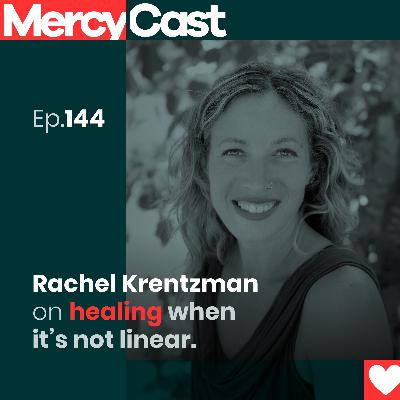
Sometimes life doesn’t fall apart all at once.
Sometimes it cracks.
In this episode of MercyCast, I sit down with Rachel Krentzman, author of As Is: A Memoir on Healing the Past through Yoga, to talk about what happens when the world you thought you understood suddenly looks different—and you can’t unsee it. Rachel shares the story behind her memoir, including the cost of vulnerability, the courage it took to tell the truth, and the long, uneven road of healing that followed.
We talk about what it means to go first, to name discomfort instead of escaping it, and to learn compassion not from a distance but from the inside of our own pain. Rachel reflects on how practices like yoga, writing, and time in nature helped her separate her identity from her experiences—and how being truly seen and accepted changed everything.
This conversation is honest, tender, and grounded in the reality that healing is rarely quick or tidy. It’s about learning to sit with what hurts, trusting that growth isn’t linear, and discovering that we are always more than our stories.
If you’ve ever felt broken—but not destroyed—this episode is for you.
Listen now, and if this conversation resonates, I’d love for you to share it with someone who needs permission to slow down, be seen, and begin again.
In This Episode, We Explore:
How compassion is often learned through adversity, not comfort
Why vulnerability always costs us something—and why it’s still worth it
The power of writing as a way to process pain and tell the truth
Why healing is not linear and what it means to honor the ups and downs
How mindfulness helps us notice thoughts without letting them define us
The importance of sitting with discomfort instead of numbing or escaping it
Why nature has a grounding, restorative effect on our minds and bodies
The role of safe community in healing—and why being seen matters
How professional guides can help us see what we can’t see alone
What it looks like to transform pain into compassion for others
If something in this episode stirred something in you, I’d love to hear from you.
Reach out, share your story, or let us know how you’re learning the art of compassion through adversity.
You’re not alone—and you don’t have to rush the healing.
Find Rachel’s new book on Amazon.
You can follow MercyCast on Instagram, Twitter, and Facebook.
You can follow Raleigh on Twitter and Instagram.
Thanks for listening. We want to hear from you!
Email us at info@mercycast.com.
Support this podcast at — https://redcircle.com/the-mercycast/exclusive-content
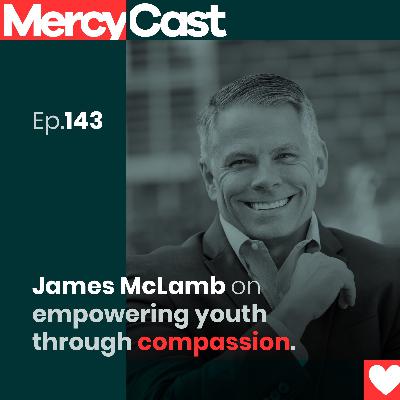
What works better: connection or correction?
We answer this question and others in this week’s episode. Today I had the privilege of speaking with James McLamb, a National Youth Empowerment Strategist and founder and CEO of Generation Youth. Our conversation centered on the powerful role mentorship plays in young people's lives.
As someone who believes deeply in the transformative power of mercy and guidance, I was struck by how James highlighted the importance of connection over correction. Too often, we focus on fixing rather than understanding. But when we choose to show up, to be present, and to invest our time, we build the trust that youth need to flourish.
We dug into how adversity, though difficult, can actually shape our leadership skills and teach resilience. James reminded me—and I hope you—that hope deferred is not hope lost. With the right support, that hope can be realized. This is where mentorship becomes so crucial: a mentor’s influence can alter the entire trajectory of a young person’s life, helping them discover their identity and purpose.
Parenting is never easy, and James and I talked honestly about the challenges of raising children with resilience and independence. It’s not about control but about empowerment—giving our kids the tools and confidence to lead themselves and others. Mercy in our guidance fosters not just growth but real understanding, both for the youth we serve and ourselves.
Ultimately, this episode is a call to action for all of us. Whether we’re parents, mentors, or simply caring adults, we have a unique opportunity to empower the next generation. Let’s choose compassion, lead with hope, and remember that we’re all learning and healing together. That’s where true connection—and lasting impact—begins.
Episode Highlights:
Compassion is developed through shared experiences and mentorship. Mentorship can profoundly impact youth, shaping their future.
Hope deferred is not lost; it can be realized with support.
Building trust with youth requires time and presence.
Connection is more important than correction in guiding youth.
Adversity teaches resilience and leadership skills.
Parents should aim to empower rather than control their children.
Identity plays a crucial role in how we guide others.
Mercy in guidance fosters growth and understanding. We are all on a journey of learning and healing together.
Learn more about James and his ministry with Generation Youth.
You can follow MercyCast on Instagram, Twitter, and Facebook.
You can follow Raleigh on Twitter and Instagram.
Support this podcast at — https://redcircle.com/the-mercycast/exclusive-content
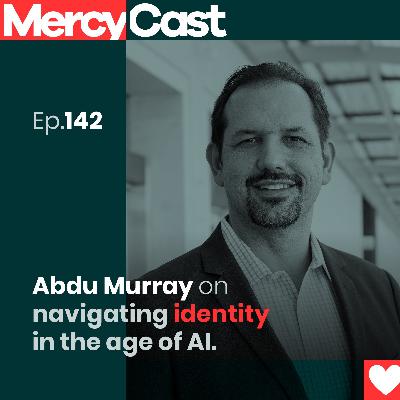
Is our dependence on artificial intelligence a good thing?
In this episode of MercyCast, I sit down with Abdu Murray, the author of “Fake ID,” for an honest conversation about faith, technology, and what really makes us who we are. We dig deep into the intersection of artificial intelligence, identity, and Christianity—topics that are shaping how we see ourselves and each other in a rapidly changing world.
Abdu shares his journey from Islam to Christianity, revealing how deeply personal and relational the path to faith can be. Together, we examine how the Imago Dei—the image of God—grounds our identity and purpose, even as artificial intelligence and technology push the boundaries of creativity and relationships. Abdu’s insights challenge us to consider the dangers of over-reliance on AI, emphasizing the irreplaceable value of genuine human connection and compassion.
Episode Highlights:
AI can streamline our lives, but it also complicates our sense of identity.
Abdu’s personal story illustrates how faith journeys are rooted in real relationships.
Understanding the Imago Dei is essential for discovering who we truly are.
The rise of AI prompts big questions about human creativity and purpose.
Overusing AI can lead to cognitive debt and a false sense of companionship.
We discuss why AI should be a tool—not a crutch—and how the Bible anticipated many of today’s technological challenges.
Human relationships remain central to spiritual growth, compassion, and creativity, even in a tech-dominated world.
Grounding ourselves in faith gives us wisdom and resilience to navigate technology’s pitfalls.
Tune in for a conversation that is both timely and timeless, exploring the role of AI, identity, and the Imago Dei in our lives. Whether you’re curious about technology, faith, or the creative process, you’ll find encouragement and insight here. Subscribe to MercyCast and leave a review.
Read Abdu’s book, Fake ID: How AI and Identity Ideology are Collapsing Reality.
You can follow MercyCast on Instagram, Twitter, and Facebook.
You can follow Raleigh on Twitter and Instagram.
Support this podcast at — https://redcircle.com/the-mercycast/exclusive-content
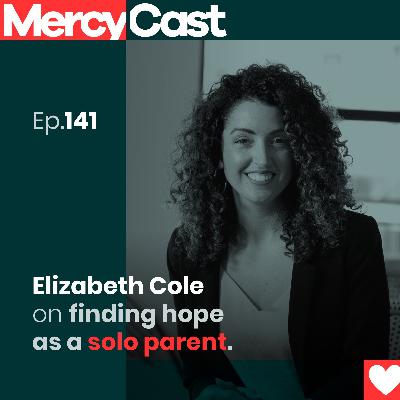
How do you come to terms with the fact that what you thought your life was gonna look like is not what it looks like?
Elizabeth Cole, VP of Solo Parent, a leading nonprofit supporting single parents, stops by to discuss the real-life challenges and journeys of solo parenting. We discuss how single parents navigate life after divorce, the importance of building a strong support network for solo parents, and why vulnerability and authentic community are essential for healing. Elizabeth shares powerful insights on practicing self-compassion, overcoming shame and guilt, and understanding your past to foster personal growth. Throughout our conversation, we highlight how encouragement and practical support can make a world of difference for single moms and dads facing life’s toughest moments.
Whether you’re a single parent, know someone raising kids alone, or want to learn more about solo parenting, this episode is packed with practical advice and hope-filled encouragement. We cover why creating healthy routines can improve solo-parent family life and how spiritual support—often found through caring people—can help single parents heal and thrive. If you’re searching for resources, inspiration, or community for solo parents, you’re in the right place. Remember: you’re not alone, and every step forward is a victory.
Takeaways
Solo parenting and single-parent families face unique challenges.
Community support and resources are vital for solo parents.
Vulnerability builds connection and emotional healing.
Self-compassion helps single parents overcome shame and guilt.
Understanding your story fosters personal growth for solo moms and dads.
Embrace the ongoing journey of healing as a single parent.
Encouragement and support matter for solo parent mental health.
Healing is a process, not a destination.
Healthy routines benefit solo-parent families.
Spiritual support and faith communities often help single parents.
Let’s keep returning—to ourselves, to each other, and to the love that makes us whole. Do us a favor. Subscribe to MercyCast and leave a review.
Learn more about Elizabeth’s work and the team at soloparent.org.
You can follow MercyCast on Instagram, Twitter, and Facebook.
You can follow Raleigh on Twitter and Instagram. Thanks for listening. We want to hear from you!
Email us at info@mercycast.com.
Support this podcast at — https://redcircle.com/the-mercycast/exclusive-content
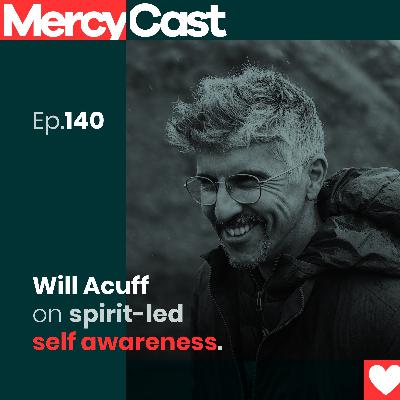
Sanctification is returning to your true self as God’s Beloved.
Hey friends, Raleigh here. We all know that we want to change things about ourselves. Maybe we want to shed a few pounds, or learn a new language. You are probably making your resolutions right now. For this New Year’s Eve, I had the honor of sitting down with Will Acuff, author of the new book, No Elevator to Everest: Shift from Survive to Thrive through Spirit-led Self Awareness, for an important conversation about becoming self-aware. Will opened up about his profound journey of self-discovery—one marked by deep connection, honest reflection, and a powerful return to his roots.
We talked about what it means to truly meet yourself, even in the hardest places; when life cracks you open. Will described what it was like to touch the unconditional love of God—a moment so utterly transformative that it reshaped how he viewed himself and the world around him. It wasn’t just a mountaintop experience; he knew he was coming home to a hard context. Yet, in that vulnerability, he found the strength to return to himself.
This episode is about the power of connection, the necessity of returning to our roots, and the way unconditional love can pivot our entire lives. Will’s journey is deeply personal, but I think you’ll find something of yourself in his story.
Here’s what we explore in this episode:
Why is connection key to self-discovery?
How can unconditional love become a turning point?
The importance of returning to your roots, especially when life gets tough
Thanks for joining me on MercyCast this New Year’s Eve. Let’s keep returning—to ourselves, to each other, and to the love that makes us whole.
Takeaways
Joy is Available Now, Even in Pain
The Christian journey isn’t just about enduring suffering until we reach heaven; Jesus offers us life “to the full” right now. Even in the midst of sorrow and hardship, transcendent joy is possible and can carry us through.
You Can’t Fix Everything—Including Yourself and Others
Many of us are “fixers,” trying to solve every problem, especially for those we love. But real healing comes not from control or constant problem-solving, but from presence, love, and acceptance—especially when facing challenges that can’t be fixed.
True Growth Comes from Self-Compassion and Curiosity, Not Critique
Self-awareness and healing begin when we sit with our pain and emotions in compassion and curiosity, rather than self-criticism. Asking “why am I feeling this?” and allowing ourselves to be present breaks cycles of fear, anger, and shame.
Alignment with God Means Being Present and Attuned
Spiritual formation is not just about knowing God, but also knowing ourselves. Being “in tune” with God and our true selves requires daily practices of listening, noticing, and being present—in nature, in silence, and in our emotions.
We Are Loved as We Are—Not as We ‘Should Be’
We are not “dung heaps” barely tolerated by God; we are beloved image bearers. The story of the prodigal son shows that God’s love is unconditional, scandalous, and welcoming, no matter our shame or striving. Living in this love frees us to experience joy, self-acceptance, and deeper community.
Sanctification isn’t about becoming someone else or earning God’s approval. it’s the process of shedding shame, brokenness, and false identities to return to your original, God-given self. Through Christ, we’re restored to who we were created to be—fully human, fully loved, and free to live out of that identity.
Subscribe to MercyCast and leave a review.
Pick up a copy of Will’s new book, No Elevator to Everest.
You can follow MercyCast on Instagram, Twitter, and Facebook.
You can follow Raleigh on Twitter and Instagram. Thanks for listening. We want to hear from you!
Email us at info@mercycast.com. For more conversations like this one, check out my book, Vulnerable: Rethinking Human Trafficking.
Support this podcast at — https://redcircle.com/the-mercycast/exclusive-content
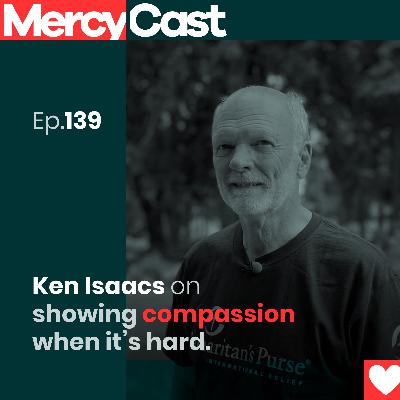
Is it possible to be impartial when caring for people on both sides of a conflict?
In this episode of the MercyCast, I sit down with Ken Isaacs, Vice President of Samaritan’s Purse and author of “Running to the Fire: Helping in Jesus’ Name.” Together, we dive deep into how Christian compassion, faith, and practical love can make a real difference in some of the world’s most challenging conflict zones.
One of the most powerful moments from our conversation was hearing Ken share about his firsthand experiences, including a story where an ISIS member questioned why anyone would show them kindness. It reminded me how transformative acts of compassion can be—even in the darkest situations.
If you’re passionate about Justice, Mercy, humanitarian stories, or want to learn how faith and practical love can make a difference in a divided world, this episode is for you. Give it a listen—I know you’ll be inspired by Ken’s incredible journey and the stories we share.
Here’s what we explore in this episode:
The impact of Christian faith and humanitarian aid in places where hope seems lost.
Real stories from the front lines of disaster relief and conflict, showing how kindness can challenge hatred.
Why practical demonstrations of Jesus’ love matter, and how they can actually disarm adversaries.
The importance of dialogue, empathy, and building bridges across cultural and religious divides.
How faith-based service is essential for peacebuilding and reconciliation.
Takeaways
Kindness, compassion, and love aren’t just ideals—they’re powerful tools for peacemaking.
Bearing witness through faith-driven service can inspire genuine transformation, even among those we consider adversaries.
Dialogue and understanding are essential for real humanitarian work and lasting peace.
Faith in action truly bridges divides and brings hope into the most broken places.
Subscribe to MercyCast and leave a review.
Pick up a copy of Ken’s new book, Running to the Fire.
You can follow MercyCast on Instagram, Twitter, and Facebook.
You can follow Raleigh on Twitter and Instagram.
Thanks for listening. We want to hear from you!
Email us at info@mercycast.com.
Support this podcast at — https://redcircle.com/the-mercycast/exclusive-content

In this episode of MercyCast, I talk with Brian Smith and Ed Uszynski, authors of Away Game: A Christian Parent’s Guide to Navigating Youth Sports, about parenting, sports pressure, and how Christian faith shapes our engagement with youth sports.
Brian and Ed help us confront the challenges families face in today’s sports culture, especially how pressures and expectations in youth sports can redefine family dynamics and affect both parent and child identities. This conversation addresses the frustration, anxiety, and exhaustion many parents feel.
Our conversation shifts the focus of youth sports from mere achievement to discipleship, showing how every practice and game can serve as a chance to teach grace, identity in Christ, and real connection. By prioritizing relationships over results, we rediscover the true joy of sports for families.
If you’re facing the challenges of youth sports, this episode invites you to pause, reflect, and choose a better way—rooted in grace, truth, and love.
Takeaways
Youth sports can quickly become a major source of stress for parents.
The youth sports industrial complex creates constant pressure to perform and succeed.
As parents, we often project our own fears and identity struggles onto our kids.
Sports provide meaningful opportunities for discipleship and spiritual formation.
Prioritizing enjoyment and connection helps preserve sports joy.
Excessive pressure to perform in sports can lead to burnout in young athletes.
Christian faith offers a countercultural vision for identity beyond wins and losses.
Honest conversations strengthen family dynamics and trust.
Grace-centered parenting fosters deeper, healthier relationships.
It’s never too late to change how we show up for our kids in youth sports.
Subscribe to MercyCast and leave a review.
Pick up a copy of Brian and Ed’s book, Away Game.
You can follow MercyCast on Instagram, Twitter, and Facebook.
You can follow Raleigh on Twitter and Instagram.
Thanks for listening. We want to hear from you!
Email us at info@mercycast.com.
Support this podcast at — https://redcircle.com/the-mercycast/exclusive-content

In this fourth MoreMercy episode, we explore a truth that every one of us needs to hear: we can’t go back and erase our mistakes — but we can bring them to God, who freely redeems us. We aren’t time travelers, and we can’t rewrite the past. But we can choose what we do with our story now.
This week, we look at the hopeful and freeing reality that redemption is always better than perfection. Instead of carrying shame, replaying regrets, or trying to “fix” what already happened, we discover what it means to let God make something new out of what feels broken.
In this episode, you’ll discover:
Why we can’t change the past — and why that’s not the point
How God meets us in our mistakes with mercy, not condemnation
Why redemption brings deeper healing than perfection ever could
How to release shame and move forward in freedom
Practical ways to bring your past to God with honesty and hope
Key Insight
Perfection demands that we never fail. Redemption promises that even our failures can be transformed.
This episode is for you if:
You’re carrying regret or shame
You struggle with perfectionism
You want to understand God’s mercy in a deeper way
You’re seeking spiritual renewal or a fresh start
You need encouragement to let go of the past
You can follow MercyCast on Instagram, Twitter, and Facebook.
You can follow Raleigh on Twitter and Instagram.
Support this podcast at — https://redcircle.com/the-mercycast/exclusive-content
In this week’s MercyCast, we continue our series on the themes that continually surface in conversations about healing, mercy, and spiritual growth. After spending the last two weeks exploring the tension of joy and pain and the experience of powerlessness, we now turn to a foundational practice of transformation: accepting reality rather than denying it.
So many of us try to push away what’s painful, ignore what’s uncomfortable, or cling to what we wish were true. But in this episode, we explore the liberating truth that real change begins with honest acceptance.
When we face reality with courage and compassion, we open the door to healing, clarity, and movement. Acceptance isn’t passivity — it’s the starting point for growth.
In this episode, you’ll learn:
Why denying reality keeps us stuck
How acceptance creates space for emotional and spiritual transformation
Practical steps for acknowledging what’s true, even when it’s uncomfortable
Why acceptance is an act of strength, not resignation
How embracing truth aligns us with God’s work in our lives
Key Insight
You can’t heal what you won’t acknowledge. When you bravely name what is, you begin to move toward what can be.
This episode is for you if:
You feel stuck and don’t know why
You’re wrestling with painful circumstances
You want to grow emotionally, spiritually, or relationally
You tend to avoid conflict or uncomfortable truths
You’re seeking a compassionate path toward healing and change
You can follow MercyCast on Instagram, Twitter, and Facebook.
You can follow Raleigh on Twitter and Instagram.
Support this podcast at — https://redcircle.com/the-mercycast/exclusive-content
In this short but meaningful MercyCast episode, we explore one of the most universal questions we face: What do we do when life leaves us feeling powerless? Whether it’s circumstances we can’t control, emotions that overwhelm us, or seasons where our strength runs out, we all face moments where our limits feel loud.
Drawing from the life of the Apostle Paul, we uncover the surprising truth that Scripture teaches: our weakness is not the end of the story — it may actually be the beginning of real strength. When we lean into Christ’s power instead of our own, powerlessness becomes a doorway to deeper trust, humility, and spiritual resilience.
In this episode, you’ll hear about:
* Why feeling powerless is a normal part of the human experience
* How Christ’s power meets us when we have nothing left to give
* What the Apostle Paul teaches us about weakness and strength
* Practical encouragement for living faithfully when you can’t “fix” everything
Key Insight
Powerlessness is not failure — it’s an invitation. When we release control, we make space for God’s strength to carry what we can’t.
Perfect for listeners who:
* Feel overwhelmed or exhausted
* Are facing situations outside their control
* Want a deeper understanding of how faith meets real-life struggle
* Need encouragement in seasons of weakness, anxiety, or uncertainty
You can follow MercyCast on Instagram, Twitter, and Facebook.
You can follow Raleigh on Twitter and Instagram.
Support this podcast at — https://redcircle.com/the-mercycast/exclusive-content
In this week’s MercyCast, we kick off a four-week series exploring the core themes that keep resurfacing in our conversations about healing, mercy, and the human experience. Today, we dive into a powerful and often misunderstood reality: joy and pain frequently show up together.
We’re talking about the tension we feel when life brings laughter in one moment and heartache in the next — and how that tension is not a sign that something is wrong, but often a sign that something is growing.
In this episode, we explore:
Why joy and pain commonly coexist
How embracing both emotions leads to deeper healing
What happens when we try to avoid discomfort
Why emotional complexity is a pathway to emotional maturity
Practical encouragement for holding joy and sorrow at the same time
Key Insight
Healing isn’t about eliminating hard emotions — it’s about learning how to hold them alongside moments of light, gratitude, and even joy. When we allow space for both, we open ourselves to transformation.
Who this episode is for
Anyone navigating grief, transition, burnout, recovery, or spiritual growth — and anyone who feels confused about why good and hard things seem to show up together.
You can follow MercyCast on Instagram, Twitter, and Facebook.
You can follow Raleigh on Twitter and Instagram.
Support this podcast at — https://redcircle.com/the-mercycast/exclusive-content
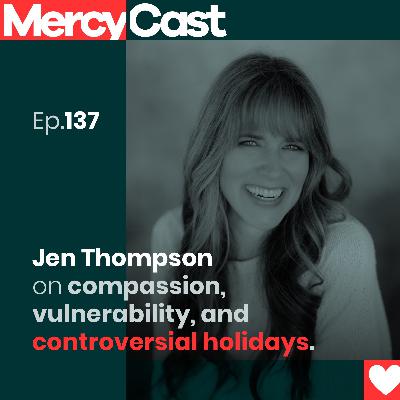
This week, Jen Thompson is back! We tackle history, Halloween, identity, the joys of f’uncle hood, real friendship, boundaries, masks, vulnerability, awkwardness and the reality of Grace.
We discuss the challenges of being honest and open in a world that often values superficial interactions. We reflect on the difference between perfectionism and godliness, emphasizing the freedom that comes from understanding one's identity in Christ. So many topics with one truth driving them all. Grace frees you to be truly human. Tune in.
Takeaways
Honesty and vulnerability are essential for meaningful connections.
Cultural traditions can be complex and often misunderstood.
Friendship provides a support system that is crucial for emotional health.
Grace allows us to be vulnerable without fear of judgment.
Perfectionism can hinder our relationship with God and others.
Understanding our identity in Christ frees us from the need for approval.
Community is vital; we are not meant to navigate life alone.
The way we celebrate holidays can reflect our values and beliefs.
It's important to differentiate between boundaries and masks in relationships.
Living in freedom means accepting ourselves and others as we are.
Subscribe to MercyCast and leave a review.
Learn more about Jen and buy her book at Jenthompsonauthor.com.
You can follow MercyCast on Instagram, Twitter, and Facebook.
You can follow Raleigh on Twitter and Instagram.
Support this podcast at — https://redcircle.com/the-mercycast/exclusive-content

In this most recent conversation, Raleigh Sadler and Katie explore themes of compassion, vulnerability, and the complexities of faith. They reflect on their experiences at a recent conference, discuss living in a decommissioned church, and delve into the sacredness of space and community. The dialogue touches on the dichotomy of pain and beauty, the importance of law and gospel, and the idea that redemption is more valuable than perfection. They emphasize the role of emotions in faith and encourage listeners to embrace both their struggles and their hope in Christ.
Takeaways
Raleigh and Katie share light-hearted banter about their appearances and experiences at a recent conference.
The importance of vulnerable conversations in community settings is highlighted.
Living in a decommissioned church brings both challenges and a sense of sacredness.
The concept of liminal spaces and their significance in faith is discussed.
Pain and beauty coexist in life, and both are acknowledged in the Christian journey.
The idea of being simultaneously saint and sinner is explored, emphasizing the need for grace.
Redemption is emphasized as being more important than striving for perfection.
Emotions play a significant role in how we process our faith and experiences.
The conversation encourages embracing both pain and hope in our lives.
Christ's love and sacrifice are central to understanding our identity as loved individuals.
Subscribe to MercyCast and leave a review.
Learn more about Katie and her writings here. Buy her book, Encouragement for Motherhood!
You can follow MercyCast on Instagram, Twitter, and Facebook.
You can follow Raleigh on Twitter and Instagram.
Thanks for listening. We want to hear from you!
Email us at info@mercycast.com.
Support this podcast at — https://redcircle.com/the-mercycast/exclusive-content
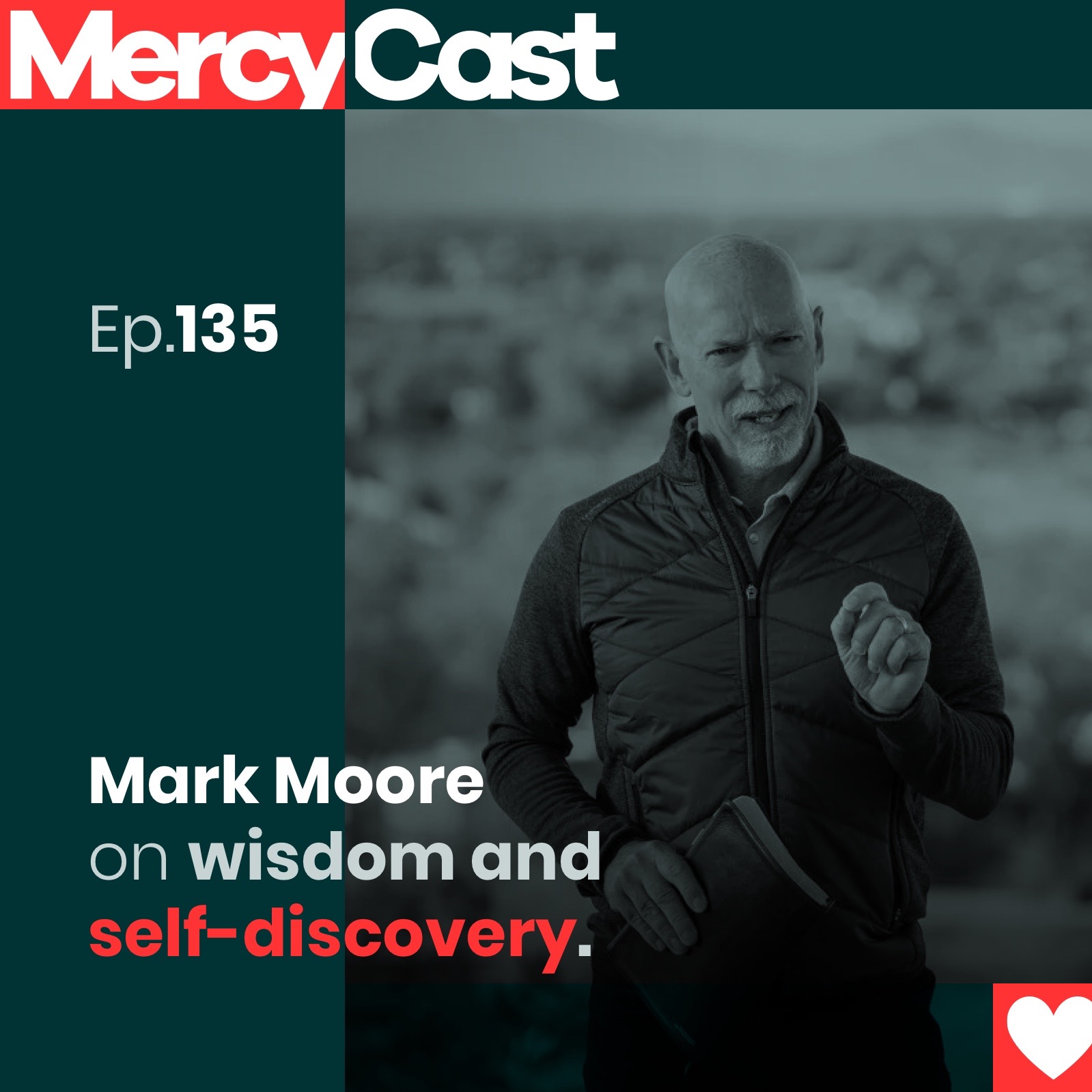
In this episode of MercyCast, Raleigh Sadler and Mark Moore explore the practical application of faith through wisdom, critique, and mercy. They discuss the importance of living out one's faith authentically, the role of critique in personal growth, and the influence of fatherhood on emotional health. The conversation emphasizes the revolutionary concept of God as a personal Father and the distinction between wisdom and mere information. Ultimately, they encourage listeners to seek wisdom through community and scripture, highlighting that true wisdom leads to better living and stronger relationships.
Takeaways
It's easy to talk about our faith, but living it out is challenging.
Critique can be a gift that leads to personal growth.
Transparency in sharing struggles makes us relatable.
Mercy is not just kindness; it can be a strategy for strength.
Fatherhood influences our emotional health and identity.
Wisdom is practical and should improve our lives.
Community is essential in seeking and applying wisdom.
God as Father is a revolutionary concept in understanding our identity.
Wisdom is different from information; it requires action.
Pursuing wisdom involves seeking God and engaging with scripture.
Subscribe to MercyCast and leave a review.
Learn more about Mark and his books at his website, markmoore.org.
You can follow MercyCast on Instagram, Twitter, and Facebook.
You can follow Raleigh on Twitter and Instagram.
Thanks for listening. We want to hear from you!
Email us at info@mercycast.com.
Support this podcast at — https://redcircle.com/the-mercycast/exclusive-content

In this episode of the Mercy Cast, I’m joined by Cally Logan—a school teacher, senior writer for Crosswalk, and the author of 'The Wallflower that Bloomed.' Cally shares her powerful journey that began at just 19 when she confronted severe health issues, endured multiple misdiagnoses, and traveled to the prestigious Mayo Clinic.
Despite navigating these overwhelming challenges, Cally found strength and companionship through her faith, which ultimately led her to redefine her purpose and identity. In our conversation, we tackle the importance of vulnerability, the critical role of faith in overcoming adversity, and the way our shared stories can help others feel less alone.
Cally confidently recounts her experiences as a writer, illustrating how her trials have not only shaped her but have also resonated deeply with many readers, offering them solace and understanding. You won’t want to miss Cally’s inspiring insights and the empowering discussion we had!
If this episode resonates with you, share it with someone who might need it. Let’s keep normalizing these conversations around mental health, support, and the beauty of showing up as we are.
Thanks for being here.
Raleigh
Subscribe to MercyCast and leave a review.
Learn more about Cally’s work at her website, callylogan.com. Buy her new book.
You can follow MercyCast on Instagram, Twitter, and Facebook.
You can follow Raleigh on Twitter and Instagram.
Support this podcast at — https://redcircle.com/the-mercycast/exclusive-content
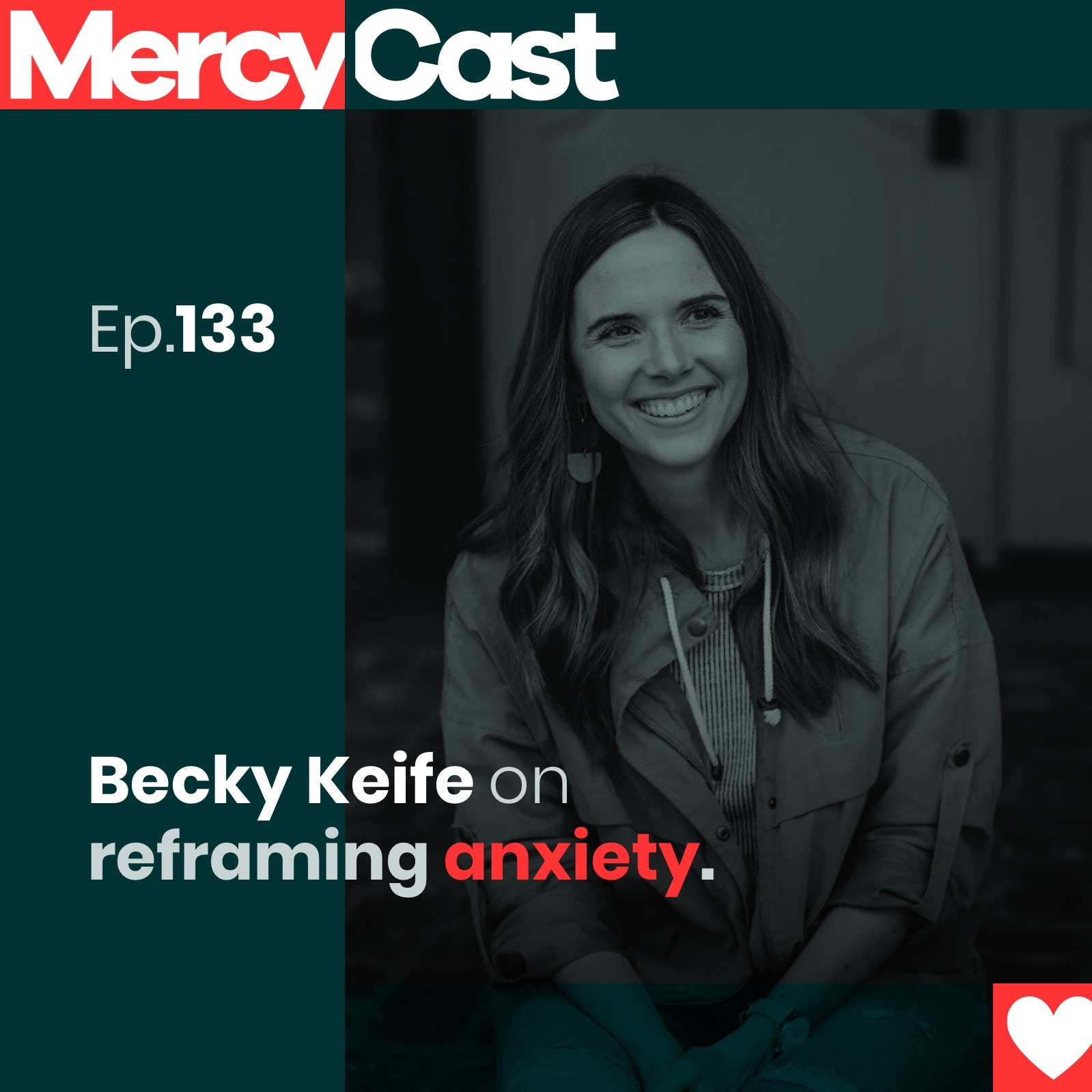
Uncertainty is definitely not my favorite part of life.
In this episode of MercyCast, I had the joy of sitting down with the insightful and compassionate Becky Keife, author of A Verse A Day For The Anxious Soul, a hundred Days of Peace for the Calm You Crave, to talk about something that touches so many of us—anxiety. Whether it’s the tightness in your chest before a big decision, or a relentless mental loop that keeps you up at night, anxiety shows up in all kinds of ways. And yet, it’s something we often try to face alone.
But what if we didn’t have to?
Becky and I dive deep into the reality that mental health struggles like anxiety don’t disqualify us—they connect us. This conversation is all about vulnerability, emotional health, and learning to be honest about what we’re carrying. Together, we explore how anxiety isn’t something to hide from, but a signal—an invitation—to lean into community, faith, and even our own self-compassion.
We talk about what it means to live in the tension of being both anxious and at peace. About how calming our nervous system—through techniques like box breathing—can help us reconnect with the present moment and the God who is with us in it. We don’t gloss over the physical realities of anxiety, but we do push back against the lie that it defines us.
This episode is full of practical coping strategies, honest reflections, and reminders that your story isn’t over—and you’re not alone. Anxiety may feel overwhelming, but it can also be a surprising catalyst for personal growth, deeper faith, and greater compassion—for yourself and for others.
Highlights and takeaways from the conversation:
Anxiety is more common than we think—and we don’t have to face it alone.
Practice asking God, “what do you want me to know and what do you want me to do?”
Being honest and vulnerable is a powerful first step toward healing.
Anxiety shows up on a spectrum—from situational to clinical—and all experiences are valid.
The physical symptoms of anxiety are real and deserve attention.
Community support is crucial—we’re wired for connection.
Faith doesn’t eliminate anxiety, but it reframes it.
Simple practices like box breathing can help calm your nervous system.
Daily reflection can uncover patterns and paths forward.
Showing compassion to yourself empowers you to show compassion to others.
Anxiety can be a gift—drawing us closer to God and each other.
If this episode resonates with you, share it with someone who might need it. Let’s keep normalizing these conversations around mental health, support, and the beauty of showing up as we are.
Thanks for being here.
—Raleigh
Subscribe to MercyCast and leave a review.
Learn more about Becky’s work at her website, beckykeife.com. Pre-order her new book which comes out this month.
You can follow MercyCast on Instagram, Twitter, and Facebook.
You can follow Raleigh on Twitter and Instagram.
Thanks for listening. We want to hear from you!
Email us at info@mercycast.com.
Support this podcast at — https://redcircle.com/the-mercycast/exclusive-content

Art imitates life. However, art is most often born in the places that we fear the most.
In this episode of MercyCast, I had the honor of sitting down with the very talented tattoo artist and owner of First Class NYC, Mikhail Andersson. From the first moment we started talking, it was clear this wasn’t just a conversation about ink or murals—it was about the stories we carry, the pain we try to process, and the beauty we’re capable of creating in the midst of it all.
Mikhail opened up about his journey as a tattoo artist in New York City—a place that’s as relentless as it is inspiring. We talked about what it means to connect deeply with people, even in the brief moments shared across a tattoo needle. Each tattoo becomes more than art—it becomes a marker of resilience, a memory inked into the skin, and often, a step forward in someone’s healing process.
We also explored how urban spaces, when transformed through street art, become galleries of hope and defiance. And honestly, this conversation reminded me that art—in all its forms—isn’t just about expression. It’s about survival. It’s about connection. It’s about being seen.
Highlights and takeaways from the conversation:
Street art has the power to transform entire neighborhoods into spaces of resilience and beauty.
Tattoos are more than body art—they’re often deeply personal symbols of life's pivotal moments.
The act of creating art can help process emotional pain and foster healing.
There's something uniquely therapeutic in the bond between an artist and their client.
Living deeply—taking in both the highs and lows—can fuel authentic artistic expression.
New York City will test you, but it’ll also grow you if you let it.
Long-term success requires showing up consistently, even when you don’t feel like it.
Having hobbies and creative outlets outside of work can be a much-needed lifeline.
Human connection isn’t optional—it’s essential for growth and understanding.
When we invest in what we love, unexpected doors begin to open.
I walked away from this conversation reminded that we are all storytellers in some way—whether through words, art, or simply the way we choose to show up in the world. And when we take the time to really see each other, healing can begin.
Thanks for being part of this journey.
Subscribe to MercyCast and leave a review.
Follow Mikhail on Instagram..
You can follow MercyCast on Instagram, Twitter, and Facebook.
You can follow Raleigh on Twitter and Instagram.
Thanks for listening. We want to hear from you!
Email us at info@mercycast.com.
Support this podcast at — https://redcircle.com/the-mercycast/exclusive-content
In this episode of MoreMercy, a bonus episode of the MercyCast, I share a story that’s stuck with me—a visit to a centuries-old castle in Scotland, where I met a man named Sir Jack, a former member of Parliament. What started as a simple conversation turned into something deeper. As we talked, we found ourselves exploring themes of human vulnerability, social division, and the growing polarization that’s so evident in politics and life today.
But here's the thing—I believe mercy has something powerful to say in the face of all this division.
Throughout our conversation, I kept thinking about how mercy isn’t just a nice idea. It’s a radical, counter-cultural force that pushes back against judgment and hostility. Drawing from Scripture—Micah, Matthew, James, Romans, and Colossians—I reflect on how God calls us to compassion, to forgiveness, and to the kind of love that doesn’t keep score.
This episode is about more than politics or polite conversation. It’s about what happens when we allow mercy to shape how we see others—and ourselves. I truly believe that embracing mercy can transform individual lives and even begin to heal some of the fractures in our society.
Thanks for joining me on this journey.
Support this podcast at — https://redcircle.com/the-mercycast/exclusive-content

Comments

Download from Google Play

Download from App Store
 United States