


 Claim Ownership
Sweat Capital
Subscribed: 2Played: 23
Subscribe

© Sweat Capital
Description
Conversations with leaders on building careers, companies & character the hard way. No shortcuts, just sweat.
Founded by Charlie Selth, Will Chapman and Dimitri Gremos, the show began as 'The Business Of' – a passion project between Will and Charlie who were curious about what it really takes to succeed.
Today, Sweat Capital is an evolving platform that combines that same curiosity with a bigger mission: to democratise access to knowledge and humanise business leadership in Australia.
Founded by Charlie Selth, Will Chapman and Dimitri Gremos, the show began as 'The Business Of' – a passion project between Will and Charlie who were curious about what it really takes to succeed.
Today, Sweat Capital is an evolving platform that combines that same curiosity with a bigger mission: to democratise access to knowledge and humanise business leadership in Australia.
135 Episodes
Reverse
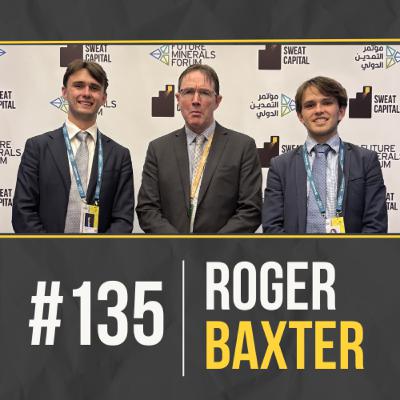
In this episode of Sweat Capital, we sit down with Roger Baxter, Executive Chairman of Southern Palladium, to unpack the leap from mining policy and industry advocacy into the far harder world of project execution. Roger spent years at the centre of South Africa’s mining ecosystem, including as CEO of the Minerals Council South Africa, where he negotiated with government, shaped policy, and represented an entire industry. Today, he’s on the other side of the table – financing, permitting, and advancing Bengwenyama, one of the world’s most significant undeveloped platinum-group metals projects. We explore what truly differentiates Bengwenyama as a long-life, low-cost PGM asset; why mine life and cost position matter more than ever in attracting capital; and why high-quality projects can still trade at a deep discount in public markets. Roger explains how jurisdictional credibility, permitting certainty, and community relationships directly influence cost of capital – and where investors often misprice South African risk. For investors, operators, and young professionals weighing careers across policy, finance, or operations, this episode offers a rare perspective on how credibility is built before cash flow – and why execution matters more than narrative.***This episode was recorded on 15 January 2026 at the Future Minerals Forum in Riyadh, Saudi Arabia. For more information, visit futuremineralsforum.comFollow us on Instagram & LinkedIn.We'll see you in the next one,Keep playing the long game.
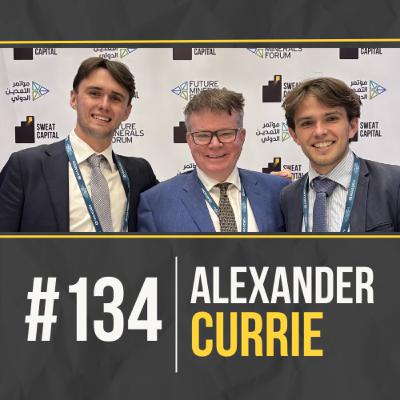
In this episode of Sweat Capital, we sit down with Alex Currie, a project finance lawyer who has spent three decades advising on some of the world’s largest and most complex energy and infrastructure projects. Alex has worked across London, Moscow, Dubai, Sydney, and Riyadh, advising sponsors, lenders, and governments on projects involving billions of dollars, geopolitical risk, and long-dated capital commitments. Early in the conversation, he shares a story that captures the stakes of this work – being detained at a Russian airport during a live deal, and getting out by calling a former client: a major Russian gas company he’d previously advised. We unpack what actually makes a project bankable, where large infrastructure projects most often fail, and why trust, credibility, and judgment matter just as much as technical modelling. Alex explains how lenders and sponsors think differently about risk, what goes wrong before projects end up distressed, and how restructurings either preserve (or destroy) value. The discussion also spans geopolitics, the energy transition, and Alex’s current perspective from Saudi Arabia, where scale, speed, and ambition in project development look very different to Europe or Australia. For lawyers, financiers, or anyone interested in global infrastructure and energy, this episode is a rare look at how careers are built in high-pressure environments where mistakes are measured in billions – and decisions really matter.***This episode was recorded on 15 January 2026 at the Future Minerals Forum in Riyadh, Saudi Arabia. For more information, visit futuremineralsforum.comFollow us on Instagram & LinkedIn.We'll see you in the next one,Keep playing the long game.
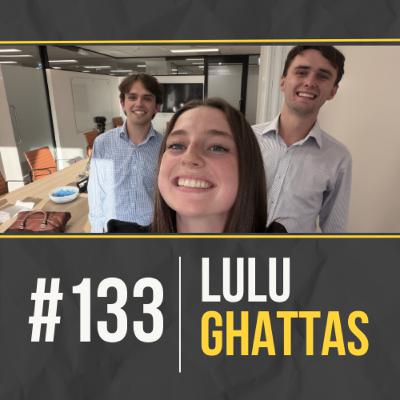
In this episode of Sweat Capital, we sit down with Lulu Ghattas, the person helping power the marketing machine behind one of Sydney’s fastest-growing startups, Kinso.Lulu’s career arc is anything but traditional. Before YouthForce and Kinso, she stacked early reps in elite rooms – Moët Hennessy campaigns, startup ecosystems like Startmate and Blackbird’s Giants program - learning how world-class brands think about attention, distribution, andpositioning.At Kinso, she plays a central role in building a marketing engine that has gone genuinely viral among young Australians. We unpack what most companies misunderstand about social, why distribution is everything, and how internet-native tone beats over-polished corporate messaging.We also dive deep into: How to build a personal brand while still at universityWhere personal brand ends and company brand beginsWhat makes a great cold outreachWhy early-career reps inside elite ecosystems compoundThis episode is a masterclass in attention, leverage, and building in public – and a blueprint for young professionals who want to create opportunity instead of waiting for it.***This episode was recorded on 4 February 2026.Follow us on Instagram & LinkedIn.We'll see you in the next one,Keep playing the long game.
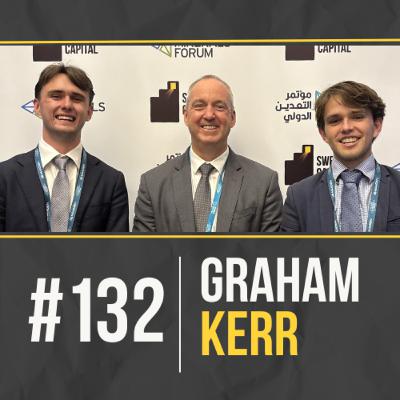
In this episode of Sweat Capital, we sit down with Graham Kerr, CEO of South32, for a rare, career-focused look at leadership, capital allocation, and what it actually takes to succeed in mining. Graham’s path defies the stereotype. He didn’t study mining engineering — instead, he began with business, finance, and information systems before joining BHP as a graduate. By going all-in on learning, pushing beyond head-office finance roles, and taking on operational responsibility early, he progressed from analyst to CFO to CEO. We unpack his time at BHP, including what working inside one of the world’s largest resource companies taught him about capital allocation, scale, and optionality. Graham shares how moving into site-based and operational roles reshaped his leadership style — and why leaving the “safe path” at key moments proved critical to long-term growth. A major focus of the conversation is the BHP–South32 demerger and what it takes to build a company from day one. Graham reflects on creating culture from scratch, leading assets others didn’t want, making hard portfolio decisions, and why discipline — not size — defined South32’s strategy over the next decade. If you’re interested in leadership, mining, or how real careers are built inside complex organisations, this episode is a masterclass in learning fast, owning responsibility, and playing the long game. ***This episode was recorded on 14 January 2026 at the Future Minerals Forum in Riyadh, Saudi Arabia. For more information, visit futuremineralsforum.comFollow us on Instagram & LinkedIn.We'll see you in the next one,Keep playing the long game.

It's been a big start to 2026 at Sweat Capital, and there's a lot to catch up on. In this monthly recap, Charlie, Will, and Dimitri discuss:Charlie & Will’s experience attending the Future Minerals Forum in Saudi Arabia The reality of locking in interviews at one of the biggest conferences in the worldWhat it’s really like to work and live in the Middle East and the incredible opportunities that existInterviewing Darren Lockyer and Grant Wechsel ahead of the London Broncos season opener in the UK The appeal of investing in sport Riding quad bikes in the sand dunes in DubaiFavourite lessons we’ve learned from guests The boys moving from Brissy to SydneyWill’s exciting new career update Check out Goldman Sachs' series on Investing in Sports.We hope you enjoy and thank you so much to everyone for all of your support! We'll see you in the next one,Keep playing the long game.***Follow us on Instagram & LinkedIn.
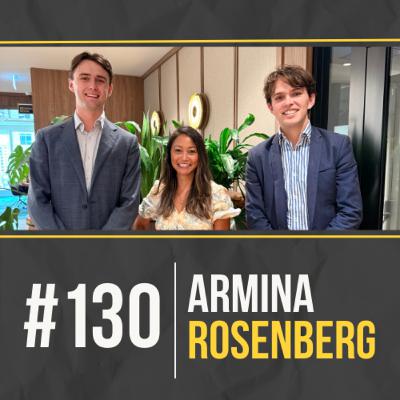
In this episode of Sweat Capital, we sit down with Armina Rosenberg, Co-Founder and Portfolio Manager at Minotaur Capital, to unpack how she actually finds investment ideas across every major market in the world. We trace Armina’s path from equity research at J.P. Morgan, through the family office world, to running global equities portfolios — and why covering the entire universe of listed companies forces you to think very differently about process, diversification, and speed. A major focus of the conversation is Taurient, the proprietary software Minotaur built in-house to screen, analyse, and compare companies globally. Powered by Python and AI, Taurient allows the team to translate overseas annual reports and transcripts, scan thousands of companies across markets, and surface opportunities most investors will never see. We also discuss: The trade-offs between institutional investing, family offices, and running your own fund How technology changes portfolio construction and risk management Why global diversification matters more than ever What Armina looks for when hiring analysts in a tech-enabled investment team If you’re interested in global equities, active management, or how modern fund managers actually build an edge, this episode is a masterclass in process over prediction. ***This episode was recorded on 3 February 2026.Follow Sweat Capital on Instagram & LinkedIn.
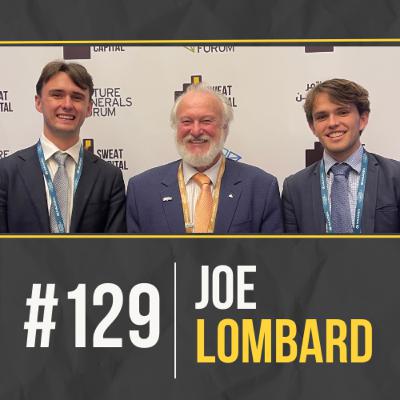
Joe Lombard, Global Vice Chair at Hatch, joined us to chat fresh off the announcement of Hatch’s $110bn deal with Maaden.We unpack his journey and how Hatch is partnering with organisations all over the world to deliver positive change.We hope you enjoy!We'll see you in the next one,Keep playing the long game.***This episode was recorded at the 2026 Future Minerals Forum in Riyadh, Saudi Arabia. For more information, visit futuremineralsforum.comFollow Sweat Capital on Instagram & LinkedIn
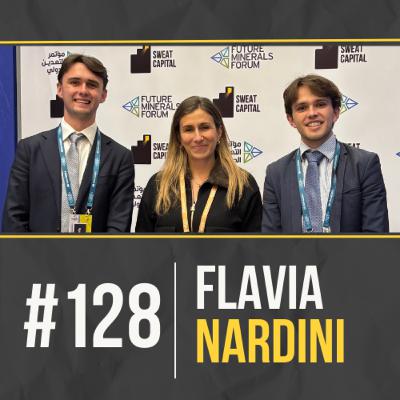
Flavia Tata Nardini always wanted to be an astronaut. Instead, she built one of the most advanced space-tech companies in the world.In this episode, we sit down with the Co-Founder and CEO of Fleet Space Technologies to unpack how she built an $800 million space company from almost nothing – surviving near-bankruptcy, delayed launches, and raising capital under extreme pressure.We explore the early days of building satellites by hand, convincing Rocket Lab’s Peter Beck to launch Fleet’s first hardware for $100, and turning deep scientific ambition into real customers like Rio Tinto and Ma’aden.We also discuss a major milestone ahead – in August, Fleet will launch the first ever Australian-built hardware into space, marking a defining moment for Australia’s space industry and for the company’s next phase of growth.We hope you enjoy!We'll see you in the next one,Keep playing the long game.***This episode was recorded at the 2026 Future Minerals Forum in Riyadh, Saudi Arabia. For more information, visit futuremineralsforum.comFollow Sweat Capital on Instagram & LinkedIn.
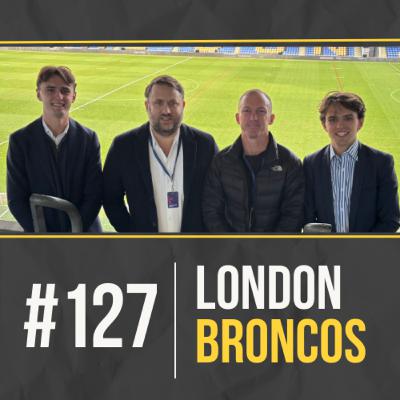
Recorded just prior to the club’s Rd 1 clash, we get privileged insight into:Why Darren and Grant have conviction on London as a place for Rugby LeagueHow the opportunity to buy the team, previously owned by the likes of Richard Branson and U.K. multimillionaire David Hughes, came across their deskWhy Darren and Grant believe that success from this investment will see a dominant London Broncos on and off the fieldWe hope you enjoy!Follow Sweat Capital on Instagram & LinkedIn.We'll see you in the next one,Keep playing the long game.
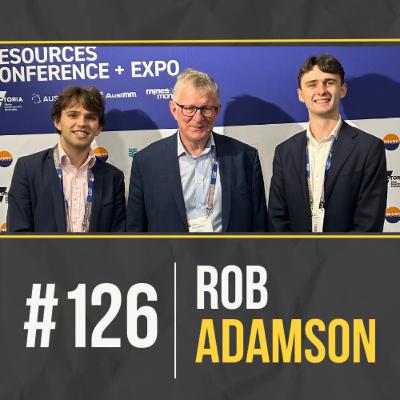
This episode was recorded OnAir @ IMARC. For more information on the world's biggest mining conference and how to get involved, visit imarcglobal.com.In this episode of Sweat Capital, we’re joined by Rob Adamson, Executive Chairman at RFC Ambrian, for a wide-ranging conversation across mining, deep tech, and career-building.Rob takes us back to his first job as a 16-year-old on a diamond drill rig in Central Western Australia – and how brutal summers in the mines became the motivation to study engineering, fund uni through holiday shifts, and eventually take a leap overseas to deep-level underground gold mining in South Africa at the back end of apartheid.From there, we unpack how Rob found his way into advisory, why RFC’s model is different to “spray and pray” venture capital, and how a disciplined venture-building approach helped bring game-changing technologies to market –including Chrysos (a modern alternative to fire assay), NextOre (MRI-style sensing for real-time ore grade detection), and MRead, where detection technology can identify landmines by sensing explosive compounds.We finish with Rob’s practical advice for young professionals: build your skillset, build your network, and most importantly – build your own brand.Follow Sweat Capital on Instagram & LinkedIn.We’ll see you in the next one,Keep playing the long game.
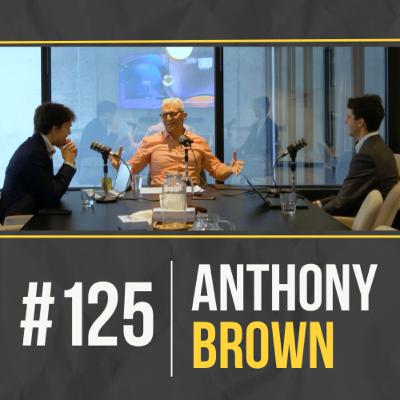
In this episode of Sweat Capital, we sit down with Anthony Brown, CEO of ASX-listed life insurer NobleOak, to unpack a way of thinking about careers that challenges the advice most of us young professionals are given. Anthony isn’t your typical CEO. After starting his career in the Audit team at KPMG in Sydney, he deliberately stepped off the conventional ladder. Rather than chasing a single linear progression, he moved across industries, roles, and functions – intentionally building what he describes as a career portfolio: a collection of experiences, skills, and calculated risks that compound over time. Anthony shares how embracing uncertainty, lateral moves, and even short-term discomfort helped shape his leadership perspective and ultimately positioned him to lead a publicly listed company. A company which just so happens to be the very first IPO that Barrenjoey ever brought to market... For anyone who has ever felt anxious about not “keeping up,” questioned whether you’re on the right path, or worried that a non-linear move might set you back, this episode is for you. ***Follow Sweat Capital on LinkedIn & Instagram.We'll see you in the next one,Keep playing the long game.

In this episode of Sweat Capital, we sit down with Brad Pulford, Managing Director of HP Australia, to unpack what’s really happening to the way Australians work - and why so many people feel disengaged, burnt out, or disconnected from their jobs. Brad draws on insights from HP’s Work Relationship Index, which shows that only a small minority of knowledge workers globally have a healthy relationship with work. We explore what’s driving that breakdown, how Australia compares to other regions, and why flexibility, autonomy, and meaning now matter more than traditional career incentives. We also trace Brad’s own career journey - from working across Africa and emerging markets to leading a major global technology business in Australia - and discuss what he’s learned about leadership, building teams, and progressing inside large corporates without getting stuck or complacent. The conversation goes deeper into the impact of AI and technology on careers, what work might look like over the next decade, and how young professionals can think more deliberately about the roles, environments, and organisations they choose to invest their time in. If you’re early in your career, navigating corporate life, or trying to understand how work is changing - this episode offers a data-driven, practical perspective on how to build a career that actually works for you, not just one that looks good on paper. ***Follow Sweat Capital on Instagram & LinkedInWe'll see you in the next one,Keep playing the long game.

In this episode of Sweat Capital, we sit down with Mitch Hughes, founder of NextGen Ventures, for a real look at what it takes to raise a first-time fund – when you don’t have the “standard” VC network or track record behind you. Mitch breaks down how NextGen closed ~$2m in its first close (targeting $2.5m), what the fundraising process actually looked like, and why cold outreach was a huge part of getting momentum early. He explains the strategy they used to build credibility before writing a single cheque: setting up a national student scout network, meeting hundreds of startups, writing memos, and building proof points by showing which companies went on to raise from other investors. We also dig into the engine of NextGen: a student VC model across six universities, designed to find ambitious founders from “underground” campus communities - the people who won’t show up through the usual top-down channels. Mitch shares what he looks for in young founders (speed, rate of learning, customer obsession, ambition), why “first-time founder” can be a misleading label, and how the falling cost of building with AI changes the entire startup curve. This episode is for anyone thinking about venture, fundraising, building a fund, or building a company - and for students wondering what the next decade of careers might actually look like. Follow Sweat Capital on Instagram & LinkedIn.We'll see you in the next one,Keep playing the long game.
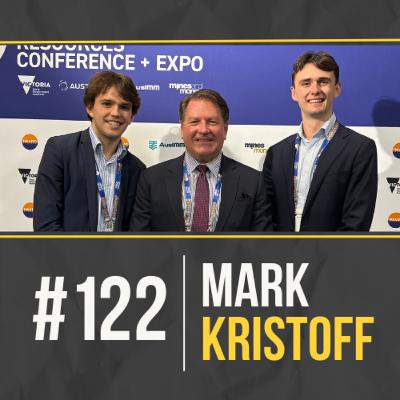
This episode was recorded OnAir @ IMARC. For more information on the world's biggest mining conference and how to get involved, visit imarcglobal.com.In this episode of Sweat Capital, we sit down with Mark Kristoff, CEO of global commodities trading firm Traxys, to unpack how careers in physical commodities trading are built. Mark takes us back to his earliest jobs, running lawn-mowing and painting businesses as a teenager, learning early what it meant to be responsible for outcomes, cash flow, and customers. He walks through attending Cornell on a Navy ROTC scholarship, preparing for a career as a fighter pilot, and the abrupt pivot that forced him to rethink his future. We then dive into how Mark entered the commodities world through a job in the mailroom, why reading the shipping documents he was delivering on the subway mattered, and how understanding learnings from these moments of curiosity led to him making an ascension to lead Traxys as CEO. For anyone curious about commodities, trading, or how senior careers are built over decades - no shortcuts - this episode offers a rare, practical look inside an industry most people never see. Follow Sweat Capital on LinkedIn & Instagram.We'll see you in the next one,Keep playing the long game.
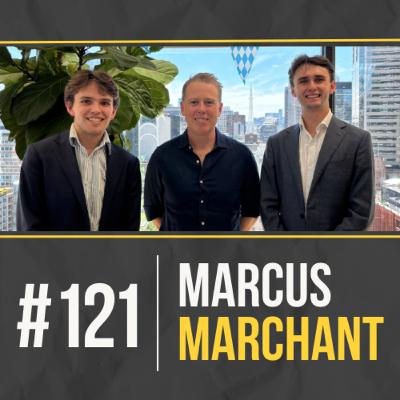
In this episode of Sweat Capital, we sit down with Marcus Marchant, CEO of Vistaprint and founder of Bondi Joe, to unpack how a career actually evolves when you’re willing to pivot and take risk. Marcus reflects on his first job at Dymocks, what retail taught him about customers, and how those early lessons shaped everything that followed. He walks us through starting his career as a lawyer in M&A, realising it wasn’t where he wanted to stay, and the difficult decision to leave law without “starting from zero.” We dive into his transition through Citibank’s management associate program, where he combined legal knowledge with customer insight to launch a same-day personal loans product - and how that moment set the foundation for senior leadership roles. The conversation also explores corporate venture capital, innovation inside large organisations, and what Marcus learned founding Bondi Joe as a creative outlet alongside a demanding executive career. For anyone navigating early career decisions, considering a pivot, or trying to understand how skills compound across industries, this episode offers a grounded, practical look at how careers are actually built. Follow Sweat Capital on Instagram & LinkedIn.We'll see you in the next one,Keep playing the long game.
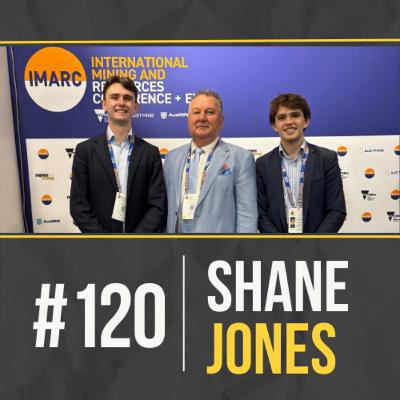
This episode was recorded on 21 October 2025, OnAir @ IMARC. For more information on the world's biggest mining conference and how to get involved, visit imarcglobal.com.In this episode of Sweat Capital, we sit down with Shane Jones, New Zealand’s Minister for Resources, to unpack what a career inside politics really looks like – and how responsibility changes the way decisions get made. Shane reflects on growing up in rural New Zealand, his first job in an abattoir, and how early life experiences shaped his appetite for leadership. He explains why a cancer diagnosis became a turning point that pushed him toward public service, and what surprised him most when he moved from governance and advisory roles into Cabinet. We also discuss the realities of governing: pressure, trade-offs, and why resource development and mining became culturally stigmatised – as well as what political leadership actually requires when you decide to challenge that narrative. Shane breaks down how governments think about certainty, regulation, fast-track approvals, and capital attraction, and why tone and execution matter as much as policy intent. For anyone interested in careers in politics, public service, leadership, or operating at the intersection of government and capital, this episode offers a rare, unfiltered look at how decisions are really made.Follow us on LinkedIn & Instagram.We'll see you in the next one,Keep playing the long game.
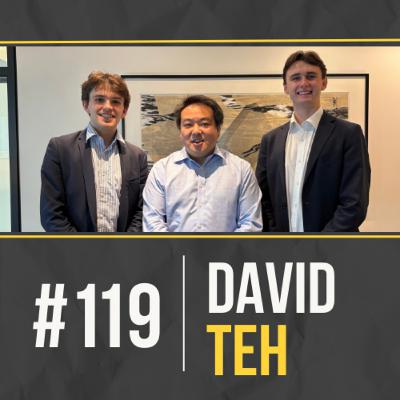
In this episode of Sweat Capital, we sit down in New York with David Teh, Partner at Simpson Thacher, one of the world’s most prestigious law firms, to unpack what a truly global legal career looks like. David traces his journey from Macquarie University to Hong Kong, London, and ultimately Wall Street - including formative years at Cravath during the dot-com boom and a front-row seat to the evolution of private credit from relationship lending to one of the most powerful forces in global finance. We dive into how major financing markets actually develop, why cycles repeat under new labels, and how lawyers can add real value beyond black-letter law - particularly as clients demand sharper structuring advice and commercial judgment. For law students, young professionals, and anyone curious about elite global careers, this episode offers rare insight into how top lawyers build trust, credibility, and client relationships over decades - not shortcuts. Follow us on Socials:InstagramLinkedInWe'll see you in the next one,Keep playing the long game.
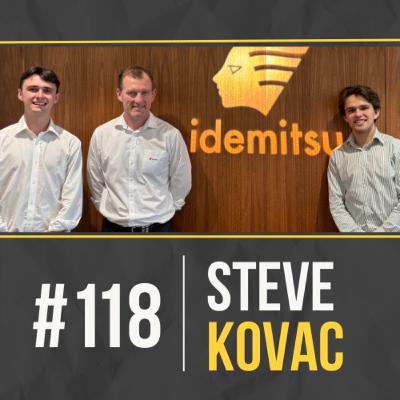
In this episode of Sweat Capital, we sit down with Steve Kovac, CEO of Idemitsu Australia, to unpack what it’s like running the Australian arm of a global Japanese conglomerate during a once-in-a-generation shift. Steve shares how Idemitsu is navigating its transition from coal into critical minerals, what that pivot looks like in practice, and how global strategy, culture, and long-term thinking shape decision-making inside one of the world’s largest energy and resources groups. We also dive into Steve’s personal journey – from early-career mining engineer to CEO – discussing how to build credibility on-site, make the right career moves, and lead through complexity as responsibility grows. If you’re interested in the energy transition, critical minerals, or how to build a long-term career in mining and resources, this episode offers rare, practical insight from someone who’s actually done it. Follow Sweat Capital:InstagramLinkedInWe'll see you in the next one,Keep playing the long game.
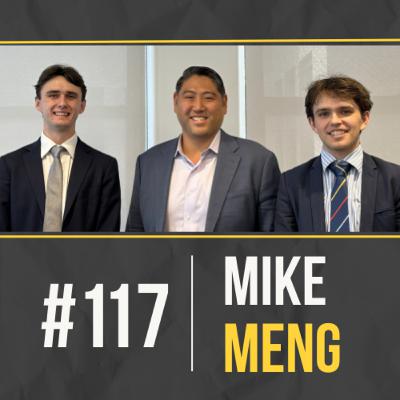
This week on Sweat Capital, we are joined by Stellar Health CEO, Michael Meng.Mike’s transition from what many would see as a dream job, Principal at a high performing private equity firm, into taking a chance on a somewhat spontaneous opportunity is interesting in itself. But the challenge he took on certainly raised our eyebrows…A core goal of aligning the interests of health insurers, care providers and patients is something that many people would dismiss as utopian thinking. However, by leveraging their proprietary technology platform and >200 strong team, Stellar Health are doing just that.A must listen for anyone who is curious about the way that tech can impact problems in ways that we had never thought possible.Follow Sweat Capital:InstagramLinkedInKeep playing the long game,We'll see you in the next one.
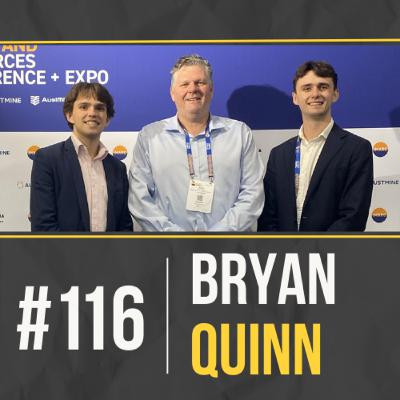
This episode was recorded on 22 October 2025, OnAir @ IMARC. For more information on the world's biggest mining conference and how to get involved, visit imarcglobal.com.In this episode of Sweat Capital, we’re joined by Bryan Quinn, Managing Director of Aurelia Metals, to unpack what it’s really like stepping out of big mining and into the driver’s seat of a mid-cap resource company.Bryan shares the lessons he learned moving from large, global firms to running a mid-cap miner – where capital allocation, operational discipline and decision-making hit very differently. We explore how Aurelia is positioning itself for the next phase of base metals growth, why these commodities matter in a changing global economy, and how leadership looks when every decision truly counts.We also chat about their key asset in the Cobar Basin – one of Australia’s most prospective and under-appreciated mineral districts – discussing its geology, infrastructure advantages, and why it remains central to Aurelia’s long-term strategy.If you’re interested in mining, commodities, or what it takes to lead a resource company through cycles of volatility and opportunity, this episode offers a rare, on-the-ground perspective.Join our growing community of high performers:InstagramLinkedInWe'll see you in the next one,Keep playing the long game.

Comments

Download from Google Play

Download from App Store
 United States