


 Claim Ownership
Film Conversations
Subscribed: 2Played: 31
Subscribe

© 2022
Description
The standard measure of the quality and importance of a movie, or, to be grand, 'film', is enjoyment.
This is certainly one measure, but not the only one. There are layers to be considered: movies as a capitalist enterprise, as a propaganda form, as art, as a fleeting means of escape from the psychological and material pressures imposed by a collapsing world, as a peek into how the past - or, people in the past with access to money, technical capability and script writing skill thought of their world - and many other things I'm surely neglecting.
We'll talk about these things, avoiding the tendency of men to waste time with formless chatter. There's no time for that; the world is burning. There'll be structure, agendas, talking points and laughing no doubt.
So not grim, but, well, how should I put this: also not a clown car of opinion.
This is certainly one measure, but not the only one. There are layers to be considered: movies as a capitalist enterprise, as a propaganda form, as art, as a fleeting means of escape from the psychological and material pressures imposed by a collapsing world, as a peek into how the past - or, people in the past with access to money, technical capability and script writing skill thought of their world - and many other things I'm surely neglecting.
We'll talk about these things, avoiding the tendency of men to waste time with formless chatter. There's no time for that; the world is burning. There'll be structure, agendas, talking points and laughing no doubt.
So not grim, but, well, how should I put this: also not a clown car of opinion.
20 Episodes
Reverse
Hello everyone welcome to another episode of the Film Conversations podcast. In this episode, which is part three of our discussion about the impact of the movies we've viewed on our political leanings, Dennis takes the lead. He discusses films such as The Discreet Charm of the Bourgeoisie that influenced his thinking. Below, you'll find links to the films we talked about and realted things. References: The Discreet Charm of the Bourgeoisie https://en.wikipedia.org/wiki/The_Discreet_Charm_of_the_Bourgeoisie Jean-Luc Godard https://en.wikipedia.org/wiki/Jean-Luc_Godard My Dinner with Andre https://en.wikipedia.org/wiki/My_Dinner_with_Andre Francesca Albanese, UN Special Rapporteur https://x.com/FranceskAlbs
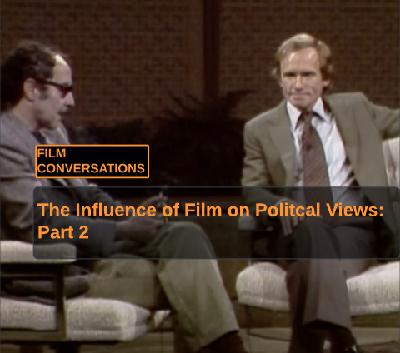
Hello everyone, this is Dwayne Monroe, the host, along with Dennis Claxton and RC Charles Roberts of the Film Conversations podcast. In today's show, we continue a conversation we started in the previous episode: the ways film shapes political views and the value of film to understanding politics. This has turned out to be a rich topic and so, we're planning a third episode to give Dennis a chance to fully develop his ideas which were cut a bit short this time around. There is, as always, a full listing of the films referenced during our conversation. I hope you enjoy. Film References Jean-Luc Godard Interview with Dick Cavett (1980) https://youtu.be/BdeHqesLx4s?si=O90_yIyvGUD8JELg Weekend https://en.wikipedia.org/wiki/Weekend_(1967_film) The Discreet Charm of the Bourgeoisie https://en.wikipedia.org/wiki/The_Discreet_Charm_of_the_Bourgeoisie Douglas Sirk https://en.wikipedia.org/wiki/Douglas_Sirk Luis Buñuel https://en.wikipedia.org/wiki/Luis_Bu%C3%B1uel Senses of Cinema https://www.sensesofcinema.com/2017/1967/weekend-jean-luc-godard-1967/ Charlie Wilson's War https://en.wikipedia.org/wiki/Charlie_Wilson%27s_War_(film) Lions for Lambs https://en.wikipedia.org/wiki/Lions_for_Lambs Inherit the Wind https://en.wikipedia.org/wiki/Inherit_the_Wind_(1960_film) State of Play https://en.wikipedia.org/wiki/State_of_Play_(film) Bob Roberts https://en.wikipedia.org/wiki/Bob_Roberts Gattaca https://en.wikipedia.org/wiki/Gattaca
Hello everyone, this is Dwayne Monroe, one of the hosts, alongside Dennis Claxton and RC Charles Roberts, of the Film Conversations podcast. In today's episode, we talk about the films that shaped our political views. Or, I should say, we intended to talk about this but global events intervened and we found ourselves talking about geopolitics and war (with relevant US domestic politics included for good measure). Eventually, we found our way to discussing film, including RC's mention of the 1992 released Bob Roberts and my mention of Akira Kurosawa's Ran, released in 1985. This was a good discussion and although we didn't spend as much time on film as originally planned, fear not, there will be a part two. We hope you enjoy. References Gore Vidal Karl Kraus Henry Simmons - Cheap Music, Numb Brains, and Stupidity John Gray - Humanism and Flying Saucers Doug Henwood - How the Ruling Class Became Vulgar
Welcome back to another episode of Film Conversations. After a bit of a hiatus, we're back and at full force, so to speak: RC Charles Robert is back at the table. Today's film is FW Murnau's silent masterpiece, released in 1926: Faust. To set the scene, here's an excerpt from the Criterion article on the film: Criterion Excerpt https://criterioncast.com/column/for-criterion-consideration/for-criterion-consideration-f-w-murnaus-faust One of the most well known legends of the Renaissance period was Faust, a German necromancer whose exploits transformed into the tale of a man who sells his soul to the Devil in exchange for all the knowledge in the world. Over the centuries, the story has been countlessly reshaped and rebooted. Most recently Russian director Alexander Sokurov (who is most well known for his one-take wonder, Russian Ark) released a free-interpretation of the Faustian tale. The first film to directly adapt the story was made by Frederich Wilhelm Murnau in 1926, just before he moved to America. Based on a two-part dramatic poem by Goethe, Faust begins with the demon Mephisto who has made a bet with an Archangel that he can corrupt any righteous man's soul. If the Devil succeeds, he will win dominion over earth. The Archangel agrees, on the condition that the Devil set his sights on Faust, an elderly alchemist whose pursuit of knowledge and truth sets him apart from man. The Devil delivers the plague to a local village, forcing Faust to use his alchemic skills to create an antidote. After he fails to find a cure, Faust rejects God and science, turning to a book of dark magic to summon Mephisto (played by Emil Jannings). Once Mephisto materializes on Earth, he presents Faust with a contract stating that he will now be able to cure the plague in exchange for his soul. [...] This was a great conversation that, as usual, ranged beyond the film to wider, yet still related matters. Oh and during the intro, the German film company UFA is mentioned. You can learn more about UFA here.

On July 26 of 2024, a story was published by entertainment industry trade magazine Variety about Francis Ford Coppola's alleged behavior on the set of his film, Megalopolis. Here is an excerpt from the article: Video has surfaced of director Francis Ford Coppola that shows the legendary director trying to kiss young female extras on the set of his ambitious sci-fi epic. Variety has obtained two videos that were taken by a crewmember last year during the filming of a bacchanalian nightclub scene. Two sources told Variety that Coppola appeared to act with impunity on set. And unlike traditional movies, Coppola financed the entire $120 million budget himself, so there were none of the traditional checks and balances in place. The videos would appear to corroborate a bombshell report in the Guardian that claimed the 85-year-old director "tried to kiss some of the topless and scantily clad female extras" and told them "he was 'trying to get them in the mood.'" The Guardian story broke right before "Megalopolis" made its world premiere in Competition in Cannes. [...] After reading this story, I immediately experienced disappointment. As a filmmaker, I've admired Coppola, and considered him to be a venerable elder of the industry. Beyond disappointment however, I began to think of misogyny in the film industry - a matter of patriarchal society and power, among other things. This brings me to our guest, Mary Wild who, we're happy to say, has been on Film Conversations before to discuss Hitchcock's Vertigo. On Mary's bio page at the Global Center for Advanced Studies website she's described as a 'Freudian Cinephile' and pop psychoanalyst, creating content related to cinema, philosophy, and the modern cultural landscape, founder of the Projections lecture series at Freud Museum London, applying psychoanalysis to film interpretation, which has been running since 2012. She teaches film at City Lit and Picturehouse Cinemas, and has produced events for London Centre for Interdisciplinary Research, Picturehouse Cinemas, White Cube Gallery, and Morbid Anatomy. She also co-hosts Projections Podcast, contributes to Evolution of Horror Podcast. In this episiode, we use the story of Coppola to examine misogyny in the film industry and beyond. Links Variety article on Coppola https://variety.com/2024/film/news/megalopolis-set-video-francis-ford-coppola-kissing-extras-1236082653/ Mary Wild GCAS Page https://gcascollege.ie/mary-wild Projections Lecture Series https://www.freud.org.uk/tag/projections/ Projections Podcast https://www.projectionspodcast.com/ Evolution of Horror Podcast https://www.evolutionofhorror.com/player Hollywood by Garson Kanin https://www.goodreads.com/book/show/1105839.Hollywood Why women had better sex under socialism by Kristen R. Ghodsee https://www.goodreads.com/book/show/53284567-why-women-had-better-sex-under-socialism?ref=nav_sb_ss_1_18

This episode began as a thought months ago, not long after the Oct 7, 2023 Hamas attack. At that time, we anticipated violence - there's a long history of Israeli assaults on the Palestinian people. We did not, however, anticipate a genocidal campaign and widening regional war. It's a wide ranging talk between Dennis and Dwayne since Charles was unable to join us this time. Our conversation does not have the structure of our usual shows. There is a film, Farha, at the heart of things and we do discuss it but more as a point of reference than to critique or review. We'll talk about Farha at greater length on a subsequent show. The links shared with the show notes will point you to information resources we've found helpful in sorting through this unfolding disaster. Resources Farha https://en.wikipedia.org/wiki/Farha_(film) The Great Book Robbery The Great Book Robbery is a powerful and poignant chronicle of cultural destruction. It tells the story of the 70,000 Palestinian books that were looted by the newly formed State of Israel in 1948. The film weaves together a range of storylines to create a dramatic, engaging, and deeply emotional structure. https://bbrunner.eu/movie/the-great-book-robbery/ Leila Khaled Interview: Palestine is an International Liberation Struggle https://www.youtube.com/watch?v=6BBvzyKL-G4 A Life in Struggle: Exclusive with Leila Khaled, Icon of Palestinian Resistance https://www.youtube.com/watch?v=JSv0Vqk_ILg Solidarity with Palestine: Free Resources and Further Reading https://www.versobooks.com/en-gb/blogs/news/solidarity-with-palestine-free-resources-and-further-reading?_pos=4&_sid=e479de814&_ss=r The 1948 Ethnic Cleansing of Palestine by Ilan Pappé https://ciaotest.cc.columbia.edu/olj/jps/vol36-141/vol36-141_b.pdf Ten Myths About Israel by Ilan Pappe https://www.jadaliyya.com/Author/4114 Gaza An Inquest into Its Martyrdom by Norman Finkelstein https://www.ucpress.edu/book/9780520318335/gaza The Palestine Laboratory: How Israel Exports the Technology of Occupation Around the World by Antony Loewenstein https://www.versobooks.com/products/2684-the-palestine-laboratory

In today's episode, we discuss the 1966 Italian film, the Battle of Algiers. The film, based on events that occurred during the Algerian war against French occupation (1954-62) and specifically, the battle in the capital city of Algiers, depicts the actions of the various groups that fought against, and with each other during that war. Here is a synopsis from Criterion: "One of the most influential political films in history, The Battle of Algiers, by Gillo Pontecorvo, vividly re-creates a key year in the tumultuous Algerian struggle for independence from the occupying French in the 1950s. As violence escalates on both sides, children shoot soldiers at point-blank range, women plant bombs in cafés, and French soldiers resort to torture to break the will of the insurgents. Shot on the streets of Algiers in documentary style, the film is a case study in modern warfare, with its terrorist attacks and the brutal techniques used to combat them. Pontecorvo's tour de force has astonishing relevance today." As the Criterion synopsis states, 'Battle of Algiers' remains relevant. During this conversation, we use the film as a foundation for a broader conversation about its relevance to present concerns and the ongoing battle for liberation. References: Battle of Algiers - Criterion https://www.criterion.com/films/248-the-battle-of-algiers George Jackson Interview (mentioned by Dennis) https://www.historyisaweapon.com/defcon1/jacksoninterview.html Tariq Ali article https://socialistworker.co.uk/in-depth/the-killing-of-palestinians-is-undoubtedly-genocide-tariq-ali-and-others-speak-out/ French Algeria https://en.wikipedia.org/wiki/French_Algeria
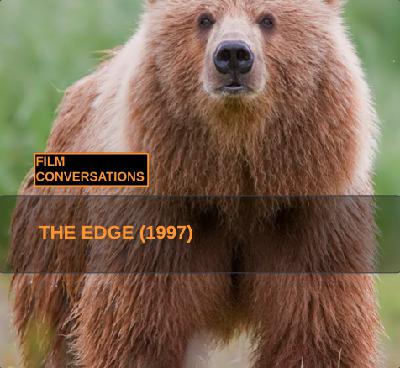
In this episode, we discuss 1997's The Edge starring Anthony Hopkins, Alec Baldwin, Harold Perrineau and Elle Macpherson, written by David Mamet and directed by Lee Tamahori. Here is an excerpt from the Wikipedia entry: "The Edge is a 1997 American survival thriller film written by David Mamet and directed by Lee Tamahori starring Anthony Hopkins and Alec Baldwin. The plot follows wealthy businessman Charles Morse (Hopkins), photographer Bob Green (Baldwin), and assistant Stephen (Harold Perrineau), who must trek through the elements and try to survive after their plane crashes in the Alaskan wilderness, all while being hunted by a large Kodiak bear and the men's fraying friendships. Bart the Bear, a trained Kodiak bear known for appearances in several Hollywood movies, appears in the film as the bloodthirsty Kodiak, in one of his last film roles." [...] Full at the Wikipedia entry During our conversation, Charles offers an interpretation of The Edge based on an examation of the themes of masculinity it presents in a pop culture, action adventure film form (as that existed in the 1990s). Dennis came into the conversation with quite a few criticisms but adjusts his view, somewhat, as we chat. It was an interesting and lively discussion which I hope you'll enjoy. References: The Treasure of the Sierra Madre The Searchers Taxi Driver

In today's episode, we speak with our Dennis Claxton and his daughter Miranda about their personal histories of film viewing. Both are Angelinos who have taken advantage of the still existing film culture of Los Angeles (small cinemas, revivals of older films and other lovely things). There isn't a fixed film under review but Hithcock's The Birds and Vertigo make prominent appearances. Enjoy.
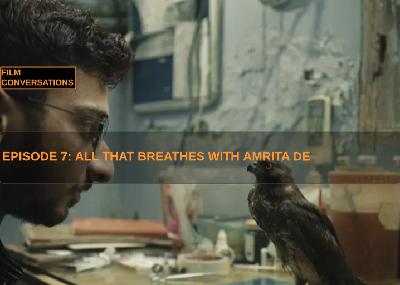
In today´s episode, we speak with Amrita De, Postdoctoral fellow in the Center of Humanities and Information at Penn State University about All That Breathes, a 2022 documentary film directed by Shaunak Sen. Let me read a bit about Amrita from her page on the Penn State University website: Amrita´s research focuses on global south masculinity studies and affect theory. Her works have been published in NORMA, Boyhood Studies, Global Humanities and are forthcoming in other edited collections. She is also working her way through her first novel centered around contemporary Indian Masculinities. Here's the synopsis of All That Breathes from the film´s Wikipedia page: All That Breathes is a 2022 documentary film directed by Shaunak Sen. It is produced by Shaunak Sen, Aman Mann and Teddy Leifer under the banner of Rise Films. The film follows siblings Mohammad Saud and Nadeem Shehzad, who rescue and treat injured birds in India. The film had its world premiere at the 2022 Sundance Film Festival on January 22, 2022, where it won Grand Jury Prize in World Cinema Documentary Competition. It also had a screening at the Cannes Film Festival in the special screening section, where it won the Golden Eye. It was later nominated for the Academy Award for Best Documentary Feature Film. Two brothers Saud and Nadeem were raised in New Delhi, looking at a sky speckled with black kites, watching as relatives tossed meat up to these birds of prey. Muslim belief held that feeding the kites would expel troubles. Now, birds are falling from the polluted, opaque skies of New Delhi and the two brothers have made it their life's work to care for the injured black kites. [...] This was an excellent conversation and we were very glad to have Amrita as a guest. I hope, you enjoy. Show Note Links All That Breathes - Wikipedia https://en.wikipedia.org/wiki/All_That_Breathes Amrita's webpage: https://www.amritade.com/home Variety Interview with the film makers https://www.youtube.com/watch?v=BbLoQ8GPxeA ASAP Connect Interview with Mohammad Saud and Salik Rehman https://youtu.be/I5kL2YMb4Vk?si=I4Zx5RFMtsE-tNFs
In this brief annoucement, I talk about our September break, Ghost in the Shell (the 1995 release) and some of the things you can look forward to in upcoming shows including discussions of cinematic depictions of our home towns, Italian westerns of the 1960s and 70s, films from outside of the Hollywood orbit and more guests. See you soon! Oh and here's a link to the Wiki entry about Ghost in the Shell for the curious: https://en.wikipedia.org/wiki/Ghost_in_the_Shell
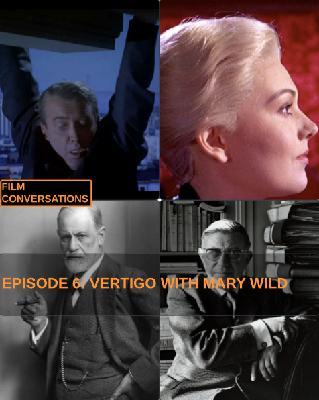
Hello everyone, this is Dwayne Monroe, one of the hosts, alongside RC Charles Roberts and Dennis Claxton, of the Film Conversations podcast. In today’s episode, we are very happy to welcome Mary Wild to the show to talk about Alfred Hitchcock’s 1958 masterpiece, Vertigo. On her Twitter page (I refuse to call that platform, X) Mary describes herself as a Freudian cinephile and feminine jouissance maximalist, which is both a marvelous phrase and fantastic declaration. Mary is the creator of the Projections lecture series at the Freud Museum, London, co-host of the Projections Podcast, contributor to Evolution pod and the host of her own podcast on Freud, film and related topics. I’m happy to say I was a guest on Mary’s podcast a few months ago to talk about how AI is treated as a topic in film. A note about this episode… We originally recorded an episode with Mary on August 6. Unfortunately, there was a technical problem that caused the loss of the entire recording. Very kindly, Mary agreed to come on again to re-record. We’re very glad and grateful that she did not only because it gives us a chance to talk with Mary about Vertigo but also, because it gives us a chance to more fully explore her Freudian approach to the film. There will be links to all the references in the show notes. This was a great conversation which we looked forward to for some time; Vertigo is a brilliant film that rewards rewatching and Mary is a brilliant person to walk us through it. I hope you enjoy. Links Mary Wild Podcast https://www.patreon.com/marywild Freud Museum London https://www.freud.org.uk Projection Series at the Freud Museum https://www.freud.org.uk/tag/projections/ Projections Podcast https://open.spotify.com/show/2O5n4yhnRGpreyTS7tDfLm Evolution of Horror Podcast https://www.evolutionofhorror.com

In today's episode, my co-hosts and I will be talking about the work of Douglas Sirk, one of the great film directors of the 20th century. In the course of gathering notes for this episode and this introduction, I found an intriguing bio of Sirk, posted at the 'Senses of Cinema' website (link in show notes). I'll just read the first few paragraphs to set the stage. "Douglas Sirk was one of the 20th century cinema’s great ironists. And perhaps the most distinctive characteristic of the films he made in Europe and America is the way they are able to create a gulf between how his characters see themselves and our view of them. Sirk’s characters grapple with the same problems that have always afflicted men and women and parents and children, to do with love, death and social circumstance. In some cases, they do so in a world of melodrama – as in films as various as Schlussakkord (1936), La Habanera (1937), There’s Always Tomorrow (1955) and Imitation of Life (1958). In others, it’s a world of colour and music – as in the trio of comedy-musicals he made during the 1950s, Has Anybody Seen My Gal? (1951), Meet Me at the Fair (1952) and Take Me to Town (1952), part of a series he had planned about small town America. In others, it’s the excitement of mystery, romance or adventure – in films such as Lured (1946), Taza, Son of Cochise (1953, shot in 3-D) and Captain Lightfoot (1954). But Sirk adds another layer to the shape of the films and to his characters’ struggles within them. All around, but beyond the reach of their vision, are forces which define the parameters of their lives. These are evident at the most basic level, in the way that the plots almost always hinge on problems for which the only solution becomes a convenient miracle, a deus ex machina." We will talk about Sirk's work and life broadly and more specifically, we will use his 1956 melodrama masterpiece, 'Written on the Wind' as the focus of our discussion. I hope you enjoy it. Wikipedia: https://en.wikipedia.org/wiki/Douglas_Sirk Interview with Sirk (1978) https://www.filmcomment.com/article/sirkumstantial-evidence/ Sense of Cinema Bio: https://www.sensesofcinema.com/2004/great-directors/sirk/ Douglas Sirk Remembers (in German) https://youtu.be/a0YfrQMoJIw
In today’s episode we speak with Dr. Isabel Millar, Author of The Psychoanalysis of Artificial Intelligence (published in 2021 - which I highly recommend). Dr. Millar is Associate Researcher at Newcastle University Department of Philosophy and both Fellow and Faculty at the Global Centre for Advanced Studies, Institute of Psychoanalysis. She is currently working on her next book Patipolitics for Bloomsbury Philosophy. Today’s film is Ex Machina, written and directed by Alex Garland and released in 2014. The film is ably discussed in The Psychoanalysis of Artificial Intelligence from a Lacanian perspective, an appropriate toolkit. I’ll use the synopsis Isabel provides in Chapter 5, titled What Can I Know? Artificial Enjoyment - from page 138 of her book: "Ex Machina depicts the attempt of a young, male computer genius Caleb, to evaluate the potential “self-consciousness” of Ava, an embodied Artificial Intelligence, via the fabled Turing Test. Hidden away in a secret bunker in the woods, Caleb is watched over by tech Svengali Nathan, the creator of a series of female AIs who appear—physically at least—uncannily human. Over the course of several days, Caleb meets and talks with Ava and tries to discern what is really going on behind the perfectly beautiful silicone face. Very soon Caleb’s Turing Test turns into a love affair, as Ava implores him to help her escape captivity from her life of subservience at the whims of Nathan. By the end of the film Ava tricks Caleb into believing she wants him, kills Nathan and leaves Caleb for dead. She escapes the concrete bunker alone and, for the first time, steps outside into the lush green natural world." We were very happy that Isabel granted us a bit of her time to discuss this film and the way it illustrates some of the themes of her book. Check out the show notes for links and references; we hope you enjoy. Links The book: https://link.springer.com/book/10.1007/978-3-030-67981-1 The film: https://en.wikipedia.org/wiki/Ex_Machina_(film) Dr. MIllar’s homepage: https://www.isabelmillar.com Dialogue between Dr. Millar and Mary Wild on Wild’s podcast (requires a patreon subscription): https://www.patreon.com/posts/56533141
In today’s episode, we speak with Dr. Robert Beshara Assistant Professor of Psychology and Humanities at Northern New Mexico College. He is also the founder of CriticalPsychology.org and a musician and composer. The music you hear in the background is istimtaa from Robert's excellent album, Horny Cricket (link in the show notes) For more information and Dr. Beshara's work, please visit www.robertbeshara.com Today’s movie is The Killing, directed by Stanley Kubrick and released in 1956. I will read the Wikipedia synopsis for you now… “The Killing is a 1956 American film noir directed by Stanley Kubrick and produced by James B. Harris. It was written by Kubrick and Jim Thompson and based on Lionel White's novel Clean Break. It stars Sterling Hayden, Coleen Gray, and Vince Edwards, and features Marie Windsor, Elisha Cook Jr., Jay C. Flippen and Timothy Carey. Johnny Clay is a veteran criminal planning one last heist before settling down and marrying Fay. He plans to steal $2 million from the money-counting room of a racetrack during a featured race. Johnny assembles a team consisting of a corrupt cop, a betting window teller to gain access to the backroom, a sharpshooter to shoot the favorite horse during the race to distract the crowd and keep the winnings from being paid out, a wrestler to provide another distraction by provoking a fight at the track bar, and a track bartender.” It’s a fantastic film and Robert is an insightful and fun person to talk to so I hope you enjoy. Resources Wiki entry: https://en.wikipedia.org/wiki/The_Killing_(film) Jim Thompson: https://en.wikipedia.org/wiki/Jim_Thompson_(writer) Robert Beshara’s album, ‘Horny Cricket’ (we’ll feature music from this album during the show): https://hornycricket.bandcamp.com/album/istimt American Film Institute Entry: https://catalog.afi.com/Catalog/moviedetails/51890 Roger Ebert Review: https://www.rogerebert.com/reviews/great-movie-the-killing-1956 Original Trailer: https://youtu.be/m9wMEDJuGnE Sterling Hayden Interview: http://www.geraldpeary.com/interviews/ghi/ Making ‘The Killing’: An Auteur and His Writer: https://vaguevisages.com/2023/03/24/the-killing-essay-stanley-kubrick-movie-film/
On Feb 22, 2023, Compact Magazine published an article by Slavoj Zizek titled, Wokeness is Here to Stay. In this article, Zizek makes several claims about the existence of woke and trans lobbies, exercising, somehow, power over a variety of public and private organizations and institutions. Unsurprisingly, this was controversial in left circles generally and among people who admire Zizek’s body of work and, let’s be honest, persona. In the days and weeks following the article’s release there was a rush of activity - podcasts, essays and so on - either condemning or supporting Zizek (mostly supporting). The supportive responses used an interesting tactic encouraging people to, essentially, ignore the phrases Zizek clearly used, such as woke lobby to look deeper at the supposed Lacanian meanings behind it all. For RC Charles Roberts and yours truly, this smelled of obfuscation and bad faith in a Sartrean sense. Both of us have enjoyed, and in various ways, learned from Zizek’s work on ideology, particularly as applied to film (which is one of the reasons Film Conversations seemed a good place to talk about this), so there was no tossing the proverbial baby out with the bathwater. However, Zizek’s arguments, flimsy and offensive as they are, deserved an unequivocal response. So we each wrote an essay, analyzing and responding to Zizek’s Compact Magazine piece. Charles’ is entitled Living the Dream: On Slavoj Zizek and Wokeness and mine is Just One More Thing: Slavoj Zizek on Wokeness. We take very different approaches which, in the conversation you’re about to hear, we’ll discuss. I hope you enjoy it. Links: Wokeness is Here to Stay by Slavoj Zizek https://compactmag.com/article/wokeness-is-here-to-stay Living the Dream: On Slavoj Zizek and Wokeness by R.C. Roberts https://ferocia.substack.com/p/living-the-dream-on-slavoj-zizek Just One More Thing: Slavoj Zizek on Wokeness by Dwayne Monroe https://ferocia.substack.com/p/just-one-more-thing-slavoj-zizek Slavoj Zizek Vs Will Self in Dangerous Ideas https://youtu.be/CId1iOWQUuo
This is an audio version of a video I recorded with Robert Beshara, RC Roberts and Matthew Flisfeder about the original, 1982 release of the movie ‘Blade Runner’ on the occasion of the film’s 40th anniversary. This was recorded before the Film Conversations podcast took its present form but is very much within our wheelhouse. In the introduction, I make reference to the guests’ websites (which appeared on-screen) which you’ll find listed below. During this conversation, we explore the film using a postmodern lens (Matt Flisfeder), from a literary point of view (RC Roberts), from the perspective of memory (Robert Beshara) and as a resurrection of the Film Noir (moi). It was a good time. Dr. Robert Beshara Author of works such as a translation of Fundamentalism and Secularization by Egyptian scholar Mourad Wahba, artist and composer whose most recent music effort is an album based Horny Cricket You can learn more about Robert’s work at his website and here’s the URL https://sites.google.com/site/robertkbeshara/home Matthew Flisfelder Assoc Professor of Rhetoric and Communications at the Univ of Winnipeg, and author of, among other works Postmodern Theory and Blade Runner. Here's Matthew's website: https://matthewflisfeder.com RC Charles Roberts, Internet polemicist, a student of the traditions of Jean Paul Sarre, Wiford Bion, Gore Vidal and HL Mencken to name some of the people who sit at what Charles calls his 'writers table'. You can read Charles' work at his Substack Ferocia Animi and here's the link https://ferocia.substack.com
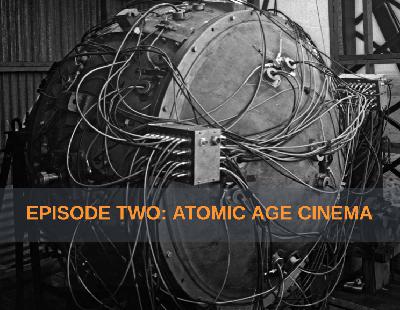
In today’s episode, which is our second, my co-hosts and I - Dennis Claxton and RC Charles Roberts - talk about two films from what’s known as the atomic age genre of science fiction - Panic in Year Zero and The Incredible Shrinking Man. Atomic age, in this context, refers to that period following the use of atomic weapons against the Japanese cities of Hiroshima and Nagasaki in 1945 by the US, when fear, hope and wonder about atomic energy and weapons were right on the surface of the culture, influencing film and the form of science fiction and disaster cinema movie goers saw from the 1950s through the 1960s. Panic in the Year Zero, released in 1962 and starring Ray Milland, tells the story of a Los Angeles family who, while on a weekend camping trip, witness the destruction of their city by an atomic weapon and find themselves in a world that’s unraveling. The Incredible Shrinking Man, starring Grant Williams, and based on a book (The Shrinking Man by is a very different film; a man is exposed to a radioactive cloud while on a boating trip with his wife that causes him to begin shrinking, losing height and mass at the rate of about an inch a week. The film, in its way, explores themes of masculinity and even human existence. This was a great conversation but you may at times notice a bit of coughing and sneezing on the audi track. Both Charles and Dennis were a bit under the weather when we recorded and I became so engaged in the flow of our chat I forgot at times to mute. Even so, I hope you enjoy listening to this as much as we enjoyed recording it. Notes Panic in Year Zero Wiki Article: https://en.wikipedia.org/wiki/Panic_in_Year_Zero! Film: https://www.dailymotion.com/video/x21x586 The Incredible Shrinking Man Wiki Article: https://en.wikipedia.org/wiki/The_Incredible_Shrinking_Man Film: https://archive.org/details/tism-1957 Decent Cannibals by RC Roberts https://ferocia.substack.com/p/decent-cannibals-on-the-situation Double Bind https://en.wikipedia.org/wiki/Double_bind Jean Paul Sartre https://en.wikipedia.org/wiki/Jean-Paul_Sartre Sartre’s Concept of Bad Faith https://youtu.be/UUXXmHkI-Ug Jack Arnold on the Making of The Incredible Shrinking Man https://youtu.be/6z4J89KF1AA History of American International Pictures https://youtu.be/okCZhEEqmD4 How Nuclear Weapons Changes How We Think https://m.youtube.com/watch?v=NtwIcqNlUFQ
In this conversation, Dennis Claxton, RC Roberts and yours truly discuss the 1960, American film, “Inherit the Wind”. The film, based on a play of the same name and inspired by the Scopes ‘Monkey’ Trial of 1925, is, among other things, an allegory for the McCarthy era House Un American Activities Committee Hearings and their impact.
In this supplemental episode, I read RC Roberts' essay, 'Mere Opinion: A Review of Inherit the Wind' in which RC explores the films various themes, particularly, the emphasis on the freedom to think. Here's an excerpt from the essay: In my more irritable moods, when my misanthropy is at full mirth, I find myself living in a world that is devoid of thought. There are few things that escape this feeling; our politics, our schools, our media--if I went on with this list, I would be putting in more thought into this than the participants of any of those fields do. To paraphrase Schopenhauer, it seems that people would rather believe than think, and thus are inaccessible to reason, for they only respond to authority. The full essay is available at RC Roberts' Substack, Ferocia Animi which is available here. It was fun to read this excellent essay and I hope you enjoy!
Comments


Download from Google Play

Download from App Store
 United States