


 Claim Ownership
The Maydan Podcast
Subscribed: 6Played: 14
Subscribe

The Maydan Podcast © 2021
Description
The Maydan Podcast presents a new year-long series over 50 episodes across four unique streams where guests gather to discuss Islam, race, gender, and politics. Our streams are On The Square hosted by the Sappelo Square team, History Speaks hosted by Dr. Roshan Iqbal, Knowledge and its Producers hosted by N.A. Mansour, and Islam on the Edges hosted by Dr. Ermin Sinanovic, and A common Word hosted by Dr. Younus Mirza. This series is made possible by a generous grant from the Henry Luce Foundation to the the Ali Vural Ak Center for Global Islamic Studies at George Mason University, the home of Maydan.
56 Episodes
Reverse
In this episode of History Speaks, Dr. Roshan Iqbal is joined by Dr. Akif Tahieev to explore a topic that rarely appears in mainstream scholarship: Shia Muslim communities in post-Soviet Eastern Europe. Together, they discuss who these communities are, how they live and practice their faith, and why their stories have been overlooked in both Islamic studies and European studies. From questions of identity and conversion to the impact of recent conflicts, this conversation opens a window onto a world many listeners may not know exists.
In this episode of History Speaks, Dr. Roshan Iqbal sits down with Dr. Martin Nguyen, author of Modern Muslim Theology: Engaging God and the World with Faith and Imagination, to explore what it means to imagine a “Muslim Malcolm X.” Together, they discuss how Malcolm’s faith shaped his vision of justice, community, and how retelling his story from the vantage point of his religious imagination invites us to see him anew. This conversation reflects on Malcolm X not only as a civil rights icon, but as a transformative Muslim thinker whose legacy continues to nourish contemporary struggles for liberation.
In this episode of History Speaks, Dr. Roshan Iqbal speaks with Dr. Santiago Slabodsky, who holds the Florence and Robert Kaufman Endowed Chair in Jewish Studies and directs the Jewish Studies program at Hofstra University. Drawing on his award-winning book Decolonial Judaism: Triumphal Failures of Barbaric Thinking, Dr. Slabodsky explores the erasure of the Judeo-Islamic tradition and the invention of the “Judeo-Christian” West. Together, they discuss how colonialism, epistemic dominance, and modernity have shaped the way we understand history, power, and religion. The conversation invites us to reconsider what was lost with the disappearance of the Judeo-Islamic world — and what might be recovered when we imagine history beyond Europe’s frame.
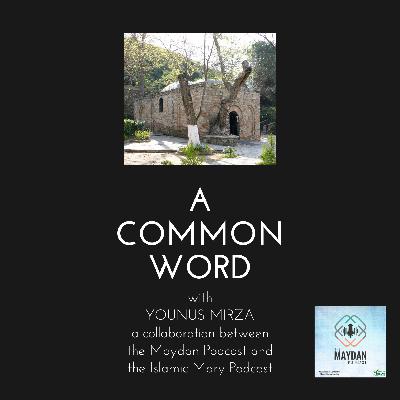
When I was writing The Islamic Mary, I became further interested in the field of Christian and Muslim dialogue and its relevance today and in the future. This led me to various books published on the topic, such as Amir Hussain's new book One God and Two Religions: Christians and Muslims as Neighbors. Amir's book is unique in that it speaks about Christians and Muslim worshipping the same God and living next to each other as neighbors. I sit down with Amir to discuss his spiritual biography, his new book and its implications for today's world.
Subscribe to
In this episode of History Speaks, Dr. Roshan Iqbal speaks with Dr. Sarra Tlili, author of Animals in the Qur’an, a groundbreaking work—translated into Arabic—that has reshaped scholarship on Islam, ethics, and the environment. Together, they explore her thesis that the Qur’an is theocentric and not an anthropocentric text and what this means for how we understand creation and ourselves. This episode is dedicated, with Dr. Tlili’s permission, to the life and legacy of Jane Goodall.
In this episode of History Speaks, I talk with Dr. Natalie Khazaal, Associate Professor in the School of Modern Languages at Georgia Tech. Drawing from her research, we explore how racism, speciesism, and cultural bias are embedded in animated films and how they shape what audiences learn about difference and belonging. We also discuss the MARS test, an original intervention Dr. Ghazaal developed, with two other colleagues, to analyze these biases in media and animation. Our conversation is framed by a larger question: how does animation reflect and reinforce societal prejudices, often without viewers even noticing? We consider how creative choices, protest, and advocacy can challenge these narratives. Ultimately, we ask: what does it mean to see - and be seen - accurately in stories meant for everyone?
In this episode of History Speaks, Dr. Roshan Iqbal speaks with Dr. Younus Mirza, founding director of the Barzinji Institute for Global Virtual Learning at Shenandoah University, about his recent book The Islamic Mary. Together, they explore Maryam/Mary in the Qur’an, Hadith, Sufi thought, and the broader Muslim imagination. The conversation concludes by highlighting how significant Maryam/Mary is, how often her legacy is overlooked, and how much untapped potential it holds for Muslim spirituality and interfaith dialogue.
When I started my career, I was interested in the figure of Abraham/Ibrahim and how he could be a bridge figure between Christians, Jews and Muslims. However, as I wrote my book on "The Bible and the Qur'an: Biblical Figures in the Islamic Tradition," I became more interested in the figure of Mary and how she could bring Christians and Muslims together. This led me to the work of Rita George-Tvrtkovic, especially her book
In this episode of History Speaks, Dr. Roshan Iqbal speaks with Dr. Elliot Bazzano, Associate Professor at Le Moyne College, about Islamophobia, the election of Zohran Mamdani, and what his success means for U.S. Muslims. Together, they unpack the roots and impact of Islamophobia, tracing how it shapes both public perception and everyday Muslim life. Their conversation situates Mamdani’s rise within a broader history, one shaped by the quiet labor of parents, elders, and countless famous and not-famous Muslim figures who have sustained their communities with resilience and care. They end by reflecting on why Mamdani’s achievement holds such symbolic and personal significance for Muslims across the United States.
Elliott Bazzano is an Associate Professor in the Department of Religious Studies at Le Moyne College, where he teaches courses on Islam and comparative religion. Professor Bazzano’s research focuses on the interplay of Qur’anic interpretation, polemics, and mysticism as well as identity and pedagogy in religious studies scholarship. He co-edited Varieties of American Sufism (SUNY Press, 2020) with Marcia Hermansen. His article “Normative Readings of the Qur’an: From the Premodern Middle East to the Modern West,” appears in The Journal of the American Academy of Religion (2016) and “Muslim in the Classroom: Pedagogical Reflections on Disclosing Religious Identity” in Teaching Theology in Religion (2016). Bazzano published two articles in Religion Compass (2015) on Syrian polymath Ibn Taymiyya, “Ibn Taymiyya Radical Polymath, Part I: Scholarly Perceptions” and “Ibn Taymiyya, Radical Polymath, Part II: Intellectual Contributions.” He has authored a book chapter, “Research Methods and Problems,” in The Bloomsbury Companion to Islamic Studies (2013, 2015), and has forthcoming chapters on Qur’an interpretation, dating, and Islamic dietary guidelines Islam in Five Minutes (Bloomsbury, 2024). Bazzano serves at co-chair on the Steering Committee for the Study of Islam Section in the American Academy of Religion. In addition to finding inspiration in the mystical percolations of the Sufis, including coffee (pun intended), he finds his deepest wonder and joy in the miracle of his two daughters who offer him limitless possibilities for contemplating the mysteries of the universe.
Dr. Roshan Iqbal hails from a small hamlet of 20 million–Karachi, Pakistan. She received her PhD in Islamic Studies from Georgetown University. Prior to this she read for her MPhil at the University of Cambridge. She has studied in Pakistan, the US, Morocco, Egypt, Jordon, the UK, and Iran. Her research interests include gender and sexuality in the Qur’an, Islamic Law, Film and Media Studies, and modern Muslim intellectuals. Her recent book is titled, ‘Marital and Sexual Ethics in Islamic Law: Rethinking Temporary Marriage.’ As an associate professor at Agnes Scott College, she teaches classes in the Religious Studies department and also classes that are cross-listed with Women, Gender, and Sexuality Studies and Film Studies. When she is not working, she loves talking to her family and friends on the phone (thank you, unlimited plans), tracking fashion (sartorial flourishes are such fun), watching films (love! love! love!), reading novels (never enough), painting watercolors (less and less poorly), and cooking new dishes (sometimes successfully).
In this episode, Dr. Roshan Iqbal speaks with Dr. Saba Fatima, Professor of Philosophy at Southern Illinois University Edwardsville, about her new book, A Brief Guide to Shia Islam: Beliefs, Practices, and Exemplars. Together, they explore the core tenets, rich traditions, and influential figures of Shia Islam in a conversation designed to be accessible and engaging. This episode offers a warm and informative introduction for students and curious listeners alike, inviting deeper understanding and appreciation of one of Islam’s majortraditions.
Dr. Roshan Iqbal
Dr. Saba Fatima
Dr. Saba Fatima (pronounced Subb/a Fath-ma) is a Professor of Philosophy at Southern Illinois University Edwardsville. Her work primarily explores the intersections of feminism, race theory, and contemporary Islamic thought. With a focus on issues of social justice, gender, and identity, Fatima’s scholarship offers nuanced perspectives on the lived experiences of marginalized communities, particularly Muslim women in Western societies. Her writings often challenge conventional paradigms, advocating for a more inclusive and empathetic understanding of cultural and religious diversity. In addition to her academic publications, she is an engaging speaker and educator, dedicated to fostering dialogue and critical thinking in both scholarly and public spheres. She was also the host of the podcast, She Speaks: Academic Muslimahs.
When I started writing my book The Islamic Mary: Maryam Through the Centuries, I was drawn to the Qur’anic chapter of Mary or Surat Maryam. As I started to research the chapter, I came across the work of Shawkat Toorawa who focuses on the sound, rhyme and rhythm of the Qur’an and points out some of Surat Maryam’s unique qualities and characteristics. I was thus excited to see that he has come out with a new book entitled The Devotional Qur’an which translates key chapters and verses that are used in Muslim daily life. I sit down with Shawkat to discuss his spiritual biography, academic background and new book.
Subscribe to A Common Word podcast which is available on the major podcast streaming services, such as Apple Podcasts and Spotify
Order my book “
In this episode of History Speaks, Dr. Roshan Iqbal talks with Dr. Shabana Mir, Associate Professor of Anthropology at American Islamic College and author of the award-winning book Muslim American Women on Campus. Drawing from rich ethnographic research, Dr. Mir explores how Muslim women navigate elite U.S. university spaces while negotiating the pressures of visibility, belonging, and religious identity. We discuss everything from drinking culture and modesty to dating, politics, and what it means to be unapologetically Muslim in a space that often demands compromise. Their conversation is framed by a larger question: what does it mean to belong when your presence is always marked? And what can a win like Zohran Mamdani’s tell us about shifting narratives in American public life?
What does it mean to act with nobility in the face of certain loss? In this episode of History Speaks, host Roshan Iqbal speaks with Dr. Cyrus Ali Zargar, Al-Ghazali Distinguished Professor of Islamic Studies at the University of Central Florida, about his powerful new book The Ethics of Karbala. Whether you’re familiar with Karbala or learning about it for the first time, this episode invites you to reflect on the enduring power of principled resistance.
--
Dr. Roshan Iqbal hails from a small hamlet of 20 million–Karachi, Pakistan. She received her PhD in Islamic Studies from Georgetown University. Prior to this she read for her MPhil at the University of Cambridge. She has studied in Pakistan, the US, Morocco, Egypt, Jordon, the UK, and Iran. Her research interests include gender and sexuality in the Qur’an, Islamic Law, Film and Media Studies, and modern Muslim intellectuals. Her recent book is titled, ‘Marital and Sexual Ethics in Islamic Law: Rethinking Temporary Marriage.’ As an associate professor at Agnes Scott College, she teaches classes in the Religious Studies department and also classes that are cross-listed with Women, Gender, and Sexuality Studies and Film Studies. When she is not working, she loves talking to her family and friends on the phone (thank you, unlimited plans), tracking fashion (sartorial flourishes are such fun), watching films (love! love! love!), reading novels (never enough), painting watercolors (less and less poorly), and cooking new dishes (sometimes successfully).
Dr. Cyrus Ali Zargar is the Endowed Al-Ghazali Distinguished Professor in Islamic Studies. He earned his Ph.D. from the University of California, Berkeley in Near Eastern Studies in 2008. Dr. Zargar’s research interests include Classical Sufism, Islamic Philosophy, Arabic and Persian Sufi Literature, and Ethics in Literature and Film.
Dr. Zargar is currently completing a book titled Religion of Love: Farīd al-Dīn ʿAṭṭār (d. 1221) and the Sufi Tradition for the Islamic Texts Society. This monograph considers space, time, and praxis in the Persian Sufi poetry of ʿAṭṭār, focusing on the development of sacred symbols. His most recent book, The Polished Mirror: Storytelling and the Pursuit of Virtue in Islamic Philosophy and Sufism, was published in December of 2017.
In this episode of A Common Word, Dr. Younus Mirza hosts Dr. Maria Barga.
In the Chapter of Mary (Surat Maryam), Zechariah/Zakariyya foreshadows the coming of Maryam. I sit down with Maria Barga to discuss her article "Redeeming Zachariah" which uses the Qur'an to understand the Biblical narrative and to argue that Zachariah should be seen more in a positive light. Along the way, we discuss issues related to silence, suffering and divine questioning.
Subscribe to A Common Word podcast which is available on the major podcast streaming services, such as Apple Podcasts and Spotify
Order my book "The Islamic Mary: Maryam Through the Centuries"
Visit the Maydan website for more podcasts, blogs and videos.
Visit my website to learn more about my bio, research, and blogs.
Join
While writing my book the Islamic Mary, I came across various works on Christian-Muslim relations, in particular the groundbreaking Catholic document of Nostra Aetate which speaks about positive relations with Muslims. However, the document is silent on core issues of Muslim faith such as the Qur’an and the Prophet Muhammad. This led me to the writings of Jordan Denari Duffner who addresses these issues in her recent dissertation. I speak with Jordan about her spiritual biography, scholarship and activism.
Jordan Denari Duffner, PhD is a Catholic theologian, author, educator, and scholar whose work centers on Muslim-Christian relations, interreligious dialogue, Islamophobia, and Israel-Palestine. She is the author of Finding Jesus among Muslims: How Loving Islam Makes Me a Better Catholic (2017) and Islamophobia: What Christians Should Know (and Do) about Anti-Muslim Discrimination (2021)
Subscribe to A Common Word podcast which is available on the major podcast streaming services, such as Apple Podcasts and Spotify
Order my book “
In this episode of A Common Word, Dr. Younus Mirza speaks with Dr. Martin Nguyen on his edited book “An American Muslim Guide to the Art and Life of Preaching” by Sohaib Sultan. They discuss how the book was conceived, how Dr. Nguyen worked with Sohaib Sultan- the late Muslim chaplain at Princeton University- on the book before he passed away, and the work’s major lessons and takeaways. Along the way, they discuss the ideas of friendship, community and legacy.
Subscribe to A Common Word podcast which is available on the major podcast streaming services, such as Apple Podcasts and Spotify
Order my book “
Younus Mirza sits down with Alexander Massad to discuss his new book "Witnessing God: Christians, Muslims, and the Comparative Theology of Missions". Alex is a strong proponent of Evangelical and Muslim dialogue and with wrestling with the claims of each religion. In the interview, we discuss his spiritual biography, interest in Christian-Muslim dialogue, program at Wheaton College and theological views.
 1
1
In this episode of History Speaks, Roshan Iqbal is joined by Celene Ibrahim, Oludamini Ogunnaike, and Younus Mirza to explore distinct fasting practices and their inner and outer dimensions in Islamic scholarship, especially focusing on Al-Ghazali’s seminal book, Inner Dimensions of Islamic Practice. Part of a series designed as a classroom resource and a primer for lay audiences, this episode provides valuable insights into a foundational topic.
One of the reasons I have been drawn to A Common Word and the Islamic Mary or Maryam in particular is the idea of a shared figure between various religious traditions and the interactions between them. This led me to the emerging field of Interreligious Studies and to the new book Interreligious Studies: An Introduction by Rachel Mikva. I sit down with Rachel to talk about defining Interreligious Studies, how it is different from other fields, and how it is relevant to Jewish-Muslim relations and the current crises in the Middle East.
A Common Word podcast focuses on Islam and Interreligious Studies. It is inspired by the Qur’anic verse 3:64 which calls the People of the Book to “a common word” and the A Common Word Initiative held in 2007 in Amman, Jordan. It interviews scholars, activists and practitioners in the realm of bridge building, peace studies and social justice.
Subscribe to A Common Word podcast which is available on the major podcast streaming services, such as Apple Podcasts and Spotify
Visit the Maydan website for more podcasts, blogs and videos.
Visit my website to learn more about my bio, research, and blogs.
Join
n this episode of History Speaks, Roshan Iqbal speaks with Cyrus Zargar on the role of storytelling and virtue ethics in the work of Jalāl al-Dīn Muḥammad Rūmī, the 13th-century jurist, philosopher, poet, and polymath. The conversation delves particularly into the virtue of ‘compassion’ within the context of the story ‘The Tale of the Sufi and the Judge,’ from Maulana Rūmī’s magnum opus, the Mathnawī-i Maʿnawī (“The Rhymed Couplets of Spiritual Signification”).
Dr. Roshan Iqbal hails from a small hamlet of 20 million–Karachi, Pakistan. She received her PhD in Islamic Studies from Georgetown University. Prior to this she read for her MPhil at the University of Cambridge. She has studied in Pakistan, the US, Morocco, Egypt, Jordon, the UK, and Iran. Her research interests include gender and sexuality in the Qur’an, Islamic Law, Film and Media Studies, and modern Muslim intellectuals. Her recent book is titled, ‘Marital and Sexual Ethics in Islamic Law: Rethinking Temporary Marriage.’ As an associate professor at Agnes Scott College, she teaches classes in the Religious Studies department and also classes that are cross-listed with Women, Gender, and Sexuality Studies and Film Studies. When she is not working, she loves talking to her family and friends on the phone (thank you, unlimited plans), tracking fashion (sartorial flourishes are such fun), watching films (love! love! love!), reading novels (never enough), painting watercolors (less and less poorly), and cooking new dishes (sometimes successfully).
Cyrus Ali Zargar is Al-Ghazali Distinguished Professor of Islamic Studies and Professor in the Department of Philosophy at the University of Central Florida. Zargar’s research interests focus on the metaphysical, aesthetic, and ethical intersections between Sufism and Islamic philosophy. His first book, Sufi Aesthetics: Beauty, Love, and the Human Form in Ibn ʿArabi and ʿIraqi, was published in 2011 by the University of South Carolina Press. His most recent book, The Polished Mirror: Storytelling and the Pursuit of Virtue in Islamic Philosophy and Sufism, was published in 2017 by Oneworld Press. His forthcoming book concerns Sufi ethics and the theme of self-transformation in the corpus of the Persian poet ʿAṭṭār.

Comments

Download from Google Play

Download from App Store
 United States