



 Claim Ownership
State of Tel Aviv, Israel Podcast
Subscribed: 26Played: 1,217
Subscribe

© State of Tel Aviv
Description
State of Tel Aviv, and Beyond: the podcast that tells the story. Unfiltered. We work it hard so that you will understand what’s really going down in Israel.
www.stateoftelaviv.com
www.stateoftelaviv.com
207 Episodes
Reverse

Perhaps the biggest surprise of this war with Iran is how viciously the country is attacking its Arab neighbors. The UAE has been hammered, actually targeted with more missiles than were directed at Israel. Senior FDD fellow and regular State of Tel Aviv and Beyond guest, Lt. Col. (Res.) Jonathan Conricus gets into this bizarre development that no one anticipated. Initially, some pundits were assuming there was a brilliant Iranian plan behind these attacks. But as we discuss in this episode, it is now clear that Iran lashing out at its neighbors is the result of chaos in the government and military. We also zoom out to look at the broad waves of attacks on Iran by America and Israel and what they have accomplished; what remains to be done. If the murderous regime in Iran falls the geopolitical fallout will be huge; the most extensive and far reaching since WWII. We also take a hard look at the conduct of unprincipled western leadership - like that of UK Prime Minister Sir Keir Starmer. Great video clips in this episode and some awesome retro photos from the 70s. Who remembers the OPEC oil embargo after the 1973 Arab Israeli war, also known as the Yom Kippur War? And, of course - we discuss the very real possibility of boots on the ground in Iran. Whose boots?Show your support for STLV at buymeacoffee.com/stateoftelavivPodcast Notes:* Link to FDD report on Iran’s Ballistic Missile Program, referred to in the podcast by Jonathan Conricus.* IDF video released on International Women’s Day highlighting the extraordinary contribution of women in the Israeli Air Force, referred to in the podcast by Jonathan Conricus.Jonathan Conricus is a senior fellow with the Foundation for Defense of Democracies, a Washington D.C.-based think tank. He served in the IDF for 24 years, four of them as spokesman during the intense 11 days of the Guardian of the Walls Operation between Israel and Hamas. Now a reserve officer with the rank of Lt. Col., he is a sought-after speaker internationally and is frequently seen on major television news shows. Jonathan was born in Jerusalem to a Swedish father and an Israeli mother and spent his formative years in Sweden.State of Tel Aviv is a reader-supported publication. To receive new posts and support my work, consider becoming a free or paid subscriber. This is a public episode. If you'd like to discuss this with other subscribers or get access to bonus episodes, visit www.stateoftelaviv.com/subscribe

On Thursday I spoke with Andrew Fox, military veteran, scholar, man of diverse and deep expertise. I wanted to zoom out a bit from the focus on the Israel-Iran aspect of the war and place it in a larger context, where it rightly belongs. America is leading this war effort for many reasons. One is to put an end to Iran’s nuclear ambitions. Also - America is seizing an opportunity to quell China’s long-term planning towards global economic dominance. Andrew and I get into it all and at the end, just for kicks, we discuss the astonishingly vapid leadership prevailing in this critical moment in certain western countries. Guess which ones? Yup! PM Sir Keir Starmer of the U.K. and Canada’s feckless Prime Minister, Mark Carney. It has become impossible to keep up with their rudderless principles and statements. Shocking, really.We include great video clips and I’m so proud of my team. We’re closing out the first week of the war and managed to put out a full AV podcast. This is it - until today it was just audio. So much quicker and easier.We have really gone flat out this week - in spite of sirens and missiles - to bring you current information about the real, in-the-moment experience in Israel. Please consider supporting our work with a paid subscription here or, perhaps, a contribution to Buy Me a Coffee.Podcast NotesAndrew Fox is a former British Army Major and frontline conflict researcher specialising in modern warfare. A former senior lecturer at the Royal Military Academy Sandhurst, he is now a senior associate fellow at several international think tanks and a regular media commentator on global conflicts. He writes the Fox on War Substack and co-hosts The Brink podcast, bringing field reporting and strategic analysis from conflicts including Gaza and Ukraine.State of Tel Aviv is a reader-supported publication. To receive new posts and support my work, consider becoming a free or paid subscriber. This is a public episode. If you'd like to discuss this with other subscribers or get access to bonus episodes, visit www.stateoftelaviv.com/subscribe
This is a free preview of a paid episode. To hear more, visit www.stateoftelaviv.comToday’s episode begins with an extraordinary interview that was aired recently on Iran International television. Vancouver-based journalist, Negar Mojtahedi, speaks with the father of a 17-year-old youth who was badly injured by the regime and then taken from his hospital bed to be executed. The story is surreal but is one of tens of thousands. Many Ira…
This is a free preview of a paid episode. To hear more, visit www.stateoftelaviv.comAmbassador Michael Oren brings decades of deep experience as an historian, diplomat, and politician to bear on this critical moment in Mid-East volatility. Asked at the outset of our discussion what’s at stake, he did not hesitate for a second. “Everything.” We discuss the always wobbly status quo in the region and the sweeping change that has gone down…
PM Benjamin Netanyahu is keeping up the pressure, sending a letter a few days ago to President Herzog, requesting a pardon for the crimes he’s been charged with and facing a trial. At this critical time, he wrote to Herzog, it is essential that he be free to focus all his time on managing the country in a state of never-ending crisis. Surprisingly (to me), STLV regular guest sees merit in granting Netanyahu a pardon and he explains why. This issue is so complex, and we will be speaking with people in the coming weeks about how this should be handled.But first, we dig into the announcement this morning from the Prime Minister’s Office of his new pick for the head of Mossad, Israel’s storied spy agency. Current chief, David Barnea, ends his term in June, 2026 and Netanyahu has decided to replace him with a career army man who had has very little exposure to the business of Mossad. Since the announcement this morning, the pundit class has been less than enthusiastic about Bibi’s pick, if only because he lacks experience in spycraft and so much is at stake. Mossad is a much larger and more complex organization than it was even five years ago. Following a string of successes under Barnea’s leadership, the decision to snub internal promotions (favored by Barnea) will likely not be well-received in the ranks. Ya’akov is of the view that there is a less than noble reason for Netanyahu to bring someone in from outside the agency. The machinations never stop…Show your support for STLV at buymeacoffee.com/stateoftelavivPodcast Notes:“Crisply written... draws on excellent sources within Israel’s military and intelligence services.” —The Wall Street JournalA powerful indictment of the political and military decisions that led to October 7While Israel Slept tells the gripping inside story of how Hamas, Israel’s weakest enemy, succeeded in launching a surprise attack on one of the world’s most powerful militaries. Through a detailed examination of the events leading up to October 7, 2023, the book exposes the intelligence and strategic failures that enabled this devastating invasion. It takes readers back in time, showing how years of complacency, mistaken intelligence analysis, and a misguided policy of containment enabled Hamas to prepare for an assault that Israel did not believe was possible and that would change the Middle East.The book unveils the dramatic events of the night before the attack, highlighting the cracks in Israel’s military and political leadership. It provides unprecedented details on how key warnings were missed, and how Israel ignored the growing threat from Hamas, believing that the group was weak and deterred. By exposing these failures, While Israel Slept offers a stark, sobering account of how overconfidence and complacency paved the way for disaster, while underscoring the critical lessons Israel must embrace to safeguard its future.Yaakov Katz is an Israeli-American author and journalist. Between 2016 and 2023, Yaakov was editor-in-chief of The Jerusalem Post where he continues to write a popular weekly column.He is the author of three books: “Shadow Strike – Inside Israel’s Secret Mission to Eliminate Syrian Nuclear Power”, “Weapon Wizards—How Israel Became a High-Tech Military Superpower” and “Israel vs. Iran: The Shadow War.”Prior to taking up the role of editor-in-chief, Yaakov served for two years as a senior policy adviser to Naftali Bennett during his tenure as Israel’s Minister of Economy and Minister of Diaspora Affairs.In 2013, Yaakov was one of 12 international fellows to spend a year at the Nieman Foundation for Journalism at Harvard University.Originally from Chicago, Yaakov has a law degree from Bar Ilan University. He lives in Jerusalem with his wife Chaya and their four children.Find Yaakov Katz on X. This is a public episode. If you'd like to discuss this with other subscribers or get access to bonus episodes, visit www.stateoftelaviv.com/subscribe

On Sunday March 8, State of Tel Aviv and Beyond interviewed “Major G”, a 25-year veteran of the Israeli Air Force who has been working around the clock since Operation Roaring Lion was launched on February 28. Major G commands drone crews operating over Iran. Their mission is to identify the location of missile launchers and neutralize or destroy them. Working in very tight co-ordination with the U.S. Air Force, Israel has severely hindered Iranian launch capabilities and missile supply. I was unable to photograph Major G for security reasons, but we do show some videos and photographs in this podcast - some with audio and some are silent and playing during relevant parts of our conversation. Just a “head’s up” for those of you listening…..you may wish to have a peek at the video later.Please consider supporting our work. We are independent and rely on you, our viewers and listeners, to keep the lights on. In this very challenging period we have increased our content production in order to ensure that reliable and interesting information is being disseminated. If you can, please subscribe on our substack site or make a contribution - whatever you can or would like - at buymeacoffee.com/stateoftelavivThanks to all of you for stopping by.how your support for STLV at buymeacoffee.com/stateoftelavivState of Tel Aviv is a reader-supported publication. To receive new posts and support my work, consider becoming a free or paid subscriber. This is a public episode. If you'd like to discuss this with other subscribers or get access to bonus episodes, visit www.stateoftelaviv.com/subscribe

We had hoped to drop this yesterday but wartime exigencies got in the way. The message is just as relevant today - the holiday of Purim was on Tuesday, March 3. It commemorates a miracle - when the Jews in ancient Persia were ordered by a King’s decree to be murdered. Every last one. And yet, by a series of coincidences, they were spared. That was thousands of years ago. Since that time Jews have faced many tyrants who were determined to end their existence. The most recent and current one was Iran’s Supreme Leader, Ayatollah Ali Khamenei. He led a regime obsessed with destroying Israel and Jews. The historical arc is fascinating. And real. The decree in ancient Persia was real. Hitler was real. And Khamenei - until a few days ago - was real.I thought we’d take a breather from missiles and bomb shelters and reflect on the historical arc into which this wild war fits. Neatly.I spoke with two fabulous rabbis: my old friend from London, Ontario, Ephraim Shore.....and a new friend from Boston, Mass., Rabbi Bill Hamilton. An interesting and very pertinent podcast.Tomorrow we will be back with more hardcore straight up war-talk.We are going flat out. If you have not done so already please consider supporting us with a paid subscription - either on our website or at Buy me a Coffee. It makes a huge difference….allowing us to continue our work and, even more so, knowing that you appreciate what we do. State of Tel Aviv is a reader-supported publication. To receive new posts and support my work, consider becoming a free or paid subscriber.Our guests today:Rabbi Ephraim Shore/Tour Guide Extraordinaire:Insta: @ephraimshore Rabbi William G. Hamilton has led Kehillath Israel since 1995. He strives to activate Torah in the service of meaningful living – nourishing growth, solacing grief, and deepening joy.Empowering learners is at the heart of his leadership approach. Lay-leaders, Jews-by-choice, and rabbinic interns, all take responsibility for creating community and celebrating Judaism. A commitment to inclusion is also central to Rabbi Hamilton. His deep involvement with the Ruderman Foundation’s work for disability inclusion alongside his Board leadership with New England Yachad, complements a principled commitment to gender, ideological, and diversified practice inclusion at KI.Rabbi Hamilton’s vision for partnership practice now shapes a new century at Kehillath Israel. Establishing a campus that hosts five prayer-communities and several other agencies under his leadership has made KI the subject of a Harvard Business School Case-Study. His impact and influence are strengthened by exceptionally strong engagement with Israel. As a founder of The David Project (Campus advocacy) and the New England Friends of the Israeli Defense Forces, Rabbi Hamilton regularly brings groups on specialized tours of Israel. He sees resourcing Israel as essential to deepening Jewish commitments and furnishing richer inner-lives.His leadership in civic settings also distinguishes his voice throughout our region. For twenty years he has served as Chaplain of the Massachusetts State Police, on the Board of ADL, and on Harvard University’s Board of Ministry.He enjoys playing sports and rooting for local teams. His wife, Debbie Block, an accomplished historian and educator, gathered, produced and edited Kehillath Israel: The First 100 Years. This is a public episode. If you'd like to discuss this with other subscribers or get access to bonus episodes, visit www.stateoftelaviv.com/subscribe
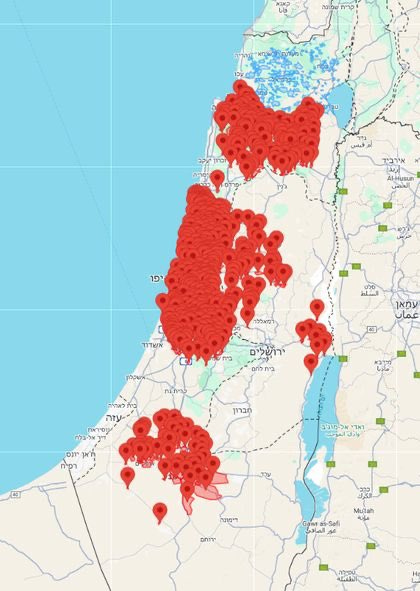
Map showing one of many waves of missile attacks overnight in Israel:I’m back today with the amazing Ya’akov Katz, a regular commentator on State of Tel Aviv and Beyond. We get into life in wartime, and then cover the key events of the last 24 hours: Hezballah attacks Israel and opens the northern front; Iran continues to slam Israel hard with waves of ballistic missiles; Iran also attacks most countries in the region - which has many scratching their heads. Iranian missile slams into a shelter in Israel; the first mass casualty event. Are our shelters adequate? How long will this go on? Give it a listen.We are making every effort to put out an audio only pod every day during this period. The focus is on getting the information out. Not quality of production. Adn for that reason we are also not doing AV. For one thing, we’re all looking a little haggard. But it just takes more time to edit AV and time, in my view, is of the essence. Please consider supporting our work. State of Tel Aviv and Beyond is independent and we rely on you, our subscribers, to put gas in our tank.Especially at a time like this. We are going flat out. We will be publishing longer dispatches which will be available in full to premium subscribers only. You can either subscribe on our site - www.stateoftelaviv.com……just follow the prompts from the SUBSCRIBE tab.Or - make a contribution to Buy Me a Coffee……Yaakov Katz is an Israeli-American author and journalist. Between 2016 and 2023, Yaakov was editor-in-chief of The Jerusalem Post where he continues to write a popular weekly column.He is the author of three books: “Shadow Strike – Inside Israel’s Secret Mission to Eliminate Syrian Nuclear Power”, “Weapon Wizards—How Israel Became a High-Tech Military Superpower” and “Israel vs. Iran: The Shadow War.”Prior to taking up the role of editor-in-chief, Yaakov served for two years as a senior policy adviser to Naftali Bennett during his tenure as Israel’s Minister of Economy and Minister of Diaspora Affairs.In 2013, Yaakov was one of 12 international fellows to spend a year at the Nieman Foundation for Journalism at Harvard University.Originally from Chicago, Yaakov has a law degree from Bar Ilan University. He lives in Jerusalem with his wife Chaya and their four children.Find Yaakov Katz on X. This is a public episode. If you'd like to discuss this with other subscribers or get access to bonus episodes, visit www.stateoftelaviv.com/subscribe

Lightly edited video recording from an hour ago with Jonathan Conricus on developments in Israel and the Middle East. Have a listen. This is a public episode. If you'd like to discuss this with other subscribers or get access to bonus episodes, visit www.stateoftelaviv.com/subscribe

I’d like to begin by thanking Andrea Marcus, a dear friend and long-time supporter of State of Tel Aviv and Beyond, for sponsoring this episode. Andrea is a Toronto resident, proud Jewish woman and spectacularly talented artist. She is deeply troubled by what has been happening in Toronto and Canada since October 7, 2023.This episode was to have been published on Sunday December 14, 2025. And then the Bondi Beach Chanukah massacre happened. Hours later, a Chanukah candle lighting began in Toronto, Canada. What ensued was appalling. As Toronto police watched.....Part I of this mini-series dropped in early December and focused on the violent attack on an IDF reserve soldier on November 5 in downtown Toronto. Jonathan Karten. Nothing about that attack was surprising. Since October 7, Toronto has become one of the most hostile cities in the western world for Jewish life. All things Jewish are targeted regularly. And the response of the police? Well, that’s what we take a hard look at in today’s podcast. Why is Toronto such a cesspit of antisemitic violence? Incitement. Hatred. Why is it tolerated? I have lived and studied this disturbing situation since October 7, carefully, and the reality of Toronto - Canada - and beyond - must be seen. And seen clearly. I have sifted through many hours of video, photographs and media coverage in order to document the broad and specific observations made. Toronto Chief of Police Myron Demkiw declined an opportunity to be interviewed to discuss these rather pressing issues.And the political leadership in Canada? With very few exceptions, they are complicit. Municipally. Provincially. Federally.This episode has shifted shape since December 14. We do address aspects of the Karten assault on November 5, in particular the arrest of six individuals connected with that incident. But we spend more time zooming out to look at the bigger picture, to try to understand why Toronto has become such fertile ground for Jew hatred. Many of the incidents we discuss took place after the assault on Jonathan Karten on November 5. And after Bondi. In the podcast notes we include links to Episode I of this series, as well as two-part series on antisemitism in Toronto that I put out a year ago. Extreme antisemitism in Toronto? It’s neither new nor going to miraculously resolve. In th podcast notes, we set out other podcasts we have produced that are directly relevant to the issues raised in this episode, including Part 1 of this 2-part series.Certain archive material may be available to premium subcribers only. No time like the present to join the State of Tel Aviv and Beyond club!If you would like to inquire about sponsorship opportunities, please contact me directly. vivian@stateoftelaviv.comShow your support for STLV at buymeacoffee.com/stateoftelavivPodcast NotesState of Tel Aviv is a reader-supported publication. To receive new posts and support my work, consider becoming a free or paid subscrib This is a public episode. If you'd like to discuss this with other subscribers or get access to bonus episodes, visit www.stateoftelaviv.com/subscribe

This is a free preview of a paid episode. To hear more, visit www.stateoftelaviv.comUpdate: In the hours since we began final production of this podcast, Iran has initiated at least two military provocations targeting American forces in the Strait of Hormuz. The regime has also backpedaled on its commitment to negotiate with America and other nations in Ankara on Friday. Now Iran says that it will meet only with America and that it mus…

In this special podcast we go deep into the darkness that has descended upon the Kurdish ethnic minority in northern Syria. The massacre of civilians and brutality is reminiscent of ISIS. In fact, the Syrian state army is comprised of many former jihadists - some still openly wearing ISIS patches on their uniforms. The Kurds, of course, led the military force that led the assault on ISIS and its eventual retreat and defeat. But with the anointment of former al Qaeda man, Ahmed al Sharaa, as President of Syria…..violent Islamism has enjoyed something of a resurgence.Absolute hell has been visited upon the Syrian Kurds while the west and the world are distracted by chaos in the Islamic Republic of Iran. But the massacre of Syrian Kurds has barely been noticed. We feature interviews with four experts on the Syrian Kurds. (Their photos and bios are set out below in the Podcast Notes.) Each one brings a very deep understanding of the complexity of this situation. In order to assist as you work your way through this we have provided time stamps so that you may skip to particular bits that interest you more.In addition to the experts featured here we spoke to many others. I am grateful to all for their time and generosity in sharing their expertise and insight. I would like to draw particular attention to Noor Dahri, a devout Muslim living in the UK and originally from Pakistan. I learned so much from Noor and hope to share part of our interview in the near future. Editing such rich material is not easy. So thanks, Noor, for helping me to better understand the forces that are driving fanatical Islamism in the Middle East and the west.And to our loyal listeners, this episode is being made available to all subscribers in full. Consider it our contribution to doing whatever is possible to amplify awareness of the Kurdish plight.There are some graphic videos included in this podcast. If you prefer not to view them we provide advance notice so that you may skip over them.Timestamps:Introduction with video clips: 00:00Interview with Dr. Qanta A. Ahmed: 05:53Al Jazeera report on the release of ISIS prisoners in Al Hol Detention Camp in northern Syria: 36:41Interview with Ateret Shmuel: 39:22Interview with Dr. Jan Ilhan Kizilhan: 51:54Interview with Ahmad Sharawi: 01:02:15Conclusion: 1:19:08Show your support for STLV at buymeacoffee.com/stateoftelavivPodcast Notes:* Maps referred to and shown in the podcast introduction:* X post of U.S. Ambassador to Turkey, Tom Barrack, on January 20, 2026:Full text of this post: The greatest opportunity for the Kurds in Syria right now lies in the post-Assad transition under the new government led by President Ahmed al-Sharaa. This moment offers a pathway to full integration into a unified Syrian state with citizenship rights, cultural protections, and political participation— long denied under Bashar al-Assad’s regime, where many Kurds faced statelessness, language restrictions, and systemic discrimination.Historically, the US military presence in northeastern Syria was justified primarily as a counter-ISIS partnership. The Syrian Democratic Forces (SDF), led by Kurds, proved the most effective ground partner in defeating ISIS’s territorial caliphate by 2019, detaining thousands of ISIS fighters and family members in prisons and camps like al-Hol and al-Shaddadi. At that time, there was no functioning central Syrian state to partner with—the Assad regime was weakened, contested, and not a viable partner against ISIS due to its alliances with Iran and Russia.Today, the situation has fundamentally changed. Syria now has an acknowledged central government that has joined the Global Coalition to Defeat ISIS (as its 90th member in late 2025), signaling a westward pivot and cooperation with the US on counterterrorism. This shifts the rationale for the US-SDF partnership: the original purpose of the SDF as the primary anti-ISIS force on the ground has largely expired, as Damascus is now both willing and positioned to take over security responsibilities, including control of ISIS detention facilities and camps.Recent developments show the US actively facilitating this transition, rather than prolonging a separate SDF role:• We have engaged extensively with the Syrian Government and SDF leadership to secure an integration agreement, signed on January 18, and to set a clear pathway for timely and peaceful implementation.• The deal integrates SDF fighters into the national military (as individuals, which remains among the most contentious issues), hand over key infrastructure (oil fields, dams, border crossings), and cede control of ISIS prisons and camps to Damascus.• The US has no interest in long-term military presence; it prioritizes defeating ISIS remnants, supporting reconciliation, and advancing national unity without endorsing separatism or federalism.This creates a unique window for the Kurds: integration into the new Syrian state offers full citizenship rights (including for those previously stateless), recognition as an integral part of Syria, constitutional protections for Kurdish language and culture (e.g., teaching in Kurdish, celebrating Nawruz as a national holiday), and participation in governance—far beyond the semi-autonomy the SDF held amid civil war chaos.While risks remain (e.g., fragile ceasefires, occasional clashes, concerns over hardliners, or the desire of some actors to relitigate past grievances), the United States is pushing for safeguards on Kurdish rights and counter-ISIS cooperation. The alternative—prolonged separation—could invite instability or ISIS resurgence. This integration, backed by US diplomacy, represents the strongest chance yet for Kurds to secure enduring rights and security within a recognized Syrian nation-state.In Syria, the United States is focused on: 1) ensuring the security of prison facilities holding ISIS prisoners, currently guarded by the SDF; and 2) facilitating talks between the SDF and the Syrian Government to allow for the peaceful integration of the SDF and the political inclusion of Syria’s Kurdish population into a historic full Syrian citizenship.* Dr. Qanta A. AhmedDr. Ahmed is a physician, non-fiction author and broadcast media commentator. Her first book, In the Land of Invisible Women (Sourcebooks 2008) details her experience of living and working in the Kingdom of Saudi Arabia and has been published internationally in 14 countries. She is also a prolific opinion journalist and contributor to the American, British, Australian, Pakistani and Israeli media. Dr.Ahmad has been recognized for her work as a physician, researcher, journalist and advocate. She lives and works in New York City.* Ateret Shmuel Ateret Shmuel lives with her two children in Jerusalem and is the founder of the not-for profit organization Indigenous Bridges and has worked with Kurdish communities and organizations in the Middle East for more than 20 years. https://www.indigenousbridges.com/* Jan Ilhan KizilhanDr. Jan Ilhan Kizilhan is a psychologist, psychotherapist, trauma expert, orientalist, author and publisher. He is also the Director of the Institute for Health Science the State University in Baden-Württemberg, Germany and the chief psychologist of the Special-Quota Project, a programme funded by the State Government of Baden Württemberg. The project brought 1,100 women and children who were in IS captivity to Germany for medical treatment. He is the Founding Dean of the Institute for Psychotherapy and Psychotraumatology at the University of Duhok/Northern Iraq.* Ahmad SharawiAhmad Sharawi is a senior research analyst at the Foundation for Defense of Democracies, focusing on Middle East affairs, specifically the Levant, Iraq, and Iranian intervention in Arab affairs, as well as U.S. foreign policy toward the region. Previously, Sharawi worked at the Washington Institute for Near East Policy, where he focused mainly on Hezbollah. He created a map visualizing the border clashes on the Israeli-Lebanese frontier and authored articles on Jordan and Morocco. Ahmad previously worked at the International Finance Corporation and S&P Global. He holds a B.A. in international relations from King’s College London and an M.A. from Georgetown University’s School of Foreign Service.State of Tel Aviv is a reader-supported publication. To receive new posts and support my work, consider becoming a free or paid subscriber. This is a public episode. If you'd like to discuss this with other subscribers or get access to bonus episodes, visit www.stateoftelaviv.com/subscribe

This is a free preview of a paid episode. To hear more, visit www.stateoftelaviv.comWe were fortunate to speak yesterday with Lt. Col. (Res.), senior fellow at FDD and regular on State of Tel Aviv and Beyond, Jonathan Conricus- who is catching his breath between speaking tours and consulting abroad. On Monday afternoon, moments after the news came that the remains of Ran Gvili had been identified in the Gaza Strip and were being return…
Last Thursday Negar Mojtahedi of Iran International spoke with State of Tel Aviv and Beyond about the horrific testimonies seeping through the digital and telephone blackout in the Islamic Republic of Iran. Today, we bring you a special report on Mojtahedi’s interview with one man who had been visiting family in Iran when the uprising began. He managed to leave last week. Mojtahedi’s interview with him - which we show here - is a rare first-hand account of the horror unfolding in Iran. We thought it more important to share this footage as quickly as possible, which is why there are no English subtitles. (AI cannot handle heavily accented English - yet.) The gentleman interviewed speaks English well….you will just have to focus and listen, carefully. This interview is the most detailed, lengthy and compelling testimony that I have come across since this crisis began. Extraordinary work by Negar Mojtahedi and Iran International. After the interview, we provide some brief commentary and context for the current state of affairs: Will the U.S. intervene? Please check the time stamps below if you wish to skip ahead. This episode is available to all subscribers. Tomorrow we bring you a special in-depth interview with Ambassador Michael Oren, where we dive into the history and present positions of key middle eastern countries and how they are posturing as this crisis intensifies. That podcast will be available for premium, subscribers only. (A short preview will be available to all.)Introduction: 00:00-2:49Interview with man in Tehran: 2:50-24:12Context and conclusion: 24:13-29:15Show your support for STLV at buymeacoffee.com/stateoftelavivState of Tel Aviv is a reader-supported publication. To receive new posts and support my work, consider becoming a free or paid subscriber. This is a public episode. If you'd like to discuss this with other subscribers or get access to bonus episodes, visit www.stateoftelaviv.com/subscribe
As I write this short note, we are waiting for President Trump to begin a live press conference any minute. It is 10:20 pm in Israel and you can feel it in the air. Bristling tension. Airlines have cancelled flights to and from Israel and there is a pace of information flowing that is beyond frenetic. Whatever happens - or doesn’t - the conversation I had earlier today with Negar Mojtahedi- will be as relevant tomorrow as it is at the moment, no matter what transpires.Mojtahedi is a Canadian journalist of Iranian descent who is fluent in Farsi. Based in Vancouver, Canada, she is a journalist with Iran International, the premiere media voice for the Iranian diaspora and opposition to the Islamic Republic regime.In this podcast we discuss the brutal slaughter that has been unleashed on the Iranian people since December 28 by Iranian police and others. This podcast is direct and nothing is sugar coated. Mojtahedi is in constant contact with experts globally as well as sources within Iran. Her plea - which you will hear - reflects desperate concern.The U.S. must do something. Now. Before it’s too late.We discuss the brutality of the Basij and other police - opening fire with military grade weapons on masses of unarmed civilians. This is a quick update and includes very informative clips that you may have missed. The Basij police - a force of at least 2 million of a population of 90-million - are singled out for particular attention, as they have been in Israel as well. This low-level militia force is likely doing much of the killing - and Iranians have begun to dox them with red paint and threats on their homes. Tune in for this and more.Follow Negar on X @NegarMojtahedi / Instagram @negarmojtahedi State of Tel Aviv is a reader-supported publication. To receive new posts and support my work, consider becoming a free or paid subscriber. This is a public episode. If you'd like to discuss this with other subscribers or get access to bonus episodes, visit www.stateoftelaviv.com/subscribe
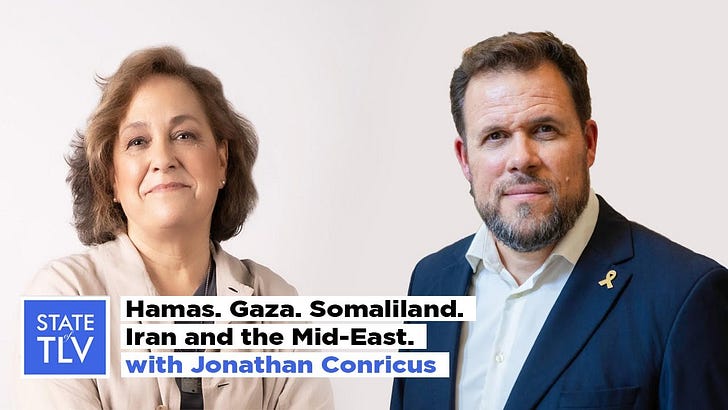
This is a free preview of a paid episode. To hear more, visit www.stateoftelaviv.comOur first episode of Season 4 (FOUR!!!) kicks off with a tour de force featuring State of Tel Aviv and Beyond regular contributor , Lt. Col. (Res.) Jonathan Conricus. We spoke longer than usual because there is so much going on, and we just went with a relaxed New Year’s Day vibe. This episode is divided into three sections: Part 1 deals with the entren…

From all of us at State of Tel Aviv and Beyond, to you and your loved ones, best wishes for a Happy New Year! This short video message is my first foray into actually using AI……give it a look. Short. Kinda cute. And meaningful. All packed into two-ish minutes. For those of you who haven’t yet signed up as premium subscribers….we have extended the special subscription deal one day. Ends January 1, 2026. 🍾🎉🥳. This is a public episode. If you'd like to discuss this with other subscribers or get access to bonus episodes, visit www.stateoftelaviv.com/subscribe
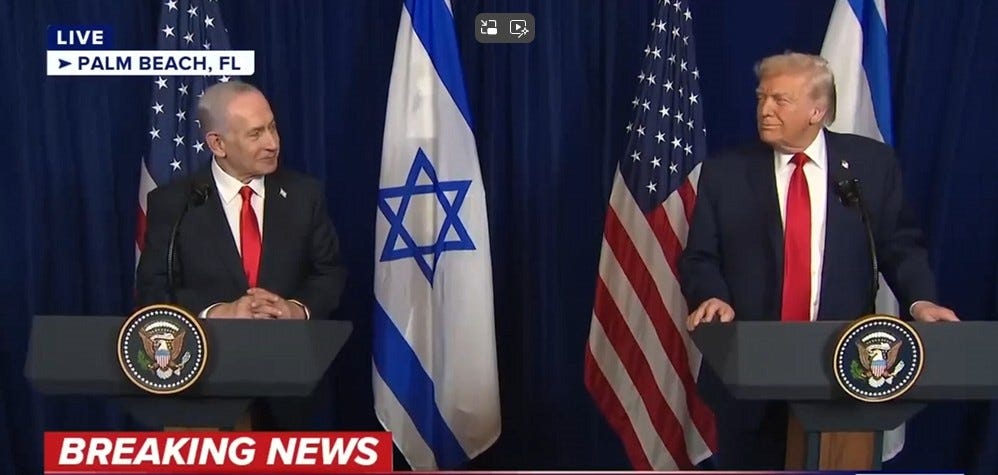
It’s that time of year, when we reflect on what has gone down for the last 12 months and dare to look at ahead at what may be in store. State of Tel Aviv and Beyond regular commentator, Ya’akov Katz, joins me to attempt the impossible; try to understand what had happened in Israel and what may be coming at us. We focus on the big picture; in particular, why Israelis are so divided and what may address these rifts going forward. A crisis of trust and values afflicts this country. But the difference with Israel from most other countries is that we exist on a knife edge. In a flash, on October 7, 2023, we went from being a strong, regional power to a nation attacked by a terrorist group that had become a well-oiled, armed, and disciplined military force. Since then Israel has regained its military footing, somewhat, but is a country more deeply divided than ever. And the vested political interests seem to be determined to keep it that way. We discuss some of the more spectacular political scandals and the increasingly illiberal conduct by members of the coalition government. This is an election year in Israel. Ya’akov and I agree that the future of Israel will turn on the outcome of this election….that is….if it even happens.Reminder: Until midnight on December 31 (EST), our subscription special offer of $45 for one year is in place. On January 1, subscription rates go up and most of our content will be available to premium subscribers only. Please consider supporting our work. State of Tel Aviv is an independent enterprise. We depend on subscriber support to operate.Happy new year to all.Show your support for STLV at buymeacoffee.com/stateoftelavivPodcast Notes* Podcast on State of Tel Aviv and Beyond, discussing issues raised in this discussion with Ya’akov Katz.* Column by Ya’akov Katz published in Jerusalem Post, Friday, December 26, 2025.Blurred loyalties in PMO are a danger Israel cannot ignoreAfter watching the three-part interview with Eli Feldstein, one of the central figures in the leak of classified intelligence documents to BILD and the broader Qatargate affair, a few things become clear.First, Feldstein is a deeply problematic character. Second, these interviews were clearly intended to rehabilitate his image ahead of a looming court case. And third, his central argument is simple: he portrays himself as a pawn, knowingly or unknowingly manipulated by more powerful figures operating in the prime minister’s inner circle - including Prime Minister’s Office adviser Jonathan Urich, former Likud campaign strategist Srulik Einhorn, and ultimately allegedly Prime Minister Benjamin Netanyahu himself.Some of what Feldstein says is hard to swallow. His attempt to cast himself as a passive bystander in one of the most serious national security scandals in years is not easy to believe. And yet, it is equally impossible to simply dismiss everything he says out of hand. That tension alone should set off alarm bells.Because when allegations are this severe, and when they touch the very nerve center of Israeli decision-making, silence is not an option. Shrugging it off as spin by a defendant trying to save himself is simply reckless.This leads to one unavoidable conclusion: Israel must conduct a serious, deep, and independent investigation into what happened here. Not only into the leaks themselves, but into how three people operating at the heart of the Prime Minister’s Office ended up working - whether knowingly or not - in the service of Qatar.This is not a marginal scandal. It hits at the core of our national security and the public's trust in its government. If foreign interests penetrated the PMO, even indirectly, the implications are staggering. And if they did not, then the public deserves to know that as well. Either way, the truth must be reached.There is also a broader lesson that cannot be ignored. Israel urgently needs clear rules and hard red lines. An adviser to the prime minister cannot be allowed to simultaneously serve other clients. The notion that someone can advise Israel’s most powerful decision-maker while also consulting for foreign governments, multinational corporations, or even tech companies is dangerous.This principle must apply to the current prime minister and to anyone else who aspires to the job. Public service at this level cannot coexist with private interests. National security does not allow for blurred lines.Without accountability, there can be no leadershipAccountability is famously a word in English that does not have a direct translation into Hebrew. There are phrases that attempt to approximate it, but none that fully capture its meaning – an obligation to accept responsibility, to answer for decisions that are made, and to face their consequences.That absence of the word is not merely linguistic. It reflects something deeper about Israeli political culture and what has become a constant in the country: Try to avoid responsibility, deflect blame, and do everything to remain in power.That deficiency helps explain more than the current debate over a commission of inquiry. It also explains something no less disturbing: how, despite the scale of the failures of October 7 and the war that followed, Israeli politics are almost exactly the same as they were before.The same figures are once again vying for power ahead of the elections that will be held in the second half of 2026. The same names are in the polls, from the politicians currently in the Knesset to those who were there just a couple of years ago.It would have been natural to think that, in the aftermath of the greatest disaster in our national history, new leadership would have already emerged. Someone – or even multiple people – would be electrifying the country, showing that things can be done differently and that there are alternatives to the current cadre leading us now or vying to lead us in the future.But there aren’t, and this is striking. Israel is a country known for its innovation, creativity, and courage. It produces world-class entrepreneurs, military commanders, scientists, and civil-society leaders. Yet when it comes to politics, the system seems stuck.Even the party that claims to represent the reservists who fought in Gaza and Lebanon over the last two years – a movement that should carry one of the most morally compelling voices today – is being led by a former failed politician. Not a new figure, but by someone from the same old political class.The reason this is the case, I believe, is because systems that avoid accountability also suppress renewal. When failure carries no real consequences and leaders do not step aside, those watching from the outside are taught a clear lesson: Politics is not a path to service, but rather a place where staying on the wheel and in the game come first. It is less about what you do and more about how long you can be there.It is through this lens that the Knesset vote on Wednesday must be understood. The legislation advanced this week, aimed at giving the government the ability to establish a commission of inquiry and appoint its members, stands in stark contrast to a state commission of inquiry – Israel’s highest investigative authority – whose composition is determined independently by the judiciary.Both options are flawed and will be rejected by about half of the people. If the state commission is appointed, the half that does not trust the Supreme Court will not believe a word that the commission writes. If the government-appointed committee moves ahead, the same will happen, just from the other side. Either way, to some extent, Israel is stuck – there is no perfect option.But beyond the numbers of who supports what, something even more basic is at stake and should be the determining factor.Anyone detained by the police does not get to choose the detectives handling the case. When citizens appear before a zoning or planning commission, they do not get to select the panel that will hear their appeal. When people go to court, they do not get to decide who the judges will be.In every functioning system, this principle is non-negotiable. The moment a suspect chooses the investigator, the investigation ceases to be credible.Yet in this case, we are being told that the same ministers who failed in the years leading up to October 7 – and on October 7 itself – should determine who will investigate those failures. In what world does this make sense? And in what reality does this lead to accountability? It doesn’t. With such a commission, there is only one result – evading responsibility.Israelis deserve to know what went wrong before and on October 7. Not for political gain, and not for revenge, but to ensure that such a catastrophe never happens again. Accountability is not about settling scores. It is about learning, correcting, and preventing.And we already have a clear indication of how a politically appointed commission would function.All one had to do was listen to the first meeting of the committee tasked with appointing it. Instead of focusing on decisions taken in the years leading up to the war, the discussion immediately drifted backwards – to the Oslo Accords, to the disengagement from Gaza. Other MKs spoke of the need to investigate the judiciary and the attorney general.Was there any serious discussion of the policy of containment crafted by the prime minister and adopted by successive governments? Any real reckoning with the Qatari cash transferred to Gaza with the approval of all prime ministers over the last seven years? Any willingness to examine decisions made at the highest political level within this government?Of course not.And that brings us back to the absence of renewal. When accountability is avoided, truth is delayed. When truth is delayed, leaders cling to power. And when leaders never step aside, new leadership cannot emerge.The choice facing Israel, therefore, is not just technical and about what model of inquiry we should adopt. It is between t

Another day, another attack. This urgent podcast was pulled together today, to draw attention to the parallels between the extreme antisemitism that flourishes in Australia and Canada - with a focus, of course, on the recent Bondi Beach massacre in Sydney. The similarities between the tolerance for Islamist and left-wing Jew hatred in Australia and Canada - by law enforcement and political leadership - are longstanding, horrifying and very, very real. In both countries, if Jews voice about the surge in open antisemitism, they are treated with contempt. Told that they are being “Islamophobic.” Well. After two years of official indulgence of extreme Islamism in both countries it seems that the threats to Globalize the Intifada are being realized.Diversity is actually not our strength, as it turns out.Show your support for STLV at buymeacoffee.com/stateoftelavivState of Tel Aviv is a reader-supported publication. To receive new posts and support my work, consider becoming a free or paid subscriber. This is a public episode. If you'd like to discuss this with other subscribers or get access to bonus episodes, visit www.stateoftelaviv.com/subscribe

Joining State of Tel Aviv and Beyond today is Professor Suzie Navot, one of Israel’s foremost constitutional law experts currently serving as Vice President of the Israel Democracy Institute.For six years now Prime Minister Benjamin Netanyahu has been on trial for multiple corruption charges. He does not hide his contempt for the judicial system which he considers to be rotten to the core. A consistent theme of his leadership for the last decade has been to relentlessly attack the judiciary and law enforcement institutions for being an elitist, self-serving clique that is also left leaning and determined to sabotage the policies of his successive government coalitions. Most recently, Netanyahu has enlisted the support of U.S. President Trump to publicly pressure President Isaac Herzog to grant him a pardon; to make the charges and the trial just go away. Two months ago, in signature Trump larger-than-life theatrics, the American president implored his Israeli counterpart to just give Bibi a pardon already. Raucous applause filled the Knesset hall - where Trump was speaking - but the din has since died down. Pardoning Netanyahu is no simple matter - legally, politically or in terms of social mores. But Netanyahu is not relenting. In the last two weeks, Bibi and his lawyer sent written documents to President Herzog setting out what they state is the legal rationale for granting a pardon. Interestingly, they present Netanyahu as the man who is needed to heal the country and manage the security and diplomatic challenges free from distractions - like the trial. But, as Prof. Navot notes - Benjamin Netanyahu is charged personally with corruption-related offenses. He is not the state. And he is not above the law. With clarity and precision, Prof. Navot explains why the Netanyahu pardon request does not meet Israeli legal requirements and this request places President Herzog in a very difficult spot.Show your support for STLV at buymeacoffee.com/stateoftelavivPodcast NotesProfessor Suzie Navot is a Professor of Constitutional Law. She holds an LL. B degree from Tel-Aviv University, an MA in Public Policy from Tel-Aviv University and a LL.D from the Hebrew University of Jerusalem. Her doctoral thesis studied the parliamentary immunity of the Knesset members.Prof. Navot’s areas of research include constitutional law, law of institutions, parliamentary law and comparative constitutional law.Prior to her appointment to IDI. she served on the faculty of the Striks Faculty of Law, College of Management. For over ten years, she served as a visiting Professor at the National Security College, and from 2009 until 2015, as a visiting Professor at the University of Paris (Sorbonne).Navot has served as the Chairperson of the Israeli Association of Public Law (2014-2017), currently serves on the executive council of the Israeli Association of Legislation and is a member of the Executive Council of the International Association of Constitutional Law (IACL).She is active in a wide range of public activities. A small selection of these activities includes her service on public commissions dealing with such issues as an Ethics Code for the Israeli Parliament, the Presidential volunteers’ award; the preparation of a new law on election propaganda (appointed by the Israeli President and the Chair of the Central Elections Committee), and was appointed by the Prime Minster to the board of directors for the Civil Service education program. Since 2021, Prof. Navot serves as a member of the commission tasked with preparing a draft of the Basic Law: The Legislature, presided by the Minister of Justice.Navot has published widely in several languages. She has prepared written opinions for Knesset committees and for the President of Israel on constitutional questions. She received a special award from the Movement for Quality Government in Israel, the prestigious Zeltner prize for a special contribution to Israeli society in the field of law, and the “Ometz” award for a special contribution to the battle against corruption.In recognition of her extraordinary teaching skills, Navot was the recipient of the teaching excellence nomination, for almost 30 consecutive years, and the Inspiring Lecturer award, by the National Students Union.State of Tel Aviv is a reader-supported publication. To receive new posts and support my work, consider becoming a free or paid subscriber. This is a public episode. If you'd like to discuss this with other subscribers or get access to bonus episodes, visit www.stateoftelaviv.com/subscribe

Comments

Download from Google Play

Download from App Store
 United States