



 Claim Ownership
What Came Next...
Subscribed: 0Played: 17
Subscribe

© Copyright 2025 All Rights Reserved
Description
There are those albums that are artistic, critical and commercial milestones. They are generally agreed to be the pinnacles of an artist’s career. This is not about those albums. This is about what came next.
63 Episodes
Reverse
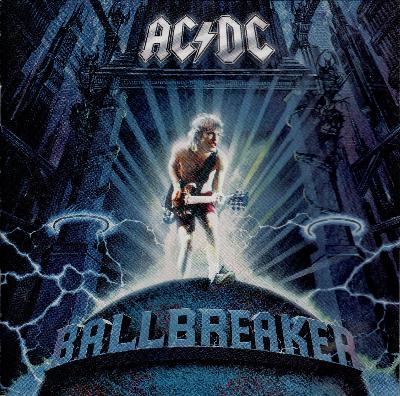
After a series of lackluster albums in the second half of the 1980s AC/DC came roaring back in 1990 with The Razors Edge. It gave them a top-40 hit with "Moneytalks" and revitalized their flagging career. It was a while before the next album came out and, when it did in 1995, Ballbreaker sounded like it came from a band and singer that were worn out.
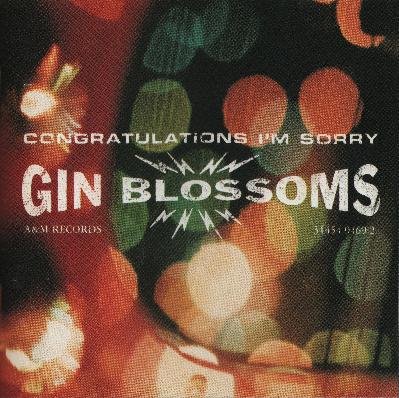
Gin Blossoms scored a surprise hit with their second album New Miserable Experience. However, that success was bittersweet. Most of the songs were written by Doug Hopkins who was fired from the band while making the album due to his increased unreliability due to his alcoholism. A&M Records made things worse by making him sign over his royalties despite the fact he played on the majority of the release. Hopkins committed suicide in 1993 so, despite a top 10 hit from the soundtrack to Empire Records, it was a while before another Gin Blossoms album came out. When it did the title pretty much said it all.

Peter Gabriel achieved his biggest solo success in 1986 with the album So. Not only did it produce some of the most memorable music videos of the decade, but it also produced some of the best songs. It took a number of years before the proper follow-up, Us, was released in 1992. By then things had changed but, in many ways, Gabriel had not.

After the runaway hit that was Appetite for Destruction Guns n' Roses kept themselves both on the chart and as the targets of controversy with the stop-gap G n' R Lies in 1988. The real album to follow their smash debut was actually two: Use Your Illusion I and Use Your Illusion II, released on September 17, 1991 at midnight. With over four standard albums' worth of music the band remained radio staples throughout the early 1990s. However, the sheer volume was both welcome and overwhelming.

The death of Randy Rhoads during the tour for Diary of a Madman was a severe blow to Ozzy Osbourne, especially after the success of that album. Jack Blades replaced Rhoads on guitar for the live recording, Speak of the Devil, but it was Jake E. Lee that was brought in to be a permanent part of Ozzy's band for Bark at the Moon. However, behind the scenes, there was always Sharon, making sure her husband got all the credit and the band that did the heavy lifting got shafted. Despite this the album still manage to do well and added a pop sheen to Ozzy's image.

Progressive rock music had dwindled in popularity as the '70s came to a close. Still, Asia was able to score a major hit with "Heat of the Moment" from their 1982 debut album Asia. Their record label wanted more and wanted in quick and the result was 1983's Alpha, where the band tried to copy the hitmaking formula, but failed at making as engaging an album as their first.
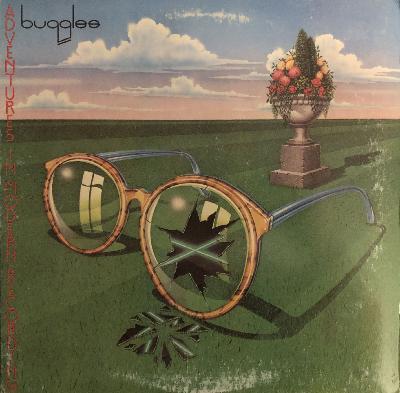
Although only a minor hit in the U.S., "Video Killed the Radio Star" topped the charts in a number of countries, and Buggles' 1979 The Age of Plastic became a hit in many countries. It was popular enough that Trevor Horn and Geoff Downes, the two main members of the band, were asked to join Yes for their Drama album in 1980. When Yes broke up the plan was to make another Buggles album, only Downes got recruited into Asia. Horn went ahead anyway, using demos and new songs, to create the second and last album by the band.

Although he was already popular with fans of Dr. Demento, "Weird Al" Yankovic scored a top-40 hit with "Eat It" in 1984 from the album In 3-D, and followed it up with one of the best comedy albums ever in Dare to Be Stupid. It seemed that a "Weird Al" parody was just the thing an artist needed to be relevant. Or, that was what his label Scotti Bros. thought. Instead of letting him do what he does best they started making suggestion. Combine that with a year that didn't produce the greatest pop songs and we get the first dud from the master of parody, Polka Party!.
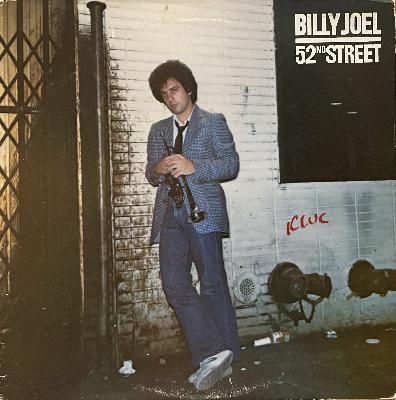
The Stranger was the album that, after a decade of setbacks, finally made Billy Joel a success. It was no surprise it's follow-up, 1978's 52nd Street, debuted at number one. The sound was a bit jazzier - it was named after the street that hosted a number of famous jazz clubs - and it still produced a number of hits. It would, however, find itself in thrift store bins within a few years of its release, and ultimately sell a bit less than its predecessor.

Born to Run made Bruce Springsteen a star, but he had a major problem with manager and producer Mike Appel. Appel wanted to control how Springsteen's career went while the Boss thought he should definitely be the boss. It came to legal blows, delaying the recording and release of a new album for three years. When Darkness on the Edge of Town was released in 1978 it had a darker tone than its predecessors and a more focused lyrical style. At first a critical and commercial disappointment, it is now considered one of his best albums.

Thompson Twins combined intelligent lyrics, sparking synth-pop and a unique visual image to spawn an international hit with their 1983 album Into the Gap. For the follow-up they didn't change the formula much, but producer Alex Sadkin was out and, eventually, former Chic guitarist Nile Rodgers was in. Several factors delayed production of the album but, in the end, it was still a moderate success, although nowhere near as good as the two that came before it.

Foreigner was immediately popular from the start, with their 1977 album being a major hit. Things just got better until 1981's 4, which spawned a number of hit singles and hand multi-Platinum success. When Agent Provocateur was released in late 1984 it produced a number one hit with "I Want to Know What Love Is", but failed to reach the heights of its predecessor.

Achtung Baby was an even bigger hit for U2 than The Joshua Tree. With a change of sound they increased their worldwide fandom yet continued to make challenging music. During a lull in their tour they decided to make a quick EP of new material, but that soon expanded into 1992's Zooropa. While still a hit with fans and critics it would signal a turnaround in the fortunes for the Irish band.

It took a while for Pink Floyd to regain their focus but, when they did, it eventually resulted in the 1973 album The Dark Side of the Moon. One of the most popular and well-known albums in the world, it shot the band to a level of stardom they previously failed to achieve. After a long tour, a long recording session and Roger Waters coming more to the forefront of the band, Wish You Were Here was released in 1975. Partially a tribute to Syd Barrett, partially a warning about the music industry, it gives their previous album quite a challenge for the best in the group's catalog.

The three-piece version of Genesis became increasingly popular from 1978 onward, with 1986's Invisible Touch being their biggest yet. Phil Collins managed a successful solo career starting in 1981 and was popular enough that Mike Rutherford and Tony Banks expected him to leave. However, he came back for one more album, We Can't Dance, in 1991. It again spawned a number of hits, but also was their longest since The Lamb Lies Down on Broadway.

After nearly a decade apart the Mark II version of Deep Purple reformed and made a successful comeback album with Perfect Strangers. It wasn't long before the same tensions that led to lineup changes previously resurfaced and, between a long tour behind the album and slow-going coming up with new ideas, it was three years before The House of Blue Light was released. The album was a blatant attempt to sound like the bands they had influenced.

After leaving for two albums Joe Perry returned to Aerosmith for 1985's Done with Mirrors, which also saw the band moving to Geffen Records. The band was clean and sober, but the album didn't click with the public. In order to change that Bruce Fairbairn, the producer behind Bon Jovi's Slippery When Wet, was brought in, as well as an army of writers to make Permanent Vacation in 1987. The pattern was repeated with Pump in 1989, which solidified the band's comeback, and on Get a Grip from 1991. The latter became the band's bestselling album, but was filled with even busier production, more guests and more outside writers. For better or worse it solidified the direction Aerosmith would take for the rest of their career.
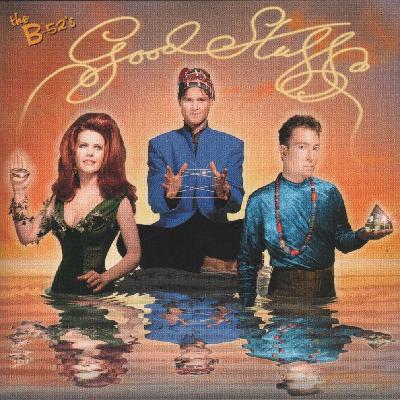
The B-52's suffered a major tragedy with the death of guitarist Ricky Wilson and, though they managed to get 1986's Bouncing Off the Satellites put together and released, it appeared that may be their final album. In 1989, however, they came back in a big way with Cosmic Thing and the hit "Love Shack". Cindy Wilson left to focus on her family in 1990 and, tired, with one member down and under pressure to replicate the success of "Love Shack", the B-52's went into the studio and recorded 1991's Good Stuff.

Molly Harvey became both a recognizable voice for the Residents beginning with 1999's Wormwood and the ensuing tour, singing lead on many songs from 2002's Demons Dance Alone. Her influence and vocals are still heavily felt on her last album with the band, Animal Lover, from 2005, which is often considered one of the best of the latter-day Residents recordings.
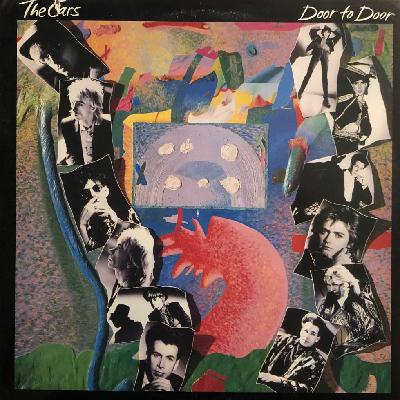
There was a three-year gap between Heartbeat City and Door to Door, and in the 1980s that might as well have been an eternity. Though the hits from the former still got played on the radio the sound was now considered dated and the band itself was more interested in pursuing their solo careers. Still, they made one last album before calling it quits for the next 24 years.

Comments

Download from Google Play

Download from App Store
 United States