


 Claim Ownership
This Week in Space (Video)
Subscribed: 32Played: 426
Subscribe

© This work is licensed under a Creative Commons License - Attribution-NonCommercial-NoDerivatives 4.0 International - http://creativecommons.org/licenses/by-nc-nd/4.0/
Description
The new space age is upon us, and This Week in Space leaves no topic untouched. Every Friday, join Editor-in-Chief of Ad Astra magazine, Rod Pyle and Managing Editor of Space.com, Tariq Malik as they explore everything related to the cosmos.
You can join Club TWiT for $10 per month and get ad-free audio and video feeds for all our shows plus everything else the club offers...or get just this podcast ad-free for $5 per month.
New episodes posted every Friday.
179 Episodes
Reverse

Hold onto your phasers, but it's been 60 years since Star Trek's debut, and the franchise is still going strong. For 40 of those years, Mike Okuda, working with a gifted team that included his wife Denise, has been central to the look, feel, and substance of the Star Trek universe. From the LCARS computer graphical system to alien languages to the designs and color schemes, and even the digital effects remastering of the original series, Mike has been the Cardinal of Canon when it comes to all things Trek. He has also been involved with many more space-related shows, books, and NASA projects. Join us for this very special episode.
Headlines:
China Announces 2028 Mars Sample Return Mission
U.S. Space Command Conducts First Orbital Dogfighting Test
Reflections on the 25th Anniversary of 9/11 from Space
Main Topic: Star Trek at 60—Legacy, Design, and Influence with Mike Okuda
Mike Okuda's Entry into Star Trek and Early Influences
Defining Star Trek's Visual Identity Across Series
Designing Control Panels and the Origin of LCARS
Maintaining Continuity and Hidden Easter Eggs in Star Trek Sets
Expanding the Design Language for Alien Cultures
Collaboration on For All Mankind and Space/NASA Projects
Challenges and Philosophy Behind Remastering The Original Series
Favorite Episodes, Iconic Sets, and Preserving Star Trek Props
The Enduring Core Message and Legacy of the Star Trek Franchise
Hosts: Rod Pyle and Tariq Malik
Guest: Michael Okuda
Download or subscribe to This Week in Space at https://twit.tv/shows/this-week-in-space.
Join Club TWiT for Ad-Free Podcasts!
Support what you love and get ad-free audio and video feeds, a members-only Discord, and exclusive content. Join today: https://twit.tv/clubtwit

Capitalism—and a strong profit motivation—has driven enterprise for centuries. Two notable examples are the East India Company and the US transcontinental railroad, and the various tycoons who built it. In neither case, by today's standards, were the operations fair or ethical on a number of fronts. Can we do better in space? Dr. Rainer Zitelmann joins us to discuss capitalism and the importance of extraterrestrial land ownership as an enabler of human expansion off-Earth. He's got a lot to say, and not all of it is what you might expect. Join us for this fascinating and informative look at one business case for newspace.
Headlines:
• NASA's Roman Space Telescope Launches to Explore Cosmic Mysteries
• SpaceX Falcon Heavy Returns to Action for Major NASA Mission
• Blue Origin Selected to Build Mars Communications Relay for NASA
• Japan and Europe's BepiColombo Mission Arrives at Mercury
Main Topic: Who Owns the Moon? — Capitalism in Space With Dr. Rainer Zitelmann
• Dr. Zitelmann Explains Market Forces Transforming the Space Industry
• Historical Parallels Between Economic Reforms and the Privatization of Space
• The Outer Space Treaty and Legal Uncertainty Around Private Ownership Off-Earth
• Potential for Stock Markets and REITs for Off-World Real Estate and Resources
• China's Rapid Advancement in Private Space and Market-Driven Innovation
• Safety Zones, Artemis Accords, and the Limits of Current Legal Frameworks
• First-Mover Advantage: How Initial Claims Might Play Out on the Moon and Mars
• Equity, Envy, and Ethical Debates Over Colonization and Space Ownership
• The Role of Commercial Incentive Versus Public Benefit in Expanding Humanity's Reach
Get "New Space Capitalism" (Amazon Affiliate Link): https://amzn.to/4xEeGID
Hosts: Rod Pyle and Tariq Malik
Guest: Dr. Rainer Zitelmann
Download or subscribe to This Week in Space at https://twit.tv/shows/this-week-in-space.
Join Club TWiT for Ad-Free Podcasts!
Support what you love and get ad-free audio and video feeds, a members-only Discord, and exclusive content. Join today: https://twit.tv/clubtwit
Sponsors:
outsystems.com/twit
helixsleep.com/space
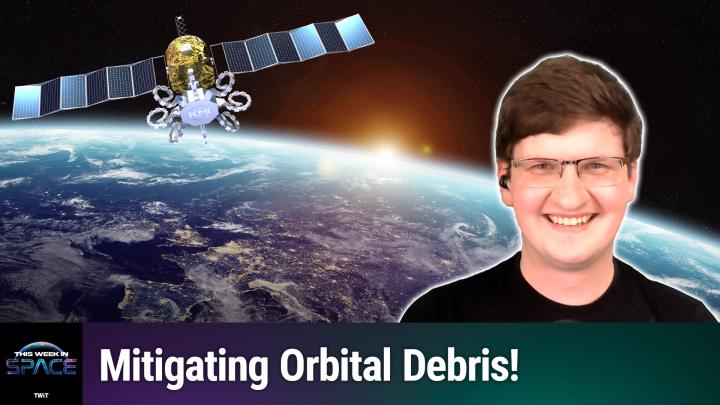
The mitigation of orbital debris is an increasingly serious problem that has not gotten enough attention, but this is changing. Commercial companies are addressing orbital debris, and one of them, KMI Space, has flown its experiments aboard the International Space Station, performing over 170 individual rendezvous-and-grab operations. The results are very promising, and the company is moving ahead with ever more ambitious designs. Adam Kall of KMI joins us to discuss their work on the ISS, the goals of the company, and how nature—via the humble octopus and gecko lizards—may have provided the answers for this vexing problem.
Headlines:
SpaceX to Build Major Starbase Louisiana with Ambitious Launch Plans
Falcon 9 Retirement Looms as Starship Prepares to Take Over
Recovery and Future of Starship Flight 13 Discussed
Roman Space Telescope Launch Previewed
Lunar Eclipse Recap and Next Major Eclipse Forecast
Trump Announces New US Space Academy
Main Topic: KMI Space's REACH Technology and In-Orbit Relocation
KMI Space's Origin Story and Path to the Space Industry
The REACCH Gripper: Gecko and Octopus-Inspired Robotic Arms
How REACCH Grips and Moves Tumbling Satellites and Debris
Real-World ISS Demonstrations and Operational Challenges
Pivot from Debris Removal to Satellite Relocation as a Service
Business Model: Transparent Pricing and Customer Targeting
Future Vision: In-Orbit Collection, Refueling, and Recycling Stations
National Security Implications and Force-Appropriate Applications
Technical Details: Materials, Propulsion, and Size Consideration
Hosts: Rod Pyle and Tariq Malik
Guest: Adam Kall
Download or subscribe to This Week in Space at https://twit.tv/shows/this-week-in-space.
Join Club TWiT for Ad-Free Podcasts!
Support what you love and get ad-free audio and video feeds, a members-only Discord, and exclusive content. Join today: https://twit.tv/clubtwit

It has been said that the Moon is a harsh mistress, and nowhere is this more apparent than at the lunar south pole. That is, however, where the Artemis program is headed, and we need to figure out how to best explore the region. Dr. David Kring of the Universities Space Research Association's Lunar and Planetary Institute joins us to explore the where, whys, and hows of the Artemis Program's lunar exploration plans, and the answers--and risks--that await us.
Headlines:
Starship Flight 12 Survives Indian Ocean Landing nd Long Sea Journey
China's Chang'e 7 Lunar Hopper Mission Targets Permanently Shadowed Terrain
US National Space Transportation Policy Aims for 1,000 Launches Per Year by 2030
Main Topic: The Science and Planning of the Artemis Lunar Program
Criteria and Studies for Selecting Artemis Landing Sites
South Pole Resource Advantages: Continuous Solar Power and Potential Volatiles
Scientific Promise of the Schrödinger Impact Basin vs. South Pole Mandate
The Value of Lunar Sample Return for Transformational Science
Unique Terrain and Operational Challenges of the Lunar South Polar Region
Training, Mobility, and the Role of Human Exploration versus Robotics
Impact Cratering's Role in Life's Origins and Earth's Early History
Considerations for Lunar Base Location and Hazards
Training Programs for Scientists and Astronauts Preparing for Artemis
Host: Rod Pyle
Co-Host: Fredrick (Rick) Jenet
Guest: Dr. David Kring
Download or subscribe to This Week in Space at https://twit.tv/shows/this-week-in-space.
Join Club TWiT for Ad-Free Podcasts!
Support what you love and get ad-free audio and video feeds, a members-only Discord, and exclusive content. Join today: https://twit.tv/clubtwit

We're headed for a space renaissance, and it will be focused on the Moon. The US, China, and international partners of both are vying to land people there and construct a permanent lunar base. Meanwhile, NASA is evolving to embrace commercial enterprise unlike any time in its past, and American lunar efforts are lagging. What are the stakes? Does it matter who returns humans there first? What does the future of lunar commerce look like? Dr. Scott Pace, the Director of the Space Policy Institute at George Washington University, joins us.
Main Topic: The Evolving Lunar Domain and US Space Policy
• Dr. Scott Pace's space policy background and legacy
• Policy continuity from Trump to Biden and the focus on implementation
• Artemis program direction and geopolitical influences
• The importance of commercial and international partnerships
• NASA's commercial contract successes and limitations
• Need for an off-ramp from SLS as commercial heavy lift matures
• Differentiating between short-term wins and long-term infrastructure goals in lunar strategy
• Tension between NASA centers and commercial LEO station development
• Challenges and prospects for lunar landers from SpaceX and Blue Origin
• Recommendations for NASA's future focus: tough technical problems, integration, and talent
• The cultural and inspirational necessity of human presence in space despite advancing AI and robotics
Host: Rod Pyle
Co-Host: Dale Skran
Guest: Dr. Scott Pace
Download or subscribe to This Week in Space at https://twit.tv/shows/this-week-in-space.
Join Club TWiT for Ad-Free Podcasts!
Support what you love and get ad-free audio and video feeds, a members-only Discord, and exclusive content. Join today: https://twit.tv/clubtwit
Sponsors:
threatlocker.com/twit
rippling.ai/twis

Comments

Download from Google Play

Download from App Store
 United States