


 Claim Ownership
Wisdom Matters
Subscribed: 5Played: 15
Subscribe

© 2026 Foundations
Description
Welcome to Wisdom Matters, the chance to reflect on a Bible verse or two each day for the purpose of living and thinking biblically. Wisdom is a gift from God that enables us to know how to filter and use all we learn for God’s higher purpose. I hope you will join me for Wisdom Matters.
370 Episodes
Reverse
God created each of us with free will, and we are each designed to desire freedom. Yet, every generation has had people who are enslaved in some ways. Some have been enslaved, but most submit their freedoms because of their personal choices. Paul described slavery as a “yoke.” The yoke was a heavy burden placed on the neck of an animal so it could then be forced to walk a certain path and work for someone else. Another type of yoke during that day was used to keep prisoners chained. When Paul wrote to the Galatians, he was speaking to some who had been unable to lay down the many Jewish laws of the Old Covenant and step into the freedom Christ had provided in the New Covenant. Paul was also speaking to some who had come to the Christian faith from a Gentile background. Before their salvation, they had been “free” to behave in some pagan practices they now knew were wrong. Their desire to keep some of their pagan practices had enslaved them to their wrong choices. The same is true for God’s people today. Our sin entangles our lives, and our consequences burden us with a yoke of slavery. If we stand firm in our faith, we can be free of those burdens. Paul encouraged all of them to seek the freedom Christ offered. Christians have freely chosen Jesus to be our Savior and Lord. We are truly free when we stand firm in our faith, when we choose to walk through life “in step with God’s Spirit” (Galatians 5:25). When you allow the word of Christ to dwell in you richly, you are most able to stand firm in your faith and live as the Lord intended. It was for freedom that Christ has set us free.
Christians have always known that Christ will return again because he promised he would. The first-century Christians expected it to be in their lifetime, and those expectations have existed in every century that followed. There are always those who point to certain occurrences in their day and time and become convinced that the return of Christ is imminent. One day, a generation of Christians will be correct. They will experience the prophecy of the Revelation and witness the return of Christ. Peter has taught every generation of Christians how to live until Christ returns. Peter had just written about the second coming of Christ when he said, “Therefore, with minds that are alert and fully sober, set your hope on the grace to be brought to you when Jesus Christ is revealed at his coming” (1 Peter 1:13 NIV). Peter would tell Christians today, “Beware of the many distractions of this day.” In the first century, it was a day’s work to feed the family and try to get a load of laundry done! They didn’t flip a light switch; they had to press oil for their lamps. They didn’t hop in the car and run to a grocery store; they worked gardens, cared for livestock, and walked to a marketplace—if they were lucky to live close to one. Every generation since that time has needed to work to balance their time with their priorities. People have always had distractions. Today, many of our distractions are of our choosing. We “set our minds” on whatever we choose to listen to, read, or use technology to search for. Our distractions aren’t limited to a time of day or a lack of resources. Therefore, if we want to be fully alert and sober, if we want to set our thoughts and hopes on the return of Christ, we must choose to do so. Our world has very little quiet. In fact, our lives don’t have to be quiet unless we choose for them to be. We should learn to be sober-minded, measuring the moments we spend each day and giving thought to the inevitable return of Christ. When we consider the grace that will be ours in that moment, we will find that we are distracted by our thoughts of heaven and the chance to see those who have gone before us. We can imagine what it will be like to meet the Lord—face-to-face. We have a lot of distractions in our world today. Let’s allow the return of Christ to distract our thoughts as well. Allow the word of Christ to dwell in you richly and you will allow thoughts of his return to be your great hope.
The Holy Spirit is the living presence of Christ in our lives. After Jesus ascended to heaven, he continued his earthly ministry through Christians, who were led by his Spirit. Our relationship to Jesus is strengthened by spending time with him by abiding in his Spirit. The more we invest in that connection, the more we will come to know Jesus as our Lord. Paul described the gift of the Holy Spirit saying, “God gave us a spirit not of fear but of power and love and self-control.” When the Spirit of Christ is at work in our lives, we are not governed by our fears. Instead, we have the Lord’s power at work through us. We can think the Lord’s thoughts, speak the Lord’s words, and love a person as the Lord would love them. Scripture often uses the words self-control, but we can usually translate those words biblically as “a Spirit-controlled self.” God loves us individually. Our relationship to God is unique and personal. That is why God chose to give each of his children his Holy Spirit. God empowers his children in different ways and for different callings. Christians have much in common, but each of us has a unique fingerprint, physically and spiritually. God gave us all we needed when he gave us his Spirit. We underestimate our capacities when we limit ourselves to what we can humanly accomplish. The power, love, and self-control Paul was talking about isn’t human effort; it's spiritual capacity. We read about the miracles, sermons, and accomplishments of our biblical heroes. It's important to remember that the same Spirit who enabled them indwells each of God’s children today. When the Lord is at work through his Spirit, we accomplish things because of his power, his love, and his ability to control our thoughts and actions. We are to allow the word of Christ to dwell in us richly so that the work of Christ can be accomplished through his Holy Spirit. He is the power source for each of our unique ministries.

Romans 12:2 is rarely studied without Romans 12:1, but sometimes it's important to look at verse 2 alone. Usually, more time is spent on verse 1 and the need to “present your bodies as a living sacrifice.” Granted, verse 2 doesn’t happen until verse 1 has been obeyed. That said, we accomplish verse 1 by obeying verse 2. How is it that we set apart our daily lives for service to the Lord? For starters, we don’t work for the sake of this world. Our lives right now are temporary, so we should allow the Lord to help us think with an eternal focus. When our minds are “renewed,” we will be able to discern the will of God. We will be able to discern the Lord’s priorities for this life. We want our thoughts to be changed, renewed by his Spirit. Why? Because his thoughts are his will for our lives, and God’s will is “good and acceptable and perfect.” Inspired thoughts accomplish his will in our lives. When we accomplish the will of God, we are blessed now and eternally with his favor. God doesn’t want us to serve him for his sake. God wants us to accomplish things on earth that he can then reward us for eternally. God will bless our obedience to his will and direction in our life. When we sacrifice our lives to serve God, our thoughts are renewed. Our minds are less consumed by the things of this world and more often drawn to the eternal priorities that God can reward forever. Let the word of Christ dwell in you richly so that your mind can be renewed and directed toward the will of God. His will is “good and acceptable and perfect.”
Some situations cause me to hear my mom or dad’s voice telling me what to do, as if they were with me. My husband and I have been married a long time, and we often finish each other’s sentences. Our thoughts come from a lot of different voices in our lives. Paul’s words to the Corinthians taught me to “think about” my thoughts and consider their source. I coined a phrase for my life after studying 2 Corinthians 10:5. I call some of my thoughts “God thoughts.” I try to pay careful attention to those thoughts that float across my mind for no particular reason. Those thoughts often lead me to pray, send a text or an email, or make a phone call or visit. Sometimes the God thoughts encourage my spirit, direct my choices, or convict me of a sin I need to confess. The Holy Spirit speaks into our thoughts when we expect him to, and our lives are richer when we listen. There are other times when my thoughts are filled with worry, anger, frustration, or self-doubt. Sometimes, those thoughts are arrogant, prideful, or judgmental. It's during those times that Paul’s words have come to mean the most. I have learned to think about those thoughts and ask, “Who would have authored those thoughts?” It's easy to know whether a thought or an opinion is a God thought. It's just as easy to know when we need to take a thought “captive” and make it “obey Christ.” When you can determine the author of the thought, you will know what to do with it. Would Jesus have said that? What is the result of the thought? Does that thought build up or tear down? Does that thought line up with the truth of Scripture or the partial truth of Satan himself? When we know the thought stands against the knowledge of God, we know that God would never have authored that thought. God speaks through his Holy Spirit, but Satan speaks into our thoughts as well. Take captive those thoughts and submit them to God. He will tell you what to think instead! Let the word of Christ dwell in you richly and take captive any thought that disagrees with the perfection of Scripture. Think about your thoughts and determine their source. Obedience to the message of 2 Corinthians 10:5 will change your life!
The Lord knew that our thoughts would drive our actions. Jesus commanded us to “fear not” because choices made from a place of fear are rarely choices based on faith. The Lord knew the world would always be filled with sinful temptations and tendencies. Our thoughts matter as much as, if not more than, our words. We know to be careful with our words; Jesus would want us to be careful with our thoughts as well. Paul was closing his letter to the Philippian church when he taught them how to measure their thoughts. He taught the believers to think about what is true, honorable and just. Our thoughts shouldn’t wander into areas we know are wrong and dishonest. When our thoughts go in that direction, we should repent, a word that simply means to turn and go the opposite way. Paul said the right thoughts lead us in the direction of what is pure, lovely, and commendable. God knows our thoughts, and we should honor him with the direction of our thinking. Paul said that the right thoughts are excellent and worthy of praise. Which thoughts will the Lord commend and praise? Paul would say, “Think on these things.” Let the word of Christ dwell in you richly and your thoughts will be excellent and worthy of the Lord’s praise. How good it is to think like Jesus and allow those thoughts to drive our actions!
God knows our thoughts. He is therefore able to receive our worship. God is a spirit, and our worship of him must be in spirit and truth. So often we define our worship as what we sing, pray, or hear. God defines our worship as our thoughts of him while we sing, pray, and listen. If our worship isn’t truthfully and spiritually offered to God, it isn’t received by God. Jesus was speaking to the woman at the well. He had just told her, “But the hour is coming, and is now here, when the true worshipers will worship the Father in spirit and truth, for the Father is seeking such people to worship him” (John 4:23). Right now, the Lord is thinking of you and seeking your thoughts of worship. How will you worship God through these words of Christ? Jesus was teaching the woman at the well—a woman who had felt shunned by almost everyone in her life—that God was seeking her. He wanted her thoughts to be directed toward him because those thoughts could begin to change her choices on earth. The Lord is “seeking” such people to worship him today, not for his sake, but for their own. Jesus told the woman at the well the truth about her life. They weren’t the words she felt good about hearing; they were the words that could help her become good. Our worship of God must be truthful. If something isn’t true, it can’t be of God. He is always and only associated with the Spirit of truth. Jesus is our living example of the priorities of God. God doesn’t need our worship, but we need to give it. Like the woman at the well, our honest, spiritual worship changes us. That’s why God is “seeking such people to worship him.” Let the word of Christ dwell in you richly and you will worship the Father in spirit and in truth.
Paul knew his people still needed to go to work, visit friends, raise kids, and function under the rule of the Roman government. The first-century church was a small minority group in their very large and powerful culture. Paul’s words to them, however, remain biblical truth today. How do we focus our minds on heaven while still living in this world? When Paul told the Colossians to “set your minds on things that are above, not on things that are on earth,” he wasn’t instructing them to ignore their culture. Instead, the apostle was teaching the early Christians how to keep their culture in the proper perspective. He was speaking about the goals, or aims, of the Christian life. Christians have earthly lives and those lives matter. We should live well according to God’s word. Paul’s point was this: Which life should be the highest priority: our life on earth or our eternal life? We know the right answer to that question, but do we live as if we believe it? How many decisions do we make simply because that choice is best for God’s kingdom? How often do we choose to do without on earth so that we can invest in heaven? Sometimes our moments require so much attention that we don’t have time to consider the bigger picture. Do we ask ourselves, “Is this urgent, or is it important?” God rarely rushes our choices, which is one of the best indicators the choice might matter eternally. Let the word of Christ dwell in you richly and you will set your mind on things above. You can know when something matters right now and how and if it will matter forever.
It has long been said that if we don’t believe in something, we will fall for anything. That thought has been credited to a lot of people over the years. The Apostle Paul would agree. Paul often spoke against the philosophies of his day and those who wanted to preach such ideas in the churches. Greek philosophers were considered the eloquent and educated people of the first century. Many of Paul’s letters, as well as John’s, were written to help the early church guard their hearts and minds to remain focused on the truth of the gospel rather than filling their thoughts with popular philosophies. Human beings have always wanted to believe what is “captivating” even when it isn't true. Sadly, wrong ideas can make people captives of their consequences. Paul told the Colossians to make certain they didn’t allow their lives to be influenced by the empty deceit the world was offering. Paul would write that same message to the church today. There are some complicated passages in Scripture that have always been difficult to interpret. We have different denominations because intelligent, godly people have disagreed. There is a good measure for biblical truth and cultural trends. If the church has upheld a teaching for thousands of years, then we should continue to uphold that teaching as truth. If a subject isn’t “debated” in Scripture, we shouldn't debate that subject today. It’s up to us to know God’s word and walk in the truth. Philosophies and empty deceit will always be a battle because they have always been a battle. What is clear is trusting that the word of Christ has always been truth. Let the word of Christ dwell in you richly and the empty words and “human traditions” of the world won't seem as captivating. Believe what the Colossians were taught to believe about Christ and you will live “according to Christ.”
Imagine living in a town where everyone was careful to respect each other and obey every law. A town like that would be a joyful place to live, work, and raise a family. Laws were intended and written for the good of the people. But, even Mayberry needed a sheriff. The psalmist provided God’s people with the key to living under the law of the Lord. God gave laws for many of the same reasons we have laws today. God’s laws exist because they are for the good of the people. God made certain we would know how to live joyfully blessed lives. When we understand God’s laws are for our greatest good, we will “delight” in them. When we know what God is able to bless, we can make choices that will be blessed. So, why then do we struggle with God’s laws at times? Why does the world want to disagree with God’s word and choose human ideas instead? Meditating on God’s word requires a commitment of our time and our tendencies. Does God’s word delight you? Do you hunger for a knowledge of all that God has said? Jesus said, “Blessed are those who hunger and thirst for righteousness for they shall be satisfied” (Matthew 5:6). Jesus was teaching the same lesson the psalmist taught. A “satisfied” life is full of God’s word. When we delight in the word of God we will consume it, meditate on its truth, and then be much more likely to obey God’s laws throughout the day.Let the word of Christ dwell in you richly and you will delight in his laws and be satisfied by his blessings.
The word of God is his voice. When we worship God in spirit and truth we are ushered into his holy presence. When we want the presence of Christ to dwell in our hearts and minds we seek his word. I love to have my sons and their families return home for the weekend. Even in the early morning quiet, while everyone is asleep, I am aware of their presence. I don’t have to see them to think about them. I know I can expect to see them come down the stairs and join me. That is the picture that comes to mind when I think of the word dwell. I enjoy the texts and phone calls, but it isn’t the same as those days when they “live” in my house. Paul encouraged the early church to allow the word of Christ to dwell among them as their source of teaching, encouragement, instruction, correction, and joy-filled worship and praise. Our Bibles are so much more than information. God’s word is our inspiration to live with thankfulness in our hearts to God.Joshua had a key role in the history of Israel. He would lead God’s people into the promised land. Joshua had been by Moses’ side assisting him. After Moses died, the Lord came to Joshua and told him to prepare to lead his people across the Jordan and into the land of their enemies. Then the Lord told Joshua how to do the impossible task before him. He said, “This Book of the Law shall not depart from your mouth, but you shall meditate on it day and night.” Allowing the words of God to remain in his thoughts would enable Joshua to walk carefully in obedience to God. Filling his life with God’s word would fill his life with God’s voice. And Joshua was “prosperous” and experienced “good success.” The Lord’s admonition to Joshua remains our direction today. Just as it was for Joshua, God’s word is our strength, our direction, and our comfort because his word is the Lord’s voice in our lives. Let the word of Christ dwell in you richly and it will make your way prosperous. Success is walking with his voice and his presence as you meditate on his word.
Evangelism is never a wrong priority, but it can sometimes be considered a wrong practice. It's difficult to share our faith when people think of it as imposing our ideas on others. Yet, their opinion imposes their ideas on us. Paul had a good way of taking the complicated and making it clear. He taught Christians that the most important point is not whether an idea is considered popular or even appropriate. Instead, we should be asking, “Is it true?” Paul said if we want to speak the truth with our neighbor, we first need to put away falsehood. We are all members of the fallen human race. There have always been different opinions of God, but those opinions about God have never altered his preeminence. He is above the thoughts and ideas of men. We shouldn’t be surprised that evangelism is seen as an imposition by some. Evangelism assumes Christians have biblical truth that our neighbors need to hear. Evangelism assumes that our neighbor who doesn’t believe God’s word needs to believe. That is a confident, even arrogant, position to take in our culture. And the truth is, Jesus told his disciples to “go and make disciples of all nations” (Matthew 28:19, emphasis added). Evangelism can be complicated in our culture today, which is all the more reason to understand that God’s truth is compelling. A lot of “falsehood” is taught as truth. It’s up to the disciples of Christ to “put away falsehood” and speak the truth. The Lord gives wisdom, knowledge, and understanding. He gives us the truth and love we need and calls us to give his gifts to others. We have neighbors who need the Lord. Let’s love our neighbors as we love ourselves because, truthfully, that’s what Jesus taught us to do.
What are the “spiritual truths” that only a spiritual person can understand? Sometimes Christians forget that they are “spiritual” beings. We are “born again” when we make Jesus the Lord and Savior of our lives. That is a spiritual truth only a spiritual person can understand. The Apostle Paul told the church in Corinth that his words to them weren’t his best ideas. Rather, they were the perfect ideas the Holy Spirit had taught him. Faith isn’t just our belief; it's our experience. We interpret God’s truth through God’s Holy Spirit. Who would we be and how would we think if the Spirit of Christ had not entered our lives? Christians often see things differently than non-Christians. Our opinions and values can be very different at times. We should expect that, according to Paul. How can someone without the Spirit of Christ think his thoughts? We know the Bible is truth because we have been given the spiritual insight and experience to know that. We know God because we have experienced his presence in our lives. The Bible isn’t “human wisdom” because it was inspired by the Holy Spirit of God. We know the truth because the Spirit within confirms and agrees with God’s word. Paul’s words should provide the grace we need for those who argue with biblical truth. Spiritual truth is for those who are spiritual, those who are led by the Spirit of Christ. We should never judge or blame a lost person for having a “lost” opinion. We might have held the same point of view if Jesus hadn’t changed our hearts and minds with his truth. The Lord gives wisdom, knowledge, and understanding, and God applies his truth to our lives through his Holy Spirit. Every day, God’s Spirit authors his thoughts in your heart and mind. We need only discern the spiritual thoughts from our own.

We have all misjudged people at times, and other times God has provided us with his wise discernment. The Bible tells us not to “judge others,” and then the Apostle John tells us to “judge with right judgment.” What appears to be a contradiction is actually an important distinction. In Scripture, judging someone or something from a human perspective is different from discerning with God’s wisdom. Human beings make judgment calls every day. Some of those calls turn out well and others don’t. Discernment is born from the wisdom of God; it's a gift given to those who ask for it. “Right judgment” is God’s perspective. We limit God in our lives when we assume we know what is true. We often judge based on what “appears” to be true or wise. Jonah’s judgment was based on the appearance of truth rather than the perfection of God’s call. Humanly, we all would have booked passage on that ship! Yet, Jonah’s judgment landed him in the belly of the fish until he was able to discern the truth of God in his life. No committee of Hebrew people would have crossed the Red Sea with walls of water on each side. Joshua was on the committee to decide whether or not they should enter the promised land, and he and Caleb lost the vote. He and Caleb were also the only members of the committee who ever did enter. Later, Joshua led the people to march around Jericho. By all appearances, that wouldn't have been a great military strategy. John the Baptist pointed to his carpenter cousin as the promised Messiah. Just a brief look at biblical history should tell us that we should never judge a situation or person with limited, human judgment. Right judgment is God’s. That’s why the Lord gives wisdom, knowledge, and understanding. We don’t have his discernment, his “right judgment,” until we ask for it and choose to receive it.

God provides the things we are most likely to “enjoy.” That one thought puts everything we own in a different light. God intends for us to enjoy our lives. We shouldn’t be surprised when we are tempted to want more than we really need. Too many possessions complicate our lives and rob us of our ability to enjoy what God wants for us. Paul described “the uncertainty of riches.” We buy cars that eventually need repairs. We buy homes that eventually need some remodeling. We buy clothes that go out of style, wear out, or no longer fit. The “stuff” we hope to accumulate in this world is often the source of momentary enjoyment. God’s word defines the blessings that will bring us the most enjoyment. God “richly provides” us with his joy, his forgiveness, his wisdom, his provision, his healing, and his understanding. There is a tranquility that comes with growing older. Most older people like to enjoy what they have as much or more than they enjoy getting something new. Maybe that is what is meant by the phrase “wisdom comes with age.” If we were to point to the things in our lives we know God has “richly provided,” we would probably realize that those things are the most important and enjoyable blessings we can name. We don’t “set our hopes” on things that are temporary or only last a moment. Our hopes are set on things with higher, long-lasting value. The Lord gives us wisdom, knowledge, and understanding. Those gifts are provided by God so that we will enjoy them and allow them to give his perspective for everything else we might possess.

It has been said that the key to Psalm 23 is in the first few words, “The Lord is my shepherd.” The promises of the psalm belong to those who have chosen to make God their shepherd. When the Lord is our shepherd, we know we are safe. He goes ahead of us to “lead us” to a place where he can “restore our souls.” He walks with us so that he can “comfort us” and guide us to stay on, or return to, his right path. He walks behind us so that his “goodness and mercy” will follow us “all the days of our lives.” Those who make the Lord their shepherd are never without his care and his love. One day, our shepherd will tell us our journey is finished and we have arrived at the kingdom of God. There, we will “dwell in the house of the Lord forever.” One of the best moments of every vacation happens when we arrive home and open our front door. As Dorothy said in The Wizard of Oz, “There’s no place like home.” Our earthly lives are “road trips” full of interesting and important things to see and do. Our earthly lives have one central purpose: we are on our way Home. Not everything on our journey will be “green pastures.” We sometimes walk through those valleys the psalm describes. Whatever our circumstances might be along the way, we know we are being cared for, guided, and kept safe. One day we will arrive Home, and we will be safely Home forever. God’s house is the promise for every person who chooses to make the Lord their “shepherd.” The Lord gives wisdom, knowledge, and understanding to those who will say, “The Lord is my shepherd. He is everything I want.”
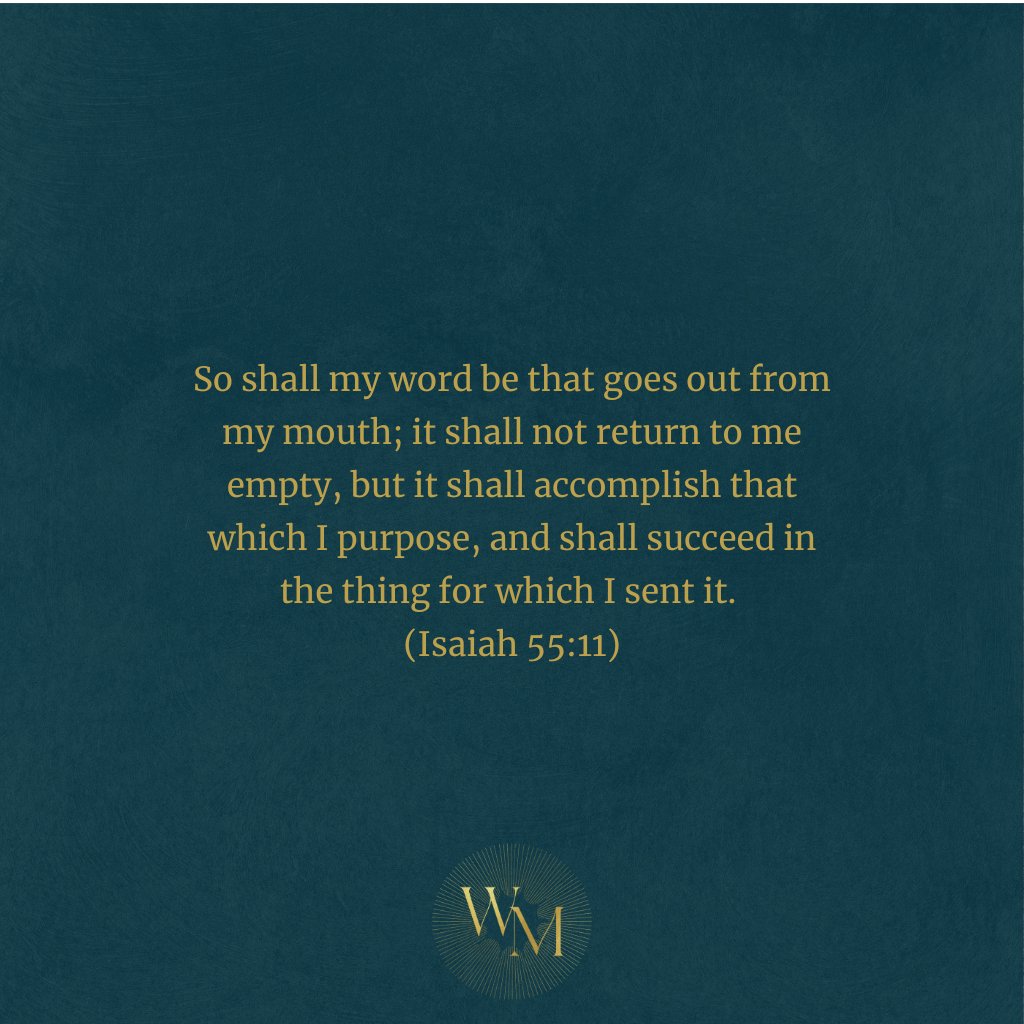
A unique quality of Scripture is found in the promise God made to the prophet Isaiah. Every week, preachers and teachers study and prepare in order to present God’s word to others. The focus of those lessons should be a biblical passage because those are the only words God has promised to bless. God told Isaiah that his word, the words that come directly from God, don't return to him “empty.” God’s words accomplish his purpose and plan. The success of a sermon or lesson isn’t found in how powerful or eloquent the presenter can be. Instead, success should be measured by whether or not God’s word accomplished the purpose God intended. The only words God has promised to bless and use are his own. There is a unique power in using the actual words of a biblical passage. A teacher or preacher will always make a mistake or two. But, when God’s word is sent out, preached, and taught, it does not “return empty.” When you shared or read God’s word today, you and others experienced his inspired perfection. When our words are his, our words have power and authority. Every word of Scripture exists for a reason, and God promises that he will use them to accomplish his purpose, in our lives and in the lives of those we are called to teach and influence. The Lord gives wisdom, knowledge, and understanding so that we can speak his word, for his good purpose.

We can add depth to our knowledge of God if we learn to study Scripture in light of what it meant to the people who first received these words. Remember: those who lived during the days of the Old Testament didn’t have our scientific advances. But they knew that when the heart ceased to beat, a life had ended. They understood that in times of intense emotion or effort, the heart would beat more rapidly. And they believed the heart meant the center of life itself, with all of its emotions and motivations. When the psalmist wrote “unite my heart to fear your name,” he was praying that his life would be driven and motivated by his faith in our powerful and holy Creator. He wanted to know the ways of the Lord so that he could walk in God’s truth. That should be our goal for Bible study as well. It isn’t about simply learning the words of Scripture and their meaning. Bible study should unite our hearts and minds with God. When the truth of Scripture lives at the center of our lives, our hearts are united with God’s because we “fear” his name. To fear God is to live with reverent awe of who he is and all he is. When we know the ways of God, we can choose his ways instead of our own. When our hearts “fear” God, we want him to be our King. When our hearts are united with God, we will live with his thoughts, his love, and his motives. The Lord gives wisdom, knowledge, and understanding. Those blessings live in our hearts and motivate our actions. God is the source of all things, and he has given us everything we need to unite our hearts to his—now and forever.

The Apostle John was an elderly man when he wrote the letter of 1 John. The first-century Christian church was established and growing by this time. The success the church was experiencing attracted some to be involved in the congregation for reasons other than the faith. John wrote his letter to encourage the members to remember why the church was sacred and important and why the church should be protected from people who were trying to alter the original apostolic message for the sake of personal profit. There have always been people who disagreed with God’s truth and therefore tried to exchange his words and ideas for their own. The elderly John spoke to his beloved congregation, referring to them as “dear children” because some were young in age and many were “spiritually” young—beginners in the Christian faith. John told them the Christian faith wasn’t simply a philosophy of people’s words or ideas. Christians were empowered by God’s Spirit and called to love one another with actions and the truth. Our faith isn’t simply what we think or say is true. Our faith is the power of truth witnessed through our actions. The Lord gives wisdom, knowledge, and understanding. His children live differently as a result.
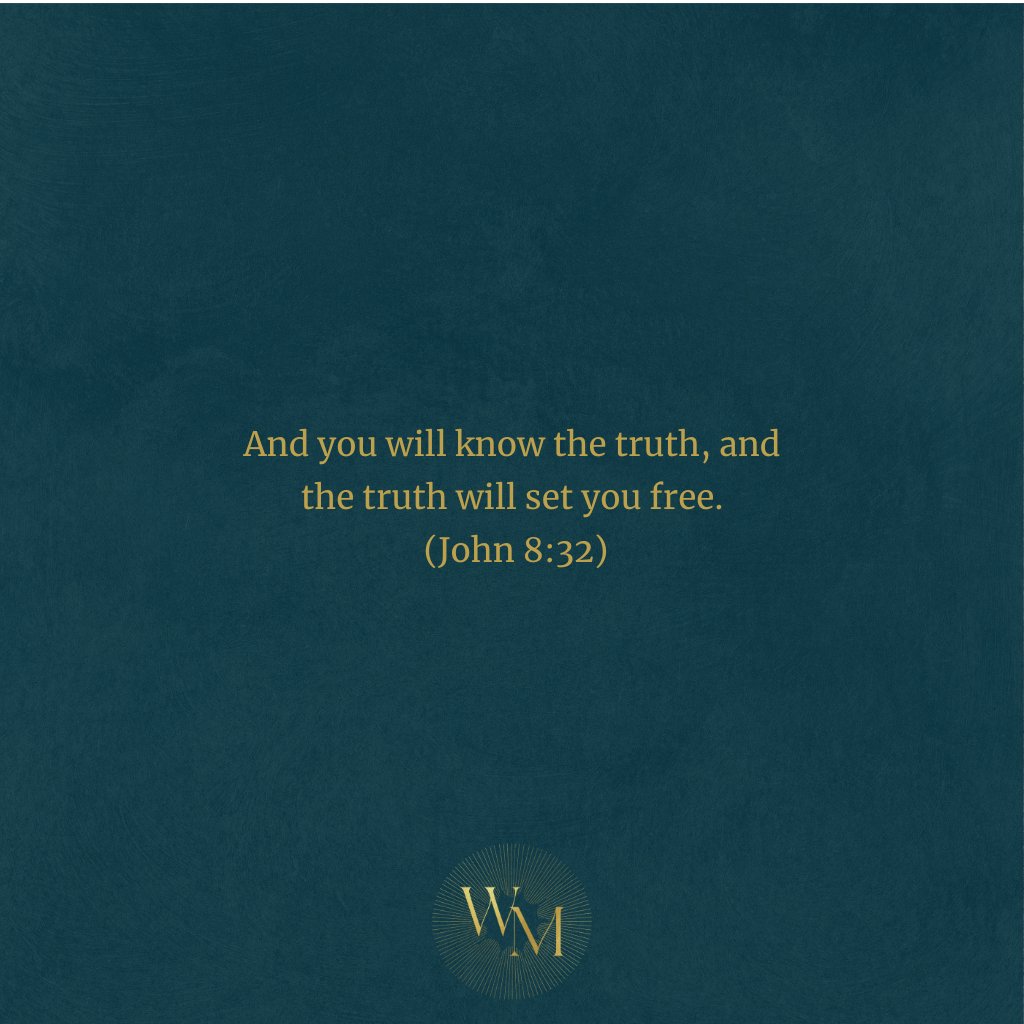
We don’t always want to hear the truth, but we usually want to know we have it. Sometimes God’s truth interferes with what we want to believe and often what others want us to believe. God’s truth can separate us from the opinions of others. That can be especially tough when those “others” are people we love. How then does knowing the truth of God set us free? Jesus spoke those words and we know they are true even when they don’t feel like the truth. The truth sets us free. How? —We are free to believe God’s word over the world’s opinions.—We are free to choose faith over fame.—We are free to define success according to God’s standards.—We are free to forgive the unforgivable.—We are free to claim our own forgiveness through Christ.—We are free to live with confidence in our eternal home.—We are free to choose Christ and live by his Spirit.—We are free to choose joy and peace, even amid fear and troubles.We don’t always choose to walk in the truth we have, but God made certain his truth could always be taught and learned. God wanted us to know how to live free from our sins. The Lord gives wisdom, knowledge, and understanding. We have those blessings of truth, and his words will set us free, now and eternally.

Comments

Download from Google Play

Download from App Store
 United States