


 Claim Ownership
The Crux of Medtech
Subscribed: 10Played: 163
Subscribe

© The Crux of Medtech
Description
Welcome to The Crux of Medtech, where we sit down with special guests from the medtech industry.
We tell the stories of this incredible sector by looking inside businesses from across the trade. Our guests are leaders from companies at all levels, from pre-seed startups and scale-ups to global-scale players. We’re uncovering experiences from the whole medtech ecosystem.
We tell the stories of this incredible sector by looking inside businesses from across the trade. Our guests are leaders from companies at all levels, from pre-seed startups and scale-ups to global-scale players. We’re uncovering experiences from the whole medtech ecosystem.
67 Episodes
Reverse
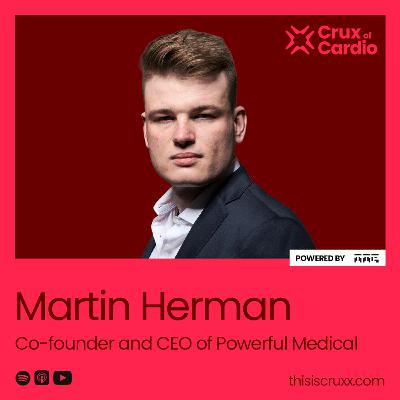
In this episode of the Crux of Cardio, host Jordan Burgin is joined by Martin Herman, co-founder and CEO of Powerful Medical the AI-powered cardiac diagnostics company behind PM Cardio.Martin shares how a software engineering background, a medical student brother, and a search for a truly pioneering problem led him to build an AI platform that can now diagnose 46 cardiovascular conditions from a single 12-lead ECG with over 120,000 doctors already using it in clinical practice.They cover the journey from early scepticism to clinical proof, the brutal reality of MedTech fundraising, and what FDA breakthrough designation means for Powerful Medical's imminent US commercial launch.Key Topics:How Powerful Medical identified the ECG as cardiology's biggest unsolved problemBuilding AI that outperforms experienced cardiologists on the hardest casesThe clinical and commercial case for PM Cardio in US heart attack centresFDA breakthrough designation and the road to US approval this summerRaising €46M in non-dilutive EU grant funding and what comes nextWinning MedTech Innovator and what it means for partnerships and validationRelated Insights:Why starting with the biggest clinical sceptics is actually a growth strategyHow 64 American physician-investors validated the product with $3.5M in fundingThe difference between pre- and post-ChatGPT AI fundraising environmentsWhy young founders have a structural advantage in MedTech and how to use itCore Challenges:Beyond the cardiologist, almost no clinician can reliably read an ECG creating a critical diagnostic gap at the first point of patient contact that PM Cardio is designed to close.US hospitals chasing heart attack accreditation KPIs are generating false positive rates as high as 70–80%, costing up to $15,000 per unnecessary cath lab activation. PM Cardio reduces false positives by ~90% while maintaining diagnostic sensitivity.Regulatory fragmentation across 27 EU healthcare markets and the complexity of US FDA approval has been the single biggest bottleneck to commercial scale, despite overwhelming clinical evidence.Tune in now to hear how Martin Herman turned a software engineering background and a medical student brother into a platform already saving thousands of lives and why the biggest breakthrough may still be ahead.
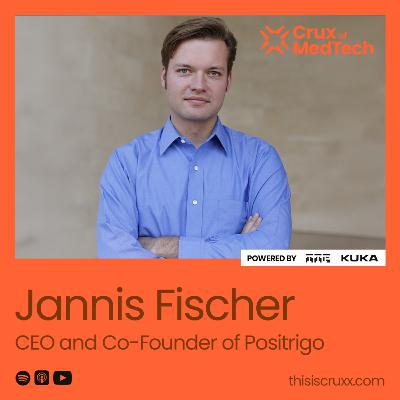
Alzheimer's treatments finally exist but patients are waiting months for the brain scans they need to access them. In this episode, Jannis Fischer, CEO and co-founder of Positrigo, explains how his team built an ultra-compact brain PET scanner that fits inside a neurologist's office and cuts diagnostic timelines from months to days. From losing an investor the day before signing to FDA clearance and triple-digit patient volumes within weeks of launch, this is a founder story with real clinical stakes.Key TopicsWhy new Alzheimer's drugs have created a brain PET bottleneckHow Positrigo's NeuroLF scanner delivers diagnostic-quality imaging in a seated, 10–20 minute scanThe "land and expand" go-to-market strategy across US neurology officesNavigating FDA clearance and CE mark on ~€15M in fundingTransitioning from R&D organisation to customer-centric commercial operationFundraising a $25–35M growth round to scale from proof of concept to exit-readinessRelated InsightsRoche, Eli Lilly and Biogen are running trials on preventive Alzheimer's intervention blood tests could pre-screen patients before symptoms appearThe reimbursement landscape for brain PET is already settled existing codes apply, making the economics a "no-brainer" for neurology practicesDecentralising imaging from hospital centres to specialist offices mirrors the broader US trend in point-of-care diagnosticsStrategic acquirers (Siemens, GE Healthcare) and radiopharmaceutical synergies make trade sale the most likely exit pathCore ChallengesWhole-body PET systems are overloaded with oncology and cardiology scans, leaving neurology patients waiting months for brain imaging a bottleneck that worsens as Alzheimer's drug adoption accelerates.Positrigo's NeuroLF system addresses this by enabling in-office brain PET scans at the point of care, but scaling requires the right sales team, operational partners, and growth capital to move from 3 installations to a nationwide footprint.🎧 Tune in now to hear how a particle physicist turned CEO is putting brain scanners where they belong next to the patients who need them most.The Crux of MedTech podcast is brought to you by Cruxx, a specialist surgical robotics recruitment agency. To learn more about Cruxx, click here.A big thank you to our sponsors on this season of the podcast; TTP plc With a 35-year track record, TTP excels in turning innovative ideas into market-ready solutions. Their team of 300+ experts deliver breakthrough solutions in areas ranging from endoluminal robotics and navigation systems to ultrasound imaging. Whether you're a startup or a multinational, TTP plc can accelerate your development with the latest technologies. Learn more at TTP.com
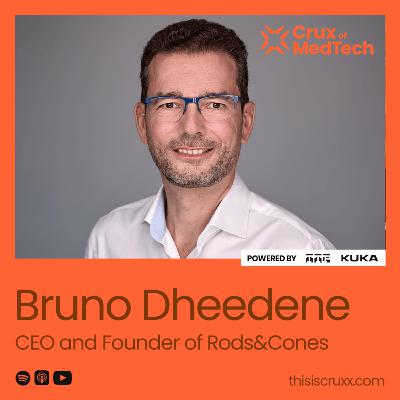
In this episode, host Henry Norton sits down with Bruno Dheedene, CEO and Founder of Rods&Cones, a surgical streaming platform that's solving one of the most overlooked problems in the OR - nobody can actually see what the surgeon is doing.Bruno shares how he bootstrapped the company from a 2018 incubation project to a profitable business serving customers worldwide, all without VC funding. He explains why the pandemic became their biggest accelerator, how they're democratizing surgical knowledge with POV streaming technology, and their audacious goal to enable 1 million patients to be treated with remote surgical assistance.Key Topics:The visibility crisis in modern operating roomsBuilding a capital-efficient medtech company without VC fundingHow smart glasses and streaming tech evolved from 2013 prototypes to surgical-grade solutionsCustomer-funded growth and the pandemic acceleration storyProduct suite evolution driven by surgeon feedbackRelated Insights:Why surgical knowledge remains trapped inside operating roomsThe power of bootstrapping to maintain autonomy and decision-making controlHow remote surgical assistance can address global surgeon shortagesReal-world use cases from military dermatology to African surgical trainingBuilding a "follow the sun" customer experience team with 2-minute SLACore Challenges:Even in the OR, industry reps and assistants can't see what surgeons are doing during open procedures. Surgeons work in small cavities from their own point of view, leaving everyone else in the outer circle with limited visibility.Rods&Cones captures the surgeon's exact POV using smart glasses and streams high-quality surgical footage to remote experts, enabling real-time case support, medical education, and remote assistance - turning a level 100 surgeon into a level 122 surgeon.🎧 Tune in now to hear how one founder is making surgery visible and accessible to millions who need it most.The Crux of MedTech podcast is brought to you by Cruxx, a specialist surgical robotics recruitment agency. To learn more about Cruxx, click here.A big thank you to our sponsors on this season of the podcast; TTP plc With a 35-year track record, TTP excels in turning innovative ideas into market-ready solutions. Their team of 300+ experts deliver breakthrough solutions in areas ranging from endoluminal robotics and navigation systems to ultrasound imaging. Whether you're a startup or a multinational, TTP plc can accelerate your development with the latest technologies. Learn more at TTP.com
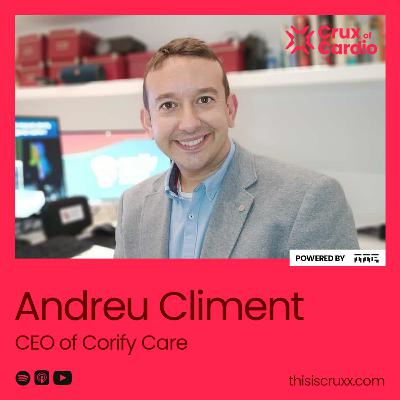
Jordan is joined by Andreu Climent, CEO of Corify Care, a cardiac mapping company using non-invasive, whole-heart technology to guide EP procedures in real time. Andreu brings a telecoms engineering background to a problem most cardiologists have accepted as unsolvable: that half of all AF ablations fail, because clinicians are operating without seeing the full picture.They cover how Corify's cardiac global mapping system works, how it has more than doubled ablation efficacy in pilot studies, and what a partnership with Mayo Clinic means for the future of predictive cardiac care. Andreu also gets into the realities of taking a seven-year research project to commercial launch and what it really takes to change clinical behaviour.Key TopicsHow Corify's whole-heart mapping system worksThe limitations of current EP ablation standards of careDoubling AF ablation efficacy with guided, personalised treatmentThe Mayo Clinic partnership and the AI for AF projectScaling from academic research to commercial launch and US market entryRelated InsightsWhy coming from outside cardiology helped Andreu challenge assumptions baked into the standard of careThe case for personalised, data-guided ablation over empirical, one-size-fits-all approachesHow predictive mapping could identify arrhythmia risk years before symptoms appearWhat it takes to shift VC interest as clinical and regulatory risk dropsCore ChallengesCurrent AF ablation is largely empirical, with success rates of 50-60%. Half of patients return after a failed procedure, and clinicians have no reliable way to know in advance whether a treatment will work for a given patient.Changing established clinical behaviour is slow, even when the data clearly supports a better approach. Getting buy-in requires more than proof — it requires presence in the cath lab and time.🎧 Tune in now to find out how Andreu Climent and Corify Care are replacing guesswork in the EP lab with real-time, whole-heart mapping.
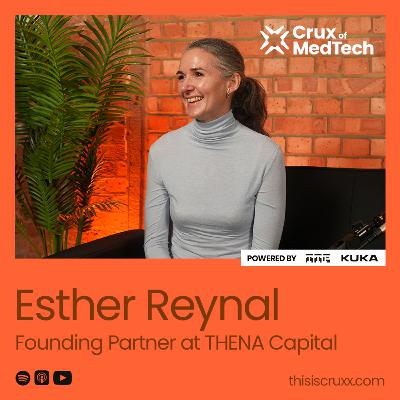
In this episode, your host Henry Norton is joined by Esther Reynal de St Michel Richardot, Founding Partner at THENA Capital, to discuss why so many medtech founders are building technologies without understanding their real market challenges and how early-stage thinking about value propositions and stakeholder needs can make or break a healthcare startup.Esther shares her journey from market research and management consulting to launching THENA Capital, and explains why healthcare innovation lags so far behind sectors like fintech, despite having the same opportunity for disruption.Key Topics:Why founders often misdiagnose their biggest challengesThe gap between building technology and understanding market needsHow healthcare innovation compares to fintech disruptionTHENA Capital's investment thesis and founder selection processThe role of community building in early-stage healthcare VCSupporting founders beyond capital with strategic expertiseRelated Insights:Most technologies are built for the sake of the technology, not the problem they solveHealthcare has more stakeholders than any other sector—and founders need value propositions for all of themMarket understanding often reveals the real challenges companies face, not the ones they think they're facingVCs have a responsibility to support founders at all stages, not just those who fit their thesisBuilding a community fills knowledge gaps and creates unexpected collaboration opportunitiesCore Challenges:Medtech founders often focus on building innovative technology without early enough thinking about go-to-market strategy, stakeholder value propositions, and commercial viability.Healthcare remains one of the most traditional sectors to disrupt, lagging significantly behind fintech despite similar opportunities for innovation.THENA Capital addresses this by combining capital with strategic expertise from consumer insights, market research, and go-to-market planning helping founders identify and solve their real challenges before they waste time and resources. Tune in now to learn how to identify the challenges your medtech startup is actually facing and how to build for market success, not just technological innovation.The Crux of MedTech podcast is brought to you by Cruxx, a specialist surgical robotics recruitment agency. To learn more about Cruxx, click here.A big thank you to our sponsors on this season of the podcast; TTP plc With a 35-year track record, TTP excels in turning innovative ideas into market-ready solutions. Their team of 300+ experts deliver breakthrough solutions in areas ranging from endoluminal robotics and navigation systems to ultrasound imaging. Whether you're a startup or a multinational, TTP plc can accelerate your development with the latest technologies. Learn more at TTP.com
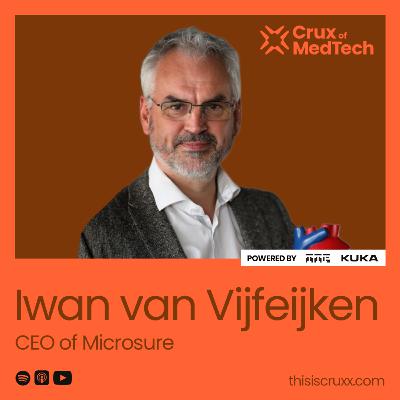
In this episode, host Henry Norton sits down with Iwan van Vijfeijken, CEO of Microsure and a four-time medtech entrepreneur who's been through the full cycle of startup life.Iwan made the jump from NXP Semiconductors to medtech 15 years ago, starting as employee number one at Dermasun Medical. Since then, he's navigated three more ventures including Pulsify Medical, a cardiac monitoring startup that raised €10M before going bankrupt.Today at Microsure, Iwan leads a surgical robotics company that's 100% focused on open microsurgery with their MUSA robot. Unlike the crowded minimally invasive space, Microsure is tackling procedures that can't be done laparoscopically.This conversation goes deep on entrepreneurial resilience, the brutal statistics of failure in medtech, and what it really costs to keep going when cash is running out and families depend on you.Key Topics:Transitioning from corporate semiconductors to medtech startupsThe journey through four ventures: UV therapy, cardiac monitoring, and surgical roboticsWhy Pulsify Medical collapsed despite breakthrough technology and strong fundingMicrosure's strategic bet on open microsurgery versus minimally invasive roboticsThe harsh reality: more medtech companies fail than succeedRelated Insights:Why small medtech startups can out-innovate billion-dollar corporatesThe personal grief and emotional toll of venture failureHow to go all-in while still protecting yourself and your teamWhy encouraging your team to explore external opportunities isn't being unfaithfulCore Challenges:Pulsify Medical attempted two massive technical challenges at once: pioneering new semiconductor fabrication AND developing a wearable cardiac device. After raising €10M, European investors wouldn't fund the next stage. The company went bankrupt, a painful reality that took months for Iwan to process and move past.Microsure is carving out its niche in open microsurgery, deliberately avoiding the saturated minimally invasive market. The bet is that there's a vast, underserved market in procedures that simply can't be done laparoscopically. This requires absolute focus and the discipline to say no to adjacent opportunities.Tune in now to hear the unvarnished truth about surviving, failing, and thriving in medtech entrepreneurship.The Crux of MedTech podcast is brought to you by Cruxx, a specialist surgical robotics recruitment agency. To learn more about Cruxx, click here.A big thank you to our sponsors on this season of the podcast; TTP plc With a 35-year track record, TTP excels in turning innovative ideas into market-ready solutions. Their team of 300+ experts deliver breakthrough solutions in areas ranging from endoluminal robotics and navigation systems to ultrasound imaging. Whether you're a startup or a multinational, TTP plc can accelerate your development with the latest technologies. Learn more at TTP.com
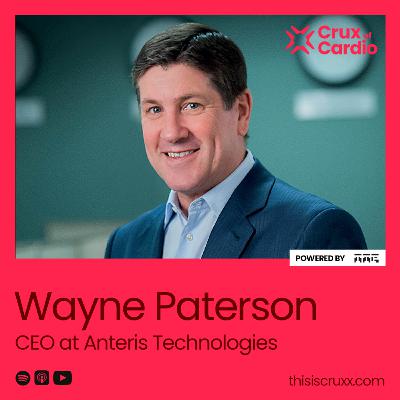
Wayne Paterson, CEO and Vice Chairman of Anteris Technologies, joins host Jordan Bergen for a frank conversation about pivoting a failing drug company into the structural heart space and building what may be medtech's next billion-dollar product.Wayne shares how 36 drug launches, a pharma-first lens on total disease management, and a blank sheet of paper led to the world's first biomimetic transcatheter heart valve — and why the market's two dominant players never saw it coming.Key TopicsHow a 25-year pharma career became the unlikely blueprint for disrupting TAVRBuilding the first biomimetic TAVR valve from blank sheet to 140 patientsRaising capital from scrappy warrants to a record-breaking $320M oversubscribed roundRunning the first randomised head-to-head RCT against Edwards and MedtronicWhy valve-in-valve is the next $3 billion opportunity and how DurAVR is already leading itRelated InsightsWhy total disease management thinking standard in pharma is largely absent from structural heartHow Medtronic ended up on Anteris's register, and why values drove the partner selectionWhat lifecycle management from oncology can teach the medtech industry about long-term product strategyThe difference between engineering a device and treating a disease and why it matters for patient outcomes Core ChallengesExisting TAVR valves leave patients in mild disease (20mmHg mean gradient). DurAVR targets the pre-disease state at 5–10mmHg a clinically meaningful and commercially critical distinction.Getting 140 patients to consistent, curative outcomes without a prior blueprint required breaking conventional medtech development norms and keeping lead physicians in the room throughout.Attracting institutional-grade talent to an early-stage, non-revenue public company meant years of patient execution before the brand had the equity to compete with Medtronic and Edwards for top-tier hires. Tune in now to hear how Wayne Paterson took a failing ASX-listed drug company, bet everything on a radically new valve design, and built what could be medtech's most important structural heart product in a decade.
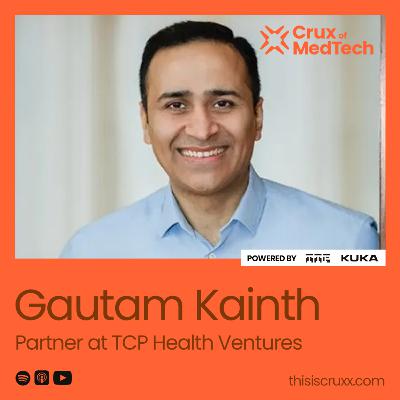
In this episode, host Henry Norton sits down with Gautam Kainth, Partner at TCP Health Ventures, to unpack why medtech investing fundamentally differs from traditional tech and what founders need to know about positioning their companies for strategic exits.Gautam brings over 20 years of investment experience with $1+ billion in deployed capital across 30+ transactions spanning the US, Europe, Asia, and Africa. He leads TCP's medtech investments and currently serves on the boards of Tioga Cardiovascular, Adona Medical, and Plexaa, with active oversight of a 12-company portfolio.He shares TCP's playbook for deploying over $220 million across three funds, the AI-hardware integration reshaping devices, and the tactical framework for making your startup attractive to the right acquirers including why commercial infrastructure fit matters more than most founders realize.Key Topics:Why medtech allows multiple winners unlike Big Tech monopolies (the COVID vaccine thesis)TCP's fund strategy: $7 billion AUM platform with 27 years in ventureSeries A focus with $5-15M check sizes and board-level involvementThe convergence of AI models with hardware devices across cardiovascular, imaging, and diagnosticsStrategic vs ancillary product positioning for M&A conversationsThe Shifamed-style build-to-buy model that creates plug-and-play acquisition opportunitiesRelated Insights:How Gautam's financial services background (JP Morgan, EY transaction advisory) translates to medtech's regulatory complexityWhy TCP exited three companies and actively manages 12 with board seats on nineCommercial infrastructure fit as the first filter before pitching strategicsMini manufacturing facilities that enable pilot commercialization post-acquisitionThe importance of regulatory champions and clinical programs housed within startupsTCP's Northgate Capital sister company managing $5B in tech and venture investmentsCore Challenges:Founders waste time pitching strategics without commercial infrastructure alignment. If your cardiovascular device doesn't fit their existing sales team, you're pitching the wrong acquirer. Match your product to their distribution machinery first.Strategic vs ancillary positioning determines your exit path. If you're strategic to them, explore M&A immediately. If you're ancillary, pursue their venture arm for a minority investment, prove performance over time, then revisit acquisition conversations years later.Building for acquisition requires plug-and-play infrastructure. Companies need in-house regulatory teams, clinical trial execution capabilities, and pilot manufacturing facilities to enable seamless post-acquisition commercialization—this is what separates TCP's portfolio from competitors.🎧 Tune in now to learn how a Partner managing $220M+ in medtech capital evaluates deals and what makes your company acquisition-ready.The Crux of MedTech podcast is brought to you by Cruxx, a specialist surgical robotics recruitment agency. To learn more about Cruxx, click here.A big thank you to our sponsors on this season of the podcast; TTP plc With a 35-year track record, TTP excels in turning innovative ideas into market-ready solutions. Their team of 300+ experts deliver breakthrough solutions in areas ranging from endoluminal robotics and navigation systems to ultrasound imaging. Whether you're a startup or a multinational, TTP plc can accelerate your development with the latest technologies. Learn more at TTP.com
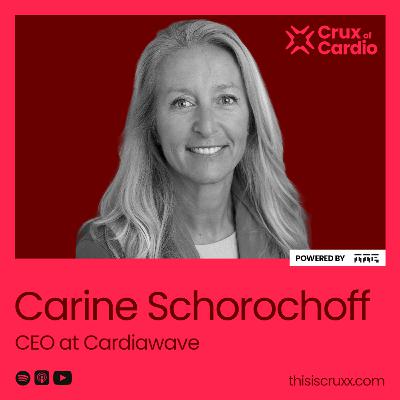
In this episode, host Jordan Burgin sits down with Carine Schorochoff, CEO of Cardiawave, to explore Valvosoft the world's first CE-marked non-invasive ultrasound therapy for severe symptomatic aortic stenosis.With 30-plus years in structural heart across J&J, Medtronic, Edwards Lifesciences, and two startup CEO roles, Carine breaks down why the technology has delivered 0% stroke rates across 125 procedures, what it actually means to treat a calcified aortic valve without entering the body, and how Cardiawave is now navigating the FDA pathway with a €55M raise on the horizon.Key TopicsThe two patient populations Valvosoft was designed for and why neither could be helped beforeHow non-invasive ultrasound fragments calcification without damaging the leaflet tissue (the chocolate plate analogy)Safety data from 125 procedures: 0% stroke, 0% pacemaker implantation, 0% procedural mortalityCardiawave's path to CE mark under EU MDR and why their technical file passed first reviewThe FDA IDE study plan and early dialogue with CMS on reimbursementUsing Valvosoft to prep the valve before TAVR and the pull effect on patient referralsRelated InsightsWhy Valvosoft positions alongside drugs rather than against surgical or transcatheter valvesThe "lifetime management" model for aortic stenosis and why replacing a valve too early creates compounding problemsHow to attract senior talent in a cash-constrained startup: stock option pools, equity, and the pitchThe pull effect in action: why Valvosoft's presence in a centre brings in patients who were never even referredCore ChallengesFrail aortic stenosis patients too sick for TAVR, too sick for surgery have historically had no treatment option. Valvosoft was designed specifically to serve this population, with a non-invasive procedure requiring no anaesthesia, no incision, and no entry into the body.Early-stage moderate aortic stenosis is diagnosed but untreatable under current guidelines. The goal for this population is slowing disease progression not valve replacement placing Valvosoft in direct competition with drugs, where it offers comparable non-invasiveness with no side effects.Raising €55M for an FDA IDE study in a tighter VC environment requires extending runway, maintaining investor confidence, and managing burn rate without compromising the pace of regulatory execution across two continents simultaneously.🎧 Tune in now to hear why one of Europe's most experienced interventional cardiologists said he'd choose Valvosoft for his own heart and what that means for the future of aortic stenosis care.The Crux of MedTech podcast is brought to you by Cruxx, a specialist surgical robotics recruitment agency. To learn more about Cruxx, click here.A big thank you to our sponsors on this season of the podcast; TTP plc With a 35-year track record, TTP excels in turning innovative ideas into market-ready solutions. Their team of 300+ experts deliver breakthrough solutions in areas ranging from endoluminal robotics and navigation systems to ultrasound imaging. Whether you're a startup or a multinational, TTP plc can accelerate your development with the latest technologies. Learn more at TTP.com&KUKA is a global leader in robotics with over 25 years of experience partnering with medtech companies on their journey to market. Their reputation is built on robust technology, reliability and long term collaboration and being more than just a supplier.KUKA provides trusted support throughout the product life cycle, from development to integration and beyond. Find out more at kuka.com/healthcare
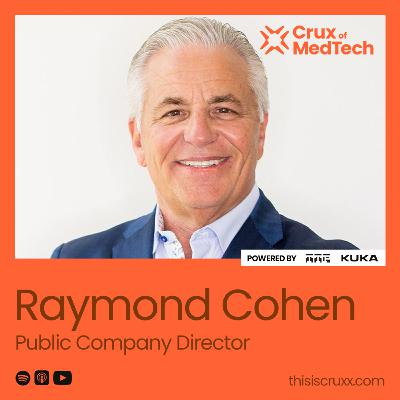
Raymond Cohen has spent 40+ years in medtech, never at a big company but always building. After taking Axonics from whiteboard to $500M in revenue and a Boston Scientific exit, he's now chairman of multiple high-growth ventures.In this episode, he breaks down what actually makes a company acquirable, why founders need to get over their fear of dilution, and the immigrant work ethic that's driven his entire career.Key Topics:Why Boston Scientific is outpacing every other strategic acquirer right nowThe "go big or go home" fundraising philosophy behind Spyro Medical's $67M Series AWhat "having the goods" actually means and why most founders don't know if they have themRaymond's criteria for joining a board: clinical problem, addressable market, and the right peopleHow LSI is filling the gap JP Morgan left for private medtech companiesRelated Insights:Neuromodulation as a pharmaceutical replacement: the Spyro asthma thesisCuffless ambulatory blood pressure monitoring and the BioBeat opportunityWhy the best people won't work for paper and how to structure equity properlyThe "tone from the top" principle and cutting underperformers earlyCore Challenges:Founders are paralysed by dilution fear, leading to undercapitalisation and slow execution.Raymonds's view: sell 85% on day one if that's what it takes to win.Too many startups pursue incremental innovation or enter crowded markets "the fifth person in a four-man race."Strategic acquirers beyond Boston Scientific have been passive, limiting exit options and slowing capital recycling in the ecosystem.🎧 Tune in now to hear how a 40-year medtech veteran thinks about building, buying, and betting big.
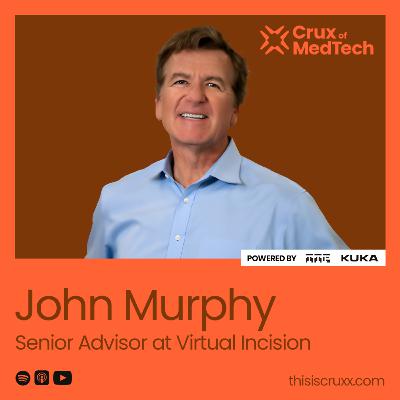
John Murphy left a corporate COO role to become employee number one at Virtual Incision then spent the next 14 years building MIRA, the world's first miniaturised soft tissue surgical robot.The pitch? A little robot on the inside, instead of a big one reaching in from the outside. The journey included five alpha iterations, a 30,000-page FDA de novo submission, remote surgery experiments from the International Space Station, and raising every dollar from Midwest investors after getting zero interest from Boston or Silicon Valley.Now advising the next generation of medtech founders, John shares the tactical, financial, and personal lessons from one of surgical robotics' longest development cycles.Key Topics:Why miniaturised surgical robotics could reshape remote and rural surgeryBreaking a 14-year R&D journey into financeable, executable chunksThe ISS experiment: remote surgery from 250 miles above EarthWhy Midwest investors backed Virtual Incision when the coasts wouldn'tRelated Insights:Medical devices is harder than aerospace, bio, and every other industry John's worked inThe "nuclear winter" of medtech financing and signs of a thawHow to think about seed through Series D as clinical and regulatory milestonesCore Challenges:Financing cycles in medtech often outlast VC fund timelines, founders must align milestones with capital strategyDifferentiation is non-negotiable: "There's 30 me-too Da Vinci players, Gary and Dave are going to win that oneThe personal toll of being a startup CEO is underestimated, founders need support beyond tactics and strategy🎧 Tune in now for hard-won lessons on building breakthrough surgical robotics, from first prototype to FDA clearance and beyond.The Crux of MedTech podcast is brought to you by Cruxx, a specialist surgical robotics recruitment agency. To learn more about Cruxx, click here.A big thank you to our sponsors on this season of the podcast; TTP plc With a 35-year track record, TTP excels in turning innovative ideas into market-ready solutions. Their team of 300+ experts deliver breakthrough solutions in areas ranging from endoluminal robotics and navigation systems to ultrasound imaging. Whether you're a startup or a multinational, TTP plc can accelerate your development with the latest technologies. Learn more at TTP.com&KUKA is a global leader in robotics with over 25 years of experience partnering with medtech companies on their journey to market. Their reputation is built on robust technology, reliability and long term collaboration and being more than just a supplier.KUKA provides trusted support throughout the product life cycle, from development to integration and beyond. Find out more at kuka.com/healthcare
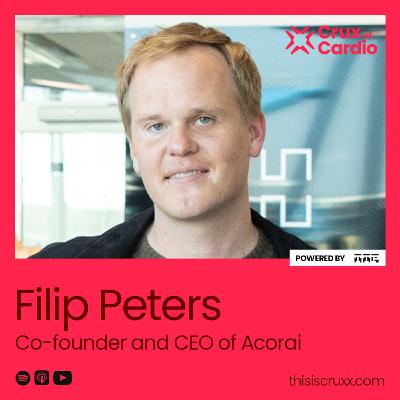
In this episode of the Crux of Cardio, host Jordan Bergen sits down with Filip Peters, Co-founder and CEO of Acorai, to unpack how his team is building a non-invasive device that reads the pressures inside the heart, using machine learning inspired by oil and gas diagnostics.Filip shared the full founder journey: from garage prototypes in Sweden through COVID, to a 1,600-patient study across six countries and FDA Breakthrough Device designation.He explained why Acorai chose to focus on the hospitalised heart failure workflow over remote monitoring, and broke down the economics that make every heart failure admission a loss for US hospitals.Filip also discussed the challenges of fundraising in today's market, navigating EU MDR as an AI-enabled device, and his advice for cardiovascular founders on staying in "science project mode" for as long as possible.Key Topics:The transition from finance and ML into medtech entrepreneurshipHow non-invasive haemodynamic monitoring works and why it mattersInpatient vs. remote monitoring, why Acorai chose the hospital workflowThe economics of heart failure admissions and the 20x ROI caseNavigating FDA Breakthrough Device designation and the TAP Pilot programmeEU MDR challenges for AI-enabled medical devicesFundraising strategy – raising over $50M and the role of strategic investorsGo-to-market: selling directly to US hospital operational expense budgetsRelated Insights:Cross-industry inspiration: applying signal detection from oil & gas and engine diagnostics to cardiac dataThe "gold standard" problem: inherent measurement error in right heart catheterisation and what it means for AI validationWhy clinical workflow friction kills more medtech products than bad technologyHealth system venture funds as an emerging capital source for cardiovascular startupsThe value of the Cedars-Sinai Accelerator and EIC Accelerator for European foundersCore Challenges:Current non-invasive tools for estimating cardiac pressures (echo, biomarkers, X-ray) are subjective, often lagging, and vary significantly between clinicians – leading to suboptimal therapy decisions and premature discharge of heart failure patients with residual congestion.Acorai has developed a non-invasive, ML-powered sensing platform that measures both left-sided and right-sided cardiac pressures, giving clinicians a repeatable, operator-independent haemodynamic assessment, targeting better decongestion, shorter length of stay, and lower readmission rates.Tune in now to hear how Acorai is turning oil rig science into the next vital sign for heart failure management.
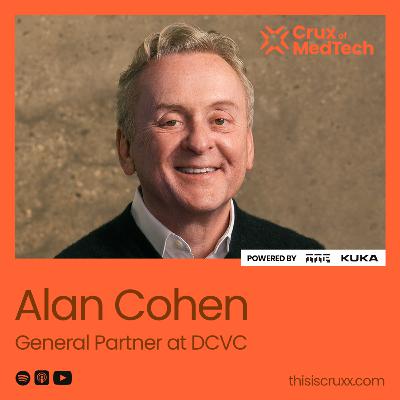
Alan Cohen has built companies, sold companies, started a price war between tech giants and now invests in what he calls "tech med" at DCVC, a $4.5bn deep-tech fund.The distinction matters: tech med starts with data and computational methods, not hardware. In this conversation, Alan unpacks the investments that excite him, from real-time surgical guidance to AI-powered ultrasound and the pitches that don't make the cut.He and Henry dig into hospital bottlenecks, the promise and peril of Health GPT, and his vision for a future where every treatment is personalised to a "circle of one."Key Topics:The distinction between "med tech" and "tech med" and why it mattersHow computer vision, autonomous vehicle tech, and AI are entering the operating roomWhat DCVC looks for when investing in healthcare startupsThe "circle of one" vision for personalised therapiesWhy data strategy must be foundational, not an afterthoughtRelated Insights:The real bottleneck in hospital systems isn't technology it's workflow and staffingLLMs like Health GPT have promise, but also serious risks for untrained usersSurgeons and specialists are the scarcest resource tech should augment, not replaceCore Challenges:Healthcare costs are reaching unsustainable proportions, forcing new thinkingPersonnel shortages mean hospitals can't scale with demandSwitching behaviour in medicine is slow new entrants need a 10x improvement to break through🎧 Tune in now to hear how one of Silicon Valley's sharpest deep-tech investors sees the future of surgical robotics, AI diagnostics, and the quantified self.The Crux of MedTech podcast is brought to you by Cruxx, a specialist surgical robotics recruitment agency. To learn more about Cruxx, click here.A big thank you to our sponsors on this season of the podcast; TTP plc With a 35-year track record, TTP excels in turning innovative ideas into market-ready solutions. Their team of 300+ experts deliver breakthrough solutions in areas ranging from endoluminal robotics and navigation systems to ultrasound imaging. Whether you're a startup or a multinational, TTP plc can accelerate your development with the latest technologies. Learn more at TTP.com&KUKA is a global leader in robotics with over 25 years of experience partnering with medtech companies on their journey to market. Their reputation is built on robust technology, reliability and long term collaboration and being more than just a supplier.KUKA provides trusted support throughout the product life cycle, from development to integration and beyond. Find out more at kuka.com/healthcare
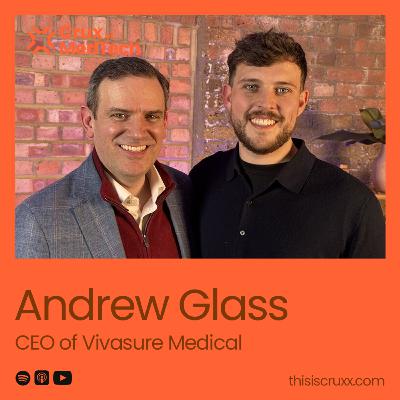
In this episode of The Crux of MedTech, host Henry Norton sits down with Andrew Glass, CEO of Vivasure Medical, fresh off announcing the company's acquisition by Haemonetics Corporation.Andrew shares the full journey, from his early days in drug-eluting stents at Guidant (later Abbott), to running a $10M sales territory, to making equity investments at Abbott Ventures, and finally taking the leap to lead an Irish medtech startup through a US pivotal trial and strategic exit.He discusses what it was really like to join a company with two months of cash, why products are never perfect the first time, and the best advice he ever ignored.Andrew also reveals the hard-won leadership lesson his mentor gave him: "Don't be a jerk."Key Topics:The journey from big pharma to startup CEOHow strategic investors evaluate medtech acquisitionsRunning US pivotal trials and navigating FDA/CMS challengesManaging founder dynamics when you're the incoming CEOBuilding toward acquisition with option agreementsRelated Insights:Why sales experience is essential for medtech leadersThe value of keeping talent when boards say cutHow timing and strategic fit drive acquisition outcomesLessons from raising Series D in a difficult funding environmentCore Challenges:Joining a startup only to discover there's two months of cash left and having to raise immediately while fixing product issues the board hadn't disclosed.Navigating CMS approval delays that pushed trial timelines out by 9-12 months, requiring constant execution while waiting for the acquirer's readiness.🎧 Tune in now for an unfiltered look at what it really takes to lead a medtech startup to exit.The Crux of MedTech podcast is brought to you by Cruxx, a specialist surgical robotics recruitment agency. To learn more about Cruxx, click here.A big thank you to our sponsors on this season of the podcast; TTP plc With a 35-year track record, TTP excels in turning innovative ideas into market-ready solutions. Their team of 300+ experts deliver breakthrough solutions in areas ranging from endoluminal robotics and navigation systems to ultrasound imaging. Whether you're a startup or a multinational, TTP plc can accelerate your development with the latest technologies. Learn more at TTP.com
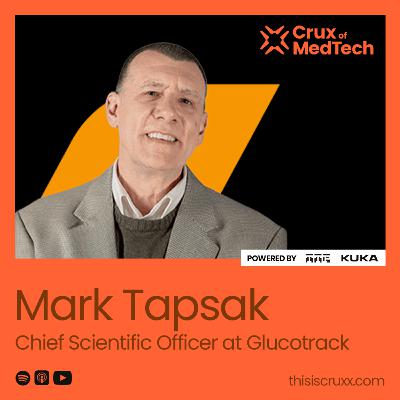
In this episode, Henry Norton sits down with Mark Tapsak, Chief Science Officer at Glucotrack and one of Dexcom's earliest employees.Mark Tapsak left Medtronic for a "crazy startup" called Dexcom after seeing data so compelling he couldn't say no. Two decades later, he's back in the CGM game as Chief Science Officer at Glucotrack, working on a 3-year implantable sensor that lives in the bloodstream.Key Topics:Mark's path from blue-collar Minnesota to polymer chemistry PhDThe founding days of Dexcom and the "three fathers" of CGM (Goff, Updike, Heller)Why early CGM struggled to convince endocrinologists of continuous data's valueDexcom's pivot from implantable to short-term sensorsGlucotrack's evolution from non-invasive ear clip to intravascular 3-year sensorCurrent trial progress in Brazil and Australia, and the path to US IDERelated Insights:Why implanting devices in the body is "harder than going to the moon"The business case for long-term implantables vs. wearablesHow the immune response creates a "sleep period" that tanks glucose signalsWhy timing and market readiness matter as much as technologyCore Challenges:Early CGM implantables worked in only ~50% of patients, forcing a pivot to wearables and delaying long-term solutions by decades.Glucotrack is now targeting a 3-year intravascular sensor that bypasses the aggressive subcutaneous immune response, with US trials expected in 2026.🎧 Tune in now to hear how CGM went from academic curiosity to medical device success story, and what comes next.The Crux of MedTech podcast is brought to you by Cruxx, a specialist surgical robotics recruitment agency. To learn more about Cruxx, click here.A big thank you to our sponsors on this season of the podcast; TTP plc With a 35-year track record, TTP excels in turning innovative ideas into market-ready solutions. Their team of 300+ experts deliver breakthrough solutions in areas ranging from endoluminal robotics and navigation systems to ultrasound imaging. Whether you're a startup or a multinational, TTP plc can accelerate your development with the latest technologies. Learn more at TTP.com
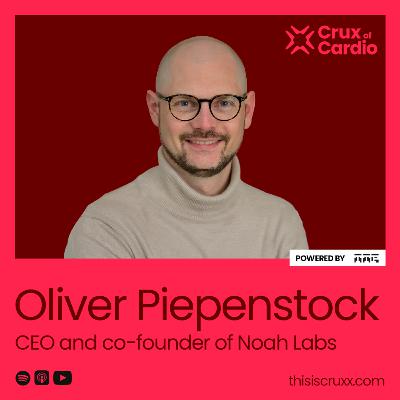
In this episode of The Crux of Cardio, host Jordan Burgin sits down with Oliver Piepenstock, CEO and co-founder of Berlin-based Noah Labs, to explore how voice biomarkers could transform the way we detect and manage heart failure.Oliver shares the journey from a quant finance career to founding a company that uses AI to hear what the human ear cannot, subtle changes in voice that signal worsening heart failure up to three weeks before hospitalisation. He discusses pitching Mayo Clinic with almost no money left, why clinical evidence beats everything, and how radical transparency shapes Noah Labs' culture as they pursue dual FDA and MDR clearance.Key Topics:How voice analysis can detect worsening heart failure 2–3 weeks before hospitalisationWhy the current standard of care (weight scales) falls shortThe founding story: from Entrepreneur First to Mayo ClinicPursuing FDA and MDR clearance simultaneouslyCombining venture funding with non-dilutive grantsRelated Insights:How AI adoption differs in regulated vs. unregulated healthcareThe advantage of centralised FDA expertise over fragmented European notified bodiesWhy algorithm performance will be the deciding factor in market adoptionCore Challenges:Heart failure is the number one hospital admission reason in the elderly and the top cost driver for health insurers globally — yet detection still relies on weight scales that catch deterioration only days out, often too late to intervene effectively.Noah Labs has developed voice biomarker technology achieving close to 90% accuracy in clinical trials, giving clinicians enough lead time to adjust medication remotely and prevent hospitalisation.🎧 Tune in now to discover how your voice could become the next vital sign in cardiac care.
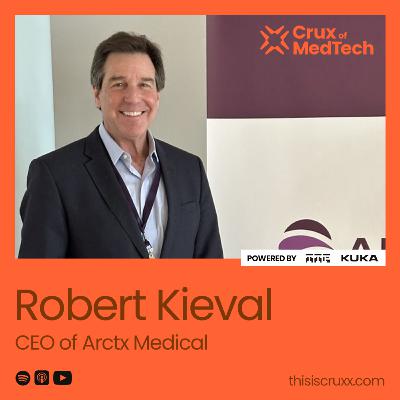
In this episode, Henry Norton sits down with Robert Kieval, CEO of Arctx Medical Inc, to talk about a condition that sends 300,000 Americans to the ER every year with no approved treatment options waiting for them.Robert shares how Arctx is developing a deceptively simple solution: a cooling catheter that targets pancreatic inflammation from inside the stomach. He also opens up about the hard lessons from his previous venture, including why he wishes he'd hired a marketing lead much earlier.Key Topics:- How Arctx's gastric cooling catheter targets pancreatic inflammation- The regulatory pathway: 510(k) clearance for temperature management, de novo for pancreatitis- Designing a 200-patient randomised controlled trial with FDA IDE approval- Why market development and reimbursement strategy need to start earlyRelated Insights:- The importance of building clinical champions before commercialisation- Why new technologies must fit into existing clinical workflows to gain adoption- Navigating the current medtech funding environmentCore Challenges:- Acute pancreatitis affects 300,000 US patients annually with no targeted therapies only supportive care- Arctx's cooling catheter aims to reduce inflammation, shorten hospital stays, and become a new first-line treatment option🎧 Tune in now to hear how Arctx is turning cooling into a therapeutic platform.The Crux of MedTech podcast is brought to you by Cruxx, a specialist surgical robotics recruitment agency. To learn more about Cruxx, click here.A big thank you to our sponsors on this season of the podcast; TTP plc With a 35-year track record, TTP excels in turning innovative ideas into market-ready solutions. Their team of 300+ experts deliver breakthrough solutions in areas ranging from endoluminal robotics and navigation systems to ultrasound imaging. Whether you're a startup or a multinational, TTP plc can accelerate your development with the latest technologies. Learn more at TTP.com&KUKA is a global leader in robotics with over 25 years of experience partnering with medtech companies on their journey to market. Their reputation is built on robust technology, reliability and long term collaboration and being more than just a supplier.KUKA provides trusted support throughout the product life cycle, from development to integration and beyond. Find out more at kuka.com/healthcare
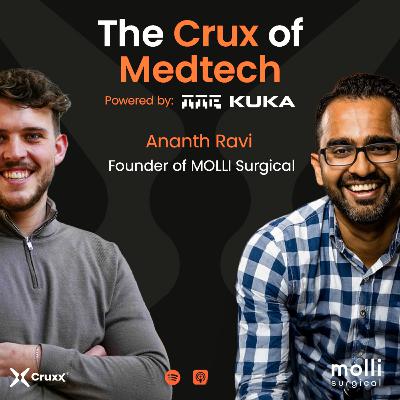
In this episode of the Cruxx of MedTech podcast, host Henry Norton sits down with Ananth Ravi, founder of MOLLI Surgical and former medical physicist at the University of Toronto, to unpack the full journey from hospital research lab to acquisition by Stryker.Ananth shared the origin story behind MOLLI, a GPS-guided surgical system that replaced painful wire localisation with a tiny radioactive seed and sub-millimeter precision tracking. What started as a side project became a commercial product after inbound interest from physicians made it clear he had something worth pursuing.He discussed the challenges of spinning technology out of an academic institution, navigating FDA clearance with no regulatory background, and rebuilding a sales organisation after a painful first attempt.Ananth also opened up about the acquisition process itself: why Stryker's BD team stood out by actually showing up to watch cases in the OR, how he managed a bittersweet decision with his co-founder and investors, and what it felt like to communicate the news to a team facing uncertain futures.Key Topics:Ananth's path from medical physicist to medtech founderSpinning IP out of Sunnybrook and structuring university partnershipsNavigating FDA submissions as a first-time founderRestructuring a failing sales org around outcomes, not activityWhat made Stryker's BD approach different from other acquirersManaging team communication during an acquisitionFinding purpose and pace after a successful exitRelated Insights:The "regret framework" for making high-stakes founder decisionsWhy one cornerstone investor beats a crowded cap tableThe case against putting strategics on your cap table too earlyConsultants should check your work, not do it for youBuilding for profitability gives you optionality over building for exitCore Challenges:MOLLI replaced a painful, time-consuming wire localisation procedure with a tiny implantable marker and a digital GPS system, improving precision, patient experience, and hospital throughput. Scaling that technology required learning FDA submissions from scratch, restructuring a sales team mid-flight, and building a culture where smart people were trusted to make mistakes and learn fast.Founders face pressure to optimise for exit, but Ananth and his team built for profitability and optionality, which ultimately made the Stryker acquisition possible on their terms. For founders weighing similar decisions, his advice: keep talking to strategics, stay authentic about your limitations, and remember that the team who shows up and watches cases is the one who truly understands your value.🎧 Tune in now to hear how one founder went from tenured professor to Stryker acquisition, and why he's already back building again.The Crux of MedTech podcast is brought to you by Cruxx, a specialist surgical robotics recruitment agency. To learn more about Cruxx, click here.A big thank you to our sponsors on this season of the podcast; TTP plc With a 35-year track record, TTP excels in turning innovative ideas into market-ready solutions. Their team of 300+ experts deliver breakthrough solutions in areas ranging from endoluminal robotics and navigation systems to ultrasound imaging. Whether you're a startup or a multinational, TTP plc can accelerate your development with the latest technologies. Learn more at TTP.com&KUKA is a global leader in robotics with over 25 years of experience partnering with medtech companies on their journey to market. Their reputation is built on robust technology, reliability and long term collaboration and being more than just a supplier.KUKA provides trusted support throughout the product life cycle, from development to integration and beyond. Find out more at kuka.com/healthcare
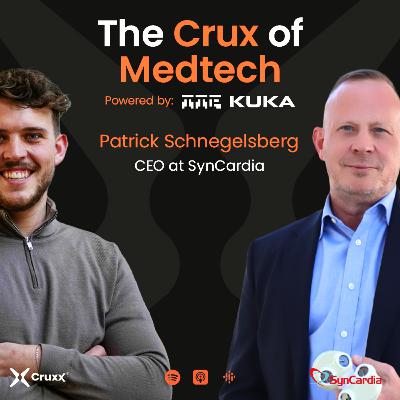
In this Crux of Medtech crossover with the new Crux of Cardio series, Jordan and Henry sit down with Jack, his wife and caregiver Rocky, and SynCardia CEO Patrick Schnegelsberg to explore what a total artificial heart really means at the bedside and in the boardroom.Key Topics- Jack’s journey from misdiagnosis to ejection fraction of five to ten percent- ICU course, ECMO, cardiac arrest and the decision point for total artificial heart- Rocky’s lived reality as caregiver through transplant listing and repeated setbacks- How SynCardia’s pneumatic total artificial heart works as a bridge to transplant- Patient selection trade-offs between LVADs, ECMO, bivads and total artificial heart- Why SynCardia is now pursuing a fully implantable “Emperor” artificial heart platformRelated Insights- Emotional and cognitive load when a clinician becomes a critical care patient- The impact of early education and MCS teams on acceptance of advanced devices- How device simplicity and Frank–Starling physiology shape SynCardia’s design choices- Awareness gaps among cardiology and surgical teams around total artificial heart options- The role of transplant center experience and volume in total artificial heart outcomes- Long-term vision for artificial hearts as a true alternative to donor transplantation.Core Challenges- Recognising when a patient has moved beyond LVAD and inotrope support- Balancing end-organ failure risk against surgical risk and infection concerns- Managing caregiver stress during long ICU stays and on–off transplant listing- Overcoming historical perceptions and “old tech” stigma around artificial hearts- Funding and scaling class III cardiovascular hardware in a niche but severe populationTune in now to hear how total artificial hearts are reshaping advanced heart failure care, from one family’s story at the bedside to SynCardia’s plans for fully implantable devices.The Crux of MedTech podcast is brought to you by Cruxx, a specialist surgical robotics recruitment agency. To learn more about Cruxx, click here.A big thank you to our sponsors on this season of the podcast; TTP plc With a 35-year track record, TTP excels in turning innovative ideas into market-ready solutions. Their team of 300+ experts deliver breakthrough solutions in areas ranging from endoluminal robotics and navigation systems to ultrasound imaging. Whether you're a startup or a multinational, TTP plc can accelerate your development with the latest technologies. Learn more at TTP.com&KUKA is a global leader in robotics with over 25 years of experience partnering with medtech companies on their journey to market. Their reputation is built on robust technology, reliability and long term collaboration and being more than just a supplier.KUKA provides trusted support throughout the product life cycle, from development to integration and beyond. Find out more at kuka.com/healthcare
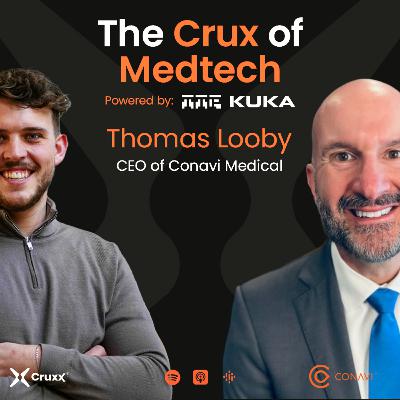
In this episode of the Crux of Medtech Henry is joined by Thomas Looby, CEO of Conavi Medical.Thomas breaks down why combining IVUS + OCT in a single catheter could change coronary interventions and how the team is pacing toward a Q3 2025 510(k) with a measured “crawl, walk, run” launch plan.Expect candid insight on evidence, pricing, commercialisation, and strategic exit logicKey TopicsThe unmet need in PCI imaging and why single-modality tools leave blind spots.Engineering IVUS + OCT into one catheter and testing lessons from v1 to next-gen.Clinical evidence momentum: meta-analysis signals ~46% reduction in post-procedure mortality and ~52% less stent thrombosis.Regulatory path: pre-sub complete; targeting a Q3 2025 510(k).Commercial strategy: price-neutral entry, razor/razor-blade model, and a staged hospital rollout.Capital story: public listing via Titan assets and a $20M raise led largely by U.S. investors.Exit thinking: platform fit with strategics that currently have either IVUS or OCT Kanavi holds both.Related InsightsMission-driven teams as a magnet for top engineers and why it mattered here.Don’t over-index on KOLs: early adopters forgive product “sins” that mainstream users won’t.Market development should run in parallel with R&D, not after it.Canada-born tech, U.S.-centric commercialisation and how ecosystems and manufacturing partners align.Core ChallengesDriving COGS down to single-modality parity at volume (supply chain, manufacturing).Building broad market awareness beyond early KOL enthusiasm.Navigating regulatory milestones cleanly to stay on a Q3 2025 filing cadence.Competing with entrenched portfolios (Abbott, Philips, Boston) that bundle cath lab solutions.Tune in now to learn how dual-modality imaging could reset outcomes, economics, and adoption in the cath lab.The Crux of MedTech podcast is brought to you by Cruxx, a specialist surgical robotics recruitment agency. To learn more about Cruxx, click here.A big thank you to our sponsors on this season of the podcast; TTP plc With a 35-year track record, TTP excels in turning innovative ideas into market-ready solutions. Their team of 300+ experts deliver breakthrough solutions in areas ranging from endoluminal robotics and navigation systems to ultrasound imaging. Whether you're a startup or a multinational, TTP plc can accelerate your development with the latest technologies. Learn more at TTP.com&KUKA is a global leader in robotics with over 25 years of experience partnering with medtech companies on their journey to market. Their reputation is built on robust technology, reliability and long term collaboration and being more than just a supplier.KUKA provides trusted support throughout the product life cycle, from development to integration and beyond. Find out more at kuka.com/healthcare

Comments

Download from Google Play

Download from App Store
 United States