


 Claim Ownership
Martini Judaism
Subscribed: 8Played: 60
Subscribe

© 2023
Description
For those who want to be shaken and stirred.
Join one of American Judaism’s most prolific thought leaders and his special guests as they talk about the current state of Judaism, American culture, politics, religion, and spirituality.
65 Episodes
Reverse
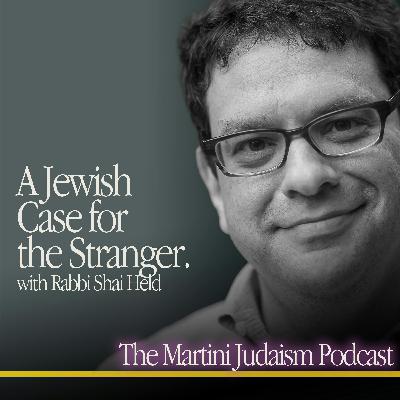
What does the Torah actually say about immigrants — and what does it demand of us?
Rabbi Jeff Salkin sits down with one of the Jewish world's leading theologians, Rabbi Shai Held, to explore the Bible's most repeated commandment: love the ger — the stranger, the sojourner, the immigrant. Held argues that "immigrant" is not just the most accurate translation of ger, it's the most morally urgent one. When the Torah says to love the immigrant, it's making a claim on us every single day.
Together, Salkin and Held trace the Torah's radical counter-vision to Egypt — a society built not on cruelty and power, but on empathy and care for the vulnerable. They explore what it means to imitate God by loving those whom God loves, why the stories of Abraham, Sarah, and Lot are really lessons in empathy, and how the Holocaust's legacy shapes the Jewish moral imagination.
And they end with the question Rabbi Held says belongs on the doorpost of every house of worship in the world: It's not whether you believe in God. It's whom your God loves.
Rabbi Shai Held is President, Dean, and Chair of Jewish Thought at the Hadar Institute, which he co-founded. His most recent book is Judaism Is About Love: Recovering the Heart of Jewish Life.
Learn more about your ad choices. Visit megaphone.fm/adchoices
On Purim, Jews read Esther — a story of survival in the face of annihilation.
This episode connects that ancient warning to today’s confrontation with Iran. Is this war, self-defense, or tragic necessity? We explore Amalek, radical evil, human rights, and what it means to hold both the sword and the prayer book in a dangerous world.
Learn more about your ad choices. Visit megaphone.fm/adchoices

Michael Kimmel’s Playmakers reveals how Jewish immigrants built America’s toy industry—and reshaped modern childhood. From teddy bears to superheroes, they turned outsider grit into imagination, comfort, and cultural revolution. This isn’t just toy history; it’s a story of identity, reinvention, and why play became one of America’s most powerful ideas.
Learn more about your ad choices. Visit megaphone.fm/adchoices
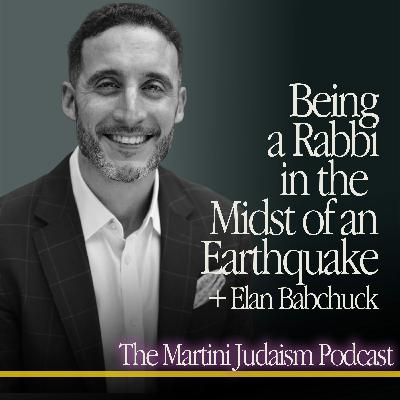
As the ground shifts beneath our feet, where is our faith?
For your consideration: Rabbi Elan Babchuck. He is the founding director of Glean Network, an incubator for faith-rooted innovation; the executive vice president of the National Jewish Center for Learning and Leadership (CLAL); Fellow with the Faith & Media initiative advocating for improved representation of faith in media; and a nationally recognized commentator on religion, technology, and the evolving needs of communities today.
And what ahs this to do with earthquakes?
In 1837, there was a devastating earthquake in northern Israel that caused major damage to the holy city of Tiberias. Rabbi Babchuck’s great-great-great grandfather was a rabbi in Tiberias at the time, and he had to rebuild a community that had quite literally been leveled.
That experience found its way into Elan’s family story, and it became his own job description.
Because that is what Rabbi Babchuck does now: he teaches us how to live Jewishly in the midst of earthquakes.
Learn more about your ad choices. Visit megaphone.fm/adchoices

When did Jews start covering their heads? Certainly not in the Bible. The practice emerged during rabbinic times, and not everywhere.
Learn more about your ad choices. Visit megaphone.fm/adchoices
 1
1Why Do Jewish? Love, Obligation, and the Courage to Show Up
Imagine a familiar conversation in any household across the world.
“Do we have to go to the school concert tonight?”There’s no law. No statute. No external requirement.
And yet—you go.
Why? Because love creates obligation. Not the other way around.
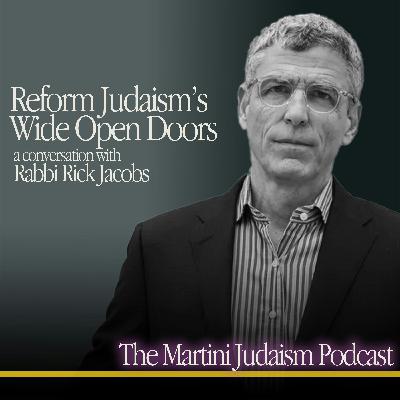
That deceptively simple truth sits at the heart of my conversation with Rabbi Rick Jacobs, president of the Union for Reform Judaism, on this episode of Martini Judaism.
For generations, Jews have argued about obligation. Traditional Jews often point to halacha—Jewish law—as the source of Jewish responsibility. Reform Jews, by contrast, have insisted on autonomy, conscience, and choice. So the question remains stubborn and unavoidable: Why do Jewish at all?
Rabbi Jacobs and I explore that question through the lens of relationship—an idea shared by three of the thinkers who shaped us both: Martin Buber, Franz Rosenzweig, and Eugene Borowitz. Each, in his own way, taught that Jewish obligation does not descend from heaven like a decree. It rises from love, belonging, and covenant.
Buber taught that mitzvot come alive when they are responses to encounter.Rosenzweig insisted that commandment follows love, not the other way around.Borowitz reminded Reform Jews that autonomy without commitment is hollow—and that obligation grows out of relationship with God, tradition, and the Jewish people.
You don’t attend your child’s concert because you signed a contract.You go because you love your child—and because love binds.
Judaism works the same way.
This episode isn’t about guilt or coercion. It’s about relationship. And about the quiet, demanding truth that love creates the strongest obligation of all.
Learn more about your ad choices. Visit megaphone.fm/adchoices
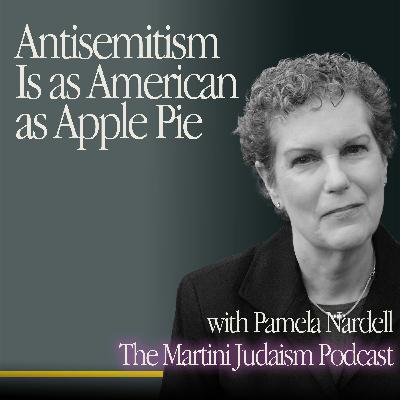
Historian Pamela Nadell joins us to confront an unsettling truth: antisemitism didn’t come to America—it was born here. In her powerful new book, Antisemitism: An American Tradition, Nadell traces how hatred of Jews took root in the New World, evolved with the nation itself, and continues to shape our politics, culture, and conscience.
Learn more about your ad choices. Visit megaphone.fm/adchoices
The Days of Awe are upon us. They always hit me with a familiar, bracing urgency: Look at your life. Consider your words, your choices. Where have you failed? Whom have you harmed? What will it take to begin again?
If we’re honest, most of us spend these days trying to clean up the usual messes: the casual slight, the simmering resentment, the careless word that cut deeper than we knew. We rehearse our regrets, and we whisper our promises to do better.
But once in a while, a life comes along that reminds us just how radical, how shattering, how possible teshuvah (repentance) really is.
That life belongs to Arno Michaelis. Check out our podcast with him.
Learn more about your ad choices. Visit megaphone.fm/adchoices

Former Obama speechwriter Sarah Hurwitz on faith, identity, and resilience.
What happens when a White House insider turns her attention to Jewish wisdom, identity, and survival in a turbulent age? Rabbi Jeff Salkin sits down with Sarah Hurwitz—former speechwriter for President Obama and First Lady Michelle Obama, and author of Here All Along and As a Jew—for a conversation that is sharp, soulful, and deeply relevant. Together they explore the challenges of antisemitism on campus, the tug-of-war over Israel, and why “cultural Judaism” isn’t enough. Hurwitz makes the case for reclaiming Jewish identity on our own terms—with humor, honesty, and hope.
Learn more about your ad choices. Visit megaphone.fm/adchoices

What if everything you think you know about the Scopes “Monkey Trial” is—well, a little off? Jeff Salkin sits down with Doug Mishkin—lawyer, singer-songwriter, and amateur Scopes trial historian—for a deep dive into Inherit the Wind, the 1960 Hollywood classic that shaped generations of assumptions about religion and science.
They explore what the film gets right, what it gets deeply wrong, and what the real Clarence Darrow, William Jennings Bryan, and John Scopes might say about today’s culture wars. From evolution to eugenics, liberalism to scripture, this episode reveals how a century-old trial still echoes in debates over education, parental rights, and who gets to define truth.
Learn more about your ad choices. Visit megaphone.fm/adchoices

The late Arthur Hertzberg was one of American Judaism’s greatest rabbis and intellectual leaders.
But he did not start out that way.
More than 70 years ago, he was a rabbinical student at the Jewish Theological Seminary of America. One of his teachers was Mordecai Kaplan, one of American Judaism’s most seminal thinkers and rabbis, and the founder of the Reconstructionist movement.
The day came for young Arthur to deliver a trial sermon before the student body and the faculty. Afterward, Rabbi Kaplan lambasted Arthur for the ideas that he had presented.
“But, Rabbi Kaplan,” Arthur said. “You, yourself, said those things just a few days ago.”
To which Rabbi Kaplan responded: “Ah, yes. But, Arthur, I have changed since then.”
Let's talk about what it means to change one's mind — even ever so slightly.
Learn more about your ad choices. Visit megaphone.fm/adchoices
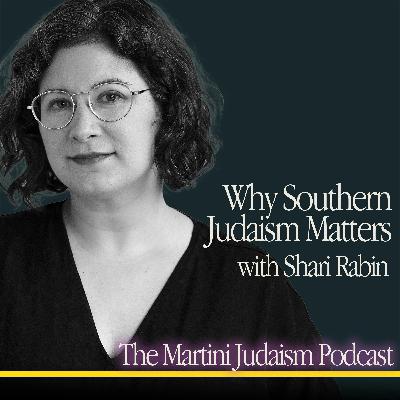
As we mark Jewish Heritage Month, how do we embrace the heritage of Southern Jews?
Ask Shari Rabin, one of the rising stars of Jewish studies in America. She is associate professor of Jewish studies, religion, and history and chair of Jewish studies at Oberlin College. This "born-in-Milwaukee-moved-to-Atlanta-after-her-bat-mitzvah" woman has just written a new book -- "The Jewish South: An American History." I could not put it down, and you will love our conversation.
Learn more about your ad choices. Visit megaphone.fm/adchoices
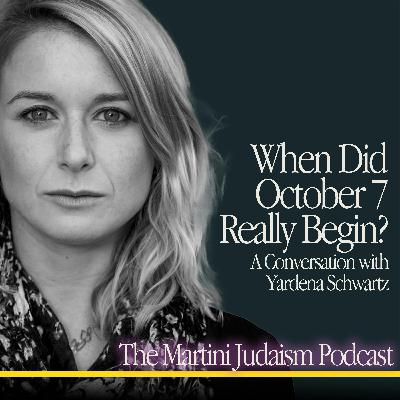
Trigger warning: this episode contains references to sexual violence.
October 7 reminds Jews of what happened in Hebron on August 24, 1929. In her book "Ghosts of a Holy War: The 1929 Massacre in Palestine That Ignited the Arab-Israeli Conflict," Yardena writes:
On that morning, 3,000 Muslim men armed with swords, axes, and daggers marched through the Jewish Quarter of Hebron. They went from house to house, raping, stabbing, torturing, and in some cases castrating and burning alive their unarmed Jewish victims...Infants were slaughtered in their mothers’ arms. Children watched as their parents were butchered by their neighbors. Women and teenage girls were raped. Elderly rabbis and yeshiva students were mutilated. Sixty-seven Jewish men, women, and children were murdered, and dozens more wounded...The British High Commissioner of Mandatory Palestine, Sir John Chancellor, wrote in his diary, “I do not think history records many worse horrors in the last few hundred years.”
Those attacks were not limited to Hebron, the most ancient place of Jewish settlement in the land of Israel, where Abraham purchased the cave of Machpela as a burial place. Those attacks were in Jerusalem and spread to other cities, as well.
Why should these stories matter?
Because, to coin a phrase: what happened in Hebron has not stayed in Hebron.
Learn more about your ad choices. Visit megaphone.fm/adchoices
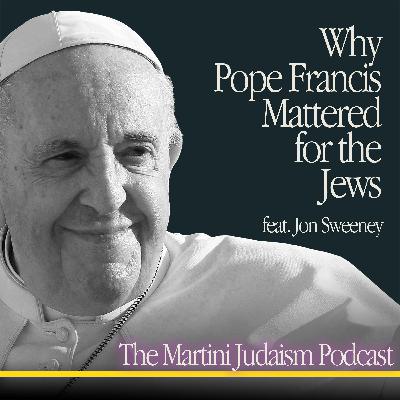
Why does the death of the Pope touch me, as a Jew?
I cannot think of a Pope who had the depth of relationships with the Jewish community as this Pope had enjoyed. As Cardinal Jorge Mario Bergoglio, he had a close working relationship with the Argentinian Jewish community. His response to the 1994 bombing of the AMIA center in Buenos Aires -- until 2001, the most lethal terrorist attack in the Western Hemisphere -- was notable for its compassion. He had visited synagogues in Argentina.
Moreover, he collaborated with Rabbi Abraham Skorka, the rector of the Seminario Rabínico Latinoamericano, in the creation of Sobre El Cielo Y La Tierra ("On Heaven and Earth: Pope Francis on Faith, Family, and the Church in the Twenty-first Century"), which is the transcript of a series of conversations between the two men. For a while, it was Amazon's best selling religion book.
And yet, despite those warm relationships with the Jews, Pope Francis could be inconsistent. In August, 2021, he preached that the Torah “does not offer the fulfillment of the promise because it is not capable of being able to fulfill it." This was classic supercessionism. Judaism was the "old covenant" -- the "Old Testament" -- Covenant 1.0, the beta version. Christianity was Covenant 2.0 -- replacing Judaism.
So, on the one hand: deep love and respect. On the other hand: some theological issues with Judaism.
Learn more about your ad choices. Visit megaphone.fm/adchoices
I was talking with a Roman Catholic-raised friend who no longer practices the religion of his youth. At a certain point in the conversation, he snorted about "cafeteria Catholics," which sardonically describes those who adhere to parts of Catholic teachings or practice certain rituals, but dissent from others.
It made me realize I am a "cafeteria Jew."
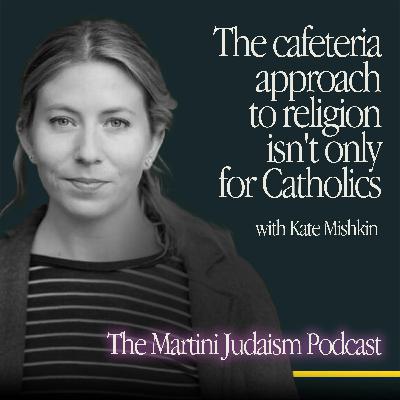
Which brings me to Kate Mishkin, the creator of a compelling podcast with an enviable pun as its title, "Shofar, So Good."
In her podcast, she engages in thoughtful, gutsy conversations about weighty subjects like prayer, death and forgiveness.
In our "Martini Judaism" podcast interview, we talk about her childhood growing up with interfaith parents and in the religion of what people call "Jewish values." And we take a deep dive into what those values might be.
We also talk about her life as a journalist, living and working in a variety of places, but especially in Charleston, West Virginia, which is not exactly the Tel Aviv (or even Haifa) of America, but a place where she found herself Jewishly, largely through the help of a remarkable rabbi in that community.
Kate hit me with a metaphor I never considered before. She described herself as walking along the beaches of the world with a metal detector, sifting through the sand searching for Jewish objects and ideas. She knows there are many beaches in the world and a whole lot of sand. Those objects and ideas are rarely just below the surface, but found several inches deeper. It means there is a lot of work to do.
This is a metaphor for Judaism I happen to love. We once might have imagined that Judaism comes to us as a completely wrapped package, and all we have to do is open it up and there it is — a full-blown identity. Not anymore.
Through this lens, Judaism can be viewed as a collection of choices we make. Almost every day, we curate our Jewish identities and make meaning of them. This means certain things get in — say, Shabbat, Passover and social justice — but other things wind up on the back burner, maybe keeping kosher or building a sukkah.
Some might cynically call that "cafeteria Judaism," and they would not be wrong.
The truth is, I don't know any Jew, even the seemingly most pious, who takes on the entirety of the tradition. We are always picking and choosing. You could also call it Israeli hotel breakfast buffet Judaism — where you walk through the line, see what is available, see what looks good, take it back to your table and enjoy it.
But the most important thing is these choices are not static. Just as you can try many different foods over a multiday stay at a hotel, you might try many different things over the course of a Jewish life.
It all depends on the attitude with which you go through the buffet, or travel down Judaism Street or walk along the beach looking for treasures in the sand.
As for me, my attitude has always been curiosity, openness and a willingness to give my tradition the benefit of the doubt.
Listen to Kate Mishkin, and learn from her.
Learn more about your ad choices. Visit megaphone.fm/adchoices

My friend, Vanessa Hidary.
Vanessa Hidary is a cool person. She is a spoken word artist, an educator, and an advocate. She is a trail-blazer. Her work has had a profound impact on both the Jewish community and beyond. Recently, the ADL honored her as a "Hero Against Hate."
Vanessa embodies the bravery of Queen Esther, the pride of Mordecai, and a little bit of Vashti's attitude thrown in for good measure. She is a one woman megillah.
How did we first meet? We were at a Jewish conference together – the Conversation, which was convened by the veteran Jewish journalist Gary Rosenblatt. At that conference, she did a performance of her signature poem, "Hebrew Mamita." It was a celebration of her diverse, proud, take-no-prisoners Jewish identity – as a daughter of the Syrian-Jewish diaspora. She challenged Jewish stereotypes.
I was overwhelmed.
“Hebrew Mamita” became a classic. Vanessa performed it in New York City venues, and that was how she became a pioneering voice Jewish identity in the slam poetry scene.
"Hebrew Mamita" was featured on HBO’s Def Poetry Jam, where she openly discussed her Jewish heritage. She founded the Kaleidoscope Project, a narrative-arts initiative that amplifies the stories of Jews of color, Sephardic and Mizrachi Jews, and those with interfaith experiences.
In the podcast, we talk about our responses to the murder of the Bibas children; what it means to be a Jew in the arts community, after October 7; and what it means to be politically homeless, after October 7.
And, we talked about her spoken-word piece, "Bad Jew."
Learn more about your ad choices. Visit megaphone.fm/adchoices

What do Batman and Superman have to do with Jewish identity?
Other than the fact that their creators were Jews: Batman by Bob Kane, and Superman by Jerry Siegel and Joe Shuster?
It is more than that. It is about having multiple identities.
About a decade ago, I interviewed for a rabbinical position. A past president of the synagogue asked: "Rabbi, are you a Jew first, or an American?”
This was my answer.
"With all due respect: If that question could wear clothing, it would be a Nehru jacket. It seems so out of fashion right now. I live my life fully, both as an American and as a Jew. And I suspect that most American Jews would say the same thing. They feel no tension between their American identities, and their Jewish identities."
The (admittedly edgy) answer must have satisfied him. He nodded; I got the job; we became good friends.
But, what was this gentleman really asking me?
He was resurrecting a classic Jewish accusation -- that Jews have dual loyalty -- to their Jewish identity, and to the places that they live. It is a suspicion as old as Pharaoh in the book of Exodus.
And, what was I doing? I was playfully suggesting that you can have both identities -- often, simultaneously.
It is not only possible to have dual loyalties. It is necessary. That is the subject of our podcast interview with Rabbi Nolan Lebovitz. He is the senior rabbi of Valley Beth Shalom, in Encino, California – one of the most prominent synagogues in America. His new book: "The Case for Dual Loyalty: Healing the Divided Soul of American Jews."
Learn more about your ad choices. Visit megaphone.fm/adchoices
"If God lived in our neighborhood, we'd throw stones through His [sic] windows."
I do not know who originally said that, though I think that the original was in Yiddish.
But, it's true.
And, if you were to ask me whether Jewish worship has a "design flaw," I would say that this is it: almost nowhere in our services do we get to yell at God, and to protest God's actions and in-actions.
We want our worship experiences to be uplifting and inspirational. But, we are missing out on the emotional richness and depth of the religious experience. Yes – joy, gratitude, uplift. But, anger and questioning are part of any healthy relationship. Where is that in our prayer experience?
This is a crying shame -- and I emphasize "crying."
Because crying out at God, and yelling at God, and protesting God is a distinctive part of Judaism and Jewish texts. It goes back to Abraham, who protested God's planned destruction of Sodom and Gomorrah; Moses, who protested God's threatened destruction of the Israelites at the incident of the Golden Calf; Job, who demanded justice from God; the author of the Psalms, who has a lot to say about God's actions and silence -- all the way to Tevye ("I know we are your chosen people. But, once in a while, can't You choose someone else?") to Elie Wiesel....
In fact, that is the original meaning of the term "chutzpah." It means audacity -- against, and with, God.
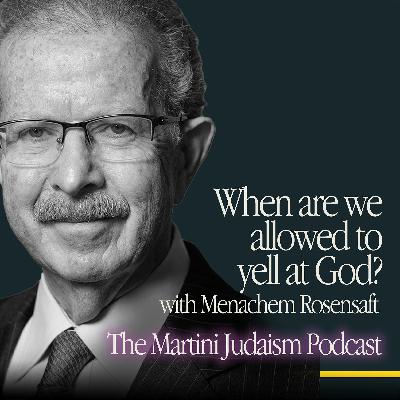
This is the essential, sacred lesson of a new, spectacular book by Menachem Rosensaft -- "Burning Psalms: Confronting Adonai after Auschwitz.” Menachem is an attorney in New York; the founding chairman of the International Network of Children of Jewish Holocaust Survivors, and most notably, had been active in the early stages of the Israeli-Palestinian peace process.
Learn more about your ad choices. Visit megaphone.fm/adchoices
Remember the 10th commandment?
"Thou shalt not covet"?
This past week, many preachers violated that commandment.
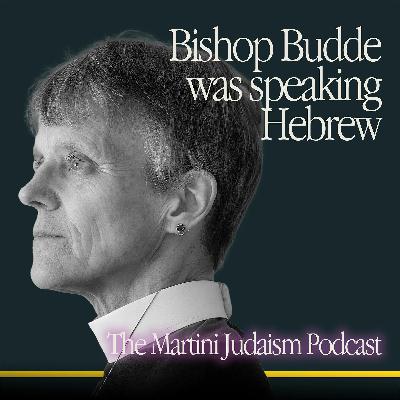
They were coveting the sermon Bishop Mariann Edgar Budde delivered at the National Cathedral during a service the day after President Donald Trump's inauguration, in which she pleaded with Trump to show mercy to the most vulnerable among us.
(Speaking Jewish right now: If I had been blessed with the opportunity to address the president, I would not have used the word "mercy." I would have asked him to show compassion and to do justice. But that's me).
Many of my colleagues and friends have been debating: Was the bishop appropriate? Was her sermon in good taste? Did she publicly shame and humiliate the president?
I have been struggling with all that as well, and now I think she was totally spot on. And not only because I agreed with her.
Sure, she made President Trump a little uncomfortable.
Deal with it, Mr. President. That's often what sermons are about. As my colleague and friend Rabbi Rick Jacobs notes: "The job of a religious leader is not to tell those in the pews — whether the usual parishioners or their country’s leaders — what they want to hear. Rather, the job requires clergy to speak the truth of their tradition as they understand it."
Or, put differently, sometimes it is the goal of a sermon to comfort the afflicted and afflict the comfortable. To "shake and stir" them.
You want to feel all good and comfortable? Go to a spa.
Learn more about your ad choices. Visit megaphone.fm/adchoices
It happened exactly four years ago.
I am speaking of January 6, 2021 -- the attack on the US Capitol Building by supporters of Donald Trump – claiming that President Biden had stolen the election. It was, to quote Bill Kristol, our national day of shame. It was, to borrow FDR’s iconic phrase, a day that will live in infamy.
There were many things that we cannot unsee, and that we cannot unhear.
Among the rioters that stormed the Senate chamber was a man who provided us with one of the most memorable and disturbing images of that dark day in American history. A bare-chested, self-styled “shaman” named Jacob Chansley, was wearing a horned helmet. At a certain moment, he removed that helmet, and he led the group in prayer:
"Thank you heavenly father for gracing us with this opportunity… to allow us to exercise our rights, to allow us to send a message to all the tyrants, the communists, and the globalists, that this is our nation, not theirs. We will not allow America, the American way of the United States of America to go down… In Christ's holy name, we pray."
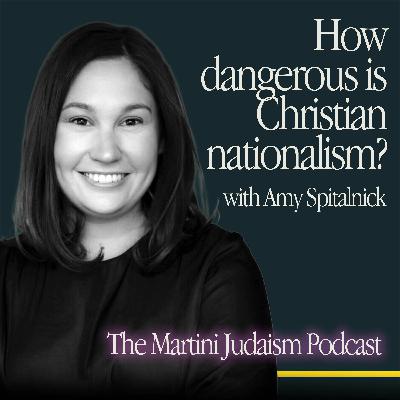
That was a demonstration of Christian nationalism -- the subject of our podcast with Amy Spitalnick, the CEO of the Jewish Council for Public Affairs (JCPA) -- a powerful national voice on issues of democracy, antisemitism, extremism, and hate.
In our conversation, you will learn that Christian nationalism poses three threats -- to America, to Jews and other religious minorities, and even to Christianity itself. (Many Christians themselves recognize this; check out this interview with Amanda Tyler, author of "How To End Christian Nationalism.")
Learn more about your ad choices. Visit megaphone.fm/adchoices

Comments

Download from Google Play

Download from App Store
 United States