


 Claim Ownership
Sustainable Clinical Medicine with The Charting Coach
Subscribed: 28Played: 1,708
Subscribe

© 2026 2024
Description
On the Sustainable Clinical Medicine Podcast we are capturing the stories of physicians who have made clinical medicine sustainable in their own lives, including their before and after stories. I will also interview coaches who are helping Physicians create sustainable clinical medicine for themselves.
162 Episodes
Reverse
Burnout isn’t just about working too much, it’s about working in a system that quietly expects more than is sustainable.In this episode on reducing clinician burnout, Dr. Lillian Emlet shares what she’s seen from both sides, as a critical care physician and leadership coach. From early-career clinicians running at 110 percent to experienced leaders carrying invisible pressure, this conversation unpacks why burnout shows up so often, and why it doesn’t go away on its own.
Here are 3 key takeaways from this episode:
1. When life gets hard, self-care goes up, not down. Most people abandon their routines when things get overwhelming. Dr. Emlet's counterintuitive lesson, learned through burnout, a pandemic, divorce, and single motherhood, is that the harder things get, the more intentional you need to be about caring for yourself. Working out two hours a day during COVID wasn't indulgent — it was survival.
2. Coaching isn't just for executives, and it doesn't have to be forever. For too long, coaching has been reserved for physician and nurse leaders at the top. Dr. Emlet argues that front-line clinicians of every profession deserve that support too, especially during major transitions. And it doesn't have to be a huge commitment — starting weekly, then scaling back to monthly maintenance is a completely sustainable model.
3. You have more choice than you think, at every level. Whether you're a burnt-out resident struggling to make it to the pickup line or a new chief who just inherited a calendar packed with meetings that were never really yours, the principle is the same: step back, get curious, and ask what actually needs to be there. You don't have to accept the life or role that was handed to you — you get to shape it.
Timestamps:
1:00 — Starting a career at 110%: two specialties, moonlighting, and the first burnout
3:00 — The pandemic turning point: COVID unit, divorce, and a sick mom all at once
8:00 — Has teaching wellbeing skills earlier actually prevented burnout in trainees?
11:00 — Finding her coach: how a podcast search changed everything
17:00 — The two flavors of leadership: titled vs. self-leadership
20:00 — Stepping into a new role: why your predecessor's calendar isn't yours
Meet Dr. Lillian Emlet:Dr. Lillian Emlet is a critical care and emergency physician, professor, and founder of Transforming Healthcare Coaching®. After 20 years in academic medicine, she combined her clinical expertise with leadership and wellbeing coaching to help healthcare professionals at every level build sustainable, thriving careers. Her work is grounded in emotional intelligence, cognitive science, and energy leadership, transforming healthcare from the inside out, one person at a time.
Connect with Dr. Lillian Emlet:
🌐 transforminghealthcarecoaching.com
📧 hello@transforminghealthcarecoaching.com
🎙️ Podcast: Transforming Healthcare Coaching
💼 LinkedIn: Lillian Liang Emlet
Would you like to view a transcript of this episode? Click Here
**** Charting Champions is a premiere, lifetime access Physician only program that is helping Physicians get home with today's work done. All the proven tools, support and community you need to create time for your life outside of medicine.
Learn more at https://www.chartingcoach.ca
**** Enjoying this podcast? Please share it with someone who would benefit. Also, don’t forget to hit “follow” so you get all the new episodes as soon as they are released.
**** Come hang out with me on Facebook or Instagram. Follow me @chartingcoach to get more practical tools to help you create sustainable clinical medicine in your life.
**** Questions? Comments? Want to share how this podcast has helped you? Shoot me an email at admin@reachcareercoaching.ca. I would love to hear from you.
If your EMR feels like it’s adding to your workload instead of reducing it, this episode will feel very familiar.
In this conversation, Sarah Smith sits down with healthcare IT and analytics consultant Lori Runion to explore why clinician burnout is often driven by systems, not individuals, and what is actually working to fix it.
From large-scale virtual scribe programs to EMR workflow optimization and predictive staffing, this episode looks at the operational side of burnout and how healthcare organizations can reduce friction, improve efficiency, and give clinicians their time back.
What you’ll learn in this episode:
Why EMRs often increase after-hours work and frustration
How a 200-physician virtual scribe program was implemented
The difference between human scribes and emerging AI documentation tools
Practical ways to reduce clicks and improve EMR workflows
How predictive analytics can support staffing and patient demand
Why burnout is a systems problem, not a personal failure
Episode breakdown:
01:57 Why EMRs Are Driving Clinician Burnout 04:08 When Work Follows You Home 06:24 Inside a Large-Scale Virtual Scribe Program 10:35 Human Scribes vs Ambient AI 13:27 Using Data to Predict Patient Demand 18:53 Predictive Staffing in Practice 22:50 Fixing EMR Workflow Friction 28:31 Burnout as a Systems Problem 29:47 Managing the Patient Inbox 33:15 Reducing Clicks and Documentation Load
Key Takeaways:
1. Burnout is a systems failure, not a clinician failure. The EMR turned documentation into an after-hours expectation. Fix the workflow, not the person.
2. The data exists and now it's time to use it. Two decades of electronic records are sitting largely untapped. AI finally gives healthcare the tools to act on it predictively, not reactively.
3. You can optimize your EMR without waiting for IT. Pick lists, smart phrases, and a few hours of upfront setup can return significant time. Start small, collaborate with colleagues, and let it compound.
Meet Lori Runion:
Lori Runion is a healthcare technology and transformation leader with more than 20 years of experience improving how care is delivered and documented. At Community Health Network, she led the clinical informatics team through a comprehensive, two-year Epic EHR implementation and spearheaded a virtual scribe program that scaled to over 200 remote scribes, directly reducing provider burnout and helping clinicians reclaim joy in their work. Driven by a passion for supporting healthcare workers, Lori has seen firsthand how the right tools and systems can transform both patient outcomes and clinician well-being. Today, she serves as a Portfolio Leader at Resultant, partnering with healthcare organizations as the day-to-day leader on complex initiatives and helping turn technology investments into meaningful, real-world results.
Outside of work, Lori enjoys planning her next international adventure and cheering on musical theatre performances and football games with her husband and three step-children.
Connect with Lori Runion:
LinkedIn: https://www.linkedin.com/in/lori-runion/
Instagram: https://www.instagram.com/lstone8
--------------
Would you like to view a transcript of this episode? Click Here.
**** Charting Champions is a premiere, lifetime access Physician only program that is helping Physicians get home with today's work done. All the proven tools, support and community you need to create time for your life outside of medicine.
Learn more at https://www.chartingcoach.ca
**** Enjoying this podcast? Please share it with someone who would benefit. Also, don’t forget to hit “follow” so you get all the new episodes as soon as they are released.**** Come hang out with me on Facebook or Instagram. Follow me @chartingcoach to get more practical tools to help you create sustainable clinical medicine in your life. **** Questions? Comments? Want to share how this podcast has helped you? Shoot me an email at admin@reachcareercoaching.ca. I would love to hear from you.
Welcome to another episode of the Sustainable Clinical Medicine Podcast!
Dr. Sadie Elisseou, a primary care physician in the US VA system in Boston, Harvard and Boston University educator, and trauma-informed care expert, discusses her path into medicine and how working with veterans led her to trauma-informed practice after noticing patients’ discomfort during routine exams. She explains trauma-informed care as creating physical and psychological safety through mindful nonverbal communication, transparent agendas, permission-seeking, and reducing power dynamics, with examples such as thyroid exams and avoiding phrases like “for me.” She highlights VA onboarding on military experience, notes higher ACE rates among volunteer-era veterans, and describes how staff behaviors and clinic environments shape patient stress. The conversation also covers clinician wellbeing and burnout prevention via self-care, team debriefing, boundaries, therapy access, and time-management strategies like scheduled breaks, batching tasks, finishing notes between visits, and structuring varied work roles.
Here are 3 key takeaways from this episode:
Trauma-Informed Care Creates Safety Through Small, Intentional Actions: Physical and psychological safety in healthcare settings comes from deliberate practices: positioning yourself at the patient's side (not behind them), asking permission before examinations, explaining what you're doing and why, ensuring clear exits, and avoiding phrases like "for me" that emphasize power dynamics. These don't take extra time but transform the patient experience.
Shifting from "What's Wrong With You?" to "What Happened to You?" This mindset shift moves from blaming difficult patient behaviors to approaching them with curiosity and compassion. When patients are agitated or angry, it's often rooted in pain or fear. Co-regulation techniques—modeling calm through your own presence and validating their experience—can help both you and the patient settle into a more productive interaction.
Preventing Burnout Requires Structural Self-Care and Intentional Boundaries: Sustainable practice isn't about luxury spa days—it's about taking mindful breaths between patients, batching tasks by day (clinic on Mondays, administrative work on Thursdays), finishing notes immediately after appointments, scheduling regular breaks throughout the month, and setting non-negotiable hard stops. Varied work schedules that incorporate teaching, research, or consulting can also prevent monotony and reignite passion for the work.
Meet Dr. Sadie Elisseou:
Sadie Elisseou, MD is a practicing physician, faculty at Harvard Medical School, and leading subject matter expert in trauma-informed care who teaches clinical healthcare professionals how to provide top-quality care to trauma survivors and consults for organizations that wish to cultivate wellness and help team members engage through stressful times.
Connect with Dr. Sadie Elisseou:
🌐 Website https://www.sadie-elisseou.com/
LinkedIn https://www.linkedin.com/in/sadie-elisseou/
--------------
Would you like to view a transcript of this episode? Click Here
**** Charting Champions is a premiere, lifetime access Physician only program that is helping Physicians get home with today's work done. All the proven tools, support and community you need to create time for your life outside of medicine.
Learn more at https://www.chartingcoach.ca
**** Enjoying this podcast? Please share it with someone who would benefit. Also, don’t forget to hit “follow” so you get all the new episodes as soon as they are released. **** Come hang out with me on Facebook or Instagram. Follow me @chartingcoach to get more practical tools to help you create sustainable clinical medicine in your life. **** Questions? Comments? Want to share how this podcast has helped you? Shoot me an email at admin@reachcareercoaching.ca. I would love to hear from you.
Welcome to another episode of the Sustainable Clinical Medicine Podcast!
The host and physician coach Dr. Karen Leitner discuss why the transition to new attending is often harder than training, marked by impostor feelings, shame about not knowing, and decision paralysis in clinical uncertainty. They compare systems in the US, Canada, and Australia, including practice ownership models, overhead, billing learning curves, and how lack of business training and negotiation skills can affect long-term earnings; they share an example of lost income due to paperwork capacity and not realizing support could be hired. They emphasize that regret is unhelpful, mistakes and bad outcomes can happen despite good intentions, and guilt should be replaced with compassion and connection by talking with trusted colleagues. They address burnout dynamics—skipping food, water, and bathroom breaks—advocating radical responsibility, analyzing the “math” of workload, small workflow fixes, and boundaries, including not relying on external praise. Leitner mentions her eight-week coaching program for women physicians.
Here are 3 key takeaways from this episode:
Being a new attending is a normal developmental milestone, not a sign of failure: Feeling overwhelmed, looking everything up, and comparing yourself to colleagues 20 years ahead is universal. The struggle isn't because you're unprepared—it's because no one prepares physicians for this transition. It can take 5-6 years to truly feel confident.
Self-compassion beats guilt when outcomes don't go as planned: When bad things happen to patients, guilt is the wrong emotion if you showed up with good intentions and made the best decision with available information. Replace self-punishment with compassion for both the patient and yourself—and reach out to trusted colleagues instead of isolating in shame.
Radical responsibility means protecting your time and energy—no one else will: No one is coming to save you from inbox overload, double-booked schedules, or skipping lunch. Taking care of yourself (eating, hydrating, setting boundaries) isn't selfish—it's essential for sustainable patient care. Learn to respect your own time before burnout forces you to leave medicine entirely.
Meet Dr. Karen Leitner:
Dr. Karen Leitner spends the bulk of her time helping women doctors recognize their amazingness and feel better in their lives (in addition to getting paid what they deserve.) She lives outside Boston< MA with her husband, her beloved mini goldendoodle Oscar, and three school-age daughters—and loves to travel, sing karaoke, and fight the patriarchy (preferably in that order).
Connect with Dr. Karen Leitner:
🌐 Website https://www.karenleitnermd.com/
Instagram https://www.instagram.com/karenleitnermd/
🌐 https://go.karenleitnermd.com/masterclass free class for women physicians looking for more time/less stress
--------------
Would you like to view a transcript of this episode? Click Here
**** Charting Champions is a premiere, lifetime access Physician only program that is helping Physicians get home with today's work done. All the proven tools, support and community you need to create time for your life outside of medicine.
Learn more at https://www.chartingcoach.ca
**** Enjoying this podcast? Please share it with someone who would benefit. Also, don’t forget to hit “follow” so you get all the new episodes as soon as they are released. **** Come hang out with me on Facebook or Instagram. Follow me @chartingcoach to get more practical tools to help you create sustainable clinical medicine in your life. **** Questions? Comments? Want to share how this podcast has helped you? Shoot me an email at admin@reachcareercoaching.ca. I would love to hear from you.
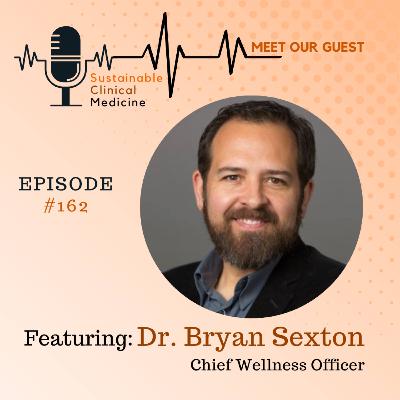
Welcome to another episode of the Sustainable Clinical Medicine Podcast!
Psychologist and psychometrician Dr. Bryan Sexton, Chief Wellness Officer at Duke Health Integrated Practice, discusses how his early quality-improvement work in Johns Hopkins ICUs revealed that high staff burnout undermined readiness for interventions like bloodstream infection reduction. He explains measuring burnout—especially emotional exhaustion—and how adding metrics like work-life integration and emotional recovery enables personalized wellbeing “profiles” and targeted interventions. Sexton describes evidence-based, one- to two-minute “bite-sized” tools (e.g., humor, awe, gratitude) designed for busy clinicians, and how Duke embedded these into continuing education with private feedback to boost engagement; a five-hour, eight-day CE program published in JAMA Network Open (Sept 2024) showed improvements, particularly for those struggling most. He outlines a 7-minute gratitude letter exercise, its research roots (Emmons, Seligman), wellbeing-informed leadership practices, and directs listeners to free tools at caws.dukehealth.org.
Here are 3 key takeaways from this episode:
Assess Wellbeing Before Adding New Tasks: Healthcare workers experiencing burnout lack the capacity to take on new initiatives. Organizations should measure emotional exhaustion and wellbeing readiness before implementing quality improvement programs or system changes. About one-third of ICUs weren't ready for innovation due to burnout - addressing wellbeing first is essential.
Bite-Sized Interventions Have Lasting Impact: Simple 7-10 minute wellbeing exercises (like writing a gratitude letter) can produce measurable improvements lasting 6-12 months. These micro-interventions are designed for busy healthcare workers who want something that takes minimal time, provides immediate relief, and creates long-term benefits. The effects actually continue improving over time rather than fading.
Wellbeing is Contagious - Both Ways: When 60% of a team engages in wellbeing interventions, even those who haven't participated show improvement through contagion effects. However, this works both ways - negativity and burnout also spread. Getting "enough" people engaged (not everyone) can create positive cultural shifts that lift the entire team.
Meet Dr. Bryan Sexton:
Bryan is the Chief Wellness Officer of Duke Health Integrated Practice and Director of the Duke Center for the Advancement of Well-being Science. After 30 years as a psychologist, psychometrician and investigator, he now works with leaders to assess and improve culture and work-force well-being. Bryan has conducted and published large studies and randomized controlled trials showing how to cause enduring improvements in the well-being of our workforce. He has authored over 100 peer reviewed publications, and his research instruments and well-being interventions have been translated and used in over 30 countries.
A perpetually recovering father of four, he enjoys running, using hand tools on wood, pickleball with friends, and hearing particularly good explanations of extremely complicated topics.
Don’t miss this enlightening conversation! 🎙️
Connect with Dr. Bryan Sexton:
🌐 Website https://caws.dukehealth.org/
LinkedIn https://www.linkedin.com/in/wellb/
--------------
Would you like to view a transcript of this episode? Click Here
**** Charting Champions is a premiere, lifetime access Physician only program that is helping Physicians get home with today's work done. All the proven tools, support and community you need to create time for your life outside of medicine.
Learn more at https://www.chartingcoach.ca
**** Enjoying this podcast? Please share it with someone who would benefit. Also, don’t forget to hit “follow” so you get all the new episodes as soon as they are released. **** Come hang out with me on Facebook or Instagram. Follow me @chartingcoach to get more practical tools to help you create sustainable clinical medicine in your life. **** Questions? Comments? Want to share how this podcast has helped you? Shoot me an email at admin@reachcareercoaching.ca. I would love to hear from you.
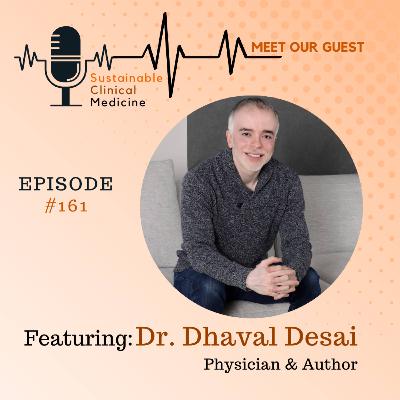
Welcome to another episode of the Sustainable Clinical Medicine Podcast!
Dr. Dhaval Desai, an Atlanta-based internal medicine–pediatrics physician and former hospitalist director, shares his path from studying economics and Spanish and teaching high school to training abroad and leading a 30-physician hospitalist group at Emory St. Joseph’s with a split clinical/administrative role. He describes how COVID-era pressures and a new baby contributed to burnout, sleep and mood issues, and seeking therapy and medication, later deepening his advocacy through a memoir and work with the Dr. Lorna Breen Heroes Foundation, noting about 400 U.S. physicians die by suicide annually. After being rejected for a chief wellbeing officer role and facing institutional limits on speaking publicly, he hired an executive coach and resigned, concluding loyalty can hold physicians back. He pivoted to direct primary care by purchasing a retiring physician’s practice, citing autonomy, fewer patients, and reduced bureaucracy as key to preventing burnout.
Here are 3 key takeaways from this episode:
Physician Loyalty Can Become a Career Trap: Dr. Desai learned that his loyalty to his institution, patients, and colleagues was actually holding him back from making necessary career changes. His executive coach's blunt advice - "Nobody is going to give a shit if you leave tomorrow" - proved true when he resigned. Healthcare systems will move on, regardless of individual contributions, and physicians need to recognize when loyalty is preventing them from pursuing fulfillment.
Institutional Control Compromises Professional Integrity: Large healthcare systems often restrict physicians' ability to speak freely and advocate for what they believe in, even on humanitarian issues. Dr. Desai's experience being called in after writing an op-ed about ICE raids in hospitals showed how "the firm" can force physicians to compromise their values. This institutional pressure, combined with being passed over for the Chief Wellbeing Officer position, revealed that systems may pigeonhole physicians regardless of their capabilities.
Direct Primary Care Offers Control and Prevents Burnout: Transitioning to a Direct Primary Care (DPC) model allowed Dr. Desai to reclaim control over his schedule, patient panel size, and work-life balance. By eliminating insurance billing bureaucracy and middle management, he now spends 30-60 minutes per patient visit instead of documenting for 6 hours daily. This autonomy - combined with ongoing therapy and medication - has eliminated the "dread of going to work" and allows him to pursue advocacy, media, and other passions without institutional gatekeeping.
Meet Dr. Dhaval Desai:
Dr. Dhaval Desai is a dual board-certified Internal Medicine and Pediatrics physician who transitioned from hospital leadership into Direct Primary Care to practice medicine with deeper connection and purpose. He is the author of "Burning Out on the COVID Front Lines..." and host of the podcast SEEN IN FULL, where he explores burnout, identity, advocacy, and the human experience in modern work and life.
Connect with Dr. Dhaval Densai:
🌐 Website https://dhavaldesaimd.com/
Instagram https://www.instagram.com/doctordesaimd/
--------------
Would you like to view a transcript of this episode? Click Here
**** Charting Champions is a premiere, lifetime access Physician only program that is helping Physicians get home with today's work done. All the proven tools, support and community you need to create time for your life outside of medicine.
Learn more at https://www.chartingcoach.ca
**** Enjoying this podcast? Please share it with someone who would benefit. Also, don’t forget to hit “follow” so you get all the new episodes as soon as they are released. **** Come hang out with me on Facebook or Instagram. Follow me @chartingcoach to get more practical tools to help you create sustainable clinical medicine in your life. **** Questions? Comments? Want to share how this podcast has helped you? Shoot me an email at admin@reachcareercoaching.ca. I would love to hear from you.
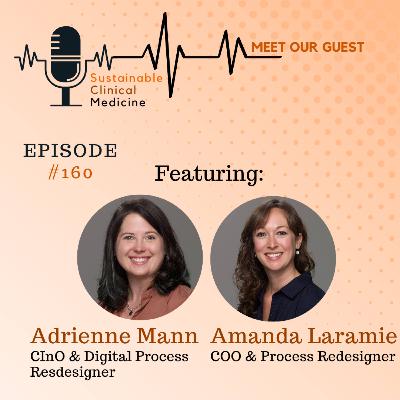
 1
1Welcome to another episode of the Sustainable Clinical Medicine Podcast!
Our host Dr. Sarah Smith interviews Coleman Associates staff Amanda Laramie and Chief Innovation Officer Adrienne Mann about how Coleman Associates helps healthcare clinics—especially community health centers—redesign care delivery through their Dramatic Performance Improvement (DPI) methodology. Adrienne describes how Coleman’s work in her Chicago community health center targeted goals such as cycle time under 30 minutes (from patient arrival to departure), no-show rate under 5%, and 100% real-time charting completion, leading to improved patient and staff satisfaction and reduced burnout.
They explain cycle time as a measure of organized care and patient experience, and discuss how patient visit tracking reveals bottlenecks, handoffs, and physical-layout issues that slow flow. They cover strategies to reduce no-shows, framing them as a sign of a broken relationship and an access problem; examples include mystery shopper calls to identify barriers like long hold times, easier cancellation processes, and proactive visit confirmation and preparation. They discuss role realignment and preparing for visits through team-based workflows, including the “sheep-shepherd model” where MAs or nurses shepherd clinic flow to protect clinician time, reduce interruptions, and support “today’s work done today.”
Specific tactics include team “dance steps,” robust intake and concise handoffs, the “midway knock” check-in (physical or virtual), and having staff “bodyguard” clinicians while charting to prevent interruptions and avoid getting behind on notes. They also discuss inbox/worklist overload, aiming for net-zero inbox at day’s end through better routing/oversight, team support for tasks, and a “red carpet exit” to reduce follow-up calls by addressing questions and ensuring orders/referrals are completed before the patient leaves.
The conversation addresses individual needs and disabilities (including neurodiversity), emphasizing that frontline staff should design and adapt solutions; examples include noise-canceling headphones for charting and using space creatively (e.g., an exam room as a quiet charting space). They discuss shifting visit prep from clinicians to teams so multiple “brains” are aware of patient needs (e.g., hospital follow-ups, missing labs, forms), including pre-visit calls asking about ED visits, specialists, and concerns. They argue checkbox-heavy requirements (e.g., Medicare-related items) should be handled by nurses or staff through pre-visit “concierge” workflows, and note EHR limitations can be addressed through optimization and interdisciplinary decisions about filing and access.
They conclude by encouraging curiosity and questioning existing systems (“why” thinking), noting that everything is changeable except load-bearing walls, and provide ways to find Coleman Associates online. They state they primarily work across the U.S. but are open to working anywhere, including Canada and Australia. Here are 3 key takeaways from this episode:
Cycle Time Under 30 Minutes Indicates Organized Care: Cycle time (patient arrival to departure) isn't about rushing—it's about eliminating confusion, handoffs, and mishaps. Shorter cycle times mean better-organized care that respects patients' time, especially those without PTO or childcare access. The goal is efficiency through coordination, not speed through corners cut.
No-Shows Signal Broken Relationships, Not Patient Irresponsibility: When no-show rates exceed 10-15%, it reveals systemic issues: long hold times making cancellations difficult, appointments booked months in advance, or lack of relationship-building. The solution involves confirmation calls, easier cancellation processes, and recognizing that patients who no-show often need care the most—they're the ones appearing in emergency departments instead.
The Shepherd-Sheep Model Empowers Teams and Protects Clinician Focus: Medical assistants and nurses should "shepherd" the clinician's flow—staying slightly ahead, looping back to check needs, and bodyguarding charting time from interruptions. This allows clinicians to focus on what only they can do while the care team handles preparation, coordination, and protection of workflow. The result: 100% real-time charting completion becomes achievable.
Meet Amanda Laramie & Adrienne Mann:
Amanda is experienced in process design, training, and leadership development. Before working with Coleman, Amanda worked for a women’s health center in Providence, Rhode Island. She was a Medical Assistant and later, a Health Center Manager. Amanda has been working with Coleman Associates since 2011 and has coached hundreds of health center teams. She is a team leader and current COO of Coleman Associates.
Adrienne Mann is a dynamic coach, trainer, healthcare leader, speaker, and podcast host passionate about driving positive change. She develops training on succeeding in Alternative Payment Models and leadership. As a Step-In Executive, Adrienne helps organizations tackle tough challenges. She also spearheaded Coleman Associates' IACET accreditation and Joint Accreditation, ensuring high-quality continuing education. With a background in nursing and a love for innovation, Adrienne trains national cohorts in Dramatic Performance Improvement and tracks long-term results. Her work has transformed hundreds of health centers, making a lasting impact on patient care and staff morale. She is a RN by training and current Chief Innovation office of Coleman Associates
Connect with Amanda Laramie & Adrienne Mann:
🌐 Website https://colemanassociates.com/
Podcast https://colemanassociates.com/coleman-associates-innovation-podcast/
LinkedIn https://www.linkedin.com/in/amanda-laramie-8933b339/
LinkedIn https://www.linkedin.com/in/adriennemannredesign/
Instagram https://www.instagram.com/coleman_associates/
--------------
Would you like to view a transcript of this episode? Click Here
**** Charting Champions is a premiere, lifetime access Physician only program that is helping Physicians get home with today's work done. All the proven tools, support and community you need to create time for your life outside of medicine.
Learn more at https://www.chartingcoach.ca
**** Enjoying this podcast? Please share it with someone who would benefit. Also, don’t forget to hit “follow” so you get all the new episodes as soon as they are released. **** Come hang out with me on Facebook or Instagram. Follow me @chartingcoach to get more practical tools to help you create sustainable clinical medicine in your life. **** Questions? Comments? Want to share how this podcast has helped you? Shoot me an email at admin@reachcareercoaching.ca. I would love to hear from you.
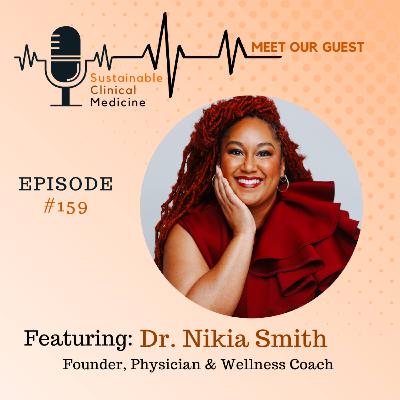
Welcome to another episode of the Sustainable Clinical Medicine Podcast!
In this interview, Dr. Nikia Smith, a board-certified anesthesiologist, wellness coach, and retreat curator, shares how she experienced burnout twice during her attending career and nearly left medicine. She describes early warning signs (persistent fatigue despite rest, increasing irritability, and eventual emotional numbness and autopilot), and links her initial burnout to chronic understaffing after colleagues left and a lack of administrative support, including being told the team was “handling it so well” that additional hires were unnecessary.
After a near-20-hour call shift, she set boundaries by refusing further call, began educating herself on burnout, compassion fatigue, and self-compassion (including reading Kristin Neff), and rebuilt recovery through small, joy-based habits, movement (starting with Pilates), and reconnecting with community.
She ultimately left a job that would not put agreed terms into a contract, moved to a no-call role to regain nights and weekends, and later negotiated for a part-time contract; she now works in Las Vegas under a contract requiring eight days per month, aligned with her goal of working 10 days or less.
Dr. Smith explains how her personal retreat became an annual four-day wellness retreat for physicians (expanding to other clinicians) that includes CME and group learning on moral injury, perfectionism, invisible labor/“third shift,” and practical strategies such as boundary-setting, negotiating schedules, and mutual support (including helping participants craft emails). She advises clinicians to talk to others to learn what’s possible, keep asking for what they need (e.g., administrative time for committee work), and recognize that burnout recovery is not a quick fix but a process of re-engaging with self and community.
Here are 3 key takeaways from this episode:
Burnout Recovery Takes Time and Intentional Action: Burnout develops gradually over years, and recovery requires more than just rest. Dr. Smith emphasizes reconnecting with activities that bring joy and energy (like movement, hobbies, and community), even when exhausted. Small, consistent steps—like 5-minute walks or puzzles—can help rebuild your capacity to recharge.
Advocate for Your Non-Negotiables: Healthcare systems often claim certain accommodations are "impossible" until you're ready to leave. Dr. Smith successfully negotiated no-call schedules and eventually part-time work (8-10 days/month) by persistently asking and being willing to walk away. She encourages clinicians to keep asking for what they need and get terms in writing.
Systemic Issues Require Personal Boundaries: While healthcare systems prioritize profits over provider wellbeing, waiting for institutional change isn't sustainable. Dr. Smith learned to set firm boundaries—like refusing additional committee work without administrative time, and leaving jobs that wouldn't honor her needs. The solution involves both advocating for systemic change and taking personal responsibility for protecting your wellbeing.
Meet Dr. Nikia Smith:
Dr. Nikia Smith is a practicing board-certified anesthesiologist, wellness coach, and retreat facilitator. She’s also the founder of She Is Fire Forged, a transformative wellness brand that helps high-achieving women of color reclaim their peace, power, and purpose. With over a decade (and counting!) of experience in the high-stress world of medicine, Nikia brings a deeply informed lens to conversations around burnout, boundaries, and emotional restoration.
Nikia specializes in guiding women—especially Black women in leadership and healthcare—through the exhaustion that comes from constantly being everything for everyone. She equips her clients with the tools to say no without guilt, build lives rooted in their own definitions of success, and live in softness over survival mode. Through retreats, coaching, and community care, Nikia curates spaces where women are invited to pause, reset, and reimagine what thriving truly looks like. Her work blends evidence-based wellness tools with embodied spiritual practice, creating a holistic path forward rooted in softness, sustainability, and self-trust.
She’s also been featured as a guest on the Docs Get Money and Free to Be Mindful podcasts.
Outside of her work, Nikia prioritizes rest, joy, and connection. You’ll find her reading, recharging with loved ones, and spending time with her niece, modeling what’s truly possible for a strong and powerful woman in this world.
Connect with Dr. Nikia Smith:
🌐 Website https://sheisfireforged.com/
Instagram https://www.instagram.com/nikiasmithmd/
--------------
Would you like to view a transcript of this episode? Click Here
**** Charting Champions is a premiere, lifetime access Physician only program that is helping Physicians get home with today's work done. All the proven tools, support and community you need to create time for your life outside of medicine.
Learn more at https://www.chartingcoach.ca
**** Enjoying this podcast? Please share it with someone who would benefit. Also, don’t forget to hit “follow” so you get all the new episodes as soon as they are released. **** Come hang out with me on Facebook or Instagram. Follow me @chartingcoach to get more practical tools to help you create sustainable clinical medicine in your life. **** Questions? Comments? Want to share how this podcast has helped you? Shoot me an email at admin@reachcareercoaching.ca. I would love to hear from you.
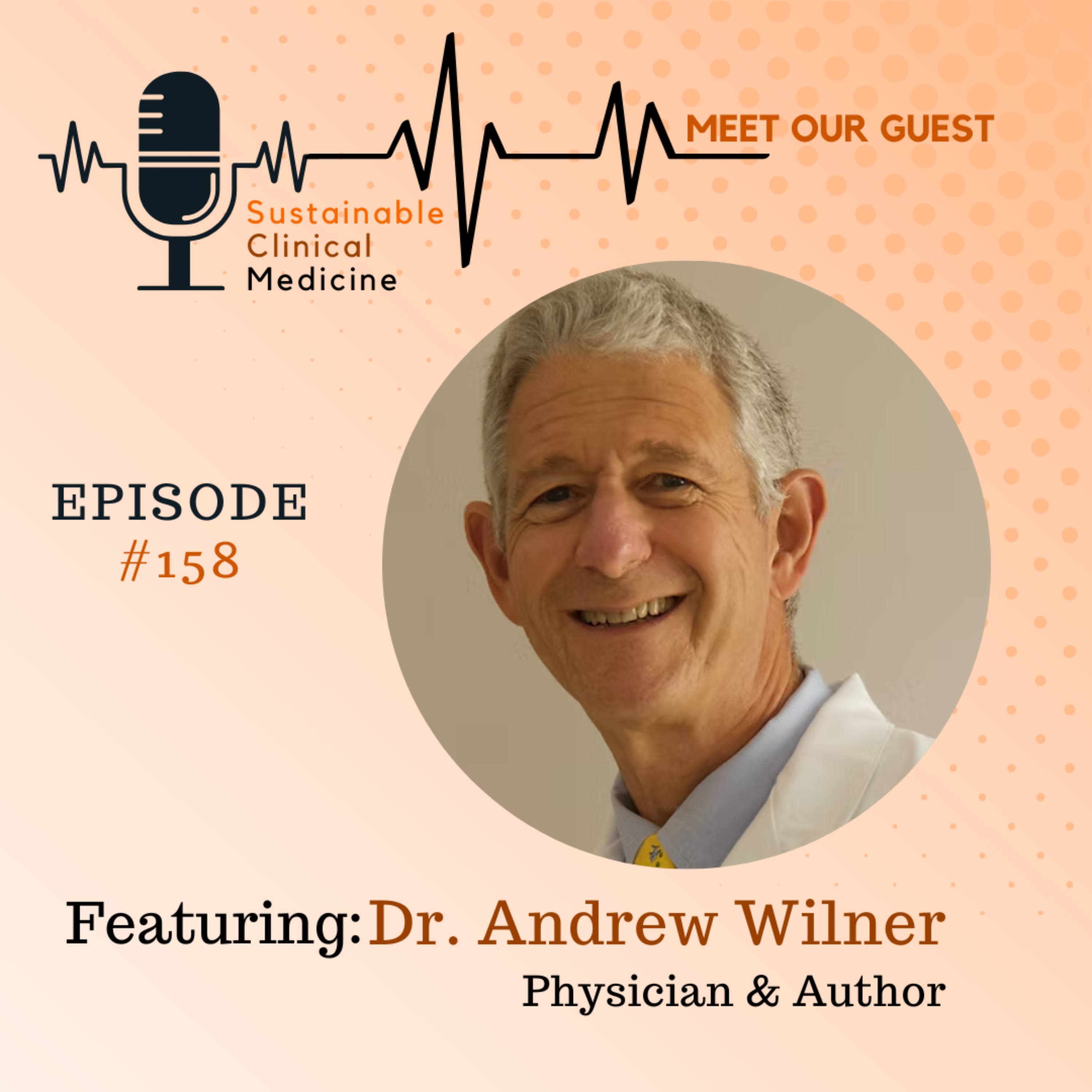
Welcome to another episode of the Sustainable Clinical Medicine Podcast!
In this episode, our host welcomes Dr. Andrew Wilner to discuss his extensive career in medicine, detailing his certifications in internal medicine, neurology, and epilepsy. Dr. Wilner shares his multifaceted journey, from starting as an ER doctor without formal training to becoming a professor of neurology. He delves into the evolution of the internship model and offers advice for medical students in career decision-making.
Dr. Wilner also elaborates on the locum tenens lifestyle, discussing the challenges and benefits, including the necessary preparation and mindset for success. Additionally, he highlights his experiences in academic roles, private practice, and as a medical journalist. The conversation concludes with insights into Dr. Wilner's book, 'The Locum Life: A Physician's Guide to Locum Tenens,' and his podcast, 'The Art of Medicine,' featuring stories of physicians pursuing unique medical careers.
Here are 3 key takeaways from this episode:
Flexibility is Essential for Locums Success: Locums work requires adaptability in every aspect - assignments can be canceled last minute, you'll work in unfamiliar systems, and conditions are often less than ideal. The ability to be flexible and resourceful is more important than clinical skills alone.
Prepare Thoroughly Before Each Assignment: Arrive 2 days early to handle logistics: learn the EMR system (demand paid training), scout parking and accommodations, get credentialing done, and eliminate uncertainties. This preparation reduces stress and lets you focus on patient care when the assignment starts.
Locums Prevents Burnout and Maintains Career Options: Working locums (even part-time) keeps you clinically active, resets credentialing clocks, and provides control over your schedule. Many burned-out physicians rediscover their love of medicine through locums by working on their own terms (7-9 months/year) rather than leaving clinical practice entirely.
Meet Dr. Andrew Wilner:
Dr. Wilner has worked locum tenens on and off since 1982 and is the author of "The Locum Life: A Physician's Guide to Locum Tenens." Dr. Wilner is Professor of Neurology at the University of Tennessee Health Science Center in Memphis, Tennessee, and host and producer of the Art of Medicine with Dr. Andrew Wilner podcast since 2020. Dr. Wilner is a PADI Divemaster and passionate underwater photographer.
Connect with Dr. Andrew Wilner:
🌐 Website http://www.andrewwilner.com
Twitter/X http://www.twitter.com/drwilner
Instagram http://www.instagram.com/seaphoto2025
YouTube http://www.youtube.com/c/andrewwilnermdauthor
YouTube Underwater http://www.youtube.com/c/andrewwilner
--------------
Would you like to view a transcript of this episode? Click Here
**** Charting Champions is a premiere, lifetime access Physician only program that is helping Physicians get home with today's work done. All the proven tools, support and community you need to create time for your life outside of medicine.
Learn more at https://www.chartingcoach.ca
**** Enjoying this podcast? Please share it with someone who would benefit. Also, don’t forget to hit “follow” so you get all the new episodes as soon as they are released. **** Come hang out with me on Facebook or Instagram. Follow me @chartingcoach to get more practical tools to help you create sustainable clinical medicine in your life. **** Questions? Comments? Want to share how this podcast has helped you? Shoot me an email at admin@reachcareercoaching.ca. I would love to hear from you.
Welcome to another episode of the Sustainable Clinical Medicine Podcast!
Happy Women Physician Day! In this special episode, Dr. Sarah Smith sits down with Dr. Sunny Smith, founder of Empowering Women Physicians, to discuss the unique challenges facing women physicians and the coaching tools that are helping hundreds break free from burnout—without quitting medicine.
If you've ever felt trapped, exhausted, or wondered "when does it get better?"—this conversation is for you.
Here are 3 key takeaways from this episode:
The Arrival Fallacy - Happiness Won't Come Later: The belief that you'll be happy "once you become an attending" or "once the kids are in school" is a fallacy. Happiness isn't found at some future milestone—it requires intentional choices now. The system won't change on its own, and no one is coming to save you.
Agency Over Learned Helplessness: Medicine systematically exposes physicians to situations beyond their control, leading to learned helplessness. The antidote is recognizing you have agency and choice—even small 1% changes compound over time. Start with one closed chart, one boundary, one small decision that shows you can impact your outcome.
Connection Breaks Isolation: You can't understand the mental load of being a physician unless you've been one. Being in community with other women physicians who normalize your struggles and model different choices is therapeutic. When you see others advocating for themselves—taking leave, setting boundaries, pursuing passion projects—it gives you permission to do the same.
Bonus insight: It's not your job's job to make you happy—that's your job. And 77% of physicians entering coaching programs meet burnout criteria, but only 33% do after just 8 weeks, without changing jobs.
Meet Dr. Sunny Smith:
Sunny Smith MD is the Founder and CEO of Empowering Women Physicians.
Dr Smith brings her background as an awarded Medical Educator, and Clinical Professor of Family Medicine and Public Health into the coaching space.
She advocates for physician wellness through her comprehensive and collaborative coaching program, podcast, retreats and Facebook group that seek to change the culture of medicine through normalizing and humanizing the experience of being a physician.
Connect with Dr. Sunny Smith:
🌐 Website: https://empoweringwomenphysicians.com/
Facebook: https://www.facebook.com/groups/empoweringwomenphysicians
Instagram: https://www.instagram.com/sunnysmithmd/
LinkedIn: https://www.linkedin.com/in/sunnysmithmd/
--------------
Would you like to view a transcript of this episode? Click Here
**** Charting Champions is a premiere, lifetime access Physician only program that is helping Physicians get home with today's work done. All the proven tools, support and community you need to create time for your life outside of medicine.
Learn more at https://www.chartingcoach.ca
**** Enjoying this podcast? Please share it with someone who would benefit. Also, don’t forget to hit “follow” so you get all the new episodes as soon as they are released. **** Come hang out with me on Facebook or Instagram. Follow me @chartingcoach to get more practical tools to help you create sustainable clinical medicine in your life. **** Questions? Comments? Want to share how this podcast has helped you? Shoot me an email at admin@reachcareercoaching.ca. I would love to hear from you.
Welcome to another episode of the Sustainable Clinical Medicine Podcast!
In this episode, Sarah invites Dr. Elisabeth Baerg Hall, an expert in adult ADHD and psychiatrist, to discuss executive function challenges faced by physicians, particularly those with ADHD. Dr. Hall shares her professional journey from family medicine to psychiatry, highlighting the importance of psychoeducation and executive function skills development. They explore common struggles such as time management, charting, and the impact of life transitions like menopause and parenthood.
Dr. Hall offers practical advice on enhancing productivity, using tools like time tracking and setting realistic goals. She also emphasizes the importance of self-awareness, kindness, and understanding one's strengths to manage executive function effectively.
Tune in to gain valuable insights into managing ADHD and improving executive function skills in the demanding field of medicine.
Here are 3 key takeaways from this episode:
ADHD in High-Achieving Physicians is Real—and Often Missed: Intelligence, creativity, and strong relationships help many physicians compensate for ADHD symptoms through medical school. Diagnosis often comes later when scaffolding disappears—starting practice, having children, menopause, or taking on leadership roles. The myth that "you can't have ADHD if you're a doctor" keeps many from getting help.
Executive Function Skills Matter for Everyone, Not Just ADHD: Supporting your executive function—through proper sleep, regular meals, movement, and brief breathing breaks—benefits all physicians. These aren't just "ADHD strategies"; they're fundamental tools for managing cognitive fatigue and the overwhelming administrative burden of modern medicine.
Start Small: Track, Reflect, and Be Kind to Yourself Instead of trying to fix everything at once, try tracking your time for just one hour or one morning. Then reflect: What were your expectations? Were they realistic? This awareness helps you adjust without shame. Multiply your time estimates by three, control your environment (headphones, closed doors, no wifi), and remember—you're not going to do groceries in a 20-minute break.
Meet Dr. Elisabeth Baerg Hall:
Elisabeth Baerg Hall MD, CCFP, FRCPC As a respected speaker, educator, and therapist specializing in adult ADHD, Dr. Baerg Hall is known for her leadership in building capacity to care for and improve services for adults with ADHD. She is passionate about advancing physician wellness, particularly in supporting medical professionals who have ADHD, through her targeted physician program, Build a Better Core and other Executive Function Workshops. She directs the ADHD Centre for Education and Training. She led development of ADHD Skills Builder, an online modular ADHD psychoeducational program funded by the James Family Foundation.
Sign up link here:https://ebhallmd.com/executive-function-skills-for-health-care-providers/Referral Code - CHARTINGCOACH to receive 10% off
Connect with Dr. Elisabeth Baerg Hall:
🌐 Website: www.ebhallmd.com
🌐 Website: www.adhdskillsbuilder.com
Instagram: https://www.linkedin.com/in/dr-elisabeth-baerg-hall-7515a8207/
--------------
Would you like to view a transcript of this episode? Click Here
**** Charting Champions is a premiere, lifetime access Physician only program that is helping Physicians get home with today's work done. All the proven tools, support and community you need to create time for your life outside of medicine.
Learn more at https://www.chartingcoach.ca
**** Enjoying this podcast? Please share it with someone who would benefit. Also, don’t forget to hit “follow” so you get all the new episodes as soon as they are released. **** Come hang out with me on Facebook or Instagram. Follow me @chartingcoach to get more practical tools to help you create sustainable clinical medicine in your life. **** Questions? Comments? Want to share how this podcast has helped you? Shoot me an email at admin@reachcareercoaching.ca. I would love to hear from you.
Welcome to another episode of the Sustainable Clinical Medicine Podcast!
In this episode, Dr, Sarah Smith interviews Dr. Andrea Austin, an emergency medicine physician, educator, and new program director of a residency program in Pensacola, Florida. Dr. Austin shares her journey from an early interest in medicine inspired by a 'Take Our Daughters to Work' day to her current roles in emergency medicine amidst the challenges of COVID and beyond. She discusses her experiences with burnout, the importance of therapy and coaching, and her transformative role in developing curriculum focused on positive changes in healthcare.
Dr. Austin also highlights her recently published book 'Revitalized,' which aims to guide physicians toward a fulfilling career. The conversation covers key factors for change-making in medical institutions, the critical need for supportive leadership, and the shared struggles of global physician burnout.The episode provides valuable insights and strategies for recognizing and dealing with burnout effectively.
Here are 3 key takeaways from this episode:
Change Makers Need Supportive Organizations: Effective change in healthcare requires both individual qualities (insatiable learning, courage, resilience) and organizational support (funding for education, coaching, just culture, appropriate staffing, and the ability to actually take vacation time).
Recovery Requires Time and Space: After experiencing burnout during COVID, Dr. Austin took a part-time remote teaching job that gave her three months to sleep, attend therapy, do coaching, and regulate her nervous system. This pause was essential for her body to "feel human again" and ultimately led to her pursuing a master's degree and starting a residency program.
Caring Leadership Makes the Difference: The most critical factor in preventing physician burnout isn't metrics or ROI—it's caring. Leaders who see the big picture, invest in their people, provide meaningful feedback, and create psychologically safe environments enable physicians to thrive and create positive change, rather than just burning out from institutional betrayal.
Meet Dr. Andrea Austin:
Dr. Andrea Austin is the inaugural Emergency Medicine Program Director at Sacred Heart in Pensacola, Florida. As a Navy veteran, her military service taught her how to perform under pressure and lead teams in high-stakes environments. She brings that same focus to her work in medical education, physician well-being, and healthcare systems change. Dr. Austin is the author of Revitalized: A Guidebook to Following Your Healing Heartline and host of the Heartline: Changemaking in Healthcare podcast.
Connect with Dr. Andra Austin:
🌐 Website: https://www.andreaaustinmd.com/
Facebook: https://www.facebook.com/andreaaustinmd
Instagram: https://www.instagram.com/andreaaustinmd/
--------------
Would you like to view a transcript of this episode? Click Here
**** Charting Champions is a premiere, lifetime access Physician only program that is helping Physicians get home with today's work done. All the proven tools, support and community you need to create time for your life outside of medicine.
Learn more at https://www.chartingcoach.ca
**** Enjoying this podcast? Please share it with someone who would benefit. Also, don’t forget to hit “follow” so you get all the new episodes as soon as they are released. **** Come hang out with me on Facebook or Instagram. Follow me @chartingcoach to get more practical tools to help you create sustainable clinical medicine in your life. **** Questions? Comments? Want to share how this podcast has helped you? Shoot me an email at admin@reachcareercoaching.ca. I would love to hear from you.
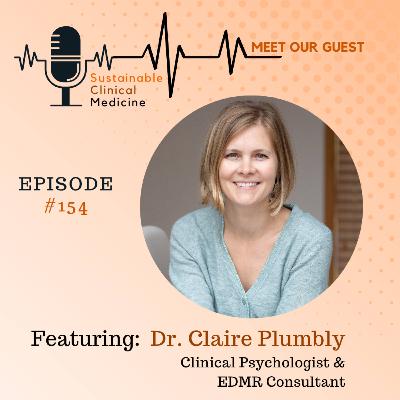
Welcome to another episode of the Sustainable Clinical Medicine Podcast!
In this episode, the host welcomes Dr. Claire Plumbly, a clinical psychologist from the UK, to discuss her work and insights into managing burnout and trauma. Dr. Plumbly shares her background and journey into clinical psychology, highlighting her work in private practice and her recent book, 'The Trauma of Burnout'. The conversation delves into signs and symptoms of burnout, practical advice for managing it, and the importance of understanding one's nervous system.
Dr. Plumbly also emphasizes the need for compassionate self-care, regular check-ins throughout the day, and has suggestions for winding down to improve sleep. She further discusses ways to prevent burnout and introduces the concept of intensive therapy sessions for those who find weekly sessions challenging.
The episode provides valuable insights and strategies for recognizing and dealing with burnout effectively.
Here are 3 key takeaways from this episode:
Understand Your Nervous System States Burnout involves getting stuck in two problematic nervous system states: "Amber" (sympathetic overdrive - constant rushing, can't slow down) and "Red" (dorsal shutdown - autopilot, disconnected, people-pleasing). You need different strategies for each: discharge excess energy when in Amber through movement, and gently thaw out when in Red through soothing touch and connection.
Recognize the Four Warning Signs Watch for burnout signals across four areas: Physical (aches, tension, frequent illness), Cognitive (rigid thinking, decision fatigue, making mistakes), Emotional (limited emotional range - stuck in overwhelmed/anxious/flat), and Behavioral (numbing behaviors like extra drinking, doom scrolling, or impulse purchases).
Use Transition Points as Check-In Opportunities Don't wait until end of day to address burnout. Use every transition between tasks as a mini pause to check: "What does my body need right now? What gear am I in?" This prevents accumulation of stress and makes winding down at night actually possible - you can't crash from sixth gear into sleep.
Meet Dr. Claire Plumbly:
Dr Claire Plumbly is a clinical psychologist, EMDR consultant & founder of Plum Psychology - a team of trauma-specialists who offer intensive therapy packages for burnout and trauma in the UK. She is the author of The Trauma of Burnout - which shows us how to navigate out of overwhelm tapping into the power of your nervous system
Connect with Dr. Claire Plemby: 🌐 Website: Www.drclaireplumbly.com
Facebook: https://www.facebook.com/DrClairePlumbly
Instagram: https://www.instagram.com/drclaireplumbly
--------------
Would you like to view a transcript of this episode? Click Here
**** Charting Champions is a premiere, lifetime access Physician only program that is helping Physicians get home with today's work done. All the proven tools, support and community you need to create time for your life outside of medicine.
Learn more at https://www.chartingcoach.ca
**** Enjoying this podcast? Please share it with someone who would benefit. Also, don’t forget to hit “follow” so you get all the new episodes as soon as they are released. **** Come hang out with me on Facebook or Instagram. Follow me @chartingcoach to get more practical tools to help you create sustainable clinical medicine in your life. **** Questions? Comments? Want to share how this podcast has helped you? Shoot me an email at admin@reachcareercoaching.ca. I would love to hear from you.
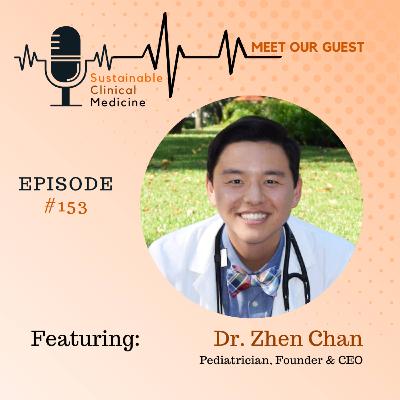
Welcome to another episode of the Sustainable Clinical Medicine Podcast!
In this episode, Dr. Zhen Chan shares his unique journey from growing up in Miami, Florida to becoming a pediatrician in Washington, DC, and ultimately venturing into the entrepreneurial side of healthcare.
Dr. Chan discusses his educational background, including an MD-MBA dual degree, and how it shaped his interests in blending artistic and scientific aspects within the medical field. He delves into his clinical practice in the 'fast track' side of an emergency room and his desire to improve healthcare systems.
Dr. Chan also talks about his entrepreneurial endeavors, like founding Grapevine, a community focused on healthcare workforce optimization and reducing burnout among medical professionals.
Throughout the conversation, he emphasizes the importance of networking and staying updated with technological advancements to better serve patients and the healthcare community. Here are 3 key takeaways from this episode:
1. The Power of Networking in Healthcare: Dr. Chan emphasizes that building professional relationships and communities—like her Grapevine initiative—is crucial for career growth, combating burnout, and reducing social isolation among healthcare professionals. Networking is not just for business leaders; it’s essential for clinicians at all stages.
2. Innovation and Entrepreneurship are Vital for Modern Physicians: Dr. Chan’s journey shows that blending clinical practice with entrepreneurial thinking and process improvement (such as Six Sigma and MBA training) can help address systemic issues in healthcare. Physicians can—and should—embrace innovation to improve patient care and the healthcare system.
3. Technology and AI Can Reduce Administrative Burden: The discussion highlights how AI-powered tools (like scribing and coding assistants) are transforming healthcare by reducing administrative workload, allowing doctors to focus more on patient care. Accurate documentation and embracing new technologies are key to improving efficiency and outcomes.
Meet Dr. Zhen Chan:
Dr. Zhen Chan is a practicing pediatrician at Children’s National Medical Center in Washington, DC and Founder/CEO of Grapevyne, a community dedicated to empowering physician autonomy and wellbeing through better networking and understanding about healthcare beyond medicine. He graduated from the University of Miami with his BS in Neuroscience and Criminology, MD, and MBA in Health Management & Policy. After completing his education, he went on to complete his pediatrics residency at New York Presbyterian Hospital-Weill Cornell Medicine, where his work in quality improvement and advocacy projects revealed a career path to impact healthcare at scale beyond the exam room. In addition to his clinical practice and his own community, he advises other healthcare startups as well focused on improving healthcare access.
Connect with Dr. Zhen Chan: 🌐 Website: https://grapevyne.health
LinkedIn: www.linkedin.com/in/zhenmd
Instagram: https://www.instagram.com/zhen_md/
--------------
Would you like to view a transcript of this episode? Click Here
**** Charting Champions is a premiere, lifetime access Physician only program that is helping Physicians get home with today's work done. All the proven tools, support and community you need to create time for your life outside of medicine.
Learn more at https://www.chartingcoach.ca
**** Enjoying this podcast? Please share it with someone who would benefit. Also, don’t forget to hit “follow” so you get all the new episodes as soon as they are released. **** Come hang out with me on Facebook or Instagram. Follow me @chartingcoach to get more practical tools to help you create sustainable clinical medicine in your life. **** Questions? Comments? Want to share how this podcast has helped you? Shoot me an email at admin@reachcareercoaching.ca. I would love to hear from you.
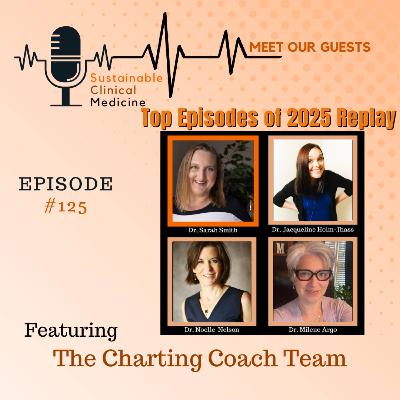
Happy Holidays from the Sustainable Clinical Medicine Podcast! In honour of the holidays we are replaying our top two episodes of 2025. This week we’re excited to bring you a replay of Episode 125 of the Sustainable Clinical Medicine Podcast. In this special episode, Dr. Sarah Smith brings together her “brains trust”—the talented team of assistant coaches from Charting Champions and Smarter Charting—for an inspiring and honest roundtable discussion. Join Dr. Jacqueline Holm-Jhass, Dr. Milene Argo, and Dr. Noelle Nelson as they open up about their personal journeys from burnout to rediscovering joy in medicine and share their passion for helping clinicians create better clinical days.
You’ll hear first hand stories about the real costs of working after hours, practical strategies for managing the chaos of unpredictable clinic days, and priceless reminders that you are not alone in the struggle. The coaches offer compassionate advice on emotional regulation, self-compassion, and the vital importance of finding celebration and purpose—even on the hardest days.
Whether you’re deep in the trenches of clinical work or just starting to think about how to make medicine more sustainable, this episode is packed with relatable insights, encouragement, and actionable wisdom to help you reclaim time for your life outside of medicine. Get ready to meet the coaches who are changing the way clinicians approach their clinical days and rekindling love for the profession—one conversation at a time.
Here are 3 key takeaways from this episode:
You’re Not Alone: Every physician experiences overwhelm—even the coaches and leaders we look up to. Vulnerability and community are key to finding solutions and breaking the cycle of isolation.
Small Wins & Self-Compassion Matter: Shifting from self-criticism to celebration of even tiny wins each day (like finishing one tough chart, or supporting a grieving patient) helps change the narrative and builds resilience over time.
The System is Broken, Not You: The impossible demands of modern medicine make it crucial to set boundaries and redefine what “good enough” looks like for you, rather than striving for unattainable perfection.
The Charting Champions Coaches
Dr. Sarah Smith and her vibrant Charting Coach team: Dr. Jacqueline Holm-Jhass, Dr. Milene Argo, and Dr. Noelle Nelson. Get ready for an honest, supportive, and practical conversation about what it truly takes to create a sustainable, joyful clinical day as a physician or clinician.
--------------
Would you like to view a transcript of this episode? Click here
****Get in on the Backlog Buddies Sale where All Session in June are only $10 https://www.backlogbuddies.com/
**** Charting Champions is a premiere, lifetime access Physician only program that is helping Physicians get home with today's work done. All the proven tools, support and community you need to create time for your life outside of medicine.
Learn more at https://www.chartingcoach.ca
**** Enjoying this podcast? Please share it with someone who would benefit. Also, don’t forget to hit “follow” so you get all the new episodes as soon as they are released. **** Come hang out with me on Facebook or Instagram. Follow me @chartingcoach to get more practical tools to help you create sustainable clinical medicine in your life. **** Questions? Comments? Want to share how this podcast has helped you? Shoot me an email at admin@reachcareercoaching.ca. I would love to hear from you.
Welcome to the Sustainable Clinical Medicine Podcast!
In this special episode, Dr. Sarah Smith joins forces with Dr. Priyanka Venugopal from the Unstoppable Mom Brain Podcast for a deeply insightful conversation all about reclaiming time and creating more sustainable clinical practices.
Together, they dive into the real-life struggles physicians face when it comes to finishing work at work—and not letting charting and paperwork spill into precious family time. Dr. Smith shares her own journey of burnout, the “aha” moments that changed her approach forever, and the practical strategies that helped her—and now hundreds of other clinicians—conquer endless documentation and interruptions.
This episode is packed with actionable gems, from simple mindset shifts to rethinking workflow, delegation, and team dynamics. Whether you're a physician, a professional working mom, or anyone craving more balance between career and home, this conversation will inspire you to rethink what’s possible. Tune in for tangible tips, relatable stories, and a whole lot of encouragement to create those “bucket loads of time” you’ve been searching for.
Here are 3 key takeaways from this episode:
Redesign Your Workflow—One Small Step at a Time: Challenging your status quo doesn't require a massive overhaul overnight. Dr. Smith emphasizes starting with one thing you wish were different, then getting curious about how to make that change—whether it’s charting as you go or setting clearer boundaries for finishing tasks before heading home.
Choose the 'Goat Track' over the 'Superhighway': Our brains crave familiar (often inefficient) routines. Breaking those habits will feel awkward and slower at first, but staying consistent creates more “bucket loads of time”—those open evenings and weekends we all crave.
Teamwork and Delegation Create Freedom: Whether you have a team or work solo, look for ways to delegate, systematize, and create assets that make recurring tasks easier. Training others (or even your future self!) means you spend your best energy on what truly requires your expertise.
Episode 102: Burn Stress. Lose Weight. Podcast (Formerly the Unstoppable Mom Brain Podcast)
https://www.burnstressloseweight.com/blog/getting-work-done-at-work-with-dr-sarah-smith
In this episode of the Unstoppable Mom Brain Podcast, I have Dr. Sarah Smith sharing her journey from being a rural family physician to becoming an expert in optimizing work-life balance for physicians, particularly focusing on completing tasks efficiently during clinical hours. Dr. Smith's transformation from struggling with work-life balance to finding simplicity and joy in her professional and personal life is inspiring. Through her coaching, she helps physicians reclaim their time, reduce stress, and prioritize their well-being while excelling in their careers. Tune in to this episode to unlock valuable insights and actionable strategies that will empower you to achieve greater balance, joy, and success in your professional and personal life.
Sarah Smith is the Charting Coach for Physicians and clinicians and a practicing Rural Family Physician in Alberta. Sarah is the founder of the Charting Champions Program helping more than 150 Physicians in the specific area of getting home with their charting done.
She has a passion for reducing burnout and overwhelm resulting from the administrative burden of clinical medicine. Using evidence-based coaching to help Physicians find their most simple solutions within the clinical environments that they work in.
Sarah is married to her husband of 21 years and has two sons and lives on her small farm. Evenings and weekends are for enjoying pursuits such as farming, exploring, reading and coaching.
--------------
Would you like to view a transcript of this episode? Click here
**** Charting Champions is a premiere, lifetime access Physician only program that is helping Physicians get home with today's work done. All the proven tools, support and community you need to create time for your life outside of medicine.
Learn more at https://www.chartingcoach.ca
**** Enjoying this podcast? Please share it with someone who would benefit. Also, don’t forget to hit “follow” so you get all the new episodes as soon as they are released. **** Come hang out with me on Facebook or Instagram. Follow me @chartingcoach to get more practical tools to help you create sustainable clinical medicine in your life. **** Questions? Comments? Want to share how this podcast has helped you? Shoot me an email at admin@reachcareercoaching.ca. I would love to hear from you.
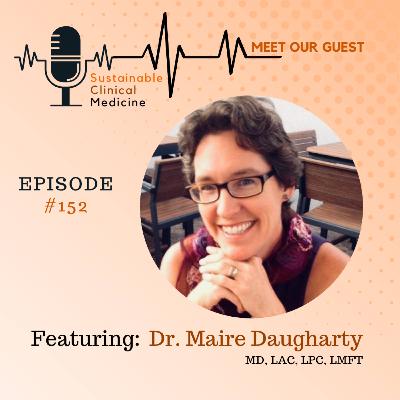
Welcome to another episode of the Sustainable Clinical Medicine Podcast!
Today, we’re joined by Dr. Maire Daugharty, an accomplished anesthesiologist who made the bold transition into clinical mental health counseling. In this episode, Dr. Daugharty opens up about her personal experience with burnout, the journey that led her to psychotherapy, and the lessons she learned about mental health—both as a physician and as a therapist. Whether you’re a healthcare professional, someone navigating career changes, or simply interested in well-being, this conversation is packed with valuable insights and practical advice.
Here are 3 key takeaways from this episode:
Burnout and Depression Are Distinct but Overlapping: Dr. Maire Daugharty emphasizes the importance of distinguishing between burnout and depression. Burnout is specifically related to work overload and emotional exhaustion, while depression is a broader mental health condition. Recognizing the difference is crucial for seeking the right kind of help and intervention.
Career Transitions Can Be Empowering and Challenging: Dr. Daugharty shares her journey from anesthesiology to clinical mental health counseling, highlighting the challenges of making a major career shift. She discusses the importance of self-reflection, support from loved ones, and the value of aligning one’s work with personal interests and well-being.
There Is No Shame in Seeking Help: A central message of the episode is that seeking psychotherapy or counseling is a sign of strength, not weakness. Dr. Daugharty encourages medical professionals (and everyone) to value their own well-being, challenge the stigma around mental health, and recognize that taking care of oneself is essential for providing the best care to others.
Meet Dr. Maire Daugharty:
I am an anesthesiologist, over the course of my career specialized in regional and cardiac anesthesia. I went back to graduate school and completed a master’s degree in clinical mental health counseling. I opened a practice working with a range of issues for adult individuals and couples including depression, anxiety, ramifications of childhood trauma, burnout, navigating conflict. I continue to work part time as an anesthesiologist on our general and obstetrical services, and work full time as a psychotherapist integrating mental health medication management when indicated.
Connect with Dr. Maire Daugharty: 🌐 Website: www.mdaugharty.com
https://kevinmd.com/post-author/maire-daugharty
LinkedIn: https://www.linkedin.com/in/maire-daugharty/?utm_source=share&utm_campaign=share_via&utm_content=profile&utm_medium=ios_app
--------------
Would you like to view a transcript of this episode? Click Here
**** Charting Champions is a premiere, lifetime access Physician only program that is helping Physicians get home with today's work done. All the proven tools, support and community you need to create time for your life outside of medicine.
Learn more at https://www.chartingcoach.ca
**** Enjoying this podcast? Please share it with someone who would benefit. Also, don’t forget to hit “follow” so you get all the new episodes as soon as they are released. **** Come hang out with me on Facebook or Instagram. Follow me @chartingcoach to get more practical tools to help you create sustainable clinical medicine in your life. **** Questions? Comments? Want to share how this podcast has helped you? Shoot me an email at admin@reachcareercoaching.ca. I would love to hear from you.

Welcome to another episode of the Sustainable Clinical Medicine Podcast!
Today, we’re joined by Mary Remón, a licensed counselor and experienced coach who has spent over two decades supporting healthcare professionals. Mary brings a wealth of insight from her work managing Employee Assistance Programs and coaching physicians through the unique challenges of burnout, compassion fatigue, and career sustainability.
In this conversation, Mary and Dr. Sarah Smith dive deep into the realities of working in healthcare, the stigma around seeking help, and practical strategies for building resilience and well-being. Whether you’re a clinician, a leader, or simply interested in the human side of medicine, this episode is packed with wisdom and actionable advice.
Here are 3 key takeaways from this episode:
Confidential Support Is Available for Healthcare Professionals: Employee Assistance Programs (EAPs) offer confidential counseling and support for physicians and clinicians. Most concerns about privacy and stigma are unfounded—these services are designed to protect employees and are not part of personnel files or medical records, except in rare safety-related cases.
Burnout and Compassion Fatigue Are Common—But Not Personal Failures: Many physicians experience burnout, imposter syndrome, and compassion fatigue due to the demanding nature of their work. These are normal reactions to challenging environments, not signs of weakness or failure. Recognizing and talking about these issues is the first step toward healing.
Small, Positive Changes and Support Networks Make a Big Difference: Sustainable well-being comes from making small, manageable changes—like setting boundaries, celebrating small wins, and seeking support from peers or coaches. Sharing struggles and accepting help can break the cycle of isolation and lead to meaningful improvements in mental health and job satisfaction.
Meet Mary Remón:
Mary Remón is a licensed counselor, certified coach, and Certified Employee Assistance Professional with over 20 years of experience in healthcare. In her professional role, she has coached physicians and leaders at hundreds of healthcare institutions across North America, including many leading academic medical centers. Mary previously managed employee assistance programs on-site at two academic medical centers, supporting physicians, leaders and frontline staff. She continues to support physicians and leaders through her private practice.
Connect with Mary Remón:
🌐 Website: https://www.maryremon.com/
LinkedIn: https://www.linkedin.com/in/maryremon/
Facebook: https://www.facebook.com/MaryRemon.LCPC.LMHC.CEAP
SoMeDocs: https://doctorsonsocialmedia.com/mary-remon-lcpc-cpc-ceap/
--------------
Would you like to view a transcript of this episode? Click Here
**** Charting Champions is a premiere, lifetime access Physician only program that is helping Physicians get home with today's work done. All the proven tools, support and community you need to create time for your life outside of medicine.
Learn more at https://www.chartingcoach.ca
**** Enjoying this podcast? Please share it with someone who would benefit. Also, don’t forget to hit “follow” so you get all the new episodes as soon as they are released. **** Come hang out with me on Facebook or Instagram. Follow me @chartingcoach to get more practical tools to help you create sustainable clinical medicine in your life. **** Questions? Comments? Want to share how this podcast has helped you? Shoot me an email at admin@reachcareercoaching.ca. I would love to hear from you.
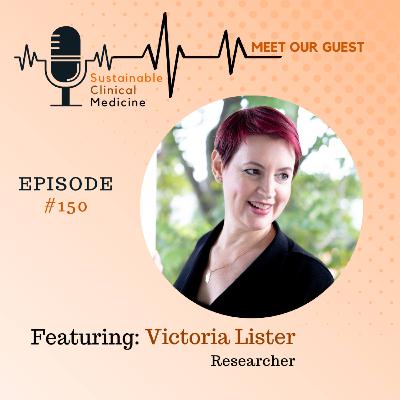
Welcome to another episode of the Sustainable Clinical Medicine Podcast!
In this podcast episode #150 we shine a light on the real experiences of early-career medical professionals and listening to the voices of junior doctors. I’m your host, Dr. Sarah Smith, and today we’re joined by Victoria Lister—researcher, workplace coach, and passionate advocate for change in healthcare.
Diving into the hidden struggles junior doctors face: the culture of silence, the impact of discrimination and burnout, and the critical importance of psychological safety at work. Victoria shares her research and personal insights on why so many doctors feel unable to speak up, and what leaders and colleagues can do to create safer, more supportive environments.
Whether you’re a medical professional, a student, or simply interested in the future of healthcare, this conversation is packed with eye-opening stories and practical advice. Let’s get started!
Here are 3 key takeaways from this episode:
The Culture of Silence in Medicine: Junior doctors often feel unable to speak up about their working conditions due to fear of retaliation, career setbacks, and entrenched hierarchies. This silence can have serious consequences for both staff wellbeing and patient safety.
Psychological Safety is Essential: Creating environments where junior doctors feel safe to voice concerns is crucial. Leadership that listens, acts, and genuinely supports staff can transform toxic workplaces into supportive, high-performing teams.
Discrimination and Burnout are Widespread: Issues like bullying, harassment, and discrimination—based on gender, race, or background—are still prevalent in medical training. Addressing these challenges requires systemic change, open conversations, and collective action to ensure a healthier future for all healthcare professionals.
Meet Victoria Lister:
Victoria Lister is a researcher in the Business School at Griffith University in Brisbane, Australia. Her PhD research investigates junior doctors’ working conditions silences and how the medical profession acts as a barrier to voice. To support junior doctors, Victoria trained as a workplace coach and is currently researching and delivering a ‘coaching for communication’ program for emergency medicine clinicians. She also works on other research projects in the medical context; has consulted on a healthcare workforce wellbeing initiative and a cultural change program designed to address bullying, harassment and discrimination in medicine; and has published on these themes.
Connect with Victoria Lister: 🌐 Website: https://www.victorialister.com/
linkedin.com/in/victoria-lister
https://scholar.google.com.au/citations?user=Fzi-II4AAAAJ&hl=en&oi=ao
--------------
Would you like to view a transcript of this episode? Click Here
**** Charting Champions is a premiere, lifetime access Physician only program that is helping Physicians get home with today's work done. All the proven tools, support and community you need to create time for your life outside of medicine.
Learn more at https://www.chartingcoach.ca
**** Enjoying this podcast? Please share it with someone who would benefit. Also, don’t forget to hit “follow” so you get all the new episodes as soon as they are released. **** Come hang out with me on Facebook or Instagram. Follow me @chartingcoach to get more practical tools to help you create sustainable clinical medicine in your life. **** Questions? Comments? Want to share how this podcast has helped you? Shoot me an email at admin@reachcareercoaching.ca. I would love to hear from you.
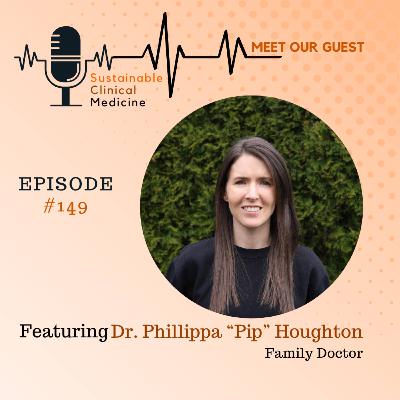
Welcome to another episode of the Sustainable Clinical Medicine Podcast!
In this episode, Dr. Sarah Smith explores the challenges of balancing mental load and domestic labor, particularly for women in medicine. She is joined by Dr. Pip Houghton, a family physician, facilitator, and advocate for women’s wellness.
Dr. Houghton shares her expertise in mental health and her personal journey with the Fair Play Method, offering practical strategies for creating more equitable and joyful lives at home and at work. Together, they discuss how open communication, trust, and small changes can lead to big results for busy professionals and families.
Listeners will gain valuable insights into sharing responsibilities, building supportive partnerships, and lightening the mental load—making this episode a must-listen for anyone seeking balance and sustainability in their personal and professional lives.
Here are 3 key takeaways from this episode:
The Fair Play Method Empowers Equitable Domestic Labor Pip Houghton shares how the Fair Play Method helps families clearly define, distribute, and take ownership of household tasks. This system reduces mental load, prevents resentment, and creates more space for joy, self-care, and professional fulfillment—especially for women physicians.
Open Communication and Trust Are Essential Successful implementation of Fair Play and equitable labor requires honest conversations and mutual trust between partners. Letting go of micromanagement and allowing each person to fully own their responsibilities is key to reducing stress and building a supportive partnership.
Small Changes Lead to Big Results Pip emphasizes starting with one small task—like managing garbage or backpacks—to build momentum and confidence. Gradually, these small wins can transform household dynamics, involve children in responsibilities, and even improve teamwork in professional settings.
Meet Dr. Pip Houghton:
Dr Phillippa "Pip" Houghton is a family physician on Vancouver Island providing addiction, mental health and primary care to adults and youth in her community. Dr Pip completed a B.Sc. in Kinesiology from the University of Victoria (2011), medical school at The University of Wollongong (2015) and family practice residency through the University of British Columbia in 2019. In addition to her formal education, Dr Pip is particularly supporting families in navigating the many challenges that we all face when it comes to balancing the demands of the three P’s (partner, professional, parent). Dr Pip has pursued additional education in the areas of perinatal Mental Health, digital health and wellness and most recently as a Fair Play Facilitator. In addition to her assigned roles, Dr Pip is also a mother to three boys, wife to an amazing husband, house hippo owner, new-ish CrossFit enthusiast, creative writer, book club enthusiast and cut-flower garden newbie.
Connect with Dr. Pip Houghton: 🌐 Website: www.timeoutmd.ca
🗣️ Speaking & Workshops: Revived Physician Retreat
--------------
Would you like to view a transcript of this episode? Click Here
**** Charting Champions is a premiere, lifetime access Physician only program that is helping Physicians get home with today's work done. All the proven tools, support and community you need to create time for your life outside of medicine.
Learn more at https://www.chartingcoach.ca
**** Enjoying this podcast? Please share it with someone who would benefit. Also, don’t forget to hit “follow” so you get all the new episodes as soon as they are released. **** Come hang out with me on Facebook or Instagram. Follow me @chartingcoach to get more practical tools to help you create sustainable clinical medicine in your life. **** Questions? Comments? Want to share how this podcast has helped you? Shoot me an email at admin@reachcareercoaching.ca. I would love to hear from you.


Download from Google Play

Download from App Store
 United States
It's great that you're sharing your experience. The medical field has always been fraught with many nuances, and understanding them makes us better specialists. The QME test concepts discussed on this page https://www.soundmedeval.com/qme-test-preparation/ helped me reflect on areas of evaluation I should strengthen. The framework used here feels very aligned with real-world practice. I appreciate how it breaks down complicated topics in a digestible way. It reminds me of the importance of consistent terminology.