


 Claim Ownership
The Distribution by Juniper Square
Subscribed: 11Played: 357
Subscribe

© Copyright 2025
Description
The Distribution by Juniper Square sits you down with industry experts, thought leaders, and some of the biggest names in commercial real estate, venture capital, and private equity, for open and honest conversations about what’s happening in the private markets.
119 Episodes
Reverse
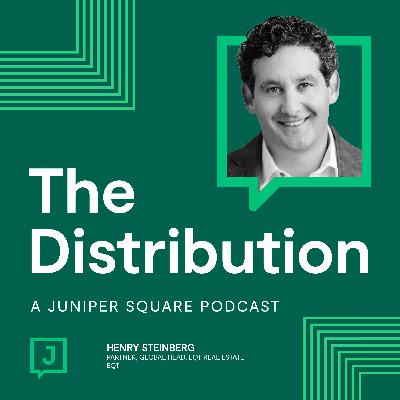
In this episode of The Distribution, Brandon Sedloff sits down with Henry Steinberg, Global Head of EQT Real Estate, to discuss the evolution of one of the world’s largest real estate investment platforms. Henry shares the story of his path into the industry, from consulting and business school to building a career in logistics real estate through Liberty Property Trust and Exeter Property Group before merging with EQT in 2021. The conversation explores how sector specialization, operational expertise, and scale have shaped EQT Real Estate’s strategy today. Henry also explains how data, geospatial analytics, and AI are transforming investment decisions across global real estate markets.
They discuss:• Henry’s career journey from Arthur Andersen consulting to real estate investing• The history from Liberty Property Trust to Exeter Property Group and the merger with EQT• Why specialization in logistics real estate created a durable competitive advantage• How EQT uses geospatial data and analytics to evaluate acquisitions and development opportunities• Market outlook for logistics, student housing, and data centers across the US and Europe
Links:
EQT Real Estate - https://eqtgroup.com/real-estate
Henry on LinkedIn - https://www.linkedin.com/in/henry-steinberg-5653ba223/
Brandon on LinkedIn - https://www.linkedin.com/in/bsedloff/
Juniper Square - https://www.junipersquare.com/
Topics:
(00:00:00) - Intro(00:01:58) - Henry’s background and career(00:15:31) - Liberty to Exeter origins(00:20:46) - Exeter growth and EQT merger(00:24:49) - Eqt platform and scale(00:26:26) - Real estate strategy mix(00:27:16) - Diversifying beyond logistics(00:27:44) - Living and logistics growth(00:31:17) - Scale through data and AI(00:39:10) - Geospatial data edge(00:43:52) - Student housing signals(00:46:14) - Logistics outlook US vs Europe(00:52:06) - Build or buy expansion
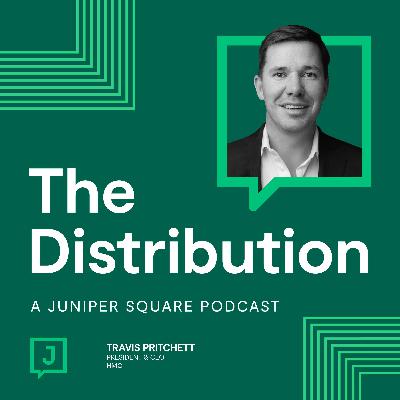
In this episode of The Distribution, Brandon Sedloff sits down with Travis Pritchett, CEO of HMC, to unpack his unconventional path into alternatives and the evolution of a middle-market investment firm navigating a rapidly changing private markets landscape. From a biology major and fly-fishing enthusiast to leading an $8 billion global real assets platform, Travis shares the inflection points that shaped his career and the strategic decisions that have defined HMC’s growth. The conversation spans power generation, European value-add real estate, and the modernization of luxury senior housing, all framed by a focus on asset-level execution and long-term mega trends.
They discuss:
How Travis transitioned from banking and fly fishing into real estate private equity and ultimately into HMC’s CEO role
The origins of HMC’s power generation strategy and how the firm is capitalizing on AI and data center demand without taking data center risk
The evolution of the middle-market value add model and why specialization is becoming a competitive necessity
The shift toward luxury, high-amenity senior housing and the demographic forces reshaping the sector
Why Europe may present a multi-year opportunity given rebased valuations, capital flows, and competitive dynamics
Links:
HMC - https://www.harbert.net/
Travis on LinkedIn - https://www.linkedin.com/in/travis-pritchett-1343264/
Brandon on LinkedIn - https://www.linkedin.com/in/bsedloff/
Juniper Square - https://www.junipersquare.com/
Topics:
(00:00:00) - Intro
(00:02:24) - Travis’ background and early career
(00:17:37) - Staying 20 years through growth
(00:20:45) - HMC today
(00:22:55) - Shared services tradeoffs and costs
(00:27:27) - AI tailwinds and new competition
(00:28:27) - Power investing 201
(00:29:44) - Gas vs renewables cycle
(00:31:09) - Where power capital comes from
(00:33:31) - Data centers without DC risk
(00:36:33) - Value add platform evolution
(00:40:07) - US vs Europe opportunity
(00:43:54) - Seniors housing strategy shift
(00:47:31) - Luxury senior living today
(00:52:01) - Generalist versus specialist
(00:55:09) - Reimagining with megatrends
(00:57:48) - Closing and wrap up

In this episode of The Distribution, Brandon Sedloff sits down with Katie Fasken, founder of August Advisors, to unpack the overlooked depth of Canadian institutional capital. Drawing on her experience building institutional relationships at Slate Asset Management and launching her own boutique placement firm, Katie explains why Canada is far more than just the “Maple Eight” pensions. She breaks down the size of the broader market, the nuances of fundraising across provinces, and what it really takes for global GPs to succeed with Canadian LPs. The conversation spans real estate, private equity, infrastructure, continuation vehicles, and the emerging private wealth channel, offering a tactical look at capital formation north of the border.
They discuss:
Why Canada’s pension market is closer to 4 trillion in assets and where the opportunity lies beyond the Maple Eight
What mid-sized Canadian pension funds look for in lower mid-market private equity and real estate managers
Infrastructure’s rise in allocation and how LPs are redefining what qualifies as infrastructure
Geographic shifts toward Europe and how Canadian investors are thinking about US exposure amid political uncertainty
The growing role of continuation vehicles and liquidity solutions in private equity portfolios
The realities of tapping the Canadian wealth channel and why platform access can take years
Links:
Katie on LinkedIn - https://www.linkedin.com/in/katie-fasken-8b433a12/
August Advisors - https://www.augustadvisors.ca/
Brandon on LinkedIn - https://www.linkedin.com/in/bsedloff/
Juniper Square - https://www.junipersquare.com/
Topics:
(00:00:00) - Intro
(00:02:07) - Katie’s career and background
(00:07:26) - Launching August Advisors
(00:09:32) - Beyond the maple eight to 4T in pension assets
(00:12:38) - Why GPs miss Canada + what’s driving allocations
(00:18:56) - Real assets pulse
(00:21:55) - Private equity trends
(00:23:51) - Defining ‘infrastructure’ in 2026
(00:25:14) - US vs Europe allocations, politics, and fiduciary reality
(00:28:31) - Canada’s information gap
(00:29:30) - August’s playbook
(00:33:37) - Operating rhythm
(00:36:05) - The Canadian wealth channel
(00:41:35) - Portfolio rebalancing: real estate vs infrastructure vs lower mid-market PE
(00:43:36) - Final takeaways + how to reach August Advisors
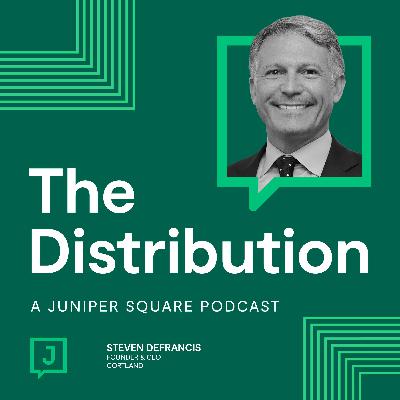
In this episode of The Distribution, Brandon Sedloff sits down with Steven DeFrancis, Founder and CEO of Cortland, to unpack how multifamily evolved from a commodity product into a true consumer service business. Steven shares the story behind Cortland’s transformation from a small merchant builder into a vertically integrated investment manager with more than 75,000 units and $20 billion in gross asset value. The conversation explores why operational depth, brand trust, and technology infrastructure now sit at the center of performance in living real estate.
Steven walks through the post-GFC research that reshaped Cortland’s strategy, the demographic shifts that extended renter lifecycles, and the deliberate decision to build operational infrastructure long before raising institutional LP capital. He also details how brand equity translates directly into pricing power, retention, and investor returns, and why scale is increasingly essential in a consolidating market.
They discuss:
The pivot from merchant development to a vertically integrated operating platform
Why multifamily shifted from a commodity to a consumer service business
How brand trust creates measurable top-line rent premiums and longer resident tenure
The role of data, AI, and centralized workflows in reducing fraud, speeding leasing, and improving performance
Why 2026 and beyond may present compelling acquisition opportunities amid capital market stress and supply overhang
Links:
Cortland - https://cortland.com/
Steven on LinkedIn - https://www.linkedin.com/in/steven-defrancis-022a564/
Brandon on LinkedIn - https://www.linkedin.com/in/bsedloff/
Juniper Square - https://www.junipersquare.com/
Topics:
(00:00:00) - Intro
(00:03:21) - Steven’s background and career
(00:13:48) - Building Cortland and lessons from the GFC
(00:20:06) - Building a vertically integrated operating platform
(00:24:13) - Raising institutional LP funds
(00:28:02) - Cortland’s scale, markets, and fund vehicles
(00:34:22) - Operational alpha
(00:42:20) - 2026 market outlook
(00:50:40) - Tech and AI in multifamily
(00:55:28) - Advice for operators
(01:00:11) - Closing thoughts
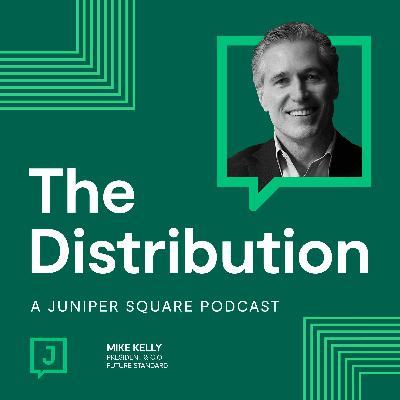
Mike Kelly joins Brandon Sedloff to share the journey that took him from a first-generation college student in Queens to co-President and Chief Investment Officer of Future Standard, an $88 billion alternative investment manager. He reflects on the formative experiences that shaped his investing philosophy, from cold-calling Lee Cooperman for an internship to working at Tiger Management and helping build FrontPoint. The conversation traces the evolution of alternatives from family offices and endowments to the private wealth channel, and how Future Standard has positioned itself at the center of that shift by building both distribution infrastructure and in-house investment capabilities.
They discuss:
How Mike broke into hedge funds by cold-calling Lee Cooperman and what he learned at Omega and Tiger Management
The historical arc of alternatives from the endowment model to today’s private wealth opportunity
The evolution of Franklin Square into Future Standard and the shift from packaging and distribution to internally managed strategies
Why the middle market offers structural advantages across private credit, private equity, and real assets
The case for rethinking 60 40 portfolios in a more inflationary, deglobalized macro regime
Links:
Future Standard - https://www.futurestandard.com/
Mike on LinkedIn - https://www.linkedin.com/in/mike-kelly-9b32166/
Brandon on LinkedIn - https://www.linkedin.com/in/bsedloff/
Juniper Square - https://www.junipersquare.com/
Topics:
(00:00:00) - Intro
(00:03:16) - Mike Kelly's career journey
(00:04:21) - Early influences and education
(00:06:43) - Breaking into the investment world
(00:19:47) - Joining Future Standard
(00:20:12) - Evolution of Future Standard
(00:22:45) - Distribution and internal management
(00:25:17) - Infrastructure and operations
(00:27:57) - The commitment of investment management
(00:28:52) - Future Standard's focus areas
(00:32:06) - Evergreen structures in investment
(00:39:13) - The new economic regime
(00:50:10) - The future of asset management
(00:54:35) - Conclusion and final thoughts
In this episode of The Distribution, Brandon Sedloff sits down with Michael Sidgmore to unpack the accelerating convergence between private markets and private wealth. Drawing on Michael’s experience across investing, advisory, and media, the conversation explores how shifting market structure, technology, and education are reshaping distribution strategies. They examine why the wealth channel is still early in its adoption of alternatives and what that means for GPs thinking about growth beyond institutions. The discussion also highlights how evolving business models on both the asset management and wealth management sides are beginning to collide.
They discuss:
Why education is the primary driver of private market adoption in the wealth channel
How different GP profiles should think about whether and how to pursue private wealth distribution
The rise of evergreen structures and the operational and cultural demands they place on managers
How consolidation in wealth management is changing allocator behavior and GP relationships
Why brand, identity, and authenticity matter more than ever for alternative managers
Links:
Broadhaven Ventures - https://www.broadhaven.vc/
Michael On LinkedIn - https://www.linkedin.com/in/michaelsidgmore/
Alt Goes Mainstream Podcast - https://altgoesmainstream.substack.com/podcast
Brandon on LinkedIn - https://www.linkedin.com/in/bsedloff/
Juniper Square - https://www.junipersquare.com/
Topics:
(00:00:00) - Intro
(00:03:05) - Michael's career journey and insights
(00:09:13) - Market structure and evolution
(00:20:13) - GP profiles and wealth channel strategies
(00:26:22) - Education and allocation in private markets
(00:29:43) - Navigating the wealth channel
(00:30:04) - Leveraging industry-wide education initiatives
(00:33:52) - Building a personal brand in finance
(00:41:57) - Shifting business models in wealth and asset management
(00:48:30) - Exciting prospects for the future
(00:53:01) - Conclusion and final thoughts

In this episode of The Distribution, Brandon Sedloff sits down with Lara Banks to explore her investing career and her long tenure at Makena Capital. Lara shares how her early background in energy, quantitative trading, and project finance shaped her perspective as an allocator, and how her role evolved as Makena expanded its private equity and venture platform. The conversation dives into Makena’s origins, its approach to serving endowments, foundations, and families, and how the firm balances innovation, customization, and disciplined portfolio construction in private markets. Together, they also discuss how talent, alignment, and long-term thinking drive Makena’s approach to manager selection and capital deployment across cycles.
They discuss:
Lara’s career path from energy and quantitative trading to leading private equity and venture investing at Makena
Makena Capital’s evolution from a Stanford endowment model to evergreen private equity and venture vehicles
The firm’s focus on emerging managers, independent sponsors, and people-driven investing
How Makena manages liquidity, pacing, and secondaries within evergreen private market portfolios
Current themes in private equity and venture, including AI, energy infrastructure, and biotech inflection points
Links:
Lara on LinkedIn - https://www.linkedin.com/in/lara-banks-4216a69/
Makena Capital - https://www.makenacap.com/
Brandon on LinkedIn - https://www.linkedin.com/in/bsedloff/
Juniper Square - https://www.junipersquare.com/
Topics:
(00:00:00) - Intro
(00:02:21) - Lara’s career journey
(00:08:06) - Leadership evolution at Makena Capital
(00:12:34) - Makena Capital's structure and customization
(00:17:48) - Role of an OCIO and client interaction
(00:20:39) - Focus on emerging managers and investment strategies
(00:27:49) - Private equity and venture capital insights
(00:34:51) - Managing liquidity in private markets
(00:40:37) - Trends and opportunities in venture capital
(00:47:06) - Conclusion and final thoughts
This episode of The Distribution features a live panel conversation moderated by Brandon Sedloff with Brian Cho, Mark Shoberg, and Mark Neely, recorded at iREOC. The discussion focuses on the growing importance of private wealth as a capital source for real estate operating companies and investment managers. Drawing from perspectives across family offices, OCIOs, and active operators, the panel unpacks how private wealth allocators think about portfolio construction, manager selection, and structure in today’s market. The conversation offers a candid look at what actually drives decisions behind the scenes and how sponsors can more effectively engage this increasingly influential channel.
They discuss:• How private wealth allocators approach portfolio construction across public markets, private equity, and real estate• The role of tax efficiency, liquidity preferences, and structure in private wealth investment decisions• What family offices and OCIOs look for beyond track record when evaluating real estate managers• How investor education differs across advisors, allocators, and end clients in the wealth channel• Where panelists see the most compelling opportunities in equity, debt, and special situations over the next 12 to 18 months
Links:
iREOC - https://irei.com/ireoc/
Brandon on LinkedIn - https://www.linkedin.com/in/bsedloff/
Juniper Square - https://www.junipersquare.com/
Mark Neely on LinkedIn - https://www.linkedin.com/in/mark-neely-6568269/
Mark Shoberg on LinkedIn - https://www.linkedin.com/in/mark-shoberg/
Brian Cho on LinkedIn - https://www.linkedin.com/in/brian-cho-66419222/
Topics:
(00:00:00) - Intro(00:02:09) - Meet the panelists(00:03:58) - Understanding private wealth(00:07:17) - Portfolio construction insights(00:09:55) - Investment preferences and structures(00:13:07) - Navigating real estate investments(00:21:36) - The importance of track record(00:27:53) - Operational due diligence in wealth channel(00:29:22) - Educating financial advisors and clients(00:31:47) - Customizing asset allocation for clients(00:33:13) - Challenges and strategies in wealth management(00:37:31) - Operational challenges in wealth management(00:39:25) - Effective communication and networking(00:45:04) - Current market trends and opportunities(00:50:38) - Audience Q&A and final thoughts

In this episode of The Distribution, Brandon Sedloff sits down with Phil Huber to unpack the evolution of private markets and their growing role in private wealth portfolios. Phil shares his path from a family RIA to leading portfolio solutions at Cliffwater, and explains why alternatives are shifting from a niche allocation to a core portfolio decision. The conversation explores how interval funds, multi-manager strategies, and improved liquidity frameworks are reshaping access to private equity and private credit for advisors. Along the way, Phil offers a clear, practical lens on education, structure, and risk management in an increasingly complex alternatives landscape.
They discuss:
Phil’s career journey from wealth management to asset management and his focus on alternatives
Why private markets are becoming an active allocation decision rather than an institutional afterthought
How interval funds work, including liquidity mechanics, eligibility, and portfolio fit
The role of multi manager and co investment strategies in diversification and fee efficiency
What advisors and CIOs look for when evaluating private market products for client portfolios
Links:
Phil on LinkedIn - https://www.linkedin.com/in/phil-huber/
Cliffwater - https://cliffwater.com/
Brandon on LinkedIn - https://www.linkedin.com/in/bsedloff/
Juniper Square - https://www.junipersquare.com/
Topics:
(00:00:00) - Intro
(00:04:32) - Phil Huber's early career and family influence
(00:10:52) - Transition to Cliffwater and focus on alternatives
(00:12:06) - Understanding private markets and co-investments
(00:25:57) - Cliffwater's funds and direct lending strategy
(00:28:01) - Cliffwater's view on direct lending
(00:30:28) - Challenges of traditional private market investments
(00:33:14) - Advantages of interval funds
(00:34:32) - Liquidity management in interval funds
(00:41:39) - Multi-manager vs. single manager strategies
(00:45:09) - Real assets and interval funds
(00:48:18) - Daily beta adjustments for private assets
(00:50:01) - Educating advisors and clients
(00:53:56) - Future trends in private markets
(00:56:07) - Conclusion and final thoughts
In this episode of The Distribution, Brandon Sedloff sits down with Jahan Moslehi to explore the long arc of building a retail real estate platform rooted in relationships, conviction, and operational discipline. Jahan shares his journey from immigrating to the US as a child to founding Bridge33 Capital, detailing how mentorship, trust, and hands-on execution shaped the firm’s growth. The conversation traces Bridge33’s evolution from its very first deal to a national portfolio, while unpacking why retail has proven far more resilient and misunderstood than many investors assume. Along the way, Jahan offers a candid look at scale, tenant relationships, and the realities of operating through multiple market cycles.
They discuss:
• How Bridge33 Capital was built from a single, highly challenged first deal into a national retail platform
• Why retail real estate is fundamentally a relationship-driven business and how scale changes competitive dynamics
• Lessons learned from mentorship, early conviction, and making decisions with imperfect information
• The operational intensity of retail and why hands-on ownership matters more than financial engineering
• Common misconceptions about retail and why select retailers and open-air centers continue to thrive
Links:
Jahan on LinkedIn - https://www.linkedin.com/in/jahan-moslehi-5ba04017/
Bridge33 Capital - https://www.bridge33capital.com/
Brandon on LinkedIn - https://www.linkedin.com/in/bsedloff/
Juniper Square - https://www.junipersquare.com/
Topics:
(00:00:00) - Intro
(00:03:22) - Jahan's early life and immigration story
(00:04:44) - Academic journey and career shift
(00:06:43) - Entering the real estate sector
(00:08:45) - Founding Bridge33 Capital
(00:09:37) - Challenges and early successes
(00:29:01) - Unexpected success with leasing
(00:32:54) - Building Bridge33's portfolio
(00:38:13) - Expanding and raising funds
(00:46:31) - The importance of relationships in retail
(00:52:32) - Future of Bridge33 and retail insights
In this episode of The Distribution, Brandon Sedloff sits down with Chris Schelling for a deep dive into the evolving intersection of private markets, alternatives, and private wealth. Chris shares his unconventional path into investing, from studying psychology to becoming a longtime allocator and advisor across institutional and wealth channels. The conversation explores how private markets have matured, why education remains a critical gap in the wealth space, and what it really takes to allocate capital effectively in opaque and complex markets. Drawing on decades of experience meeting thousands of managers, Chris offers a clear-eyed perspective on risk, return dispersion, and the structural shifts reshaping private capital.
They discuss:
How psychology, behavior, and incentives shape decision-making in private markets
The growing role of private wealth in alternatives and why institutional playbooks still matter
Risks like adverse selection, return dispersion, and misaligned incentives in private investments
Interval funds and why they can be effective tools for accessing private markets at scale
Chris’s outlook on private equity, private credit, hedge funds, venture, and real assets over the next two years
Links:
Aksia - https://www.aksia.com/
Chris on LinkedIn - https://www.linkedin.com/in/christopher-schelling/
Brandon on LinkedIn - https://www.linkedin.com/in/bsedloff/
Juniper Square - https://www.junipersquare.com/
Topics:
(00:00:00) - Intro
(00:03:12) - Chris’ background and career
(00:05:33) - The intersection of psychology and finance
(00:07:30) - Understanding capital markets and alternatives
(00:16:49) - The role of private markets in portfolios
(00:31:15) - Understanding interval funds
(00:32:36) - Managing risks and liquidity
(00:34:01) - Challenges and strategies in fund management
(00:35:25) - The importance of education in wealth management
(00:37:33) - Adapting to market trends and client needs
(00:39:55) - The role of large asset managers
(00:43:43) - Private markets and wealth management
(00:49:11) - Evaluating general partners (GPs)
(00:52:35) - Current trends in alternative investments
(01:00:23) - Conclusion and contact information
In this episode, Brandon Sedloff sits down with Willy Walker for a conversation on leadership, capital markets, and the evolution of Walker & Dunlop. Willy walks through his unconventional path into real estate, from early career experiences in Latin America to returning home to help scale a multi-generational family business. The discussion explores how personal ambition, insecurity, and long-term vision shaped both his leadership style and the firm’s growth into a publicly traded platform. Together, they also unpack current dynamics in multifamily, capital flows, and the role of media and personal platforms in building trust and credibility in the industry.
They discuss:
• Willy Walker’s career journey from nonprofit work and private equity to leading Walker & Dunlop
• Lessons from scaling a family-owned company into a public, diversified real estate platform
• How public market expectations changed strategic planning and capital allocation decisions
• The state of multifamily in 2025, including supply, rent trends, and capital flows
• The origins and impact of the Walker Webcast as a long-term communication and trust-building tool
Links:
Willy on LinkedIn - https://www.linkedin.com/in/willy-walker/
The Walker Webcast on YouTube - https://www.youtube.com/playlist?list=PL_QkMqEzOkzNmWUe9kpfRJ4213jIh6LNk
Brandon on LinkedIn - https://www.linkedin.com/in/bsedloff/
Juniper Square - https://www.junipersquare.com/
Topics:
(00:00:00) - Intro
(00:03:29) - Willy’s career journey
(00:18:44) - Leadership and business growth
(00:34:03) - Post-financial crisis IPO challenges
(00:37:38) - Diversification strategy
(00:41:56) - Investment management business evolution
(00:47:29) - Multifamily market trends in 2025
(00:53:33) - Capital flows and market dynamics
(01:01:29) - Building a personal brand with Walker webcast
(01:08:20) - Conclusion and final thoughts
In this episode of The Distribution, Brandon Sedloff sits down with Jeff Beckham to discuss building institutional real estate platforms, generating operational alpha, and scaling founder-led investment firms. Jeff walks through his career from investment banking to global real estate investing and explains how those experiences shaped his approach as Chief Investment Officer at Buckingham. The discussion dives deep into Buckingham’s focus on the living sector, vertical integration, and why discipline and process matter most in today’s market environment.
They discuss:
• Jeff’s career path from Morgan Stanley to leading investment platforms across Europe and the US
• Why Buckingham focuses exclusively on the living sector across multifamily, student housing, build-to-rent, and active adult
• How vertical integration across development, construction, and property management drives operational alpha
• The investment case for Midwest, Southeast, and Mountain West markets versus coastal markets
• Balancing entrepreneurial deal-making with institutional processes, accountability, and scale
Links:
Buckingham Companies - https://buckingham.com/
Jeff on LinkedIn - https://www.linkedin.com/in/w-jeffrey-beckham-2ab2712/
Brandon on LinkedIn - https://www.linkedin.com/in/bsedloff/
Juniper Square - https://www.junipersquare.com/
Topics:
(00:00:00) - Intro
(00:04:54) - Jeff's career journey
(00:12:20) - Joining Buckingham and real estate insights
(00:19:51) - Buckingham's investment strategy
(00:28:45) - The appeal of build-to-rent (BTR) housing
(00:29:43) - Investment strategies in the living sector
(00:31:18) - Challenges and opportunities in the living sector
(00:35:47) - Operational focus and deal sourcing
(00:38:57) - Role and responsibilities of a CIO
(00:44:09) - Building systems for future growth
(00:46:37) - Balancing immediate and long-term goals
(00:52:29) - Excitement for future opportunities
(00:53:55) - Conclusion and contact information
In this episode of The Distribution, Brandon Sedloff sits down with Casey Cummings for a deep conversation on building a real estate investment firm over multiple decades and market cycles. Casey walks through his personal path into the business, the evolution of Ram Realty Advisors, and the strategic decisions that shaped its transition from family capital to institutional platforms. The discussion spans multifamily and grocery-anchored retail, with a strong focus on operational discipline, local market knowledge, and long-term capital alignment. Together, they explore how staying focused by geography and asset type has driven both growth and resilience.
They discuss:
Casey’s early career lessons and how hands-on operating experience shaped his leadership style
The evolution of Ram Realty Advisors from family-backed projects to institutionally structured funds
Why deep local market knowledge and on-the-ground decision-making create a competitive edge
The differences in risk, supply, and opportunity across multifamily and grocery-anchored retail
How Casey evaluates current macro uncertainty and positions the portfolio for unknown risks
Links:
Ram Realty Advisors - https://www.ramrealestate.com/
Casey on LinkedIn - https://www.linkedin.com/in/casey-cummings-16a618119/
Brandon on LinkedIn - https://www.linkedin.com/in/bsedloff/
Juniper Square - https://www.junipersquare.com/
Topics:
(00:00:00) - Intro
(00:01:43) - Casey Cummings' background and early career
(00:06:24) - Building and expanding Ram Realty Advisors
(00:13:19) - Strategic decisions and institutional growth
(00:21:39) - Current operations and business model
(00:27:59) - Dodging bullets in real estate
(00:28:36) - Evolution of project quality
(00:29:55) - On-the-ground insights
(00:34:28) - Balancing institutional structure and creativity
(00:35:12) - Organizing acquisition teams
(00:37:26) - Multifamily portfolio overview
(00:38:47) - Grocery-anchored retail explained
(00:44:21) - Future opportunities and challenges
(00:44:51) - Macro-level economic conflicts
(00:48:20) - Retail and multifamily market dynamics
(00:53:28) - Biggest risks and concerns
(00:56:20) - Conclusion and final thoughts
In this episode of The Distribution, Brandon Sedloff sits down with Tony Avila for a detailed discussion on the evolution of residential land development and homebuilding finance. Tony walks through his multi-decade career, from early exposure to real estate and investment banking to building platforms focused on capital solutions for developers and regional homebuilders. The conversation explores how institutional capital, regulatory shifts, and interest rate cycles have reshaped the housing ecosystem, and why today’s environment presents a distinct opportunity in land and construction lending. Together, they break down the mechanics behind land development loans, underwriting discipline, and the structural gaps left by traditional banks.
They discuss:
• Tony Avila’s career path through real estate workouts, investment banking, and homebuilding M&A
• The institutionalization of homebuilding and the role of public markets and consolidation
• Distressed land and development opportunities following the financial crisis
• Why banks have pulled back from land and construction lending and how private capital is filling the gap
• The fundamentals of land development loans, underwriting risk, and housing affordability
Links:
Tony on LinkedIn - https://www.linkedin.com/in/tony-avila-8879487/
Avila Real Estate Capital - https://www.avilacapllc.com/
Brandon on LinkedIn - https://www.linkedin.com/in/bsedloff/
Juniper Square - https://www.junipersquare.com/
Topics:
(00:00:00) - Intro
(00:01:41) - Tony Avila's background and career
(00:06:03) - The evolution of home building and institutionalization
(00:08:46) - Mergers, acquisitions, and public listings
(00:12:39) - Encore and distressed market opportunities
(00:17:41) - Pivoting strategies in a changing market
(00:20:01) - Current business structure and focus
(00:24:58) - Understanding the fundamentals and opportunities
(00:27:14) - Understanding land development loans
(00:28:54) - Key considerations for land loans
(00:30:43) - Distinguishing developers from builders
(00:32:21) - Funding and underwriting strategies
(00:39:35) - Navigating institutional capital
(00:48:55) - Addressing housing affordability
(00:53:16) - Conclusion and contact information
Neville Rhone joins host Brandon Sedloff on The Distribution for a thoughtful conversation about his path from engineering to real estate, the experiences that shaped his investment philosophy, and the evolution of Arc Capital Partners. He reflects on early lessons from Morgan Stanley and Canyon Partners, the formation of Arc, and why the middle market remains the most compelling area for generating durable returns. Neville also breaks down today’s capital-constrained environment, the structural challenges facing owners, and how Arc is positioning itself as a solution provider during a period of dislocation. The discussion closes with a look at where he sees the greatest opportunities ahead and what GPs should know before reaching out.
They discuss:
• Neville’s early influences and shift from engineering into real estate
• Key takeaways from roles at Morgan Stanley and Canyon Partners
• The founding of Arc Capital Partners and the firm’s middle-market focus
• How today’s capital crisis is creating opportunities for structured solutions
• The sectors and geographies Arc is prioritizing over the next several years
Links:
Neville on LinkedIn - https://www.linkedin.com/in/neville-rhone-jr-60936a3/
Arc Capital Partners - https://arccapitalpartners.com/
Brandon on LinkedIn - https://www.linkedin.com/in/bsedloff/
Juniper Square - https://www.junipersquare.com/
Topics:
(00:00:00) - Intro
(00:02:09) - Neville's background and career
(00:13:07) - Joining Canyon Partners
(00:19:26) - Founding Arc Capital Partners
(00:23:19) - Early challenges and successes
(00:27:52) - The importance of investing during difficult times
(00:29:55) - Current state and future of Arc Capital
(00:32:25) - Navigating capital crises
(00:33:11) - Advice for aspiring institutional capital raisers
(00:35:44) - Opportunities in the middle market
(00:39:49) - Arc Capital's investment focus
(00:47:19) - Future opportunities and focus areas
(00:53:46) - Conclusion and contact information

 1
1David Moore joins Brandon Sedloff on The Distribution for a candid conversation about his unconventional path into real estate, the early grind of building Knightvest, and how his team has scaled into one of the country’s most active multifamily owner operators. He reflects on growing up in an entrepreneurial household, navigating early career uncertainty, and stumbling into real estate through necessity rather than design.
David walks through the chaotic early days of buying properties at auction, running them by hand, and slowly transforming that experience into a vertically integrated, disciplined, and highly scaled platform. He also shares his perspective on today’s operating environment, how he thinks about acquisitions, and what it takes to sustain performance across cycles.
They discuss:
• The influence of David’s upbringing and the entrepreneurial parallels he saw in his father’s work
• Knightvest’s origin story, including buying its first apartments at a tax auction and learning the business on-site
• How the firm evolved from survival mode to institutional partnerships and large-scale operations
• The decision to adopt a fund model and what it means for long-term continuity
• Knightvest’s renovation philosophy, vertical integration, and localized acquisition strategy
• Current portfolio trends, market pressures, and how the team is preparing for future opportunities
Links:
Knightvest Capital - https://knightvestcapital.com/
David on LinkedIn - https://www.linkedin.com/in/david-moore-03005a39/
Brandon on LinkedIn - https://www.linkedin.com/in/bsedloff/
Juniper Square - https://www.junipersquare.com/
Topics:
(00:00:00) - Intro
(00:01:53) - David’s background and career
(00:05:35) - Transition to real estate and founding Knightvest
(00:09:22) - Early struggles and first investments
(00:18:31) - Scaling the business and institutional partnerships
(00:22:31) - Current state of Knightvest
(00:26:43) - Challenges in fundraising
(00:30:40) - Scaling
(00:32:34) - Renovation philosophies
(00:36:36) - Vertical integration pros and cons
(00:41:15) - Market trends and portfolio insights
(00:44:54) - Future strategies and acquisitions
(00:48:29) - Choosing the right investment partner
(00:52:56) - Conclusion and contact information
Brandon Sedloff marks the 100th episode of The Distribution with a reflective deep dive into the most consistent themes, lessons, and market insights gathered across his conversations with leaders throughout private markets. He revisits the origins of the show, shares his perspective on today’s uniquely challenging environment for investment managers, and distills the personal, operational, and strategic principles that repeatedly surface in his discussions. From authenticity and storytelling to operational excellence, shifting capital structures, and the growing role of technology and AI, Brandon outlines what it takes to build a durable, differentiated firm in an increasingly competitive landscape.
He discusses:
• The personal nature of private markets and why authenticity, relationships, and lifelong learning consistently define top performers
• The growing emphasis on building durable enterprises, intentional culture, and leadership rooted in patience, transparency, and trust
• How managers can create true differentiation by deeply understanding their unique advantages and reimagining organizational structure
• Major strategy themes across private credit, living sectors, digital infrastructure, energy transition, and global market opportunities
• The evolution of capital structures, including open-end vehicles, the rise of the private wealth channel, and increasing consolidation and GP-strategic capital activity
• The operational and technological shifts reshaping the industry, including data readiness, outsourcing undifferentiated work, and the cultural mindset required for AI adoption
• Key career, leadership, and strategic advice distilled from 100 episodes of conversations with private markets leaders
Links:
Brandon on LinkedIn - https://www.linkedin.com/in/bsedloff/
Juniper Square - https://www.junipersquare.com/
Topics:
(00:00:00) - Intro
(00:02:36) - Themes across 100 podcast episodes
(00:06:17) - Key leadership traits from guests
(00:07:45) - Operational alpha
(00:11:55) - Trends in investment style
(00:16:42) - GP staking and strategic M&A
(00:19:34) - AI
(00:23:16) - Advice for GPs and operators
(00:25:59) - Innovation
(00:30:59) - Predictions for 2026
Nick Bienstock joins host Brandon Sedloff on The Distribution for a detailed conversation about his path into real estate, the evolution of Savanna, and what he is seeing across the New York and West Palm Beach markets. He reflects on early experiences that shaped his investing philosophy, the formation of Savanna’s vertically integrated platform, and the strategic discipline required to operate in complex urban environments. Nick also offers a ground-level view of today’s office landscape, including the bifurcation between high-quality assets and aging buildings, as well as the emerging opportunities driven by market repricing and renewed demand. The discussion closes with an exploration of Savanna’s major new development in West Palm Beach and the long-term demographic and economic trends fueling the region’s growth.
They discuss:
• Nick’s early exposure to real estate, his education, and foundational career experiences
• The creation and long-term partnership behind Savanna, including its vertically integrated model
• How New York’s office market has repriced, recovered, and bifurcated since COVID
• Why institutional investors are slowly returning to office and how transactions are shifting
• The development story and long-term thesis behind Savanna’s West Palm Beach residential project
Links:
Savanna - https://savannafund.com/
Brandon on LinkedIn - https://www.linkedin.com/in/bsedloff/
Juniper Square - https://www.junipersquare.com/
Topics
(00:00:00) - Intro
(00:01:32) - Nick's background and early career
(00:12:24) - Founding and growth of Savanna
(00:17:54) - Savanna's business model and strategy
(00:22:16) - Vertical integration and market focus
(00:26:41) - Current market trends and office sector insights
(00:29:31) - New York's resilient recovery
(00:32:25) - Challenges and strategies in the office market
(00:47:22) - West Palm Beach: a new frontier
(00:53:39) - Conclusion and final thoughts
Jeff Feinstein joins host Brandon Sedloff on The Distribution for a deep dive into the evolution and future of opportunity zone investing. The conversation traces Jeff’s path from a decades-long career in technology to building Pinnacle Partners, a firm dedicated exclusively to opportunity zone development. Jeff explains how tax policy shaped his investing journey, why OZ legislation has become a powerful tool for individual investors, and how Pinnacle structures institutional-quality multifamily and build-to-rent projects across thousands of eligible zones. Throughout the discussion, he highlights the mechanics, benefits, risks, and real-world execution behind ground-up OZ development.
They discuss:
• Jeff’s transition from tech operator to real estate fund manager and OZ pioneer
• How opportunity zones were created, how they work, and what changed under OZ 2.0
• Why Pinnacle focuses on institutional underwriting, JV partnerships, and multi-asset funds
• The role of RIAs, family offices, and private wealth in OZ distribution
• What makes a strong or weak development partner in OZ projects
• Key risks, real estate fundamentals, and why policy permanence matters
• Markets and asset types Pinnacle favors, including workforce housing, BTR, and rural zones
Links:
Pinnacle Partners - https://pinnacleoz.com/
Jeff on Linkedin - https://www.linkedin.com/in/jefffeinstein/
Brandon on LinkedIn - https://www.linkedin.com/in/bsedloff/
Juniper Square - https://www.junipersquare.com/
Topics:
(00:00:00) - Intro
(00:02:48) - Jeff's career and background
(00:08:30) - The role of tax policy in investing
(00:11:09) - The launch of Pinnacle Partners
(00:13:51) - The evolution of opportunity zones
(00:17:07) - How opportunity zones are created
(00:20:20) - Pinnacle Partners' strategy and success
(00:23:37) - Pinnacle Partners' approach to development
(00:25:19) - Capital strategy and fund structure
(00:26:46) - Who benefits from opportunity zones?
(00:30:25) - Strategies for nurturing investor relationships
(00:31:34) - The importance of tax efficiency
(00:37:29) - Challenges and opportunities in real estate
(00:40:20) - Selecting and evaluating development partners
(00:44:26) - Future market trends and investment strategies
(00:48:59) - Conclusion and contact information

Comments

Download from Google Play

Download from App Store
 United States