


 Claim Ownership
Minimum Competence
Subscribed: 15Played: 1,781
Subscribe

© Andrew Leahey
Description
Minimum Competence is your daily companion for legal news, designed to bring you up to speed on the day’s major legal stories during your commute home. Each episode is short, clear, and informative—just enough to make you minimally competent on the key developments in law, policy, and regulation. Whether you’re a lawyer, law student, journalist, or just legal-curious, you’ll get a smart summary without the fluff. A full transcript of each episode is available via the companion newsletter at www.minimumcomp.com.
www.minimumcomp.com
www.minimumcomp.com
783 Episodes
Reverse
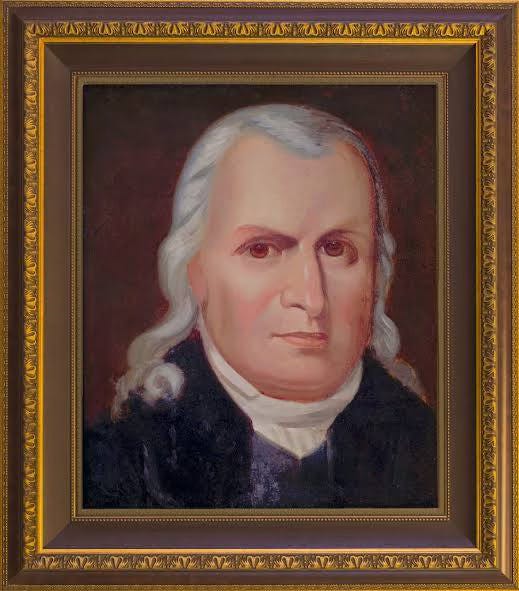
This Day in Legal History: SCOTUS ImpeachmentOn March 12, 1804, the U.S. House of Representatives voted to impeach Supreme Court Justice Samuel Chase. Chase, a Federalist appointed to the Court in 1796, had become a controversial figure during a period of intense political division between the Federalists and the Democratic-Republicans. Members of Congress accused him of allowing his political views to influence his conduct on the bench. Much of the criticism focused on Chase’s behavior during trials brought under the Alien and Sedition Acts, where he was alleged to have treated defendants and their lawyers unfairly. The House approved several articles of impeachment claiming that Chase’s courtroom conduct showed bias and undermined the impartial administration of justice.The impeachment moved to the Senate for trial in early 1805, with Vice President Aaron Burr presiding over the proceedings. After weeks of arguments and testimony, the Senate failed to reach the two-thirds majority required for conviction on any article. As a result, Chase was acquitted and remained on the Supreme Court until his death in 1811. The outcome established an important precedent about the limits of impeachment as a tool against federal judges. Although Congress has the constitutional authority to impeach judges, the Chase trial suggested that impeachment should not be used simply because legislators disagree with a judge’s legal or political views.In the years that followed, the case came to symbolize a commitment to judicial independence within the federal system. By declining to remove Chase from office, the Senate reinforced the idea that judges should be protected from political retaliation for their rulings. The episode remains the only time a sitting Supreme Court justice has ever been impeached by the House of Representatives. Today, the Chase impeachment is often cited in discussions about the balance between judicial accountability and the need for an independent judiciary.A federal antitrust case against Live Nation Entertainment has stalled as negotiations over a proposed settlement continue and several states resist the deal. The lawsuit, brought by the U.S. Department of Justice Antitrust Division and numerous state attorneys general, alleges that Live Nation used monopolistic practices to dominate the live concert industry after acquiring Ticketmaster in 2010. During a recent court hearing, Arun Subramanian criticized both sides for failing to notify him earlier that settlement discussions were underway. He said the parties waited until just before trial to reveal that negotiations were close to completion, which he suggested was improper conduct.The proposed settlement would require Live Nation to allow competitors to sell tickets at some of its venues, limit certain ticket service fees to 15%, sell control of at least 13 amphitheaters, and loosen exclusivity arrangements. The company would also create a settlement fund exceeding $280 million to resolve state claims. However, attorneys general from many of the states involved have objected because the agreement does not require Live Nation to divest Ticketmaster. More than two dozen states have asked the court to declare a mistrial and restart proceedings later, though others support or are still evaluating the settlement.Judge Subramanian has not yet ruled on the mistrial request and instead urged the parties to continue negotiations immediately at the courthouse. He indicated that if a broader agreement cannot be reached soon, the court will determine the next procedural step. Live Nation maintains that the industry remains competitive and argues that the plaintiffs have selectively used data to support their allegations. The dispute highlights the complexity of resolving large antitrust cases involving both federal and state enforcement authorities.Judge Fumes As Live Nation Antitrust Trial Remains In Limbo - Law360ExxonMobil has announced plans to move its legal incorporation from New Jersey to Texas, citing the state’s increasingly business-friendly legal environment. In a proxy statement to shareholders, the company explained that most of its senior leadership and corporate functions have already been located in Texas for decades, making the change largely formal rather than operational. Executives said Texas offers a more predictable, statute-based framework for corporate governance and regulation.A major factor behind the move is the creation of the Texas Business Court in 2024. Exxon also pointed to recent updates to the Texas Business Organizations Code that clarify standards for corporate decision-making and director conduct. Company leadership believes these reforms create a legal climate that supports economic growth and shareholder value.Exxon joins other companies that have relocated their corporate domicile to Texas, including Tesla and Coinbase. State officials have promoted these moves as evidence that Texas is becoming a strong alternative to traditional corporate hubs such as Delaware. Recent reforms include legislation codifying the Business Judgment Rule, which limits liability for corporate directors unless misconduct like fraud is proven.Texas has also launched broader initiatives to attract corporations, including approval for the upcoming Texas Stock Exchange, expected to begin operations in 2026. Supporters argue these efforts strengthen the state’s reputation as a center for corporate formation and governance. Exxon’s relocation reflects this broader trend of companies seeking jurisdictions with legal systems designed to favor corporate decision-making and reduce litigation risk.ExxonMobil Plans Move To Texas, Citing Biz-Friendly Milieu - Law360ExxonMobil Board unanimously recommends redomiciling the company from New Jersey to TexasMillions of PlayStation users have begun a major antitrust class action in the United Kingdom against Sony Interactive Entertainment, seeking about £5 billion in damages. The case is being heard before the Competition Appeal Tribunal and is expected to last around ten weeks. The lawsuit is led by consumer advocate Alex Neill, who represents millions of PlayStation customers.The claim alleges that Sony unlawfully controls the digital PlayStation ecosystem, limiting competition and forcing users to buy games and add-ons only through the company’s online store. According to the plaintiffs, Sony pre-installs the PlayStation Store on its consoles and prevents users from installing alternative software or accessing other digital marketplaces. As a result, consumers allegedly become locked into Sony’s platform and cannot shop for cheaper options. Lawyers for the consumers argue that these restrictions allow Sony to charge higher prices and maintain strong profit margins.A major issue in the case is how the relevant market should be defined. Sony plans to argue that its consoles and digital services operate as part of a single “systems market,” where hardware and software function as one integrated product. The plaintiffs disagree, claiming the console is only the initial purchase and that digital games and add-ons form separate “aftermarkets” where Sony exercises additional control. They argue consumers often cannot predict future costs for games or downloadable content when they buy the console, making them vulnerable to higher prices later.Sony is expected to argue that it simply created a platform that enables game publishers to sell products efficiently and that it is entitled to control access to its own storefront and intellectual property. The company maintains that these practices are legitimate business decisions rather than anticompetitive conduct. The tribunal will ultimately decide whether Sony’s control of its platform amounts to unlawful market dominance under U.K. competition law.PlayStation Users Say Sony Made Them ‘Captives’ In £5B Trial - Law360 UKPlayStation Officially Facing $2.7bn Lawsuit That Could Change It Forever This is a public episode. If you'd like to discuss this with other subscribers or get access to bonus episodes, visit www.minimumcomp.com/subscribe
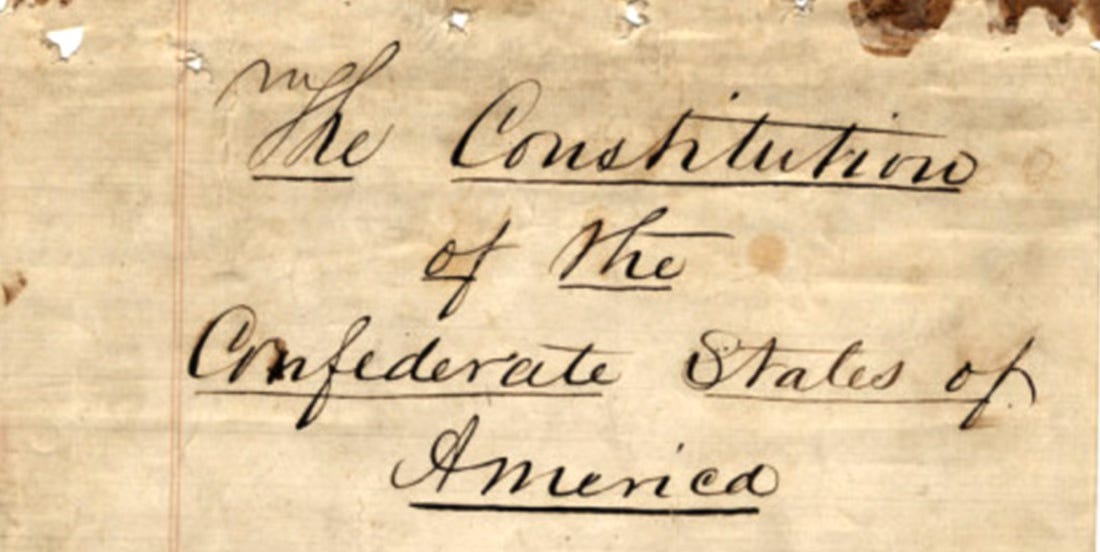
This Day in Legal History: Confederate States ConstitutionOn March 11, 1861, delegates of the newly formed Confederate States adopted the Constitution of the Confederate States of America in Montgomery, Alabama. The document closely resembled the United States Constitution in structure, language, and institutional design, reflecting the Confederacy’s claim that it was preserving the original constitutional order rather than rebelling against it. But the similarities masked a fundamental and disturbing difference: the Confederate Constitution explicitly protected and entrenched slavery. Unlike the U.S. Constitution, which used indirect language around the institution, the Confederate document openly required that slavery be recognized and protected in Confederate territories. It also prohibited any law impairing the right of property in enslaved people, making the protection of slavery a central constitutional commitment rather than a political compromise.The constitution also attempted to limit certain federal powers, reflecting long-standing Southern arguments about states’ rights and suspicion of centralized authority. For example, it restricted tariffs and internal improvements, policies many Southern leaders believed favored Northern industrial interests. The document also changed the structure of the executive branch by providing for a single six-year presidential term instead of allowing reelection. These provisions were intended to prevent what Confederate leaders viewed as excessive federal power or political manipulation. Despite these structural adjustments, the document largely replicated the American constitutional framework while placing slavery at its legal core.The legal significance of the Confederate Constitution lies in how clearly it reveals the central constitutional dispute of the Civil War era. While defenders of the Confederacy often framed secession as a fight over federalism or states’ rights, the constitutional text itself makes clear that preserving slavery was a primary objective. By embedding the protection of slavery directly into its governing charter, the Confederacy transformed the defense of human bondage into a foundational legal principle. The document therefore stands as a stark example of how constitutional law can be used not only to secure liberty, but also to entrench injustice.Federal judicial officials announced plans to speed up development of a new electronic case management system after a major cyber breach exposed weaknesses in the courts’ existing technology. The decision was discussed during a closed meeting of the Judicial Conference, the federal judiciary’s main policymaking body, held at the U.S. Supreme Court building. Judge Michael Scudder, who leads the conference’s information technology committee, said recent cyber intrusions made it clear that modernization can no longer proceed at its previous pace. The breach, disclosed in July 2025, raised concerns that foreign actors may have accessed sensitive materials, including sealed files and information about confidential informants. The incident followed an earlier cybersecurity breach involving the federal courts in 2020.In response, the judiciary plans to begin testing components of the upgraded system in six courts during 2026. Officials hope to begin rolling out parts of the new system to federal district courts nationwide next year. Appellate and bankruptcy courts would receive updates afterward. Judiciary leaders now expect that most of the modernization work could be completed within two to three years, a faster timeline than originally planned. The project also aims to improve the search tools used in PACER, the public database that allows users to access federal court filings. Despite long-standing criticism from lawmakers and transparency advocates, the judiciary does not currently plan to eliminate PACER’s user fees. Court officials say those fees provide roughly 85 percent of the funding for the modernization effort.US judiciary to fast-track court records system upgrade after hacking | ReutersFederal and state lawmakers are considering measures that could reshape lawsuits involving the weedkiller Roundup as Bayer continues to face large-scale litigation over the product. In Kansas, legislators debated a bill supported by Bayer that would prevent individuals from suing pesticide manufacturers for failing to warn that their products might cause cancer or other illnesses. The proposal is part of a broader legislative strategy by the company, which has supported similar bills in roughly a dozen states. These efforts come as Bayer prepares a proposed $7.25 billion settlement aimed at resolving most of the roughly 65,000 remaining lawsuits alleging that Roundup caused non-Hodgkin lymphoma.Bayer inherited the litigation when it purchased Monsanto for $63 billion in 2018. Since then, the company has faced extensive legal costs and large verdicts, contributing to significant financial losses. Supporters of the Kansas bill argue that without such protections, pesticide manufacturers might remove widely used products from the market or raise prices, which could affect farmers and agricultural businesses. Critics, however, question the Environmental Protection Agency’s conclusion that glyphosate—the main ingredient in Roundup—is unlikely to cause cancer and argue the legislation would shield companies from accountability.The debate is occurring alongside other legal developments. The U.S. Supreme Court is scheduled to hear arguments in April about whether federal pesticide law requires Bayer to warn consumers about potential cancer risks. Meanwhile, members of Congress are considering a farm bill provision that would require uniform pesticide labels nationwide, preventing states or local governments from mandating warnings different from those approved by the EPA. A Missouri judge has also given preliminary approval to Bayer’s proposed $7.25 billion class-action settlement, with a final decision expected later this year.Bayer takes its multi-front battle on pesticide liability to Kansas | ReutersA federal judge in Manhattan is set to review a proposed agreement that would end the U.S. government’s criminal prosecution of Turkey’s state-owned Halkbank. The case accused the bank of helping Iran bypass U.S. economic sanctions through financial transactions. Prosecutors and the bank reached a deferred prosecution agreement, which would pause the case while the bank demonstrates compliance with new restrictions. Under the proposal, Halkbank must avoid transactions benefiting Iran and hire an independent monitor to review its sanctions and anti-money-laundering controls.The agreement does not require the bank to pay a fine or admit wrongdoing. If Halkbank complies with the conditions, the criminal charges would likely be dismissed after the monitoring period. Prosecutors have asked the judge to pause the proceedings for 90 days so the bank can begin demonstrating compliance. Although judges generally have limited authority to reject deferred prosecution agreements, the court may still review the deal to ensure it follows established legal precedent.The resolution could ease tensions between the United States and Turkey, which had been strained by the case. U.S. officials indicated that resolving the prosecution also carried diplomatic importance during negotiations related to Turkey’s role in securing a ceasefire between Israel and Hamas in 2025. The announcement of the deal caused Halkbank’s share price to rise sharply. Turkish President Recep Tayyip Erdoğan had previously criticized the case as politically motivated.Judge to weigh Halkbank, US prosecutors’ resolution to criminal case | Reuters This is a public episode. If you'd like to discuss this with other subscribers or get access to bonus episodes, visit www.minimumcomp.com/subscribe

This Day in Legal History: Blue Sky LawsOn March 10, 1911, Kansas enacted the first “blue sky law” in the United States, marking a significant development in the regulation of securities markets. The statute was designed to protect investors from fraudulent investment schemes that had become increasingly common in the early twentieth century. At the time, promoters frequently sold speculative securities with little oversight and few consequences if the ventures failed. Kansas lawmakers responded by creating a system that required securities offerings to be reviewed before they could be sold to the public. State officials were given authority to examine proposed investments and determine whether they were legitimate.The name “blue sky law” reflected the legislature’s concern that many promoters were selling investments backed by nothing more than empty promises. Lawmakers wanted to prevent the sale of securities that had no real value or financial foundation. Kansas banking commissioner Joseph Norman Dolley played a central role in advocating for the law and persuading the legislature to adopt stronger investor protections. His efforts reflected growing public concern about financial fraud and the need for government oversight of securities markets.The Kansas statute quickly became a model for other states. Within a few years, many states adopted their own versions of blue sky laws, creating a patchwork system of state-level securities regulation. These laws helped establish the principle that governments could require disclosure and review before securities were sold to the public. The idea later influenced the development of federal securities regulation during the New Deal era. In particular, the framework helped shape the Securities Act of 1933, which created nationwide disclosure requirements for securities offerings.Live Nation Entertainment has reached a proposed settlement with the U.S. Department of Justice in a major antitrust case challenging the company’s dominance in concert promotion and ticketing. The agreement was disclosed during a court hearing and could resolve part of a lawsuit brought by federal regulators and more than two dozen states. Live Nation is also negotiating separately with state attorneys general in an effort to reach a broader nationwide resolution of related claims.Under the proposed deal, the company would pay roughly $200 million in damages to participating states and accept structural reforms aimed at reducing its market power. Regulators had argued that Live Nation’s control of venues, artist promotion, and ticketing—particularly through Ticketmaster—allowed the company to inflate prices and limit competition. The lawsuit was filed in 2024 and initially sought to break up the company by forcing a sale of Ticketmaster.The settlement instead focuses on changing how the ticketing market operates. Ticketmaster would be required to open parts of its technology platform to competing ticket sellers, allowing third-party companies to list tickets directly through its system. The deal would also limit the length of Live Nation’s exclusive contracts with venues to four years and permit venues to allocate some ticket inventory to rival platforms.The case gained political attention after widespread complaints about long online queues and high prices during the 2022 Taylor Swift Eras Tour ticket sales. A federal judge had allowed the antitrust case to proceed to trial after rejecting Live Nation’s attempt to dismiss it earlier this year. If finalized, the settlement would impose oversight and competition requirements on the company rather than break it up.Live Nation reaches settlement with DOJ in antitrust case | ReutersDemocratic U.S. senators plan to introduce legislation that would extend the time prosecutors have to bring foreign bribery cases from five years to ten. The proposal, called the FCPA Reinforcement Act, is led by Senators Elizabeth Warren and Dick Durbin along with several other Democratic lawmakers. It responds to recent Justice Department decisions to scale back enforcement of the Foreign Corrupt Practices Act (FCPA), a 1977 law that prohibits companies operating in the United States from bribing foreign officials.Supporters of the bill argue that international corruption investigations are complex and often take years to uncover, making the current five-year statute of limitations too short. The proposed law would temporarily extend the deadline for bringing anti-bribery charges to ten years for an eight-year period. Lawmakers say the change is meant to ensure companies can still be held accountable for misconduct even if enforcement priorities shift.The proposal also signals to corporations that compliance obligations remain important despite the current enforcement slowdown. Some legal experts worry that reduced federal enforcement could lead companies to scale back anti-corruption compliance programs or stop voluntarily reporting violations. Although the bill may face difficulty passing in the current Congress, it indicates that some lawmakers want to preserve strong anti-bribery enforcement and may pursue stricter oversight in the future.US lawmakers plan bill allowing 10 years to bring bribery cases | ReutersA divided federal appeals court has refused to allow the Trump administration to end immigration protections for more than 350,000 Haitians living in the United States. In a 2–1 decision, the U.S. Court of Appeals for the D.C. Circuit declined to pause a lower court ruling that blocked the Department of Homeland Security from terminating Haiti’s Temporary Protected Status (TPS). The ruling means the protections will remain in place while the administration continues its appeal.TPS is a humanitarian program that allows people from certain countries facing crises—such as armed conflict, natural disasters, or political instability—to remain in the United States temporarily and obtain work authorization. Haitians first received TPS after the devastating 2010 earthquake, and the designation has been repeatedly renewed because of ongoing instability in the country.The Trump administration sought to end Haiti’s TPS designation as part of a broader effort to scale back the program, arguing that it was never intended to function as long-term legal status. But a federal district judge previously ruled that the government’s attempt to terminate the protection likely violated both TPS procedures and constitutional equal-protection principles. The appeals court majority agreed that sending Haitian migrants back now could expose them to severe violence and humanitarian risks due to Haiti’s deteriorating conditions.One judge dissented, arguing the case was legally similar to disputes where courts allowed the administration to end TPS protections for Venezuelans. The Department of Homeland Security said it plans to appeal the ruling to the U.S. Supreme Court. For now, the decision preserves legal status and work authorization for hundreds of thousands of Haitian immigrants while the litigation continues.Trump cannot end protections for 350,000 Haitians, US appeals court rules | ReutersMy column for Bloomberg this week examines the surprising milestone that renewable energy generated 26% of U.S. electricity in 2025—even as federal clean-energy incentives were being rolled back. At first glance, that record share might suggest the transition to renewables is unstoppable. In reality, much of the current growth reflects investment decisions made years earlier, when generous subsidies from the Inflation Reduction Act and related policies were still in place. Large wind and solar projects often take three to seven years to move from financing and permitting to full operation. That means many facilities coming online today were funded under a very different policy environment than the one developers face now.Recent changes to federal tax policy have scaled back or eliminated several incentives that previously supported renewable development and electric vehicle adoption. These changes do not immediately halt construction, but they alter the financial calculations for the next generation of projects. Renewable energy projects rely heavily on financing structures that incorporate tax credits, equity partnerships, and long-term debt. When incentives shrink or become uncertain, developers must either accept greater risk or secure more expensive capital. At the same time, unresolved federal rulemaking and regulatory uncertainty are adding another layer of caution for investors. Although wind and solar technology costs have declined and can remain competitive with fossil fuels, policy instability can still erode project margins.The key point is that energy statistics describe what is already built, while investment decisions determine what the energy system will look like years from now. Current renewable growth may therefore reflect past policy rather than present conditions. Financing data already shows signs of slowing investment in green energy. To maintain steady development, policymakers should avoid abrupt tax-credit expirations and instead adopt predictable, multi-year phaseouts that allow markets to adjust. Agencies could also reduce uncertainty by finalizing or withdrawing proposed energy regulations within clear timelines. Stable rules make it easier for investors to commit capital to projects designed to operate for decades. The next investment cycle will reveal whether today’s policy environment supports continued energy expansion or discourages it. This is a public episode. If you'd like to discuss this with other subscribers or get access to bonus episodes, visit www.minimumcomp.com/subscribe

This Day in Legal History: The AmistadOn March 9, 1841, the U.S. Supreme Court decided United States v. The Amistad, ruling that a group of Africans who had seized control of the Spanish ship La Amistad were free individuals who had been illegally enslaved. The case began after the captives, led by Sengbe Pieh—often called Cinqué—revolted against the ship’s crew while being transported from Cuba in 1839. They had originally been kidnapped in West Africa and sold into slavery in violation of international agreements banning the transatlantic slave trade. After the revolt, the ship was intercepted near Long Island and the Africans were taken into U.S. custody. Spanish officials demanded that the United States return both the ship and the captives to Cuba. The U.S. government supported Spain’s request, arguing that the captives were property under Spanish law.Abolitionists rallied to the Africans’ defense and secured legal representation for them in American courts. The case eventually reached the Supreme Court, where former President John Quincy Adams joined the legal team arguing for the captives’ freedom. Adams delivered a lengthy and passionate argument emphasizing natural rights and the illegality of the slave trade that had brought the Africans to Cuba. Writing for the majority, Justice Joseph Story concluded that the captives had been unlawfully enslaved and were therefore not property. Because they were free individuals, the Court held that they had the legal right to resist their captivity and fight for their liberty. The Court ordered that the Africans be released rather than returned to Spanish authorities.The ruling was celebrated by abolitionists as an important moral and legal victory in the fight against slavery. Although it did not end slavery in the United States, the decision demonstrated that courts could recognize limits on the slave trade and acknowledge the legal claims of enslaved people.Thirteen major U.S. book publishers have filed a copyright lawsuit against Anna’s Archive, a website they describe as one of the largest “shadow libraries” distributing pirated books and academic papers. The publishers—including HarperCollins, Wiley, McGraw Hill, and Cengage—filed the complaint in federal court in New York, alleging that the site hosts more than 63 million books and 95 million research papers without authorization. According to the lawsuit, Anna’s Archive allows users to download these materials directly or through torrent networks, making copyrighted works widely available for free. The publishers claim the site openly presents itself as a pirate platform and intentionally violates copyright law.The complaint also alleges that Anna’s Archive was created in 2022 after copying entire collections from other illegal book repositories and has continued expanding its database. The publishers say the site operates anonymously and frequently changes domain names across different countries to avoid enforcement efforts. They further claim the platform targets artificial intelligence developers by offering large datasets of books and papers. While free users can access files slowly, the complaint states that faster downloads are available to users who make donations through untraceable methods like cryptocurrency or gift cards. The publishers allege that these donations can reach roughly $200,000 for high-speed bulk access. In response, the plaintiffs are asking the court to shut down the site and award statutory damages of up to $150,000 for each infringed work.The lawsuit follows a separate case brought by Atlantic Recording Corp., which earlier obtained a preliminary injunction preventing Anna’s Archive from distributing millions of music files allegedly copied from Spotify. That case resulted in a default after the site failed to respond to the complaint. However, the publishers argue that the earlier injunction does not cover books, allowing the alleged book piracy to continue. The Association of American Publishers has publicly supported the lawsuit, describing the scale of digital piracy as extremely large and urging legal action to stop the operation.Publishers Sue ‘Shadow Library’ For ‘Staggering’ Book Piracy - Law360Companies that operate in California are facing uncertainty as the state moves forward with major climate disclosure laws while a federal appeals court considers whether the rules should be blocked. The laws—California Senate Bills 253 and 261—require large companies doing business in the state to disclose information about greenhouse gas emissions and climate-related financial risks. In late February, the California Air Resources Board approved initial regulations explaining how the reporting system will be administered and how companies will pay implementation fees. At the same time, the Ninth Circuit has temporarily blocked enforcement of S.B. 261 and is reviewing a request from business groups to halt both laws entirely.Because of this parallel regulatory and legal process, many companies are unsure whether they should invest heavily in compliance or wait for the courts to rule. S.B. 253 applies to companies with more than $1 billion in annual revenue and requires reporting of Scope 1, Scope 2, and Scope 3 greenhouse gas emissions, which include direct emissions, energy-related emissions, and emissions from supply chains. S.B. 261 applies to companies with more than $500 million in revenue and requires disclosure of climate-related financial risks and mitigation strategies. Attorneys say collecting this data could be difficult, especially for companies that only have limited operations in California or that must gather information from suppliers and partners in other regions.The reporting requirements could also affect businesses outside California because companies subject to the law may need emissions data from their partners and vendors. Regulators have begun setting deadlines for initial reporting, including an August deadline for certain emissions data, but many details about how the system will function remain unresolved. Meanwhile, business groups including the U.S. Chamber of Commerce argue the laws violate the First Amendment by forcing companies to speak on controversial issues related to climate change. With rulemaking still underway and litigation ongoing, companies are left trying to prepare for possible compliance while waiting to see whether the courts ultimately uphold or invalidate the laws.Companies In Limbo Over Calif. Climate Disclosure Laws’ Fate - Law360In a major California bellwether trial over claims that social media harms children’s mental health, the plaintiff has finished presenting her case against Instagram and YouTube. The plaintiff, a 20-year-old referred to as Kaley G.M. to protect her identity, alleges that features on the platforms contributed to anxiety, depression, and body dysmorphia she experienced as a minor. Her attorney, Mark Lanier, chose not to call Kaley’s mother to testify live, instead presenting a brief portion of her deposition to the jury. The decision appeared partly influenced by strict time limits imposed by the judge during the trial. In the deposition testimony, the mother acknowledged she had little knowledge of her daughter’s social media use and did not monitor her phone because she viewed it similarly to a household landline.Defense attorneys have argued that Kaley’s mental health problems were caused by difficulties at home rather than the platforms themselves. Evidence introduced at trial suggested the plaintiff had conflicts with her mother, including allegations of neglect, verbal abuse, and limited supervision of internet use. The defense also pointed to bullying and other personal issues as alternative explanations for the plaintiff’s struggles. Meanwhile, a former Meta employee testified that internal company information suggested Instagram could be addictive and harmful to young users, although defense lawyers challenged his credibility and the extent of his involvement with safety issues.The plaintiff’s final expert witness discussed ways social media companies could design safer platforms for children. After the plaintiff rested, Meta began presenting its defense with testimony from school administrators connected to the plaintiff. The case is the first bellwether trial among thousands of similar lawsuits consolidated in California, with outcomes potentially shaping settlement negotiations and future trials. TikTok and Snap previously settled with this plaintiff, but the broader litigation against social media companies continues.Meta, Google Begin Defense As Mental Harm Plaintiff Rests - Law360 UKThe U.S. Customs and Border Protection (CBP) agency told a federal trade court that it expects to create a system within about 45 days to process refunds for tariffs that were previously imposed under President Donald Trump and later ruled unconstitutional by the U.S. Supreme Court. The tariffs generated roughly $166 billion in payments from about 330,000 importers, and the Court’s decision did not specify how those funds should be returned. As a result, government lawyers and a judge from the U.S. Court of International Trade are working to establish a practical process for issuing refunds.Under the proposed plan, importers would submit a declaration through CBP’s electronic system detailing the tariffs they paid. The agency would verify the information and then issue a single payment from the Treasury Department to each importer, including interest. Officials say this approach would avoid forcing businesses to file individual lawsuits to recover their money. The judge overseeing the matter recently modified an earlier order that required immediate refunds, acknowledging that the agency needs time to build a workable system.CBP explained that its current administrative system cannot automatically process refunds on the massive scale required. Importers paid tariffs on more than 53 million shipments, and manuall
This Day in Legal History: FDR Declares Bank HolidayOn March 6, 1933, just two days after taking office, President Franklin D. Roosevelt declared a nationwide bank holiday in response to the escalating financial panic of the Great Depression. At the time, banks across the country were collapsing as frightened depositors rushed to withdraw their savings. The closures threatened to completely destabilize the American financial system. Roosevelt used emergency executive authority to temporarily shut down the nation’s banks in order to stop the flood of withdrawals. The pause allowed federal officials to inspect financial institutions and determine which were stable enough to reopen.Although the order began as an executive action, Congress quickly moved to support the president’s efforts. On March 9, lawmakers passed the Emergency Banking Act, which retroactively approved Roosevelt’s bank holiday and expanded federal oversight of banks. The law allowed only financially sound banks to resume operations and provided additional confidence to depositors. In the days that followed, many banks reopened under stricter supervision, and public trust gradually returned to the banking system. Roosevelt reinforced this confidence through his first “fireside chat,” explaining the reforms directly to the American public.Legal challenges later tested the government’s authority to take such sweeping action during a crisis. Courts ultimately upheld many emergency financial measures adopted during the early New Deal period. These rulings helped establish the principle that the federal government has broader power to respond to national economic emergencies. The bank holiday of March 6, 1933, therefore became an important early example of how executive initiative and congressional support can combine to address a national crisis.An insurer has filed a lawsuit accusing OpenAI of engaging in the unauthorized practice of law after its AI chatbot allegedly provided faulty legal assistance to a disability benefits recipient. According to the complaint, Nippon Life Insurance Co. of America had settled a long-term disability dispute with Graciela Dela Torre in January 2024. About a year later, she questioned the agreement and asked her attorney about reopening the case due to alleged documentation problems. When her lawyer explained that the settlement was final, Dela Torre consulted ChatGPT, asking whether her attorney had dismissed her concerns.The insurer claims the chatbot suggested that her attorney had invalidated her feelings and deflected responsibility. After receiving that response, Dela Torre fired her lawyer and attempted to reopen the case on her own. The lawsuit alleges that ChatGPT generated legal arguments asserting that her former counsel had pressured her into signing a blank signature page. She filed a motion based on those arguments, which Nippon says violated the settlement agreement releasing the company from future claims.According to the complaint, Dela Torre then submitted numerous additional filings drafted with the chatbot’s help, including more than twenty motions and other court documents. The court rejected her attempt to reopen the case and upheld the settlement as valid. Despite that ruling, she allegedly used ChatGPT again to prepare a new lawsuit asserting claims such as fraudulent misrepresentation and interference with disability benefits. Nippon says she has filed dozens of motions that serve no legitimate legal purpose, forcing the company to spend significant time responding. The insurer is now seeking damages and an injunction preventing OpenAI from providing legal assistance to Dela Torre, while OpenAI has dismissed the claims as meritless.OpenAI Practices Law Without A License, Insurer Alleges - Law360A coalition of 24 states has filed a lawsuit challenging new global tariffs imposed by President Donald Trump. The case was brought in the U.S. Court of International Trade and seeks to block tariffs introduced on February 20 under Section 122 of the Trade Act of 1974. The states argue the administration rushed to impose the tariffs only hours after the U.S. Supreme Court invalidated an earlier set of trade measures that had been issued under a different statute. According to the complaint, the new tariffs were an attempt to revive similar trade restrictions using a separate legal authority.The policy first imposed a 10% tariff on imports worldwide and was raised to the statute’s maximum 15% the following day. The administration justified the move by claiming it was necessary to address serious U.S. balance-of-payments deficits. However, the states argue that such deficits do not actually exist and that the government selectively relied on negative data while ignoring overall positive financial inflows. They claim this misuse of the statute mirrors the earlier tariffs that the Supreme Court struck down.The lawsuit also argues that the tariffs violate the Constitution because the authority to impose taxes and duties belongs to Congress. The Supreme Court recently emphasized this principle when it ruled against the administration’s earlier tariff policy. According to the states, Section 122 was originally enacted to address problems tied to an outdated international currency system that no longer exists today. Because the statutory conditions cannot be met, the coalition argues the president’s tariffs are unlawful. The states are asking the court to invalidate the measures before they remain in effect through the summer.Two Dozen States Sue Trump to Halt New Global Tariffs - Law360Twenty-four US states file lawsuit to stop Trump’s latest global tariffs | ReutersA federal trade judge is meeting privately with government lawyers to determine how the United States will refund billions of dollars in tariffs that courts recently ruled unconstitutional. Judge Richard Eaton of the U.S. Court of International Trade scheduled the closed-door meeting as a settlement conference to discuss a practical process for returning money to importers. The tariffs at issue were a major part of President Donald Trump’s trade policy but were struck down by the U.S. Supreme Court in February for exceeding presidential authority. Because the Court did not provide guidance on how refunds should be handled, lower courts are now working to establish a workable procedure.The scale of the refunds could be enormous, potentially reaching $175 billion and affecting more than 300,000 importers. Government attorneys have warned that processing the reimbursements will be unusually complex because it may involve manual review of tens of millions of tariff payments. Many of the affected importers are small businesses concerned about the cost and administrative burden of seeking repayment. Judge Eaton has indicated that he wants a system that avoids forcing companies to file individual lawsuits.The issue arose in a case filed by Atmus Filtration Inc., which claims it paid $11 million in unlawful tariffs. Eaton recently ordered U.S. Customs and Border Protection to begin using its internal processes to refund tariffs not only to Atmus but potentially to all affected importers. The upcoming conference is expected to focus on how the agency can efficiently review roughly 79 million shipments and distribute refunds. Attorneys involved in related cases believe the meeting could lead to a standardized process that allows most businesses to receive reimbursements without extended litigation.Exclusive: US judge to meet parties on Trump-tariff refunds in closed-door ‘settlement conference’ | ReutersA federal appeals court has ruled that President Donald Trump has the authority to suspend refugee admissions to the United States, reversing most of a lower court decision that had blocked the policy. The ruling came from a three-judge panel of the U.S. Court of Appeals for the Ninth Circuit. The judges concluded that federal law gives the president broad power to restrict the entry of foreign nationals when he believes it serves national interests. As a result, the panel allowed Trump’s halt of the U.S. Refugee Admissions Program to remain in place.The policy was introduced shortly after Trump took office in 2025 and paused the admission of refugees while the administration reviewed whether the program ensured proper assimilation. Refugees, their family members, and several resettlement organizations filed a class action lawsuit challenging the move. A federal judge in Seattle had previously issued injunctions blocking the suspension and related actions. However, the Ninth Circuit determined that most of those rulings exceeded the district court’s authority.Writing for the panel, Judge Jay Bybee acknowledged that the decision could have serious real-world consequences for thousands of refugees who had already completed years of vetting and were awaiting resettlement. Despite those concerns, the court emphasized that Congress granted the president sweeping authority over immigration entry decisions. The judges said policy judgments about refugee admissions belong to the executive branch rather than the courts.The panel did leave some portions of the lower court’s order in place. It upheld injunctions that prevent the government from cutting services to refugees who have already been admitted to the United States and from terminating certain agreements with refugee support organizations. One judge dissented in part, arguing that the district court’s injunctions should have been entirely overturned.Trump can suspend refugee admissions, US appeals court rules | Reuters This is a public episode. If you'd like to discuss this with other subscribers or get access to bonus episodes, visit www.minimumcomp.com/subscribe
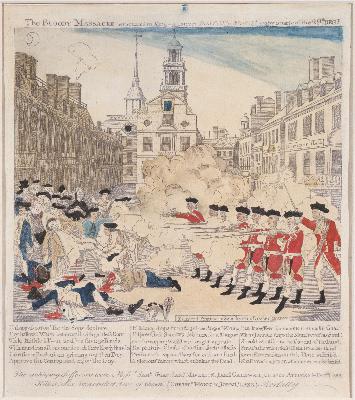
This Day in Legal History: Boston MassacreOn March 5, 1770, a confrontation between British soldiers and American colonists in Boston turned deadly in what became known as the Boston Massacre. Tensions had been rising for months as British troops occupied the city to enforce parliamentary taxes that many colonists believed were unjust. On that evening, a crowd gathered near the Boston Custom House and began taunting a British sentry, shouting insults and throwing snowballs and debris. As the situation escalated, additional soldiers arrived to support the guard, but the crowd continued to press in. In the confusion and fear of the moment, the soldiers fired into the crowd. Five colonists were killed and several others were wounded, including Crispus Attucks, who is often remembered as the first casualty of the American Revolution.The incident quickly became a flashpoint in colonial politics, with patriot leaders using it as evidence of British tyranny. Yet the legal response that followed was notable for its commitment to due process despite intense public anger. British Captain Thomas Preston and eight soldiers were arrested and charged with murder. Future president John Adams agreed to defend the soldiers, arguing that the rule of law required even deeply unpopular defendants to receive a fair trial. During the proceedings, Adams emphasized the evidence suggesting the soldiers had been surrounded and threatened by a hostile crowd. The jury ultimately acquitted six soldiers and convicted two of the lesser charge of manslaughter.The trials demonstrated an early American commitment to the principle that legal judgments should be guided by evidence rather than public pressure, even during moments of political upheaval.The U.S. Supreme Court ruled that New Jersey cannot use sovereign immunity to protect New Jersey Transit from personal injury lawsuits filed by riders injured outside the state. The unanimous opinion, written by Sonia Sotomayor, resolved a conflict between the Pennsylvania Supreme Court and the New York Court of Appeals over whether the transit agency qualifies as an “arm of the state.” The dispute arose from two lawsuits filed by passengers injured in NJ Transit bus crashes that occurred outside New Jersey.The justices focused heavily on how the agency was structured. During oral argument, several members of the Court questioned why New Jersey created NJ Transit as a corporation with the ability to sue and be sued while also disclaiming responsibility for its debts. Some justices suggested those design choices undermined the state’s argument that the agency should receive sovereign immunity protections.New Jersey’s lawyers argued that the agency’s independence is largely formal and that the governor maintains significant control over the system. They also warned that allowing such lawsuits could subject the state to litigation in other states’ courts. However, the Court appeared unconvinced by those arguments and emphasized that the plaintiffs were private individuals seeking compensation rather than other states trying to regulate New Jersey.The ruling ultimately sided with the New York court’s earlier decision and overturned the Pennsylvania ruling, allowing the personal injury lawsuits to proceed.Supreme Court Rejects NJ Immunity Defense In NY, Pa. SuitsRegulators are increasingly focusing on dynamic or algorithmic pricing, a practice that uses personal data—such as location, browsing history, and purchasing behavior—to set individualized prices for consumers. The approach has raised concerns among privacy and consumer protection regulators because it relies on large amounts of personal data and may affect price transparency. Although grocery pricing has drawn the most attention, the practice is also used in industries like travel, financial services, and online retail.The Federal Trade Commission has been studying the issue but has not clearly stated whether dynamic pricing violates any specific federal law. In 2024, the agency issued subpoenas to companies that develop pricing algorithms to learn how they collect consumer data, train their systems, and influence the prices consumers see. A preliminary research summary released in 2025 confirmed that these tools rely heavily on consumer data and can adjust prices in real time, but it did not identify specific legal violations.While the federal approach remains uncertain, state regulators are taking more direct action. The office of Rob Bonta, the California attorney general, launched an investigative sweep in January 2026 to examine how companies use consumer data to personalize prices. Investigators sent letters to retailers, grocery stores, and hotels requesting information about pricing algorithms, data sources, and disclosures to consumers.Meanwhile, the New York Attorney General’s Office is investigating companies’ compliance with the state’s new Algorithmic Pricing Disclosure Act. The law requires businesses to clearly inform consumers when prices are generated using algorithms that rely on their personal data. Regulators have warned that disclosures hidden behind hyperlinks may not satisfy the law’s requirement that notices be clear and conspicuous.Other states are considering similar legislation, including proposals targeting surveillance-based pricing or banning dynamic pricing in certain industries. As scrutiny increases, companies that use personalized pricing tools are being urged to review their data practices, pricing disclosures, and compliance with emerging state privacy laws.Amidst uncertainty from FTC, states zero in on dynamic and algorithmic pricing | ReutersThe U.S. civilian federal workforce decreased by about 12% between September 2024 and January 2026, according to newly released government data. The reductions reflect efforts by Donald Trump’s administration to shrink federal agencies, a policy he promoted as a way to reduce government size and increase efficiency.Several major departments experienced significant staffing losses. The U.S. Department of the Treasury saw its workforce drop by roughly 24%, while the U.S. Department of Health and Human Services lost about 20% of its employees during the same period. These reductions represent some of the largest declines across federal agencies.One notable exception was the U.S. Department of Homeland Security, which slightly increased its workforce by less than 1%. The agency’s growth reflects the administration’s continued focus on immigration enforcement and deportation efforts.Overall, the data indicates that the administration’s push to cut federal staffing has had a broad impact across much of the government, significantly reducing the number of civilian employees in many departments.US government workforce shrunk by 12% since September 2024 | Reuters This is a public episode. If you'd like to discuss this with other subscribers or get access to bonus episodes, visit www.minimumcomp.com/subscribe
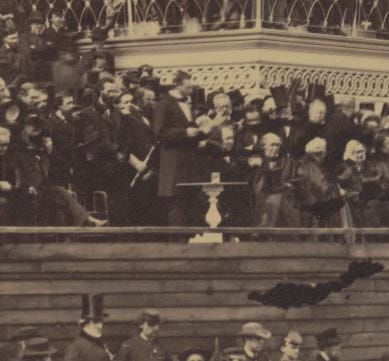
This Day in Legal History: Lincoln’s Second InauguralOn March 4, 1865, Abraham Lincoln delivered his Second Inaugural Address as he began his second term as President of the United States. The speech came during the final weeks of the Civil War, when Union victory was increasingly likely but the country remained deeply divided. Instead of celebrating the nearing end of the war, Lincoln used the moment to reflect on the deeper causes of the conflict. He identified slavery as the central issue that had brought the nation into war, describing it as both a legal institution and a moral injustice embedded in American law for generations. Lincoln noted that both the North and South had participated in a system that allowed slavery to endure within the nation’s constitutional framework.In one of the address’s most striking passages, Lincoln suggested that the war itself might be understood as divine judgment for the nation’s long tolerance of slavery. He observed that slavery had existed in the Americas for centuries and reflected on the possibility that the immense suffering of the war was a form of punishment for that history. Lincoln famously stated that if divine providence willed that the war continue “until every drop of blood drawn with the lash shall be paid by another drawn with the sword,” then such judgment might still be just. This reflection framed the war not simply as a political conflict but as a reckoning with a deeply rooted legal and moral wrong.Lincoln’s remarks also pointed toward the constitutional transformation already underway through the pending Thirteenth Amendment to the United States Constitution. Congress had passed the amendment earlier in 1865, and it awaited ratification by the states. If adopted, it would permanently abolish slavery across the United States and fundamentally alter the constitutional order. Lincoln’s speech emphasized that the war’s conclusion would also mark a legal turning point, ending a constitutional system that had protected slavery. At the same time, he called for reconciliation in rebuilding the nation, urging the country to move forward “with malice toward none.” Only months later, the Civil War ended and the Thirteenth Amendment was ratified in December 1865, permanently outlawing slavery in the United States.The House Oversight Committee has asked several high-profile figures to testify about their connections to Jeffrey Epstein as part of a broader investigation into how the federal government handled the case. Those requested to appear include departing Goldman Sachs Chief Legal Officer Kathryn Ruemmler, Microsoft co-founder Bill Gates, and Apollo Global Management co-founder Leon Black.The request to Ruemmler comes shortly after she announced plans to step down from Goldman Sachs and after Justice Department records brought renewed attention to her past communications with Epstein. Emails show that she sought career advice from him while exploring a move from Latham & Watkins to Facebook in 2018 and referred to him in messages as “Uncle Jeffrey.” The correspondence also mentioned gifts she received from him. Reports previously revealed that the two had numerous meetings during the 2010s, years after Epstein had served a prison sentence related to prostitution offenses involving minors.The committee’s inquiry focuses on whether Epstein and his associate Ghislaine Maxwell used relationships with influential individuals to gain protection or influence while operating their sex-trafficking scheme. Lawmakers are also examining the federal government’s handling of the investigation and the circumstances surrounding Epstein’s death in a Manhattan federal jail in 2019.Along with Ruemmler, Gates and Black received similar requests for testimony. Gates has indicated he is willing to cooperate and answer questions from the committee. Black, meanwhile, is also facing a proposed class action accusing Apollo and its leadership of misleading investors about their connections to Epstein, allegations the firm has publicly denied.Other individuals asked to appear include Epstein’s former assistants, political adviser Doug Band, and Gateway co-founder Ted Waitt. The committee has already interviewed several prominent figures, including former President Bill Clinton and former Secretary of State Hillary Clinton, as it continues reviewing the scope of Epstein’s network and the government’s response to his crimes.Goldman’s Departing CLO, Gates Asked To Testify On Epstein - Law360 UKThe Justice Department quickly reversed course in an ongoing legal fight over executive orders issued by President Donald Trump targeting several prominent law firms. Late Monday, government lawyers told a federal appeals court they planned to drop their appeal after multiple federal judges ruled the orders unconstitutional. But the next day the department asked the court for permission to withdraw that dismissal request and continue defending the orders.The executive orders targeted firms including Perkins Coie, WilmerHale, Susman Godfrey, and Jenner & Block. The measures sought to restrict the firms’ security clearances, government contracts, and access to federal buildings, citing concerns about their clients and hiring practices. The firms challenged the orders in court, arguing they were unconstitutional retaliation against legal advocates.Federal judges consistently sided with the firms, with one ruling describing the order against Perkins Coie as an unprecedented attack on the legal system. After those rulings, the Justice Department initially appeared ready to abandon the appeal. Its sudden reversal, however, would allow the administration to continue fighting the cases before the U.S. Court of Appeals for the D.C. Circuit.The law firms criticized the shift, saying the government offered no explanation for changing its position so quickly. They reiterated their commitment to challenging what they view as an unconstitutional attempt to punish law firms for representing disfavored clients. Civil liberties advocates echoed that criticism, arguing the orders represent a misuse of presidential power.The litigation highlights a broader dispute over the limits of executive authority and the independence of the legal profession. As the appeals process continues, the courts will ultimately decide whether the executive orders can survive constitutional scrutiny.BREAKING: DOJ Nixes Plan To Drop Law Firm EO Appeals In About-Face - Law360In quick reversal, DOJ seeks to continue Trump’s battle with law firmsA trial beginning in Chicago will examine claims that baby formula made by Abbott Laboratories caused premature infants to develop a serious and potentially deadly intestinal condition known as necrotizing enterocolitis (NEC). The case consolidates lawsuits from four families whose premature children were born in Chicago-area hospitals between 2012 and 2019 and later developed the disease. Although the infants survived, the lawsuits say several required surgery and continue to face long-term health complications.The case is part of a much larger wave of litigation against Abbott and Mead Johnson, the manufacturer of Enfamil. Nearly 1,000 lawsuits have been filed across the country alleging that the companies failed to warn doctors that cow’s milk-based formulas used in hospitals may increase the risk of NEC in premature infants. Many of those cases are consolidated in federal court in Illinois, while others are pending in state courts.Abbott denies that its formulas cause the disease and maintains that the products are medically necessary when mothers cannot produce enough breast milk. The company and other researchers point to evidence suggesting that the higher risk of NEC is linked to the absence of breast milk rather than exposure to formula itself.Previous trials involving similar claims have produced mixed results. Some juries have awarded large verdicts to families, including multimillion-dollar judgments against both Abbott and Mead Johnson, though those decisions are currently under appeal. Other cases have resulted in defense wins or retrials, and several potential bellwether cases in federal court have been dismissed.The Chicago trial, which begins with jury selection, is expected to last several weeks and could influence how the remaining lawsuits move forward. With hundreds of similar claims still pending, the outcome may play an important role in shaping the broader litigation over infant formula and NEC.Abbott set to face trial over claims premature infant formula caused deadly disease | ReutersIn this week’s column, I look at a new California proposal that attempts to sidestep the federal cap on state and local tax (SALT) deductions by reclassifying vehicle sales taxes as licensing fees. The idea is simple: if the charge is treated as a property-style fee instead of a sales tax, it could fall into a category that allows taxpayers to make greater use of their federal SALT deduction. Supporters frame the proposal as middle-class tax relief and a way to reduce the amount of federal revenue flowing out of California. But while the policy is clever, its practical benefits would be limited and uneven.The proposal follows a familiar strategy used since the 2017 tax law capped SALT deductions: when one type of tax becomes less deductible, lawmakers try to redesign the tax structure so the revenue flows through a category that remains deductible. California’s approach focuses on vehicle purchases, where sales taxes are currently difficult to deduct for many residents. By redefining those charges as licensing fees, lawmakers hope taxpayers could claim them alongside property taxes under the federal deduction cap.In practice, though, most lower-income taxpayers wouldn’t benefit at all. Many households take the standard deduction rather than itemizing, especially after recent tax reforms increased its size. For those taxpayers, changing the label on a vehicle tax doesn’t meaningfully change their
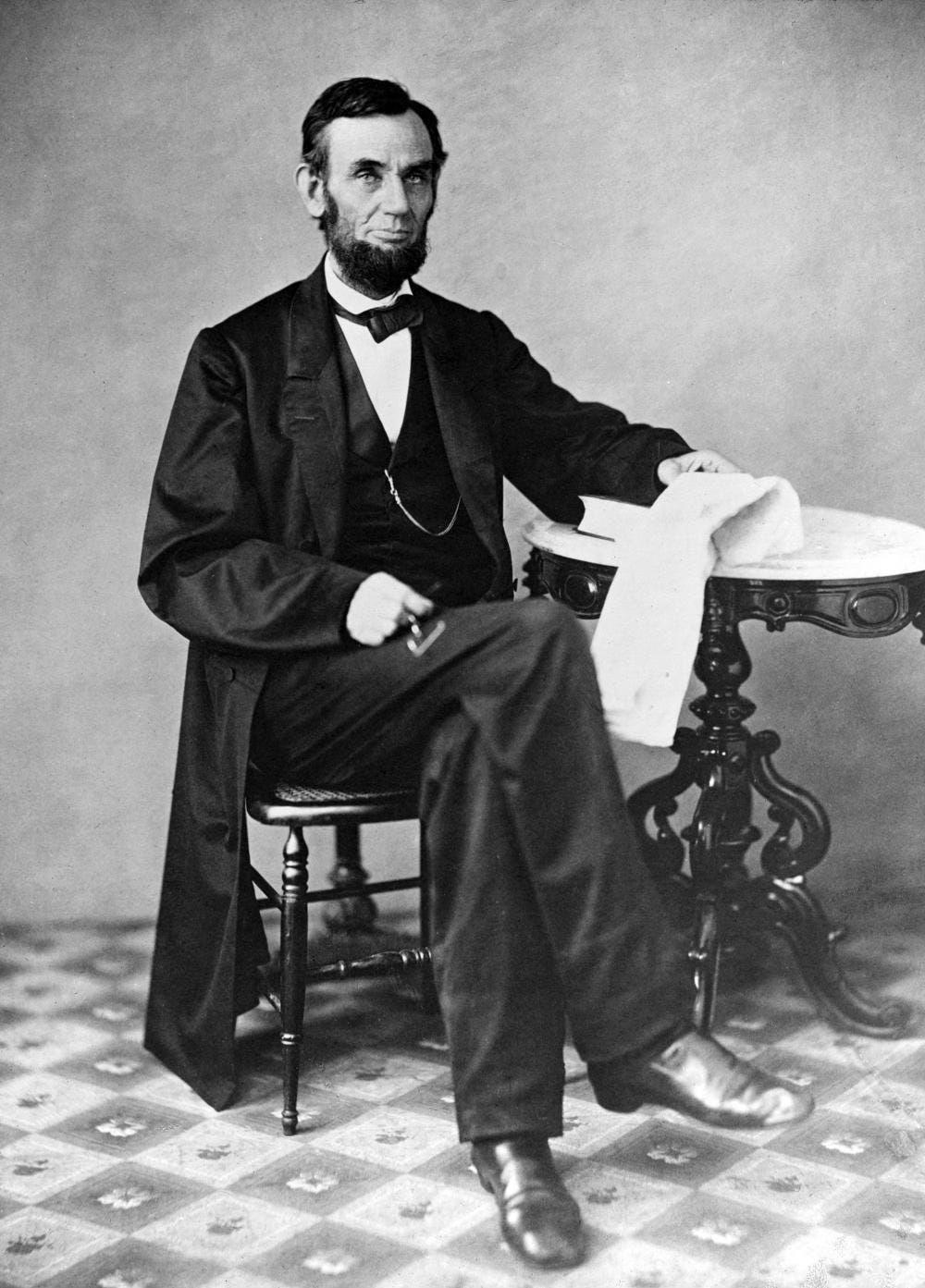
This Day in Legal History: Tenth Circuit ActOn March 3, 1863, Congress passed the Judiciary Act of 1863, quietly reshaping the structure of the United States Supreme Court in the middle of the Civil War. The Act increased the number of Supreme Court justices from nine to ten. This expansion created an additional seat that President Abraham Lincoln could fill at a critical moment in the nation’s history. Lincoln soon appointed Justice Stephen J. Field to occupy the new position.The timing of the law was not accidental. The country was deeply divided, and major constitutional questions about executive power, wartime authority, and civil liberties were moving through the courts. By enlarging the Court, Congress ensured that Lincoln would have greater influence over the judiciary’s direction. Although altering the size of the Court was constitutional, it carried clear political implications.The Constitution does not fix the number of Supreme Court justices. Instead, Congress has authority to determine the Court’s size through legislation. This structural flexibility has allowed lawmakers to adjust the Court in response to political and practical concerns. The Judiciary Act of 1863 stands as one example of how institutional design can intersect with national crisis.The legal element worth highlighting is Congress’s constitutional power to set the size of the Supreme Court. Article III establishes the Court but leaves its structure largely to Congress. This separation of powers detail is significant because it shows that the judiciary’s composition is not self-defining. I chose this element because it explains how a simple statute, passed during wartime, could alter the balance of influence within the highest court in the country without amending the Constitution.The U.S. Supreme Court heard arguments over whether a federal law prohibiting illegal drug users from possessing firearms violates the Second Amendment. The case arose after federal prosecutors charged Ali Hemani, a Texas resident who admitted to regular marijuana use, with unlawful gun possession under the Gun Control Act. A lower court dismissed the charge, and the 5th U.S. Circuit Court of Appeals upheld that decision, concluding there was no historical basis for disarming a sober person who was not under the influence at the time of possession.The Justice Department, under President Donald Trump, appealed to the Supreme Court. The administration argued that the restriction is comparable to 19th-century laws that allowed authorities to disarm habitual drunkards. Hemani, supported by the American Civil Liberties Union, countered that regular marijuana users are not historically analogous to those groups and that the statute is too vague because it does not clearly define who qualifies as an “unlawful user.”The dispute comes as the Court continues to apply the history-focused test it announced in New York State Rifle & Pistol Association v. Bruen, which requires modern gun regulations to align with the nation’s historical tradition of firearm regulation. The case also echoes the 2024 conviction of Hunter Biden under the same statute, though he was later pardoned. With a 6–3 conservative majority, the Court has recently taken an expansive view of gun rights and is weighing multiple challenges to firearm regulations.US Supreme Court scrutinizes gun ownership ban for illegal drug users | ReutersA recent policy shift by the U.S. Securities and Exchange Commission has given public companies greater control over which shareholder proposals appear on annual meeting ballots. In November, the agency stopped its long-standing practice of having staff formally review and approve companies’ decisions to exclude certain proposals. Instead, corporate executives now have more discretion to determine what goes into proxy statements.Investor advocates say the change has created confusion and weakened shareholder rights, especially in disputes involving environmental, social, and governance issues. The new approach has already led to lawsuits against companies including PepsiCo, AT&T, and Axon Enterprise. In several instances, companies initially declined to include shareholder proposals but reversed course after being sued. For example, PepsiCo agreed to allow a vote on an animal-welfare proposal shortly after litigation was filed. AT&T similarly settled a lawsuit brought by New York City pension funds by permitting a vote on workforce diversity disclosures.Other disputes remain pending, including a case against Axon over a proposal related to political contributions. Activists argue that without clearer guidance from regulators, shareholders must turn to the courts to protect their ability to file resolutions. Despite concerns that the rule change would dramatically increase exclusions, early data suggests companies have blocked proposals at roughly the same rate as in prior years.Trump’s SEC gave companies more power over investors. Lawsuits pushed them back | ReutersThe U.S. Supreme Court declined to hear an appeal from computer scientist Stephen Thaler, leaving intact a lower court ruling that works created solely by artificial intelligence are not eligible for copyright protection. The decision lets stand a ruling from the U.S. Court of Appeals for the D.C. Circuit that agreed with the U.S. Copyright Office that only human authors can register copyrighted works.Thaler sought protection for a two-dimensional image titled “A Recent Entrance to Paradise,” which was generated by his AI system known as the Creativity Machine. He argued that the Copyright Act does not explicitly require human authorship and that the agency improperly read that limitation into the statute. The D.C. Circuit rejected that claim, reasoning that multiple provisions of the law assume an author is a human being, particularly sections dealing with lifespan and inheritance rights.Thaler also contended that, as the system’s owner and programmer, he should qualify for copyright under work-for-hire principles or property law concepts. The government responded that a valid work-for-hire arrangement requires a written agreement and cannot apply to a nonhuman creator. This dispute echoes Thaler’s earlier, unsuccessful effort to secure patent rights for an AI-generated invention, which the Supreme Court also declined to review in 2023.Justices Reject Appeal Over Copyright For AI-Created Art - Law360 This is a public episode. If you'd like to discuss this with other subscribers or get access to bonus episodes, visit www.minimumcomp.com/subscribe
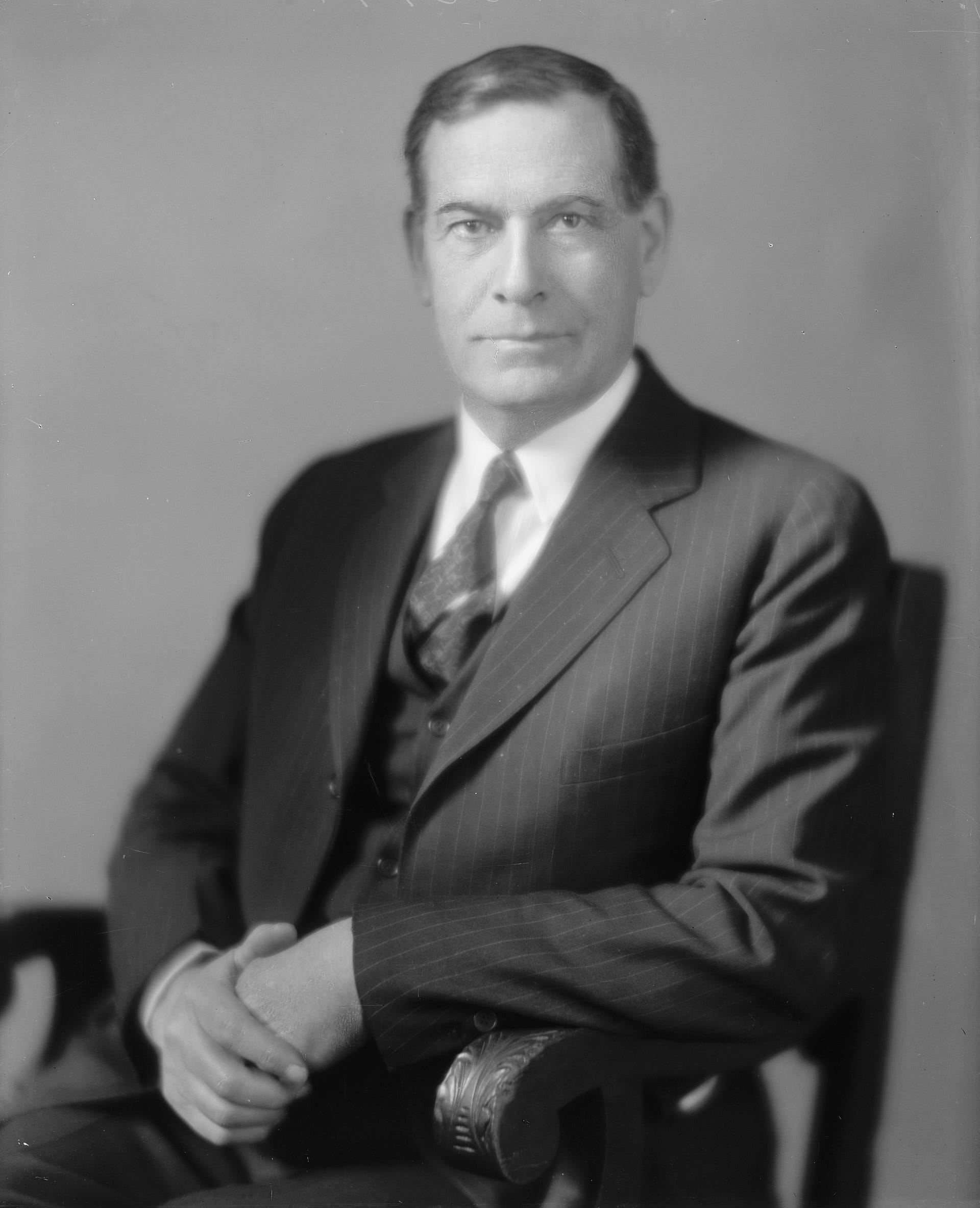
This Day in Legal History: Jones ActOn March 2, 1920, Congress passed the Merchant Marine Act of 1920, better known as the Jones Act. Enacted in the aftermath of World War I, the statute reflected a national effort to strengthen the United States’ merchant marine fleet. Lawmakers believed that a robust domestic shipping industry was essential to both economic growth and national defense. The Act required that goods transported between U.S. ports be carried on vessels that are built in the United States, owned by U.S. citizens, and crewed primarily by Americans. Senator Wesley L. Jones sponsored the measure, arguing that reliance on foreign ships posed strategic risks.The law reshaped American maritime commerce for decades. By limiting coastwise trade to qualifying vessels, Congress sought to ensure a steady demand for American shipyards and maritime labor. Supporters have long maintained that the Act protects domestic jobs and guarantees a ready fleet in times of war or national emergency. Critics, however, argue that the restrictions reduce competition and raise shipping costs. Those higher costs are often felt most sharply in non-contiguous states and territories such as Puerto Rico and Hawaii, which depend heavily on maritime transport.Over time, the Jones Act has generated extensive litigation and recurring legislative proposals for reform or repeal. Courts have been called upon to interpret its scope, exemptions, and application to modern shipping practices. More than a century after its passage, the statute remains a focal point in debates over free trade, federal power, and national security.President Donald Trump ordered federal agencies to stop using artificial intelligence products from Anthropic after the company declined to support certain military applications. The dispute arose when Anthropic said it would not provide its technology for mass domestic surveillance or fully autonomous weapons systems. Trump accused the company of trying to impose its own political views on the Department of Defense and claimed its stance threatened national security. Shortly after the president’s directive, Defense Secretary Pete Hegseth announced that military contractors and partners could no longer conduct business with Anthropic. The Defense Department said it would phase out the company’s technology within six months while transitioning to another provider.Anthropic CEO Dario Amodei had stated that while AI can support lawful foreign intelligence efforts, mass surveillance of Americans raises serious civil liberties concerns. He also argued that fully autonomous weapons lack the reliability and oversight needed to ensure responsible use. According to Anthropic, the Defense Department required contractors to agree to “any lawful use” of AI systems, including applications the company views as risky. The government also threatened to label Anthropic a national security “supply chain risk,” a designation the company says is usually reserved for foreign adversaries. Anthropic maintains that such a move would be legally questionable and has pledged to challenge it in court. The company further argues that any formal designation would likely apply only to government contract work, not to all commercial activity.Trump Tells Federal Agencies To Drop ‘Woke’ Anthropic Tech - Law360Trump admin blacklists Anthropic; AI firm refuses Pentagon demandsOpenAI has completed a massive $110 billion funding round that values the company at $730 billion. The investment was led by Amazon with a $50 billion contribution, while Nvidia and SoftBank each committed $30 billion. The deal was advised by Wachtell Lipton Rosen & Katz on behalf of OpenAI.As part of the transaction, OpenAI also entered into a strategic cloud partnership with Amazon and secured access to Nvidia’s next-generation graphics processing units to expand its AI capabilities. The company said additional investors may join the round as it continues. OpenAI highlighted that more than 9 million paying business customers use ChatGPT, alongside roughly 900 million weekly active users.The funding reflects the accelerating competition among major technology companies to build AI infrastructure, including cloud systems, chips, and data centers. Amazon has already announced plans to invest about $200 billion in AI-related capital spending next year. Across the tech sector, companies such as Meta Platforms and Alphabet Inc. are also committing hundreds of billions of dollars to AI development. OpenAI described the moment as an infrastructure race, emphasizing that scaling capacity quickly will determine leadership in the industry.Wachtell Lipton Steers OpenAI On $110B Amazon-Led Funding - Law360A Los Angeles trial judge warned members of the press that she may impose a gag order in the high-profile social media bellwether case involving claims that major platforms harmed a young user’s mental health. Carolyn B. Kuhl said a news report appeared to reference juror conversations overheard in a courthouse hallway, which she viewed as a violation of her directive to keep distance from jurors. She emphasized that preserving the integrity of the proceedings is critical and stated she would hold a hearing on a gag order if necessary.The case, pending in Los Angeles County Superior Court, is the first bellwether trial among more than 1,000 consolidated lawsuits. The plaintiff, identified as Kaley G.M., alleges that platforms such as Meta Platforms Inc.’s Instagram and Google LLC’s YouTube used addictive design features that contributed to her mental health struggles. The judge has repeatedly instructed jurors not to discuss the case or consume media coverage, and she has taken steps to physically separate them from reporters and the public. She also restricted any physical descriptions of the plaintiff because her claims relate to harm suffered as a minor.Tensions over courtroom conduct have surfaced before. The judge previously warned attendees about unauthorized recordings and removed a plaintiffs’ attorney from a leadership role for filming inside the courthouse. Meanwhile, the trial has included testimony from the plaintiff and expert witnesses who argue that social media addiction is real and harmful. The defendants maintain that other factors, including family dynamics, contributed to her condition. With additional trials planned, the outcome of this bellwether proceeding could influence settlement discussions and expose the companies to significant financial liability.Social Media Trial Judge Threatens Media With Gag Order - Law360Improper juror access in social media case, judge warns mediaA juror in the recent trial of Thomas Goldstein said the defendant’s own testimony was a turning point in the case that led to his conviction on multiple tax and mortgage fraud charges. The juror described Goldstein’s time on the stand as polished but theatrical, suggesting it felt more like a performance than a candid explanation. Goldstein had argued that errors in his tax filings stemmed from bookkeeping mistakes and reliance on outside accountants, and he claimed he overstated certain gambling winnings. Prosecutors, however, alleged that he intentionally failed to report millions in income, improperly deducted personal expenses, and misrepresented debts on mortgage applications.The jury convicted him on 12 of 16 counts, including tax evasion and mortgage fraud, while acquitting him on several charges tied to later tax years. He has been ordered to remain under home confinement pending sentencing. According to the juror, the government’s extensive documentary evidence — including bank records, emails, and text messages — ultimately carried significant weight. Testimony about Goldstein’s spending habits and lifestyle was also presented, though the juror said personal matters such as alleged affairs were not decisive.The defense emphasized accounting errors and challenged the venue for certain mortgage counts. Still, the juror said responsibility rested with Goldstein because he signed the tax returns. Prosecutors have praised the verdict, while the defense has not publicly commented. The case was tried in the U.S. District Court for the District of Maryland.Goldstein Testimony ‘Solidified’ Case, Juror Says - Law360District of Maryland | Prominent Lawyer Thomas Goldstein Convicted of Tax Evasion and Mortgage Fraud | United States Department of Justice This is a public episode. If you'd like to discuss this with other subscribers or get access to bonus episodes, visit www.minimumcomp.com/subscribe

This Day in Legal History: Reichstag Fire DecreeOn February 27, 1933, the German parliament building, the Reichstag, was set ablaze in Berlin, an event that would alter the course of constitutional government in Germany. The fire broke out just weeks after Adolf Hitler had been appointed Chancellor. Dutch communist Marinus van der Lubbe was arrested at the scene, and Nazi officials quickly blamed a broader communist conspiracy. The next day, President Paul von Hindenburg signed the Reichstag Fire Decree at Hitler’s urging.The decree suspended key civil liberties guaranteed under the Weimar Constitution, including freedom of speech, freedom of the press, the right of assembly, and protections against unlawful searches and detention. It also allowed the central government to override state authorities. In practical terms, the measure authorized indefinite detention without trial. Police power expanded dramatically, and political opponents were arrested in large numbers.Although framed as a temporary emergency response, the decree had no meaningful expiration. It became the legal foundation for dismantling democratic institutions in Germany. Courts largely failed to check the expanding authority of the executive branch. The event demonstrates how emergency powers, once normalized, can erode constitutional safeguards from within. The Reichstag Fire and its legal aftermath remain a lasting example of how constitutional systems can collapse through formally lawful measures rather than open revolution.Former President Bill Clinton is scheduled to give private testimony to the House Oversight Committee regarding his past association with Jeffrey Epstein. The closed-door session follows testimony from Hillary Clinton, who said she does not recall meeting Epstein and denied having information about his crimes. Bill Clinton previously flew on Epstein’s plane multiple times after leaving office, and recently released Justice Department documents include photos of him with unidentified women. He has denied any misconduct and has expressed regret over his past association.Committee Chairman James Comer stated that neither Clinton is accused of wrongdoing but said they must address questions about Epstein’s possible connections to their charitable foundation. The Clintons agreed to testify near their home in New York after lawmakers threatened contempt proceedings. Some Democrats supported compelling their testimony, while others criticized the inquiry as politically motivated.Democrats argue that Republicans are using the investigation to shield Donald Trump from scrutiny. They have called for Trump to be subpoenaed, noting that his name appears frequently in Epstein-related records and that he had social ties with Epstein before Epstein’s 2008 conviction. Democrats also claim the Justice Department is withholding records involving allegations against Trump. The department has said it is reviewing the materials and has emphasized that released files contain unverified claims. Authorities have not charged Trump with any crimes related to Epstein. Epstein died in jail in 2019 while awaiting trial on federal sex-trafficking charges, and his death was ruled a suicide.Bill Clinton to give private testimony to Congress about Epstein | ReutersA federal judge has allowed construction of President Donald Trump’s planned $400 million White House ballroom to continue, at least for now. U.S. District Judge Richard Leon denied a request from the National Trust for Historic Preservation to temporarily halt the project while its lawsuit moves forward. The group had sought a preliminary injunction to stop work, arguing that the administration failed to comply with federal laws, including obtaining congressional approval and conducting proper environmental review.Leon ruled that the preservationists had not met the legal standard required for such an emergency order. However, he indicated they may revise their complaint to better challenge the president’s claimed statutory authority to proceed without Congress. The lawsuit contends that demolishing the historic East Wing and beginning construction violated federal restrictions on altering federal property in Washington, D.C. It also argues that the National Park Service should have completed a more detailed environmental impact statement before work began.The Trump administration maintains that the renovation fits within longstanding presidential authority over White House changes and serves public functions. Trump praised the ruling publicly and said the ballroom would symbolize national strength. The National Trust expressed disappointment but said it plans to amend its legal claims.The East Wing, originally built in 1902 and expanded in 1942, was demolished in October. The ballroom is part of broader renovations Trump has made since returning to office in 2025. Although construction is underway, no firm completion date has been announced.Trump’s White House ballroom can move ahead for now, judge rules | ReutersPrediction-market company Kalshi has hired prominent Supreme Court advocate Neal Katyal to represent it in a series of disputes with state regulators. Katyal, a former acting U.S. solicitor general, appeared this week in a lawsuit Kalshi filed against Utah officials and is also handling similar cases in several other states. The company argues that its event-based trading contracts fall under the authority of the federal Commodity Futures Trading Commission, not state gambling regulators.States contend that platforms like Kalshi are effectively operating unlicensed sports-betting businesses. Other prediction-market operators, including Polymarket and Coinbase, are also fighting regulatory battles and have assembled experienced legal teams. The industry has grown rapidly, with tens of billions of dollars in trading volume last year, increasing scrutiny from state authorities.Kalshi bets on Neal Katyal in prediction market cases | ReutersNetflix has withdrawn its bid to acquire Warner Bros. Discovery after WBD’s board determined that a competing offer from Paramount Skydance was superior. Netflix’s co-CEOs said their proposed merger would have delivered value and likely cleared regulatory review, but matching Paramount’s higher price no longer made financial sense. They described the deal as desirable at the right valuation, but not essential at any cost.Paramount’s leadership welcomed WBD’s decision, saying its proposal offers greater value and a clearer path to closing. To finalize the Paramount deal, a short match period must expire, Netflix’s existing merger agreement must be terminated, and a definitive agreement between Paramount and WBD must be signed.Paramount recently raised its offer to $31 per share in cash, along with a quarterly ticking fee if the deal is not completed by a specified date. The proposal also includes a $7 billion regulatory termination fee if the transaction fails because of regulatory issues, as well as reimbursement of the $2.8 billion breakup fee WBD would owe Netflix upon ending their agreement. With Netflix stepping aside, Paramount is now positioned to complete the acquisition.Netflix Drops WBD Bid, Paving Way For Paramount Deal - Law360This week’s closing theme is by Frédéric Chopin.This week’s closing theme takes us to Chopin and his Piano Concerto No. 2 in F minor, a work that helped launch his international career. Although numbered second, it was actually the first of his two piano concertos to be written, composed in 1829 when he was just twenty. The concerto reflects Chopin’s deep roots in the Polish Romantic tradition, while also revealing the poetic lyricism that would define his later solo piano works. Its sweeping first movement balances youthful brilliance with emotional intensity. The second movement, marked Larghetto, is intimate and expressive, often described as a musical love letter. The finale brings rhythmic energy and subtle references to Polish dance forms.The piece gained wider recognition when Chopin performed it during his Paris debut on February 27, 1832. That appearance introduced him to the influential musical circles of Paris and marked a turning point in his career. The concerto showcased not only his technical skill, but also his distinctive touch and refined musical voice. While later critics sometimes focused on the orchestration, the piano writing remains among the most elegant of the Romantic era. The work captures a young composer standing at the threshold of fame, blending vulnerability with confidence. As our closing theme this week, it reflects both artistic ambition and a historic February 27 connection that helped shape Chopin’s legacy.Without further ado, Frédéric Chopin’s Piano Concerto No. 2 in F minor, enjoy! This is a public episode. If you'd like to discuss this with other subscribers or get access to bonus episodes, visit www.minimumcomp.com/subscribe

This Day in Legal History: Grand Teton National ParkOn February 26, 1929, Congress officially established Grand Teton National Park, preserving one of the most striking mountain landscapes in the American West. While today the park is known for its natural beauty and wildlife, its creation was rooted in significant legal and political conflict. The legislation reflected a growing national commitment to conservation during the early twentieth century. At the same time, it sparked fierce opposition from local ranchers and residents who feared federal control over land they had long used for grazing and settlement. Many critics argued that expanding federal ownership infringed upon traditional property rights and state authority.The controversy centered on Congress’s constitutional power to regulate and manage federal lands under the Property Clause. Supporters of the park maintained that the federal government had clear authority to preserve land for public use and environmental protection. Opponents viewed the move as an overreach that disrupted local economies and private land expectations. The debate highlighted tensions between national conservation goals and regional economic interests. It also illustrated how public land policy can serve as a testing ground for broader constitutional principles.Ultimately, the establishment of the park signaled an expanding federal role in environmental stewardship. It marked a shift toward long-term preservation over short-term private development. The legal battles surrounding the park foreshadowed future disputes over land use, resource management, and federal regulatory power. February 26, 1929, thus stands as a reminder that conservation law has often advanced through conflict as much as consensus.The Trump administration has filed a lawsuit against the University of California system, alleging that Jewish and Israeli employees at UCLA were subjected to an antisemitic hostile work environment. The complaint, brought by the Justice Department in Los Angeles, claims UCLA failed to respond adequately to discrimination complaints following the October 2023 Hamas-led attack on Israel. Federal officials argue that the university ignored or even enabled antisemitic conduct during a period marked by intense campus protests over the war in Gaza. The lawsuit seeks a court order requiring UCLA to investigate the allegations, improve anti-discrimination training, and pay unspecified damages to two professors who say they experienced antisemitism.This legal action is part of a broader effort by President Trump to challenge universities over pro-Palestinian protests, diversity programs, and other policies. The administration previously attempted to freeze significant federal funding for UCLA, though a judge ordered that funding restored. UCLA has responded by pointing to institutional reforms, including restructuring its civil rights office and launching initiatives aimed at combating antisemitism. Large demonstrations took place on campus in 2024, with protesters calling for divestment from companies linked to Israel and an end to U.S. support for the war in Gaza. Some demonstrators, including Jewish groups, have argued that criticism of Israeli policy is being wrongly labeled as antisemitism.The University of California system receives more than $17 billion annually in federal funding, heightening the stakes of the dispute. The administration has reached financial settlements in similar investigations involving other universities, prompting concerns among academic experts about the impact on academic freedom. Notably, the administration has not pursued comparable investigations into allegations of Islamophobia or anti-Palestinian discrimination.Trump administration alleges antisemitic work environment at UCLA | ReutersAttorneys general from 11 Republican-led states have asked the U.S. Department of Justice to closely examine Netflix’s proposed $82.7 billion acquisition of studio and streaming assets from Warner Bros. The state officials argue that the deal could harm competition and weaken the United States’ leadership in the film industry. In a letter to federal regulators, they urged careful scrutiny of how the merger might affect streaming subscribers and the theatrical movie market.Warner Bros. has accepted Netflix’s offer, but its board is also weighing a competing proposal from Paramount Skydance, which has suggested that Netflix’s bid may face greater antitrust challenges. The state attorneys general contend that combining the companies’ assets could lead to excessive market concentration. They warn that reduced competition might result in higher prices, diminished service quality, and fewer innovative offerings for consumers.The officials emphasize that the entertainment industry is a significant part of the American economy and cultural influence, making regulatory oversight especially important. Their request signals potential legal and political resistance to the transaction as federal antitrust authorities evaluate the proposed merger.11 US States urge DOJ to thoroughly probe Netflix-Warner Bros. deal | ReutersSpain’s competition regulator has determined that Apple and Amazon failed to promptly remove anti-competitive clauses from their distribution agreements, despite being ordered to do so. The watchdog, known as the CNMC, had fined the companies 194 million euros in 2023 and instructed them to immediately eliminate contract terms that limited the number of Apple resellers on Amazon’s Spanish platform. Regulators said those provisions unfairly restricted competition and affected how rival products were promoted on the site.According to the CNMC, the companies did not fully comply with the cease-and-desist order until May 2025, well after the directive was issued. This delay could expose them to additional penalties. The regulator had also alleged that the agreements reduced advertising space for competing brands and blocked marketing efforts targeting Apple customers with alternative products.Both companies dispute the findings. Apple stated that it respects the regulator but disagrees with the ruling and maintains it has followed official instructions, emphasizing efforts to protect customers from counterfeit goods. Amazon likewise rejected the regulator’s conclusions and said it plans to appeal, arguing that its business model depends on supporting third-party sellers, many of whom are small and medium-sized businesses. The original 2023 fine remains suspended while the case is under review by Spain’s High Court.Apple and Amazon took too long to remove anti-competitive clauses, Spanish watchdog says | Reuters This is a public episode. If you'd like to discuss this with other subscribers or get access to bonus episodes, visit www.minimumcomp.com/subscribe
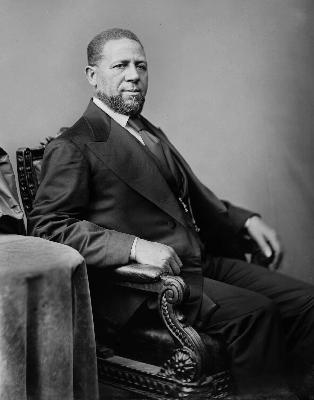
This Day in Legal History: Hiram Rhodes RevelsOn February 25, 1870, Hiram Rhodes Revels was sworn in as the first African American to serve in the United States Senate. His election came during the turbulent Reconstruction era that followed the Civil War, a period defined by constitutional change and political uncertainty. Revels represented Mississippi, a former Confederate state that had only recently been readmitted to the Union. In a moment heavy with symbolism, he filled the Senate seat once held by Jefferson Davis, the former president of the Confederacy. The contrast between the two men reflected the profound transformation taking place in American law and government.Revels’ swearing-in came after the ratification of the 13th, 14th, and 15th Amendments, which abolished slavery, guaranteed equal protection, and protected voting rights regardless of race. His presence in the Senate gave tangible meaning to those constitutional promises. Yet his path to office was not without challenge. Some senators argued that he did not meet the Constitution’s nine-year citizenship requirement, claiming that the Supreme Court’s decision in Dred Scott v. Sandford had denied Black Americans citizenship before the Civil War. Supporters countered that the 14th Amendment had settled the question of citizenship, making Revels eligible to serve. The Senate ultimately voted to seat him, affirming the legal force of the Reconstruction Amendments.Revels served only a brief term, but his impact was lasting. His election marked a rare window in American history when federal power was actively used to expand civil and political rights in the South. Although Reconstruction would eventually give way to decades of segregation and disenfranchisement, February 25, 1870 stands as a reminder of a constitutional moment when the nation attempted to redefine equality under the law.The U.S. Securities and Exchange Commission released its first major update to its enforcement manual in eight years, outlining a new vision focused on fairness and transparency. SEC Chairman Paul Atkins described the revisions as overdue and said the agency will now review the manual annually. The updated 115-page guide provides clearer direction on how enforcement investigations will proceed and what options are available to individuals and companies under scrutiny.One key change involves the Wells process, which notifies potential defendants that SEC staff intend to recommend enforcement action. Under the revised policy, recipients of a Wells notice will have four weeks to submit a written response. After filing that response, they may request a meeting with senior leadership in the Division of Enforcement to argue against pursuing charges or to present their perspective on the case.Atkins has previously indicated that reforming the Wells process is a priority, emphasizing the need for accurate and carefully considered enforcement actions. Enforcement Division Director Meg Ryan also noted that a persuasive Wells response can influence whether commissioners ultimately approve a case. The manual further reinstates the ability of settling parties to request waivers from automatic industry bars that can follow enforcement actions. In addition, it introduces clearer guidance on how cooperation may reduce penalties and explains how the SEC may coordinate with criminal authorities. Overall, the agency says the revisions aim to clarify how it enforces federal securities laws and strengthen public confidence in the process.SEC Lays Out New Enforcement Vision In Revised Guidelines - Law360Paramount Skydance has submitted a revised proposal to acquire Warner Bros. Discovery, as a bidding battle with Netflix continues. The new offer follows the expiration of a seven-day waiver period under WBD’s existing merger agreement with Netflix. For Paramount’s deal to move forward, WBD’s board must first determine that the revised bid qualifies as a “Company Superior Proposal” under the Netflix agreement. After that, a four-business-day match period would need to pass, the Netflix agreement would have to be terminated, and a new definitive agreement would need to be signed with Paramount.While the board reviews the updated proposal, Paramount said it will keep its tender offer in place and continue urging shareholders to reject what it calls the less favorable Netflix transaction. The rivalry between the bidders has spilled into public statements, with Paramount criticizing the structure of the Netflix deal as potentially reducing shareholder value. Netflix has pushed back, accusing Paramount of mischaracterizing regulatory issues and focusing on appearances rather than results.WBD confirmed it received the revised bid but reiterated that its current merger agreement with Netflix remains active and that the board still recommends the Netflix deal. Specific terms of Paramount’s updated offer were not disclosed, though it recently added financial safeguards, regulatory commitments, and an offer to cover the breakup fee if WBD exits the Netflix agreement. Netflix’s agreement to acquire WBD’s studio and streaming operations is valued at about $82.7 billion, while Paramount’s competing proposal to purchase the entire company is valued at roughly $108.4 billion.Paramount Revises WBD Offer As Netflix Bid War Goes On - Law360A federal judge has temporarily barred prosecutors from freely searching devices seized from a Washington Post reporter during a national security leak investigation. The FBI searched reporter Hannah Natanson’s home in January and took electronic devices as part of a probe into the alleged disclosure of government secrets. Natanson, who has reported on President Donald Trump’s efforts to dismiss large numbers of federal employees, has not been charged with any crime.U.S. Magistrate Judge William Porter ruled that the government may not conduct an unrestricted review of the seized materials. Instead, he said the court will oversee the examination of the devices to ensure that journalistic protections are respected while still allowing investigators to seek relevant evidence. Porter rejected the Justice Department’s request to let prosecutors carry out a broad, unsupervised search.Justice Department attorneys had argued that reviewing the materials was essential to a criminal investigation involving national security concerns. They proposed using a separate FBI “filter team” to screen the data and remove irrelevant content before investigators accessed it. The judge’s order reflects an effort to balance press freedom with the government’s authority to pursue evidence in sensitive cases.US judge blocks search of Washington Post reporter’s devices | ReutersA California woman is set to testify in Los Angeles that her early use of Instagram and YouTube harmed her mental health, in a closely watched trial against Meta and Google. The plaintiff, identified as Kaley G.M., says she began using YouTube at age six and Instagram at nine, and later struggled with depression and body dysmorphia. Her attorneys argue the companies deliberately designed their platforms to attract and retain young users despite being aware of potential psychological risks.The case is part of a broader international push to address the impact of social media on children, with some countries already imposing restrictions. Earlier phases of the trial focused on what the companies knew about the effects of their platforms on young users and how they targeted that demographic. Now the proceedings are turning to Kaley’s personal experiences and whether the platforms substantially contributed to her mental health challenges.To succeed, her legal team must prove that the design or operation of the platforms was a significant factor in causing or worsening her condition. Meta has pointed to her history of family instability and alleged abuse as alternative explanations for her struggles. Her lawyer, however, referenced internal company research suggesting that teens facing difficult circumstances were more likely to use Instagram compulsively.The lawsuit also challenges features such as autoplay videos, endless scrolling, “like” buttons, and beauty filters, which the plaintiff claims encouraged prolonged use and distorted self-image. YouTube’s defense argues that she did not fully use available safety tools and presented data indicating her recent average viewing time was relatively limited.Woman suing Meta, YouTube over social media addiction takes the stand at trial | Reuters This is a public episode. If you'd like to discuss this with other subscribers or get access to bonus episodes, visit www.minimumcomp.com/subscribe
This Day in Legal History: Marbury v. MadisonOn February 24, 1803, the U.S. Supreme Court decided Marbury v. Madison, a case that permanently reshaped American constitutional law. The dispute arose after President John Adams appointed several “midnight judges” in the final hours of his administration. One of those appointees, William Marbury, never received his commission because it was not delivered before Thomas Jefferson took office. Jefferson instructed his Secretary of State, James Madison, not to deliver the commission, prompting Marbury to seek relief directly from the Supreme Court.Presiding over the case was Chief Justice John Marshall, whose involvement added a striking layer of irony. Before becoming Chief Justice, Marshall had served as Secretary of State under Adams and had been responsible for sealing the very commissions at issue. In other words, Marshall was now reviewing the legal consequences of actions taken by his former office. Rather than recuse himself, he authored the opinion that would define the Court’s authority.Marshall concluded that Marbury had a legal right to his commission but held that the statute granting the Supreme Court power to issue writs of mandamus conflicted with Article III of the Constitution. Because the Constitution is the supreme law of the land, Marshall reasoned, any conflicting statute must be void. In declaring part of the Judiciary Act of 1789 unconstitutional, the Court asserted the power of judicial review for the first time.The decision simultaneously denied Marbury his remedy while expanding the Court’s institutional authority. It avoided a direct political confrontation with Jefferson while firmly establishing the judiciary as a co-equal branch of government. What began as a minor political dispute over an undelivered commission became the foundation for the Supreme Court’s power to strike down unconstitutional laws.A federal judge has permanently blocked the Justice Department from releasing a prosecutor’s report concerning the classified documents case against President Donald Trump. The ruling was issued by U.S. District Judge Aileen Cannon, who concluded that making the report public would amount to a “manifest injustice” because the case never went to trial. She reasoned that publishing detailed allegations of criminal conduct without a jury verdict would undermine basic fairness principles.The case had been brought by Special Counsel Jack Smith and accused Trump of unlawfully retaining sensitive national defense materials at his Mar-a-Lago property and obstructing government efforts to recover them. Trump and his co-defendants, Walt Nauta and Carlos de Oliveira, pleaded not guilty and described the prosecution as politically motivated. In 2024, Cannon dismissed the charges, finding that Smith had not been lawfully appointed.After Trump returned to office, the Justice Department supported efforts to keep the report confidential. Although special counsels are typically required to submit reports explaining their charging decisions, Cannon held that releasing this one would conflict with her earlier rulings, including her determination that Smith’s appointment was invalid. She also cited concerns about exposing grand jury material.The decision prevents public disclosure of substantial details about one of the four criminal cases Trump faced after leaving office. It follows the Supreme Court’s recent decision limiting Trump’s tariff authority and marks another significant legal development in the ongoing disputes surrounding his post-presidency investigations.US judge permanently blocks release of report on Trump documents case | ReutersThe chief judges of two major federal appeals courts have announced plans to step back from active service later this year, creating new vacancies for President Donald Trump to fill. Debra Ann Livingston of the U.S. Court of Appeals for the Second Circuit and Jeffrey Sutton of the U.S. Court of Appeals for the Sixth Circuit both notified the president that they intend to take senior status. Livingston plans to assume senior status on July 1, while Sutton will do so on October 1.Their decisions come ahead of the November midterm elections, when control of the U.S. Senate could shift, potentially complicating confirmation of successors. Because judicial vacancies have been relatively scarce during Trump’s second term, the openings present an opportunity to expand his appellate appointments. During his first term, Trump appointed 54 appellate judges, significantly influencing the judiciary’s ideological direction.Both judges were originally appointed by President George W. Bush. Livingston, who has served on the Second Circuit since 2007 and became chief judge in 2020, has at times issued notable dissents, including in cases involving LGBTQ workplace protections and congressional subpoenas tied to Trump’s business records. Sutton, on the Sixth Circuit since 2003 and chief judge since 2021, has been an influential conservative jurist. He authored a 2014 opinion upholding same-sex marriage bans that the Supreme Court later overturned in Obergefell v. Hodges.Senior status allows eligible judges to continue hearing cases on a reduced basis while enabling the president to nominate full-time replacements. Their departures will hand Trump two high-profile appellate vacancies at a time when few others are available.Two chief US appellate judges to leave active service, handing Trump vacancies | ReutersIn my weekly column for Bloomberg Tax, I examine the Trump administration’s proposed 0.125% “land port maintenance tax” and question whether it is truly infrastructure policy or contingency planning after the Supreme Court curtailed its tariff authority. The proposal is framed as a parity measure to mirror the Harbor Maintenance Fee, but I argue the timing is hard to ignore. Just this week, the Court in Learning Resources Inc. v. Trump held that the International Emergency Economic Powers Act does not authorize the president to impose tariffs, reaffirming that Congress controls taxing power absent clear delegation. In my view, that ruling narrows executive trade authority and invites efforts to find alternative mechanisms embedded elsewhere in the customs code.I suggest the land port tax looks like one such alternative. Although labeled a “maintenance” fee, it would be imposed at the border and function economically like a tariff, with costs passed to US importers and consumers. Because most land-based trade flows through Canada and Mexico, I note that the charge would operate in practice as a North American supply chain tax. Calling it infrastructure policy does not change its price effects.I also argue that the Harbor Maintenance Fee analogy falls apart on inspection. Whatever its flaws, the HMF at least carries a user-fee logic tied to dredging and port upkeep. By contrast, the new proposal appears loosely connected to land-border infrastructure and bundled within a broader maritime industrial policy agenda. If shipbuilding is a national security priority, I contend Congress should fund it transparently through the Defense Department and regular appropriations. If the HMF distorts shipping routes, it should be reformed directly rather than replicated inland.Ultimately, I maintain that after Learning Resources, any border charge that operates like a tariff will face legal skepticism. If policymakers intend to subsidize maritime industry, they should say so clearly, define measurable goals, and subject the costs to democratic accountability. This is a public episode. If you'd like to discuss this with other subscribers or get access to bonus episodes, visit www.minimumcomp.com/subscribe
This Day in Legal History: Order 9066On this day in legal history, enforcement of Executive Order 9066 began in earnest following its signing by Franklin D. Roosevelt earlier in February 1942. The order authorized the military to designate exclusion zones and remove individuals deemed security risks from certain areas of the country. In practice, it led to the forced relocation and incarceration of more than 110,000 Japanese Americans, most of whom were U.S. citizens. Families were removed from their homes, businesses were lost, and entire communities were dismantled. The government justified the policy as a matter of national security during World War II. Critics argued it was rooted in racial prejudice rather than military necessity.The constitutionality of the policy reached the Supreme Court in Korematsu v. United States. Fred Korematsu, a U.S. citizen, had refused to comply with the exclusion order and was convicted. In a 6–3 decision, the Court upheld his conviction, accepting the government’s claim that the exclusion was justified by wartime necessity. The majority deferred heavily to the executive branch, emphasizing the perceived threat on the West Coast. In dissent, several justices warned that the decision validated racial discrimination under the guise of military urgency.Decades later, the ruling came to be widely regarded as a grave error. In 1988, Congress passed the Civil Liberties Act, formally apologizing and providing reparations to surviving internees. In 2018, the Supreme Court explicitly stated that Korematsu was wrongly decided, rejecting its reasoning even though it was not formally overturned in the technical sense. The episode remains a cautionary example of how constitutional protections can erode in times of crisis.The U.S. Supreme Court is set to hear two cases concerning the scope of the Helms-Burton Act, a 1996 law that allows American companies to sue over property confiscated by Cuba after the 1959 revolution. One case involves ExxonMobil’s effort to recover more than $1 billion for oil and gas assets seized by Cuba in 1960. Exxon sued a Cuban state-owned company in 2019, alleging it continues to profit from the confiscated property. A lower court ruled that the Cuban entities could claim foreign sovereign immunity, which generally protects foreign governments from being sued in U.S. courts. Exxon has asked the Supreme Court to reverse that decision.The second case involves four cruise operators—Carnival, Royal Caribbean, Norwegian Cruise Line, and MSC Cruises—accused of unlawfully benefiting from docks in Havana that were originally built and operated by a U.S. company before being seized by Cuba. The docks were used between 2016 and 2019, after travel restrictions were eased under President Obama. A trial judge initially ruled against the cruise lines and awarded more than $100 million in damages, but an appeals court later dismissed the case, finding that the original concession had expired before the cruise lines used the property. The Supreme Court’s decisions could clarify how broadly Congress intended the Helms-Burton Act to apply and whether claimants face significant legal barriers when seeking compensation.US Supreme Court to hear Exxon bid for compensation from Cuba | ReutersU.S. Customs and Border Protection announced that it will stop collecting tariffs imposed under the International Emergency Economic Powers Act (IEEPA) beginning just after midnight on Tuesday. The decision comes several days after the U.S. Supreme Court ruled that those tariffs were unlawful. The agency said it would deactivate the tariff codes tied to President Donald Trump’s IEEPA-related orders but did not explain why collections continued for days after the ruling. It also did not address whether importers who paid the duties would receive refunds.The suspension of the IEEPA tariffs coincides with the implementation of a new 15% global tariff introduced under a different statutory authority. Customs clarified that the halt applies only to the IEEPA-based tariffs and does not affect other trade measures, including those enacted under Section 232 for national security reasons or Section 301 for unfair trade practices. Economists have estimated that the now-invalidated IEEPA tariffs generated more than $175 billion in revenue and were bringing in over $500 million per day. As a result, the ruling potentially exposes the government to significant refund claims from importers.US to stop collecting tariffs deemed illegal by Supreme Court on Tuesday | ReutersJPMorgan Chase informed President Donald Trump and his hospitality company in February 2021 that it was closing their bank accounts, according to newly released documents tied to Trump’s $5 billion lawsuit against the bank and its CEO, Jamie Dimon. The letters were sent about a month after the January 6, 2021, attack on the U.S. Capitol. At the time, several businesses and organizations distanced themselves from Trump, including law firms and the PGA of America.In its February 19, 2021 letters, JPMorgan did not provide a detailed explanation for ending the relationship. The bank stated generally that it may determine a client’s interests are no longer served by continuing with J.P. Morgan Private Bank. JPMorgan has previously argued that Trump’s lawsuit lacks merit. Trump’s legal team, however, claims the letters amount to an admission that the bank intentionally “de-banked” him and his businesses, allegedly causing major financial harm.Trump contends that JPMorgan violated its own policies and unfairly targeted him for political reasons. The newly disclosed letters were submitted as part of the bank’s effort to transfer the case from federal court in Miami to New York, where JPMorgan argues the dispute is more closely connected.JPMorgan says it closed Trump’s bank accounts a month after Jan. 6 attack | ReutersA federal judge in Florida declined to overturn a $243 million jury verdict against Tesla stemming from a fatal 2019 crash involving the company’s Autopilot system. The court found that the evidence presented at trial sufficiently supported the jury’s conclusion that Autopilot played a role in the collision, which killed 22-year-old Naibel Benavides Leon in Key Largo. The jury determined that both the driver and Tesla shared responsibility for the crash.Jurors originally awarded $59 million to Benavides’ parents and $70 million to her boyfriend, Dillon Angulo, who was injured in the incident. After accounting for comparative fault, the compensatory damages were reduced to about $42.6 million, with the driver found 67% responsible and Tesla 33% responsible. The jury also imposed $200 million in punitive damages against the company.Tesla asked the court to set aside the verdict or grant a new trial, arguing that the damages were excessive and that its conduct did not meet Florida’s legal threshold for punitive damages. The company also contended that state law limits punitive damages to three times the compensatory award. The judge rejected these arguments, stating that Tesla was largely repeating points already considered and dismissed during trial.At trial, plaintiffs argued that Autopilot was defective because it could be activated on roads it was not designed for and did not adequately ensure driver attention. They also claimed Tesla overstated the system’s capabilities. The driver admitted he had looked away from the road moments before the crash.Tesla Can’t Escape $243M Autopilot Crash Verdict - Law360 This is a public episode. If you'd like to discuss this with other subscribers or get access to bonus episodes, visit www.minimumcomp.com/subscribe
This Day in Legal History: Jacobson v. MassachusettsOn this day in legal history, the Supreme Court issued its decision in Jacobson v. Massachusetts (1905), a case that defined the balance between individual liberty and public health. The dispute arose during a smallpox outbreak when Massachusetts authorized local governments to require vaccinations. Henning Jacobson refused the vaccine, arguing that the mandate violated his personal liberty under the Constitution. The case presented a fundamental question: how far can the state go in protecting the health of its citizens?In a 7–2 decision, the Court upheld the compulsory vaccination law. The justices reasoned that individual freedoms are not absolute. Writing for the majority, the Court explained that the Constitution permits reasonable regulations to protect public health and safety. This authority stems from the state’s “police power,” a broad power to enact laws for the welfare of the community. The Court emphasized that liberty does not include the right to act in a way that harms others. During an epidemic, the government may impose measures necessary to prevent disease from spreading.The decision established an enduring precedent for public health regulation. It has been cited in later cases involving quarantine laws, vaccine mandates, and emergency health orders. More than a century later, Jacobson remains central to debates about the limits of government authority in times of crisis.A federal judge in California sharply reduced a jury pool in a class action securities trial against Elon Musk after many potential jurors said they could not be impartial. Out of 92 candidates, 38 were dismissed after admitting they could not fairly judge the case, prompting Musk’s attorney to argue that strong personal hostility toward his client was affecting the process. The lawsuit, brought by former Twitter investors, alleges that Musk made misleading statements in 2022 to depress the company’s stock price while negotiating its purchase. Musk denies the allegations.Judge Charles R. Breyer reminded jurors that their verdict must be based only on evidence presented at trial, not personal opinions about Musk. Several prospective jurors expressed strong views, both positive and negative, and some were removed for cause. One man who said he believed Musk should be in prison but could be fair in a civil case was not selected. Others who openly supported Musk or dismissed class actions as frivolous were also excluded. By the end of the day, a nine-member jury was seated.The case centers on claims that Musk’s tweets about the deal being “on hold” and about the percentage of fake accounts misled investors. The judge previously ruled that investors plausibly alleged securities law violations and certified a class of affected shareholders. He also denied early summary judgment motions, allowing the case to proceed to trial. The upcoming trial will determine whether Musk’s public statements violated federal securities laws during the 2022 acquisition process.‘Hate’ For Musk Quickly Narrows Jury Pool In Twitter Deal Trial - Law360Jeffrey Epstein’s estate has agreed to pay up to $35 million to settle a class action lawsuit alleging that two of his longtime advisers helped facilitate his sex trafficking scheme. The proposed agreement was disclosed in a federal court filing in Manhattan and must still be approved by a judge. The lawsuit, filed in 2024, targeted Darren Indyke, Epstein’s former personal lawyer, and Richard Kahn, his longtime accountant, who serve as co-executors of the estate.Attorneys for the victims claimed the two men assisted Epstein by managing a network of corporations and financial accounts that concealed his activities and enabled payments to victims and recruiters. As part of the settlement, neither Indyke nor Kahn admitted wrongdoing. Their attorney stated they were prepared to contest the claims at trial but chose to settle to bring closure and resolve remaining potential claims against the estate.The estate has already distributed substantial sums to victims. A compensation program previously paid out $121 million, and an additional $49 million has been resolved through other settlements. According to defense counsel, the new agreement will offer a confidential path to compensation for individuals who have not yet settled claims.Epstein died in a New York jail in 2019, and his death was ruled a suicide.Epstein estate agrees to $35 million settlement in victim class action | ReutersThe Trump administration announced plans to scale back federal limits on mercury and other hazardous air pollutants emitted by coal-fired power plants. Officials said easing these standards would help utilities manage costs and maintain reliable baseload electricity as power demand rises, particularly from artificial intelligence data centers. The move targets updates made during the Biden administration to the Mercury and Air Toxics Standards (MATS), which built on regulations first adopted in 2012.The Biden-era revisions would have significantly reduced allowable mercury emissions and cut releases of toxic metals such as arsenic, nickel, and lead. Supporters of those rules argued they would generate hundreds of millions of dollars in public health savings by lowering exposure to harmful pollutants. The Supreme Court previously declined to pause the updated standards while legal challenges proceeded.Environmental and public health advocates warn that weakening the rule could increase health risks, especially for children and other vulnerable populations, since mercury exposure can impair neurological development. The EPA, however, stated that the original 2012 rule already provides sufficient public health protection and that the newer requirements impose costs exceeding their benefits.The rollback aligns with broader administration efforts to support coal power, including declaring an energy emergency, granting temporary exemptions to dozens of coal plants, and revisiting prior climate-related regulatory findings. Coal plants currently produce less than one-fifth of U.S. electricity but remain significant sources of hazardous air pollution.Trump EPA to weaken rule limiting harmful mercury, air toxics from coal plants | ReutersA federal judge in California ruled that PepsiCo and its Frito-Lay division can block a proposed class action brought by convenience store owners alleging unfair pricing practices. The stores claimed the company favored large national retailers by offering them better wholesale prices, in violation of the Robinson-Patman Act, which prohibits certain forms of price discrimination. The lawsuit sought to represent thousands of independently owned California stores that said they lost significant sales as a result of the alleged practices.U.S. District Judge Mónica Ramírez Almadani determined that the plaintiffs failed to show that all proposed class members suffered the same type of injury, a key requirement for class certification under federal law. She explained that price discrimination claims typically require detailed, transaction-specific evidence, making broad class treatment difficult. The court agreed with the defendants’ argument that resolving the claims would require individualized inquiries into each store’s circumstances.Although the judge rejected the class action request, she did not dismiss the underlying lawsuit. Instead, she allowed the plaintiffs to revise and refile their class allegations. Attorneys for the convenience stores said they plan to amend the complaint to provide additional detail about how Frito-Lay allegedly disadvantaged smaller retailers.PepsiCo, Frito-Lay win US court order barring class action in snack pricing lawsuit | ReutersThe U.S. Supreme Court ruled 6–3 that the International Emergency Economic Powers Act (IEEPA) does not authorize President Donald Trump to impose broad tariffs under a declared national emergency. In a majority opinion by Chief Justice John Roberts, the Court emphasized that the Constitution assigns the power to levy taxes and duties exclusively to Congress, not the executive branch. The case arose after President Trump declared national emergencies related to drug trafficking and trade deficits and then imposed sweeping tariffs on imports from numerous countries, including Canada, Mexico, and China.Small businesses and several states challenged the tariffs, arguing that IEEPA permits the president to “regulate” importation but does not explicitly authorize the imposition of duties. Lower courts agreed, and the Federal Circuit largely affirmed those rulings before the cases reached the Supreme Court. The majority concluded that the statutory term “regulate . . . importation” cannot be read to include the power to impose taxes, especially given Congress’s consistent practice of clearly and specifically granting tariff authority in other statutes. The Court also relied on the “major questions” doctrine, reasoning that such sweeping economic authority requires clear congressional authorization, which IEEPA does not provide.The justices rejected arguments that emergency powers or foreign affairs concerns justified a broader interpretation. They noted that no prior president had used IEEPA to impose tariffs in its nearly 50-year history. As a result, the Court affirmed the Federal Circuit’s decision invalidating the tariffs and directed dismissal of a related case for lack of jurisdiction.Justices Strike Down Trump’s Emergency TariffsThis week’s closing theme is by Louis Spohr.This week’s closing theme features music by Spohr, a composer who stood at the crossroads between the Classical and early Romantic eras. Born in 1784, Spohr was a celebrated violinist, conductor, and teacher whose reputation in his lifetime rivaled many of his contemporaries. Though his name is less familiar today, he played an important role in shaping early nineteenth-century orchestral and chamber music. His style combines Cla
This Day in Legal History: Edison Receives Patent on PhonographOn February 19, 1878, Thomas Edison received a patent for one of his most transformative inventions: the phonograph. The device could record and reproduce sound, a breakthrough that stunned the public and reshaped the relationship between technology and creativity. Until that point, copyright law primarily protected written works such as books, maps, and sheet music. The phonograph introduced an entirely new category of expression—recorded sound—that did not fit neatly into existing statutes. Lawmakers and courts were soon confronted with a difficult question: who owns a performance once it is captured on a machine?Early copyright frameworks did not clearly account for performers’ rights in recorded works. As the recording industry grew, pressure mounted to recognize both composers and performers as legal stakeholders. Congress responded incrementally, expanding federal copyright protections to cover sound recordings in the twentieth century. These changes reflected a broader shift toward adapting intellectual property law to technological innovation. Courts also played a role by interpreting statutes in ways that acknowledged the economic realities of recorded music. The phonograph’s legacy thus extends far beyond its mechanical design. It forced the legal system to confront how creative labor should be valued in an age of reproduction. In doing so, Edison’s invention helped lay the foundation for modern intellectual property law governing sound recording and broadcasting.A coalition of environmental and public health organizations has filed suit against the Trump administration over its decision to revoke the scientific “endangerment finding” that underpins federal climate regulations. The case was brought in the U.S. Court of Appeals for the District of Columbia Circuit and also challenges the Environmental Protection Agency’s move to repeal vehicle tailpipe emissions limits. The administration recently announced it would eliminate the 17-year-old finding and end greenhouse gas standards for model years 2012 through 2027.The endangerment finding, first adopted in 2009, concluded that greenhouse gases threaten public health and welfare, triggering regulatory authority under the Clean Air Act. Its repeal would remove requirements for measuring and complying with federal vehicle emissions standards, though immediate effects on stationary sources like power plants remain uncertain. The administration characterized the rollback as a major cost-saving measure, estimating $1.3 trillion in taxpayer savings.By contrast, the Biden administration had previously argued the vehicle standards would produce net consumer benefits, including lower fuel and maintenance costs averaging thousands of dollars over a vehicle’s lifetime. The lawsuit marks one of the most significant legal challenges yet to President Trump’s broader effort to scale back climate policy, promote fossil fuel development, withdraw from the Paris Agreement, and dismantle clean energy incentives. Transportation and power generation each account for roughly a quarter of U.S. greenhouse gas emissions, underscoring the stakes of the regulatory reversal.Environmental groups challenge Trump decision to revoke basis of US climate regulations | ReutersMeta CEO Mark Zuckerberg is scheduled to testify in a Los Angeles jury trial examining whether Instagram harms young users’ mental health. The case centers on allegations that Meta designed its platform to keep children engaged despite knowing about potential psychological risks. A California woman who began using Instagram and YouTube as a child claims the platforms contributed to her depression and suicidal thoughts. She is seeking damages, arguing the companies prioritized profit over user well-being.Meta and Google deny the accusations and point to safety features they have implemented. Meta has also cited research suggesting that evidence does not conclusively show social media directly changes children’s mental health. Defense attorneys argue the plaintiff’s struggles stem from personal and family issues rather than her social media use.The lawsuit is part of a broader wave of litigation in the United States, where families, schools, and states have filed thousands of similar claims against major tech companies. Internationally, governments such as Australia have imposed age-based restrictions, and other countries are considering similar measures. The trial could test the tech industry’s longstanding legal protections against liability for user harm. If the plaintiff prevails, the verdict may weaken those defenses and open the door to additional claims. Zuckerberg is expected to face questions about internal company research concerning Instagram’s effects on teens.Meta’s Zuckerberg faces questioning at youth addiction trial | ReutersA federal judge in San Francisco has ordered a lawyer representing passengers in sexual assault litigation against Uber to pay sanctions for violating a protective order. The ruling requires attorney Bret Stanley to pay $30,000 in legal fees to Uber after he disclosed confidential company information obtained during discovery. The case is part of consolidated litigation accusing Uber of failing to implement adequate safety measures and background checks for drivers, claims the company denies.U.S. Magistrate Judge Lisa Cisneros found that Stanley improperly shared the names of internal Uber policies in unrelated lawsuits and with other plaintiffs’ attorneys. Uber argued that he used the confidential material as a roadmap to pursue evidence in other cases. The judge concluded that Stanley acted unreasonably by unilaterally deciding to disclose protected information. However, she rejected Uber’s request for more than $168,000 in fees, finding that the company had not demonstrated significant harm from the disclosures.Stanley defended his actions, stating he intended to streamline discovery in related cases and accused Uber of delaying document production nationwide. The judge also indicated Stanley will owe additional fees tied to a separate sanctions request, after finding he searched case documents to assist another lawsuit. The decision comes shortly after a federal jury awarded $8.5 million to a woman who alleged she was sexually assaulted by an Uber driver.Uber wins sanctions against lawyer for sexual assault plaintiffs | Reuters This is a public episode. If you'd like to discuss this with other subscribers or get access to bonus episodes, visit www.minimumcomp.com/subscribe

This Day in Legal History: Aaron Burr Arrested (But Not For That)On February 18, 1807, former Vice President Aaron Burr was arrested in the Mississippi Territory on charges of treason against the United States. Once one of the most powerful men in the young republic, Burr had fallen from political grace after killing Alexander Hamilton in a duel and drifting to the margins of national life. Federal authorities accused him of plotting to carve out an independent nation in the western territories, possibly including lands belonging to Spain. The allegations sparked fear that the fragile Union could splinter only decades after independence.Later that year, Burr stood trial in Richmond, Virginia, before Chief Justice John Marshall, who was riding circuit. The case quickly became a constitutional showdown between executive power and judicial restraint. President Thomas Jefferson strongly supported the prosecution, but Marshall insisted that the Constitution’s Treason Clause be applied strictly. The Constitution requires proof of an “overt act” of levying war against the United States, not merely evidence of intent or conspiracy.Marshall ruled that prosecutors had failed to present sufficient proof that Burr had committed such an overt act. As a result, the jury acquitted him. The decision established an enduring precedent that treason must be narrowly defined and carefully proven. By demanding clear evidence of action rather than suspicion or political hostility, the court reinforced limits on the government’s power to punish alleged disloyalty. Burr’s trial remains one of the earliest and most significant tests of constitutional safeguards in American legal history.Bayer AG and its Monsanto subsidiary have proposed a $7.25 billion nationwide class settlement to resolve current and future claims that Roundup exposure caused non-Hodgkin lymphoma. Filed in Missouri state court, the agreement would run for up to 21 years and provide capped, declining annual payments. People diagnosed before or within 16 years after final court approval could seek compensation through the program. The settlement must still receive judicial approval.The proposal is part of a broader strategy tied to the U.S. Supreme Court’s pending review of Durnell v. Monsanto, which could determine whether federal pesticide labeling law blocks certain state failure-to-warn claims. Bayer has indicated that a favorable ruling could significantly limit future lawsuits, while the class program is designed to address claims regardless of the Court’s decision. Plaintiffs’ attorneys say the deal would cover both occupational and residential exposure and protect the rights of future claimants, while allowing individuals to opt out and pursue separate suits.Roundup litigation has generated tens of thousands of cases, with more than 40,000 already pending or subject to tolling agreements. Bayer inherited the legal challenges after acquiring Monsanto in 2018, and the ongoing litigation has weighed heavily on the company financially and reputationally. Previous jury verdicts have resulted in multibillion-dollar awards, some later reduced on appeal or by judges. The new proposal would replace an earlier settlement effort that collapsed in 2020 and aims to create a longer-term, more predictable compensation system.Bayer AG Unveils $7.3B Deal For Roundup Users - Law360Bayer proposes $7.25 billion plan to settle Roundup cancer cases | ReutersA Seattle federal jury found inventor Leigh Rothschild, several of his patent-holding companies, and his former attorney liable for violating Washington’s anti-patent trolling law after asserting patent infringement claims against Valve Corp. Jurors concluded the defendants acted in bad faith under the Washington Patent Troll Prevention Act and also violated the state’s consumer protection statute. Valve was awarded $22,092 in statutory damages.The jury also determined that Rothschild and his companies breached a 2016 global settlement and licensing agreement with Valve. Under that agreement, Valve paid $130,000 for rights to certain patents in exchange for a promise not to sue over them. Despite that covenant, Rothschild’s entities later filed a 2022 infringement lawsuit and sent a 2023 letter threatening additional litigation. The jury awarded Valve $130,000 for the first breach and $1 for the second, finding no valid justification for repudiating the agreement.In addition, jurors ruled that one asserted patent claim was invalid because it would have been obvious to a skilled professional at the time of filing. The dispute stemmed from Valve’s 2023 lawsuit accusing Rothschild of repeatedly pursuing claims covered by the prior settlement. The defense argued any mistakes were unintentional and not profit-driven, but the jury sided with Valve after a four-day trial.The case also involved procedural controversies, including sanctions over delayed financial disclosures and allegations that a defense filing contained fabricated quotations and citations generated by artificial intelligence. Post-trial motions are expected as the defense challenges aspects of the verdict.Valve Jury Says Rothschild, Atty Broke Anti-Patent Troll Law - Law360Beginning July 1, 2026, new federal limits will cap loans for professional degree students at $50,000 per year and $200,000 total, significantly changing how aspiring lawyers finance law school. Administrators and financial aid experts warn that the cap may push students to rely on private loans, which often carry higher interest rates and fewer protections. Unlike federal loans, private loans are generally not eligible for Public Service Loan Forgiveness, making them riskier for students planning lower-paying public interest careers.Some admitted students are already reconsidering their options, choosing less expensive schools or withdrawing altogether after calculating potential debt burdens. Law schools may need to increase scholarships or other aid to support students who cannot secure private loans. Private lending has been minimal in legal education since 2006, when federal policy allowed graduate students to borrow up to the full cost of attendance, so there is uncertainty about how lenders will respond to renewed demand.Data show that about one-quarter of ABA-accredited law schools currently have average annual federal borrowing above the new $50,000 cap. At some elite institutions, graduates tend to earn high salaries, which may reassure private lenders. However, other schools with high borrowing levels report much lower median earnings, raising concerns about repayment risks. Experts warn that students at lower-ranked schools or from disadvantaged backgrounds could be hit hardest.In response, some schools are creating new financial strategies. The University of Kansas School of Law has launched an in-house loan program with a fixed 5% interest rate for borrowing above the cap. Santa Clara University School of Law is offering guaranteed scholarships to reduce tuition below the federal limit, and applications there have surged. Overall, the loan cap introduces financial uncertainty that could reshape enrollment decisions, access to legal education, and the long-term cost of becoming a lawyer.US law schools, students fear rising costs from new federal loan cap | ReutersThe U.S. Supreme Court has introduced new software designed to help identify potential conflicts of interest involving the justices. The tool will compare information about parties and attorneys in pending cases with financial and other disclosures maintained by each justice’s chambers. These automated checks are intended to supplement, not replace, the justices’ existing internal review process when deciding whether to step aside from a case.Under current practice, each of the nine justices independently determines whether recusal is necessary. The move comes after the Court adopted its first formal code of conduct in 2023, which states that a justice should withdraw when their impartiality could reasonably be questioned. Critics have pointed out that the code lacks an enforcement mechanism and leaves recusal decisions solely in the hands of the justices themselves.To support the new system, the Court is also strengthening filing requirements. Parties will need to provide more detailed disclosures, including fuller lists of involved entities and relevant stock ticker symbols. These updated requirements will take effect on March 16. Advocacy groups welcomed the technological upgrade as a step toward better ethics oversight, noting that similar conflict-checking systems have long been standard in lower federal courts.US Supreme Court adopts new technology to help identify conflicts of interest | Reuters This is a public episode. If you'd like to discuss this with other subscribers or get access to bonus episodes, visit www.minimumcomp.com/subscribe
This Day in Legal History: Wesberry v. Sanders On February 17, 1964, the U.S. Supreme Court decided Wesberry v. Sanders, one of the most consequential voting rights cases in American history. The dispute arose from Georgia’s congressional districts, where vast population disparities meant that some districts had two or even three times as many residents as others. In practical terms, this imbalance diluted the voting power of citizens in more populated, often urban, districts. James P. Wesberry challenged the system, arguing that it violated Article I, Section 2 of the Constitution, which provides that members of the House of Representatives are chosen “by the People.”In a 6–3 decision, the Court agreed. Writing for the majority, Justice Hugo Black concluded that the Constitution requires congressional districts to be drawn so that “as nearly as practicable one man’s vote in a congressional election is to be worth as much as another’s.” The ruling established the principle of “one person, one vote” for federal elections. It rejected longstanding districting schemes that favored rural regions at the expense of growing urban populations. The decision forced states to redraw congressional maps to ensure substantially equal populations across districts.Wesberry was part of the broader reapportionment revolution of the 1960s, alongside cases addressing state legislative districts. Together, these decisions reshaped American democracy by making representation more closely tied to population equality. By insisting that each vote carry roughly equal weight, the Court strengthened the constitutional promise of representative government. February 17, 1964, marks a turning point in election law and the modern understanding of political equality.A federal judge in New York has ruled that discrimination claims brought by a group of NFL coaches will proceed in court rather than in arbitration. U.S. District Judge Valerie Caproni denied the league’s request to compel arbitration, finding that the NFL’s arbitration system was not fair or neutral. The lawsuit was filed by former Miami Dolphins coach Brian Flores, later joined by Steve Wilks and Ray Horton, who allege racial discrimination and retaliation in hiring practices. The case has been stalled for several years while the parties disputed whether it belonged in federal court or before an arbitrator.Judge Caproni relied heavily on a 2025 decision by the U.S. Court of Appeals for the Second Circuit, which concluded that the NFL’s arbitration structure was fundamentally flawed. The appellate court criticized the system because the NFL commissioner served as the default arbitrator and controlled the procedures, raising concerns about neutrality. It held that such an arrangement did not allow Flores to effectively vindicate his statutory rights. Based on that reasoning, Judge Caproni determined that the arbitration clause could not be enforced for the remaining claims. She also declined to delay the case further while the NFL considers seeking review from the U.S. Supreme Court.The coaches argue that requiring them to arbitrate before the league’s own commissioner would deprive them of a fair forum. Their attorneys praised the ruling, saying it affirms that employees cannot be forced into a process controlled by the opposing party’s chief executive. The NFL has not publicly responded to the latest order. The case will now move forward in the U.S. District Court for the Southern District of New York.NFL Found To Fumble Arbitration Over Bias, Must Go To Court - Law360Ruling says Brian Flores lawsuit vs. NFL, teams can go to court - ESPNA Stanford psychiatry professor testified in a California bellwether trial that research supports the existence of social media addiction and its harmful effects on young people. Dr. Anna Lembke told jurors that peer-reviewed studies show heavy use of platforms such as Instagram and YouTube can contribute to depression, anxiety, insomnia, and suicidal thoughts. She cited a National Institutes of Health study tracking more than 11,000 minors, which found that children who were not initially depressed were more likely to develop depression after significant social media use. According to Lembke, the study undermines the argument that already-depressed teens simply gravitate toward social media.Her testimony contrasts with statements from Instagram’s CEO, who told the jury he does not believe social media addiction is real. The case is the first of several bellwether trials arising from thousands of consolidated lawsuits claiming platforms intentionally designed addictive features. The companies are accused of using tools such as autoplay, notifications, and infinite scrolling to encourage compulsive use. The claims focus on whether these design features are addictive, rather than on third-party content posted by users. Plaintiffs assert negligence, failure to warn, and concealment.During cross-examination, defense attorneys questioned Lembke about passages in her book describing her own compulsive reading of romance novels, attempting to challenge her views on addiction. She responded that her examples were meant to show how modern systems increase vulnerability to compulsive behavior, not to trivialize serious substance addictions. Defense counsel also argued that platform features are easy to disable, but Lembke maintained her analysis centered on their addictive qualities, not on user settings. Outside the courthouse, families held a rally memorializing children whose deaths they attribute to social media harms. The trial will continue next week.Stanford Prof Tells Jury Studies Confirm Social Media Addiction - Law360In a piece I wrote for Forbes this week, I argue that the IRS’s decision to expand tax relief for Americans held hostage abroad is both correct and incomplete. The agency currently freezes collections, halts enforcement notices, and abates penalties when taxpayers are physically incapable of complying due to foreign captivity. I contend that this relief is grounded not in diplomacy, but in a simple principle: incapacity makes compliance impossible. If that principle justifies relief abroad, it should apply equally when the U.S. government wrongfully detains someone at home.I explain that the IRS already has administrative authority to provide this type of relief, as confirmed in a recent Treasury Inspector General for Tax Administration report. When notified by the State Department or FBI, the IRS places a “hostage indicator” on an account, pausing automated enforcement and suspending penalties during captivity and for six months after release. Although TIGTA identified some administrative flaws in how the system operates, the broader framework demonstrates that the agency can act without new legislation.By contrast, taxpayers subjected to wrongful domestic detention—particularly in immigration contexts—receive no comparable safeguard. The compliance system continues to generate notices, penalties, and interest even when individuals are cut off from mail, income, and legal assistance. I argue that this disparity undermines fairness and weakens the legitimacy that voluntary tax compliance depends on. Congress may move to formalize relief for foreign hostages, but the IRS does not need to wait to address domestic cases.I propose that the agency adopt a parallel framework for wrongful domestic detention, triggered by certification from a federal authority or court. Such a system would temporarily suspend collection activity and abate penalties during detention and a reasonable transition period after release. The goal is consistency: a tax system should not distinguish between foreign and domestic incapacity when the result is the same inability to comply.IRS Suspends Tax Obligations For Hostages Abroad—Do The Same At HomeIn my column for Bloomberg this week, I argue that Massachusetts’ proposed regulation on taxing standardized software creates a rigid and impractical apportionment system for multistate businesses. Under the draft rule, any company seeking to allocate tax based on actual in-state use must register through MassTaxConnect and obtain a software apportionment certificate. At the time of purchase, the buyer must also submit a transaction-specific statement explaining its allocation percentage and supporting rationale. I contend that this framework imposes significant administrative burdens on businesses that operate across multiple states.Even companies willing to overpay rather than calculate precise usage would not have an easy option. If they decline to complete the required documentation, they must pay tax on 100% of the purchase price, regardless of how little of the software is actually used in Massachusetts. I argue that this approach effectively turns multistate buyers into compliance agents who must track usage, justify percentages, and retain records for possible audits. At the same time, the Department of Revenue would assume the role of reviewing and policing each allocation.I point out that enterprise software usage is often fluid and difficult to track, especially when licenses are pooled, accessed remotely, or bundled into broader contracts. Proving precise state-by-state use may be costly or even unworkable. Instead of forcing every buyer into this detailed regime, I propose a safe harbor option. Businesses could elect a fixed in-state percentage, such as 25%, and accept taxation on that amount without additional paperwork or registration.I explain that this alternative would not eliminate full apportionment for those seeking precision or refunds, but would provide a simpler path for others. The safe harbor could even operate on a transitional basis while the state evaluates how the broader certification system functions. Ultimately, I argue that modernization should not mean added complexity, and that a fixed-percentage election would promote voluntary compliance, reduce administrative strain, and provide
This Day in Legal History: Powell v. AlabamaOn February 16, 1932, the United States Supreme Court heard oral arguments in Powell v. Alabama, a case that would become a cornerstone of modern criminal procedure. The appeal arose from the notorious Scottsboro Boys prosecutions in Alabama, where nine young Black men were accused of raping two white women aboard a train. The trials moved with alarming speed, and the defendants were sentenced to death after proceedings that offered little meaningful access to legal counsel. In some instances, lawyers were appointed on the day of trial, leaving virtually no time to prepare a defense.The case forced the Court to confront whether such rushed representation satisfied the requirements of due process under the Fourteenth Amendment. When the decision was issued later that year, the Court held that in capital cases, state courts must provide defendants with effective assistance of counsel. The justices emphasized that the right to be heard would mean little without the guiding hand of an attorney. The ruling did not yet create a broad right to counsel in all felony cases, but it marked a significant expansion of constitutional protections in state criminal proceedings.Powell signaled that fundamental fairness in state trials was subject to federal constitutional scrutiny. It also laid important groundwork for later decisions that would extend the right to counsel beyond capital cases. The case remains a defining example of how procedural safeguards can shape the legitimacy of the criminal justice system.The U.S. Court of Appeals for the Federal Circuit revived part of Google’s challenge to a Wildseed Mobile LLC patent covering the creation and transmission of “hot links” through text messages. A three-judge panel vacated a decision by the Patent Trial and Appeal Board that had upheld one remaining claim of the patent, while invalidating the others. The appellate court found that the board failed to properly analyze Google’s argument that the claim was invalid in light of prior art.The disputed claim involved generating a hot link using either an SMS message or an instant message. Although Google addressed both aspects in its petition, the board focused only on the SMS portion and did not meaningfully address the instant messaging limitation. The Federal Circuit said the board neither evaluated whether prior art covered the instant messaging element nor explained why it declined to do so. Because of that omission, the panel sent the case back to the board for further review.Wildseed had accused Google of infringing the patent based on how advertisements function on YouTube. The lawsuit was initially filed in Texas in 2022 but later moved to federal court in California, where proceedings were paused pending the outcome of the PTAB review. In 2024, the board had already invalidated claims in two related Wildseed patents involving video ads and smartphone notifications.Google’s Hot Link Patent Claim Challenge Revived At Fed. Circ. - Law360Federal prosecutors have unveiled additional details in a criminal case accusing Cleveland Guardians pitchers Emmanuel Clase and Luis Ortiz of participating in a pitch-fixing scheme tied to sports betting. A superseding indictment filed in New York alleges that Clase exchanged coded text messages with associates and bettors before games to signal when he would throw specific pitches. The messages reportedly used poultry-themed language such as “rooster” and “chicken” to disguise the scheme. In one example, an associate allegedly texted Clase about throwing a “rock at the first rooster,” to which Clase responded affirmatively.Prosecutors claim that bettors used this advance information to place successful proposition bets on pitch speed, winning hundreds of thousands of dollars. According to the indictment, bettors earned at least $400,000 on wagers involving Clase and about $60,000 on wagers involving Ortiz. The players allegedly agreed to accept bribes of at least $12,000 each. Authorities also allege that some coordination occurred in person, including meetings at Clase’s home, and that payments were routed through intermediaries.The updated indictment adds Robinson Vasquez Germosen, who prosecutors say acted as a middleman and later lied to FBI agents about his knowledge of the scheme. He is charged with making false statements. Clase and Ortiz previously pleaded not guilty, and their attorneys maintain that the allegations are unproven and will be challenged at trial.MLB Pitcher Sent ‘Coded’ Texts For Rigged Pitches, Feds Say - Law360 UKA long-running dispute over ownership of a goldendoodle named Tucker has concluded with a private sealed-bid auction ordered by the Delaware Court of Chancery. The case, Callahan v. Nelson, involved former partners Karen Callahan and Joseph Nelson, who had jointly acquired the dog while dating but could not agree on ownership after their 2022 breakup. Because the couple was never married, they could not rely on Delaware’s family law statute that allows courts to consider a pet’s well-being when dividing marital property.After conflicting rulings in lower courts, the matter reached the state’s premier business court, where Vice Chancellor Bonnie W. David applied a property “partition” remedy. Rather than ordering shared custody or considering the dog’s best interests, the court required a single blind bidding process between the parties. The higher bidder would keep Tucker, and the other would receive the payment. The exact amount of the winning bid was not disclosed. Nelson ultimately submitted the top bid and retained the dog.The court explained that, absent statutory authority to weigh the animal’s welfare, traditional property principles favored an auction as the cleanest solution. A neutral attorney oversaw the process and noted that the dog’s value was subjective and personal, not easily tied to market measures. Callahan’s attorney said she was disappointed but would not seek to block the result, adding that the case sets helpful precedent for resolving similar pet ownership disputes.A key legal element in the case is the use of partition, an equitable remedy typically applied when co-owners of property cannot agree on how to divide it. Instead of physically splitting the property or forcing continued joint ownership, the court may order a sale and distribute the proceeds.Ex-Boyfriend Wins Tucker the Goldendoodle in Sealed Bid Auction This is a public episode. If you'd like to discuss this with other subscribers or get access to bonus episodes, visit www.minimumcomp.com/subscribe
This Day in Legal History: Bruno Hauptmann ConvictedOn February 13, 1935, a New Jersey jury convicted Bruno Hauptmann of kidnapping and murdering the infant son of famed aviator Charles Lindbergh. The crime had transfixed the nation for nearly three years and was widely labeled the “Crime of the Century.” The child was taken from the Lindbergh home in 1932, and despite a ransom payment, was later found dead. Public outrage was immediate and intense, with newspapers covering nearly every development in the investigation and trial.Hauptmann’s prosecution relied heavily on circumstantial evidence, including ransom notes and expert testimony linking his handwriting to those notes. The government also introduced evidence tying marked ransom bills to Hauptmann’s possession. The trial raised early concerns about the reliability of forensic handwriting analysis and the influence of media attention on jury impartiality. Critics then and now have questioned whether the intense publicity compromised due process protections.The case also reshaped federal criminal law. In response to the kidnapping, Congress enacted the Lindbergh Law, formally known as the Federal Kidnapping Act. The statute made it a federal offense to transport a kidnapping victim across state lines, expanding federal jurisdiction over what had traditionally been a state crime. That shift reflected a broader trend during the early twentieth century toward increased federal involvement in criminal enforcement.Today, the Hauptmann conviction remains a staple in criminal law courses, not only for its tragic facts but also for its lasting procedural and constitutional implications.Goldman Sachs’ chief legal officer, Kathy Ruemmler, resigned after newly released Justice Department documents detailed her past communications with Jeffrey Epstein. CEO David Solomon announced that he accepted her resignation, which will take effect on June 30. Ruemmler said the media attention surrounding her prior legal work had become a distraction. The disclosures showed she exchanged numerous emails with Epstein between 2014 and 2019 and received gifts from him, including luxury items. Some emails revealed that she advised Epstein on how to respond to press inquiries about his treatment by prosecutors.The documents also noted that Epstein attempted to contact her by phone on the night of his 2019 arrest on sex trafficking charges. Ruemmler stated that she knew Epstein only in her capacity as a defense attorney and denied any knowledge of ongoing criminal conduct. Before joining Goldman, she led the white-collar defense practice at Latham & Watkins and previously served as White House counsel during the Obama administration.The broader document release has drawn attention to Epstein’s connections within major financial institutions, including UBS and JPMorgan. Ruemmler’s departure marks one of the most prominent banking exits linked to the renewed scrutiny of Epstein’s network.Top Goldman Sachs lawyer Ruemmler resigns after Epstein disclosures | ReutersA federal judge in Minnesota ruled that U.S. Immigration and Customs Enforcement improperly interfered with detainees’ access to their attorneys during a recent enforcement operation. U.S. District Judge Nancy Brasel found that ICE’s practices during “Operation Metro Surge” effectively denied thousands of people meaningful legal access. The order requires ICE to stop quickly transferring detainees out of Minnesota and to permit attorney visits and confidential phone calls. The ruling will remain in effect for 14 days while the case proceeds.The class action lawsuit was filed on January 27 on behalf of noncitizen detainees. According to the court, many individuals were moved out of state without notice, making it difficult or impossible for lawyers to locate them. In some instances, detainees were transferred so often that ICE itself lost track of their whereabouts. Judge Brasel concluded that while ICE did not formally deny the right to counsel, its actions in practice severely limited that right.The court also cited evidence that detainees were given limited phone access, sometimes sharing a small number of phones among dozens of people, with calls occurring in nonprivate settings. One asylum seeker with a valid work permit was held for 18 days despite a court order requiring his earlier release and was transferred across multiple states without explanation. The judge rejected ICE’s claim that it lacked sufficient resources, noting that the agency had committed substantial personnel and funding to the enforcement effort.ICE blocked detainees’ access to lawyers in Minnesota, judge finds | ReutersPresident Donald Trump announced four new judicial nominations, including a White House attorney selected for a seat on the U.S. Court of International Trade. The nominee, Kara Westercamp, currently serves as associate counsel in the White House and previously worked at the Justice Department. If confirmed, she would join a nine-member court that handles disputes involving U.S. trade laws, including challenges to tariffs. Her nomination comes as numerous companies contest Trump’s sweeping global tariffs and seek refunds on duties already paid.Retailers and manufacturers such as Costco, Goodyear, and Revlon have filed lawsuits arguing that the tariffs exceed presidential authority. Earlier rulings from the trade court and the U.S. Court of Appeals for the Federal Circuit blocked most of the tariffs, and the U.S. Supreme Court is now reviewing the matter. Trump has publicly criticized the earlier decisions.In addition to Westercamp, Trump nominated Katie Lane to a federal district court in Montana, Sheria Clarke to a district court seat in South Carolina, and federal prosecutor Evan Rikhye to a 10-year term on the District Court of the Virgin Islands. All nominees must be confirmed by the Senate.Trump nominates White House lawyer to court hearing tariff cases | ReutersFormer CNN anchor Don Lemon is scheduled to appear in federal court in Minnesota to enter a plea related to charges stemming from his coverage of a protest at a St. Paul church. The protest targeted President Donald Trump’s immigration enforcement surge in the state. Lemon, now an independent journalist, livestreamed the January 18 demonstration, which disrupted a worship service at Cities Church.Federal prosecutors charged him with conspiring to violate civil rights and with obstructing access to a house of worship under a statute also used in cases involving abortion clinic protests. His attorney argues that the prosecution infringes on Lemon’s First Amendment rights and characterizes the case as an attack on press freedom. Trump publicly supported the charges, while Attorney General Pam Bondi stated that authorities would protect the right to worship without interference.The protest occurred during broader demonstrations against federal immigration actions in Minnesota, where thousands had gathered to oppose the crackdown. Lemon was seen on video speaking with activists before and during the disruption and interviewing participants and congregants inside the church. Another journalist, Georgia Fort, faces similar charges and has denied wrongdoing, stating she was reporting rather than participating.Journalist Don Lemon to enter plea in Minnesota ICE protest case | ReutersThis week’s closing theme is by Johann Sebastian Bach.Bach stands as one of the central figures of the Baroque era, revered for the structural clarity and spiritual depth of his music. Born in 1685 into a long line of musicians, Bach spent much of his career serving as a church organist and cantor in German cities such as Arnstadt, Weimar, and Leipzig. Though not widely celebrated outside musical circles during his lifetime, his reputation has since grown to near-mythic status. His compositions balance intellectual precision with emotional resonance, blending intricate counterpoint with lyrical expression.This week’s closing theme is his Cello Suite No. 1 in G major, BWV 1007, likely composed around 1720 during his tenure in Köthen. The suite opens with one of the most recognizable preludes in all of classical music, built from flowing arpeggios that unfold with quiet inevitability. Written for unaccompanied cello, the piece demonstrates Bach’s ability to imply harmony and depth through a single melodic line. The suite follows the traditional Baroque dance structure, moving from Prelude through Allemande, Courante, Sarabande, Menuets, and Gigue.For many listeners, the Prelude evokes clarity, order, and calm—qualities that make it a fitting close to the week. Its simplicity is deceptive; beneath the surface lies careful architecture and subtle harmonic movement. The work fell into relative obscurity until the twentieth century, when cellist Pablo Casals famously revived it and brought it to concert stages worldwide. Today, it remains a cornerstone of the cello repertoire and a touchstone of Baroque artistry. As a closing theme, it offers both reflection and renewal, ending not with flourish but with quiet confidence.Without further ado, Johann Sebastian Bach’s Cello Suite No. 1 in G major, BWV 1007–enjoy! This is a public episode. If you'd like to discuss this with other subscribers or get access to bonus episodes, visit www.minimumcomp.com/subscribe

Comments

Download from Google Play

Download from App Store
 United States