


 Claim Ownership
Anglican Ascetic
Subscribed: 10Played: 130
Subscribe

© Fr Matthew C Dallman
Description
Homilies, teachings, and interviews from your host, Father Matthew C. Dallman, Obl.S.B., who is the leading authority on the theology of Martin Thornton, student of the Venerable S. Bede, and founder of Akenside Institute for English Spirituality. Fr Dallman is an Anglican priest: Rector of Saint Paul's, New Smyrna Beach, in Episcopal Diocese of Central Florida.
frmcdallman.substack.com
frmcdallman.substack.com
208 Episodes
Reverse
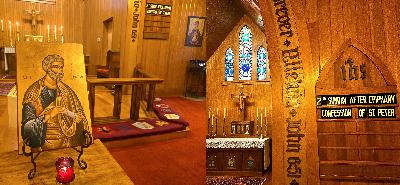
O God, Who didst bestow upon Thy blessed Apostle Peter the keys to the kingdom of heaven, and didst appoint unto him the high priesthood for binding and loosing: vouchsafe, that by the help of his intercession we may be delivered from the bonds of our iniquities; Who livest and reignest with Thee, in the unity of the Holy Ghost, ever one God, world without end. Amen. Get full access to Anglican Ascetic Podcast at frmcdallman.substack.com/subscribe
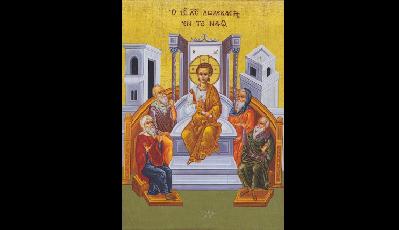
In our readings today from Proverbs 1, the 84th Psalm, and Romans 12, we have such golden wisdom. What we hear is for us, in the words of Proverbs, graceful garland for our head and pendants for our neck. These are such as ornament a Bride, and we are a Bride; for the Church is the Bride of Christ and Christ is our Bridegroom. By our Baptism we are married to Christ. Indeed being a Christian is as a Bride loving her Bridegroom. To be a Christian is to desire God, as a Bride desires her Bridegroom. In the words of 4th century Church Father Saint Gregory of Nyssa, brother of Saint Basil the Great, “The true vision of God consists in this: that the soul that looks up to God never ceases to desire Him.” This is captured in the 84th Psalm: “My soul hath a desire and longing to enter into the courts of the Lord; my heart and my flesh rejoice in the living God.” And we know that if we love God, if we love our Bridegroom Jesus Christ, then we will keep His words, and treasure His words. Thus the place of Scripture is seen: in Scripture are the words of Christ, and we love Him if we love His words; we love Him if the words of Scripture become our treasure, our prayer, our contemplation. By keeping the words of Scripture, the words of Christ, we cannot be conformed to the world, in the words of Saint Paul; Scripture transforms us by the renewal of our mind it demands.Scripture is given to us by God in the same manner as Proverbs is described in the first verse: “To know wisdom and instruction, to understand words of insight, to receive instruction in wise dealing, in righteousness, justice, and equity.” By Scripture we learn about Christ. We learn about Christ and how He expects us to live. We learn about Christ in Scripture, and what it means for Him to be the Son of God Who speaks throughout Scripture. To realize that it is Christ Who says in Genesis, “Let there be Light” – that it is Christ Who speaks to Moses at the Burning Bush – that it is Christ Who calls Abraham – Christ Who speaks to Isaiah and the prophets, and through them He speaks. To realize this and ponder this deeply in our heart – to understand, as Jesus Himself said, that Moses wrote about Christ; that before Abraham was, Christ is – this throws us into wonder and awe, as well as trembling. Such as what “fear of the Lord” means: wonder, awe, and trembling combined. And it is this state, the state of holy fear, that is the beginning of true knowledge of Christ.This is the state that the teachers in the Temple were in as they listened to 12 year old Jesus Christ. Mary and Joseph found their Son, and in finding their Son, then found the Temple priests and scribes “amazed.” In this boy they heard wisdom and understanding beyond the telling. He was teaching them. And He taught Mary and Joseph, who had searched for Him, to always find Him in the Temple, which is His Father’s House. “Why were you looking for Me?” He asked. “Did you not know that I must be in my Father’s house?” He taught Mary and Joseph this so that they would teach this to the Church at the right moment for the Church to receive this teaching.And let it be known, that this is teaching for us. For we are the Temple, as Saint Paul teaches: “Do you not know that you are God’s temple and that God’s Spirit dwells in you? For God’s temple is holy, and that temple you are.” We are the Temple, the Temple of the Holy Spirit Who Himself reveals Christ to us: reveals Christ in us. God has caused a new light to shine in our hearts, to give the knowledge of His glory in the Face of Jesus Christ His only-begotten Son. Our task is to perceive Christ’s Face. Our task is to perceive Christ in us, and we may know what things we ought to do, and that we may have the grace and power to faithfully fulfill what Christ expects of us. Christ seeks to speak to us. Are we listening? He Who has the words of eternal life is speaking to us. Are we listening? He Who seeks to transform our mind is speaking to us. Do we have a desire to enter into His courts, and a longing to rejoice in the living God? Let us ornament ourselves with Scripture, and let us not be foolish but wise, to hear Christ in Scripture and increase in learning about Him Who made us and sustain us, and feeds us: Jesus Christ, Who lives and reigns with the Father in the unity of the Holy Ghost, ever one God, world without end. Amen. Get full access to Anglican Ascetic Podcast at frmcdallman.substack.com/subscribe
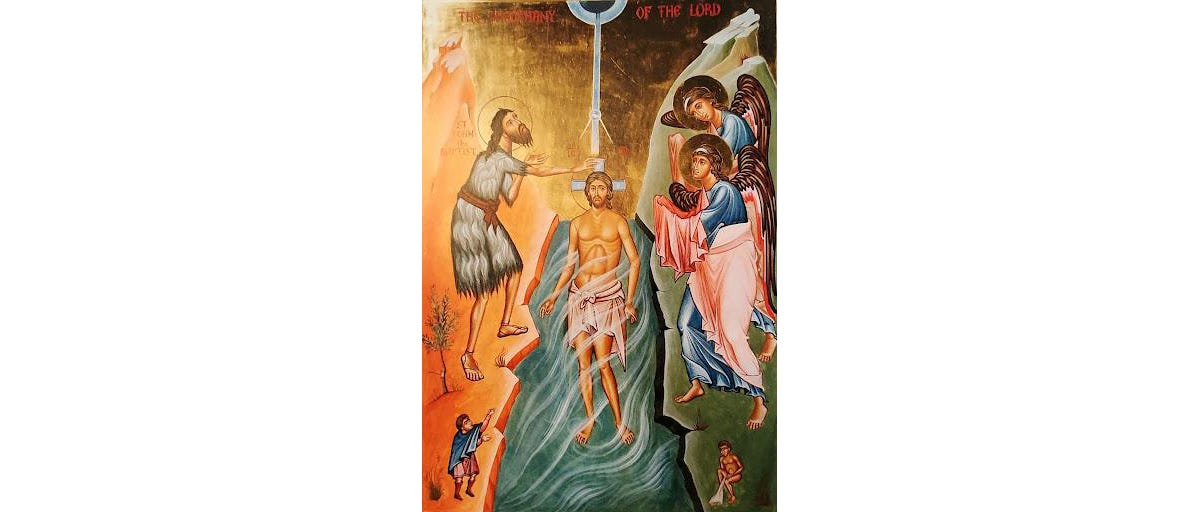
To celebrate at the beginning of the Epiphany season the Baptism of Jesus is an ancient liturgical custom. It is among the most ancient liturgical feasts of the Church, predating any liturgical celebration of Christ’s Nativity—meaning, it is older than the Church’s celebration of Christmas. And the Church’s liturgical art in icons of Christ’s baptism dates as far back as the early 200s. What all this tells us is how important the Baptism of Jesus Christ by the hand of Saint John the Baptist is to the life of the Church.The season of Epiphany weaves together several events of Christ’s life: His Nativity, the visit of the Magi, the beginning of His public ministry, the manifestation and revelation of God as Trinity, finding of Jesus in the Temple at age 12, the miracle at the wedding of Cana—in a grand sequence of liturgical celebration. These events have in common the one radical change that had come upon the world: God had united Himself to mankind to show mankind how He has overcome the dominion of evil and death and to give to mankind the Holy Spirit. The Evangelists do see Our Lord’s baptism as a kind of beginning. Evidence of that includes the fact that S. Mark’s Gospel account in effect begins with the Baptism; that His Baptism is the first earthly event described in S. John in his Gospel; and that S. Peter declares in the Upper Room after the Ascension, in Acts 1, that witnessing the Baptism is necessary to be considered to be the replacement of Judas in the ministry of the Twelve Apostles.This importance of the event in the River Jordan is shown also because, historically, the event is named the Theophany, the showing-forth of God. It is the first public revelation of God as Trinity. Jesus of Nazareth, proclaimed by the Father to be His beloved Son, with the Holy Spirit alighting upon Christ as a dove and anointing Him, all before the eyes of the heart of Saint John the Baptist. Perhaps the aspect of the Baptism most pregnant with significance is that of the Holy Spirit. For one, the Holy Spirit affirms that Jesus is in fact the Christ, the prophesied Messiah. Anointing in the Old Testament brought about the descent of the Spirit of the Lord to consecrate someone as a prophet, priest, or king. In 1 Sam. 16, Samuel took the horn of oil, and anointed David in the presence of his brothers, and the spirit of the Lord came mightily upon David.Secondly, the Holy Spirit descended upon Christ like a dove. A dove is a gentle, soft, tender bird. In the Song of Solomon the lover associates her beloved with the dove, as beautiful, lovely, perfect, flawless. The dove is also associated with innocence; it is guileless. In Christ’s own words: “Behold, I send you out as sheep in the midst of wolves; so be wise as serpents and innocent as a dove.” Thus to associate the Holy Spirit’s descent with a dove at Christ’s baptism says much about the nature of His coming messianic ministry. It can be seen to describe the tone of Christ’s whole ministry upon earth. He will not be a military commander, conquering the occupying Romans with force as so many contemporary Jews expected the Messiah to do. Instead, Christ is being anointed to conquer with love, and ultimately, with His own sacrifice on the Cross.Another aspect of the dove is that it was one of the creatures that Jews were allowed to offer for sacrifice at the Temple. Thus the descent of the Holy Spirit like a dove hints at the future sacrifice of the Messiah, though not for Himself, nor only for the Jewish people, but for all. He is both the Sacrifice and He who sacrifices.Another is that a dove brought to Noah the olive branch as evidence that the waters of the great flood were subsiding and therefore that salvation and a new world were at hand. This tells us that Christ’s coming was to usher in a new life, a new creation, a new way of being. Just as Noah and his family entered a world full of grace, so do Christians through Baptism.Lastly the Spirit remained upon Christ, something John the Baptist saw with his eyes. John the Baptist says that it had been revealed to him that he could identify Christ as the one upon whom he would see the Spirit not only descend but also remain: in John 1.33: “The one who sent me, to baptize with water told me, ‘The man on whom you see the Spirit come down and remain is the one who will baptize with the Holy Spirit.” In the Old Testament, the Spirit would descend upon the prophets to inspire them temporarily, but in the New Covenant, the Holy Spirit comes to dwell permanently within Christians.And because the Holy Spirit dwells permanently with those who are baptized, the Sacrament of Baptism gives us the forgiveness of all our sins, sins both original and actual, and gives us the very life of God, which is life in the Holy Spirit. The sacrament of Baptism incorporates us into Christ and makes us members of the One, Holy, Catholic, and Apostolic Church, the Body of Christ, and therefore sons of God by grace. And because of the Holy Spirit dwelling in the baptizes, it is possible to receive the Eucharist and the other Sacraments—Confirmation, Confession, Matrimony, and Unction–and live the grace-filled life. As Christ gave Himself to the waters, Baptism confers on us Jesus Christ Himself, and our new birth in Him.Let us therefore, dear brothers and sisters, celebrate this great event of spiritual revelation, the public coming-forth of Christ, the Theophany of God the Trinity, and the descent of the Holy Ghost, in Whom we live and move and have our being, all in praise of our Lord and God and Saviour Jesus Christ, to Whom belongs all glory, dominion, and power, and Who reigns with the Father and the Holy Ghost, ever one God, world without end. Amen. Get full access to Anglican Ascetic Podcast at frmcdallman.substack.com/subscribe
Today I am interviewing Nathaniel Marshall. Nathaniel recently gave a lecture called “On the Vocation of Lay Reader” for the conference “Called & Consecrated” in Fresno, California. We talk about the the Lay Reader in the Church, and then meanders into other topics. Nathaniel and I have known each other for about ten years. Thus while I expected our conversation to be lively, I personally found the topic of Lay Reader to be especially intriguing.Nathaniel is a husband and father, a plumber by trade, a plumbing instructor by day, and a seminarian and postulant to holy orders in the Reformed Episcopal Church. He and his family worship at Christ the King Anglican Church in Marietta, Georgia, and live just a bit north in Acworth. He is an Oblate of St Benedict with St. John’s Abbey in Collegeville, Minnesota, and has written about the intersection of Benedictine spirituality, the Book of Common Prayer, and manual labor for Christianity Today, The North American Anglican, and his own Substack newsletters: The Blue Scholar and diacoNate. He tweets here.Nathaniel is a Fellow with the Akenside Institute for English Spirituality and serves as the series editor for the works of Father Andrew, SDC. (The first reissued work is Our Lady’s Hymn, and it can be purchased here.) Get full access to Anglican Ascetic Podcast at frmcdallman.substack.com/subscribe
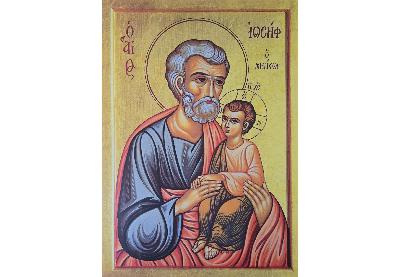
We hear today the Gospel from the holy Evangelist Saint Matthew, which reminds us of Our Lord’s return from Egypt to Nazareth. Because of this, it seems fitting to reflect today on a great Saint who is one of the main characters in the events of Our Lord Jesus Christ’s nativity, including what we just heard, yet who seems nearly forgotten amid the unspeakable glory of the Eternal Word of the God taking human flesh from His mother, Blessed Mary Ever-Virgin. And that great Saint is Joseph. It has been pointed out by a contemporary Anglican bishop that while the amount of spiritual literature about Virgin Mother Mary would fill a decently sized library, the amount of literature about Joseph might fit on a postcard. That is not as much of an overstatement as it might seem. So let us endeavor to paint a simple portrait of Joseph, that we might see Christ’s glory in him.This Joseph, the husband of Mary, is described by Saint Matthew as “being a just man.” This is but a few words. Yet in the context of Holy Scripture and Holy Tradition, they are quite weighty. The great Church Father S. John Chrysostom wrote about this description of Joseph in this way: “By a just man in this place Matthew means him that is ‘virtuous in all things.’” That is very high praise: not virtuous in some things; not virtuous in many things; rather Joseph is virtuous in all things. To paint more lines in this portrait of Joseph, let us compare Joseph being called “just” with the scriptural person of Job. There, the word “just” is used to describe Job. About Job we find the Hebrew word for “just” is translated into English as “blameless and upright.” Joseph, in being just, is therefore rightly understood to be blameless and upright. This means he is full of integrity with a high sense of morality, fairness, ethical correctness and righteousness in conduct. As Job is described as fearing God and shunning evil, so is Joseph. As Job is described as a man of prayer, worship, and compassion, so is Joseph. All of this is to understand Joseph as a “mensch,” which is a Yiddish word that means everything we have said thus far. It is among the highest of compliments in Yiddish.This is important because it is sometimes the case that in reading Matthew’s account of the early days of Mary’s pregnancy – when he writes that “When Mary had been betrothed to Joseph, before they came together she was found to be with child of the Holy Spirit; and her husband Joseph, being a just man and unwilling to put her to shame resolved to send her away quietly”—there are some who interpret this as Joseph believing Mary to have committed adultery and selfishly wanting to distance himself from Mary to save his own reputation. But such a view cannot be true if one understands Joseph to be a just man. Joseph is blameless and upright, having a high sense of morality, ethical correctness, and all the rest I said a moment ago—no, that is not what is going on with Joseph at all.And here a great detail often overlooked: that when Joseph found out that Mary was pregnant, he at the same time found out that God is the cause of her pregnancy: “she was found to be with child of the Holy Spirit.” Knowing this, our portrait of Joseph sees him as totally focused on how to follow God’s will; and while the angel Gabriel did speak to Joseph and give him instructions as to how to proceed, Joseph’s immediate impulse holy and just: it was to protect the reputation of Mary and her integrity, because in ancient Jewish society, women becoming pregnant before marriage means deep shame and scorn upon that woman and her being shunned, not allowing her to be part of the worshipping community.We must notice as well the high sense of obedience that Joseph displays. Obedience means both to follow the commandments of God, and even in the deeper sense, to listen to God. In all moments Joseph is described in the Gospel, he never disbelieved God’s message about Mary, and he responded fully and completely to Gabriel’s guidance given to him, both in the moment I just described, and in the moment we heard in our Gospel passage today. Gabriel, speaking for the Holy Spirit, said, “Rise, and take the child and His mother, and go to the land of Israel.” In perfect obedience, Matthew says about Joseph that “He rose and took the child and His mother, and went to the land of Israel.” And then Gabriel spoke again in a dream to warn Joseph away from Judea and towards Galilee, the city of Nazareth. Joseph’s perfect obedience protected and guarded Mary and her Holy Child Jesus.Having painted a holy picture of Joseph already, I want to complete this portrait by sharing what another Church Father, the Venerable S. Bede, has to say about Joseph. Bede calls Joseph symbolic of spiritual teachers; he does so as a kind of aside during his commentary on the infancy narrative in the Gospel of Luke. Bede writes that that when the Shepherds who watched their flock by night themselves were obedient to God to look for the Holy Child and entered Bethlehem, in finding the holy family, the Shepherds found Mary as the symbol of the virginal beauty of the Church; and they found Joseph as the symbol of spiritual teachers. And of course Joseph is a spiritual teacher, because of what he had experienced of God’s actions in and through Mary, and even more so, that Joseph had experienced so much of God’s actions in and through Jesus Christ. His whole being – body, mind, and soul – was drenched in the power of the Holy Spirit, in ways we must call both transformative and mystical.It is for all these reasons that within the life of the Church, Joseph is held up as a model. And in fact he is seen as a model in several ways. He is the model man, a man who follows Christ; he is the model husband, for his devotion to Mary; he is the model father, who helped bring through childhood and into adulthood He through Whom all things are made; and by extension, relating to Holy Order, he is both the model priest and the model bishop, for his life of holy sacrifice, witness to Christ, and guardianship of the the Church which was the Holy Family. Other than Mary, no one experienced the mystery of Christ’s Nativity and early life as profoundly as Joseph did. All of Joseph’s moments with Jesus and Mary were fully sanctified, fully holy, fully mystical. God wished to entrust the beginnings of our redemption to the faithful care of Saint Joseph. And for this we must marvel and venerate Saint Joseph.Let us ask the intercession of S. Joseph that may we cooperate in the work of salvation with the same faithfulness and purity of heart that inspired him in serving the Incarnate Word, and we may walk before God in the ways of holiness and justice, through the example and intercession of Saint Joseph; that like him, we all may be made worthy to receive the promises of Jesus Christ, Who lives and reigns with the Father in the unity of the Holy Ghost, ever one God, world without end. Amen. Get full access to Anglican Ascetic Podcast at frmcdallman.substack.com/subscribe
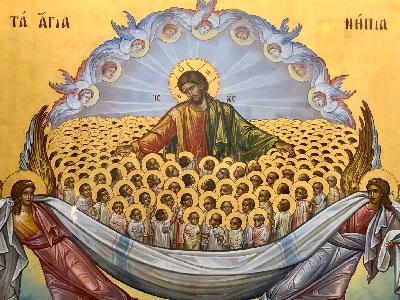
It is the fourth day of Christmas, and there are eight days to go until the Christmas season starts to blend into the season of Epiphany. And I will tell you that to the best of my memory, while I grew up knowing the carol, The Twelve Day of Christmas, probably through watching television as a kid, Christmas in my childhood and young adulthood, even well after college and getting married, Christmas was never more than Christmas Eve and Christmas Day. In my family it was go to church on Christmas Eve, come home and open presents and have dinner. Then wake up on Christmas Day and drive several hours to see relatives; then open more presents, drive home and that was the end of Christmas.It was not until we had reached our fourth child, which coincided with joining the Anglican Church in a parish near where we lived in suburban Chicago, that we came to start to see the value of Christmas being 12 days long. Even before kids Christmas was getting exhausting from traveling from one house of relatives to another, but once we had children, well, something had to give. We became tremendous advocates to all our relatives to the incredible virtues of not trying to jam pack everything in that first 36 hours. Let’s get together on December 28 instead. It is still Christmas, it is the 4th day of Christmas, and Christmas is 12 days long.But it all honesty, it took quite a while longer before the 12 days of Christmas turned from being twelve days of cheese, wine, crackers, salami, and cookies into really paying attention to the liturgical kalendar and what it has to say about the meaning of Christmas. It probably took my ordination to the priesthood, and being the person responsible for the parish liturgy, for reality to take. And when looking at the Twelve Days of Christmas and engaging liturgically and devotionally, especially that of the 2nd, 4th, 5th, and 8th days, the reality of these days, as the kids say, hits different.The 2nd Day of Christmas is given over to S. Stephen’s martyrdom, the stoning which follows the testimony he gave at the mock trial he was forced to be a part of. The 4th Day is given over to the Holy Innocents, the young male children murdered by Herod, along with their weeping mothers. The 5th Day, while less celebrated, remembers the martyrdom of S. Thomas Becket, Archbishop of Canterbury in the 12th century, and the 8th Day (the Christmas Octave Day) focuses on the Circumcision of Christ, seeing it as a pre-figure of His Crucifixion. So much for a boozy and cheese-filled Christmastide.Why does the Church celebrate these feasts and their very difficult narratives? Is it to sober us up? In a way, yes, it is. What I mean is that the joy and holy revelry of Christmas and the birth of the Holy Child Jesus, while always central to Christmas and encouraged by the Church, must never reach such heights of sugary emotionalism so as to be ungrounded by reality. And the ground of reality is this: Christ was born into a world of darkness. Christ was born into a world soaked in demonic temptation. Christ was born into a world of evil. Christmas demands that we are honest about this.Certain Jewish people of what S. Luke in Acts 6 calls the “synagogue of the freedmen” lied about S. Stephen and murdered him by stoning, with the assent of young Paul, in an effort to thwart the Jews converting to Christianity. Herod, after hearing the reason for the Magi’s coming to worship the King, lied to the Magi and in an angry rage put to death male children, in an effort to maintain his kingly power. Jesus was born not into a world not in which the hearts of all human beings are filled with peace and light, but into a world in which the hearts of all human beings are filled with sin and darkness. Christ reveals the Light that enlightens every person, but first His light meets the darkness and evil of people living in an environment of fallen, evil angels. This is the world that Christians are called to convert, by being in the world but not of the world; being in the world and being of Christ, the Saviour of all people.Without question Stephen and the Holy Innocents are in heaven. They are Saints of Holy Church and live in the fullness of the heavenly peace of the Holy Trinity. And yes, Stephen, the Holy Innocents, and all the Saints are singing and singing joyously, as we sang on Christmas Eve and Christmas Day. They join the angelic choir singing “Holy, holy, holy,” with the sound of the voices like many waters, like thunder, like the sound of harpists playing on their harps. They have been redeemed and are praying for us, that, like them, we may be made worthy of the promises of Christ. Worthy of the promises of He Who lives and reigns with the Father, in the unity of the Holy Ghost, ever one God, world without end. Amen. Get full access to Anglican Ascetic Podcast at frmcdallman.substack.com/subscribe

I want us to reflect upon the words of the blessed evangelist John concerning the eternity of the Word, that is, concerning the eternity of Christ’s divinity, in which He remained, and remains, always equal to the Father. As a privilege, I think, of John’s singular focus on Christ, John grasped the hidden mysteries of Christ’s divinity at a more profound level and, thanks be to God, he was able to disclose these hidden mysteries to others. After all, at the Last Supper, it was who John leaned upon the breast of the Jesus, which teaches us in figurative language that John drank the draught of heavenly wisdom from the most holy font of Jesus’s breast, and did so in a more outstanding way that the other evangelists. After all, John is called the beloved disciple for a reason.In the symbolic representation of the four animals, John is rightly matched with the flying eagle. The eagle, indeed, is said to fly higher than all other birds, and is said to direct its sight toward the rays of the sun more piercingly than all other living things. The other evangelists (Ss Matthew, Mark, and Luke), as though they were walking with the Lord on the earth, explained brilliantly Christ’s emergence in time, along with His deeds in time; but they said relatively little concerning His divinity. It was John, as if he were flying to heaven with the Lord, who expounded relatively few things concerning Christ’s acts in time, but recognized the eternal power of Christ’s divinity, through which all things come into being, and he handed this on in writing for us to learn. Whereas the other evangelists bear witness that Christ was born in time, John bears witness that this same Christ was in the beginning, saying, “In the beginning was the Word.” The others record His sudden appearance among human beings; John declares that He was always with God, saying, “and the Word was with God.” The others confirm that He is a true human being; John confirms that He is true God, saying, “and the Word was God.” And the others testify to the wonders which Christ did as a human being; John teaches that God the Father made every creature, visible and invisible, through Christ, saying, “All things were made through Him, and without Him nothing was made.”And to a remarkable extent blessed John, at this the beginning of his Gospel account, properly imbues us with the faith of orthodox belief concerning the divinity of the Savior, even anticipating false doctrine taught in the later centuries of the Church. For example, false doctrine taught by the 4th century priest Arius (called the Arianism heresy), who said, “If Christ was born, there was a time when He did not exist.” John refutes this beforehand with his first utterance when he says, “In the beginning was the Word.” He does not say, In the beginning the Word began to be, because he wrote in order to point out that Christ’s coming into being was not from time, but that He existed at the emergence of time, and so that through this wording he might point out that Christ was born of the Father without any beginning in time.In the same way there was the 3rd century priest and theologian named Sabellius (with the heretical doctrine called Sabellianism or “modalism”), which denied that the Holy Trinity is three Persons, and said, “The same God is Father when He wants to be, Son when He wants to be, Holy Spirit when He wants to be; nevertheless, He Himself is one,” that is, one Person and not three. Rebuking this error, John says, “And the Word was with God.” For if the One was with the Other, unquestionably the Father and the Son are two, and not one as if He Himself were sometimes the Father, and sometimes the Son, and sometimes the Holy Ghost. And likewise against other heretics did John speak and, by the grace of God, condemn ahead of time.In a profound way, the evangelist describes Christ’s two natures, namely the divine nature (in which He always and everywhere remains complete) and the human nature (by means of which He appeared to be contained by place when He was born in time), saying He was in the world, and the world was made through Him, yet the world knew Him not. He came into His own home, and His own people received Him not. (The evangelist says “the world” to mean human beings deceived by love of the fallen world under the control of Satan, and by being attached to creatures have turned away from acknowledging the majesty of their Creator.) Indeed, Christ was in this world and the world was made through Him because He was God, because He was complete everywhere, because by the presence of His majesty He ruled and held together what He had made. He came into His own because when He was born He appeared through His humanity in the world which He had made through His divinity. He came to His own home because Christ deigned to become incarnate in the nation of Judaea. And so He was both in the world and He came into the world. He was in the world through His divinity; He came into the world through His nativity. My dear brothers and sisters, we who today celebrate this glorious human nativity of our Redeemer, must always embrace His divine nature as well as His human nature with a love that is not yearly, but continual—we must continually embrace His divine nature, through which we were created when we did not exist, and His human nature, through which we were recreated when we were lost. And so, for this reason, the Word became flesh, that is, the Word became bread, that is, became Sacrament and dwelt among us, so that by keeping company with us in His human being become bread become Sacrament, He would be able to unite with us; by speaking to us He would be able to instruct us and present to us a way of living; by dying He would be able to struggle for us against the enemy; by rising He would be able to destroy our death—and so that through a divinity coeternal with the Father’s, He might raise us to divine things by bringing us back to life interiorly through the Sacrament, that in feeding us with Himself He might grant us forgiveness of sins and at the same time the gifts of the Holy Spirit, and that through the seven Sacraments He might not only lead us to see the glory of His glorified and sacramental humanity, but also show us the unchangeable essence of His divine majesty, in which He lives and reigns with the Father in the unity of the Holy Spirit, ever one God, world without end. Amen.(Adapted from a homily by the Venerable S. Bede, Gospel Homily I.viii) Get full access to Anglican Ascetic Podcast at frmcdallman.substack.com/subscribe
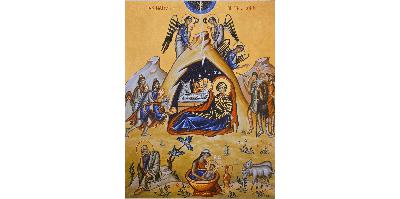
My dear brothers and sisters, Christ is born; let us give glory. Christ is from the heavens, let us go to meet Him. Christ is on the earth, let us be lifted up. Sing to the Lord, the whole earth. Let the heavens be glad and let the earth rejoice, for the heavenly One is now earthly. Christ is in the flesh, exult my dear brothers and sisters with trembling and with joy. Exult with trembling, because of sin. Exult with joy, because of hope. Christ comes from a Virgin; let us all practice virginity, which is humility of a heart that loves God above all else, that Christ being born in our heart, can be born in the hearts of others through our love and adoration of Him. Who would not love and adore He Who is Alpha? And who would not love and adore He Who is also Omega?Again, this night, this day: Christ is born, Christ is born this day. And again, the darkness is dissolved, again the Light is established. Let the people sitting in the darkness of ignorance see a great light of knowledge. “The old things have passed; behold, all things have become new.” The letter of the law falls away; the spirit of the Law is revealed; the shadows have been surpassed, for Truth Himself has entered after them. The world above must be filled. Christ commands, let us not resist. All nations, clap your hands, He told David in the Psalm. For to us a Child is born, and to us a Son is born, the power is on His shoulder. For He is lifted up along with the Cross, and He is called by the name “angel of great counsel,” and that of the Father. Let John Baptist yet proclaim, Prepare the way of the Lord. Let us all proclaim the power of this day. The fleshless One takes flesh; the Word is made material, the invisible One is seen, the impalpable One is touched, the timeless One makes a beginning, the Son of God becomes Son of Man. Jesus, Christ, the same yesterday and today and for the ages. As Paul says, He is stumbling block to Jews and folly to Gentiles. In all things He becomes a human being, except sin. He was conceived by the Virgin, who was purified in both soul and flesh by the Holy Spirit. He comes forth, God with what He has assumed (which is the flesh of His mother). O, the new mixture of Spirit and flesh! O this blending in paradox! He Who Is (as He named Himself to Moses) has come into being, and the uncreated is created, the uncontained is contained.The One who enriches becomes poor, He is made poor in our flesh, that we might be enriched eternally by Him. The Full One empties Himself; for He empties Himself of His own glory for a short time, that we may participate in His glory may be full in us. What great mystery is shown to us this day: We being born to participate in the likeness, made so by God, but not keeping that likeness, for it was defaced and disordered through our disobedience and sin; we are redeemed by Christ Who participates in our flesh both to save the likeness with the image and to make flesh immortal.Let us welcome His nativity in our hearts that our hearts leap for joy, if not indeed like John Baptist in the womb, and then like David danced when the ark came to rest in Jerusalem. Let us revere the birth through which we have been released from the bonds of birth. Let us honor little Bethlehem, which has brought us back to paradise, and bow before the manger through which we who were without true knowledge have been fed by the Word. Let us like the Ox know our owner, and like the donkey know our master’s crib. And let us run after the Star, and bring gifts with the magi: gold, frankincense, and myrrh, as to a king and to a God and to one dead for our sake. Let us with the shepherds give glory, with the angels sing hymns, with the archangels dance. Let there be a common celebration of the heavenly and earthly powers. They rejoice and celebrate with us today, if indeed they love mankind and love God.Your Nativity, O Christ our God, has shone to the world the Light of knowledge and the Light of pure Love; for by it, those who worshiped the stars were taught by a star to adore You, the Sun of Righteousness, and to know You, the Dayspring from on High. O Lord, glory to You! Christ is born today, let Him be manifest to us with the impossible radiance of the uncreated Light in the very eyes, and skin, and body, and voice of this Holy Child, Jesus Christ our Saviour, to Whom, with the Father and the Holy Ghost, be all glory for ever and ever, world without end. Amen. (adapted from Oration 38 by S. Gregory Nazianzus “On the Nativity of Christ”) Get full access to Anglican Ascetic Podcast at frmcdallman.substack.com/subscribe
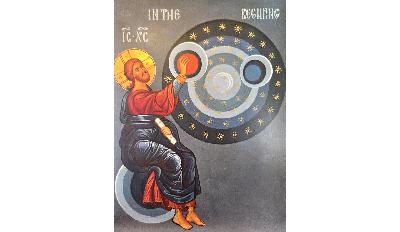
Jesus Christ is always the Coming One. As He said in S. Matthew’s Gospel: “Watch therefore, for you do not know on what day your Lord is coming…. Therefore you also must be ready; for the Son of man is coming at an hour you do not expect.” He is always the Coming One because through the Holy Spirit He fills all things, is all in all. Christ is present everywhere and in all places, and has been since the beginning of time itself, for He made time.And in this season, we know that the eyes of all wait upon Jesus Christ. Indeed, the eyes of the world, the whole world, wait upon Jesus Christ. For in but a few short days comes the festival of our redemption, the festival of the redemption of the whole world, Christ’s holy Nativity: the whole world being at peace, Jesus Christ, eternal God and Son of the eternal Father, desiring to consecrate the world by His most loving presence, having been conceived by the Holy Spirit in the womb of His mother blessed Mary, was born of her in Bethlehem of Judah, and was made man. All eyes are on Jesus Christ because of His Nativity, according to the flesh: that which redeems all humanity, indeed redeems the whole world.So poignant is the word today of the Apostle Paul: rejoice! Hence he says rejoice in the Lord always. Why would he have us rejoice? Because the Lord is at hand. Because the Coming One Who is Christ is coming to comfort us. He is coming to reveal His glory. And in revealing Himself, He gives to us His true peace, the peace which passes all understanding, the peace of heaven. He gives us His true peace—which is Him, for as Paul says to the Ephesians, Christ Himself is our peace—He gives Himself as our peace that we would live in Him and He in us. Christ seeks to fill all things living with His plenteousness. He seeks to fill all things with His blessing. He seeks to fill all things with Himself, that He might be all in all, that all things might be in subjection under Him.We know that the glory of the Lord is revealed, as Christ spoke through Isaiah. We know His glory is revealed, for the mouth of the Lord has spoken, and He has spoken clearly: Behold, a Virgin shall conceive and bear a Son, and His Name shall be called Emmanuel. Emmanuel, which means, God with us.And He shall be with us, on the great festival of our redemption. He shall be with us through the proclamation of the apostles, whose names are written on the walls of Jerusalem above, which is our heavenly citizenship. The apostles proclaim, This is Christ the King, this holy Child is the Son of the Highest, Who comes to us on donkey and foal. To this holy Child has been given the throne of His Father, David. This holy Child reigns over the house of Jacob forever. Of the Kingdom of this Child there will be no end. This holy Child is the Lamb of God, Who takes away the sin of the world.And He shall be with us, on the great festival of our redemption, through Scripture opened to Him, in all its pages. For every word of Scripture, what we call the Old Testament, concerns Christ. He comes to us as our daily Bread to be read, marked, learned, and inwardly digested. Christ, the eternal Word of the Father, speaks through all pages of Scripture, that through preaching and prayer we know Him, even He Who passes all our understanding, He Who while conceived in the womb of Blessed Mary, yet the whole world cannot contain.The Word became flesh and blood that we can receive His previous Body and Blood in the Blessed Sacrament, administered by holy priests. The Word became Sacrament and dwelt among us. The Word became Sacrament in order that He might dwell in us, for we receive Him—all of Him: body, soul, and divinity—in the consecrated and transformed Bread and Wine, the true Body and Blood of Christ: that we might become what we receive.(In the words of 20th-century Anglican divine Austin Farrar): Advent is a coming, not our coming to God, but His to us. We cannot come to God, he is beyond our reach; but He can come to us, for we are not beneath His mercy. As S. John teaches, we do not rise to God, but He descends to us, and dwells humanly among human creatures, in the glorious man, Jesus Christ, in the holy Child about Whom the whole host of Angels sing: that we shall be His people, and He everlastingly our God, our God-with-us, our Emmanuel. He will so come, but He is come already, He comes always: in our fellow-Christian (even in a child, says Christ), in His Word, invisibly in our souls, more visibly in the Blessed Sacrament. Opening ourselves to Him, we call Him in: Blessed is He that cometh in the Name of the Lord; O come, Emmanuel: come, He Who is our Saviour, Who lives and reigns with the Father in the unity of the Holy Ghost, ever one God, world without end. Amen. Get full access to Anglican Ascetic Podcast at frmcdallman.substack.com/subscribe
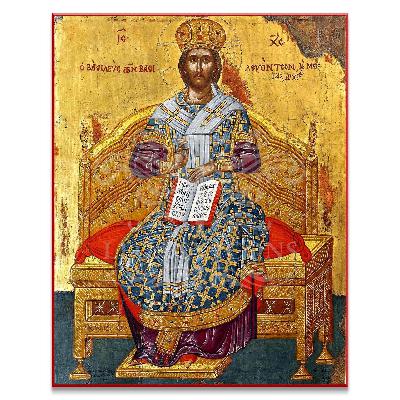
We hear John the Baptist telling his disciples to go and ask Jesus if He is the One. It is important to know that this is not John showing a lack of faith in who Jesus is, but quite the opposite. Remember he has known Jesus for 30 or more years by this point. They grew up together; John knew Mary and Joseph. John is trying to spur his disciples to see in Christ what he already knows of Christ: that He is the one, that He is the Saviour. So John tells them to go, and then they ask, and Jesus responds. And look at all the things that Jesus tells them to say to John: all the healing, the miracles, the good news. Jesus and John are doing a tag team to inspire the Gospel proclamation in these people, that they would go and proclaim what Jesus is going in the world, which is what Jesus had them do. John already knew, and Jesus did this so that they would begin to learn about the need to proclaim the Gospel, to proclaim that Jesus Christ is King. That what this moment is about; it is easy to misunderstand it. It is not that John lost is faith, his faith in Jesus Christ was strong to end, for after all, he was beheaded and Jesus spoke such high words about him, which we hear in the Gospel. Jesus Christ was, for John the Baptist, his King. Jesus Christ is our King. Of that we must never have any doubt. Things in the world we can doubt, we can question, we can critique. Things of the world can be suspect; for the world is fallen and under the power of the Prince of Darkness. Yet of Christ, none of this applies. He is our King, He is our Saviour, He is the Coming One. He has forever won the victory over the Prince of Darkness. He is ever seeking to come to us, every day. This is why He came to visit us in great humility; this is why He will come at the end of days to judge both the quick and the dead; this is why He took our human flesh and nature upon Him, so as to be able to come to us in His glorified and sacramental Body as our daily Bread, received through the opening of Scripture and the Breaking of Bread.We saw this in the teaching of the first two Sundays of Advent. The 1st Sunday of Advent dramatically illustrated that Christ is the Coming One by the Gospel reading of Christ’s entrance into Jerusalem upon the donkey and a foal, in which we are the citizens of heavenly Jerusalem to whom Christ is coming. And the Second Sunday of Advent emphasized His coming to us in the opening of Scripture: that we may in such wise hear them, read, mark, learn, and inwardly digest them: Christ our daily bread known through Scripture unveiled.Today we hear Saint Paul teaching the Church that he and the other priestly ministers of Christ are servants and, more poignantly, are stewards. Paul, the other apostles, even John the Baptist, sent by God to go before Christ to prepare the way in our hearts for Christ’s coming to us, are stewards, Paul says, of the mysteries of God. “Mysteries” comes down in the Latin then English lineage of our scriptural translations, is in Greek the same word as Sacraments. So the priestly ministers of Christ are stewards of the Sacraments of Christ; are sacramental stewards. This is an important teaching for Paul, which is why he gave it to the Church in Corinth and to the whole, universal Church.Why is it an important teaching for the Church? It is because Christians need to know, and ever remember, that what priests do is make Christ known. They do so in their sacrificial ministry of the sacraments. They make Christ known through the sacrament of Scripture in their preaching and in their teaching. They make Christ known through the act of blessing; while all Christians can and should offer blessings to each other as an act of devotion and goodwill, only blessings offered by Priests truly convey heavenly grace, sacramental grace. And Priests make Christ known through the sacramental rites both in the Liturgy and flowing from it. In the Liturgy priests are stewards of the dominical sacraments of Baptism and Eucharist, as well as the sacraments of Matrimony, Confession, Unction, and with the help of the Bishop, Confirmation. Bishops make possible these sacraments just mentioned, as well as the sacrament of Holy Orders. Each of these is a means and channel of saving grace. Christ is the Coming One through the Sacraments, through the Sacraments which are His chosen and instituted channels. To be sacramental stewards means the Priest preserves the proper understanding and practice of the Sacraments, through his teaching and ministry.As Jesus taught His disciples to regard S. John the Baptist differently and uniquely, the Church is to regard priests differently and uniquely. Priests are set apart, which is what consecrated and ordained means. They are called to be servants of Christ so as to know Him profoundly, not merely for their personal benefit, but for others: that they are able to fulfill their calling to be effective stewards of the mysteries of God, of the sacraments of God, of that which is necessary spiritual food for the salvation of Christian disciples. Jesus and Paul want the Church to regard priests as means by which Christ comes: means by which Christ nourishes His disciples with Himself.Christ the High Priest offers Himself eternally, the ordained priesthood makes Him present in the liturgy through the sacrifice offered by the priest, and all believers participate in this sacrifice by offering their lives, transforming the world through the sanctifying power of the Holy Spirit working through them. Priests are necessary to God’s plan of salvation, which is why the Church has always had them, and evidence of the existence of Bishops, Priests, and Deacons is shown in the New Testament and in the earliest documents we have, documents dating to around AD 100. Let us pray for the priests of Holy Church, that it may please God to illumine all Priests with true knowledge and understanding of His holy Word, that both by their preaching and living, they may set forth God’s Word, and make Christ known: always that Jesus transform those men called to the priesthood, that by Christ working through them, the hearts of the disobedient are turned to the wisdom of the just, and turned to follow Christ as their Saviour, Who lives and reigns with the Father in the unity of the Holy Ghost, ever one God, world without end. Amen. Get full access to Anglican Ascetic Podcast at frmcdallman.substack.com/subscribe
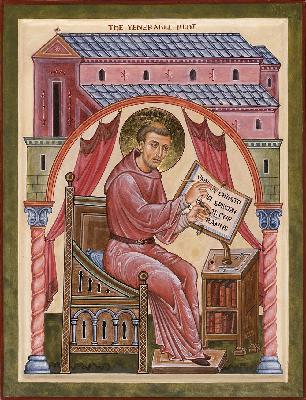
In the audio, both lessons are read, and are followed by a homily by yours truly.A Lesson from the Gospel according to S. Luke 21.25Jesus said unto his disciples: “There will be signs in sun and moon and stars, and on the earth distress of nations in perplexity because of the roaring of the sea and the waves, people fainting with fear and with foreboding of what is coming on the world. For the powers of the heavens will be shaken. And then they will see the Son of Man coming in a cloud with power and great glory. Now when these things begin to take place, straighten up and raise your heads, because your redemption is drawing near.”A Lesson from Commentary by the Ven. S. Bede (On Luke 21.26)I believe that this statement points to the advent itself of the Judge, when, according to the parable found in another passage, all the virgins, both the wise and the foolish, are aroused by an unexpected cry and trim their lamps, that is, they inwardly count up their deeds, for because of them they await with the greatest fear the outcome impending at that very moment of the eternal Judgment. For up to this point nearly the whole world is going to act without any fear of the Judge, as the Apostle Paul witnesses, who says: “When people say, ‘There is peace and security,’ then sudden destruction will come upon them.” So then, with the fear and expectation of the strict Judgment coming upon the whole world, many who seemed to flourish in this world will wither away when they realize that they are without good fruit. Then the faith that had bloomed without works, probed by the fire of the just Judge, will shrivel up. It is no wonder that human beings, who are earthbound either by nature or by understanding, are disturbed at His Judgment, at the prospect of which the very powers of heaven themselves, that is, the angelic powers, tremble, as the blessed Job also attests, who says: “The pillars of heaven tremble and are struck with fear at His rebuke.”If you find this edifying, please consider (if you haven’t already) becoming a paid subscriber. Your support goes directly to supporting the ministry of Akenside Institute for English Spirituality, a project I started 12 years ago to help to rebuild the Anglican tradition. Get full access to Anglican Ascetic Podcast at frmcdallman.substack.com/subscribe
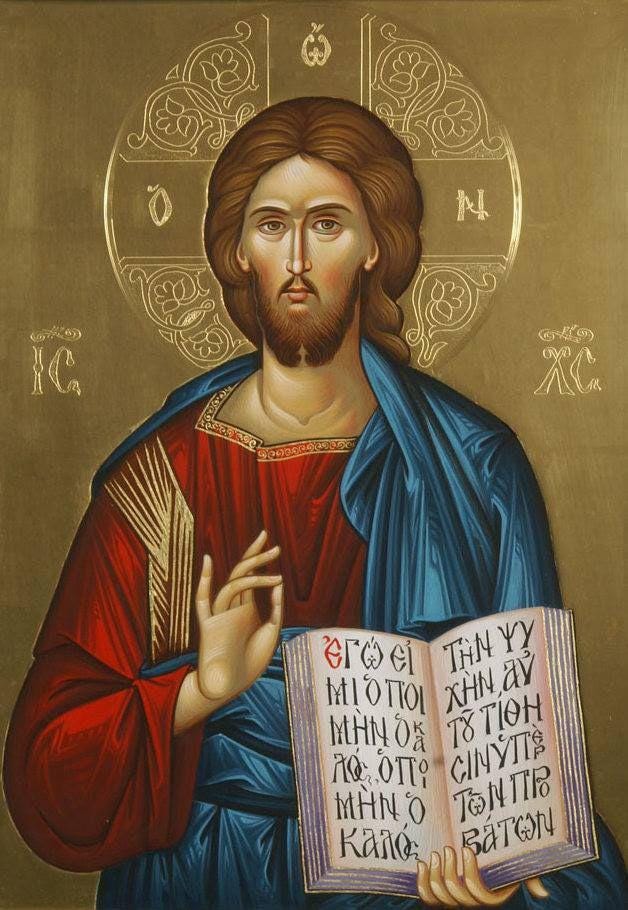
I concluded my preaching for the First Sunday of Advent with these words: “The knowledge that Christ is always the coming one is why Christianity is at its heart a holy mystery, shrouded at every turn and in all things by mystery. The holy apostles, whose names are inscribed on the walls of the foundation of heaven, preached Christ the Coming One so that all who hear it with faith may be caught up in the life of wonder, awe, and openness to mystery of Jesus Christ: celebrating, savoring, and wondering at our Lord Jesus, Who comes to us through the Holy Spirit: living and moving and having our being within the Kingdom of God.”Advent as a whole is about looking for God’s coming now in our souls by grace, to quicken and heighten our awareness of His presence here and now. After seeing on Advent’s First Sunday how Our Lord’s entrance into Jerusalem represents His desire to enter our heart through preaching of the apostles and drive out from His Temple (which is us) all that is not prayer, it is fitting that the Second Sunday of Advent is particularly given over to celebrating, savoring, and wondering at the fact that Christ always seeks to come to us, to come into His Temple which is us, through Holy Scripture—as Saint Paul says, how Scripture, previously veiled and not able to be fully understood, is now unveiled by Jesus Christ through the Cross.This is why we have the Collect for the Second Sunday of Advent, a famous and beautiful Anglican collect, which I will read again: “Blessed Lord, Who hast caused all holy Scriptures to be written for our learning: grant that we may in such wise (wise is the old word for way: that we may in such way) hear them, read, mark, learn, and inwardly digest them, that by patience and comfort of Thy holy Word, we may embrace, and ever hold fast, the blessed hope of everlasting life, which Thou hast given us in our Saviour Jesus Christ.” So much in this Collect. Through the Scriptures, inwardly digested, Christ is known. He is known, in our Lord’s words in our Gospel passage, “with power and great glory.” Indeed, Christ took on our human nature in significant part because in doing so He would be powerfully and profoundly known through the opening of Scripture: the opening of it, and our reception of Him, inwardly digesting Him because as He said, “I am the Bread of life.” This Bread, our daily bread, is received both through opening Scripture and by the breaking of bread. And we know Christ, the Eternal Word of God, the only-begotten Son of God, begotten of His Father before all worlds, took on our human nature to be known and received as our daily Bread because on the very day of His Resurrection, He taught the disciples to interpret Scripture as always concerning Him and to receive Him in the Eucharist. He taught them to seek Him so fervently that despite heaven and earth passing away, His words are so digested so as to never pass away.This gives the interpretation of Paul’s teaching in our Romans epistle: “Whatever was written in former days was written for our instruction.” What kind of instruction? Paul specifies and says, “that through endurance and through the encouragement of the Scriptures we might have hope.” Because Christ is our hope, then we are to read Scripture to know Christ in the Scriptures, and in knowing Him in Scripture, we may together with one voice glorify the God and Father of our Lord Jesus Christ. Indeed, Paul says that Christ took on our human nature, the nature of a servant, to show the truthfulness of God the Father. In reading Scripture – in marking, learning, and inwardly digesting Christ as He is known through Scripture – the root of Jesse will come, and through His coming by the opening of Scripture, the God of hope will fill us with joy and peace, that by the power of the Holy Spirit, we may abound in hope.Let us “inwardly digest” Christ through Scripture. The Anglican Divine blessed John Keble has this to say about “inwardly digesting”: “When something is digested, it agrees with him, nourishes him, is changed, as it ought to be, into the substance of his body. So the word and commandments of God, made known in Holy Scripture, are inwardly digested, when a man so receives them, as that they shall enter into his character, become, as it were, part of himself. How may that be? There is but one way. We must actually do as God bids us.” In the words of Saint James, we must not only be hearers of the Word, but doers of the Word. To be a doer of what God commands us to do, and what He reveals of His Son through Scripture as our daily bread, is what it means to inwardly digest. Whatever was written in former days was written for our instruction – our instruction in how to pray, how to love, how to worship, how to be humble, how to be a disciple, how to live a godly life of Scripture and Sacraments through the Liturgy: how to live, so as to be taken up into the life of the Holy Spirit, as He teaches us all things and guides us into the Truth Who is Jesus as He seeks to come to us and be known through the opening of Scripture and the Breaking of Bread: He who lives and reigns with the Father in the unity of the same Holy Spirit: ever one God, world without end. Amen. Get full access to Anglican Ascetic Podcast at frmcdallman.substack.com/subscribe
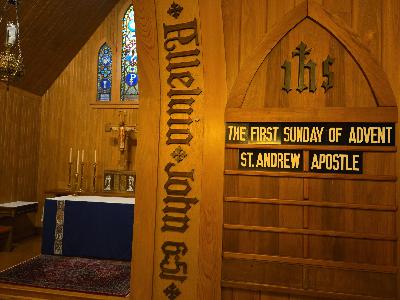
In the audio, both lessons are read, and are followed by a homily by yours truly.A Lesson from the Gospel according to S. Mark 1.1The beginning of the gospel of Jesus Christ, the Son of God. As it is written in Isaiah the prophet, “Behold, I send my messenger before thy face, who shall prepare thy way; the voice of one crying in the desert: Prepare the way of the Lord, make his paths straight—.” John the baptizer appeared in the desert, preaching a baptism of repentance for the forgiveness of sins. And there went out to him all the country of Judea, and all the people of Jerusalem; and they were baptized by him in the river Jordan, confessing their sins. Now John was clothed with camel’s hair, and had a leather girdle around his waist, and ate locusts and wild honey. And he preached, saying, “After me comes he who is mightier than I, the thong of whose sandals I am not worthy to stoop down and untie. I have baptized you with water; but he will baptize you with the Holy Spirit.”A Lesson from Commentary by the Ven. S. Bede (On Mark 1.3 and Homily 1.1)John cries out in the desert because he announces the consolation of redemption to the forsaken and desolate Judah. What he cries out, however, is revealed when it is added: Prepare the way of the Lord, make straight his paths. Whoever preaches true faith and good works, what else does he do but prepare the way for the Lord to enter the hearts of the listeners, so that the power of grace may penetrate, the light of truth may shine, and make straight paths for God, by forming pure thoughts in the mind through the word of good preaching? . . . It was in the desert that John gave his own baptism and proclaimed the baptism of Christ. Moreover, he lived his whole life in desert places from the time that he was a boy. This was so that as a first-rate teacher he might add the force of his example to what he was proclaiming in words; and as one who was persuading his hearers to forsake their sins in repentance, he might himself turn away from the vices of sinners, not only by mental punishment, but even by his physical location. Symbolically, the desert where John remained separated from the allurements of the world designates the lives of the Saints, who, whether they live as solitaries or mingled with the crowds, always reject the desires of the present world with the whole intention of their minds. They take delight in clinging only to God in the secrecy of their heart, and placing their hope in Him. If you find this edifying, please consider (if you haven’t already) becoming a paid subscriber. Your support goes directly to supporting the ministry of Akenside Institute for English Spirituality, a project I started 12 years ago to help to rebuild the Anglican tradition. Get full access to Anglican Ascetic Podcast at frmcdallman.substack.com/subscribe
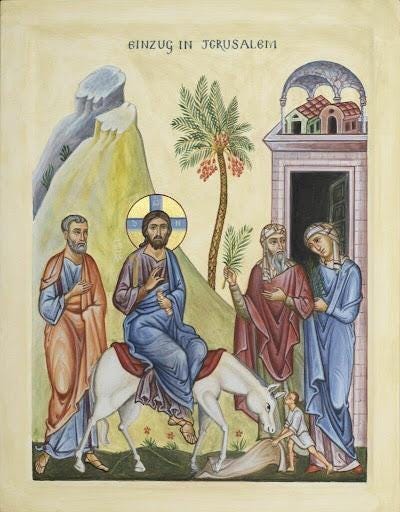
The First Sunday of Advent among other things reminds us that we at St Paul’s follow the traditional one-year lectionary for the Scripture readings for Sundays and Holy Days throughout the year. This we are doing with the permission and encouragement of Bishop Justin Holcomb, which is required. We are one of three parishes in our diocese doing this three-year experiment. While we are relatively unique in today’s Episcopal Church to be using this lectionary, we are well in line with English tradition going back to the 600s and officially as recent as 1979, when the present Prayer Book introduced a brand-new lectionary, much to the chagrin of many longtime Anglicans in the Episcopal Church.I mention this upfront in my sermon as a way to acknowledge, as I did last year, that the Gospel reading today might be disorienting to hear. The Entrance of Our Lord into Jerusalem we normally hear during Holy Week, for this episode in the life of Christ is the kickoff to Palm Sunday and the procession we make from the Resurrection Garden outside into our Church, holding blessed palms and singing All Glory, Laud, and Honor. The entrance into Jerusalem of our Lord on a lowly donkey is one of the stations that make up the liturgical extravaganza of Holy Week: one station to the next, from the Raising of Lazarus to the Raising of Christ in His glorious Resurrection. In hearing this Gospel today, at a great distance liturgically from Holy Week, the point of it being the Gospel reading for the First Sunday of Advent is not to think so much about Holy Week. But if that is not the point, what is the point? In what way are we to understand our Lord’s entry into Jerusalem and then into the Temple?Whereas in Holy Week on Palm Sunday we read of Christ’s entry into Jerusalem in the literal way, and focus on that literal reading, as we hold blessed palms and accompany Him, in Advent we must read it on the spiritual level, as symbolic of our spiritual life, which is the life of receiving Christ into our mind and heart. For this we ask these questions: what is the Jerusalem into which Christ enters, and what is the Temple? Unsurprisingly, Scripture provides answers that illustrate the profound symbolism of this passage in Advent.To identify what Jerusalem is, we have Saint John and the Revelation which He recorded. Revelations 21:14 speaks of the New Jerusalem when it reads: “And the wall of the city had twelve foundations, and on them were the twelve names of the twelve apostles of the Lamb.” Christ enters this Jerusalem – and on the walls of its foundation are the names of the apostles.As far as the Temple, Saint Paul teaches what the Temple is. The Temple is us. As he said to the church in Corinth: “We are the temple of the living God; as God said, ‘I will live in them and move among them, and I will be their God, and they shall be my people.’” He also said, “Do you not know that you are God’s temple and that God’s Spirit dwells in you? If any one destroys God’s temple, God will destroy him. For God’s temple is holy, and that temple you are.” And he said, “Your body is a temple of the Holy Spirit within you.”Thus we put the symbolism together in this spiritual interpretation. Christ’s entry into Jerusalem, as read on the First Sunday of Advent, is His entry into the hearts of the faithful through the Gospel proclaimed by the Apostles. His coming into the Temple is His coming into our inward contemplation, into our soul, into our heart. And this matches the Collect prayer for all Advent, that “Jesus Christ came to visit us in great humility.” The living Church and its lively faith rests on apostles and their apostolic proclamation, which makes Christ known to us and shows that Christ is always the Coming One, seeking to come to us, in every moment of every day of our earthly life. All God wants is the human heart, and He comes to our heart on a lowly donkey.Christ seeks to enter our heart through the preaching and teaching of the apostles recorded in the New Testament, and He desires to drive out from the Temple (which is us) all that mucks it up and gets in the way of us perceiving Christ the King of all Creation and King of us. He demands that His house, that is, His temple, that is His Body, which is us, to be a house of prayer. Hence we must keep the commandments as Saint Paul writes to us today in his epistle the Romans: let us love our neighbor as yourself, which sums up the Law, as Jesus taught, indeed because love fulfills the law. This is what keeps our Temple clean, and allows us to recognize Christ Who is the Coming One, coming to us, or in Paul’s phrase: “Salvation is nearer to us now than when we first believed.” Nearer to us, because Christ has come closer to us, having cast off the works of darkness which we wore as newborns babe in Christ having put on more of the armor of light.Recognizing that Christ is always the Coming One is the basis of life in Christ’s Kingdom. The Advent season as such is the time to consider God’s coming to his people: to look into the Church’s memory of the first coming of Jesus; a time to look ahead to the Second Coming, the consummation of history in the return of Christ as Judge. But, primarily, it is about looking for God’s coming now in our souls by grace, to quicken our awareness of His presence here and now. He is the Coming One by means of the opening of Scripture and by the Breaking of Bread. He is the Coming One through the Liturgy of the Church, which arranges Scripture and provides the Sacraments. The knowledge that Christ is always the Coming One creates a truly lively faith, a life in the Holy Spirit: a life of constant wonder, constant awe, ever looking for the divine presence in our heart and in the world, and a constant openness to divine disclosure. The knowledge that Christ is always the coming one is why Christianity is at its heart a holy mystery, shrouded at every turn and in all things by mystery. The apostles, whose names are inscribed on the walls of the foundation of heaven, preached Christ the Coming One so that all who hear it with faith may be caught up in the life of wonder, awe, and openness to mystery of Jesus Christ Who comes to us through the Holy Spirit: living and moving and having our being within the Kingdom of Christ the King: He Who is before all things, and in Whom all things hold together, Our Saviour Jesus Christ, Who lives and reigns with the Father and the same Holy Spirit, ever one God, world without end. Amen. Get full access to Anglican Ascetic Podcast at frmcdallman.substack.com/subscribe
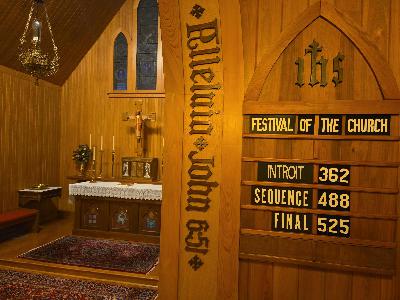
In the audio, both lessons are read, and are followed by a homily by yours truly.A Lesson from the Gospel according to 2 Chronicles 6.13Solomon knelt on his knees in the presence of all the assembly of Israel, and spread out his hands toward heaven, and said, “O Lord, God of Israel, there is no God like you, in heaven or on earth, keeping covenant and showing steadfast love to your servants who walk before you with all their heart, who have kept with your servant David my father what you declared to him. You spoke with your mouth, and with your hand have fulfilled it this day. Now therefore, O Lord, God of Israel, keep for your servant David my father what you have promised him, saying, ‘You shall not lack a man to sit before me on the throne of Israel, if only your sons pay close attention to their way, to walk in my law as you have walked before me.’ . . . O my God, let your eyes be open and your ears attentive to the prayer of this place. And now arise, O Lord God, and go to your resting place, you and the ark of your might. Let your priests, O Lord God, be clothed with salvation, and let your saints rejoice in your goodness.” As soon as Solomon finished his prayer, fire came down from heaven and consumed the burnt offering and the sacrifices, and the glory of the Lord filled the temple. And the priests could not enter the house of the Lord, because the glory of the Lord filled the Lord’s house. When all the people of Israel saw the fire come down and the glory of the Lord on the temple, they bowed down with their faces to the ground on the pavement and worshiped and gave thanks to the Lord, saying, “For he is good, for his steadfast love endures forever.”A Lesson from a homily by the Ven. S. Bede (II.24)We should not pass over without comment the fact that during the dedication of the temple, when Solomon had finished praying, fire came down from heaven and consumed the burnt offerings and the sacrificial victims. Now we are the burnt offerings and victims of the true Solomon; all His elect are the burnt offerings and victims of the most high King, of Whom Saint Peter says, ‘Christ died once for our sins, the just for the unjust, so that He might offer us to God, having been put to death in the flesh but made alive in the spirit.’ The heavenly fire is the flame of extraordinary love, with which the citizens of the heavenly fatherland rejoice always to burn as they behold one another’s happiness and their Maker’s glory. Thus it is that a certain choir of the heavenly powers, which from their unique nearness to their Maker burn with immeasurable love, are called by the special name ‘Seraphim,’ that is, ‘burning’ or ‘on fire.’ . . . When the time of our resurrection comes, and faithful servants have entered into the joy of their Lord, the flame of true love which the angelic powers now burn will engulf their minds also, as they behold the vision of their Redeemer.If you find this edifying, please consider (if you haven’t already) becoming a paid subscriber. Your support goes directly to supporting the ministry of Akenside Institute for English Spirituality, a project I started 12 years ago to help to rebuild the Anglican tradition. Get full access to Anglican Ascetic Podcast at frmcdallman.substack.com/subscribe
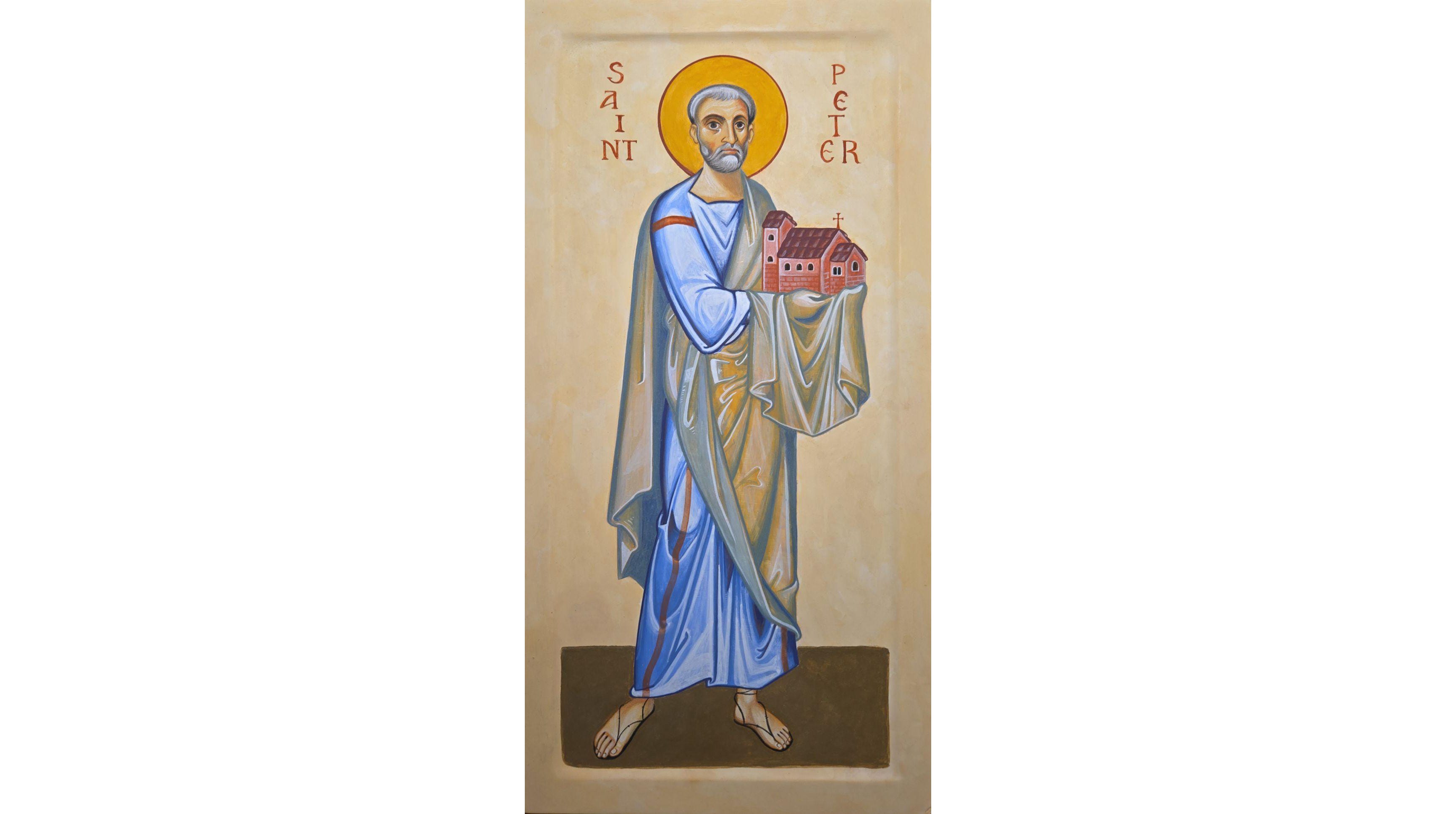
Our Feast of Dedication which we celebrate today we are celebrating because it was 103 years ago—that is, on the 19th of November, 1922—that this church was consecrated as a true and canonical local church by Bishop Cameron Mann, Bishop of the then-diocese of South Florida, which included geographically the land of New Smyrna Beach and the surrounding communities. We have the original document of dedication and consecration. One of the statements in the document reads this way: “We do hereby pronounce and declare, that St Paul’s Church, New Smyrna, Florida is consecrated accordingly, and thereby separated henceforth from all unhallowed activity, worldly, and common uses, and is dedicated to the Worship and Service of Almighty God, the Father, the Son, and the Holy Ghost, for reading and preaching His Holy Word, for celebrating His Holy Sacraments, for offering to His Glorious Majesty the Sacrifice of Prayer and Thanksgiving, for blessing His People in His name, and for the performance of all other Holy Offices, according to the usages of His Holy, Catholic and Apostolic Church.”What these words of consecration and dedication spell out is the purpose of this house. This place now consecrated now belongs to God alone, forever. It is quite clearly not to be a den of robbers (which is the symbol of “unhallowed activity, worldly and common uses”). Instead, the purpose of this house is to be a Christian house of prayer: prayer in all its forms: a house for reading and preaching God’s Holy Word, for celebrating His Sacraments, for the offering of our Sacrifice of Prayer and Thanksgiving, for blessing and all other Holy Offices. There are to be no money-changers here; there is to be no one selling pigeons. There is one purpose for being here, and one alone: God. The one purpose is to be here for God, for the Holy Trinity, for God the Father, His Only-Begotten Son Jesus Christ, and His Holy Ghost. We are here to be taken up by the power of the Holy Ghost, Who bears witness to Christ the Eternal Word, Who as God’s Son reveals the Father Almighty, God Himself. This space is for prayer, for relationship, with God: that the desire of the human soul to enter into the courts of the Lord might be met—that our heart and flesh rejoice in the living God, Who in His heavenly reality is present, active, and glorious here.When this church was consecrated in 1922, we changed our name. Whereas up to then we were Grace Church, New Smyrna Beach, upon consecration we became St Paul’s Church. It is fitting to hear today Paul’s teaching on speaking in prophecy. I say it is fitting because while it is meet and right on this anniversary of this church’s consecration to look back over our past, to savor and celebrate God’s mighty action in this place (whether it be in our current location, or in the original location of this church on the corner of Downing St and Palmetto St), it is also meet and right to look to our future, and what we should be doing to ensure lively worship of God by a lively congregation of Christians. For that the teaching of Paul is very important. In fact, 1 Corinthians chapter 14 provides the only teaching Paul gives on how to grow numerically.Let me unpack his teaching. Paul presents us with a scenario where outsiders and unbelievers enter the church. For us, we call such people “visitors.” And what might the visitors experience? Paul contrasts speaking in tongues with speaking in prophecy (that is, prophesying). Paul is concerned about how to act in church, so that the visitors will want to come back and worship again with us. And on this, he could not be clearer. Paul writes, “In church I would rather speak five words with my mind, in order to instruct others, than ten thousand words in a tongue.” So where Paul falls is clear: in church, in our parish fellowship and worship, we are to prophesy, not speak in tongues. But what do both of these mean? To keep things simple, Paul defines these actions from the perspective of the experience of people hearing someone speak in tongues and the experience of people hearing prophesy. He writes that when people hear someone speaking in tongues, “no one understands him.” And, Paul says, if no one understands the person speaking in tongues, it is like speaking into the air (Paul’s words) instead of speaking to a person’s head and heart. But about prophesying, Paul writes this: “He who prophesies speaks to men for their upbuilding and encouragement and consolation.” And Paul writes, “He who prophesies edifies the Church.” Which leads Paul to conclude: “He who prophesies is greater than he who speaks in tongues.” Paul’s teaching reaches its climax in the portion of 1 Cor 14 we heard in our Epistle today. He writes: “ If, therefore, the whole church comes together and all speak in tongues, and outsiders or unbelievers enter, will they not say that you are out of your minds? But if all prophesy, and an unbeliever or outsider enters, he is convicted by all, he is called to account by all, the secrets of his heart are disclosed, and so, falling on his face, he will worship God and declare that God is really among you.” And which do we want visitors to experience? Do we want visitors to say about us that we are mad? Or do we want them to worship God and declare that God is really among us?If we want people to think we are mad, then let us speak amongst ourselves in a confused way. Let us speak about our relationship with God in a confused way. Let us be unclear about our purpose of being here. Let us find other reasons for being here than “Worship and Service of Almighty God, the Father, the Son, and the Holy Ghost.” Let us be no different than any social club.Now, if we want people to declare that God is really among us, then Paul says, “You can all prophesy one by one, so that all may learn and all be encouraged.” For Paul, to prophecy is to speak about how God has been active in our lives—active in revealing Himself, active in guiding, active in transforming, active in directing; whether personally, or in one’s family, or in one’s parish congregation. To prophesy is to build up, encourage and console: and what builds up, encourages, and consoles than to hear a person’s own words about how God has shown Himself in their life? Paul teaches that prophesying is something each one of us can do. And if we want visitors to worship with us, and come back, then we must prophesy, each one of us. This is the only numerical growth strategy Paul teaches, and as far as I can tell, it is the only growth strategy taught anywhere in the Bible.So let us say clear: in this place, in this holy house set apart from all unhallowed activity, worldly, and common uses, here, and here only, for the Worship and Service of Almighty God, the Father, the Son, and the Holy Ghost—we know ourselves to be truly with God. We know ourselves to be led by Him, and we know ourselves here to receive His mercy which heals us, strengthens us, guides us, and ennobles us for the Mission we are to do here in this place, Mission which includes prophetically speaking about how God has shown Himself in our lives. To all people who come to worship here, we say with Jacob: How awesome is this place! This is none other than the house of God, and this is the gate of heaven! All through Jesus Christ, Who lives and reigns with the Father and the Holy Ghost, ever one God, world without end. Amen. Get full access to Anglican Ascetic Podcast at frmcdallman.substack.com/subscribe
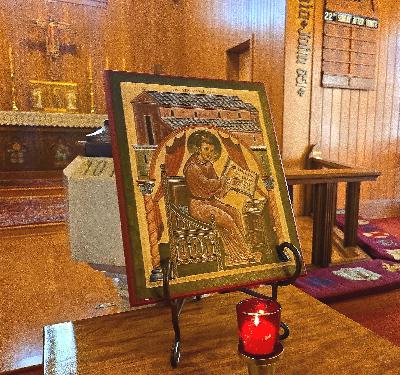
In the audio, both lessons are read, and are followed by a homily by yours truly.A Lesson from the Gospel according to S. Luke 11.1Jesus was praying in a certain place, and when he ceased, one of his disciples said to him, “Lord, teach us to pray, as John taught his disciples.” And he said to them, “When you pray, say: ‘Father, hallowed be thy name. Thy kingdom come. Give us each day our daily bread; and forgive us our sins, for we ourselves forgive every one who is indebted to us; and lead us not into temptation.’” And he said to them, “Which of you who has a friend will go to him at midnight and say to him, ‘Friend, lend me three loaves; for a friend of mine has arrived on a journey, and I have nothing to set before him’; and he will answer from within, ‘Do not bother me; the door is now shut, and my children are with me in bed; I cannot get up and give you anything’? I tell you, though he will not get up and give him anything because he is his friend, yet because of his importunity he will rise and give him whatever he needs. And I tell you, Ask, and it will be given you; seek, and you will find; knock, and it will be opened to you. For every one who asks receives, and he who seeks finds, and to him who knocks it will be opened.A Lesson His Commentary on S. Luke by the Ven. S. BedeThe Saviour not only teaches the form of the prayer when asked by the disciple, but also the urgency and frequency of praying. Therefore, the friend to whom we come at midnight is understood to be God Himself, to Whom we must kneel down in the midst of tribulation, and we must urgently beg for three loaves of bread, that is, an understanding of the Trinity, whereby the labours of the present life are lightened. The friend who has come from his journey is our spirit, which withdraws from us as often as it wanders outside in search of earthly and temporal things. But it returns, and desires to be refreshed with heavenly nourishment, whenever it returns to itself and begins to meditate on divine and spiritual things. Concerning this, he who begged added (and it is lovely that he did) that he had nothing to set before him, since after the darkness of the world, nothing pleases the soul sighing for God except to think about Him, to speak about Him, to contemplate Him. It is enough to do just to contemplate the joy of the most high Trinity and for that purpose to arrive at contemplation more fully. . . . And, accordingly, lest the friend coming from his journey perish from fasting, that is, lest the spirit, newly recovering from the falsity of its error, waste away any longer from the lack of spiritual desire, let us ask for a feast of the Word, by which it may be nourished. If you find this edifying, please consider (if you haven’t already) becoming a paid subscriber. Your support goes directly to supporting the ministry of Akenside Institute for English Spirituality, a project I started 12 years ago to help to rebuild the Anglican tradition. Get full access to Anglican Ascetic Podcast at frmcdallman.substack.com/subscribe
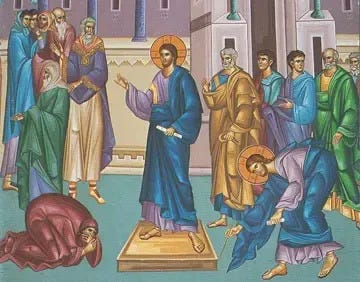
My friends in Christ, I ended my sermon last Sunday with these words: “Stewardship demands a life of holiness, and this holiness comes from completely giving oneself to Christ, and completely accepting Him as our Saviour. Stewardship grows by our strong faith that wears the Gospel of Christ as our armor, as our clothing that wards off the Devil, and stewardship grows as through our faith in Christ as the healer of all that ails us: all that ails us personally, and all that ails us parochially, as a parish.”Holiness undergirds all Christian stewardship. We of course speak of stewardship commonly as the giving to the Church for the glory of God our time, our talent, and our treasure – as much as we are able, in each of those three areas of time, talent, and treasure. Holiness must be what urges us to offer this to God as a holy sacrifice. Without a sense of holiness on the part of the giver, the Church is little more than one charitable organization among many. But with a sense of holiness comes the strong belief that God will use our offering of time, talent, and treasure within the holy mission of the Church, which is nothing less than the salvation of all souls, past, present and future. The poor widow who gave two mites was praised by Jesus far above the wealthy pharisees who gave abundant money because of the holiness of the poor widow: “Out of her poverty she put in all the living that she had.” God transforms even the smallest of gifts into something of infinite value.It is through that sort of thinking that we should look at forgiveness—that God transforms what seems small into something infinitely valuable. God transforms the forgiveness we offer to those who have a debt owed to us. Now, obviously, sometimes offering forgiveness to others is difficult. If we have been hurt, if we are still bleeding, if there is still an active sense of humiliation, forgiveness can feel impossible, or even the wrong thing to do. Christ, in His infinite wisdom, understands this. Yes, He says to Saint Peter: “I do not say to you seven times, but seventy-seven times.” This is the scriptural way of saying that we are expected to offer forgiveness in an unlimited amount. Yet note: Christ says nothing here about when. Forgive, yes we are to do this, without condition. But when we forgive He does not legislate: often there needs to be a process of forgiveness that we initiate by the grace of God. And if you are unable to even conceive of forgiveness for a person who has deeply wronged you, tell this to God in prayer and ask for His help. And you have begun the process of forgiveness, which means a process of healing.See here how God can take the littlest-seeming of things – a simple words offered to Him in prayer in which we confess feeling unable to forgive another person and ask for God’s help—and God in His infinite power can strengthen us and guide us towards full and unfettered forgiveness of anyone, even someone who has deeply wronged and humiliated us.We must be clear that God expects us to forgive. He expects His local parish churches to be communities of forgiveness. Christ tells us today that if we do not forgive our brother or sister from our heart—again, which can begin in the simplest of confessions to God as I said a moment ago—if we do not forgive our brother or sister from our heart, then Christ says in no uncertain terms that God the Father will deliver us into jail until we do so. This may sound harsh, but it is no different than Jesus taught in the Our Father prayer. “Forgive us our trespasses, as we forgive those who trespass against us.” When we pray the Our Father prayer, we are agreeing to this contract: that our sins will not be forgiven until we forgive the sins of others against us. And so beginning the process of forgiveness of those we have yet to forgive could not be more important. For our salvation rides on our ability to forgive others. Yet what Saint Paul said to the Philippians was not only accurate about them, but it is accurate about us. We are all partakers with him of grace. Grace rains down upon us. As Saint Paul wrote in Hebrews 6:7: “The earth which receives the rain that comes frequently upon it, and brings forth vegetation fit for them by whom it is cultivated, will receive blessing from God.” In the Church, grace abounds, all around us, because of Jesus Christ and His Gospel. We receive the rain of grace through the Liturgy and the Sacraments; we receive the rain of mercy and love and providence and blessing. By Christ’s grace, our lives of holiness, in which we ask God for all the help we need, can become lives of forgiveness; our parish, in asking for what we need, can more and more become a community of forgiveness—knowing and trusting with all our heart that as we forgive the sins of others, we are forgiven by Christ: even He Who lives and reigns at the Right Hand of the Father, in the unity of the Holy Ghost, ever one God, world without end. Amen. Get full access to Anglican Ascetic Podcast at frmcdallman.substack.com/subscribe
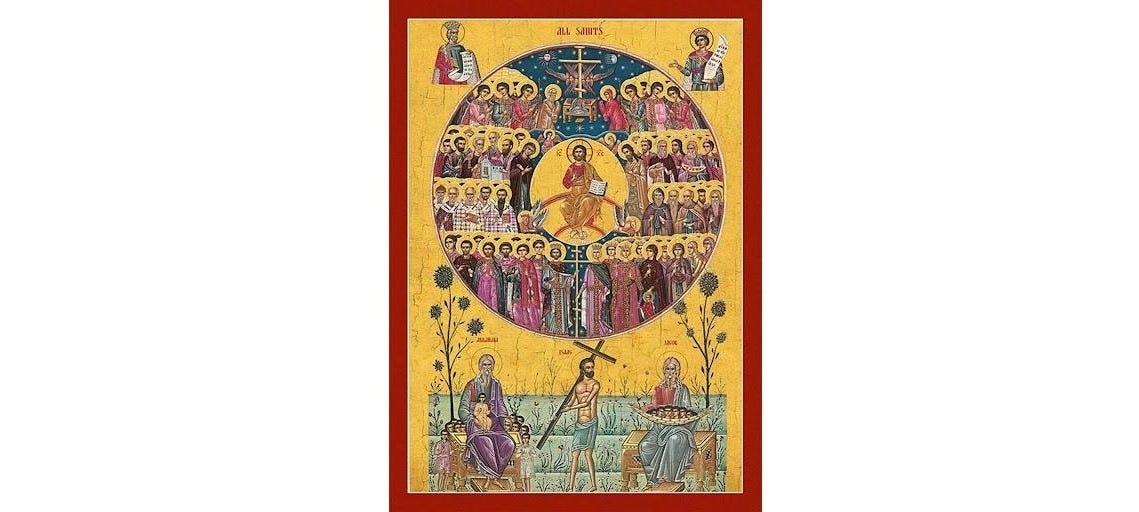
As we continue our Stewardship season, I want to reiterate what I said last Sunday: what better way to reflect on Stewardship than to look to the Saints. After all, the Saints are our models of how to be Christian, and certainly they are models of how we give our time, talent, and treasure to God for His glory and the up-building of the Church of Jesus Christ. Why do we remember the Saints, why do we venerate the Saints, but for the reason that they gave themselves completely to God through Jesus Christ. They gave themselves completely to Christ’s commandments. They have themselves completely to a life of loving God and loving their neighbors. So much so, that Christ shows Himself in and through the Saints. “The Lord is glorious in His Saints,” the Church always sings during this time of the year. Because God shows Himself through the Saints, indeed we can say that the growth that God alone gives to His Church, He gives through the Saints. Genuine growth in the Church, genuine renewal in the Church, therefore happens when we are so learning from the Saints that devotion to the Saints is lively, is robust, and is deep-rooted.Saints often teach what it means to be a Saint. Hence the writings of the four Evangelists. Hence the writings of Paul, Peter, James, and Jude. Hence, as well, the writings of Scripture, in which we hear from, and hear about, the Patriarchs and Prophets, through all they were inspired to write and leave to the Church. To be a Saint, as I said last Sunday, is to be holy; that is what the word “saint” means. Thus of course the books of Holy Scripture are about becoming a Saint, about becoming Holy. Thus of course the holy writings of the New Testament are about becoming a Saint, about becoming holy. As Saint Paul teaches in Hebrews 12.14: without holiness, we cannot see the Lord.Looking to Saint Paul in his epistle to the Ephesians, what glorious doctrine we have to savour and inwardly digest. He exhorts us to be strong in the Lord and in the strength of His might. He tells us to put on the whole armor of God. Why? So that we may be able to stand against the schemes of the Devil. It has been said that among the Devil’s greatest accomplishments is persuading Christians that he does not exist. But let Paul correct that false idea, that dangerously false idea. For, Paul says, we do not wrestle against flesh and blood, but against the rulers, against the authorities, against the cosmic powers over this present darkness, against the spiritual forces of evil in the heavenly places. In short, the Christian life involves “unseen warfare.” We must take up the whole armor of God. We must fasten on the belt of truth. We must put on the breastplate of righteousness. We must take up the shield of faith, with which we can extinguish all the flaming darts of the evil one. We must put on the helmet of salvation, the sword of the Spirit. And our feet must be shod with the readiness given by the Gospel of peace. My friends, Paul wants us to have such knowledge of Christ through the Holy Spirit that the whole of our bodies are protected by the Gospel, and we become true soldiers for Christ, our general.From Saint John, we learn that stewardship, built on strong faith in Christ our general, Christ our head, is faith in Christ, Who heals all our infirmities, Who heals all our sores of darkness, Who heals us from the sting of death which is sin. Stewards are like the official whose son was ill. As Saint John tells us, “The man believed the word that Jesus spoke to him.” He believed Christ’s words, “Your son will live.” The official believed at a distance; he was still far away from his son. But his faith was strong in Christ as He Who heals. And because of this faith, the whole household of the official believed. Faith grew, because of the stewardship of the official: because of his strong faith in Christ as He Who heals.My friends in Christ, stewardship demands a life of holiness, and this holiness comes from completely giving oneself to Christ, and completely accepting Him as our Saviour. Stewardship grows by our strong faith that wears the Gospel of Christ as our armor, as our clothing that wards off the Devil, and stewardship grows as through our faith in Christ as the healer of all that ails us: all that ails us personally, and all that ails us parochially, as a parish. And it is because the Saints are completely full of Christ. Let us learn from the Saints who are full of grace and heavenly benediction; who are completely filled by Him—Jesus Christ—Who lives and reigns with the Father and the Holy Ghost, ever one God, world without end. Amen. Get full access to Anglican Ascetic Podcast at frmcdallman.substack.com/subscribe
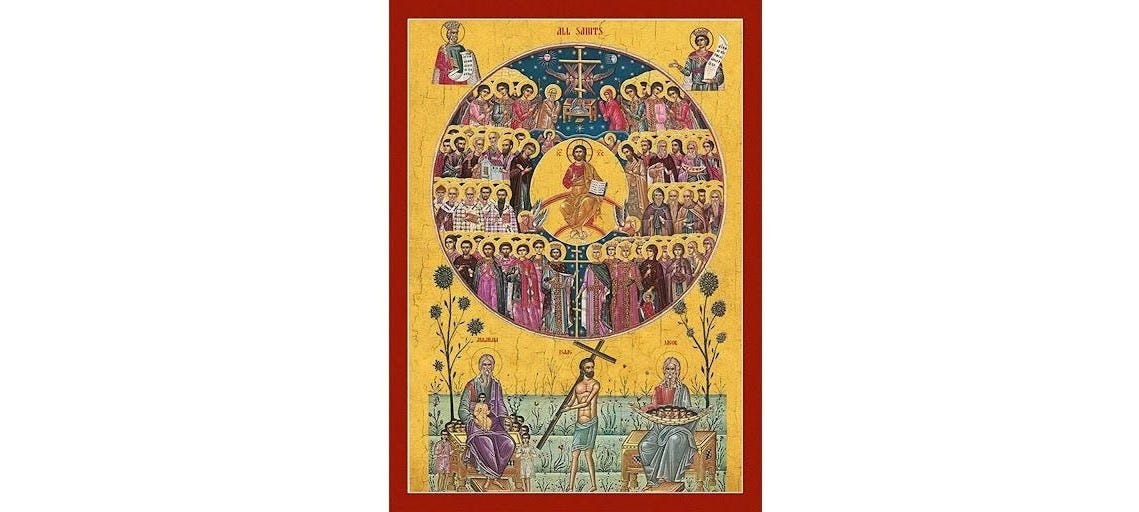
As we kick off our Stewardship season, what better way to do so that to celebrate the Saints. The Saints are our models of how to be Christian, and certainly they are so in terms of how we give our time, talent, and treasure to God for His glory and the up-building of the Church of Jesus Christ. The word “saint” in English simply means “holy” and originally the word for Saint was in Greek holy: agios. Our Patron, Saint Paul, is simply Holy Paul. As we say the Holy Church, or Holy Scripture, or Holy Communion, when we address Paul or Peter, or Blessed Mary, and call them “Saint,” we are simply saying Holy Paul, Holy Peter, Holy Mary. To call them holy, or any other Saint, is to recognize God’s extraordinary activity in them and His election of them to be stars in the firmament of the Church. In fact, we see that in the Church Fathers, the Saints of the Church are associated with the stars installed in the firmament as described in Genesis chapter 1.In professional sports there are all-star games. In baseball, basketball, hockey, and football (although football calls theirs the “pro-bowl” and basically no one pays any attention to it). To arrive at the group of players in these sports that participate in the all-star game involves balloting, they are elected: by the fans and by players. What are these all-star teams but those players who have been given gifts by God up and above their colleagues, and who have cooperated with those God-given gifts, in a way notable and singular, so as to become players recognized as extraordinary? This same sort of thing is seen as well in the halls of fame in professional sports (and college sports, I might add). Those elected to the hall of fame play the same sport as young children do in their pick-up games, or their little league games. The game is basically the same no matter if you are playing in your backyard or the local park or arena, or if you are playing at the highest professional level. There is a spectrum of skill, and certain players are given gifts up and above the rest; those players are admired and imitated.It is the same with the Saints of holy Church: the holy ones of holy Church. Whereas in sport the discipline is centered on developing skills, in Christianity the discipline is centered on discipleship. Every baptized Christian is a disciple, but like sport we see in the Church a spectrum of discipleship. On one end are the Christians baptized yesterday – no matter the age, because every baptized person starts at square 1 in terms of relationship with God, Who (in the teaching of both S. Peter and S. Paul) shows no partiality, emphasized by the famous teaching of S. Paul to the Galatians: “There is neither Jew nor Greek, there is neither slave nor free, there is neither male nor female; for you are all one in Christ Jesus.” And on the other end are the canonical Saints of the Church, “canonical” meaning on the Kalendar with the title “Saint” before their name; “canonical” also because God chose them to be the pattern for all, the rule by which Christian life is measured. Saints are those holy men and women who have been given certain gifts by God of prayer and service, and who in recognizing the gifts given them by God have cooperated with this grace so as to give all of their time, talent, and treasure to the glory of God and the upbuilding of His Church.Thus we see how, on the Feast of All Saints, the Saints are examples to us of genuine stewardship. We can speak of the Saints as gardeners, in that they are dedicated to helping growth happen. Likewise the Saints certainly show humility before Almighty God, Who alone gives the increase. Saints are filled with the awe and fear of God, of the fact that all creative power comes from God, Who is the maker of all things, and through Whom all things are made. And the Saints know that in Christ’s garden, which is the Church, the Holy Spirit dwells, the Holy Spirit acts, the Holy Spirit leads us to Christ. The Saints themselves do not imitate the Pharisee, who does works to be rewarded by God, but rather they imitate the Tax Collector, the Publican, who is pure humility falls to his knees before God and asks simply for His mercy.In the Apostles’ Creed, which in Anglican liturgy is also called our Baptismal Creed, we say “I believe in the Holy Spirit, the Holy Catholic Church, and the Communion of Saints.” These all go together by the very nature of God’s economy and saving plan: the Holy Spirit establishes the Church, which is Christ’s Body, and He calls men and women as Holy Saints so that in being filled with the Holy Spirit and made completely and utterly holy, they lead the Church, both in their life and in their heavenly intercession and supplication. The Saints are full of the Holy Spirit. The Saints have been transformed by the Gospel. Thus the Saints are concrete proof that the promises of the Gospel are true. We are in communion with the Saints through Jesus Christ: they are our friends, they are our colleagues, they are our teachers in how to follow Christ, they are our contemporaries.I said before that the all-star professional players are admired and imitated. Again, this is the same as with the Saints. Everything about them we should admire – and there is so much to admire in the lives of the Saints, for the diversity of the Saints baffles simple analysis. And what we can imitate of the Saints, we should be ever trying to do. To imitate the Saints is to imitate how much they embraced and accepted the commandment of Jesus: to love the Lord our God with all our heart, with all our soul, and with all our mind: and to love our neighbor as ourself. In loving God and our neighbor, the Saints demonstrate what Christian love is, and teach us what Christ’s love, which is what we are to imitate, involves. Listen, for example, to how Saint Paul describes love: love is patient, love is kind, love is not envious or boastful or arrogant or rude. Love does not insist on its own way; it is not irritable or resentful; it does not rejoice in wrongdoing, but rejoices in the truth. Love bears all things, believes all things, hopes all things, endures all things. And without this love, says Saint Paul, no matter what we do, we are a noisy gong or a clanging cymbal; indeed without love, we are nothing.What Saint do you seek to not only admire but imitate? If you do not have one, it is time to get one. Who is your favorite Saint? If you do not have a favorite Saint, read Scripture to learn about the biblical Saints: Abraham, Moses, Joseph, Isaiah, Jeremiah, Job, Solomon, David, and more; of course we have the New Testament Saints: Blessed Virgin Mary, Joseph, Elizabeth, Zechariah, Simeon, Peter, Paul, Mary Magdalene, Martha, the Evangelists, the Apostles, and many more. A great way to learn about the major Saints is to attend weekday liturgy where we keep the feast days of the Saints of the New Testament as well as certain other important Saints, like S. Francis of Assisi and several others. If we want the Holy Spirit to come, to inspire our souls, let us deepen our communion with the Saints, let us build our living relationship with the Saints, one Saint at a time. To celebrate and venerate Saints is to celebrate and worship Christ in them, because Christ is in the Saints, and the Saints in Him. The Saints show us how to grapple and live with the revelation of God in Christ; they show us how to love the Church, how to order our lives, how to pray, and what our priorities as Christians should be. In the simplest of terms, the Saints teach us how to be a better parish, better disciples, better pray-ers. Indeed the Saints teach us how to be an adoring and merciful congregation in a beautiful church with a strong desire to know God. All because the Saints are completely full of Christ, full of grace and heavenly benediction, completely filled by Him Who lives and reigns with the Father and the Holy Ghost, ever one God, world without end. Amen. Get full access to Anglican Ascetic Podcast at frmcdallman.substack.com/subscribe

Comments

Download from Google Play

Download from App Store
 United States