


 Claim Ownership
Researching Happy
Subscribed: 9Played: 242
Subscribe

© Matthew Iasiello
Description
Welcome to Researching Happy, a podcast all about the world of happiness and wellbeing research.
researchinghappy.com
researchinghappy.com
62 Episodes
Reverse

In this episode, Dr. Shane Huntington discusses the challenges faced by early career researchers in the health research sector, particularly regarding funding applications. He highlights the significant decrease in success rates for grants, the importance of communication skills in grant writing, and the need for more funding to support researchers. Dr. Huntington also emphasizes the importance of redefining success for researchers and raising public awareness about the achievements in research. The conversation concludes with a call to action for advocacy efforts to address the issues within the research communityKeywords: mental health, research funding, ASMR, grant applications, early career researchers, communication in research, funding challenges, advocacy, PhD, success in researchChapters00:00 Introduction to Mental Health Research Funding03:00 Shane's Journey to ASMR CEO05:59 The Role of ASMR in Supporting Researchers08:46 The Valley of Death: Early Career Research Challenges11:56 The Changing Landscape of Grant Applications14:56 Communication: The Key to Successful Grant Writing17:58 The Importance of Clear Communication in Research20:40 Reforming the Grant Application Process23:40 The Need for More Funding in Research27:00 The Impact of PhD Numbers on Research Careers29:32 Redefining Success in Research Careers32:56 Advocacy for Researchers and Public Awareness35:47 Conclusion and Call to Action

In this conversation, Dr. Denise Quinlan discusses her journey in positive psychology, emphasizing the importance of context, cultural sensitivity, and the need for a human-centric approach in workplaces. She critiques the current state of wellbeing science, advocating for collaboration with other fields and addressing societal issues such as polarization and economic precarity. The discussion highlights the shift from shareholder to stakeholder capitalism and the need for organizations to value their employees as integral to their success.Chapters00:00 Introduction to Happiness Research01:00 Denise Quinlan's Journey and Current Work05:10 The Importance of Context in Positive Psychology09:57 Challenges in Applying Positive Psychology12:35 The Role of Work in Fulfillment15:24 Cultural Sensitivity in Strengths Work20:07 Reframing Strengths Conversations25:07 The Need for Diverse Strengths Research30:28 Financial Security and Wellbeing32:49 Resilience vs. Systemic Change33:18 The Changing Nature of Work and Well-being36:06 The Political Economy of Well-being39:35 Long-term Employment and Community Responsibility42:11 Making Work Better: Human-Centric Approaches46:04 The Importance of Leadership in Well-being51:02 Valuing People: Beyond Programs to Processes55:48 The Need for Collaboration in Well-being Science01:00:50 Addressing Polarization and Community Belonging
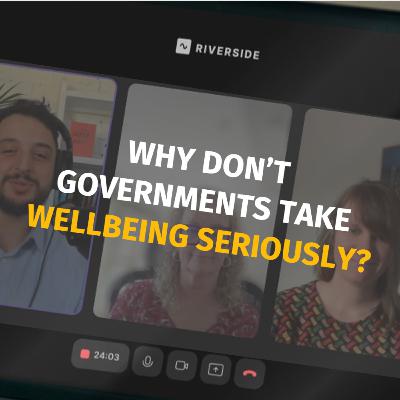
In this episode, Dr. Matthew Iasiello engages in a critical conversation with Diane Bowles and Dr. Kate Sollis about the importance of wellbeing in policy and the challenges faced in promoting it in Australia. They discuss the Measuring What Matters framework, the role of government, and the significance of community engagement in developing effective wellbeing policies. The conversation also touches on the Future Generations movement and local initiatives making strides in wellbeing. The guests emphasize the need for collaboration between government, community, and business to create a sustainable wellbeing economy and the importance of sustaining momentum across election cycles.Chapters00:00 Introduction to the Podcast and Guests02:59 The Importance of Wellbeing in Policy05:58 Measuring What Matters Framework08:34 Government's Role in Promoting Wellbeing11:44 Challenges in Implementing Wellbeing Policies14:41 Community Engagement in Wellbeing Initiatives17:37 Future Generations and Long-term Thinking20:26 Local and International Examples of Wellbeing Initiatives23:30 Sustaining Momentum Across Election Cycles26:41 Conclusion and Call to ActionKeywordswellbeing, mental health, policy, community engagement, government, Measuring What Matters, Future Generations, wellbeing initiatives, Australia, wellbeing economyTakeawaysAustralia is starting to take wellbeing seriously but needs to do more.The Measuring What Matters framework aims to go beyond GDP in measuring wellbeing.Community engagement is crucial for effective wellbeing policies.Embedding wellbeing into policy requires a long-term commitment.Local initiatives like the Bega Valley Data Collective are making strides in wellbeing.Future Generations movement emphasizes the importance of long-term thinking.Collaboration between government, community, and business is essential for progress.Sustaining momentum across election cycles is a challenge for wellbeing initiatives.Transparency and accountability in government can enhance community trust.Wellbeing frameworks need to be developed with community input to be effective.

In this engaging conversation, Paul Ollinger shares his unique journey from being a Facebook executive to a stand-up comedian, exploring the intersections of happiness, purpose, and societal expectations. He reflects on the impact of wealth on happiness, the importance of belonging, and the challenges of raising children in a materialistic society. The discussion also delves into the role of comedy in addressing social issues and the need for nuance in conversations about happiness and fulfillment.Chapters00:00 Exploring Happiness Through Diverse Perspectives01:09 From Facebook to Comedy: A Unique Journey05:22 Reflections on the Facebook Experience07:51 The Comedy Scene: Challenges and Growth10:51 The Intersection of Comedy and Happiness12:26 Understanding Reasonable Happiness20:10 The Pursuit of Happiness: Beyond Money27:11 The Complexity of Happiness and Expectations31:17 The Art of Comedy and Mastery33:02 Navigating the Comedy Scene33:40 Cultural Reflections Through Comedy38:02 Political Polarization and Its Impact on Happiness42:57 The Intersection of Family and Materialism53:02 Teaching Values in a Material WorldKeywords:happiness, comedy, mental wellbeing, Facebook, purpose, materialism, family, societal expectations, resilience, academic research
In this episode, Dr Matthew Iasiello speaks with A/Prof Claudia Trudel-Fitzgerald about her research in psychological, social, and behavioral determinants of mental health. Prof Trudel-Fitzgerald is Assistant Professor of Psychology at Université du Québec à Trois-Rivières, with an appointment as a Regular Researcher at the Research Center of Institut Universitaire en Santé Mentale de Montréal.They discuss the importance of mental health in physical health outcomes, the role of resilience and coping strategies, and the need for cultural sensitivity in wellbeing measurement. Claudia shares her journey into positive psychology, the misconceptions surrounding resilience, and the future directions of wellbeing research, emphasizing the need for context-specific approaches.Keywords: mental health, wellbeing science, resilience, coping strategies, psychological wellbeing, health outcomes, positive psychology, cultural sensitivity, emotional regulation, researchChapters: 00:00 Introduction to Positive Psychology and Research Background02:54 Transition from Clinical Psychology to Positive Psychology05:42 Exploring the Link Between Mental Well-being and Physical Health08:27 The Importance of Psychological Well-being in Health Outcomes11:16 Understanding Mechanisms Linking Well-being to Health14:13 The Role of Optimism and Purpose in Health16:49 Challenges in Measuring Well-being19:46 Implications of Well-being Research for Cancer Patients22:26 The Debate on Well-being Measurement in Research34:16 Cultural Sensitivity in Measurement39:52 The Intersection of Coping and Resilience46:00 Misconceptions About Resilience52:27 Adaptive vs. Maladaptive Strategies58:21 Cross-Disciplinary Insights on Well-Being01:03:43 Contextual Factors Affecting Resilience

In this conversation, Professor Sarah Willen discusses the role of anthropology in understanding flourishing and wellbeing. Dr Willen is Professor of Anthropology at the University of Connecticut and Co-Director of the Research Program on Global Health and Human Rights at the university’s Human Rights Institute.She emphasizes the importance of structural circumstances and individual experiences in defining flourishing, while also critiquing the limitations of positive psychology. The discussion explores the concept of languishing, the significance of context in wellbeing, and the ethical implications of policy decisions related to health and flourishing. Prof Willen advocates for a more inclusive approach that engages marginalized voices and considers the complexities of cultural contexts in the conversation about wellbeing.Takeaways:Flourishing is defined by both individual experiences and structural circumstances.Anthropology offers critical insights into health and wellbeing that challenge conventional models.Positive psychology often overlooks the complexities of cultural contexts.Understanding flourishing requires a holistic approach that includes social and material conditions.Languishing has emerged as a relevant concept in public discourse during the pandemic.The definitions of flourishing can vary significantly across different cultures and communities.Policy decisions should be informed by the lived experiences of marginalized populations.Critical dialogue is essential for advancing the conversation around wellbeing.The relationship between spirituality and flourishing is complex and often overlooked.Engaging with diverse perspectives can enrich our understanding of wellbeing.Keywords: anthropology, flourishing, wellbeing, mental health, positive psychology, critical perspectives, cultural context, languishing, public health, policy

In this episode of "Researching Happy," Dr. Matthew Iasiello sits down with Professor Narelle Lemon, a leading expert in education and positive psychology, to explore the intricate balance between self-care and professional demands. They delve into the challenges faced by educators, the importance of wellbeing literacy, and how self-care can be redefined beyond commercialized notions. Join them for an insightful conversation on nurturing resilience and fostering a supportive community in educational settings. #Wellbeing #Education #SelfCare

In this episode of Researching Happy, Dr. Matthew Iasiello is joined by Dr. Katherine Nelson Coffey, an Associate Professor at Arizona State University and a leading expert in positive psychology. They discuss the impact of parenting on well-being, the importance of parental happiness, and how positive psychology interventions can enhance family dynamics. Dr. Nelson-Coffey shares insights from her research on gratitude and its ripple effects on family life, offering practical tips for parents to improve their well-being and relationships.
In this episode of Researching Happy, Dr. Matthew Iasiello sits down with Professor Mike Steger, a leading voice in positive psychology from Colorado State University, to explore the future of well-being science. They dive into Mike’s recent paper, Regenerative Positive Psychology: A Call to Reorient Well-Being Science to Meet the Realities of Our World, discussing how the field can expand beyond individual happiness to address social, political, and environmental challenges. Mike shares his journey from a curious kid in Buffalo to a prominent researcher, offering insights for PhD students and early-career researchers on how to make a meaningful impact. With the International Positive Psychology Association (IPPA) conference approaching, this conversation is a must-listen for anyone looking to drive systemic change through well-being science. Topics include collective meaning-making, interdisciplinary collaboration, and practical research questions to regenerate the field. Tune in to discover how positive psychology can create a healthier, more sustainable world!Link to Mike's paper: https://www.tandfonline.com/doi/full/10.1080/17439760.2024.2365259

In Episode 51 of Researching Happy, host Dr Matthew Iasiello engages Dr. Carli Ochs, a postdoctoral researcher at Georgetown University’s Happy Tech Lab, in a lively discussion about the impact of smartphones on social wellbeing. Dr. Ochs, fresh from her PhD in Switzerland, explores "phubbing" (phone snubbing), where smartphone use disrupts face-to-face interactions, and its effects on mood and social connectedness. Drawing from her field experiments, she reveals how even brief phone-free breaks in university settings boost conversations and wellbeing, while highlighting cross-cultural differences in social norms around phone use. The episode delves into the case for smartphone bans in schools, weighing their potential to enhance mental health against concerns about restriction, and reflects on the broader societal implications of our phone-dependent culture. With humor and insight, this conversation uncovers the delicate balance between technology’s benefits and its hidden costs.
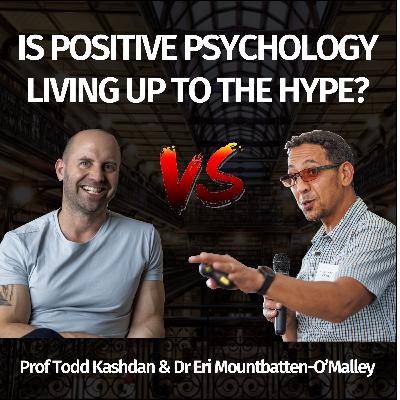
In this milestone 50th episode of Researching Happy, Dr. Matthew Iasiello hosts a dynamic debate with Prof. Todd Kashdan and Dr. Eri Mountbatten-O’Malley on the state of positive psychology. Titled “Are We Lying to Ourselves in Positive Psychology?”, the discussion critiques the field’s disconnect from real-world impact, over-reliance on reductive science, and ethical pitfalls. Todd defends wellbeing science’s potential, while Eri calls for philosophical grounding and context-sensitive research. Together, they explore how to make positive psychology more inclusive, ethical, and effective. #PositivePsychology #Wellbeing #MentalHealth
Learn about the fascinating career of A/Prof Frank Martela. We cover:Frank's unique academic journeyThe inspiration for his work on purpose and pro-social behaviourHis experiences working with Prof Richard Ryan and the effort to test whether Beneficence could be the fourth human psychological needFrank's recent theory of wellbeingLearn more about Frank's work at https://www.frankmartela.com/

Dr Mark Fabian is an associate professor of public policy at the University of Warwick and an affiliate researcher at the Bennett Institute for Public Policy at Cambridge University.He is an area specialist (well-being) rather than a discipline specialist, which we discuss throughout the episode, and publishes in journals across multiple fields.This was a fantastic, broad-reaching discussion, where we covered:Mark's favourite footy teamPositive Psychology and its blind spotsThe role of gratitude for wellbeingThe intersection of suffering and humilityBalance between individual agency and structural challengesEmpathetic collaboration for wellbeing policyMark's latest book on wellbeingCheck out Mark's latest book: BEYOND HAPPY available here:https://www.amazon.com.au/Beyond-Happy-Mark-Fabian/dp/1835010490/ref=tmm_hrd_swatch_0

In this episode of Research Happy, we dive into Australia’slatest federal budget and its implications for mental health with Dr. Stephen Carbone, a seasoned mental health advocate and former GP. Recorded on April 3, 2025, Dr. Carbone shares his candid disappointment with the budget’s lack ofvision, describing it as "piecemeal" and insufficient to address the growing mental health crisis. From a meager $40 million for digital mental health to the absence of funding for prevention and promotion, he critiques the government’s reactive approach and the opposition’s vague promises. We explore why mental health remains underfunded despite its rising prevalence—highlighted by a staggering 50% increase in depression and anxiety among young Australians over the past 15 years. Dr. Carbone calls for a bold, data-driven overhaul of the system, drawing parallels with successes incardiovascular and cancer care. He emphasizes the need for a cohesive strategy that prioritizes wellbeing, prevention, and treatment, rather than fragmented, short-term fixes. Tune in for an honest, thought-provoking discussion on whatAustralians should expect from their leaders, the disconnect between public demand and political action, and why mental health deserves to be a national priority—not an optional extra.

Kelsey J. O’Connor is a Senior Researcher in the Economics of Well-Being with STATEC Research (part of the national statistics office of Luxembourg). He serves as Associate Editor (economics) for the Journal of Happiness Studies, and on the Executive Board of the International Society for Quality-of-Life Studies (ISQOLS).This is a fantastic conversation with Kelsey, we cover a range of topics:How to measure progress as nations and individualsThe surprising role of social safety nets for national wellbeingKelsey's experiences working with the late Professor EasterlinCultural perspectives of happinessAnd the place for meaning and purposeRead Kelsey's latest book, co-authored with Prof Easterlin available FREE here: https://www.cambridge.org/core/elements/happiness-revolution-in-europe/3D454C1B35A7B654B7BC73056BEB0BAA
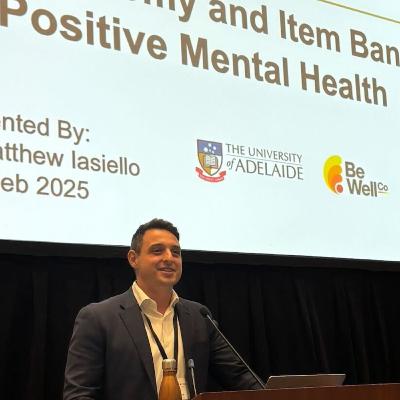
Dr Matthew Iasiello's live presentation from the 2025 Society for Personality and Social PsychologyWe agree mental health is more than the absence of mental illness... but what is it? It was an honour to give an invited talk at the Society for Personality and Social Psychology Annual Convention in Denver last week. I spoke about our efforts at Be Well Co to develop a taxonomy of positive mental health, across a series of three studies. .There was lots of positive feedback for the work, with senior academics acknowledging the 'messiness' but importance of this endeavour. And as always, it was great to meet like-minded people doing important work from around the world .
Welcome to Episode 44 of Researching Happy.
This is a special episode of the show, as we celebrate the launch of Be Well Co’s Face of Languishing Campaign.
Dr Matthew Iasiello is joined by Amy Smith and returning guest Dr Joep van Agteren, as they discuss the marketing problem that so many people in mental wellbeing promotion will recognise - that wellbeing is still seen as a ‘nice to have’ rather than being valuable in its own right.
That’s why Be Well Co has launched this campaign, to shine a light on the issue of languishing, which often flys under the radar despite the real costs that it presents to individuals, workplaces, communities and societies.
Find out more about the campaign here: https://www.bewellco.io/languishing/
Watch the YouTube series here: https://youtu.be/9uHoZT71eNo?feature=shared
Subscribe to Researching Happy at www.researchinghappy.com

Welcome to Episode 43, Matt walks through the dual-continua model of mental health, which suggests that mental illness and mental wellbeing are separate, yet related, concepts.
Starting with a clip from the Bad Friends podcast, Matt discusses the controversy around the relationship between mental health and mental illness - and what this means for our mental health care system.
Show notes:
- Keyes 2005
- Pawelski 2016
- Caccioppo and Berentson 1994
- Iasiello et al. 2020
- Zhoa and Tay 2024
- Iasiello et al. 2024
Subscribe at www.researchinghappy.com and LinkedIn

Listen to Dr Naomi Kakoschke from CSIRO on Researching Happy talking us through reliable ways to set consistent habits for achievable goal setting.
We discuss the common pitfalls that let us down when it comes to goal setting and New Year's resolutions.
Show notes: Find paper and app-based habit trackers as well as a Healthy Habits quiz CSIRO developed and Naomi’s CSIRO profile

Why is wellbeing science like cage fighting? Find out here!
Dr Matthew Iasiello reflects on the passing on some wellbeing science leaders in 2024, the differences and similarities between wellbeing science and the UFC, and considers the criteria for future leaders for the field.
Link to Todd's substack article: https://toddkashdan.substack.com/p/why-do-smart-adults-downplay-hedonism
Sign up for updates at www.researchinghappy.com or follow us on LinkedIn: https://www.linkedin.com/company/researching-happy/

Comments

Download from Google Play

Download from App Store
 United States