


 Claim Ownership
The Barbed Wires Podcast
Subscribed: 0Played: 0
Subscribe

© Angshuman Choudhury
Description
A podcast on politics, geopolitics, society, history, personal fables and everything in between.
Also available on Spotify and Apple Podcasts.
barbedwires.substack.com
Also available on Spotify and Apple Podcasts.
barbedwires.substack.com
7 Episodes
Reverse
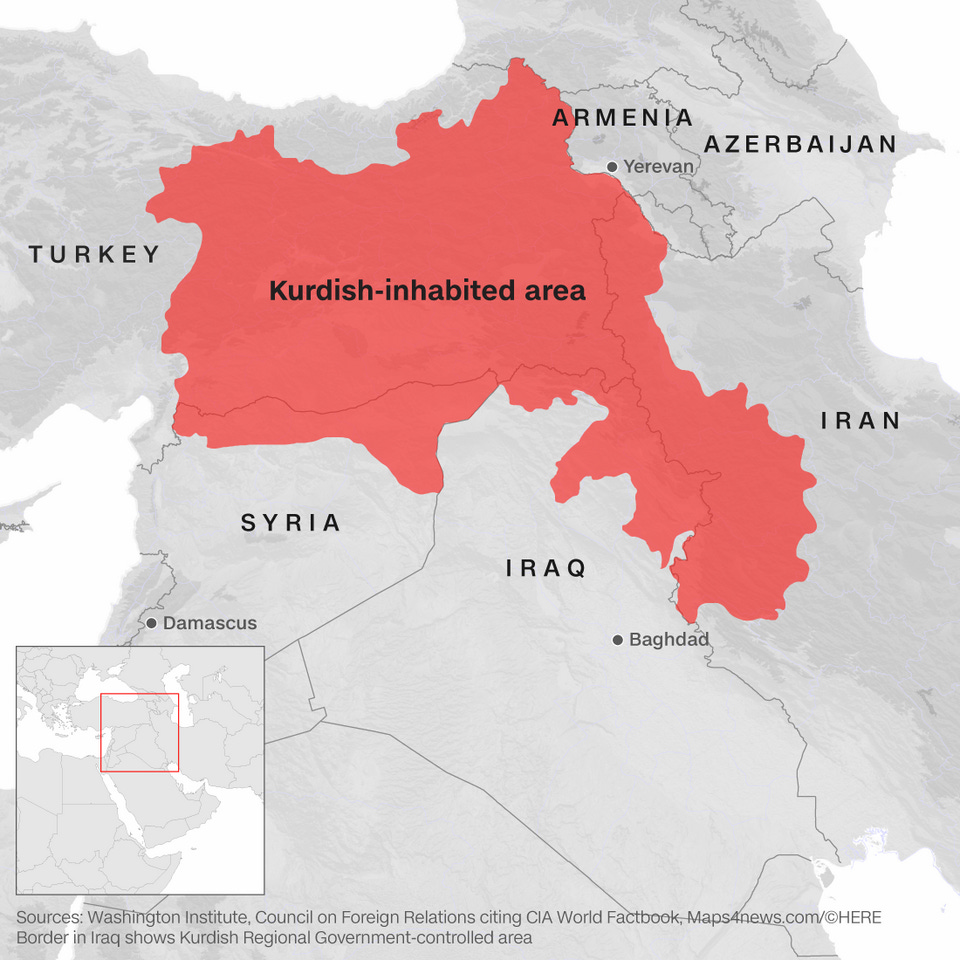
As the US-Israel's unprovoked war against Iran rages on, the Kurds – a vibrant and politically significant community in West Asia – find themselves in a tricky spot.Reports indicate that the CIA and Mossad have quietly tried to provoke the Iranian Kurds to militarily confront Tehran. But, that hasn't so far.Why? In this episode, Bilal Ata Aktas, a researcher and geopolitical consultant born and raised in the Kurdish part of Turkey, explains the Kurdish dilemma in Iran and the wider region. This is a public episode. If you would like to discuss this with other subscribers or get access to bonus episodes, visit barbedwires.substack.com

As the US/Israel's war against Iran completes its first week of hostilities, Tehran continues to hold the line. Simultaneously, a complex political transition is underway in Iran. Meanwhile, by torpedoing IRIS Dena, an Iranian frigate off the coast of Sri Lanka and killing at least 80 sailors, the Trump administration has brought the war to the Indian Ocean in a particularly brash manner.In this episode, Bashir Ali Abbas, a senior researcher and West Asia expert at the Council for Strategic and Defence Research (CSDR), decodes the many overlapping layers of domestic political and geopolitical dynamics framing Iran's strategy and response of South Asian littorals to the downing of IRIS Dena.Read Bashir's columns on West Asia in The Indian Express here: https://indianexpress.com/profile/guest-writer/bashir-ali-abbas/. This is a public episode. If you would like to discuss this with other subscribers or get access to bonus episodes, visit barbedwires.substack.com
The Indian government led by Prime Minister Narendra Modi has so far refused to condemn what is essentially an unprovoked and illegal war by the US and Israel against Iran. It has also not commented on the assassination of the Supreme Leader of the Islamic Republic, Ayatollah Ali Khamenei. PM Modi has, however, dialled up all the Gulf states and expressed concern at the violation of their territorial integrity and sovereignty. What explains New Delhi's stinging silence on Iran?Senior foreign affairs journalist, Nirupama Subramanian, joins us to discuss this question and more.Read her latest article on India's position here: https://www.newslaundry.com/2026/03/02/indias-silence-on-iran-is-not-strategic-autonomy-it-looks-more-like-strategic-dependence This is a public episode. If you would like to discuss this with other subscribers or get access to bonus episodes, visit barbedwires.substack.com
As assembly elections in Assam approach, the BJP-led state government is making strategic moves to appease six tribal – or Scheduled Tribe (ST) – communities by creating new a special reserved category for them called 'ST (Valley)'.But, this has put the ruling party in an awkward spot between competing tribal electorates, as existing ST communities fear the loss of their own privileges to the new entrants.Manoranjan Pegu, a researcher and writer from Assam, helps us make sense of these emerging new complexities in the Northeast Indian state.Read Manoranjan's latest pieces on the issue here:1. The new ST classification in Assam is political eyewash (1/1/2026): https://caravanmagazine.in/communities/st-classification-assam-20252. A festival, Death of 4 young people and Incessant WhatsApp discourses (31/1/2026): https://murkongselek.substack.com/p/a-festival-death-of-4-young-people This is a public episode. If you would like to discuss this with other subscribers or get access to bonus episodes, visit barbedwires.substack.com
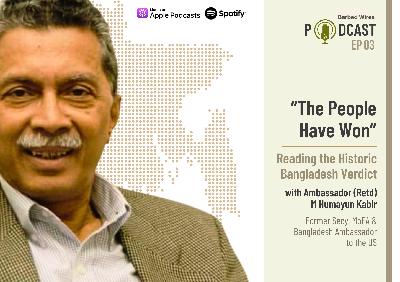
Ambassador M Humayun Kabir, former Secretary at Bangladesh' Ministry of Foreign Affairs and Ambassador to the United States, joins us to decode Bangladesh's historic political transformation. This is a public episode. If you would like to discuss this with other subscribers or get access to bonus episodes, visit barbedwires.substack.com
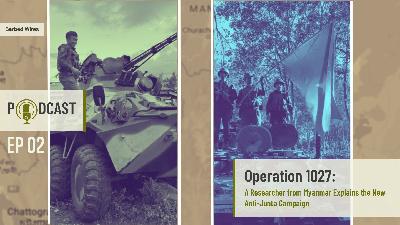
In this episode, James*, a researcher from the Myanmar Policy Institute (MPI), unpacks the politics, economics and geopolitics behind the recent wave of attacks against the military junta in Myanmar called Operation 1027. Initiated by three ethnic armed organisations in northern Shan State, it has now spread to other parts of Myanmar, including Karenni State, Sagaing Region, Chin State and Rakhine State.*pseudonym Notes:* To understand the geographical spread of Operation 1027, check out the IISS conflict map. * Also, in case you’re interested, here is my recent article on Operation 1027 published in The Diplomat.Additional readings* Operation 1027 poses rare challenge to Myanmar junta, Radio Free Asia* ‘Operation 1027’: The End of the Beginning of Myanmar’s Spring Revolution, The Diplomat* Is ‘Operation 1027’ a Game Changer for Myanmar?, The Diplomat* Operation 1027 is Creating a New Political Template for Myanmar’s Future, The Irrawaddy * Brotherhood Alliance rewriting Myanmar’s war narrative, Asia Times* Another town on the India-Myanmar border falls to the resistance, Myanmar Now This is a public episode. If you would like to discuss this with other subscribers or get access to bonus episodes, visit barbedwires.substack.com
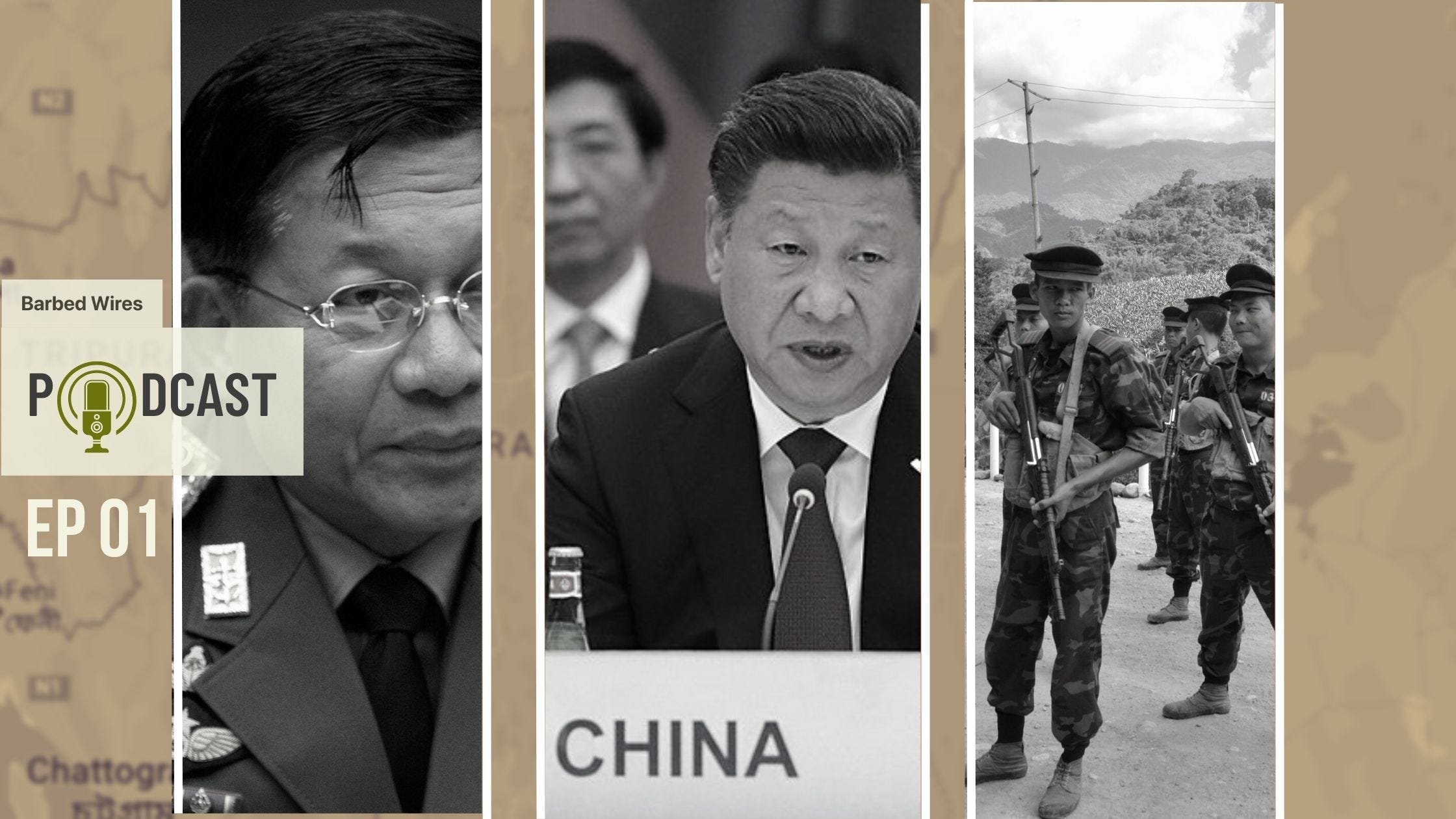
On 10 March, Saudi Arabia and Iran, two of West Asia’s fiercest rivals, startled the world when they announced a detente. The historic “peace deal” was brokered by China. But, much before this happened, Beijing was attempting to broker peace between various actors in a country much closer to home – Myanmar. The February 2021 coup by Min Aung Hlaing’s military derailed its complex conflict mediation project. But, Xi Jinping’s China put it back on track in no time. Yet, whom does a China-brokered peace in Myanmar benefit? Why is China even doing it? What kind of a peace is it? And what does Myanmar reveal about Chinese conflict mediation in the 21st century?I try to answer these questions in the first episode of the BW Podcast. Listen and share! This is a public episode. If you would like to discuss this with other subscribers or get access to bonus episodes, visit barbedwires.substack.com
Comments


Download from Google Play

Download from App Store
 United States