


 Claim Ownership
The Biotech Startups Podcast
Subscribed: 124Played: 2,410
Subscribe

Copyrights © 2025 All Rights Reserved by Excedr
Description
The Biotech Startups Podcast by Excedr features weekly conversations with founders, scientists, and investors driving biotech innovation. Host Jon Chee dives into the challenges of building biotech startups, from pre-seed to IPO. New episodes every Monday and Thursday.
222 Episodes
Reverse
In this episode of The Biotech Startups Podcast, we dive into Sujal Patel's bold decision to leave RealNetworks and co-found Isilon Systems, a distributed storage company built to solve a problem he witnessed firsthand — enterprise customers spending millions on storage systems that simply couldn't handle media files. Sujal shares how a pair of scissors on his desk became the unlikely symbol that pushed him and co-founder Paul Mikesell to finally take the leap.
Sujal recounts the harrowing experience of launching a company at the peak of the dot-com collapse, watching his RealNetworks stock fall from $100 to $8, and still managing to close an $8.4 million Series A as the only such deal in Seattle that year. He walks through Isilon's early growth, landing marquee customers like Kodak by overdelivering on impossible timelines, and the painful but necessary decision to fire both the CEO and CFO of a public company — all while his wife was pregnant with twins — on the same day Lehman Brothers collapsed.
In this episode of The Biotech Startups Podcast, Sujal Patel — co-founder and CEO of Nautilus Biotechnology and former founder and CEO of Isilon Systems — takes us back to his upbringing in suburban New Jersey, where his engineer father and an older brother's love of computers set him on a path toward a life in tech. From self-teaching programming on a budget Apple II clone to building operating systems from scratch at the University of Maryland and contributing to the FreeBSD open-source project, Sujal's early career was defined by curiosity and bold moves — none bolder than demanding his boss's job just three months out of college at RealNetworks, a decision that nearly turned out very differently thanks to one unanswered phone call.
In this episode of The Biotech Startups Podcast, we follow Roy Maute’s journey from the Gilead acquisition of Forty Seven Inc. through COVID-era corporate life—where he spent over a year at Gilead without meeting colleagues in person—to co-founding Pheast Therapeutics in 2021, clarifying his passion for early-stage company building. He unpacks how he, Amira Barkal, Irving Weissman, and Ravi Majeti rallied around CD24 as the next macrophage checkpoint target, explains PHST001 and why macrophage checkpoint inhibitors could form a new class of immunotherapy, and reflects on building a lean, 34-person clinical-stage company, navigating a tougher post-COVID fundraising environment, and charting the road ahead as Pheast generates pivotal clinical data.
In this episode of The Biotech Startups Podcast, we dive into Roy Maute's journey from academic scientist to biotech entrepreneur, exploring the founding and acquisition of Ab Initio Biotherapeutics and his subsequent roles at Forty Seven Inc. and Gilead Sciences. Roy reflects on the lasting influence of Irv Weissman's hands-off, trust-driven lab culture at Stanford and how it shaped his philosophy on building teams.
Roy shares how he co-founded Ab Initio with colleagues from Chris Garcia's and Brian Kobilka's labs, navigating early-stage challenges like seed funding, a Pfizer collaboration, and managing a lean team of 10. He explains why the company ultimately chose acquisition over raising a major round, and how Ligand Pharmaceuticals' interest in their directed evolution technology brought that chapter to a successful close. Roy also discusses stepping into a biomarker strategy role at Forty Seven Inc., and what it was like to witness the company's $4.9 billion acquisition by Gilead — all as COVID lockdowns began.

In this episode of The Biotech Startups Podcast, we follow CEO and co-founder of Pheast Therapeutics, Roy Maute’s graduate school journey in Riccardo Dalla-Favera’s demanding Columbia lab, where he dives into genetic rearrangements in B-cell lymphoma and chooses intensity over comfort to accelerate his growth alongside clinician-scientists. He shares how brutal weekly Friday lab meetings, where imperfect work was publicly dissected, built his resilience and rigor, and what it was like to live through the shift from Sanger to high-throughput sequencing that reshaped cancer research. Roy also reflects on why he never wanted to become a professor and how a mentor’s advice led him to Irving Weissman’s famously hands-off Stanford lab—a stark contrast to his PhD environment, but equally formative for his scientific career.

In this episode of The Biotech Startups Podcast, we explore Roy Maute's foundational years—from a curious kid in Dallas, Texas, to an aspiring scientist at UC Berkeley. Roy, CEO and co-founder of Pheast Therapeutics, takes us back to his childhood home where an architect father and artist mother fostered a DIY ethos through weekend home renovations and creative projects that taught him no task was off-limits. He shares how Golden Age science fiction novels from his grandfather and Jurassic Park sparked his fascination with genetic engineering, his transition from a small Dallas magnet school to Berkeley's "sink or swim" environment, and the serendipitous dorm-mate connection that landed him his first lab position mixing salt solutions and caring for mice. Roy reflects on the patient mentorship, California's natural beauty, and early glimpses of Silicon Valley's startup culture that shaped his path before heading to Columbia University for the rigorous training that would define his scientific career.
In this episode of The Biotech Startups Podcast, Partner at Bison Ventures, Caleb Appleton shares how Bison Ventures is rethinking biotech investing through “TechBio,” backing revenue-generating platforms that validate product-market fit like software rather than relying solely on therapeutic risk. He lays out a practical framework for data platform founders—when to sell their technology versus build drugs—using examples like Eikon Therapeutics’ in-house super-resolution microscopy and Vivodyne’s ambition to become the “AWS of biology.” Caleb also reflects on how leading a turnaround at TuneIn made him more empathetic to founders and explains why, amid exuberance in physical world AI and tougher biotech markets, teams must identify their superpower and double down on it instead of trying to be everything at once.
In this episode of The Biotech Startups Podcast, we explore Partner at Bison Ventures, Caleb Appleton's journey from venture capital to operations and back again. Caleb shares his experience joining Innovation Endeavors during its spinout from Eric Schmidt's family office, where minimal structure forced him to rapidly master sourcing, diligence, and thesis-building—including a cold email that landed a multibillion-dollar investment in Eikon Therapeutics. Grappling with whether he could truly operate rather than just advise, Caleb left venture in 2020 to join TuneIn during a pandemic crisis, managing a $50 million turnaround after canceled sports leagues devastated subscriptions. He repositioned the company away from unsustainable NFL deals toward ad-supported radio and premium news content, achieving profitability while learning the immediate feedback loops and difficult pivots that operating demands. These hard-won lessons in execution and empathy for founders ultimately led him back to venture, joining Bison Ventures in 2023 as a more complete investor.
"People outweigh challenging environments. A great environment cannot outweigh challenging people."
In this episode of The Biotech Startups Podcast, Partner at Bison Ventures, Caleb Appleton returns for Part Two to share how early research experiences in nanotechnology, genome editing, and concussion biomechanics pushed him to question whether engineering could solve problems with poorly defined constraints, ultimately steering him away from academia and toward management consulting.
After a transformative summer in Portland sparked his commitment to prioritize lifestyle and location, Caleb landed at Bain by cramming Case in Point in seven days, where he learned to parachute into ambiguous Fortune 500 business problems and rapidly structure high-stakes analyses—skills that now underpin his venture capital work. He reflects on the crucial role of mentors and teammates who reinforced his conviction that people matter more than any opportunity, and recounts the unexpected ten-day whirlwind that pulled him from a clear promotion path in Atlanta to join Eric Schmidt's Innovation Endeavors in San Francisco, embracing serendipity despite tripled rent and an uncertain future.
"You have to learn to embrace serendipity. You can't plan everything out because it will never go to plan."
In this episode of The Biotech Startups Podcast, we explore Partner at Bison Ventures, Caleb Appleton's formative years growing up in College Station, Texas, where being surrounded by Texas A&M University shaped his worldview and exalted academia as the ultimate career path. Now a Partner at Bison Ventures, Caleb takes us through his journey to Georgia Tech, where he dove into biomedical engineering and landed an extraordinary undergraduate research opportunity working with CRISPR technology in its earliest days, collaborating with pioneers like Feng Zhang when the field was just emerging.
Through hands-on lab work—pipetting, troubleshooting Western blots, and contributing to published research—Caleb began questioning whether a PhD was truly his path forward. The episode explores pivotal lessons about embracing serendipity, how a neighbor's connection unlocked a transformative research experience, and why growing up without exposure to business and industry careers ultimately shaped his unconventional journey into venture capital.
In this episode of The Biotech Startups Podcast, Dr. Judy Chou shares how she walked away from leading global biotech operations at Bayer to take a risky first‑time CEO role at AltruBio, transforming a struggling predecessor company—alongside a “Genentech mafia” of former colleagues—into a lean, patient‑centric startup built around a novel PSGL‑1 immune checkpoint mechanism aimed at restoring immune balance and breaking the remission ceiling in ulcerative colitis, all while navigating near‑bankruptcy, a 30‑day fundraising sprint that led to a record $225M Series B, launching a translational lab in Taipei, and drawing on formative experiences at Yale and MIT as a young mother and mentee to shape her gritty, values‑driven leadership philosophy.
“If you want to make money, really follow your passion rather than follow the money, because the money later on will come.”
In this episode of The Biotech Startups Podcast, Dr. Judy Chou shares her journey as employee number one at Tanvex, walking into an empty 50,000 square foot facility and building a biosimilar company from scratch after a close friend’s death from metastatic lung cancer reshaped her understanding of drug access and affordability. She recounts an extraordinary FDA meeting where, as the sole company representative, she fielded questions from 32 regulators and ultimately convinced them to waive all preclinical animal studies, then later took on unexpected responsibility for building three manufacturing suites when multiple VPs were fired. The conversation also follows her move to Medivation, where she scaled technical operations from two people to a global network of over 50 CDMOs and CROs, culminating in a high-stakes bidding war among five pharma giants that ended with Pfizer acquiring Medivation for $14.3 billion, up from a $9 billion market cap just three months earlier.
In this episode of The Biotech Startups Podcast, President & CEO of AltruBio, Judy Chou, shares her pivotal transition from academia to industry, revealing how she left AbbVie when the company went idle after Humira's launch to pursue more meaningful work at Wyeth. Despite Humira becoming one of the most successful drugs in history, the company's uncertainty about biologics left Judy feeling unable to fulfill her mission to make a difference for patients.
Judy describes how she pioneered high-throughput screening for biologics at Wyeth, earning the nickname "High-Throughput Lady" when colleagues thought her ideas were crazy. She explains how she adapted small molecule screening techniques to biologics despite widespread skepticism, ultimately generating 10 grams per liter antibody production for the first time and winning Wyeth's President Award for the biggest business impact of the year. Judy also recounts being recruited to Genentech to build a revolutionary product-driven department in Oceanside, where Ann Lee's vision to break vertical silos and create a "startup within a major company" generated much of the pipeline Genentech still develops today.
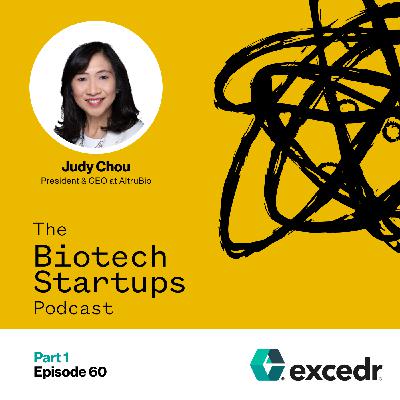
In this episode of The Biotech Startups Podcast by Excedr, AltruBio President and CEO Judy Chou traces her journey from an arts-driven childhood in politically tense, conservative Taiwan to leading a clinical-stage biotech company in the U.S., sharing how an “inner rebel,” a love of physics, and two pivotal uncles redirected her from an elite engineering track into medicine and biology at National Taiwan University, where she hustled her way into research labs each summer. A heartbreaking encounter with a young boy whose mother was dying of leukemia convinced her that treating one patient at a time was not enough, propelling her to Yale for a PhD, where she earned five Honors in a single semester, dove into cutting-edge neuroscience and synaptic vesicle biology, and survived a “Home Alone” phase after her advisor left—pushing a cart of reagents between world-class labs and forging the resilience, independence, and multidisciplinary mindset that now underpin her leadership and her pursuit of first-in-class therapies for immune and inflammatory diseases.
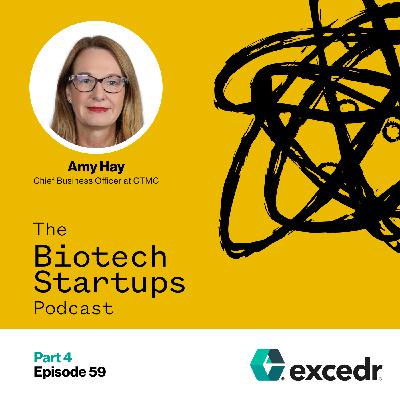
In this episode of The Biotech Startups Podcast, Amy Hay, Chief Business Officer at CTMC, shares how CTMC bridges academia and industry to help lean cell therapy teams reach the clinic faster and more capital-efficiently through a co-development model that bundles manufacturing, regulatory, and operational support so scientists can stay focused on the science while building scalable, commercialization-ready processes from day one. Amy and host Jon Chee dig into why business model innovation—milestone-based contracts and, in some cases, equity alignment—can be as critical as scientific breakthroughs in today’s tough fundraising landscape, and how regional manufacturing, knowledge transfer, and global network alliances are turning cell therapy from a theoretical option into a practical reality for patients around the world.
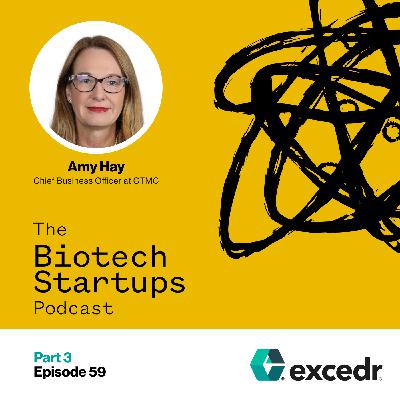
In this episode of The Biotech Startups Podcast, we explore Amy Hay's remarkable evolution from a longtime leader at MD Anderson Cancer Center to an entrepreneurial consultant and medtech executive. Amy shares the deeply personal and professional challenges of leaving an institution that defined her for two decades, describing how a "painful" leadership change became the ultimate catalyst for her growth and reinvention.
Amy details her global journey, from navigating the cultural nuances of opening oncology clinics in Brazil to the eye-opening experience of consulting in Nigeria, where she learned that healthcare innovation must meet people where they are. She discusses the founding of her consulting firm, Evolve, its timely acquisition by Varian just before the global pandemic, and her eventual full-circle return to the Houston biotech ecosystem to lead strategy in the burgeoning field of cell therapy.
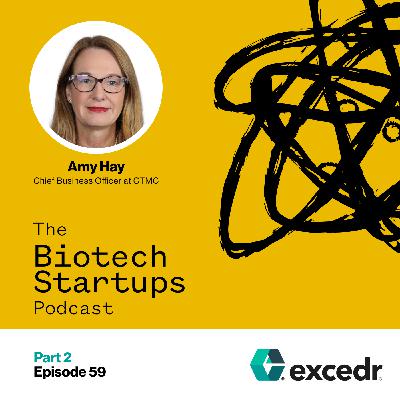
"If you're persistent, you can get there. If I think it's gonna be meaningful, I'm willing to do whatever it takes."
In this episode of The Biotech Startups Podcast, Amy Hay, Chief Business Officer at CTMC, shares how she transformed ground-level patient care experience at MD Anderson into high-impact leadership that reshaped cancer treatment delivery. She traces her path from MD Anderson's first-ever internal administrative fellow to spearheading the institution's first proton therapy center and pioneering satellite clinics—including a "flea-bitten" Bellaire, Texas facility that became a runaway success by prioritizing convenience, compassion, and continuity of care. Amy recounts the audacious multi-year journey of raising 125 million dollars by assembling an unlikely coalition of clinicians, physicists, investment bankers, and construction operators, weathering the shock of 9/11 and frozen capital markets, then pivoting to purpose-driven local investors like firefighters' and police officers' pension funds whose communities are directly impacted by cancer.
Along the way, Amy reflects on the challenges of intrapreneurship inside a major academic medical center, the unexpected emotional letdown that follows a "big win," and how that restlessness ultimately pushed her toward global oncology. She shares how collaborations with Hospital Albert Einstein in São Paulo, the American Hospital in Istanbul, and other international partners expanded her perspective beyond elite U.S. centers, sharpening her focus on access, alignment, and building care models that work across diverse health systems—not just in Houston.
"If you work hard and you try hard, you'll get there. It might take a long time. It might be a little bit bloody, and you might be battered, but you'll get to the top of the mountain. You just have to work hard."
In this episode of The Biotech Startups Podcast, we explore Amy Hay's formative years and the experiences that shaped her unique approach to healthcare leadership. From caring for her grandparents through dementia in Dallas to landing her first job at MD Anderson Cancer Center on the same day as its new president, Amy's journey reveals how personal crisis, liberal arts education, and unwavering resilience can forge a distinctive path in oncology and biotechnology.
Amy shares how her father's advice to "behave as if you're in your next job" transformed her approach to work, starting from her role as a receptionist where she learned to never say no—only how. She recounts her unconventional college application using a photo essay documenting individuals at a Dallas food bank on Thanksgiving, her child life internship at Santa Rosa Hospital, and how these experiences taught her that meaningful healthcare careers extend far beyond clinical roles. Amy also discusses the critical balance between the business of healthcare and patient care, explaining how her decision to pursue a Master's in Healthcare Administration while working full-time at MD Anderson gave her real-world context to apply theoretical knowledge immediately.
"The best thing about starting your own business is you get to design the business that you always wanted to work for."
We’re revisiting some of our previous episodes over the holidays this year. Our next re-release is this episode of The Biotech Startups Podcast, where Jason C. Foster takes us through his remarkable journey of building an international pharmaceutical company across Europe and his transition to founding Ori Biotech, a pioneering cell therapy manufacturing technology company. Jason shares how he moved from Richmond, Virginia to London in 2010 with a pregnant wife and toddler to build what would become Indivior, scaling the business from just a handful of employees to over 1,100 people across 37 countries before listing on the London Stock Exchange in 2014.
Jason offers candid insights into the cultural challenges of doing business across Northern and Southern Europe, the complexities of navigating different regulatory environments, and the critical importance of building mission-driven culture over purely financial incentives. He discusses how discovering cell therapy's potential to cure cancer—yet seeing patients unable to access these treatments due to cost and manufacturing limitations—compelled him to co-found Ori Biotech in 2018. Jason explains how the company is revolutionizing personalized medicine by creating scalable, affordable manufacturing platforms for cell therapies, with their Iro platform launching in 2024 and expecting to treat first patients in clinical trials in 2025.
"If you think about what we do as human beings, the vast majority of the value we create is through communication."
We’re revisiting some of our previous episodes over the holidays this year. Our next re-release is this episode of The Biotech Startups Podcast, where Jason C. Foster, CEO and Executive Director at Ori Biotech, shares how his upbringing in Richmond, Virginia and his family’s deep roots in business shaped his entrepreneurial drive and leadership style. Growing up as an only child surrounded by adults, Jason cultivated strong communication skills early on, while paper routes, lawn care, and door-to-door sales instilled in him a bias toward self-sufficiency and finding creative ways to add value.
Jason walks through his journey from studying government at the University of Virginia and working on healthcare policy in Washington, D.C., to realizing that real impact on patient outcomes often happens in the private sector rather than in government. He then reflects on his formative years at Columbia Business School in New York City, where exposure to a highly international, high-performing peer group—and to the chaos and energy of post-9/11 New York—pushed him out of his comfort zone and helped crystallize his aspiration to build and lead in healthcare and startups.


Download from Google Play

Download from App Store
 United States
f12k medium supports diverse mammalian cells with balanced nutrients, amino acids, and vitamins. Selecting f12k medium fosters steady growth, morphology, and responsiveness to stimuli. It’s suitable for fibroblasts, epithelial, and endothelial lines, improving reproducibility and comparability across laboratories and experiments. https://www.astorscientific.us/products/hams-f12k-medium-tbs8032k