


 Claim Ownership
Teaching Tax Flow: The Podcast
Subscribed: 30Played: 393
Subscribe

© Teaching Tax Flow
Description
Welcome to “Teaching Tax Flow: The Podcast”, the show that’s all about demystifying taxes and helping you keep more of your hard-earned income in your pocket.
Hosted by tax experts from the Teaching Tax Flow team, this unfiltered (but clean) podcast is designed to empower you with the knowledge and tools you need to confidently navigate the world of taxes. We’ll cover everything from understanding tax laws and regulations to maximizing deductions and credits.
In each episode, we’ll break down a specific tax-related topic in a clear and accessible way, providing practical tips and strategies you can use to optimize your tax situation. We’ll also answer listener questions, share the mic with amazing guests, and share real-world examples to help illustrate key concepts.
Whether you’re a freelancer, small business owner, real estate investor, or just looking to understand your taxes better, this podcast is for you. So tune in, take notes, and start building your confidence in taxes today.
Produced and hosted by Teaching Tax Flow.
www.TeachingTaxFlow.com
Hosted by tax experts from the Teaching Tax Flow team, this unfiltered (but clean) podcast is designed to empower you with the knowledge and tools you need to confidently navigate the world of taxes. We’ll cover everything from understanding tax laws and regulations to maximizing deductions and credits.
In each episode, we’ll break down a specific tax-related topic in a clear and accessible way, providing practical tips and strategies you can use to optimize your tax situation. We’ll also answer listener questions, share the mic with amazing guests, and share real-world examples to help illustrate key concepts.
Whether you’re a freelancer, small business owner, real estate investor, or just looking to understand your taxes better, this podcast is for you. So tune in, take notes, and start building your confidence in taxes today.
Produced and hosted by Teaching Tax Flow.
www.TeachingTaxFlow.com
183 Episodes
Reverse
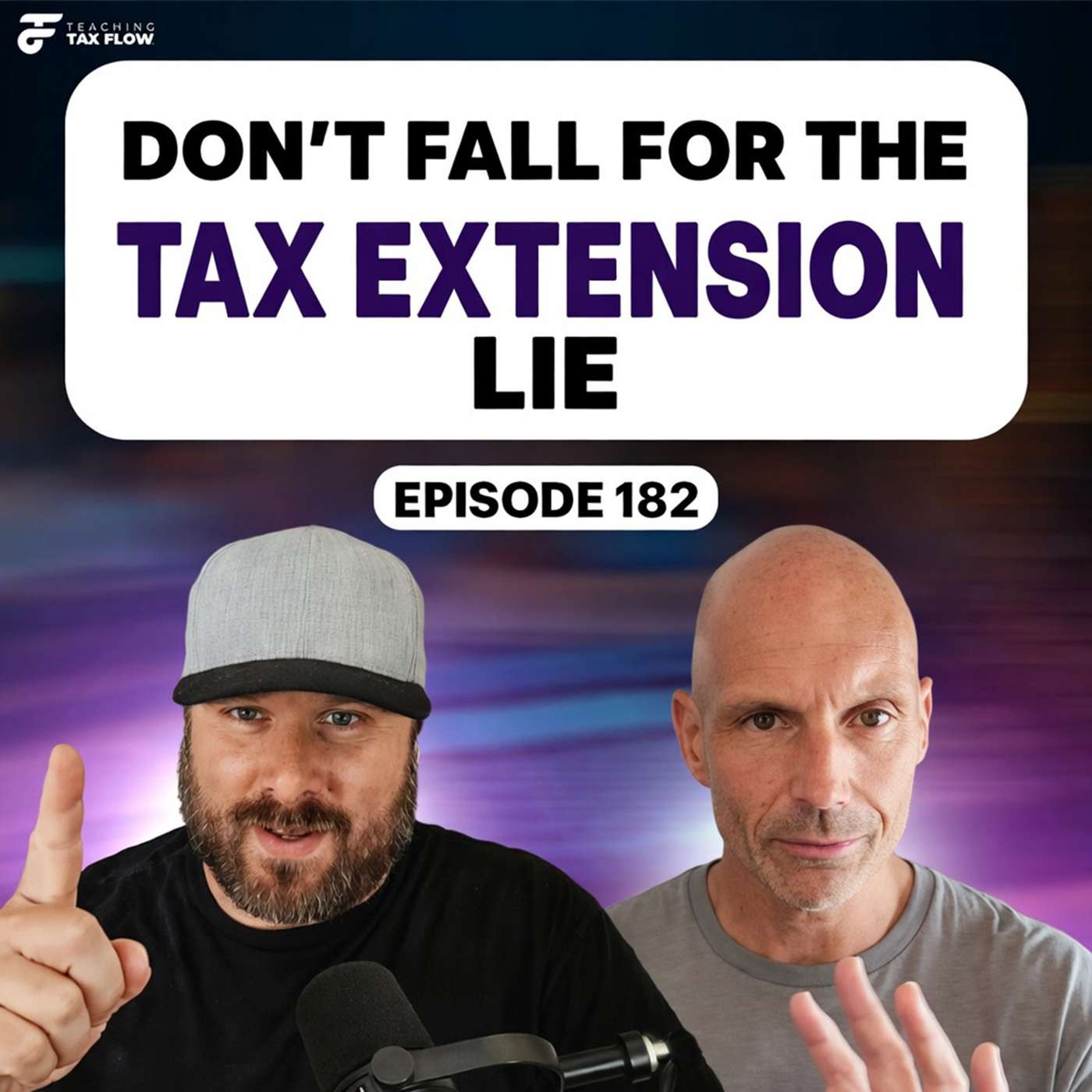
In this episode of the Teaching Tax Flow podcast, Chris Picciurro and John Tripolsky shine a spotlight on the often misunderstood concept of tax extensions. Together, they delve into the strategic benefits of utilizing tax extensions, debunk common myths, and provide listeners with a valuable perspective on how to integrate this tool into their financial planning.Chris and John explain that a tax extension is not a signal of negligence or a red flag to the IRS, but rather a strategic maneuver to ensure accurate and comprehensive tax filing. They stress the importance of understanding that tax extensions grant additional time to file returns, not to pay taxes, and they illustrate scenarios in which taking an extension can be beneficial. The discussion emphasizes how tax extensions can aid in maximizing deductions, aligning deductions with high-income years, and reducing potential errors and audit risks. They also share insights into specific tools like cost segregation studies and SEP IRAs, which can play a critical role when extensions are adequately utilized. "Defeating Taxes" NOW Available on Amazonwww.defeatingtaxes.comThe HUBwww.teachingtaxflow.com/hub⸻EPISODE SPONSORStrategic Associates, LLCRoger Roundyhttp://www.linkedin.com/in/roger-roundy-86887b23⸻🎧 Listen on your favorite podcast platform:👉 Spotify https://bit.ly/3KdmtJL👉 Apple Podcasts https://apple.co/3ZkyEtX👉 Amazon https://amzn.to/4qmdqa5👉 iHeart https://bit.ly/iheart-TTF
(00:04) - Tax Extensions as a Strategic Planning Tool
(05:33) - Tax Extensions as a Planning Tool and IRS Partnership
(06:57) - Optimal Timing for Better Experiences in Dining and Services
(09:13) - The Importance of Filing Tax Extensions Accurately and Timely
(11:06) - Strategic Tax Planning with Bonus Depreciation and Deductions
(13:08) - The Benefits of Filing a Tax Extension
(15:06) - Tax Extensions as Strategic Tools for Business Owners
(16:39) - Understanding Tax Filing Extensions and Their Limitations
(18:38) - Financial Advice Disclaimer and Affiliation Details
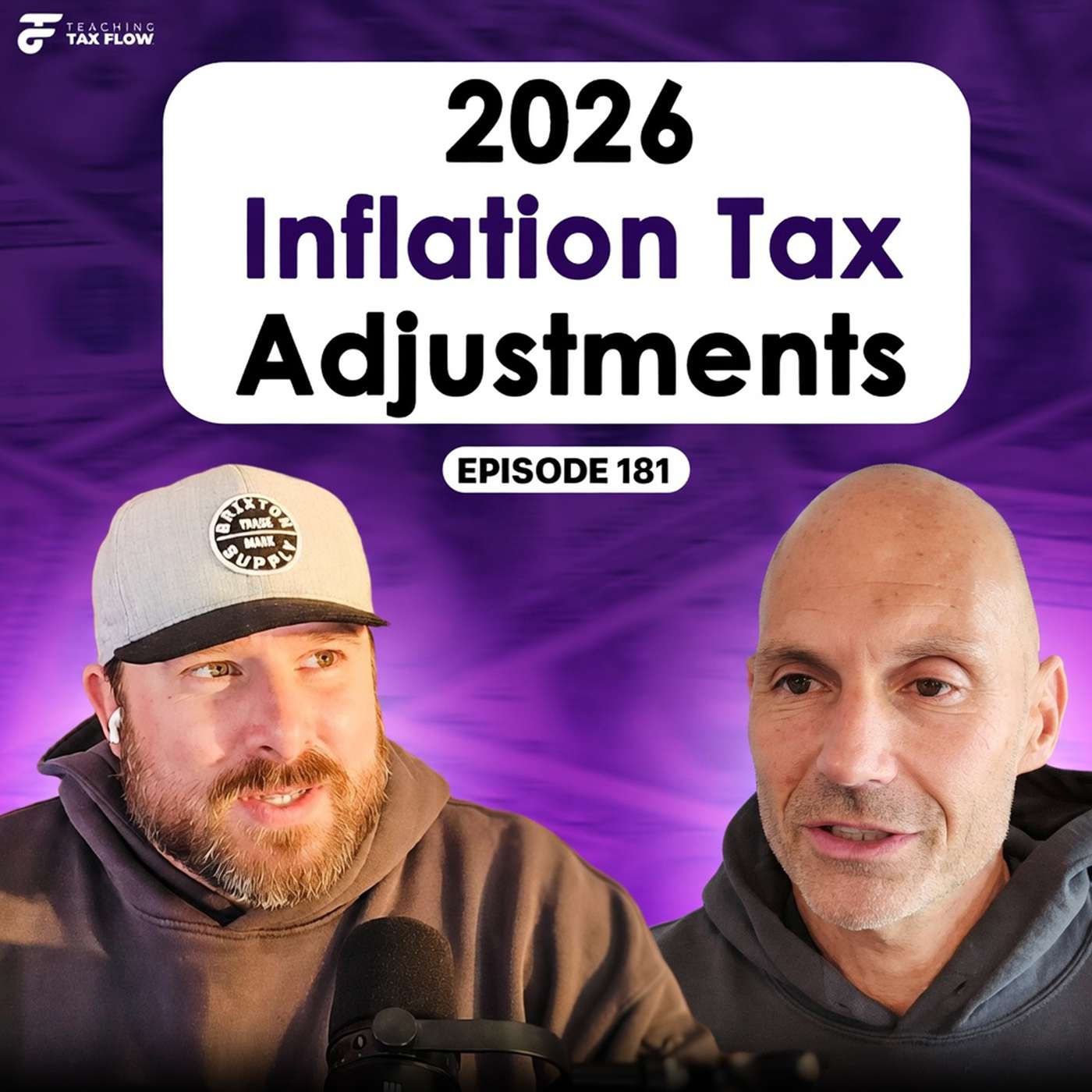
In this episode, we discuss the intricate relationship between inflation and taxes, a crucial aspect of personal finance. We explore how current economic conditions impact your tax strategy and highlight which tax-related items have been adjusted for inflation and which have not. Understanding these dynamics is essential for effective money management.The HUB https://teachingtaxflow.com/hubDefeating Taxes https://defeatingtaxes.com⸻EPISODE SPONSORStrategic Associates, LLCRoger Roundyhttp://www.linkedin.com/in/roger-roundy-86887b23⸻🎧 Listen on your favorite podcast platform:👉 Spotify https://bit.ly/3KdmtJL👉 Apple Podcasts https://apple.co/3ZkyEtX👉 Amazon https://amzn.to/4qmdqa5👉 iHeart https://bit.ly/iheart-TTF
(00:02) - Understanding Inflation's Impact on Taxes and IRS Adjustments
(03:15) - Tax Changes and Deductions Under the One Big Beautiful Bill
(09:38) - Understanding Marginal Tax Rates and Their Impact on Deductions
(15:23) - Generous Standard Mileage Deduction and Health Savings Accounts
(17:05) - Maximizing Tax Benefits Through Strategic Planning and Contributions

Welcome back to the Teaching Tax Flow Podcast, episode 180! This week, we're diving deep into State and Local Tax (SALT) planning, a crucial aspect of your overall financial planning. We'll explore effective tax strategies for high-income individuals and share valuable tax tips to help you navigate these complex regulations. "Defeating Taxes" NOW Available on Amazonwww.defeatingtaxes.comThe HUBwww.teachingtaxflow.com/hub⸻EPISODE SPONSORLegacy LockBook a 30-minute complimentary discovery session at teachingtaxflow.com/legacy(Mention Teaching Tax Flow for special pricing)⸻👉 Spotify https://bit.ly/3KdmtJL👉 Apple Podcasts https://apple.co/3ZkyEtX👉 Amazon https://amzn.to/4qmdqa5👉 iHeart https://bit.ly/iheart-TTF
(00:03) - Exploring State and Local Tax Planning Changes
(01:38) - Impact of SALT Deduction Limits on High-Tax States
(04:49) - Understanding SALT Tax Deductions and Their Implications
(09:48) - Tax Changes and Estate Planning Made Easy
(10:56) - Tax Strategies for Business Owners to Maximize SALT Deductions
(17:05) - Teaching Tax Flow Podcast Encourages Listener Engagement

Welcome back to episode 179 of the Teaching Tax Flow Podcast! In this episode, we tackle Section 179 of the IRS Code Book, a key component for any small business aiming for significant tax savings. We'll break down how bonus depreciation can enhance your tax efficiency and improve your strategic planning when acquiring new equipment. This discussion is crucial for understanding business taxes and maximizing your deductions."Defeating Taxes" NOW Available on Amazonwww.defeatingtaxes.comThe HUBwww.teachingtaxflow.com/hub⸻EPISODE SPONSORStrategic Associates, LLCRoger Roundyhttp://www.linkedin.com/in/roger-roundy-86887b23⸻🎧 Listen on your favorite podcast platform:👉 Spotify https://bit.ly/3KdmtJL👉 Apple Podcasts https://apple.co/3ZkyEtX👉 Amazon https://amzn.to/4qmdqa5👉 iHeart https://bit.ly/iheart-TTF
(00:01) - Exploring Section 179 Tax Deduction with a Play-Doh Analogy
(01:22) - Section 179 and Bonus Depreciation for Tax Flexibility
(07:00) - Tax Rules, Inflation Indexing, and Santa's Bad List
(09:12) - Understanding Section 179 Deductions for Business Assets
(11:50) - Strategies for Reducing Tax Liability for High Earners
(13:11) - Tax Deductions for Commercial Building Improvements
(14:28) - Understanding Depreciation and Tax Deductions for Business Assets
(17:17) - Exploring Tax Resources and Historical Anecdotes
(18:59) - Understanding Financial Advice and Investment Services
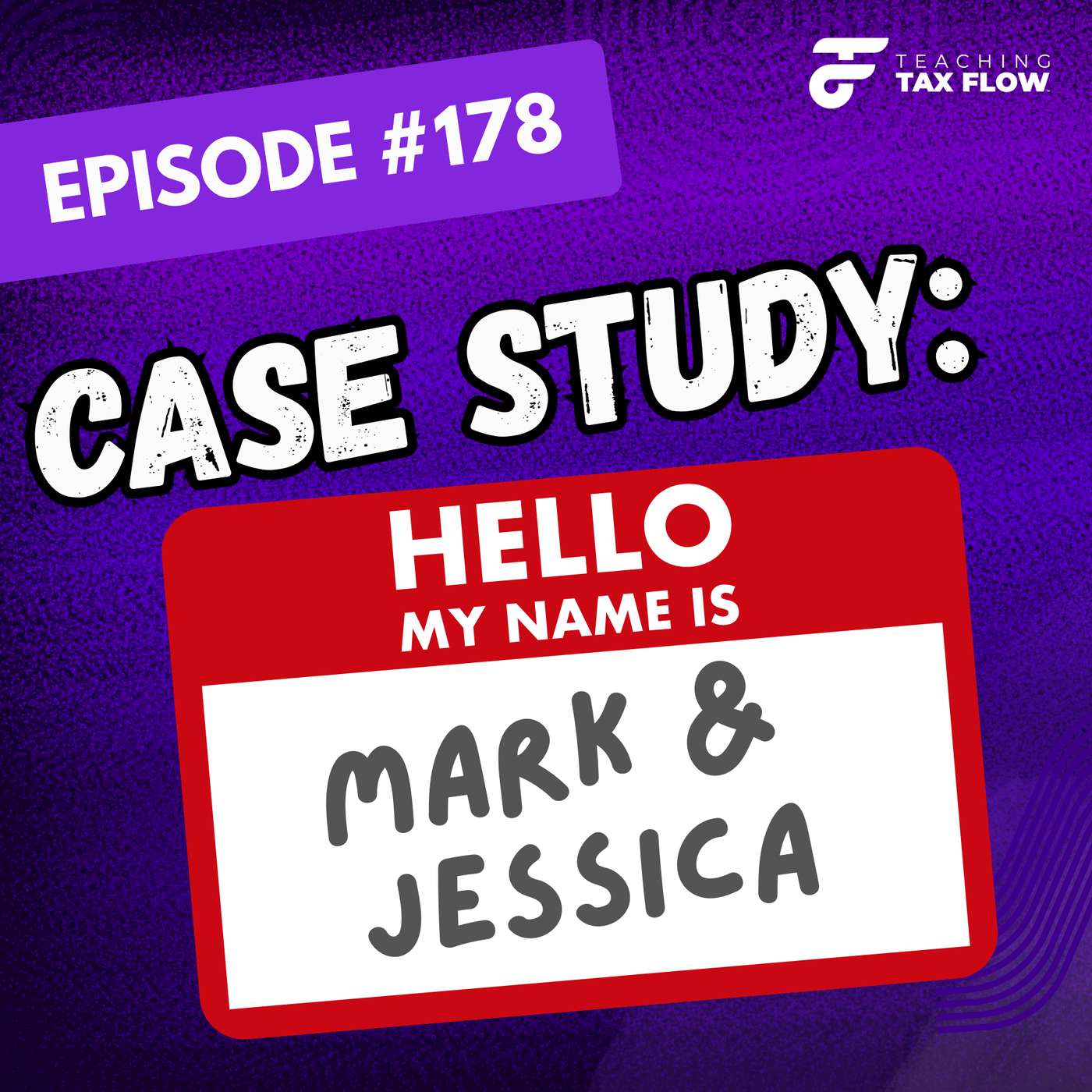
Welcome back to episode 178 of the Teaching Tax Flow Podcast! In this episode, we're diving into a specific case study from the "Defeating Taxes" book. We'll be using real-world case studies to provide practical insights, helping you better understand tax strategies and entrepreneurship. The discussion pivots on Mark and Jessica's life situation, exploring effective tax planning techniques for middle-income families. Chris unpacks the steps involved in transforming a "simple" tax return into a powerful instrument for financial growth and resilience. Topics highlighted include strategic retirement contributions, leveraging HSAs and FSAs, and important estate planning tips that go beyond mere asset accumulation. Through this enlightening conversation, listeners can learn how to align their financial goals with effective tax-saving methods, ensuring a secure future for themselves and their dependents."Defeating Taxes": Available on AmazonThe HUB: www.teachingtaxflow.com/hubEPISODE SPONSORWealth Builders Mortgage GroupYour trusted mortgage partner for investors and entrepreneurs.👉 https://www.wealthbuildersmortgagegroup.com⸻👉 Spotify https://bit.ly/3KdmtJL👉 Apple Podcasts https://apple.co/3ZkyEtX👉 Amazon https://amzn.to/4qmdqa5👉 iHeart https://bit.ly/iheart-TTF
(00:01) - Exploring Tax Strategies Through Mark and Jessica's Case Study
(03:05) - Tax Planning and Strategy for Moderate Income Households
(06:27) - Understanding Marginal Tax Rates and Their Impact on Income
(08:23) - Financial Planning for New Homeowners with an Infant
(10:25) - No Such Thing as a Simple Tax Return
(12:04) - Maximizing Retirement Contributions and Tax Efficiency for Couples
(14:36) - The Importance of Life Insurance and Estate Planning
(15:50) - Maximizing Tax Efficiency Through Strategic Financial Planning
(20:41) - Teaching Tax Flow: Insights and Community Engagement

On this episode of the Teaching Tax Flow podcast, we're diving into Roth vs. Traditional IRA accounts, essential for your financial education. We explore how these choices impact your retirement planning and overall tax/financial strategies. Join us for practical insights to help you make informed decisions about your financial future.EPISODE GUESTAndrew ChariparCharipar Wealth Management⸻EPISODE SPONSORREPStrackerwww.repstracker.com/affiliate/teachingtaxflow (CODE: IFG)⸻👉 Spotify https://bit.ly/3KdmtJL👉 Apple Podcasts https://apple.co/3ZkyEtX👉 Amazon https://amzn.to/4qmdqa5👉 iHeart https://bit.ly/iheart-TTF
(00:01) - Roth Versus Traditional Retirement Accounts Explained
(01:07) - Choosing Between Roth and Traditional Retirement Accounts
(05:38) - Andrew Charper's Journey into Financial Advising and Client Connections
(08:06) - Financial Planning for Young Adults: Traditional vs. Roth Contributions
(09:16) - Financial Strategies for High Earners and Life Changes
(14:00) - Financial Planning Strategies for Variable Incomes and Tax Optimization
(16:28) - Managing Financial Distractions in Your 40s
(17:58) - Financial Strategies for Different Life Stages and Tax Planning
(22:31) - The Importance of Collaboration Among Financial Professionals
(25:36) - Teaching Tax Flow's Educational Insights on Financial and Tax Advice

This episode of the Teaching Tax Flow podcast tackles a frequently asked question: Do you need a personal advisory board? We explore what a personal board of directors entails for your personal life, distinct from corporate or non-profit structures. Join us to understand how this concept can contribute to your personal growth and overall financial development.The HUB https://teachingtaxflow.com/hubDefeating Taxes https://defeatingtaxes.com⸻EPISODE SPONSORStrategic Associates, LLCRoger Roundyhttp://www.linkedin.com/in/roger-roundy-86887b23⸻🎧 Listen on your favorite podcast platform:👉 Spotify https://bit.ly/3KdmtJL👉 Apple Podcasts https://apple.co/3ZkyEtX👉 Amazon https://amzn.to/4qmdqa5👉 iHeart https://bit.ly/iheart-TTF
(00:01) - Understanding the Importance of a Personal Board of Directors
(03:42) - Building Your Financial Board of Directors
(07:19) - Building Financial Relationships for Future Home and Asset Purchases
(11:40) - Building a Personal Board of Directors for Business Success
(18:04) - Educational Insights on Tax Flow and Financial Advice

In this episode, we're diving into common tax misconceptions and debunking them once and for all. We'll be sharing essential tax facts and practical tax tips to help you with your tax planning. Join us for a crucial session of tax education and money education from the Teaching Tax Flow podcast!"Defeating Taxes" Now Available on Amazonhttps://www.bit.ly/4tDWJbz⸻EPISODE SPONSORLegacy LockBook a 30-minute complimentary discovery session at teachingtaxflow.com/legacy(Mention Teaching Tax Flow for special pricing)⸻👉 Spotify https://bit.ly/3KdmtJL👉 Apple Podcasts https://apple.co/3ZkyEtX👉 Amazon https://amzn.to/4qmdqa5👉 iHeart https://bit.ly/iheart-TTF
(00:04) - Unveiling Tax Myths and Strategies in Defeating Taxes
(02:18) - Debunking Tax Myths and Emphasizing Control Through Planning
(05:51) - Debunking Tax Myths and Effective Tax Planning Strategies
(16:05) - Navigating IRS Challenges with Taxpayer Advocacy and Professional Help
(18:56) - Teaching Tax Flow and Engaging Tax Planning Strategies

Chris Picciuro, CPA, and John Tripolsky explore the stages of introducing financial responsibility and tax education to children in this episode of the Teaching Tax Flow podcast. They discuss three phases: Supported Learning Years, Shared Responsibility Years, and Independence. Chris shares practical advice on how parents can gradually transition from financial providers to advisors, emphasizing the importance of involving children in tax planning from a young age. They also consider strategies like contributing to Roth IRAs and discuss real-life financial lessons that prepare kids for the future. Engage in this insightful conversation to help guide your child towards financial independence.⸻CHAPTERS0:04 Electing Out of Automatic Bonus Depreciation for Tax Benefits4:11 Strategic Tax Planning and Bonus Depreciation Decisions8:48 Tax Planning Strategies for Equipment and Vehicle Deductions10:50 Maximizing Tax Benefits Through Strategic Bonus Depreciation Decisions12:11 Efficiency of Travel and Tax Savings Compared13:28 Introducing The Hub for Tax Planning and Partner Connections⸻EPISODE SPONSORWealth Builders Mortgage GroupYour trusted mortgage partner for investors and entrepreneurs.👉 https://www.wealthbuildersmortgagegroup.com⸻👉 Spotify https://bit.ly/3KdmtJL👉 Apple Podcasts https://apple.co/3ZkyEtX👉 Amazon https://amzn.to/4qmdqa5👉 iHeart https://bit.ly/iheart-TTF
(00:03) - Teaching Kids About Taxes and Financial Responsibility
(07:41) - Guiding Children Through Financial Independence Stages
(15:21) - Wealth Builders Mortgage Group Empowers Real Estate Investors
(15:52) - Teaching Financial Independence Through Staged Learning and Budgeting
(21:26) - Engage in Tax Planning and Share Tips on YouTube
This episode of the Teaching Tax Flow podcast dives into the intricacies of bonus depreciation, a crucial element for effective tax planning. We discuss how this tax deduction, reintroduced by the One Big Beautiful Bill Act, offers significant tax tips for small business owners looking to optimize their income tax liabilities. Understanding these business tax deductions is key to your tax strategy.⸻CHAPTERS0:04 Electing Out of Automatic Bonus Depreciation for Tax Benefits4:11 Strategic Tax Planning and Bonus Depreciation Decisions8:48 Tax Planning Strategies for Equipment and Vehicle Deductions10:50 Maximizing Tax Benefits Through Strategic Bonus Depreciation Decisions12:11 Efficiency of Travel and Tax Savings Compared13:28 Introducing The Hub for Tax Planning and Partner Connections⸻EPISODE SPONSORStrategic Associates, LLCRoger Roundyhttp://www.linkedin.com/in/roger-roundy-86887b23⸻👉 Spotify https://bit.ly/3KdmtJL👉 Apple Podcasts https://apple.co/3ZkyEtX👉 Amazon https://amzn.to/4qmdqa5👉 iHeart https://bit.ly/iheart-TTF
(00:04) - Electing Out of Automatic Bonus Depreciation for Tax Benefits
(04:11) - Strategic Tax Planning and Bonus Depreciation Decisions
(08:48) - Tax Planning Strategies for Equipment and Vehicle Deductions
(10:50) - Maximizing Tax Benefits Through Strategic Bonus Depreciation Decisions
(12:11) - Efficiency of Travel and Tax Savings Compared
(13:28) - Introducing The Hub for Tax Planning and Partner Connections
This episode provides a comprehensive analysis of the senior tax deduction, focusing on the eligibility criteria and unique advantages it offers. Chris and John highlight that individuals aged 65 and older with a valid Social Security number who file jointly or as head of household can benefit from this deduction between 2025 and 2028. The hosts clarify that it applies whether one itemizes deductions or chooses the standard deduction, potentially offering up to a $12,000 deduction for married couples. Additionally, they discuss the income phase-out range, highlighting the nuanced details that can affect one's tax return.Episode Sponsor:REPStrackerwww.repstracker.com/affiliate/teachingtaxflow (CODE: IFG)
(00:00) - Exploring the New Senior Tax Deduction and Its Implications
(05:16) - Tax Deductions for Seniors Aged 65 and Older
(07:29) - Understanding Tax Deductions and Phase Outs for Married Couples
(11:46) - Maximizing Senior Tax Deductions with Schedule 1A
(16:29) - The Value of Tax Professionals and Avoiding Procrastination
Welcome back to the Teaching Tax Flow podcast, episode 171! This episode guides you through selecting a tax professional and covers the importance of a CPA and an enrolled agent. We'll explore essential "interview" questions and answers to help you choose the right accountant or tax pro for your tax preparation and planning needs. Get ready to make informed decisions for your tax career.⸻🎧 Listen on your favorite podcast platform:👉 Spotify https://bit.ly/3KdmtJL👉 Apple Podcasts https://apple.co/3ZkyEtX👉 Amazon https://amzn.to/4qmdqa5👉 iHeart https://bit.ly/iheart-TTF
(00:00) - Introduction to Episode 171
(00:34) - Importance of Tax Professionals
(01:10) - Insights on the CPA Profession
(02:22) - Choosing the Right Tax Professional
(05:05) - Trust in Tax Professional Relationships
(09:21) - Accreditation of Tax Professionals
(11:59) - Understanding the X Factor
(13:39) - Importance of Due Diligence and Price
(15:34) - Closing Remarks
In this episode of the Teaching Tax Flow podcast, hosts Chris Picciurro and John Tripolsky dive deep into the transformative tax changes set to take effect in 2026. As a follow-up to their previous discussions, they address crucial tax modifications outlined in the "One Big Beautiful Bill Act," including deductions on tips, overtime, and notable alterations to the standard deduction, all while providing strategies for optimization.The episode unfolds with a detailed exploration of the major tax adjustments for taxpayers beginning in the 2025 tax year, which will significantly impact 2026 tax filings. Key highlights include the introduction of new deductions, such as "No Tax on Tips" and "No Tax on Overtime," tailored to benefit a variety of income groups, while also shedding light on enhancements to the child tax credit and the preservation of the QBI deduction to bolster small business growth. The duo pepper the discourse with insights into extending bonus depreciation at 100%, making it a significant boon for eligible asset acquisitions, particularly in the real estate sector. Taxpayers are encouraged to consult trusted advisors and partake in the show's community to fully leverage these benefits.⸻EPISODE SPONSORWealth Builders Mortgage GroupYour trusted mortgage partner for investors and entrepreneurs.👉 https://www.wealthbuildersmortgagegroup.com⸻🎧 Listen on your favorite podcast platform:👉 Spotify https://bit.ly/3KdmtJL👉 Apple Podcasts https://apple.co/3ZkyEtX👉 Amazon https://amzn.to/4qmdqa5👉 iHeart https://bit.ly/iheart-TTF
(00:00) - Exploring Tax Changes and Planning for 2026
(02:34) - Major Tax Changes and Deductions for 2025 and Beyond
(06:46) - High Taxes and Weather Jokes Between Michigan and Tennessee
(07:14) - Tax Deductions and Benefits for Seniors and Business Owners
(10:25) - Tax Benefits and Strategies for Real Estate Investors
(12:57) - Tax Planning Strategies and Changes for 2026
(17:53) - Investment Advisory and Securities Offerings Explained
In this episode, co-hosts John Tripolsky and Chris Picciurro dive into the intricate world of 2026 tax changes to charitable contributions. Kicking off the new year, the guys provide a detailed analysis of what taxpayers can expect with the introduction of the One Big Beautiful Bill Act (OB3), the most significant overhaul of the tax code in about a decade. Chris and John shed light on the various changes that taxpayers, both those who itemize and those who don't, need to prepare for. The duo emphasizes the importance of tax planning and strategic timing to maximize deductions amid these new regulations.As the discussion unfolds, listeners get an in-depth understanding of the new above-the-line deductions for non-itemizers, the impact of AGI floors on charitable contributions for itemizers, and how high-income earners are affected by the new 35% cap on tax benefits. Chris offers practical examples to elucidate these changes, while John underscores the importance of awareness and planning to avoid unpleasant surprises when filing taxes. In addition, they explore how percentage limitations and carry-forward changes can affect deductions, especially for those donating appreciated property. This episode is a valuable resource for anyone seeking to understand and navigate the tax landscape in 2026.Key Takeaways:The One Big Beautiful Bill Act introduces substantial changes to charitable contributions starting in 2026.Non-itemizers can now benefit from above-the-line deductions up to $1,000 for singles and $2,000 for married couples filing jointly.Itemizers will encounter a new floor, set at half a percent of AGI, impacting the amount deductible from charitable giving.High-income taxpayers face a 35% cap on the tax benefit from their charitable donations.Episode Sponsor:Legacy LockBook a 30-minute complimentary discovery session at teachingtaxflow.com/legacy(Mention Teaching Tax Flow for special pricing)
(00:00) - 2026 Charitable Contribution Changes and Tax Planning Insights
(04:46) - Tax Deductions for Charitable Contributions in 2026
(10:40) - Maximizing Charitable Deductions for High-Income Taxpayers
(16:06) - Effective Communication in Tax Advisory and Teaching
(17:18) - Understanding Charitable Donation Deductions and Tax Implications
(20:37) - Teaching Tax Flow's Upcoming Events and Community Engagement

In this episode of the Teaching Tax Flow podcast, hosts John and Chris usher in the New Year with invaluable insights into commonly missed tax deductions. Dubbing it a conversation you "may not want to admit is a problem," the discussion promises to shed light on often overlooked opportunities within your tax return, aiming to empower listeners with newfound tax knowledge ahead of their 2025 tax preparations. Whether navigating through state and local tax (SALT) deductions or understanding the minutiae of medical miles, this episode is a treasure trove of tax strategy.Throughout the episode, Chris emphasizes the importance of being proactive and informed about lesser-known deductions. The engaging dialogue reflects on key opportunities such as the state sales tax deduction for non-income tax states, and deductions related to medical miles, charitable miles, and student loan interest. For business owners, the conversation delves into the necessity of capturing deductions like startup costs, home office deductions, and retirement plan contributions. Chris also offers a critical look at rental property tax implications, discussing depreciation, passive activity loss carry forwards, and the Qualified Business Income (QBI) deduction.KEY TAKEAWAYS✅ State and Local Tax Savings - Beyond high-tax states, residents in non-income tax states can benefit from state sales tax deductions, particularly on significant purchases.✅ Medical and Charitable Miles - Deductions are available for medical-related travel and miles driven for charitable work, offering additional savings avenues.✅ Business Deductions - From startup costs to retirement plan contributions, business owners have multiple opportunities for tax savings that are often overlooked.✅ Rental Properties - Depreciation and passive activity loss carry forwards are crucial yet frequently missed savings on rental properties.✅ Engagement with the Community - The episode underscores the value of community engagement through platforms like the Defeating Taxes group for personalized tax insights.⸻Episode Sponsor:Strategic Associates, LLCRoger Roundywww.linkedin.com/in/roger-roundy-86887b23⸻🎧 Listen on your favorite podcast platform:👉 Spotify https://bit.ly/3KdmtJL👉 Apple Podcasts https://apple.co/3ZkyEtX👉 Amazon https://amzn.to/4qmdqa5👉 iHeart https://bit.ly/iheart-TTF
(00:00) - Commonly Missed Tax Deductions and Financial Goals for 2026
(04:04) - Maximizing Tax Deductions Through Strategic Itemization
(08:29) - Commonly Missed Tax Deductions for Individuals and Business Owners
(14:41) - Maximize Rental Property Tax Deductions and Avoid Common Mistakes
(17:50) - Year-End Tax Tips and Future Planning Strategies
In this episode of the Teaching Taxable Podcast, co-hosts John Tripolsky and Chris Picciurro reveal significant updates to the 1040 tax form, aiming to prepare taxpayers for upcoming changes. Designed as a "holiday gift" to listeners, the episode dissects alterations targeting discrepancy issues between taxpayer filings and IRS records. Chris presents a detailed walkthrough of these modifications, while John provides annotations, shedding light on potential impacts for tax professionals and individual filers alike.The discussion begins by addressing enhancements to the tax reporting framework, focusing on the streamlined and comprehensive design intended to resolve past IRS matching discrepancies. By integrating changes into the core Form 1040, the IRS aims to avoid issues related to digital asset declarations, dependent statuses, and marital/separation statuses. Chris explains how taxpayers can effectively utilize these updates, outlining benefits like reduced correspondence with the IRS due to common errors. An additional focus on the new Schedule 1A highlights four temporary deductions meant to aid taxpayers in optimizing their returns, using enhanced preparatory strategies to file with confidence in an increasingly digital tax landscape.SNEAK PEEK (2025 Form 1040): https://www.irs.gov/pub/irs-dft/f1040--dft.pdf⸻KEY TAKEAWAYS✅ Learn about the crucial updates to Form 1040 and how these changes aim to minimize IRS paperwork discrepancies.✅ Insightful analysis of how new checkbox additions address various taxpayer statuses, including deceased individuals and residency queries.✅ Discover the introduction of Schedule 1A, featuring four temporary deductions that could impact up to 40 million taxpayers.✅ Tips on how these changes make tax preparation potentially more complicated, but also prevent errors and optimize financial strategies.✅ The importance of staying organized in tax filing, particularly concerning tips and overtime income, to ensure an error-free submission.⸻EPISODE SPONSORWealth Builders Mortgage GroupYour trusted mortgage partner for investors and entrepreneurs.👉 https://www.wealthbuildersmortgagegroup.com⸻🎧 Listen on your favorite podcast platform:👉 Spotify https://bit.ly/3KdmtJL👉 Apple Podcasts https://apple.co/3ZkyEtX👉 Amazon https://amzn.to/4qmdqa5👉 iHeart https://bit.ly/iheart-TTF
(00:00) - Exploring Changes in the New Form 1040
(02:25) - Navigating Mortgage Strategies and Tax Return Complexities
(04:11) - New Changes and Checkboxes on IRS Form 1040
(08:08) - IRS Form Updates and Software Challenges
(09:28) - New Tax Reporting Changes and Deductions on Form 1040
(14:24) - Tax Filing Tips and Changes for a Smooth Process
(16:15) - Holiday Tax Tips and Commonly Missed Deductions
In Episode 166 of the Teaching Tax Flow Podcast, hosts Chris Picciurro, CPA and John Tripolsky break down the often-overlooked Secure 2.0 Act and explain why it plays a critical role in retirement and tax planning—even if it doesn’t get the same headlines as the Tax Cuts and Jobs Act or the OB3 Act.Dubbed the “middle child” of tax legislation, Secure 2.0 introduces sweeping retirement changes beginning in 2025. Chris and John walk listeners through how these updates affect business owners, employees, and taxpayers approaching retirement age. From automatic enrollment requirements to expanded catch-up contributions, this episode highlights how Congress is actively nudging Americans toward better retirement behavior.With relatable analogies, practical examples, and Chris’s personal milestone of turning 50, this episode turns complex legislation into actionable planning insight—helping listeners understand not just what changed, but how to use it strategically.Key Takeaways:The Secure 2.0 Act modernizes retirement planning rules and fills the gap between major tax reforms.Taxpayers ages 60–63 gain access to enhanced catch-up contribution opportunities.Beginning in 2025, most new 401k and 403b plans must include automatic employee enrollment.Long-term part-time workers benefit from expanded retirement plan eligibility.The introduction of PLESSA accounts allows limited penalty-free access to retirement funds.Episode Sponsor:REPStrackerwww.repstracker.com/affiliate/teachingtaxflow (CODE: IFG)
(00:01) - Exploring the Secure 2.0 Act and Its Impact on Retirement
(05:25) - Turning 50 Brings New Tax Benefits and Pickleball Opportunities
(08:25) - Age, Music Preferences, and Tax Topics Discussed
(09:49) - Secure 2.0 Act: Enhancing Retirement Plans and Accessibility
(16:06) - Making Tax Planning Accessible for All Income Levels

In this episode of the Teaching Tax Flow podcast, hosts John Tripolsky and Chris Picciurro dive into the intricacies of Health Savings Accounts (HSAs), unpacking their extraordinary tax benefits. They highlight how HSAs can be a powerful financial tool for individuals looking to manage their healthcare expenditures while also enjoying significant tax advantages. As they explore the components of HSAs, they make complex financial concepts accessible, guiding listeners step-by-step through potential cost savings and tax efficiencies.HSAs, as discussed in this episode, are not just mere savings accounts; they are a "tristar" tax-advantaged investments that offer threefold benefits: contributions are tax-deductible, the account grows tax-free, and withdrawals for qualified medical expenses remain tax-free. Chris relates his personal experiences and provides strategic advice, encouraging listeners to maximize their HSA contributions where feasible. Emphasizing actionable steps, the episode demystifies eligibility criteria and optimal usage scenarios for HSAs, reinforcing their potential in long-term financial planning.Key Takeaways:Threefold Tax Advantage: HSAs offer a comprehensive tax benefit by allowing tax-free contributions, growth, and withdrawals for eligible medical expenses.Eligibility Criteria: HSAs require enrollment in a high-deductible health plan (HDHP) and have specific contribution limits that increase for individuals aged 55 and older.Flexibility: Unlike Flexible Spending Accounts (FSAs), HSAs roll over year-to-year, permitting funds to accumulate tax-free over time.Eligible Expenses: HSAs can cover a wide array of medical costs, including prescriptions, dental care, and vision expenses.Strategic Planning: Chris emphasizes starting early with HSA contributions, even for young individuals with minimal medical expenses, to optimize future healthcare budgets.Resources• Teaching Tax Flow Website• Defeating Taxes CommunityEpisode Sponsor:Legacy LockBook a 30-minute complimentary discovery session at teachingtaxflow.com/legacy(Mention Teaching Tax Flow for special pricing)
(00:02) - Understanding Health Savings Accounts and Their Tax Benefits
(01:59) - Understanding HSAs and Their Tax Benefits
(03:38) - Understanding Tax Benefits of Health Savings Accounts
(04:44) - Understanding the Triple Tax Benefits of Health Savings Accounts
(07:07) - Understanding HSA Eligibility and Contribution Limits
(09:38) - Understanding HSA Contributions and Tax Benefits for Self-Employed
(12:04) - Maximizing Health Savings Accounts for Medical Expenses
(16:50) - Maximizing HSA Benefits for Future Medical Expenses
(19:12) - Exploring Tax Benefits and Investment Advice
In this episode of the Teaching Tax Flow Podcast, hosts John Tripolsky and Chris Picciurro, CPA, sit down with college funding expert Brian Eyster to break down one of the most misunderstood financial planning topics for families: FAFSA and college financial aid strategy.Episode 164 delivers a clear roadmap for navigating the rising costs of college by blending smart tax planning with proactive financial aid preparation. Brian demystifies the FAFSA process, explains major updates families must know, and shares actionable steps to maximize eligibility for need-based aid.Throughout the conversation, Brian highlights how income, assets, and timing play crucial roles in how much financial aid a student may receive. Listeners learn the key differences between FAFSA and the CSS Profile, how the shift from Expected Family Contribution (EFC) to the Student Aid Index (SAI) changes planning conversations, and why starting early—ideally during a child’s sophomore year of high school—can make a measurable difference.Parents also gain clarity on how certain assets work against them in the financial aid formula, what should be avoided at all costs, and how to strategically position their finances during the “base year” to legally and ethically reduce their SAI.Notable Quotes“Our job is to try and get the SAI lower and lower—legally, ethically, and morally.” — Brian S. Eyster“Think of yourself playing a chess match. You can win a chess game with a multitude of different strategies in place.” — Brian S. Eyster“For parents of juniors… this is your last chance to do anything proactively regarding your income.” — Brian S. Eyster“Parents, it is highly inadvisable for your children to own the assets at the time you’re completing these forms.” — Brian S. Eyster“The best place to reach out is through our website, where you can book a 20-minute call to determine if we get along and like each other.” — Brian S. EysterResources:Essential Strategies: Brian Eister’s company offers financial aid planning services.FAFSA Website: Official site for the Free Application for Federal Student Aid.Episode Sponsor:Strategic Associates, LLCRoger Roundywww.linkedin.com/in/roger-roundy-86887b23
(00:03) - Exploring FAFSA and Tax Strategies for College Aid Planning
(04:37) - Strategic FAFSA Planning for College Financial Aid Optimization
(12:40) - Understanding FAFSA and Asset Valuation for College Funding
(16:19) - Understanding FAFSA and CSS for College Financial Aid
(22:06) - The Importance of Annual FAFSA Completion for Financial Aid
(25:25) - The Impact of Adjusted Gross Income on FAFSA and Taxes
(26:26) - The Grad Process: Efficient College and Retirement Planning
(31:03) - Aligning Business Relationships and Financial Planning
(33:33) - Investment Advice and Legal Disclaimers in Financial Podcasts
In this episode of the Teaching Tax Flow Podcast, host John and tax expert Chris delve into a pivotal topic in taxation - the Marginal Tax Rate (MTR). Sponsored by Wealth Builders Mortgage Group, the podcast aims to shed light on the intricacies of tax strategies that transcend the basic understanding of tax brackets. Chris reveals why MTR is considered the primary Key Performance Indicator (KPI) for effective tax planning, emphasizing its critical role in guiding tax strategies and decisions.Throughout the discussion, the distinction between marginal tax rates and tax brackets is elucidated, with Chris stressing the deceptive nature of tax brackets in comparison to the impactful MTR. He elaborates on how understanding one's MTR can drastically affect financial decisions and outcomes, particularly in tax planning contexts. Chris also touches on various elements like phase-outs and hidden taxes that influence one's marginal tax rate, offering listeners deep insights into tax planning. Highlighting the significance of implementing strategies that align with individual MTRs, Chris reinforces that comprehending one's MTR is pivotal to effective lifetime tax management.⸻KEY TAKEAWAYS✅ MTR vs. Tax Brackets: Marginal Tax Rate (MTR) is the most critical measure in tax planning, overshadowing the deceptive tax brackets.✅ Tax Planning Strategy: Understanding and utilizing the MTR allows individuals to make informed choices, reducing taxes legally and ethically across their lifetime.✅ Elements Affecting MTR: Chris highlights factors like phase-outs, deductions, and hidden taxes that can alter one's MTR significantly.✅ Implementation over Ideas: Effective tax reduction hinges on implementing strategies that align with one's MTR to ensure maximum tax efficiency.✅ Resources for Education: The podcast encourages utilizing Teaching Tax Flow content, such as YouTube and their community for further learning and clarity on tax concepts.⸻EPISODE SPONSORWealth Builders Mortgage GroupYour trusted mortgage partner for investors and entrepreneurs.👉 www.wealthbuildersmortgagegroup.com
(00:02) - Exploring Marginal Tax Rates and Real Estate Investment Strategies
(01:56) - Understanding Marginal Tax Rate for Effective Tax Planning
(04:43) - Understanding Marginal Tax Rate Versus Tax Bracket
(06:49) - Understanding Marginal Tax Rate Versus Tax Bracket
(08:16) - Understanding Marginal Tax Rates and Their Hidden Implications
(11:50) - Understanding Marginal Tax Rate Versus Tax Bracket Misconceptions
(13:28) - Understanding Marginal Tax Rates and Hidden Taxes
(16:09) - Effective Tax Planning Through Strategic Implementation
(17:51) - Tax Strategies and Professional Advice for Financial Planning

Comments

Download from Google Play

Download from App Store
 United States