


 Claim Ownership
Inside the Helix
Subscribed: 11Played: 71
Subscribe

©2023 - DNA Genetics
Description
“Inside the Helix” is a podcast presentation from DNA Genetics that focuses on all things that matter to the pork industry. Hear from DNA's team of geneticists, veterinarians, animal care providers, nutritionists and other industry-leading experts as they explore pig production from genetic improvement all the way to meat quality.
78 Episodes
Reverse
Summer growth suppression in finishing pigs is one of the most persistent and costly seasonal challenges in the pork industry. In this episode, Dr. Steve Kitt discusses how misters in finishers can help producers recover approximately 7 pounds of live bodyweight and 5 pounds of carcass weight during summer marketing periods.
Dr. Jamie Madigan joins us to talk about the role of temperature monitoring in pig health and share insights from a Pillen Family Farms study evaluating new temperature-reading technologies—their benefits, limitations, and what they mean for the future of herd management.
Moving and mixing pigs in the nursery is a common practice on commercial farms. Producers often pull smaller or compromised pigs into recovery pens to give them extra care and help manage variation in body weight. While this can improve welfare, mixing pigs also changes their social groups and may increase exposure to disease. In this episode, Dr. Christine Mainquist-Whigham reviews a recent trial that looked at how different nursery movement strategies affect pig growth, health, and survival in real-world nursery barns.
In this episode, Dr. Tom Rathje dives into why maternal lines matter and how they influence grow-finish performance from start to finish.
In this episode, Paul Faris shares practical strategies and proven insights for successfully managing group-housed sows in a pen-based production system. From daily management routines to key welfare and performance considerations, Paul delivers actionable tips to help sow farm teams drive efficiency, consistency, and success.
In this episode, Dr. Steve Kitt joins us to reveal the age-specific amino acid strategies every pig producer needs to know. From young pigs that thrive on low-protein, synthetic-boosted diets to finishers that falter when crude protein dips too far, this episode breaks down how to feed smarter at every stage.
In this episode, Dr. Steve Kitt breaks down what leads to feed outages, the impact they have on pig performance and profitability, and the practical steps producers can take to prevent them. Tune in to learn how to maintain consistent feed delivery and keep your operation running smoothly and efficiently.
In this episode, Dr. Iara Solar Diaz explores how the environment shapes genetic selection programs. She explains how geneticists account for environmental factors and identify animals with the resilience needed to thrive under a variety of conditions. Part 2 focuses on how these environmental influences affect the post-wean portion of the selection program.
In this episode, Dr. Iara Solar Diaz explores how the environment shapes genetic selection programs. She explains how geneticists account for environmental factors and identify animals with the resilience needed to thrive under a variety of conditions. Part 1 focuses on how these environmental influences affect the maternal side of the selection program.
In this episode, Dr. Randy Borg highlights DNA’s maternal program, exploring how strategic selection plays a key role in sow retention and long-term productivity.
In this episode, Drs. Amanda Cross and Vishesh Bhatia explore the journey of full program testing on the DNA Genetics' market pig, discussing how the concept was born, developed, and brought to life as a project. They share insights into the evolution of full program testing — from its early vision and goals, to the challenges and lessons learned along the way, and finally, to the exciting opportunities it creates for producers moving forward.
In this episode, Dr. Christine Mainquist-Whigham breaks down when a herd depopulation and repopulation strategy makes sense and what producers need to consider before making the decision. From identifying the right timing to understanding the key factors that influence success, this conversation will help you plan a smooth and effective herd health upgrade.
Join Dr. Steve Terlouw in the second part of the reproductive management series as he discusses various tool for managing the estrous cycle. Dr. Terlouw shares various insights for managing gilts and sows for improved cyclicity and synchronization. Join us to gain a better understanding of these reproductive tools and how to appropriately apply them to achieve their intended purpose.
Dr. John Sonderman joins us to launch a two-part series on reproductive tools. In this episode, we unpack the practice of sow induction—its benefits, risks, and how it can shape farrowing outcomes. Dr. Sonderman walks us through key protocols and decision-making factors to consider when planning induction in your herd. If you’re aiming for tighter schedules, better piglet care, or just want to weigh your options, this episode is a must-listen.
In this episode, Dr. Ashley Hartman dives into the science behind pooled semen in the U.S. swine industry. She explains what pooled semen is, why it's used, and what recent research reveals about how sires are represented within litters. If you’ve ever wondered how pooling impacts genetic diversity, fertility, or litter performance—this one’s for you.
At DNA Genetics, we’re always looking for ways to deliver a better pig. In this episode, Dr. Tom Rathje explores how digital phenotyping can accelerate genetic progress—both in traits we already measure and those we haven’t been able to. He also shares how DNA is using this technology today and where it could go in the next five years.
Bringing boars to the stud takes a significant investment—but keeping them there is where the real return lies. In this episode, Dr. Cory Faust shares practical strategies to optimize boar management and extend their productive life, helping you protect your investment and boost long-term performance.
Gene editing holds great promise for advancing the swine industry, offering opportunities for genetic improvement and the potential eradication of specific pathogens like the PRRS virus. However, before this technology can be widely implemented, the industry must address several key challenges—particularly in supply chain logistics and both domestic and international market demand. In this episode, Dr. Tom Rathje, Chief Technical Officer at DNA Genetics, explores the potential benefits and drawbacks of gene editing and what it could mean for the future of swine production.
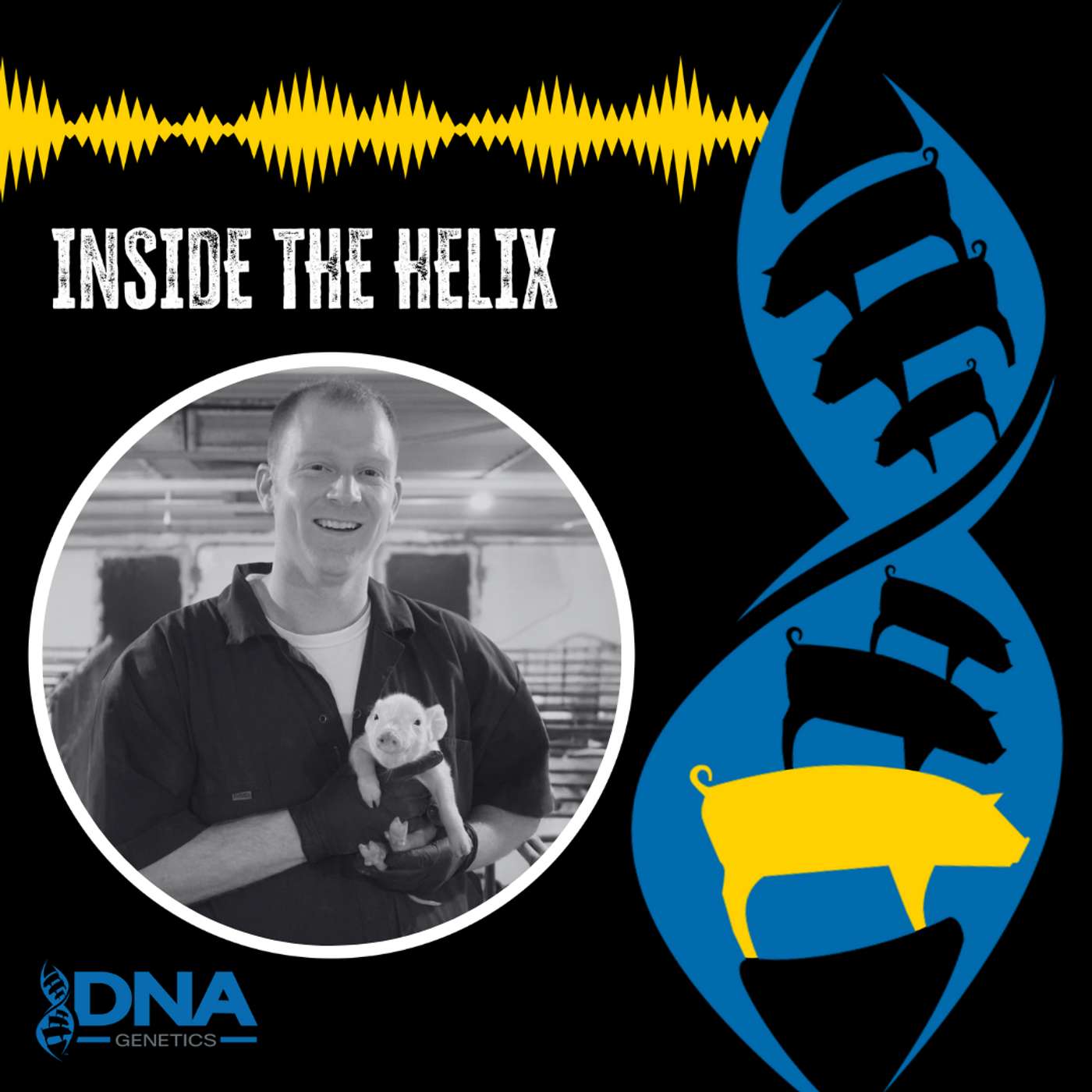
In this episode, Dr. Ashley Hartman and Brady McNeil bust some of today’s biggest misperceptions about the DNA Line 241 female. Backed by data and real-world results, they dive into how this sow has evolved—becoming more efficient, easier to manage, and ultimately helping producers reduce labor costs without compromising performance.
We’re continuing our barn camera series with a closer look at how video monitoring is helping safeguard biosecurity at the highest level. Joining us is Jenna Mencke, Biosecurity Specialist at DNA Genetics, to share how cameras are used across our nucleus farms, the layers of protection they offer, and how team members are actively involved in their success. Tune in to learn how this technology is raising the bar for biosecurity in swine genetics.

Comments

Download from Google Play

Download from App Store
 United States