


 Claim Ownership
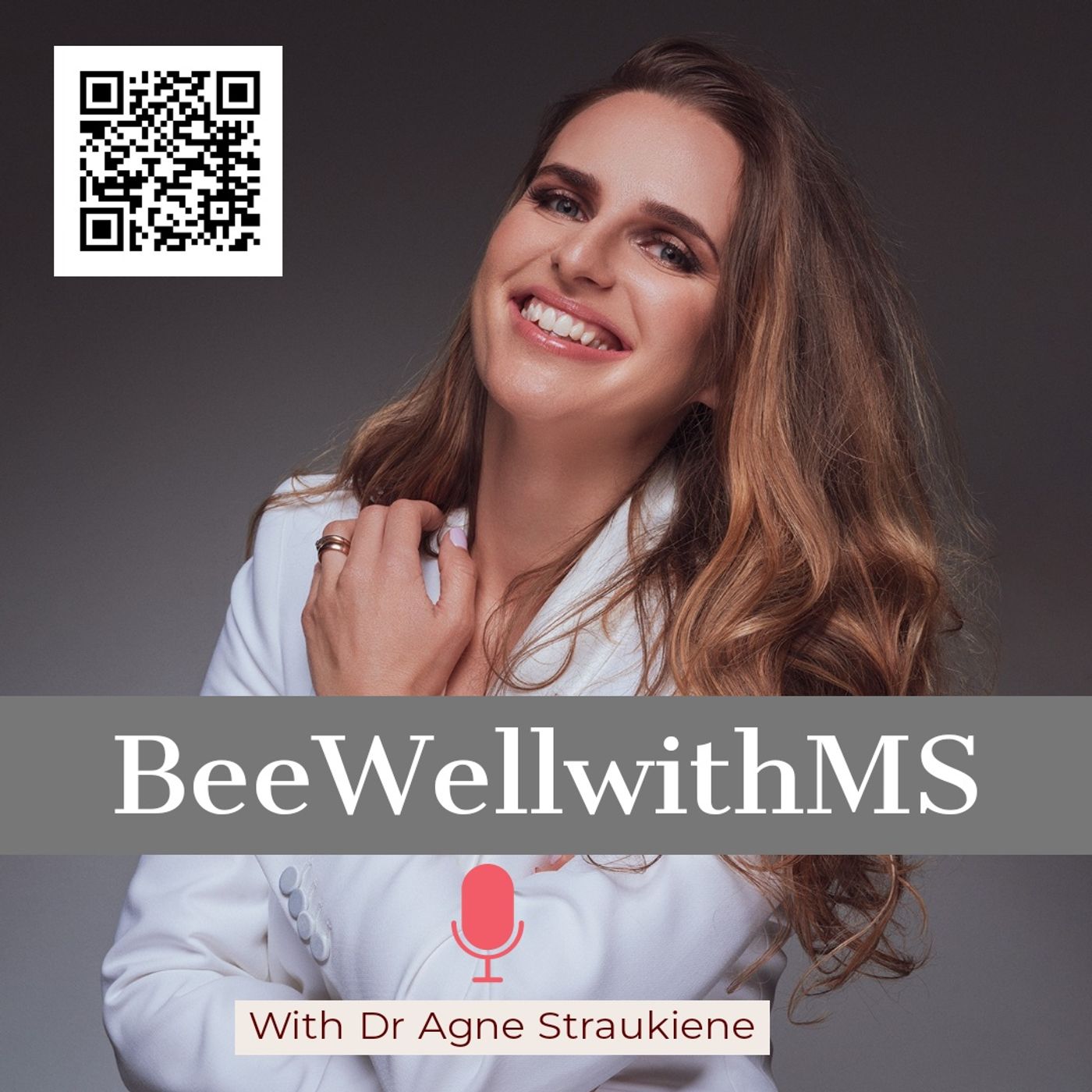
BeeWellwithMS: MS podcast with neurologist Dr Agne Straukiene
Subscribed: 11Played: 116
Subscribe

© Dr Agne Straukiene
Description
Clear, evidence-based conversations for living well with multiple sclerosis (MS). BeeWellwithMS is hosted by Dr Agne Straukiene, a neurologist specialising in MS with over 14 years of experience. Each episode explains MS research in plain language, the way Dr Agne would in clinic: what is known, what is still being studied, and what it may mean for everyday life. You will hear conversations with leading MS experts, practical ideas for symptoms, wellbeing and daily living, and short guided meditations for calm and coping. Topics include diagnosis, treatments and monitoring, fatigue, sleep, mood, women's health, food, movement and the latest research from major MS conferences. Free guide, How to prepare for your MS appointments: https://www.beewellwithms.com/guide
All episodes, summaries and free MS guides: https://www.beewellwithms.com This podcast is educational and does not give personal medical advice. Please talk to your MS team about your own care.
Become a supporter of this podcast: https://www.spreaker.com/podcast/beewellwithms-ms-podcast-with-neurologist-dr-agne-straukiene--5762905/support.
123 Episodes
Reverse
The full conversation with Dr Antonio Scalfari (Charing Cross Hospital, Imperial College London), recorded by Dr Agne Straukiene (BeewellwithMS) at ECTRIMS 2026 in Toronto. They talk about why the course of multiple sclerosis can't be predicted for one person, the early indicators that matter, how exercise, nutrition and managing comorbidities such as diabetes and high blood pressure can improve outcomes, self-monitoring, and what PIRA and smouldering MS mean for people living with MS.Watch the video: https://youtu.be/qX90cRZSNe8Educational content, not individual medical advice.Contact: [email protected] | www.beewellwithms.comBecome a supporter of this podcast: https://www.spreaker.com/podcast/beewellwithms-ms-podcast-with-neurologist-dr-agne-straukiene--5762905/support.
The full conversation with Prof Jeremy Hobart (neurologist, UK), recorded by Dr Agne Straukiene (BeewellwithMS) at ECTRIMS 2026 in Toronto. They talk about self-management in multiple sclerosis, patient-reported outcome measures (PROMs) and the MS DICE consensus.Watch the video: https://youtu.be/93kDR6Yjy-kEducational content, not individual medical advice.Contact: [email protected] | www.beewellwithms.comBecome a supporter of this podcast: https://www.spreaker.com/podcast/beewellwithms-ms-podcast-with-neurologist-dr-agne-straukiene--5762905/support.
The full conversation with Prof Stephen Krieger (Mount Sinai, New York), recorded by Dr Agne Straukiene (BeewellwithMS) at ECTRIMS 2026 in Toronto. They talk about symptom fluctuations in multiple sclerosis and how they differ from relapses and progression, the things that drain reserve (infections, heat, overexertion, stress and poor sleep), keeping a diary of symptoms, and being a good self-advocate without carrying the burden alone.Watch the video: https://youtu.be/xgQNUTpND-gEducational content, not individual medical advice.Contact: [email protected] | www.beewellwithms.comBecome a supporter of this podcast: https://www.spreaker.com/podcast/beewellwithms-ms-podcast-with-neurologist-dr-agne-straukiene--5762905/support.
What It Reveals | Professor Daniel Ontaneda“My MRI is stable—but I don’t feel stable.”It’s a sentence we hear in clinic, and it deserves a thoughtful answer.In this BeeWellwithMS episode, I’m joined by Professor Daniel Ontaneda, neurologist and MS researcher at Cleveland Clinic, to explore what MRI can reveal—and why it doesn’t always explain everything you feel.We unpack the language of MRI reports, from lesions and “black holes” to brain atrophy. We discuss silent lesions, chronic inflammation, paramagnetic rim lesions and the central vein sign, alongside emerging imaging techniques that could help bring the scan and the lived experience of MS closer together.Daniel also shares his approach to monitoring scans, when contrast can be useful, and what excites him about 7T MRI and better spinal cord imaging.Your scan matters. So does your story.⏱️ CHAPTERS00:00 Welcome: 02:33 What actually is an MS lesion?04:36 Understanding T2 lesions, contrast and “black holes”09:02 Do black holes predict more severe MS?10:28 Why can new lesions appear without symptoms?13:23 “My MRI is stable, but I don’t feel stable”18:14 The biology routine MRI can miss19:30 Chronic inflammation and changes beyond lesions22:35 New imaging markers: looking deeper into MS24:22 Paramagnetic rim lesions and chronic activity26:53 The central vein sign: identifying MS lesions30:29 Brain atrophy: what does it really mean?33:17 How hydration and time of day affect brain measurements35:46 Brain health, lifestyle and interpreting your report37:52 Monitoring MRI: rebaseline scans and contrast40:00 How often should you have an MRI?42:28 Personalising monitoring and spinal cord scans43:28 The future: 7T MRI and sharper spinal cord imaging47:00 What Daniel wishes everyone understood about MRI48:46 Bringing your scan and your experience together50:54 Closing thoughts: stay curious and ask questions🎙️ Hosted by Dr Agne Straukiene🎙️ Guest: Professor Daniel Ontaneda, Cleveland Clinic💬 Have you ever felt that your MRI report didn’t reflect how you were feeling? Share your experience or a question below.Subscribe to BeeWellwithMS for more conversations about MS science, care and everyday life.🌐 https://www.beewellwithms.comThis conversation is for general education. MRI findings and monitoring schedules need to be interpreted with your own clinical team, taking your individual circumstances into account.#MultipleSclerosis #MRI #BeeWellwithMSBecome a supporter of this podcast: https://www.spreaker.com/podcast/beewellwithms-ms-podcast-with-neurologist-dr-agne-straukiene--5762905/support.
This episode of the BeeWellwithMS Podcast opens the “assistive technology toolbox” for people with MS, from everyday tools to specialist equipment and emerging tech, using catalog labels (established, specialist assessment, emerging/research, limited access) and emphasizing function-first choices over shopping. It highlights smartphones as a major assistive device (dictation, screen reading, magnification, captions, reminders, routines, and travel/toilet planning), mobility options like AFOs, FES, walking aids, wheelchairs and power-assist (with proper assessment and environmental adaptations), and low-tech adaptations for hands plus workplace support via Access to Work. It covers brain fog, fatigue planning, heat sensitivity and cooling, bladder diaries and planning, smart home control, and communication/AAC including voice banking. “Wow shelf” examples include the Cionic Neural Sleeve, grasp gloves, stair-climbing wheelchairs, rehab robotics/exoskeletons, eye-gaze communication, and camera-enabled glasses, ending with seven practical questions before trials or purchases.00:00 Assistive Tech Teaser01:22 Ground Rules and Labels03:03 Your Phone as Assistive Tech05:44 Mobility and Gait Support09:17 Hands and Work Setup10:43 Brain Fog and Fatigue Tools13:57 Heat and Bladder Planning15:50 Smart Home and Communication17:31 The Wow Shelf Tech21:37 Seven Questions Before Buying23:58 Wrap Up and TakeawaysBecome a supporter of this podcast: https://www.spreaker.com/podcast/beewellwithms-ms-podcast-with-neurologist-dr-agne-straukiene--5762905/support.

Comments

Download from Google Play

Download from App Store
 United States