


 Claim Ownership
Biennial Bytes
Subscribed: 3Played: 49
Subscribe

© 2026 Sharjah Art Foundation
Description
Biennial Bytes is the official podcast of Sharjah Biennial.
Bringing the Biennial to life for culture enthusiasts around the world, the podcast delves into the work of some of the most prominent artists practising today.
Subscribe and listen to new episodes every week.
28 Episodes
Reverse
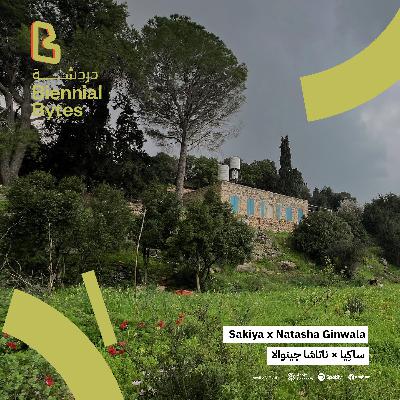
Artists Nida Sinnokrot and Sahar Qawasmi of the collective Sakiya talk to Natasha Ginwala about their participatory ecological practice based in Ein Qiniya, a village near Ramallah. Sinnokrot and Qawasmi speak about the importance of keeping alive sustainable relationships to occupied lands through ancestral systems of knowledge as well as the need to equitably share resources, not just between humans but all of life. Discussing their SB16 works, they reflect on how the sculpture series ‘Water Witnesses’ (2020–ongoing) speaks to the interconnectedness of water, sound and infrastructure and how the installation ‘Capital Coup’ (2024)—which interprets the US Capitol Building as a chicken coop—comments ironically on ideas of security and governance. Tune in to find out more about Sakiya’s work, rooted in experimental pedagogy, residencies and research programmes. ‘Water Witnesses’ and ‘Capital Coup’ are on view at the Old Al Jubail Vegetable Market in Sharjah City as part of Sharjah Biennial 16 (6 February to 15 June 2025). CREDITS Host: Natasha Ginwala Guest: Sakiya (Nida Sinnokrot and Sahar Qawasmi) Editorial and Content Strategy: Jyoti Dhar, Kamayani Sharma, Mahshid Rafiei Podcast Producer: Kamayani Sharma Sound Engineer: Basil Kisswani Shownotes: Rajwant Sandhu, Kamayani Sharma Special Thanks: Nawar Al Qassimi, Jiwon Lee, Amal Al Ali and Osemudiamen Ekore © Sharjah Art Foundation, 2025 This episode was recorded on 28 January 2025.See omnystudio.com/listener for privacy information.
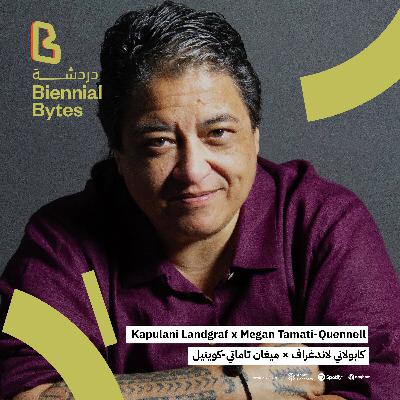
Kapulani Landgraf is a Kānaka Maoli artist from Pūʻahuʻula, Kāneʻohe, Oʻahu. In this episode, she speaks about the responsibility to engage in creative forms of resistance against the destruction and erosion of the ‘āina’—which encompasses her peoples’ land and its living entities, spiritual world, oral and written traditions, ancestry and future. She talks to Megan Tamati-Quennell about embracing the camera as a ‘weapon’ against cultural erasure and the impetus behind ‘Nā Wahi Kapu O Maui’ (1997–2003), her photographic series documenting Maui’s sacred sites. Tune in to find out about the artist’s research process and hear an excerpt from a Hawai’ian oli [chant]. ‘Nā Wahi Kapu O Maui’ is on view at Al Mureijah Square, Sharjah, until 15 June 2025. CREDITS Host: Megan Tamati-Quennell Guest: Kapulani Landgraf Editorial and Content Strategy: Jyoti Dhar, Kamayani Sharma, Mahshid Rafiei Podcast Producer: Kamayani Sharma Sound Engineer: Basil Kisswani Shownotes: Rosalyn D’Mello, Kamayani Sharma Music and Sound: Excerpt from a recording by Kapulani Landgraf of an oli titled ‘Aha Mo'olelo’ by Lilikala Kame'eleihiwa and Kealii Gora. Special Thanks: Nawar Al Qassimi, Jiwon Lee and Reem Sawan © Sharjah Art Foundation, 2025 This episode was recorded on 5 November 2024.See omnystudio.com/listener for privacy information.
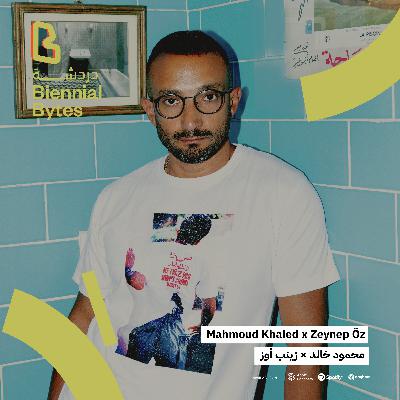
In a wide-ranging conversation with Zeynep Öz, artist Mahmoud Khaled reflects on artistic solitude, futurity and ceremonies that accompany the unveiling of mega architectural projects. Khaled discusses the conceptual origins of his Sharjah Biennial 16 commission: 'Pool of Perspectives – 2030’ (2025), which was drawn from a nineteenth century ‘orientalist’ painting, modern poetry and classical Portuguese azulejo tiles.Tune in to learn about Khaled’s exploration of archives and modes of abstraction, and listen to a recording from his production of ‘Pool of Perspectives – 2030’. CREDITS Host: Zeynep Öz Guest: Mahmoud Khaled Editorial and Content Strategy: Jyoti Dhar, Kamayani Sharma and Mahshid Rafiei Podcast Producer: Kamayani Sharma Sound Engineer: Basil Kisswani Shownotes: Rosalyn D’Mello, Kamayani Sharma, Rajwant Sandhu and Jyoti Dhar Music and Sound: Excerpt from recording during the production of ‘Pool of Perspectives – 2030’ (2025) Special Thanks: Nawar Al Qassimi, Jiwon Lee, May Rashid and Meera Madhu © Sharjah Art Foundation, 2025 This episode was recorded on 19 November 2024.See omnystudio.com/listener for privacy information.
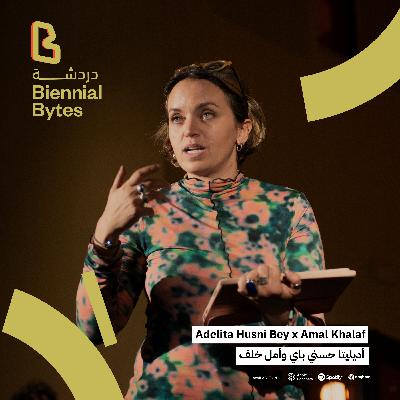
Amal Khalaf and Adelita Husni-Bey discuss climate crisis, critical pedagogy and what it means to learn with one’s body. Together they reflect on Husni-Bey's SB16 projects—the film installation ‘Like A Flood’ (2025) and the sculptures ‘Hunger Stones’ (2025). The artist and educator shares insights on working through colonial archives, radical theatre and poetry workshops, as well as addressing the idea of climate adaptability. Tune in to hear more about Husni-Bey’s practice, and listen to a sound exercise recorded during the making of ‘Like A Flood’. ‘Like a Flood’ is on view at Kalba Ice Factory and ‘Hunger Stones’ are placed both within and beyond the Biennial’s venues from 6 February to 15 June 2025. CREDITS Host: Amal Khalaf Guest: Adelita Husni-Bey Editorial and Content Strategy: Jyoti Dhar, Kamayani Sharma and Mahshid Rafiei Podcast Producer: Kamayani Sharma Sound Engineer: Basil Kisswani Show Notes: Rajwant Sandhu, Kamayani Sharma and Jyoti Dhar. Music and Sound: Recording from production of ‘Like A Flood’ (2025) by Adelita Husni-Bey Special Thanks: Nawar Al Qassimi, Jiwon Lee, Abdulla Aljanahi and Raja’a Khalid © Sharjah Art Foundation, 2025 Commissioned by Sharjah Art Foundation and made possible thanks to the Italian Council Programme (2024), with the support of Alserkal Arts Foundation, Dubai. This episode was recorded on 3 December 2024.See omnystudio.com/listener for privacy information.
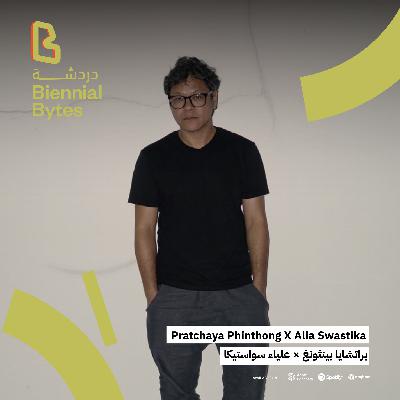
Artist Pratchaya Phinthong speaks to Alia Swastika about his interest in mitigating the impact of the global climate crisis and the generative possibilities of research-based, contextual practice. Tune in to hear more about his collaborative project ‘We are lived by powers we pretend to understand’ (2024), commissioned for Sharjah Biennial 16 which included hand-carved granite stones bearing the patterns of solar panel grids being placed around Sharjah’s public spaces. Phintong tells us about how he organised this ecological initiative—involving scientists, divers, coral activists and UAE-based environmental policy makers—to extract coral from a heritage wall to resurrect reef structures. CREDITS Host: Alia Swastika Guest: Pratchaya Phinthong Editorial and Content Strategy: Jyoti Dhar, Kamayani Sharma and Mahshid Rafiei Podcast Producer: Kamayani Sharma Sound Engineer: Basil Kisswani Show Notes: Rosalyn D'Mello, Kamayani Sharma and Jyoti Dhar Music and Sound: Excerpt from field recording for 'We are lived by the powers we pretend to understand' (2024) by Pratchaya Phinthong Special Thanks: Nawar Al Qassimi, Jiwon Lee, Sara Al Mheiri and Khalid Mohammed © Sharjah Art Foundation, 2025 This episode was recorded on 2 September 2024. See omnystudio.com/listener for privacy information.
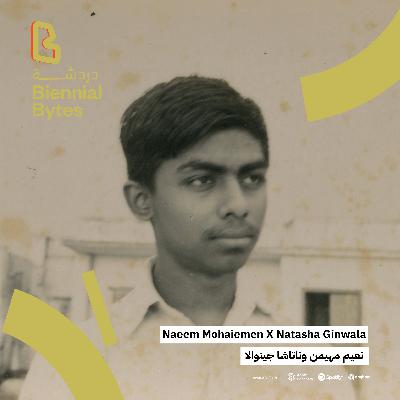
Natasha Ginwala speaks with filmmaker Naeem Mohaiemen about themes such as death, displacement and cinematic time. Mohaiemen discusses his multilayered practice across photography, drawing and essays intertwining historical archives, political and personal stories spanning multiple geographies, from Bangladesh to Libya and Greece. In particular, he recalls a Bengali phrase by Nirmal Sen that translates to ‘we want the guarantee of a natural death’, an idea that echoes through his works presented at SB16: ‘Jole Dobe Na’ (Those Who Do Not Drown)’ (2020), ‘Karen’s Last Books’ (2023) and ‘Jamahiriya Means People: Okba ibn Nafa’ (2024). Listen to a song from ‘Jole Dobe Na’ and their discussion on these works. ‘Jole Dobe Na', ‘Karen’s Last Books’ and ‘Jamhariya Means People: Okba ibn Nafa’ are on view at Bait Al Serkal from 6 February to 15 June 2025. CREDITS Host: Natasha Ginwala Guest: Naeem Mohaiemen Editorial and Content Strategy: Jyoti Dhar, Kamayani Sharma and Mahshid Rafiei Podcast Producer: Kamayani Sharma Sound Engineer: Basil Kisswani Show Notes: Rajwant Sandhu and Suguna Sridhar Music and Sound: Excerpt from ‘Jole Dobe Na’ (Those Who Do Not Drown)’ (2020) Special Thanks: Nawar Al Qassimi, Jiwon Lee, Amal Al Ali and Osemudiamen Ekore © Sharjah Art Foundation, 2025 This episode was recorded on 31 August 2024. ‘Jamhariya Means People: Okba ibn Nafa’ is supported by Sharjah Art Foundation and Experimenter, Kolkata/ Mumbai.See omnystudio.com/listener for privacy information.
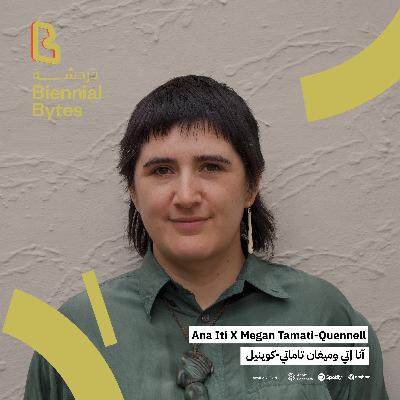
Megan Tamati-Quennell speaks with Māori artist Ana Iti about the environments, sites and structures—such as Hokianga, the artist’s tribal landscape—evoked in her sonic and sculptural installations. Text and language run through her practice, including her Sharjah Biennial 16 commission ‘A hybrid made of both’ (2025), an installation that explores the historical and technological transition of te reo Māori from the spoken to the written form. Together, Iti and Tamati-Quennell discuss the responsibility of conserving te reo Māori as form of resistance against erasure. Tune in to learn more about Iti’s research and the role of writing in her creative process, and to hear a field recording from ‘A resilient heart like mānawa’. ‘A resilient heart like mānawa’ is on view at Kalba Ice Factory, and ‘A hybrid made of both’ and ‘A dusty handrail on the track’ (2021) are on view at Old Al Dhaid Clinic from 6 February to 15 June 2025. CREDITS Host: Megan Tamati-Quennell Guest: Ana Iti Editorial and Content Strategy: Jyoti Dhar, Kamayani Sharma and Mahshid Rafiei Producer: Kamayani Sharma Sound Engineer: Basil Kisswani Shownotes: Mahshid Rafiei Music and Sound: Excerpt from ‘A resilient heart like mānawa’ (2024) by Ana Iti Special Thanks: Nawar Al Qassimi, Jiwon Lee and Reem Sawan © Sharjah Art Foundation, 2025 This episode was recorded on 5 November 2024. See omnystudio.com/listener for privacy information.
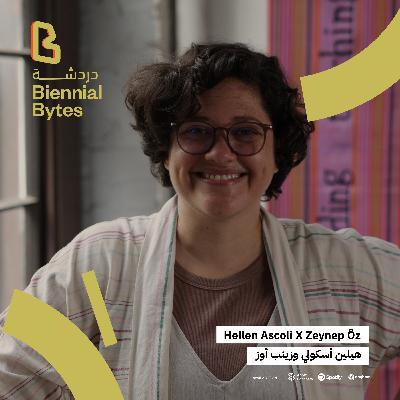
Zeynep Öz, along with artist, educator and weaver Hellen Ascoli, delves into the textile traditions of Guatemala. They discuss Ascoli’s contributions to SB16 — a combination of collage, writing and weaving for the YAZ publication series, as well as a commissioned site-specific work using brick moulds, called 'The World Upside Down' (2024). Ascoli’s work with the backstrap loom, along with her translation practice in Baltimore, serve as entry points to explore the interconnections between tools and place through reflections on migration, language and hierarchies of knowledge production. Tune in to listen to the sound the backstrap loom produces as you learn about the embodied experience of weaving with it. 'The World is Upside Down' is on view at Al Dhaid Farm from 6 February until 15 June 2025. CREDITS Host: Zeynep Öz Guest: Hellen Ascoli Editorial and Content Strategy: Jyoti Dhar, Kamayani Sharma and Mahshid Rafiei Podcast Producer: Kamayani Sharma Sound Engineer: Basil Kisswani Shownotes: Rajwant Sandhu and Suguna Sridhar Music and Sound: Sound recording of the backstrap loom in use by Hellen Ascoli (2024) Special Thanks: Nawar Al Qassimi, Jiwon Lee, May Rashid and Meera Madhu © Sharjah Art Foundation, 2025 This episode was recorded on 15 October 2024. See omnystudio.com/listener for privacy information.
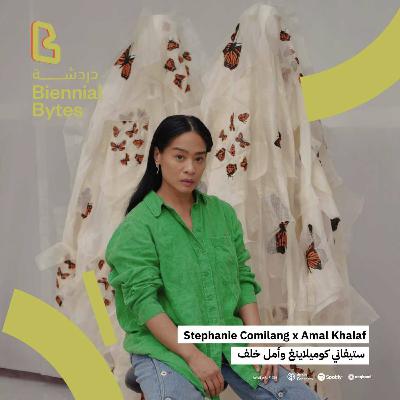
Amal Khalaf and Stephanie Comilang discuss her SB16 film installation 'Search for Life II', investigating socio-cultural and technological influences on migration, labour and ideas of belonging. Working in a genre she refers to as science fiction documentary, Comilang layers places and timelines, alongside human and non-human characters such as seafarers and monarch butterflies, to tell multifaceted migration stories. Their conversation reflects on how cargo ships and pearls embody complex narratives of movement, globalisation and industrialisation. Listen to an excerpt from her first iteration of her film 'Search for Life'. The second part is being presented at SB16. 'Search for Life II' is on view at Al Mureijah Square from 6 February until 15 June 2025. CREDITS Host: Amal Khalaf Guest: Stephanie Comilang Editorial and Content Strategy: Jyoti Dhar, Kamayani Sharma and Mahshid Rafiei Podcast Producer: Kamayani Sharma Sound Engineer: Basil Kisswani Shownotes: Rajwant Sandhu and Suguna Sridhar Music and Sound: Excerpt from 'Search for Life' (2024) by Stepanie Comilang Special Thanks: Nawar Al Qassimi, Jiwon Lee, Abdulla Aljanahi and Raja’a Khalid © Sharjah Art Foundation, 2025 This episode was recorded on 3 December 2024. Search for Life II is commissioned by TBA21, Sharjah Art Foundation and The Vega Foundation. See omnystudio.com/listener for privacy information.
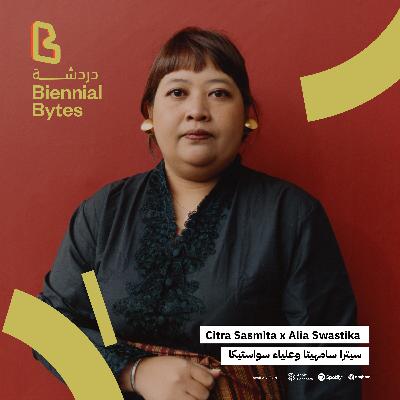
Alia Swastika and Citra Sasmita talk about her collaboration with Kamasan maestra Mangku Muriati for their SB16 project 'Timur Merah Project XV: Poetry of the Sea,Vow of the Sun' (2024), unravelling female figures and narratives in Balinese history and mythology. They reinterpret the historical form of Kamasan painting through a feminist perspective, dismantling binaries such as traditional ritual art versus contemporary art. Join Swastika as she speaks to Muriati at her studio and gain insights into themes of decolonisation, translation and equitable access to knowledge. 'Timur Merah Project XV: Poetry of the Sea,Vow of the Sun' is on view at Calligraphy Museum from 6 February until 15 June 2025. CREDITS Host: Alia Swastika Guests: Citra Samsmita and Mangku Muriati Editorial and Content Strategy: Jyoti Dhar, Kamayani Sharma and Mahshid Rafiei Podcast Producer: Kamayani Sharma Sound Engineer: Basil Kisswani Shownotes: Rajwant Sandhu and Suguna Sridhar Special Thanks Nawar Al Qassimi, Jiwon Lee, Sara Al Mheiri and Khalid Mohammed © Sharjah Art Foundation, 2025 This episode was recorded on 27 August 2024.See omnystudio.com/listener for privacy information.
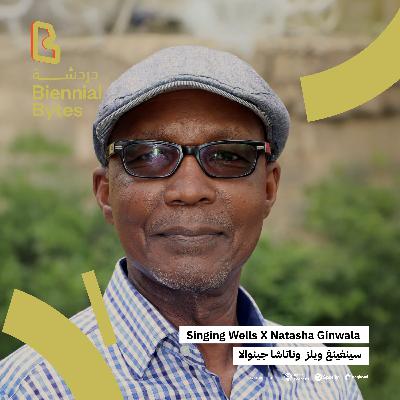
Natasha Ginwala and Tabu Osusa, Nairobi-based producer, composer and founder of Singing Wells, dive into the group’s decolonial mission to platform and preserve East African music. Committed to safeguarding cultural heritage and sound-based storytelling traditions, they travel to remote villages with a mobile recording studio. Their SB16 commission titled 'Sonic Inheritances' (2025) gives a glimpse into a vast archive of rare interviews and performance videos. Listen to an excerpt of the Benga song ‘Flora’ by the Sega Sega band and experience the sound of the nyatiti, an instrument from Western Kenya, in ‘Ukalo Matek’ by Rapasa Nyatrapasa Otieno. 'Sonic Inheritances' is on view at Bait Al Serkal from 6 February until 15 June 2025. CREDITS Host: Natasha Ginwala Guest: Tabu Osusa Editorial and Content Strategy: Jyoti Dhar, Kamayani Sharma and Mahshid Rafiei Podcast Producer: Kamayani Sharma Sound Engineer: Basil Kisswani Shownotes: Rajwant Sandhu and Suguna Sridhar Music and Sound: Excerpts from 'Flora' by the Sega Sega band and 'Ukalo Matek' by Rapasa Nyatrapasa Otieno Special Thanks: Nawar Al Qassimi, Jiwon Lee, Amal Al Ali and Osemudiamen Ekore © Sharjah Art Foundation, 2025 This episode was recorded on 19 November 2024. Sonic Inheritances is commissioned by Sharjah Art Foundation and Bergen Assembly.See omnystudio.com/listener for privacy information.
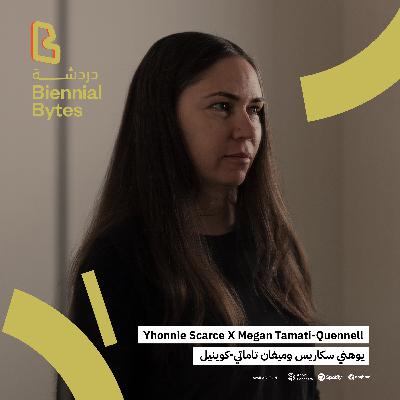
Megan Tamati-Quennell and artist Yhonnie Scarce shed light on the historical context of nuclear testing on Aboriginal lands in Australia. Her installation 'Orford Ness' (2022) comprises 1000 hand-blown glass yams, which are the food of Scarce’s people. Commissioned for SB16, 'Operation Buffalo '(2024) similarly probes into untold narratives surrounding nuclear testing. Their discussion draws parallels between the desert landscapes of Sharjah and Australia. Tune in to engage with the artist’s sense of materiality and reflections on Country, fragility, resilience and collective memory. 'Orford Ness' is on view at Kalba Ice Factory and 'Operation Buffalo' is on view at Al Hamriyah Studios from 6 February until 15 June 2025. CREDITS Host: Megan Tamati-Quennell Guest: Yhonnie Scarce Editorial and Content Strategy: Jyoti Dhar, Kamayani Sharma and Mahshid Rafiei Podcast Producer: Kamayani Sharma Sound Engineer: Basil Kisswani Shownotes: Rajwant Sandhu and Suguna Sridhar Special Thanks: Nawar Al Qassimi, Jiwon Lee, Amal Alkhaja and Reem Sawan © Sharjah Art Foundation, 2025 This episode was recorded on 29 October 2024. See omnystudio.com/listener for privacy information.
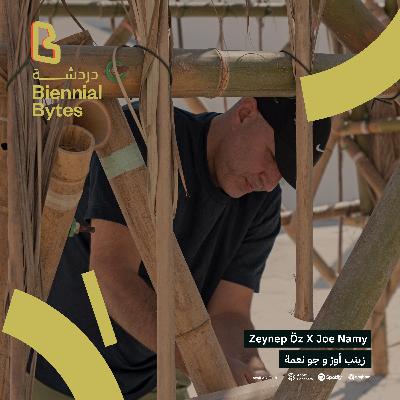
Zeynep Öz speaks with artist, composer and educator Joe Namy about his sound installations that use samples from loud sound systems in cars, glitchy computer-generated noises and sounds converted from the molecular data of plants. His work for SB16 titled 'Dub Plants' (2024-2025) is inspired by Egyptian-American agricultural engineer and pioneer of electronic music, Halim El Dabh. Discover his unique process that blends radio culture and experimental agricultural practices, allowing the grit, uncertainty and chance in nature, urban and public spaces to infiltrate his works. 'Dub Plants' is on view at Al Dhaid from 6 February until 15 June 2025. CREDITS Host: Zeynep Öz Guest: Joe Namy Editorial and Content Strategy: Jyoti Dhar, Kamayani Sharma and Mahshid Rafiei Podcast Producer: Kamayani Sharma Sound Engineer: Basil Kisswani Shownotes: Rajwant Sandhu and Suguna Sridhar Music and Sound: Music and Sound: Excerpt from ‘Ta’abir al-Zar’ (1944) by Halim El-Dabh and field recordings by Joe Namy (2024–2025) Special Thanks: Nawar Al Qassimi, Jiwon Lee, May Rashid and Meera Madhu © Sharjah Art Foundation, 2025 This episode was recorded on 15 October 2024. 'Dub Plants' is commissioned by Sharjah Art Foundation with Busan Biennale Organising Committee.See omnystudio.com/listener for privacy information.
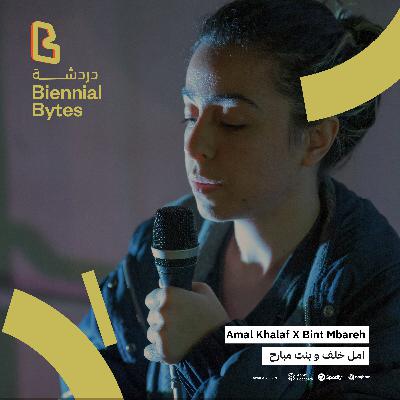
Amal Khalaf speaks with artist and sound researcher Bint Mbareh about her work around songs of resistance in relation to land and water sovereignty in Palestine. Learn more about Bint Mbareh’s SB16 project, 'What’s Left?' (2025), where she works with a choir in Sharjah on songs of revolution and collective action. Recalling practices such as throwing shells and rain summoning, they discuss their mutual awe of water bodies as sites of resistance and ancestry. Tune in to hear a deeply personal rendition of the revolutionary song 'Saat el Tahrir Dakkat' (1974). 'What’s Left' is on view at Al Qasimiyah School from 6 February to 15 June 2025. CREDITS Host: Amal Khalaf Guest: Bint Mbareh Editorial and Content Strategy: Jyoti Dhar, Kamayani Sharma and Mahshid Rafiei Podcast Producer: Kamayani Sharma Sound Engineer: Basil Kisswani Shownotes: Rajwant Sandhu and Suguna Sridhar Music and Sound: 'Saat el Tahrir Dakkat' (1974), sung by Bint Mbareh and Zeina Amro. Special Thanks: Nawar Al Qassimi, Jiwon Lee, Abdulla Aljanahi and Raja’a Khalid © Sharjah Art Foundation, 2025 This episode was recorded on 8 October 2024.See omnystudio.com/listener for privacy information.
Biennial Bytes Season 2 kicks off with a roundtable between the five curators of Sharjah Biennial 16: Alia Swastika, Amal Khalaf, Megan Tamati-Quennell, Natasha Ginwala and Zeynep Öz. During the conversation, moderated by Hoor Al Qasimi, Director of Sharjah Art Foundation, the curators discuss their individual projects and the synergies between their distinct curatorial approaches to the Biennial, expressed in the title “to carry”. They also speak about the diverse forms in which viewers can expect to experience the art at SB16 and how a Biennial can be a space of encounter and collective processing. Sharjah Biennial 16 runs from 6 February to 15 June 2025, across venues in Sharjah City, Al Hamriyah, Al Dhaid, Kalba and other locations in the Emirate of Sharjah. CREDITS Host: Hoor Al Qasimi Guests: Alia Swastika, Amal Khalaf, Megan Tamati-Quennell, Natasha Ginwala and Zeynep Öz Editorial and Content Strategy: Jyoti Dhar, Kamayani Sharma and Mahshid Rafiei Podcast Producer: Kamayani Sharma Sound Engineer: Basil Kisswani Shownotes: Rajwant Sandhu and Suguna Sridhar Special Thanks: Nawar Al Qassimi, Jiwon Lee, Amal Al Ali, Abdulla Aljanahi, Sara Al Mheiri, May Alqaydi, Osemudiamen Ekore, Raja’a Khalid, Meera Madhu and Khalid Mohammed © Sharjah Art Foundation, 2025 This episode was recorded in three parts—with Amal Khalaf, Megan Tamati-Quennell and Natasha Ginwala on 4 September 2024, Alia Swastika on 10 October 2024 and Zeynep Öz on 12 November 2024. See omnystudio.com/listener for privacy information.
What does it mean to carry? What does it entail to carry a home, ancestors and political formations with you? How do themes of care, grief, history and memory speak to the times we live in? Find out on Biennial Bytes, the official podcast of Sharjah Biennial 16, titled "to carry". Join the five curators of SB16 as they speak to artists about their practice and projects here at SB16, on view from 6 Feb to 15 Jun 2025.See omnystudio.com/listener for privacy information.
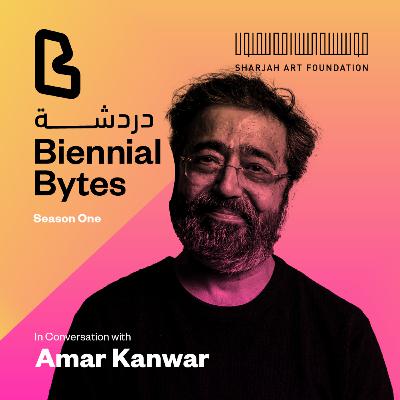
What are the ways through which cinema can seek the truth and respond to the times? In a world where evidence has ceased to matter, what is the role of the documentary?
To find out, listen to Amar Kanwar in conversation with SB15 curator Hoor Al Qasimi.
For SB15, Kanwar installed a seven-channel film installation called The Peacock’s Graveyard. The project turns to folklore and traditional forms of storytelling and comments on the current climate of totalitarianism and violence.
Kanwar’s film is on view at till 11 June 2023.
Click here to view it online.
Press play to learn more about Kanwar’s practice, process and SB15 project as well as what makes his work speak to our current time and place.
To receive updates about the 15th Sharjah Biennial and the Sharjah Art Foundation’s year-round programme, follow us on Instagram @sharjahart.See omnystudio.com/listener for privacy information.
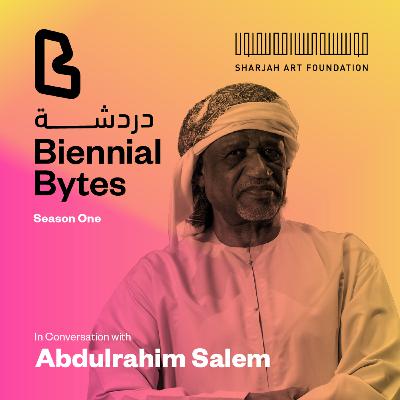
How can artistic techniques capture invisible phenomena such as movement and magic? What are the ways in which can traditional practices be reinterpreted within contemporary art?
To find out, listen to Abdulrahim Salem in conversation with SB15 curator Hoor Al Qasimi.
At SB15, Salem presented a live painting performance called An Unknown Sailor set to a traditional Emirati sea shanty sung by singers who accompanied pearl divers. The work acknowledges how during the colonial period, the sea was also occupied, as trade routes and supply chains came under foreign control. The painting Salem made during the performance now is on view in Kalba.
Salem’s work is on view at till 11 June 2023.
Click here to view it online.
Press play to learn more about Salem’s practice, process and SB15 project as well as what makes his work speak to our current time and place.
To receive updates about the 15th Sharjah Biennial and the Sharjah Art Foundation’s year-round programme, follow us on Instagram @sharjahart.See omnystudio.com/listener for privacy information.
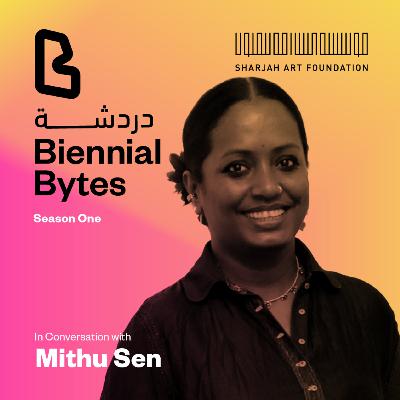
How can the distortion of language resist oppressive power structures? In what ways can depicting the body reveal and defy social strictures?
To find out, listen to Mithu Sen in conversation with SB15 curator Hoor Al Qasimi.
At Sharjah, Sen installed a mixed-media installation called I am from there. I am from here (2023) at the Calligraphy Square.
The work takes the form of a poem, in a script that resembles Arabic calligraphic forms but is in fact entirely fictional. Made using a combination of synthetic hair as well as Sen’s own, the text also includes emojis - and seems to allude at once to the expectations, possibilities and limits of communication.
Sen’s work is on view at till 11 June 2023.
Click here to view it online.
Press play to learn more about Sen’s practice, process and SB15 project as well as what makes her work speak to our current time and place.
To receive updates about the 15th Sharjah Biennial and the Sharjah Art Foundation’s year-round programme, follow us on Instagram @sharjahart.See omnystudio.com/listener for privacy information.
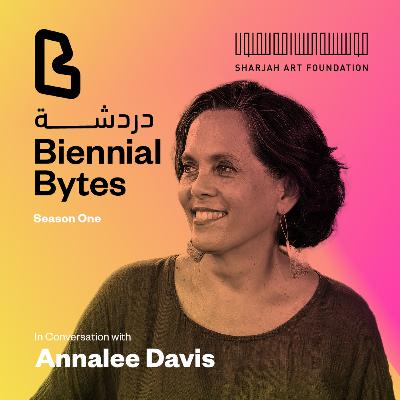
How can gardens become spaces for healing and community? Can plantations become sites for challenging exploitation and the vestiges of colonialism? To find out, listen to Annalee Davis in conversation with SB15 curator Hoor Al Qasimi. At Sharjah, Davis grew a medicinal garden made using plants, herbal knowledge and gardening practices from around the world. The work, called Pray to Flowers — A Plot of Disalienation (2023) and made in collaboration with artist and gardener Yoeri Guépin, critiques colonial cultivation as well as the misuse of land due to globalisation. Davis’ work is on view at Bait Al Hurma courtyard in Al Mureijah Square till 11 June 2023.Click here to view it online. Press play to learn more about Davis’ practice, process and SB15 project as well as what makes his work speak to our current time and place. To receive updates about the 15th Sharjah Biennial and the Sharjah Art Foundation’s year-round programme, follow us on Instagram @sharjahart.See omnystudio.com/listener for privacy information.

Comments

Download from Google Play

Download from App Store
 United States