


 Claim Ownership
Sermons from St. John’s Episcopal Church
Subscribed: 0Played: 6
Subscribe

© Copyright 2023 All rights reserved.
Description
Sermons from St. John’s Episcopal Church, Dallas, Texas. www.stjohnsepiscopal.org
126 Episodes
Reverse

John 3:1-17. Jesus tells Nicodemus that he needs to be “born from above” to see the kingdom of God.

Matthew 17:1-9. In Lent we are invited up the mountain with Jesus for a 40 day season of focus.
From the propers this week, Fr Harris tackles a common saying: "I'm spiritual but not religious." He explains how this often points to a reaction against empty rituals, where people go to church but their hearts and minds are somewhere else. Meditating on the wisdom of the Prophet Isaiah and Jesus, the sermon challenges this divide. True faith is both spiritual and religious. It means connecting our inner life with God to outward actions of justice and kindness, like feeding the hungry and helping the oppressed. This is how we become the "light of the world" we are called to be.

Matthew 5:1-12. On the Sunday of St. John’s Annual Parish Meeting, Fr. Houk asks the qualitative question, “Are we a Beatitudes Church?”

Isaiah 9:1-4. Matthew 4:12-23. Jesus’s kingdom is for everyone, a matter of the heart. The Kingdom of God has nothing to do with "Christian Nationalism."
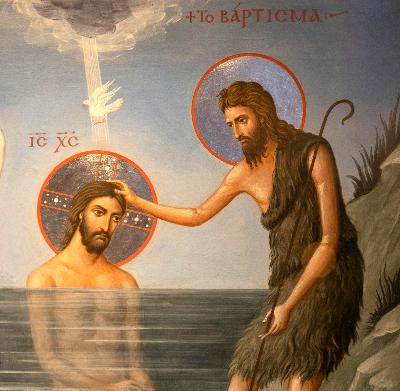
Matthew 3:13-17. Why is Jesus getting baptized? What does he have to repent of? Maybe he’s trying to reassure us that there is nothing we can do to keep him from loving us.
From the propers this week, Father Harris confronts our modern "crisis of meaning," diagnosing it instead as a crisis of forgetting. We chase illusions, survey the rubble of our choices, and wonder what it all means, all while neglecting the foundational, radical claim of our faith: "The Word became flesh." God’s mind and will are not hidden. They have been revealed in Jesus Christ. At Christmas, we are called to remember. Our purpose is not a philosophical puzzle but a transformative call: to have our own lives infused by that same Word. This means being remade by His light, life, and truth. The journey begins again; as infants, we behold the infant Christ.

The scene described in Luke 2 is not what we would call an ideal Christmas. But this was God’s idea to meet imperfect people in an imperfect world.
From the propers this week, Father Harris explores our deepest hopes for dealing with suffering. We often believe that simply forgetting our pain is the best we can hope for, an idea echoed in the ancient Greek myth of the River Lethe. Yet this path of forgetting leaves our sorrows without meaning. Advent calls us to a different and more difficult path: not to forget our heartbreak, but to remember it and bring it before the God who promises to transform it. This Christmas, we are invited to find a hope greater than oblivion, a joy that comes not from escaping our memories but from seeing them redeemed.
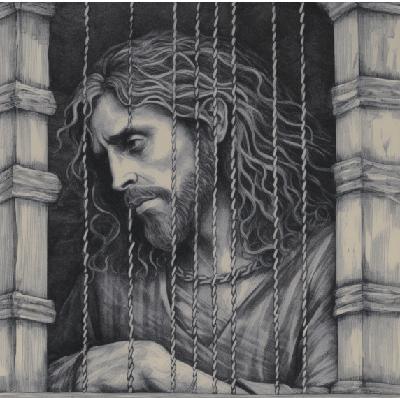
Matthew 11:2-11. Isaiah 35:1-10 It’s the Third Sunday of Advent and John the Baptist asks Jesus, “Are you he who is to come, or shall we look for another?” Jesus answers with words that beg the question, “What kind of Messiah are you looking for?”
Meditating on the propers this week, Father Harris confronts our modern disillusionment. Drawing from John the Baptist’s stark warning that "the axe is laid to the root of the trees," he reflects on a generation that once placed its hope in technology and human potential to build a fairer world. We now find ourselves empty, isolated, and confronted by the barrenness of our own hearts. This sermon explores how Advent begins by stripping away our illusions, revealing our bondage to folly and misplaced hopes. Yet it does not leave us in despair. We are called to clear a path in the wilderness, to repent, to turn from empty ambitions, and to fix our hope singularly on the coming Kingdom. It is a timely call to acknowledge our need, submit to God’s judgment, and find our true preparation at the altar.

Matthew 24:36-44. On the first Sunday of Advent, Jesus tells us to wake up and that he is coming at an unexpected hour.
From the propers this week, Father Harris reflects on the Feast of Christ the King and the Church’s choice to end its year with the image of a crucified monarch. From revolutions to billionaires to strong-willed leaders, our world remains captivated by power. Father Harris reminds us that all authority ultimately rests in God, whose reign is revealed through self-giving sacrifice. Standing beside the two thieves, we face the same choice: demand a king who serves our agenda, or recognize the innocent one who reigns from the cross; to do our own thing, or attend to the one who forgives and redeems a divided and broken world.

It is Celebration Sunday and our guest preacher is Bp. Robert Price, Bishop Coadjutor of the Episcopal Diocese of Dallas.
Luke 12:32-38. Phil 4:15-20. Deut 26:1–3,12–13,15. Fr. Houk continues the Stewardship 101 series with New Testament principles on giving.
From the propers for All Saints Day, Father Harris reflects on the spiritual unease of our age and the enduring hope of the Gospel. In a time of confusion, mistrust, and technological dominance, he reminds us that our hope is not found in progress or power, but in the fellowship of the saints and the virtues of humility, simplicity, generosity, and contentment.
Luke 14:25-30. Fr. Houk continues the Stewardship 101 series, addressing questions about pledging and finances at St. John’s.

Luke 18:1-8. Life, God, prayer. These are not simple subjects. Jesus gives us a complicated parable so that we might have a more complex view of what prayer is about.
In the propers this week, Father Harris reflects on what it really means to be well, not merely healed. Drawing from Luke’s Gospel, he explores why Jesus’ title as “Master” matters, how the story of the ten lepers reveals the difference between physical healing and true wholeness, and why only one returned in gratitude. Along the way, he connects this ancient story to our modern obsessions with health, comfort, and control, reminding us that wellness is not found in self-mastery but in recognizing God’s generosity. Father Harris invites us to rediscover stewardship as gratitude, a turning back, like the healed Samaritan, to praise the Master who makes us truly well.
1 Timothy 6:6-19, Luke 16:19-31 Fr. Houk defines the meaning of "steward" and preaches on St. Paul's words to Timothy in 1 Tim 6:6-19.

Comments

Download from Google Play

Download from App Store
 United States