


 Claim Ownership
Writing Latinos
Subscribed: 1Played: 6
Subscribe

© 2023
Description
"Writing Latinos" is a podcast brought to you by PUBLIC BOOKS, featuring interviews with Latino authors of all sorts—scholars, novelists, memoirists, journalists—discussing their books, and how their writing contributes to the ever-changing conversation about the meanings of latinidad.
23 Episodes
Reverse
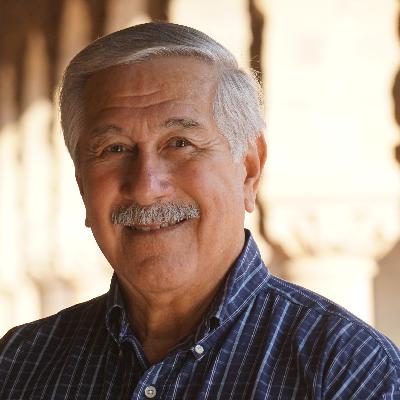
Albert Camarillo is the Leon Sloss Jr. Memorial Professor, Emeritus, at Stanford University. He’s one of a small number of people who founded the academic field of Chicano/Latino history. He has also mentored so many of the historians who’ve written books that teach us much of what we know about the history of Latinos in the United States. Not least, he is the author of a new book himself, titled Compton In My Soul: A Life In Pursuit of Racial Equality, published by Stanford University Press, in which he recalls growing up in the Black and Brown suburb of Los Angeles, his experience as one of a very small number of Chicano students at UCLA, and his almost fifty years of teaching Chicano history at Stanford. In this episode of Writing Latinos—the season three finale!—we talk with him about the Trump administration’s attack on higher education, the recent trend in Latino history to focus on Black-Brown tension and the anti-blackness of Latinos, the writing of family history, and how our understanding of Latinos has changed since the beginning of his career.
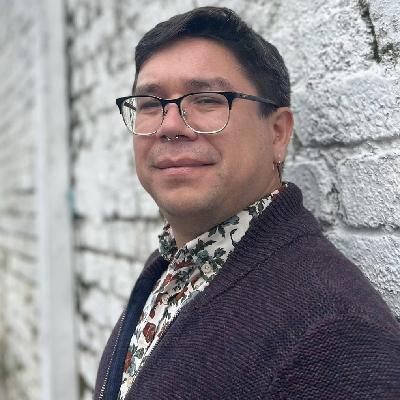
In a new episode of Writing Latinos, we talk with Jorell Meléndez-Badillo about his most recent book, Puerto Rico: A National History—out next month in paperback from Princeton University Press. Meléndez-Badillo offers a sweeping history of the island since Spanish colonization. Most provocatively, he chronicles a long tradition of thinking about Puerto Rico as an independent nation, even though it has been a territorial possession for the better part of five hundred years. In addition to the book, we talk with him about his collaboration with Bad Bunny on the historical narrative accompanying San Benito’s new album, Debí Tirar Más Fotos, which had him frantically writing dozens of history lessons, scrawled by hand, at the end of last year. Not exactly an everyday occurrence for a history professor! Puerto Rico: A National History is Meléndez-Badillo’s third book, following The Lettered Barriada: Workers, Archival Power, and the Politics of Knowledge in Puerto Rico (2021), and Voces libertarias: Los orígenes del anarquismo en Puerto Rico (2015).
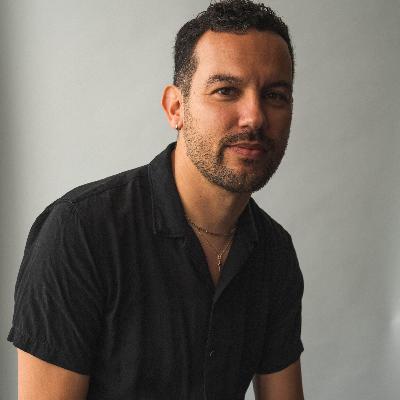
In this special episode of Writing Latinos, with the writer Justin Torres, we tried something new. Torres reads a short vignette —“Youth: The Palisades as a Backdrop,” by the Afro-Puerto Rican writer, Jesús Colón—and then we discuss it together. We had so much to talk about! Historical references. Readings of imagery. His message about gender, class, and race. “Youth” in the context of Colón’s other writings. The vignette as a powerfully evocative genre that Torres uses in his own writing. And what a treat to do this with Torres, a professor at UCLA and the author of two stunning novels: We the Animals, which was made into a feature film, and Blackouts, the winner of the National Book Award for Fiction.
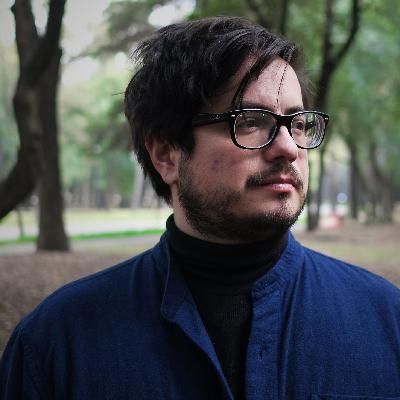
Sebastián Arteaga y Salazar is the descendant of an elite Mexican family who studies at Yale and then enrolls in an MFA program at the University of Iowa Writers’ Workshop. He’s working on a failed history of Mexico—meaning his own failure to write his book, and the Mexican nation’s failures, especially in relation to the United States. Along the way, “Sebas” crosses many borders—between the United States and Mexico, of course, but also between elite and non-elite Mexicans and Latinos in the United States. This is the basic plot of Nicolás Medina Mora’s debut novel, América del Norte, which offers a beautifully written meditation on historical, cultural, and political relationships between the United States and Mexico. Sebas, like Medina, sees the subject of Latinidad from the perspective of a member of the Mexican elite who is more like other elites in the United States than like working class Mexicans and Mexican Americans on either side of the border. On this newest episode of Writing Latinos, we talk about all of it, including how Medina wrestles with “Latino” as a concept in a way that makes for great listening
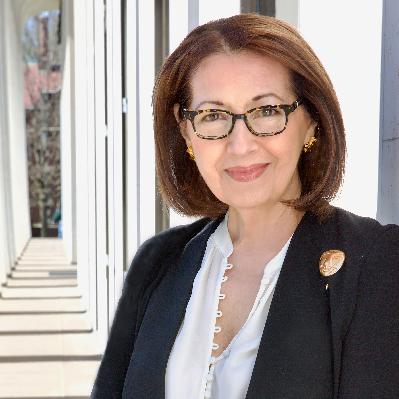
Marie Arana has had a fascinating career as an editor and writer of both fiction and nonfiction. She is the author of the novels Cellophane and Lima Nights; a memoir called American Chica; a history of Latin America titled Silver, Sword, and Stone; and a stunning biography of Simón Bolívar, the so-called Liberator of Latin America. Arana was the editor of the Washington Post’s Book World and the inaugural literary director of the Library of Congress. We talk with her in this new episode of Writing Latinos about her newest book, LatinoLand: A Portrait of America’s Largest and Least Understood Minority. We discuss how, as a Peruvian American raised in places as different as Wyoming and New Jersey, her somewhat unique Latino experience (but aren’t they all?) shaped the questions she wanted to answer in LatinoLand. She explores such a wide variety of subjects—religion, politics, business, identity and more—and in a way that’s unorthodox compared with how other Latino authors have written about them. Come and listen to us talk about her life and writing and her thoughts about the inevitability of Latino unity.
As always, thanks for listening to Writing Latinos!
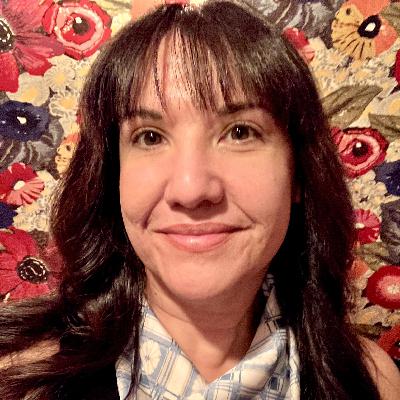
You probably remember the picture of himself, both thumbs up, that Donald Trump posted on social media with the caption, “Best Taco Bowl.” It was his ode to Mexican food on Cinco de Mayo 2016. The picture mocked relentlessly, and deservedly so. For Latinos, taco bowls aren’t really a thing. And even if they were, it’s doubtful that Trump Tower would serve the best of them. For Latinos, Cinco de Mayo is less of a thing than it is for other groups. But most importantly, Trump was celebrating Mexican food at the same time that, on the campaign trail, he was denigrating Mexican immigrants. Lori A. Flores’s new book, Awaiting Their Feast: Latinx Food Workers and Activism from World War II to COVID-19, effectively explores this tension between many Americans’ love for Mexican food and their simultaneous distaste for Mexican people.
Fortunately, Flores doesn’t make us relive the cringe of Trump’s post—as I’ve done here. Instead, she introduces us to the Latina and Latino food workers; Latina and Latino–owned restaurants; and American consumer’s taste for Latin American and Latino cuisine in New England, especially New York. I’m so glad to kick off Season 3 of Writing Latinos by talking with Flores about her new book. We discuss the popularity of tamales in New York during the 19th century, Latino workers’ demands for healthy food and food from their culture, the Mexican proprietor of a high-end Mexican restaurant, the laborers who assemble our Christmas wreaths, and the workers who harvest the mighty sea cucumber. All these subjects are original contributions to the field of Latino history, but they’re also just super interesting, as you’ll see when you listen. Flores is a professor of history at SUNY–Stony Brook. Awaiting Their Feast, published by the University of North Carolina Press, as part of their Latinx Histories series, is her second book. Enjoy!
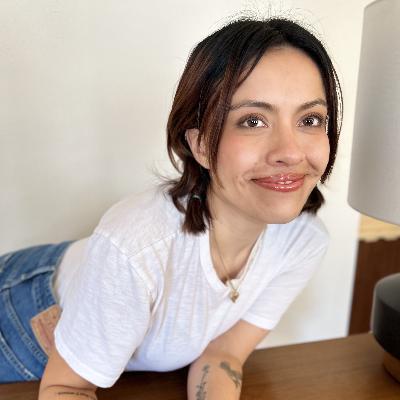
For the final episode of Season 2 of Writing Latinos, we talked with Karla CornejoVillavicencio about her new novel, Catalina, published by One World. It is an engrossingread about a young woman named Catalina, who lived in Ecuador as a small girl,migrated to New York to live with her grandparents, attended Harvard University, and,by the novel’s end, finds herself flirting with a career in writing and publishing. We talkedabout the sorts of lessons we learn about Latin American history from our families and our professors, Catalina’s encounter with different kinds of Latinos at Harvard, as well as her desire for fame andstardom, and the differences between writing fiction and creative non-fiction, which wasthe genre of Cornejo Villavicencio’s first book, The Undocumented Americans, afinalist for a National Book Award. Thank you for listening to Season 2 and staytuned for an announcement about Season 3.
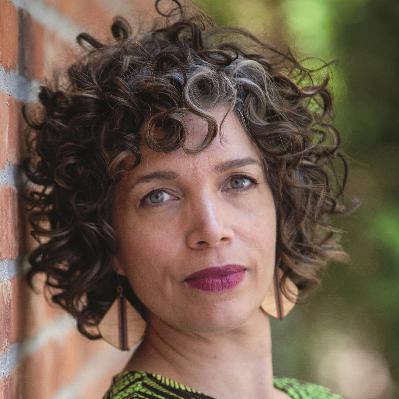
In this episode of Writing Latinos, we talk with the widely published, award-winning author, Jamie Figueroa, about her new memoir, Mother Island: A Daughter Claims Puerto Rico, published by Pantheon. As a child growing up in Ohio, Figueroa experienced an othering that made her feel like she needed to recover centuries of family history shaped by colonialism and diaspora. It was a journey that took her to Santa Fe, New Mexico, where she teaches creative writing at the Institute of American Indian Arts, and to Puerto Rico, where her mother was born. Along the way, she recognizes the similarities and differences that brought her closer to and pushed her away from her mom, especially when it came to universal themes like love, longing, family, and acculturation. Figueroa’s second book, Mother Island is both beautiful and moving, and ultimately it is a book that we can all relate to.
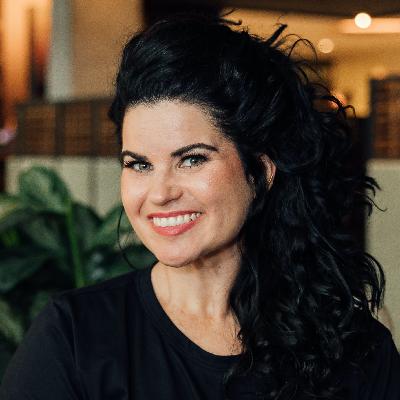
Sarah McNamara’s new book, Ybor City: Crucible of the Latina South is a deeply personal history of the Florida city where she grew up. In this episode of Writing Latinos, we talk about her Cuban grandmother, the family storyteller and archivist of Ybor City’s Latino community. When McNamara was a little girl, her grandma brought her to the museum where she was a docent, vowing to tell stories about Ybor City that ran counter to the official version of local history told by the museum’s curators. The stories McNamara learned focused on a radical political activism in Ybor City that’s very different than the stories we often hear about Miami’s conservative exile community. Women led the charge and inspired McNamara to write the story of how Ybor City became one of the first places where a pan-ethnic Latino identity was forged. She places in an unfamiliar context some ofthe most familiar figures of Latino history: José Martí, Luisa Capetillo, Luisa Moreno, and Fidel Castro, all of whom spent time in Ybor City before they made names for themselves.What we learn about them is both new and surprising. Ybor City, published by The University of North Carolina Press, is McNamara’s first book. Her next book is about Latino electoral politics in Florida.
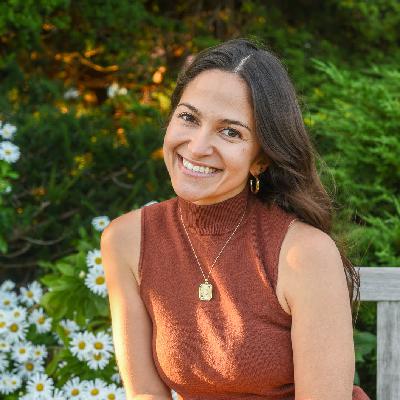
Melissa Mogollón is the author of a new novel called Oye, out this spring from Hogarth. Meaning “listen to me,” Oye is Luciana’s demand to be heard. And hear her we do, in her one-sided conversation with her older sister, Mari. Oye is a family drama for the ages, set in the time of Hurricane Irma, which struck Florida and much of the Southeast in 2017. The family runs from the hurricane, but long before the hurricane struck they’d been running from each other and from themselves. As Oye unfolds, we learn the family’s secrets and the sources of deep intergenerational traumas that nevertheless tie them together. Mogollón and I discuss all of it in a conversation about Oye, a book that anyone with a family—which is to say everyone—will relate to. Oye is Mogollón’s debut novel. Don’t miss it.
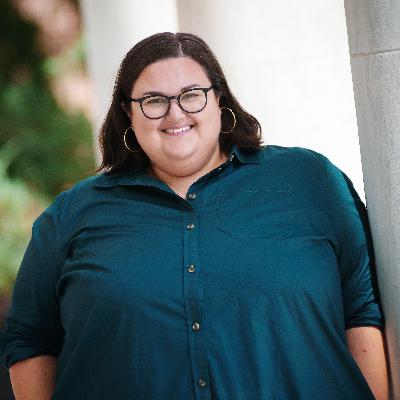
Cecilia Márquez joins us this week to talk about her new book, Making the Latino South: A History of Racial Formation, published by The University of North Carolina Press. Above all, we discussed the production of Latino identity in relation to Blackness. Márquez argues that, in the South, Latinos are either Black or non-Black—not Black or white, mind you, but Black or non-Black. It was an important distinction not only during the Jim Crow era, but also today given our ongoing debates about Latino racial identity. Márquez’s broad arguments come to life through fascinating characters and places like the South of the Border rest stop, just on the South Carolina side of the North/South Carolina divide. Beyond the subjects in Making the Latino South, we talk in general about some of the most important themes preoccupying Latino historians today. Márquez is the Hunt Family Assistant Professor of History at Duke University. She’s currently working on her next book, about the Latino Far Right in the late 20th and early 21st centuries.
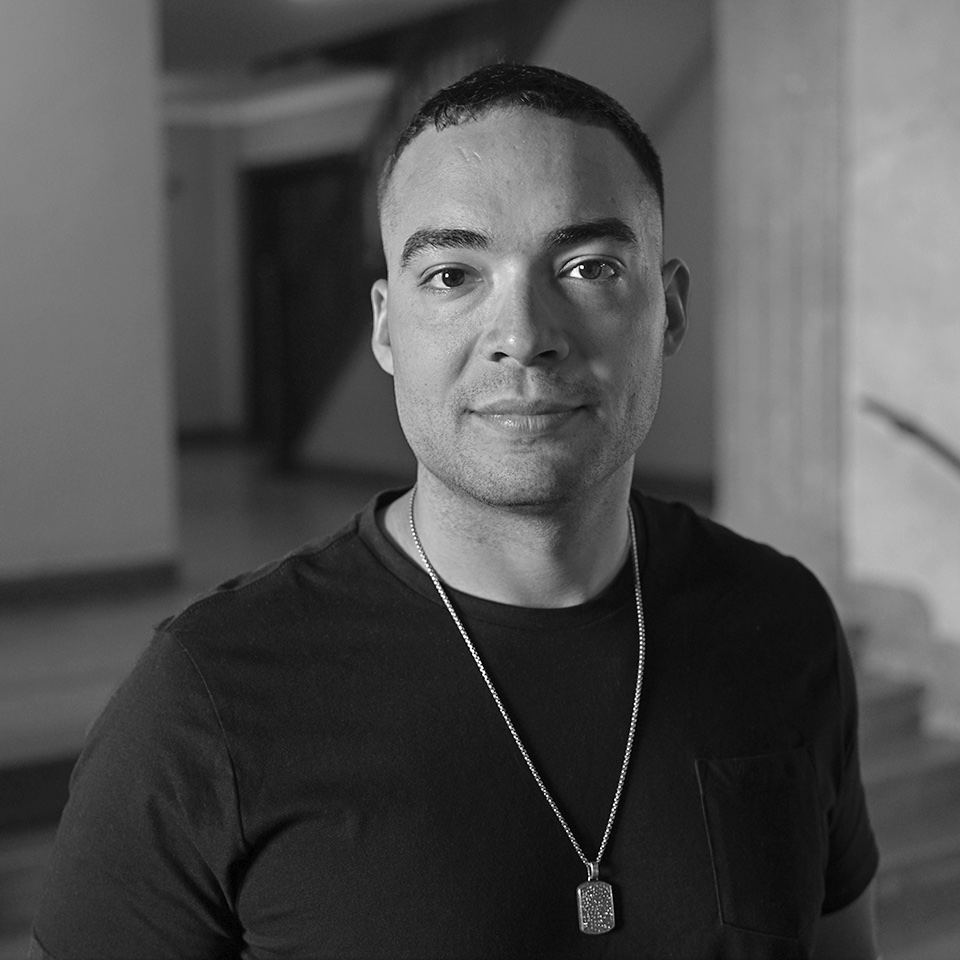
If you liked American Fiction, you’ll love Andrew Boryga’s debut novel Victim, from Doubleday. It follows the career of Javier Perez, who learns at an early age thebenefits—and devastating consequences—of writing about one’s traumas and victimization.High school teachers encourage “Javi” to write about how tough things are for him, so he could get into college. It worked. At Cornell, he wrote stories about race on campus, and his personal experience with race. After graduation, his blossoming career asa writer was based on telling the gritty stories his editors found compelling. The problem was that much of what he wrote was untrue. His family, friends, and an old lover don’t understand why he opted fort hese false accounts of his life. But you’re just going to have to read Victim in order to find out how it all blows up in his face, and what lessons he has learned, if any.
In this second episode of Writing Latinos, Boryga describes how he arrived at the idea to write Victim, his thoughts about the relationship between his life and the characters he invented, and speculation about how Victim might be read in the post-affirmativeaction era. Boryga is a Miami-based writer who grew up in the Bronx, where muchof the action inVictimtakes place
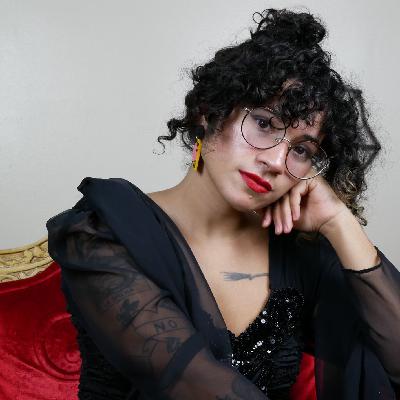
Melissa Lozada-Oliva is a New York-based author who grew up in Boston and calls herself a “Guatelombian” writer—half Guatemalan, half Colombian. We had a lively conversation about her second novel, Candelaria—an intergenerational family drama set during the apocalypse. Lozada-Oliva’s book explores the fraught but loving relationships between three sisters, their mother, their grandmother, and their connections, both real and imagined, with their Guatemalan homeland. It offers deep insights into Latina/o/x/e family dynamics, and is laugh-out-loud funny. Candelaria and Lozada-Oliva’s first novel, Dreaming of You: A Novel in Verse, were both published by Astra House. A former slam poetry performer, she has also written a collection of poems called Peluda. Look out for Candelaria’s paperback publicationthis fall.
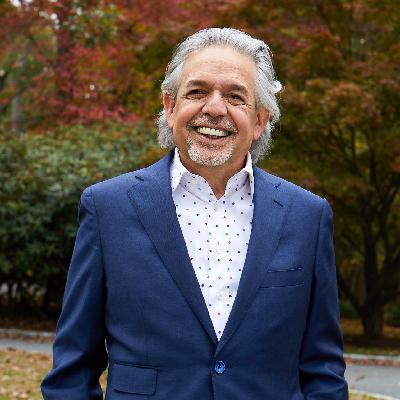
Luis Miranda migrated from Puerto Rico in the 1970s and has maintained deep connectionswith the island ever since. He has worked for the mayor of New York City. He is a Latinoadvocate and political consultant with decades of experience. He also happens to be thefather of an international celebrity. In this episode of Writing Latinos, we talk with himabout his new memoir, Relentless: My Story of the Latino Spirit That Is TransformingAmerica, published by Hachette Books. Our sprawling conversation touches on his ideasabout Latino politics in New York, his work with national Latino advocacy organizations,Puerto Rico’s territorial status, his dedication to family above all, and how the meanings offatherhood both have and have not changed for him since one of his children becamefamous. Oh, we also talked about what he wants his funeral to be like, including thesoundtrack he wants played on the occasion. You’ll have to listen to find out what itis!
Writing Latinos, from Public Books, features interviews with Latino (a/x/e) authors discussing their books and how their writing contributes to the ever-changing conversation about the meanings of latinidad.
In our final episode of Season One, we talk with Ingrid Rojas Contreras about her book, The Man Who Could Move Clouds: A Memoir, published last year by Doubleday. The Man Who Could Move Clouds was a finalist for the Pulitzer Prize, National Book Award, and National Book Critics Circle Award, and was named a best book of the year by Time, NPR, Boston Globe, Vanity Fair, Esquire, and more. Her first book, Fruit of the Drunken Tree: A Novel, was a national bestseller.
There was so much to discuss! We covered the bicycle accident that left Ingrid with amnesia and led her to write her family’s story, including their supernatural abilities. We talked about a doctor’s impulse to come up with a scientific rationale for phenomena that might also be explained narratively, in the context of a particular family dynamic. We discussed the genre of memoir, and the yogurt Ingrid used to eat in Colombia and now seeks out every time she returns home.
Writing Latinos, from Public Books, features interviews with Latino (a/x/e) authors discussing their books and how their writing contributes to the ever-changing conversation about the meanings of latinidad.
In this episode, Geraldo Cadava and Tasha Sandoval talk with Raquel Gutiérrez about their critically-acclaimed book, Brown Neon: Essays, published by Coffee House Press. Brown Neon won the 2023 Publishing Triangle Judy Grahn Award for Lesbian Nonfiction, and was a finalist for the 2023 Lambda Literary Award in Lesbian Memoir/Biography and the 2023 Firecracker Award for Creative Nonfiction. It has received praise from The New Yorker, Vogue, Oprah Daily, SPIN, Ms. Magazine, and so many other publications.
Gutiérrez, Cadava, and Sandoval discuss the legendary activist Jeanne Cordova, Leslie Marmon Silko, gentrification, belonging, performance, border walls, the Sonoran Desert, the drive on I-10 through Arizona and California, and Tucson. Really, it was a lot about Tucson, and you can thank Sandoval for editing that part down to a reasonable length. On the other hand, if you’re from the desert, or just a fan of the “Dirty T,” as Gutiérrez called it, then you’re welcome!
A critic, essayist, poet, performer, and educator, Gutiérrez was born and raised in Los Angeles, and is today based in Tucson. They teach in the low residency creative writing MFA programs at Oregon State University-Cascades and the Institute of American Indian Arts (IAIA).
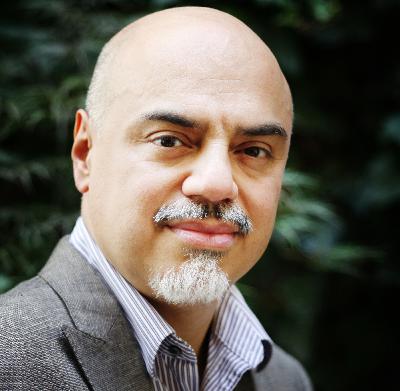
Writing Latinos, from Public Books, features interviews with Latino (a/x/e) authors. We discuss their books and how their writing contributes to the ever-changing conversation about the meanings of latinidad.
We recently caught up with Héctor Tobar to discuss his new book, Our Migrant Souls: A Meditation on Race and the Meanings and Myths of “Latino”. Our conversation included mention of the pathbreaking historian Vicki Ruiz, to whom Tobar dedicated Our Migrant Souls, as well as discussions on the literary influence of James Baldwin, That was just the beginning the need for a revolution in how we talk about immigrants and immigration, Latino racial identity, and Tobar’s own life and travels.
Tobar is a writer based in Los Angeles and is a professor of Literary Journalism and Chicano/Latino Studies at the University of California, Irvine. He is the winner of a Pulitzer Prize, a frequent contributor to The New York Times, and the author of many other books, including The Last Great Road Bum, Deep Down Dark, and The Tattooed Soldier.
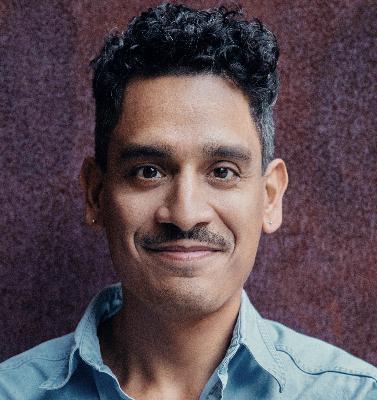
Writing Latinos, from Public Books, features interviews with Latino (a/x/e) authors discussing their books and how their writing contributes to the ever-changing conversation about the meanings of latinidad.
In this episode, you’ll hear our interview with Alejandro Varela about his books The Town of Babylon and The People Who Report More Stress, both published by Astra House. The Town of Babylon was a finalist for the National Book Award, and The People Who Report More Stress will earn similar accolades. We discussed stress as a silent killer in Latinx communities, the challenges of interethnic and interracial relationships, whether it’s possible to partner with someone who doesn’t share your politics, suburbs and cities, the meanings of Latinx literature as a genre, and so much more.
Varela is a writer based in New York City. He has a background in Public Health, which is evident in his writing. His writing has appeared in The Point Magazine, Georgia Review, Boston Review, Harper’s, The Offing, and other places.
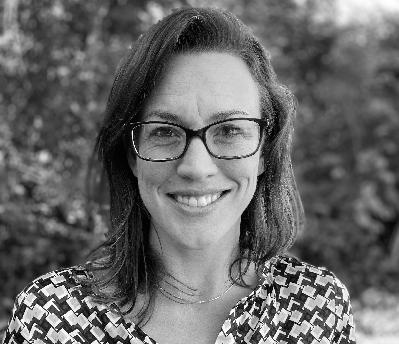
Writing Latinos, from Public Books, features interviews with Latino (a/x/e) authors discussing their books and how their writing contributes to the ever-changing conversation about the meanings of latinidad.
In this episode, you’ll hear our interview with Sarah Margarita Quesada about her new book The African Heritage of Caribbean and Latinx Literature, published by Cambridge University Press. We discussed how the writing of Caribbean and Latinx authors–especially Junot Díaz, Achy Obejas, Rudolfo Anaya, and Tomas Rivera–was shaped by their thinking about what Quesada describes as “Latin Africa,” Unlike other Latinx writers I know, Quesada is also trained in African Studies. She argues that we can’t talk about blackness here in the United States without also taking Africans and Africa–as a place and as an idea–seriously.
Quesada is an Assistant Professor of Romance Studies at Duke University. She received her Ph.D. from Stanford University. The African Heritage of Caribbean and Latinx Literature is her first book.
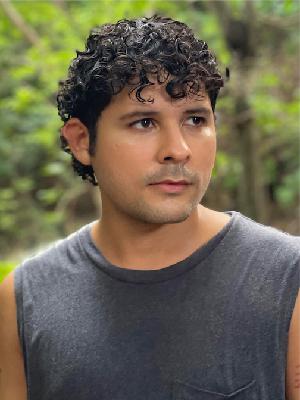
Writing Latinos, from Public Books, is a new podcast featuring interviews with Latino (a/x/e)authors discussing their books and how their writing contributes to the ever-changingconversation about the meanings of latinidad.
For this episode, we caught up with Edgar Gomez on his memoir High-Risk Homosexual(Soft Skull, 2022). The conversation with Gomez was one of ourmost wide-ranging, flowing, and honest yet. We talk about machismo, cockfighting, reconcilingwith parents, the Pulse nightclub shooting, bilingualism in modern literature, and the“messiness” of latinidad.
The New York Times called High-Risk Homosexual “a breath of fresh air.” The book is a finalistfor the Lambda Literary Award for Gay Memoir/Biography; an Honor Book for the 2023Stonewall Book Award—Israel Fishman Non-Fiction Book Award; and was named a Best Bookof the Year by BuzzFeed, Electric Literature, and Publishers Weekly. Born in Florida but withroots in Nicaragua and Puerto Rico, Gomez received an MFA from the University ofCalifornia, Riverside.

Comments

Download from Google Play

Download from App Store
 United States