



 Claim Ownership
Gulf Intelligence Podcasts
Subscribed: 9Played: 688
Subscribe

© Gulf Intelligence
Description
Gulf Intelligence is a Dubai-based Energy Markets Publisher that offers Think Tank Consultancy services to partners engaged across the full value-chain of the Middle East Energy Sector. GI leverages its unparalleled last mile of connectivity in the Gulf region to facilitate critical knowledge exchange and intimate networking between National and International stakeholders tasked with leading the commercial development and advancement of the East of Suez physical energy markets.
632 Episodes
Reverse
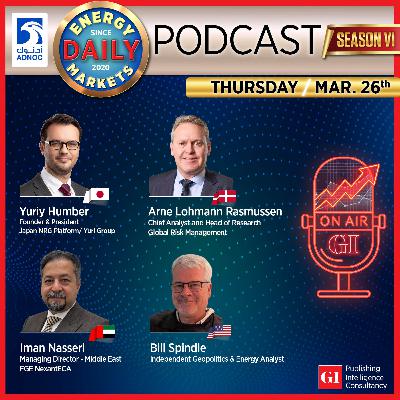
Oil markets are pricing uncertainty, not resolution. Yuriy Humber (Japan NRG Platform), Arne Lohmann Rasmussen (Global Risk Management), Iman Nasseri (FGE NexantECA), and Bill Spindle (Energy Analyst) assess whether “talks” are real or just delay, as Hormuz control tightens and LNG markets flip from surplus to scarcity. The panel warns of a world without Hormuz, with demand destruction only kicking in at $250–$300 oil, while Asia feels the pain before the West. Listen in for a clear-eyed take on where this crisis heads next.
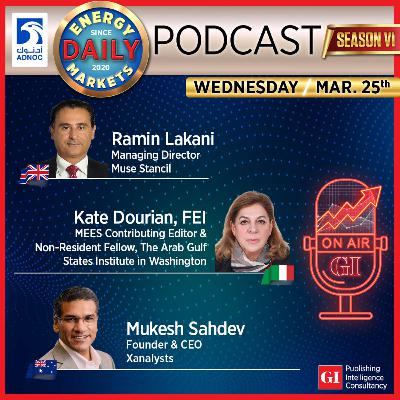
Today’s podcast said Brent near $100 reflects confusion, not calm: Ramin Lakani stressed contradictory diplomacy and enduring IRGC risk; Kate Dourian warned Gulf disruption, damaged refining and LNG flows will outlast any ceasefire; and Mukesh Sahdev argued crude bypasses work better than product markets, making diesel and jet shortages the real threat.

Markets grapple with extreme volatility as ongoing geopolitical shifts, supply disruptions, and policy reversals reshape oil flows. Anoop Singh highlights Asia’s acute tanker shortages and looming demand destruction; Michelle Wiese Bockmann explains unsanctioned Russian and Iranian barrels boosting revenues; Alan Gelder underscores tightening supply, surging refining stress, and prolonged recovery risks despite temporary political interventions.

Resuming after Eid, the Daily Energy Markets podcast frames a fragile oil market detached from war headlines. Omar Najia argues intervention and liquidity distort prices despite escalation risks. Rachel Ziemba highlights demand destruction, policy constraints, and supply chain stress. Henning Gloystein underscores Asia’s energy crunch, LNG disruption, and longer-term security shifts, with markets pricing higher volatility ahead still.

This end of the week edition of the Daily Energy Markets Podcast reviews the second week of the U.S.–Israel war with Iran as oil stabilises near $100 after extreme volatility. Mike McGlone warns the energy shock could trigger recession; Peter McGuire highlights Asian market vulnerability and trading volatility; Carole Nakhle assesses geopolitical risks; and David Elward tracks soaring physical oil and jet fuel prices.
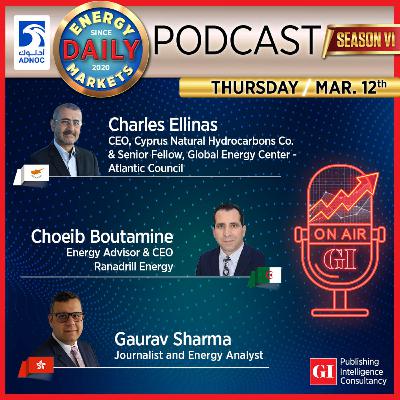
The Daily Energy Markets Podcast examines oil near $100 after a 400-million-barrel SPR release, and analysts say Strait of Hormuz risks could keep crude anchored at or above $100. Gaurav Sharma says delayed supply and Hormuz tensions keep markets volatile; Choeib Boutamine warns disruptions and limited spare capacity could push prices higher despite OPEC; and Charles Ellinas highlights LNG shortages pressuring Europe.

The discussion today focused on the escalating energy market disruption from the Strait of Hormuz crisis and whether markets have already priced in a potential G7 strategic petroleum reserve (SPR) release. Nadia Martin-Wiggen highlighted volatility and financial market positioning; Clyde Russell warned of a looming Asian supply crisis; Pamela Munger detailed tanker dislocation and rerouting; and Ali Al-Riyami stressed regional resilience but warned the conflict could persist.
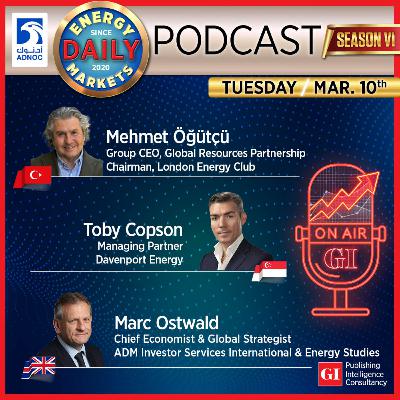
Today’s podcast explored whether the crisis oil price peak is already behind us. Toby Copson argued the real stress is emerging in products and LNG rather than crude. Mehmet Öğütçü warned markets may increasingly discount erratic political messaging and highlighted Russia as a likely economic winner. Marc Ostwald cautioned that supply-chain disruptions could prolong inflation even after fighting ends.
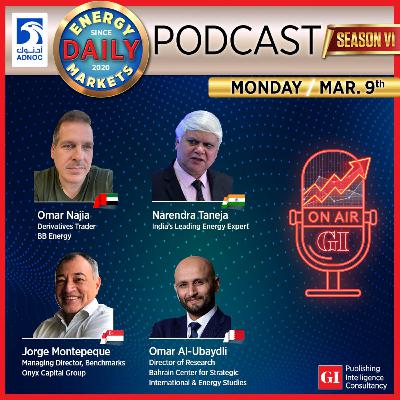
Today’s Daily Energy Markets podcast featured Omar Najia, Jorge Montepeque, Narendra Taneja, and Omar Al-Ubaydli discussing the Iran-driven oil crisis. Najia warned markets are irrational and a deal is ultimately inevitable; Montepeque stressed SPR releases are mostly symbolic amid tight physical supply; Taneja highlighted India’s mediation efforts; and Al-Ubaydli underscored insurance and security barriers keeping Hormuz effectively closed.

Considering the deep economic implications of the closure of the Strait of Hormuz to the energy markets, and the global economy, can this situation be resolved even before US-Israel war on Iran ends? Guest speakers Raad Alkadiri warned of prolonged regional instability; Osama Rizvi highlighted Pakistan’s economic and sectarian vulnerabilities; Bora Bariman assessed Turkey and Europe’s constrained responses; and Marc Howson outlined surging LNG prices and tightening Asian gas markets.

The Daily Energy Markets Podcast examined the recent developments in China, following its decision to close the taps for its refined products exports, amidst escalating Middle East tensions and increasing risk to global energy flows. Vandana Hari warned China’s halt to fuel exports reflects governments prioritising domestic supply security. Robin Mills highlighted shipping dangers and insurance hurdles in the Gulf, while Jamal Qureshi and Giacomo Prandelli argued markets may still be underpricing potential disruptions to oil and LNG trade.

The Daily Energy Markets Podcast asked whether Trump’s pledge to reopen the Strait of Hormuz is a game changer for oil markets. Guest speakers Maleeha Bengali said supply isn’t lost, only delayed; Brian Pieri noted muted U.S. market reaction but rising inflation risks; and Liao Na highlighted China’s vast inventories and strategic buffers, suggesting Beijing can weather disruptions.

Today’s Daily Energy Markets podcast featured Sara Akbar, Ahmed Mehdi, and Laury Haytayan discussing the escalating US–Iran conflict and its impact on oil and gas markets. Sara outlined Kuwait’s security challenges, production shut-in readiness, and water vulnerability; Ahmed analyzed freight spikes, supply disruptions, and Iraq’s export constraints; while Laury assessed Hezbollah’s involvement and Europe’s growing exposure to a potential gas crisis.

Today’s Daily Energy Markets podcast featured Omar Najia, Adi Imsirovic, and Russell Robertson discussing escalating Middle East conflict and its impact on oil and LNG markets. Omar warned of prolonged war and sharply higher prices; Adi highlighted strategic reserves and supply buffers tempering panic; while Russell assessed Asian demand, China’s inventories, and rising volatility risks
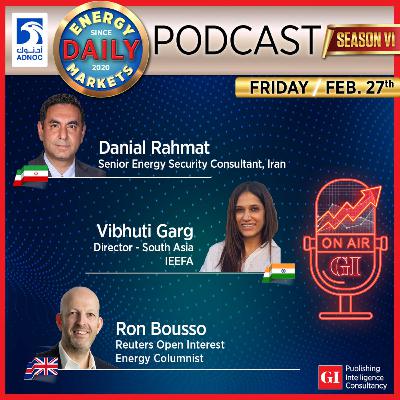
Today’s Daily Energy Markets podcast featured Danial Rahmat, Vibhuti Garg, and Ron Bousso discussing escalating US-Iran tensions, OPEC+ strategy, and shifting oil demand. Danial warned of regional conflict risks and threats to Gulf energy infrastructure; Vibhuti outlined India’s exposure to supply disruptions and higher import costs; while Ron examined preemptive Gulf exports and the likelihood of a OPEC+ output increase.

Today’s Daily Energy Markets podcast featured Jorge Montepeque, Kate Dourian, and Arne Lohmann Rasmussen discussing oil prices hovering near $70 amid U.S.–Iran tensions and geopolitical uncertainty. Jorge highlighted fragile market positioning, shrinking spare capacity, and freight distortions; Kate examined OPEC+ decision-making and nuclear negotiations; while Arne assessed Europe’s Russia strategy, sanctions enforcement, and the broader geopolitical risk premium in energy markets.

Today’s Daily Energy Markets podcast featured James Lear, Mita Chaturvedi, and Victor Yang discussing Brent above $70 amid Iran-U.S. tensions and OPEC+ uncertainty. James highlighted limited supply disruption and steady Asian demand; Mita pointed to elevated speculative positioning and product market weakness; while Victor assessed China’s stockpiling strategy, softer post-holiday demand, and diversification risks amid escalating geopolitical uncertainty and volatility.

Today’s Daily Energy Markets podcast featured Bill Spindle, Yuriy Humber, and Ramin Lakani discussing escalating U.S.-Iran tensions and their impact on global oil markets. Bill examined Washington’s political and military calculus, Yuri outlined Japan’s energy vulnerability and nuclear strategy, while Ramin assessed regime-change scenarios, China’s discounted Iranian crude flows, and the potential long-term reopening of Iran’s oil and gas sector.
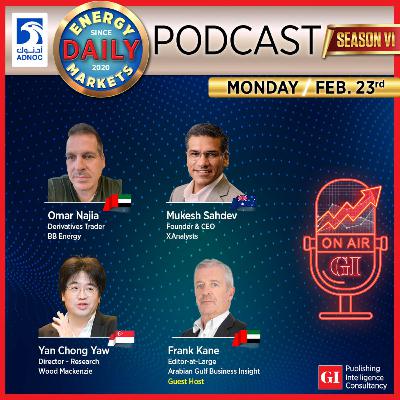
Today’s Daily Energy Markets podcast, guest hosted by Frank Kane, featured Omar Najia, Mukesh Sahdev, and Yan Chong Yaw discussing the fallout from Trump’s tariff ruling, escalating Iran tensions, and OPEC+ strategy. Omar warned of severe price spikes in a potential Iran conflict, Mukesh examined Hormuz control and China implications, while Yan Chong assessed limited immediate disruption and OPEC’s supply response.
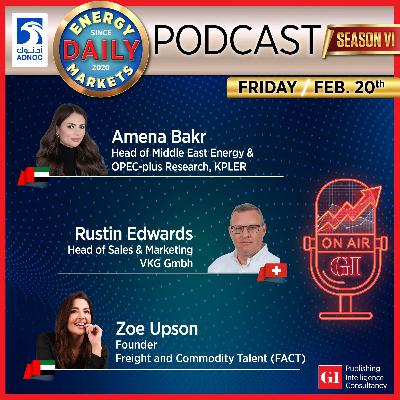
Today’s Daily Energy Markets podcast featured Amena Bakr, Rustin Edwards, and Zoe Upson discussing escalating U.S.–Iran tensions and their impact on oil and freight markets. Amena examined geopolitical risk premiums, OPEC+ spare capacity, and supply outlooks; Rustin analyzed sanctions, the dark fleet, and surging tanker rates; while Zoe highlighted shifting trading dynamics, talent flows, and growing volatility across energy and shipping markets.

Comments

Download from Google Play

Download from App Store
 United States