


 Claim Ownership
Live Free Ride Free with Rupert Isaacson
Subscribed: 24Played: 698
Subscribe

© 2023 Helios Harmony, LLC
Description
Welcome to Live Free Ride Free, where we talk to people who have lived self-actualized lives on their own terms, and find out how they got there, what they do, how we can get there, what we can learn from them. How to live our best lives, find our own definition of success, and most importantly, find joy.
Your Host is New York Times bestselling author Rupert Isaacson. Long time human rights activist, Rupert helped a group of Bushmen in the Kalahari fight for their ancestral lands. He's probably best known for his autism advocacy work following the publication of his bestselling book "The Horse Boy" and "The Long Ride Home" where he tells the story of finding healing for his autistic son. Subsequently he founded New Trails Learning Systems an approach for addressing neuro-psychiatric conditions through horses, movement and nature. The methods are now used around the world in therapeutic riding program, therapy offices and schools for special needs and neuro-typical children.
You can find details of all our programs and shows on www.RupertIsaacson.com
67 Episodes
Reverse
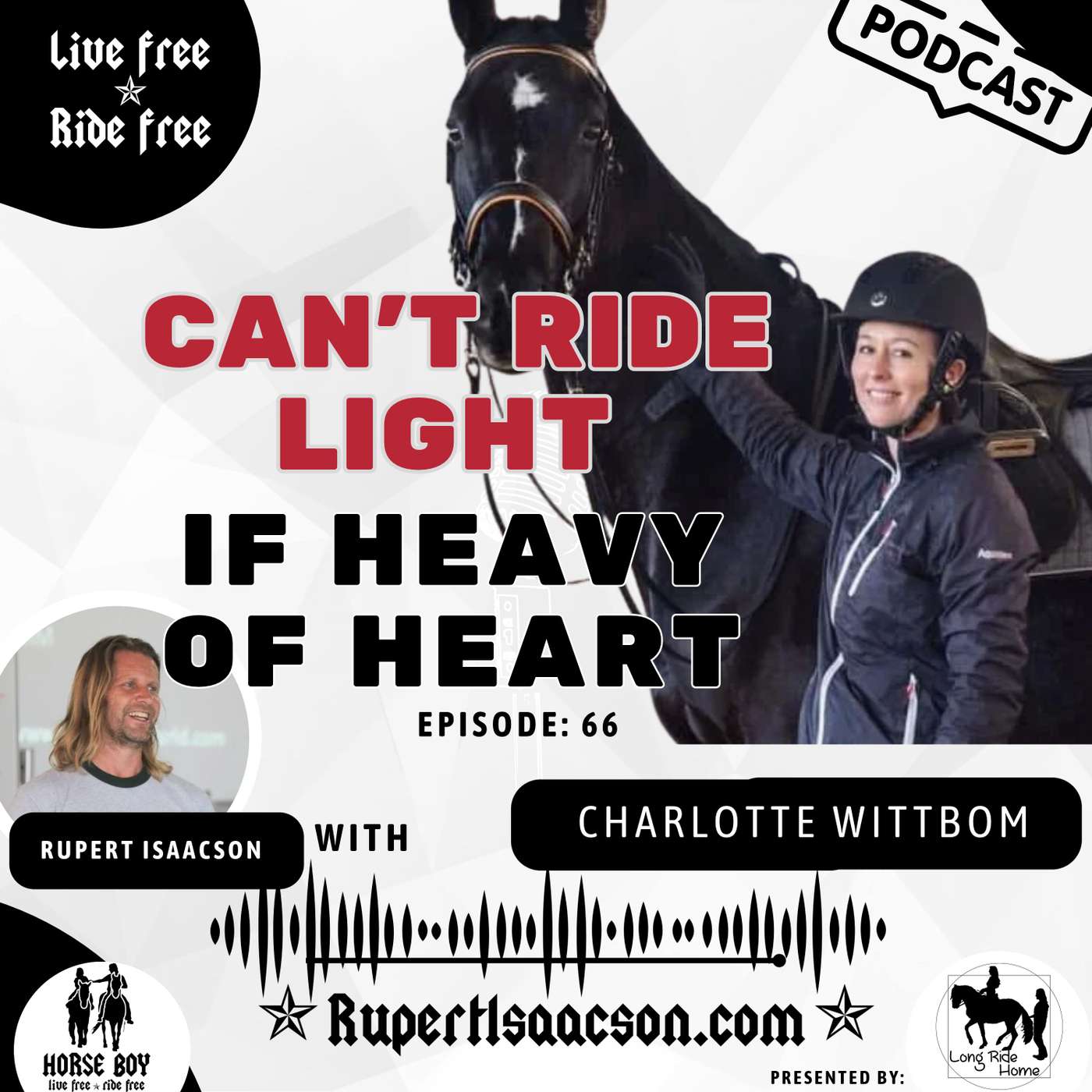
✨ "I don't believe it's possible to ride with lightness if you're heavy of heart." – Rupert Isaacson✨ "It's in the break where you get the effect of the exercise." – Charlotte WittbomCharlotte Wittbom grew up in Sweden riding ponies through the forests and competing in eventing, then found her way through a UK riding school to Portugal, where she spent years with the Valença family and went on to run Quinta do Brejo, Nuno Oliveira's old yard. She now teaches classical riding and in-hand work in England, working alongside physios and with a growing number of competition riders.Rupert and Charlotte talk about the Valença method as a living system rather than a rigid one, and how groundwork patterns such as quarter turns around the cones build posture, muscle and understanding in the horse. They also cover compensation patterns, stress and sustainability in competition, curiosity and lightness in teaching, and Charlotte's recent work on the horse's diaphragm and deep breathing.A rich, wide-ranging conversation that closes with plans for deeper dives on the diaphragm work and a demo at Tribe Day in July 2027.FREE Helios Harmony Intro Course: https://longridehome.com/onoutpoutWhat You'll Learn in This Episode00:02:26 – How riding ponies in the Swedish forests without rules shaped Charlotte's feel for balance and freedom with horses.00:23:23 – Why the Valença method gives you a system that becomes part of your DNA while leaving you free to develop your own path.00:34:08 – Why groundwork became Charlotte's focus in the UK, and how it helps riders understand feel versus how things look.00:49:49 – How small movements, such as a quarter turn around the cones, teach the horse the same pattern as a half halt.00:59:03 – Why a horse's stiffness is there for a reason, and how resistance and release build muscle without force.01:14:00 – How to ask whether a movement is sustainable for the horse, and not just whether it scores well.01:31:53 – Why Rupert believes you cannot ride with lightness if you are heavy of heart.01:54:58 – Why Charlotte says that from the ground you create the horse you want to ride.01:56:55 – How Charlotte uses groundwork to help horses release the ribcage and diaphragm and take a deep breath.02:04:30 – Why the effect of an exercise shows up in the break, and not during the exercise itself.Memorable Moments from the Episode00:02:40 – Charlotte describes riding Shetland ponies as a child with flat saddles and an ice hockey helmet.00:18:34 – At Quinta do Brejo, Charlotte answers complaints about uncomfortable saddles by pointing out that Nuno Oliveira sat in them.00:40:04 – Charlotte recalls guests at Morgado Lusitano being disappointed to get her as an instructor instead of the Portuguese instructor they had hoped for.01:58:11 – Charlotte keeps her deep-breathing method a secret for now, and Rupert asks to make the check payable.02:05:07 – Rupert recalls Nuno Oliveira's advice to dismount and smoke a cigarette, and Charlotte suggests he try deep breathing instead.Guest Contact & LinksCharlotte WittbomWebsite: charlottewittbom.comYouTube: Charlotte WittbomPodcast on Spotify: Charlotte Wittbom Classical MasteryAbout Charlotte WittbomCharlotte Wittbom is a Swedish-born classical riding instructor based in England. She started in eventing with ponies, trained and worked in Portugal with the Valença family, and ran Quinta do Brejo, Nuno Oliveira's old yard. Her approach builds on the Valença system and puts groundwork first, working with physios to help horses develop posture, muscle and calm before and alongside ridden work. She teaches across the UK, gives clinics in Sweden, and hosts a podcast of portraits of classical masters in their own words. Find her at charlottewittbom.com.See All of Rupert's Programs and Shows:Website: https://rupertisaacson.comFollow Us: Long Ride HomeWebsite: https://longridehome.comFacebook: https://facebook.com/longridehome.lrhInstagram: https://instagram.com/longridehome_lrhYouTube: https://youtube.com/@longridehomeNew Trails Learning SystemsWebsite: https://ntls.coFacebook: https://facebook.com/horseboyworldInstagram: https://instagram.com/horseboyworldYouTube: https://youtube.com/newtrailslearningsystemsAffiliate Disclosure:Links to books and products may include affiliate tracking. We may earn a commission if you make a purchase, at no extra cost to you. Thank you for supporting the show.
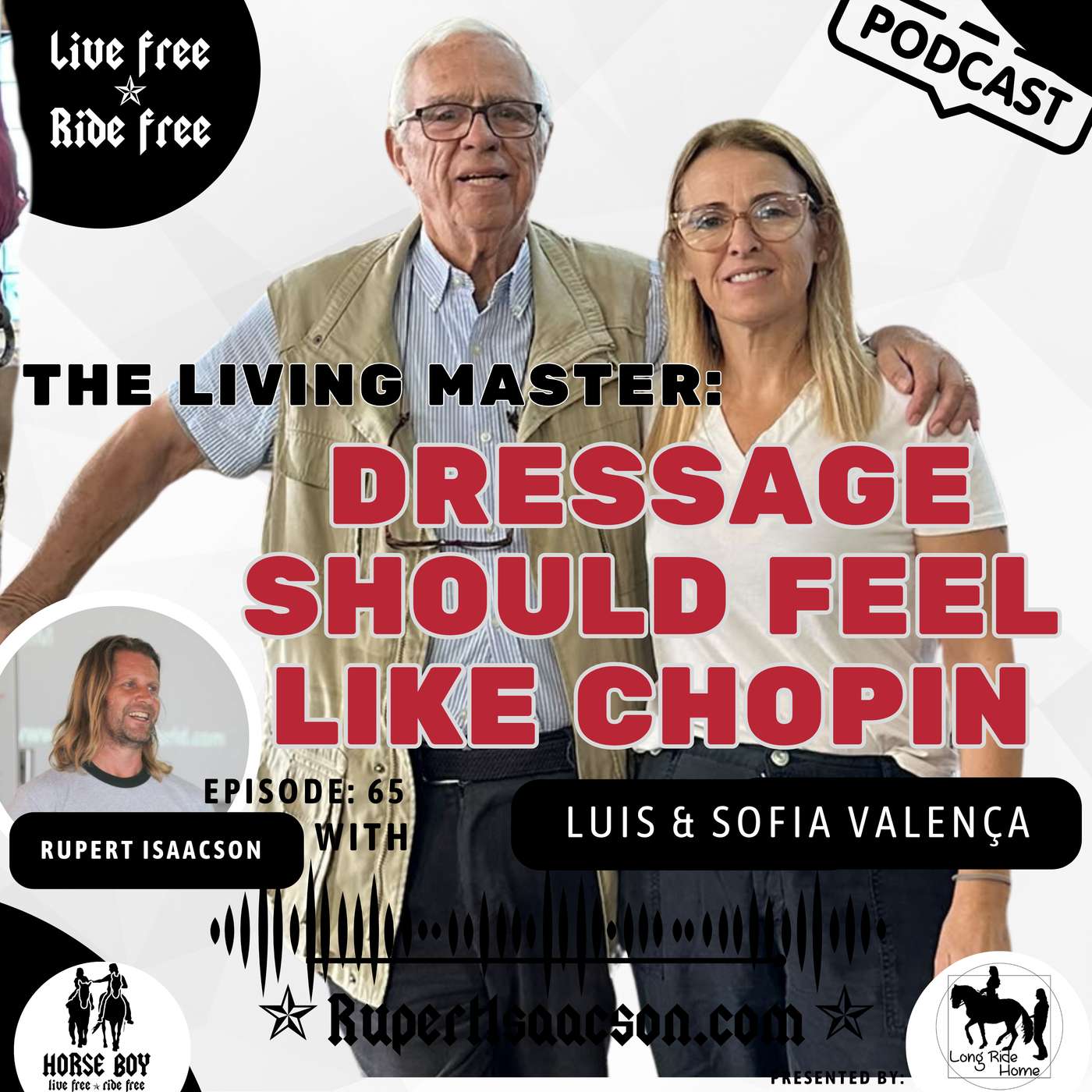
✨ “The principal thing is love, passion, love, passion and passion and love.” – Luis Valença✨ “The first thing is to communicate with the horse, and for the horse to accept you.” – Luis Valença ✨ “It’s not gymnastics.” / “Our work is like music. It’s the same as listening to Chopin or Beethoven.” – Luis Valença✨ “I have the same enthusiasm because I love life, I love the horses, I love the family.” – Luis Valença ✨ “Never take the personality from the horse.” – Luis ValençaRupert Isaacson welcomes Mestre Luis Valença of Lisbon, whom he calls a living legend, a national treasure and the greatest living exponent of equestrian art, together with his daughter Sofia. Luis describes his method as a connection between human and horse built on love, comparable to the way we communicate with our children, and traces it back through his three masters: his godfather Fernando Ralão, Cunha Menezes (a Baucherist), and Nuno Oliveira.The conversation explores what the word dressage truly means (to dress the horse so he feels soft and good in his own body), the comparison of the work to music like Chopin and Beethoven, and how older, arthritic or traumatized horses are given back their trust and often rejuvenated. Sofia and Rupert also discuss the simplicity and flexibility of the method, learning to read the student in front of you, the contrast with competition dressage, and why the Valença family's inclusive, tribal approach sends people home with real tools.A rich, story-filled conversation with a family at the heart of classical equestrian tradition.FREE Helios Harmony Intro Course: https://longridehome.com/onoutpoutWhat You'll Learn in This Episode00:02:37 – Luis describes his method as a connection between human and horse, built on love and the same communication we use with children.00:07:47 – How the method works for young horses and old ones alike, clearing negative memories and rebuilding trust before any work begins.00:11:08 – Luis introduces his three masters and what each gave him, from his godfather's farm to Cunha Menezes and Nuno Oliveira.00:25:10 – Rupert asks what dressage really means, and Luis explains "to dress" the horse as something soft, like music.00:29:31 – Sofia explains dressage as helping the horse feel good in his own skin, and why the joy should begin the moment he enters the arena.00:32:16 – Luis shares how he adapted a session for a horse showing back pain, staying with what worked without force.00:48:15 – Sofia describes what a method really is and why the most important skill is learning to read the student in front of you.00:50:12 – Rupert recalls Luis's sequence of lunging, in-hand work and the laterals that grow into piaffe and passage.01:02:48 – Luis explains why you must never take away a horse's personality and how each horse has its own specialty.01:35:38 – Luis and Sofia share their parting thoughts: love and passion, and learning to listen to what your horse is saying.Memorable Moments from the Episode00:18:17 – Luis recalls receiving lessons from the ailing Cunha Menezes, who taught him from a chair with two reins and a spoon in his hand.00:20:30 – Nuno Oliveira phones Luis's mother after watching him ride and invites him to begin working with him.00:38:31 – Nuno chooses the "worst" horse from a group of Russian youngsters, Bunker, to prove his method could solve it.01:16:47 – The story of a polo player's horse that fought its strong-handed owner and then opened up for a rider it trusted.01:37:21 – Luis explains his habit of giving a carrot or sugar at the start and end of each lesson as discipline without force.Guest Contact & LinksValença Equestrian Academy: https://valencaequestrianacademy.comSocial media: Valença Classical Riding and Sofia Valençahttps://www.facebook.com/ValencaEquestrianTours/https://www.facebook.com/profile.php?id=100069242888414About Luis & Sofia ValençaMestre Luis Valença, introduced by Rupert as the living master of equestrian art, lives in Lisbon, where he has practiced and taught equestrian art for decades, keeping a stable of school master horses that he and his family have prepared themselves. His approach centers on love, passion and a soft, communicative way of working that respects each horse's personality, drawing on the old masters, including Baucher and Nuno Oliveira. His daughter Sofia teaches the method in around 40 countries and helps people learn to read their horse and apply it with a simple language. Their work is relevant to anyone who wants joy and softness in their riding, and you can find them at valencaequestrianacademy.com.See All of Rupert's Programs and Shows:Website: https://rupertisaacson.comFollow Us:Long Ride HomeWebsite: https://longridehome.comFacebook: https://facebook.com/longridehome.lrhInstagram: https://instagram.com/longridehome_lrhYouTube: https://youtube.com/@longridehomeNew Trails Learning SystemsWebsite: https://ntls.coFacebook: https://facebook.com/horseboyworldInstagram: https://instagram.com/horseboyworldYouTube: https://youtube.com/newtrailslearningsystemsAffiliate Disclosure:Links to books and products may include affiliate tracking. We may earn a commission if you make a purchase, at no extra cost to you. Thank you for supporting the show.
✨ "For me, competition has always been real feedback, not what I think is good." – Sinead Maynard✨ "There's nothing about me that's gonna make you do this. You gotta love it, and we gotta love it together." – Sinead MaynardSinead Halpin Maynard was born in Fort Worth, Texas, to Irish immigrant parents and grew up in South Carolina, where she stumbled into eventing via a hunter-jumper barn that didn't approve of her mother's black saddle. At 15 she drove herself to Middleburg, Virginia, as a working student, went on to train with David and Karen O'Connor, and after losing a horse on course, moved to England to ride for William Fox-Pitt. On the French-bred Manoir de Carneville ("Tate"), she finished third at her first five-star at 30, was first reserve for the London 2012 Olympics and rode on the US team at the 2014 World Championships in Normandy. Today she and her husband, Tik Maynard, run their farm in Florida, teach clinics, and Sinead commentates on top-level eventing and serves as a US team selector.Rupert and Sinead talk candidly about the money and hustle behind a competitive career, why she still loves competing, and how she uses competition as honest feedback on her partnership with the horse. They explore sports psychology and narrow-versus-broad focus, whether riders have the right to ask horses to compete at all, and the difference between training from fear and training from play. Sinead explains retreat and approach, why she'll swap a bigger bit for a rope halter, how rider selection now weighs horse welfare, and why fitness and varied terrain are the foundation of a sound, happy horse.A frank, funny and wide-ranging conversation between two eventers at heart.FREE Helios Harmony Intro Course: https://longridehome.com/onoutpoutWhat You'll Learn in This Episode00:03:19 – Why eventing's camaraderie comes from competing against the track and your own preparation, not other riders00:17:59 – The honest truth about money, sponsorship and getting a "leg up" in upper-level horse sport00:37:58 – William Fox-Pitt's two pieces of advice: go five-star by 30, and don't let anyone change a horse's natural style00:52:15 – Why Sinead competes: taking the relationship out under pressure to find the flaws you can't see at home00:56:00 – Narrow focus, broad focus and visualization: the sports psychology that turned fear into a skill set01:06:07 – Do we have the right to ask horses to compete? Matching the horse to the job and calling it when it isn't a fit01:09:26 – Fear versus love, the role of play, and how skill sets and familiarity make room for joy01:17:42 – Why "tough it out" training fails, and how retreat and approach builds a horse's confidence in you01:34:36 – How to watch a top-level horse: expression, balance and why independent balance means safety01:45:20 – Fitness as the foundation of welfare: varied terrain, interval work and heart rate monitoringMemorable Moments from the Episode00:19:33 – Karen O'Connor tears up Sinead's lesson check; years later she pays David with her first big prize money00:33:04 – Sinead takes a 30-quid ferry to France to see a "skinny and ugly" horse who becomes her five-star partner00:36:00 – Days after arriving at William Fox-Pitt's, a surprise pony provokes Tate into kicking through a metal door00:55:32 – David O'Connor's "one jump at a time" gets a terrified Sinead around the course after breaking her femur01:38:00 – An Italian rider jumps off his horse one fence from home at the World Championships because something feels wrongGuest Contact & LinksCopperline Equestrian (Sinead & Tik Maynard): https://www.copperlineequestrian.comAbout Sinead MaynardSinead Halpin Maynard is a five-star event rider who represented the US at the 2014 World Championships and was first reserve for the London 2012 Olympics with Manoir de Carneville. She learned her trade as a working student in Middleburg, with David and Karen O'Connor and as a rider for William Fox-Pitt in England. Now based in Florida with her husband, Tik Maynard, she combines competition with a horse-first approach built on retreat and approach, play and honest feedback. She teaches clinics, commentates on top-level eventing and serves as a US eventing team selector.See All of Rupert's Programs and Shows:Website:https://rupertisaacson.comFollow Us:Long Ride HomeWebsite: https://longridehome.comFacebook: https://facebook.com/longridehome.lrhInstagram: https://instagram.com/longridehome_lrhYouTube: https://youtube.com/@longridehomeNew Trails Learning SystemsWebsite: https://ntls.coFacebook: https://facebook.com/horseboyworldInstagram: https://instagram.com/horseboyworldYouTube: https://youtube.com/newtrailslearningsystemsAffiliate Disclosure:Links to books and products may include affiliate tracking. We may earn a commission if you make a purchase, at no extra cost to you. Thank you for supporting the show.
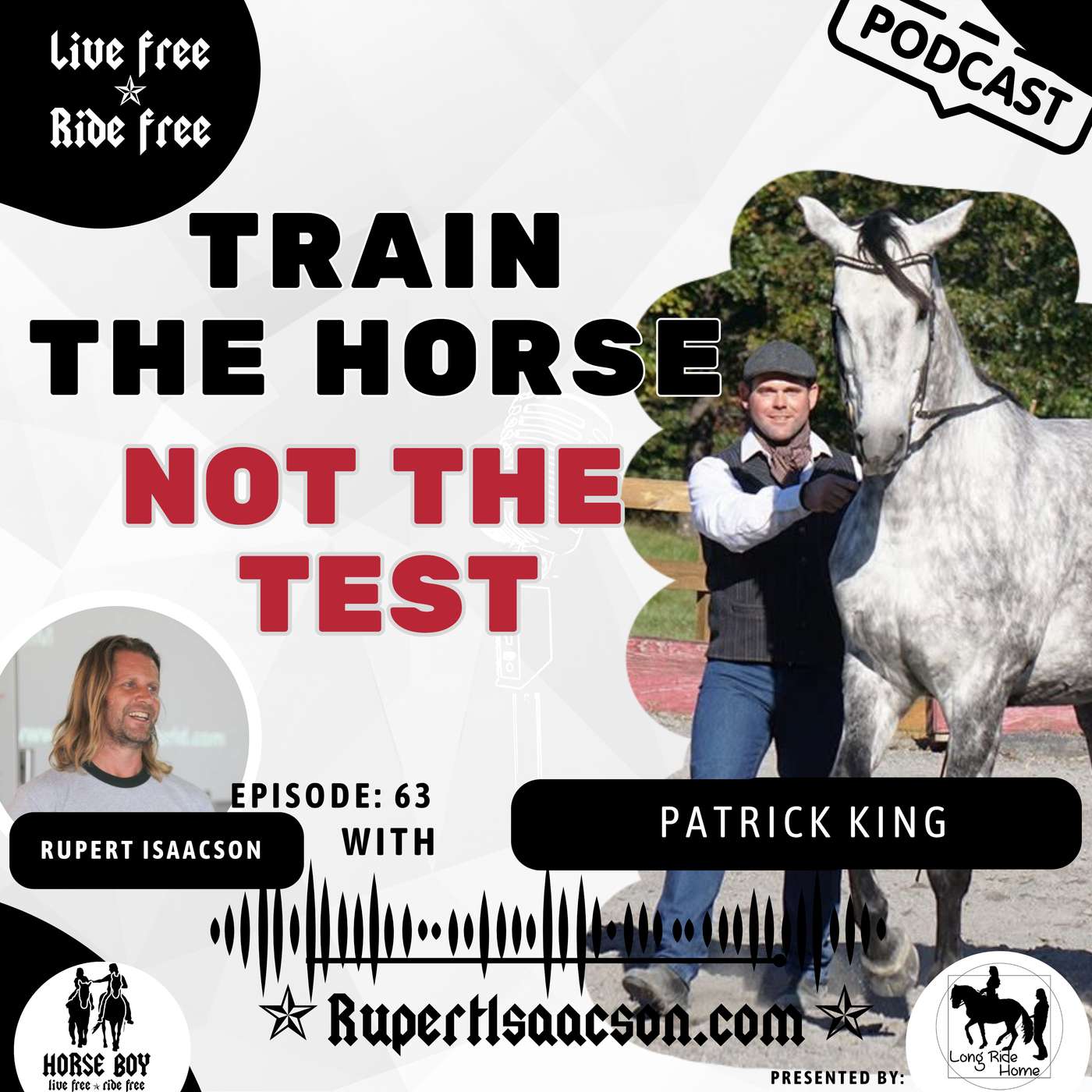
✨ "Dressage should be for the horse — the horse should not be for dressage." – Mark Russell, quoted by Patrick King✨ "Speed is the enemy of balance." – Patrick KingPatrick King is a classical dressage trainer based in Lexington, Virginia, who came up through Western horsemanship — 4-H as a kid, an apprenticeship with legendary colt-starter Ray Hunt, then mentorship from the late Mark Russell before he found his way, like Rupert, to Luis Valença and the Portuguese school. He's since studied with Charles de Kunffy and Bettina Drummond, earned bronze and silver dressage medals, and now teaches through his online Academy for Classical Horsemanship and clinics from his farm.He and Rupert trace how diagonal balance actually works and why the word "driving aids" gets lost in translation from the German, why competition pressure changes how horses and riders move, and how Western pleasure and saddle seat drifted from practical function into pure fashion. Patrick also walks through his simplest test for good training — could the horse explain to its paddock mates what you just asked of it — and why he stops mid-exercise to wait for a full diaphragmatic breath before asking a horse to go forward.It's a wide-ranging, technically rich conversation between two horsemen who share a mentor but arrived from opposite directions — and it's only part one. They run out of time before finishing, so a follow-up conversation is coming.FREE Helios Harmony Intro Course: https://longridehome.com/onoutpoutAll Books Mentioned: https://longridehome.com/booksWhat You'll Learn in This Episode00:01:50 – A shared mentor, Luis Valença, connects two very different paths into classical horsemanship00:04:21 – Patrick's apprenticeship with Western horseman Ray Hunt and learning to "get to the mind through the feet"00:08:29 – Mentor Mark Russell's insight that the feet are an extension of the spine00:19:49 – The real difference between submission and relaxation in horse training00:34:28 – Mark Russell's guiding principle that dressage should serve the horse, not the other way around00:45:00 – Training the test versus testing the training, and how competition pressure changes the ride01:23:06 – Diagonalization explained: how horses balance on diagonal leg pairs, and what that means for every transition01:31:18 – Luis Valença's "position, balance, execute," and why "prepare, don't repair" beats fixing a movement mid-stride01:36:36 – The "driving aids" mistranslation from German, and the physical, mental, and emotional dimensions of the half halt01:54:37 – Why "is my horse breathing?" might be the most overlooked question in trainingMemorable Moments from the Episode00:13:44 – Patrick's story of an abusively trained Western pleasure horse that once cornered him in a stall as a teenager00:27:38 – Rupert's breakdown of dopamine, serotonin, endorphins, and oxytocin, and why riding this way feels so good01:06:52 – The surprising history of dressage as a European import tied to wealth and status02:01:00 – Two hours fly by, and Rupert and Patrick agree on the spot to record a part twoGuest Contact & Linkshttps://pkhorsemanship.comhttps://academyforclassicalhorsemanship.comAbout Patrick KingPatrick King is a classical dressage trainer based near the Blue Ridge Mountains in Lexington, Virginia. He grew up riding a wide range of breeds in Western Pennsylvania, apprenticed with Western horseman Ray Hunt, and was later mentored by the late Mark Russell before training with Luis Valença in Portugal and riding as a guest student at Spain's Royal School. He teaches a busy clinic schedule, competes occasionally — earning bronze and silver dressage medals with encouragement from Charles de Kunffy — and runs an online Academy for Classical Horsemanship with monthly live lectures. His approach blends the Western horsemanship principle of "getting to the mind through the feet" with classical dressage biomechanics, with a particular focus on balance, breath, and treating the horse as an active participant in training. Website: pkhorsemanship.com.🐎 Want to go deeper? Join the Long Ride Home membership — weekly live sessions, exclusive content, and a community of riders seeking real connection with their horses. 👉 https://longridehome.com — just $24.95/monthSee All of Rupert's Programs and Shows:Website: https://rupertisaacson.comFollow Us:Long Ride HomeWebsite: https://longridehome.comFacebook: https://facebook.com/longridehome.lrhInstagram: https://instagram.com/longridehome_lrhYouTube: https://youtube.com/@longridehomeNew Trails Learning SystemsWebsite: https://ntls.coFacebook: https://facebook.com/horseboyworldInstagram: https://instagram.com/horseboyworldYouTube: https://youtube.com/newtrailslearningsystemsAffiliate Disclosure:Links to books and products may include affiliate tracking. We may earn a commission if you make a purchase, at no extra cost to you. Thank you for supporting the show. academyforclassicalhorsemanship.com
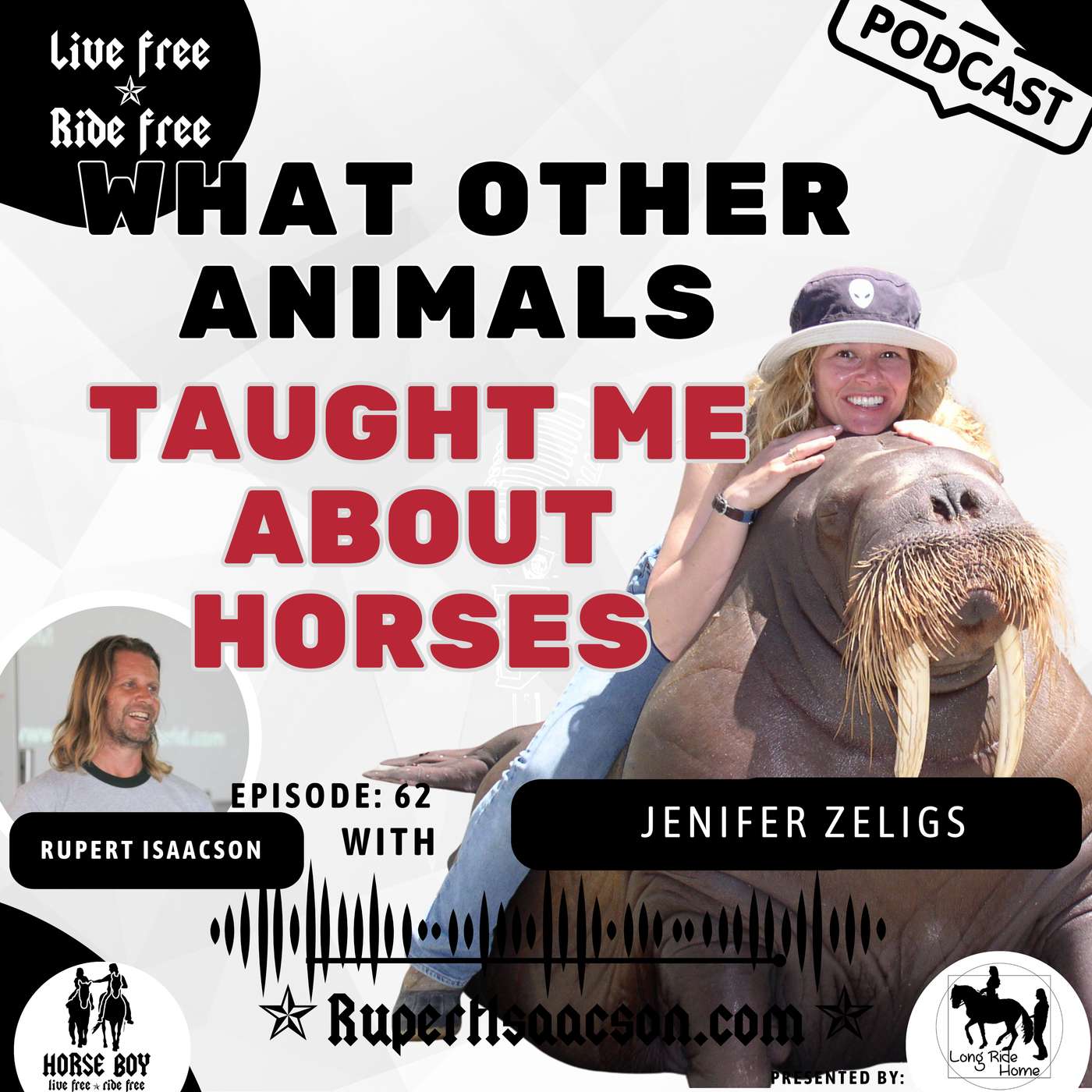
✨ "You do it by offering before you ask, connection before direction." – Jenifer Zeligs✨ "Look with appreciation. Look with delight. Look with interest. Look with curiosity." – Jenifer ZeligsJenifer Zeligs has spent her life reading animals of every kind, from cheetahs and wolves to sea lions and horses. She started at the National Zoo at nine years old, mentored by exotic animal trainer Casey Cover, and went on to a career that helped shape modern liberty horse training. She is also the person that legendary horse trainer David Lichman credits with the "come bearing gifts" philosophy that underpins his own work.The conversation ranges across the two foundational techniques of animal training, why prevention beats correction in a crisis, and the true story of training sea lions to film humpback whales in the open ocean. Jenifer and Rupert also explore how a childhood horse allergy set her on this path, why individual variation matters more than breed or species, and how her practice as a Buddhist has shaped the way she teaches fearlessness and calm to horses.A wide-ranging, generous conversation between two people who have spent decades thinking about what animals need from us.FREE Helios Harmony Intro Course: https://longridehome.com/onoutpoutAll Books Mentioned: https://longridehome.com/booksWhat You'll Learn in This Episode00:04:23 – How a childhood horse allergy led Jenifer into a lifelong career as an animal behaviorist00:10:18 – The two foundational techniques of bridging (reward markers) and targeting that changed how she trains any species00:14:13 – The "come bearing gifts" principle: offering trust before ever asking for anything in return00:35:42 – What actually makes you a safe space for an animal, and what makes you unsafe00:41:31 – Systematic desensitization, and why announcing your intentions changes everything00:52:15 – The difference between behavioral and environmental enrichment, and why horses are missing out00:56:00 – Why consistency matters for communication but variety matters for motivation01:09:19 – The extraordinary story of training sea lions to film whales in the open ocean01:28:00 – "Contra freeloading," and why animals (and humans) are wired to want to work for things02:08:24 – Teaching a horse to find calm through a simple "head down" cueMemorable Moments from the Episode00:14:43 – Jenifer describes conditioning trust with cheetahs, mountain lions, and wolves through patient, positive interactions from behind a safety barrier01:14:43 – A sea lion caught between orcas and open water swims 20 miles home, then leaps into the boat exhausted01:40:18 – Jenifer's reminder that the best trainers "don't get into the crash" in the first place02:10:00 – The story of the notoriously aggressive horse David Litchman connected her with, and how a new paradigm transformed him02:15:00 – Rupert traces the story of the Buddha's own horse, Kantaka, and its place in Buddhist legendGuest Contact & Linksanimaltraining.usBooks: Animal Training 101: The Complete and Practical Guide to the Art and Science of Behavior Modification https://amzn.to/3UA43YZMindful Partners: The Zen Art and Science of Working with Animals https://amzn.to/4xM2KVwAbout Jenifer ZeligsJenifer Zeligs is an animal behaviorist, psychologist, and author who has spent decades working with species ranging from horses and dogs to cheetahs, wolves, and sea lions. She began her training career at the National Zoo at nine years old, mentored by exotic animal trainer Casey Cover, and later became a foundational influence on liberty horse trainer David Lichman, who credits her "come bearing gifts" philosophy as central to his own approach. She is the author of Animal Training 101 and Mindful Partners: The Zen Art and Science of Working with Animals, and teaches online courses at animaltraining.us. Now based in Oxford, England, she brings together decades of hands-on behavioral science with a practicing Buddhist's approach to trust, safety, and fearlessness.See All of Rupert's Programs and Shows:Website: https://rupertisaacson.comFollow Us:Long Ride HomeWebsite: https://longridehome.comFacebook: https://facebook.com/longridehome.lrhInstagram: https://instagram.com/longridehome_lrhYouTube: https://youtube.com/@longridehomeNew Trails Learning SystemsWebsite: https://ntls.coFacebook: https://facebook.com/horseboyworldInstagram: https://instagram.com/horseboyworldYouTube: https://youtube.com/newtrailslearningsystemsAffiliate Disclosure:Links to books and products may include affiliate tracking. We may earn a commission if you make a purchase, at no extra cost to you. Thank you for supporting the show.

Comments

Download from Google Play

Download from App Store
 United States