


 Claim Ownership
the Proclaim & Defend Podcast
Subscribed: 2Played: 11
Subscribe

© Foundations Baptist Fellowship International
Description
The Proclaim & Defend podcast is the podcast of the Foundations Baptist Fellowship International. We established this podcast to give a voice to our publication, FrontLine Magazine. We hope you enjoy the additional content we provide here. You can subscribe to our magazine via Substack or go to http://fbfi.org/subscribe/ to subscribe to the magazine.
proclaimdefend.substack.com
proclaimdefend.substack.com
263 Episodes
Reverse
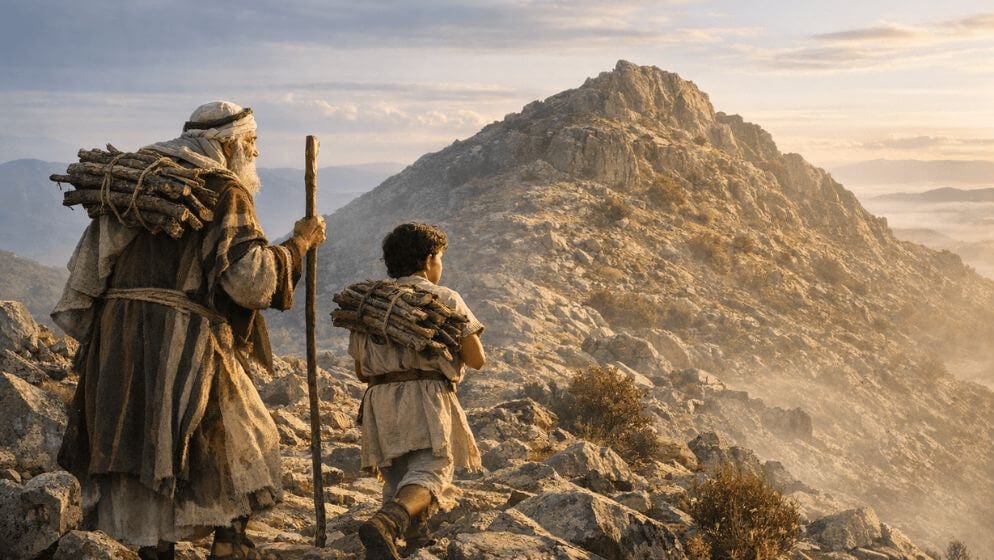
I had some difficulty getting Co-pilot to generate a theme image for this post. It seems that Microsoft considers an image depicting child-sacrifice objectionable. Shocking.One of the intellectual dilemmas about the Genesis 22 story is the issue of human sacrifice and the command of God. On one hand, God commands Abraham to make a child sacrifice, which clearly seems immoral. Yet Abraham is commended by God for being willing to obey in such an objectionable act. Was God being insincere in His command and if so, shouldn’t Abraham have said, “No, God. Child sacrifice is evil.”We need to unpack this question because it touches our daily walk and the temptations that we face regularly.There is a difference between testing and temptation.The problem is that the same words, both in Hebrew and Greek, are used for both ideas. James 1 says that we should face various trials with joy in verse 3 and then says that God does not tempt us with evil in verses 13 and 14.Temptation usually includes three elements: the tempted person (us as the main actors), the temptation (a choice of obedience or disobedience), and a tempter (an outside character pushing us toward disobedience). In the case of Eve in the Garden the elements were Eve, eating of the Tree of the Knowledge of Good and Evil, and Satan encouraging her to disobey the command of God. …Read the rest of this post here, or just listen to the podcast. Get full access to the Proclaim & Defend Podcast at proclaimdefend.substack.com/subscribe

This, Judge Phil Ginn wrote for Realclearreligion.com on the subject of Christians and culture. He was addressing an upcoming (March 8, 2026) feature on CNN entitled The Rise of Christian Nationalism. In the article, he includes CNN’s definition of Christian Nationalism as follows:CNN is ostensibly defining Christian Nationalism as “an ideology rooted in the belief that our country was founded as a Christian nation, and that our laws and institutions should reflect Christian values.” Ms. Brown goes further to assert that the assassination of Charlie Kirk “radicalized” Christians into a feeling of being persecuted.As with almost everything, the key to everything is not in what they say, but what they mean by what they say.Was the U.S. founded as a Christian nation? …Read the rest of the post here, or just listen to the podcast. Get full access to the Proclaim & Defend Podcast at proclaimdefend.substack.com/subscribe

Today we have something different for you. Normally I’m interviewing one of our authors from our FrontLine magazine. I am in the process of recording interviews for our next edition of the magazine, so we will return to that in due course.However, today I am talking to my friend Ben Hicks. He is the Associate Pastor at Colonial Hills Baptist Church in Indianapolis, Indiana. He works closely with me on Proclaim & Defend and is a key idea guy for us whenever we get together and talk.At the beginning of the year, I like to make a post for P&D on Bible reading with links to Bible reading schedules. This is a big push I make for our church people every year as well.Ben has a similar passion in his ministry. He published two articles on the topic in the first couple weeks of this year as well.I thought it would be a good idea to put together a podcast partway through the year as sort of a “Booster Shot” for your Bible reading. We know what it is like to start the year with enthusiasm, but then for our interest to flag as life piles up on us. Both Ben and I want you to just pick up and carry on. We especially want you to develop the Bible reading priority in your daily life.That’s what this conversation is designed to do. Together we talk about various insights we’ve gleaned ourselves on the subject of developing that priority. There are so many ways we can make our Bible reading fresh and we touch on some of them. I hope you find this helpful. I want to encourage you to pass it on to others if it might be helpful to them as well.Now, at this point in the podcast I’m normally pointing you to a FrontLine article. We don’t have one this time, but I do want to encourage you to support the FBFI by subscribing to our magazine, following our blog, Proclaim & Defend, and this podcast. Your support helps us keep excellent content coming your way.Our Proclaim & Defend articles on Bible reading:From Ben:When You Don’t Get Anything Out of Devotions – Proclaim & Defend7 Tips for Regular Bible Readings – Proclaim & DefendFrom Don:Hear and Learn and Fear: It’s Bible-reading Schedule Time – Proclaim & Defend Get full access to the Proclaim & Defend Podcast at proclaimdefend.substack.com/subscribe

Entertainment disguised as worship isn’t worship. It’s idolatry. Ignorant worship is not worship at all. The ultimate authority on worship is Jesus, and He explained Himself very clearly in John 4. Let’s consider it.SituationJesus is in Samaria by choice. The Jews did not have dealings with the Samaritans. The Samaritans were the remaining vestiges of the Israelites who remained in the land of Israel during the Babylonian exile. They had intermarried with the occupying nations and were considered half-breeds and outcasts by the Jews who returned from the exile. They had continued the Samaritan form of worship begun by Jeroboam when he rebelled against Rehoboam after the death of Solomon. One significant aspect of the deviant worship of Jeroboam was the new location of worship. Jesus is next to a historical site. It is Jacob’s well. A well built by the patriarch Jacob, a common ancestor to the Jews and Samaritans.Jesus waited for the disciples to return from the city with food. While He waited, a woman of the city comes to draw water. This is not a significant issue except that it was midday, the wrong time of day for the women to draw water. She was asocial outcast because of her many sins. When Jesus began to talk with the lady, she was at first startled, then intrigued by His words. He began to reveal Himself to her. The woman then brings up the subject of worship. …Read the rest of this post here or just listen to the podcast. Get full access to the Proclaim & Defend Podcast at proclaimdefend.substack.com/subscribe

We continue our interviews with authors from our January/February edition of FrontLine on the theme: “It Takes a Church to Grow a Pastor.”Today’s episode is a discussion with Nathan Mestler, president of International Baptist College and Seminary in Chandler, AZ. Nathan offers us the article, “Called in Community: The Local Church and the Shaping of Pastoral Ministry.” It gives us the practical theological basis behind many of the articles in this issue.We are well aware of the growing need for more men in the ministry. Many current pastors are nearing the ends of their careers and churches everywhere are looking for new leaders for the coming years. Often, we look to the colleges for this, but Nathan reminds us that the colleges aren’t simply pastor processing machines that manufacture new pastors out of thin air. Instead, they come alongside churches to help them train the men rising within the ranks of the local churches.That is as it should be. Paul appointed elders in the churches from among the people already in the churches. All our churches should be encouraging the young men in their midst who have pastoral gifts and callings to step out in faith to enter the ministry. As Nathan says at the end, perhaps your churches next pastor isn’t even saved yet - be evangelistic, be disciple making, be active in giving men opportunities to serve, and see what God can do from our local churches.Our conversation this time was very interesting to me, I hope it provides some direction and inspiration to you as well.Before we get to the interview with Nathan, let me remind you that his article is available on our substack right away for paying subscribers. We have previews for everyone else. I hope you will join with us and support the ministry of the FBFI by becoming a paying subscriber.The Contents & Editorial for the January/February FrontLine:It Takes a Church to Grow a Pastor [FrontLine]The Article:Called in Community: The Local Church and the Shaping of Pastoral Ministry Get full access to the Proclaim & Defend Podcast at proclaimdefend.substack.com/subscribe
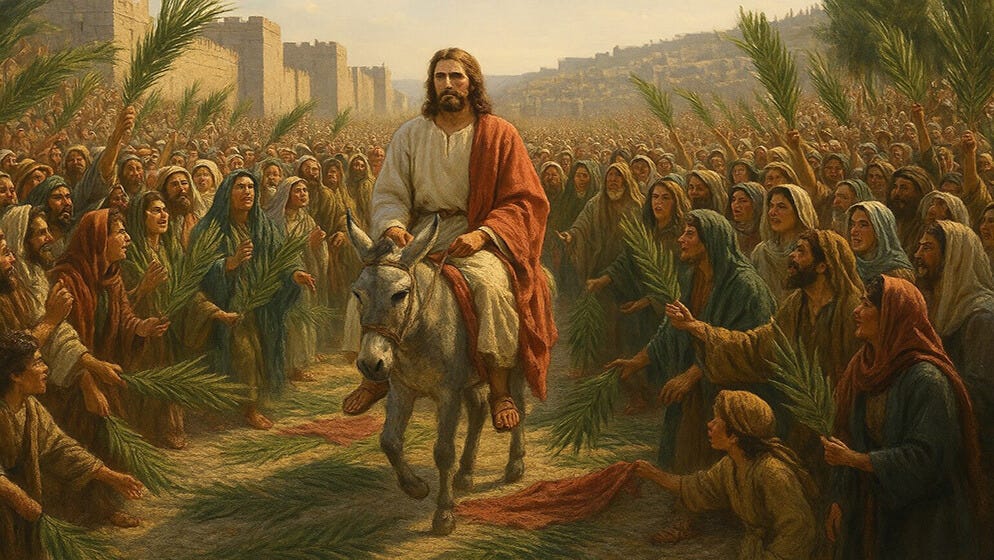
The simple answer is that they probably didn’t. There were two groups of people. The Matthew account of the Triumphal Entry clearly delineates between the two.It was a pilgrimage to Jerusalem.Jesus began telling the disciples that He was going to Jerusalem to die months before this trip. The book of Matthew records three separate instances where Jesus told his closest followers of his plan to go to Jerusalem where He would be tried and crucified. The first was when they were in the far north near Caesarea Philippi (Matthew 16:21-23), the second was just after the transfiguration (Matthew 17:22-23), and the third was on the road as they traveled toward Jericho on their way to Jerusalem (Matthew 20:17-19).The timing of this journey was significant. Jesus was going to Jerusalem for the Passover. Jews from all over the world were making this same trip at the same time. Jesus chose this timing on purpose. Any Jew listening to Matthew being read for the first time would recognize the significance of the timing and would be able to picture in their own minds the events as they unfolded.…Read the rest of the post here or just listen to the podcast. Get full access to the Proclaim & Defend Podcast at proclaimdefend.substack.com/subscribe

We continue our interviews with authors from our January/February edition of FrontLine on the theme: “It Takes a Church to Grow a Pastor.”This week our guest is Matt Klassen. His article is his own testimony about his call into the ministry after a long career in a field we don’t usually think of as a training ground for ministry. He’ll tell you all about that as he talks about how the Lord brought him to faith in Christ, then grew him in the local church to the point where he realized he could best serve the Lord in the ministry.We hope this conversation is a blessing to you, but even more importantly, maybe for some it might serve as a spark to taking a step into full time ministry in a local church. There is a crying need for more pastors, perhaps someone who is listening should take that step, or you know someone who might well serve in this way. If the latter is the case, send the link to that someone and see what God might do.Before we get to the interview with Matt, let me remind you that his article is available on our substack right away for paying subscribers. We have previews for everyone else. I hope you will join with us and support the ministry of the FBFI by becoming a paying subscriber.Now, for my interview with Matt Klassen.The Contents & Editorial for the January/February FrontLine:It Takes a Church to Grow a Pastor [FrontLine]The Article:The Second-Career Call - the Proclaim & Defend Podcast Get full access to the Proclaim & Defend Podcast at proclaimdefend.substack.com/subscribe
Note: Position statements of the FBFI are not the same as magazine articles on FrontLine or typical posts on Proclaimanddefend.org. They are crafted in a committee during our Winter Board Meeting, discussed by the assembled board members, edited by the board, and published as a collective statement of the position of our board on a particular subject. We do this when we believe it is important for us to speak with unity on a matter of great importance. With the rise of antisemitism among evangelicals, we believe we need to speak clearly on this subject. This is a statement from February 2026.Position Statement 26_03: The Jewish People and IsraelTheological Foundations* In His grace, for the sake of His glory, and to accomplish His redemptive and kingdom purposes, God chose Israel to be His representative people among the nations (Ex 4:22; Lev 20:26; Deu 26:18-19) and made a covenant with them at Mount Sinai (Ex 19– 20; Deu 5:1-2). Although Israel broke this covenant and God dispersed them among the nations, He has not repudiated, but rather has reiterated, His promise to restore and use them in the future (Lev 26:44-45; Rom 11:25-29).* In the present age the majority of the Jewish people remain in unbelief, rejecting the Gospel of Jesus the Messiah, although a remnant is being saved through the preaching of the Gospel and faith in Christ (Rom 11:1-6). They, along with believing Gentiles, are being incorporated into one spiritual body in Christ, His Church (Eph 2:14-18).* The current unbelief of the majority of the Jewish people in the Messiah does not mean that God has repudiated His calling of them or annulled His promises to them (Rom 11:1-2, 25-32). When Christ returns in glory, the Jewish People will acknowledge Jesus as their Messiah and will enter the Millennial Kingdom with Christ as their King (Jer 30:9; 31:31-34; Zech 12:10–13:1; Rom 11:26). This will be a time of blessing for the Gentile nations as well, which will also become the people of the Lord (Gen 12:3; Ps 22:27-28; Isa 19:23-25; Amos 9:12; Zech 2:11).* From the time of Pentecost until the Rapture, the Church is God’s ordained mediatorial institution in the world. Although the Church shares in some of the blessings of the New Covenant promises that God made to Israel and exceeds Old Testament Israel in spiritual privileges, the Church is neither a continuation of national Israel nor a replacement for Israel in God’s plan.Antisemitism* Antisemitism, hostility toward the Jewish people, is evil. God is not a respecter of persons. No one on account of his or her religious or ethnic background is precluded from the grace of God (Acts 10:34-35).* Antisemitism has various motives, including religious, social, political, ideological, and racial. Throughout history, it has been reflected in bigotry, blood libel, conspiracy theories, pogroms, confiscation of property, and even genocide. Regardless of its manifestation, antisemitism ultimately is satanic in origin (Rev 12:1-6; 13-17; 1 Chr 21:1; Zech 3:1-2).* The reality and horrors of the Holocaust are among the best documented facts in modern history and attempts to deny or minimize it are both historically indefensible and morally repugnant.* Antisemitism is contrary to Scripture. Gentile believers are specifically admonished by God not to look down on the Jewish people (Rom 11:13-18), rather they owe a great debt to Israel as the instrument through which God gave us His Word and His Christ (Rom 3:1-2; 9:1-5; 15:27). Bible-believing Christians should be especially wary of false teachers that seek to justify antisemitism based on professed loyalty to Christianity or other alleged theological reasons.Jewish Evangelism* Everyone born into this world, Jewish and Gentile alike, is under the condemnation of God and needs salvation through Jesus Christ (Rom 3:9). Christ loved and died for us all, and everyone who trusts in the Lord Jesus Christ will be saved. The good news of salvation in Jesus Christ is for Jews and Gentiles without distinction (Rom 1:16).* Jesus is the true Messiah (Mat 16:16-17; John 20:31) and Suffering Servant (Isa 52:13–53:12; Acts 8:35), Who gave His life for His people (Mat 1:21; John 11:49-52). Therefore, Jewish evangelism is not antisemitic, but rather, it is a manifestation of God’s love for the Jewish people (John 3:16; Rom 9:1-5; 10:1) and should be encouraged (Acts 20:21; 1 Cor 9:19-20). As with all people, believers’ interactions with the Jewish people should be culturally sensitive and avoid giving offence where truth and principle are not involved (1 Cor 9:19-20;10:32).The Mosaic Law and Jewish Customs* The Scripture is clear that believers (whether Jew or Gentile) are not under the Law of Moses (Rom 6:14; Gal 3:23-25; 5:18). Old-covenant ceremonies are not binding on Jewish Christians, must not be imposed on the Gentiles, and may not be commended either as a as a condition for full fellowship with God or other believers or as a means of sanctification (Gal 3:3; Col 2:16-17; Heb 10:1).The Modern State of Israel* Zionism, understood as the belief that the Jewish people should be able to live as a nation in their ancestral homeland, is not inconsistent with God’s Word. The reestablishment of the nation of Israel in 1948 can reasonably be seen as a manifestation of God’s electing love for ethnic Israel and as a token of His intention to fulfill his promises to them in the eschatological future.* While affirming that God will bring His chosen people, Israel, back to their Jewish homeland in fulfillment of Biblical end-time prophecy, we reject the idea that Jews must be in the land before the Lord can Rapture the Church. We believe that the next event on the prophetic calendar is the Rapture.* Meanwhile, there is no valid theological objection to Christian people supporting the right of the Jewish people to a homeland or the right of the modern State of Israel to exist.* From the standpoint of geopolitics, the nation of Israel was created in 1948 in accordance with United Nations Resolution 181. Israel’s legitimacy has been recognized by the majority of nations, and by the United Nations, of which Israel has been a member state since 1949. Nevertheless, Israel’s existence was opposed by the Arab leadership and allied states, which initiated wars against Israel, and which fomented numerous terrorist acts against Israel and Israelis, including the October 7, 2023, attack, a reprehensible act of state-sponsored terrorism against innocent civilians.* Like other nations, Israel has the right to defend its people and its territorial integrity from invasion and terrorism. Also, like other nations, the policies of Israel’s government are subject to criticism on political and moral grounds. While affirming that God blesses those who bless the Jewish people, we reject the idea that the political positions of the nation-state of Israel at any given time must be supported unconditionally.* The suffering of innocent people as a result of terrorism and warfare is a tragic consequence of sin that should grieve God’s people. However, in a fallen world, the responsibility of national self-defense is necessary for the protection of the people and the nation (Rom 13:1-3; Isa 1:17), and governments cannot be expected to abandon that responsibility in order to avoid all harm to the innocent.* Christians should pray for all the people of the Middle East, for the success of the Gospel there, and for the peace of Jerusalem (Ps 122:6-9), recognizing that there will be no ultimate peace until the coming in glory of the Prince of Peace (Isa 9:6). Get full access to the Proclaim & Defend Podcast at proclaimdefend.substack.com/subscribe
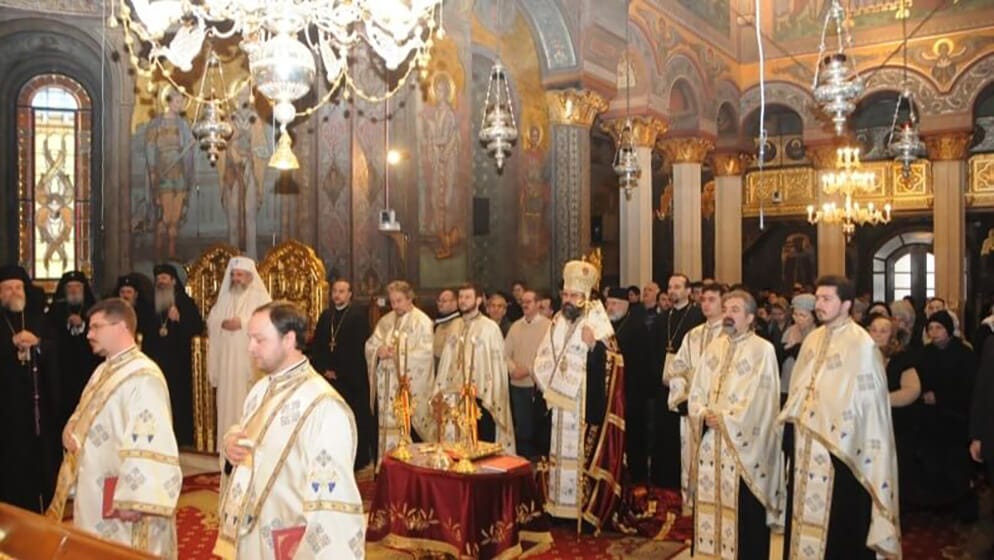
A young man recently started on a journey to find God and a biblical place to worship. His friends were investigating Eastern Orthodoxy because it has an extremely prominent representation on Youtube. As he began visiting evangelical mega churches and asking about the differences, he was met with vapid answers.“Well, we are just glad you are showing an interest in religion.”“Maybe our church isn’t for you, and Eastern Orthodox is a better fit.”Evangelical church leaders are treating the Orthodox Church like it is another denominational option and not what it actually is—another religion altogether. Three articles might help us wrap our brains around what is happening right now with young men especially.Why young men are leaving traditional churches for “Masculine” Orthodoxy.This article in the NY Post explains the explosion of interest in the Easter Orthodox Church among young people. Its conclusions are eye-opening. …Read the rest of this article here, or just listen to the podcast. Get full access to the Proclaim & Defend Podcast at proclaimdefend.substack.com/subscribe
We continue our interviews with authors from our January/February edition of FrontLine on the theme: “It Takes a Church to Grow a Pastor.”This week it is Jeff Caupp, his article is on Mentoring, a subject that was much talked about a few years ago, but his emphasis is a bit different. Of course, we want to reach out to those who are growing as leaders and help them as much as possible, but each leader has a key limitation. He is one man, and secondly, there are only so many hours in a day.Jeff’s emphasis is that we should especially concentrate on mentoring (or discipling) other leaders so that they can turn around and lead their own sons, first of all, and then others in their sphere of influence.We had a very interesting discussion a few weeks back and are airing it for you today. I hope it is a blessing to you.As always, Jeff’s article is available on our substack right away for paying subscribers. We have previews for everyone else. I hope you will join with us and support the ministry of the FBFI by becoming a paying subscriber.And now for my interview with Jeff Caupp.The Contents & Editorial for the January/February FrontLine:It Takes a Church to Grow a Pastor [FrontLine]The Article:Mentor the Mentors: A True Call to Ministry Get full access to the Proclaim & Defend Podcast at proclaimdefend.substack.com/subscribe

We won’t always agree. No, let me rephrase that. We won’t ever agree—on everything doctrinal and practical about the faith.History indicates this and the Bible recognizes it. The Apostle Paul recognizes this in the early church regarding worship choices. Historically, Baptists have also recognized this in one of the key Baptist Distinctives—individual soul liberty and responsibility.We will all give account to God individually for the things we believe and practice. We will not be able to hide behind the Church, Church leaders, or a denominational structure.Theological BoundariesBut we also must somehow determine what essential obedient Christianity looks like. Theologically, the early fundamentalists were not trying to determine what was obedient or not, but rather the theological boundaries of true Christianity. They wrangled and battled over the “fundamentals” and eventually settled on a consistent set of doctrines that comprised essential Christianity. They called these doctrines the Fundamentals and we have discussed them often over the years.They put a fence around the playground of Christianity and said that once you cross the fence, you can no longer legitimately call yourself Christian.Moral boundaries.Paul does not draw just theological boundaries, but also moral boundaries around the faith, in 1 Corinthians 5:9-11. ….Read the rest of the post here, or just listen to the podcast. Get full access to the Proclaim & Defend Podcast at proclaimdefend.substack.com/subscribe

Today we begin our interviews with authors from our January/February edition of FrontLine on the theme: “It Takes a Church to Grow a Pastor.”I’ve got Dave Shumate with me to talk about this issue and his article in the magazine. Dave is a regular on the podcast and this time is what we call the “Associate Editor” for this edition of the magazine. That means he was involved in setting the theme and recruiting the authors for this edition.We talk about the theme and its emphasis on the whole church being involved in the process of bringing men into the ministry. This has been the experience of many, and several of our articles are testimonies from men about how their local church experience led them into the ministry. Dave’s article is one of these.In the church, there is a growing awareness that the average age of pastors is increasing and the number of churches without pastors is increasing as well. I don’t know if there is a quick fix to this, but as we discuss in the interview, if churches can get into a Great Commission mindset, reaching out into the lives of others in their communities, our churches should be producing pastors.The article featuring the magazine is already available on the Proclaim & Defend website, we will put the link in the notes.For Dave’s article, I’ll mention that his article is available on our substack right away for paying subscribers. We have previews for everyone else. I hope you will join with us and support the ministry of the FBFI by becoming a paying subscriber.The Contents & Editorial for the January/February FrontLine:It Takes a Church to Grow a Pastor [FrontLine]The Article:The Power of Radical Hospitality Get full access to the Proclaim & Defend Podcast at proclaimdefend.substack.com/subscribe

I must admit that I had not been keeping up with Child Evangelism Fellowship and its premier way of sharing the gospel with children—the Wordless Book.The Wordless Book uses simple colors as a framework for sharing the gospel. My mother trained with CEF before she was married and considered joining the organization as a missionary. I was first introduced to the Wordless Book before I could even speak the colors of its pages. She and my father continued to participate in Good News Clubs in public schools well into their 80’s. The Wordless Book was always part of their gospel presentation.However, the presentation changed over the years. …Read the rest of this post here, or just listen to the podcast. Get full access to the Proclaim & Defend Podcast at proclaimdefend.substack.com/subscribe

We are wrapping up our interviews for the November/December issue of FrontLine with this podcast. This interview is unique among all the others for this issue of the magazine as it combines the theme “Raising Children to be Adults in an Adolescent World” with a chaplains report.Alan Ashley is an FBFI endorsed chaplain with the Boy Scouts of America. As his son was growing up, he had a lot of involvement in Scouting and continues to have as a chaplain. You will hear some great accounts of what Alan is doing with Scouting these days, it’s really a blessing to see him have this opportunity.We also discuss some of the controversy around recent changes to the Boy Scouts. Alan has thought through his position very carefully and still has a tremendous opportunity to share the gospel in the organization. He also gives us insight in how to get involved if anyone is interested.Now, let me remind you that Alan’s article is available on our substack right away for paying subscribers. We have previews for everyone else. I hope you will join with us and support the ministry of the FBFI by becoming a paying subscriber.The Contents & Editorial for the November/December FrontLine:Raising Children to be Adults in an Adolescent World [FrontLine Nov/Dec 2025] – Proclaim & DefendThe Article:The World at Our Doorstep: Chaplaincy Ministry to Scouting America Get full access to the Proclaim & Defend Podcast at proclaimdefend.substack.com/subscribe

We took a few weeks off over Christmas and are just now getting going once again. Today’s interview also comes from our November/December FrontLine magazine, which had the topic “Raising Children to be Adults in an Adolescent World.”In this interview, I’m interviewing Emily Haynes, whose article was called “Fostering Resilience in Young Adults.”I really enjoyed having this conversation with Emily and then enjoyed it a second time while editing it. I hope you find it profitable as you think about your interaction with young people in your home and church.Our recording software has an AI component that gives us a summary of our session. I thought I’d read its summary of this conversation to give you a sense of where we are going with it:In this conversation, Emily Haynes discusses the importance of fostering resilience in young adults, emphasizing the need for purpose, community, and mentorship. She shares insights from her experiences as dean of women at Maranatha Baptist University and highlights the challenges faced by today’s youth, particularly in the context of social media and emotional health. The discussion also touches on the role of the Christian community in supporting young people and the significance of discipleship in building resilience and purpose.There you have it. We’ll commence shortly, but first let me remind you that his article is available on our substack right away for paying subscribers. We have previews for everyone else. I hope you will join with us and support the ministry of the FBFI by becoming a paying subscriber.Maybe I should also mention that this interview works out to be Interview 100 in our series. I’m not sure why we put significance behind round numbers like that, but here we are. We are counting, if no one else is!The Contents & Editorial for the November/December FrontLine:Raising Children to be Adults in an Adolescent World [FrontLine Nov/Dec 2025] – Proclaim & DefendThe Article:Fostering Resilience in Young Adults Get full access to the Proclaim & Defend Podcast at proclaimdefend.substack.com/subscribe

“We need more young people in the church!” I hear this cry in lots of smaller churches across the country. Why would God give your church more young people, if the older people are spiritually stagnant and unwilling to sacrifice to build and encourage the next generation? Could it be that the problem in your church is you, not them?Revival always starts with me.For I know that this will turn out for my deliverance through your prayer and the supply of the Spirit of Jesus Christ, according to my earnest expectation and hope that in nothing I shall be ashamed, but with all boldness, as always, so now also Christ will be magnified in my body, whether by life or by death. 21 For to me, to live is Christ, and to die is gain. Philippians 1:19-21Sometimes the hardest people in the church to motivate for Christ, are older believers. There is a revival among young people happening around the world. We are seeing young singles and couples returning to church in record numbers. They are coming to faith in Christ, and their lives are transforming. But for this to continue, we need a “revival among older believers.” Let me explain by using the Apostle Paul as an example.Consider the Apostle Paul when he wrote these words, not as an admonition to us, but as an explanation about how he was thinking about the last few years of his existence on earth. He was facing death but also knew he had some time left. He explains what he was thinking about himself, Christ, heaven, and others and how he intended to transform that thinking into his daily activity. These are his driving principles as he faced the end of his life. …Read the rest of this post here, or just listen to the podcast. Get full access to the Proclaim & Defend Podcast at proclaimdefend.substack.com/subscribe
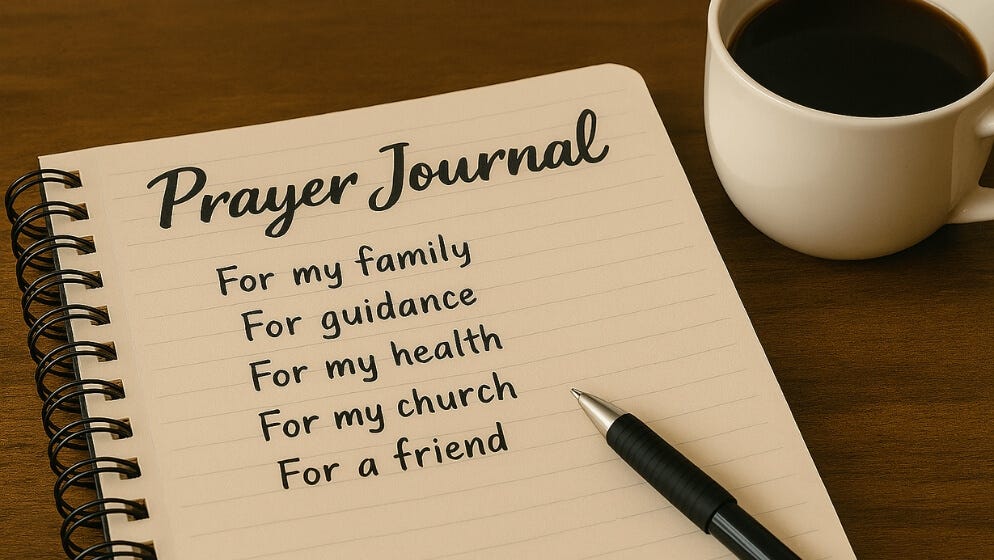
Instead of making New Year’s resolutions, write down a New Year’s prayer list. It is more advantageous, and it keeps our plans and goals for the coming year where they should be—in submission to the will of God. Start life change with prayer. Bathe life-change in prayer. Celebrate life-change with rejoicing in prayer.Let’s consider what a New Year’s prayer list might look like.Pray for yourself.Psalm 25:4-5 says, “Show me Your ways, O Lord; teach me Your paths. Lead me in Your truth and teach me, for You are the God of my salvation; on You I wait all the day.”What do I know is God’s will for me in the coming year? Consistent devotional and prayer time? Increased Spirit empowered self-discipline? Better stewardship of my finances, time, relationships, opportunities? Do I even know. My first prayer request is to ask Him to show me what I should pray for myself in the coming year. It should be my lead request every day.Read the whole post here: Make a Big Bold Prayer List for the Coming Year – Proclaim & Defend or just listen to the podcast. Get full access to the Proclaim & Defend Podcast at proclaimdefend.substack.com/subscribe

When His disciples heard it, they were greatly astonished, saying, “Who then can be saved?” 26 But Jesus looked at them and said to them, “With men this is impossible, but with God all things are possible.” (Matthew 19:25-26)This is the time of year for making resolutions. These are goals set for the year in which we seek to improve ourselves and our lives. It is usually about matters of habit and self-discipline.* Exercise more* Eat better* Sleep better* Stop smoking, drinking, etc.* Spend less* Save more* Manage time betterWe want to make better choices, be better people.Most people fall flat with their New Year’s resolutions because what they really want is to change the window dressing in their lives rather than things that are at the core of their being.We want to add good stuff to our lives.The young man that came to Jesus in Matthew 19 wanted to know what he needed to add to his already righteous life to have assurance of the Kingdom of Heaven. …Read the rest of this post here, or just listen to the podcast. Get full access to the Proclaim & Defend Podcast at proclaimdefend.substack.com/subscribe

Pain? Sure. Hardship? Yes. Poverty? OK. Hard work? Count me in. Death? That one is very hard, but yes.Public humiliation? Uh, maybe not.Honor, duty.We value these things highly. Civil War commanders sent rows of young men to near certain death with the words “What will your family think of you if you run?!”Speech teachers know that fear of speaking in public rates higher for many than the fear of death. Which leads me to conclude that some people would rather die than speak in public! Of course, the root of that fear is the possibility of embarrassing yourself before a crowd of people. This is one of the reasons that the Christmas story is so noble in the sacrifice of the main characters. …Read the rest of this post here, or just listen to the podcast. Get full access to the Proclaim & Defend Podcast at proclaimdefend.substack.com/subscribe

We are talking to authors from our November/December FrontLine magazine, which had the topic “Raising Children to be Adults in an Adolescent World.”Our author this time is Matt Davis, the Chief Executive Officer at Maranatha Baptist University. His article was called, “A Mother’s Faith: The Forge of a Biblical Leader.” He was looking at the passages in the Scriptures that mention Jochebed, mother of Moses, and applying the principles observed to parenting children in our present world.In our conversation, we cover a wide range of topics including the importance of authentic parenting, cultural challenges, and the influence of especially mothers on their children. We talked about the need for godly motives in parenthood, the impact of technology, and the fleeting nature of childhood, while also addressing modern fears sparked by our secular world and its godless worldview.Some of the key points in our discussion were:* Parents are primary actors in their children’s lives but not the main characters.* Jochebed’s counter-cultural influence on Moses highlights the importance of early childhood education.* Godly motives for parenthood include viewing children as blessings.* Authenticity in parenting is crucial for instilling faith in children.* Fear can paralyze parents, preventing them from engaging with the world.* Technology poses challenges but can be managed with accountability.* The fleeting nature of childhood necessitates prioritizing time with children.Our goal in this conversation was to reinforce Biblical ideas you’ve probably already heard about Christian parenting. At times, you will feel overwhelmed by the challenges of parenting, we want you to rely on God to overcome all those challenges.Before we get to the interview with Matt, let me remind you that his article is available on our substack right away for paying subscribers. We have previews for everyone else. I hope you will join with us and support the ministry of the FBFI by becoming a paying subscriber.Now, for my interview with Matt Davis.The Contents & Editorial for the November/December FrontLine:Raising Children to be Adults in an Adolescent World [FrontLine Nov/Dec 2025] – Proclaim & DefendThe Article:A Mother’s Faith: The Forge of a Biblical Leader Get full access to the Proclaim & Defend Podcast at proclaimdefend.substack.com/subscribe

Comments

Download from Google Play

Download from App Store
 United States