


The Explanation
Subscribed: 10,146Played: 192,977
Subscribe

© (C) BBC 2026
Description
Where the world is explained. Making sense of the big stories - looking behind the spin. Exploring the important questions about long-running stories and the latest global news. An honest, unvarnished, explanation of the world.
Featuring new episodes of The President's Path, Unspun World with John Simpson, and The Media Show.
304 Episodes
Reverse
Sumi Somaskanda, Caitriona Perry and Bernd Debusmann discuss how The president's attitude towards the people of Iran has changed - from saying he would help them to threatening to destroy Iranian civilisation. They also look at how his actions are being viewed at home and the political consequences of this war for President Trump. Every weekend, The President’s Path explores the state of US politics in Washington and beyond. We dig into the key issues shaping America and uncover what’s on the minds of those closest to power.
Ronan Farrow, perhaps the world’s most prominent investigative journalist, has turned his attention to Sam Altman, CEO of OpenAI. The investigation, published by The New Yorker, draws on more than a year of reporting. Farrow outlines how it was conducted and the questions it raises about power and influence in AI. Madhumita Murgia, AI Editor at the Financial Times, gives her analysis of the issues at the heart of the report, including how the media covers leading figures in Silicon Valley.
Also on the show, Misha Glenny discusses his podcast The Race to Control the World, as well as his role as the new presenter of In Our Time.Presenter: Katie Razzall
Producer: Lisa Jenkinson
Content producer: Lucy Wai
Sound engineer: Pat Sissons
Sumi Somaskanda, Caitriona Perry and Bernd Debusmann discuss the impact the US-Israel war with Iran is having on the US and President Trump’s relationship with his allies. With no end date in sight - and an escalation of oil prices - where does this leave President Trump at home in the US and in the world?Every weekend, The President’s Path explores the state of US politics — in Washington and beyond. We dig into the key issues shaping America and uncover what’s on the minds of those closest to power. You can contact us at: path@bbc.co.ukSenior Producer: Clare Casey
Executive Producer: Anna Holford
Artificial intelligence is starting to change how some journalists work, as newsrooms test whether it can help produce more content. One reporter says AI is now helping him write more than 600 articles a year. Nick Lichtenberg, Business Editor at Fortune, Jane Martinson, Professor of Financial Journalism, City, University of London, and Max Goldbart, International TV Co-Editor, Deadline, discuss the pros and cons of letting AI into the newsroom.
Two major court cases in the United States have put fresh attention on social media and its impact on young users. In Los Angeles, a jury found Meta and Google liable after deciding their platforms were intentionally designed to be addictive. In New Mexico, Meta was ordered to pay damages over claims it misled users about child safety. Lily Jamali, BBC North America Technology Correspondent, outlines developments from Silicon Valley, and Aza Raskin, co-founder of the Centre for Humane Technology, reflects on the design of features such as infinite scroll.
In the UK, new research is being developed to understand how social media affects teenagers. A large study involving thousands of students will test limits on usage, alongside a government-backed pilot looking at restrictions for under-16s. Professor Amy Orben, psychologist at the University of Cambridge, explains how the research will work and what it aims to measure.Presenters: Katie Razzall and Ros Atkins
Producer: Lisa Jenkinson
Content producer: Lucy Wai
Sound engineer: Mark Pickett
Sumi Somaskanda, Caitriona Perry and Bernd Debusmann discuss how US-Israel strikes on Iran have developed into an economic conflict, too – a battle over energy, with a small body of water right at the centre. Every weekend, The President’s Path explores the state of US politics — in Washington and beyond. We dig into the key issues shaping America and uncover what’s on the minds of those closest to power. You can contact us at: path@bbc.co.uk
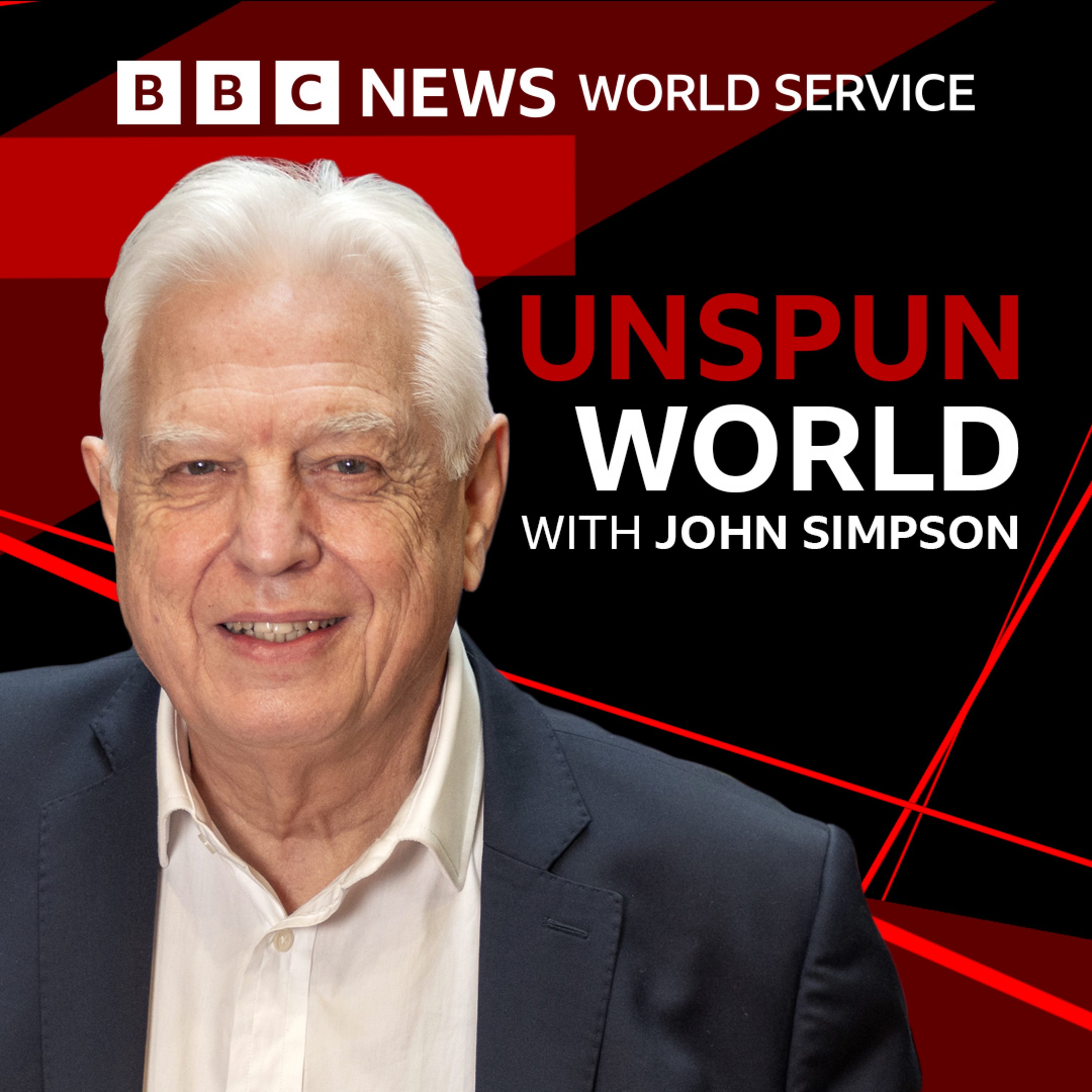
John Simpson, in discussion with the BBC’s unparalleled range of experts across the world, analyses Donald Trump’s decision to call a halt to US attacks against Iran’s power plants, examines what the future might hold for the Iranian people, and explores the significance of the first manned journey to the Moon in half a century.Producer: Kate Cornell
Executive producer: Benedick Watt
Commissioning editor: Vara Szajkowski
Donald Trump’s phone number is apparently not impossible to come by – but there’s also a strategy as to what time of day to call. Edward Luce of the Financial Times and Max Tani, media editor at Semafor, discuss tactics.
Matt Brittin has been appointed as the BBC’s new Director General, following a long career at Google where he led operations across Europe, the Middle East and Africa. Alex Farber, Media Correspondent at The Times, gives his assessment.
A new BBC podcast, Everything is Fake (and Nobody Cares), addresses questions around misinformation and shifting audience trust in the world around us. Presenter Jamie Bartlett outlines the themes behind the project.Presenters: Ros Atkins and Katie Razzall
Producer: Lucy Wai
Assistant Producer: Emily Channon
Researcher: Ruth Waites
Technical Coordinator: Mark Dickins
Sound: Sarah Kimberley
Sumi Somaskanda, Caitriona Perry and Bernd Debusmann discuss the impact the US-Israel war with Iran is having on ties with some of Washington’s closest global allies. Nato countries say it’s not their war – and some Gulf states are dealing with the realities of being dragged into a conflict they did not start. With no sign of fighting easing, where does this leave President Trump in the world?
Every weekend, The President’s Path explores the state of US politics — in Washington and beyond. We dig into the key issues shaping America and uncover what’s on the minds of those closest to power. You can contact us at: path@bbc.co.uk
Senior producer: Ellyn Duncan
Editor: Silvia Costeloe
Executive producer: Anna Holford
John Simpson, in discussion with the BBC’s unparalleled range of experts across the world, analyses the economic effects of the war in the Middle East, explores how the conflict is actually helping Russia, and looks at how the escalating tensions between Hungary and Ukraine might affect the upcoming elections in Hungary. Producer: Kate Cornell
Executive producer: Benedick Watt
Commissioning editor: Vara Szajkowski
A small number of international journalists have been allowed into Iran following the start of conflict involving the US and Israel. CNN’s Frederik Pleitgen describes his experience.The 98th Academy Awards took place as viewing figures continue to fall and the film industry faces wider change. Tom Brook, Correspondent, BBC News, and Katey Rich, Awards Editor, The Ankler, outline changes in awards coverage and the relationship between Hollywood and the media.Presenters: Katie Razzall and Ros Atkins
Producer: Lisa Jenkinson
Assistant Producer: Laura Cain
Researcher: Ruth Waites
Sound: Jack Wilfan
Technical Coordinator: Margot Campanaro
Sumi Somaskanda, Caitriona Perry and Bernd Debusmann discuss the latest on the US-Israel war with Iran. They take stock of the Trump administration’s changing messaging on timelines, and unpack the broader consequences we’re seeing - with the Gulf region brought into the conflict, and the knock-on effects on energy with the disruption to a key shipping route: the Strait of Hormuz.
Every weekend, The President’s Path explores the state of US politics in Washington and beyond. We dig into the key issues shaping America and uncover what’s on the minds of those closest to power. You can contact us at: path@bbc.co.uk
Senior producer: Ellyn Duncan
Editor: Anna Holford
Executive producer: Anna Holford
Caroline Hawley, in discussion with the BBC’s unparalleled range of experts across the world, explores what life in Iran is like as the war intensifies, analyses what the US objectives are for the war and whether they are obtainable, and examines the possibility of a new war in Ethiopia and its implications for the region. Producer: Kate Cornell
Executive producer: Benedick Watt
Commissioning editor: Vara Szajkowski
Ros Atkins is in Washington DC speaking to some of the most influential voices in American journalism. Together, they reveal how very different media organisations are covering President Trump’s war with Iran and how they see the US media landscape at this moment.Jeffrey Goldberg, editor-in-chief of The Atlantic, discusses the magazine’s growth strategy and reflects on ‘Signalgate’ one year on.Mehdi Hasan, editor-in-chief and CEO of Zeteo, explains how setting up his own media company has given him new editorial freedom.The Trump administration’s approach to communication is reshaping reporting rhythms in Washington. The BBC’s North America editor Sarah Smith reflects on President Trump’s media strategy.And the YouTuber Johnny Harris, who specialises in news explainers, takes Ros behind the scenes of his creator-led media company Newpress.
The Strait of Hormuz — the narrow waterway that carries 20% of the world’s oil — is now an active war zone. What in the World tracks the disruption and explains who’s feeling the impact. To hear more, search What in the World wherever you get your BBC podcasts
John Simpson, in discussion with the BBC’s unparalleled range of experts across the world, analyses whether the Iranian regime will survive, looks at what Israel and the United States are aiming to achieve in their war with Iran, and examines whether Iran’s attacks on countries in the Gulf will change the balance of power in the region. Producer: Kate Cornell
Executive producer: Benedick Watt
Commissioning editor: Vara Szajkowski
Events in Iran have led news bulletins, alongside ongoing wars in Ukraine and Sudan. As crises compete for attention, questions are being raised about whether reporting captures a wider shift in global power or centres on immediate developments. Christina Lamb, Chief International Correspondent at The Sunday Times, Aaron Bastani, co-founder of Novara Media, and Sir John Tusa, former Managing Director of the BBC World Service, discuss the media’s role in uncertain times.
The Green Party’s victory in the Gorton and Denton by-election in the north of England, overturning a previously safe Labour seat, has prompted debate about political reporting in the UK. Rachel Cunliffe, Associate Editor at The New Statesman, explains her approach.
At the age of 90, Sir John Tusa has launched a new interview podcast, The Best is Yet to Come, featuring conversations with public figures in their nineties. The series enters a crowded podcast market and raises questions about how older voices are represented in the media. Production credits
Presenters: Katie Razzall
Producer: Lisa Jenkinson
Content Producer: Lucy Wai
Researcher: Ruth Waites
Technical Coordinator: Margot Campanaro
Sound: Pat Sissons
Sumi Somaskanda, Courtney Subramanian and Fin Gomez look at one of the most talked-about Senate races - the Texas primaries. For Republicans, it is about who can win the President’s endorsement. For Democrats, success here could shape party strategy for months and years to come.
Every weekend, The President’s Path explores the state of US politics in Washington and beyond. We dig into the key issues shaping America and uncover what’s on the minds of those closest to power. You can contact us at: path@bbc.co.uk
Senior producer: Ellyn Duncan
Editor: Silvia Costeloe
Executive producer: Anna Holford
John Simpson, in discussion with the BBC’s unparalleled range of experts across the world, explores the mood in Ukraine after four years of war, examines how the war has changed Russia, and looks at whether Russia’s long sporting isolation is coming to an end.Producer: Kate Cornell
Executive producer: Benedick Watt
Commissioning editor: Vara Szajkowski
An image of Andrew Mountbatten Windsor leaving police custody made front pages around the world. It quickly became the defining picture of the latest stage in the crisis linked to Jeffrey Epstein. Suzanne Plunkett, Chief Photographer at Reuters, outlines how her colleague Phil Noble secured the shot, and Arthur Edwards, Royal Photographer at The Sun, reflects on how single images can frame the narrative around the Royal Family.
Four years after Russia launched its full-scale invasion of Ukraine, the war has settled into a long and grinding conflict. Fighting has spread across a wide front, with drone warfare and repeated strikes on infrastructure. As the anniversary is marked, questions remain about how western media attention has shifted. Anthony Loyd, Special Correspondent at The Times, reflects on reporting from the region, and Olga Malchevska, Correspondent at BBC News, considers how the war is being covered across Eastern Europe.Presenters: Katie Razzall and Ros Atkins
Producer: Lisa Jenkinson
Assistant Producer: Lucy Wai
Production Coordinator: Ruth Waites
Technical Coordinator: Ozgur Cevik
Sound: Allyson Purcell-Davis
On this episode: Sumi Somaskanda, Bernd Debusmann and Fin Gomez look ahead to next week’s State of the Union address. It’s a chance for President Trump to talk up his achievements one year back in office - and lay out his vision for the year ahead. What do we expect to see – and what surprises could pop up?
Every weekend, The President’s Path explores the state of US politics — in Washington and beyond. We dig into the key issues shaping America and uncover what’s on the minds of those closest to power. You can contact us at: path@bbc.co.uk
Senior Producer: Ellyn Duncan
Editor: Amrit Cheema
Executive Producer: Anna Holford


Download from Google Play

Download from App Store
 United States
Cars are built in Canada partly because the US car companies cannot afford to pay the cost of health insurance benefits for their workers. Canada has a national healthcare plan and employers can pay a relatively small amount to add an enhanced private plan. In the US the cost is astronomical.
And PLEASE stop saying that the "West Coast" is more amenable to becoming the 51st state. The West Coast refers specifically to BC and we do NOT feel this way at all. You should say the western provinces, meaning redneck Alberta and Saskatchewan, don't lump us all together!!! BC is the West coast and we are proud Canadians.
It's ridiculous. If voters switched their support from Polievre to Carney because they thought he was more mature and could handle Trump better... why would they have even consider Polievre at all?? He made mistake after mistake, and instead of being a check and balance to the liberal party, it seemed there was a personal vendetta against Trudeau. He complaining bitterly about EVERY move th PM made. To me, as a Canadian voter, it seemed jealous and petty.
excellent organization
Israel's Sledge hammer, disproportionate and indiscriminate approach has led to thousands of innocent civilian deaths.