


 Claim Ownership
Look West: How California is Leading the Nation
Subscribed: 48Played: 183
Subscribe

Description
Look West - A unique view of the people representing you in the State Assembly who are leading California to a better future for all. A series of conversations with California State Assembly members and the people they represent, the Look West podcast brings you a unique view of the people leading California to a better future for everyone.
131 Episodes
Reverse
Assemblymember John Harabedian’s (D-Pasadena) Mortgage Forbearance Act, has been signed by Governor Gavin Newsom.AB 238, the Mortgage Forbearance Act, provides essential relief to survivors of the Los Angeles Fires by allowing a pause on mortgage payments for up to a year. Fire victims entering into forbearance will not face any penalties or credit damage during the pause in payments. Importantly, the bill also prohibits lenders from requiring lump sum payments at the conclusion of the forbearance period, allowing homeowners to focus on rebuilding.“For months since the fires, survivors have been forced to make two housing payments: one for their temporary rental accommodations and another mortgage payment for a house that either doesn’t exist anymore or is uninhabitable due to smoke and ash damage. AB 238 will ease the financial burden that too many families are facing by allowing them to pause their mortgage payments for up to a year while they get back on their feet,” said Assemblymember Harabedian (D-Pasadena).After the fire, Assemblymember Harabedian worked with the Governor to secure initial commitments of 90-day forbearance periods from nearly 400 lenders in California. AB 238 takes effect immediately. If you encounter any difficulties with your servicer, please notify the Department of Financial Protection and Innovation (DFPI) which is charged with ensuring your rights under this new law are upheld. You can also contact Assemblymember Harabedian’s district office at (626) 351-1917 for assistance.The Governor’s decision has brought us a step closer to recovery.
All year long we've been sharing the immigration stories of our Assembly Democrats, stories that remind us how diverse California really is. Each journey is different, but they all speak to a shared truth. No matter where we came from, we're all Californians. As we close out 2025 Look West looks back at the immigration journeys of Assemblymembers Jose Luis Solache, Jessica Caloza, Juan Carrillo, Celeste Rodriguez, Mike Fong, Alex Lee, Al Muratsuchi, Liz Ortega and Esmeralda Soria.
All this year Look West has been hearing the immigration stories of our Members. Each of their stories is unique but also prove, no matter where we came from or how we got here, we are all Californians now. On this episode, Assemblymember Jessica Caloza tells us about her immigration journey, how her Los Angeles Assembly district is responding to the federal anti-immigration actions and why she co-authored the Birthright Citizenship resolution, AJR5.

Food, Glorious Food…it’s more than just a way to stay alive. Food brings people together. Families gather for meals. Communities gather for picnics, block parties and potlucks. It’s also a way we explore each other’s cultures. Today, “Foodies” are a massive part of the social media world. There’s even an unofficial Foodie Caucus in the State Legislature. We brought a few of the Foodie Members together to sit down at a Sacramento area restaurant and talk about food, its importance to family, community and culture (and the ways the State Legislature helps keep food safe in California). Join Assemblymembers Jose Luis Solache, Stephanie Nguyen and John Harabedian for this tasty discussion.
Birthright citizenship is a fundamental right that has been enshrined in the Constitution for over 150 years. In the wake of the federal government’s assault on this core principle, Assemblymember Alex Lee authored legislation affirming the California Legislature’s commitment to birthright citizenship. Assembly Joint Resolution (AJR) 5 passed the Senate Floor on September 2, and heads to the Assembly Floor for a final vote. On his first day in office, Trump issued an executive order to deny citizenship for children of non-citizen parents. The order, which remains blocked by legal challenges, would strip an entire class of people of the right to vote, work lawfully, access federal benefits, and many other basic rights. It is estimated that 153,000 children nationwide, including 24,500 in California, would see their right to citizenship eliminated if the federal government implemented the executive order. “Birthright citizenship is a bedrock of the American Dream,” said Assemblymember Lee. “We cannot let one President and his cronies abuse their federal powers, undo our long-standing civil rights laws, and redefine who becomes a citizen. AJR 5 shows the nation that the California State Legislature is committed to defending birthright citizenship, and the deep-rooted legal precedent set by the landmark Supreme Court case of Wong Kim Ark.” Birthright citizenship is guaranteed by the 14th Amendment, which was ratified in 1868 following the Civil War. It ensured those who were formerly enslaved the right to citizenship and states: “All persons born or naturalized in the United States, and subject to the jurisdiction thereof, are citizens of the United States and of the State wherein they reside.” Decades later, the Supreme Court Case of U.S. v. Wong Kim Ark in 1898 affirmed birthright citizenship to all those born in the U.S. During a period of anti-Asian racism, San Francisco-born Wong Kim Ark was prohibited from reentering the United States after traveling to China to visit family. Customs agents claimed he was not a citizen because his parents were unable to naturalize and ordered him to be deported. With legal support from the Chinese Consolidated Benevolent Association of San Francisco, he took his case to the Supreme Court and won. In commemoration of the 127th anniversary of the case, AJR 5 honors Wong Kim Ark’s fight for the fundamental right of birthright citizenship, and the legacy that he leaves behind. The bill is sponsored by Chinese for Affirmative Action.

SACRAMENTO, CA – Today, Assemblywoman Celeste Rodriguez (D-San Fernando) introduces her first bill in the 2025-26 legislative session, AB 495 – The Family Safety Plan Act, which will provide support to immigrant and mixed-status families by ensuring safety plans are in place in the event of immigration enforcement actions.“The threats from the federal administration have led to fear in many communities including mine,” said Assemblywoman Celeste Rodriguez. “We must do everything we can to safeguard families from separation and ensure children are supported. AB 495 is a critical tool that will preserve California’s families.”Forty-five percent of California children have at least one immigrant parent. An estimated 1 million children in California have at least one undocumented parent, and approximately 133,000 children in California public schools are undocumented. This bill protects children in immigrant families by ensuring that families have safety plans in place in case of immigration enforcement actions.Assemblywoman Rodriguez represents the 43rd Assembly District, which includes the City of San Fernando and communities across the Northeast San Fernando Valley, including Arleta, Sun Valley, Sylmar, Pacoima, Panorama City, North Hollywood, Lake View Terrace, Valley Glen, Mission Hills and North Hills.

Assemblymember Dr. Corey A. Jackson Advances Legislation to Lower Home Prices and Increase Housing Stock SACRAMENTO — Assemblymember Dr. Corey A. Jackson (D-Moreno Valley) has taken decisive action to address California’s housing crisis by authoring AB 317, the First Time Homeowner Act, a bill designed to boost affordable housing production by eliminating unnecessary regulatory delays. The legislation passed the Assembly Floor last week with strong bipartisan support and now heads to the Senate. California faces a shortage of up to 2 million homes, driving the median price above $800,000. AB 317 directly addresses this by making it easier to build affordable starter homes, especially in underserved regions like the Inland Empire. AB 317 creates a targeted exemption from the California Environmental Quality Act (CEQA) for modest, first-time homebuyer developments. It applies to homes 1,500 square feet or less, with no more than three bedrooms, priced under $400,000, and built specifically for first-time buyers. By streamlining the approval process for these homes, the bill aims to increase supply and reduce costs for working families. “This bill is a commitment to first-time homebuyers and to making California more affordable,” said Assemblymember Dr. Corey A. Jackson. “We can protect the environment and still cut through red tape that blocks families from owning a home. AB 317 is about building homes faster, affordable, and for the future of our communities.” Dr. Jackson’s leadership directly challenges the idea that Democrats are not serious about lowering costs for Californians. AB 317 is a common-sense solution: build more homes, build them faster, and bring down prices through increased supply.

Bill would protect immigrant children from President-elect Donald Trump’s stated plan for mass deportationsTorrance, CA – Assemblymember Al Muratsuchi (D-Torrance), Chair of the Assembly Education Committee, introduced Assembly Bill 49, a bill that would protect immigrant children from actions by U.S. Immigration and Customs Enforcement (ICE) officers who enter school sites or child care facilities. The bill would prohibit school or child care employees from allowing ICE officers to enter a school site or child care facility for any purpose without providing valid identification, a written statement of purpose, a valid judicial warrant, and approval from the school district's superintendent or director of the child care center. The bill also would require that if an ICE official meets the requirements to enter a school site or child care facility, their access would be restricted to school or child care facilities where students or children are not present."All children have a constitutional right to attend public schools, regardless of immigration status," stated Assemblymember Muratsuchi. "Unfortunately, the threat of federal immigration officials coming onto school grounds to detain undocumented students or family members casts a shadow of fear over all California students. Students cannot learn if they are living in fear of being deported or separated from their family members. This bill is necessary because children should not be afraid to come to school, and parents should not be afraid to send their children to school."As during his first term, there is an increased fear of raids by ICE officials at schools and child care centers as President-elect Donald Trump is threatening to deport millions of undocumented immigrants across the United States. President-elect Trump has also threatened to eliminate the U.S. Department of Education. According to the California State Superintendent of Public Instruction's office, this closure would risk around $8 billion in federal funds for California programs serving students with disabilities and low-income students.Assemblymember Al Muratsuchi represents California's 66th Assembly District, which includes El Segundo, Gardena, Hermosa Beach, Lomita, Los Angeles, Manhattan Beach, Palos Verdes Estates, Rancho Palos Verdes, Redondo Beach, Rolling Hills, Rolling Hills Estates, San Pedro and Torrance. Muratsuchi is Chair of the Assembly Education Committee, Chair of the Assembly Select Committee on Aerospace, and a member of the Committees on Budget, Budget Subcommittee on Education, Higher Education, Natural Resources, and the Joint Legislative Committee on Climate Change Policies.
Assemblymember Jacqui Irwin fire recovery videoshttps://a42.asmdc.org/videosCalifornia Volunteers (Ca Service Corps)Josh Frydaycaliforniavolunteershttps://www.californiavolunteers.ca.gov/
California’s Assembly Speaker Robert Rivas and the Assembly Democratic Caucus are working to protect the people of California, its communities and economy by supporting the rights of immigrants. While the new federal administration has shown it has no respect for immigrants, Speaker Rivas and Assembly Democrats are listening to and supporting everyone in our communities. The immigration issue is particularly important in Central California. As part of the Look West Immigration Series Assemblymembers Esmeralda Soria and Liz Ortega join us for a conversation about their personal immigration stories, what rights you need to know and the work they are doing to help.
Not long ago women in the California State Legislature were rare. Today 58 of the 120 state lawmakers are women. That’s double what it was less than 10 years ago. In this episode of Look West, we sat down with the Chair of the Legislative Women’s Caucus, Majority Leader Cecilia Aguiar-Curry, at the Women Inspire exhibit in the California Museum in Sacramento. She talked with us about the impact near gender parity is having the legislature, the power of the Women’s Caucus and what her favorite thing is about having more women in office.

Five years ago, on March 19th, the Governor issued the stay at home order California needed to survive the Covid pandemic. Covid changed our lives. Some of those changes, like Zoom, are here to stay. Assembly Democrats legislative initiatives helped Californians survive the pandemic. On this episode we look back at the onset of the coronavirus pandemic and talk with current lawmakers, including Assemblymember Dr. Darshana Patel, about their personal Covid stories, how it changed the way the legislature works and what needs to be done to prevent another pandemic.

California’s Assembly Democrats are pushing back against the Trump administration’s overreach when it comes to immigration. Even before the new administration took office, exactly one month ago today, Assembly Democrats have been providing immigration information and support to all Californians. Assemblymembers Juan Carrillo and Jose Luis Solache join us for a conversation about their personal immigration stories, what rights you need to know and the work they are doing to help.
The wildfires raging in the Los Angeles area and the 7.3 earthquake off the North Coast of California just over a month ago has put disaster preparedness back in the spotlight. State Assemblymember Chris Rogers knows quite a bit about disaster preparedness. He has hands on experience with wild fires, floods and earthquakes. His advice – prepare now, before the next fire, flood or earthquake.
Meet the other new Members of the Assembly Democratic Caucus in these two episodes:https://look-west-how-california-is-leading-the-nation-22f6dfb5.simplecast.com/episodes/freshman-class-filled-with-moms-dads-teachers-doctors-and-morehttps://look-west-how-california-is-leading-the-nation-22f6dfb5.simplecast.com/episodes/new-faces-join-the-assembly-democratic-caucus-in-2025
Seventeen new faces have joined the Assembly Democratic Caucus. Joining the Caucus for the 2025-26 legislative session are several veterans of local government, advocates and attorneys, Moms and Dads, teachers and educators and more. Each new Member brings their own unique experience and background to the State Assembly. You met seven of the new Members in the last Look West episode. In this episode Look West caught up with five new Members as they were going through their orientation shortly after being elected. (Maggy Krell, Sade Elhawary, Jessica Caloza, Chris Rogers and Patrick Ahrens). You’ll meet five more in next week’s episode.
The incoming class of the Assembly Democratic Caucus includes 17 new faces. Joining the Caucus are several veterans of local government, advocates and attorneys, Moms and Dads, teachers and educators and more. Each new Member brings their own unique experience and background to the State Assembly. In the next three episodes of Look West we will meet them all. In this episode: Assemblymembers Mark Gonzalez, Rhodesia Ransom, Nick Schultz, John Harabedian, LaShae Sharp-Collins, Celeste Rodriguez and Anamarie Avila Farias.
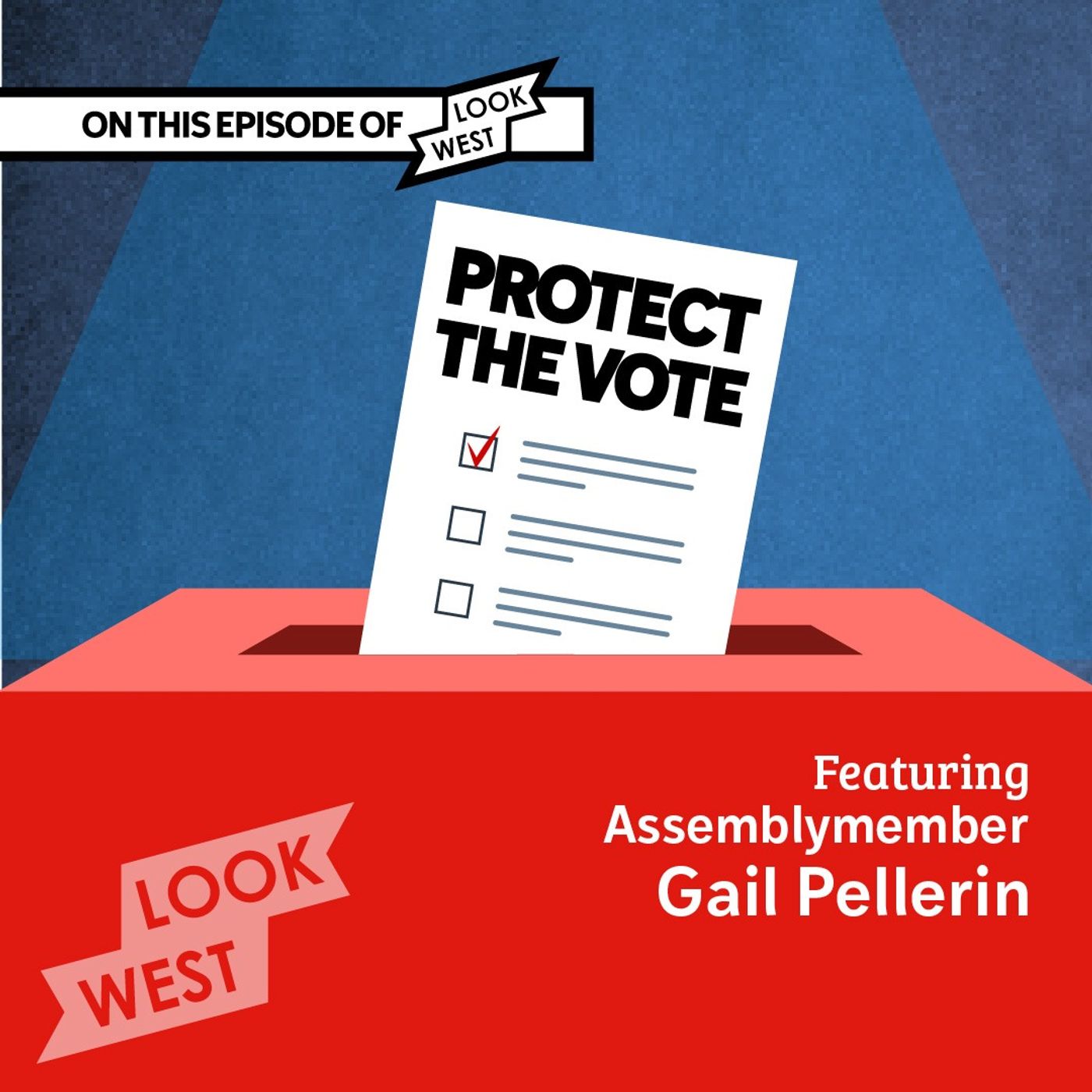
Assemblymember Gail Pellerin proudly announces the signing of Assembly Bill (AB) 2839 into law, marking a significant advancement in the protection of electoral integrity and voter trust in California. This groundbreaking bipartisan legislation, authored by Assemblymember Pellerin and coauthored by 11 legislators, addresses the growing threat of deepfake technology that is used to manipulate and deceive voters with false information related to an election.AB 2839 specifically prohibits the distribution of digitally altered election communications—including mailers, robocalls, and video advertisements—that present false or misleading information pertaining to an officer conducting an election, an elected official, voting equipment, or candidates running for office. The bill acts to safeguard the democratic process from the harmful effects of deceptive deepfake materials by targeting materially deceptive content that is distributed 120 days before an election.The bill prohibits content that is likely to harm a candidate’s reputation or electoral prospects, or to falsely undermine confidence in the election outcome. Under AB 2839, recipients of such content can seek injunctive relief or damages from the distributor. Additionally, the bill mandates that deepfake parody material be clearly labeled as digitally manipulated.“Signing AB 2839 into law is a significant step in continuing to protect the integrity of our democratic process,” stated Assemblymember Pellerin. “With fewer than 50 days until the general election, there is an urgent need to protect against misleading, digitally-altered content that can interfere with the election. By targeting deceptive deepfakes and ensuring transparency in parody content, we are reinforcing the public’s trust in our electoral system. I’m thankful that Governor Newsom signed this legislation to ensure that voters are equipped with the accurate information they need to make informed decisions this November.”The bill will take effect immediately due to its urgency clause, ensuring its provisions are in place well before the November 5, 2024, general election. This timely action reflects California’s commitment to maintaining the integrity of its elections and protecting voters from misleading information.
AB 1778, as amended, Connolly. Vehicles: electric bicycles.Existing law defines an electric bicycle and classifies electric bicycles into 3 classes with different restrictions. Under existing law, a “class 2 electric bicycle” is a bicycle equipped with a motor that may be used exclusively to propel the bicycle, and that is not capable of providing assistance when the bicycle reaches the speed of 20 miles per hour. Under existing law, a “class 3 electric bicycle” is a bicycle equipped with a speedometer and a motor that provides assistance only when the rider is pedaling, and that ceases to provide assistance when the bicycle reaches the speed of 28 miles per hour. Existing law prohibits a person under 16 years of age from operating a class 3 electric bicycle. Existing law requires a person operating, or riding upon, a class 3 electric bicycle to wear a helmet, as specified.This bill would, until January 1, 2029, authorize a local authority within the County of Marin, or the County of Marin in unincorporated areas, to adopt an ordinance or resolution that would prohibit a person under 16 years of age from operating a class 2 electric bicycle or require a person operating a class 2 electric bicycle to wear a bicycle helmet, as specified. The bill would require an ordinance or resolution that is adopted for this purpose to make a violation an infraction punishable by either a fine of $25 or completion of an electric bicycle safety and training course, as specified. The bill would, if an ordinance or resolution is adopted, require the county to, by January 1, 2028, submit a report to the Legislature that includes, among other things, the total number of traffic stops initiated for violations, the results of the traffic stops, and the actions taken by peace officers during the traffic stops, as specified. The bill would require the local authority or county to administer a public information campaign for at least 30 calendar days prior to the enactment of the ordinance or resolution, as specified. The bill would require the local authority or county to only issue warning notices for the first 60 days after the passage of the ordinance or resolution.Existing law defines an electric bicycle and classifies electric bicycles into 3 classes with different restrictions. Under existing law, a “class 2 electric bicycle” is a bicycle equipped with a motor that may be used exclusively to propel the bicycle, and that is not capable of providing assistance when the bicycle reaches the speed of 20 miles per hour. Under existing law, a “class 3 electric bicycle” is a bicycle equipped with a speedometer and a motor that provides assistance only when the rider is pedaling, and that ceases to provide assistance when the bicycle reaches the speed of 28 miles per hour. Existing law prohibits a person under 16 years of age from operating a class 3 electric bicycle. Existing law requires a person operating, or riding upon, a class 3 electric bicycle to wear a helmet, as specified. A violation of the Vehicle Code is a crime.This bill would additionally prohibit a person under 16 years of age from operating a class 2 electric bicycle. The bill would require a person operating, or riding upon, a class 2 electric bicycle to wear a helmet, as specified. The bill would clarify that an electric bicycle can only be placed in a certain class if it ceases to provide assistance when the bicycle reaches a max speed regardless of the mode.Because the bill would prohibit certain persons from riding electric bicycles, the violation of which would be a crime, the bill would impose a state-mandated local program.The California Constitution requires the state to reimburse local agencies and school districts for certain costs mandated by the state. Statutory provisions establish procedures for making that reimbursement.This bill would provide that no reimbursement is required by this act for a specified reason.Digest KeyVote: majority Appropriation: no Fiscal Committee: yesno Local Program: yesno Bill TextTHE PEOPLE OF THE STATE OF CALIFORNIA DO ENACT AS FOLLOWS: SECTION 1.Section 21214.5 is added to the Vehicle Code, to read: 21214.5. (a) A local authority within the County of Marin, or the County of Marin in unincorporated areas, may, by ordinance or resolution, prohibit a person under 16 years of age from operating a class 2 electric bicycle.(b) A local authority within the County of Marin, or the County of Marin in unincorporated areas, may, by ordinance or resolution, require a person operating a class 2 electric bicycle to wear a bicycle helmet, as described in subdivision (b) of Section 21213.(c) An ordinance or resolution adopted pursuant to this section shall make a violation an infraction punishable by a fine of twenty-five dollars ($25) or completion of an electric bicycle safety and training course pursuant to Section 894 of the Streets and Highways Code.(d) (1) If an ordinance or resolution is adopted pursuant to this section, the county shall, by January 1, 2028, submit a report to the Legislature that includes all of the following:(A) The total number of traffic stops initiated for violations.(B) The results of the traffic stops, including whether a warning or citation was issued, property was seized, or an arrest was made.(C) The number of times a person was stopped for allegedly operating a class 2 electric bicycle while under 16 years of age but was found to be over the age limit.(D) If a warning or citation was issued, a description of the warning or the violation cited.(E) If an arrest was made, the offense cited by the officer for the arrest and the perceived race or ethnicity, gender, and approximate age of the person stopped, provided that the identification of these characteristics is solely based on the observation and perception of the peace officer who initiated the traffic stop.(F) The actions taken by a peace officer during the traffic stops, including, but not limited to, all of the following:(i) Whether the peace officer asked for consent to search the person, and, if so, whether consent was provided.(ii) Whether the peace officer searched the person or any property, and, if so, the basis for the search and the type of contraband or evidence discovered.(iii) Whether the peace officer seized any property and, if so, the type of property that was seized and the basis for seizing the property.(G) The number of times a person opted to complete, and did complete, the training course in lieu of paying the fine.(H) The number of times that a person under 16 years of age was operating an electric bicycle and was involved in an accident that resulted in a permanent, serious injury, as defined in Section 20001, or a fatality in the six months prior to adoption of the ordinance or resolution, the cause of the accident, and the class of the electric bicycle that was being operated at the time of the accident.(I) The number of times that a person under 16 years of age was operating an electric bicycle and was involved in an accident that resulted in a permanent, serious injury, as defined in Section 20001, or a fatality in the six months after adoption of the ordinance or resolution, the cause of the accident, and the class of the electric bicycle that was being operated at the time of the accident.(2) A report submitted pursuant to this section shall be submitted in compliance with Section 9795 of the Government Code.(e) A local authority or the County of Marin shall administer a public information campaign for at least 30 calendar days prior to the enactment of an ordinance or resolution pursuant to this section, including public announcements in major media outlets and press releases.(f) A local authority or the County of Marin shall only issue warning notices for the first 60 days after the passage of an ordinance or resolution pursuant to this section.(g) This section shall become inoperative on January 1, 2029, and as of that date is repealed.
AB 3139, as amended, Weber. Data privacy: vehicle manufacturers: remote vehicle technology.Existing law establishes various privacy requirements applicable to vehicle manufacturers, including limitations on the usage of images or video recordings from in-vehicle cameras in new motor vehicles equipped standard with one or more in-vehicle cameras. Existing law provides various protections to persons who are escaping from actual or threatened domestic violence, sexual assault, stalking, human trafficking, and other abuse, including providing for a means to keep the names and addresses of abuse survivors confidential in public records.This bill would, among other things, require a vehicle manufacturer that offers a vehicle for sale, rent, or lease in the state that includes remote vehicle technology to do certain things, including ensure that the remote vehicle technology can be immediately manually disabled by a driver of the vehicle while that driver is inside the vehicle by a method that, among other things, is prominently located and easy to use and does not require access to a remote, online application. The bill would require a vehicle manufacturer to offer secure remote means via the internet for a survivor to submit a vehicle separation notice that meets specified requirements. The bill would define “survivor” to mean an individual who has a covered act committed, or allegedly committed, against the individual. The bill would define “covered act” to mean, among other things, certain crimes relating to domestic violence, dating violence, sexual assault, stalking, and sex trafficking.This bill would require a survivor to submit a vehicle separation notice through the secure remote means described above within 7 days of the date on which the survivor used the method of manually disabling remote vehicle technology and would require the notice to include prescribed information, including a statement by the survivor signed under penalty of perjury that a perpetrator who has access to the remote vehicle technology in the vehicle has committed committed, or allegedly committed committed, a covered act against the survivor or an individual in the survivor’s care, or a copy of specified documents that support that the perpetrator has committed committed, or allegedly committed committed, a covered act against the survivor or an individual in the survivor’s care, including a signed affidavit from, among other specified individuals acting within the scope of their employment, a licensed medical care provider.By requiring a survivor to submit a statement signed under penalty of perjury or requiring specified individuals to sign an affidavit, the bill would expand the crime of perjury and impose a state-mandated local program.This bill would make a vehicle manufacturer that violates the above-described provisions liable in a civil action brought by a survivor for, among other things, reasonable attorney’s fees and costs of the prevailing survivor, in addition to any other remedy provided by law. The bill would specify that any waiver of the requirements of the above-described provisions is against public policy, void, and unenforceable. statutory damages in an amount not to exceed $50,000 or not to exceed $100,000 for a knowing violation.This bill would define various terms for these purposes, purposes and would make related findings and declarations.The California Constitution requires the state to reimburse local agencies and school districts for certain costs mandated by the state. Statutory provisions establish procedures for making that reimbursement.This bill would provide that no reimbursement is required by this act for a specified reason.DIGEST KEYVote: majority Appropriation: no Fiscal Committee: yes Local Program: yes BILL TEXTTHE PEOPLE OF THE STATE OF CALIFORNIA DO ENACT AS FOLLOWS: SECTION 1. The Legislature finds and declares all of the following:(a) Domestic violence, dating violence, stalking, sexual assault, human trafficking, and related crimes are life-threatening issues and have lasting and harmful effects on individuals, families, and entire communities.(b) Survivors of violence and abuse often lack meaningful support and options when establishing independence from an abuser, including barriers of financial insecurity and limited access to reliable communication tools to maintain essential connections with family, social safety networks, employers, and support services.(c) Perpetrators of violence and abuse increasingly use technological and communication tools to exercise control over, monitor, and abuse their victims.(d) Remote vehicle technology, including mobile phone wireless connectivity and location data capabilities that are manufactured into vehicles, are among the technological and communication tools perpetrators of violence and abuse can, and have, used.(e) According to The New York Times, “Modern vehicles have been called ‘smartphones with wheels’ because they are internet-connected and have myriad methods of data collection, from cameras and seat weight sensors to records of how hard you brake and corner. Most drivers don’t realize how much information their cars are collecting and who has access to it.”(f) Under the federal Safe Connections Act of 2022, survivors of domestic abuse are empowered to protect themselves and their loved ones by requiring telecommunications providers, upon request, to separate their mobile phone accounts from the accounts of their abusers.SEC. 2. Chapter 36.5 (commencing with Section 22948.60) is added to Division 8 of the Business and Professions Code, to read:CHAPTER 36.5. Remote Vehicle Technology 22948.60. (a) For the purposes of this chapter:(1) “Covered act” means conduct that is any of the following:(A) A crime described in subsection (a) of Section 40002 of the federal Violence Against Women Act (34 U.S.C. Sec. 12291), including domestic violence, dating violence, sexual assault, stalking, and sex trafficking.(B) An act or practice described in paragraph (11) or (12) of Section 103 of the federal Trafficking Victims Protection Act of 2000 (22 U.S.C. Sec. 7102) relating to severe forms of trafficking in persons and sex trafficking, respectively.(C) An act under state law, tribal law, or the Uniform Code of Military Justice (Chapter 47 (commencing with Section 801) of Title 10 of the United States Code) that is similar to an offense described in subparagraph (A) or (B).(2) “Designated person” means a person who provides care to a survivor and meets both of the following criteria:(A) The person has been authorized by the survivor to submit a request pursuant to subdivision (c) of Section 22948.61.(B) The person did not commit, or did not allegedly commit, a covered act against the survivor.(2)(3) “Perpetrator” means an individual who has committed committed, or allegedly committed committed, a covered act against a survivor or an individual under the care of a survivor.(3)(4) “Remote vehicle technology” means any technology that allows a person who is outside of a vehicle to access the activity, track the location, or control any operation of the vehicle or its parts, that includes, but is not limited to, any of the following:(A) A Global Positioning System (GPS).(B) An app-based technology.(C) Any other remote wireless connectivity technology.(4)(5) “Survivor” means an individual who meets either of the following criteria: has had a covered act committed, or allegedly committed, against the individual.(A)The individual has had a covered act committed or allegedly committed against them.(B)The individual provides care to an individual who has had a covered act committed or allegedly committed against, and that caretaker did not commit or allegedly commit the covered act.(5)(6) “Vehicle manufacturer” means a vehicle manufacturer or remanufacturer, as defined in Section 672 of the Vehicle Code.(b) Subdivision (a) does not require a criminal conviction or any other determination of a court in order for conduct to satisfy a definition. 22948.61. (a) A vehicle manufacturer that offers a vehicle for sale, rent, or lease in the state that includes remote vehicle technology shall do all of the following:(1) Ensure that the remote vehicle technology can be immediately manually disabled by a driver of the vehicle while that driver is inside the vehicle by a method that meets all of the following criteria:(A) The method of manually disabling the remote vehicle technology shall be is prominently located and easy to use and shall does not require access to a remote, online application.(B) Upon its use, the method of manually disabling the remote vehicle technology shall inform informs the user of the requirements of subdivision (b).(C) The method of manually disabling the remote vehicle technology shall does not require a password or any log-in information.(D) Upon its use, the method of manually disabling the remote vehicle technology shall does not result in the remote vehicle technology, vehicle manufacturer, or a third-party service provider sending to the registered owner of the car an email, telephone call, or any other notification related to the remote vehicle technology being disabled.(E) Upon its use, the method of manually disabling the remote vehicle technology shall cause causes the remote vehicle technology to be disabled for a minimum of seven days and capable of being reenabled only by the vehicle manufacturer pursuant to paragraph (4).(2) Offer secure remote means via the internet for a survivor to submit a vehicle separation notice that includes a prominent link on the vehicle manufacturer’s internet website that meets both of the following requirements:(A) The link is titled, in bold and capital letters, “CALIFORNIA SURVIVOR DOMESTIC VIOLENCE ASSISTANCE.”(B) The link provides a designated internet website portal that provides a survivor the ability to submit a vehicle separation notice and includes a form that enables a survivor to su

Comments

Download from Google Play

Download from App Store
 United States