


 Claim Ownership
Higher Ed Storytelling University
Subscribed: 2Played: 20
Subscribe

© 2023 John Azoni
Description
A podcast dedicated to helping higher ed marketers tell better stories and enroll more students.
Hosted by video producer and storytelling coach, John Azoni, these episodes provide quick-win practical advice you can put to use in your marketing right away.
Hosted by video producer and storytelling coach, John Azoni, these episodes provide quick-win practical advice you can put to use in your marketing right away.
116 Episodes
Reverse
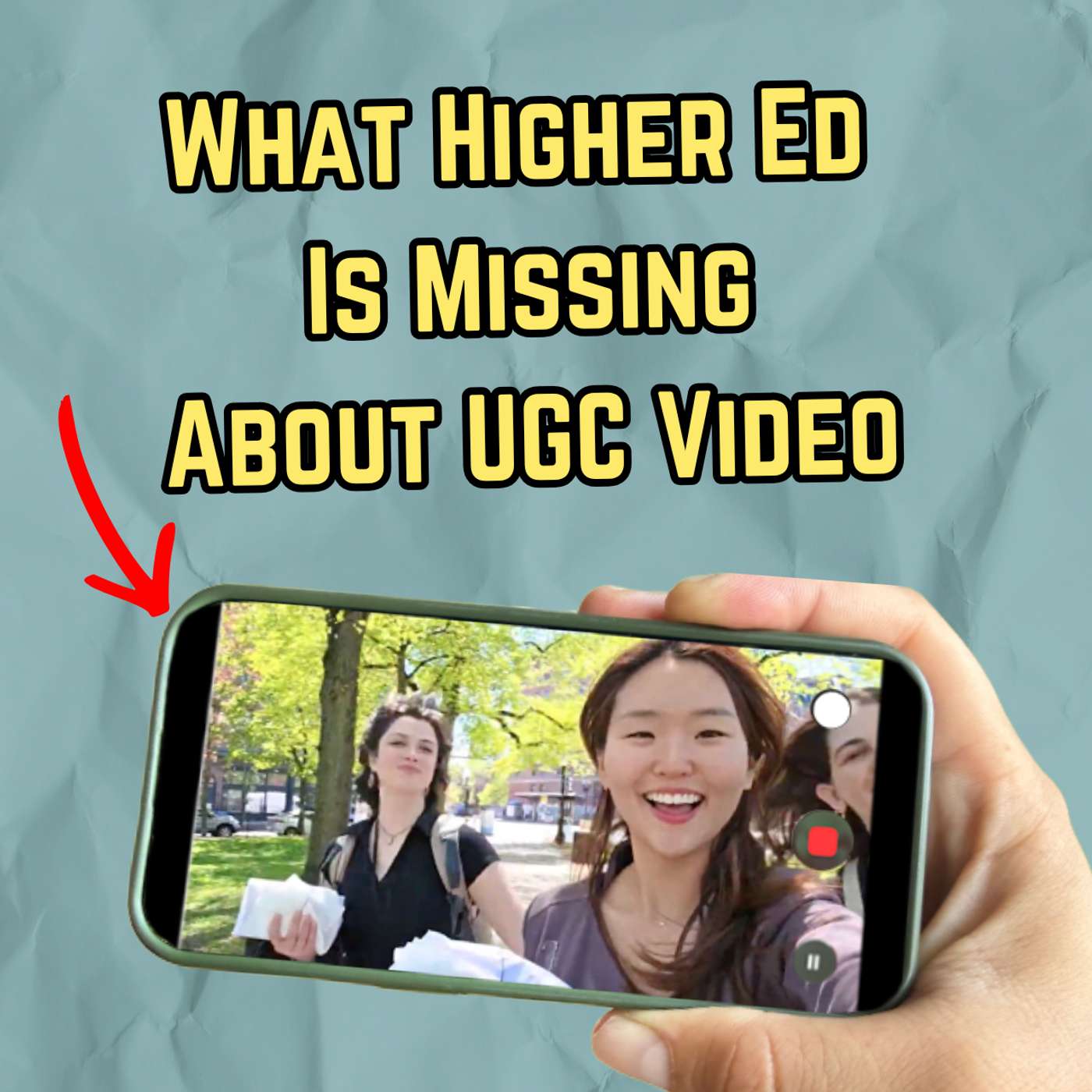
In this solo episode, John pulls back the curtain on Unveild's new "Directed UGC" offering — and the surprising gap in the market he hit while trying to promote it. When he went looking for colleges using UGC video well, he found plenty of day-in-the-life content and campus vibes clips, but almost nothing using UGC to tell a real story or market a specific program. That gap became the episode.John walks through how he landed on a working definition of "real" UGC, why day-in-the-life became the default format schools reach for, and what it looks like when a student or alum is given real direction instead of just a phone and a prompt — using a story from a University of Montana journalism alum as the throughline.Key takeaways:Most schools treat UGC and "real" video content as two separate lanes — polished storytelling goes to the video team, and UGC defaults to day-in-the-life. That split is leaving a lot of good content on the table.John's working definition: real UGC is a student or alum bringing you into their world — how they think, what matters to them, what they've lived through — not just a clip of something happening.Day-in-the-life dominates because it's easy to operationalize — hand someone a phone, no storytelling skill required. Anything beyond that needs direction and coaching, which is harder to systematize.Program tours, project walkthroughs, and "a day in my job" videos from alumni are underused UGC formats that could carry the same weight as scripted student-story videos — with more authenticity.The best moments are often unscripted — John's example: a Montana alum's unplanned detour into how the journalism program's "learn by doing" philosophy played out, including students landing the first photo of Ted Kaczynski during the Unabomber arrest.Unveild's "Directed UGC" offering pairs a professional storyteller-led interview and shot list with in-house editing, aiming to solve the two biggest UGC pain points: finding willing students and getting usable footage back.Schools/programs mentioned as reference points for UGC-style content:The Fletcher School at Tufts UniversityKogod School of Business (American University)University of MichiganWestminster UniversitySewanee: The University of the SouthUniversity of BirminghamUniversity of LeedsConnect with John:LinkedIn: https://www.linkedin.com/in/johnazoniEmail: [email protected]: https://unveild.tvNewsletter: https://unveild.tv/newsletter
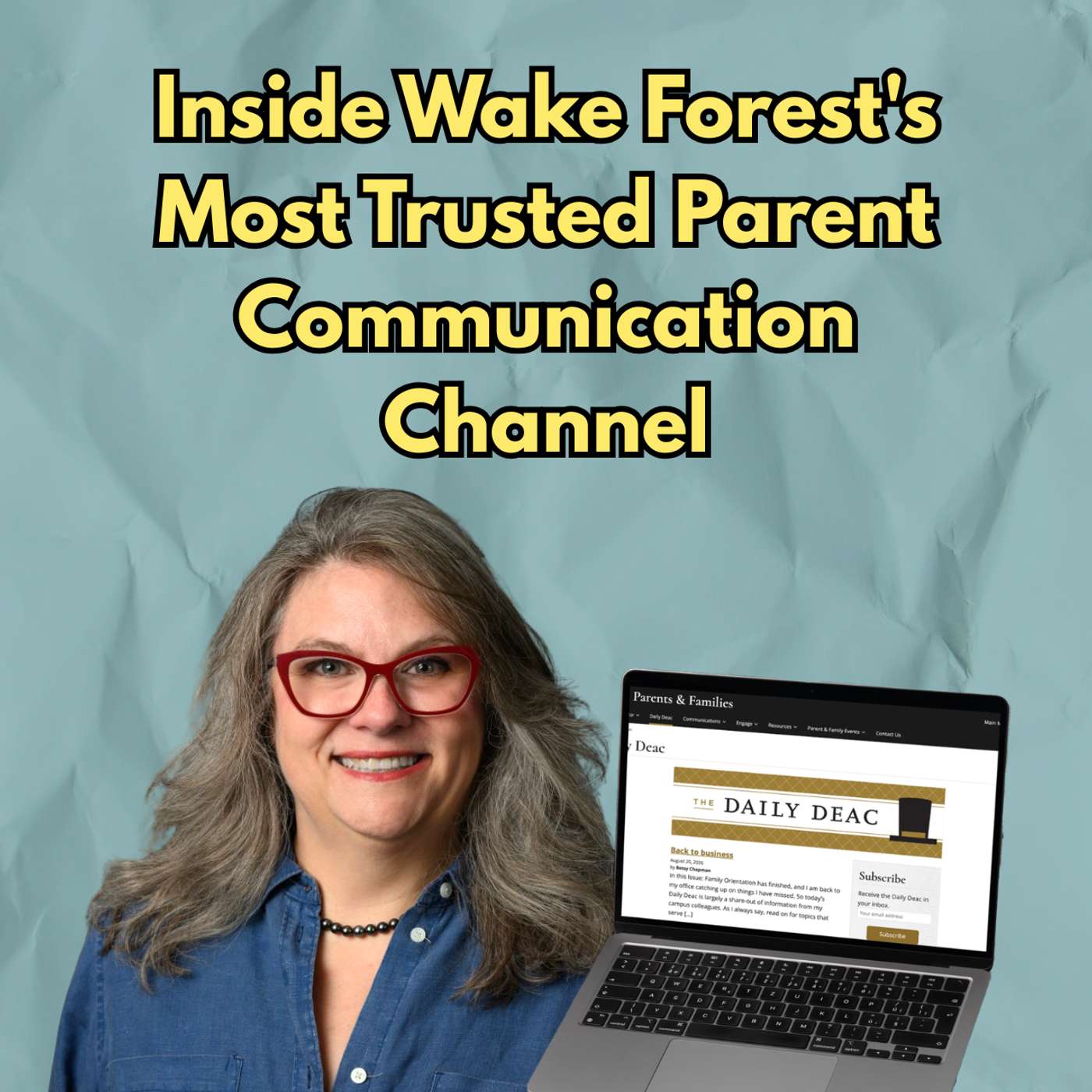
My guest today is Betsy Chapman, Senior Executive Director of Family Communications and Engagement at Wake Forest. Betsy is the voice behind the Daily Deac, a blog for parents and families that's been running nearly every weekday for over a decade and has grown to roughly 8,200 subscribers.Betsy walks through how the Daily Deac started as an alumni blog called Quad View, how it evolved into the go-to source of information and comfort for Wake Forest parents, and the philosophy behind "Stop, Drop, and Roll" — her framework for helping families support their students without taking over for them. She also shares findings from her own dissertation research linking how deeply families read parent communications to student satisfaction, self-advocacy, and giving behavior.Key Takeaways:A named, first-person author builds more trust with readers than an institutional or departmental voice — Betsy's dissertation research on corporate and institutional blogs backed this up directly.The Daily Deac isn't written from scratch every day — a mix of predictable, cyclical campus content (move-in, midterms, finals) and campus partner requests keeps the workload manageable, often just 15 minutes to an hour a day.Schools don't need a new hire to start something like this — existing staff in communications, alumni, or student life offices can contribute, or the role can rotate across departments."Stop, Drop, and Roll" reframes how families should respond when a student calls with a problem: stop and assess whether the student can handle it, drop your urge to fix it, and roll with whatever solution the student lands on.Betsy's dissertation found a correlation between how frequently and deeply parents read university communications and three outcomes: higher satisfaction, less direct intervention with university offices, and increased giving to the annual fund.Some of the most-loved posts weren't polished or strategic — a "five senses" post written during a bout of writer's block, just describing what Betsy observed walking across campus, became one of the most emotionally resonant posts she's written.Feedback and even pushback from readers (including families who felt a post was condescending) has directly shaped how Betsy frames advice — she treats critical feedback as information, not an attack.Connect With Betsy:Email: [email protected] the blog: search "Daily Deac Wake Forest"Connect With John:LinkedIn: https://www.linkedin.com/in/johnazoniWebsite: https://unveild.tvNewsletter: https://unveild.tv/newsletter
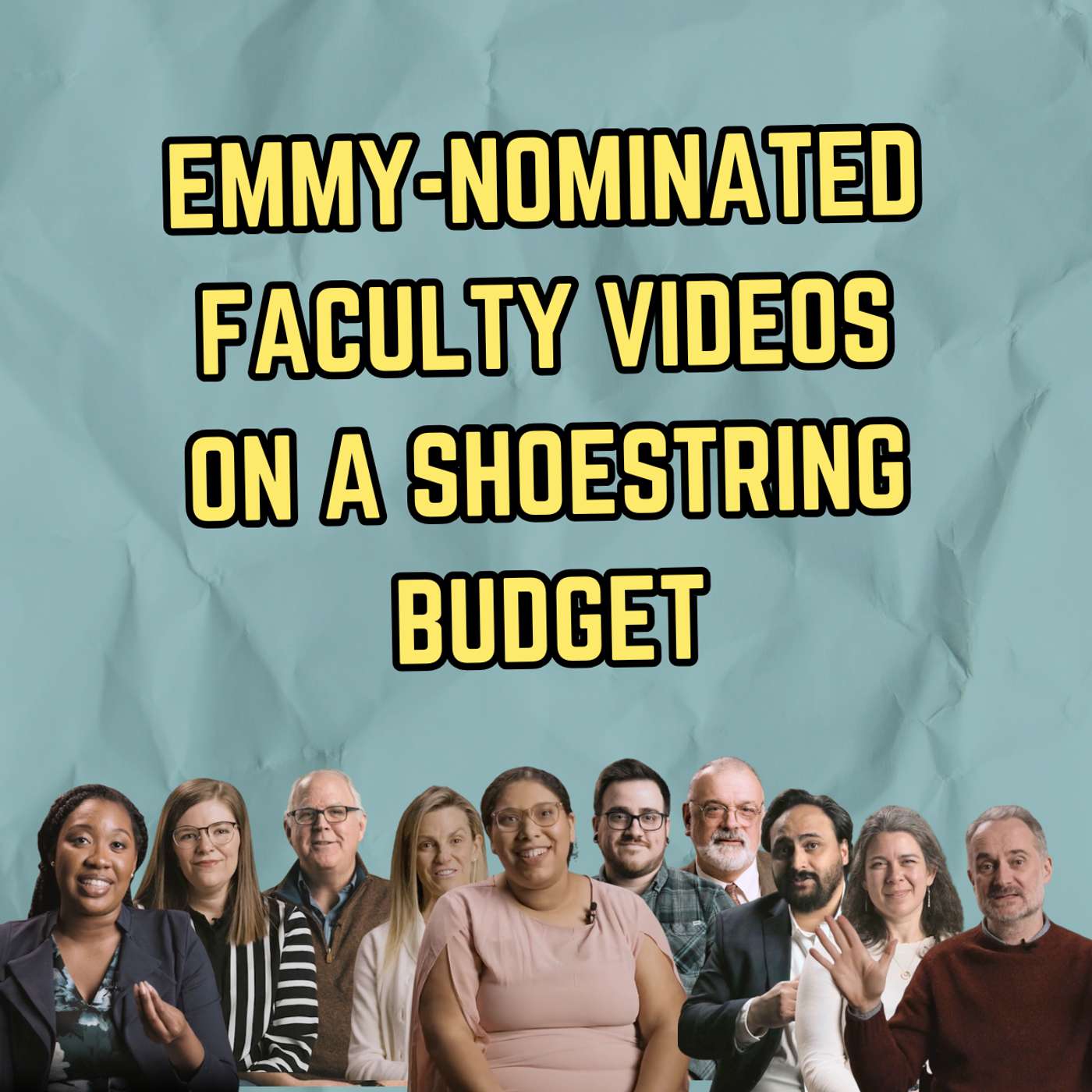
My guest today is Bobby Silk, communication and content strategist in the marketing and communications office at Sewanee: The University of the South. Bobby joined the show to walk through Inquiring Minds, a faculty spotlight video series that went on to earn a regional Emmy nomination — produced on a shoestring, unbudgeted line item of roughly $1,250–$1,500 per video.Bobby and his small, wear-a-lot-of-hats team (one videographer running two cameras and sound, one editor doing double duty as that same videographer, and an outside animator) pulled off ten faculty videos in three shoot days over winter break, all in a single repurposed campus ballroom basement — accidental purple curtains and all. The conversation covers how they picked faculty, how they framed the ask so it didn't feel like homework, why one location saved the whole budget, and the surprisingly long tail of places these videos have ended up living — from admissions campaigns to a required first-year course.In this episode:Why the series went straight-to-camera and personality-forward instead of traditional documentary style, and how that decision got madeHow to pitch faculty participation so it doesn't sound like "give us your conference presentation"The case for one location, one setup, and why that's what actually makes budget video workHow an animator can solve the "we don't have footage of this" problem for historical or abstract topicsWhy "views" is the wrong first metric, and what Bobby looks at insteadThe unplanned afterlife of this series: newsletters, bio pages, anti-melt campaigns, and a required first-year seminarWhy chasing a $50,000 budget isn't the same as chasing quality — and what Sewanee proved by doing the oppositeResources mentioned:Inquiring Minds video series: https://new.sewanee.edu/inquiring-minds/"How a Diva Made History" (Cecilia Cerja on Josephine Baker): https://new.sewanee.edu/inquiring-minds/how-a-diva-made-history/"The Mathematics of Aviation" (Catherine Cavagnaro): https://new.sewanee.edu/inquiring-minds/mathematics-aviation/Rafa documentary (Netflix) — mentioned as Bobby's off-topic "nerding out" pick, no direct link available; searchable on NetflixWistia's "One, Ten, One Hundred" Soapbox launch documentary Leigh Burmesch (Animator): https://leighburmesch.com/Stephen Garrett (Videographer): https://slgarrett.com/aboutConnect with Bobby:Email: [email protected]: https://www.linkedin.com/in/robert-silk-0a730235/ Connect with John:LinkedIn: https://www.linkedin.com/in/johnazoniEmail: [email protected]: https://unveild.tvNewsletter: https://unveild.tv/newsletter

In this solo episode, John tackles a problem he thinks is way more foundational than filming or editing: casting. Before you can tell a great story, you need someone willing to raise their hand and tell it — and John argues that's the part most higher ed teams are actually failing at.Drawing on conversations with clients and his own experience running Unveild's story-sourcing process, John breaks down why the standard approach — a mass email asking people to "tell your story" — usually falls flat, and walks through what he's currently experimenting with instead: smaller asks, better timing, and specific prompts that help people recognize they actually have something to say.Key Takeaways:The hardest part of great storytelling usually isn't the production — it's finding people with real stories who are willing to participate in the first place.Mass emails asking people to "tell your story" tend to underperform because the ask is too vague, too impersonal, and easy to ignore.Many students and alumni self-disqualify because they assume their experience isn't dramatic enough — but the most compelling stories often live in small, specific, unpolished moments rather than big "hero" outcomes.Faculty and staff referrals are valuable, but without training on what makes a story compelling, they tend to surface the same safe, polished profiles over and over.Lowering the barrier for a first ask — a 30-second voice memo, a one-sentence response — works better than pitching someone straight into a full production, and lets you screen for communication skill and enthusiasm along the way.Specific prompts ("tell us about a time a professor changed how you think") help people self-identify far more effectively than open-ended asks like "share your story."Timing matters: asking during emotionally heightened moments — graduation, capstones, final critiques, the end of a clinical rotation — captures better material than following up weeks later.Story sourcing needs to become an ongoing campus habit rather than a scramble that starts only when a campaign kicks off.Resources Mentioned:NPR's The Moth – referenced for its low-friction voicemail-style story submission formatArmchair Expert with Dax Shepard and Monica Padman – specifically the "Armchair Anonymous" segment, cited as an example of how specific prompts generate better story submissionsGlengarry Glen Ross – referenced in passing for the "always be closing" line, which John riffs on as "always be casting"Connect With John:LinkedIn: https://www.linkedin.com/in/johnazoniEmail: [email protected]: https://unveild.tvNewsletter: https://unveild.tv/newsletter
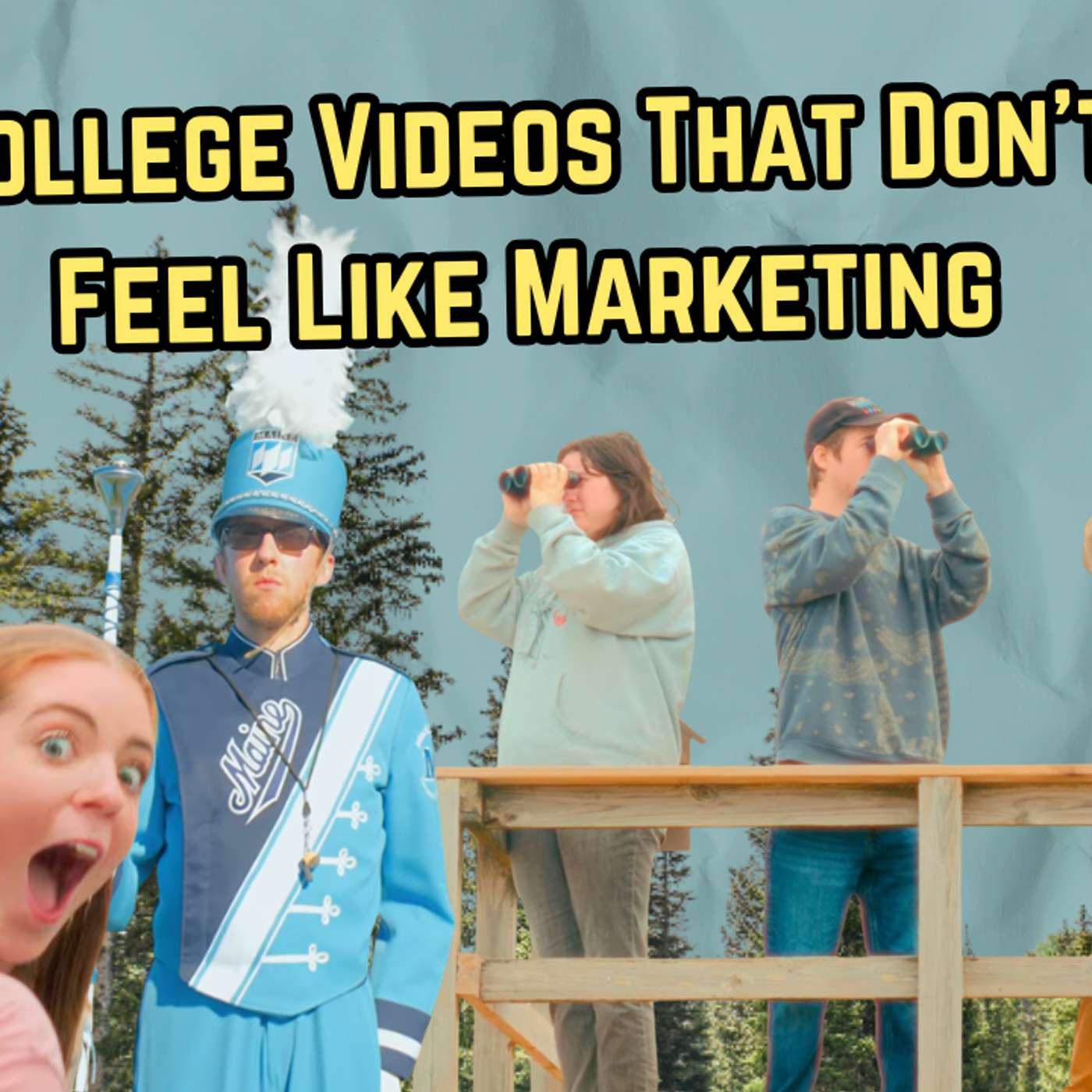
My guests today are Brenn Borror, who leads content strategy at the University of Maine, and Patrick Wine, founder of Story Stroll, the filmmaker behind UMaine's "Life in the Pines" series. We get into how an unscripted, vlog-style student story series came together — and why it's stuck around for three seasons.Brenn and Patrick walk through how "Life in the Pines" started as a cold-call pitch for a generic campus tour video that they reshaped into something more specific to UMaine, why they insisted on one person, one camera, and no crew for every shoot, and how a rigged-up "snorri cam" — basically a tripod strapped under a student's arms — lets students walk and narrate their own story without feeling guided by the marketing team. We also dig into the unglamorous side of the metrics: why a nearly 40,000-subscriber YouTube channel mostly built on a viral lobster-cooking video and an old extension-office library isn't the same audience watching these student stories, and why that's actually fine.In this episode:Why UMaine passed on a polished, teleprompter-style tour video pitch and built something rougher and more specific insteadHow the "snorri cam" walk-and-talk format gets genuine, unguided footage out of studentsThe one-person, one-camera rule and why it matters for getting students to relax on cameraWhy calling it "seasons" and "episodes" instead of a playlist changed how people watched itHow a pre-interview process surfaces the small, specific details (like a chocolate bar traded for a bicycle) that make a story worth followingWhy low YouTube view counts don't mean the series isn't working, and what they're actually using it for in the funnelHow casting evolved from proactive outreach to an open call, and why they now ask for a 60-second video submissionWhy retention, not just recruitment, is a real benefit of this kind of contentResources mentioned:Life in the Pines (full series hub): https://umaine.edu/pines/Life in the Pines, full episode: https://www.youtube.com/watch?v=Ue-xo4MsoTsLife in the Pines, teaser trailer: https://www.youtube.com/watch?v=m1hKbuFXtw8Life in the Pines, Season 2 full episode: https://www.youtube.com/watch?v=l2axURGS18IThe University of Maine's YouTube channel: https://www.youtube.com/user/TheUniversityofMaineStory Stroll Studios (Patrick's production company): storystrollstudios.comConnect with Brenn:LinkedIn: https://www.linkedin.com/in/brennborror/Connect with Patrick:Story Stroll Studios: storystrollstudios.comEmail: [email protected]: https://www.linkedin.com/in/patrickmwine/Connect with John:LinkedIn: https://www.linkedin.com/in/johnazoniWebsite: https://unveild.tvNewsletter: https://unveild.tv/newsletter

Comments

Download from Google Play

Download from App Store
 United States