


 Claim Ownership
Artemis
Subscribed: 56Played: 2,143
Subscribe

Description
Meet the adventurous, accomplished women who are redefining conservation through their lives in the field and on the water. Filled with humor, audacity, empathy, and intelligence, Artemis brings you new voices from our public lands. Whether you're snagging flies or tracking big bucks, Artemis introduces you to women from all walks of the sporting community. We discuss hunting, fishing, public lands, and conservation. Join us to be a part of the movement.
127 Episodes
Reverse
Traditional bowhunter Beka Garris joins Artemis this week to talk about what it's like bowhunting with a baby. Yes... literally WITH a small child. Beka tells us about harvesting two deer (and a squirrel) alongside her daughter. She also talks about traditional bowhunting, the skills involved, and how your experience in the outdoors changes when you have a little one in tow.
2:00 Tiny human podcast crashers... #momlife
3:00 The switch from bowhunting to traditional bowhunting... the trad bow range is more like <20 yards
5:00 "If anyone wants to put the work in, they CAN do it... it's just a lot more work than a compound bow."
6:00 Hunting with small children (yes... like, hunting with them literally on your back)
8:00 Bug repellent (AND... the Victoria's Secret scent that some anglers swear by (BeBe Episode)
10:00 A Thermacell for bugs
11:00 Shooting squirrels with a trad bow... "it's hard." (But also fun.)
12:00 Hunting rabbits with a trad bow AND a beagle -- you come to rely on the intuition of your shot. Here's an exercise: Throw a shoe box into the air and try to shoot it
15:00 Bow skills: Back tension and proper release (aaaand... release words!)
17:00 Fitting a trad bow & arrow selection
20:00 Bowfishing
23:00 Hunting outdoors with littles: Take it slow, make it short, just ease into it
26:00 The 'death' part of hunting for kids
30:00 Children playing with bows
35:00 "Are you willing to give up the idea of definitely filling your tags to take your kid?"
37:00 Every kid is different in how they handle the outdoors
39:00 "When deer-hunting, you can't really worry too much about being scent-free if you have a kid in diapers."
42:00 Harvesting, dressing, and dragging a deer back to the Jeep as your infant snoozes
45:00 Deer-sized cargo carriers on a vehicle
50:00 HERUpland podcast, BirdDog Babe podcast
52:00 Find Beka on Instagram (@bekagarris) and Facebook
Learn more about your ad choices. Visit megaphone.fm/adchoices
This week on the program, a reunion! Mandela van Eeden is leaving Artemis for an epic road trip throughout Africa, where she plans to put her storytelling skills to work on behalf of endangered elephants and rhinoceros. Marcia drops in to talk about what she's been up to ever since leaving Artemis a year ago. We discuss conservation work, burnout, and the powerful feelings of success in what can feel like an up-and-down career.
5:00 Bear-fat French fries, applesauce up the wazoo, and game as a substitute for lamb in recipes
8:00 Straddling life between South Africa and Montana
12:00 Cultivating a life in radio... 18 years strong (then transitioning to video)
14:00 'The Easter rhino'... also an egg-layer?
15:00 Conservation as a family legacy/identity
19:00 "If you think you're too small to make a difference, you've obviously never spent the night with a mosquito."
22:00 Career transitions and the why of how we find our paths (with a side dish of burnout)
28:00 Supporting public educators with counseling
32:00 When your hometown feels a little more cozy in the outdoors than it used to
35:00 Inadvertent geotracking of your wildlife photos
38:00 Lessons learned from a career at NWF - lead-free ammo, wildlife crossings, CWD, policy change, salmon recovery, and more
42:00 Advocating for the Grand Canyon on Capitol Hill
52:00 Staying involved in advocacy in Montana and abroad
53:00 Game Rangers International; Xplorer Maps
55:00 The Trail Less Traveled podcast and radio show
56:00 Interacting with children at home and abroad
57:00 Storytelling as a conservation tactic
1:06 It's not goodbye... it's 'see you downstream'
1:09 "This is the true joy in life, being used for a purpose recognized by yourself as a mighty one. Being a force of nature instead of a feverish, selfish little clod of ailments and grievances, complaining that the world will not devote itself to making you happy. I am of the opinion that my life belongs to the whole community and as long as I live, it is my privilege to do for it what I can. I want to be thoroughly used up when I die, for the harder I work, the more I live. I rejoice in life for its own sake. Life is no brief candle to me. It is a sort of splendid torch which I have got hold of for the moment and I want to make it burn as brightly as possible before handing it on to future generations. --George Bernard Shaw
Learn more about your ad choices. Visit megaphone.fm/adchoices
This week we're revisiting one of our favorite episodes on a timely subject matter: Rifles - they seem so simple, right? You put the bullet in. You pull the trigger. You (hopefully) kill the animal. But there's a lot of nuance in how a rifle performs, and it can often feel overwhelming to new hunters. This week we're talking to two experts from the firearms industry: Rachel Schmidt, formerly of Kimber Manufacturing, and Neal Emery of Hornady.
3:00 - Mushrooms in lasagna? OR CAPERS?!
5:30 - Piscivorous: You were probably missing this from your vocabulary.
7:00 - On growing up in a hunting family, "I never knew there wasn't hunting."
14:00 - Rifle calibers... what do those numbers mean?
15:00 - First off, you don't need to be a rifle caliber/reloading expert to have enough working knowledge to go hunting. So don't sweat it. Start with knowing what you want to hunt.
18:00 - Calibers are confusing. It's like learning the English language... there are some general rules, but lots (LOTS) of exceptions.
19:00 - Hornady website, go to "Rifles" and "Ammunition" for a basic caliber chart
21:00 - Start with the basics: How does your rifle work? What does the firing pin do? How does the safety stop it from firing? Check out this great animation from hunter-ed.com.
27:00 - Caliber is just a size. The same caliber bullets can come in different weights, which are called grains (i.e. 220 grain versus 110 grain)
32:30 - Rifle fit and recoil. Heavier guns generally absorb recoil better (the downside: you have to carry them places).
35:00 - Muzzle brakes screw onto the tip of your barrel, and they dissipate the pressure of the air as the bullet exits the barrel, lessening recoil
37:00 - Recoil pads can go on the back of the gun to soften the recoil impact on your shoulder
37:15 - And different ammunition has different recoil... minimizing the weight of the bullet can reduce recoil some. And different gunpowder has different burning properties that can affect how a bullet feels leaving the barrel. In short: Lower recoil loads exist.
39:30 - Does noise make recoil feel worse? Wear ear protection!
44:00 - Bullet construction: This controls how fast (and when) a bullet opens up...aka mushrooming.
50:00 - How well a rifle shoots certain ammo is subjective. The only way to know what works best for your gun is to try a bunch of different bullets.
1:00:00 - Checklist for choosing a rifle: Game you're hunting, stock fit against your body, weight of the rifle, budget.
1:04:00 - Length of pull: distance between the trigger to the butt of the gun
1:06:00 - Hornady cheek pieces
1:12:00 - Rifle myth busters: "A good cartridge for women and kids is the .243"
1:24:00 - Marcia's Moroccan Fish Tagine with halibut.
Learn more about your ad choices. Visit megaphone.fm/adchoices
Long-time Artemis host and friend of the podcast Ashley Chance returns this week to talk about upland birds. As the new hunting heritage program manager at Pheasants Forever and Quail Forever, Ashley is working to conserve upland bird habitat and recruit and retain new hunters. She introduces us to a new film series called How to Hunt Upland Birds, and also tells us about the Hunter Mentor pledge, which has some sweet prizes attached to it this year. (Pssst... want more bird stuff? Check out past episodes with the grouse lady, Ashley Peters, and an episode on bobwhite quail with Brittney Viers.)
2:00 Wingshooting in wild weather - an Artemis event goes on undeterred
6:00 New town, new job, new childcare... but same passions
8:00 Deerhide in the freezer = endless possibilities
10:00 Pheasants Forever and Quail Forever - working to put more birds on the ground through habitat conservation
11:00 Minority Outdoor Alliance
14:00 Getting into upland bird hunting behind a dog named Rocky in high school
17:00 Road trip adventures with a bird dog buddy (in this case, a pudelpointer nicknamed Leo)
20:00 Registered dog names that make a statement
23:00 The thrill of finding quail in unlikely places
25:00 Steep decline in quail habitat with the rise of mechanization in agriculture
30:00 Development and suburban sprawl is a huge threat to upland bird habitat
32:00 How to Hunt Upland Birds course, like 'upland bird hunting for Netflix,' filmed and produced by Modern Carnivore
39:00 The video series portrays a variety of hunters, hunting cultures, and birds
41:00 Hunting with babies and kids - do what works for you
44:00 "Approaching hunting in the way that felt right for me was a revelation that's been valuable moving forward."
47:00 From the Artemis archives on hunting while pregnant and/or with kids: Motherhood and Traditional Bow Hunting with Beka Garris; Melody Haege on Traditional Bow Hunting with Kids; and Hunting While Pregnant with Emily Ledergerber and Kyla West
49:00 Access is a big barrier for new hunters (or new-to-a-place hunters), especially in states with lots of private land
51:00 "What if there was a lease that was all women? That would be cool" - introducing the private hunting lease in Tennessee that Ashley worked on and secured (with A LOT of sheer tenacity and letter-writing)
55:00 Food plots vs. baiting
59:00 Consider taking the Hunter Mentor Pledge at Pheasants Forever - take a new hunter in the field, snap a pic, and be entered to win a guided upland bird hunt for two
Learn more about your ad choices. Visit megaphone.fm/adchoices
Alisa Davis took her partner's military career as a chance to fly-fish the waters of several states, including Hawaii, Colorado and North Carolina, while also pursuing advanced education in science. Alisa is an avid outdoors educator and fly-fishing instructor. In her words, "The more we teach fly-fishing, the more people are going to get into fly-fishing... which is always good for conservation." Alisa also a Type I diabetic, and in the second half of the program she shares how she naviates her outdoor pursuits while managing chronic illness.
2:00 Squirrel cacciatore and other adventures in eating!
6:00 Harvesting rainbows in cutthroat country -- smoke them, eat them, and if not... they're hearty fare at a local raptor center
8:00 Military life, moving across the country, cramming in an education... and getting hooked on fly-fishing
13:00 Southeastern states = fly-fishing powerhouse
16:00 Fly-fishing - not as gear-intensive as elitist as outsiders sometimes think
18:00 Laying off on fishing trout if water temperatures get high
21:00 Little fish with big fight: bass and panfish are hard to beat
25:00 The Joan Wulff method of fly-casting
26:00 "The more we teach fly-fishing, the more people are going to get into fly-fishing... which is always good for conservation."
27:00 North Carolina's John E. Pechmann Fishing Education Center
30:00 Getting into conservation careers; Volunteering is a great way to start
34:00 Volunteers are the engine of conservation work
36:00 Hawaii: the devastating fire and the adventures that preceded it
45:00 Managing diabetes (or any chronic illness) in the field... dealing with fatigue, preparing for emergencies, cultivating grit
48:00 Knowing your body, developing a routine, staying hydrated
56:00 Find Alisa on Instagram @starryeyedandoutdoorsy
1:02:00 Sharing nature with kids and families... #warmfuzzyfeelings
1:08:00 The joys of preparing for hunting season
Learn more about your ad choices. Visit megaphone.fm/adchoices
This week, Artemis program manager Carlee Koutnik tells us about her summer trip aboard a fishing boat called the Warthog in Bristol Bay. The sockeye fishery is a frenzy of activity, and Carlee got to work aboard a 32-foot fishing boat schlepping salmon. We get an inside look at the fishery, the regulations that keep it viable, and the business of commercial fishing. Plus... how do you go make a poo on a small fishing boat? Stay tuned.
4:00 Storytelling = mankind's earliest form of entertainment
6:00 Offering to help on an Alaskan salmon boat solely for the experience, getting the 'yes' from a fishing captain, and then... "Planning for Alaska is a different type of planning."
10:00 How the sockeye fishery works
12:00 Xtratuf boots in the habitat they were designed for
15:00 Fisheries regulation in Alaska
20:00 When fishing is on, it gets hectic -- lots of boats in the water are vying for a limited quarry
21:00 Gillnet fishing
25:00 "Picking, bleeding, chilling and floating"
32:00 From Bristol Bay to your dinner table
35:00 Finding a $20 gallon of ice cream at sea... #bliss
40:00 Preparing salmon
44:00 The life cycle of salmon -- it's a pretty amazing feat of biology
50:00 Managing fear in high-consequence environments; Leaning into discomfort/risk
54:00 "Be bold, stay curious, and get outside"... words to live by
57:00 "The Brilliant Abyss" by Helen Scales
1:02 Biden creates new national monument to protect Grand Canyon
1:04 So... how DO you poop on a 32-foot fishing boat?
Learn more about your ad choices. Visit megaphone.fm/adchoices
Mandela van Eeden is an outdoors communicator, an educator, a yoga instructor, a podcast host, and... a raft guide. She's recently back from an expedition on the Alsek River in the Yukon and Alaska. On this episode, we discuss how wild places rejuvenate us and give us perspective -- and they can even inspire us to act on behalf of the marvelous places we get to visit. Plus: Wool socks, glacial lakes, and riverboarding.
Learn more about your ad choices. Visit megaphone.fm/adchoices
What is Artemis? This week we're revisiting one of our earliest episodes, featuring two of the brilliant minds who spearheaded the effort to make a space for sportswomen and conservationists. We'll hear from Maggie Heumann and Jess Johnson about how Artemis got going and why this work matters.
Learn more about your ad choices. Visit megaphone.fm/adchoices
Tracy Shaw might be best known as the @arkansasoutdoorswoman, but she's also a single mom, an aspiring bush pilot, a mentor to others, and an Artemis Ambassador. This week on the podcast, Tracy shares with us the joy of being a mentor to others -- even when it means being lured into gator hunting by your friends and fan base. Plus: magical waterfowl hunts, sticking to your long-term goals, and saying 'yes' to being a mentor.
2:00 - Goose and duck jerky #droolemoji
4:30 - Opening the invite to women and children in the outdoors through mentorship
8:00 "I get to be a part of so many firsts. And I just feel so blessed and honored."
9:00 The 65-year-old who wonders if she can do a goose hunt... then shoots her first goose and has it literally fall in her lap
12:00 Landowner arrangements surrounding gator tags
14:00 When your Instagram fan base begs for a gator hunt
16:00 Checking gator lines after they've been baited -- excitement like never before! Could be a 4-footer, could be a 12-footer
19:00 Encouraging others around you during high-adrenaline hunts
20:00 Gator meat can taste kind of swampy, but dressing the animal thoroughly helps
22:00 Slipping game meat past your kids
25:00 Getting the family hooked on wild turkey
28:00 Finding the family balance between kids/work/outdoors time
30:00 "I decided I wanted to be a bush pilot" - adventures in the air, and never surrendering your dreams
34:00 A 10-year-old's first goose hunt
36:00 Setting goals and slaying them
40:00 Mentoring newbies... safety should come first
45:00 "You can do anything you want to do... you don't have to be the best at it"
Learn more about your ad choices. Visit megaphone.fm/adchoices
This week... fire! Artemis is joined by Jaidyn Hranicka in Wisconsin, who works as a prescribed burn specialist. Wisconsin has a multitude of different ecosystems -- deep dark woods brush up against prairie-like oak savannas. Jaidyn talks to us about what it's like to work in the fire industry. Plus: Turkey misses, brook trout, and trail baloney.
2:00 Trail baloney: A mixed-game, smoked, and pan-fried treat (also a great friend-maker)
4:30 Wisconsin's varied ecotypes
7:00 Fishing for native brook trout in small streams
8:00 Reintroducing fire to oak savannas
13:00 Prescribed fire as a surrogate for natural fire; It's a management tool for fire-adapted ecosystems
18:00 Burning different ecotypes at different times of the year, but generally in a March-May window
22:00 The effect of Rx burn on wetlands
25:00 The nuts and bolts of a day of prescribed burning
29:00 "Dot ignition" and low-intensity fire strategies (plus, sleepover duty for one crew member)
32:00 Fire stories: the one that got away... #nostructuresharmed
38:00 "Burn boss" ... might be the best job title ever
42:00 Loving where you live
Learn more about your ad choices. Visit megaphone.fm/adchoices
This week we 'pick' the brain of morel expert Kristen Blizzard (see what we did there? 'Pick' the brain? Har, har.) Kristen and her husband run ModernForager.com, an online resource for foragers across the country. Kristen tells us about everyone's favorite -- the morel -- plus other mushrooms you can easily add to your repertoire with a little extra know-how. We also discuss how to harvest for success in the kitchen. The culinary possibilities are endless!
3:40 - Harvesting arnica when the mushrooms aren't in
5:00 - Kristen and Trent Blizzard run ModernForager.com
9:40 - Mushrooms totally have a terroir, a sense of flavor imparted by the place they were harvested. It's simply lovely.
12:30 - What apple is to tree, mushroom is to mycelium. The mycelial network is everywhere! Under every forest floor. They're tree-like.
14:30 - "The Wood-Wide Web" – check it out
https://www.theatlantic.com/science/archive/2016/04/the-wood-wide-web/478224/; https://www.wnycstudios.org/podcasts/radiolab/articles/from-tree-to-shining-tree
21:00 - Morel hunting wonderfully overlaps with spring bear season. Wild mushrooms complement wild game so beautifully.
23:00 - Adding a new mushroom to your foraging repertoire is a big deal! On posting a mushroom pic to an online forum, and having multiple different (very confident) answers on what it is
24:00 - Coral mushrooms are very hard to tell apart. Some cause gastric upset, others are fine. (Corals = mushroom jerky)
26:00 - Safe foraging is like any hobby: The more you do it, the better you get. Don't eat random mushrooms. Work on your ID skills
28:00 - People from Michigan = Michiganders
Learn more about your ad choices. Visit megaphone.fm/adchoices
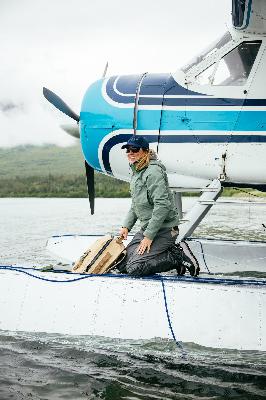
Kate Crump owns and operates Frigate Adventure Travel with her husband, Justin. Kate is a fishing guide based in Bristol Bay, Alaska and Oregon’s North Coast.
Kate serves on the board of Pacific Rivers and is a member of the North Coast Citizens for Watershed Protection, promoting and protecting healthy watersheds. Her writing has been featured in the Fly Fish Journal, Trout Magazine, Patagonia Fly Fishing catalog, and the Salmon Steelhead Journal.
Links:
Pacific Rivers Films: https://www.pacificrivers.org/storytelling.html
Short Lesson on Snake River Dams: https://www.columbiariverkeeper.org/our-work/saving-salmon/snake-river-dams
Our lodge: www.thelodgeat58north.com
Show notes:
1:02 – Kate shares what is in her freezer… Bristol Bay salmon, lincod, blackcod, elk and pig!
2:25 – How do you ship a pig to/from Alaska?
3:31 – Alaskan Airlines is unlike any other airline; they transport a lot of interesting supplies.
6:12 – Kate shares some background on her business and adventures in life as a fishing guide.
9:38 – Kate talks about her upbringing and start in fishing.
14:24 - Kate reflects on the value of being super present when fishing and how spirituality plays a role in her angling pursuits.
17:17 - What lead Kate to Washington and her first-time fishing?
21:31 – The awesomeness of Kate learning to love fishing and then moving to Alaska to become a fishing guide.
23:48 – Carlee asks Kate how she creates a safe and fun environment for kids to learn how to fish.
27:01 – Short break for a message from one of our partners, PRIOS, and our partner podcast NWF Outdoors. Be sure to follow Artemis and NWF Outdoors on YouTube, Twitter, Facebook and Instagram!
28:22 – Kate talks about the Bristol Bay Defense Fund and why we need to protect Bristol Bay.
32:45 – A crash course on the Snake River Dams and the story of the Columbia River salmon.
36:05 – How are we still talking about building dams in 2023?
39:35 – Genetic differences between spring and fall chinook salmon.
42:32 - How can people engage and contribute to these efforts (salmon and steelhead recovery). Take the time to sign your name and check the box on ACTION ALERTS!
45:19 – “I definitely and truly believe that the best way to heal our world is to start with ourselves… just being very kind to everyone you run into.”
47:47 – Kate reflects on hard questions and one of her favorite moments on the water.
53:45 – Hits and Misses of the week! Goose hunting, fishing with babies and travels to Chile!
Learn more about your ad choices. Visit megaphone.fm/adchoices

Part highlight reel, part blooper episode: Artemis's end-of-year special is back. Hear the most memorable clips from our THIRD year on the airwaves. As always, thank you for being here. 1:00 Artemis's Women in Conservation Leadership series aired this spring, an 8-episode dive into the stuff strong leadership is made of 4:00 Check out Artemis's field episodes: A rabbit hunt with Mary Lynn and turkey camp in South Carolina 6:00 This year we brought you field events, book clubs, tactics courses, a year's worth of podcasts, and more. If Artemis has meant something to you, please share the show with a friend or leave us a review wherever you listen. If you're able to donate, all financial contributions are put toward expanding access for women in sporting.
Learn more about your ad choices. Visit megaphone.fm/adchoices

Artemis is revisiting one of its most popular series ever: A deep dive into ungulate biology with the scientists of the Montieth Shop. Mule deer are remarkably faithful to the geographies they were raised in... until they're not. Ungulate ecologist Rhiannon Jakopak talks with us about rogue individuals, migration fidelity, the rose petal hypothesis, and more. Plus, the emotions of harvesting your first animal (slash ANY animal).
4:00 From vegetarianism to wildlife science to becoming a hunter with your sci-pals in tow
6:00 Taking a life... you process it while you're literally processing it. The complicated feelings are normal; they don't need to go away
12:00 Those hunting mentors who make you feel encouraged, not pressured
14:00 A first-time mule deer harvest: Watching an individual deer for weeks before getting a shot on it at 28 yards.... and just like that, a life is changed
17:00 Knowing your local mule deer as individuals... so much so that you recognize certain animals in friends' harvest photos
19:00 Transition from bow- to rifle-hunting... there's a different feel to the hunt
23:00 The Rose Petal Hypothesis - this idea that female deer establish home ranges that are adjacent to and overlapping those of the female parent and sisters in a manner that looks like the petals unfolding on a rose
24:00 Mule deer have high fidelity (faithfulness to preferred geographies) and philopatry (those places near where they were born/reared)
28:00 Because of high site fidelity/philopatry, mule deer are especially slow to fill habitat vacuums... if we inadvertently remove them from a landscape, it can take a long time for new deer to show up
31:00 Combining knowledge from the science world with the place-based experience of hunters, ranchers, and other intimate land users
32:00 Rogue deer do colonize new habitats! They completely buck the fidelity/philopatry pattern, especially with their winter range
36:00 The first year of an animal's life is crucial for establishing the behaviors that'll govern behavior later on - rogue deer go rogue as yearlings
39:00 Mule deer have generally low fawn survival... but they also typically have two fawns per year
41:00 Scientist #facepalm: when all 50 collared fawns in your study die
45:00 Why is it so fun to pick on bird people? Jokes aside, they have some SOLID science on taught vs. inherent migration
48:00 Do relatively common species lose their mystique for us? Heck no. Next time you see a deer on the side of the highway, ask yourself how many mountain ranges it crossed in the past year
52:00 Those big antlers on your buck? They're a symbol of an intelligent species on healthy, connected habitat... be reverent, everyone!
57:00 How do we tell compelling science stories?
1:02 We're in an unprecedented era of everyone caring how we communicate/reach each other
1:06 The good news: Everyone cares about mule deer. The bad news: We disagree what's going on with them
1:08 Scientists as arbiters of information for policymakers
1:13 MontiethShop.org - a place to get involved and be in the loop on new science; Also @Monteith.Shop on Insta
Learn more about your ad choices. Visit megaphone.fm/adchoices

This week we're revisiting one of Artemis's best-loved series of all time - Chasing Ungulate Tales with the scientists at the Montieth Shop at the University of Wyoming. You've heard it before: "If we kill the animals with the biggest horns, aren't we selecting for smaller horns over time?" This week we take a deep dive into that question with ungulate biologist Tayler LaSharr in the third episode of our special series with The Monteith Shop. We'll also talk about her research into how mule deer behaviors are affected by harsh winter events.
2:30 Squirrels... the gateway drug to hunting?
4:00 A Wyoming antelope hunt with all the science gals, creeping in for that 150-yard shot
7:30 Autopsy is to human what Necropsy (NEE-kraap-see) is to animals
9:00 Antelope heart pastrami (!!!) - get the how-to right here
10:00 Jess's Wyoming tag line-up: Three antelope, three elk, three deer, and one bear
13:00 Research deep-dive: The effects of hunter harvest on horn size in sheep. It started with a paper that used Boone & Crockett data to assess changes in horn size over time
14:30 Bighorn sheep harvested by hunters anywhere are required to be checked into a Fish and Game station… which means there's a treasure trove of data on size/ages of in every state
16:00 Horn size is a function of age + nutrition + genetics
19:00 Mom's nutrition affects her son's antler size
21:00 Does the removal of big males (by hunter harvest) change a population's genetics over time? A lot of it has to do with the average age of rams being harvested in different years
23:00 Alberta harvests sheep by a different standard -- the four-fifths curl. When you have management scenarios where harvest is determined by horns and not age (the annuli), there is evidence that it leads to decreased horn size over time. For example, if a five-year-old grows fast and gets to that four-fifths curl before other individuals his age, he stands to be harvested sooner from his population and may not have adequate chance to breed and pass on his genetics
25:00 How do you age a bighorn sheep?
27:00 One hedge against the overharvest of big-horned young animals is a conservative tag system... it's still a once-in-a-lifetime hunt in many states
29:00 "Evolution reverse" is this theory (/misunderstanding) that hunter harvest of big-horned animals selects out those traits in a population over time. In reality, it's way more complicated than that... management strategy plays a big role in how traits persist over time. Many factors are involved, and broad generalizations generally don't hold up all the time.
31:00 Changes in game management aren't often reflected in an animal population for years/decades
37:00 Rhiannon Jakopak's digest of Tayler's horn size work in layman's terms
38:00 Connecting sheep scientists with sheep hunters
40:00 The Wyoming Range Mule Deer Project - a long-term study following deer individuals throughout their lives AND their offspring
42:00 Looking at the after-effect of harsh winters on mule deer. Differences in behavioral strategies? Migration routes? Reproductive strategies/mothering behavior? What allowed them to survive when other deer succumbed to winterkill?
48:00 Fish and Game departments have to balance immediate hunter desire against the long-term, ever-changing health/hardiness of game populations
57:00 The genesis of an ungulate biologist!
59:00 Check out more of the Monteith shop at UngulateCompendium.org
Learn more about your ad choices. Visit megaphone.fm/adchoices

Artemis is revisiting its best-loved series of all time: A deep dive into ungulate ecology with the scientists at the Montieth Shop. This week we're surfing the green wave! Seasonal mule deer migration is based on food availability. Deer move across the landscape to maximize their access to high-quality food resources. We're joined by migration ecologist Ellen Aikens to learn more about Wyoming's mule deer populations and how they're challenged by drought, climate change, and energy development.
PLUS: Artemis's long-time partner, South Dakota Game, Fish and Parks is offering an incredible giveaway that includes a guided pheasant hunting trip in South Dakota, a travel voucher to get there, and a $4,000 gift card to Scheel's. Don't miss out!
3:00 - Artemis's first guest to connect from overseas! Plus, moving to Germany during the pandemic
6:30 - Animal research: A generally rewarding endeavor with LOTS of challenges
8:00 A new scientist asks her peers/mentors, What's one of the most important fields to be savvy in? "GIS/remote sensing" comes up again and again
11:00 GPS collars let us see where an individual animal is going, year after year -- it's a bonafide jackpot of data. This field is called "movement ecology"
12:30 Marcia's sage advice: "Do what you enjoy doing until you don't enjoy doing it anymore. Then go do something else."
13:30 Sampling the field April-August to survey which plants are available and when. Documenting the seasonal change from green to brown was revelatory! Plus, KNOWING the place.
17:00 Dynamics in plant growth and seasonal transition influence how animals move
18:00 To study mule deer you need to become versed in the world they live in
20:00 "The green wave" - this idea that for deer and other species, young/emergent plant species are the most nutritious growth. That stage is staggered across an elevational gradient -- and this is the 'green wave' -- moving to find that nutritious feed
22:00 Most mule deer move from a low-elevation winter range to a higher elevation spring/summer range. This is colloquially called 'surfing the green wave'
24:00 Migration isn't a continuous line from Point A to Point B. Mule deer spend about 90% of their time on migration at stopover sites, foraging and eating
27:00 What makes a good stopover? It totally depends. Elevation plays a big role. They're generally places that are more lush than the surrounding area.
30:00 Fall migration: A combination of fleeing cold/snow, plus finding the lushest feed given the season... the "residual greenness"
33:00 Drought has an effect on how well mule deer can surf the green wave, which is shorter; Energy development also affects that migration
35:00 Mule deer in the West have high fidelity to their migration routes
38:00 Mule deer DO move through energy development sites... but they're not able to use those areas to the degree they would if there was no resource development there
39:00 A high-quality study would collect data BEFORE an energy project, DURING it, and AFTER reclamation
45:00 Being migratory is key for mule deer in the Wyoming Range. There ARE resident deer populations, but it's a small fraction (
Learn more about your ad choices. Visit megaphone.fm/adchoices

We're revisiting Artemis's most-downloaded series ever, Chasing Ungulate Tales, featuring scientists from the Monteith Shop, an ungulate research lab at the University of Wyoming. This week we're joined by Rebecca Levine, whose research is focused on understanding the thermal ecology of moose. More than half of southern moose populations in the Lower 48 are in decline. We talk parasite loads, chronic wasting disease, the mysterious moose of New Zealand's fjordlands, and what habitat a moose needs to stay cool. Also: bear spray works for moose, too.
PLUS... Artemis's long-time partner, South Dakota Game, Fish and Parks is offering an incredible giveaway, which includes a guided pheasant hunting trip, a travel voucher to get there, a $4,000 gift card to Scheel's, and loads of other gear. Check it out and be sure to enter.
4:00 When do you get to call yourself a 'hunter'?
5:00 In the southern half of moose's range, about half of populations are in decline
7:00 Why is heat stress so particular to moose versus other cervids? The skinny: They're big, they're dark, and they don't sweat.
10:00 How do moose find those spots to cool off in?
12:00 Collaring MOOSE... it's a PROCESS. But the video collars? SO COOL
15:00 Moose = tick paradise
16:00 Moose are intermingling with more ungulates that they ordinarily may not have overlapped with, which is one vector for parasite spread
18:00 Preg-checking a female moose
21:00 Twin prevalence in moose
24:00 Different subspecies of moose and their historic ranges... they're unique in that moose are circumpolar. They're in Russia, China, Canada, Alaska, etc.
28:00 Moose are relative newcomers to Wyoming/Utah/Colorado
32:00 Moose reach heat stress above 55 degrees... and they indulge in a number of behaviors to mitigate heat -- bedding down in marshes, traveling to higher altitudes, etc
36:00 Chronic wasting disease effects all cervids, including moose
37:00 Wyoming Chronic Disease Management plan
44:00 Bilingual fishing/game regs - Kansas just did this, and the results are great
46:00 Monteith Shop on Insta (@Monteith.shop)
47:00 Funding is a limiting resource on the production of high-quality science
47:40 Monteith Shop website, UngulateCompendium.org
52:00 Moose encounters in the Brooks Range... MONSTERS RISING FROM THE WILLOWS! Bear spray doesn't help you feel brave in that moment
53:00 "Don't run" is the general advice for wildlife encounters... EXCEPT with moose
54:00 National Park Service project to preserve big-horn sheep in Grand Teton National Park
55:00 Charismatic megafauna vs charismatic megafauna... eliminating mountain goats to preserve bighorn sheep
56:00 Three hours to go a mile in canyon/bog/swamp... great chance for a somewhat scary moose encounter! Also, that moment when your scientist friend hears something and says, "Hmm... that sounds like a large mammal."
59:00 Two cans of bear spray deployed... which totally got the target animal, but also the person in flight
1:01 Bear spray is oil-based, and thus very sticky
1:04 In 1910 moose were introduced into New Zealand's fjordlands. The population never really took off... the last sighting was in 1980, BUT, it's led to a Sasquatch type of fervor, with the occasional wingnut moose sighting in that area. #moosetrivia
1:06 Moose = swamp donkeys
Learn more about your ad choices. Visit megaphone.fm/adchoices

Karlin Gill grew up among her family's outfitting business... in Karlin's words, "Food is our love language." Hunting was always a part of her life, but hunting and foraging came to take on new meaning for Karlin as an adult as she grappled with Crohn's disease. This week we talk about actually wanting to eat what you hunt -- making exquisite food from the wild. Plus: Big bucks, missing the shot, field to fork, and TWO giveaways on the table.
2:00 Tanner crabs from Alaska & transporting your bounty on a passenger flight #carryoncrabs
4:00 Growing up in a subsistence-centric household
6:00 Artemis's foraging outing was a huge success!
7:00 Wanting to eat the bounty you forage/harvest (versus choking it down)
9:00 New to foraging? Start with something easy to identify: Pawpaws, acorns, etc.
10:00 Acorn flour, acorn milk (and mushroom flour, ya'll)
14:00 A hunting season where you just can't get into the deer
18:00 I like big bucks and I cannot lie #buckfever
21:00 National Deer Association's Field to Fork program
24:00 TWO GIVEAWAYS, everyone! First, Artemis is teaming up with Prios for the month of November to offer a full outfit of swag. Check out the Artemis Instagram or Facebook feeds for all the details on how to enter. Also, Artemis's long-time partner, South Dakota Game, Fish and Parks is offering another giveaway, including a guided pheasant hunting trip, a travel voucher, and a $4,000 gift card to Scheel's. Don't miss either chance!
26:00 Crohn's disease
27:00 Safari Unlimited hosts an incredible dinner for Artemis's deer camp... "Food is our love language"
31:00 Being a hunter's ed instructor, and generally having a love for outreach/education
37:00 White belly dance
40:00 Hits and misses... the only way to never miss is to never shoot
44:00 Why can't we easily pop the deers raiding our gardens.... WHYYY!?
Learn more about your ad choices. Visit megaphone.fm/adchoices
Ashley Peters works at both The Ruffed Grouse Society and The American Woodcock Society -- groups that aim to preserve upland bird habitat across the country. Members of both groups are heavy on sporting tradition (cue the bird dog talk), and part of Ashley's job is to build bridges outside that arena. On this episode we talk about forest health, disturbance, people management, and the future of our forests.
We have a giveaway going for the month of November! It's from Prois, and we're giving away a full outfit -- a Trial Pack, Torai Pants, Torai Jacket, Cap, AND a Tintri 2.0 shirt!! Check out the Artemis Instagram or Facebook feeds for all the details on how to enter.
4:00 Crop-share/produce share arrangements
6:00 Combining fish/game with what's in season around us (even acorns)
9:00 Connect with Ashley @grouse.lady, or listen to her previous episode of the Artemis podcast
12:00 When do adult-onset hunters finally identify as just "hunters"... ?
14:00 The culture of sporting dogs is a source of camaraderie among grouse conservationists
15:00 The crop: A peek into what your grouse has been eating
19:00 Bird digestion 101: Sooo... what's the point of the crop?
25:00 Grouse rely on a mosaic of different forest types to hack it year round
28:00 Disturbance (logging, Rx fire) can be a boon to long-term forest health
32:00 It's more difficult to restore a species that's gone from a landscape than it is to prevent its demise
38:00 Conservation best practices are always changing, but how well we talk to each other will always be paramount
43:00 "Wildlife management is people management"
45:00 The Women's Forest Congress
49:00 All of us influence the future of our forests
53:00 Bird dogs make our forays into the forests more colorful
59:00 Pudelpointers as bird/family/companion dogs... zeroing in on your breed? Try a NAVHDA hunt test
1:05 Her Upland Grouse Camp
1:08 Upland hunting might be the most baby friendly
Learn more about your ad choices. Visit megaphone.fm/adchoices

After Tanya Dowdy and her husband sold their veterinary practice, she started working at a tackle shop. That led to a boater safety job, requiring Tanya to get her captain's license. Before she knew it, she was elbows-deep in Reel Chica Charters, which takes anglers of all abilities on fishing trips off the coast of South Carolina. Tanya is on a mission to make angling and boating more accessible to everyone -- especially women.
3:00 A freezer portrait from a woman who gets to fish 12 months of the year
5:00 From a family business to working in a tackle shop... then an invite to get your captain's license... then, "Why don't you do fishing charters?"
8:00 The process of getting your captain's license
13:00 Girl meets redfish
16:00 What to expect on a fishing charter
17:00 The smell of "pluff mud" -- sulfurish and smells like home
23:00 Charters can tailor a day of fishing to most experience levels on board
25:26 Pssst... we're doing another giveaway! This time it's from Prois to give away a full outfit! Yes, that’s correct, we are giving away a Triall Pack, Torai Pants, Torai Jacket, Cap, AND a Tintri 2.0 shirt!! Check out the Artemis Instagram or Facebook feeds for all the details.
27:00 When a rodmaker asks you to join a photoshoot in Alabama, you say YES (St. Croix Rods)
29:00 The catch of a lifetime
32:00 Conflict over redfish breeding and easy catching conditions
33:00 "Covid did crazy things for the fishing and water industry."
35:00 Be a conscious angler/guide with responsible fish-handling
37:00 Ventilating a fish
39:00 Sharks... the 'tax collector' of the seas
42:00 SaferBoater.org ... We all have to do driver's ed for cars, but no so for boats! (That said, it's still a good idea)
50:00 Getting a kid his first saltwater fish... "This is why I do this and I love doing this."
54:00 Find Tanya on Instagram or at Reel Chica Charters
58:00 Companies buoying female charter captains (and anglers): Aftco, St. Croix Rods, Z-Man Fishing, Eye Strike Fishing, Rheos glasses, Shimano
Learn more about your ad choices. Visit megaphone.fm/adchoices

Comments

Download from Google Play

Download from App Store
 United States