


Artifactuality
Subscribed: 28,359Played: 39,505
Subscribe

© 2026 Canadian Museum of History
Description
Come behind the scenes at the Canadian Museum of History with award-winning novelist Kim Thúy. Hear about meaningful events and remarkable people in Canadian history, culture, and society from museum experts and the people who experienced them. What can objects and stories from the past tell us about who we are today? How will current events be remembered in the future? History is found in the voices of people who lived it, the things they made and used, and the culture and society we share. Discover how objects and stories connect us with our past, present, and future.
https://www.facebook.com/CanMusHistory/
https://www.instagram.com/canmushistory/
https://twitter.com/CanMusHistory
https://www.youtube.com/@CanMusHistory
https://www.facebook.com/CanMusHistory/
https://www.instagram.com/canmushistory/
https://twitter.com/CanMusHistory
https://www.youtube.com/@CanMusHistory
18 Episodes
Reverse
This is a Blackfoot language translation of an episode of Artifactuality from our first season. Western research has long offered theories about Indigenous lands, peoples and histories. Its colonial biases have often diminished and denied the traditions, stories, and even the continued existence of Indigenous Peoples. For the Blackfoot of southwestern Alberta, there is no doubt: their people, stories, songs and ceremonies have always been here.Curator Gabriel Yanicki talks with Blackfoot Elders and Knowledge Keepers Kent Ayoungman, Velma Crow Shoe, Stan Knowlton and Jerry Potts. They discuss tensions between Western and Indigenous worldviews and the changing relationship between archaeology and traditional Indigenous knowledge. Dr. Leroy Little Bear talks about the Blackfoot concept of time and compares it with Western, scientific perspectives.
In 1996, Donovan Bailey became both the world champion and the Olympic gold medallist in the 100-metre race. He became an enduring Canadian sports hero. In this final episode of season 2, Kim Thúy talks with Bailey in front of a live studio audience. They discuss his origins, the hard lessons of discipline, and competition. Hear his surprising thoughts on the connections between winning and losing. Transcript: https://www.historymuseum.ca/dod/podcasts/transcripts/s02e10
Charlotte Nolin is a Two-Spirit Métis elder who overcame violence and prejudice to become a leader, uplifting and making space for Indigenous 2SLGBTQQIA+ people. Before North America was colonized, many Indigenous peoples recognized a range of genders and sexualities. But European settlers imposed rigid views of gender and forced many trans, queer and gender fluid people to hide their identities. Recently, Charlotte’s portrait by Métis artist JD Hawk was acquired by the Canadian Museum of History. Learn how this artwork helps us recognize the long history and diversity of Indigenous gender and sexual identity. Transcript: https://www.historymuseum.ca/dod/podcasts/transcripts/s02e09 Canadian Museum of History Blog: “Charlotte Nolin’s Portrait: Representing Two-Spirit Stories”: https://www.historymuseum.ca/blog/artifactuality-charlotte-nolin
Chances are your favourite TV show as a kid was made in Canada. Nostalgic shows from the 1980s — Polka Dot Door, Fraggle Rock and Today’s Special — reflect a distinctly Canadian approach that was replicated around the world. Canadian shows offered kids education, respect and inclusion. The classic show Today’s Special embodied these values. And its star, Nerene Virgin, inspired a generation of young viewers. Transcript: https://www.historymuseum.ca/dod/podcasts/transcripts/s02e08 Canadian Museum of History Blog: “How Canadian Children’s TV Punches Above its Weight”: https://www.historymuseum.ca/blog/artifactuality-todays-special/
When workers began digging beneath Ottawa’s streets to build a new transit line, they discovered a forgotten 19th century cemetery. History Museum curator Janet Young was called in to help identify the early settlers buried there. Find out how she investigates burials and solves the mysteries of who these people were and how they lived. Transcript: https://www.historymuseum.ca/dod/podcasts/transcripts/s02e07 Canadian Museum of History Blog: “Bone Detective: Mysteries of Those Found Beneath Downtown Ottawa”: https://www.historymuseum.ca/blog/bone-detective-introduction/
In 2022, a popular uprising in Iran was inspired by the death of Kurdish young woman Mahsa Jina Amini at the hands of the so-called “morality police.” Tens of thousands of Canadians took to the streets in solidarity with Iranian women’s rights and their intersectional demands for justice. The Canadian Museum of History is documenting this story through the stories of local activists and the poster art they create for demonstrations. Hear about the Museum’s efforts to document unfolding events, the importance of transnational movements and communities to Canadian history, and how Iranian Canadians manage the challenge of watching a crisis unfold from afar. Transcript: https://www.historymuseum.ca/dod/podcasts/transcripts/s02e06 Canadian Museum of History Blog: “Woman, Life, Freedom: Canadian Protests and the Uprising in Iran”: https://www.historymuseum.ca/blog/artifactuality-woman-life-freedom
Figure skater Elizabeth Manley was mercilessly criticized and fat-shamed in the lead-up to the 1988 Winter Olympic Games. She nonetheless persevered and triumphed, winning a silver medal and proving her critics wrong. Hear how she fought back and what she’s doing now to help other athletes rise above similar pressures. Her Olympic team jacket is part of the collection at the Canadian Museum of History. It illustrates the patriotism and fame that comes with elite athletic performance, but her story shows that some sports and athletes are singled out for unfair and harmful treatment. Transcript: https://www.historymuseum.ca/dod/podcasts/transcripts/s02e05 Canadian Museum of History Blog: “Elizabeth Manley Is Not Apologizing: Body Image and Mental Health in Sports”: https://www.historymuseum.ca/blog/artifactuality-elizabeth-manley
In the ‘80s and ‘90s, Dale King was English Montréal’s most in-demand aerobics instructor. She did this by breaking from the Jane Fonda approach and bringing Black culture, music and dance to the fitness scene. Her surprising advertisements are part of the collection at the Canadian Museum of History. How we move our bodies matters. Learn why we should take aerobics seriously. Transcript: https://www.historymuseum.ca/dod/podcasts/transcripts/s02e04 Canadian Museum of History Blog: “How Dale King, Montréal Aerobics Legend, Shook up 80s Women’s Fitness”: https://www.historymuseum.ca/blog/artifactuality-dale-king
Kwaguʼł Master Carver Stanley Hunt created an impressive and moving 18-foot-tall memorial to the children who were victimized by Canada’s residential schools. He was inspired to act when the Tk̓emlúps te Secwépemc Nation announced that the unmarked graves of Indigenous children had been found at the site of the former Kamloops Residential School in 2022. Hear Stanley talk about how he turned his anguish into inspiration, the journey of his monument across the country to the Canadian Museum of History, and how art can help people recognize the truth about Canada’s colonial past. Transcript: https://www.historymuseum.ca/dod/podcasts/transcripts/s02e03 Canadian Museum of History Blog: “Stanley Hunt's Residential School Monument: Bringing Their Spirits Home”: https://www.historymuseum.ca/blog/artifactuality-stanley-hunt-monument/
Ottawa residents were fed up when the 2022 truckers’ protest shut down large parts of the city. Citizens took matters into their own hands, blocking a key intersection in an event that became known as “The Battle of Billings Bridge.” A small bronze plaque with a cheeky message was covertly installed to commemorate it in 2023. But no sooner had it arrived, it disappeared. Its creator has remained anonymous … until now. Learn how a fake history marker made its way to the Canadian Museum of History and why it’s important for the Museum to collect objects related to controversial current events such as the COVID-19 pandemic. Transcript: https://www.historymuseum.ca/dod/podcasts/transcripts/s02e02 Canadian Museum of History Blog: “Collecting COVID-19 History: Protest, Resistance and Celebration”: https://www.historymuseum.ca/blog/artifactuality-collecting-covid19-history/
When you hear the words “museum artifact” you probably don’t picture a bobblehead. Nav Bhatia’s enthusiastic devotion to the Toronto Raptors made him a celebrity — and the first fan inducted into the NBA Hall of Fame. Now, he’s been immortalized as a “Superfan” bobblehead doll. The Canadian Museum of History recently acquired a Nav bobblehead for our collection. Hear Nav tell his story and curator Sarah Barnes talk about why fans matter so much to sport history. Transcript: https://www.historymuseum.ca/dod/podcasts/transcripts/s02e01 Canadian Museum of History Blog: “Nav Bhatia, Toronto Raptors Superfan”: https://www.historymuseum.ca/blog/artifactuality-nav-bhatia/
Artifactuality returns for Season 2.
Karim Rashid is one of the most famous industrial designers in the world. In this episode of Artifactuality, he explores his early influences, including his family’s journey from Egypt to Europe to Montréal during Expo 67, and his adolescence in the Toronto suburbs. Rashid is perhaps most famous for designing the iconic Garbo wastepaper basket for Umbra. The sleek, curved and utilitarian design is emblematic of his aesthetic, which often involves bright moldable materials such as plastic. During his career, Rashid has designed everything from vacuum cleaners and sofas, to lamps and bottles, for companies including Hugo Boss, Kenzo, Method Home, Tommy Hifiger, and Issey Miyake, all with his trademark elegant curves, smooth surfaces, and colourful palette. The Garbo and the smaller Garbini are both part of the national collection at the Canadian Museum of History. LINKS Transcript https://historymuseum.ca/podcast/transcripts/#5https://www.historymuseum.ca/dod/podcasts/transcripts/s01e05 Canadian Museum of History Blog: Prince of Plastic https://www.historymuseum.ca/blog/artifactuality-prince-of-plastic/ Karim Rashid website http://www.karimrashid.com/ Article on #tide Ocean Material website: “Karim Rashid presents futuristic furniture collection” https://www.tide.earth/en/news/karim-rashid/ Interview on the Architonic website: “Material Tendencies: Karim Rashid” https://www.architonic.com/en/story/anita-hackethal-material-tendencies-karim-rashid/7001340 Article on Karim Rashid in The Canadian Encyclopedia https://www.thecanadianencyclopedia.ca/en/article/karim-rashid
Between 1975 and 1985, 100,000 refugees from Cambodia, Laos and Vietnam arrived in Canada, making it the largest refugee resettlement in Canada since the Second World War. In this episode of Artifactuality, we take a look at the stories of two individuals: Stephanie Stobbe, lead curator and researcher for the Hearts of Freedom project, and Kim Thúy, host of the show, reading from her autobiographical novel, Ru. LINKSTranscripthttps://www.historymuseum.ca/dod/podcasts/transcripts/s01e04 Hearts of Freedom website https://heartsoffreedom.org/ Kim Thúy’s website https://en.kimthuy.ca/ Canadian Museum of History Blog: Hearts of Freedomhttps://www.historymuseum.ca/blog/artifactuality-hearts-of-freedom/ Article on Kim Thúy in The Canadian Encyclopedia https://www.thecanadianencyclopedia.ca/en/article/kim-thuy More about Stephanie Stobbehttps://mscollege.ca/about/faculty/497
This special episode of Artifactuality features conversations with Blackfoot Elders about the decolonization of archaeology and how the Blackfoot think about history, time and territory. It starts with a tour of the area around Wally's Beach in southwestern Alberta — home to the Siksika, Kainai and Piikani Nations of the Blackfoot Confederacy. Moving to Head-Smashed-in Buffalo Jump, a UNESCO World Heritage Site, the Canadian Museum of History’s Curator of Western Archaeology, Gabriel Yanicki, listens to Blackfoot stories. The stories reflect peoples who have always inhabited this area, as evidenced in bones and other stone tools found scattered across the surface at Wally’s Beach. These objects tell a remarkable story of continuity that predates Blackfoot contact with Europeans a few short centuries ago. Butchered horse and camel bones more than 13,300 years old prove — as evidenced in Blackfoot stories, songs and ceremonies — that they have always been here. The episode features Piikani Elders Velma Crowshoe, Jerry Potts, and Jacob Potts; Piikani ceremonialist and Siksika traditional knowledge expert, Kent Ayoungman; Stan Knowlton, Head of Cultural Interpretation at Head-Smashed-In Buffalo Jump; and Dr. Leroy Little Bear, Vice-Provost at the University of Lethbridge in Alberta. LINKSTranscripthttps://www.historymuseum.ca/dod/podcasts/transcripts/s01e03 Canadian Museum of History Blog: We Have Always Been Here https://www.historymuseum.ca/blog/artifactuality-we-have-always-been-here/ CBC article: “Indigenous archaeologist argues humans may have arrived here 130,000 years ago” https://www.cbc.ca/radio/ideas/indigenous-archaeologist-argues-humans-may-have-arrived-here-130-000-years-ago-1.6313892 CBC article: “Students learn to conduct archaeology in respectful way on Siksika reserve” https://www.cbc.ca/news/canada/calgary/siksika-first-nation-archaeology-university-of-calgary-1.6478455 Article on the Blackfoot Confederacy in The Canadian Encyclopedia https://www.thecanadianencyclopedia.ca/en/article/blackfoot-nation Blackfeet Nation websitehttps://blackfeetnation.com PBS News Hour article on Wally Beach finds: “Prehistoric hunt suggests humans arrived in North America earlier than previously thought” https://www.pbs.org/newshour/science/prehistoric-hunt-suggests-humans-arrived-north-america-earlier-previously-thought Profile of Dr. Leroy Little Bear https://www.ulethbridge.ca/unews/article/university-lethbridge-appoints-dr-leroy-little-bear-vice-provost-iniskim-indigenous#.Y6Mr4-zMI-R Foreign Countries podcast featuring Gabriel Yanicki https://www.iheart.com/podcast/269-foreign-countries-conversa-106982981/episode/41-latest-research-on-the-peopling-107138494/ RETROactive: Exploring Alberta’s Past website: “Changing Animals: Alberta’s Ice Age Megafauna and Wally’s Beach” https://albertashistoricplaces.com/2016/07/13/changing-animals-albertas-ice-age-megafauna-and-wallys-beach/ Canadian History Hall: Traditional Stories and Creation Stories https://www.historymuseum.ca/history-hall/traditional-and-creation-stories/ Canadian History Hall: Head-Smashed-In Buffalo Jump https://www.historymuseum.ca/history-hall/head-smashed-in-buffalo-jump/
This episode features an interview with Elizabeth Cooke-Sumbu, granddaughter of the legendary Frank Cooke, who played in the Colored Hockey League of the Maritimes. Elizabeth talks about Frank’s legacy, the racial barriers Black hockey players overcame in the past — and must still overcome today — as well as why more needs to be done to tear down barriers, so that anyone who wants to play, can play. The episode also includes an interview with Percy Paris, an eighth-generation African Nova Scotian who was part of the first all-Black line in Canadian university hockey in the 1970s. He became a politician and an activist, but never forgot his love for the game. LINKSTranscripthttps://www.historymuseum.ca/dod/podcasts/transcripts/s01e02 Canadian Museum of History Blog: Breaking Icehttps://www.historymuseum.ca/blog/artifactuality-breaking-ice/ Article on the Colored Hockey League in The Canadian Encyclopedia https://www.thecanadianencyclopedia.ca/en/article/coloured-hockey-league International Ice Hockey Federation article on the Colored Hockey League https://www.iihf.com/en/news/19969/celebrating-the-colored-hockey-league NHL article featuring Percy Paris https://www.nhl.com/news/saint-marys-university-first-all-black-canada-college-line/c-320925546Colored Hockey League of the Maritimes National Historic Eventhttps://parks.canada.ca/culture/designation/evenement-event/colored-hockey-league
Singer, actor, producer, radio host, TV personality, entrepreneur; it seems as though there’s nothing Mitsou can’t do. But before she conquered the world with her global hit, Bye bye mon cowboy, she was a talented Montréal teenager with an iconic style pulled together from her own closet and brought to the world stage. Mitsou talks about her early days in Montréal, the people who helped and inspired her along the way, and how Hollywood disappointment turned into an amazing reinvention. LINKSTranscripthttps://www.historymuseum.ca/dod/podcasts/transcripts/s01e01 Canadian Museum of History Blog: “The Meaning of Mitsou” https://www.historymuseum.ca/blog/artifactuality-meaning-of-mitsou/ Canadian Museum of History Blog: “Behind the Scenes, featuring Mitsou Gélinas” https://www.historymuseum.ca/blog/behind-the-scenes-mitsou-gelinas/ Canadian Museum of History Blog: “Popular music in the Museum’s collection” https://www.historymuseum.ca/blog/popular-music-integral-to-the-museums-music-collection/ Canadian Museum of History — Collection Objects https://www.historymuseum.ca/collections/?type=all&q1=all%3A%3A_contains%3A%3Amitsou&sort=title&order=asc&view=grid&size=24&page=1 Mitsou Magazinehttps://mitsoumagazine.com/en/ Article on Mitsou in The Canadian Encyclopedia https://www.thecanadianencyclopedia.ca/en/article/mitsou-emc# MuchMusic panel discussion: “Madonna & Mitsou — A Question of Taste (1991)”https://www.youtube.com/watch?v=1xBO_m678_E Mitsou Magazine: “Bye Bye and Beyond” https://mitsoumagazine.com/en/news/mitsou-bye-bye-and-beyond/
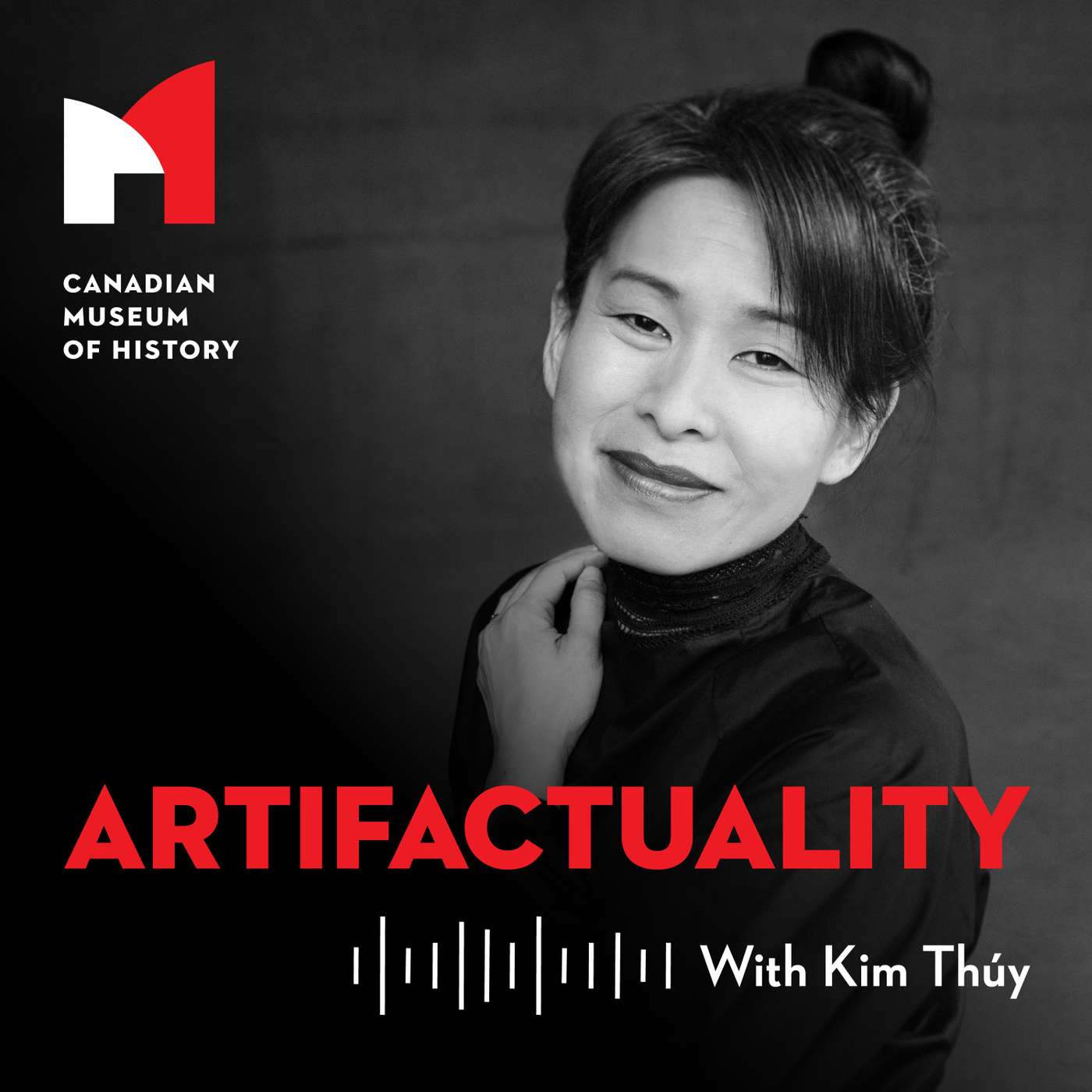
Imagine a museum of the future, made up entirely of the stories we tell each other. Which stories would resonate with you? Which ones will last? And which will go on to shape how we live our lives, now and in the future? Introducing Artifactuality, a podcast series featuring remarkable stories generously shared with the Canadian Museum of History. Hosted by acclaimed novelist Kim Thuy, each episode is an audio time capsule of a part of Canadian history told in the voices of the people who lived it. The series is produced by Antica Productions and Makwa Creative. French versioning by Power of Babel. Transcript: https://historymuseum.ca/podcast/transcripts/#trailer
Comments

Download from Google Play

Download from App Store
 United States