


 Claim Ownership
Evidence Based Parenting Podcast
Subscribed: 2Played: 5
Subscribe

© Fuller Moments
Description
Providing you with evidence to help inform your parenting decisions. Hosted by Danushi- Psychologist, mum, and founder of Fuller Moments
34 Episodes
Reverse
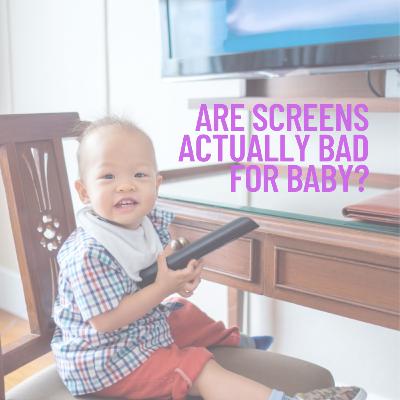
We are advised not to show infants under two any screens but is it actually bad for them? This episode explores the use and impact of TV on babies to help you determine if it is bad for baby.Book in a parenting coaching session hereCheck out our website for more resources and tools at www.evidencebasedparentingau.comFollow us out on socials at @evidencebasedparentingau on Instagram and Tik TokReferencesBlum-Ross, A., & Livingstone, S. (2016). Families and screen time: Current advice and emerging research.Chandra M, Jalaludin B, Woolfenden S The Watch Me Grow Study Group, et alScreen time of infants in Sydney, Australia: a birth cohort study BMJ Open 2016;6:e012342. doi: 10.1136/bmjopen-2016-012342Emond JA, O'Malley AJ, Neelon B, Kravitz RM, Ostbye T, Benjamin-Neelon SE. Associations between dail screen time and sleep in a racially and socioeconomically diverse sample of US infants: a prospective cohort study. BMJ Open. 2021 Jun 24;11(6):e044525. doi:10.1136/bmjopen-2020-044525. PMID: 34168024; PMCID: PMC8231048.Linebarger, D. L., & Walker, D. (2005). Infants’ and Toddlers’ Television Viewing and Language Outcomes. American Behavioral Scientist, 48(5), 624–645. doi:10.1177/0002764204271505 Schmidt, M. E., Rich, M., Rifas-Shiman, S. L., Oken, E., & Taveras, E. M. (2009). Television Viewing in Infancy and Child Cognition at 3 Years of Age in a US Cohort. PEDIATRICS, 123(3), e370–e375. doi:10.1542/peds.2008-3221
In the 31st episode, I unpack the lessons for parents of young children in the Netflix series, AdolescencePurchase the Strength and Affirmation cards for kids mentioned in the episode hereBook in a parenting coaching session hereCheck out our website for more resources and tools at www.evidencebasedparentingau.comFollow us out on socials at @evidencebasedparentingau on Instagram and Tik Tok
In today's episode we examine the significance of the first 1000 days and what are the key influences on development.Book in a parenting coaching session hereCheck out our website for more resources and tools at www.evidencebasedparentingau.comFollow us out on socials at @evidencebasedparentingau on Instagram and Tik TokReferencesBaidal, J. A. W., Locks, L. M., Cheng, E. R., Blake-Lamb, T. L., Perkins, M. E., & Taveras, E. M. (2016). Risk factors for childhood obesity in the first 1,000days: a systematic review. American journal of preventive medicine, 50(6), 761-779.Committee on Psychosocial Aspects of Child and Family Health, Committee on Early Childhood, Adoption, and Dependent Care, and Section on Developmental and Behavioral PediatricsGarner, A. S., Shonkoff, J. P., Siegel, B. S., Dobbins, M. I., Earls, M. F., ... & Wood, D. L. (2012). Early childhood adversity, toxic stress, and the role of the pediatrician: translating developmental science into lifelong health. Pediatrics, 129(1), e224-e231.Cusick, S. E., & Georgieff, M. K. (2016). The Role of Nutrition in Brain Development: The Golden Opportunity of the "First 1000 Days". TheJournal of pediatrics, 175, 16–21. https://doi.org/10.1016/j.jpeds.2016.05.013Martorell R. (2017). Improved nutrition in the first 1000 days and adult human capital and health. American journal of human biology : the official journal ofthe Human Biology Council, 29(2), 10.1002/ajhb.22952. https://doi.org/10.1002/ajhb.22952National Scientific Council on the Developing Child. Excessive Stress Disrupts the Architecture of the Developing Brain: Working Paper #3. Cambridge,MA: National Scientific Council on the Developing Child, Center on the Developing Child at Harvard University; 2005. Available at www.developingchild.harvard.edu. Accessed March 8, 2011
In the 27th episode, I explore why toddlers have tantrums and to what degree they are a "normal" part of development.Book in a parenting coaching session hereCheck out our website for more resources and tools at www.evidencebasedparentingau.comFollow us out on socials at @evidencebasedparentingau on Instagram and Tik TokReferencesDaniels, E., Mandleco, B., & Luthy, K. E. (2012). Assessment, management, and prevention of childhoodtemper tantrums. Journal of the American Association of Nurse Practitioners, 24(10), 569-573.Hoffenaar, P., & Overbeek, G. (2022). Temper tantrums in toddlers and preschoolers: Longitudinalassociations with adjustment problems. Journal of Developmental & Behavioral Pediatrics, 43(7), 409-417.Raising Children. Tantrums: why they happen and how to respond.https://raisingchildren.net.au/toddlers/behaviour/crying-tantrums/tantrums
Welcome to the first episode for 2025, in this episode I unpack the research around the experience of being a working mum. And then discuss strategies overcoming challenges associated with balancing both roles.Book in a parenting coaching session hereCheck out our website for more resources and tools at www.evidencebasedparentingau.comFollow us out on socials at @evidencebasedparentingau on Instagram and Tik TokReferencesFamily Friendly Workplaces, Parents At Work, & UNICEF Australia. (2024). National Working Families Report 2024. Deloitte Access Economics.
In the 31st episode, I continue to unpack the results of a recent study we conducted into the experience of new parents and share what the study revealed are the five things new parents find the hardest about parenting and what their advice would be to future new parents.Book in a parenting coaching session hereCheck out our website for more resources and tools at www.evidencebasedparentingau.comFollow us out on socials at @evidencebasedparentingau on Instagram and Tik Tok
In the 30th episode, I explore the myths and theories around raising a child bilingual and ultimately explore whether it is good (or bad!) for them.Book in a parenting coaching session hereCheck out our website for more resources and tools at www.evidencebasedparentingau.comFollow us out on socials at @evidencebasedparentingau on Instagram and Tik TokReferencesBain, B., & Yu, A. (1980). Cognitive consequences of raising children bilingually: One parent, one language. Canadian Journal of Psychology/Revue canadienne de psychologie, 34(4), 304.Lee, M., Shetgiri, R., Barina, A., Tillitski, J., & Flores, G. (2015). Raising bilingual children: A qualitative study of parental attitudes, beliefs, and intended behaviors. Hispanic journal of behavioral sciences, 37(4),503-521.King, K., & Fogle, L. (2006). Raising bilingual children: Common parental concerns and current research. CALdigest Series, 2(1), 2-3.
In the 29th episode, I continue to unpack the results of a recent study we conducted into the experience of new parents and share what the study revealed are the five things new parents find the most helpful.Book in a parenting coaching session hereCheck out our website for more resources and tools at www.evidencebasedparentingau.comFollow us out on socials at @evidencebasedparentingau on Instagram and Tik Tok
In the 28th episode, I begin to unpack the results of a recent study we conducted into the experience of new parents and share what the study revealed are the five things new parents wished they had know before they became parents.Book in a parenting coaching session hereCheck out our website for more resources and tools at www.evidencebasedparentingau.comFollow us out on socials at @evidencebasedparentingau on Instagram and Tik Tok
In the 26th episode of the podcast I take you through the research and apply Psychology to provide you with methods to help your baby to sleep. In the episode I referred to the following podcast episodes:Will sleep training make my baby hate me?How do I introduce a comforter or security blanket to my child?Book in a parenting coaching session hereCheck out our website for more resources and tools at www.evidencebasedparentingau.comFollow us out on socials at @evidencebasedparentingau on Instagram and Tik TokReferencesBarry, E. S. (2021). What is “normal” infant sleep? Why we still do not know. Psychological reports, 124(2), 651-692.Forquer, L. M., & Johnson, C. M. (2005). Continuous white noise to reduce resistance going to sleep andnight wakings in toddlers. Child & family behavior therapy, 27(2), 1-10.Riedy, S. M., Smith, M. G., Rocha, S., & Basner, M. (2021). Noise as a sleep aid: a systematic review. Sleep Medicine Reviews, 55, 101385.Whittingham, K., & Douglas, P. (2014). Optimizing parent–infant sleep from birth to 6 months: a new paradigm. Infant Mental Health Journal, 35(6), 614-623.
In the 25th episode of the podcast I guide you through rebuilding and reclaiming your identity and sense of self once becoming a parent.Book in a parenting coaching session hereCheck out our website for more resources and tools at www.evidencebasedparentingau.comFollow us out on socials at @evidencebasedparentingau on Instagram and Tik Tok. Please DM if interested in The Thrive Program
If you are planning or considering a family holiday to Canberra with babies or toddlers, then have a listen to our 24th episode where I share our very child friendly itinerary.Book in a parenting coaching session hereCheck out our website for more resources and tools at www.evidencebasedparentingau.comFollow us out on socials at @evidencebasedparentingau on Instagram and Tik Tok
In the 23rd episode, I explore the great parenting legend that is formula helps a baby sleep better and if that is in fact true. e
Come join me over on Instagram where I share more resources plus mum life applying the evidence on stories. Plus you can let me know what parenting choice or topic you would like me to cover in future episodes: https://www.instagram.com/evidencebasedparentingpodcast/
You can shop Fuller Moments tools and resources at : www.fullermoments.com, including our Strength and Affirmation Cards for Kids
To book a parenting consult, click here
References
Butte, N. F., Jensen, C. L., Moon, J. K., Glaze, D. G., & Frost, J. D. (1992). Sleep organization and energy expenditure of breast-fed and formula-fed infants. Pediatric research, 32(5), 514-519.
Galbally, M., Lewis, A. J., McEgan, K., Scalzo, K., & Islam, F. A. (2013). Breastfeeding and infant sleep patterns: an A ustralian population study. Journal of Paediatrics and Child Health, 49(2), E147-E152.
In the 22nd episode I chat to two Physiotherapists about growing pains and what we can do as a parent to help our children with them.You can find Chelsea on Instagram at @physiowithchelsea and Britt on Instagram at https://www.instagram.com/britt_physiomum/ . You can work with both of them at Britt's clinic https://upsidekidsphysio.com.au/Book in a parenting coaching session hereCheck out our website for more resources and tools at www.evidencebasedparentingau.comFollow us out on socials at @evidencebasedparentingau on Instagram and Tik Tok
In the 21st episode I investigate probiotics and the claims that it can help babies with crying, can help them sleep better and improve your child's immunity and report back to you (in a digestible busy parent format!) Book in a parenting coaching session hereCheck out our website for more resources and tools at www.evidencebasedparentingau.comFollow us out on socials at @evidencebasedparentingau on Instagram and Tik TokReferencesNiers, L., Stasse-Wolthuis, M., Rombouts, F. M., & Rijkers, G. T. (2007). Nutritional support for the infant's immune system. Nutrition reviews, 65(8), 347-360.Sung, V., Collett, S., de Gooyer, T., Hiscock, H., Tang, M., & Wake, M. (2013). Probiotics to prevent or treat excessive infant crying: systematic review and meta-analysis. JAMA pediatrics, 167(12), 1150-1157.
In the 20th episode (and first for the 2024!) I discuss parenting goals- why you should have them, what they could be and how to achieve them.
Come join me over on Instagram where I share more resources plus mum life applying the evidence on stories. Plus you can let me know what parenting choice or topic you would like me to cover in future episodes: https://www.instagram.com/evidencebasedparentingpodcast/
You can shop Fuller Moments tools and resources at : www.fullermoments.com, including our Strength and Affirmation Cards for Kids
To book a parenting consult, click here
In the 19th episode (and finale for the year!) I take you through some cause and strategies for parental guilt.Book in a parenting coaching session hereCheck out our website for more resources and tools at www.evidencebasedparentingau.comFollow us out on socials at @evidencebasedparentingau on Instagram and Tik Tok
Thinking of a family vacation to Fiji with your little ones? In episode 18, I share the practical aspects of navigating this tropical paradise with babies and toddlers. From where we stayed, to what we did and what we wish we did differently, I share our experiences so you can learn from them and inform your own travel decisions. Book in a parenting coaching session hereCheck out our website for more resources and tools at www.evidencebasedparentingau.comFollow us out on socials at @evidencebasedparentingau on Instagram and Tik Tok
In the 17th episode of the episode I explore the debate around Elf on the Shelf from a behavioural and mental load perspective. Get your Parent's Guide to Positive Impact Elf on the ShelfBook in a parenting coaching session hereCheck out our website for more resources and tools at www.evidencebasedparentingau.comFollow us out on socials at @evidencebasedparentingau on Instagram and Tik Tok
In the podcast's 16th, I present part two of the topic that forms the foundation of strong parent-child relationships: Building Secure Attachment with Your Child. I'll continue to discuss the components of secure attachment, and strategies to foster it.
Come join me over on Instagram where I share more resources plus mum life applying the evidence on stories. Plus you can let me know what parenting choice or topic you would like me to cover in future episodes: https://www.instagram.com/evidencebasedparentingpodcast/
You can shop Fuller Moments tools and resources at : www.fullermoments.com, including our Strength and Affirmation Cards for Kids
To book a parenting consult, click here
References
Cooper, Hoffman & Powell (2018), Circle of Security

Comments

Download from Google Play

Download from App Store
 United States