


 Claim Ownership
Model Parenting
Subscribed: 0Played: 0
Subscribe

© David Isbell 2022
Description
We are David and Farah Isbell. Our earliest years of marriage were aimless! Around year 5 we chose to be different than we were before- to purposefully bring certain things into our relationship and to keep some things out. For 18 years, this modeling process has chiseled us and compounded our enjoyment of marriage and parenting. This podcast is for us to remember our Model and to possibly encourage other families to chase and build toward their own, with planning and purpose. Welcome to the journey of Model Parenting!
20 Episodes
Reverse
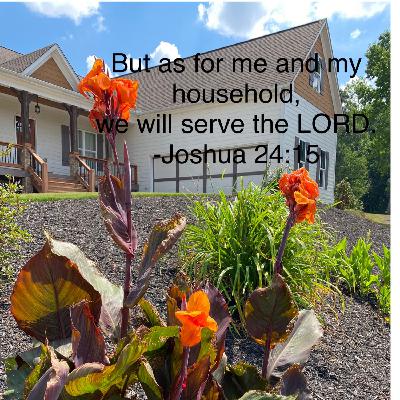
Scripture Joshua 24:15.The kids return as special guests to share their thoughts on setting hearts on course for God. They have not listened to the podcast because this is a way we can study and evaluate if what we are saying to the microphone lines up with what we live at home. It shows developmental levels and where we still need to focus and also gives us feedback on where we need to align with God and then tweak our systems with the kids. How much do our systems return us to God, to dependence on Grace, to hope in Him? It is more common to set up a system to become more independent; in parenting how can we build systems to repeatedly turn us back to Him and not self. Back to Him, not a new run at "success". Back to leaning on His Way, not our's, His Plan, not our's, His Desires for us, not what the world describes as desirable. Connecting Activity: do something silly or goofy togetherResource: “You do not rise to the level of your goals. You fall to the level of your systems.” P.27 of Atomic Habits by James Clear.
In this episode we discuss 'balance' not being the best goal. We talk about places we have been unbalanced and some consequences that come from that. Philippians 4:12 and Romans 8:31-39 are focus scriptures.Connection Activity: This particular activity has biggest result if done individually. Time spent building the thankful muscle on and individual level compounds connections to other people. Thankful people more easily connect to others but thankful people don't just exist, God forms them through the discipline of thankfulness. Write down at least things that bring thanks each day. If it is difficult at first, use "breath", arms, legs, water, etc., and don't give up, ask God to help you see and acknowledge His gifts.Resource: The chapter on Belonging: What the Eisenhower's Knew in Donald Miller's To Own a Dragon
This discusses parental effort and prayer in helping children orient to their place in the family, in the world, and most importantly, in relation to God. Physical place is an important part of foundation and benefits from attention, but efforts beyond just physical space pay huge dividends long term in the individual and the relationship.Psalm 78 is a great place to begin in story-telling and then add in what God has done personally in the more recent history of you. Retell the stories of their children. Journal them so you remember and go back and read them on sick days or rainy days.Traditions and small regular, rhythms also add to sense of place. One example is in the following activity.Connection Activity: Repeatedly, build a blanket, sheet, and pillow fort and climb in their with the kids. Let forts get bigger as kids do! No need to stay with them for hours but try to get in before clean up for at least 10 minutes, or peek in throughout to see what all they add to the decor. Are their any elements they have in their 'house' that you could consider incorporating in your permanent space that you don't already have? Be sure to give them the credit and thank them for their ideas. Each time you crawl into a blanket tent, silently remember Your Father God (from 2 Chronicles 6;18 & 2Chronicles 7:1-2; Psalm 116;2) who has humbled Himself again and again to be with us. Imitate your Dad's Crouch. This is worship!

Dream together! Share and shoulder-to-shoulder pour effort, time, and maybe money into dreams. Watch God shape dreams as He sets them in hearts. Our culture and a lot of positive thinking and self-help mentalities can tug in the direction of self, but self-denial is crucial in chasing dreams!Connection Activity: share some "wishes" (things that would be awesome but could happen with just the right circumstances) and "impossibles" (things that could only be done with God) with family members. Write them down and save; regularly pray over them and ask God "how"? See what happens!Resource: Prayer. Talk with God; ask Him what His dreams are. Read about His dreams for all His kids in His Word. Psalm 37:4. Receive the dreams He has for you and chase dreams with Him in the lead. "Father, into Your hands we commit our dreams and nightmares. Take our hands. Hold us...in Your heed-lovingkindness, and no matter how the road goes, You are our road, You are our way." - Ann Voskamp in Waymaker
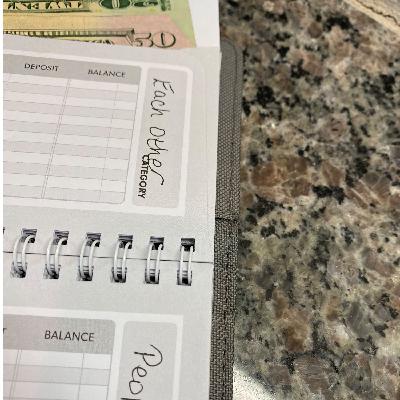
Money is a tool, not a goal. Having a healthy view and relationship with money is foundational for helping to train kids with money. This episode includes some practical tips like "junk budget" and some spiritual encouragement like May 16th entry in My Utmost for His Highest by Oswald Chambers.Connection Activity: Play Act Your Wage from https://www.ramseysolutions.com/store/youth/dave-ramseys-act-your-wage-gameor MonopolyResource: the Envelope System connected to your family's Valueshttps://www.ramseysolutions.com/store/digital-products/everydollar-budget-apphttps://www.ramseysolutions.com/store/products/starter-envelope-system
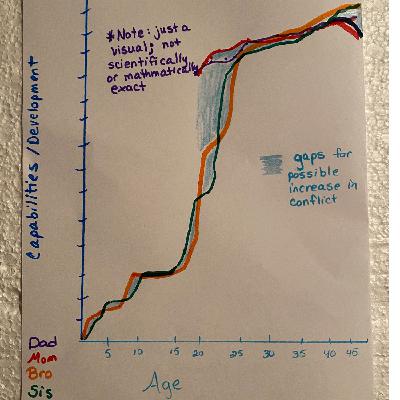
This episode describes how maturity curves can affect family relationships and how parents are the primary pursuers.Awareness of maturity curves and where gaps arise in development between siblings and even between parents and kids can help multiply grace in relationships. Finding ways to connect despite the gaps can lessen their impact.Realizing our imitation of pursuit following God's model helps in being a "long-haul pursuer" of our children. This echoes and supports what we discussed earlier about attachment and repair in the parent-child relationship.Scripture informing this episode: Luke 15:11-32Connection activity: 1)Watch Finding Nemo & look for the scene where the bird begins to describe Marlin to Nemo. Ask God to describe His own Pursuit of you to you.2)Grow something together (i.e. Ja-Ru Magic Grow toy; Chia Pet; or a plant for highly developed attention spans)Resource: 1)Journal. where have you seen yourself change over the last year? What books are you reading? What people are influencing you? Have you seen growth spurts in any of your kids recently?2) revisit those Connection quizzes mentioned in earlier episodes from Keeping the Little in Your Girl and Keeping the Good in Your Boy by Dannah Gresh. Can you answer any questions you couldn't answer before? Have any answers changed? Set a reminder on calendar one year from now to re-examine connections with kids.
How can you tell if something is "great" for your family? Use the "G.R.E.A.T." acronym to prioritize what receives most family resources of time, energy, and money. This can be used before having values fully defined and named. However, it is most beneficial throughout the years after values are in place to determine if opportunities are best for certain seasons of life or if they should be allowed to move onto someone else. Some practical examples for this include assessing moves, transitions, promotions, extra-curricular activities, etc. This can also be a useful tool for parents to coach teens in prioritizing.Scripture informing this episode: Luke 9:46-48; Psalm 145; Colossians 3Connection Activity: **This activity is not for social media; just the privacy of your family. If documenting the experience, write the info in a journal.Trading places: Daydream with the kids what they will be like as a "Dad" or "Mom". What will they do to connect with their families, train and correct their people, eat for dinner, etc.? How will they show their love and enjoy each other? Some of the answers will likely be silly and involve lots of sugar, but others may be actual teaching moments God uses in an earlier generation of the family! If you are super brave, role play for 30 minutes letting the kids "parent" while the parents act out the kids' roles- requiring the training and correction! Definitely sit with God during those "clear-brain moments" David talks about to pre-plan and strategize some hypothetical pretend kid scenarios and responses with your spouse beforehand (i.e. being hungry, waiting in line, interrupting, saying "I know" to everything they say).Resources:1) you and me forever by Francis and Lisa Chan, especially the introduction and the first chapter. Yes, it is a marriage book but after reading the illustration and prayerfully imagining the marriage first, ask God to help use that eternal lens to shape the ultimate goal in parenting.2) These blogs support the "effort" and 'attitude" of G.R.E.A.T.https://www.platimebox.com/blog-1/2017/10/19/sick-day-survivalhttps://www.platimebox.com/blog-1/2017/3/29/the

This episode looks at Behavior Circle. We hope to show how targeting Values helps efficiency in behaviors in training ourselves and our kids.Connection Activity: prayerfully play darts with your spouse. Then play darts with teens or bean bag target game with youngers. During play, ask God to help you see some values you tend toward easily and some in which you would like to strengthen your aim. Consider them in setting shared values. If you have set values already, ask Him to help you see any behaviors that clump together in a value that if you train more in that value, the behaviors will flow out.Resources: Remember Think Like Jesus and Scary Close from earlier episodes
Merge together to have prioritized shared values that the entire family team can target.Connection activity: An activity that has guardrails, like a marble track or go-carts that push the items back toward the center.Resource: You Version has a Family ID: 31 Days of Building Your Family's Values which is a great list of values from which to choose with Scriptures. Can you find your top 5?2nd month: examine time to determine current default values. Prune activities that don't align with intended values.discuss with your own parents, top things they value and their perspective on what your family valued when you were growing upwhat frustrates or annoys you this month? jot it down. Why did it annoy? ( Ask why 5 times to get to the core reason.)what brings you joy? Why? Why? Why? etc 5xswhat on next month's calendar brings anticipation? what brings dread? is there a value behind it? is there a value to motivate accomplishing the dreaded activity?what activities can you do without getting tired or hungry? things where time seems to fly?observe kids and see what they value by what they seem to enjoy and what they fight against. Ask "why" more ...(turn "why" around on those little messes!:) Are these preferences in their stage of life or could they be a deeper value?
What are values and why do they matter? How do misaligned values feed conflict? How do coordinating shared values help relationships? What happens to your consistency and integrity when your deliberate values don't line up with your default values?Connecting activity: list personal values, define them, talk about them, can any merge or coordinate or compliment or nest under a combined value? Include kids over 7 in the fun!Resource: You Version has a Family ID: 31 Days of Building Your Family's Values which is a great list of values from which to choose with Scriptures. Can you find your top 5?1st month assessment: 1)Examine relationships. Who do you agree with most? Why? What do you both truly value that connects you? Who do you experience most conflict with and why? Can you see what you value? Simply observe what matters to you; don't evaluate the other person as right or wrong; just notice differences.2) Monetary investment. This is the most tangible assessment.Over a month, observe the values on which you are currently acting. Prayerfully consider if they are actually what you want to value. Be deeply honest to determine the extent of the value and the level of consciousness involved. Discuss with God and spouse throughout the process.-keep track this month of all money, even "little money"-Which money is easy to spend? Why is it easy? Is there any spending that happens when seeking "comfort"?-Which money is hard to spend? Why is it a challenge?-If you had a money tree, what would you buy first?-If saving is easy for you, what value drives that? Security? Preparedness? pride in being responsible or controlled? Something else?-If saving is hard, why? Takes from spontaneity? Want to give extra away? etc?Email modelparentingpodcast@gmail.com for worksheets. Check next week's notes for questions about using the more abstract concept of time investment to examine what you are currently valuing in "default" mode.
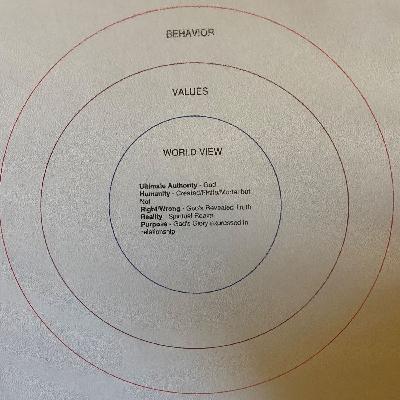
In the last episode we covered first two of 5 specific worldview questions (Authority, Humanity); this covers the last 3 (Right/Wrong, Reality, Purpose). Values driven model building can be used without examining worldview, but it is so much smoother when worldview perspectives are considered beforehand and throughout the process.Show Notes:Right/Wrong: Matthew 4:1-11Real: 1 Corinthians 2Purpose: John 15:1-17; 2 Corinthians 12:7-10Connection Activity: Read The Velveteen Rabbit by Margery WilliamsResource: Think Like Jesus by George Barna
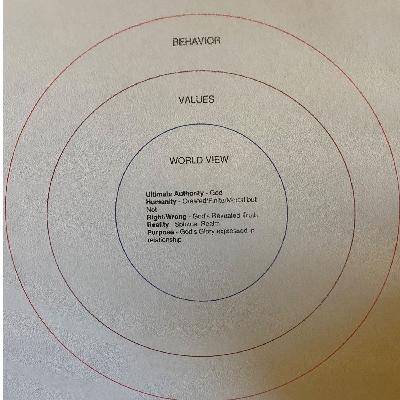
This episode gives an overview of the first two of five foundational worldviews. If you are wanting to go straight to values workshop information, you can skip this episode and the next and move on to episode 11.SHOW NOTES:References: Matthew 7;21-29' Luke 23:39-43; Matthew 28:18; Genesis 1:26; Genesis 2:7; Ephesians 2:1-10; Isaiah 55:8-9; 1 Timothy 4 :8-10Connection Activity: Pray first and use this as fun with your own Heavenly Father! Take the kids along but focus on Him for some of it! Resist the urge to teach the kids anything. Let Him bring into conversation if He chooses. Play with umbrellas in rain AND in noontime sun. Notice and marvel at the freedom this allows to stay dry and stay shaded! Also notice there are some places umbrellas refuse to go...although they go up and down stairs, over bridges, under awnings, and under trees, they won’t remain open and cover though railings, though playground tunnels, under benches, or though car doors. What places can you discover?Resource; George Barna's Think Like Jesus concentric circles (see photo)Dannah Gresh A Mom's Guide to Lies Girls Believe & the Truth that Sets Them Free (Chap 1) There is a tree illustration and explanation that is similar to the circles along with a great synopsis of the difference between "common virtue" (doing what is right with false motives) and "true virtue" (doing what is right because it is and "outgrowth of God's Truth planted deep inside the heart).

Synopsis: Ep 1-3 how targeting a model is beneficial and effort involvedEp4-7 some practices that inform the process of defining values to move you closer to targetEp 8: Review and reminders before worldview discussionsConnection Activity: watch a movie from your childhood with your kids (age appropriate) and ask what was their favorite part. Ask if they want to know your's before you just volunteer the information. If they say "no", don't be offended, just make a note that they is where they are currently in development.
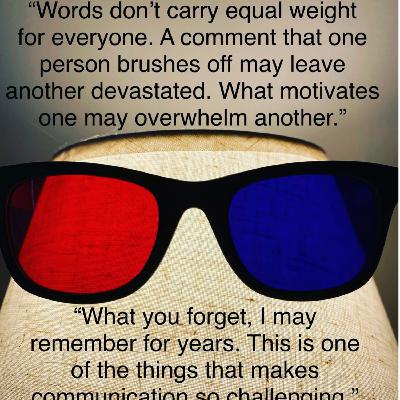
This episode is mostly about studying the kids, but it is beneficial to study yourself and your spouse to the degree they will agree to share. It is simply from a heart of interest; not to manipulate. Perspectives cannot be "right" or "wrong". Every perspective is from a certain angle and therefore is missing some information to see the whole. Two or more perspectives can multiply the beauty of something and optimize the view of a problem or conflict.SHOW NOTES AND RESOURCES:Connection Activity : For couples, the date at the bottom of this blog post: https://www.platimebox.com/blog-1/2019/5/19/perspective-pla-activityResource: Adults watch for yourselves...Anthony Browne agrees vehemently that you should never let yourself "outgrow" a picture book and this one has so much to reveal!! We prefer this particular one because it gives the viewer extra time with the pictures. **notice how the trees change with each voice Voices in the Park book by Anthony Browne read aloud video https://youtu.be/kyCUnHLe88sFor more study:1)Development: Ready Reference chart https://pin.it/1D73ESe https://pin.it/1Jq4Ea0Ch. 4 & 5 - Boundaries by Cloud and TownsendCh. 4 & 5 - Dannah Gresh books 6 Ways to Keep the Good in Your Boy or 6 Ways to Keep the Little in Your Girl2)Fear development stages: https://www.teacherspayteachers.com/Product/List-of-Childrens-Top-Worries-by-Age-24309263)Personal or Collective traumas4)Learning style: overview - https://www.wikihow.com/Determine-Your-Child%27s-Learning-Style5)Current Influences- music, media, social media, top 3 closest friends, which coach, mentor, or teacher would they go to for advice, what teacher/coach are they with most time out of the day, books,6)Temperament:https://youtu.be/QTg-dGI-jaY https://youtu.be/yBr4XNu-KyI7)Birth Order: Kevin Leman's New Birth Order book8)Love Languages: Gary Chapman https://www.5lovelanguages.com/store/the-5-love-languages-of-children / https://www.5lovelanguages.com/store/a-teens-guide-to-the-5-love-languages9) Strengths: https://www.amazon.com/StrengthsFinder-2-0-Tom-Rath/dp/159562015X https://www.lifehack.org/890036/childs-strengths10) how they would like to celebrate their birthday or an achievement11) what activities energize / what activities drain12) Any labels they are including in their identity ( compliments or complaints others say about them repeatedly)
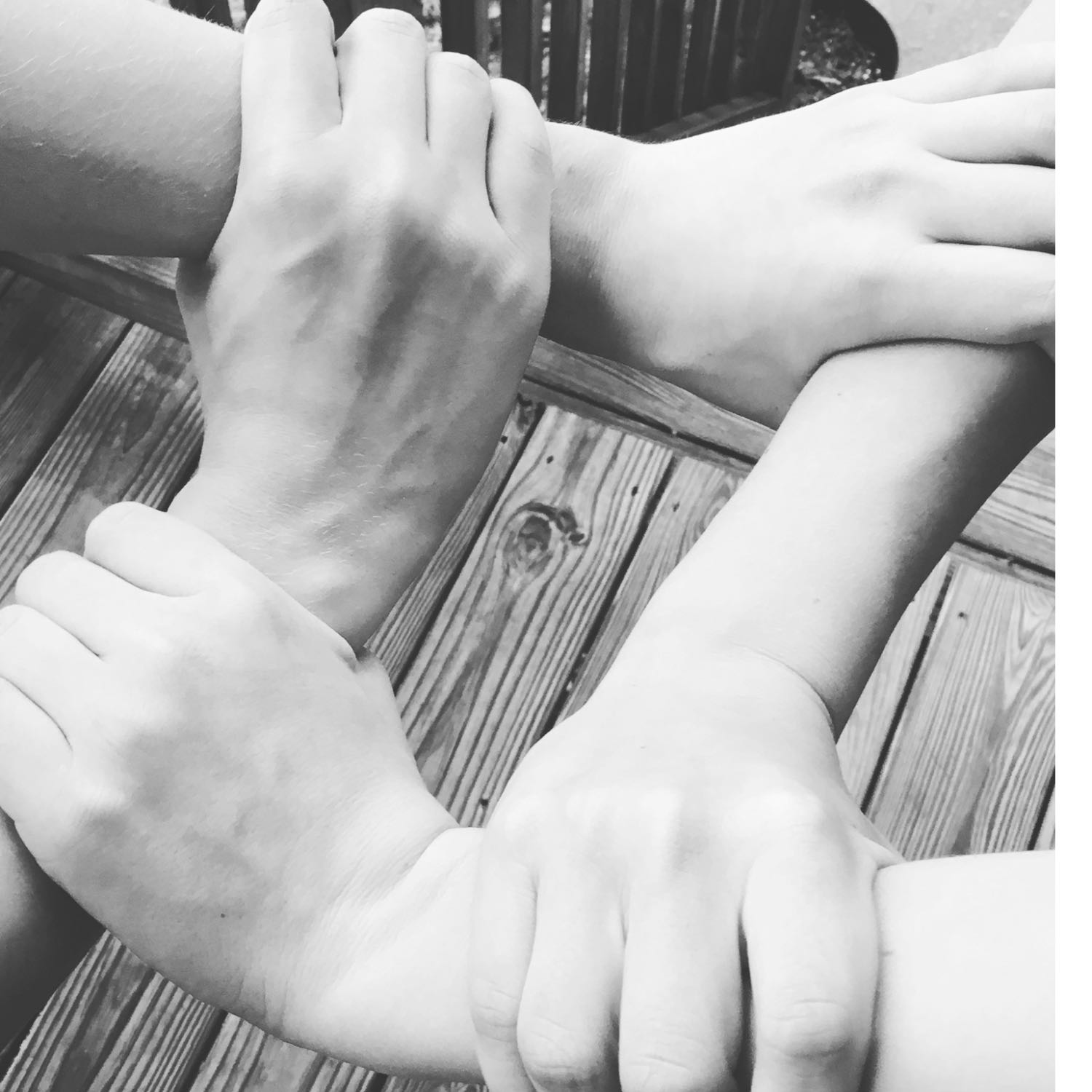
CORRECTION: We hold Scripture in high regard and in this episode, we got a little confused on some details so we want to address that here. The account to which we refer of Cain and Abel is found in Genesis 4. Abel actually kept flocks, and Cain worked with fruit of the soil. Scripture says Cain brought "some of fruits" to God; Abel brought select "fat portions from some of the firstborn of his flock." Can you see the difference in detail and the forethought? the heart behind the behavior?In this episode we discuss choosing to bring in sibling connection rather than accept "sibling rivalry" as well as disconnecting the word "proud" from performance. We also discuss the parental investment of time, money and protection of margin, as well as relational rupture and repair.SHOW NOTES:Flow chart image of attachment cycle. Remember disruption can be from world (i.e. wave) or from one or the other person. As the caregiver, the repair is crucial either way.https://static1.squarespace.com/static/5c89a29bd745627e9db2053e/t/6227f2bae6b7380d995a2ca2/1646785219409/Beautiful+Creation+Attachment+Infographic+%281%29.Connection Activity: Complete a Team carry (with 2 people)! Hook hands like the photo and balance a bean bag or sock filled with rice on top as you go through an obstacle course or playground. Switch partners if more than 2 in family and repeat with others cheering you on. You can also team carry with a bucket of water hanging on a bat or stick. Try not to spill the water.Resources: Connection quizzes in Dannah Gresh books 6 Ways to Keep the Good in Your Boy and 6 Ways to Keep the Little in Your GirlBonus resources: 1) Teamwork in the home bloghttps://www.platimebox.com/blog-1/2020/3/6/key-purpose-highlight-teamwork. 2) Parent checklist blog https://www.platimebox.com/blog-1/2018/1/8/parents-intent-and-investment-in-sibling-relationship 3)Helping siblings plan for and give attention to each other https://www.platimebox.com/blog-1/2017/6/5/platime-with-multiple-children-part-34) Alone time helps manage and train attention needs https://www.platimebox.com/blog-1/2017/17/5/alone-time
Episode 4 and 5 are connected. Respect is currency within the parent-child relationship. Choices and obedience work to increase flow & exchange of that currency. Episode 5 discusses clarifying the definition of obedience & how to train obedience.
Episode 4 & 5 work together to cover this concept of foundations. Respect is currency within the parent-child relationship. Choices and obedience work to increase the flow and exchange of that currency. Episode 4 discusses the benefits of choices, some ways to use them in the daily and mundane, and some spiritual hindsight to how God used them to show us more of Himself.SHOW NOTES;Resource: Don't Push the Button by Bill CotterImage to help clarify: Google a meme that shows “Religion is ‘I messed up; Dad is going to kill me, ‘ / Relationship is, ‘I messed up; I need to call my dad!’”
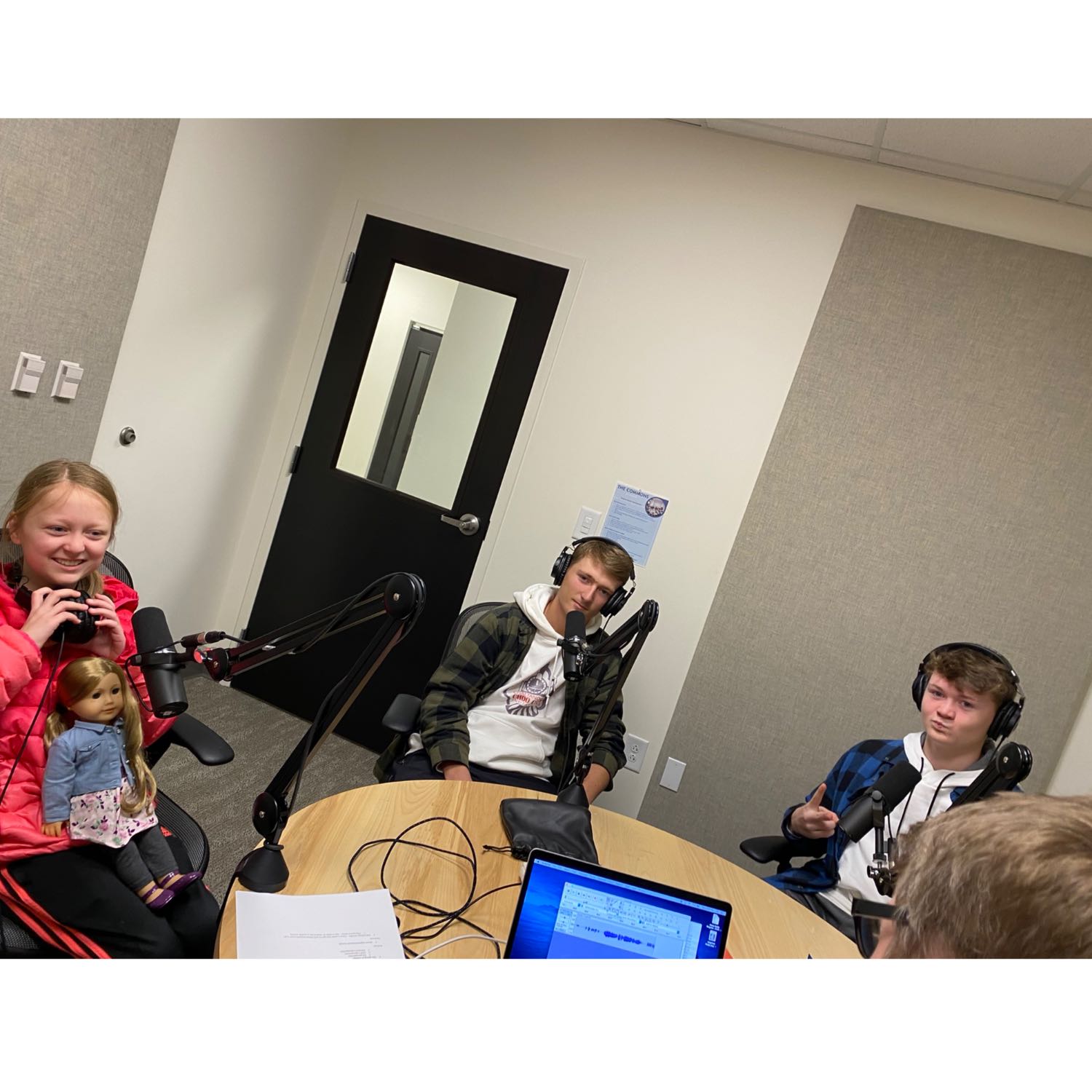
Special guests Dax, Cole, and Korwyn join David and Farah to answer questions from a kids' perspective. They help give a broader view of model parenting from other perspectives.SHOW NOTES:Connection Activity: Movie nightResource Goal: Family night jar with ideas that every family member contributes. "Your input into our family matters!" **Each family's kids should be the primary source for family fun ideas for this container. The following are just brainstorming cues to get you started: Go to a playground, have a picnic supper, go window viewing at some stores that are already closed, have each person pick their one favorite thing or sign or graphic from 3 or 4 windows, family story time, what can we buy with the change in the ash tray from the gas station or dollar store?, Nerf gun battle, urban disc golf with frisbees at a park, dance party, etc.
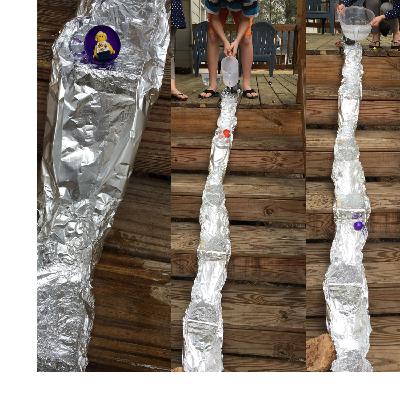
This "disclaimer episode" acknowledges the effort and the time that model parenting entails! It lists the work but highlights the commitment and how it is so worth it, especially when keeping the end goal in mind!SHOW NOTES:Connection Activity: Aluminum Foil riverResource:
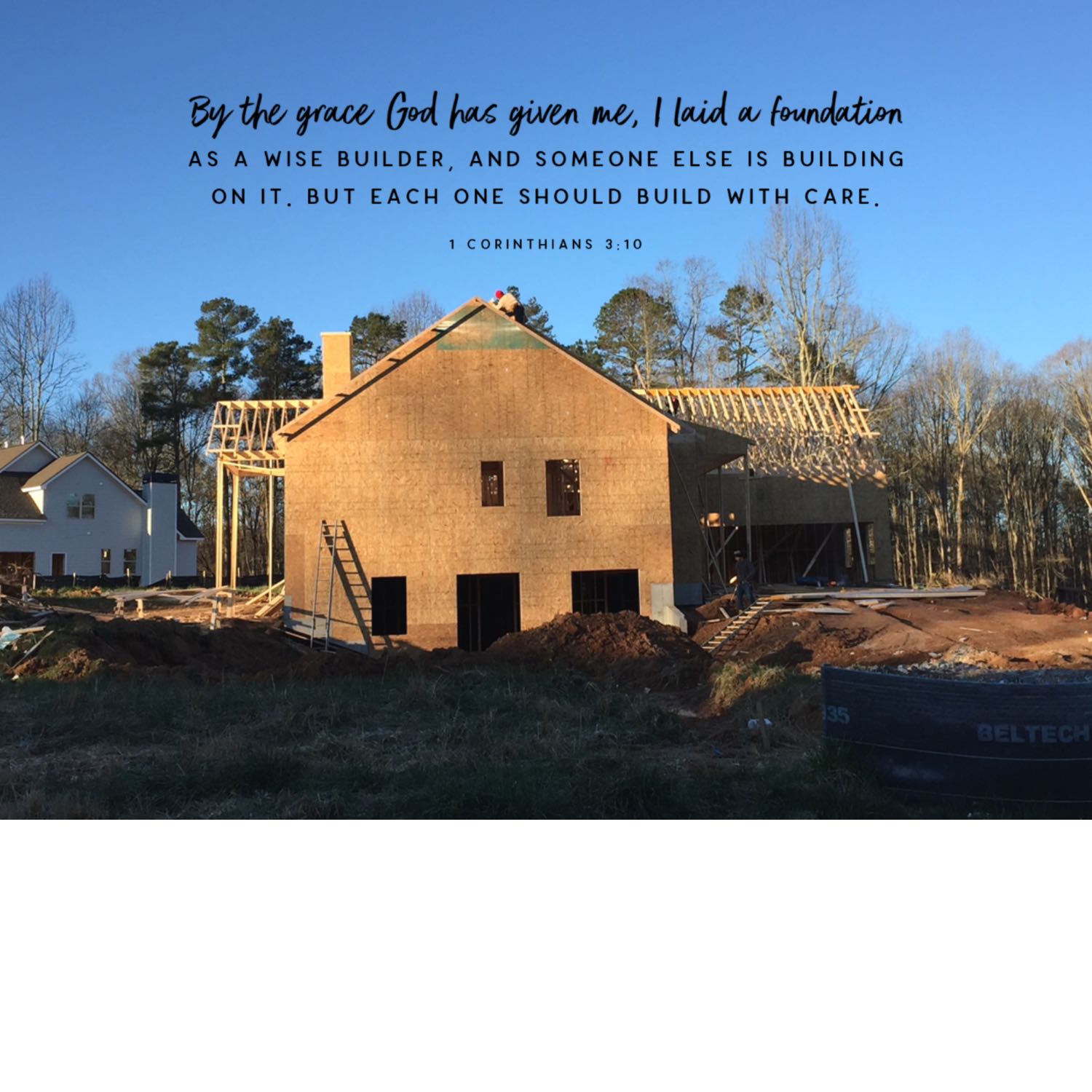
Build relational momentum and enjoy each other more by choosing a model for parenting! Models for this are NOT any people! Model parenting is a process! Pressure to "be" model parents or try to exactly copy others can dampen the parenting experience. There is a wondrous momentum that builds as one generation chooses to keep certain things to piece together for their family and release other things. These are not all the same for every family. This podcast will provide resources, questions, and concepts, with stories of success and failure to engage conversations for targeting and chasing a family's unique model. May we all continue to shape and hone shared model momentum and enjoyment of each other!SHOW NOTES:Luke 1:17: “…he will go before him in the spirit and power of Elijah, to turn the hearts of the fathers to the children, and the disobedient to the wisdom of the just, to make ready for the Lord a people prepared.”Connection Activity: Build a model as a familyResource: Scary Close by Donald Miller https://www.christianbook.com/scary-close-dropping-finding-true-intimacy/donald-miller/9780785213185/pd/213187
Comments

Download from Google Play

Download from App Store
 United States